
Most reef problems announce themselves long after the chemistry went wrong. A coral that stops extending, a color that fades over two weeks, an algae bloom that seems to arrive from nowhere — by the time you see any of it, the parameter that caused it has already drifted.
That is why picking from the best aquarium test kits for reef tanks matters more than it does in freshwater. A reef is not a forgiving system: corals precipitate calcium carbonate using calcium and alkalinity, and if either runs short, growth stalls. A reading taken two weeks ago tells you nothing about the water in front of you today. Testing is the only early warning you get.
We spent weeks running these kits side by side on the same water samples, comparing endpoints, drop counts, refill economics and how much skill each one demands. What follows covers ten kits that span the whole range, from a single-bottle calcium titration to a mail-in laboratory panel. The list is organized the way we actually use a test bench: one kit per parameter when accuracy matters, a combo kit when convenience matters, and a mail-in service for the things a bench kit cannot see.
Last updated for October 2026. Every product below uses its own ASIN and the ratings and review counts shown are copied straight from the listing.
Table of Contents
Top 3 Best Aquarium Test Kits for Reef Tanks in 2026

API Reef Master Test Kit
- Covers calcium
- alkalinity
- phosphate and nitrate
- Complete 7-bottle package with color cards
- Designed for reef aquariums only

Salifert Magnesium Test Kit
- Titration endpoint cross-checked against a university lab
- Up to 50 tests per kit
- Clear color change steps

Red Sea Reef Foundation Pro
- Fine 5 ppm calcium and 0.05 meq/L KH resolution
- 75 calcium and 75 KH tests included
- Includes a titration tool and hard case
All 10 aquarium test kits for reef tanks compared in October
| Product | Specifications | Action |
|---|---|---|
| API Reef Master Test Kit |
|
Check Latest Price |
 Salifert Alkalinity Calcium Magnesium Combo Kit Salifert Alkalinity Calcium Magnesium Combo Kit |
|
Check Latest Price |
| Red Sea Reef Foundation Pro Test Kit |
|
Check Latest Price |
 Red Sea Marine Care Test Kit Red Sea Marine Care Test Kit |
|
Check Latest Price |
 ATI ICP Lab Analysis Pro ATI ICP Lab Analysis Pro |
|
Check Latest Price |
 Salifert Calcium Test Kit Salifert Calcium Test Kit |
|
Check Latest Price |
| Salifert Magnesium Test Kit |
|
Check Latest Price |
 Salifert KH Alkalinity Test Kit Salifert KH Alkalinity Test Kit |
|
Check Latest Price |
 Salifert Nitrate Test Kit Salifert Nitrate Test Kit |
|
Check Latest Price |
 API Calcium Test Kit API Calcium Test Kit |
|
Check Latest Price |
1. API Reef Master Test Kit — the one most reefers start and stay on
API REEF MASTER TEST KIT Reef Aquarium Water Test Kit 1-Count
Calcium, alkalinity, phosphate and nitrate
7 bottles, 2 color cards, 4 capped tubes
Reef aquarium specific
Pros
- Covers the four most vital reef parameters in one purchase
- Complete package includes solutions
- color cards and capped tubes
- Designed specifically for reef aquariums
- Largest review base in this group at 4.6 stars
Cons
- Color matching can be ambiguous depending on how the tube is held
- Less visual separation between adjacent color values
I started using the API Reef Master because it is the kit most of my friends already own, and the reason is simple: it answers the question a reef keeper actually asks at the kitchen table, which is “is my water okay this week”. It measures calcium, carbonate hardness, phosphate and nitrate, and nothing else. That narrow scope is a feature, not a gap.
The box arrives complete, with seven bottles of testing solution, two color cards and four test tubes with caps. Nothing else to buy to run it, which matters when you are setting up a bench for the first time.
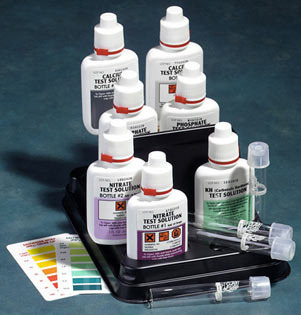
The honest weakness is the color card. Reviewers report that readings shift depending on lighting, on how the tube is held against the chart, and on whether you view it straight on or from slightly above. When I first started, I would get a different answer on the same sample held two different ways.
Two things fixed that for me. First, I hold the tube with a small white card behind it so the chart background is consistent every time. Second, I stopped trying to squeeze a precise number out of it and started using it to track direction, then confirmed anything alarming with a single-parameter kit.
Who this kit is right for
This is the kit I recommend to anyone starting a mixed reef on a modest budget, and to anyone who needs one bottle to answer “is something wrong” quickly. It is also the kit I keep as a sanity check even on systems where my main tools are titration reagents.
If your coral list is mostly softies and a mixed assortment, and you test twice a week, it covers everything that matters. The bonus is that it is extremely easy to find replacement solutions for, so an interrupted routine is rarely a problem.
Where it falls short
It has no magnesium test and no salinity test, and those are not optional extras on a reef. It also cannot resolve small changes in calcium well, because the resolution per drop is coarse compared to a dedicated titration.
SPS-dominant keepers who chase stability at the tenth of a dKH will outgrow it. Use it as a screening tool, then add a dedicated alkalinity test once the system is stocked and stable.
2. Salifert Alkalinity Calcium Magnesium Combo Kit — the easy first three parameters
Salifert Alkalinity Calcium Magnesium Combo Test Kit
Calcium, magnesium and alkalinity in one box
Drop and wait procedure
10 test strips included
Pros
- Combines three key reef parameters in one purchase
- Simple drop-count procedure with a clear endpoint
- Packaged with 10 test strips for quick checks
Cons
- Accuracy resolution is coarser than single-parameter titration kits
- Included test strips can be confused with the liquid reagents
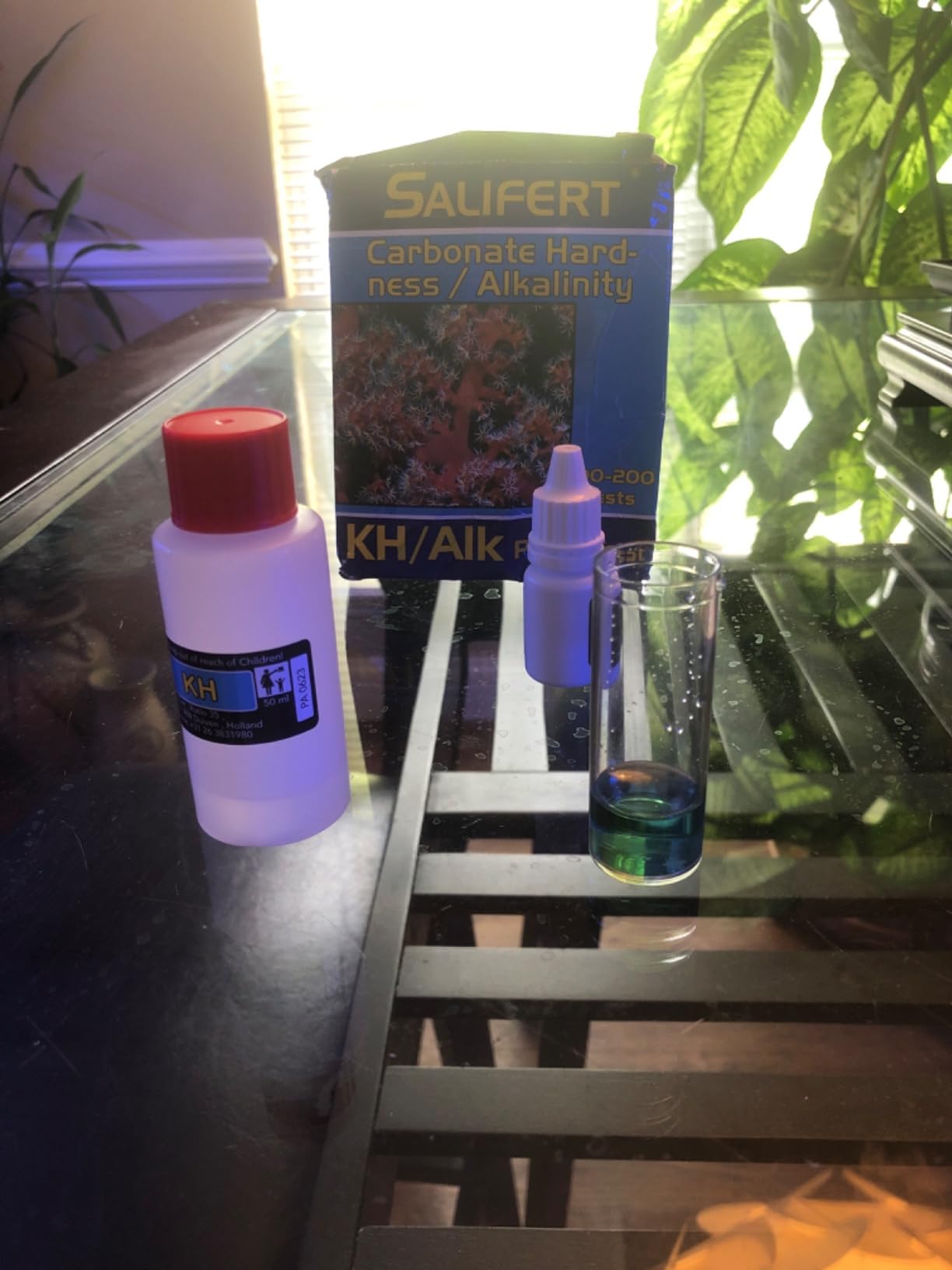
The Salifert combo kit solves a specific beginner problem: you have read that calcium, magnesium and alkalinity matter, and you do not want to buy three bottles to find out what your numbers are. This puts all three in one box, with a straightforward procedure of adding drops to a sample and waiting.
For a tank that is still maturing, where you are doing large water changes and the numbers are moving anyway, that resolution is enough. You are trying to catch a swing, not to measure the fourth decimal.
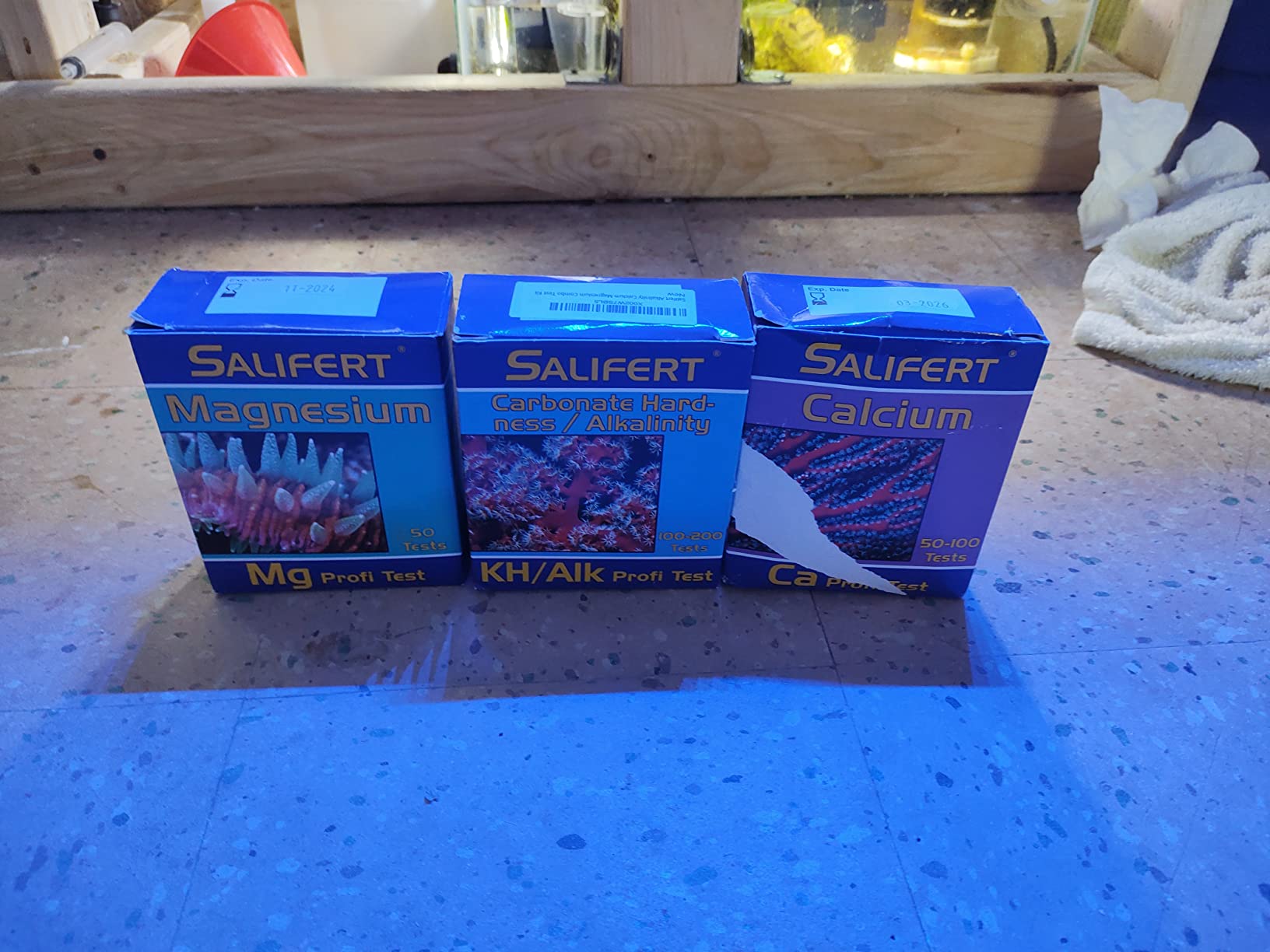
What you give up is precision. Because the kit is split across three parameters, the per-drop resolution is coarser than what you would get from Salifert’s dedicated single-parameter bottles. If you later want to fine-tune a dosing program, you will end up buying those anyway.
One practical detail: the pack includes ten test strips alongside the liquid reagents. Reviewers note it is easy to grab the wrong item mid-routine, so I keep the strips in a separate drawer from the dropper bottles.
Who this kit is right for
Buy this one if your reef is under a year old, if your budget is tight, and if you want the big three covered before you spend money on anything specialized. It is also a reasonable travel or garage-salt backup, because one box replaces three.
Pair it with a nitrate kit and you have a working routine for a softie-dominated or fish-only-adjacent setup. I would not run a dosing program off it alone.
Where it falls short
It does not cover nitrate, phosphate, pH or salinity, so it cannot be your only kit. The coarser resolution also makes it a poor tool for an SPS system where you are chasing a stable 8 dKH.
And the included strips will not tell you anything your liquid reagents do not already tell you better. Treat them as a convenience, not a second opinion.
3. Red Sea Reef Foundation Pro Test Kit — the most capable bench kit here
Red Sea Reef Foundation Pro Test Kit – Accurate Calcium, Alkalinity & Magnesium Testing for Saltwater Aquariums – 75 Tests, Easy-to-Use
5 ppm calcium resolution
0.05 meq/L KH resolution
20 ppm magnesium, 60 tests
Pros
- High accuracy titration resolution across all three parameters
- Titration tool extension improves drop consistency
- Color coded components reduce cross contamination
- Hard case keeps glassware organized
Cons
- Magnesium test is slow and rarely needed weekly
- Case will not fully close with the titrator stored inside
- Careful unhurried drop counting required
The Red Sea Reef Foundation Pro is the most technically detailed kit in this roundup, and the only one that puts a stated resolution next to every parameter. Calcium resolves to 5 ppm, carbonate hardness to 0.05 meq/L, magnesium to 20 ppm. Nothing else in this list publishes numbers that tight for all three major elements at once.
The package also solves a real ergonomic problem. Titration means adding single drops one at a time, and a poorly balanced bottle makes that frustrating. The included titration tool extension steadies the bottle and makes the rate consistent, which is exactly what determines whether two people testing the same tank get the same number.
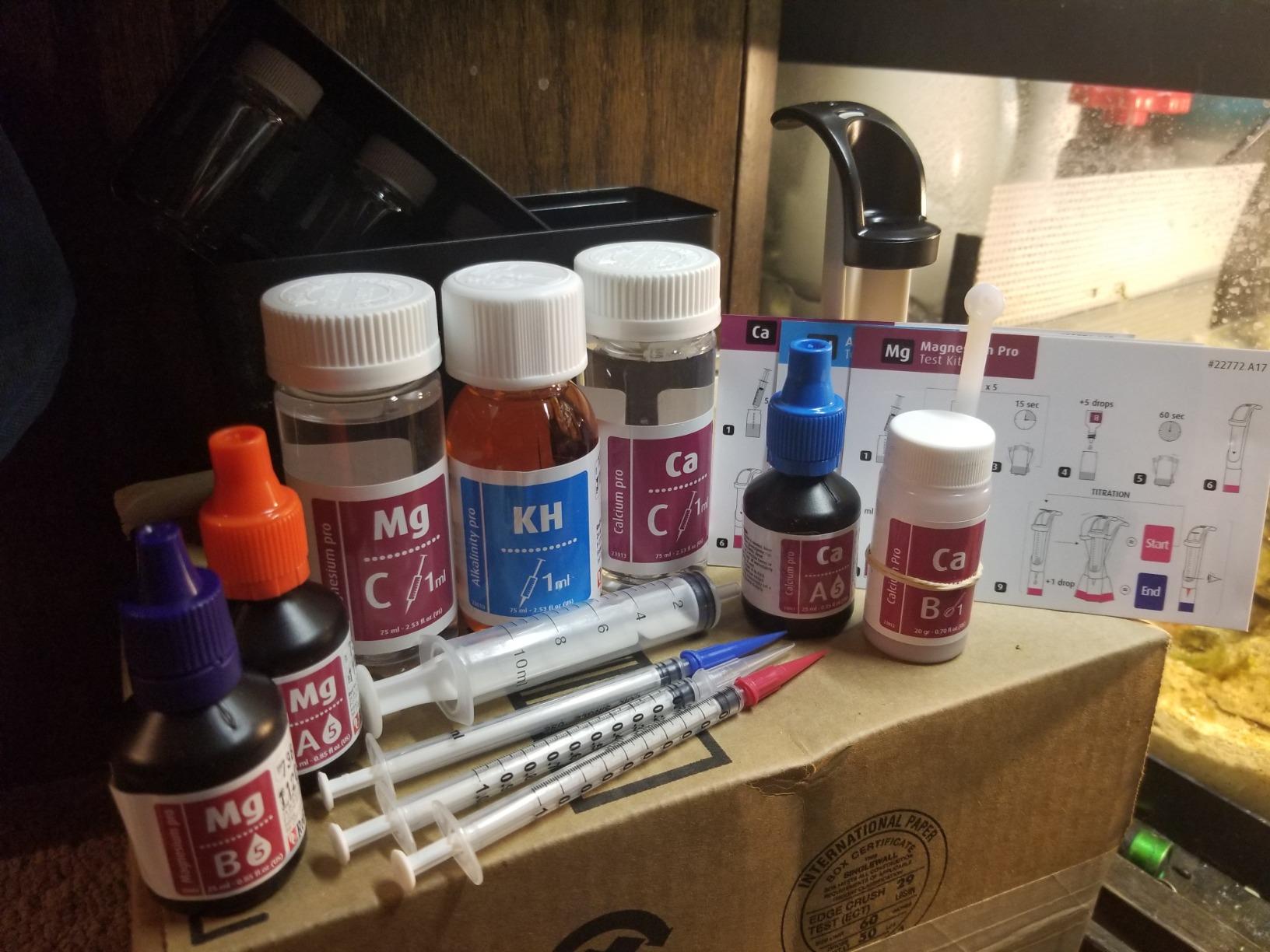
Accuracy checks out in the field. Reviewers report alkalinity readings landing within about 0.1 dKH of a Hanna checker on the same sample, and color coded components mean you are less likely to cross-contaminate reagents when you are running three tests in a row.
The workflow is the trade-off. Each test wants unhurried, careful drop counting, and the magnesium procedure is long enough that reviewers call it tedious. Magnesium does not move quickly in a healthy system, so running it weekly is a waste of a good endpoint.
Who this kit is right for
This suits a serious mixed reef or SPS system where you are running a dosing program and need the numbers to be defensible. It is also the kit I would buy for someone who has been burned by two kits giving two different answers.
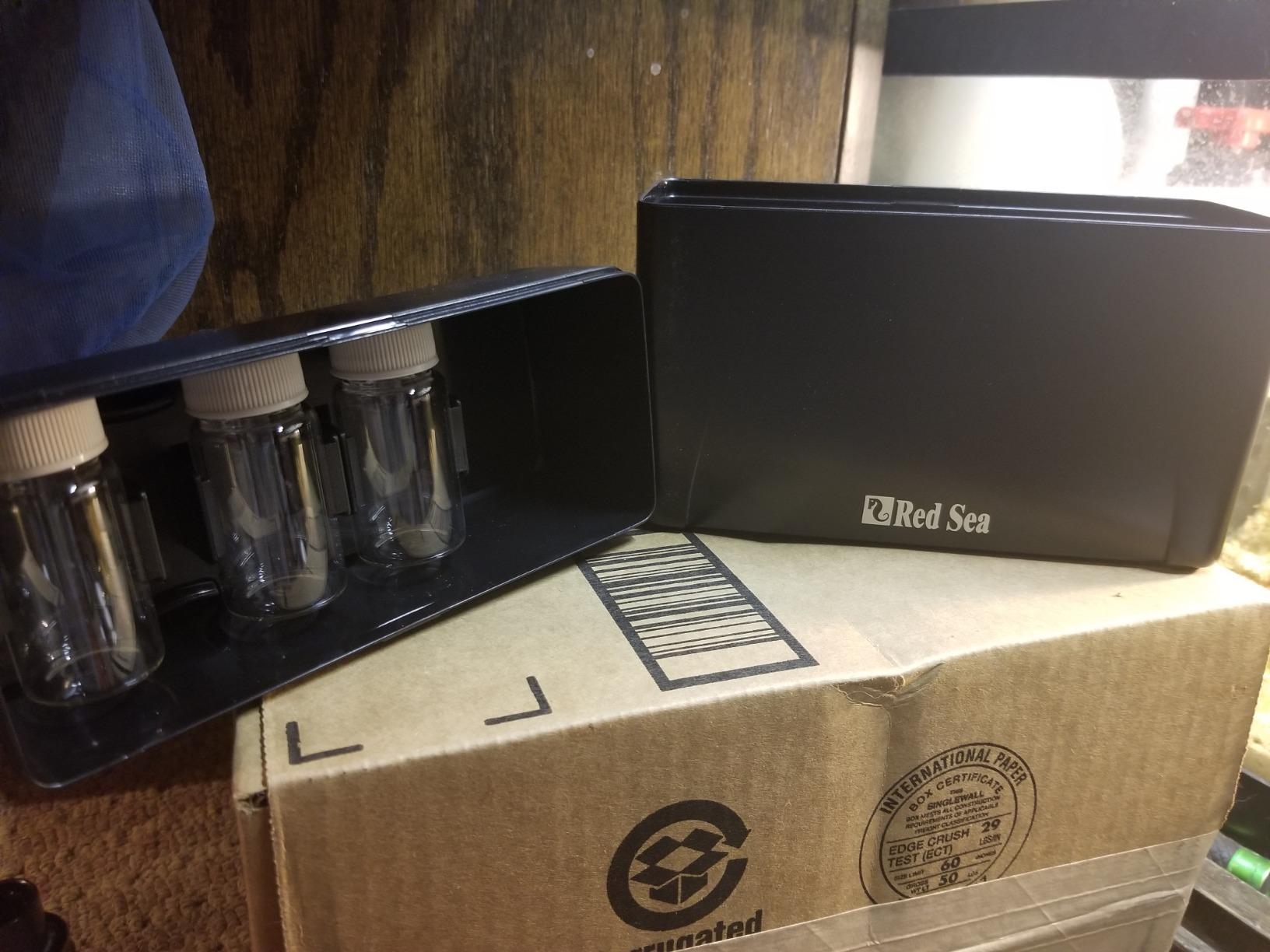
The included hard case matters more than it sounds. Glass vials and loose bottles in a drawer eventually get chipped, and a chipped vial is how you end up chasing a phantom drift.
Where it falls short
It covers only the big three, so nitrate and phosphate still need their own reagents, and those are the parameters that move fastest in a reef with fish. The magnesium test demands patience that most weekly routines will not tolerate.
Reviewers are also split on chart readability compared with Salifert, and some find the colors harder to interpret. If ease of reading is your top priority, this is not the kit. One small annoyance: reviewers note the supplied case is roughly half an inch too short to close with the titrator stored inside.
4. Red Sea Marine Care Test Kit — built for cycling and stocking decisions
Red Sea Fish Pharm ARE21525 Marine Care Test Kit for Aquarium
Nitrate, nitrite, ammonia, pH and alkalinity
0.02 ppm ammonia accuracy
0.05 ppm nitrate range
Pros
- Includes an alkalinity test that cheaper marine kits omit
- Color wheel design makes the endpoint far less ambiguous
- Sample jars are less prone to tipping
- Multiple reagents per test improve confidence
Cons
- Printed directions use a very small font
- More steps per test including some powdered reagents
- Some adjacent color circles remain hard to judge
The Red Sea Marine Care kit answers a different question than the other four liquid kits here. It measures nitrate, nitrite, ammonia, pH and alkalinity, which makes it the natural pick for the first three months of a new tank, when your job is to prove the rock is not producing ammonia before you put expensive coral on it.
The reason experienced keepers like it is the reading method. Instead of holding a tube against a printed chart, you pour the sample into a jar and look down at a white circle from above, then rotate a disc until the colors match. That color wheel design removes most of the tube-orientation ambiguity that frustrates people using chart-style kits.
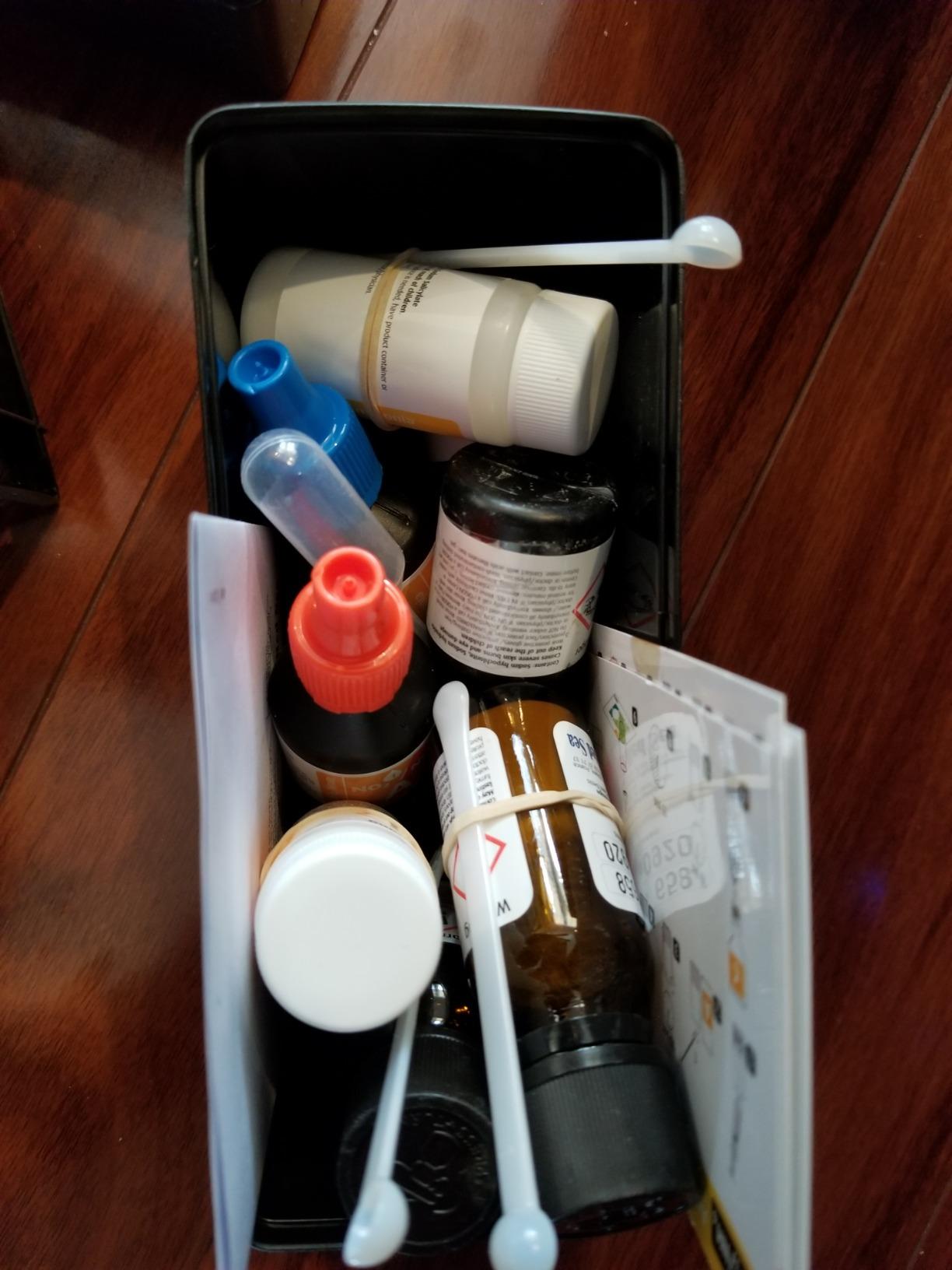
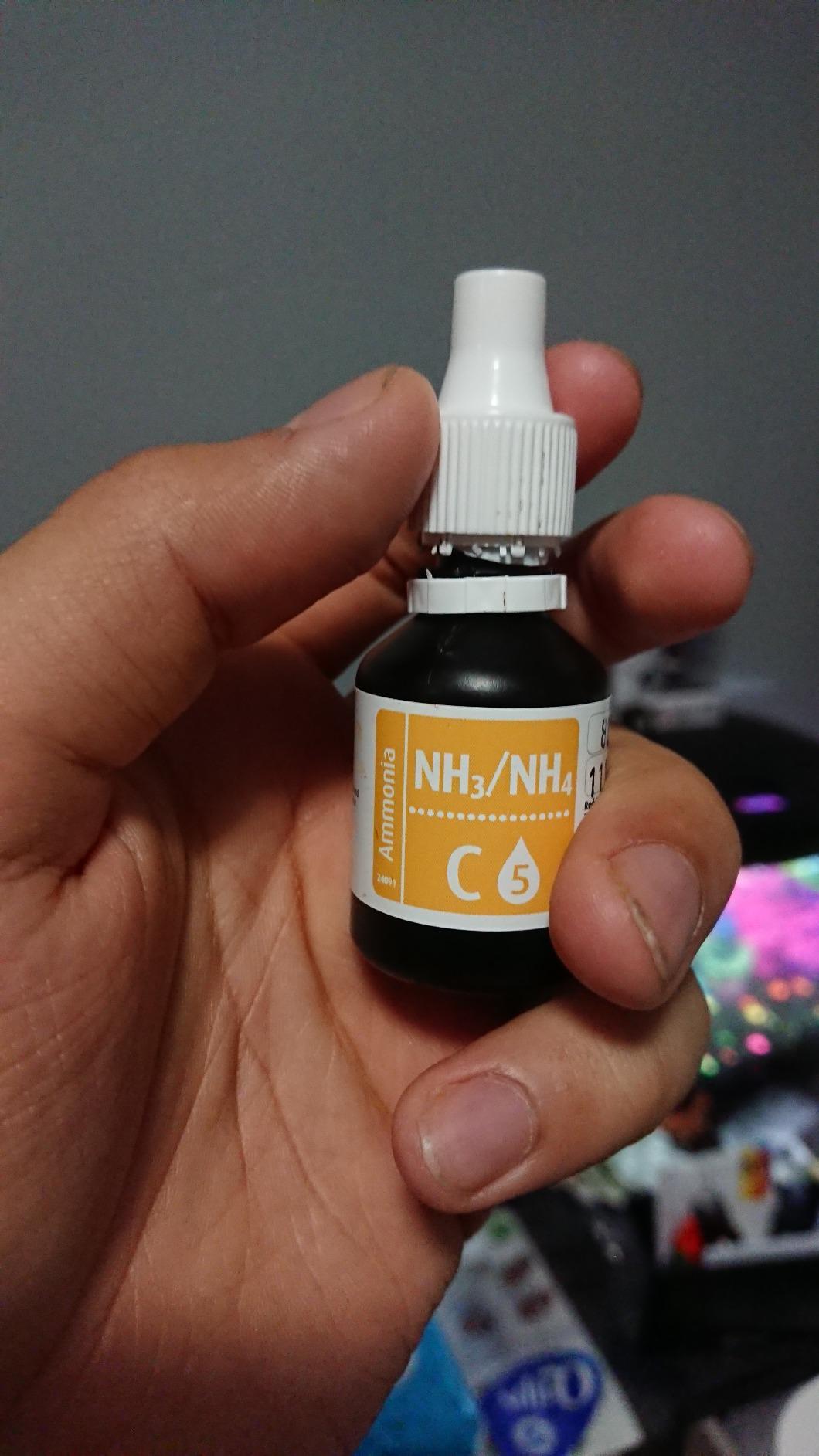
The stated accuracies are genuinely useful for a new system: 0.02 ppm on ammonia, and a nitrate range that reaches down to 0.05 ppm alongside the standard higher range. The pH test is quoted at 0.2 and the alkalinity test at 1 dKH or 0.36 meq/L.
Reviewers who switched from cheaper marine kits report clearer, more repeatable readings, and the sample jars being wider means they are much harder to knock over mid-test than narrow vials. Multiple reagents per test also make a result more trustworthy than a single-solution design.
Who this kit is right for
New tank keepers should start here. It covers ammonia, nitrite and nitrate in one purchase, which is precisely the sequence you run through a cycle, plus pH and an alkalinity test that most entry-level marine kits skip.
It is also the kit I recommend to anyone about to stock a system after a large water change, when you want a fast read on whether organics are settling before livestock goes in.
Where it falls short
There is no calcium or magnesium test. Once your tank is stocked and growing, this kit becomes a nutrient and pH tool rather than a major element tool, and you will need something else for that half of the picture.
Workflow is heavier than the chart kits. Several tests use powdered reagents, meaning more measuring steps, and the printed directions are set in a small font that is genuinely annoying under a bright counter light. Some reviewers still find adjacent color circles hard to distinguish, and the bottles may not seat neatly in the supplied holder.
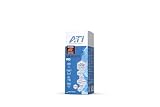
5. ATI ICP Lab Analysis Pro — the only laboratory-grade option in the roundup
ATI ICP Lab Analysis Pro for Reef Aquariums – Advanced Water Testing with RO Water Analysis – Nitrate, KH & Fluoride – 1 Test Kit
Mail-in laboratory analysis panel
Includes separate RO source water report
Adds nitrate, fluoride and KH
Pros
- Parameter scope is far broader than any bench kit
- No color matching or drop counting at all
- Digital results can be tracked over time
- RO water report finds source water problems early
Cons
- Results are not instant
- there is a wait for lab turnaround
- Requires online registration
- vial filling and mailing samples
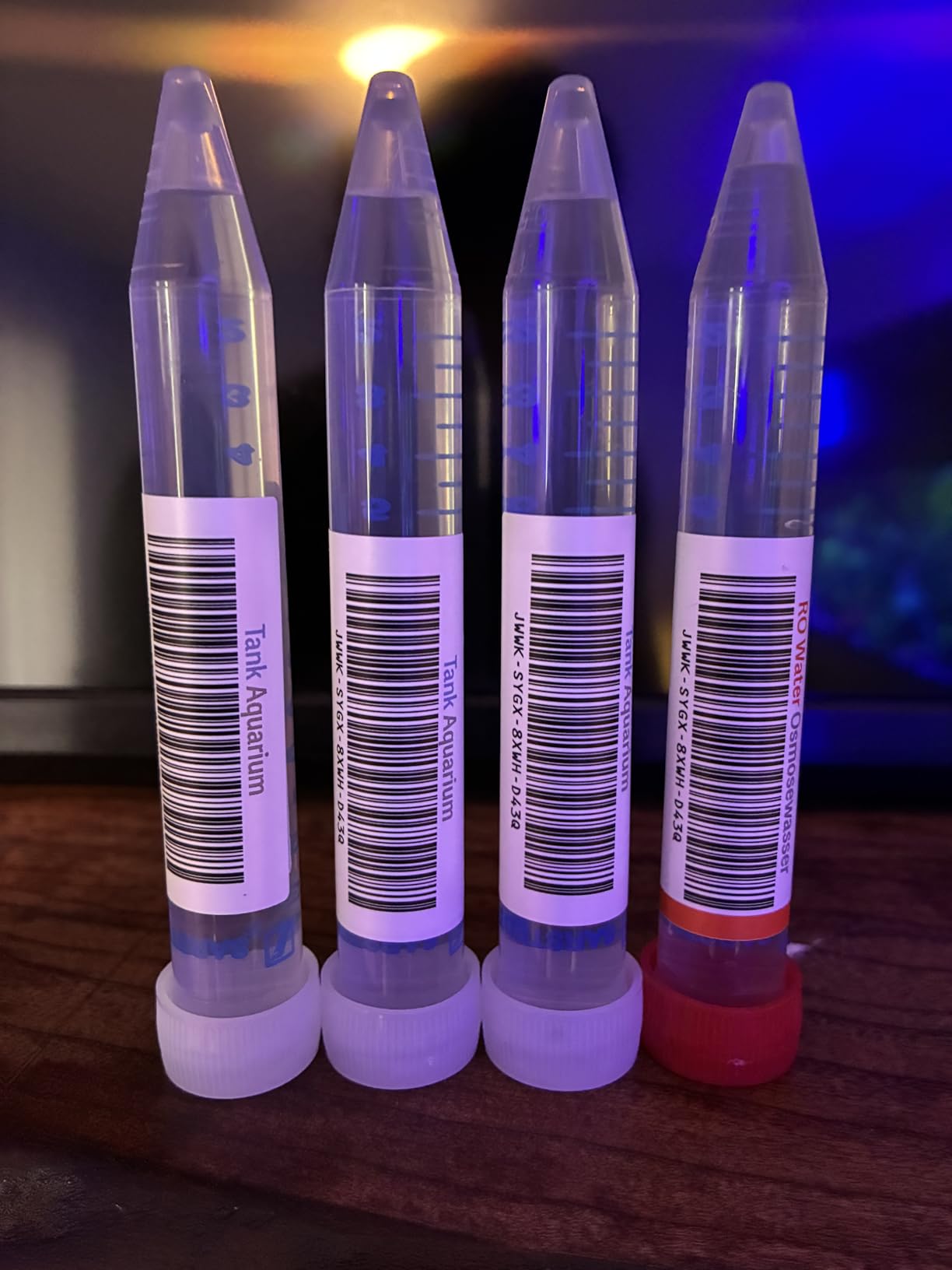
The ATI ICP Lab Analysis Pro is the only product here that is not a bottle on your shelf. You register online, activate the kit with a QR code, fill two vials, apply barcodes and mail the samples. Results arrive by email, covering the full standard scope plus nitrate, fluoride and carbonate hardness.
What you are buying is scope. No bench kit in this roundup measures fluoride, and none of them will tell you whether your reverse osmosis water is introducing a problem before that problem reaches the tank. The separate RO analysis included here is arguably the most valuable part of the package for anyone using a DI-fed system.
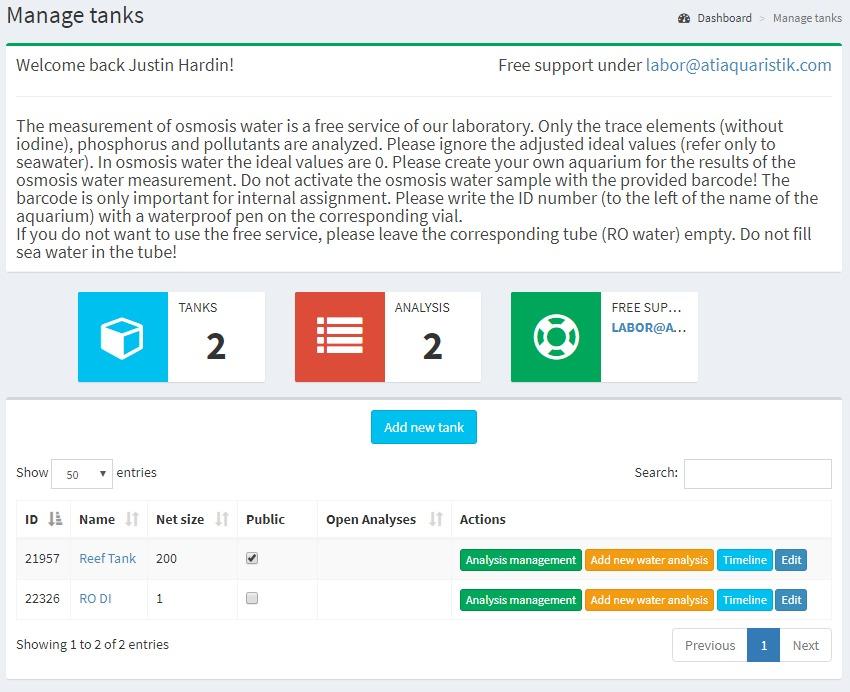
The workflow is a genuine adjustment. You cannot run this test on a Tuesday and act on the answer that afternoon, and a mail-in sample represents the water as it was when you filled the vial, not as it is when the report lands. Treat it as a periodic audit rather than a daily input.
That is where the combination works. Run your in-tank kits for daily control and use this to confirm the things you cannot see, especially strontium, trace elements and source water quality.
Who this kit is right for
Advanced keepers with a stable system, a dosing program and a specific question that home kits cannot answer. It is also the right choice for anyone whose RO or DI unit is old, or whose source water reads a little high on something they cannot identify.
Bulk Reef Supply makes a related argument that I agree with: a non-ICP lab service catches organics and ionic calcium that ICP panels skip, and a faster turnaround can keep a sample relevant.
Where it falls short
It cannot guide a same-day correction. If alkalinity has swung overnight, this report will not help you, and you will still need a bench kit for the reactive parameters.
Keep in mind the sample validity issue when comparing services. A panel that arrives after the water in your tank has meaningfully changed describes a system that no longer exists, so the value of this kit is a function of how often you send one and how quickly it comes back.
6. Salifert Calcium Test Kit — the best value single-parameter titration
Salifert Calcium (Ca) Test Kit – 50 to 100 Tests
Calcium only, single parameter focus
Up to 100 tests per kit
Includes a titrator
Pros
- Single parameter focus gives better resolution than combo kits
- Up to 100 tests keeps the per test cost low
- Titrator makes one drop at a time dosing easy
Cons
- Only measures calcium
- other parameters need separate kits
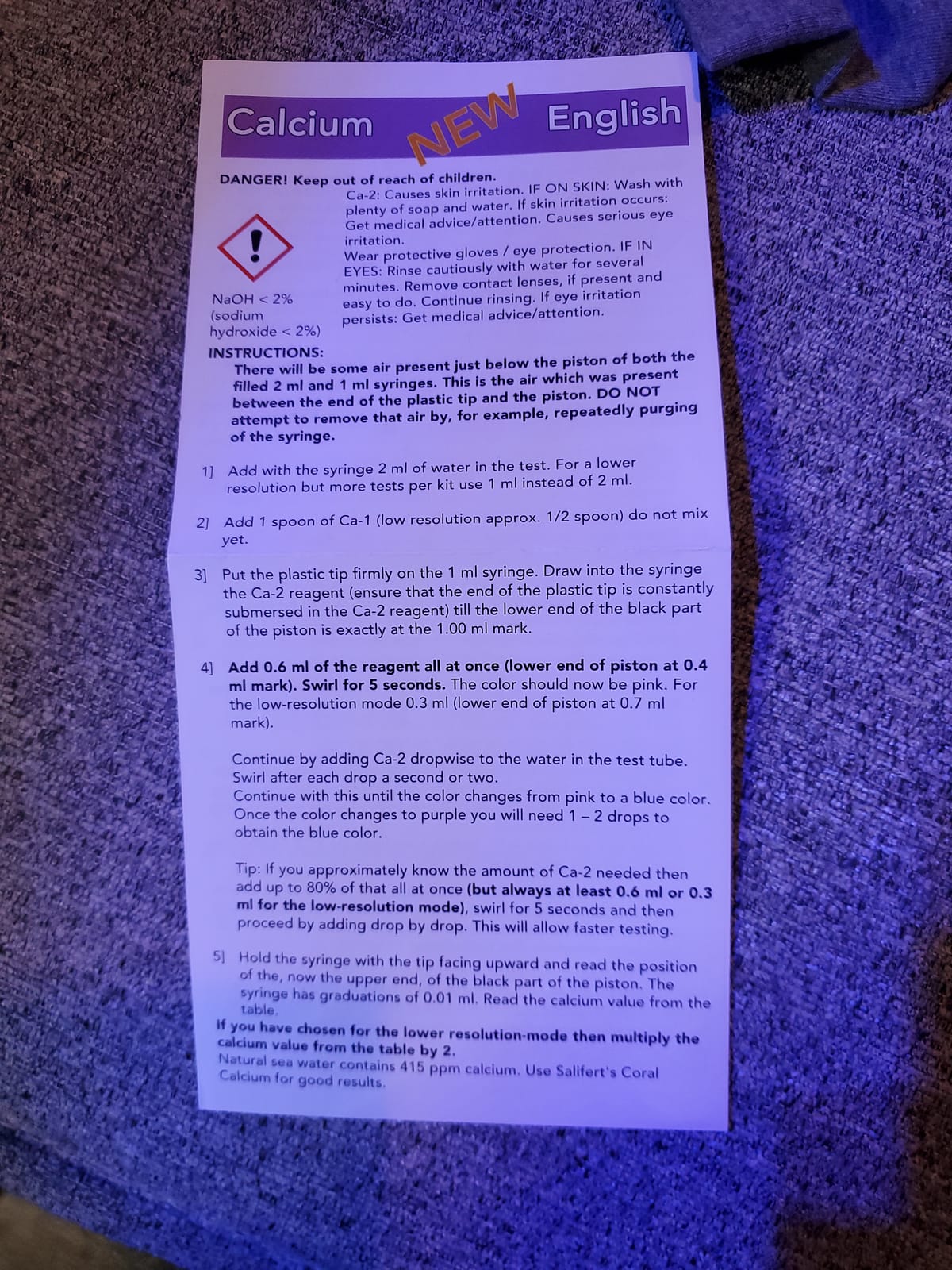
A single-parameter kit beats a combo kit when you already know which number you need. The Salifert Calcium test is one bottle and one titration, and because it is not splitting its effort across three parameters, its resolution is better than what you get from a multi-parameter box.
It is also the one I would call the best value in this list on a cost-per-test basis, because a single kit runs up to 100 tests. At two tests a week that is most of a year before the reagents need replacing.

The titrator is the part that matters. Titration means adding one drop at a time and counting until the color endpoint, and a device that holds the bottle steady while you count is the difference between a repeatable number and a frustrating one. It is included, which is unusual at this level.
Reviewers describe the endpoint as clear, and the 4.6-star average across 973 reviews reflects that broad satisfaction. As a single-purpose kit it does exactly one thing and does it well.
Who this kit is right for
Anyone already running a combo kit who has found that the calcium number moves too much between readings. It slots into an existing routine without changing anything else, and it is the natural second purchase after a first-year setup.
It is also a good pick for a budget build where you want your one careful measurement to be calcium, because calcium is the parameter most often misread on coarser charts.
Where it falls short
It measures nothing but calcium. Alkalinity, magnesium, nitrate and phosphate all need their own reagents, so on its own it covers roughly one fifth of what a reef needs to monitor.
Its 100-test ceiling also assumes you are not over-dosing calcium. If your tank runs high, you will go through the bottle faster and get fewer tests out of it than the packaging implies.
7. Salifert Magnesium Test Kit — the most reviewed magnesium titration available
Salifert Magnesium (MG) Test Kit
Magnesium only, titration method
Up to 50 tests per kit
Steps of color change
Pros
- Clear unambiguous titration endpoint
- Reading matched a state university lab in a cross check
- Recent redesign shortened the procedure by one step
- Reliable for weekly trend tracking
Cons
- Air bubbles in the 1.0 mL syringe skew the reading
- Requires careful syringe volume handling
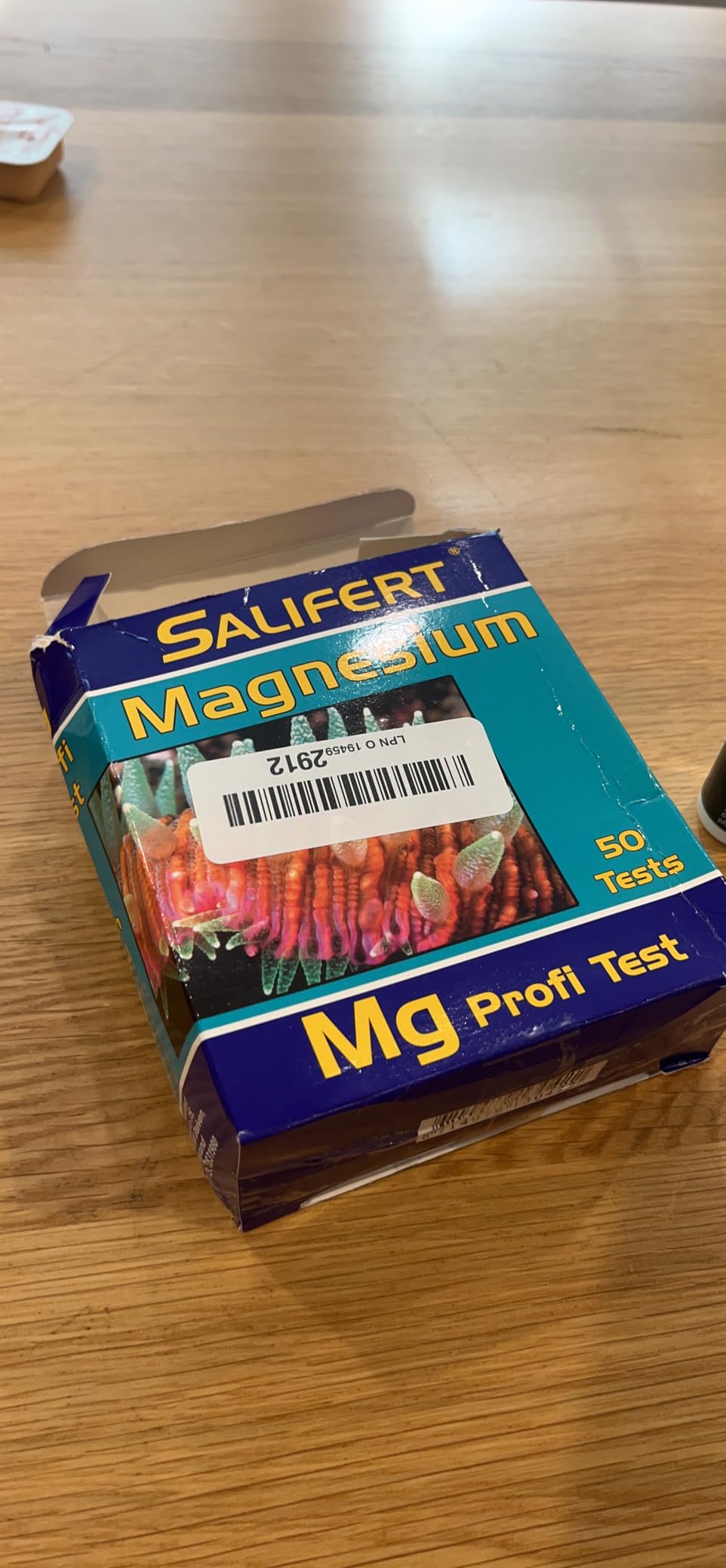
With 1048 reviews at 4.6 stars, the Salifert Magnesium test is the most reviewed product in this roundup, and experienced reefers consistently describe it as the most accurate magnesium titration they can run at home. One reviewer cross-checked a result against a state university lab and found agreement.
Magnesium is the parameter people skip, and it should not be skipped. Low magnesium slows the reactions that let calcium and alkalinity get consumed, so a tank that is low on magnesium often looks like a dosing problem when it is not.
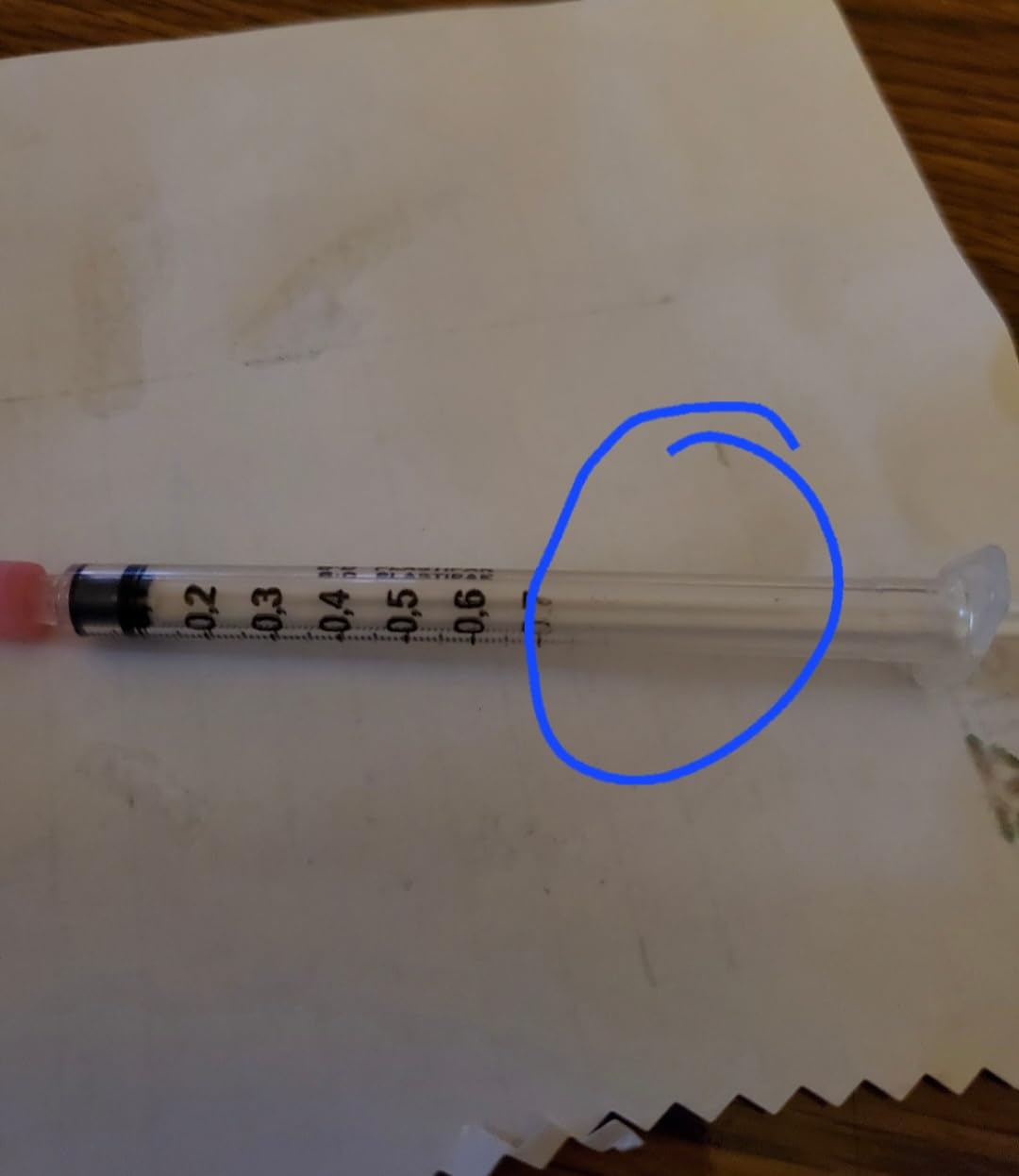
The technique caveat is specific and worth knowing. A small air bubble trapped in the 1.0 mL syringe throws the volume off and the reading off with it. Take the syringe, fill it, then flick the barrel so the bubble rises and expels before you add it to the vial.
Reviewers also note a recent redesign that shortened the procedure by one step without losing accuracy, so if you have used an older version, the current one is a slight improvement rather than a different method.
Who this kit is right for
Every mixed or SPS reef that is not already running a magnesium test. It is a single bottle, runs up to 50 tests, and it gives you a number most home kits simply do not produce.
I run it every two to three weeks rather than weekly, because magnesium is a slow parameter. Knowing the actual number also tells you whether your dosing calculation is even valid, which matters more than the number itself.
Where it falls short
It is a single-parameter kit, so on its own it tells you almost nothing about the rest of your water. Forty-nine of those tests will not stretch as far as the calcium kit’s hundred, so plan the refill rhythm accordingly.
The syringe step is unforgiving with air bubbles, and it is the single most common way people get a wrong magnesium number. If you are not willing to slow down for that step, a digital checker handles it without a syringe at all.
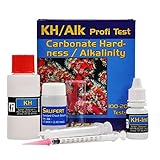
8. Salifert KH Alkalinity Test Kit — the best alkalinity buy for reefers
Salifert Carbonate Hardness & Alkalinity (Kh/Alk) Test Kit, 100-200 Tests
Measures in 0.1 meq/L or 0.3 dKH steps
Sharp color change
100 to 200 tests per bottle
Pros
- Sharp color change in fine steps makes small drift visible
- Straightforward procedure with no interpretation ambiguity
- Very high test count keeps ongoing costs low
Cons
- Measures alkalinity only
- calcium and magnesium need their own kits
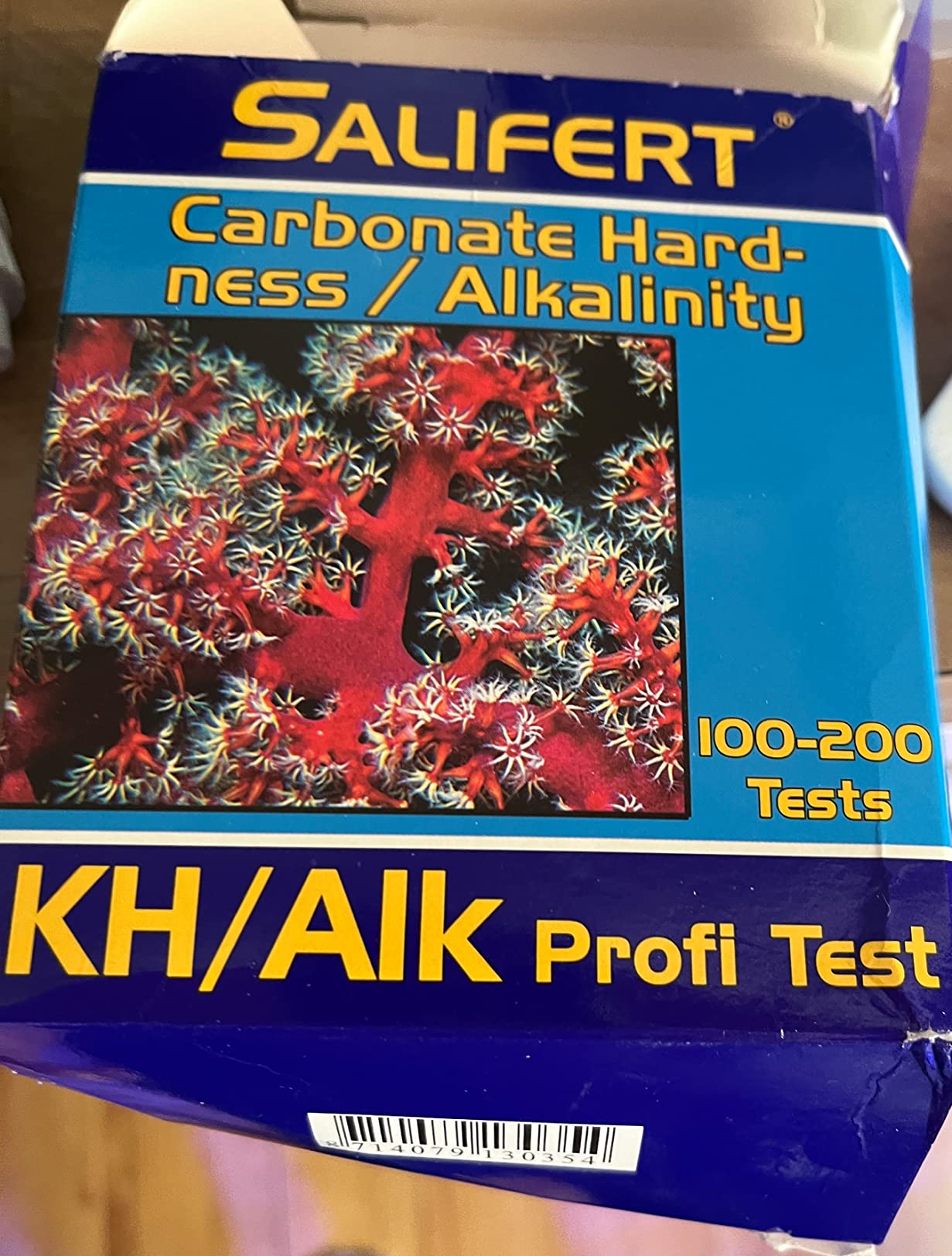
Alkalinity is the number reefers check most often, and the Salifert KH/Alk test is the dependable budget choice for it. It measures in steps of 0.1 meq/L, which is 0.3 dKH, and the color change at the endpoint is sharp rather than gradual.
That sharpness is the whole point. On a kit where adjacent chart values blend into each other, a slow decline of half a dKH is invisible. On this one, reviewers consistently report being able to see small changes, which is what early warning is supposed to mean.
Economically it is the friendliest kit here to keep running. Depending on your drop count, a bottle covers 100 to 200 tests, so even at two tests a week you are refilling once or twice a year at most.
The procedure is described as very straightforward, with no interpretation ambiguity at the endpoint. That combination of sharpness and simplicity is why it is the alk test I recommend to new keepers building a first routine.
Who this kit is right for
Any reef where alkalinity is the parameter you most need to track tightly, which is most SPS systems. It is also the sensible starting purchase for a new keeper, because alk moves first and moves fastest when a dosing system is off.
Because a bottle lasts so long, this is the easiest kit to commit to. You will finish it or nearly finish it before needing another.
Where it falls short
It measures alkalinity and nothing else. It will not tell you calcium or magnesium, so it cannot substitute for a major element kit even though the two problems are related.
It also only resolves to 0.3 dKH. For a system you are actively stabilizing, that is enough to catch a problem, but it will not let you see a change of a tenth of a dKH, which is the resolution a high-end titration kit can reach.
9. Salifert Nitrate Test Kit — sensitivity where reefers need it
Salifert Nitrate (No3) Test Kit
Detects nitrate down to 0.2 ppm
Dual range for reef and fish-only
All liquid reagents
Pros
- Detects nitrate down to 0.2 ppm to catch early creep
- Dual range serves reef and fish-only systems
- All liquid reagents with no powders to measure
Cons
- Dual range means you must track which range you are reading
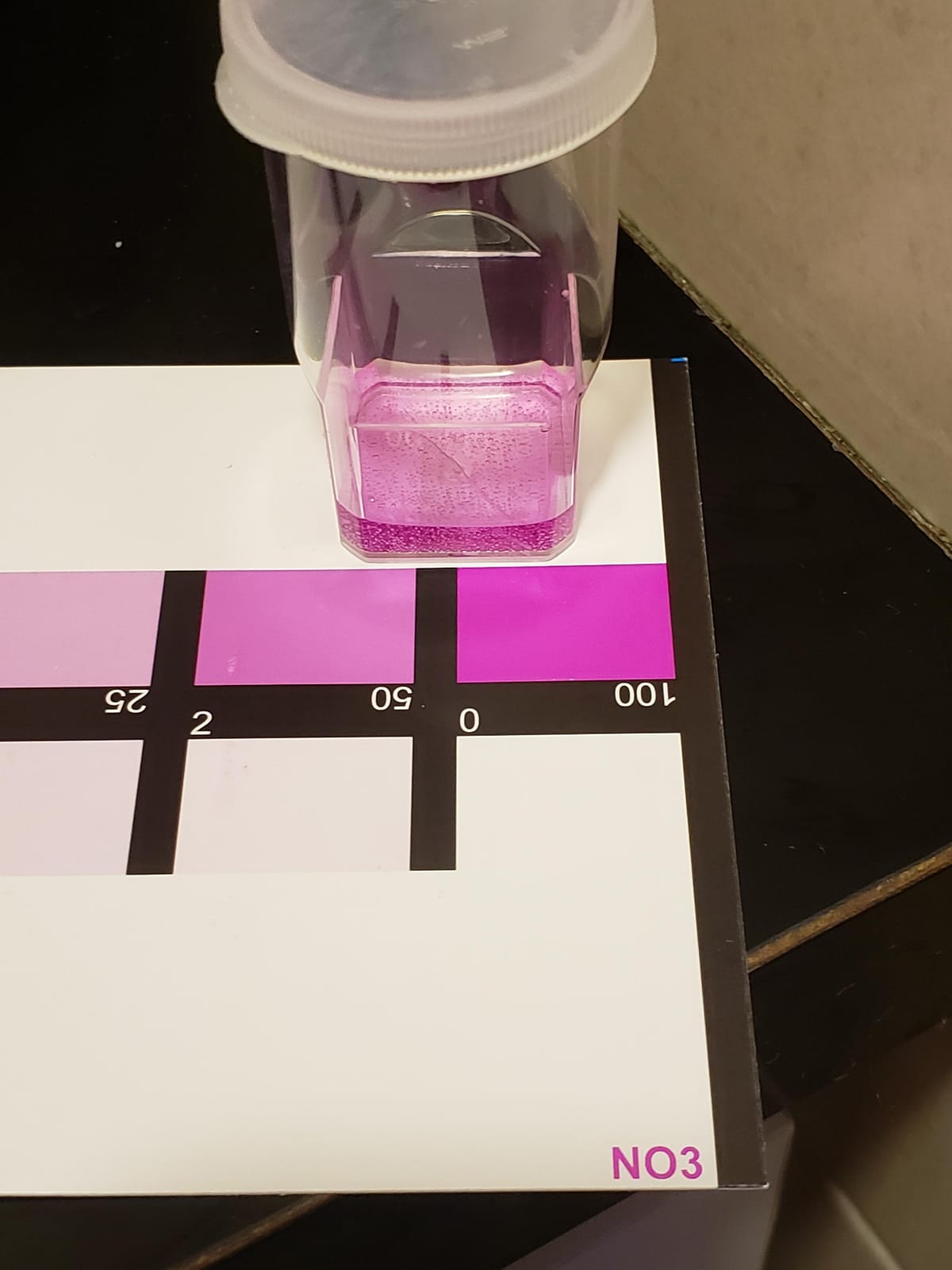
The Salifert Nitrate test exists for one reason: reef nitrate sits in a range where most kits cannot help you. It detects down to 0.2 ppm, which is low enough to catch nutrient creep before it becomes a problem rather than after.
Nitrate moves faster than any other parameter on this list because it is produced continuously by your livestock and removed by export. A reef that was exporting enough at eight fish may quietly climb to an undesirable level after you add more.
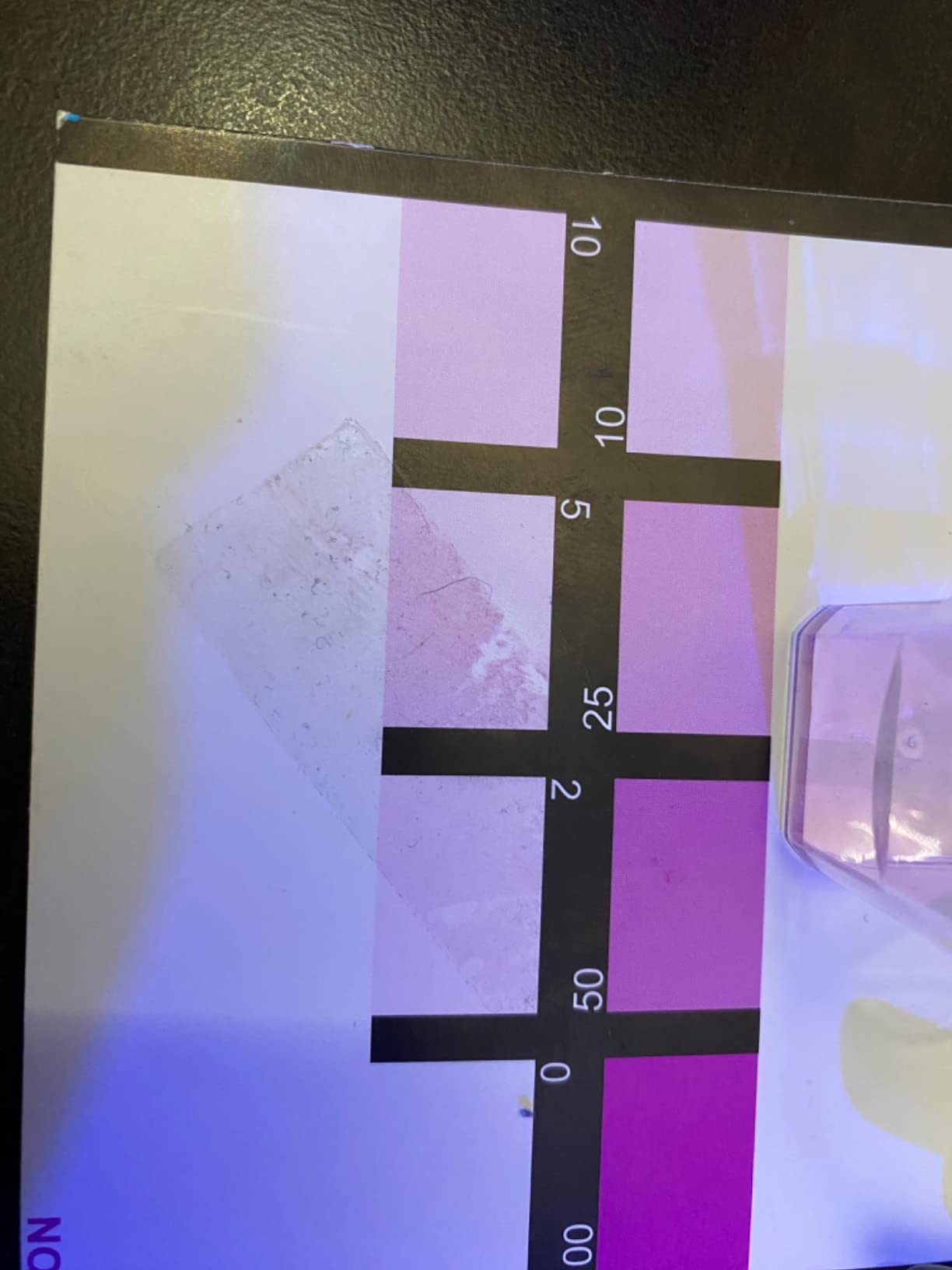
The dual range is the feature to understand before you use it. The same bottle set covers a reef range and a fish-only range, so you have to know which side of the scale you are reading. Get that wrong and a valid reading becomes a meaningless one.
All liquid reagents, no powders. That sounds minor until you are testing at the sink with wet hands, where measuring powder accurately is a genuine annoyance.
Who this kit is right for
Any system with meaningful fish load, and any SPS keeper who wants to keep nitrate low deliberately rather than reactively. The sensitivity is the reason to choose it over a general nutrient kit that lumps nitrate together with phosphate.
It is also a good pairing with a major element kit, since your two fastest-moving numbers, alk and nitrate, then have dedicated tools.
Where it falls short
There is no phosphate test, and phosphate is the other half of the nutrient pair that most reefers are trying to control together. You will need a separate phosphate kit for that.
The dual range is the one real trap. Write the range you are reading on the bottle before you start, because the two scales look similar and misreading one produces a number that looks plausible and is wrong.
10. API Calcium Test Kit — the cheapest way to track a trend
API CALCIUM TEST KIT Saltwater Aquarium Water 1-Count Test Kit
Two bottles plus one capped test tube
10 ppm resolution per drop
Single parameter calcium
Pros
- Straightforward two bottle titration with a clear endpoint
- One kit covers several months of weekly testing
- Consistent repeatable readings good for tracking trends
Cons
- Resolution is 10 ppm per drop
- coarser than premium kits
- Reagent 2 bottle empties before reagent 1 at normal reef levels
- High calcium shortens the total tests per kit
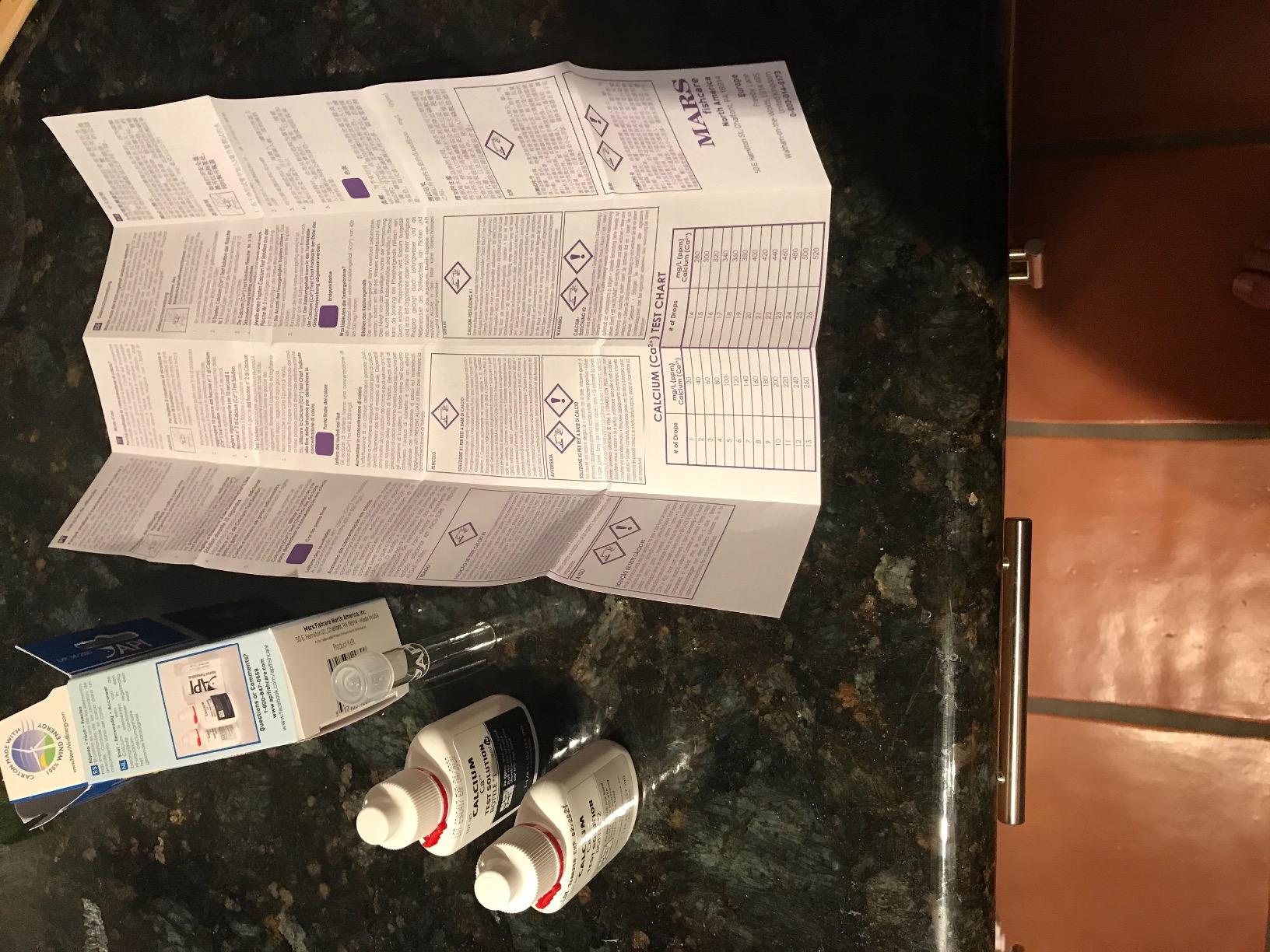
The API Calcium test is the least expensive single-parameter kit here, and for a specific job that is exactly right: watching calcium over time. Long-time API users rate it as dependable for trend tracking rather than precision measurement, and that framing is accurate.
The procedure is a two-bottle titration ending in a clear pink to purple endpoint. One kit covers several months of weekly testing, which means the cost per reading is the lowest in this roundup.
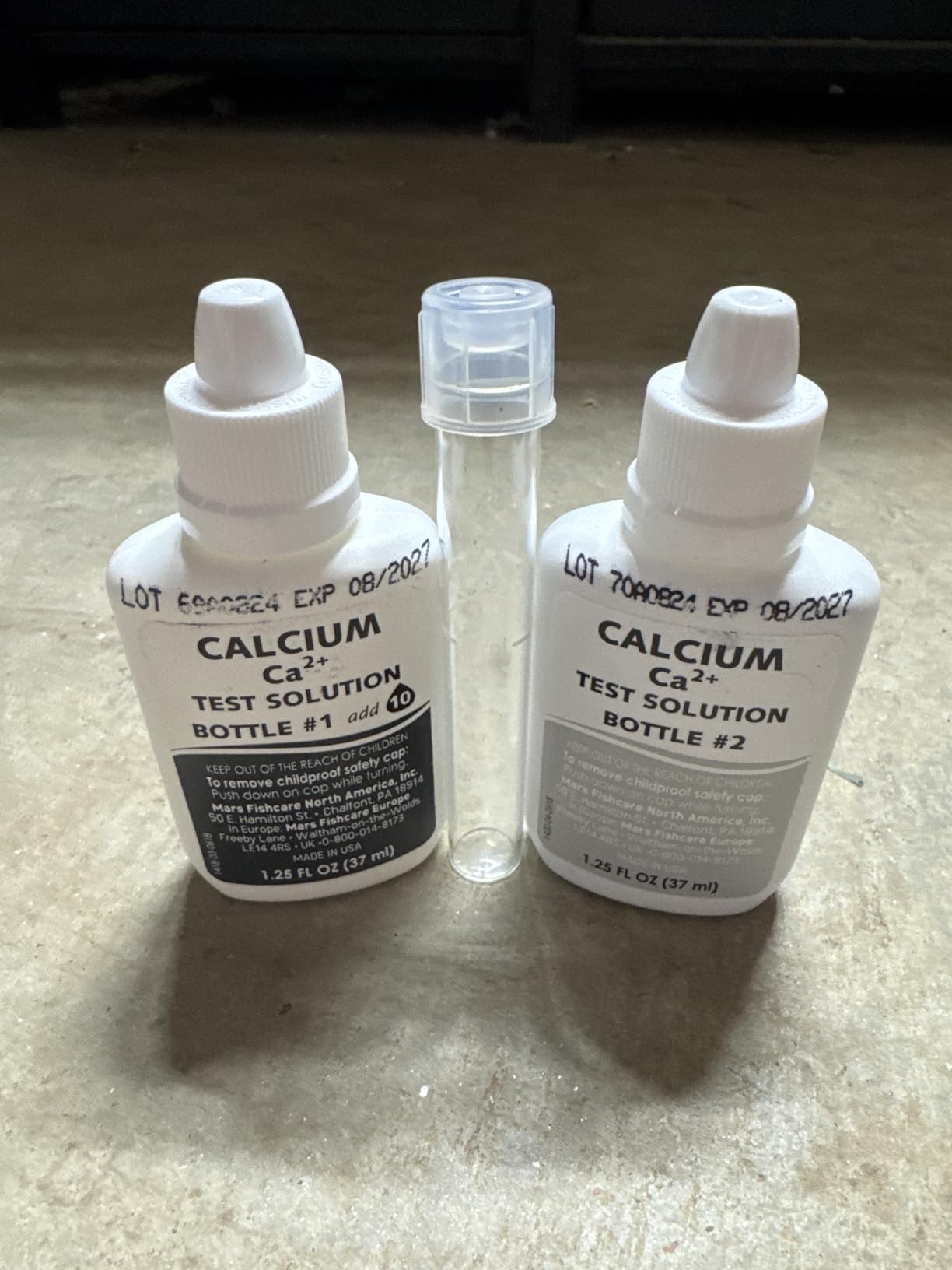
There is a structural quirk worth knowing. At normal reef calcium levels, the second reagent bottle runs out before the first one does, so you can end up with a partly full kit and a good deal of unused reagent one. That is the main complaint reviewers raise about the economics.
Resolution is 10 ppm per drop. For spotting a decline of thirty or forty ppm, that is fine. For noticing a two ppm change, it is not, and here the coarser scale is the limit rather than the reagents.
Who this kit is right for
A new keeper who wants one more parameter covered on a small budget, and a mixed reef where calcium is expected to sit still. The endpoint is easy to identify, which matters when you are learning technique.
If your system is running high calcium, note that a higher starting number means a shorter drop count, so the kit gives you fewer total tests than the packaging suggests.
Where it falls short
It is not a precision tool. Kits that resolve to 1 or 5 ppm will show you changes this one rounds away, and that difference is exactly the range where alkalinity problems start.
A few reviewers on recent batches report the titration endpoint being harder to see than it used to be. If you buy it, test it against a known solution or a second kit before you trust it with a dosing decision.
What are the big three to test for in a reef tank?
The big three are alkalinity, calcium and magnesium — the parameters corals need to build aragonite skeleton and the ones that move most when a dosing system is wrong. Everything else in a reef test routine is secondary to getting these three stable and in balance with each other.
Alkalinity (dKH or meq/L): roughly 7 to 11 dKH for mixed reefs, with a narrower band for SPS systems that are kept closer to 8. This is the parameter to check most often because it moves fastest and it is the one corals feel first.
Calcium (ppm): roughly 380 to 450 ppm. Above that range there is no meaningful additional benefit, and below it skeleton growth slows.
Magnesium (ppm): roughly 1250 to 1450 ppm, with many experienced keepers targeting around 1400. Low magnesium is what makes calcium and alkalinity look like a dosing problem when it is really a depletion problem.
Nitrate (ppm): roughly 1 to 10 for most mixed systems, with SPS keepers often holding nearer 1 to 5. Zero is not the goal; a little nitrate is normal.
Phosphate (ppm): roughly 0.03 to 0.10. This is the parameter where kit reliability is weakest, because readings below 1 ppm are close to the limit of what a bench kit can resolve.
Salinity: about 1.025 to 1.026 specific gravity, measured with a refractometer rather than a kit.
Temperature: 24 to 26 °C, stable rather than exact.
Most of the working set is alkalinity weekly, calcium and magnesium every two to three weeks, and nitrate weekly once the system is stocked. If you only have budget for four tests, those are the four.
Our general aquarium test kit roundup covers the freshwater and marine basics, and it is worth reading if your reef is still in its first year and you are deciding how much equipment to add.
Colorimetric vs titration vs digital vs ICP
Those four words describe how a reading gets produced, and they matter more to your routine than brand names do. Colorimetric means the reagent changes the sample’s color and you match it to a printed chart. Titration means you count drops of titrant until a color endpoint is reached. Digital means a probe and a light sensor read the sample and show a number. ICP means a laboratory measures the sample with inductively coupled plasma spectrometry and mails back a report.
Colorimetric charts are fast and cheap, and their accuracy depends heavily on your lighting and on how consistently you hold the tube. Good for screening, weak for detecting small changes.
Titration trades speed for resolution. Counting drops gives you a number rather than a color guess, which is why the highest-rated kits in this list all work this way. It is slower and technique-sensitive, particularly around air bubbles and drop rate.
Digital checkers remove the human reading step entirely, which is the main reason experienced keepers like them for alkalinity, nitrate and phosphate. They need calibration solution, and calibration drift gets blamed for readings that were never wrong.
ICP mail-in is the only option that measures things a bench kit cannot see, like fluoride, strontium and source water contaminants. The cost is that the answer describes the water when you filled the vial, not the water you have now.
Most working reefers end up with a combination: a colorimetric or digital kit for fast daily signals, titration reagents for the parameters they need to trust, and a mail-in panel a few times a year for the things nobody can see at home.
How to read a color chart without fooling yourself
Most reef arguments about test accuracy are really arguments about technique. Two people testing the same sample get different numbers not because one kit is better, but because one of them did something differently. Six steps remove most of that gap.
Use the same lighting every time. A chart read under a warm kitchen light and then under a cool one will not match. Pick one neutral, bright spot and treat it as part of the instrument.
Hold the tube the same way every time. Back it with a white card, hold it at eye level, and view straight down the tube rather than from an angle.
Shake reagents properly. The single most common error is a wet dropper tip or a reagent that has settled. Cap, shake hard for ten seconds, and wipe the tip before every use.
Count drops one at a time and keep the same pace. Drop size changes with pressure and speed, and a fast dropper delivers a smaller drop than a slow one.
Tap out air bubbles in syringes and on the dropper tip. A trapped bubble inflates the apparent volume and shifts the reading noticeably, especially in magnesium tests.
Watch the clock. Many colorimetric reactions are time-sensitive. Compare at the specified interval, not when you happen to look over.
If two of your kits disagree, pick one and use it exclusively for trending, and treat the second as a periodic check rather than a running argument. Consistency beats absolute accuracy in a reef, because a stable number you trust is more useful than an absolute number you chase.
Salinity: refractometer, hydrometer, or test kit?
Use a refractometer. It is faster, more precise and easier to read than any of the test kits in this roundup, and none of the ten products here measures salinity anyway. A hydrometer is the fallback when you have no refractometer, and test kits are the least accurate of the three options.
For beginners, the digital refractometers with temperature compensation are the easiest to read, because they show a number rather than requiring you to find a boundary line on a scale. If you calibrate often, they are also the most reliable, since salt creep on the prism is the usual reason a cheap handheld reads high.
Two habits matter. Wipe the prism with a soft cloth rather than your finger, and rinse the prism with tank water after a refractometer has been in the sump. Salt residue on the prism is the most common cause of a salinity reading that quietly drifts upward over a month.
Our pick list for reef hardware is broader than testing, and our reef controller guide covers the temperature and flow side of keeping parameters steady between tests.
What a reef test kit really costs to run each year
Reagents, not the kit, are what you keep paying for. The useful number is not the sticker price of a kit but the cost of running it at your testing cadence for twelve months, and you can approximate it from the test count on the bottle plus how many parameters you run.
Test count per bottle varies enormously across this roundup, and that is the single biggest driver of ongoing cost. The KH and alkalinity kit runs 100 to 200 tests per bottle, the calcium kit up to 100, the magnesium kit 50, and the Red Sea Reef Foundation Pro ships 75 calcium, 75 KH and 60 magnesium tests in one package.
Work out your annual load before you buy. Test alkalinity twice a week, calcium and magnesium weekly, nitrate and phosphate weekly, and you are running well over a hundred tests a year across five parameters. Any single-parameter kit with 50 or fewer tests will need refilling inside that year, while the 100-to-200-test bottles will not.
Two habits cut the cost without cutting the information. Test immediately after a water change rather than at a random time, so you measure a system that is at its most stable, and test again right before the next change so you can derive an actual consumption rate instead of guessing at a dose. Both are free, and the second one turns your kit into a dosing calculator’s best friend.
You will also want a way to keep the tank cool enough to need a chiller at all, which is where our saltwater chiller guide comes in, and if you also maintain a pool on the side, our pool test kit picks use similar colorimetric principles at much higher concentrations.
Frequently Asked Questions
What is the best marine test kit for a reef tank?
The best aquarium test kits for reef tanks depend on your coral type. For most mixed reefs, the API Reef Master covers calcium, alkalinity, phosphate and nitrate in one package and is the easiest place to start. For SPS systems, the Red Sea Reef Foundation Pro offers finer resolution at 5 ppm calcium and 0.05 meq/L KH. Dedicated single-parameter titration kits are the most accurate per measurement.
What are the big three to test for in a reef tank?
The big three are alkalinity, calcium and magnesium. Alkalinity is usually held between 7 and 11 dKH, calcium between 380 and 450 ppm, and magnesium near 1400 ppm. Corals need all three in balance to build aragonite skeleton, and low magnesium makes calcium and alkalinity consumption look like a dosing problem.
What is the best kit for testing reef alkalinity?
The Salifert KH/Alk test is the best budget choice, resolving in 0.1 meq/L or 0.3 dKH steps with a sharp endpoint and 100 to 200 tests per bottle. For finer resolution on SPS systems, the Red Sea Reef Foundation Pro resolves to 0.05 meq/L. A digital Hanna checker is the fastest route if you already have calibration solution.
Which water test kit is the most accurate?
Titration kits are generally the most accurate bench option, because you count drops to a color endpoint rather than guessing at a chart. Reviewers report the Salifert Magnesium test matching a university lab result, and Red Sea Reef Foundation Pro alkalinity readings landing within about 0.1 dKH of a digital checker. Mail-in ICP analysis is the most accurate option overall, but it is not a real-time answer.
How often should I test my reef tank?
Test alkalinity twice a week, calcium and magnesium every two to three weeks, and nitrate weekly once the system is stocked. Magnesium moves slowly and does not need weekly testing. For SPS systems, a daily alk check is common because small swings matter more. Test right after a water change and again before the next one to derive a real consumption rate.
How accurate are Salifert test kits?
Salifert titration kits are widely considered among the most accurate hobbyist options, particularly the magnesium and alkalinity tests. One reviewer cross-checked a magnesium result against a state university lab and found agreement. Reviewers note the phosphate test is less reliable at the very low readings SPS keepers care about, so treat low-end phosphate numbers with caution.
Our final verdict on the best aquarium test kits for reef tanks
Start with the API Reef Master if you want one kit that answers “is anything wrong” across calcium, alkalinity, phosphate and nitrate, and it is the pick we return to most often as our editor’s choice. Once the tank is stocked, add the Salifert KH/Alk test for tighter alkalinity tracking, the Salifert Magnesium test because almost nothing else measures it well, and the Red Sea Reef Foundation Pro if your dosing program needs resolution you can defend.
Run one kit consistently rather than five kits occasionally, test after water changes, and use mail-in analysis a few times a year for the things a bench kit cannot see. That combination, refreshed for 2026, covers essentially everything a reef needs.