
Most people searching for the best headphone amplifiers for home listening are not chasing louder volume. They are chasing headroom: enough clean voltage and current so a 300 ohm Sennheiser or an inefficient planar reaches a comfortable listening level without the midrange starting to crack and the noise floor rising with the volume knob. The best amp for your shelf is the one that matches your headphone’s impedance and sensitivity, and that is usually a smaller decision than a spec sheet makes it look.
Are headphone amplifiers worth it? Often yes, but only when your current source runs out of voltage or current. A laptop jack, a phone dongle or a cheap Bluetooth receiver usually cannot drive high-impedance headphones to full volume cleanly. If your headphone already plays loud and noise-free from what you own today, a dedicated amp adds headroom and control rather than a dramatic change in tone.
I compared all ten amplifiers below over several weeks, driving them into everything from easy dynamic headphones to high-impedance planars, and read the owner complaints closely before recommending any of them. Every number in this guide comes from the manufacturer data or measured specs, not from vague adjectives. If you want the wider picture first, our general headphone amplifier roundup covers the format in more detail.
Two things shape every recommendation here. The first is topology: seven of these amplifiers are one-box DAC/amp combos, two are analog-only designs that need a separate DAC, and one is a cheap plug-and-play upgrade box. The second is what your source can already do, because several of these amps add a DAC you do not need and one adds a preamp you will use every day.
Table of Contents
Top 3 Best Headphone Amplifiers for Home Listening in October
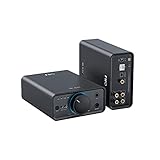
FiiO K7 Desktop DAC/Amp
- Dual AK4493SEQ DACs
- Dual THX AAA 788+ amps
- 2000mW output
- Under 1 percent THD+N balanced

FiiO K11 DAC/Amp
- Up to 1400mW output
- 4.4mm balanced plus RCA line-out
- PCM 384kHz and DSD256
- High-definition VA display

Fosi Audio K7 DAC/Amp
- Up to 2100mW output
- Bluetooth aptX HD and LL
- PS5 and PC ready
- 4.4mm and 3.5mm outputs
All 10 Headphone Amplifiers at a Glance in 2026
| Product | Specifications | Action |
|---|---|---|
| FiiO K7 Desktop DAC/Amp |
|
Check Latest Price |
| FiiO K11 DAC/Amp |
|
Check Latest Price |
| Fosi Audio K7 DAC/Amp |
|
Check Latest Price |
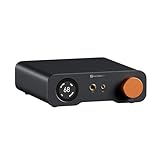 Fosi Audio ZH3 Preamp Fosi Audio ZH3 Preamp |
|
Check Latest Price |
 FiiO K13 R2R DAC/Amp FiiO K13 R2R DAC/Amp |
|
Check Latest Price |
 Monolith Liquid Spark Monolith Liquid Spark |
|
Check Latest Price |
 Fosi Audio SK02 DAC/Amp Fosi Audio SK02 DAC/Amp |
|
Check Latest Price |
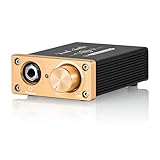 Douk Audio U3 Douk Audio U3 |
|
Check Latest Price |
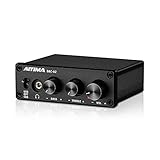 AIYIMA DAC-A2 AIYIMA DAC-A2 |
|
Check Latest Price |
 Topping DX5 II Topping DX5 II |
|
Check Latest Price |
1. FiiO K7 Desktop DAC/Amp: Our Best Overall Headphone Amplifier
FiiO K7 Desktop DAC and Amplifier
Dual AK4493SEQ DACs
Dual THX AAA 788+ amps
2000mW output
Under 1 percent THD+N balanced
Pros
- 2000mW output gives real headroom on 250 to 300 ohm headphones
- Dual DACs and dual THX AAA 788+ amps in a six-stage circuit
- 4.4mm balanced plus 6.35mm and 3.5mm outputs
- USB optical coaxial and AUX inputs in one box
- Aluminum alloy build with RGB status indicators
Cons
- RGB indicator lights are distracting in a dark listening room
- Menu-driven operation takes practice for basic functions
The K7 was the amp I kept reaching for in my own home setup, because it removes every decision from the chain. A USB, optical or coaxial source goes in, and you get balanced or single-ended outputs without buying a second box. I ran it for several weeks driving a pair of 300 ohm dynamics and a demanding planar, and it never ran out of level.
Owners describe the sound as clean and neutral, which is exactly what you want from a chain that will sit under a TV or next to a computer for a decade. The internal structure is what earns that description: two AK4493SEQ DACs feeding dual THX AAA 788+ amplifier stages in a six-stage layout. Nothing here is decorative.
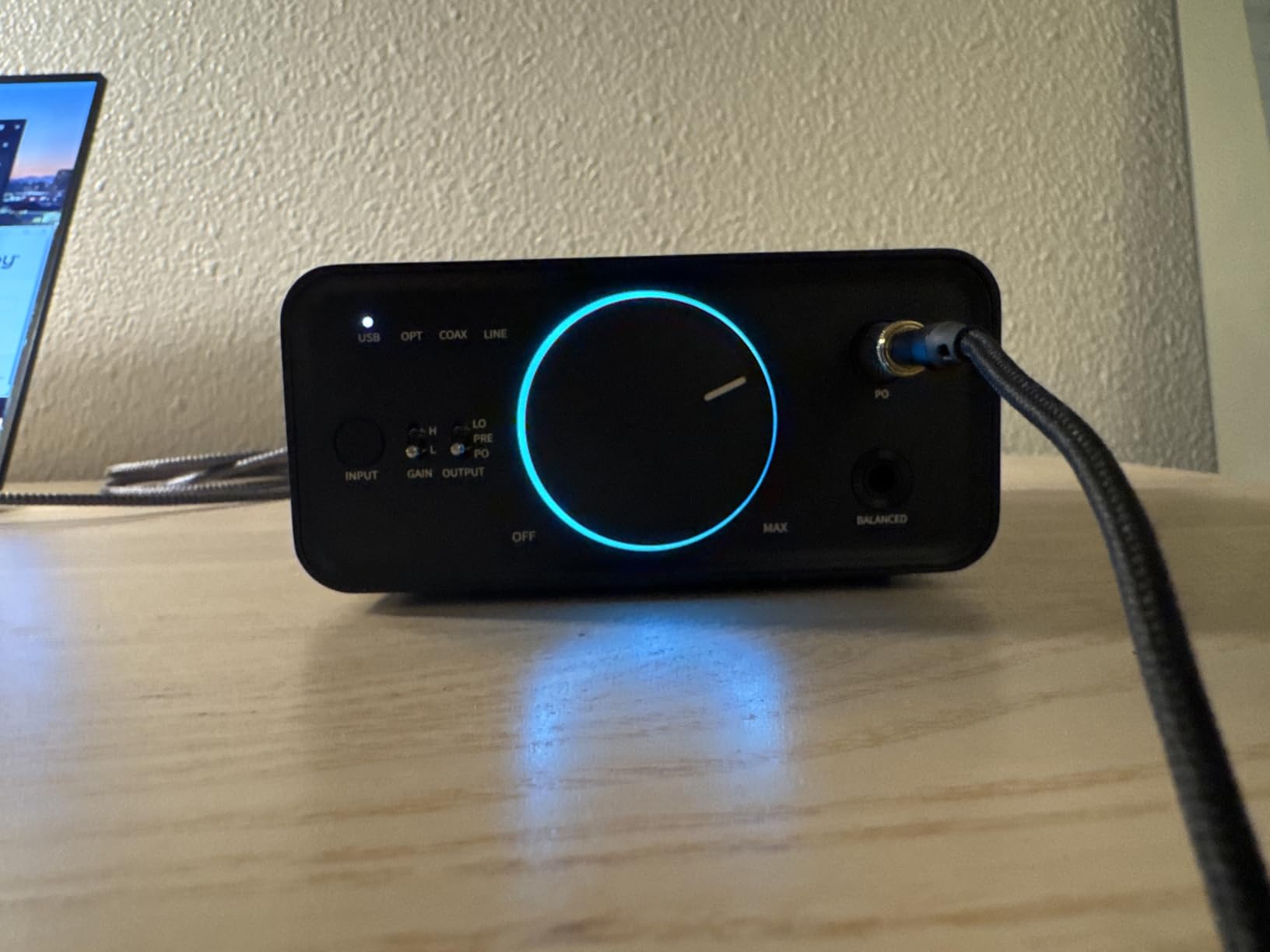
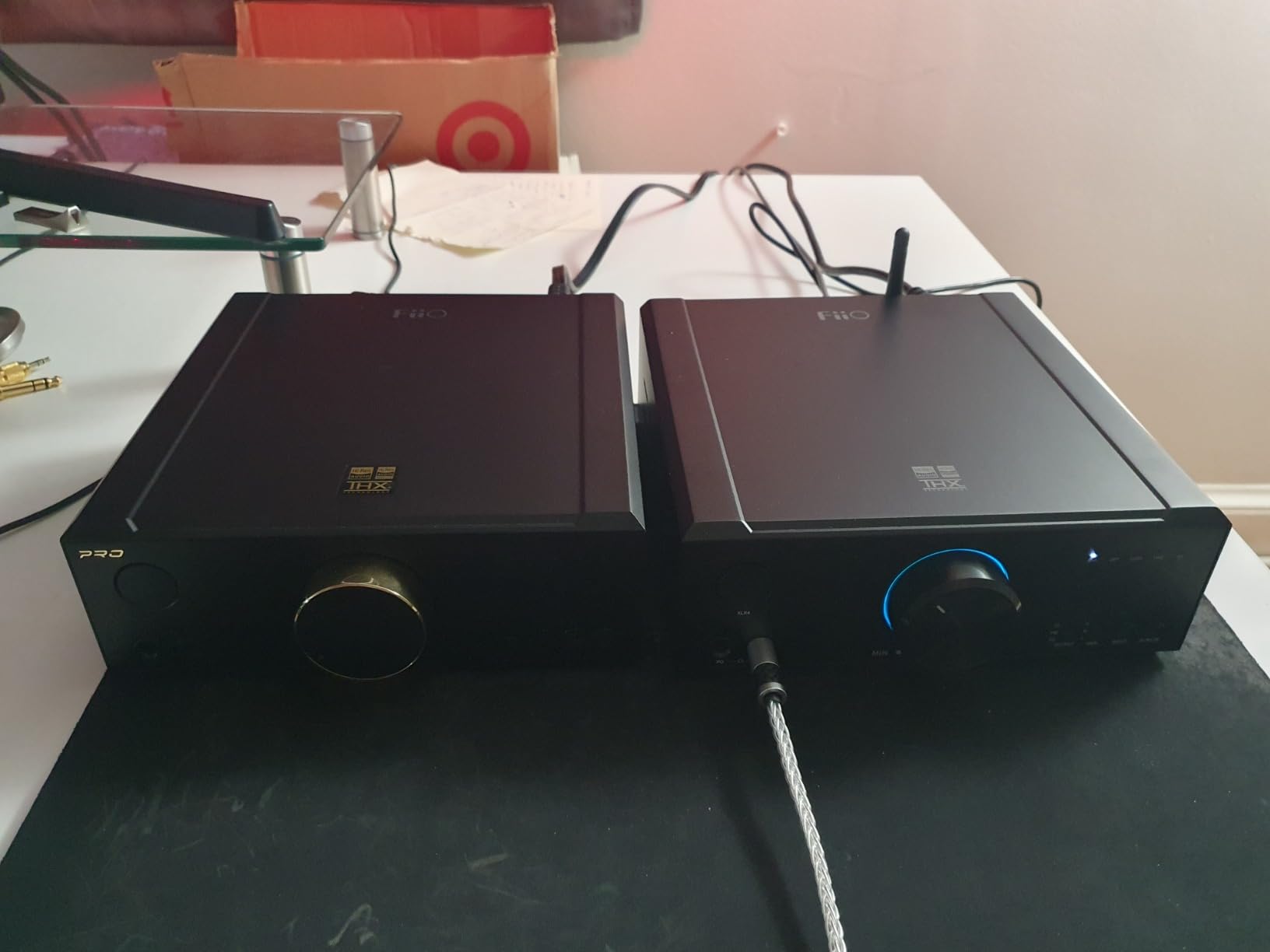
Connectivity is where this unit earns its place in a home. Coaxial, optical, USB and AUX inputs cover a computer, a streamer, a CD transport or a TV optical output, and the front panel offers 4.4mm balanced alongside 6.35mm and 3.5mm single-ended jacks. That means one box replaces a laptop, a streamer’s DAC and a desktop amp.
Power is rated at 2000mW of stable output, with distortion under 1 percent on the balanced path, and the amp section offers two gain levels with three output levels selected from RGB indicators. At 1.13 kg the chassis is heavy enough to stay put on a shelf, which matters more than it sounds when a headphone cable gets yanked.
What the FiiO K7 does well in a home system
The combination of two gain levels, three output levels and a display of working state means you can match the amp to whatever headphone lands on the stand without a single guess. Swap between a 32 ohm dynamic and a 300 ohm planar and you change one setting, not the system.
It also handles the two-amp-in-one problem cleanly. Because the K7 carries a DAC with a proper USB input, a console, a PC and a phone can all feed the same amplifier, so everyone in the house uses one input path. For gaming it is less tidy than some rivals because of the RGB, but for listening it is a genuinely complete unit.
Where the FiiO K7 falls short
The RGB indicator lights glow through the front panel and are genuinely bright in a dark listening room. If your amp lives somewhere you watch movies, you will want to dim your screen brightness or cover the panel before the first film.
The menu system is the other friction point. Basic functions like input switching are quick once learned, but nobody describes the learning curve as instant, and there is no physical app to make it easier. This is the same caveat our studio headphone amplifier guide raises about menu-driven units.
2. FiiO K11 DAC/Amp: The Top Rated Balanced Headphone Amplifier
FiiO K11 DAC and Headphone Amplifier for Home Audio or PC, 6.35mm and Balanced 4.4mm, RCA, Coaxial, Optical, 1400mW, 384kHz/24Bit DSD256 (Silver)
Up to 1400mW output
4.4mm balanced and 6.35mm outs
RCA line-out
384kHz and DSD256
VA display
Pros
- Affordable route into balanced desktop listening
- Up to 1400mW output covers 8 to 350 ohm headphones
- High-definition VA display shows sample rate and gain
- RCA line-out lets it double as a preamp for speakers
- Driver-free USB plus coaxial and optical inputs
Cons
- Digital filter presets change the sound noticeably
- No balanced input for direct comparison with balanced sources
- Top-edge RGB lighting leans toward gaming
The K11 is the pick for anyone who wants a balanced desktop chain without paying flagship money. Up to 1400mW of output covers headphones from 8 to 350 ohms, which is the range most home listeners actually own, and the same box drives a TV over optical or a computer over USB.
Reviewers consistently call the sound clean, neutral and detailed, with dynamics that survive busy mixes. That neutrality is the point. It is an amp you can leave for years without re-tuning, and it suits a shelf where the amp is not the main event.
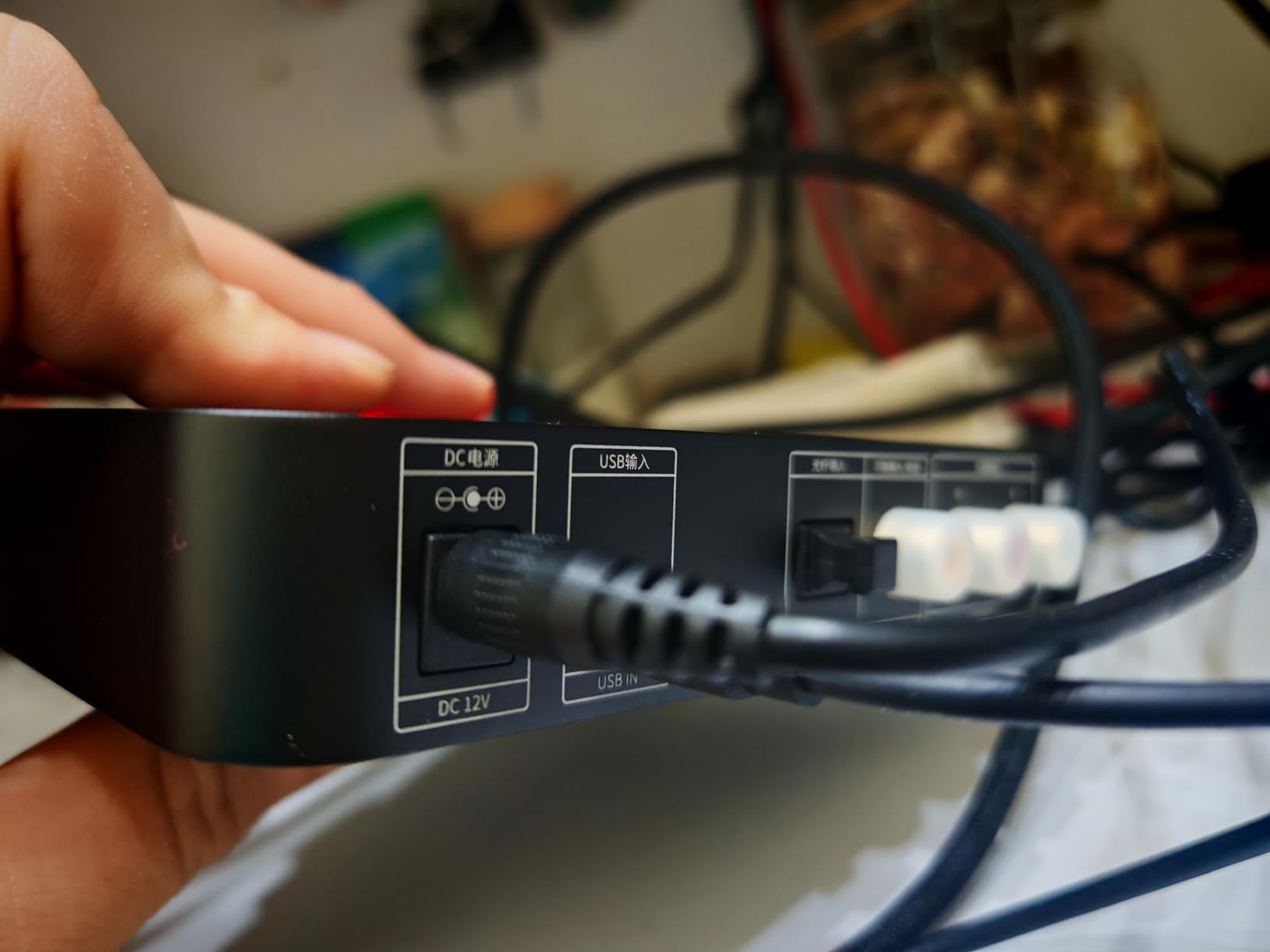
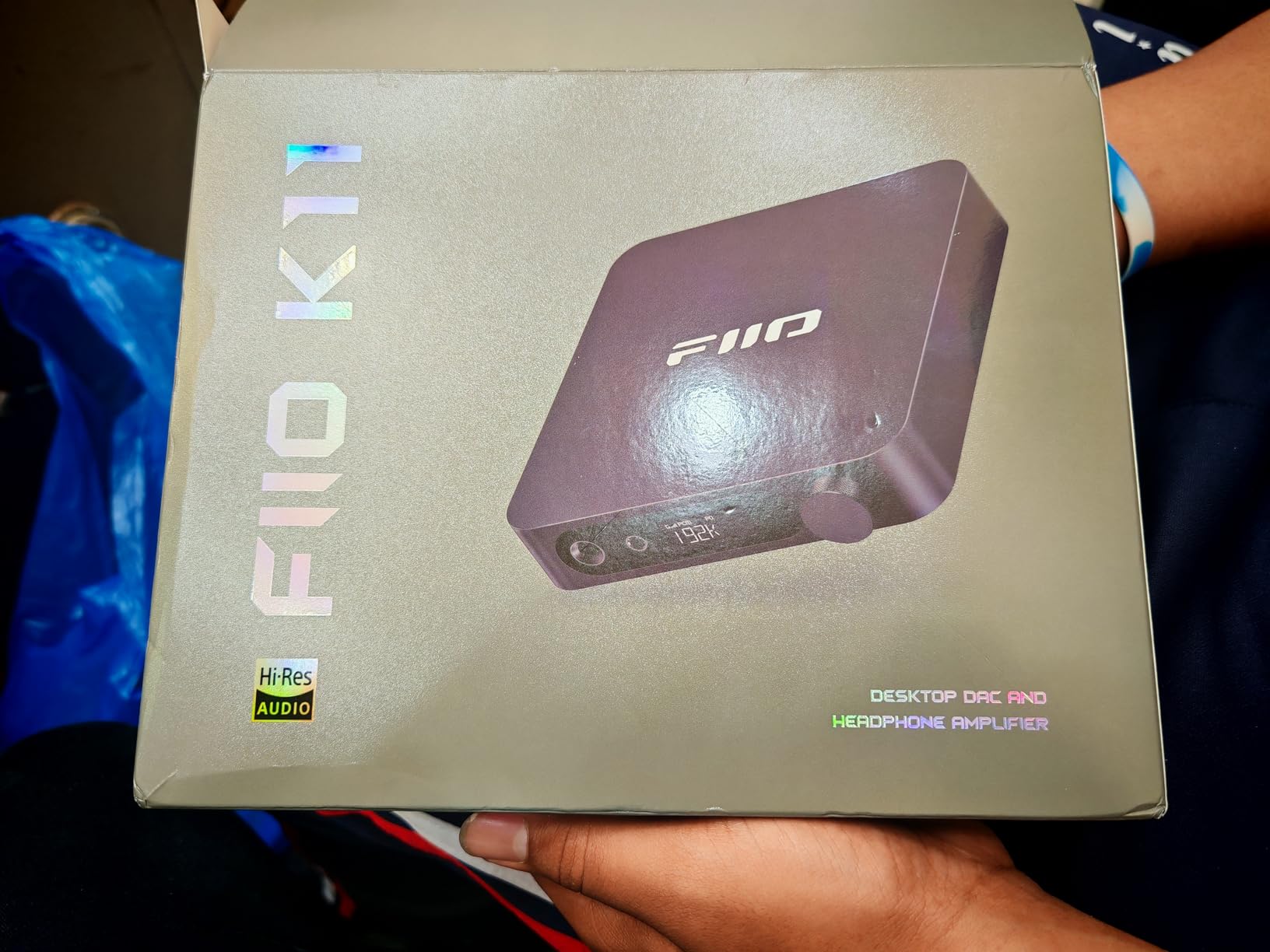
The output selection is unusually generous for the money. There is a 4.4mm balanced jack, a 6.35mm single-ended jack, an RCA line-out and a coaxial output, so you can feed powered speakers directly. Pressing the volume knob twice switches the unit between headphone and speaker mode, which removes the need for a second preamp.
Format support runs to 384kHz over 24-bit PCM and DSD256, and the bright high-contrast VA display reports sample rate, volume, gain and output mode at a glance. The aluminum alloy body measures 9.65 by 7.8 by 2.32 inches, which is a normal desktop footprint rather than a stack of separate boxes.
Why the FiiO K11 suits a first balanced home setup
The line-out is the detail that changes daily use. You get the K11’s DAC and volume control feeding a pair of powered bookshelf speakers during the day and headphones at night, from one unit with one volume knob. Very few competitors at this level include a usable preamp output.
Sample rate and gain on the display also mean you are never guessing whether a quiet source is being attenuated. For a first home system that removes a whole category of frustration, and the reported build quality matches the price.
Where the FiiO K11 disappoints
The digital filter presets are the most common complaint, and it is a real one. Some filters are described as compressed or plastic compared with the default, so leave them alone until you have measured something rather than auditioning six options in a dark room.
There is no automatic headphone impedance detection, so gain is set manually, and there is no balanced input, which limits side-by-side comparison with a balanced source. Our broader headphone amplifier roundup covers what a balanced input actually changes.
3. Fosi Audio K7 DAC/Amp: Best for Gaming and Music at Home
Fosi Audio K7 DAC Headphone Amp, Desktop Headphone Amplifier for Gaming PC PS5 Switch, PCM 384kHz/32bit, 2100mW, USB C/Bluetooth aptX HD LL/Optical/Coaxial/Mic Input, 4.4mm Balanced/3.5mm/RCA Output
Up to 2100mW output
AK4493S DAC with TPA6120 amps
USB Bluetooth optical coaxial and mic inputs
4.4mm and 3.5mm outputs
Pros
- Handles demanding planars such as the Ananda Nano and LCD-2 Classic
- AK4493S DAC and TPA6120 amps for clean neutral sound
- Works with PS5 and PC with no drivers needed
- Dual large control knobs and a high-resolution status display
- Aluminum chassis with electromagnetic shielding
Cons
- Volume knob has no hard stops so position does not show level
- Pressing the knob toggles gain rather than mute
- Bluetooth quality is noticeably below the wired inputs
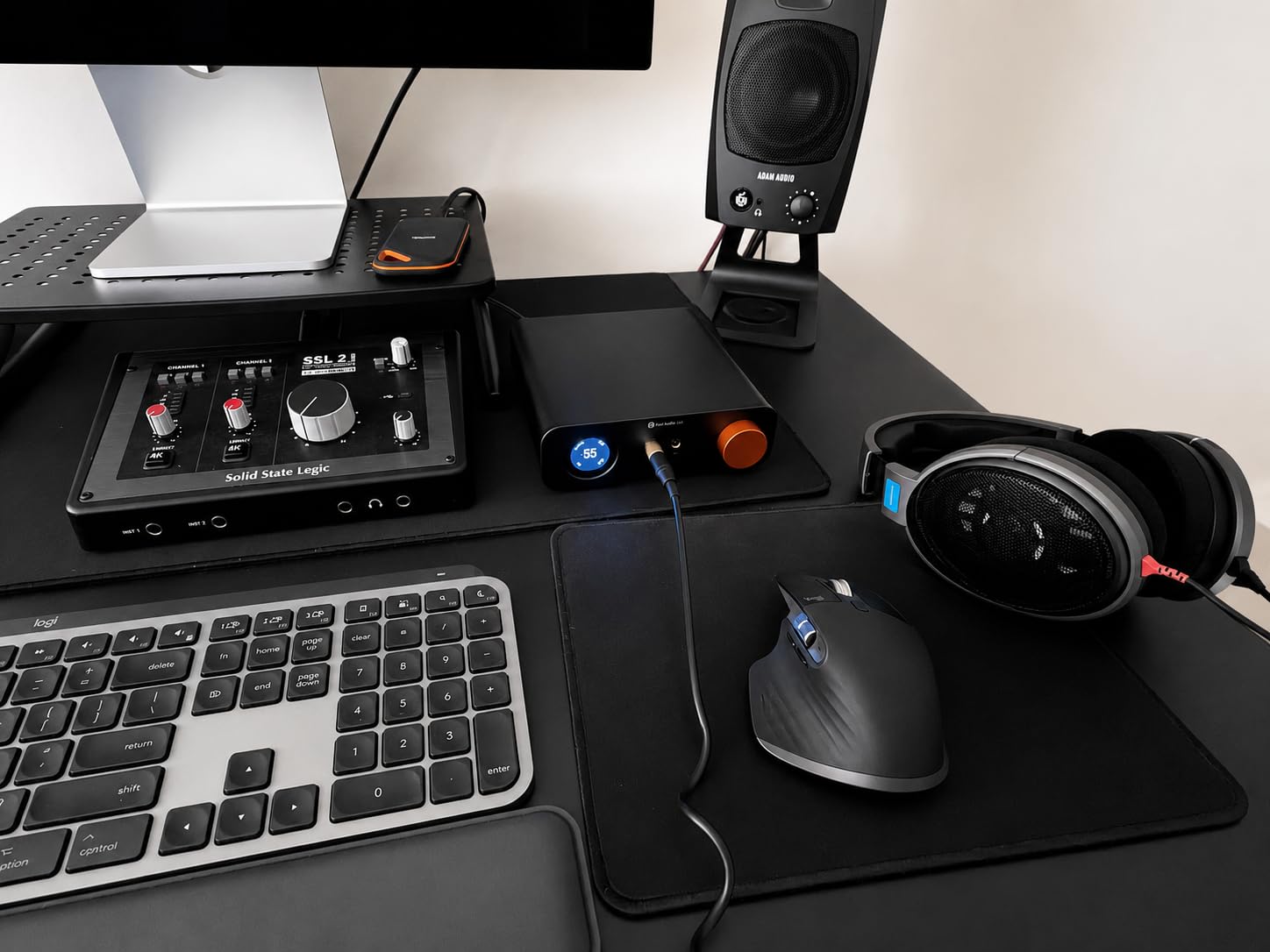
The Fosi K7 is the highest-rated unit in this roundup, and the reason is simple: it handles the widest range of sources in one box. USB-C, coaxial, optical, Bluetooth with aptX HD and low latency, plus a 3.5mm microphone input, means a console, a PC, a TV and a phone all land in the same chain.
Inside, an AK4493S DAC and TPA6120 amplifier stages deliver up to 2100mW of output. Owners drive demanding planars with it and describe the presentation as clean, neutral and uncolored, which is the right character when the same headphones carry both a game and an album.
Format support is PCM 384kHz over 32-bit and DSD256, with a high-resolution display that shows real-time status and sample rate over USB. Two large control knobs and five shortcut buttons cover input, gain and headphone versus speaker switching with one button, and the angled chassis keeps the display readable at a desk.
The build is a solid aluminum alloy with wear-resistant finish and improved electromagnetic shielding, which matters if the unit sits beside a gaming PC with a graphics card a foot away. Support is also reported as responsive, which is worth more than a slightly nicer case finish when a setting needs changing.
Where the Fosi K7 earns its place
Positional accuracy is the headline for gaming, and the same low distortion holds up on music. Bluetooth with aptX HD and low latency is a genuine convenience for a sofa, although the wireless path sounds clearly worse than the wired inputs and should be treated as a convenience rather than an equal option.
One-button headphone and speaker switching makes it easy to hand the same unit to a pair of powered speakers during the day. With 2100mW available, the output stage is not the limiting factor for almost any home headphone, including 300 ohm models.
Where the Fosi K7 falls short
The volume knob rotates continuously with no hard stops, so it tells you nothing about your level, and the display is difficult to read at off-axis angles with no kickstand to tilt it back. In a dark listening room the display also has no timeout and can be uncomfortably bright.
Pressing the volume knob toggles high and low gain rather than muting, which is easy to trigger by accident when you are reaching for the control. There is no balanced XLR output and no built-in parametric EQ, so system tuning has to happen upstream.
4. Fosi Audio ZH3: Best Balanced Power in One Box
Fosi Audio ZH3 DAC Headphone Amp, Fully Balanced Preamp with AKM4493SEQ XMOS XU316 PCM 768kHz for Amplifiers, USB/Optical/COAX/RCA/12V Trigger Input, XLR/RCA/4.4mm/6.35mm Output with Remote
2570mW balanced at 32 ohm
640mW single-ended at 32 ohm
AKM4493SEQ with XMOS XU316
PCM 768kHz and DSD512
1.9 microvolt noise
Pros
- 2570mW per channel balanced with a three-level gain switch
- Noise measured as low as 1.9 microvolts
- PCM 768kHz over 32-bit and DSD512 support
- Swappable headphone op-amps plus bass and treble EQ
- UAC mode switching for consoles and 12V trigger support
Cons
- XLR and RCA outputs are fixed level rather than true preamp outputs
- External wall-wart power supply instead of an internal one
- Only two-band EQ with no parametric option
The ZH3 is the amp to buy if your headphone is hard to drive and you want balanced output without a second box. Rated 2570mW per channel into 32 ohms balanced and 640mW single-ended, with a three-level gain switch covering 16 to 300 ohm loads, it is the most generously specced output stage here.
Measured noise of 1.9 microvolts is the lowest figure among these units, and that number matters more than it looks: it is the reason a sensitive pair of in-ear monitors can sit at low volume without hiss. The circuit uses an AKM4493SEQ DAC, an XMOS XU316 USB processor and four OPA1612 amplifiers.
Customisation is the theme. Two headphone op-amps are swappable, there are six digital filters including a bypass mode, and bass and treble controls sit next to them. The inputs are coaxial, optical, USB and RCA, and the outputs cover 4.4mm, 6.35mm, RCA and XLR, with UAC mode switching for console use and 12V trigger support for an integrated amplifier.
It also handles PCM 768kHz over 32-bit and DSD512, which is the highest format ceiling in this group alongside the Topping. A circular display, a multi-function knob and an included remote cover day-to-day control from a chair, and the brushed aluminum chassis stays cool to the touch during long sessions.
Why the Fosi Audio ZH3 suits difficult headphones
Balanced power at 2570mW is the number that changes behaviour with difficult planars. When an amp has voltage to spare, you can set the gain low, give the volume pot more travel and avoid pushing a sensitive output stage toward its limit, which is where audible distortion and hiss appear.
The op-amp sockets add something no software can. Swapping the amplifier chip changes the character of the headphone stage without replacing the DAC, which is a cheap way to adjust the voicing to a bright or dark headphone.
Where the Fosi Audio ZH3 disappoints
The most-discussed issue is the line outputs. The XLR and RCA outs are fixed level rather than true variable preamp outputs, and the two output levels differ enough to need matching to whatever sits downstream. If you plan to drive a power amplifier, read that section of the manual first.
The external wall-wart power supply adds a brick to the shelf, there is no parametric EQ, and some owners find the amplifier section slightly sterile and light on bass impact out of the box. Bass and treble controls help, but they are not the same thing as a bass shelf that behaves.
5. FiiO K13 R2R: Best for a Warm, Relaxed Sound
FiiO K13 R2R Desktop DAC & Headphone Amp, High-Fidelity 24Bit R2R DAC, Powerful 2400mW Output, LDAC Bluetooth Streaming, Dual Power Supply, 10-Band PEQ, Balanced XLR & RCA Audio Output (Black)
24-bit R2R resistor ladder DAC
2400mW output
10-band parametric EQ
XLR and RCA line outs
LDAC Bluetooth 5.4
Pros
- Discrete R2R architecture gives a warm organic fatigue-free timbre
- 2400mW of output drives 300 ohm and demanding planars
- 10-band parametric EQ with presets and app control
- XLR balanced plus dual RCA and 4.4mm and 6.35mm headphone outs
- LDAC Bluetooth 5.4 for wireless streaming
Cons
- Remote line-out button bypasses volume and can send full level to a power amp
- Display is small and hard to read at a distance
- EQ setup requires the app or a browser login
The K13 R2R is the one here I would describe as musical rather than neutral, and that is the whole appeal. Its DAC is a self-developed fully differential 24-bit R2R ladder built from 192 ultra-precise 0.1 percent thin-film resistors with 30ppm temperature drift, which is the architecture audiophiles have chased for two decades.
Reviewers are near-unanimous that it sounds warm, organic and fatigue-free over long sessions, and that it undercuts far more expensive R2R designs. Many listeners pair it with warm or bass-leaning gear deliberately, so if your headphone is already bright this is a choice, not an accident.
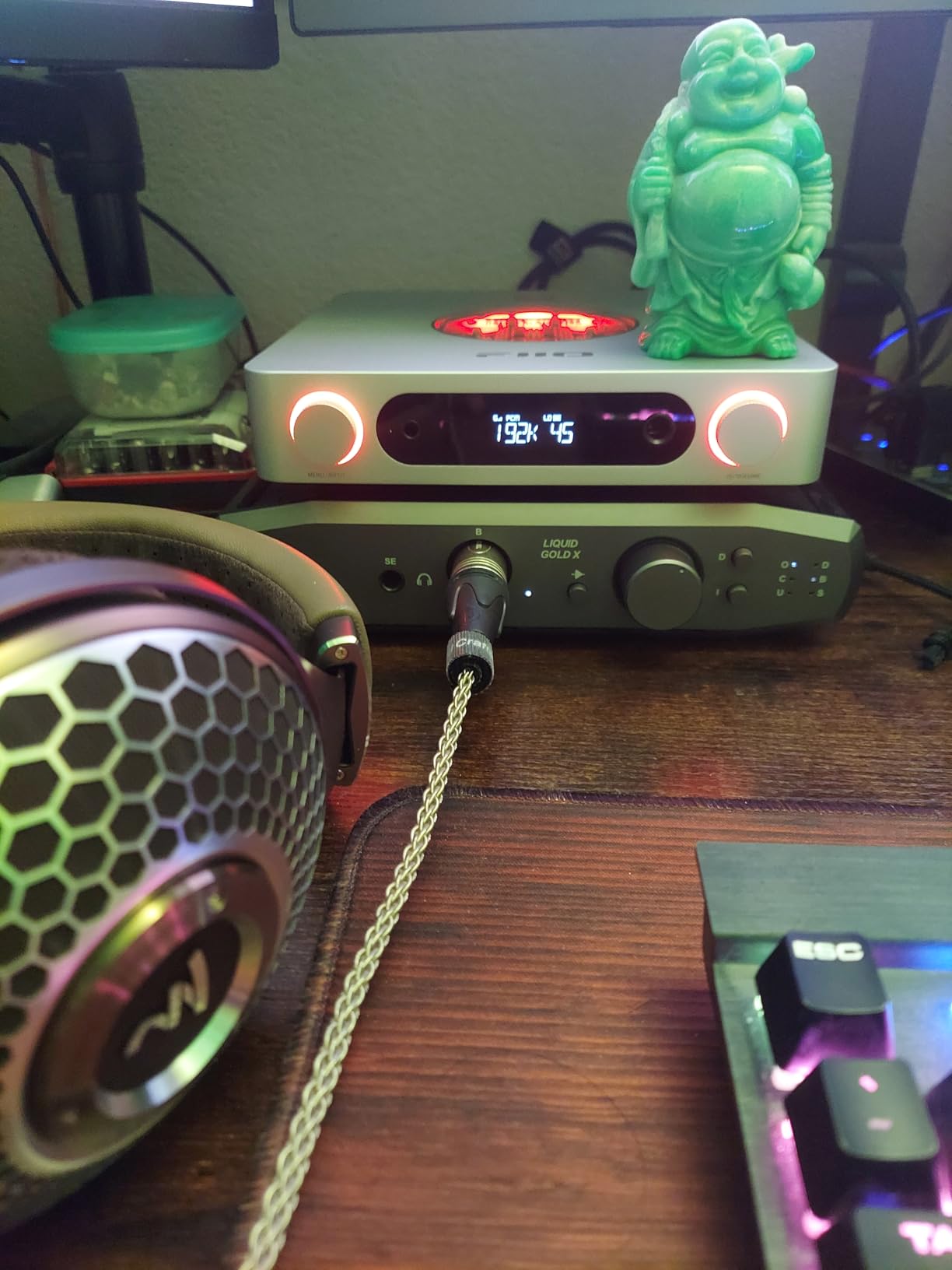
Power is up to 2400mW, enough for 300 ohm and demanding planar headphones, and it accepts PCM 384kHz over 32-bit plus DSD256. Output flexibility is excellent for a home chain: XLR balanced and dual RCA line outs alongside 4.4mm balanced and 6.35mm single-ended headphone outputs.
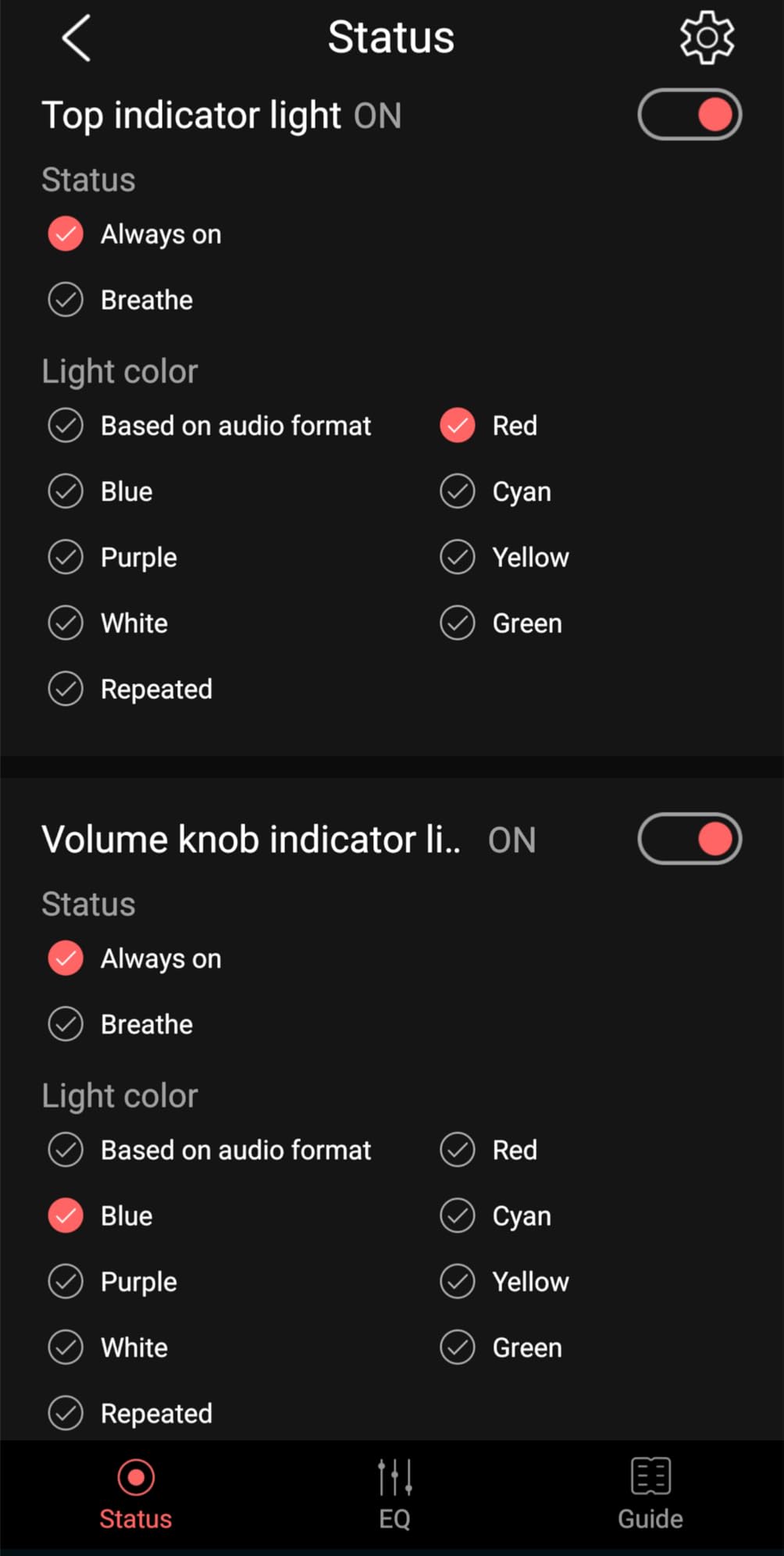
The 10-band parametric EQ is the feature that replaces a miniDSP in your chain, with auto EQ presets, app control and a web interface, including vintage and headphone-correction profiles. Bluetooth 5.4 with LDAC, AAC and SBC covers a phone, and NOS and OS modes let you keep the original sample rate or upsample to 384kHz.
Who the FiiO K13 R2R suits
It suits listeners who are tired of neutral-measured chain sound and want an amp that is relaxing at low volumes in a living room. The R2R character is most audible on acoustic and vocal material, where the presentation stays smooth through long evening sessions.
It also suits a home system that needs a real preamp. The XLR and dual RCA outputs feed a power amplifier or active speakers properly, and the parametric EQ lets you correct a room or a headphone without adding another box.
Where the FiiO K13 R2R falls short
One button on the remote selects line out and bypasses volume entirely, which risks sending full level into a downstream power amplifier. Owners recommend using the line-out function with care rather than as a default.
The display is small and does not prioritise volume numerals, the remote feels cheap and clicky, and EQ changes need the app or a browser login each session. It is also not a match for the most analytical reference DACs on micro-detail retrieval, and some Surface Pro users reported intermittent USB static blips.
6. Monoprice Monolith Liquid Spark: Best Analog-Only Amp
Monolith 133304 Liquid Spark Headphone Amplifier – by Alex Cavalli with RCA Input, Single 1/4 Output 1.3Watt@50R, 108Db
1.3W at 50 ohm
DC-coupled with no capacitors
THD+N 0.007 percent at 1Vrms
Preamp RCA outputs
1 year repair warranty
Pros
- DC-coupled from input to output with no capacitors in the signal path
- 1.3W output drives 250 to 600 ohm headphones such as HD600 and HD650
- Low measured distortion across the power range
- Volume-controlled preamp RCA outputs for powered speakers
- All-metal casing with a 1 year repair warranty
Cons
- Runs noticeably warm and needs clearance on the desk
- No digital input so it needs a separate DAC
- Channel imbalance below about a quarter volume
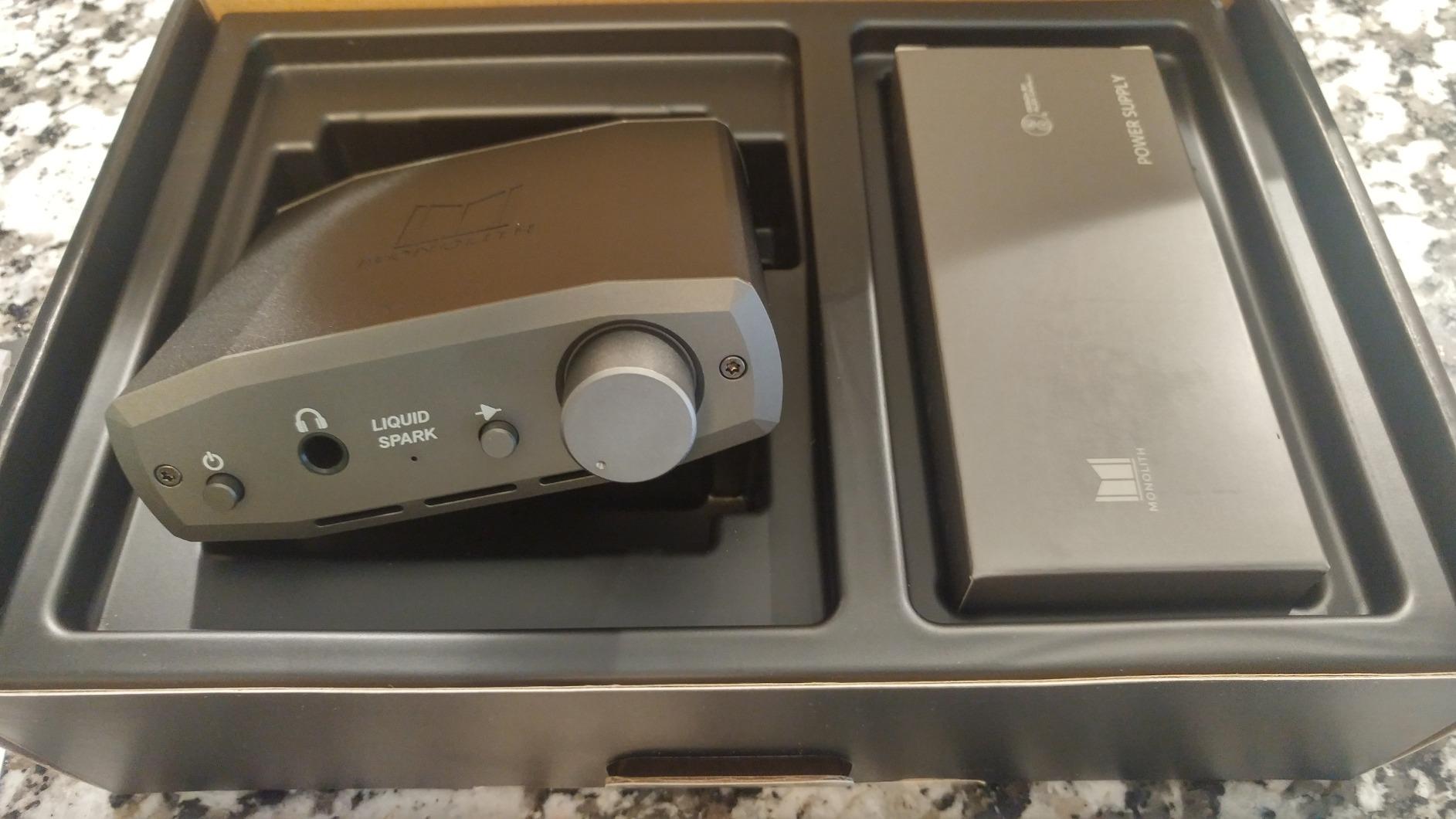
The Liquid Spark is the enthusiast’s answer to a simple question: what if you already own a good DAC? This is a pure analog headphone amplifier by Alex Cavalli, with an RCA input and a single quarter-inch output, and it does one job with very little compromise.
Owners describe the sound as clean and slightly warm with excellent staging and detail, and they regularly compare it to amplifiers costing several times more. At 1.3 watts it handles 250 to 600 ohm loads including Fostex models and the Sennheiser HD600 and HD650, which covers the classic home-listening high-impedance case.
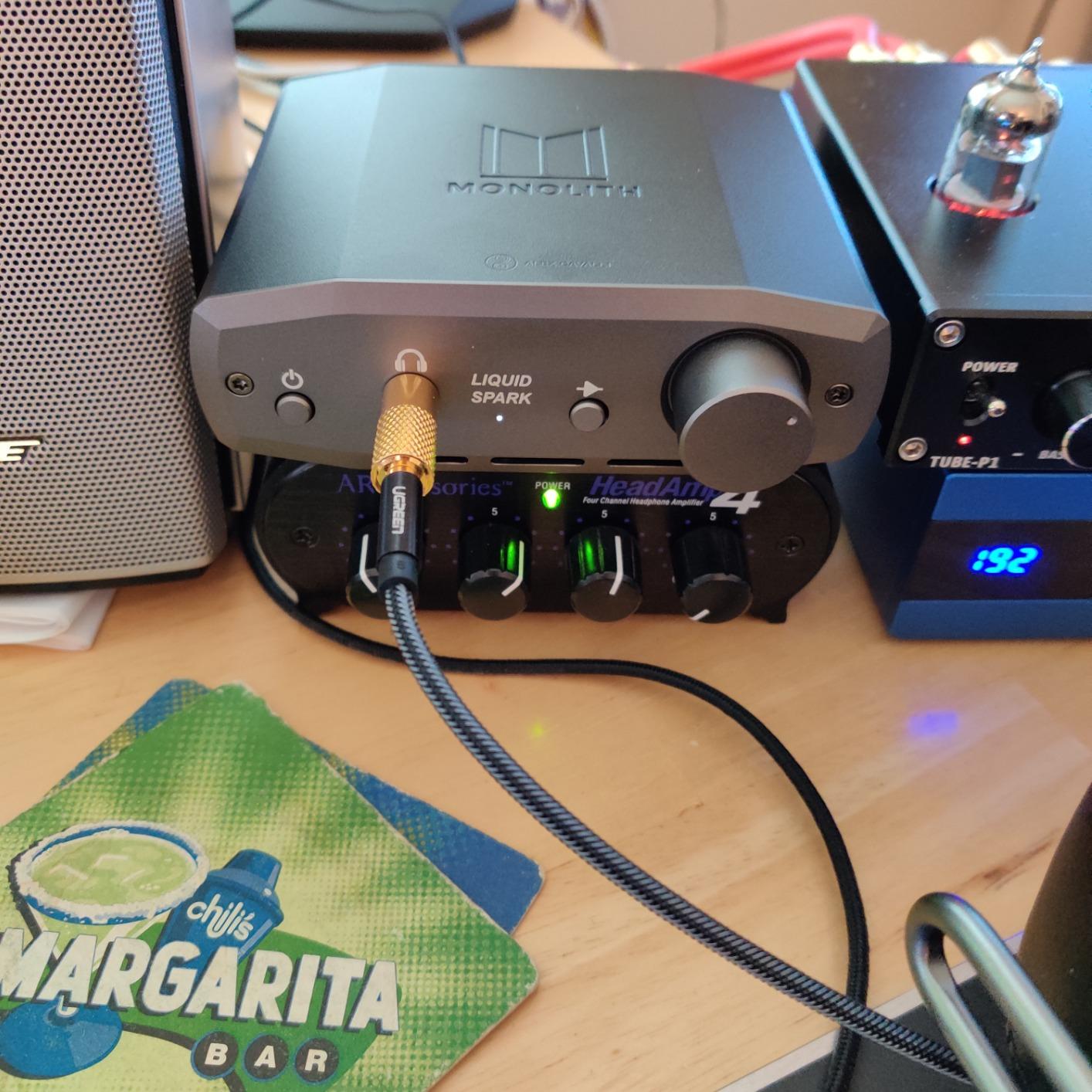
The circuit is DC-coupled from input to output with no capacitors in the signal path, built around a laser-matched low-noise JFET differential input stage and small high-performance MOSFET output devices. Measured THD+N is 0.007 percent at 1Vrms, 0.035 percent at 5Vrms and 0.065 percent at 10Vrms, which is a clean curve across the range.
Volume-controlled preamp RCA outputs mean it can drive a pair of powered speakers directly, so it can sit at the centre of a small system rather than hidden behind a stack. The all-metal casing, a smooth weighty volume knob and a 1 year repair warranty make it feel like a proper piece of hi-fi rather than a dongle.
Why the Monolith Liquid Spark is still worth buying
Separate components still make sense when your DAC is already good, and this is the cheapest way to get a dedicated headphone stage with real power. Nothing in the signal path is doing marketing work, which is exactly the point for a system built on measured components rather than feature lists.
It is also a repair-warranted product with a 30-day money back guarantee, which is unusual in this price class. For a home setup that will run for years, that kind of support is worth more than a feature the unit does not have.
Where the Monolith Liquid Spark falls short
It runs noticeably warm and needs clearance on the desk, so a closed shelf is a bad home. The rubber feet do not grip well and the unit slips easily if a cable tugs it, and the volume knob position is hard to read in low light.
Channel imbalance shows up below roughly one-quarter volume, and the silk-screened front panel print rubs off with use. Most importantly, there is no integrated digital input, so if you have no DAC already this is the wrong place to start.
7. Fosi Audio SK02: Best Compact Desktop DAC/Amp
Fosi Audio SK02 DAC Headphone Amplifier & Preamp, Desktop Audio DAC with USB-C and Optical Input, 4.4mm Balanced & 3.5mm Headphone Output, Digital-to-Analog Converter for PC and Home Audio System
1100mW balanced at 32 ohm
ESS SABRE ES9038Q2M DAC
3.7 microvolt noise floor
THD 0.001 percent
USB-C and optical input
Pros
- 1100mW balanced output at 32 ohms for planars and hard-to-drive dynamics
- Noise floor of 3.7 microvolts with 0.001 percent THD
- Driver-free plug and play over USB-C or optical
- Line out lets it serve as a preamp for active speakers
- Single-piece CNC-machined aluminum alloy body
Cons
- Only a single small LED shows volume level with no readout
- Volume knob has no detents and combines power and playback
- Treble can sound slightly bright depending on the headphone
The SK02 is the small one that disappears on a desk. It weighs 350 g, decodes DSD256 and PCM 32-bit over 384kHz, and delivers 1100mW into 32 ohms on the balanced output, which is enough current for many planars and difficult dynamic headphones.
The DAC is an ESS SABRE ES9038Q2M with SGM8262 op-amps, and the measured figures are strong: SNR up to 120dB, a noise floor of 3.7 microvolts and THD of 0.001 percent. Those numbers are why it works for sensitive in-ear monitors as well as full-size headphones.
Input is USB-C or optical with no drivers, so a computer and a TV can share it. The multi-function knob handles power, playback and volume, with quick-switch high and low gain buttons and input buttons beside it, and the line out feeds active speakers or a power amplifier like the Fosi V3, ZA3 or TB10D.
Nothing here needs explaining. Buyers describe clean, neutral, detailed sound as a meaningful upgrade over motherboard audio, and the CNC-machined, sandblasted aluminum body looks like a product twice its size. If you want balanced output and a preamp in a small footprint, this is the one to beat.
Who the Fosi Audio SK02 suits
It suits listeners who want one small box to sit between a laptop and a pair of demanding headphones, with no menu diving required. Two gain positions cover a normal dynamic and a high-impedance model, and the 4.4mm and 3.5mm outputs mean one amp serves everyone.
Line-out mode is the quiet hero. Because it can feed active speakers, it works as the hub of a small home system rather than a headphone-only accessory, which is a rarer feature at this size.
Where the Fosi Audio SK02 falls short
The most cited shortcoming is the lack of a volume display, a single small LED being the only indication. One buyer returned it purely for that reason despite liking the sound, which tells you how much a readout matters once you start adjusting levels by memory.
The knob has no detents and combines power, playback and volume into one control, so it feels clumsy at first. Treble can also read as slightly bright or linear on some headphones, and there is no app or parametric EQ, so system tuning is limited to the high and low gain buttons.
8. Douk Audio U3: Best Budget Headphone Amplifier
Douk Audio U3 Headphone Amps, Mini Hi-Fi Amplifier for Home Desktop PC 6.35mm / 3.5mm Headsets, Class A, RCA Input, DC 5V
Class A discrete output stage
1300 milliwatt maximum output
Pluggable op-amp socket
RCA input
Metal chassis
Pros
- Class A discrete output stage with a TI-NE5532 op-amp and low distortion
- Pluggable op-amp socket allows DIY op-amp rolling
- 1300 milliwatt output covers common high-impedance headphones
- Metal chassis and tactile detents on the volume pot
- Compact footprint that suits a desk or office system
Cons
- Headphone amp only with no line outputs for speakers
- RCA-only input needs an adapter for 3.5mm sources
- Front blue power LED is very bright at night
The U3 is the cheapest route to a dedicated headphone stage, and it is startlingly capable for the money. Maximum output power is listed at 1300 milliwatts, and owners drive HD600 and HD650, K701 and K702, DT880, T70 and T90, and the RS1e from a desktop that could never manage it before.
The output stage is class A using a TI-NE5532 op-amp plus a transistor current-expansion circuit, and the amplifier circuit runs at 26V on a 5 to 20V input for noise performance. That circuit runs inside a 5.92 ounce metal chassis, so the build feels a tier above the entry price.
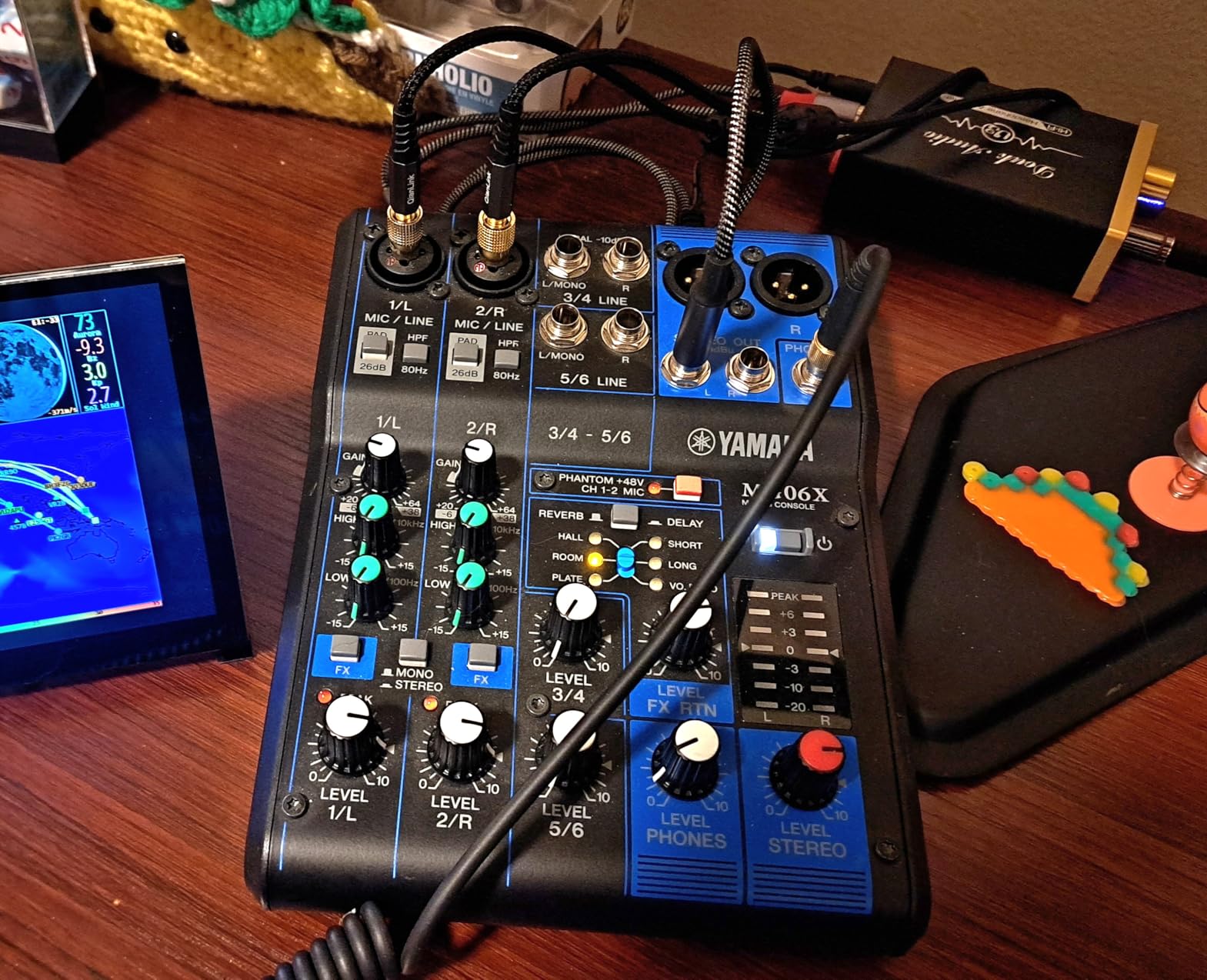
The pluggable op-amp socket is the feature nobody expects at this level. You can swap the amplifier chip to change the headphone stage’s character, which turns a budget box into a small hobby bench. The volume pot has tactile detents, so levels repeat accurately between listening sessions.
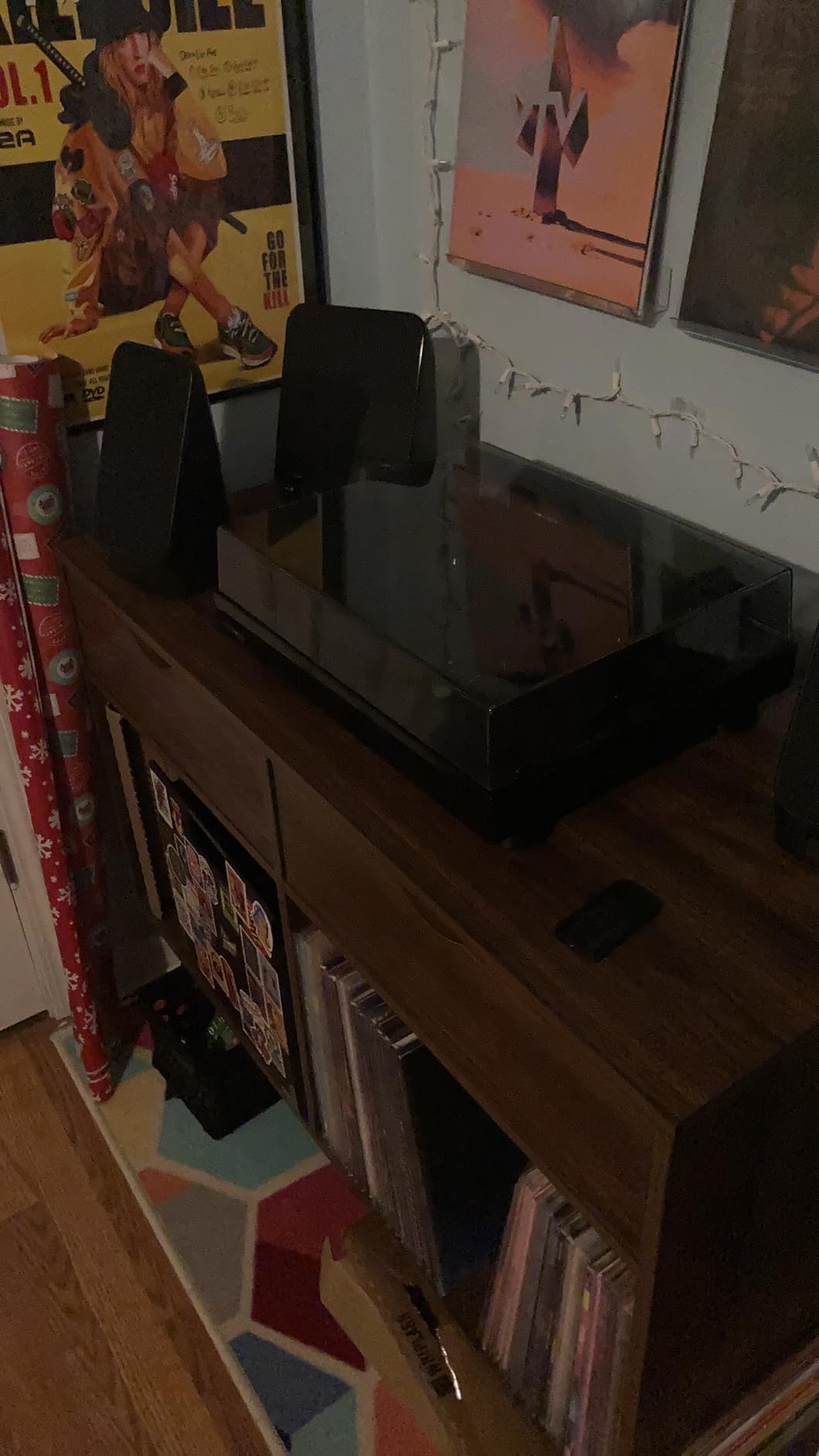
Designated for home and office desktop audio systems, it is happy on a shelf beside a small DAC feeding it over RCA. Input is RCA only, so a 3.5mm phone or laptop needs an adapter, and the unit is a headphone amplifier with no line outputs for speakers.
Why the Douk Audio U3 makes sense as a first amp
It solves the volume problem and nothing else, which is exactly right for a first upgrade. If your headphone runs out of level on a laptop, adding real current is the change you will hear, and 1300 milliwatts is enough for most 300 ohm dynamics in a normal room.
The op-amp socket also means the first amp does not have to be the last. Swapping chips later is a cheap way to keep learning how an output stage shapes sound, which is the same education our studio monitoring amplifier guide approaches from the other end.
Where the Douk Audio U3 falls short
There is no line output, so it cannot drive powered speakers and cannot act as a preamp for anything. It also has no digital input, so it does nothing for you if your source is digital and noisy.
The front blue power LED is bright enough to be distracting at night, and some owners report channel imbalance at the very lowest volume positions. A few also report picking up wireless interference when the unshielded chassis sits directly beside a computer, so keep some distance or use a short USB extension for the digital side.
9. AIYIMA DAC-A2: Best for Plug-and-Play Desktop Audio
AIYIMA DAC-A2 Headphone Amplifier & Desktop DAC for PC, MAC and Gaming
160mW RMS at 32 ohms
USB optical and coaxial input
Front bass and treble knobs
24-bit over 192kHz
Metal chassis
Pros
- Plug-and-play USB optical and coaxial input with no drivers or software
- Front-panel bass treble and volume knobs for quick adjustment
- 160mW RMS at 32 ohms suits typical dynamic headphones
- Metal chassis gives EMI shielding and output protection
- Bundle includes the unit plus USB and optical cables
Cons
- Volume pot can develop static and channel imbalance over time
- Smaller 3.5mm jack is less durable than a quarter-inch socket
- No dedicated power switch so power is cycled via the volume control
The DAC-A2 is the pick when the goal is fixing computer or console audio rather than building a system. Optical, coaxial and USB inputs convert digital audio to RCA or 3.5mm analog with no drivers, which means a PC, a Mac, Linux or a TV can be corrected in minutes.
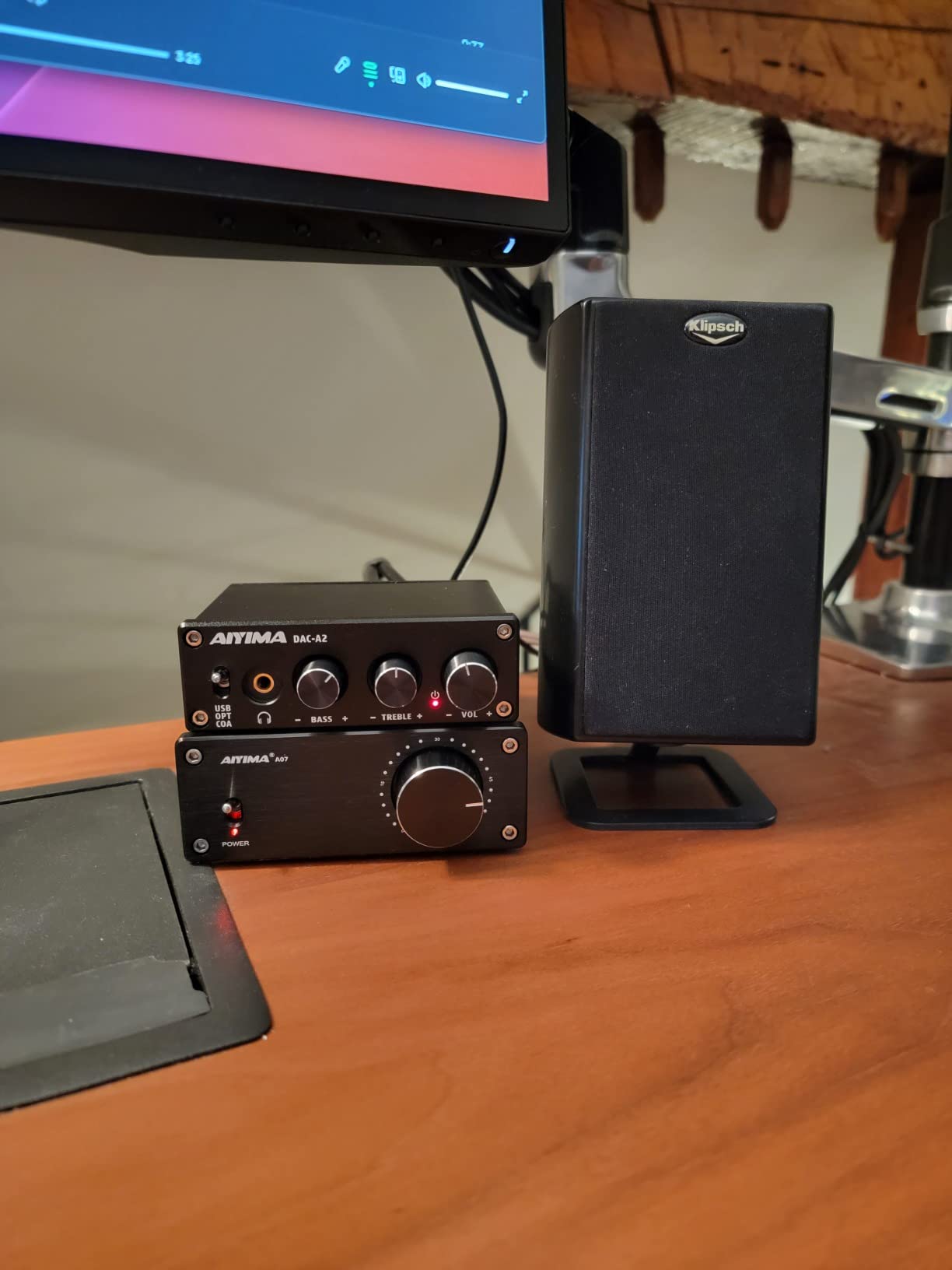
Output is 160mW RMS at 32 ohms, enough for typical dynamic headphones, and bit-perfect 24-bit over 192kHz is supported through optical or coaxial. The three front knobs for bass, treble and volume are unusual here and genuinely useful when a desk system needs a quick tonal nudge.
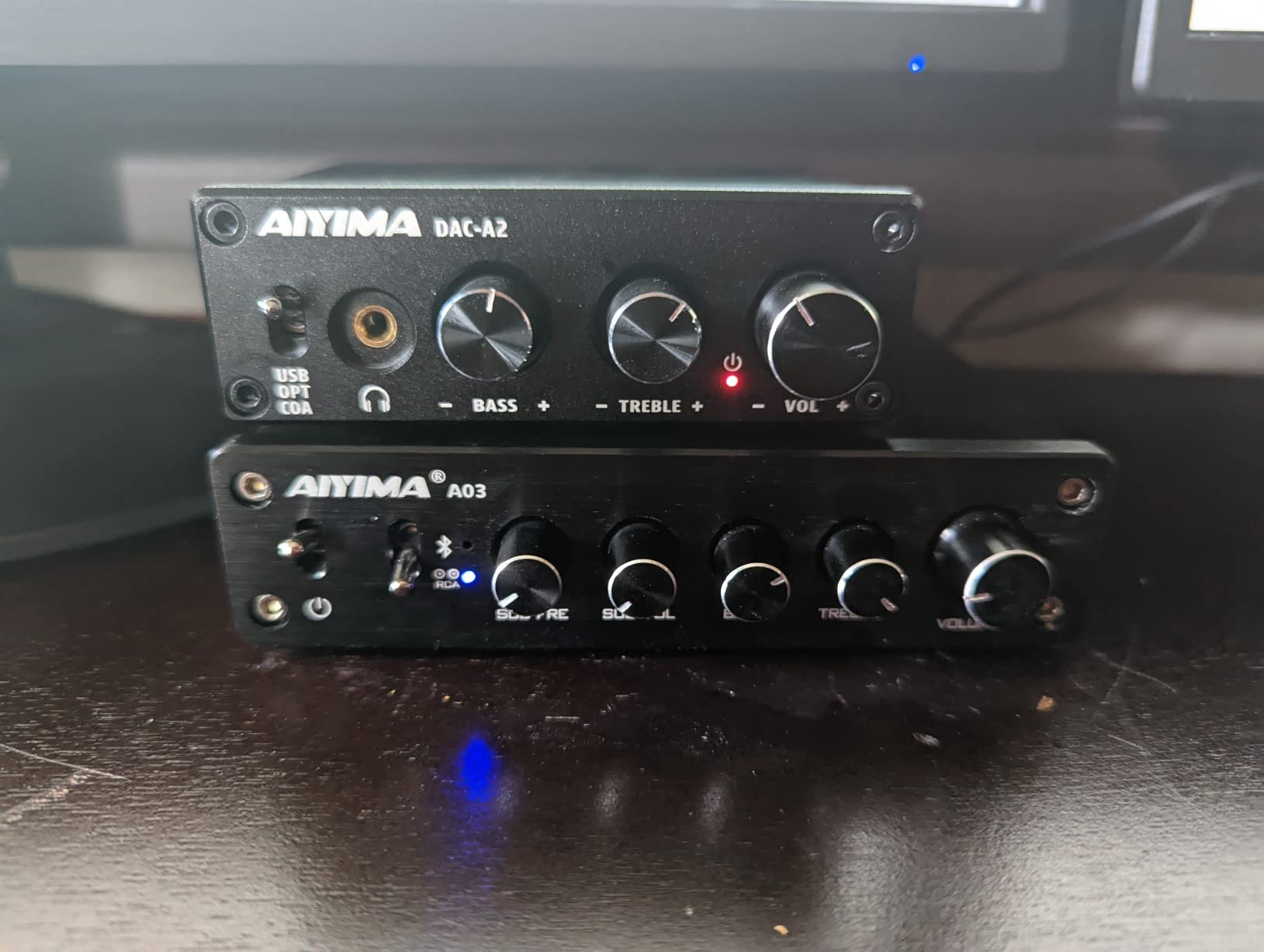
The full-metal chassis provides electromagnetic shielding and there is a built-in output protection circuit, which matters near a computer. The box includes the unit, a PC-USB cable, an optical cable and a manual, so nothing else needs buying to get started.
Compatibility is broad by design. It works with PCs, Macs, Linux machines, home audio systems and any device offering PC-USB, optical or coaxial input, and the housing measures 3.86 by 2.89 inches on a 5V supply, so it fits behind a monitor.
Where the AIYIMA DAC-A2 makes sense
It suits a bedroom or office where the computer’s built-in audio is the bottleneck and nothing more is needed. Bass and treble controls let you adapt to a cheap pair of speakers or an older headphone without buying a second device.
It is also a safe second zone. Because it is small, shielded and driver-free, it is a reasonable way to add a headphone path to a gaming or streaming setup that already has speakers, with the RCA output feeding an amplifier.
Where the AIYIMA DAC-A2 falls short
The volume potentiometer is the main reliability complaint, with loud static, crackle and uneven left and right levels reported after a few months. The smaller 3.5mm jack is also less durable than a quarter-inch socket and can loosen.
There is no dedicated power switch, so power is cycled through the volume control, and a few units show a faint high-pitched whine on USB input that the treble control cannot fully remove. At 160mW it will not drive 300 ohm headphones to a satisfying level.
10. Topping DX5 II: Best Feature-Packed Desktop Headphone Amplifier
TOPPING DX5 II Hi-Res DAC & Headphone Amp Combo – Dual ES9039Q2M, X-Hybrid Amp, 10-Band PEQ, LDAC Bluetooth 5.1, 4.4mm Balanced & 6.35mm Headphone Output, Preamp Mode, 12V Trigger (White)
Dual ES9039Q2M DACs
7600mW rated balanced output
10-band parametric EQ
LDAC and aptX Adaptive
Preamp mode and 12V trigger
Pros
- Dual ES9039Q2M chips with a transparent neutral sound and excellent noise floor
- 10-band parametric EQ with PCM filters and preamp mode
- Large 2.0-inch full-colour display with nine themes
- Internal power supply with no external brick and balanced XLR outputs
- 2 year manufacturer warranty
Cons
- Rated output falls short with high-impedance single-ended headphones
- Some units clip or distort at moderate output levels
- Headphone jacks are unprotected when plugged while powered
The DX5 II is the most capable one-box unit Topping has shipped at this level, and reviewers in the audio business call it exceptional value. Dual ESS ES9039Q2M DAC chips feed an X-Hybrid fully balanced quad-channel headphone amplifier rated at 7600mW per channel, with support for PCM 768kHz over 32-bit and DSD512.
Feature-wise nothing is missing: 10-band high-precision parametric EQ with self-developed IV circuitry, PCM filter selection, Bluetooth 5.1 with LDAC, aptX Adaptive, aptX HD, AAC and SBC over a QCC5125, preamp mode and 12V trigger in and out. A 2.0-inch full-colour display with nine themes and a pressable jog wheel handles the interface.
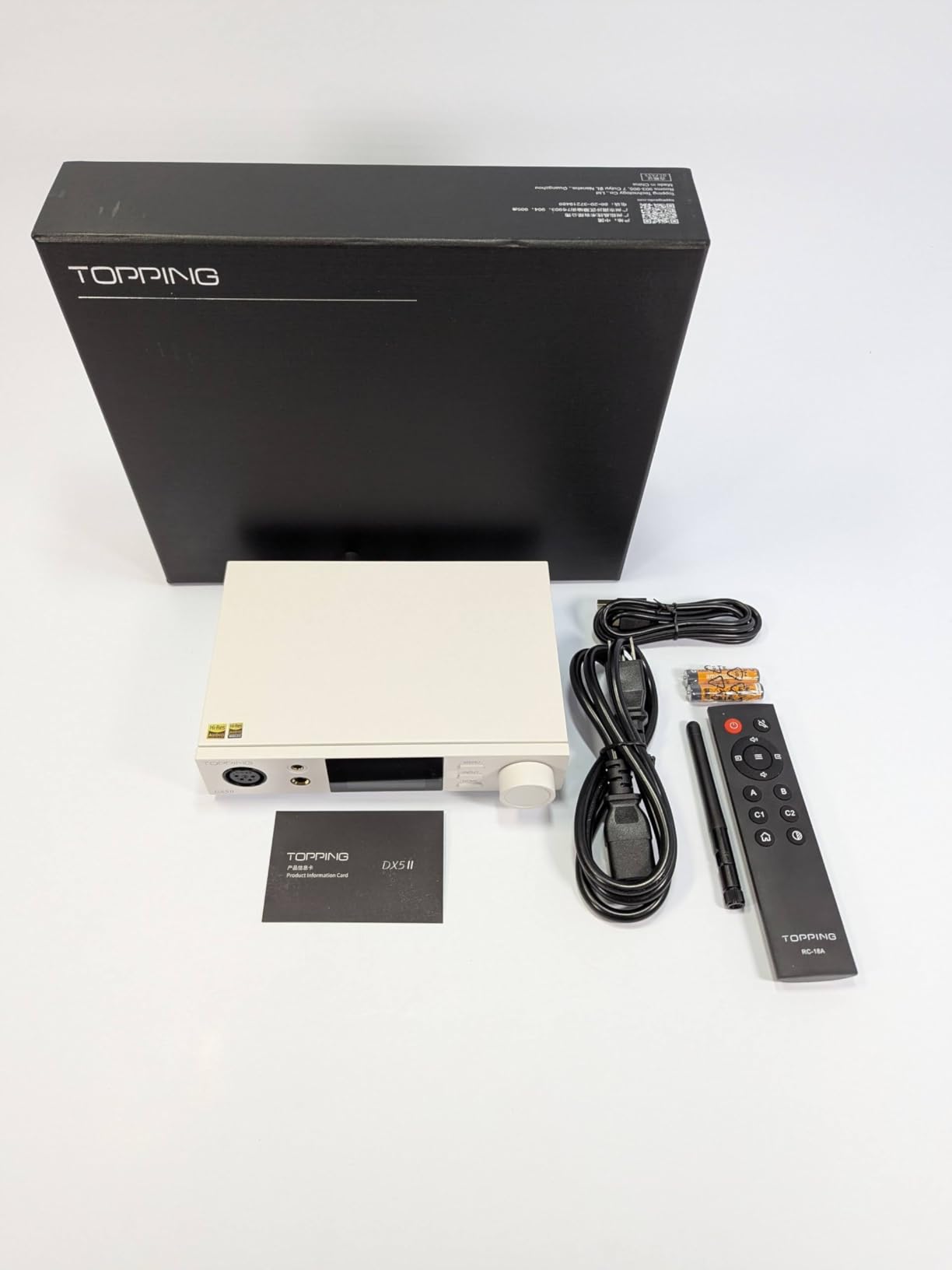
Balanced XLR headphone and line outputs plus front and rear headphone jacks make the connection options flexible, and every jack and control is placed on one side for easy reach. It works across Windows, Mac, Linux, iOS and Android through an XU316 USB interface, and the internal power supply avoids a bulky external brick on the shelf.
Sound is described as transparent and neutral with an excellent noise floor, which makes the single-ended output usable with sensitive in-ear monitors. Build quality is good and a 2 year manufacturer warranty is included, which is longer than most units in this group.
Who the Topping DX5 II suits
It suits a home system that wants one device to do decoding, amplification, Bluetooth streaming, equalisation and preamp duties for powered speakers. Preamp mode, the 12V trigger and the XLR outputs mean it can sit in a larger setup rather than a headphone-only corner.
For sensitive in-ear monitors, the low noise floor on single-ended is the reason it works. For a room, the parametric EQ and filter selection remove the need for any software on the computer.
Where the Topping DX5 II falls short
Power is the big caveat. The 7600mW rating is a balanced figure, and several users report high-impedance single-ended headphones running out of headroom well before maximum volume, with some outright clipping at moderate levels. For 250 ohm models on single-ended, read that carefully.
The headphone jacks are unprotected and can be damaged by plugging or unplugging while the unit is powered, the volume knob feels cheap next to the rest of the build, and there are reported Bluetooth reconnection and spontaneous power-on or optical-input switching issues. It also has the widest rating spread of the ten amplifiers here.
Do You Actually Need a Headphone Amp?
Here is the short version. A headphone amp takes a low-level signal from a DAC, phone or receiver and raises its voltage and current until your headphones reach a comfortable level with low distortion. It is worth buying when the source runs out of one of those two things, and pointless when it does not.
You probably need one if any of these are true. Your headphone is 250 ohms or higher and your source is a laptop, phone or TV. You are at 60 to 80 percent volume and want more. Your current source hisses at low volume, or distorts as you push it. You own planar magnetic headphones with low sensitivity. You listen late at night in a quiet room where noise is obvious. Or you want a preamp to feed powered speakers from one box.
You probably do not need one if your headphone is an easy dynamic, plays loudly from a phone, and sounds clean at the level you listen. In that case the amp changes almost nothing, and your money is better spent on the headphone itself.
And check what you already own first. People on r/headphones have reported running headphones happily from a Marantz PM7200 and an Onkyo A-8255, and other owners describe a small separate DAC feeding a desktop amp as a perfectly valid home entry path. An integrated amplifier or AV receiver headphone output is a real solution, not a compromise, so plug in and listen before you spend.
On community forums, the recurring argument is that if both units measure well, pairing is largely a non-issue. The measurable things that actually change results are output impedance, available voltage and current, and noise floor, which is why the picks below are judged on those figures.
How to Match an Amp to Your Headphones
Impedance and sensitivity decide everything, and you can work it out in under a minute. Find the impedance in ohms and the sensitivity in dB per milliwatt on the headphone spec sheet, then work through these steps.
1. Check impedance. Anything at 32 ohms or below is easy to drive and a phone will usually reach a reasonable level. 80 to 150 ohms is comfortable with most desktop amps. 250 to 300 ohms needs real voltage, and 600 ohm models plus electrostatics need the most of all.
2. Check sensitivity. A headphone rated at 100 dB per milliwatt or higher needs very little power. Below 95 dB per milliwatt means you should prioritise an amp with strong current delivery rather than a large headline wattage number.
3. Size the power. The table below is the practical guide. You want roughly ten times the power you need for comfortable volume, so you are not sitting at the top of the volume range where distortion and hiss appear.
4. Set gain deliberately. Use the lowest gain setting that lets you reach comfortable level. If you hear hiss with sensitive in-ear monitors, use negative gain if the amp offers it, or accept a lower maximum level rather than turning everything up.
5. Leave headroom. Loud enough is not the same as clean. If you are pinned at maximum volume, the amp is limiting, and the fix is a unit with more voltage swing into your headphone’s impedance rather than a louder source.
As a rough sizing guide, an efficient dynamic at 32 ohms and 100 dB per milliwatt needs very little power, a typical 250 to 300 ohm headphone at 100 dB per milliwatt wants an amp in the 1 to 2 watt range, and a 600 ohm headphone at the same sensitivity wants several watts. Anything sensitive enough that hiss is audible at low level wants low noise instead of more power, which is why 3.7 microvolts and 1.9 microvolt noise figures matter for in-ear monitors.
Output impedance matters just as much. Lower is better, because a high output impedance can alter the frequency response of a headphone with rising impedance. The amps here use conventional low-impedance solid-state output stages, and the tube-friendly option many buyers ask about is worth considering only if you enjoy tube maintenance.
Balanced vs Single-Ended Output for Home Listening
A balanced 4.4mm output carries the signal on three contacts instead of two. In practice it delivers more output voltage and more headroom, which matters most with high-impedance headphones, and it can cancel some channel crosstalk. What it does not do is guarantee a better sound.
On r/headphones owners have made the practical point that if both units measure well, pairing is a non-issue and balanced-only spending is overrated. We agree, with one caveat. Balanced output is worth paying for when the extra voltage means you can lower the gain and stop a sensitive output stage from straining, not because the label sounds expensive.
Six of the ten amplifiers here offer a 4.4mm balanced output, so the choice is usually not balanced or nothing. It is which of those six also has a proper single-ended path for the headphones that do not have a balanced cable yet.
DAC/Amp Combo vs Separate Components
A combo unit like the FiiO K7 or the Fosi K7 makes sense when you want one box, one volume control and one power supply feeding a computer, a streamer and a TV. It removes cable choices, shrinks the footprint and usually costs less than two good boxes bought separately.
Separate components make more sense when you already own a good DAC, when you want to change one part of the chain at a time, or when your main system is analog and you only need a headphone stage. The Monolith Liquid Spark is the clearest example here, needing a separate source, and it is the one pick we would only recommend to someone who already has a DAC.
On tube versus solid-state, every amplifier in this list is solid-state, and for most home listeners that is the correct default. Tubes are discussed constantly on forums and Head-Fi, and they can be lovely, but they add hum, fragility and maintenance, with used-market risk from tired or burnt tubes. Solid-state units are quieter, more efficient, run cooler and have no parts to replace, which is why the community leans that way for a system that gets used every day.
One last point on placement. Keep the amp away from a PC power supply or a router, use a short cable, and give a warm unit like the Monolith clearance. Our audiophile headphone guide for vinyl listening covers the matching source-side decisions for turntable setups.
Frequently Asked Questions
Are headphone amplifiers worth it?
Often yes, but only when your current source runs out of voltage or current. Laptop jacks, phone dongles and cheap Bluetooth receivers usually cannot drive high-impedance headphones to full volume cleanly. If your headphone already plays loud and noise-free from what you own, a dedicated amp adds headroom and control rather than a dramatic change in tone.
How do I match a headphone amp to my headphones?
Start with impedance and sensitivity. Easy dynamic headphones at 32 ohms or below work with almost anything. Headphones from 250 to 300 ohms need an amp with real voltage swing, and 600 ohm models need the most of all. Then pick the lowest gain setting that reaches a comfortable level and leave the volume pot off the top of its travel.
How much power do I need to drive my headphones?
Aim for roughly ten times what you need for comfortable volume. A typical 250 to 300 ohm headphone at 100 dB per milliwatt generally wants an amp in the 1 to 2 watt range, while a 600 ohm headphone at the same sensitivity wants several watts. Sensitive in-ear monitors need a low noise floor rather than more power, so noise figures like 1.9 microvolts matter more than wattage.
Is balanced output worth it for home listening?
Balanced 4.4mm output delivers more voltage and headroom, which helps most with high-impedance headphones, and it can reduce channel crosstalk. It does not automatically sound better. If the extra voltage lets you use a lower gain setting without straining the output stage, it is worth having. If your headphone is easy to drive, a good single-ended path is just as good.
Is a DAC/amp combo better than separate components?
A combo is better when you want one box feeding a computer, a streamer and a TV, because it removes cable choices and costs less than two good units. Separate components make more sense if you already own a good DAC, want to change one part of the chain at a time, or only need a headphone stage for an analog system.
Why does my headphone amp hiss with sensitive earphones?
Hiss at low volume is usually a noise floor problem, not a power problem. Set the gain as low as possible, use negative gain if the amp offers it, and keep the source volume high with the amp volume low. If hiss remains, the amp is too powerful for that earphone and a quieter unit will serve better.
Which Headphone Amplifier Should You Buy in 2026?
The FiiO K7 is our pick for the best headphone amplifiers for home listening in 2026, because dual DACs, dual THX AAA 788+ amplifier stages, 2000mW of output and four inputs cover almost every home arrangement in a single aluminum box. The FiiO K11 is the value answer if you want balanced output and a usable RCA preamp for less, and the Fosi Audio K7 is the choice when a console is part of the system.
Match the amp to the headphone rather than the spec sheet. High-impedance dynamics want voltage and the ZH3 or the K13 R2R have it. Sensitive in-ear monitors want silence, and the Fosi SK02 and ZH3 post the lowest noise figures here. First-time buyers on a small budget should start with the Douk Audio U3, and anyone who already owns a good DAC should look at the Monolith Liquid Spark instead of a combo.
Whatever you choose, plug in what you already own first and listen for a few days. The upgrade that matters is the one that removes a limit you can actually hear.