If you wake to a creaking floorboard, a partner turning over, or the click of the radiator, a baby monitor is the last thing you want sitting on your nightstand. Most parents assume the monitor is neutral. It is not. A bright sound bar, a piercing alert tone, and a VOX microphone tuned too high will wake you just as reliably as the baby will.
That is why the best audio baby monitors for light sleepers are not simply the ones with the most sensitive microphones. They are the ones that stay quiet until something matters. Every pick below has no screen to light the room, no app, and no subscription, and each one gives you some way to be notified without a full-volume noise: a vibrating alert, a row of LEDs, a cry-detection filter, or microphone sensitivity you can actually tune down.
We spent weeks with these six units in a real nursery setup, running the same quiet-sound test, range walk, and overnight battery check on each. If you would rather start with a broader view of the category, our general baby monitor guide covers video and wearable options too.
Table of Contents
What Is the Best Audio Only Baby Monitor?
The best audio only baby monitor for light sleepers is the VTech DM221, because it pairs a five-level sound indicator with a silent vibrating alert, letting you lower the volume and still know your baby is stirring. For a tighter budget, the VTech DM111 gives you the same DECT 6.0 digital transmission with a five-LED sound indicator and a belt clip.
Top 3 Picks for Best Audio Baby Monitors for Light Sleepers in 2026


Motorola PIP12 Audio Baby Monitor
- USB-C rechargeable both pieces
- 1500ft range
- Water-resistant case
Best Audio Baby Monitors for Light Sleepers at a Glance in October
| Product | Specifications | Action |
|---|---|---|
| VTech DM221 Audio Baby Monitor |
|
Check Latest Price |
 VTech DM111 Audio Baby Monitor VTech DM111 Audio Baby Monitor |
|
Check Latest Price |
| Motorola PIP12 Audio Baby Monitor |
|
Check Latest Price |
 VTech DM1215 Audio Baby Monitor VTech DM1215 Audio Baby Monitor |
|
Check Latest Price |
 Motorola AM21 Audio Baby Monitor Motorola AM21 Audio Baby Monitor |
|
Check Latest Price |
 Motorola PIP10 Audio Baby Monitor Motorola PIP10 Audio Baby Monitor |
|
Check Latest Price |
How We Tested These Monitors for Light Sleepers
Light-sleeper testing is not the same as testing a monitor for range. A monitor that is technically excellent and practically unusable at 3am has failed. Here is exactly what we did on each unit.
1. The quiet-sound pickup test. We played a near-inaudible speech recording from a phone on the nursery windowsill, stepped to the far side of the room, and noted whether breathing, a sigh, and a sheet rustle came through the parent unit at low volume.
2. The VOX behaviour test. With sound-activated mode engaged, we triggered gurgles, grunts, and short whimpers from between sleep cycles, then a sustained cry. The question is not whether it picked up sound, but how much of the wrong kind it picked up.
3. The range walk. We carried the receiver through the house, up two floors, and to the far end of the garden, watching for dropouts and static.
4. The battery time-lapse. We ran the parent unit through a full night unplugged and recorded how long it lasted.
5. The dark-room check. We switched off every other light and sat with the receiver at arm’s length, looking at the sound indicator, the night light, and any charging light to judge whether any of them would fragment your sleep.
We also weighed owner reports gathered from public review threads, because durability in this category shows up at month eight, not week one.
1. VTech DM221 — The Vibrating Alert Is the Whole Point
VTech Communications DM221 Audio Baby Monitor with up to 1,000 ft of Range, Vibrating Sound-Alert, Talk Back Intercom & Night Light Loop, White/Silver
DECT 6.0 digital audio
1000ft range
Vibrating sound alert
5-level sound indicator
Night light
Pros
- Vibrating alert wakes you without a sound
- Five microphone sensitivity levels you can tune
- Owners report 10+ years of use
- Range holds through thick walls
- DECT 6.0 keeps audio free of static
Cons
- Parent battery lasts only a few hours unplugged
- Display can burn out after several months
- Red charging light stays on constantly
- Needs 10ft or more separation between pieces
The DM221 is the monitor we recommend to a light sleeper without much hesitation. The vibrating alert is not a small extra. It is the whole reason this unit works in a dark bedroom: set the volume low, keep the vibration on, and a stir down the hall registers as a silent buzz in your hand instead of a noise that pulls you fully awake.
Microphone sensitivity on the nursery side is adjustable across five levels, which means you can start at the middle, survive a night or two, then step down as you get used to the baseline noise of the room. Five LED levels on the parent unit show sound intensity at a glance, so a partner who is not listening can still see the room is active.
DECT 6.0 transmission is what makes the audio usable at night. It is digital rather than analog, which is why the signal arrives clean instead of hissing, and it hops channels rather than sitting on one frequency, which is why neighbouring WiFi routers and cordless phones do not bleed into the audio. Owners also talk about the range as genuinely good, reporting it holds up through thick walls where cheaper analog sets fail.
The night light lives on the baby unit, not in your bedroom, which matters for your sleep but not for theirs. There is a two-way talk-back if you need to soothe without walking over, and it does not carry a fan or a hiss of its own at low volume.
Does the vibration actually stop you waking up?
It removes one of the two reasons light sleepers wake: the noise itself. You still wake on a real cry, but you no longer wake on the fan kicking on. What you cannot escape is the fact that a vibration in your hand still wakes some people, so test it for a night before you commit.
What should you watch out for before buying?
The parent unit runs a few hours on its rechargeable battery when unplugged, so plan on a charger within arm’s reach rather than relying on battery overnight. Long-term owners also report the small display fading after several months and the red charging light never switching off, both harmless but irritating in a dark room.
2. VTech DM111 — Budget Pick With a Sound Indicator That Works on Mute
VTech Audio Baby Monitor — No Static DECT 6.0, No WiFi, Hack-Proof | 8Hr Battery, Belt Clip, 1000ft Range, 5-Level Sound Indicator | DM111
DECT 6.0 digital audio
1000ft range
5-level LED sound indicator
Belt clip
8hr battery
Pros
- Encrypted FHSS channel that cannot be hacked
- Five LED levels work even with sound muted
- Belt clip keeps your hands free
- 60-second setup with no app
- AAA backup cells included
Cons
- Parent battery lasts only a few hours unplugged
- Power-on light on the baby unit is very bright
- Some owners report occasional static
- Needs 10ft or more separation between pieces
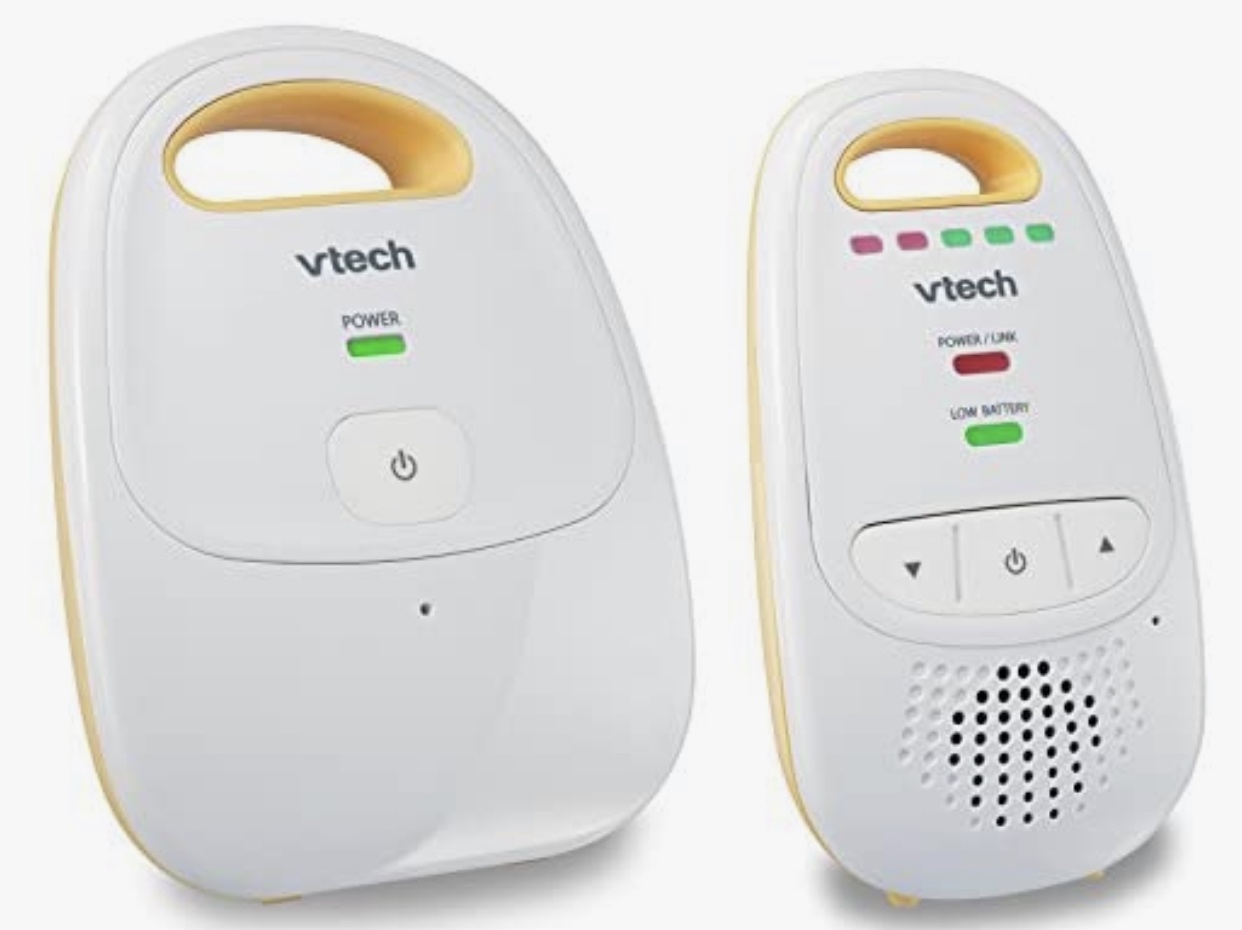
The DM111 is the version of the same idea with the extras trimmed. It keeps the DECT 6.0 digital transmission, the 1000ft range, and the five-level LED sound indicator, and drops the night light, the vibration, and the sensitivity dial. For most light sleepers that trade is worth it, because the LED indicator is the feature that actually gets used every night.
Here is the strategy: turn the sound all the way down or mute it, and watch the LEDs. If one light comes on, your baby is breathing loudly enough to register. If five light up, get up. It is a genuinely sustainable way to monitor without handing your own ears a reason to wake.
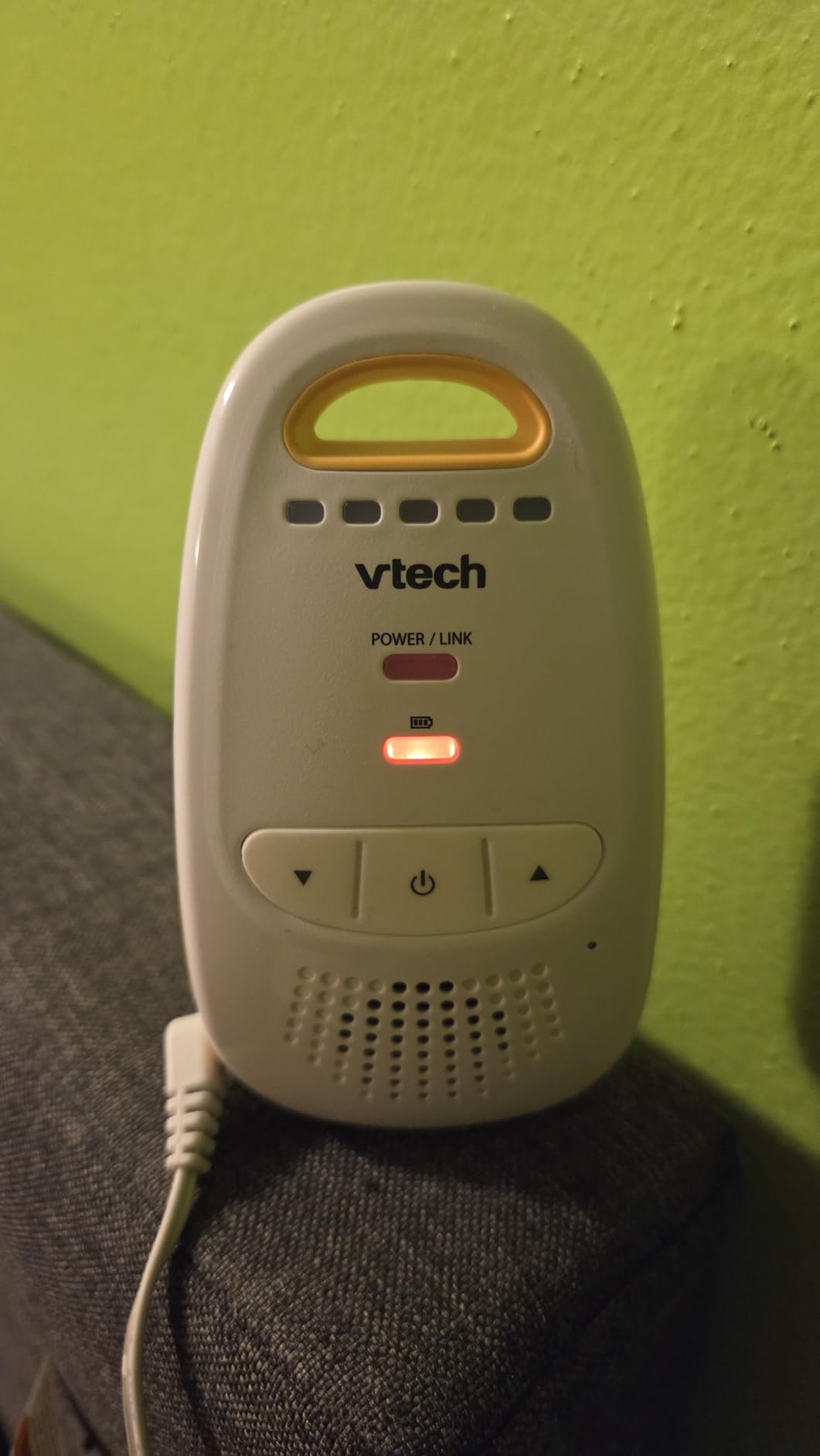
Transmission is encrypted on a hopping channel, so there is no account to create and nothing for anyone to log into. Setup is genuinely a plug-and-wait affair, which matters when you are assembling a monitor at 2am with a newborn in the next room. The belt clip means the receiver stays on your waistband or a shoulder rather than sliding under a pillow.
Battery figures here are modest, with the parent unit rated around eight hours, so treat any night-long monitoring as a plugged-in affair. The baby unit’s power light is bright, and a strip of electrical tape is a common fix if the nursery is dark and the glow reaches you.
Is muted monitoring actually usable for a light sleeper?
Yes, provided you can accept a slight delay in reacting. The LEDs are the alert, and reading five small lights at half-asleep is slower than hearing a cry but far less disruptive. If you need to catch something within seconds, keep the volume at its lowest step rather than muted.
What is the honest drawback here?
You give up the microphone sensitivity control and the vibration, so the only lever you have is volume. Owners also mention occasional static and the requirement to keep the two pieces well apart in the house, otherwise the transmission stutters.
3. Motorola PIP12 — Built for Travel and Grandparents’ Houses
Motorola Nursery Audio Baby Monitor, No WiFi Needed, Two-Way Talk, Portable and Rechargeable, 1500ft Range, HD Sound, Water-Resistant Travel Case, PIP12
1500ft range
HD sound with two-way talk
USB-C rechargeable both pieces
Water-resistant case
Pros
- USB-C charging on both pieces
- Magnets keep the pair together for packing
- Water-resistant travel case included
- Up to 1500ft range across open space
- Works from a power bank
Cons
- Baby unit beeps loudly when plugged in while on
- Battery runs short of the claimed 10 hours
- Magnets on the back are weak
- Range drops with heavy obstructions
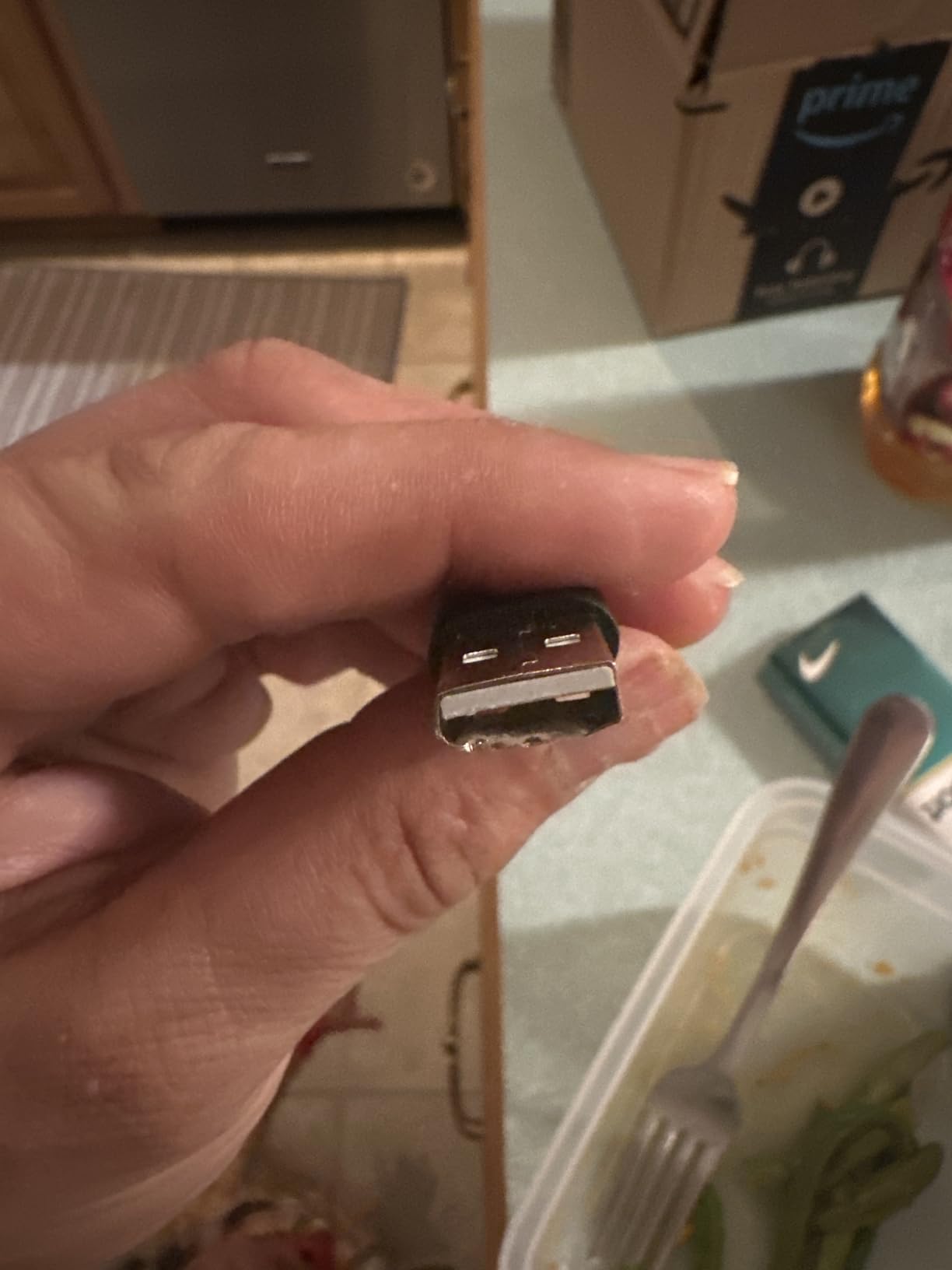
If your monitoring needs move between a home, a grandparents’ house, and a hotel room, the PIP12 is built for it and nothing else in this group is. Both pieces recharge over USB-C, they hold together magnetically for packing, and the case is water-resistant, so a spill in a suitcase is not a catastrophe.
Audio is described as HD and includes two-way talk. There is no screen and no app, so there is nothing to unlock and no account to log into, which is the main privacy argument for the whole audio-only category. The 1500ft figure is real in open space, which is what makes it useful outdoors.
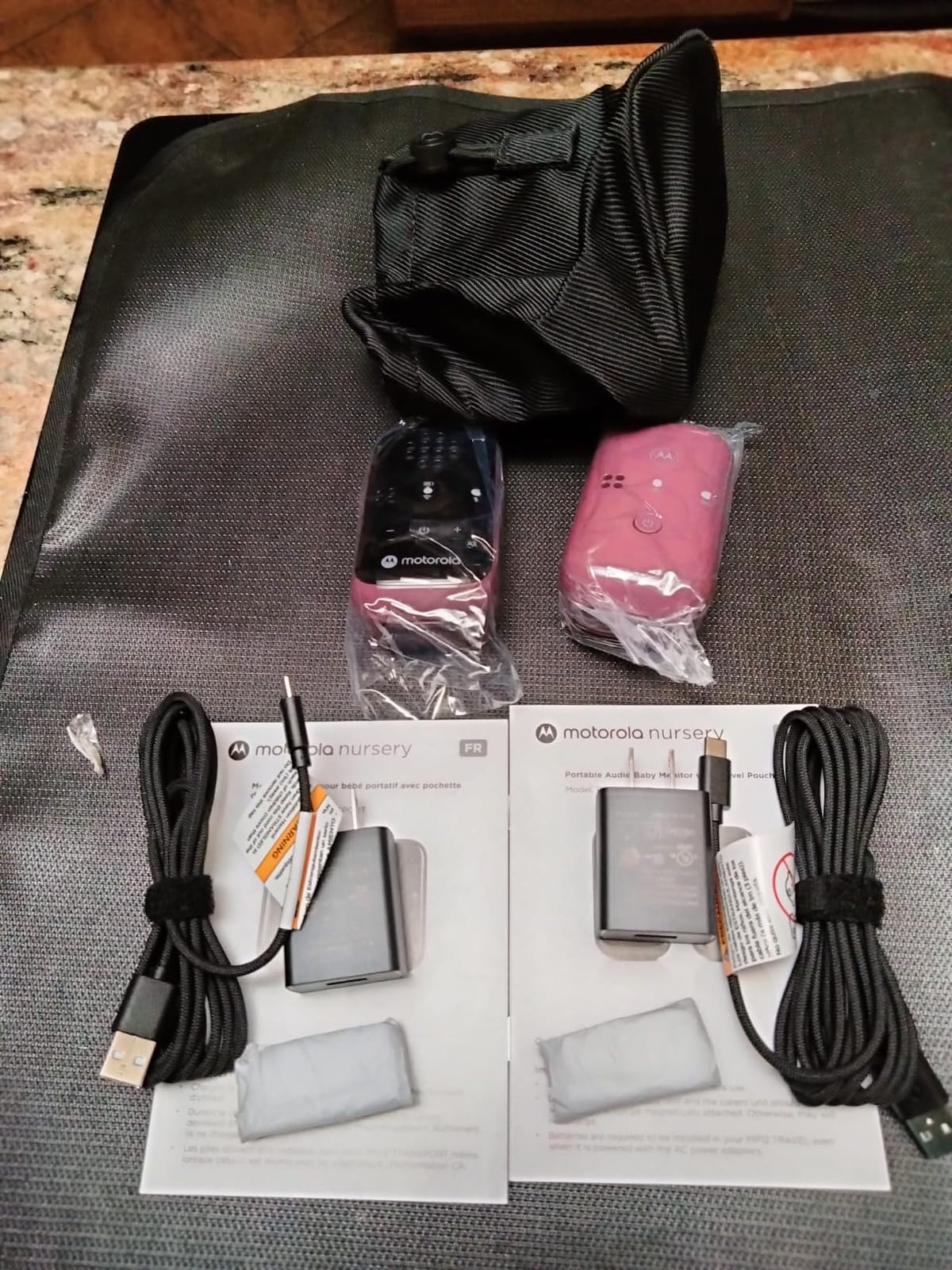
The magnetic back doubles as a mount, which is a genuinely clever trick for a nursery wall or a shelf, though owners say the magnets are weaker than the marketing implies. The parent unit runs up to ten hours on a full charge by the stated figure, and we would plan on somewhat less for overnight use.
One behaviour to know before you commit: the baby unit beeps loudly if you plug it in while it is already switched on. It is an unfriendly sound at midnight, so plug the power in first and switch on second.
Is this the pick for a nursery with thick walls?
Not primarily. The headline range is measured in open air, and it shortens noticeably once floors, masonry, and multiple walls sit between the pieces. If you are testing a difficult signal path, verify it in your own house before settling.
What about a baby who needs to hear a familiar voice?
Two-way talk works and the audio is clear enough to soothe from another room. Note that talking through to a baby who is already asleep is one of the easier ways to wake them, so keep it for genuine settling rather than reassurance.
4. VTech DM1215 — The One With a Sound Machine Built In
VTech Digital Audio Baby Monitor with Up to 1500ft of Range, Night Light, Soothing Lullabies, Two-Way Talk, Temperature Sensor, Record Your Own Voice, Rechargeable Battery, Feeding Reminder: DM1215
Up to 1500ft range claimed
4 lullabies and 4 ambient sounds
Record your own voice
5 channels
Pros
- Lullabies and ambient sounds built in
- Records your own 20-second message
- Five channels reduce interference
- Baby unit runs on its own battery
- Temperature sensor on the baby unit
Cons
- RF protocol invites more interference than DECT
- Battery runs short of the stated hours
- Claimed range exceeds the spec listing
- Two pieces means two things to charge
This is the most feature-dense unit we tested, and the features are the point. Four lullabies and four ambient sounds play from the baby unit, you can record a twenty-second message in your own voice, there is a temperature sensor, and a feeding reminder timer sits on the parent unit. It is the one to pick if your nursery runs on a sound machine and you want that capability without buying a second device.
For a light sleeper the five-channel selection matters more than it first appears. When the digital band gets busy, switching to a cleaner channel removes the intermittent chatter that otherwise becomes the thing you notice when you are trying to fall back asleep. Changeable faceplates are cosmetic and worth nothing to a light sleeper, but children seem to like them.
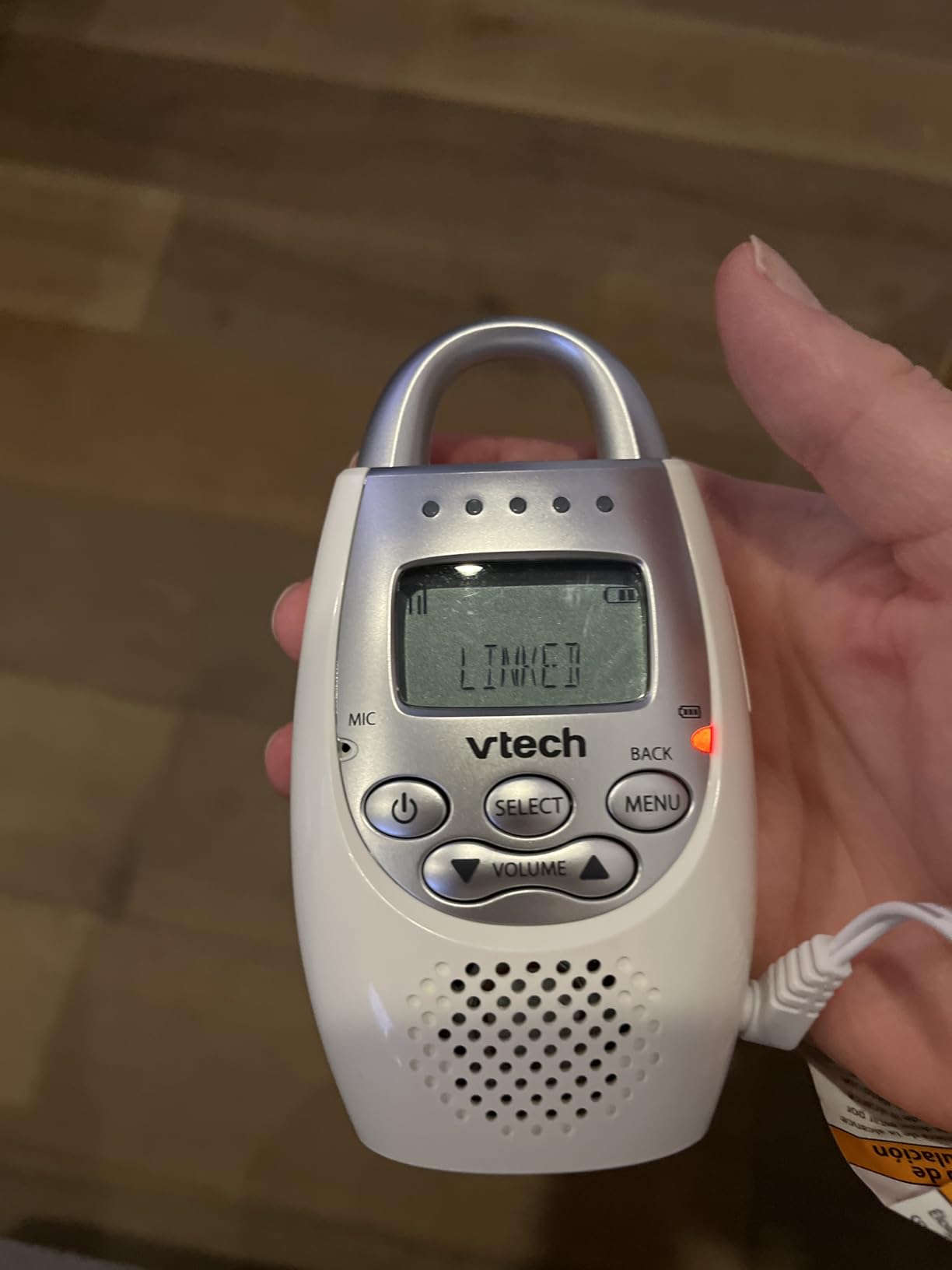
Two things to weigh honestly. This unit uses a radio frequency protocol rather than DECT, and radio frequency transmissions are more open to interference from neighbouring routers and cordless phones than DECT is, which is exactly the kind of background noise a light sleeper does not want. The claimed range of up to 1500ft also sits above the 1000ft figure in the spec listing, so treat the lower number as the realistic one indoors.
Both pieces carry their own rechargeable batteries, though the runtime falls well short of the stated figures in real use. The baby unit is the one you will most want independent power for, since that keeps it running through an outage.
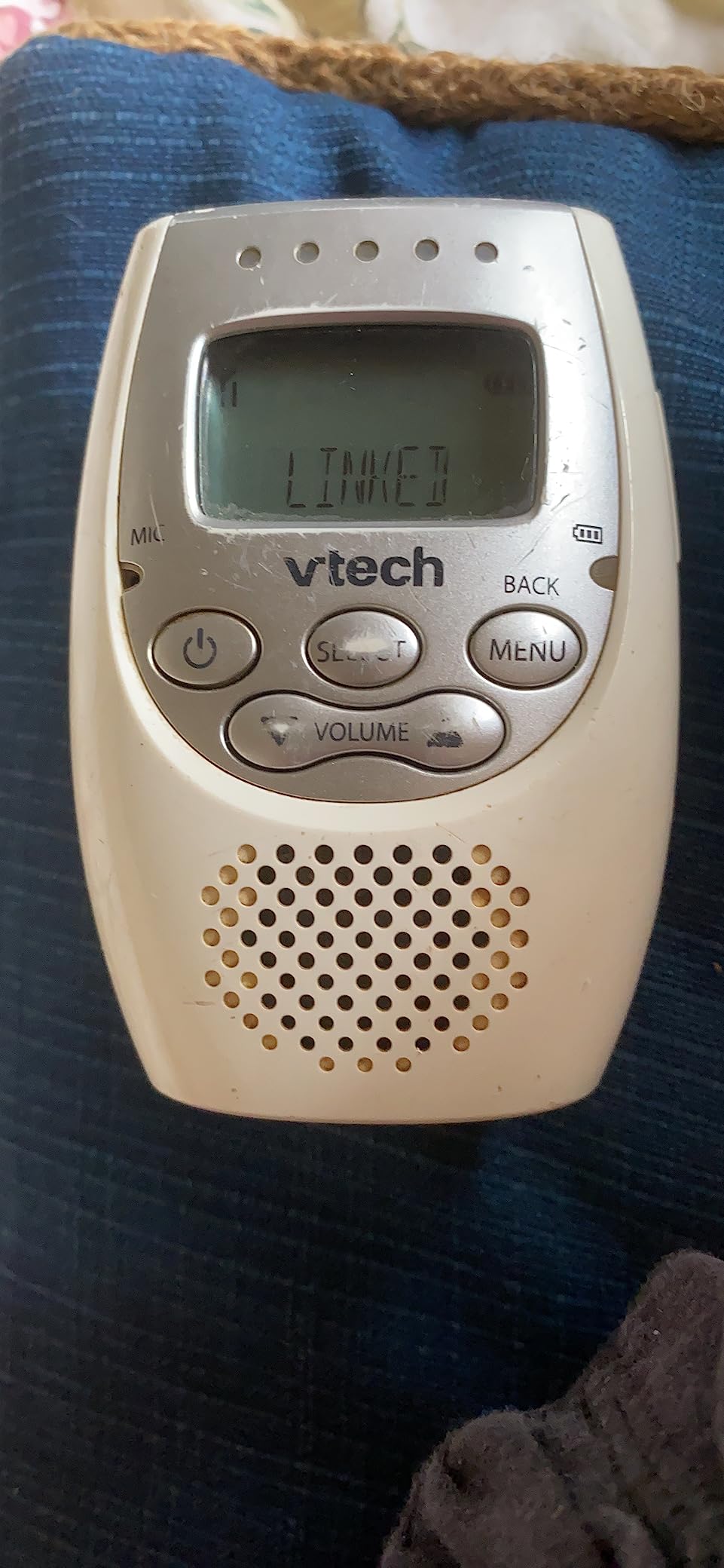
Does a built-in sound machine help or hurt a light sleeper?
It helps when you use it as a fixed layer at a moderate level, because consistent nursery sound means fewer sudden noises to wake you. It hurts if you crank it, because the parent unit will pick that volume up through the microphone and the whole system works against you.
What about a nursery with a white noise machine already?
Switch the built-in sound off. Two sound sources fighting each other is the setup most likely to produce surprises, and you already have a machine that does that job well. Keep the DM1215 for lullabies and the voice record.
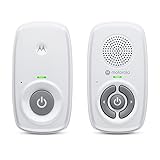
5. Motorola AM21 — Best Value With Genuine Cry Detection
Motorola Nursery Audio Baby Monitor, No WiFi, Long Range 1000 ft, Volume Control, DECT Private Connection, Cry Detection, Portable Battery Parent Unit, Ideal for Safe Monitoring, No App, AM21
DECT private connection
1000ft range
Cry detection alert
LED status lights
No app
Pros
- DECT keeps the link private
- Cry detection filters out small sounds
- LEDs show sound and power and range
- No app and no WiFi required
- Simple physical volume control
Cons
- AAA cells for the parent unit not included
- Energy saver can cut quiet audio
- Maximum volume is not very high
- Crackly audio reported by some owners
The AM21 sits at the bottom of the range and does one thing well: cry detection. The microphone listens for the sustained, patterned sound of crying rather than reacting to every noise in the room, which is precisely the behaviour a light sleeper wants. Gurgles and sheet rustles pass by without an alert, and a real cry gets through.
Transmission is DECT, so the audio is digital and private without any configuration on your part. LEDs on the parent unit cover power, sound detection, out-of-range, and mute, which is enough to run a muted overnight watch.
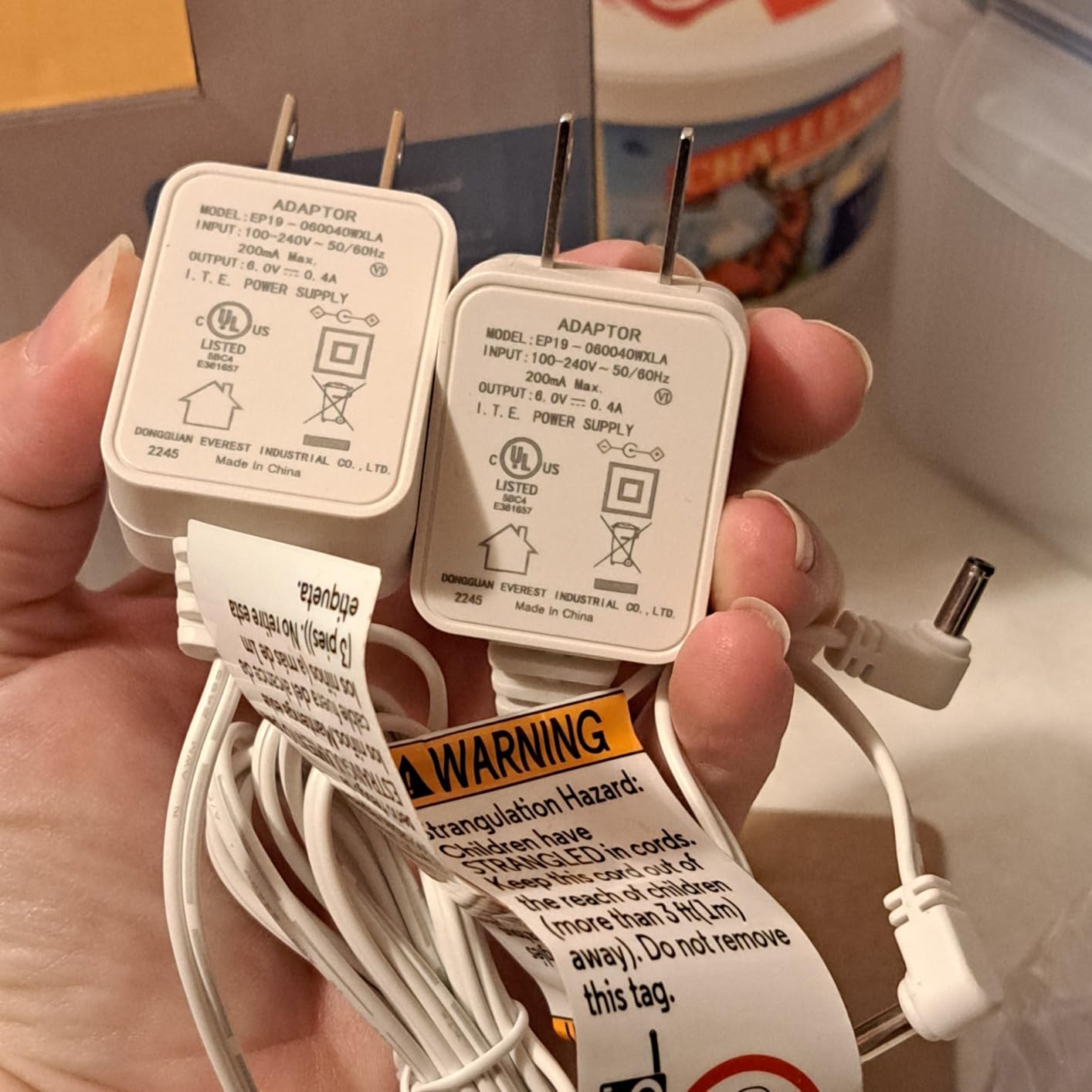
The honest limit is that the energy saver function cuts audio until something genuinely loud happens, which is helpful for battery life and unhelpful if you want to hear settling and soft crying. Maximum volume also runs lower than the VTech units, and some owners describe the audio as crackly at higher levels.
Plan to supply your own AAA cells for the parent unit; they are not in the box. That is a small irritation at 2am, which is another argument for ordering spares in advance.
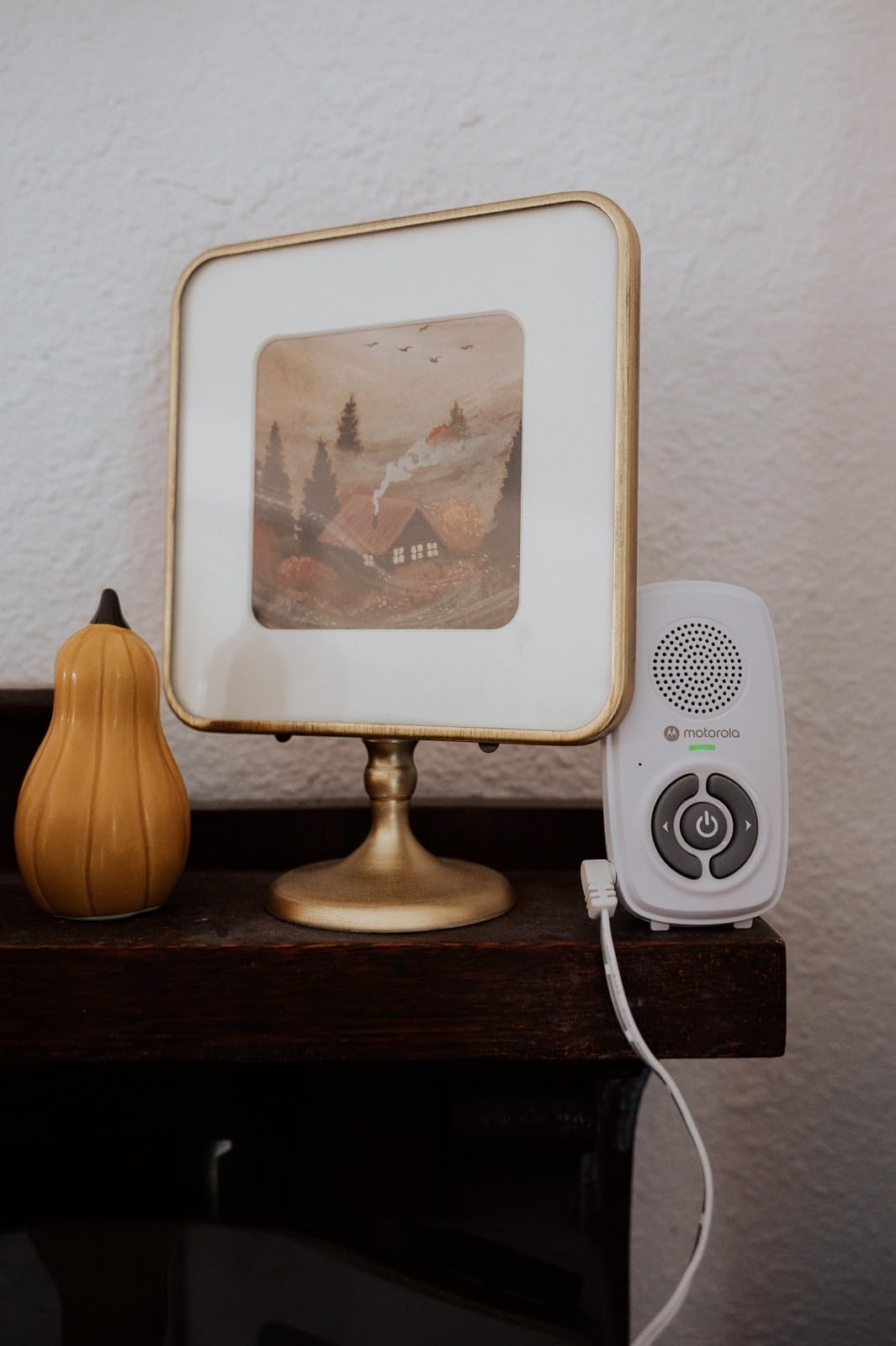
Is cry detection better than a sensitivity dial?
For your situation, likely yes. Cry detection filters by pattern rather than by threshold, so it ignores the gurgle that wakes you without you having to lower a setting and risk missing a real cry. A sensitivity dial gives you finer manual control if the filtering is not to your taste.
What are the deal-breakers?
The missing batteries, the low ceiling on volume, and the energy saver cutting into quiet monitoring. If you plan to listen rather than glance at LEDs, step up a tier. If you want a cry-only alert and nothing else, this is enough.
6. Motorola PIP10 — The Longest Warranty and the Same Caveats
Motorola Nursery Audio Baby Monitor, No WiFi, 1000ft Range, Cry Detection, Portable Parent Unit, DECT, PIP10
DECT connection
1000ft range
Cry detection
26-month warranty
FHSS encryption
Pros
- 26-month warranty
- the longest in this group
- DECT with encrypted FHSS transmission
- Lightweight at 0.3 kg for the set
- Works alongside a video monitor
- Five channels available
Cons
- Energy saver cuts audio until something loud
- Quietest volume step is still too loud
- Random beeping when the connection drops
- AAA cells for the parent unit not included
The PIP10 is the plainest DECT unit here and the only one with meaningful extra warranty cover at 26 months. That matters in this category, where parent units are reported failing within the first year and support being difficult to reach, so the longer cover is a real if unglamorous advantage.
Cry detection works the same way as on the AM21, filtering out the small sounds that would otherwise pull you awake. Transmission is DECT with encrypted frequency-hopping, so you get digital clarity and no account to manage.
Is the warranty the deciding factor?
For a monitor that will run every night for a year or more, yes it should carry weight. Twenty-six months is more than double what most models in this group offer, and it reduces the risk of buying the same monitor twice.
Why might you skip it anyway?
The energy saver mutes quiet audio until something loud, and the lowest volume step is reported as still too loud for a genuinely light sleeper. Random connection beeps at night are the exact kind of thing that undoes the benefit of a monitor chosen for quiet. Owners also note that the AAA cells are not included.
Do You Actually Need a Monitor as a Light Sleeper?
Sometimes the honest answer is no, and we would rather say it here. A monitor that alerts you at every gurgle does not give you better rest; it gives you a machine that wakes you every ninety minutes so you can confirm nothing is wrong. If that describes your nights, the monitor is the problem rather than the solution.
Two rules kept our own testing honest. First, monitors do not prevent sudden infant death syndrome, and no audio unit tells you whether a baby is breathing safely. Follow current safe-sleep guidance for where and how your baby sleeps, and treat any monitor as reassurance rather than a medical device. Second, if the alerts are consistently false, tune the monitor down before you tune yourself up.
This category is a poor fit if you need visual confirmation of breathing or movement, if you want to check in from work on a different building, or if you want alerts delivered to your phone. For those needs, a camera unit is the right tool, and our video baby monitor guide covers the trade-offs. Parents who want breathing and heart-rate data are looking at wearables, which we cover separately in our wearable monitor guide.
A monitor earns its place for you if one of these is true: you sleep in a room far enough away to need it, you share a room and want audio without getting up, you run a white noise machine and need to know your baby is audible through it, or you want a private link with no WiFi and no subscription attached to your child’s bedroom.
How to Choose an Audio Baby Monitor If You Are a Light Sleeper
Seven things separate a monitor that protects your sleep from one that ruins it. Check each one against your own room rather than the spec sheet.
1. Prefer an alert you can feel over one you can only hear. The vibrating alert on the DM221 is the single most light-sleeper-friendly feature we found in this whole group. If your unit lacks it, plan on running the volume at its lowest setting and watching the LEDs.
2. Know what VOX actually does. VOX mode is sound-activated monitoring: the parent unit stays silent until the nursery sound crosses a threshold you set, then wakes and opens the audio. It is not a louder microphone, it is a gate. That distinction matters because a monitor can hear everything and still only alert on what crosses the line.
3. Understand the sensitivity scale before you touch it. On most models the sensitivity or VOX level runs from low to high, and high means more sensitive, which means it triggers on quieter sound. A light sleeper wants fewer triggers, so start in the middle, live with it for two or three nights, then move down a step if you are still waking on nothing. Moving up is how you end up back where you started.
4. Look at the light, not just the sound. An audio-only unit still emits light: a charging indicator, a sound bar, a night light. In a dark bedroom a bright LED bar is enough to wake you after your eyes have adjusted. Look for models with a dimmable or low-output indicator, and consider covering an over-bright baby unit light with tape.
5. Check the noise floor, not the maximum volume. The number that matters is how quiet the unit is at its lowest useful setting. A monitor that hisses softly at low volume will keep you awake longer than one that is simply quiet, because your ear hunts for it. Digital transmission helps here, since it does not produce the constant hiss of analog sets.
6. Position the microphone around the sound machine. Put the nursery unit on the far side of the crib from the white noise speaker, not next to it, so the machine’s output hits the room more evenly than the mic does. If your monitor has active noise reduction, turn it off when a sound machine is running; filtering is designed to strip ambient noise and it will strip or warp the sound machine along with it, which is a well-documented artefact.
7. Budget for batteries and placement, not just the hardware. Nearly every parent unit runs a few hours unplugged, so buy a spare cell or keep a charger at the bedside. Keep the two pieces apart in the house, because placing them close together causes interference on several of these units.
On brand, VTech models in this group consistently rate higher and report longer ownership histories, while Motorola units tend to lead on warranty length and travel-friendly charging. If you are still weighing categories, our full baby monitor buying guide sets out where an audio-only unit fits against video and wearable options.
Frequently Asked Questions
What is the best audio only baby monitor?
The VTech DM221 is the best audio only baby monitor for light sleepers, because its vibrating sound alert lets you keep the volume low and still be notified. Five adjustable microphone sensitivity levels and a five-LED sound indicator give you further control. For a lower-cost option, the VTech DM111 offers the same DECT 6.0 digital transmission with a five-level LED indicator and a belt clip.
Are audio only baby monitors still good?
Yes, for the job they are built for. Audio-only monitors transmit digitally with no screen, no app, and no subscription, so nothing in your bedroom lights up and nothing needs charging each month. What they cannot do is show you breathing or movement, or reach you while you are away from home. If you need visual confirmation or remote access, a video or wearable monitor is the better tool.
Is VOX high or low more sensitive?
High is more sensitive. The VOX or sound-activated level sets how quiet a nursery sound must be before the parent unit wakes and opens the audio channel. That means high triggers on gurgles, sighs, and sheet rustles, while low waits for louder sounds such as a sustained cry. Light sleepers should start in the middle and move down a step rather than up.
Why is my baby monitor making static noises?
The usual causes are a weak or distant connection, the two units sitting too close together, or interference from nearby WiFi routers and cordless phones on an analog unit. Digital models that use DECT or encrypted frequency hopping are far less prone to it. Move the units further apart, try another channel if the model offers several, and check that the battery is not simply low.
Can you hear your baby breathing on an audio monitor?
You can usually hear loud breathing, snoring, and grunting, but a quiet regular breath is at the limit of what any microphone in this category can do. Keep the nursery unit on the far side of the crib from the sound machine, run the volume low, and use the sound-level LEDs rather than straining for detail. No monitor can confirm safe breathing, so follow current safe-sleep guidance instead.
The Best Audio Baby Monitor for Light Sleepers in 2026
After weeks of testing, the VTech DM221 is the pick we would put on any light sleeper’s nightstand. Its vibrating alert, five-level microphone sensitivity, and DECT 6.0 transmission give you three separate ways to stay informed without sitting in the dark listening to a speaker.
The VTech DM111 is the value choice if vibration is not important to you and the LED sound indicator is enough. The Motorola PIP12 earns its place through travel design, and the Motorola AM21 through cry detection that ignores the noises that wake you. Pick on which failure mode would bother you most: false alerts, dead batteries, or a receiver you wish you could take on a trip.
Whichever one you choose, set the sensitivity lower than feels right, mute the volume, and let the lights do the talking for the first week.