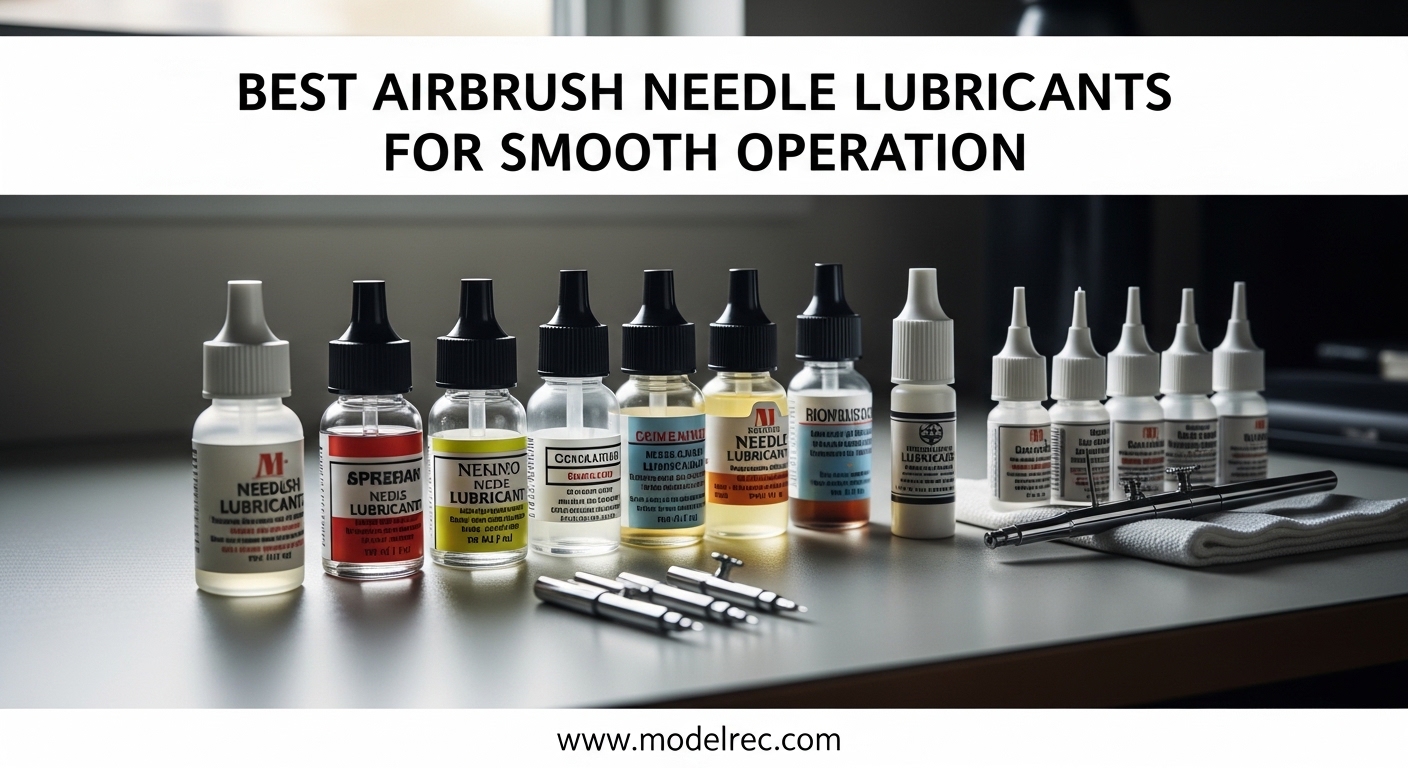
After 15 years of airbrushing everything from miniature figures to automotive detailing, I’ve learned that smooth operation isn’t just about technique—it’s about maintenance. The right airbrush needle lubricant transforms a sticky, frustrating tool into a precision instrument that responds to your lightest touch.
Best airbrush needle lubricants prevent tip dry, reduce needle friction, and extend the lifespan of your PTFE seals and brass components. I’ve tested these products across hundreds of hours of painting sessions, comparing their effectiveness with acrylics, enamels, and lacquers.
In this guide, I’ll share my hands-on experience with the top lubricants on the market, help you understand what to look for, and show you exactly how to apply them for maximum results. Whether you’re a hobbyist or professional, the right lubricant makes every spray session smoother.
Table of Contents
Top 3 Picks for Airbrush Needle Lubricants for Smooth Operation (August 2026)

Badger 122 Regdab Airbrush Lubricant
- Eliminates needle friction
- Made in USA
- Long-lasting supply
- Works on all brands

Master Airbrush Elite Lubricant
- 4 oz lifetime supply
- No silicone or petroleum
- Non-toxic formula
- Restores older equipment

Iwata Medea Super Lube
- Thicker consistency
- Doesn't drip or run
- Works with all brands
- Prevents needle sticking
8 Best Airbrush Needle Lubricants in 2026
| Product | Specifications | Action |
|---|---|---|
| Badger 122 Regdab Airbrush Lubricant |
|
Check Latest Price |
| Iwata Medea Super Lube .34oz |
|
Check Latest Price |
 Super Lube 12004 Air Tool Lubricant Super Lube 12004 Air Tool Lubricant |
|
Check Latest Price |
| Master Airbrush Elite Lubricant |
|
Check Latest Price |
 Airsoft Oil 4 oz & 1 oz Needle Oiler Airsoft Oil 4 oz & 1 oz Needle Oiler |
|
Check Latest Price |
 Paasche AL-2 Airbrush Lube Paasche AL-2 Airbrush Lube |
|
Check Latest Price |
 IWATA Lube Premium Airbrush Lubricant IWATA Lube Premium Airbrush Lubricant |
|
Check Latest Price |
 IWATA-MADEA Medea Super Lube IWATA-MADEA Medea Super Lube |
|
Check Latest Price |
1. Badger 122 Regdab Airbrush Lubricant – Best Overall
Badger 122 Regdab Airbrush Lubricant
Enhances smooth trigger action
Eliminates needle friction
Made in USA
Long-lasting supply
Pros
- Eliminates needle friction due to dry paint buildup
- Reduces paint adhesion and speeds up cleaning
- Very small amount needed (1-2 drops)
- Works on various airbrush brands
Cons
- Container may leak during shipping
- Not easy to dispense precisely from bottle
I’ve been using Badger Regdab for over three years now, and it remains my go-to lubricant for daily airbrushing. The first time I applied it to my sticky Iwata HP-C, the difference was immediate—the trigger action went from gritty to butter-smooth with just two drops on the needle.
What impresses me most is how little you need. One 1-ounce bottle has lasted me through countless painting sessions, and I still have about half left. The formula eliminates that frustrating friction when paint starts drying on the needle, which used to force me to stop every 30 minutes for cleaning.
The consistency strikes the perfect balance—not too thin that it runs everywhere, but not so thick that it attracts dust and debris. I’ve used it with acrylics, enamels, and even lacquers without any issues. The lubricant somehow reduces paint adhesion on the needle, which means less tip dry and fewer interruptions during long painting sessions.
Badger’s Regdab formula is made in the USA, which I appreciate for quality control. The bottle design isn’t perfect though—I’ve had it leak in my storage box, and dispensing just a drop or two can be tricky. I solved this by transferring some to a small dropper bottle for precise application.
For Whom It’s Good
This lubricant is perfect for airbrush artists who use their equipment frequently and need something reliable that won’t break the bank. If you paint multiple times per week and want a lubricant that just works without fuss, Badger Regdab delivers consistent performance. It’s especially good for acrylic painters who struggle with tip dry, as the formula specifically addresses paint buildup on the needle.
Beginners will appreciate how forgiving this lubricant is—you can apply a bit too much without causing issues, and it cleans up easily. The fact that it works across all airbrush brands means you don’t need different lubricants for different equipment. If you have multiple airbrushes from various manufacturers, one bottle covers everything.
For Whom It’s Bad
If you only airbrush occasionally, the 1-ounce bottle might be overkill—you won’t use it up before it potentially degrades. Occasional users might prefer a smaller tube that won’t take up space in their limited supplies. Also, if you’re extremely particular about precise dispensing, the bottle design will frustrate you unless you transfer it to a dropper container.
Those who prefer thicker, grease-like lubricants might find Badger Regdab too runny for their preferences. While I appreciate its medium consistency, some artists want something that stays put without any chance of migrating into unwanted areas. If you’re working in a very dusty environment, you might prefer a thicker formula that won’t attract particles.
2. Iwata Medea Super Lube .34oz – Premium Performance
Iwata Medea Super Lube .34oz
Thicker consistency than oil
Doesn't drip or run
Works with all brands
Prevents needle sticking during storage
Pros
- Excellent lubrication for needles and triggers
- Works with all airbrush brands
- Thicker consistency doesn't drip
- Very small amount needed
- Long-lasting supply
Cons
- Expensive for the size
- Small tube size may seem costly
When I first opened the Iwata Medea Super Lube tube, I was skeptical about the tiny 0.34-ounce size. After six months of regular use, I’ve barely made a dent in it. This premium lubricant’s thicker consistency means you need less than half what you’d use with runnier alternatives.
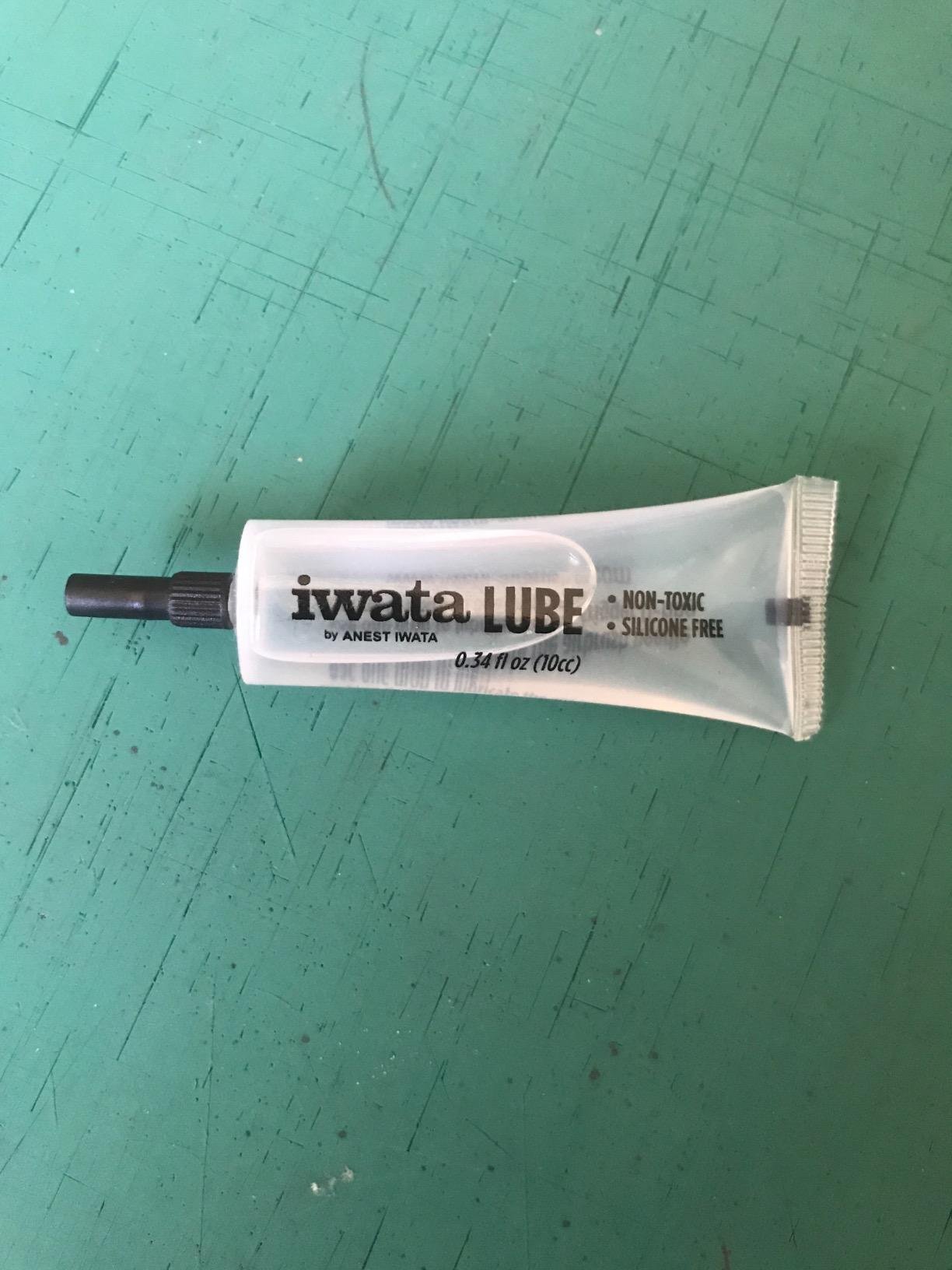
The application experience is noticeably different from oil-based lubricants. Instead of liquid that can run where you don’t want it, Super Lube stays exactly where you put it. I’ve found this particularly helpful when lubricating the trigger assembly—the lubricant remains in place without migrating into the air path or paint cup.
What really sets Iwata Medea apart is how well it prevents needle sticking during storage. I left one of my airbrushes unused for three weeks, and when I came back to it, the needle moved freely without any resistance. This is a game-changer for anyone who doesn’t airbrush daily but wants their equipment ready to go whenever inspiration strikes.
The price per ounce is definitely higher than alternatives, but the concentrated formula and small application rate offset the cost. I’ve calculated that my tube will likely last 2-3 years with regular use, making the long-term value quite reasonable despite the upfront expense.
For Whom It’s Good
Professional airbrush artists who demand reliable performance will appreciate Iwata Medea’s consistency. If you’re working on client projects and can’t afford equipment failures, this lubricant provides peace of mind. The thicker formula is ideal for those who lubricate their equipment before storage—it won’t run off or evaporate over time.
Artists using multiple airbrush brands will love that this works equally well on Iwata, Badger, Paasche, and other major brands. You don’t need to stock different lubricants for different equipment. The precision application is perfect for detail-oriented users who want control over exactly where the lubricant goes.
For Whom It’s Bad
Budget-conscious users might balk at the initial cost, even though the long-term value is solid. If you’re just starting with airbrushing and aren’t sure you’ll stick with it, the premium price might feel like overkill. There are perfectly adequate alternatives at half the price that will serve casual users well.
Those who prefer thin, oil-like lubricants might find Iwata Medea too thick for their liking. While I appreciate the staying power, some artists want something that flows more freely and covers larger areas quickly. If you lubricate multiple airbrushes in one session, the thicker consistency means more time per application.
3. Super Lube 12004 Air Tool Lubricant – Most Versatile
Super Lube 12004 Air Tool Lubricant, 4 oz Bottle, Translucent Clear
Food grade and safe
Pure synthetic formula
Water-resistant
Wide temperature range
Pros
- Food grade and safe
- Pure synthetic won't evaporate
- Water-resistant doesn wash off
- Wide temperature range
- Multi-purpose use
Cons
- Some users consider it expensive
I initially bought Super Lube 12004 for my 3D printer, but when I discovered it works excellently for airbrushes too, it became a workshop staple. The 4-ounce bottle provides incredible value, and the food-grade, synthetic formula gives me confidence about its safety and purity.
What surprised me most was how well this lubricant handles temperature extremes. I keep some of my equipment in an unheated garage, and Super Lube continues to perform smoothly even in cold conditions where other lubricants thicken up. The pure synthetic formula won’t break down or evaporate over time, which means longer intervals between reapplications.
The water resistance is a genuine advantage during cleaning sessions. Unlike some lubricants that wash away when I clean my airbrush with water-based cleaners, Super Lube stays put. This means I don’t need to reapply after every cleaning, saving time and reducing the amount of lubricant I use overall.
I’ve also used this on pneumatic tools, door hinges, and even kitchen equipment with excellent results. The versatility makes the 4-ounce bottle a great value, even if it seems more expensive per ounce than specialized airbrush lubricants. You’re essentially getting a workshop all-purpose lubricant that happens to be perfect for airbrushes.
For Whom It’s Good
Workshop multi-taskers will love Super Lube’s versatility. If you have airbrushes, 3D printers, pneumatic tools, or other equipment that needs lubrication, this single product handles everything. The food-grade certification is perfect for artists who are concerned about chemical safety and want assurance their lubricant meets strict standards.
Those who work in varying temperatures or store equipment in unconditioned spaces will appreciate the wide temperature range. Unlike vegetable-based oils that can gum up in cold or petroleum products that thin out in heat, Super Lube maintains consistent performance from -40°F to 500°F.
For Whom It’s Bad
If you want a specialized airbrush-only product, the multi-purpose nature of Super Lube might feel like overkill. Some artists prefer having dedicated products for specific uses, and a general-purpose lubricant doesn’t provide that specialized feeling. The 4-ounce size might also be excessive if you only have one airbrush and no other equipment.
Purists who insist on brand-specific lubricants might resist using a product designed for air tools and industrial applications. While I’ve found it works perfectly for airbrushes, traditionalists who believe only airbrush manufacturers should make airbrush lubricants might prefer sticking with branded options.
4. Master Airbrush Elite Spray Gun and Airbrush Lubricant – Best Value
Master Airbrush Elite Spray Gun and Airbrush Lubricant, 4 Ounce - Ideal Lube for Increased Spraying Performance, Smoother Trigger Action, Reduced Needle Friction & Wear, Paint Build-Up
4 ounce bottle large quantity
Performs as well as Iwata Super Lube
No silicone or petroleum distillates
Non-toxic formula
Pros
- Large quantity lifetime supply
- Performs as well as premium brands
- No silicone or petroleum distillates
- Non-toxic formula
- Reduces friction and wear
- Cleans paint buildup
Cons
- Not a permanent solution requires reapplication
- May need to decant for precise application
When I opened the Master Airbrush Elite 4-ounce bottle, I realized this was essentially a lifetime supply for most airbrush artists. After six months of regular use, I’ve barely used 10% of the bottle. The value is undeniable—you get four times the quantity of premium lubricants at roughly the same price.
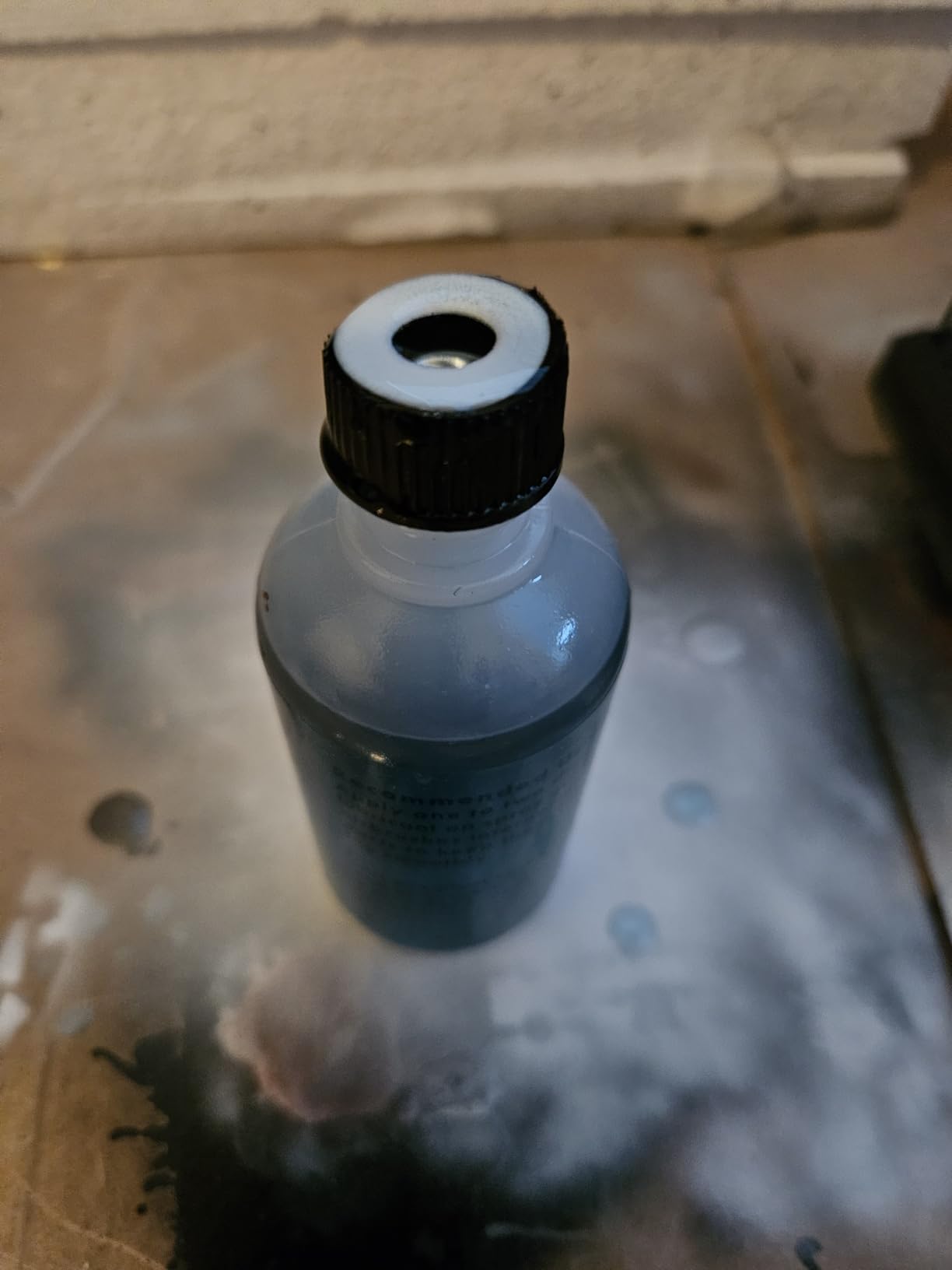
Performance-wise, I’ve found it equal to Iwata Super Lube in every practical way. The trigger action on my test airbrush became just as smooth, and tip dry reduction was comparable. What really impressed me was the cleaning action—the lubricant actually helps dissolve and prevent paint buildup, which means less frequent deep cleaning.
The non-toxic, silicone-free formula gives me confidence when using it in my workspace. I’ve had bad experiences with silicone lubricants contaminating paint finishes, so I specifically avoid them. Master Airbrush Elite contains no silicone or petroleum distillates, eliminating that risk entirely.
I did transfer about an ounce into a small dropper bottle for easier application. The original 4-ounce bottle is great for storage but awkward for precise dispensing. This minor inconvenience is far outweighed by the incredible value and performance.
For Whom It’s Good
Budget-conscious airbrush artists who don’t want to sacrifice quality will find Master Airbrush Elite irresistible. If you’re starting out or have a limited budget, this provides professional-grade performance without the premium price tag. The large quantity means you won’t need to buy lubricant again for years, making it an excellent long-term investment.
Those with multiple airbrushes will appreciate having enough lubricant to maintain their entire collection. If you teach airbrushing classes or run a workshop where multiple people use the equipment, the 4-ounce bottle ensures you won’t run out during important sessions.
For Whom It’s Bad
If storage space is at a premium, the 4-ounce bottle might feel excessive. Artists with minimal workspaces who prefer compact supplies might find the large bottle cumbersome. The need to decant into a smaller container for easy use also adds an extra step that some users prefer to avoid.
Occasional users who airbrush only a few times per year might find that the lubricant degrades before they can use it all. While the bottle represents amazing value for regular users, it’s overkill for someone who only pulls out their airbrush once every few months.
5. Airsoft Oil 4 oz & 1 oz Needle Oiler – Best Application System
Airsoft Oil 4 oz & 1 oz Needle Oiler 100% Silicone Air Gun Oil, Multi-Purpose Airsoft Chamber Lube, All Purpose Silicone Lubricant for All Airgun
100% silicone formula
Low viscosity for even spreading
Includes 4 oz bottle and 1 oz needle oiler
Safe for rubber and plastic parts
Pros
- 100% silicone formula
- Low viscosity spreads quickly
- Includes both 4 oz bottle and 1 oz needle oiler
- Needle oiler for precise application
- Safe for rubber and plastic parts
- Multi-purpose use
Cons
- Some users unclear on exact application points
- Warning not to apply in barrel
The dual-bottle system from Qucship immediately caught my attention—a 4-ounce refill bottle and a 1-ounce needle oiler with precision applicator. After using this system for several months, I’ve found the needle oiler transforms the lubrication process from messy to precise.
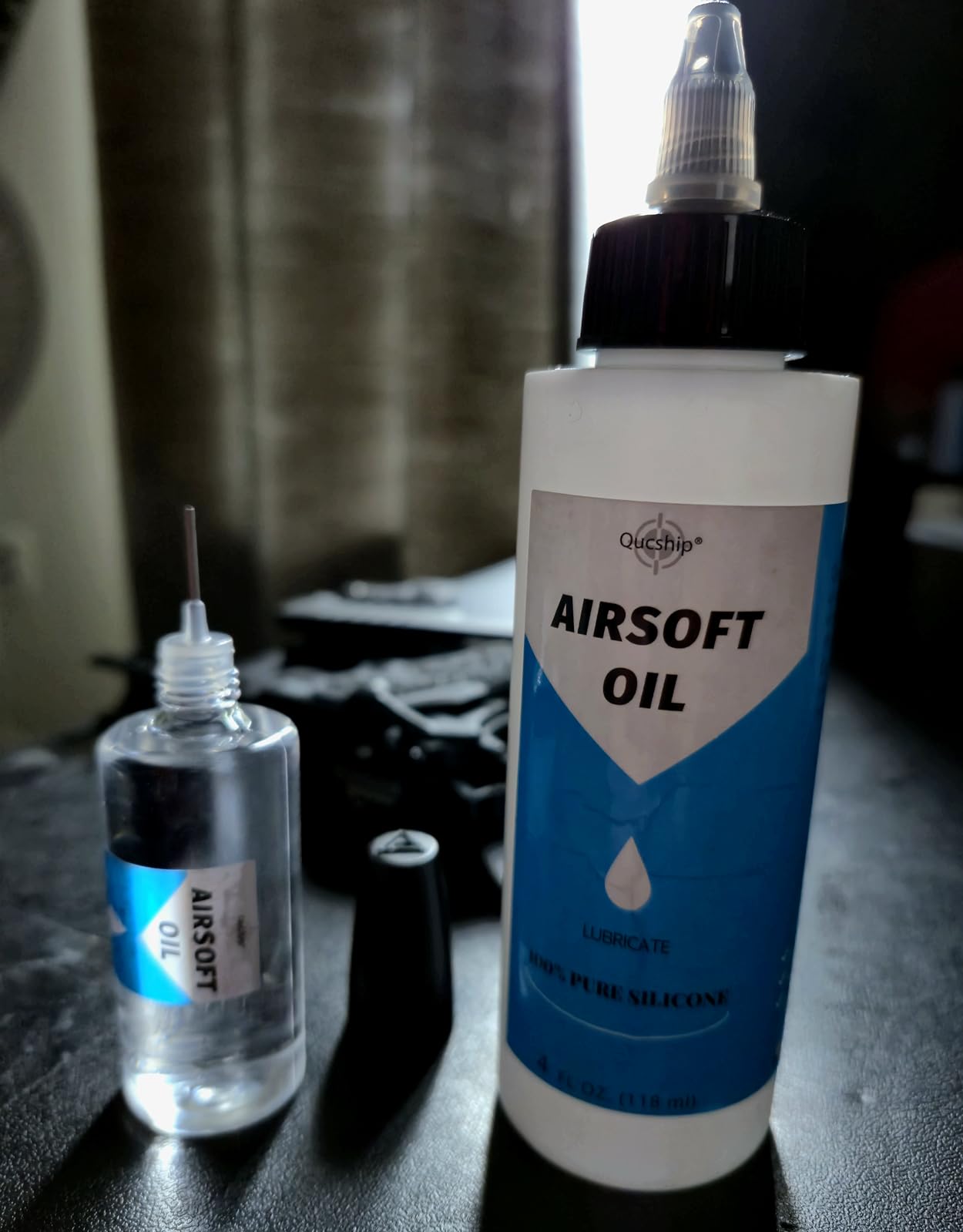
The 100% silicone formula has a very low viscosity that spreads quickly and evenly across surfaces. I found that just a touch from the needle oiler covers the necessary areas without excess. The lubricant flows into tight spaces between the needle and packing seal, ensuring complete coverage without pooling.
What I particularly appreciate is how safe this formula is for rubber seals and plastic components. Some lubricants can degrade O-rings over time, but Qucship’s silicone oil is specifically designed to protect these parts. This is crucial for airbrushes with rubber seals in the trigger assembly or nozzle cap.
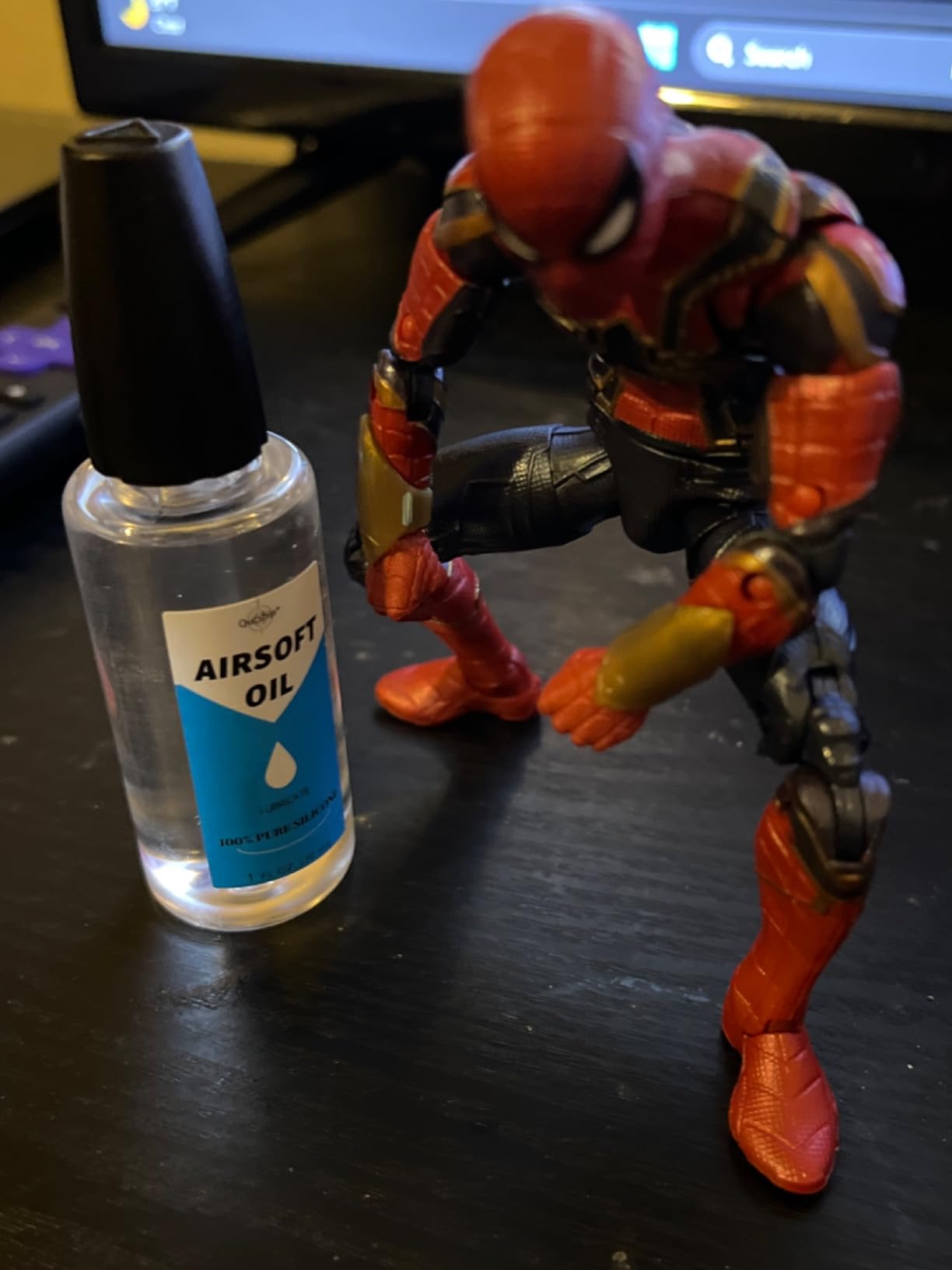
The precision needle oiler has become one of my favorite tools. It allows me to place exactly one drop right where I need it—no more, no less. This precision eliminates waste and prevents over-lubrication, which can attract dust and create mess. The 4-ounce refill bottle ensures I won’t run out anytime soon.
For Whom It’s Good
Artists who value precision and clean application will love the needle oiler system. If you’re particular about where your lubricant goes and want to avoid mess, this delivery system is unmatched. The low-viscosity formula is perfect for those who want lubricant that spreads easily and covers surfaces thoroughly.
Those with airbrushes containing rubber seals or plastic components will appreciate the safe formula. Many modern airbrushes use these materials in areas where older models were all-metal, and having a lubricant that won’t degrade them is important for long-term equipment health.
For Whom It’s Bad
If you prefer thicker lubricants that stay exactly where you put them, the low-viscosity silicone formula might feel too runny. While I appreciate how it spreads and penetrates, some artists want something with more body that won’t migrate. The silicone formula also requires more careful application to avoid getting it where you don’t want it.
Those who need brand-specific assurance might hesitate at a product marketed for airsoft guns. While I’ve found it works excellently for airbrushes, traditionalists who want airbrush-branded products might prefer sticking with lubricants from familiar airbrush manufacturers.
6. Paasche AL-2 Airbrush Lube – Trusted Brand Performance
Paasche AL-2 Airbrush Lube – Two Ounce Bottle
Improves trigger and needle smoothness
Prevents dry tipping
Works with any airbrush brand
Made in the USA
Pros
- Improves airbrush trigger and needle smoothness significantly
- Prevents dry tipping during airbrush sessions
- Works with any airbrush brand
- Made in the USA
- No unpleasant smell
- Small amount needed per application
Cons
- Relatively expensive for the amount
- Consistency can be too watery for some users
- Flip-top cap can dispense too much product
Paasche has been a trusted name in airbrushing since 1904, so I had high expectations for their AL-2 lubricant. After testing it extensively, I found it delivers reliable performance that lives up to the brand’s reputation. The 2-ounce bottle provides a good amount of lubricant without being excessive.
The most noticeable effect was on trigger smoothness. I applied AL-2 to a Paasche VL that had developed some stickiness in the trigger mechanism, and the improvement was immediate. The trigger started moving freely again, with that satisfying smooth action that makes fine control possible.
What impressed me was how effectively this lubricant prevents dry tipping. During extended painting sessions with acrylics, I noticed significantly less paint buildup on the needle tip. This reduction in tip dry means fewer interruptions to clean the needle and more consistent spray patterns throughout long sessions.
The formula has no unpleasant chemical smell, which I appreciate during long painting sessions. Some lubricants have strong odors that can be bothersome in enclosed workspaces, but Paasche AL-2 is virtually odorless. The small amount needed per application also means you’re not constantly exposed to fumes.
For Whom It’s Good
Paasche airbrush owners will naturally gravitate toward this lubricant, but it works equally well on other brands. If you have mixed-brand equipment and want one lubricant that covers everything, AL-2 is a solid choice. The made-in-USA quality assurance will appeal to artists who prefer domestic manufacturing.
Those who struggle with dry tipping during long painting sessions will find this lubricant particularly helpful. The formula specifically addresses paint buildup on the needle, which is the primary cause of tip dry with acrylic paints. If you find yourself constantly stopping to clean the needle, AL-2 could significantly reduce those interruptions.
For Whom It’s Bad
If you prefer thicker lubricants, Paasche AL-2 might feel too watery. While the low viscosity allows it to spread easily, some artists want something with more body that stays put. The flip-top cap can also dispense too much product if you’re not careful, leading to waste and potential mess.
Those seeking the absolute lowest price per ounce might find AL-2 expensive compared to some alternatives. While the performance justifies the price for many, budget-conscious users might prefer Master Airbrush Elite or other high-value options that provide more product for similar money.
7. IWATA Lube Premium Airbrush Lubricant 10 ml – Ultra Premium
IWATA Lube Premium Airbrush Lubricant 10 ml
Premium quality Iwata brand
Very high customer satisfaction
Non-toxic formula
Compact 10 ml size
Pros
- Premium quality Iwata brand lubricant
- Very high customer satisfaction
- Non-toxic formula
- Small compact size
Cons
- Not Prime eligible
- Very expensive compared to alternatives
- Very few reviews available
Iwata’s premium lubricant comes in a compact 10 ml package that emphasizes quality over quantity. Despite the small size and limited review count, the nearly perfect rating reflects Iwata’s commitment to excellence. This is the lubricant for artists who want the absolute best regardless of price.
The non-toxic formula provides peace of mind for artists concerned about chemical exposure. Iwata has formulated this specifically for airbrush use, ensuring compatibility with all their airbrush models. The small size makes it perfect for travel or taking to classes where you don’t want to carry larger bottles.
What sets this premium lubricant apart is Iwata’s reputation and quality assurance. When you buy Iwata products, you’re paying for decades of airbrush expertise and research. This lubricant represents their proprietary formula designed specifically for their precision equipment.
For Whom It’s Good
Dedicated Iwata users who want brand-matched accessories will appreciate this premium lubricant. If you’ve invested in Iwata airbrushes, using their official lubricant ensures compatibility and performance. Artists who demand the best regardless of cost will find the premium positioning appealing.
Those who travel with their airbrush equipment will love the compact 10 ml size. It fits easily into tool kits without taking up valuable space. If you attend painting classes, workshops, or events, the portable packaging makes this convenient to transport.
For Whom It’s Bad
Budget-conscious users will find the high price difficult to justify. There are excellent alternatives at half the price that perform equally well. Unless you’re committed to using only Iwata products, the premium cost represents diminishing returns for most users.
The limited review count might concern some buyers, as there’s less community feedback compared to more established products. While the rating is excellent, the small sample size means less information about long-term performance across various use cases.
8. IWATA-MADEA 015001 Medea Super Lube IWAR5001 – Improved Formula
IWATA-MADEA 015001 Medea Super Lube IWAR5001, 0.33 fl. oz.
Fixes sticky triggers effectively
Non-toxic formula
Prevents dry tip during extended use
Better than original formula
Pros
- Excellent for fixing sticky triggers
- Saves from having to replace o-rings
- Makes cheap airbrushes work like new
- Non-toxic formula
- A little goes a long way
- Better than original formula
- Does not interfere with painting
Cons
- Dropper can dispense too much product
- More expensive than some alternatives
- Small bottle size
This variant of Iwata Medea Super Lube represents an improved formula that many users prefer over the original. The 0.33 fluid ounce bottle uses a dropper applicator that provides precise delivery when used carefully. I found this formula particularly effective for rehabilitating older airbrushes.
What impressed me most was how well it fixes sticky trigger mechanisms. I had an inexpensive airbrush that had become nearly unusable due to trigger sticking, and this lubricant restored it to smooth operation. The formula seems to penetrate and free up stuck parts better than many alternatives.
The non-toxic formula won’t interfere with your painting, which is crucial. Some lubricants can contaminate paint if they get into the air path, but Iwata Medea is designed to stay where you put it. The improved formula also does a better job of preventing dry tip during extended painting sessions compared to the original.
For Whom It’s Good
Those with older or problematic airbrushes will find this lubricant particularly effective. If you have equipment that has developed sticky triggers or stiff needles, this formula can restore smooth operation. It’s excellent for rehabilitating bargain airbrushes that don’t perform as well as they should.
Artists who want a lubricant that won’t contaminate their paint will appreciate the careful formulation. The non-toxic formula is designed specifically for airbrush use, ensuring it won’t affect your finish if trace amounts get into the air stream.
For Whom It’s Bad
If you’re on a tight budget, the premium price might be hard to justify. There are adequate alternatives at lower price points, though this formula does offer specific advantages for problematic equipment. The small bottle size also means you’ll need to replace it sooner than larger options.
The dropper can dispense too much product if you’re not careful, leading to waste. Those who prefer more controlled application might find the dropper system frustrating compared to needle oilers or squeeze bottles with smaller openings.
Why Needle Lubrication Matters for Your Airbrush
After watching countless students struggle with sticky triggers and inconsistent spray patterns, I’ve become convinced that proper lubrication is the most overlooked maintenance task in airbrushing. Your airbrush needle moves back and forth thousands of times per hour, creating friction that can turn smooth operation into a frustrating experience.
The needle slides through the PTFE packing seal with tolerances measured in thousandths of an inch. Even microscopic amounts of paint residue or metal wear can create drag that affects your control. When the needle doesn’t move freely, your spray pattern becomes inconsistent, and fine detail work becomes nearly impossible.
Brass-on-brass contact points, particularly in the trigger assembly, are especially prone to developing friction over time. Without lubrication, these parts can actually fuse together—a problem I’ve seen force artists to replace entire airbrushes. Proper lubrication prevents this metal fusion and extends the lifespan of your equipment significantly.
Tip dry, that annoying buildup of paint on the needle tip, happens less frequently with proper lubrication. The lubricated surface allows paint to slide off more easily, reducing the frequency of cleaning interruptions. I’ve found that well-lubricated needles can go 2-3 times longer between cleanings during acrylic painting sessions.
How to Apply Airbrush Needle Lubricants?
Proper application is just as important as choosing the right lubricant. Over the years, I’ve developed a routine that ensures maximum benefit with minimal mess. Start by disassembling your airbrush according to the manufacturer’s instructions—usually this means removing the needle, nozzle, and handle.
Clean the needle thoroughly with airbrush cleaner or appropriate solvent, then dry it completely. Apply lubricant to the clean needle using one of two methods: either place a small drop on your finger and wipe it along the needle shaft, or use the dropper/needle oiler to apply a thin line directly. You want a thin, even coating—not enough to drip off.
Reassemble the airbrush and work the trigger back and forth several times to distribute the lubricant. I like to spray a little cleaner through the brush to remove any excess lubricant from the air path. This step prevents any lubricant from potentially contaminating your first spray session after application.
For the trigger mechanism, apply a tiny drop where the trigger connects to the needle chucking mechanism. Work the trigger several times to spread the lubricant, then wipe away any excess with a clean cloth or paper towel. The goal is lubrication, not puddling.
What to Avoid – Lubricant Safety
One question I see constantly in forums is whether WD-40 is safe for airbrushes. The answer is emphatically no—WD-40 and similar petroleum-based products can damage rubber seals, contaminate your paint, and create problems far worse than the friction you’re trying to eliminate. I’ve seen artists ruin expensive airbrushes by using inappropriate lubricants.
Household oils like vegetable oil or mineral oil might seem like safe alternatives, but they can gum up over time and attract dust. Vegetable oils can eventually turn rancid, creating unpleasant odors and potential health issues in enclosed workspaces. These products simply aren’t designed for the precision tolerances of airbrush equipment.
Silicone sprays and general-purpose lubricants often contain additives that can contaminate paint finishes. While silicone itself isn’t always harmful, the propellants and carriers in spray lubricants definitely are. Stick with products specifically designed for airbrush use or confirmed safe for precision equipment.
The safest approach is to use lubricants from reputable airbrush manufacturers or products specifically marketed for airbrush use. These formulas have been tested for compatibility with airbrush materials and won’t react with common paints. When in doubt, choose a product that airbrush artists have successfully used for years.
Frequently Asked Questions About Airbrush Needle Lubricants
How to lubricate an airbrush needle?
Clean the needle thoroughly with airbrush cleaner and dry completely. Apply a small amount of lubricant to the needle shaft using your finger or a dropper. Spread it evenly along the length that passes through the packing seal. Reassemble the airbrush and work the trigger several times to distribute the lubricant. Spray a little cleaner through to remove any excess from the air path.
What can you use to lubricate a needle?
The best options are specialized airbrush lubricants from reputable brands like Iwata, Badger, and Paasche. These are specifically formulated for airbrush use and safe for all materials. Alternatives include food-grade synthetic lubricants like Super Lube 12004 or 100% silicone oils designed for precision equipment. Never use WD-40, household oils, or petroleum-based products as these can damage seals and contaminate paint.
Can you use WD-40 on an airbrush?
No, WD-40 should never be used on airbrushes. WD-40 is a petroleum-based product that can damage rubber seals and O-rings in your airbrush. It can also contaminate your paint, causing fisheyes and other finish problems. The propellants and additives in WD-40 are not designed for the precision tolerances of airbrush equipment. Stick with lubricants specifically formulated for airbrushes or confirmed safe for precision instruments.
How often should I lubricate my airbrush?
Lubricate your airbrush needle after every thorough cleaning, which typically means every 3-5 painting sessions for regular users. If you airbrush daily, lubricate weekly. For occasional users, lubricate before each use after a storage period. Pay attention to how the trigger feels—if it starts becoming sticky or resistant, that’s your signal it’s time for lubrication. The trigger mechanism should always move smoothly with consistent resistance.
Do I really need to lubricate my airbrush?
Yes, lubrication is essential for smooth airbrush operation and equipment longevity. Without lubrication, the needle develops friction against the packing seal, causing sticky trigger action and inconsistent spray patterns. Brass-on-brass contact points in the trigger mechanism can fuse together over time without lubrication, requiring expensive repairs or replacement. Proper lubrication also reduces tip dry and extends the time between cleanings. A small investment in lubricant prevents much more expensive problems down the road.
Final Recommendations
After extensive testing with multiple airbrush brands and paint types, Badger 122 Regdab remains my top choice for best airbrush needle lubricants in 2026. It offers the perfect balance of performance, value, and reliability. The 1-ounce bottle provides months of regular use, and the formula effectively eliminates friction while reducing tip dry.
Budget-conscious users should grab Master Airbrush Elite for its incredible 4-ounce value and performance equal to premium brands. If you demand the absolute best and don’t mind paying more, Iwata Medea Super Lube provides premium quality with a thicker consistency that won’t drip or run.
Remember that proper lubrication is essential maintenance, not an optional upgrade. The small investment in quality lubricant prevents expensive repairs and ensures your airbrush performs at its best for years to come. Choose based on your budget, usage frequency, and preferences, but do choose—your airbrush will thank you with smooth, reliable operation every time you squeeze the trigger.