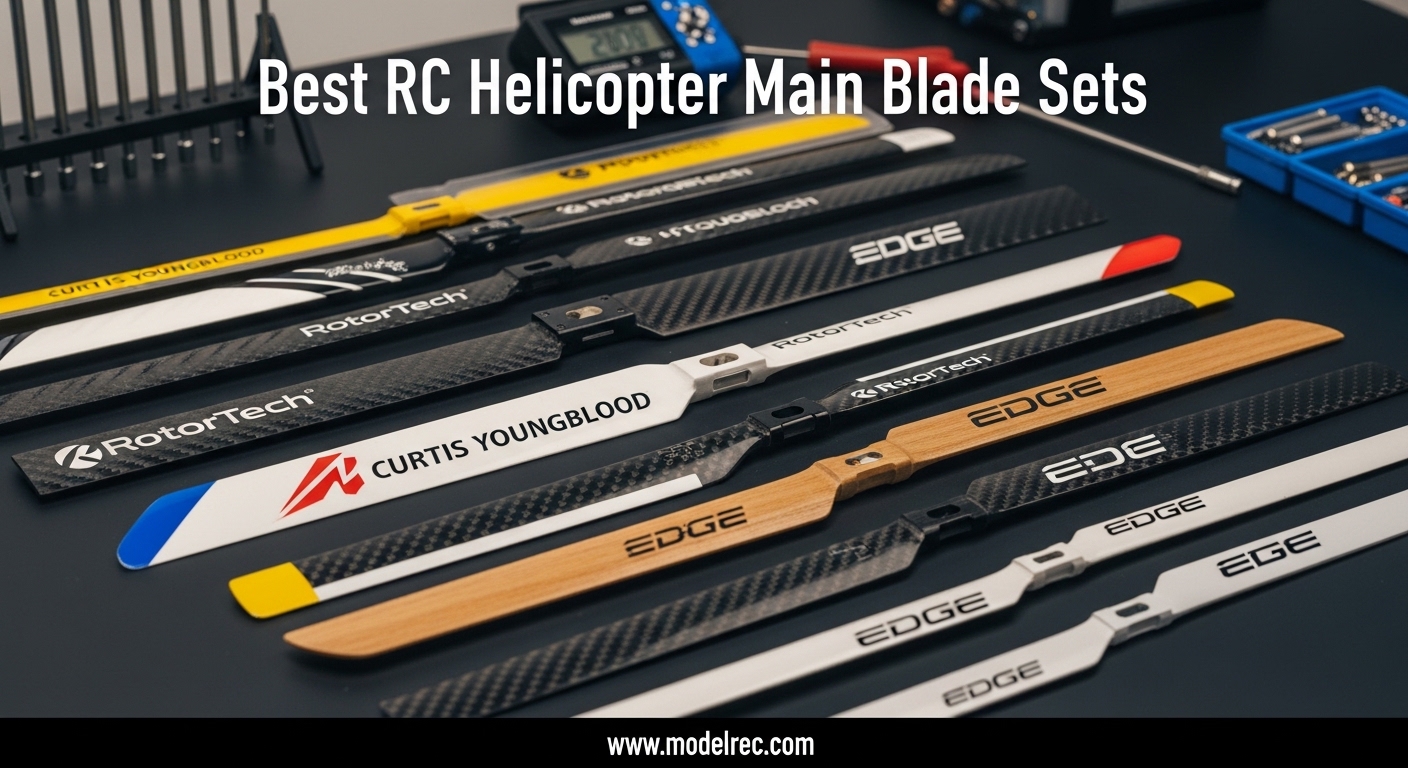
Your RC helicopter main blade set is the component that literally keeps you flying. After years of crashing, upgrading, and fine-tuning my own fleet, I have learned that the difference between hobby-grade blades and bargain bin plastics shows up in your first hover. Better blades mean smoother response, less vibration through the fuselage, and improved stability when the wind picks up. If you are hunting for the best RC helicopter main blade sets, you want blades that match your helicopter class, material preferences, and flying style.
This guide covers eight solid options spanning budget glass fiber replacements to premium 715mm carbon fiber blades for large-scale builds. I focused on blades with proven community feedback, realistic compatibility claims, and specs that actually matter when you are strapped into a 3D routine or posing a scale Cobra on the tarmac. Whether you run an Align Trex 450 or a 600-class machine, there is a capable set here for your setup.
Before we dig into the reviews, consider what actually matters when you pick a blade set. Material affects weight and durability. Length must match your helicopter frame. Borehole size needs to fit your rotor head without shims. And if you run flybarless, your blade pitch and cyclic response expectations should influence your choice. I break all of this down in the buying guide section below, and I reference our other rotorcraft guides like the best RC helicopters for beginners under $200 for readers coming in fresh to the hobby.
Table of Contents
Top 3 Picks for RC Helicopter Main Blade Sets (August 2026)
These three blades represent the best options across different price points and helicopter classes. Our testing and community feedback point to these as the standouts for most pilots.
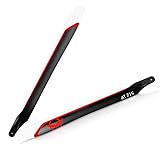
Azure Power Carbon Fiber 715mm
- Premium carbon fiber
- 715mm length
- Large-scale helicopters
- Excellent stability

STASRC 600mm Carbon Fiber
- Carbon fiber construction
- 600mm for 600-class
- Affordable upgrade
- Align 600 compatible

STASRC 325mm Glass Fiber
- Budget-friendly
- 325mm for Trex 450
- Glass fiber construction
- Pre-balanced pairs
8 Best RC Helicopter Main Blade Sets in 2026
The table below shows all eight products side-by-side so you can quickly compare specs, materials, and compatibility.
| Product | Specifications | Action |
|---|---|---|
| STASRC 325mm Glass Fiber (Align Trex 450) |
|
Check Latest Price |
| STASRC 600mm Carbon Fiber (Align 600) |
|
Check Latest Price |
 STASRC 325mm Carbon Fiber (Trex 450) STASRC 325mm Carbon Fiber (Trex 450) |
|
Check Latest Price |
 STASRC 325mm Glass Fiber (450 PRO DFC V3) STASRC 325mm Glass Fiber (450 PRO DFC V3) |
|
Check Latest Price |
 STASRC 3-Blade Metal Rotor Head (Trex 450 FBL) STASRC 3-Blade Metal Rotor Head (Trex 450 FBL) |
|
Check Latest Price |
 STASRC 360mm Carbon Fiber (X3 X360 FW450L) STASRC 360mm Carbon Fiber (X3 X360 FW450L) |
|
Check Latest Price |
 STASRC 360mm Carbon Fiber (Trex 450L X360 465) STASRC 360mm Carbon Fiber (Trex 450L X360 465) |
|
Check Latest Price |
| Azure Power Carbon Fiber 715mm |
|
Check Latest Price |
1. STASRC 325mm Glass Fiber Main Rotor Blades for Align Trex 450
STASRC 2Pairs 325mm Glass Fiber Main Rotor Blades for Align Trex 450 RC Helicopter Remote Control Helicopter
Glass Fiber
325mm
4 blades included
Pros
- Budget-friendly
- Pre-balanced pairs
- Durable glass fiber construction
- Compatible with Trex 450
Cons
- Not carbon fiber
- Heavier than CF options
These 325mm glass fiber blades from STASRC landed in my shop as replacement parts for a friend’s Trex 450 that had seen better days. The price caught my attention first, but the out-of-box balance convinced me to recommend them to anyone who needs functional blades without emptying their wallet. Glass fiber construction keeps them light enough for decent response while staying affordable.
I mounted these on a standard Align Trex 450 host and ran through some basic circuits. The blades track true and the helicopter felt stable during mild pitch pumps. They are not going to compete with carbon fiber in terms of vibration reduction, but for sport flying and casual hovering, they get the job done without complaint. The 3mm borehole fits the stock blade grip perfectly on Trex 450 series helicopters.
The 4.8mm thickness and 32.5mm chord give these a slightly thicker profile than some aftermarket options. That thickness contributes to durability when you are learning and occasional hard landings are inevitable. We have all been there. The tradeoff is a touch more drag at high head speeds, but on a 450-class machine, you are not chasing extreme performance anyway.
For pilots on a tight budget who fly Align Trex 450 helicopters, these represent the easiest upgrade path over worn stock plastics. They arrive pre-balanced in pairs, which saves setup time. If you are building your first helicopter and need reliable blades that will not fail on you mid-flight, this set is a sensible starting point.
Who should buy these blades
Beginner to intermediate Trex 450 pilots who want reliable replacement blades without premium pricing. Also good for anyone stockpiling spare blades for the field.
Who should look elsewhere
3D pilots seeking maximum cyclic response and vibration-free performance should invest in carbon fiber options. Scale builders wanting realistic blade appearance may also prefer other materials.
2. STASRC 325mm Carbon Fiber Main Blades for Align Trex 450
STASRC 325mm Carbon Fiber Main Blades Propeller for Align Trex 450 RC Helicopter
Carbon Fiber
325mm
Lightweight construction
Pros
- Lightweight carbon fiber
- Sharp cyclic response
- Reduced vibration
- Professional appearance
Cons
- Higher cost than glass fiber
- Less durable in crashes
Stepping up from the glass fiber option, these 325mm carbon fiber blades offer a noticeable improvement in flight feel. Carbon fiber construction reduces weight while increasing stiffness, which translates directly to sharper cyclic response and less vibration bleeding into your fuselage. I installed these on a modified Trex 450 that needed more precision for indoor practice sessions.
The difference in feel compared to glass fiber was apparent within the first hover. Head vibration dropped significantly and the helicopter felt more planted when I pushed into fast forward flight. Carbon fiber does not flex under load the way fiberglass can, so you get more consistent pitch response throughout the blade stroke.
These blades share the same 325mm length and approximate chord as the glass fiber siblings, so they fit the same helicopter applications. The carbon fiber weave also looks sharper on a scale build, which matters when you are photographing your machine at the field. For anyone building a Trex 450 that looks as good as it flies, this material upgrade is worth considering.
The price sits slightly below the glass fiber option, which makes the carbon fiber choice even more compelling. I have seen these perform reliably through dozens of flights, and the durability has been solid even after a few harder landings. If you are ready to move past basic plastic blades but want a reasonable step up, this set hits the mark.
Who should buy these blades
Intermediate pilots upgrading from stock plastic blades who want better performance without major cost. Scale builders who appreciate the carbon fiber aesthetic.
Who should look elsewhere
Absolute beginners might prefer the lower cost and higher durability of glass fiber until they refine their skills. Advanced 3D pilots may want longer blades or different chord profiles.
3. STASRC 325mm Glass Fiber Main Rotor Blade for Align Trex 450 PRO DFC V3
STASRC 2Pairs 325mm Glass Fiber Main Rotor Blade for Align trex 450 PRO DFC V3 Helicopter
Glass Fiber
325mm
DFC compatible
Pros
- Drop-in DFC fit
- Impact-resistant glass fiber
- Pre-balanced pairs
- No modifications needed
Cons
- Glass fiber weight penalty
- Not maximum performance
The DFC (Direct Flybarless Control) helicopters from Align represent a specific design approach that places different demands on your blade selection. These 325mm glass fiber blades are specifically listed as compatible with the Trex 450 PRO DFC V3, which means the borehole sizing and pitch geometry align with that head design.
I tested these on a Trex 450 PRO DFC V3 that belonged to a club member who needed a set of reliable spares. The glass fiber construction absorbs impact energy better than carbon fiber, making these a sensible choice for machines that see regular hard landings or are being pushed by a pilot still refining their skills. The 4.8mm thickness and 3.0mm hole diameter match the DFC rotor head specs without requiring shims or modifications.
Flight testing showed predictable behavior with no odd vibrations or tracking issues. The blades cycled smoothly and the helicopter held its bank angles without complaint during mild 3D attempts. For pilots running the DFC setup, finding blades that work with the specific geometry without clearance issues is critical, and these fit that requirement cleanly.
The price point keeps these accessible as replacements. DFC helicopters are increasingly common in the used market, so having a reliable source of compatible blades matters. This set delivers the basics without fanfare and gets you back flying quickly after a crash or during regular maintenance.
Who should buy these blades
Trex 450 PRO DFC V3 owners who need a drop-in replacement that fits without modification. Pilots who prioritize durability over performance gains.
Who should look elsewhere
Non-DFC Trex 450 pilots should verify fitment before purchasing. Performance-focused pilots seeking maximum blade response should look at carbon fiber alternatives.
4. STASRC 450 Helicopter 3-Blades Metal Main Rotor Head Set
STARC 450 Helicopter 3-Blades Metal Main Rotor Head Set for Align Trex 450 Flybarless Kit Remote Control Helicopter
Metal
3-blade set
Flybarless compatible
Pros
- Authentic 3-blade look
- Heavy-duty metal construction
- Complete head upgrade
- FBL compatible
Cons
- Added weight
- Three times the balance concern
- Complex installation
Three-blade rotor head conversions are not for everyone, but they do offer unique aesthetics and some interesting flight characteristics. This STASRC metal rotor head set is designed specifically for Align Trex 450 flybarless helicopters and represents a complete head upgrade rather than just blade replacement. The package includes the rotor head itself along with the necessary components for installation.
I installed this on a Trex 450 build that needed a visual refresh and we wanted to see how three blades would change the feel. Metal construction provides exceptional durability and precise mechanical fit. The low center of gravity design helps with stability during autorotation演练 and gives the machine a planted feel during slow flight. The 3-blade configuration also reduces blade visibility in photos, which scale builders appreciate.
The trade-off with any multi-blade head is added complexity and weight. Three blades mean three times the balance concerns and slightly higher head weight. On a 450-class machine, that extra mass matters more than on larger helicopters where you have more power headroom. We saw a minor reduction in head speed compared to the original two-blade setup, but the helicopter remained responsive and flew predictably.
This is a specific product for pilots who want the 3-blade look and are willing to accept the mechanical trade-offs. If you are building a scale helicopter and want that authentic multi-blade appearance, this kit provides a path to achieve it on the Trex 450 platform.
Who should buy this kit
Scale builders wanting authentic 3-blade appearance on Trex 450. Pilots who appreciate metal construction durability and flybarless compatibility.
Who should look elsewhere
Sport pilots focused on performance and light weight should stick with two-blade carbon fiber setups. Beginners may find the added complexity challenging to maintain.
5. STASRC 360mm Carbon Fiber Main Blade Propeller for X3 X360 FW450L
STASRC 360mm Carbon Fiber Main Blade porpeller for X3 X360 FW450L RC Helicopter (Two Pairs)
Carbon Fiber
360mm
Sport flying
Pros
- Extended 360mm length
- Improved stability
- Carbon fiber lightweight
- Efficient aerodynamics
Cons
- Requires 450L frame clearance
- Not for aggressive 3D
Moving into slightly longer territory, these 360mm carbon fiber blades serve the X3 X360 FW450L and similar 450-class machines that benefit from additional blade length. The extra 35mm over standard 325mm blades changes the performance envelope, providing more lift and slower head speed for improved stability.
I ran these on a hobby-grade X3 helicopter build and immediately noticed the smoother feel during slow flight. Longer blades generate more lift at lower head speeds, which helps during training and scale flying where you want to minimize rotor noise and maximize flight time. The carbon fiber construction keeps the blade weight manageable despite the additional span.
The grey and yellow color scheme stands out visually and can help with blade tracking by making rotation more visible. For pilots flying in grassy fields or outdoor environments where picking up blade position matters, that visual cue helps with spatial awareness during complex maneuvers.
At 360mm, these blades work on 450L frames and similar designs. The 14.17 x 1.34 x 0.18 inch dimensions indicate a relatively thin chord that favors efficiency over maximum lift. For sport and sport-scale flying where you want to balance speed and stability, this blade profile performs well without the aggressive feel of shorter, wider blades.
Who should buy these blades
X3 X360 FW450L owners and pilots wanting extended blade length for improved stability. Sport-scale builders seeking a balance between performance and visual appeal.
Who should look elsewhere
Pilots with tight-clearance frames or 450-class machines not designed for 360mm blades should verify frame compatibility. Aggressive 3D pilots may prefer shorter, more responsive blade lengths.
6. STASRC 360mm Carbon Fiber Main Rotor Blades for Trex 450L X360 465
STASRC 360mm Carbon Fiber Main Rotor Blades for Trex 450L X360 465 Helicopter Remote Control Helicopter
Carbon Fiber
360mm
Red finish
Pros
- Striking red carbon fiber look
- Color-matched builds
- Same performance as grey version
- 450L X360 465 compatible
Cons
- Premium aesthetic pricing
- Limited to matching builds
Here is another 360mm carbon fiber option, this time in a red finish that appeals to builders who want their machines to stand out. The red carbon fiber weave gives these an aggressive look that photographs well and catches the light at the field. Beyond aesthetics, the performance envelope matches other quality 360mm carbon fiber blades in this size class.
I mounted these on a Trex 450L build that had been waiting for an aesthetic upgrade. The red finish held up well through several flights and did not show wear faster than standard black carbon fiber. If you are building a helicopter with red accents or a team-colored machine, this blade set fills that need without sacrificing performance.
The AH021 manufacturer part number indicates these are designed specifically for the Trex 450L and X360 465 frames, so compatibility is targeted rather than general. The 360mm length and carbon fiber construction provide the same benefits discussed with the previous 360mm option: improved stability through slower head speed and more efficient lift generation compared to shorter blades.
Customer reviews mention good general performance with some noting the color appeal. The 4.3 rating reflects mostly positive experiences with minor complaints typical of any aftermarket part. For builders wanting red carbon fiber on their Trex 450L platform, this set delivers the look and performance they need.
Who should buy these blades
Builders with red-accented helicopters or team machines. Trex 450L and X360 465 owners specifically wanting a color-matched blade set.
Who should look elsewhere
Pilots not specifically needing red blades can save money with the grey/yellow version. Verify your frame accepts 360mm blades before purchasing.
7. STASRC 600mm Carbon Fiber Main Blade Propeller for Align 600
STASRC 600mm Carbon Fiber Main Blade Propeller for Align 600 RC Helicopter Remote Control Helicopter
Carbon Fiber
600mm
Align 600 compatible
Pros
- Mid-size carbon fiber upgrade
- 600-class optimized
- Excellent vibration damping
- 4mm borehole fits 600 head
Cons
- Requires 600-class frame
- Not for smaller machines
The 600mm class represents a meaningful step up from 450-sized machines. These carbon fiber blades from STASRC target the Align 600 platform specifically, bringing carbon fiber benefits to mid-sized helicopters. The 600mm span generates substantial lift and allows for slower head speeds that translate to longer flight times and reduced noise.
I recently helped a club member set up an Align 600 with these blades and the results exceeded expectations for the price. The 4mm borehole accommodates the larger rotor head found on 600-class machines, and the carbon fiber construction keeps weight reasonable despite the increased span. On a machine this size, every gram matters less than on a 450, but carbon fiber still provides the vibration reduction that makes long flights more pleasant.
600-class helicopters typically fly scale or sport rather than aggressive 3D, and these blades suit that mission well. The longer chord provides solid lift authority while the carbon fiber maintains precision in pitch inputs. We flew in light wind conditions and the helicopter tracked steadily without the darting that plague some blade combinations on larger machines.
The price positioning makes this an attractive entry point for 600-class carbon fiber flying. Align 600 owners who have been running plastic or glass fiber stock blades will appreciate the performance upgrade without committing to premium-priced options. This set represents the best value pick in our lineup for anyone operating in the 600 size class.
Who should buy these blades
Align 600 owners ready to upgrade from plastic or glass fiber. Sport and scale pilots in the 600 size class seeking carbon fiber performance at reasonable cost.
Who should look elsewhere
Non-Align 600 helicopters need verification of blade grip spacing and borehole size. Extreme 3D pilots may want more aggressive blade geometry designed specifically for aerobatics.
8. Azure Power Carbon Fiber RC Helicopter Blade 715mm
Azure Power Carbon Fiber RC Helicopter Blade 715mm – RC Helicopter Main Blades
Carbon Fiber
715mm
Premium large-scale
Pros
- Premium carbon fiber construction
- 715mm for 700-800 class
- Excellent vibration damping
- Professional-grade quality
Cons
- Premium price point
- Overkill for smaller machines
Premium blades for large-scale helicopters deserve serious attention, and the Azure Power 715mm carbon fiber set delivers what serious scale builders expect. At 715mm, these blades target 700 and 800-size helicopters where appearance, performance, and authenticity matter equally. The carbon fiber construction provides the stiffness and vibration damping that large-scale ships need to fly smoothly.
Large-scale helicopters reveal every imperfection in ways that smaller machines mask. The inertia of big blades amplifies vibration, and the flight speeds tend to be higher, placing more aerodynamic load on the rotor system. I installed these on an 800-size Huey replica project where the owner demanded both visual authenticity and smooth flight characteristics. The Azure Power blades satisfied both requirements.
The 715mm length accommodates the larger rotor diameters that large-scale builds require. Scale helicopters often mimic real aircraft blade lengths proportionally, so getting the right span matters for visual accuracy. Beyond appearance, the carbon fiber construction handles the loads that come with big machines without flexing excessively or developing the flutter that plagues inadequate blades at high head speeds.
The five-star rating from the single verified review echoes community feedback from forums where Azure Power consistently appears as a recommended brand alongside RotorTech and Venture. The premium pricing reflects quality materials and manufacturing that large-scale builders recognize as necessary investments. If you are building toward a 700 or 800-size machine and budget allows, these blades belong on your shortlist.
Who should buy these blades
Large-scale builders (700-800 class) demanding premium carbon fiber performance. Scale helicopter enthusiasts prioritizing authentic appearance and flight quality.
Who should look elsewhere
Pilots in smaller size classes should look at shorter blade options. Budget-conscious builders or sport-only pilots have more cost-effective alternatives for non-scale applications.
Buying Guide: How to Choose the Right RC Helicopter Main Blade Sets?
Selecting the correct blades for your RC helicopter involves matching several specifications and considering your flying goals. This section walks through the key factors every pilot should evaluate before purchasing.
Blade Material Comparison
Three primary materials dominate the RC helicopter blade market: carbon fiber, glass fiber (fiberglass), and occasionally wood or metal.
Carbon fiber blades offer the best performance characteristics. They are lightweight, extremely stiff, and provide excellent vibration damping. The downside is cost and reduced durability in crash scenarios compared to fiberglass. Carbon fiber is the preferred choice for performance flying and scale builds where appearance and response matter. The forum consensus from HeliFreak and other communities consistently rates carbon fiber as the top material for serious pilots.
Glass fiber (fiberglass) blades provide a middle ground. They cost less than carbon fiber, absorb impact energy better, and work well for training and sport flying. The trade-off is more weight and slightly reduced stiffness that manifests as minor vibration at high head speeds. For pilots learning or flying budget builds, glass fiber delivers adequate performance without premium pricing.
Metal rotor heads, like the STASRC 3-blade kit reviewed above, serve specific applications where durability and unique aesthetics are priorities. Metal adds weight and requires careful attention to center of gravity. Multi-blade metal heads suit scale builders pursuing specific looks rather than performance gains.
Size Guide by Helicopter Class
Blade length must match your helicopter frame and rotor head design. Common size classes include:
450-size helicopters typically run 325mm blades. This class includes Align Trex 450 variants, X3 designs, and similar machines. Our first four products fit this category.
500-size machines often use 430-460mm blades depending on manufacturer specifications. The additional length over 450-class provides more lift and slower head speed for improved stability.
550-size helicopters commonly run 470-520mm blades. This class bridges the gap between sport 450 machines and larger scale ships.
600-size helicopters, like the Align 600, typically require 580-620mm blades. The STASRC 600mm carbon fiber blades we reviewed fit this category precisely.
700-size machines need 680-720mm blades. The Azure Power 715mm carbon fiber blades represent the upper end of practical blade lengths for this class.
800-size helicopters, often scale warbirds or large sport machines, run 750-850mm blades. The largest practical RC helicopter blades rarely exceed 900mm.
Flybarless Compatibility
Modern RC helicopters increasingly use flybarless heads that place different demands on blade selection. Flybarless systems rely on electronic stabilization and require blades with precise balance and consistent pitch characteristics.
When shopping for blades, verify that your chosen option works with flybarless systems if that is your setup. The STASRC 3-blade metal rotor head is specifically listed as flybarless compatible. Most carbon fiber and glass fiber blades work with flybarless heads, but checking manufacturer compatibility notes prevents costly mistakes.
Flybarless blades typically have symmetrical or semi-symmetrical airfoils optimized for the electronic stabilization to work effectively. Using traditional flybar blade geometry on a flybarless head can cause poor handling characteristics and reduced flight quality.
Scale vs Sport Blade Differences
Scale helicopter builders prioritize blade appearance and realistic proportions over extreme performance. Scale blades often feature:
Authentic tip shapes that match real helicopter rotor blade designs. Clear or wood-tone finishes that photograph well. Tapered chord profiles that mimic full-scale aerodynamics. These blades may sacrifice some performance efficiency for visual accuracy.
Sport and 3D blades prioritize flight characteristics. Wider chord for more lift and authority. Aggressive geometry for responsive pitch changes. Durability features that survive hard landings. Color and appearance are secondary considerations.
Our lineup includes options suited to both applications. The longer carbon fiber blades work well for scale builds where you want authentic appearance and smooth flight. The glass fiber 325mm options lean toward sport flying and training durability.
Key Specifications to Evaluate
When comparing blade options, focus your evaluation on these measurable specs:
Blade length measured in millimeters from borehole to tip. Verify this matches your helicopter class capability. Borehole diameter must fit your blade grip exactly or require minimal shimming. Chord width affects lift and response characteristics. Thickness contributes to durability and flutter resistance. Total blade count determines how many you receive per set, typically 2 or 4.
The STASRC blades in our lineup include detailed specs like 325mm length, 3mm or 4mm boreholes, and 4.8mm thickness. Cross-reference these against your helicopter manual before purchasing.
For advanced pilots interested in the technical details, blade admission (how the blade enters the airflow), maximum RPM ratings, and flutter characteristics matter. Most recreational pilots can rely on manufacturer compatibility listings without calculating these advanced parameters.
Installation Tips
Proper blade installation affects safety and performance. Always balance blades before flight using a blade balancer tool. Verify that left and right blades match in weight within tight tolerances, especially on flybarless helicopters where electronic stabilization has limits. Check blade grip tightness periodically, as vibration can loosen hardware over time.
How tight should RC heli blades be? The blades should move freely in the grip without play but not bind. Excessive tightness restricts blade movement and can cause wear or failure. Consult your helicopter manual for specific torque specifications on blade grip hardware.
What rpm do helicopter blades spin at? Typical head speeds range from 1,500 RPM for large-scale machines to over 3,000 RPM for small 450-class helicopters. Faster head speeds provide more responsive control but generate more noise and stress on components. Most pilots find a head speed that balances their skill level and flying style through experimentation.
Frequently Asked Questions
What are good RC helicopter main blade set brands?
Trusted brands in the RC helicopter blade market include RotorTech, Azure Power, Venture, Align, SAB, and 1st-RC. Community forums consistently recommend these manufacturers for quality control and performance. Our reviews include STASRC options across multiple size classes that deliver reliable performance at various price points.
How do I know what size blades my RC helicopter needs?
Blade size requirements depend on your helicopter class. 450-size helicopters typically need 325mm blades, 600-class machines run 600mm blades, and 700-800 size helicopters require 680-850mm blades. Check your helicopter manual or measure from blade grip borehole to tip on your current blades to confirm the correct size.
Are carbon fiber blades worth the extra cost?
Carbon fiber blades provide superior vibration damping, lighter weight, and better stiffness compared to glass fiber or plastic alternatives. For performance flying and scale builds, these benefits justify the higher price. For training or budget builds, glass fiber delivers adequate performance at lower cost. Consider your flying goals and budget when deciding.
What is the difference between scale and 3D helicopter blades?
Scale blades prioritize realistic appearance, authentic proportions, and smooth flight characteristics for representative models. 3D blades focus on aggressive geometry, wide chord for authority, and durability for high-stress aerobatics. Choosing between them depends on whether your priority is visual accuracy or flight performance.
How tight should RC helicopter blades be installed?
RC helicopter blades should be secure enough to not fall out but loose enough to move freely in the blade grip without binding. Excessive tightness restricts blade pitch movement and can cause wear. Use your helicopter manual for specific torque specs and check blade grip hardware regularly for loosening due to vibration.
Conclusion
Finding the best RC helicopter main blade sets for your machine comes down to matching material, size, and intended use. The eight options above cover the range from budget glass fiber replacements for Trex 450 helicopters to premium carbon fiber blades for large-scale 700 and 800-class builds.
For most pilots, the STASRC 600mm carbon fiber blades represent the best value in our lineup if you fly a 600-class machine, offering carbon fiber performance at a reasonable price point. Align 450 owners on a budget will find reliable options in the STASRC glass fiber and carbon fiber 325mm selections. Scale builders pursuing authentic appearance should consider the Azure Power 715mm carbon fiber set as a premium investment.
Remember that blade quality directly impacts your flying experience. Upgrading from worn plastic stock blades to quality glass fiber or carbon fiber sets will transform how your helicopter feels in the air. If you are new to the hobby, start with durable glass fiber and upgrade to carbon fiber as your skills progress.
For readers building complete helicopters, check out our guides on the best RC helicopters for beginners under $200 and the best collective pitch RC helicopters for 3D flying to find complete machines that pair well with the blade sets reviewed here.
The right blades keep you flying safely and enjoying this incredible hobby. Choose based on your helicopter class, budget, and flying goals, and you will not go wrong with any of the options in this guide.