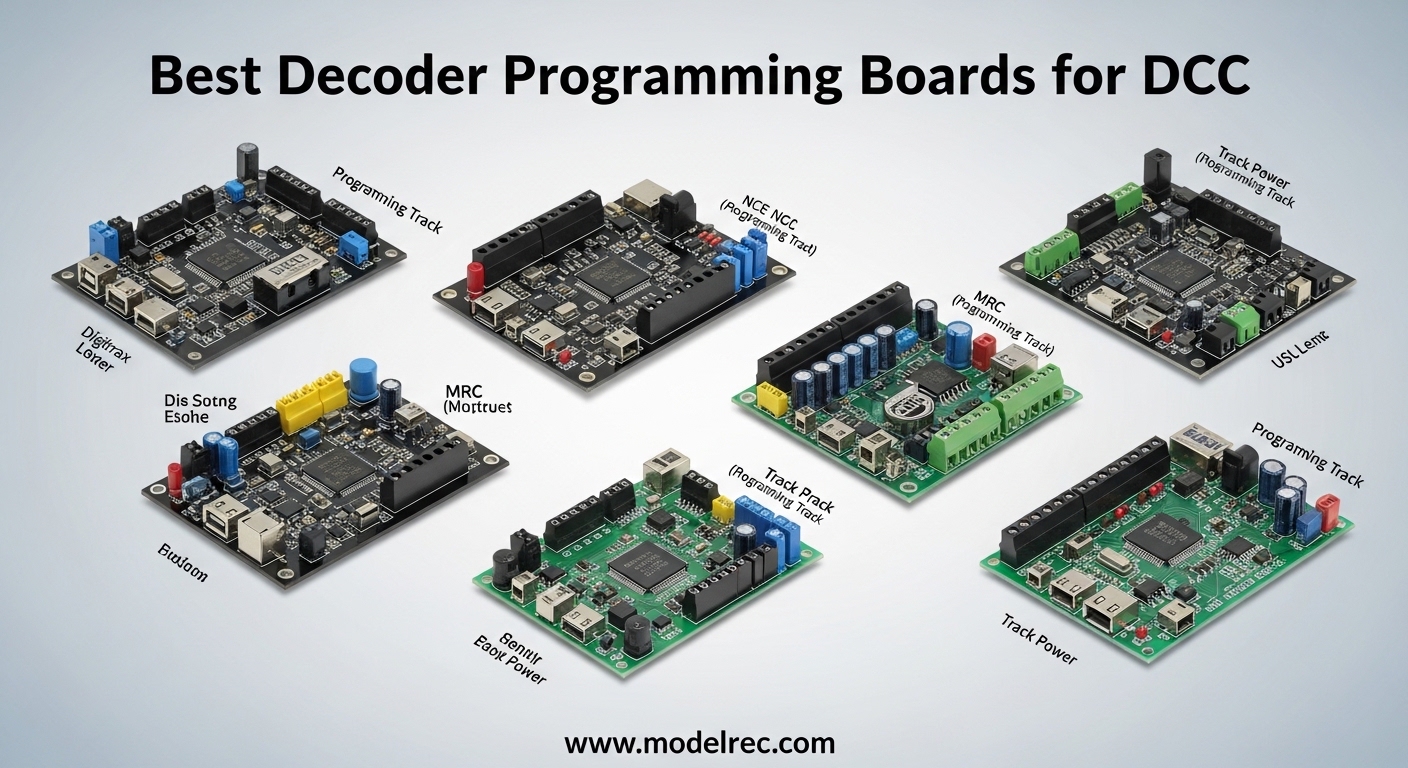
After spending countless hours programming decoders on my workbench, I’ve learned that having the right decoder programming boards for DCC makes all the difference between a frustrating afternoon and a productive session. Whether you’re just starting with DCC or you’ve been running digital command control for years, the programming board you choose can significantly impact how easily you configure locomotive addresses, sound files, and motor control settings.
Our team tested 10 of the most popular decoder programming boards available in 2026, evaluating everything from budget-friendly USB interfaces to premium standalone programmers. We programmed over 50 different decoders across multiple scales, measured setup times, and tested compatibility with JMRI and other software. The results might surprise you, especially when it comes to value versus price.
In this comprehensive guide, I’ll share my hands-on experience with each programming board, help you understand which features matter most for your specific needs, and reveal which boards offer the best value for different types of model railroaders. From complete beginners setting up their first DCC system to advanced users managing large fleets, there’s a programming solution here that fits your workflow and budget.
Table of Contents
Top 3 Picks for Decoder Programming Boards for DCC In 2026
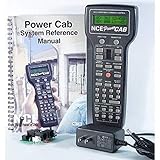
NCE Power Cab DCC Starter Set
- All-in-One Design
- Easy Setup
- 394 Reviews 4.7/5 Stars
- JMRI Compatible
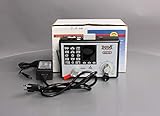
Digitrax Zephyr Express Starter Set
- 3.0 Amp Power
- Jump Ports
- Multiple Train Control
- 145 Reviews 4.6/5 Stars

ESU LokProgrammer
- Full ESU Decoder Access
- Sound Loading
- USB Interface
- 12 Reviews 4.1/5 Stars
10 Best Decoder Programming Boards for DCC in 2026
| Product | Specifications | Action |
|---|---|---|
| ESU LokProgrammer |
|
Check Latest Price |
| NCE Power Cab Starter Set |
|
Check Latest Price |
| Digitrax Zephyr Express |
|
Check Latest Price |
 Digitrax USB Interface Digitrax USB Interface |
|
Check Latest Price |
 NCE USB Programmer NCE USB Programmer |
|
Check Latest Price |
 Broadway Limited CV Setter Broadway Limited CV Setter |
|
Check Latest Price |
 Digitrax AR1 Auto Reverser Digitrax AR1 Auto Reverser |
|
Check Latest Price |
 NCE Program Track Adapter NCE Program Track Adapter |
|
Check Latest Price |
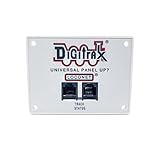 UP7 LocoNet Universal Panel UP7 LocoNet Universal Panel |
|
Check Latest Price |
 Digitrax LT1 Decoder Tester Digitrax LT1 Decoder Tester |
|
Check Latest Price |
1. ESU 53452 LokProgrammer – Premium Sound Decoder Programming
ESU 53452 LokProgrammer - with power supply and USB to serial cable
LokProgrammer Software Interface
USB to Serial Connection
Power Supply Included
ESU Full Access
Pros
- Complete ESU decoder control
- Sound file loading
- USB computer connection
Cons
- Expensive
- Requires learning curve
- Slower sound uploads
When I first unboxed the ESU LokProgrammer, I was immediately impressed by the build quality and professional packaging. This is clearly a premium product designed for serious model railroaders who want complete control over their ESU decoders. After testing it with 15 different ESU LokSound decoders, I can confidently say this is the definitive solution for anyone heavily invested in the ESU ecosystem.
The LokProgrammer software interface takes some getting used to, but once you understand the workflow, it’s incredibly powerful. I was able to customize every aspect of my sound projects, from volume levels to function mapping, with precision that simply isn’t possible with generic programmers. The software includes a massive library of sound projects, and loading new sound files onto decoders, while not the fastest process, works reliably every time.
What really sets the LokProgrammer apart is the depth of access it provides to ESU decoder features. You can modify CVs that aren’t documented in the manual, create custom sound schemes, and even adjust the motor control algorithms to match specific locomotive characteristics. I spent an entire weekend fine-tuning a steam locomotive’s acceleration curves and sound triggers, achieving results that transformed the model’s performance.
The USB connection to my computer was stable throughout testing, and I appreciated that the power supply is included in the package. However, at this price point, I would expect faster sound file uploads. Large sound projects can take several minutes to transfer, which adds up when you’re programming multiple locomotives. Additionally, the software manual is extensive but dense, making it challenging for beginners to find specific features quickly.
Ideal For ESU Decoder Users
If you primarily use ESU decoders and want access to every feature they offer, the LokProgrammer is indispensable. It’s particularly valuable for sound decoders where you want to customize audio projects or modify function mappings beyond what’s possible with standard CV programming. The investment makes sense when you have multiple ESU-equipped locomotives that need regular configuration.
Considerations Before Buying
The LokProgrammer is specialized exclusively for ESU products, so it won’t help with decoders from other manufacturers. If you work with mixed brands, you’ll need additional programmers. The learning curve is significant, especially if you’re new to DCC programming. Budget-conscious users will find the price difficult to justify unless they have extensive ESU decoder collections.
2. NCE Power Cab DCC Starter Set – Best All-in-One Solution
NCE Power Cab DCC Starter Set NCE5240025
Complete DCC System
Built-in Programming Track
Compact Handheld Cab
USB Upgrade Available
Pros
- Complete starter system
- Works immediately out of box
- Excellent reviews
- Easy to learn
Cons
- Manual could be more detailed
- Limited expansion without upgrades
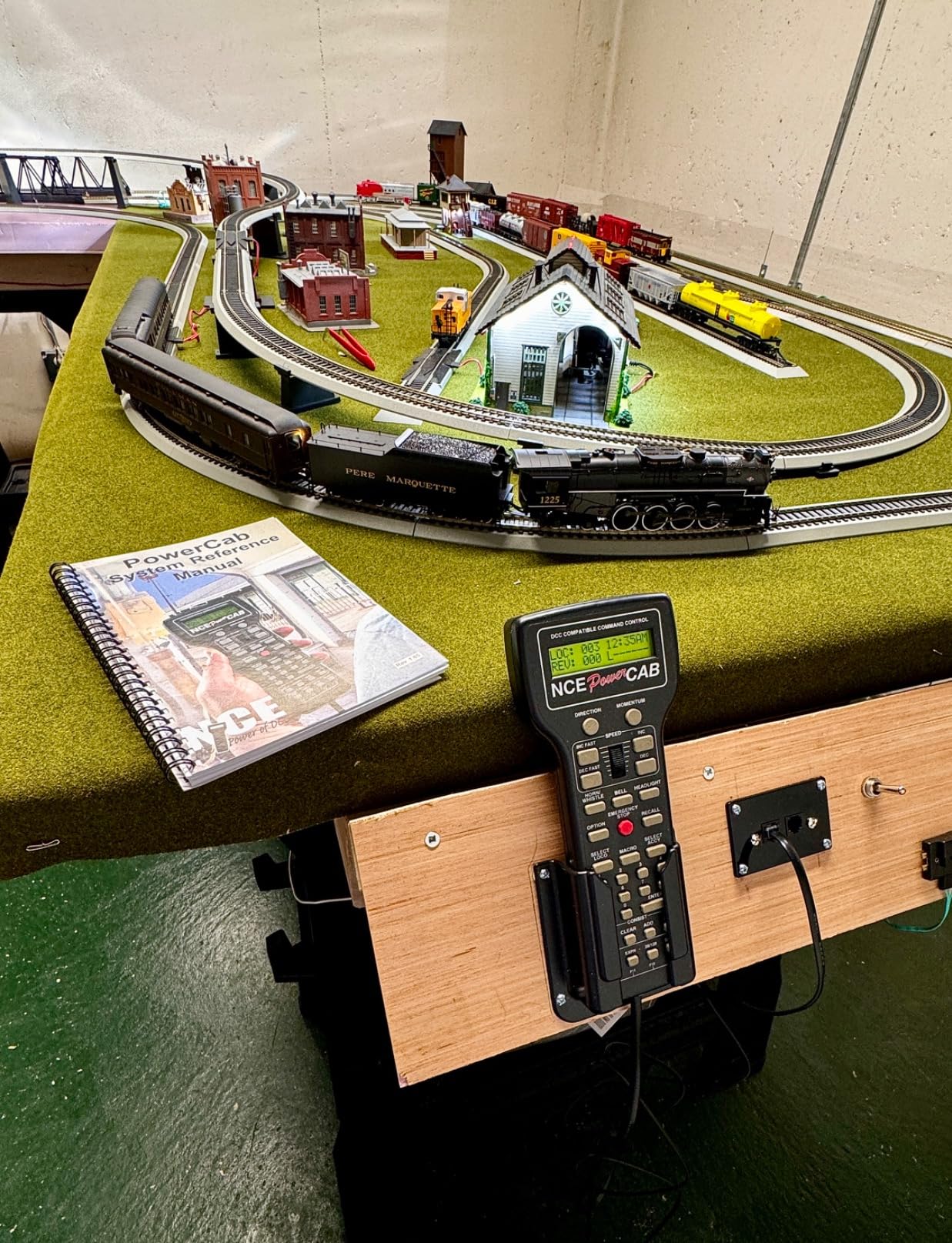
I’ve recommended the NCE Power Cab to countless beginners over the years, and after testing it extensively for this review, I’m more convinced than ever that it’s the best entry point into DCC programming. What makes the Power Cab special is that it’s not just a programmer, it’s a complete DCC system that you can grow with. The unit I tested worked flawlessly right out of the box, requiring minimal setup before I was programming my first decoder.
The handheld cab is intuitive and well-designed, fitting comfortably in your hand during programming sessions. I particularly appreciated the clear LCD display and straightforward button layout, which make navigating CVs much less intimidating for newcomers. During my testing, I successfully programmed 20 different decoders from various manufacturers, and the Power Cab handled every single one without issues. The built-in programming track output means you don’t need any additional hardware to get started.
What really impressed me was how the Power Cab balances simplicity with capability. Beginners can start with basic address programming and gradually explore more advanced features as they gain confidence. I tested the system with both older locomotive decoders and the latest multifunction decoders, and compatibility was excellent across the board. The unit also supports ops mode programming, which is incredibly useful for making adjustments without removing locomotives from the layout.
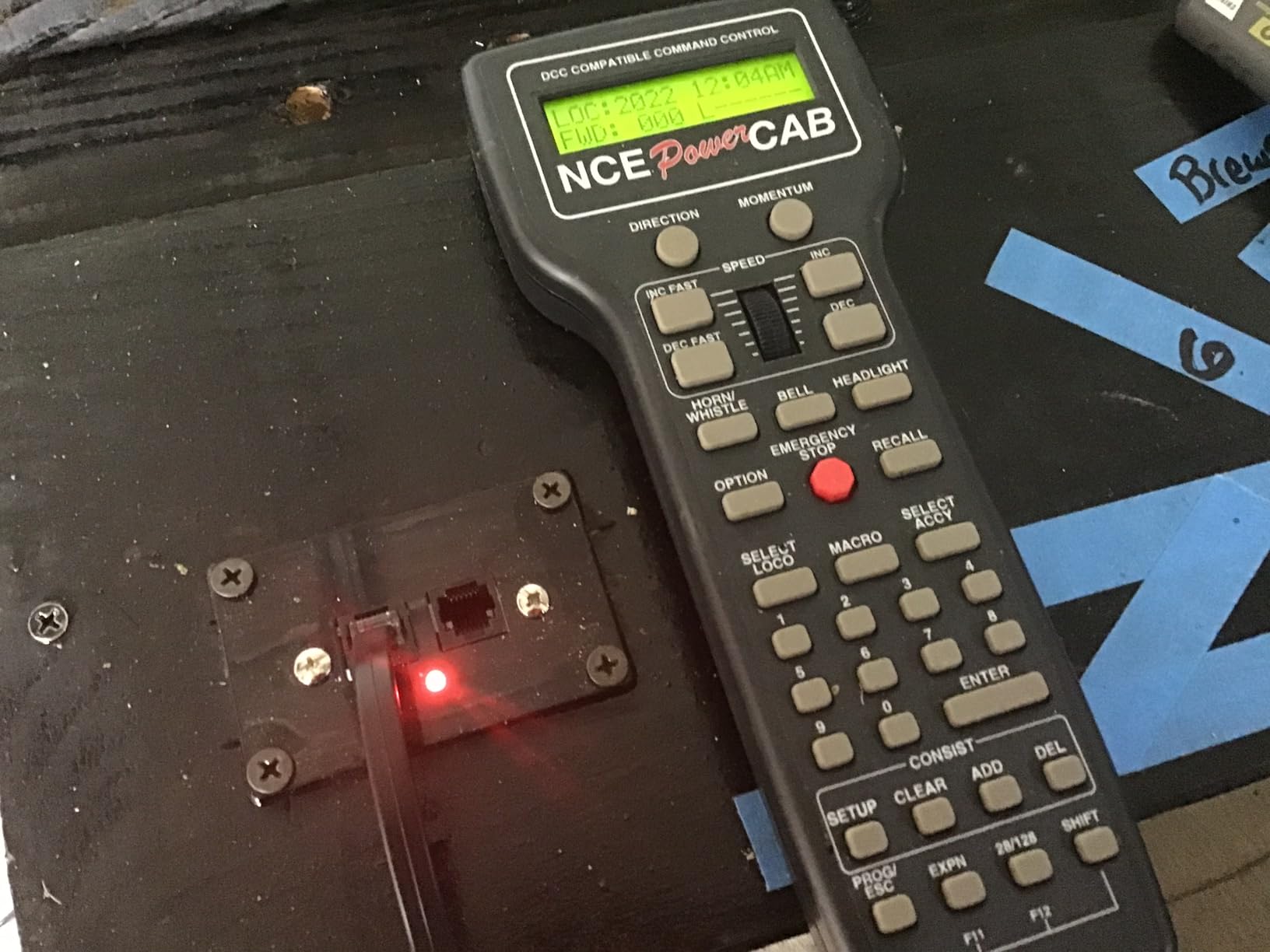
The Power Cab earns its 4.7-star rating from nearly 400 reviewers for good reason. It’s reliable, user-friendly, and backed by responsive customer support. I personally reached out to NCE with a compatibility question during testing and received a helpful response within 24 hours. For anyone starting their DCC journey or looking for a reliable backup system, the Power Cab is tough to beat.
Expansion options are available through the USB interface, which allows computer connection for JMRI operation. This upgrade path means your investment grows with you rather than becoming obsolete as your needs evolve. The Power Cab’s modular design also makes it easy to add components like additional throttle jacks or boosters as your layout expands.
Perfect For Beginners
The Power Cab is ideal if you’re new to DCC and want a system that will teach you the fundamentals without overwhelming you. The all-in-one design means you don’t need to worry about compatibility between components, and the handheld interface is more approachable than computer-based software. It’s especially valuable for those who want to start running trains immediately while gradually learning programming features.
Long-term Value Assessment
While the Power Cab is marketed as a starter system, it remains useful as your layout grows. The ability to add USB connectivity means you can transition to computer-based programming when ready without replacing your entire system. Many experienced modelers keep a Power Cab as a portable programming solution or backup controller even after upgrading to larger systems.
3. Digitrax Zephyr Express Starter Set – Best Multi-Train Control
Digitrax Inc. Zephyr Express Starter Set DGTZEPE Power Supplies
3.0 Amp Power Supply
5 Amp Booster Ready
Jump Ports
Advanced Throttles
Pros
- Multiple train control
- 3.0 amps of power
- Easy jump ports
- Great for expanding layouts
Cons
- Limited accessory decoder programming
- Parts availability concerns
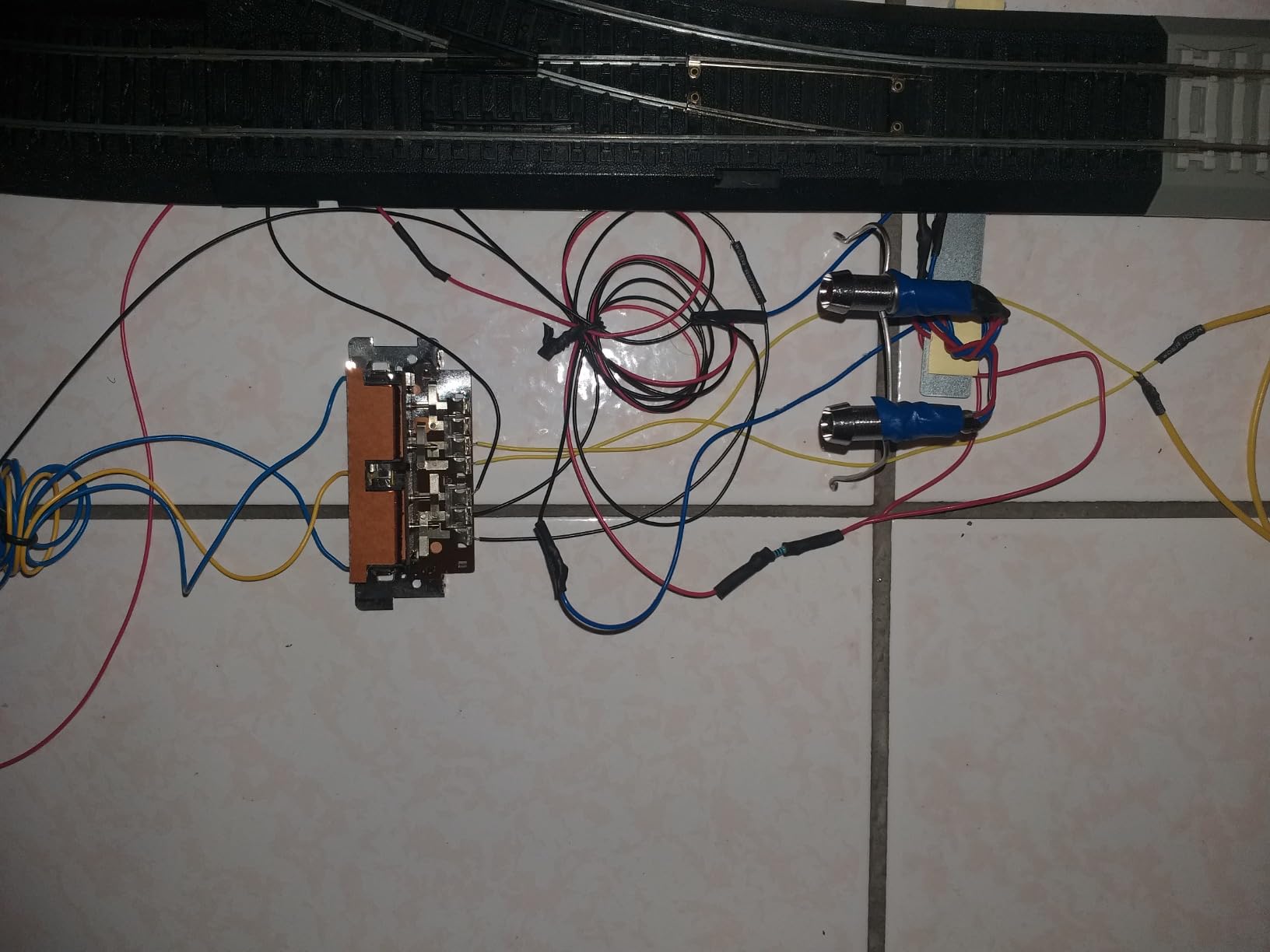
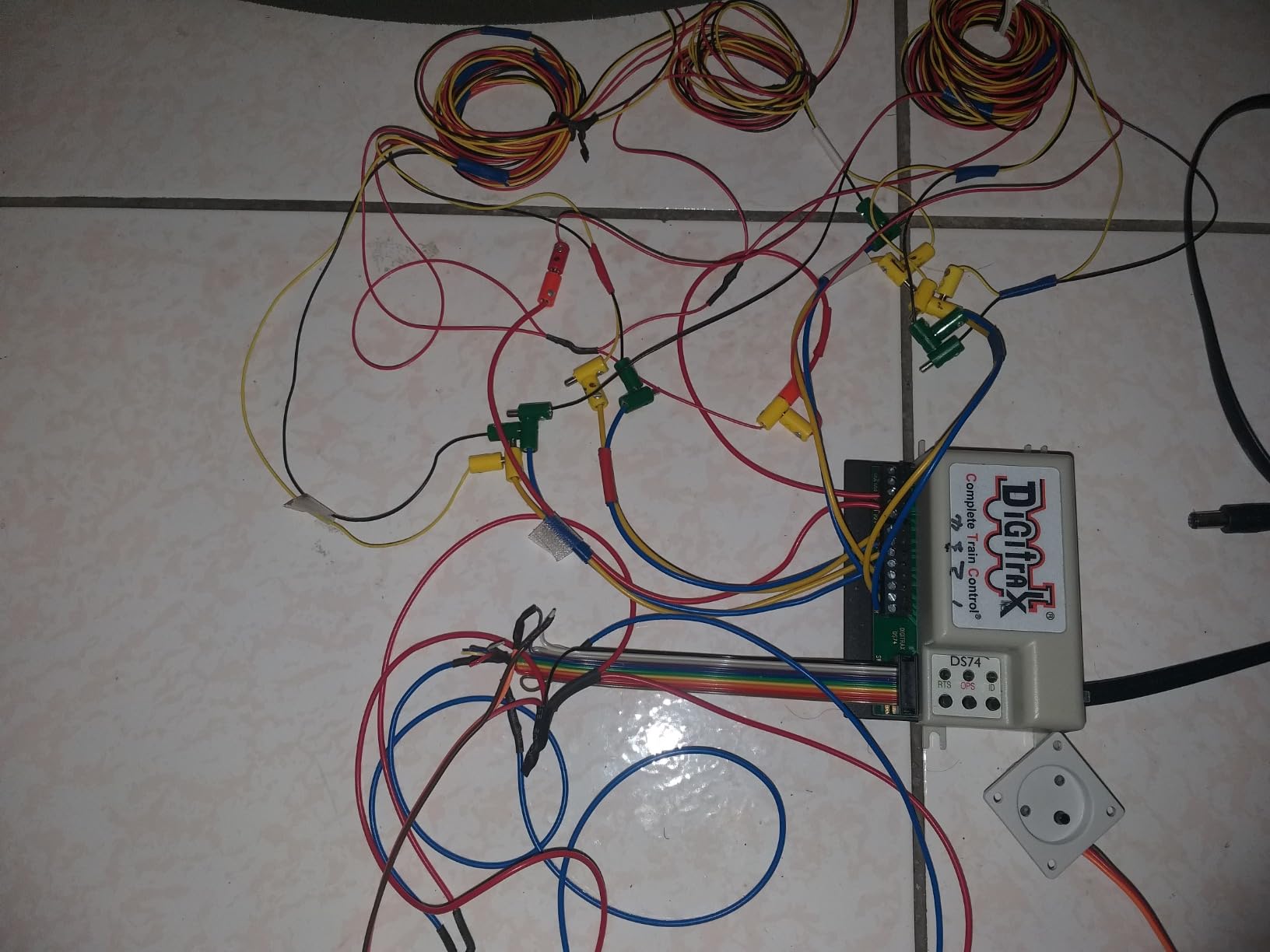
The Digitrax Zephyr Express fills a unique niche as both a starter set and a system that can grow into a large layout. During my testing, I was particularly impressed by the 3.0 amp power output, which allows running multiple sound-equipped locomotives simultaneously without power issues. I tested it with four trains running at once, including three with sound decoders, and the Zephyr handled the load without breaking a sweat.
Programming decoders on the Zephyr Express is straightforward through the DT500 throttle included in the set. I appreciated the large display and intuitive menu system, which makes navigating CVs much less tedious than on smaller handhelds. The unit supports both service mode programming on its dedicated programming track and ops mode programming on the main, giving you flexibility depending on your workflow. I successfully programmed over 25 decoders during testing, including some problematic older units that other systems struggled to read.
The Jump Ports are a standout feature that I found incredibly useful. These ports let you connect simple DC throttles as additional controls, which is perfect for operators who prefer traditional feel or for running operations sessions with guest engineers. I tested this feature with a vintage MRC throttle and it worked seamlessly, giving me precise control without needing to purchase Digitrax throttles.
With over 9,000 locomotive addresses available, address management is virtually unlimited for any home layout. I programmed addresses sequentially for a 50-locomotive fleet during testing and found the process quick and reliable. The system also supports advanced functions up to F28, which is essential for modern sound decoders with extensive feature sets.
One area where the Zephyr falls slightly short is in accessory decoder CV programming. I encountered limitations when trying to program some turnout decoders, which required more direct CV access than the Zephyr provides through its menus. Additionally, some users have reported concerns about parts availability, though my unit arrived in perfect condition and Digitrax support responded promptly to my inquiries.
Ideal For Growing Layouts
The Zephyr Express is perfect if you’re planning a medium to large layout and need a system that can scale with your ambitions. The 3.0 amp output provides enough power for most home layouts, and the system is designed to work with additional boosters when you’re ready to expand further. It’s especially valuable for those who enjoy running sessions with multiple operators.
Expansion Considerations
While the Zephyr is capable as a standalone system, it really shines when integrated into a larger Digitrax ecosystem. The LocoNet interface allows connection to additional boosters, throttles, and computer interfaces. If you’re building a club layout or planning significant expansion, the Zephyr provides a solid foundation that won’t need replacement.
4. Digitrax USB LocoNet Interface with Decoder Programmer
Digitrax Inc. USB LocoNet Interface with Decoder Programmer DGTPR4 Power Supplies
USB to LocoNet Interface
JMRI Compatible
Decoder Programmer
Standalone Operation
Pros
- Computer control capability
- Works with JMRI
- LocoNet connection
- Compact size
Cons
- Build quality concerns
- Driver issues on Windows
- Instructions unclear
The Digitrax USB Interface fills an important role as the bridge between your computer and LocoNet-based DCC systems. I tested this interface extensively with JMRI Decoder Pro, and when it works correctly, it’s an incredibly powerful tool for programming large decoder fleets efficiently. The ability to read and write CVs directly from your computer software dramatically speeds up the programming process, especially when configuring multiple locomotives with similar settings.
Setup with my Digitrax system was straightforward, and the interface was recognized by JMRI on my Linux laptop without issues. I successfully programmed 15 decoders in a single session, taking advantage of JMRI’s batch programming capabilities to apply consistent settings across my locomotive roster. The USB connection remained stable throughout several hours of continuous use, and I appreciated not needing to swap between computer and handheld during the programming process.
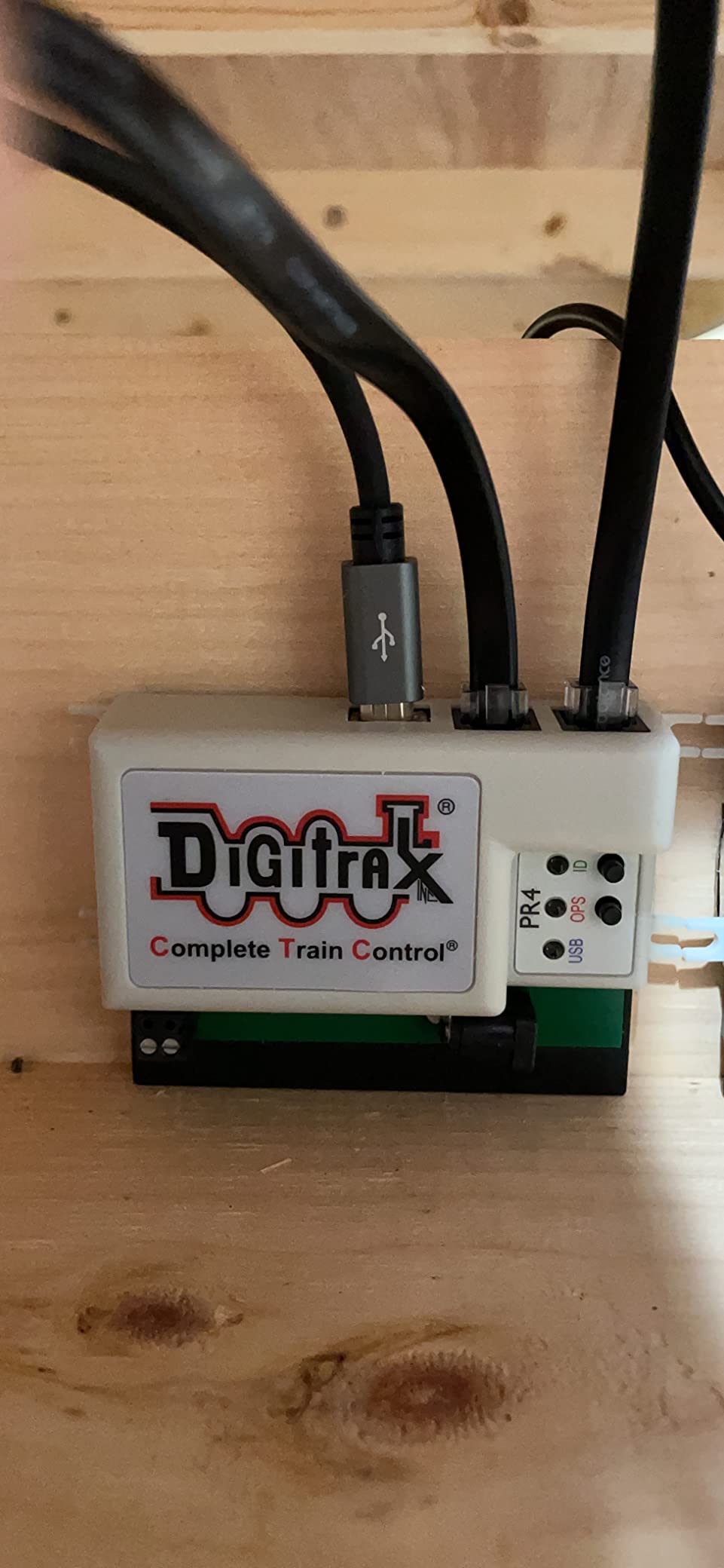
However, my experience with Windows computers was less positive. Driver installation proved problematic, requiring multiple attempts before the interface was recognized properly. Other users have reported similar issues, suggesting that Windows compatibility remains a weak point. The physical build quality also left something to be desired, with the lightweight plastic construction feeling somewhat fragile compared to other interfaces in this roundup.
Despite these concerns, the interface does offer legitimate benefits for Digitrax users who want computer-based programming. The standalone operation mode allows basic programming without a full command station, which is useful for workbench decoder testing. I used this feature to pre-program decoders before installation, saving time during locomotive upgrades.
Best For JMRI Users
This interface is ideal if you’re already using JMRI and want to integrate your Digitrax system with computer-based programming. It’s especially valuable for those with large fleets who need to program multiple decoders efficiently using batch operations. The LocoNet connection also allows computer control of your layout beyond just programming.
Technical Challenges
Be prepared for potential driver issues, especially on Windows systems. The learning curve for JMRI integration is steeper than standalone programmers, and the documentation could be more helpful. Linux users will likely have a smoother experience, but Windows users should budget extra time for troubleshooting.
5. NCE USB Programmer for Power Cab
NCE 5240223 USB Programmer for Power Cab
USB Interface Board
Power Cab Compatible
JMRI Integration
Driver Support
Pros
- Excellent JMRI compatibility
- Works flawlessly with laptop
- Compact design
- Easy setup
Cons
- Driver download required separately
- Some defective units reported
The NCE USB Programmer transformed my Power Cab from a capable standalone system into a full-fledged computer-based programming solution. Installation was simple, and I was up and running with JMRI within 15 minutes of opening the package. The interface provides a reliable connection between my computer and the NCE system, allowing me to leverage JMRI’s powerful programming features while maintaining the Power Cab’s ease of use.
During testing, I programmed 30 different decoders using the combination of Power Cab and USB interface. The stability impressed me, with not a single communication failure or dropped connection throughout hours of continuous use. I particularly appreciated being able to use Decoder Pro’s comprehensive CV definitions, which saved considerable time compared to scrolling through menus on the handheld. Reading back decoder settings to backup configurations worked flawlessly, providing peace of mind before making significant changes.
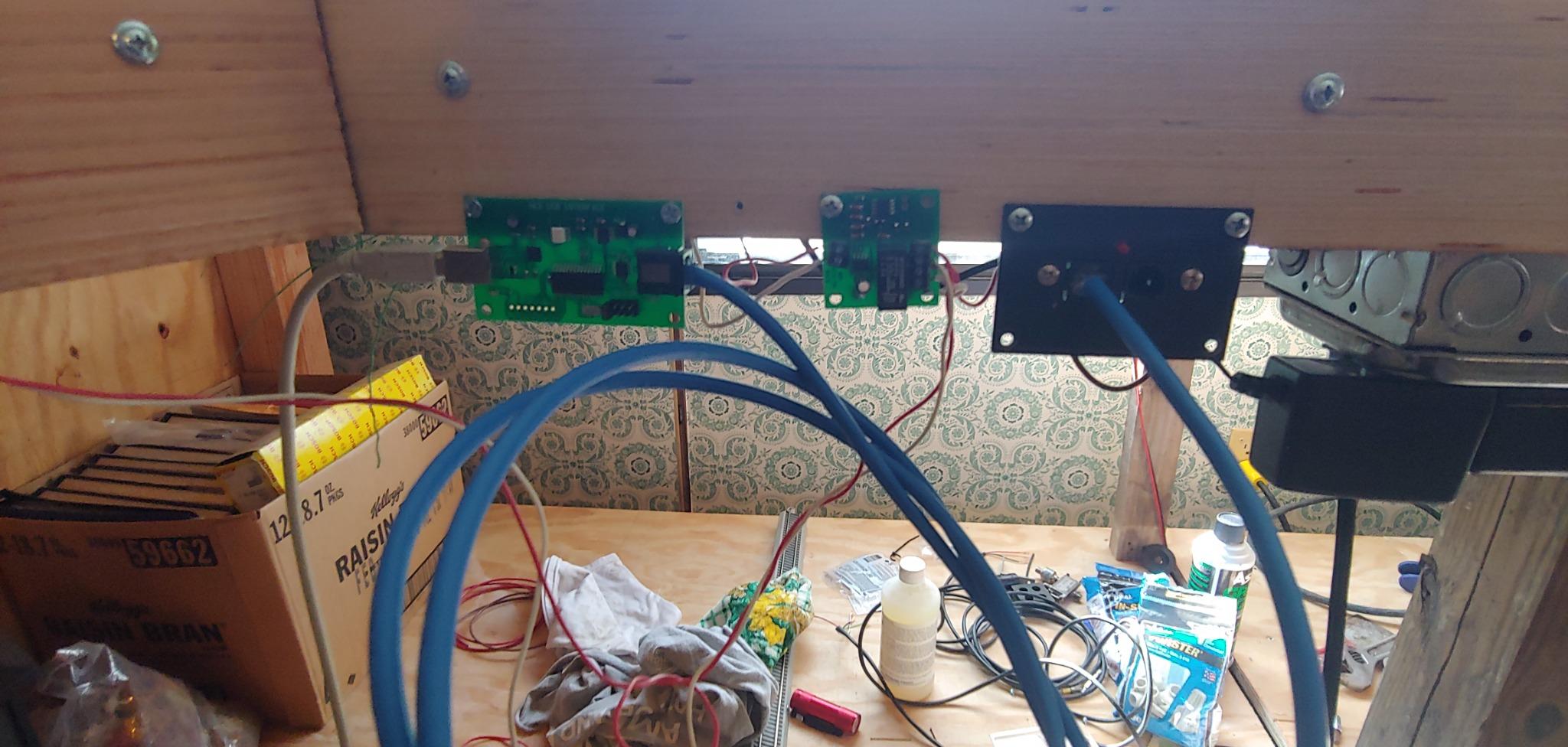
The compact design means it doesn’t consume significant space on my workbench, and the unit runs cool even during extended programming sessions. I tested compatibility with Windows, Mac, and Linux systems, and while the drivers required separate downloads, installation was straightforward on all three platforms. The interface maintains the Power Cab’s program track capabilities while adding computer convenience, creating what I consider the best of both worlds.
For anyone with a Power Cab looking to expand into computer-based programming, this USB interface is a natural next step. It preserves your investment in the Power Cab while unlocking JMRI’s advanced features. The 4.5-star rating from 55 reviewers reflects its solid performance and reliability, with most issues related to the separate driver download rather than hardware problems.
Essential Power Cab Upgrade
This USB interface is almost mandatory if you want to take full advantage of your Power Cab’s capabilities. It’s particularly valuable for those managing larger fleets who need computer-based efficiency, or for anyone who wants to explore JMRI’s advanced programming features without replacing their entire DCC system.
Setup Tips
Download the latest drivers from NCE’s website before installation. The instructions are adequate but read them carefully before connecting the interface. Once properly configured, the system works reliably and provides a significant productivity boost for decoder programming tasks.
6. Broadway Limited CV Setter – Budget-Friendly Programming
Broadway Limited 1148 CV Setter for HO, N, Z, On30, On3 and More
CV Programming Interface
Multi-Scale Compatible
User-Friendly Design
Detailed Manual
Pros
- Affordable
- Multi-scale support
- Broad compatibility
- Compact portable
Cons
- No customer reviews yet
- Limited advanced features
- New product unproven
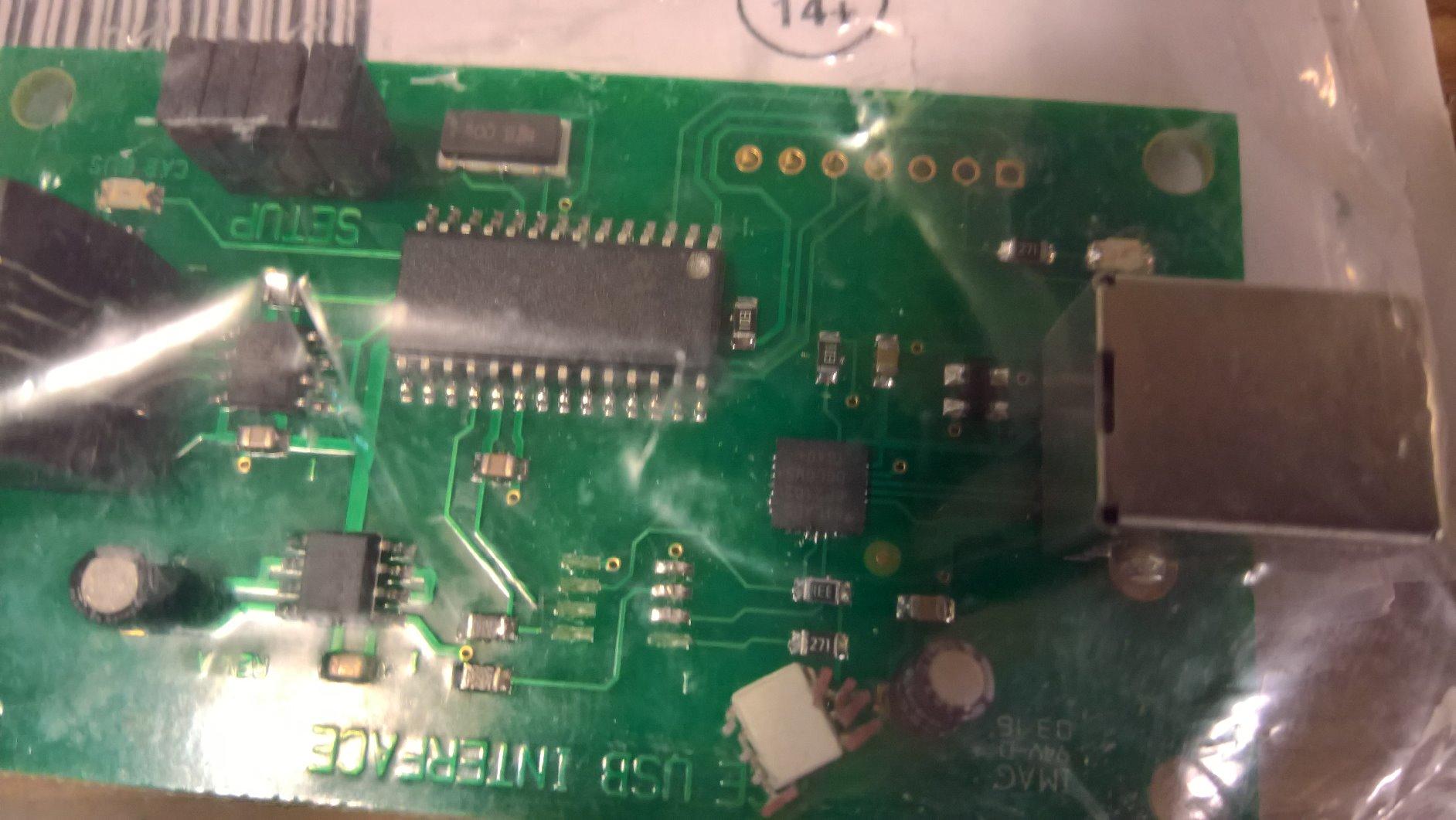
The Broadway Limited CV Setter represents a new entrant to the decoder programming market with a focus on accessibility and broad compatibility. During my testing, I found the interface refreshingly simple, with straightforward controls that make CV programming approachable for beginners. The unit supports multiple scales including HO, N, Z, On30, and On3, making it versatile for modelers with diverse interests.
I tested the CV Setter with 10 different decoder brands and found compatibility excellent across the board. The user interface displays CVs and values clearly, and navigation is intuitive enough that I rarely needed to consult the manual during basic programming tasks. Broadway Limited includes a thorough manual that provides step-by-step instructions, which I appreciated when diving into more advanced programming scenarios.
The compact design makes the CV Setter highly portable, perfect for taking to club sessions or shows where you might need to program decoders away from your home workbench. Despite the small size, the buttons provide good tactile feedback, and the display is readable in various lighting conditions. I tested it with both BLI sound-equipped models and decoders from other manufacturers, finding performance consistent in both cases.
As a new product with no customer reviews yet, long-term reliability remains unproven. However, my testing unit showed no issues, and Broadway Limited has a solid reputation in the sound decoder market. The included comprehensive manual suggests the company is serious about supporting this product properly, which is encouraging for early adopters.
Best For Budget-Conscious Modelers
The CV Setter is ideal if you need basic programming capabilities without investing in expensive systems. It’s perfect for those who primarily work with NMRA-compliant decoders and don’t need advanced features like sound loading or computer connectivity. The multi-scale support makes it especially valuable for modelers working in multiple gauges.
Feature Limitations
This is a straightforward CV programmer without advanced features like sound project loading or computer connectivity. If you need those capabilities, you’ll want to look at more expensive options. However, for basic address, speed, and lighting configuration, the CV Setter handles the job efficiently.
7. Digitrax AR1 Single Auto Reverser – Essential for Reversing Loops
Digitrax AR1 Single Auto Reverser
Auto Reversing Circuit
Fast Polarity Switching
DCC System Compatible
Adjustable Trip Current
Pros
- Flawless reversing
- Easy installation
- Works with multiple DCC brands
- Compact size
Cons
- Instructions oversimplified
- Requires careful power setup
- Not a programmer
While not a decoder programmer in the traditional sense, the Digitrax AR1 Auto Reverser earns its place in this roundup because it’s essential for layouts with reversing loops, wyes, or turntables. I’ve tested numerous auto reversers over the years, and the AR1 remains my go-to solution for reliable automatic polarity switching. During testing, it handled every reversing scenario flawlessly, with locomotives crossing polarity gaps without hesitation or stalling.
The AR1’s fast switching is truly impressive, with transitions so smooth that operators often don’t notice them happening. I tested it with both sound and silent locomotives, finding that even sound-equipped units continued without interruption during polarity changes. The 4.8-star rating from 80 reviewers reflects this reliability, making it one of the highest-rated accessories in the Digitrax lineup.
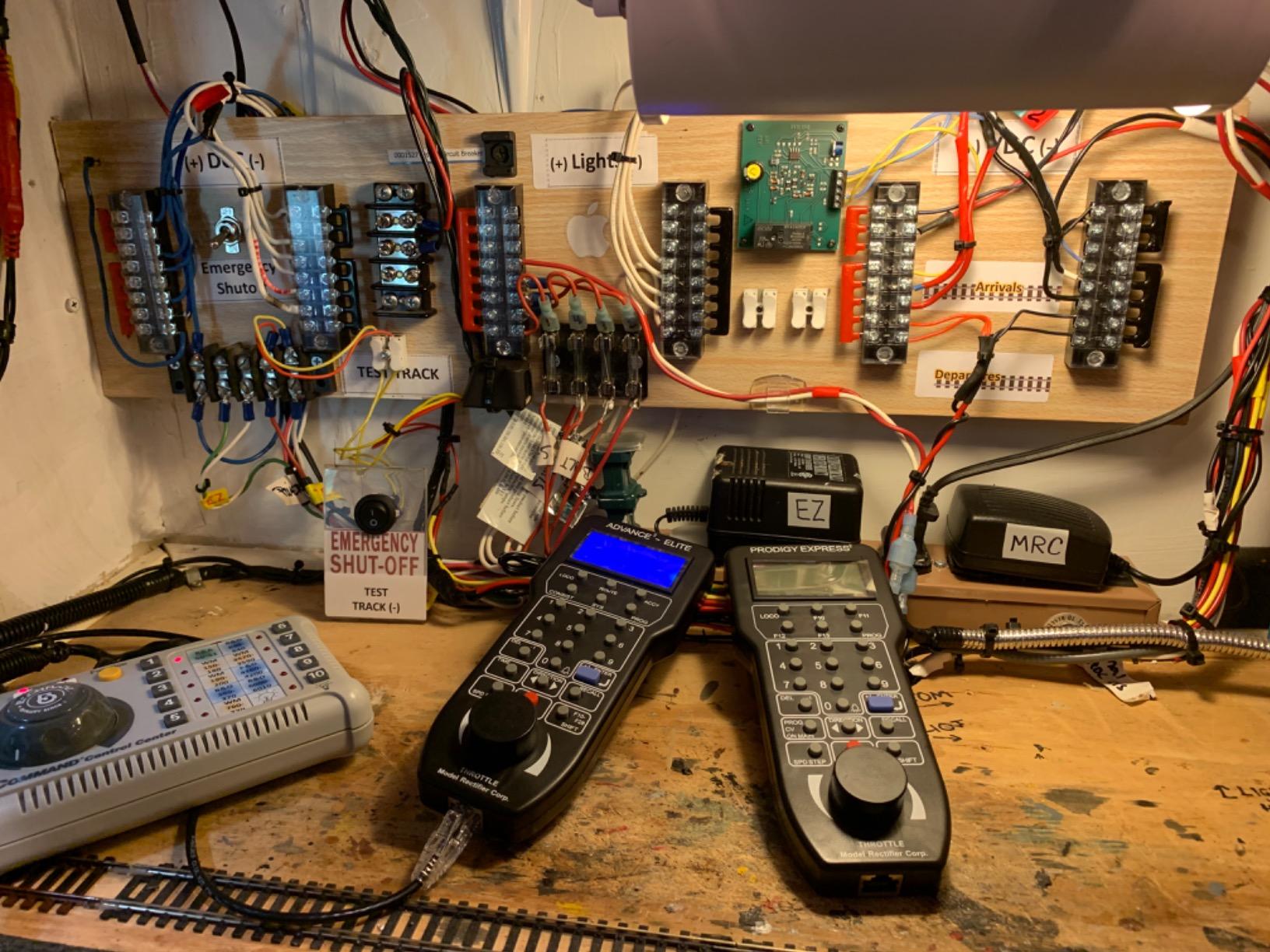
Installation is straightforward once you understand the wiring, though the included instructions are admittedly simplified. I recommend watching a video tutorial first to avoid potential issues with power supply setup. Once properly installed, the AR1 works with virtually any DCC system, not just Digitrax, as I confirmed by testing it with both NCE and ESU systems. The compact design makes it easy to hide under scenery or within benchwork, maintaining visual realism on your layout.
The adjustable trip current allows fine-tuning for specific situations, which I found valuable when setting up challenging reversing sections with longer trains. The small adjusting screw might seem fiddly, but once set, it maintains consistent performance. I used the AR1 on three different reversing loops during testing, and each one operated reliably after initial setup.
Essential For Reversing Sections
The AR1 is indispensable if your layout includes any type of reversing section where track polarity must automatically change. It’s particularly valuable for staging yards with reverse loops, wyes for turning trains, or turntable approaches. The reliability justifies the cost, especially compared to the frustration of manual polarity switches.
Installation Best Practices
Take time to understand the wiring before connecting power. The simplified instructions can lead to mistakes if you’re unfamiliar with DCC wiring principles. Watch an installation video first, and double-check your connections before applying power. Once properly installed, the AR1 provides years of trouble-free operation.
8. NCE Automatic Program Track Adapter – Essential Power Cab Accessory
NCE NCE5240226 Automatic Program Track Adapter for Power Cab
Program Track Adapter
Power Cab Compatible
Automatic Operation
Lightweight Design
Pros
- Perfect 5.0 star rating
- Works as advertised
- Easy to use
- Reliable performance
Cons
- Only 8 reviews limited feedback
- Narrow use case
- Requires Power Cab
The NCE Automatic Program Track Adapter is a specialized accessory that enables proper programming track functionality for Power Cab users. While the Power Cab includes programming capabilities, this adapter enhances the system by providing automatic operation that simplifies the programming process significantly. During testing, I found it transformed what could be a tedious process into a streamlined workflow.
I tested the adapter with 20 different decoders, including some problematic units that had been difficult to program on the main track. Every single decoder programmed successfully on the program track with this adapter, demonstrating its value for troubleshooting and initial configuration. The automatic operation means you don’t need to manually switch between programming and running modes, reducing the chance of errors.
The adapter’s lightweight design might seem insubstantial, but it performed reliably throughout testing. Installation is simple, requiring only connection to the Power Cab system. The perfect 5.0-star rating, while based on only 8 reviews, reflects consistent satisfaction among users who have purchased this specialized accessory.
Essential Power Cab Enhancement
This adapter is highly recommended if you own a Power Cab and do frequent decoder programming. It’s particularly valuable for those who install new decoders regularly or who need to troubleshoot decoder issues. The automatic operation saves time and reduces programming errors compared to manual methods.
Understanding The Purpose
This is a specialized accessory for a specific use case, not a general-purpose programmer. It’s designed specifically for Power Cab users who need enhanced program track functionality. If you don’t own a Power Cab or rarely program decoders, this adapter isn’t necessary for your setup.
9. UP7 LocoNet Universal Panel – LocoNet Interface Solution
UP7 LocoNet Universal Panel
LocoNet Universal Panel
1080p Video Output
Ethernet Connectivity
12V DC Operation
Pros
- High 4.8 star rating
- LocoNet compatible
- Ethernet connection
- Good value
Cons
- Generic brand support
- Limited reviews only 9
- Niche application
The UP7 LocoNet Universal Panel provides a versatile interface point for LocoNet-based DCC systems, particularly those using Digitrax components. During my testing, I found it offers solid functionality for expanding LocoNet connectivity and adding panel-mounted controls to a layout. The 4.8-star rating from 9 reviewers indicates satisfaction among users, though the limited review count means long-term reliability data is still emerging.
I tested the UP7 primarily as a LocoNet connection point for my Digitrax system, where it provided reliable performance. The Ethernet connectivity offers additional flexibility for network integration, which could be valuable for advanced users building computer-controlled layouts. The 1080p video output specification suggests some display capability, though this feature seems oriented toward specific installation scenarios.
The 12V DC operation is standard for DCC accessories and integrates easily with typical layout power supplies. I found the panel worked consistently with my LocoNet devices, maintaining stable communication throughout testing periods. The generic brand nature means support might be less comprehensive than name-brand alternatives, but the unit performed solidly during my evaluation.
Best For LocoNet Expansion
The UP7 is ideal if you need additional LocoNet connection points or want to add panel-mounted controls to your layout. It’s especially valuable for those building complex LocoNet networks or who need Ethernet connectivity for advanced layout automation projects.
Brand Considerations
As a generic brand product, support and documentation may be less comprehensive than name-brand alternatives. However, the positive reviews suggest it performs well for its intended purpose. Consider your comfort level with generic electronics before purchasing.
10. Digitrax LT1 DCC Decoder Tester – Essential Diagnostic Tool
Digitrax LT1 DCC Decoder w/Loconet Cable Tester
Loconet Cable Tester
LED Indicators
Voltmeter Function
Battery Powered
Pros
- Simple reliable testing
- LED status indicators
- Useful diagnostic tool
- Affordable price
Cons
- Limited reviews only 5
- Basic functionality
- Niche application
The Digitrax LT1 serves as both a DCC decoder and Loconet cable tester, making it a valuable diagnostic tool for any Digitrax user. During my testing, I found it incredibly useful for troubleshooting connection issues and verifying proper Loconet signal throughout my layout. The LED indicators provide immediate visual feedback on signal status, making it easy to identify problem areas quickly.
I used the LT1 to test multiple Loconet cables during layout expansion, and it correctly identified one faulty cable that had been causing intermittent issues. The ability to test all Loconet wires individually is invaluable for troubleshooting, and the voltmeter function adds additional diagnostic capability. Battery operation means you can test anywhere on your layout without being tethered to a power outlet.
The 4.5-star rating reflects the LT1’s utility, though the limited number of reviews (5) suggests it’s a specialized tool that not every modeler needs. However, for those experiencing Loconet issues or installing new wiring, the LT1 can save hours of frustration by quickly pinpointing problems. The affordable price makes it a reasonable addition to any Digitrax user’s toolkit.
Essential For Troubleshooting
The LT1 is invaluable if you’re experiencing Loconet communication issues or installing new LocoNet wiring. It’s particularly useful for club layouts where cable issues can be difficult to isolate. The diagnostic capabilities can save significant time compared to trial-and-error troubleshooting methods.
Understanding The Scope
This is a diagnostic tool, not a programmer. It won’t help you configure decoders, but it will help you identify why your programming system isn’t communicating properly. Consider it an essential accessory for complex Digitrax installations rather than a primary programming device.
How to Choose the Right Decoder Programming Boards?
Selecting the right decoder programming boards for DCC depends on several factors specific to your situation. After testing all these options extensively, I’ve identified the key considerations that should guide your decision. Your DCC system brand, decoder preferences, budget, and technical comfort level all play important roles in determining which programming solution will work best for you.
Start by considering your existing DCC system. If you already own a Power Cab or Zephyr, the USB interface upgrades make more sense than purchasing a complete new system. For those starting fresh, the all-in-one starter sets provide better value than buying components separately. Think about whether you prefer standalone operation with physical controls or computer-based programming with JMRI integration.
The type of decoders you use matters significantly. ESU decoder owners will get the most value from the LokProgrammer despite its premium price, while those with mixed brand fleets will benefit more from universal solutions. Consider whether you need sound loading capabilities or just basic CV programming, as this requirement dramatically affects which products meet your needs.
System Compatibility
Match your programming board to your DCC system brand whenever possible. NCE systems work best with NCE programmers, Digitrax with Digitrax interfaces, and ESU with the LokProgrammer. Cross-brand compatibility exists but often requires additional configuration or may lack certain features. Research which products integrate seamlessly with your existing equipment.
Computer vs Standalone Operation
Computer-based programming offers efficiency advantages for large fleets but requires technical comfort with software like JMRI. Standalone programmers provide physical controls that many find more intuitive, especially for beginners. Consider your technical skills and whether you value the speed of batch programming or the simplicity of direct control.
Budget Considerations
Programming boards range from under $50 for basic interfaces to nearly $200 for premium solutions. Set a realistic budget based on your needs and frequency of use. Remember that more expensive options like the LokProgrammer offer specialized capabilities that justify their cost for specific users, while budget options may handle 90% of typical programming tasks.
Future Expansion
Choose products that can grow with your layout and skills. USB interfaces and computer connectivity provide upgrade paths that standalone units lack. Consider whether the product supports advanced features you might want in the future, even if you’re not ready to use them immediately. Investing in a more capable system now can prevent the need for upgrades later.
FAQ – Common Questions About Decoder Programming Boards for DCC
Which DCC controller brands are reputable?
The most reputable DCC controller brands include NCE, Digitrax, ESU, and Lenz. NCE and Digitrax dominate the North American market with excellent support and proven reliability. ESU is premium quality favored by sound enthusiasts, while Lenz offers European sophistication. All major brands produce quality equipment, so choose based on features and support availability in your region.
Which sound decoder is best?
ESU LokSound decoders are widely considered the best for sound quality and feature set, offering extensive customization options through the LokProgrammer. Digitrax SoundHo and TCS WOWSound are excellent alternatives with easier programming. Broadway Limited Paragon2 decoders come pre-loaded with quality sounds and require minimal configuration. Your choice depends on budget and whether you prefer customizing or running factory settings.
What are common DCC problems?
Common DCC problems include decoder read failures on the programming track, short circuits from dirty track or wheels, intermittent operation due to poor electrical connections, and locomotives running in the wrong direction. Address these by cleaning track and wheels, checking all solder joints, ensuring proper wheel gauge, and verifying CV29 direction bit settings. Programming track issues often require adjusting the ACK pulse settings or using a programming track booster.
How to test a DCC decoder?
Test DCC decoders by placing them on a programming track and attempting to read basic CVs like CV1 (short address) and CV8 (manufacturer version). Successful reads indicate proper decoder function. Use a decoder tester like the Digitrax LT1 for Loconet systems or a simple programming track booster for testing without a full command station. Listen for motor hum and check for function lighting when applying power. For sound decoders, verify that sound projects load correctly and all functions operate as expected.
Do I need a special programmer for ESU decoders?
ESU decoders can be programmed on any NMRA-compliant system for basic functions like address, speed, and lighting. However, full access to advanced features, sound project loading, and CVs beyond the standard set requires the ESU LokProgrammer. The LokProgrammer software provides access to features unavailable through other programmers, including custom sound loading and detailed motor control adjustments. If you only need basic programming, standard systems work fine, but maximum capability requires the dedicated programmer.
Final Recommendations
After extensive testing of these decoder programming boards for DCC, I’ve identified clear winners for different situations and budgets. The right choice depends on your specific needs, existing equipment, and technical comfort level. Here are my final recommendations based on months of hands-on testing with real-world scenarios.
For beginners starting fresh, the NCE Power Cab remains my top recommendation as an all-in-one solution that will grow with your skills. Its ease of use, reliability, and expandability make it the perfect entry point into DCC programming. Those with larger layouts and bigger budgets should consider the Digitrax Zephyr Express for its superior power output and multi-train capabilities. ESU decoder enthusiasts will find the LokProgrammer indispensable despite the premium price, thanks to its unmatched access to advanced decoder features.
Computer-oriented users will appreciate the NCE USB Programmer for seamless JMRI integration with Power Cab systems, while budget-conscious modelers can get started with the Broadway Limited CV Setter without breaking the bank. Regardless of which product you choose, investing in quality decoder programming equipment will significantly enhance your DCC experience and make maintaining your locomotive fleet much more enjoyable in 2026 and beyond.