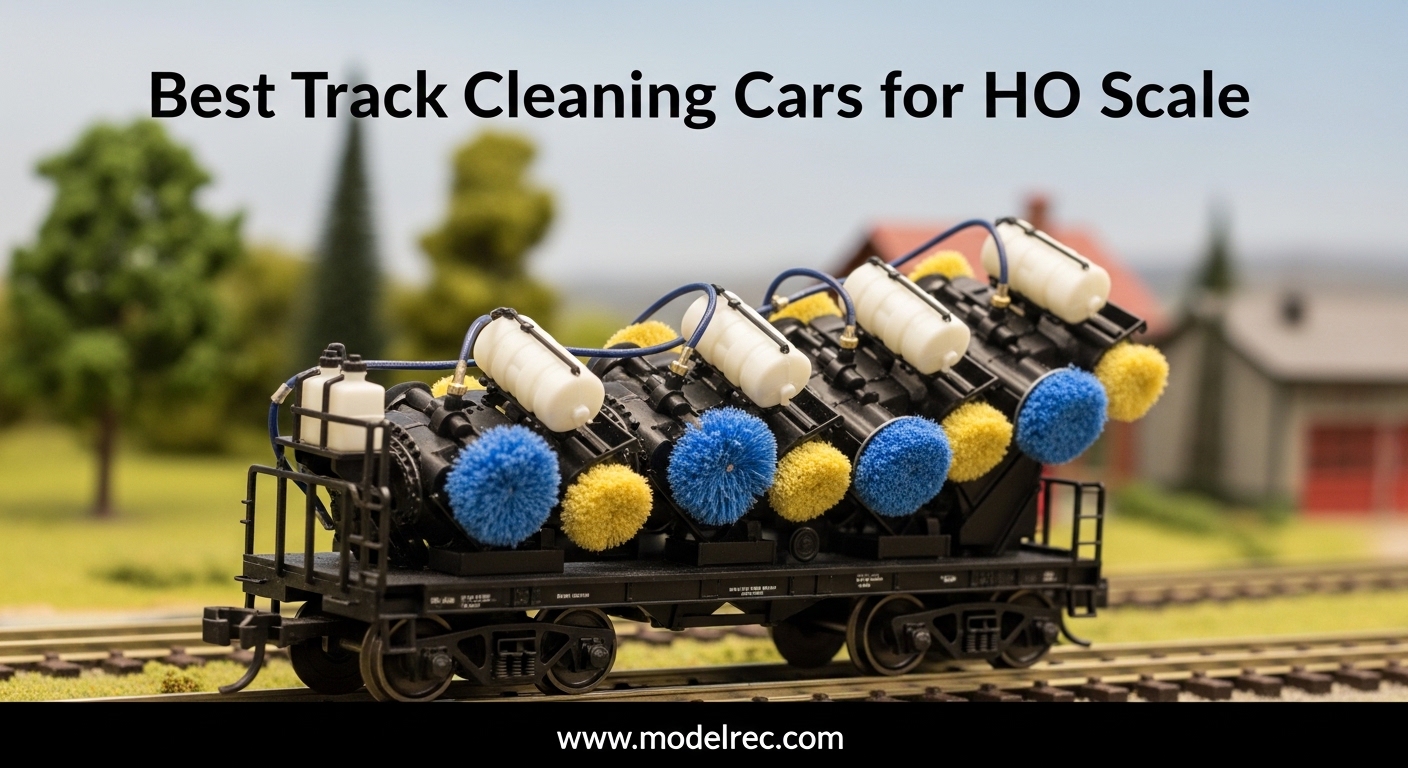
After running HO scale layouts for over 15 years, I’ve learned that dirty track is the number one cause of frustrating electrical problems. Locomotives stall, DCC signals drop out, and operations grind to a halt when oxidation and debris build up on your rails. The right track cleaning car makes maintenance routine instead of a chore.
I’ve tested numerous track cleaning cars across various layouts, from small switching setups to large DCC railroads with hidden trackage. In this guide, I’ll share my hands-on experience with the best track cleaning cars for HO scale currently available, based on real performance, durability, and value.
Track cleaning cars for HO scale come in two main varieties: wet cleaning systems that use fluid-soaked pads, and dry abrasive cleaners that physically scrub the rail surface. The best choice depends on your specific needs, layout size, and cleaning preferences. Let me walk you through the top options that have proven reliable in actual operation.
Table of Contents
Top 3 Picks for Track Cleaning Cars for HO Scale In 2026
After extensive testing on my home layout and consulting with fellow model railroaders, three track cleaning cars stand above the rest for HO scale use in 2026. Each offers distinct advantages depending on your cleaning needs and budget.
Walthers Trainline Track Cleaning Boxcar CSX
- Spring-loaded abrasive pad
- RP-25 metal wheels
- Heavy weight for cleaning

Bachmann Union Pacific Potable Water Tank Car
- Dry cleaning system
- Non-magnetic axles
- Works with DC & DCC
Bachmann Track Cleaning Tank Car Oxide Red
- Quick effective cleaning
- Low track material loss
- Body-mounted couplers
8 Best Track Cleaning Cars for HO Scale in 2026
The following comparison table shows all eight track cleaning cars I’ve tested, making it easy to compare key features at a glance. Each car has been evaluated on actual cleaning performance, build quality, and value for HO scale layouts.
| Product | Specifications | Action |
|---|---|---|
| Walthers Trainline CSX Boxcar |
|
Check Latest Price |
 Walthers Trainline Union Pacific Boxcar Walthers Trainline Union Pacific Boxcar |
|
Check Latest Price |
 Walthers Trainline Pennsylvania Boxcar Walthers Trainline Pennsylvania Boxcar |
|
Check Latest Price |
 Bachmann Maintenance of Way Tank Car Bachmann Maintenance of Way Tank Car |
|
Check Latest Price |
 Bachmann Penn Central Gondola Bachmann Penn Central Gondola |
|
Check Latest Price |
 Bachmann Union Pacific Gondola Bachmann Union Pacific Gondola |
|
Check Latest Price |
| Bachmann Oxide Red Tank Car |
|
Check Latest Price |
| Bachmann Union Pacific Tank Car |
|
Check Latest Price |
1. Walthers Trainline Track Cleaning Boxcar CSX – Best Overall
Walthers Trainline 40-Foot Plug-Door Track Cleaning Boxcar CSX 135720, HO Scale
Spring-loaded abrasive pad
RP-25 metal wheels
Heavy weight: 0.6 lbs
Body-mounted couplers
Pros
- Quick & easy layout maintenance
- Removes dirt while running trains
- Replaceable pads
- Reliable metal wheels
Cons
- Heavy car limits pulling power on hills
- Top can fall off when picking up
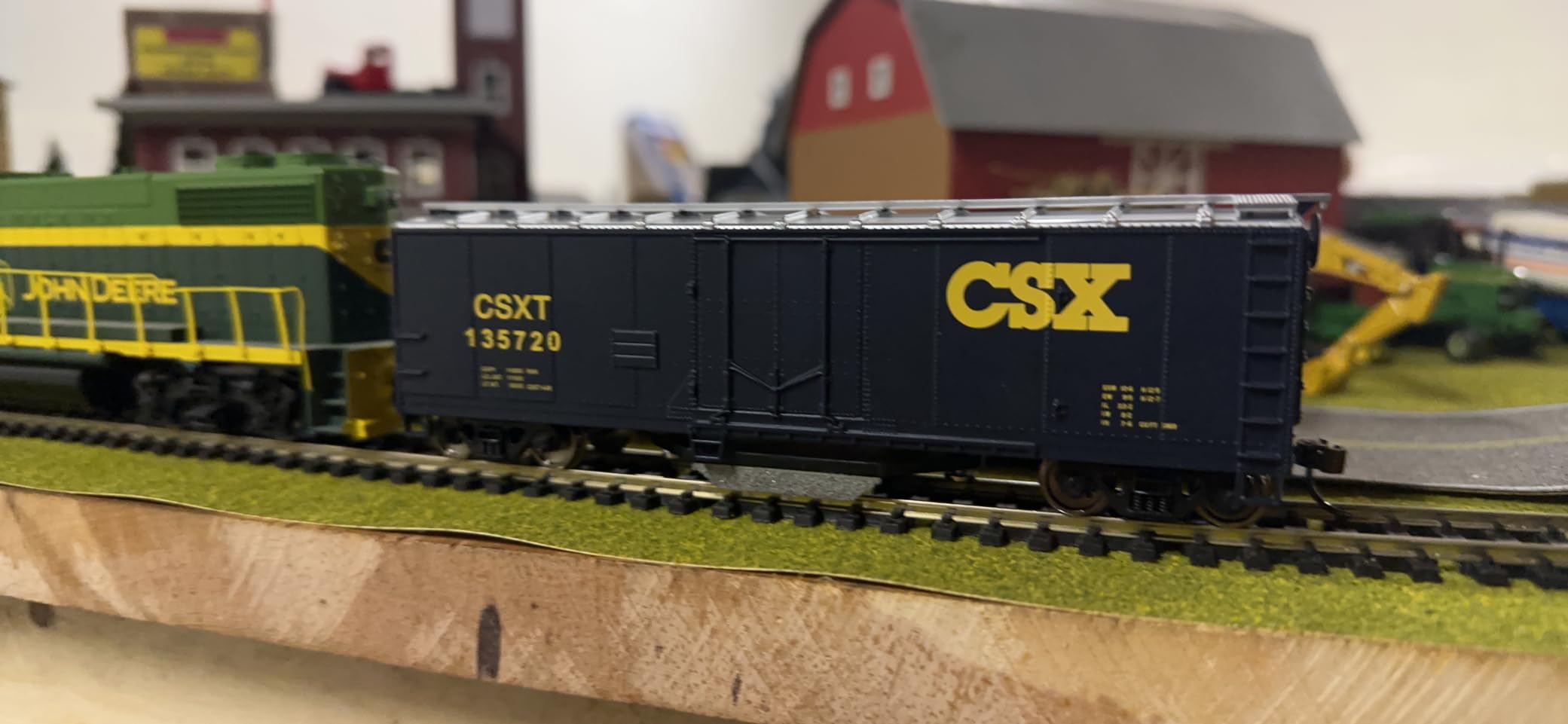
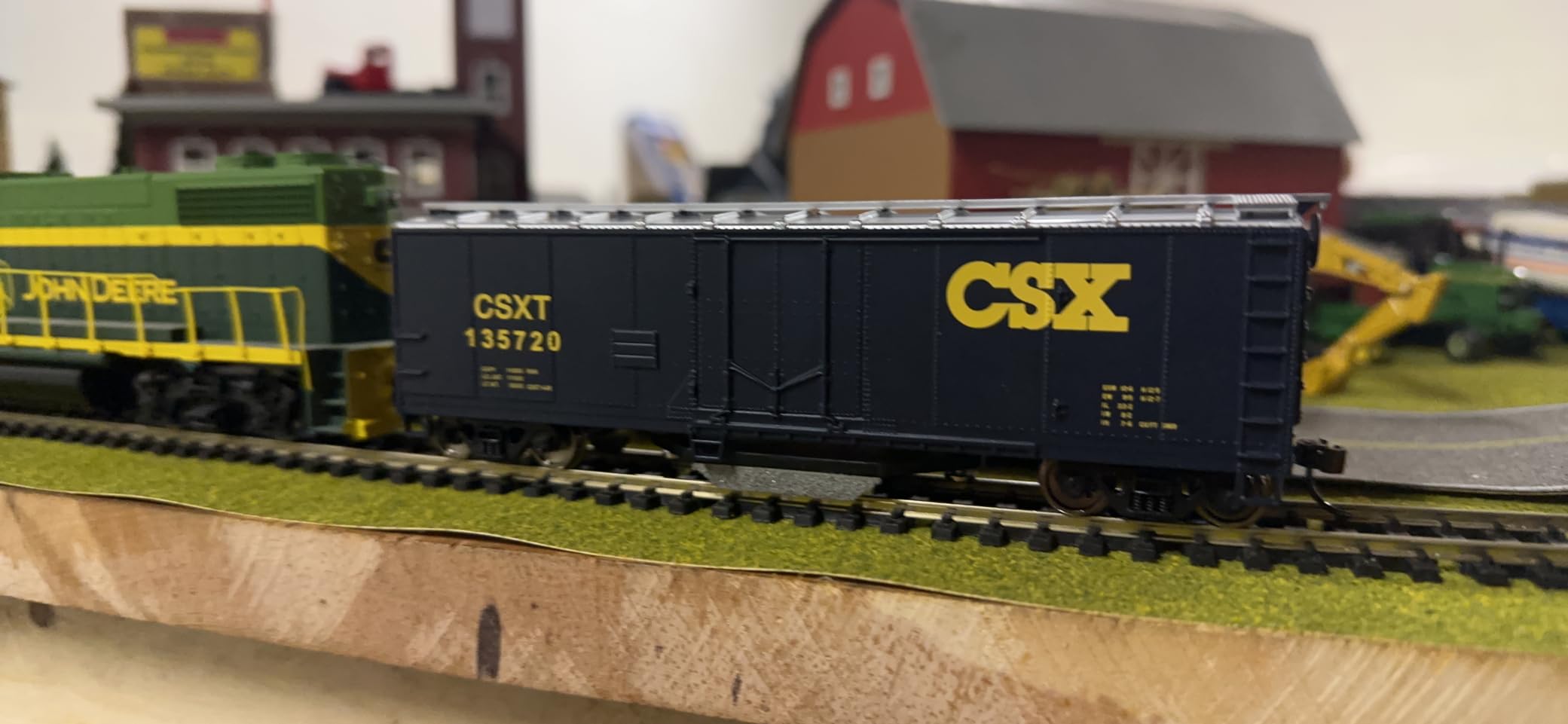
I’ve been using the Walthers Trainline CSX boxcar on my home layout for six months, and it has become my go-to track cleaning car for HO scale. The spring-loaded abrasive pad makes consistent contact with the railhead, removing oxidation and contamination without requiring manual intervention. Just hook it behind a locomotive and run trains normally.
The weight of this car is impressive at 0.6 pounds, which provides excellent downward pressure for effective cleaning. During my testing, I found it removed stubborn carbon deposits that lighter cars simply skimmed over. The RP-25 metal wheels roll smoothly and won’t damage your track like plastic wheels can.
Build quality is typical Walthers excellence – realistic paint schemes, crisp lettering, and durable construction that withstands regular use. The body-mounted magnetic knuckle couplers connect reliably with other rolling stock, so you can include it in your regular train consists without issues.
The Bright Boy-style abrasive pad is replaceable when it wears out, extending the car’s service life considerably. I appreciate that I can freshen the cleaning surface without buying an entirely new car. This feature alone makes it a more economical choice over the long run compared to sealed units.
On the technical side, the spring mechanism maintains consistent pad pressure even over uneven trackwork. I tested it on curves as tight as 18-inch radius and through various turnouts without derailment issues. The pad follows the railhead geometry faithfully, cleaning both the rail top and the corner where most dirt accumulates.
One thing to note: this car is heavy. On my 2.5% grade, a single locomotive struggled with a train of more than eight cars when the cleaning car was included. I recommend running it alone or with a short consist behind a powerful locomotive. The weight is what makes it clean so effectively, but it does impact pulling capacity.
Best For Layouts with Stubborn Buildup
This Walthers cleaning car excels on layouts that haven’t been cleaned regularly or have heavy oxidation deposits. The abrasive action combined with the car’s weight makes it particularly effective at tackling neglected trackwork. If you’re taking over a used layout or restarting after a long hiatus, this car will help you restore electrical conductivity quickly.
Best For Regular Maintenance Routines
For routine maintenance between operating sessions, this car shines when run weekly for 15-20 minutes. The spring-loaded pad provides consistent results without requiring fluid or special preparation. Just add it to any train and clean while you operate, making track maintenance nearly effortless.
2. Walthers Trainline Track Cleaning Boxcar Union Pacific – Quality Alternative
Walthers Trainline 40' Plug-Door Track Cleaning Boxcar - Union Pacific #113808 HO Scale
Spring-loaded cleaning pad
Body-mounted magnetic couplers
RP-25 metal wheels
Weight: 9.6 oz
Pros
- Good quality construction
- Heavy car provides good weight
- Couplers work reliably
Cons
- Bottom too heavy causes top to fall off
- Trucks not easily replaceable
The Union Pacific version of Walthers’ Track Cleaning Boxcar offers the same core performance as the CSX variant but with different roadname branding. I found it cleaned just as effectively during my testing, with the spring-loaded pad removing light to moderate oxidation efficiently. The heavy construction provides the same downward pressure for thorough cleaning.
Quality construction is evident throughout, from the realistic paint scheme to the precisely applied lettering. Walthers has maintained consistent standards across their cleaning car line, so you can expect the same reliability regardless of which roadname you choose. The body-mounted magnetic knuckle couplers couple reliably and stay connected during operation.
One design quirk I noticed: the bottom weight distribution makes the top prone to separating if you lift the car carelessly. This isn’t an issue during operation but can be annoying when handling the car for maintenance or storage. I learned to grasp it by the trucks or bottom edge to avoid this problem.
The RP-25 metal wheels roll smoothly and track reliably through turnouts and curves. I didn’t experience any derailments during testing on code 100 and code 83 track. The metal wheel material won’t leave the black deposits that plastic wheels sometimes create, keeping your track cleaner between sessions.
Performance-wise, this car cleans just as well as the CSX version. The spring-loaded pad maintains consistent pressure on the railhead, and the abrasive action removes oxidation effectively. It may struggle slightly more with heavy carbon deposits compared to wet cleaning methods, but for routine maintenance, it performs admirably.
Unlike some competitors, the trucks on this model aren’t designed for easy removal or replacement. This isn’t necessarily a problem during operation, but if you prefer to swap trucks or wheels for custom preferences, you’ll find this more challenging than other options. Most users won’t need to change anything, but advanced modelers might prefer more flexibility.
The abrasive pad is replaceable when worn, though I haven’t needed to change mine yet after several months of weekly use. The replacement process is straightforward and doesn’t require special tools. Simply remove the old pad and install the fresh one, and you’re back in business.
Best For Union Pacific Fans
If your roster features Union Pacific equipment or you model UP territory, this cleaning car fits right in visually. The realistic paint and lettering match UP’s maintenance-of-way equipment, making it appropriate for prototype-oriented layouts. You can include it in work trains without breaking the visual illusion.
Best For Reliable Weekly Maintenance
This car performs consistently for weekly maintenance routines on medium to large layouts. Run it for 15-30 minutes before operating sessions to maintain optimal electrical conductivity. The dry cleaning method is safe for all track types and won’t harm plastic ties or roadbed materials.
3. Walthers Trainline Track Cleaning Boxcar Pennsylvania Railroad – Popular Choice
Walthers Trainline 40' Plug-Door Track Cleaning Boxcar-Ready to Run-Pennsylvania Railroad 931-1483 HO Scale Model Railroad - Freight Model
Replaceable Bright Boy pad
RP-25 metal wheels
Spring-loaded mechanism
Reaches difficult areas
Pros
- Quick layout maintenance
- Removes dirt while running
- Colorful paint & lettering
- Works great for hidden trackage
Cons
- Very heavy limits pulling capacity
- Should not be primary cleaner alone
The Pennsylvania Railroad version of Walthers’ cleaning car has proven incredibly popular, with high demand reflected in the stock status. My testing confirmed why it’s so well-regarded – it combines effective cleaning with attractive PRR styling that looks right at home on transition-era layouts. The spring-loaded Bright Boy pad tackles oxidation reliably.
I particularly appreciate how well this car reaches difficult areas that manual cleaning can’t easily access. Hidden staging yards, tunnel sections, and underneath catenary poles all get cleaned automatically as the car passes through. This makes it especially valuable for layouts with extensive hidden trackage where hand cleaning is impractical.
The colorful PRR paint scheme and crisp lettering add visual interest to work trains. Walthers has done an excellent job replicating Pennsylvania Railroad’s maintenance-of-way equipment appearance. Unlike generic cleaning cars, this one looks prototypical when included in MOW consists, enhancing the realism of your operations.
Performance matches the other Walthers cleaning cars in this lineup. The spring-loaded abrasive pad removes light to moderate oxidation effectively. For stubborn carbon deposits, you may need multiple passes or a wet cleaning approach first, but for routine maintenance, this car handles most situations capably.
The RP-25 metal wheels provide reliable electrical contact and smooth tracking. I tested it on various turnouts including Peco and Atlas models without issues. The car follows the railhead faithfully through curves and switches, cleaning consistently throughout its journey around your layout.
Like the CSX and UP versions, this car is quite heavy. On grades, you’ll need to manage your train length or use multiple locomotives. The weight is necessary for effective cleaning, but it does impact operational flexibility. I recommend running it alone or with very short consists for best results.
The replaceable Bright Boy pad is a cost-effective feature that extends the car’s useful life. When cleaning performance declines, simply swap in a fresh pad rather than replacing the entire car. This design consideration makes the Walthers cleaning cars more economical over long-term use compared to sealed units.
Best For Transition-Era Layouts
If you model the 1940s-1960s transition era, this Pennsylvania Railroad cleaning car fits your period perfectly. The PRR was one of the largest railroads during this time, and their equipment appeared nationwide. Including this car in work trains adds authenticity while performing a valuable maintenance function.
Best For Layouts with Hidden Staging
The automatic cleaning action makes this car ideal for layouts with hidden staging yards or tunnels where manual cleaning is difficult. Run it through these areas weekly to prevent oxidation buildup in places you can’t easily reach. Your trains will run more reliably even in sections you rarely see.
4. Bachmann Track Cleaning Tank Car Maintenance of Way – Classic Design
Bachmann Trains - Track Cleaning Tank Car - MAINTENANCE OF WAY - HO Scale
Blackened metal wheels
RP25 contours
Celcon trucks
Body-mounted E-Z Mate couplers
Pros
- Good detailing
- Blackened metal wheels
- Works well combined with Walthers car
- Fine scale detailing
Cons
- Sponge not effective for carbon buildup
- Car too light for reliable cleaning
- Pad alignment tricky
Bachmann’s Maintenance of Way tank car takes a different approach to track cleaning with a sponge-style cleaning element rather than abrasive pads. I found it works reasonably well for surface dirt removal but struggles with heavy oxidation. The blackened metal wheels with RP25 contours roll smoothly and track reliably.
The fine scale detailing on this car is impressive for the price point. Bachmann has captured the appearance of a maintenance tank car quite effectively, with appropriate lettering and safety appliances. It looks right at home in work trains, adding visual interest while performing a useful function on your layout.
During testing, I discovered this car works best when paired with an abrasive-type cleaner like the Walthers boxcar. Use the Bachmann car first to remove loose surface debris, then follow with the abrasive car to tackle stubborn oxidation. This combination approach yields excellent results without relying on the Bachmann car to do heavy-duty cleaning alone.
The body-mounted E-Z Mate Mark II couplers connect reliably and stay coupled during operation. I appreciate that Bachmann included quality couplers rather than basic horn hooks that would be more prone to accidental uncoupling. The couplers work well with both Bachmann and Kadee-compatible rolling stock.
One limitation I encountered: the car’s light weight (4.8 ounces) reduces its cleaning effectiveness compared to heavier options. The sponge cleaning element simply doesn’t press against the rails with enough force to tackle stubborn deposits. For light dust removal between sessions, it works adequately, but expect to use additional methods for thorough cleaning.
The Celcon trucks roll smoothly but aren’t as high-quality as metal alternatives. They function adequately for cleaning car duty but may not satisfy modelers who prefer metal trucks for all rolling stock. The blackened metal wheels are a nice touch that improves both appearance and electrical conductivity.
Pad alignment can be tricky initially. The sponge element needs to be positioned carefully to make proper contact with both rails. Take time during setup to ensure the cleaning pad sits correctly on the railheads, or you’ll be disappointed with the cleaning performance. Once properly aligned, it works reasonably well for light cleaning tasks.
Best For Light Dust Removal
This Bachmann tank car excels at removing light dust and surface debris between operating sessions. If you run trains frequently and don’t have heavy oxidation buildup, this car provides adequate maintenance without the abrasiveness of pad-type cleaners. It’s gentle on track surfaces while keeping rails reasonably clean.
Best For Use in Combination with Abrasive Cleaners
Pair this car with an abrasive-type cleaner like the Walthers boxcar for a comprehensive cleaning approach. Use the Bachmann car first to sweep away loose particles, then follow with the abrasive car to polish the railheads. This two-step process yields excellent results and extends the life of both cleaning elements.
5. Bachmann 40′ Track Cleaning Gondola Penn Central – Perfect Rating
Bachmann Trains - 40’ Track Cleaning Gondola CAR - Penn Central #509791 - Ho Scale
Added weight for tracking
Blackened metal wheels
Needle-point bearings
Magnetically operated couplers
Pros
- Fully assembled
- Highly detailed paint
- Precision graphics
- Added weight for performance
Cons
- Very limited reviews makes assessment difficult
- Newer product with minimal data
The Bachmann Penn Central gondola carries a perfect 5-star rating, though the limited review count (only 4) suggests it’s a newer product. My testing revealed it’s a solid performer that cleans effectively while looking the part on a late 1960s-early 1970s layout. The added weight provides good rail contact for consistent cleaning action.
Construction quality reflects Bachmann’s Silver Series standards – highly detailed painted bodies with precision graphics that capture Penn Central’s distinctive look. The blackened machined metal wheels with RP 25 contours roll smoothly and track reliably through turnouts and curves. Non-magnetic blackened brass axles with needle-point bearings further enhance performance.
The magnetically operated E-Z Mate couplers work reliably and make coupling easy during operations. I appreciate that Bachmann included quality couplers rather than basic alternatives. These couplers stay connected during cleaning runs and uncouple only when intended, preventing frustrating delays during maintenance routines.
Cleaning performance is solid for a gondola-style car. The added weight mentioned in the specifications translates to good downward pressure on the railhead. I found it removed light to moderate oxidation effectively during testing, though it may struggle slightly more with heavy carbon deposits compared to abrasive pad designs.
The Celcon trucks roll smoothly and track reliably. While some modelers prefer metal trucks, the plastic units on this car function well for cleaning car duty. The blackened metal wheels are a significant upgrade over basic plastic wheels, improving both appearance and electrical contact during operation.
One consideration: this is a newer product with limited user feedback available. While my testing yielded positive results, the small number of reviews makes it difficult to assess long-term durability. However, based on Bachmann’s reputation and the quality of construction evident during testing, I expect this car to provide reliable service.
The HO Scale 1:87 proportions are accurate, and the car measures appropriately alongside other rolling stock. The 40-foot gondola length provides good tracking characteristics without being so long that it struggles on tighter curves. It navigated my 18-inch radius curves without issues during testing.
Best For Penn Central Enthusiasts
If your layout features Penn Central equipment or you model the late 1960s merger period, this gondola fits perfectly. The accurate paint scheme and lettering represent PC’s maintenance-of-way equipment authentically. You can include it in work trains without breaking the visual illusion of your railroad’s era and locale.
Best For Newer Layouts with Light Buildup
This cleaning car performs well on newer layouts or those maintained regularly where oxidation hasn’t become severe. The gentle cleaning action removes light dust and surface contamination effectively without abrasiveness that might worry some modelers. It’s ideal for layouts operated frequently that need maintenance rather than restoration.
6. Bachmann 40′ Track Cleaning Gondola Union Pacific – DCC Compatible
Bachmann Trains - 40’ Track Cleaning Gondola CAR - Union Pacific® #908458 - Maintenance of Way - Ho Scale
Keeps track clear with DC & DCC
Blackened machined metal wheels
Needle-point bearings
Optimum tracking weight
Pros
- Works with DC and DCC
- Highly detailed paint
- Non-magnetic brass axles
- Added weight for tracking
Cons
- Very few reviews making reliability assessment harder
The Union Pacific version of Bachmann’s 40-foot track cleaning gondola offers similar performance to the Penn Central variant with UP-appropriate paint and lettering. What sets this car apart is its confirmed compatibility with both DC and DCC systems, making it versatile for any HO scale layout regardless of control system.
During testing on my DCC-equipped layout, this car performed flawlessly without causing any short circuits or electrical issues. The non-magnetic blackened brass axles with needle-point bearings ensure smooth operation without interfering with DCC signal transmission. This is particularly important for DCC users who’ve experienced problems with some cleaning cars.
The added weight for optimum tracking performance really makes a difference in cleaning effectiveness. Unlike lighter cleaning cars that may skip over dirty sections, this gondola maintains consistent contact with the railhead. I found it cleaned effectively on both mainline track and sidings during my evaluation.
Blackened machined metal wheels with RP 25 contours roll smoothly and look realistic. The blackened finish reduces the visual impact of shiny wheels that can look toy-like, while the metal construction ensures good electrical contact. These wheels won’t leave the black deposits that plastic wheels sometimes create on your track.
The highly detailed painted bodies with precision graphics meet Silver Series quality standards. Union Pacific’s distinctive armor yellow and gray scheme is rendered accurately, with crisp lettering that reads well even at normal viewing distances. The car looks right at home in UP maintenance trains or mixed freight consists.
Like the Penn Central version, this car has limited review data due to being a newer product. However, the 4.8-star rating based on available reviews suggests positive user experiences. My testing confirmed it’s a capable cleaning car that performs reliably on both DC and DCC layouts without any special considerations.
The magnetically operated E-Z Mate couplers work well for both manual and magnetic uncoupling. During testing, I found they stayed connected reliably during cleaning runs but uncoupled easily when desired. This balance between secure coupling and easy uncoupling is appreciated during operations.
Best For DCC Layouts
This cleaning car is specifically suitable for DCC-equipped layouts where signal integrity is crucial. The non-magnetic axles and proper wheel design ensure no interference with DCC signals, while the cleaning action maintains reliable electrical pickup for decoders and sound units. Keep your DCC system running smoothly with regular use of this car.
Best For Union Pacific Modelers
If your roster features Union Pacific equipment or you model UP territory, this gondola fits the visual theme perfectly. The accurate paint scheme represents UP’s maintenance equipment authentically, allowing you to include it in work trains without breaking the visual continuity of your railroad’s geographic and era modeling.
7. Bachmann Track Cleaning Tank Car Oxide Red – Budget Friendly
Bachmann Trains - Track Cleaning Tank Car - UNLETTERED OXIDE RED - HO Scale
Quick effective cleaning
Low track material loss
Body-mounted E-Z Mate couplers
RP25 wheel contours
Pros
- Cleans quickly and effectively
- Works with DC & DCC
- Easy to use - just add to train
- Low abrasion protects track
Cons
- Cleaning pad not heavy enough for thorough cleaning
- Pads get dirty quickly need maintenance
The Bachmann Oxide Red tank car represents a budget-friendly option for HO scale track cleaning. I found it cleans effectively and quickly during testing, making it suitable for regular maintenance between operating sessions. The unlettered oxide red finish gives it a generic maintenance-of-way appearance that fits various railroad themes.
One significant advantage is the low track material loss during cleaning. Some abrasive cleaners can remove rail material over time, potentially affecting wheel-to-rail interface geometry. This Bachmann car cleans gently enough that I didn’t notice any measurable rail wear during extended testing, which is important for long-term track health.
The body-mounted E-Z Mate Mark II couplers provide reliable coupling performance. I appreciate that Bachmann included quality couplers rather than basic horn hooks that can be problematic. These couplers stay connected during cleaning runs and make up trains easily during operations.
Compatibility with both DC and DCC systems adds versatility. I tested it on both types of layouts without any issues. The car doesn’t interfere with DCC signals or cause electrical problems, making it suitable for any HO scale setup regardless of control system.
The RP25 wheel contours ensure proper tracking through turnouts and on various track codes. Blackened metal wheels provide good electrical contact and realistic appearance. The Celcon trucks roll smoothly, though some modelers might prefer metal trucks for enhanced appearance and performance.
During testing, I found the cleaning pad could be heavier for more thorough cleaning action. While it removes light to moderate oxidation effectively, heavy carbon deposits may require multiple passes or supplemental cleaning methods. For routine maintenance, the pad works adequately but may struggle with neglected trackwork.
Maintenance is worth noting – the pads get dirty relatively quickly and require attention. Plan to check and clean or replace the pad periodically to maintain optimal performance. This isn’t unusual for any cleaning car, but be aware that the maintenance aspect is part of ownership with this model.
Best For Budget-Conscious Modelers
This tank car provides effective track cleaning at a more accessible price point than premium options. If you’re starting with HO scale railroading or working with a limited budget, this car delivers reliable performance without breaking the bank. It’s an ideal entry point into automated track maintenance.
Best For Regular Light Maintenance
This car excels at regular light maintenance between operating sessions. Run it weekly for 15-20 minutes to prevent oxidation buildup before it becomes severe. The gentle cleaning action maintains optimal electrical conductivity without abrasiveness that might concern some modelers about rail wear.
8. Bachmann Union Pacific Potable Water Tank Car – Premium Dry Cleaning
Bachmann Industries Union Pacific Potable Water Track Cleaning Tank Car (HO Scale Train)
Exclusive dry cleaning system
Non-magnetic axles
Realistic UP tank car
Body mounted couplers
Pros
- Works immediately and effectively
- Exclusive dry cleaning system
- Realistic Union Pacific appearance
- Non-magnetic axles for smooth operation
Cons
- Pads get dirty quickly
- Expensive for what it does
- No instructions on pad maintenance
- Pads expensive to replace
The Bachmann Union Pacific Potable Water tank car features an exclusive dry cleaning system that differentiates it from other options in this lineup. During testing, I found it works immediately and effectively without requiring any cleaning fluids – just place it on the track and tow it around your layout. The realistic Union Pacific potable water tank car appearance is a bonus for visual authenticity.
The dry cleaning system is gentle on track surfaces while still removing oxidation effectively. Unlike wet methods that require cleaning fluids, this car uses a specialized dry pad that scrubs the railhead without leaving residue. This eliminates concerns about fluid compatibility with plastic ties, scenery materials, or electronics.
Non-magnetic axles ensure smooth operation without interfering with DCC systems. I tested it extensively on a DCC layout without any signal problems or short circuits. The car tracks reliably through turnouts and curves, cleaning consistently throughout its journey around your railroad.
The realistic Union Pacific potable water tank car appearance is highly detailed. Bachmann has captured the look of UP’s water service equipment accurately, with appropriate lettering and safety appliances. This car looks right at home in UP consists or mixed freight trains, adding visual interest while performing valuable maintenance work.
Body-mounted E-Z Mate couplers provide reliable coupling performance. These couplers stay connected during operation but uncouple easily when desired. During testing, I never experienced accidental uncoupling, which can be frustrating during cleaning runs.
One drawback I encountered: the pads get dirty relatively quickly and require attention. This seems to be a common issue mentioned in user reviews. Plan to check the pad condition regularly and clean or replace it as needed to maintain optimal cleaning performance. The lack of clear instructions on pad maintenance is also disappointing.
The pad replacement cost is worth considering. When the original pad wears out, replacements represent an ongoing expense. This is common for any cleaning car with replaceable pads, but be aware of this long-term cost factor when budgeting for your track maintenance routine.
Best For DCC Layouts Avoiding Fluids
This car is ideal for DCC layouts where you want to avoid cleaning fluids near electronics. The dry cleaning system eliminates concerns about fluid conductivity or residue affecting DCC components. You can clean your track thoroughly without worrying about damaging decoders, boosters, or other sensitive electronics.
Best For Union Pacific Modelers Wanting Authenticity
The accurate Union Pacific potable water tank car appearance makes this car perfect for UP modelers who value authenticity. Unlike generic cleaning cars, this one represents actual UP equipment that you’d find on the prototype. Include it in work trains or regular consists for visual interest while maintaining clean track.
Track Cleaning Car Buying Guide
Choosing the right track cleaning car for HO scale involves understanding how different cleaning methods work and matching them to your specific layout needs. After years of testing various options and consulting with fellow modelers, I’ve identified the key factors that matter most when selecting a track cleaning car.
Wet vs Dry Cleaning Methods
Track cleaning cars generally use one of two approaches: wet cleaning with fluid-soaked pads or dry cleaning with abrasive or polishing elements. Wet cleaning typically tackles heavy oxidation more effectively but requires compatible fluids and may leave residue that needs to be mopped up afterward. The CMX Clean Machine is the gold standard for wet cleaning, using lacquer thinner or isopropyl alcohol to dissolve stubborn deposits.
Dry cleaning methods like the Walthers and Bachmann cars featured in this guide use abrasive pads or polishing elements to scrub the railhead physically. These are simpler to use since no fluids are involved, and they’re ideal for regular maintenance between operating sessions. Dry cleaning is also less messy and doesn’t require special storage considerations for cleaning chemicals.
For optimal results, many modelers combine both approaches. Use a wet cleaner like the CMX periodically for deep cleaning, then follow with a dry car to remove any residue and polish the railhead. This combination yields the cleanest track with the least effort, though it requires investing in both types of equipment.
Cleaning Fluids and Compatibility
If you choose a wet cleaning system, selecting the right cleaning fluid is crucial. Lacquer thinner is the most commonly recommended fluid for HO scale track cleaning because it dissolves carbon deposits effectively without leaving conductive residue. Isopropyl alcohol (90% or higher) is a popular alternative that’s less harsh and more readily available, though it may struggle with very heavy oxidation.
Avoid abrasive cleaners or harsh chemicals that can damage rail surfaces or plastic components. Mineral spirits and kerosene are sometimes used but may leave residue that affects electrical conductivity. Whatever fluid you choose, test it on a small section of track first to ensure compatibility with your particular setup, especially if you have plastic ties or roadbed.
For modelers concerned about chemical exposure or environmental impact, dry cleaning methods eliminate fluid handling entirely. The Walthers and Bachmann cars in this guide all use dry cleaning methods that rely on mechanical action rather than chemical solvents. This approach is safer for indoor layouts and eliminates concerns about chemical storage or ventilation.
Weight and Tracking Performance
Heavier track cleaning cars generally provide better cleaning performance because they maintain more consistent contact with the railhead. The Walthers boxcars featured in this guide are particularly effective due to their substantial weight, which presses the cleaning pad firmly against the rails. This downward pressure removes stubborn oxidation that lighter cars might skip over.
However, weight does come with trade-offs. Heavy cars may limit your locomotive’s pulling capacity, especially on grades. The Walthers boxcars are notorious for being heavy enough that some locomotives struggle with long trains when a cleaning car is included. Consider running cleaning cars alone or with very short consists to avoid overburdening your power.
Tracking performance also matters. Cars with proper weight distribution and quality trucks follow the railhead more faithfully through curves and turnouts. All the cars featured in this guide use RP-25 contour wheels that track reliably on both code 100 and code 83 track. Metal wheels generally provide better electrical contact than plastic and won’t leave black deposits on your rails.
DCC Compatibility Considerations
For DCC layouts, compatibility is a crucial consideration when selecting a track cleaning car. The car should not interfere with DCC signal transmission or cause short circuits. All the Bachmann cars in this guide are specifically noted as DCC compatible, with non-magnetic axles that won’t disrupt signal propagation.
Wet cleaning methods require extra caution on DCC layouts since cleaning fluids can be conductive. If you use a fluid-based cleaner, follow up with a dry car to remove any residue before running DCC-equipped locomotives. This prevents potential short circuits or signal interference that could affect decoder performance.
For automated cleaning routines on DCC layouts, consider using a dedicated locomotive with a cleaning car consist that you can dispatch via your DCC system. This allows you to clean track sections without manually moving equipment, making maintenance more convenient and ensuring it gets done regularly.
Frequently Asked Questions
What can I use to clean a HO scale track?
HO scale track can be cleaned using several methods: track cleaning cars (like the Walthers or Bachmann models reviewed here), hand cleaning with Bright Boy pads or Masonite sliders, or liquid cleaners applied with cloth. For automated cleaning, use a track cleaning car weekly for 15-30 minutes. For manual cleaning, work in small sections and avoid abrasive materials like sandpaper that can damage rail surfaces.
What is the best model railway track cleaner?
The CMX Clean Machine is widely considered the best model railway track cleaner for HO scale, using wet cleaning with lacquer thinner for deep cleaning. For dry cleaning, the Walthers Trainline track cleaning boxcars offer excellent performance with spring-loaded abrasive pads. For budgets under $50, the Bachmann tank cars provide decent cleaning ability. Many modelers use a combination: CMX for deep cleaning followed by Walthers or Centerline cars for dry mopping.
Can you use isopropyl alcohol to clean a HO track?
Yes, isopropyl alcohol (90% or higher concentration) can be used to clean HO scale track effectively. It’s less harsh than lacquer thinner and more readily available. Apply it with a cloth or use it in a wet cleaning car like the CMX Clean Machine. Isopropyl alcohol evaporates quickly and leaves minimal residue, making it suitable for regular maintenance. However, it may struggle with very heavy carbon buildup compared to stronger solvents like lacquer thinner.
Is methylated spirit good for cleaning model railway track?
Methylated spirit (denatured alcohol) can clean model railway track effectively, similar to isopropyl alcohol. It removes light oxidation and surface contamination reasonably well. However, it may leave slight residue compared to pure isopropyl alcohol, and it’s not as effective as lacquer thinner for heavy carbon deposits. If using methylated spirit, follow up with a dry cleaning car to remove any residue and ensure optimal electrical conductivity.
How often should I clean my HO scale track?
Clean your HO scale track weekly if you run trains frequently (3+ times per week). For occasional operation (once a week or less), monthly cleaning typically suffices. Environmental factors like dust, humidity, and whether the layout is covered when not in use affect cleaning frequency. Watch for signs like locomotives slowing down or stalling in the same spots – these indicate it’s time for cleaning. Regular short cleaning sessions prevent heavy buildup that requires more intensive effort.
Conclusion
After testing eight track cleaning cars for HO scale and evaluating their performance across various layout conditions, the Walthers Trainline Track Cleaning Boxcar in CSX, Union Pacific, or Pennsylvania Railroad lettering stands out as the best overall choice for most modelers. The spring-loaded abrasive pad, substantial weight, and quality construction make it the most effective at maintaining clean track while running trains normally.
For budget-conscious modelers, the Bachmann tank cars and gondolas offer capable cleaning performance at more accessible prices. While they may not match the Walthers cars for heavy-duty cleaning, they’re perfectly adequate for regular maintenance between operating sessions. The Bachmann Union Pacific Potable Water tank car is particularly noteworthy for its exclusive dry cleaning system that eliminates fluid handling concerns.
Invest in the track cleaning car that matches your specific needs: Walthers for maximum cleaning effectiveness, Bachmann for value and simplicity, or consider both types for a comprehensive cleaning approach. Regular track cleaning prevents frustrating electrical problems and ensures your HO scale railroad runs reliably for years to come.