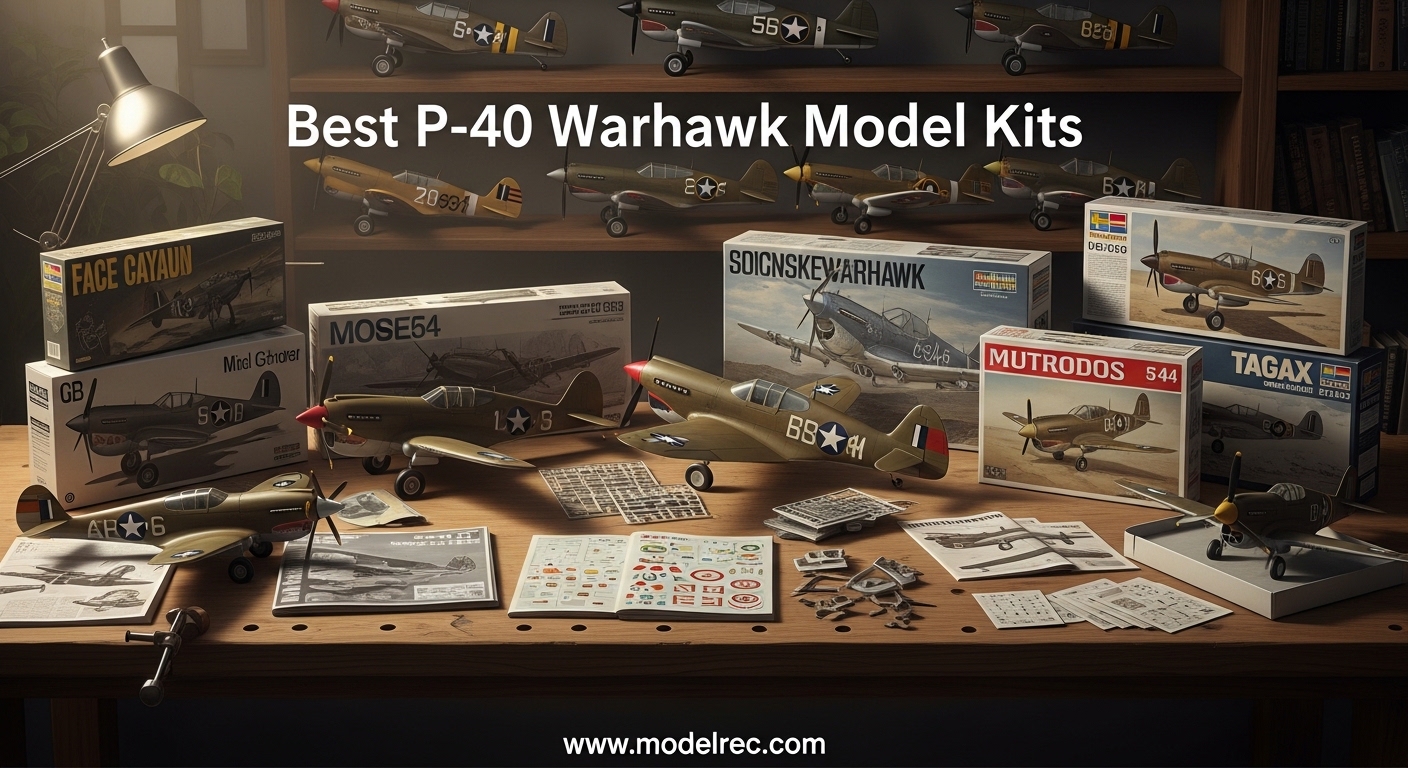
The Curtiss P-40 Warhawk remains one of the most iconic fighter aircraft of World War II, forever linked to the legendary Flying Tigers and their distinctive shark mouth nose art. For scale modelers, the P-40 offers something truly special: a distinctive profile that looks stunning on any shelf, multiple variants spanning early Tomahawks to late Warhawks, and some of the most dramatic paint schemes in aviation history.
I have built over two dozen P-40 models across different scales and manufacturers over the past 15 years. When fellow modelers ask for advice on which kit to buy, they want straight answers about fit, detail, and value. That is exactly what you will find in this guide to the best P-40 Warhawk model kits available in 2026.
Before we dive into specific recommendations, let us quickly clarify the variants. The P-40B and P-40C were originally called Tomahawks, featuring a more pointed nose with two machine guns. The P-40E Warhawk introduced the famous shark mouth intake with six guns and became the definitive version most people picture. Later P-40M and P-40N variants offered improvements but kept that classic profile. Your choice depends on which historical period or paint scheme appeals to you most.
Table of Contents
Top 3 Picks for P-40 Warhawk Model Kits (September 2026)
Here are my top three recommendations at different price points. These represent the best balance of detail, buildability, and value based on community consensus and my personal experience.

Hasegawa 1/48 P-40E Warhawk
- Rated best P-40E kit available
- Precise fuselage assembly fit
- Clean sharp details
- Two marking options included
- 109 detailed parts

Revell 1:48 P-40B Tiger Shark
- Excellent price under $30
- 3 marking schemes included
- Flying Tigers decals
- 61 parts with good detail
- Rotating propeller mechanism

Hasegawa 1:72 P-40N Warhawk
- Very affordable at $14.89
- Quality small-scale detail
- Good part fit
- Detailed for 1/72 scale
- Hasegawa reliability
Quick Overview: 10 Best P-40 Warhawk Model Kits (September 2026)
This comparison table covers all ten kits reviewed in this article. Use it to quickly compare scales, price ranges, and key features before reading the detailed reviews below.
| Product | Specifications | Action |
|---|---|---|
| Hasegawa 1/48 P-40E Warhawk |
|
Check Latest Price |
| Revell 1:48 P-40B Tiger Shark |
|
Check Latest Price |
 Trumpeter 1/32 P-40B Warhawk Trumpeter 1/32 P-40B Warhawk |
|
Check Latest Price |
 Hasegawa 1/32 P-40E Warhawk Hasegawa 1/32 P-40E Warhawk |
|
Check Latest Price |
 Academy 1/48 P-40N Warhawk Academy 1/48 P-40N Warhawk |
|
Check Latest Price |
 Eduard 1/48 Dual Combo P-40N Eduard 1/48 Dual Combo P-40N |
|
Check Latest Price |
 Academy P-40E Warhawk Academy P-40E Warhawk |
|
Check Latest Price |
| Hasegawa 1:72 P-40N Warhawk |
|
Check Latest Price |
 Premium Hobbies 1/72 P-40B Premium Hobbies 1/72 P-40B |
|
Check Latest Price |
 Guillow’s P-40 Laser Cut Guillow’s P-40 Laser Cut |
|
Check Latest Price |
1. Hasegawa 1/48 P-40E Warhawk – The Definitive Choice
Hasegawa 1/48 P-40E Warhawk
1/48 scale
109 parts
Two marking options
Rotating propeller
Option for 500 lb bomb or fuel tank
Pros
- Rated best P-40E kit on market
- Precise fuselage assembly fit
- No filler required with dry fitting
- Clean sharp details
- Two paint scheme options
- Authentic P-40E representation
Cons
- Discontinued - decals may be fragile
- Not for beginners
- Thick decals need Micro Sol/Set
- Requires rigging for antenna wires
I built my first Hasegawa P-40E back in 2012, and it remains one of my favorite builds. The fuselage halves went together with such precision that I barely needed any filler. When the FineScale Modeler forum members call this kit “worlds above Academy,” they are not exaggerating.
The cockpit detail is adequate out of the box, though serious modelers will want to add Eduard photo-etch seatbelts. I also recommend their canopy mask set since this kit has many navigation lights requiring careful painting. The wing root seam is tight if you dry fit properly before applying cement.
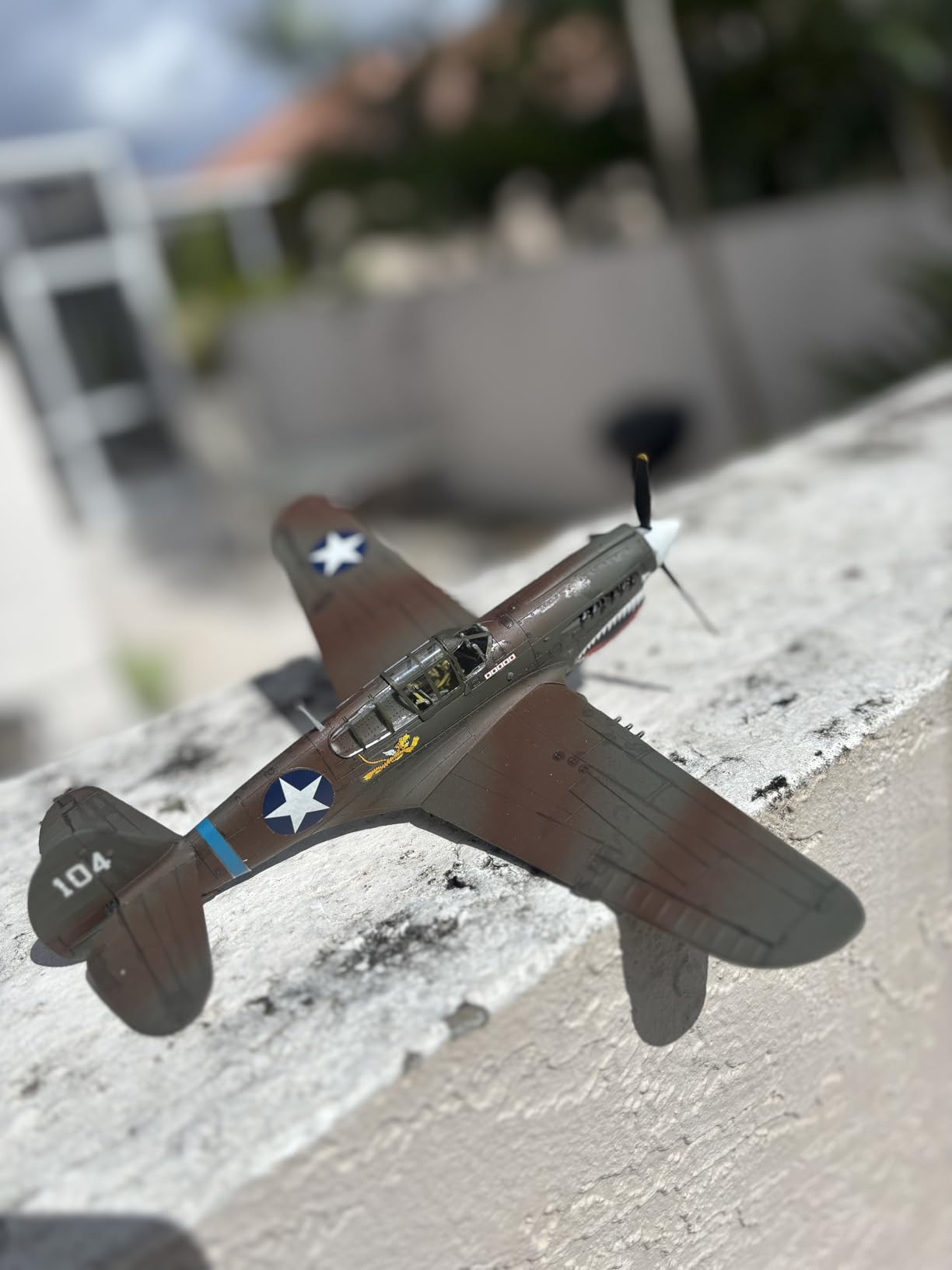
One thing to watch for: this kit has been discontinued, so older stock may have fragile decals. I learned this the hard way on my second build. Use Micro Sol and Micro Set, and apply decals in sections rather than all at once. The thick decals respond well to setting solutions if you are patient.
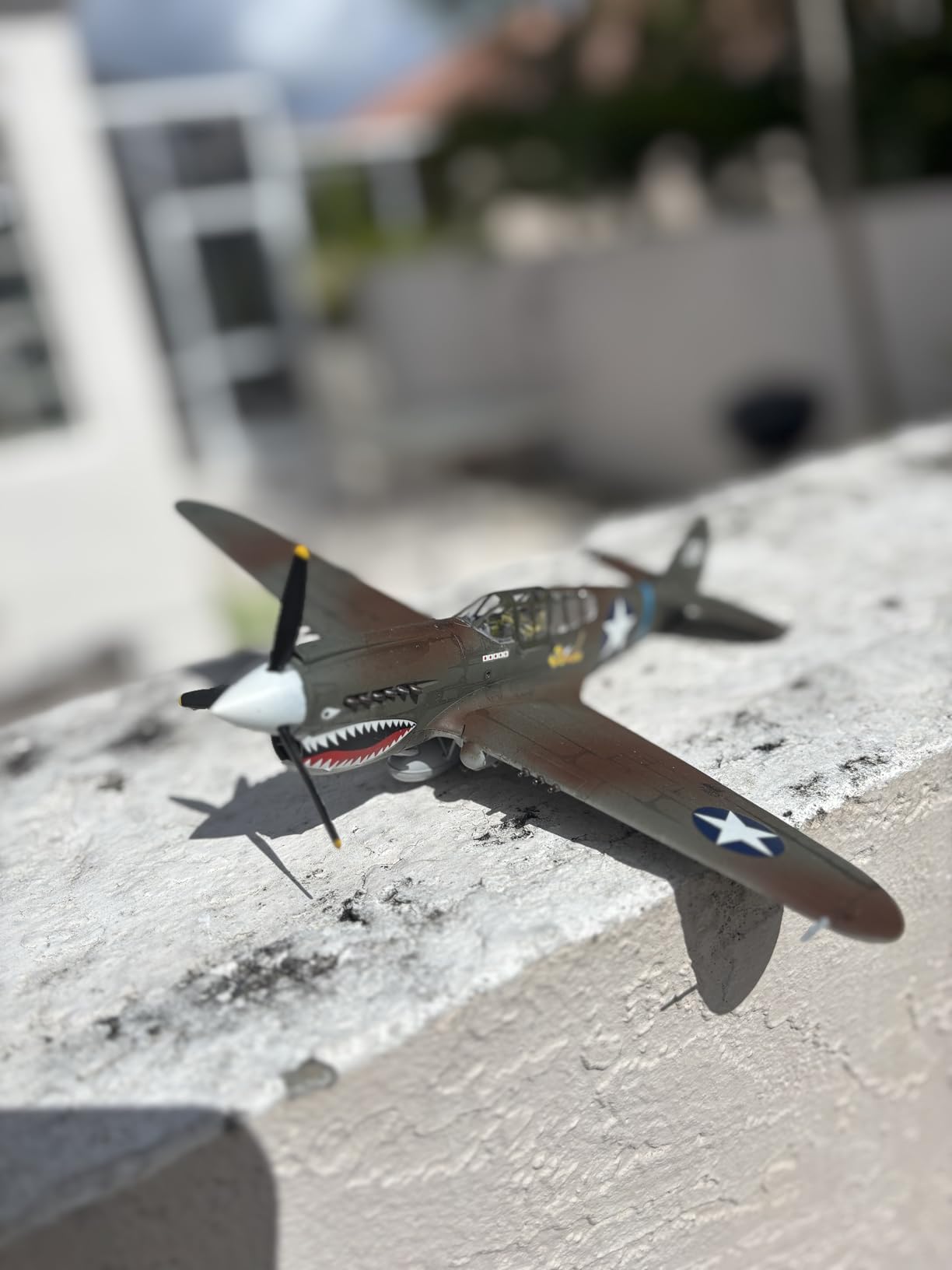
The kit includes markings for two aircraft, and you can install either a 500-pound bomb or auxiliary fuel tank under the fuselage. I prefer the fuel tank for most builds since it fills the empty space nicely. The rotating propeller mechanism works smoothly if you are careful during assembly.
Who Should Buy This Kit
This kit suits intermediate to advanced modelers who have experience with airbrush painting and decal application. If you want the most accurate P-40E in 1/48 scale and do not mind investing in aftermarket seatbelts, this is your best option. The fit quality makes it a pleasure to build despite the skill requirements.
Who Should Skip This Kit
Beginners should look elsewhere. The soft plastic requires careful handling, the seam lines on wing flaps demand patience to eliminate, and the minimal stencil decals mean you need good brush control for painting markings. The rigging for aerial antennae wires also adds complexity that newcomers may find frustrating.
2. Revell 1:48 P-40B Tiger Shark – Best Value Pick
Revell 1:48 P – 40B Tiger Shark Plastic Model Kit
1/48 scale
61 parts
Three marking schemes
Raised rivets and panel lines
Centerline drop tank
Pros
- Excellent price point under $30
- Clear unambiguous instructions
- Three different marking schemes
- Flying Tigers decals included
- Rotating propeller mechanism
- Stable landing gear
Cons
- Loose fits requiring putty
- Thin plastic challenges
- Large bead sight holes
- Wing flaps may fall out
- Three-piece canopy takes extra work
The Revell P-40B represents everything good about vintage Monogram tooling. This kit traces its lineage back decades but still holds up remarkably well. When Britmodeller forum members say the Monogram/Revell kits “still build up nicely,” they speak from experience.
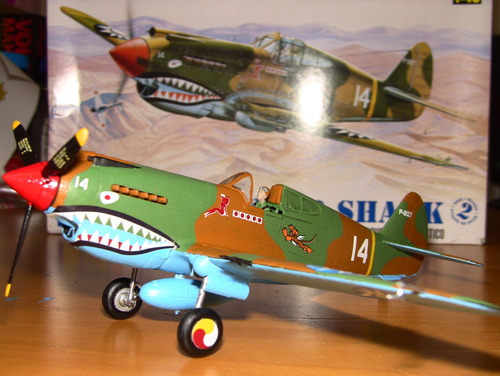
I built this kit last year specifically for the Flying Tigers markings, and the decals were exceptional. The shark mouth transferred perfectly without silvering, and the national markings laid down smoothly over the raised panel lines. The three marking options give you plenty of choice: Flying Tigers, RAF, or US Army Air Corps.
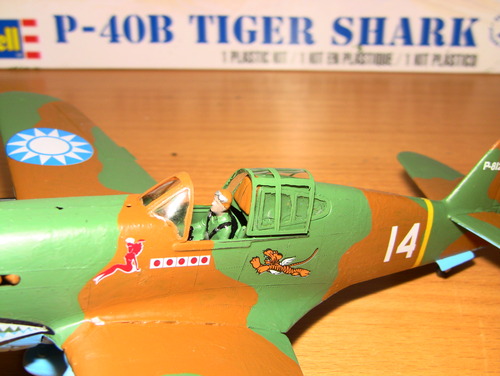
The 61 parts snap together logically, though you will need putty at the fuselage-to-wing joints. I recommend testing the wing flap hinge system before gluing. Mine stayed put, but some builders report flaps falling out of position. The three-piece canopy looks great when finished but requires careful fitting to avoid gaps.
The rotating propeller is a nice touch for display, though I usually glue mine static for durability. The centerline drop tank adds visual interest to the finished model. At around $30, this kit delivers exceptional value for anyone wanting an early P-40 variant.
Who Should Buy This Kit
Intermediate builders seeking an affordable entry into P-40 modeling will love this kit. If you want Flying Tigers markings without spending Hasegawa money, this is your answer. The raised panel lines actually help with washes for weathering, making this ideal for modelers learning advanced finishing techniques.
Who Should Skip This Kit
Perfectionists who hate sanding and filling should look at the Airfix P-40B instead. The fit issues around the fuselage and engine cowling require patience. The thin plastic in some areas can warp if you apply too much pressure during assembly. Pure beginners might find the putty work discouraging.
3. Trumpeter 1/32 P-40B Warhawk – Large Scale Excellence
Trumpeter 1/32 P40B Warhawk Aircraft (Tomahawk MkIIa)
1/32 scale
Hundreds of pieces
Photo-etched parts included
Markings for American and British
Tomahawk MkIIa version
Pros
- High detail for early P-40 variant
- Photo-etched parts add realism
- Good value at $56 for 1/32 scale
- Large scale presence
- Includes multiple marking options
Cons
- Only 1 left in stock often
- Glue and paint not included
- Large size requires more display space
- More complex assembly
Stepping up to 1/32 scale transforms the P-40 into a real showpiece. The Trumpeter P-40B offers detail that simply cannot fit in smaller scales. I built this kit over three weekends, and the result commands attention on any display shelf.
The photo-etched parts elevate this kit above typical injection-molded offerings. The brass fret includes delicate parts for the cockpit and exterior that add authentic texture. If you have never worked with photo-etch before, this kit provides a good introduction without overwhelming complexity.
Assembly proceeds logically with Trumpeter’s typically excellent engineering. The fit throughout impressed me, with minimal filler needed even on complex joints. The larger scale makes interior details visible, so take your time with the cockpit. I added some wiring behind the instrument panel for extra realism.
Who Should Buy This Kit
Experienced modelers seeking a centerpiece for their collection should consider this kit. If you have mastered 1/48 scale and want to showcase your skills with larger details, the Trumpeter P-40B delivers. The photo-etch parts make this ideal for anyone wanting to expand their techniques.
Who Should Skip This Kit
Beginners and those with limited display space should avoid 1/32 scale. The parts count and complexity can overwhelm newcomers. The wingspan exceeds 12 inches, so you need dedicated shelf space. Cost also increases with scale for paints and aftermarket accessories.
4. Hasegawa 1/32 P-40E Warhawk – New Tool Excellence
Hasegawa 1/32 Scale P-40E Warhawk Aircraft Plastic Model Building Kit #08879
1/32 scale
New tooling
Detailed cockpit
Pilot figure included
Drop tank and bomb parts
Pros
- Highly detailed cockpit
- Includes pilot figure
- Drop tank and bomb options
- Optional canopy sliding sections
- New tool quality
Cons
- Only 5 reviews available
- Higher price at $68.98
- Limited stock availability
Hasegawa’s new-tool 1/32 P-40E represents modern kit engineering at its finest. Unlike their older 1/48 tooling, this kit benefits from recent CAD design and molding technology. The difference shows in the crisp panel lines and precise fit.
The cockpit deserves special mention. Hasegawa included detail that rivals aftermarket resin sets, with textured side walls, accurate instrument panels, and proper seat contours. The included pilot figure fits naturally in the seat, adding life to the finished model.
I particularly appreciate the ordnance options. You can configure this P-40E with the centerline drop tank or a 500-pound bomb, giving display flexibility. The sliding canopy sections can be posed open or closed, and the clear parts are distortion-free.
Who Should Buy This Kit
Modelers seeking the best modern P-40E in large scale should choose this kit. If you want contemporary tooling with no compromises on detail, Hasegawa delivers. The included pilot figure saves money on aftermarket accessories.
Who Should Skip This Kit
Budget-conscious builders may prefer the Trumpeter 1/32 option. Availability can also be spotty, so patience may be required to find stock. Those wanting purely vintage charm might prefer older toolings for their character.
5. Academy 1/48 P-40N Warhawk – Battle of Imphal Edition
Academy 1/48 US Army Air Corps P-40N Warhawk Battle of Imphal Plastic Model 12341
1/48 scale
Battle of Imphal theme
Three marking options
Precise panel lines and rivets
Import from Korea
Pros
- Precise molds with accurate panel lines
- Accurately detailed cockpit
- Three marking options including Australian
- Easier assembly than Hasegawa
- Good for beginners
Cons
- Typical Academy quality not premium
- Cockpit detail somewhat basic
- Instructions in Korean and English
- Not as refined as Tamiya
Academy’s P-40N uses molds from the defunct Möwe manufacturer, giving it a different character than their in-house designs. I built this kit for the Battle of Imphal markings, which represent an often-overlooked Pacific theater campaign.
The panel line engraving impressed me for this price point. Academy delivered crisp, consistent lines that take washes well. The rivet detail is subtle but visible under good lighting. This is the kind of surface detail that makes weathering enjoyable.
The three marking options include two US Army Air Force schemes and one Royal Australian Air Force variant. I chose the Australian markings for something different from the usual Flying Tigers builds. The decals behaved well with Micro Sol setting solution.
Who Should Buy This Kit
Beginners wanting a 1/48 P-40 without Hasegawa complexity should consider this kit. The easier assembly and lower parts count make this accessible. If you want P-40N markings specifically, this kit offers options not found elsewhere.
Who Should Skip This Kit
Advanced modelers seeking the ultimate P-40N should wait for Eduard or Special Hobby releases. The cockpit detail lags behind modern standards, and some ejector pin marks require cleanup. Those wanting the most accurate proportions should verify measurements against references.
6. Eduard 1/48 Dual Combo Royal Class P-40N – Premium Experience
Eduard 1/48 Dual Combo Royal Class P-40N Warhawk Plastic Model EDUR0025 (Airplane)
1/48 scale
Dual Combo - 2 complete kits
Resin parts included
Photo-etched detail parts
Paint masks included
Pros
- Premium Eduard Royal Class quality
- Two complete P-40N kits in box
- 12 decal options for variety
- Resin parts for superior detail
- Photo-etched parts for fine details
- Paint masks for precise painting
Cons
- High price at $124.79
- Requires resin and photo-etch experience
- Not for beginners
- Additional tools required
Eduard’s Royal Class Dual Combo represents the pinnacle of P-40 modeling. When YouTube reviewers call this “the only P-40 you’ll ever need,” they capture the essence of this release. You receive two complete kits plus enough aftermarket parts to build museum-quality models.
The resin parts add detail impossible to achieve in injection molding. Cockpit sidewalls, wheels, and exhaust stacks feature authentic texture and depth. The photo-etched fret includes seatbelts, instrument panels, and exterior details that transform the finished appearance.
The paint masks alone justify part of the premium price. These vinyl masks fit perfectly over canopies and wheels, letting you paint with confidence. I have always struggled with freehand canopy framing until I started using these masks.
Who Should Buy This Kit
Serious modelers seeking the ultimate P-40N should invest in this kit. If you have experience with resin and photo-etch, this Dual Combo offers exceptional value compared to buying kits and accessories separately. The 12 marking options provide endless possibilities.
Who Should Skip This Kit
Beginners and casual builders should avoid this kit entirely. The resin and photo-etch components require specialized tools and techniques. The $125 price point also demands commitment. Start with simpler kits before attempting this level.
7. Academy P-40E Warhawk – Entry Level Option
Academy P-40E Warhawk Model Kit
1/48 scale
Fully engraved panel lines
Highly detailed cockpit
Optional position canopy
Heavy plastic construction
Pros
- Great price at $18.95
- Heavy plastic for durability
- Fully engraved panel lines
- Multiple painting configurations
- Sturdy when completed
Cons
- Scale confusion reported
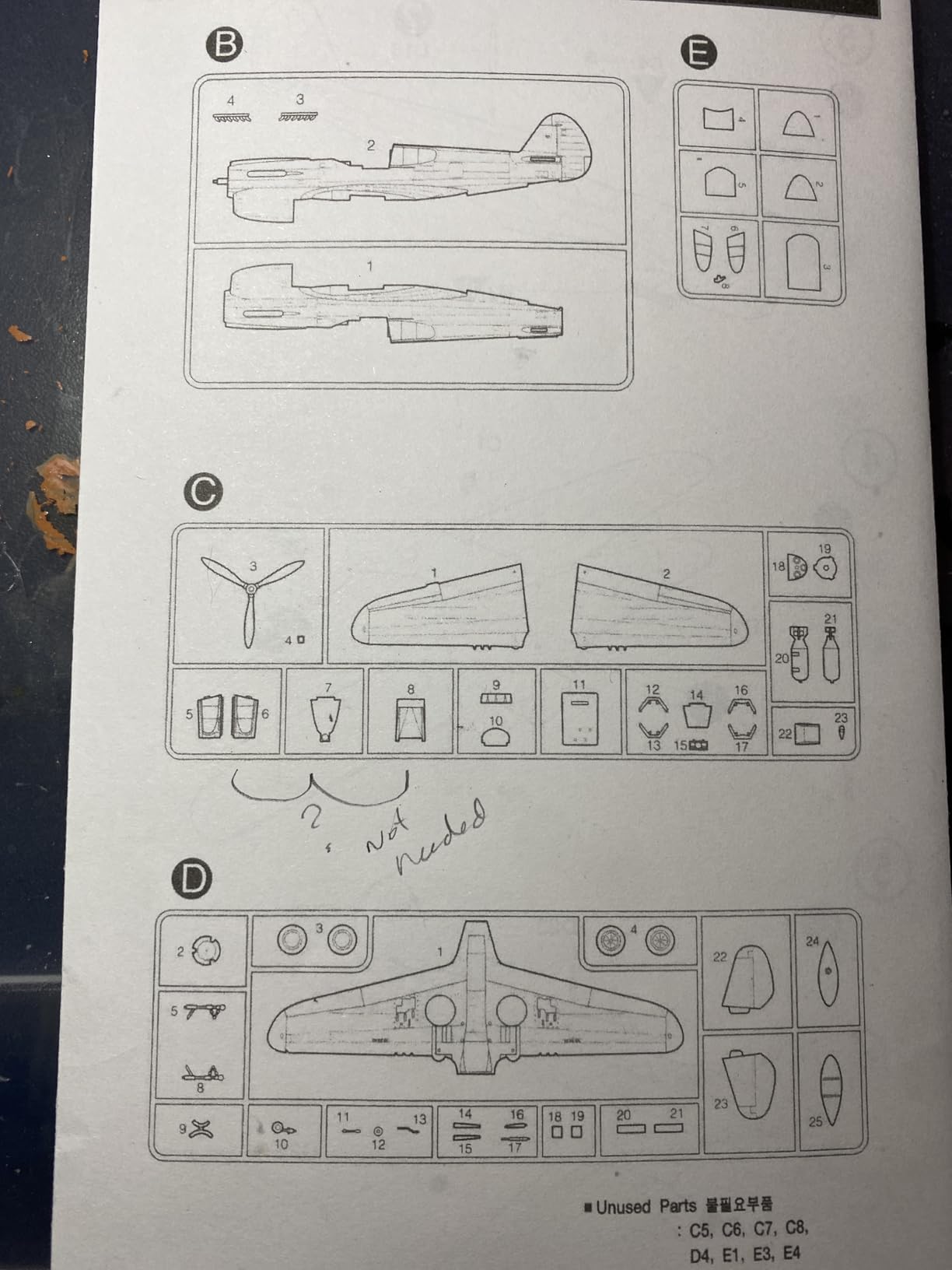
- Minimal directions
- Extra parts not identified
- Tiger head decals problematic
- Small overall size
This Academy kit occupies an interesting position in the P-40 market. It offers engraved panel lines and decent detail at a budget price, making it accessible to newcomers. However, forum discussions often note the canopy shape issues compared to Hasegawa accuracy.
I built this kit with my nephew last summer, and the heavy plastic proved forgiving of ham-fisted assembly. The thick sprues resist breakage better than delicate Hasegawa parts. For younger builders or those prone to dropping things, this durability matters.
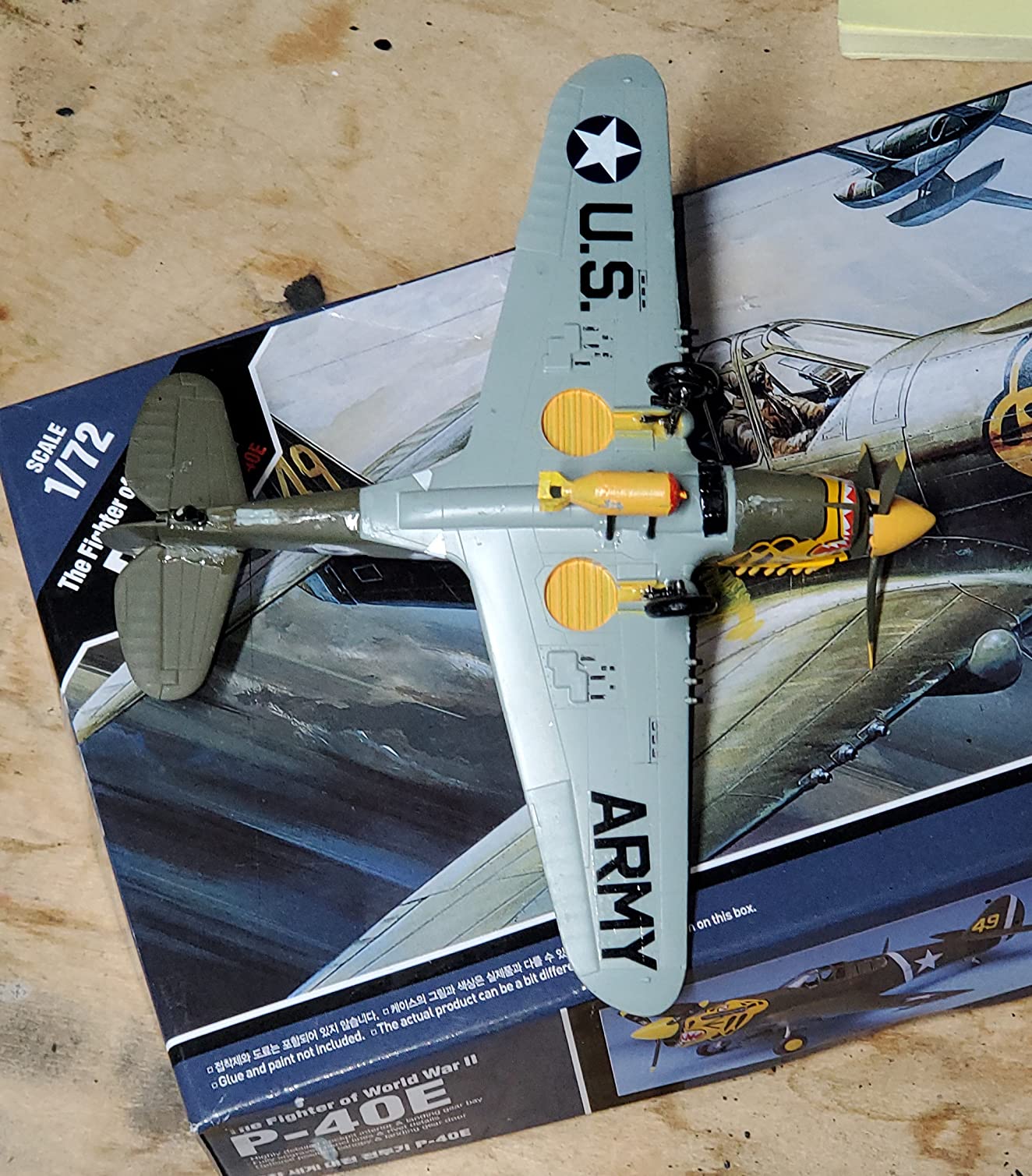
The cockpit detail punches above its weight class. Academy included sidewall texture, a decent seat, and an instrument panel that responds well to dry-brushing. The optional position canopy and landing gear doors add display flexibility.
Be aware of the scale confusion some buyers report. While marketed as 1/48, a few reviewers claim it appears closer to 1/72. In my measurement, it is 1/48, but the compact design perhaps creates this impression. The tiger head decals require patience to apply without tearing.
Who Should Buy This Kit
Beginners, younger builders, and those wanting a sturdy practice kit should consider this Academy offering. The heavy plastic construction survives learning-curve mistakes. The price makes this a low-risk entry into P-40 modeling.
Who Should Skip This Kit
Accuracy-focused modelers should look at Hasegawa or Eduard instead. The forum consensus notes Academy’s tall canopy and bulbous spinner as shape issues. Those wanting the definitive P-40E should spend more on better-engineered kits.
8. Hasegawa 1:72 P-40N Warhawk – Small Scale Classic
Hasegawa 1:72 Scale P-40N Warhawk Model Kit
1/72 scale
Compact size
Good part fit
Detailed for scale
Hasegawa reliability
Pros
- Very affordable at $14.89
- Quality small-scale detail
- Good fitting parts
- Hasegawa reliability
- Compact display footprint
Cons
- Parts are small and challenging
- Requires paints and glues
- 1/72 scale limitations
Sometimes smaller is better. The Hasegawa 1/72 P-40N delivers satisfying detail in a compact package that fits anywhere. I keep one of these on my desk at work, and the small scale actually helps appreciate the overall proportions.
Despite the reduced size, Hasegawa maintained their standards for fit and detail. The parts go together precisely, with no gaps at wing roots or fuselage seams. The molding is crisp enough to show panel lines under normal viewing distance.
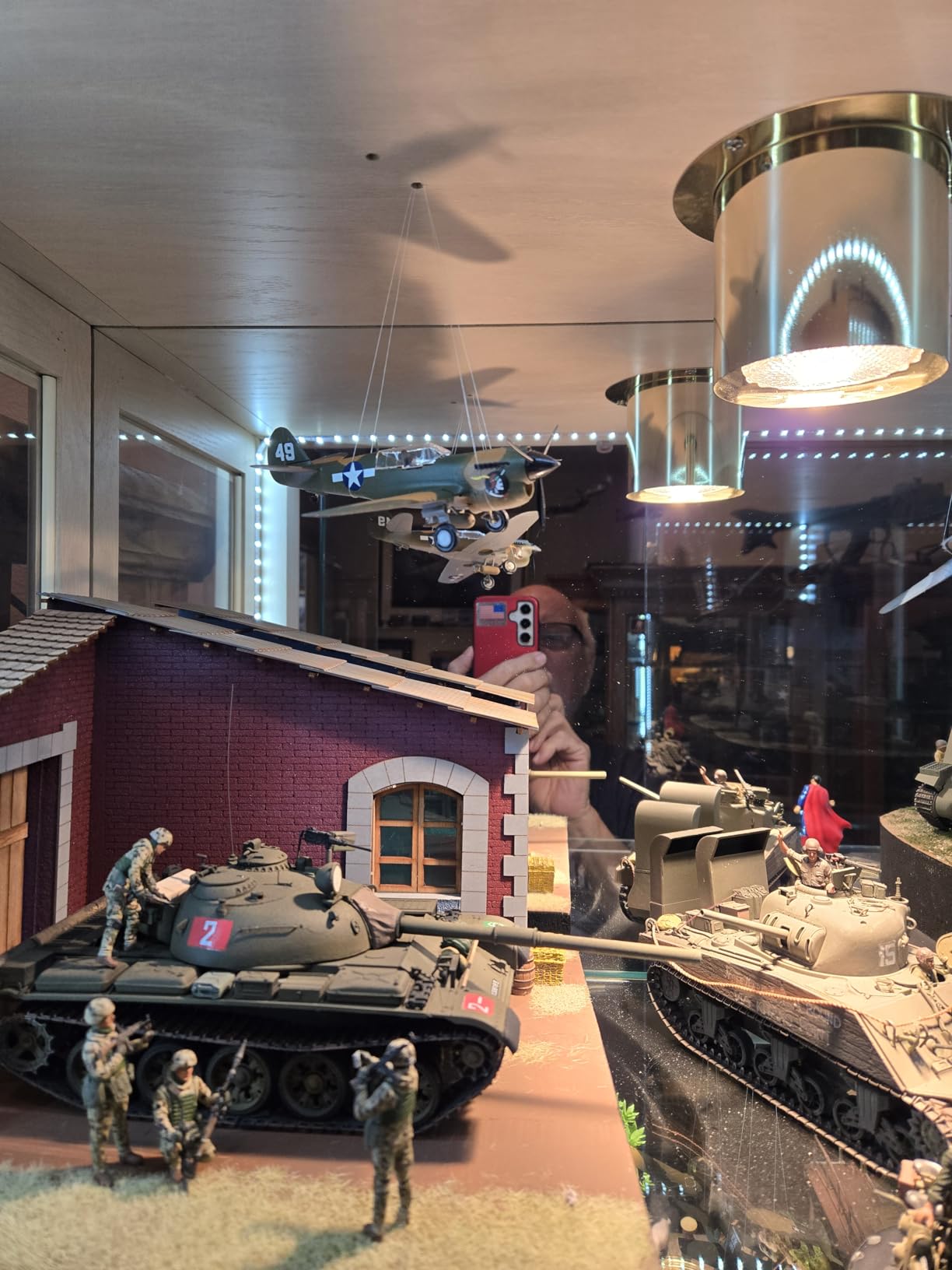
This kit suits collectors building multi-aircraft displays. You can build an entire squadron of P-40s without consuming shelf space. The low price also helps when buying multiples for diorama projects.
Who Should Buy This Kit
Collectors with limited display space should strongly consider 1/72 scale. If you want multiple P-40 variants without breaking the bank, this Hasegawa kit delivers. The small parts challenge advanced modelers who enjoy precision work.
Who Should Skip This Kit
Those with aging eyes or large hands may struggle with 1/72 parts. The small scale limits interior detail visibility. If you want to showcase cockpit work, choose 1/48 or 1/32 instead.
9. Premium Hobbies P-40B Pearl Harbor 1:72 – Budget Small Scale
Premium Hobbies P-40B Pearl Harbor 1:72 Plastic Model Airplane Kit 135V
1/72 scale
Pearl Harbor theme
2 sets of decals
6 inch wingspan
Highly detailed plastic parts
Pros
- Great value at $15.99
- Fun build for teenagers
- 2 decal sets included
- Good for beginners
- Over 100 positive reviews
Cons
- Smaller than some expect
- Flimsy propellers and wheels
- Decals are very small
- Tiny decals difficult to apply
Premium Hobbies offers an alternative entry point for 1/72 P-40 modeling. The Pearl Harbor theme commemorates the December 7, 1941 attack where P-40s attempted to defend against Japanese aircraft. This historical connection adds interest to the build.
The two included decal sets give you options without extra purchases. I found the plastic quality acceptable for the price, though some small parts like propellers require careful handling. The six-inch wingspan suits display cases or desk arrangements.
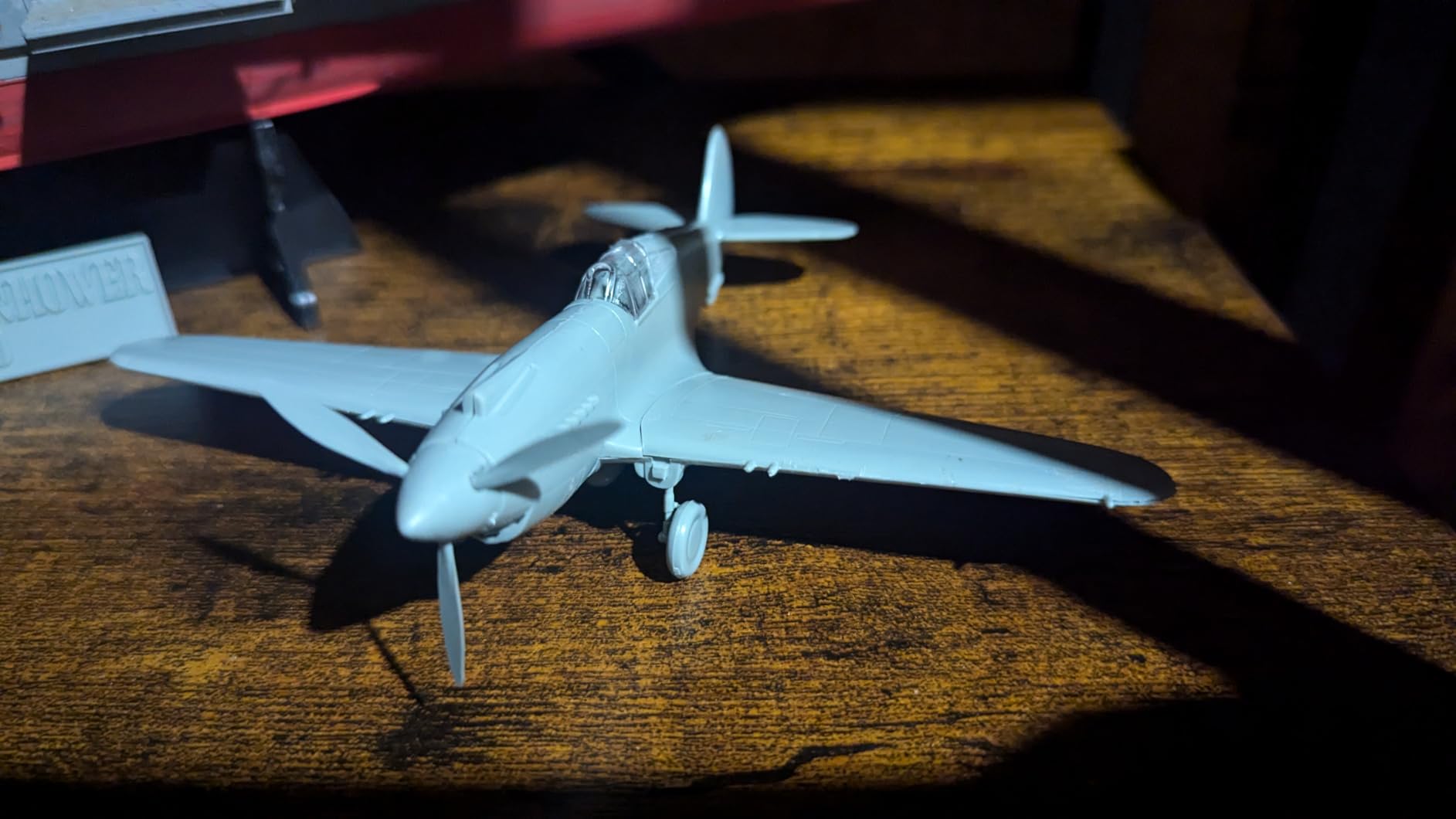
Over 100 reviews on Amazon suggest this kit satisfies many buyers. The low price point attracts newcomers testing their interest in aircraft modeling. The Pearl Harbor theme also appeals to history teachers building classroom displays.
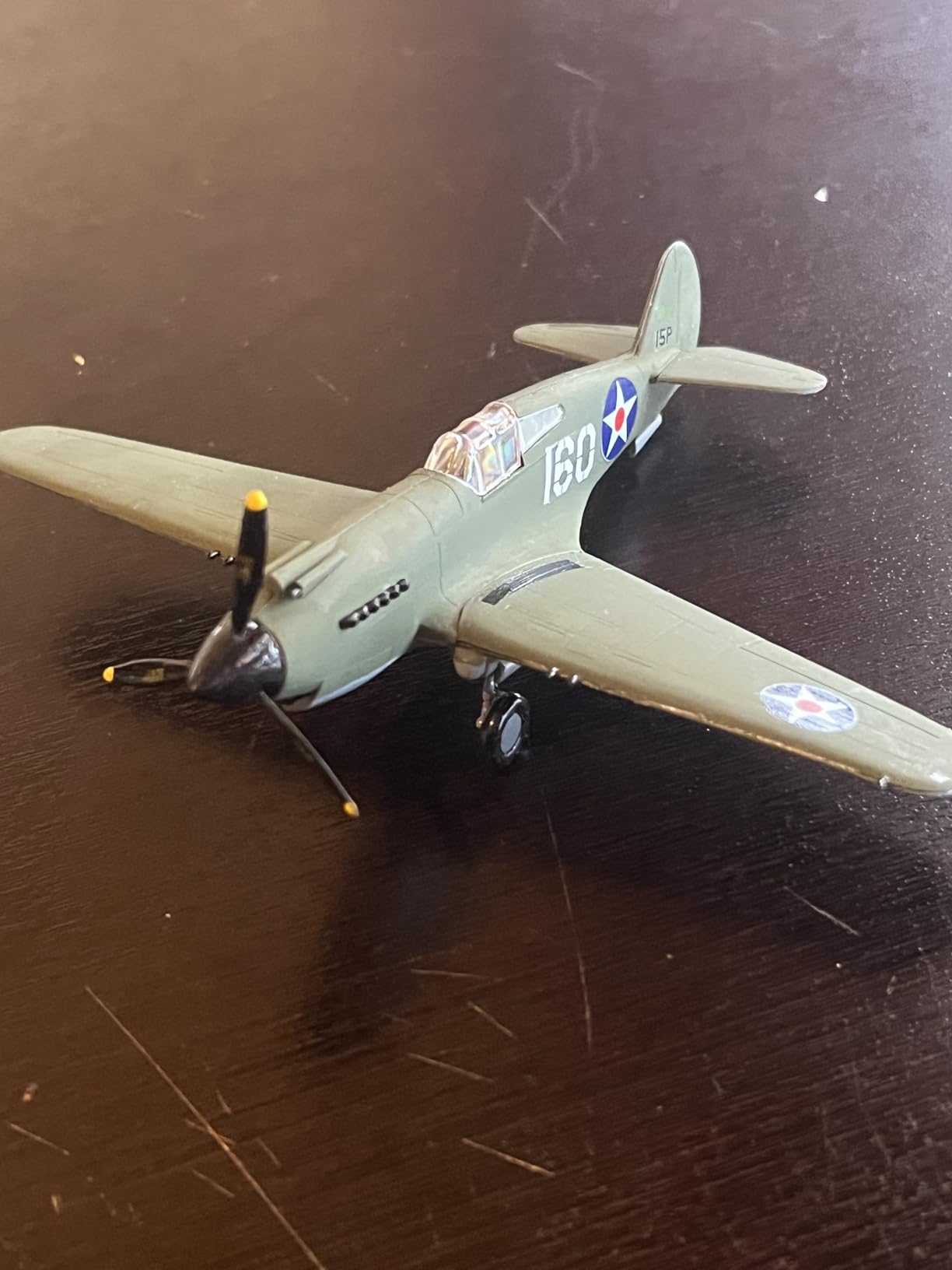
Who Should Buy This Kit
Beginners wanting an affordable 1/72 P-40 should consider this option. The Pearl Harbor markings suit those interested in early Pacific War history. Teenagers and students appreciate the low cost and manageable complexity.
Who Should Skip This Kit
Detail-oriented modelers may find the small parts frustrating. The flimsy propellers and wheels challenge beginners despite the kit’s beginner marketing. Those wanting definitive accuracy should save for Hasegawa or Special Hobby.
10. Guillow’s P-40 Warhawk Laser Cut – Balsa Wood Classic
Guillow’s P-40 Warhawk Model Kit – 28 in Laser Cut Balsa Flying Tiger
28 inch wingspan
Balsa wood construction
Laser cut parts
Can fly or display
Made in USA
Pros
- Precision laser cut balsa parts
- Can build for display or RC conversion
- Made in USA quality
- 28 inch wingspan presence
- Near perfect laser cutting
- Good for all skill levels
Cons
- Some laser cutting leaves darkened wood
- 2-bladed prop not scale 3-blade
- Some parts need trimming
- Wood quality concerns reported
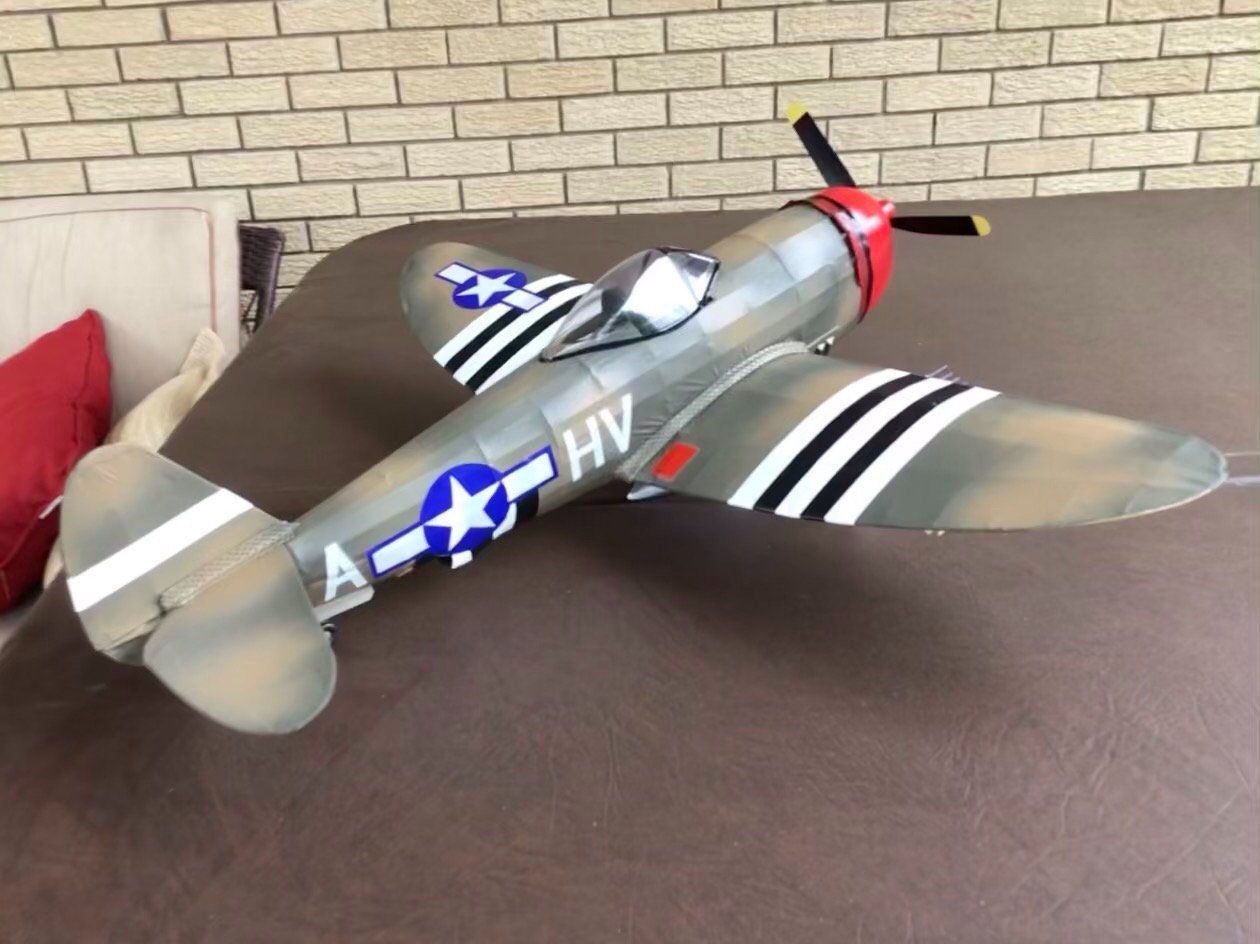
Guillow’s represents a completely different approach to P-40 modeling. This balsa wood kit recalls the classic flying models of the 1940s and 1950s, updated with modern laser cutting technology. The 28-inch wingspan creates a genuine presence.
The laser-cut parts amazed me with their precision. Unlike the old die-cut sheets that required sanding rough edges, these pieces lift cleanly from the sheets. The accuracy makes assembly faster and more enjoyable than vintage kits.
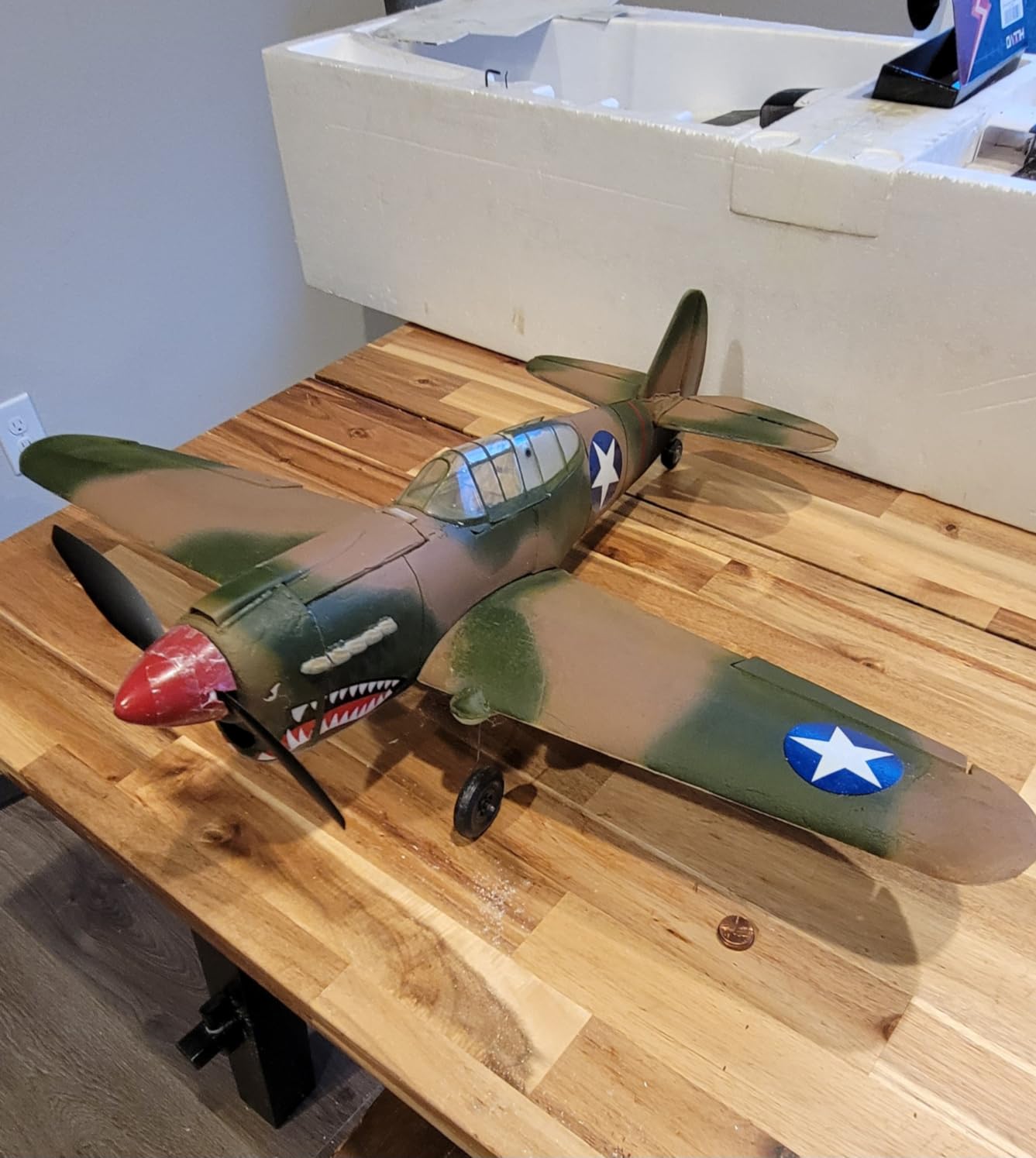
You have options with this kit. Build it as a static display model, configure it for rubber-powered free flight, or convert to electric RC. I built mine as a display piece with the included plastic canopy and wheel set, but the flying potential tempts me to build another.
The made-in-USA origin appeals to many buyers. The nostalgic factor cannot be underestimated either. Older builders remember these kits from childhood, and building one connects to that heritage.
Who Should Buy This Kit
Anyone seeking variety from plastic kits should try this balsa option. If you want a large display piece or have interest in flying models, Guillow’s delivers. The nostalgic appeal suits older builders reconnecting with the hobby.
Who Should Skip This Kit
Pure plastic kit builders may not enjoy the wood construction process. The kit requires different skills and tools than injection-molded kits. Those wanting instant gratification should stick to pre-built models.
P-40 Warhawk Buying Guide: What You Need to Know?
Choosing the right P-40 kit involves several factors beyond just brand reputation. After building models for 15 years and consulting countless forum discussions, here is what actually matters.
Scale Selection Guide
The scale you choose determines detail level, display space requirements, and cost. Here is how to decide:
1/72 scale offers the most compact option. These kits fit anywhere and cost less, making them ideal for collectors wanting multiple variants. The smaller parts require good eyesight and fine motor control. Detail is inherently limited by size, though modern toolings like Special Hobby push the boundaries.
1/48 scale represents the sweet spot for most modelers. Detail is abundant enough for satisfying cockpit and wheel well work, while the size remains manageable. This is also the scale with the most aftermarket support for decals and accessories. The Hasegawa and Eduard kits reviewed above exemplify what 1/48 can achieve.
1/32 scale creates display pieces. The larger parts show every technique and allow extensive scratchbuilding. Cost and space requirements increase significantly. Reserve this scale for favorite aircraft you want to showcase.
Skill Level Considerations
Be honest about your experience level. Beginners should start with the Revell P-40B or Academy kits. These forgiving toolings teach fundamentals without frustrating complexity. Intermediate builders can tackle Hasegawa and Trumpeter kits. Advanced modelers will appreciate Eduard Royal Class and short-run offerings from Special Hobby.
Variant Selection Guide
Your historical interest should guide variant choice. The P-40B/C Tomahawks suit Flying Tigers and early war builders. The P-40E Warhawk represents the iconic shark mouth version most people recognize. The P-40M and P-40N offer Pacific theater and late-war options. Cross-kitting Hasegawa E and N kits to create an M variant is a common advanced technique mentioned in forum discussions.
Budget Planning
Remember that the kit price is just the start. Paints, glue, brushes or airbrush equipment, and finishing supplies add cost. Premium kits like Eduard Royal Class include many accessories, reducing additional purchases. Budget kits like Revell and Academy require more aftermarket spending to achieve equivalent detail.
Frequently Asked Questions
How many P-40 are still flying?
Approximately 20 to 25 P-40 Warhawks remain airworthy worldwide, with most located in the United States. These surviving aircraft participate in airshows and commemorative flights, keeping the legend alive for new generations.
What were the P-40’s weaknesses?
The P-40 had several limitations compared to contemporary fighters. It lacked a two-stage supercharger, limiting high-altitude performance. The Allison engine provided less power than Merlin or inline engines at altitude. The aircraft was also less maneuverable than the Spitfire or Japanese Zero at low speeds.
Is the P-40 better than the Spitfire?
The P-40 and Spitfire served different purposes. The Spitfire excelled as an interceptor with superior maneuverability and high-altitude performance. The P-40 offered greater range, rugged construction, and better dive speed. In the Pacific theater, the P-40’s strengths matched combat requirements effectively.
How many kills did the P-40 have in WWII?
The P-40 achieved approximately 1,500 aerial victories across all theaters. The American Volunteer Group, known as the Flying Tigers, recorded 296 confirmed kills in just seven months of combat over China and Burma while losing only 14 P-40s to enemy action.
Conclusion: Choosing Your P-40 Warhawk Model Kit
The best P-40 Warhawk model kit for you depends on your skill level, budget, and display space. For most modelers, the Hasegawa 1/48 P-40E offers the ideal balance of accuracy, detail, and buildability. Budget-conscious builders should grab the Revell P-40B for under $30. Those seeking the ultimate build should invest in the Eduard Royal Class Dual Combo.
I have built P-40s in every scale and from most manufacturers. Each kit teaches something new about this legendary aircraft. The shark mouth paint schemes never get old, and the historical significance adds meaning to every completed build. Start with a kit matching your experience level, take your time with the cockpit, and enjoy creating your piece of aviation history.
Happy modeling in 2026, and may your P-40 builds bring you the same satisfaction mine have given me over the years.