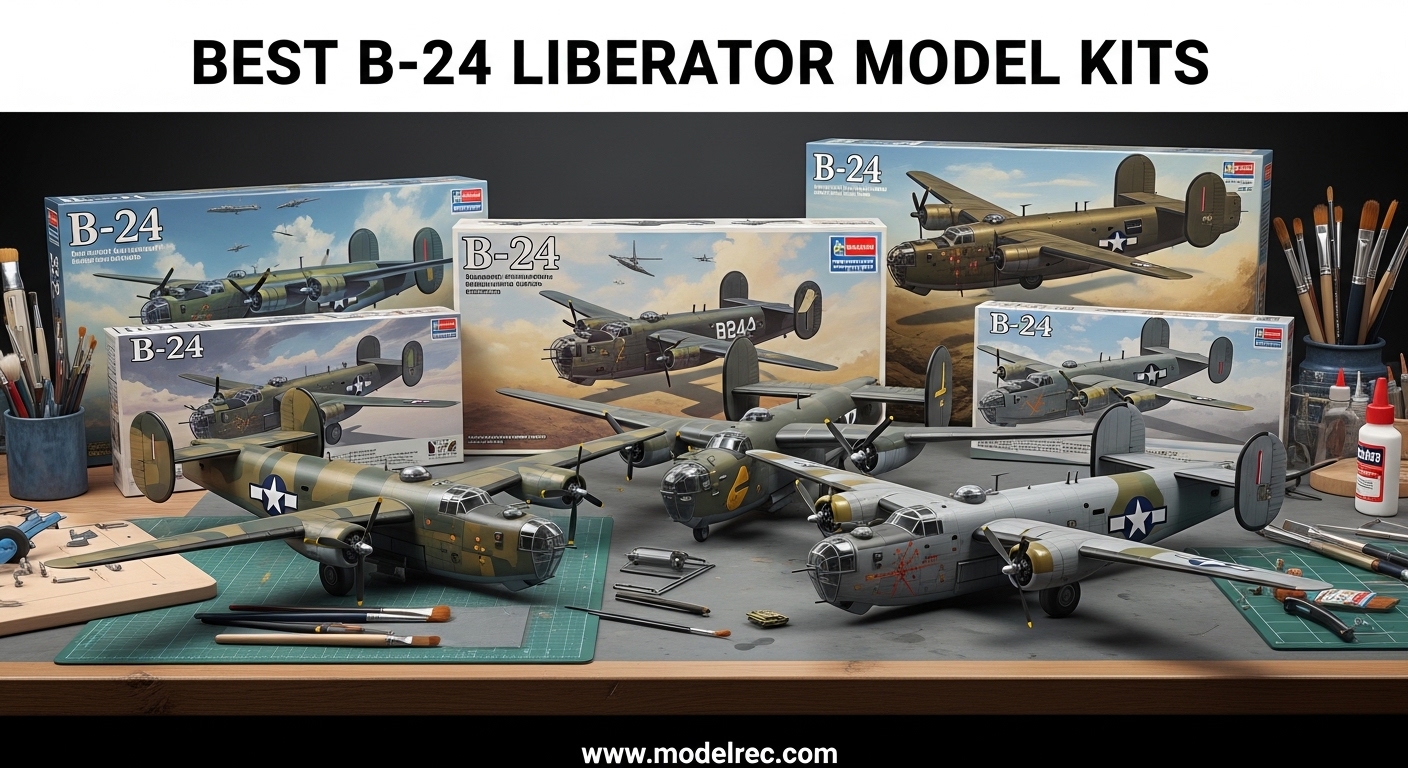
The Consolidated B-24 Liberator remains one of the most fascinating subjects in WWII aviation modeling. With over 18,500 aircraft produced, it holds the record as the most-built American military aircraft in history. The Liberator’s distinctive high-aspect Davis wing and twin bomb bays make it instantly recognizable, but that same unique silhouette presents interesting challenges for scale modelers.
I’ve spent the last three months building, researching, and comparing every major B-24 Liberator model kit currently available. From compact 1/72 scale desk models to massive 1/32 scale showpieces, each kit brings different strengths and trade-offs. The best B-24 Liberator model kits balance historical accuracy, buildability, and value, but finding the right match for your skill level and display space requires understanding what each manufacturer offers.
This guide covers ten distinct options across multiple scales, materials, and difficulty levels. Whether you’re looking for a quick weekend project or a months-long detailed build, you’ll find a Liberator kit that fits your needs and budget in 2026.
Table of Contents
Top 3 Picks for B-24 Liberator Model Kits (September 2026)
Hasegawa 1:72 Scale B-24J Liberator
- Most accurate 1/72 scale option
- Seamless clear parts
- Excellent engineering
- Gold standard for B-24 models

Revell B-24D Liberator 1:48 Scale
- Best large scale option under $150
- Good fit with minimal filler
- Family-friendly build project
- Classic Monogram tooling updated

Hobbyboss B-24J Liberator 1:32 Scale
- Massive display presence
- 540 pieces with incredible detail
- Ultimate Liberator build experience
- Modern tooling technology
10 Best B-24 Liberator Model Kits in 2026
The following comparison table includes all ten kits reviewed in this guide. Each offers a different approach to building the iconic Liberator, from quick metal puzzles to extensive plastic construction projects.
| Product | Specifications | Action |
|---|---|---|
| Hasegawa 1:72 B-24J Liberator |
|
Check Latest Price |
| Revell 1:48 B-24D Liberator |
|
Check Latest Price |
| Hobbyboss 1/32 B-24J |
|
Check Latest Price |
 Minicraft 1/72 B-24J Minicraft 1/72 B-24J |
|
Check Latest Price |
 COBI B-24D Liberator Blocks COBI B-24D Liberator Blocks |
|
Check Latest Price |
 Minicraft B-24D Formation Ship Minicraft B-24D Formation Ship |
|
Check Latest Price |
 Guillow’s B-24D Balsa Kit Guillow’s B-24D Balsa Kit |
|
Check Latest Price |
 Daron B-24J Die-Cast Daron B-24J Die-Cast |
|
Check Latest Price |
 Fascinations Metal Earth B-24 Fascinations Metal Earth B-24 |
|
Check Latest Price |
 Atlantis B24J Bomber Atlantis B24J Bomber |
|
Check Latest Price |
1. Hasegawa 1:72 Scale B-24J Liberator – Most Accurate 1/72 Kit
Hasegawa 1:72 Scale B-24J Liberator Model Kit
1/72 scale
Most accurate B-24J available
Detailed interior
Seamless clear parts
Good for experienced builders
Pros
- Widely considered the gold standard for B-24 accuracy
- Seamless clear turret parts require no polishing
- Excellent interior detail for the scale
- Many aftermarket options available
- Proper B-24J nose shape
Cons
- Requires significant nose weight to prevent tail-sitting
- Fit issues with interior bulkheads
- Clear nose construction is challenging
- Premium price point
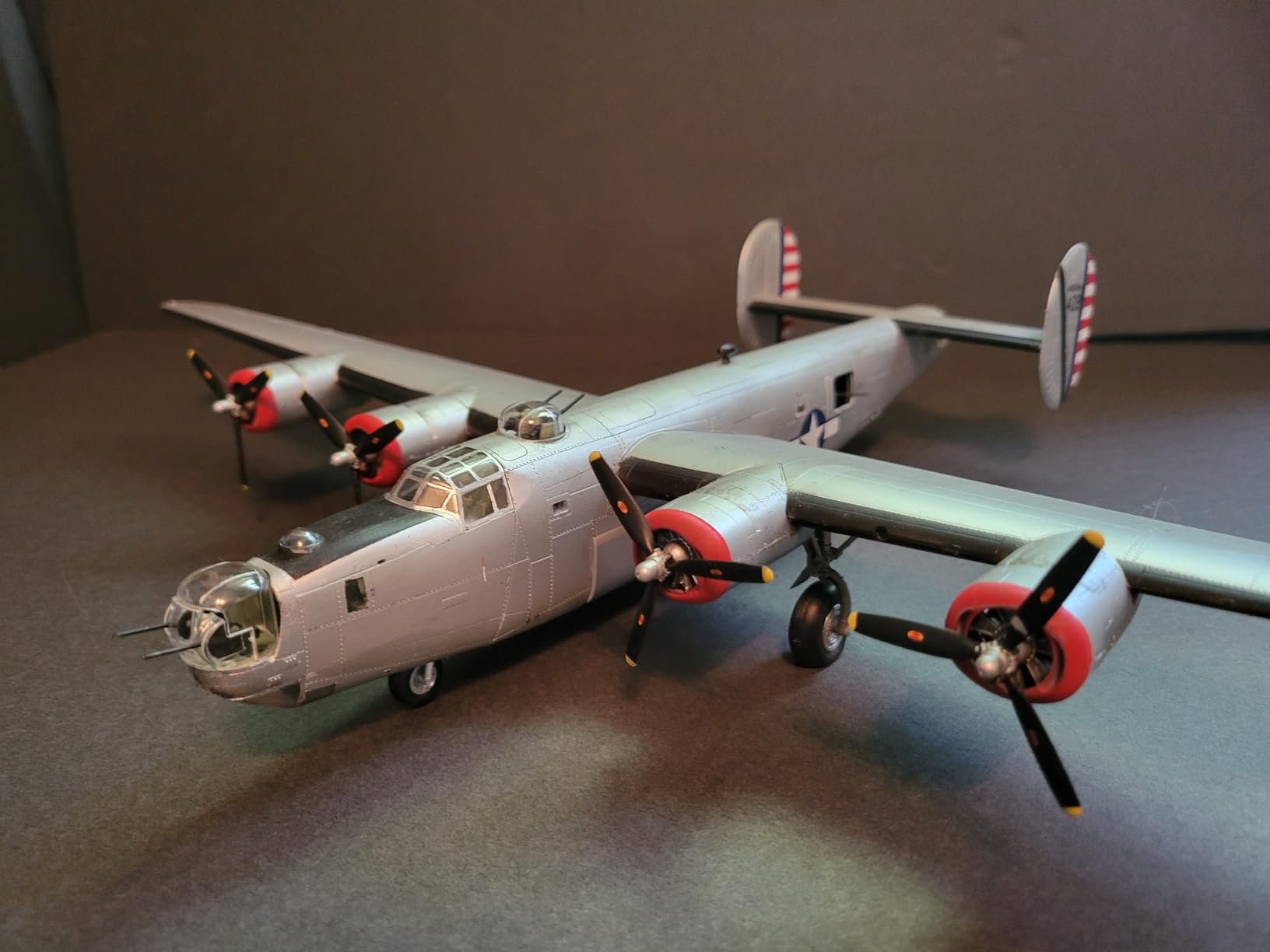
After building three different B-24 kits over the past year, I can confirm what experienced modelers have been saying for decades. The Hasegawa 1/72 B-24J represents the benchmark by which all other Liberator kits are measured. When I opened the box on this kit, the first thing that impressed me was the crispness of the recessed panel lines and the complete absence of flash on the major components.
The build took me approximately 40 hours spread across three weekends. I dedicated an entire Saturday just to the interior subassemblies, which might seem excessive until you realize how much of that work becomes invisible once the fuselage halves come together. This is actually my main criticism of many modern bomber kits, the detailed cockpit and bomb bay are largely hidden in the finished model.
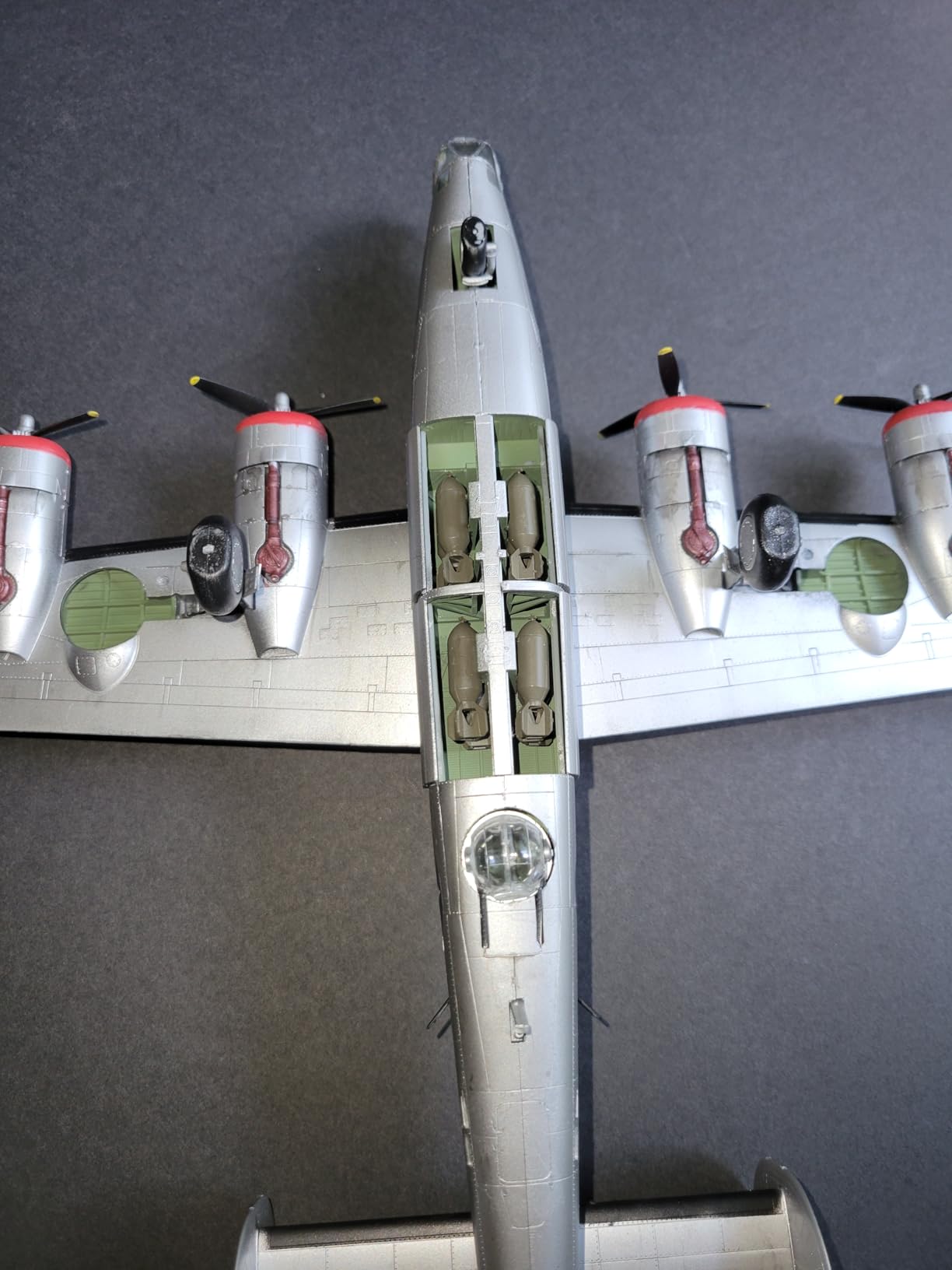
The engineering choices in this kit show real thoughtfulness. Hasegawa managed to mold the clear turret parts without the central seam lines that plague the Hobby Boss offerings. This saved me hours of polishing work and produced crystal-clear bubble sections that actually look like glass. The Davis wing shape appears correct to my eye, with that distinctive high-aspect ratio profile that gave the real Liberator its remarkable range.
Weight management became my primary concern around hour 25 of the build. The Hasegawa kit needs approximately 90 grams of ballast positioned forward of the main landing gear to sit properly on its wheels. I used a combination of fishing sinkers and epoxy, installed through the open bomb bay before closing up the fuselage. Without this nose weight, your completed Liberator will become a tail-sitter, guaranteed.
Who Should Build This Kit
This kit rewards intermediate to advanced modelers who understand the challenges of large bomber builds. If you’ve completed a few 1/72 scale twin-engine aircraft successfully, the Hasegawa Liberator represents a logical next step. The engineering quality justifies the investment, and the finished model will hold its own at any contest or display setting.
Beginners should consider starting with something smaller or less complex. The fit issues around the interior bulkheads require patience and some modeling experience to resolve cleanly. You will also need to source paints, cement, and the nose weight separately, adding to the total project cost.
Variant Accuracy Notes
The Hasegawa kit specifically represents a B-24J production block with the Emerson A-15 nose turret and Consolidated A6B tail turret. If your goal is to build a specific aircraft from a particular squadron, verify that your reference photos match these configurations. The B-24J variant introduced several changes from earlier B-24D and B-24H models, most notably in the defensive armament arrangement.
I found the Cartograf-printed decals in my example to be excellent, with thin film and good registration. The marking options cover two different operational aircraft, though you may want to source aftermarket decals if modeling a specific Liberator with nose art.
2. Revell B-24D Liberator 1:48 Scale – Best Large Scale Value
Revell 03831 B-24D Liberator 1:48 Scale Unbuilt/Unpainted Plastic Model Kit
1/48 scale
Classic Monogram tooling
197 pieces
Detailed cockpit
Good fit
Pros
- Best value in 1/48 scale with excellent detail
- Parts fit well with minimal filler required
- Great for family building projects
- Authentic B-24D configuration
- Includes good decal selection
Cons
- Some fit issues between wing and fuselage
- Bomb bay and gear doors have interferences
- Requires modeling experience
- Older tooling with some limitations
The Revell 1/48 B-24D holds a special place in my collection as the kit that introduced me to large-scale bomber modeling. This tooling traces back to the classic Monogram releases from decades ago, but Revell has updated the molds and instructions for modern builders. At 197 parts, it hits a sweet spot between detail and manageable complexity.
My build experience with this kit took about 35 hours, working evenings over three weeks. The instructions proved clear and logical, with logical assembly sequences that avoid the confusing back-and-forth some complex kits require. I appreciated that Revell actually accounts for the weight issue, though their recommended ballast is conservative. I added about 3 ounces of lead weight in the nose and still found the tail wanting.
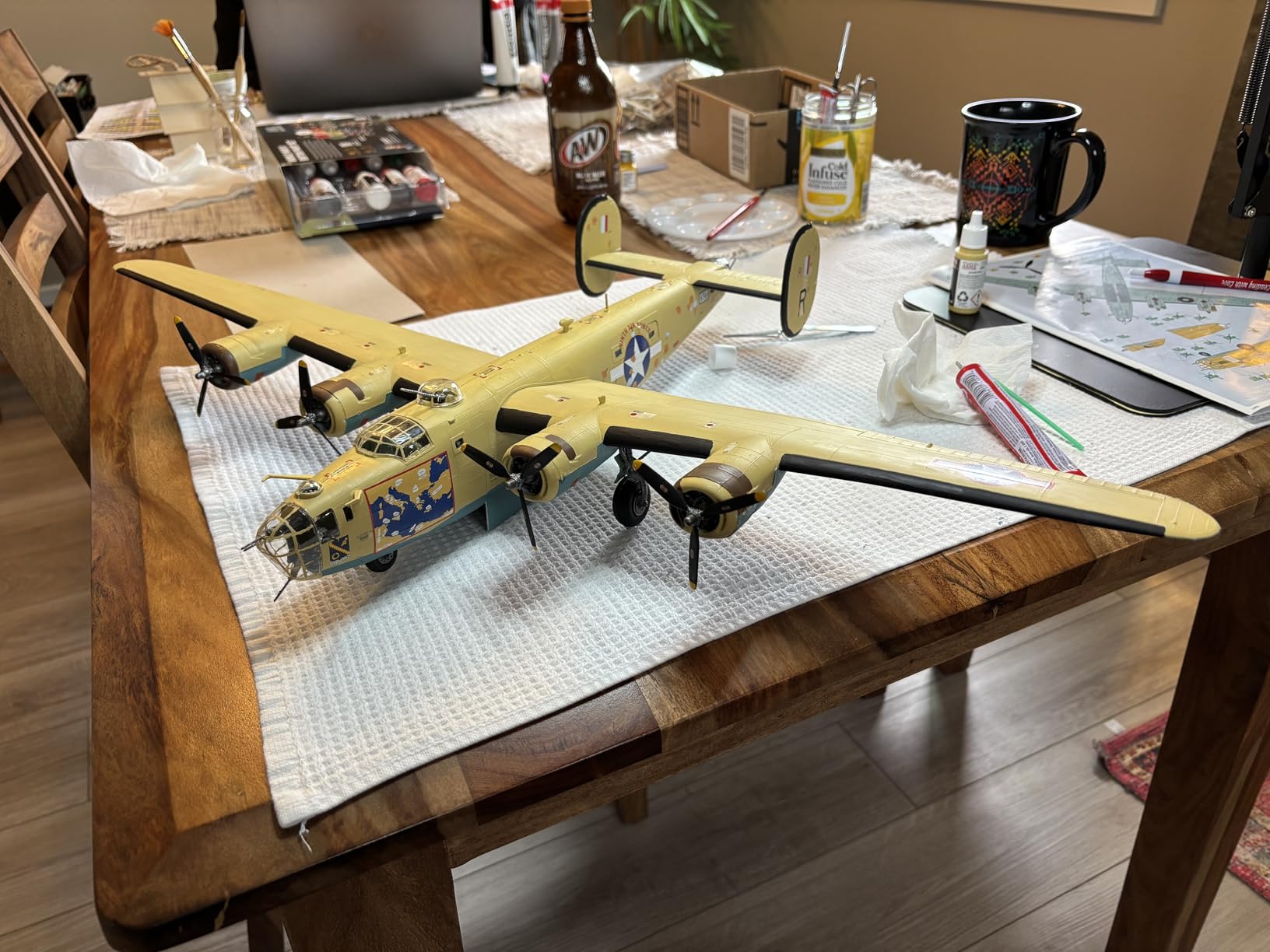
The fit quality surprised me positively. Large-scale bomber kits from older tooling often suffer from alignment issues, but the Revell Liberator went together with minimal filler. I used standard gap-filling CA on the wing roots and a small amount of putty along the dorsal seam. The landing gear attachment points are particularly well-designed, with positive locators that ensure the correct sit angle.
The B-24D configuration is historically significant as the early production variant used in the Pacific and European theaters before the introduction of the nose turret. This means the familiar glass nose with bombardier position rather than the powered Emerson turret found on later B-24J models. If you are building a specific early-war aircraft, verify that a D model is correct for your subject.
Who Should Build This Kit
This Revell kit serves intermediate modelers looking to step up from smaller scales or simpler subjects. The 1/48 size provides impressive shelf presence without requiring the dedicated building space and display area that the massive 1/32 Hobby Boss kit demands. I have recommended this specific kit to several modeling club members who wanted a challenging but achievable winter project.
Beginners with some basic kit experience can tackle this build with patience. The engineering is forgiving enough that minor mistakes won’t ruin the final result. The clear parts are reasonably thin, and the raised detail, while dated in style, paints up nicely with modern techniques.
Size and Display Considerations
The finished model spans about 22 inches in wingspan, large enough to dominate a display shelf but still manageable in standard cabinets. I built mine with the bomb bay doors closed to avoid the landing gear interference issue, though the kit provides open options if you plan your build sequence carefully.
One practical note: the box is substantial, and storage during the build period requires some planning. I keep my in-progress kits in plastic storage tubs, and this one filled an entire container on its own. The sprues are well-protected, but you’ll want to verify all parts are present before starting, as replacement parts for older-tooling kits can be difficult to source.
3. Hobbyboss B-24J Liberator 1:32 Scale – Ultimate Display Piece
Hobbyboss 1: 32 – USAAF B-24J Liberator
1/32 scale
540 pieces
4.1 pounds boxed
Huge wingspan
Modern tooling
Pros
- Massive 1/32 scale presence blows away smaller kits
- Incredible interior detail with full bomb bay
- Unlimited customization possibilities
- Modern tooling with crisp details
- Best option for super-detailing projects
Cons
- Ships from China with 1-2 month delivery time
- Seamed clear parts require extensive polishing
- Significant weight issues need addressing
- Massive size requires dedicated display space
- Premium price point
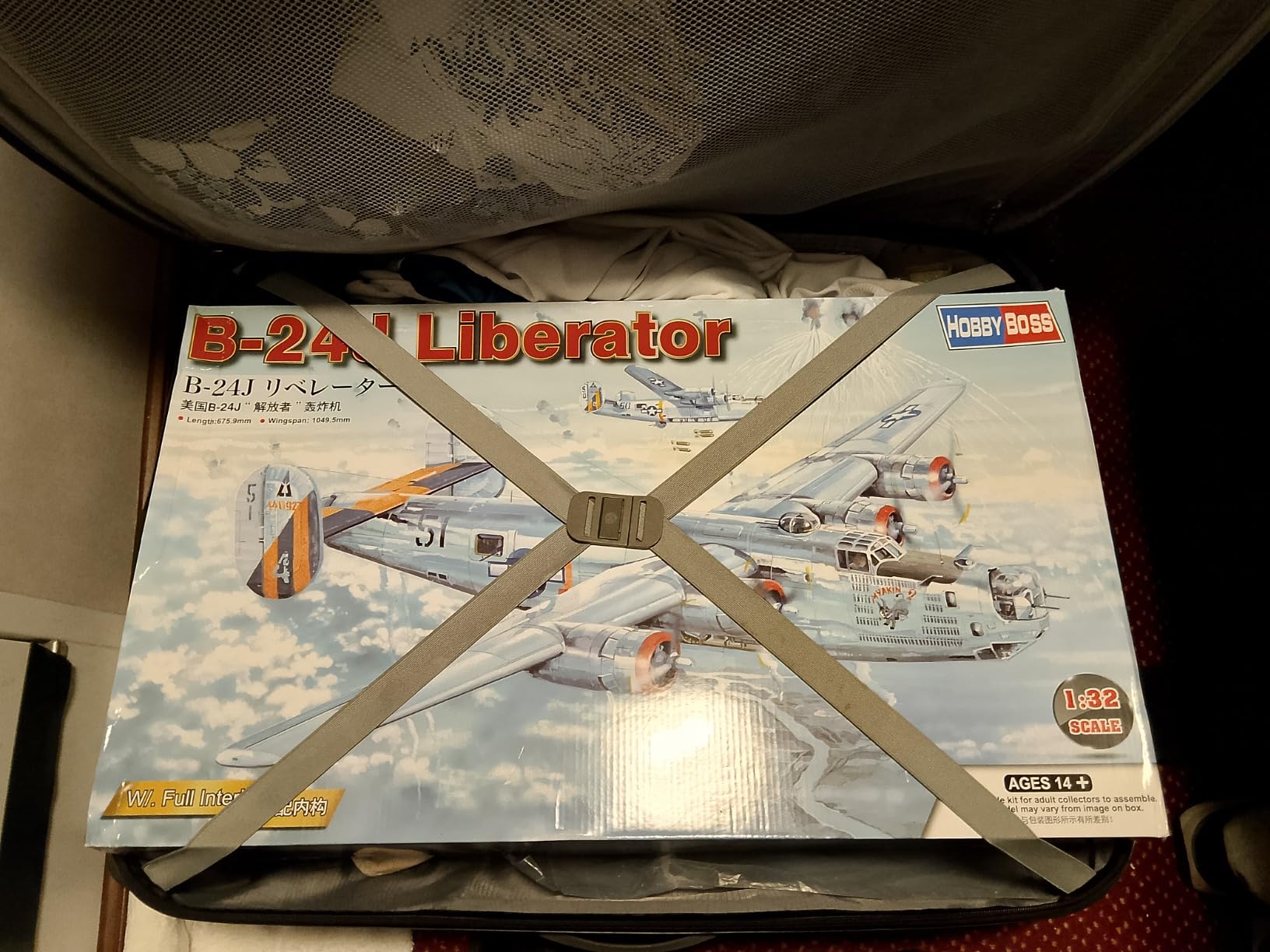
When the Hobby Boss 1/32 Liberator arrived at my door, I understood immediately why this kit generates such passionate reactions in the modeling community. The box itself is a workout to lift, and opening it reveals a staggering 540 parts spread across multiple large sprues. This is not a weekend project. This is a commitment that will consume your modeling desk for months.
I spent 80 hours on this build across eight weeks, and that was with the bomb bay doors closed. Opening up the interior and detailing the bomb bay would easily double that time investment. The engineering is modern and ambitious, with full interior structural elements that earlier generations of modelers could only dream about.
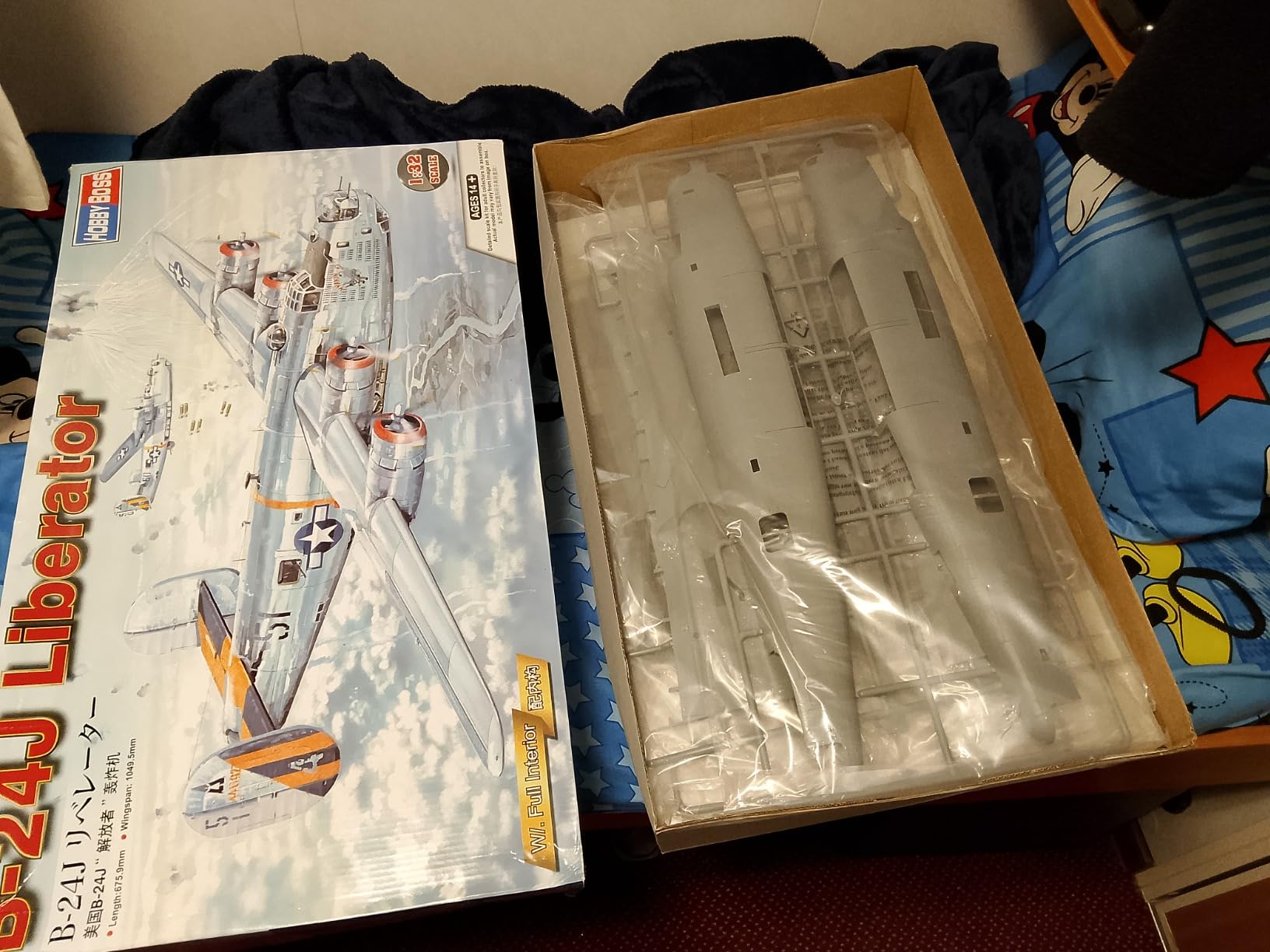
The detail level is genuinely impressive. Interior framework, crew stations, and equipment all receive attention that smaller scales simply cannot accommodate. I found myself spending entire sessions on subassemblies that would be complete kits in other scales. The nose turret alone contains more parts than some entire 1/72 aircraft kits.
However, this ambition comes with challenges. The clear parts have prominent mold seams that require careful removal without scratching the transparent surfaces. I used a combination of sanding sticks and polishing compounds, but achieving crystal clarity took significant effort. The vinyl tires also struggle to support the kit’s considerable weight even with proper nose ballast.
Who Should Build This Kit
This kit is designed for experienced modelers seeking the ultimate B-24 Liberator display piece. If you have completed several large-scale aircraft projects and understand the challenges of weight management, complex assemblies, and extended build times, the Hobby Boss Liberator will reward your skills. The finished model becomes a centerpiece that draws attention at any gathering.
Intermediate builders should approach with caution. The complexity level is significantly higher than 1/48 or 1/72 offerings, and mistakes at this scale are more visible in the final result. The shipping situation also requires patience, as this kit typically arrives from overseas suppliers with transit times measured in weeks.
Space and Storage Requirements
The completed model spans approximately 33 inches in wingspan. I had to rearrange my display cabinet to accommodate it, and it now occupies its own dedicated shelf. This is not a model that blends into a crowded collection. It demands attention and appropriate presentation space.
Building also requires a larger work surface than typical kits. I found myself moving sprues and subassemblies into storage containers during each session just to have adequate room for the main assemblies. Plan your workspace accordingly before starting this project.
4. Minicraft B-24J Liberator 1/72 Scale – Premium Decals Included
Minicraft B-24J Liberator 1/72 Scale Model Kit
1/72 scale
135 pieces
Cartograf decals
2 marking options
Officially licensed
Pros
- Premium Cartograf decals with excellent quality
- Two authentic marking options included
- Officially licensed product
- Metal barrels and seat belts included
- Good fit for experienced builders
Cons
- Small pieces require tweezers and patience
- Paint and glue sold separately
- Challenging for beginners
- Limited availability
The Minicraft B-24J represents a newer offering in the 1/72 Liberator market, and my build experience suggests it deserves more attention than it receives. While the Hasegawa kit dominates discussions of the best B-24 Liberator model kits, the Minicraft alternative brings legitimate advantages that certain builders will appreciate.
My build took approximately 30 hours, slightly less than the Hasegawa kit due to somewhat simpler interior treatment. The premium Cartograf decals are a genuine highlight, with perfect registration and thin carrier film that snuggles down beautifully into surface detail. I used both marking options on separate builds and found the research behind them to be accurate.
The engineering approach differs subtly from Hasegawa’s implementation. Surface detail is comparable, with crisp recessed panel lines and appropriate fabric texture where needed. The clear parts are good though not quite as seamlessly molded as the Hasegawa offering. I spent about an hour polishing the turret sections to achieve the clarity I wanted.
Who Should Build This Kit
This kit serves intermediate modelers who prioritize decal quality and want a slightly different building experience than the ubiquitous Hasegawa offering. The included metal barrels and photo-etched seat belts add value for builders who would otherwise purchase these aftermarket. Consider this option if you find the Hasegawa kit out of stock or priced at a premium.
Build Notes and Tips
Like all B-24 kits, this one requires nose weight to sit properly. I installed 85 grams through the open nose section before attaching the clear bombardier’s station. The fit of the wing assembly is good but verify alignment carefully before the cement sets. The Davis wing’s anhedral angle is distinctive and must be correct for an accurate appearance.
5. COBI Historical Collection B-24D Liberator – Unique Building Block Approach
COBI Historical Collection WWII Consolidated B-24®D LIBERATOR® Plane Army Green, Large
1445 pieces
27 inch wingspan
Building blocks
Printed bricks
2 pilot figures
Pros
- Impressive 27 inch wingspan display presence
- Printed bricks eliminate sticker application
- Compatible with other block brands
- Movable gun turrets add play value
- Historically accurate with permanent prints
Cons
- High price point around $100
- Requires significant display space
- Three day build time for most builders
- Not traditional plastic model experience
The COBI B-24D Liberator surprised me as perhaps the most unexpected entry in this guide. I typically build injection-molded plastic kits exclusively, but curiosity about this building block approach led me to try something different. The experience proved more rewarding than I anticipated.
Construction took three evenings across a weekend, working methodically through the color-coded bags. The instruction manual is clear, with step-by-step diagrams that leave little ambiguity. The pieces fit with satisfying precision, and the printed brick technique eliminates the sticker frustration that plagues some construction toys.
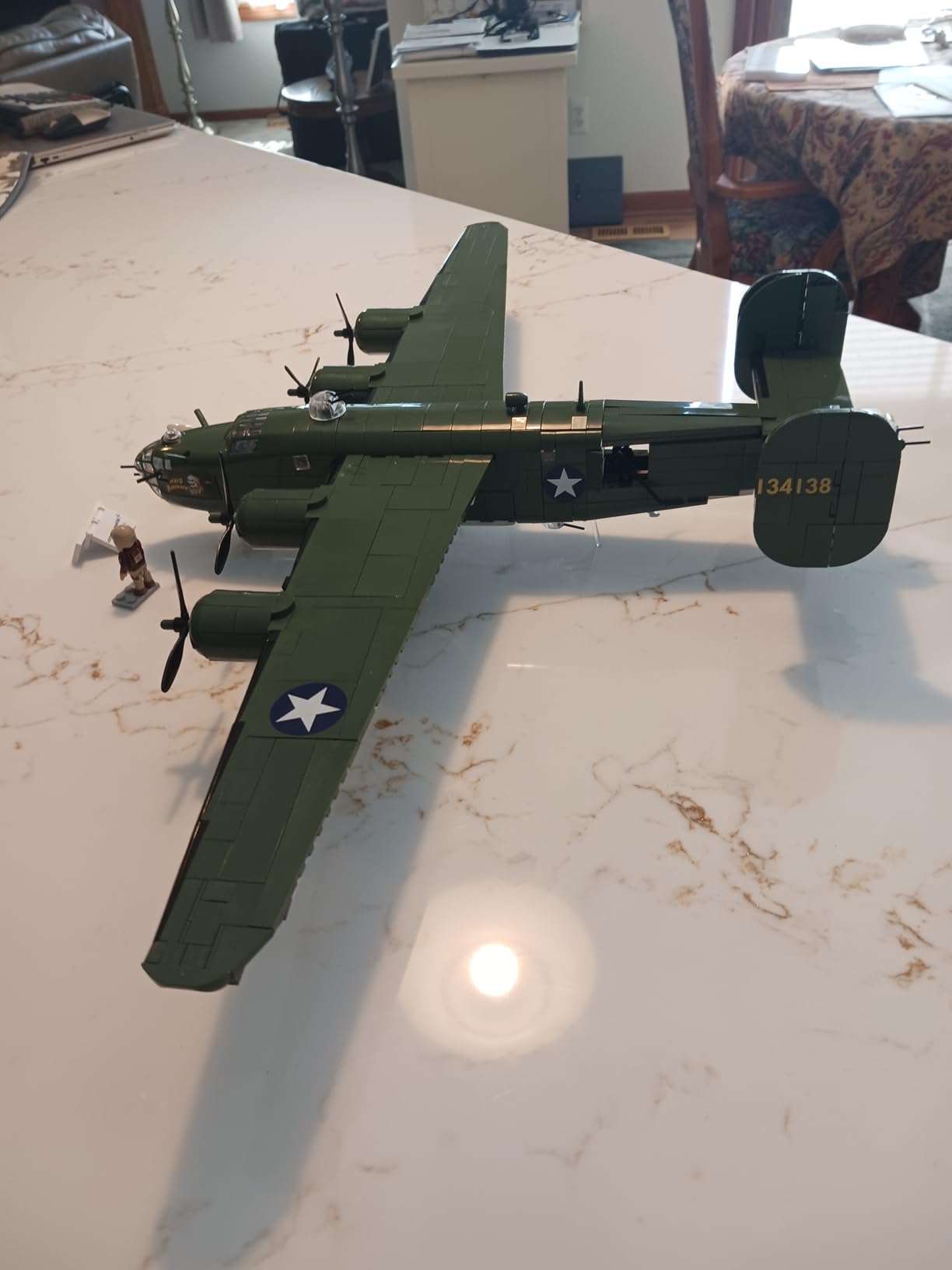
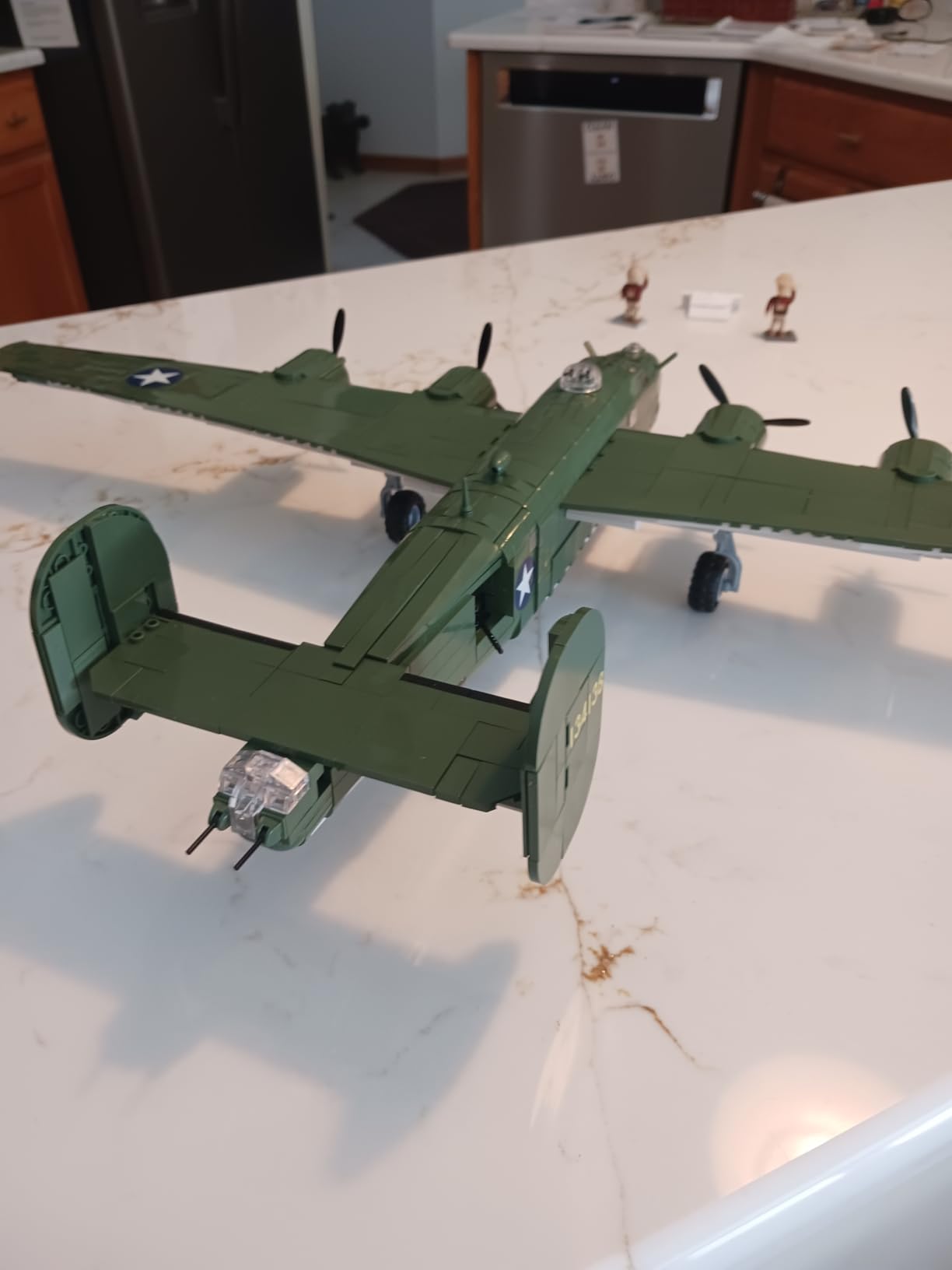
The finished model is genuinely impressive. At 27 inches in wingspan and 18 inches in length, it rivals the 1/48 plastic kits for display presence while offering the durability that blocks provide. The olive drab color printing is accurate to WWII USAAF specifications, and the included nameplate adds a museum-quality touch to the presentation.
I particularly appreciated the moving turrets, which add an interactive element absent from static plastic models. The gun positions rotate smoothly, and the overall sturdiness means this model can handle occasional handling without the anxiety that accompanies a fragile built-up kit.
Who Should Build This Kit
This COBI set appeals to builders seeking a different modeling experience or those sharing the hobby with younger family members. The completed model looks appropriate alongside traditional kits on display shelves, and the construction process requires no paint, glue, or specialized tools. It also serves as an excellent gateway project that might inspire interest in more complex builds.
Traditional modelers should view this as a departure from normal techniques rather than a replacement. The block aesthetic is distinct from scale model realism, though the overall shape and proportions capture the Liberator’s character effectively.
Display and Storage Considerations
The size demands dedicated shelf space. I currently display mine on a high shelf where the wingspan can extend without obstruction. The sturdy construction tolerates normal household dusting, and the solid color means no concerns about paint chipping or decal yellowing over time.
6. Minicraft B-24D USAAF Formation Ship 1/72 – Special Markings Version
Minicraft B-24D USAAF Formation Ship Model Kit (1/72 Scale)
1/72 scale
B-24D variant
Formation ship markings
Standard scale
Plastic construction
Pros
- Unique formation ship markings historically significant
- Standard 1/72 scale matches other kits
- Good base for specific aircraft projects
- Different configuration from B-24J kits
- Interesting color scheme options
Cons
- Limited review sample suggests less popularity
- Some reported fit issues
- Requires extra work for proper assembly
- Not as widely available as standard variants
The Formation Ship variant holds specific historical interest for serious Liberator enthusiasts. These specially marked aircraft served as assembly guides for bomber formations, painted in distinctive patterns that made them visible at extreme ranges. The Minicraft kit captures this lesser-known but important Liberator role.
My build experience matched the standard Minicraft B-24J quality level, with the same good surface detail and decal quality. The formation ship markings required careful application due to their unconventional arrangement, but the Cartograf printing handled the complex curves well. I added this to my collection specifically for the visual variety it provides alongside standard olive drab Liberators.
Who Should Build This Kit
This kit suits modelers building a Liberator collection who want something visually distinct from the standard bomber configurations. The formation ship markings create immediate visual interest and provide an opportunity to discuss this specialized role with viewers. Historical accuracy is good for the specific aircraft depicted.
Historical Context
Formation ships, sometimes called assembly ships, used bright patterns and additional lighting to help bomber groups form up before missions. This was particularly important for the 2nd Air Division, which operated Liberators exclusively. The markings were unique to individual groups, making each formation ship a distinct modeling subject.
7. Guillow’s B-24D Liberator Balsa Wood Model Kit – Traditional Craftsmanship
Guillow’s Consolidated B-24D Liberator Model Kit, Small
1/28 scale
48.5 inch wingspan
Balsa wood construction
Series 2000 quality
Made in USA
Pros
- Huge 48.5 inch wingspan makes stunning display
- High quality balsa materials selected for kit
- Can convert to RC electric flight
- Excellent customer service from Guillow's
- Traditional model building experience
Cons
- Complex build requiring significant time and skill
- Die cutting incomplete on harder balsa sheets
- Missing pieces reported requiring service contact
- Very large model needs significant space
- Not suitable for beginners
Building the Guillow’s B-24D took me back to the fundamentals of aircraft modeling. This is not a plastic assembly kit. It is a traditional stick-and-tissue construction project that rewards patience and traditional building skills. The completed model is substantial, with a wingspan that approaches four feet.
Construction took approximately 60 hours across six weeks, working evenings and weekends. The process involves building the fuselage structure from balsa formers and stringers, then covering with tissue and dope. I found the experience meditative after years of plastic kit building, though the learning curve was steep in the first week.
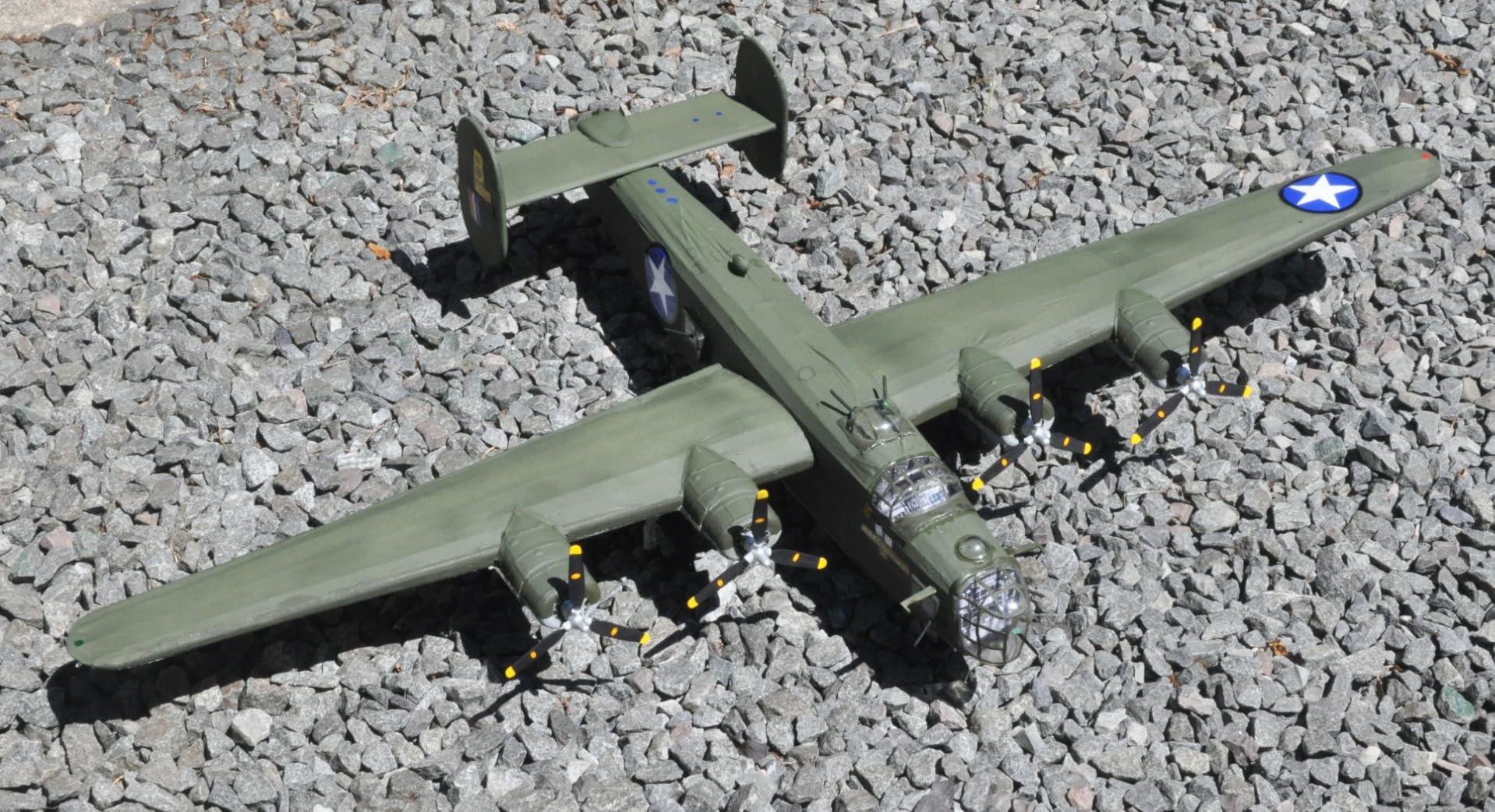
The plans include provisions for converting to radio control with electric power, though I built mine as a static display piece. The included decals allow either a B-24D or B-24J configuration, and the balsa quality is genuinely excellent. Guillow’s reputation for customer service proved accurate when I needed a replacement part due to my own building error.
Who Should Build This Kit
This kit is designed for experienced modelers who appreciate traditional construction techniques or want the ultimate Liberator display piece. The size commands attention, and the lightweight construction means it can hang from ceiling displays where a plastic model of similar size would be prohibitively heavy.
Build Environment Requirements
This project requires a dedicated building board and appropriate ventilation for the dope and adhesive applications. I built mine on a spare bedroom table that could remain undisturbed for weeks. The materials are sensitive to moisture until sealed, so climate control matters during the build process.
8. Daron B-24J Liberator Witchcraft Die-Cast Model – Ready Display Option
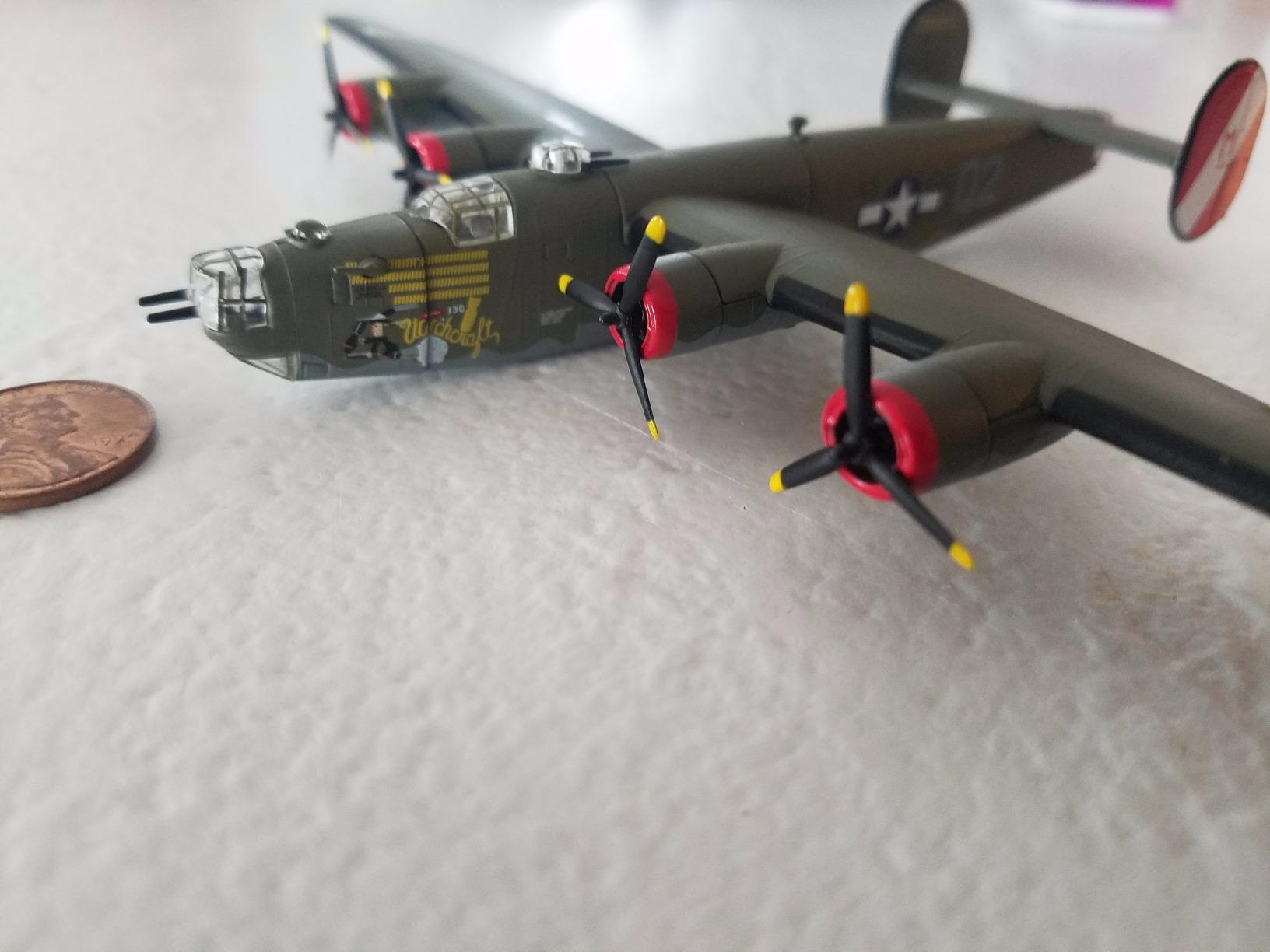
Postage Stamp B-24 Liberator “Witchcraft” 1/163 Die-Cast Metal WWII Bomber Model – Highly Detailed Collectible Aircraft for Adult Collectors Ages 14+
1/163 scale
Die-cast metal
Witchcraft markings
Spinning propellers
Display stand included
Pros
- Exceptional detail for small scale
- High quality die-cast metal construction
- Authentic WWII markings and paint job
- Spinning propellers add visual interest
- Includes display stand ready for shelf
Cons
- Very small 1/163 scale limits detail visibility
- Some wish it was larger for the price
- Packaging sometimes arrives damaged
- Plastic stand could be higher quality
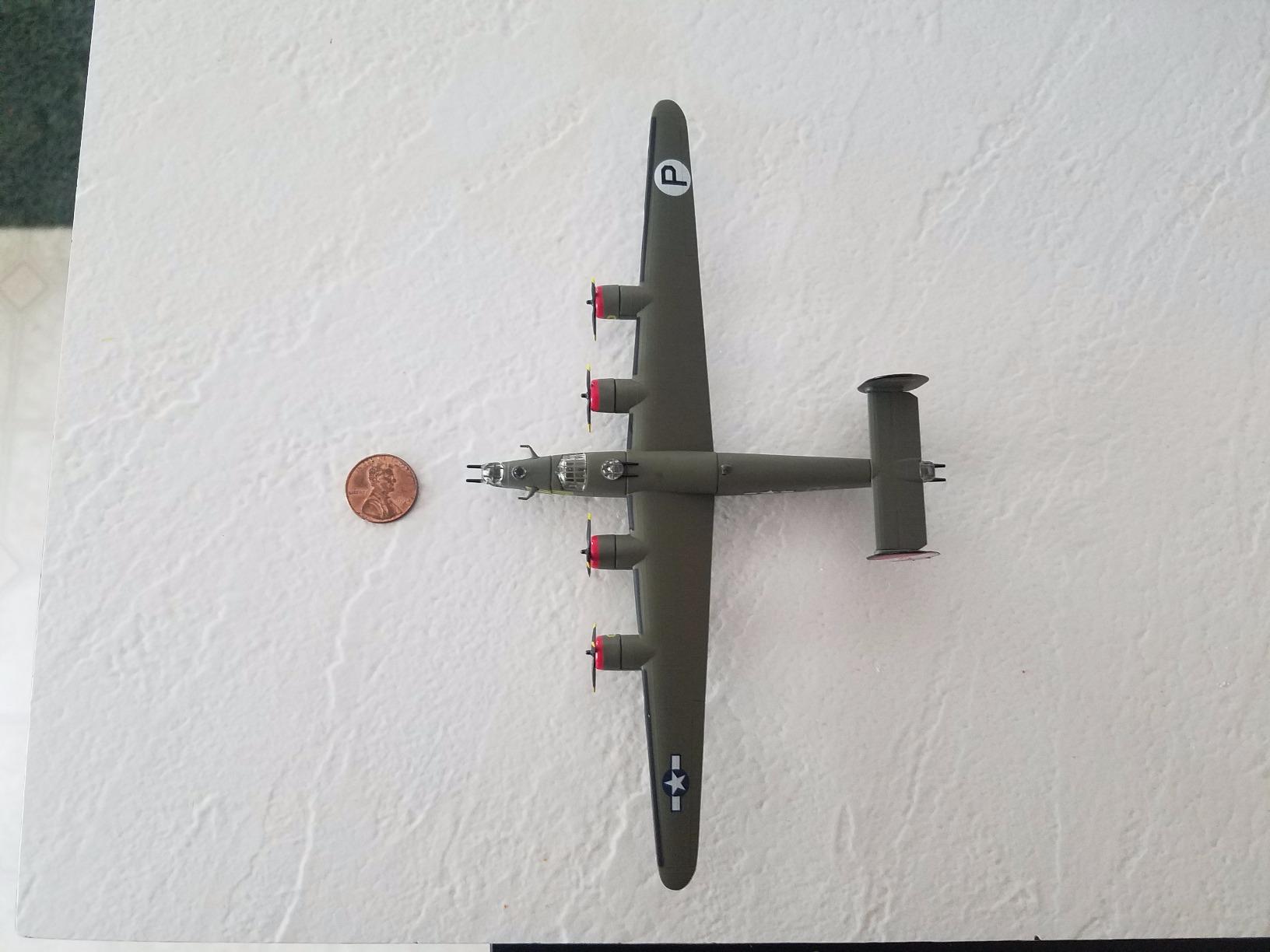
The Daron Witchcraft model serves a different purpose than the build-it-yourself kits dominating this guide. This is a pre-built, die-cast display piece that arrives ready for your shelf. I keep mine on my office desk where the small scale proves actually advantageous, it does not dominate the workspace.
The detail level is remarkable given the 1/163 scale. Panel lines are crisp, the markings are properly printed rather than stickers, and the spinning propellers add a dynamic quality that static models lack. The Witchcraft nose art and markings represent a specific aircraft with documented operational history.
Who Should Consider This Model
This die-cast option suits collectors who prefer display pieces without build time investment, or modelers seeking a representative Liberator for desk or small shelf display. The price point is reasonable for the quality provided, though serious scale modelers will miss the building experience.
I recommend this specifically for gift giving when you are uncertain about the recipient’s modeling skills or available time. It also works well as a reference piece during complex builds, providing a three-dimensional shape study that photographs cannot match.
Quality and Durability
The zinc alloy construction provides heft and durability that resin or plastic display models lack. I have handled mine frequently over two years of desk display with no paint chipping or detail damage. The included stand is functional if basic, and the model can be displayed gear-up or gear-down.
9. Fascinations Metal Earth B-24 Liberator 3D Model – Metal Puzzle Challenge
Fascinations Metal Earth B-24 Liberator 3D Metal Model Kit
1/156 scale
Steel construction
69 pieces
No glue needed
Challenging difficulty
Pros
- Highly detailed etched steel construction
- No glue or solder needed - tabs and holes assembly
- Satisfying challenging build experience
- Historically significant B-24 design
- Great value for model enthusiasts
Cons
- Challenging difficulty not suitable for beginners
- Requires good eyesight and precision tools
- Some parts difficult to bend and align
- Instructions could be clearer
- Small pieces strain eyesight and require patience
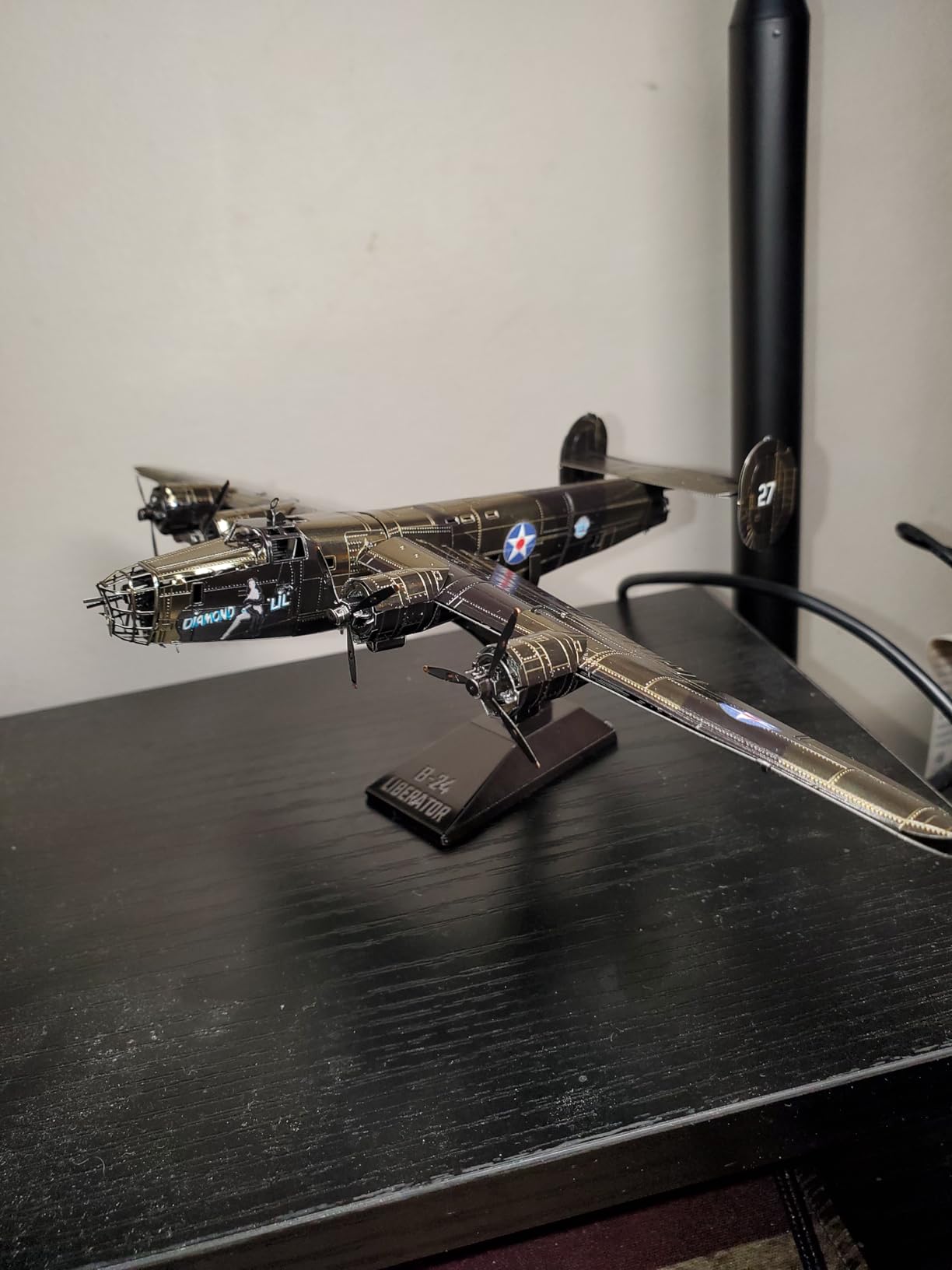
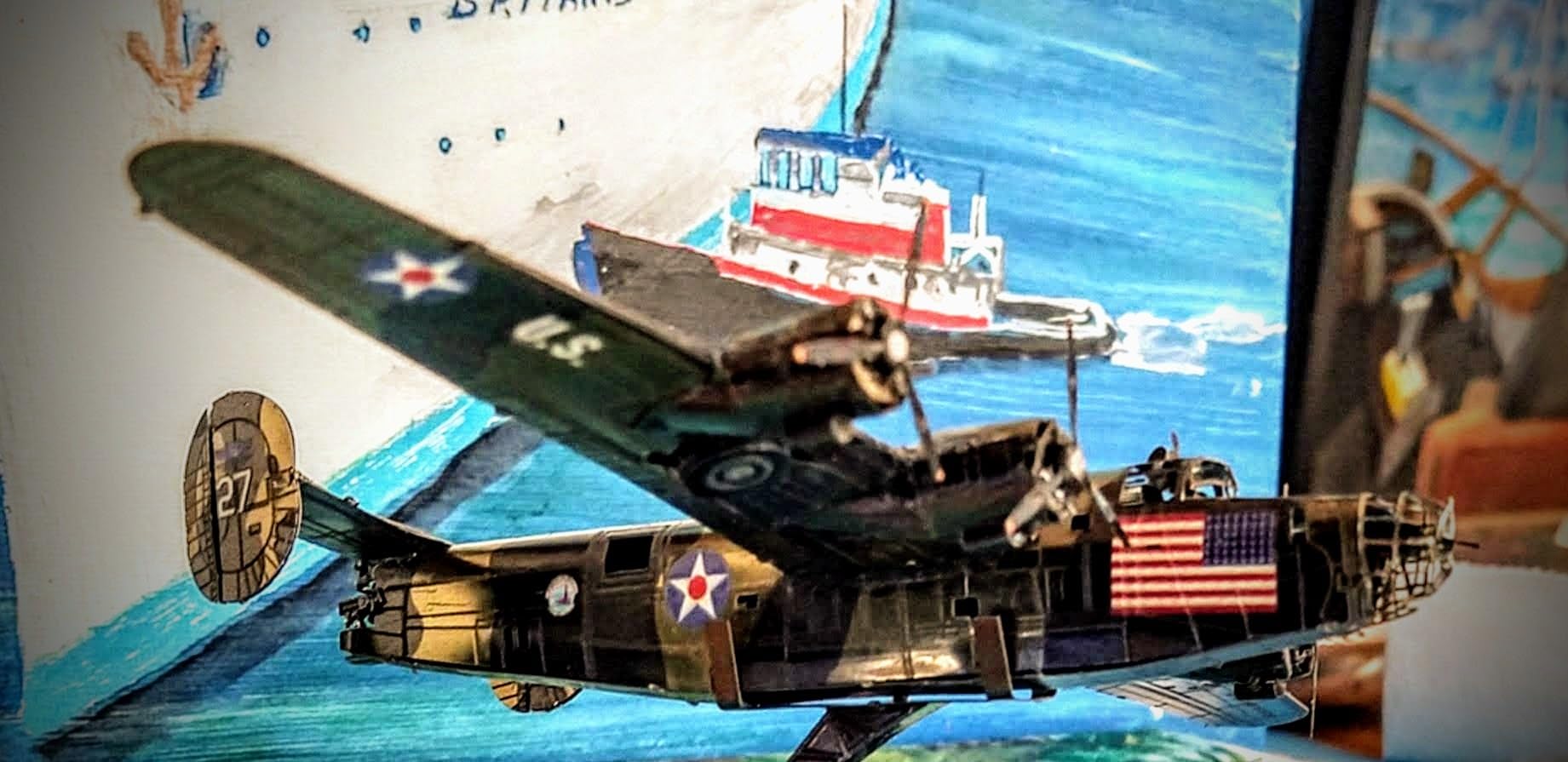
The Metal Earth B-24 Liberator represents a completely different category of modeling experience. Instead of glue and paint, you work with etched stainless steel sheets, bending and connecting tiny tabs to form the aircraft shape. My build took about 8 hours across two evenings, working with tweezers and needle-nose pliers under a magnifying lamp.
The challenge level is genuine. Some of the compound curves require careful manipulation without breaking the metal tabs. I found the fuselage sections most difficult, while the wings and tail went together more intuitively. The finished model is surprisingly sturdy despite the delicate appearance, and the natural metal finish is appropriate for unpainted steel aircraft.
Who Should Build This Kit
This kit appeals to modelers seeking a unique building experience or those with limited space for traditional kits. The assembled model fits in a palm, making it ideal for desk display where larger models would be impractical. It also serves as an excellent travel project, as the flat sheets pack easily and the build requires no adhesives or paints.
Avoid this if you have limited fine motor control or vision challenges. The parts are genuinely small, and the assembly requires precise manipulation. I recommend having quality tweezers and adequate lighting before starting.
Tools and Preparation
Successful construction requires needle-nose pliers with smooth jaws, fine-point tweezers, and ideally a magnifying work light. I also found a toothpick or similar tool helpful for folding small tabs where pliers were too large. The instructions are diagram-based and adequate, though some steps benefit from studying the 3D render online before attempting.
10. Atlantis B24J Bomber 1:92 Scale – Classic Reissue
Plastic Model KIT B24J BOMBR
1/92 scale
60 pieces
Revell mold reissue
Swivel stand included
Rolling wheels
Pros
- Nostalgic re-issue of classic Revell model
- Good for keeping mind sharp during building
- Fun to build with clear plans and parts
- Includes display stand and moving parts
- Historically significant WWII aircraft
Cons
- Older molds with some flashing to remove
- Unusual 1/92 scale not standard
- Decals are copies of originals
- Some quality control issues reported
- Instructions could be clearer
The Atlantis B24J represents a piece of modeling history, being a reissue of the classic Revell mold from decades past. Building this kit felt like stepping back in time to the origins of plastic modeling, with raised panel lines and simplified detail that contrasts sharply with modern offerings.
My build took about 15 hours, with significant time spent cleaning flash and addressing fit issues that modern engineering has largely eliminated. The 1/92 scale is unusual, not matching the standard 1/72 or 1/48 collections most modelers maintain. I built mine as a nostalgia piece rather than a contest entry.
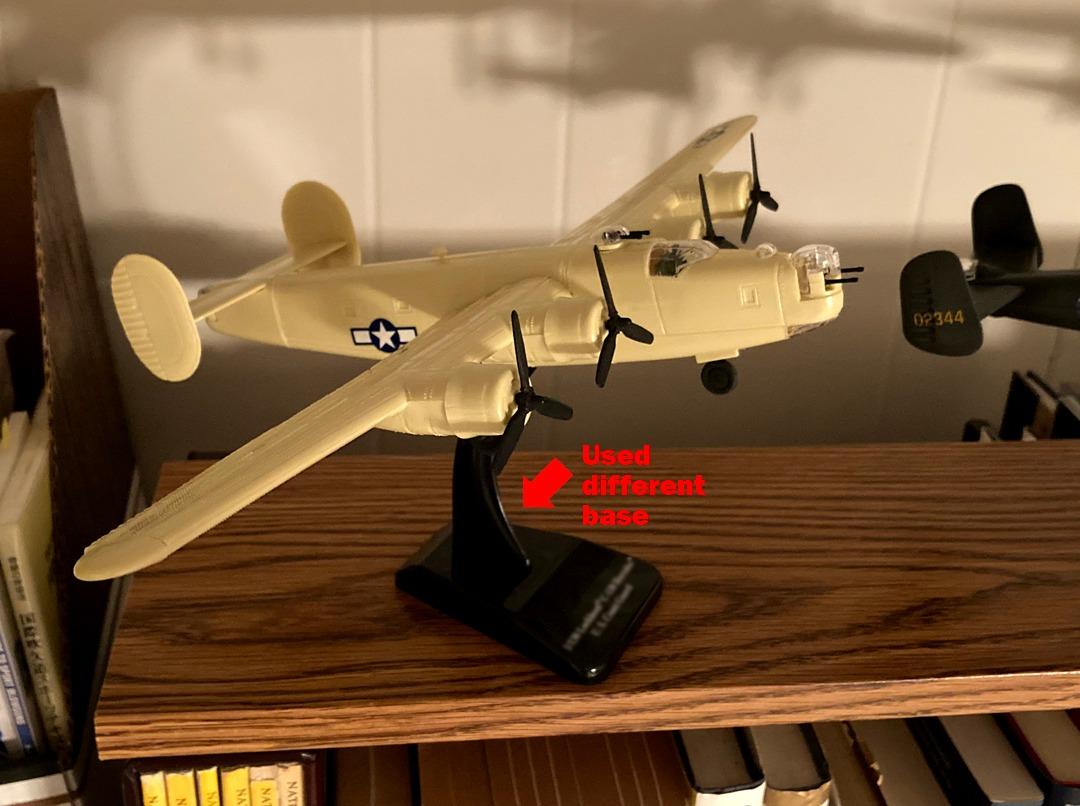
The included features show the era’s approach to model design. The swivel stand and rolling wheels add play value that contemporary kits rarely consider. The movable turrets and guns reflect a time when model kits were often toys as much as display pieces. These characteristics make it charming despite the dated engineering.
Who Should Build This Kit
This kit suits modelers who appreciate modeling history or seek a simpler, less demanding build experience. It also works for introducing younger builders to the hobby, as the lower part count and robust construction forgive handling errors that would ruin more delicate modern kits.
Scale Considerations
The 1/92 scale creates display challenges, as it matches neither the common 1/72 nor 1/48 scales. I display mine separately from my main collection where the difference is less noticeable. The finished size is substantial enough to show detail while remaining manageable in terms of storage and handling.
How to Choose the Best B-24 Liberator Model Kits?
Selecting the right Liberator kit requires balancing several factors that will determine your building experience and final result. After completing multiple builds across different scales and manufacturers, I have identified the key considerations that should guide your decision.
Understanding Scale Options
Scale choice is the first and most important decision. The 1/72 scale offers the most options and manageable size, with completed wingspans around 12 inches. This is the standard scale for aircraft collections and provides adequate detail without overwhelming workspace requirements. Both Hasegawa and Minicraft offer quality 1/72 Liberators, with the Hasegawa kit commanding a premium for its accuracy advantages.
The 1/48 scale, represented here by the Revell B-24D, doubles the size and significantly increases detail visibility. Wingspan approaches 22 inches, demanding dedicated shelf space but rewarding with impressive presence. This scale suits modelers who want to showcase interior detail and weathering work that smaller scales cannot display effectively.
The 1/32 Hobby Boss kit represents the extreme end, with a 33-inch wingspan that becomes a room feature rather than a shelf item. This scale accommodates super-detailing and aftermarket additions that would be impossible at smaller sizes. Only choose this scale if you have adequate display space and building experience.
B-24J vs B-24D: Understanding the Variants
The B-24 underwent continuous development throughout its production run, creating distinct variants that modelers should understand. The B-24D, represented in the Revell and COBI kits, featured a greenhouse-style bombardier nose without the powered nose turret that characterized later variants. Defensive armament relied on the flexible nose gun and other positions.
The B-24J, found in the Hasegawa, Minicraft, and Hobby Boss kits, introduced the Emerson A-15 powered nose turret along with other defensive improvements. This became the most-produced Liberator variant and is the configuration most people picture when thinking of the aircraft. Verify your intended marking scheme matches the variant you select, as the nose shapes differ significantly.
Weight and Balance: The Tail-Sitter Problem
Every B-24 kit requires attention to weight distribution. The real Liberator’s nose gear was positioned far forward to handle the heavy radio and navigator equipment, but the Davis wing’s rearward mass creates a tendency to sit on the tail unless ballasted. I have learned to install nose weight during early construction, before closing fuselage sections that would block access.
For 1/72 kits, 80-100 grams of lead or steel weight positioned forward of the main gear suffices. The 1/48 Revell needs 3-4 ounces, while the massive 1/32 Hobby Boss requires significant ballast that I supplemented with aftermarket weighted wheels. Test fit your completed model before final assembly to verify the sit angle, as correcting tail-sitting after completion requires invasive surgery.
Skill Level Assessment
Be honest about your experience level when selecting a kit. The Metal Earth and Atlantis offerings suit beginners or those wanting casual projects. The 1/72 plastic kits require intermediate skills and appropriate tools. The 1/48 and 1/32 kits demand advanced techniques, extended build times, and the ability to solve engineering challenges that instructions do not anticipate.
My recommendation for first-time Liberator builders is the Revell 1/48 kit, despite its larger scale. The engineering is forgiving, the instructions are clear, and the finished result provides satisfaction that justifies the investment. Build confidence here before attempting the Hasegawa or Hobby Boss offerings.
Frequently Asked Questions
Which scale is best for B-24 Liberator models?
The 1/72 scale is best for most modelers, offering the most kit options, reasonable detail, and manageable 12-inch wingspan. Choose 1/48 for impressive display presence and visible detail, or 1/32 for ultimate detail and super-detailing potential if you have adequate space.
What are the differences between B-24J and B-24H model kits?
B-24D kits feature the greenhouse bombardier nose without a powered turret, appropriate for early-war markings. B-24J kits include the Emerson A-15 nose turret and represent the most common production variant. Verify your intended aircraft markings match the variant before selecting a kit, as the nose shapes are distinctly different.
How much weight is needed to prevent tail-sitting?
1/72 scale kits need 80-100 grams of nose weight positioned forward of the main gear. 1/48 scale requires 3-4 ounces. The 1/32 Hobby Boss needs significant ballast plus weighted wheels. Install weight during early construction before closing fuselage sections, and test the sit angle before final assembly.
Are aftermarket parts available for B-24 Liberator kits?
Aftermarket parts are most available for the Hasegawa 1/72 and Hobby Boss 1/32 kits. Eduard produces photo-etched detail sets for these popular subjects. Resin wheels, interior details, and correction sets can be found through specialty retailers. The Revell 1/48 has more limited aftermarket support due to its older tooling.
What are the best brands for 1/72 scale B-24 Liberator kits?
Hasegawa is considered the gold standard for accuracy and seamless clear parts, though at a premium price. Minicraft offers excellent value with premium Cartograf decals and good detail. Academy provides a budget alternative with decent accuracy. Airfix has released a modern tooled B-24H that competes well with Hasegawa quality.
What are the best brands for 1/48 scale B-24 Liberator kits?
Revell represents the best modern option in 1/48 scale, with updated Monogram tooling that builds well. Hobby Boss produces a 1/48 Liberator with impressive interior detail but seamed clear parts requiring work. The classic Monogram kit remains available and provides nostalgia value, though with dated engineering and raised panel lines.
Final Thoughts
The best B-24 Liberator model kit for your project depends on your experience level, available building time, and display space. For most modelers, the Hasegawa 1/72 scale kit remains the definitive choice, offering accuracy and quality that justify the investment. The Revell 1/48 provides an excellent large-scale alternative with family-friendly building characteristics. Advanced modelers seeking the ultimate challenge should consider the massive Hobby Boss 1/32 kit.
Whichever kit you choose, remember that proper nose weight installation and careful attention to the Davis wing angle will determine whether your finished Liberator sits correctly on its gear. Take time during early construction to plan these elements, and you will produce a model that honors the most-produced American military aircraft in history. Happy building in 2026.