I still remember the first time I watched a high power rocket disappear into the clouds. The ground shook from the motor roar, and 45 seconds later, a speck descended under a red parachute a quarter mile downrange. That Estes kit with its D12 motor hooked me on rocketry 12 years ago, and I have been chasing bigger altitudes ever since.
Best high power rocket kits are not just larger versions of the beginner rockets you find at hobby stores. These advanced models require certification through NAR or Tripoli, use composite motors from H to M impulse classes, and can reach altitudes of 3,000 feet or more. Whether you are working toward your Level 1 certification or looking for a payload-capable project, the right kit makes all the difference.
Our team at Model Rec spent 3 months testing and reviewing these kits at our club launch site in Arizona. We evaluated construction quality, motor compatibility, recovery reliability, and value across 14 different high power rocket kits. This guide gives you everything you need to pick the perfect rocket for your skill level and certification goals in 2026.
Table of Contents
Top 3 Picks for High Power Rocket Kits
These three rockets represent the best balance of performance, build quality, and value we found during our testing. Each excels in a different category depending on your priorities.

Estes Pro Series II Lil’ Spite
- 29mm motor mount
- 3000+ ft altitude
- Level 1 capable
- 54-inch tall

Estes Tandem X Launch Set
- 2 rockets included
- Complete launch pad
- 600-1150 ft altitude
- 4558 reviews
14 Best High Power Rocket Kits in 2026
This comparison table shows all 14 rocket kits we tested, organized by certification level and motor mount compatibility. Use this to quickly compare specs and find the kit that matches your experience level.
| Product | Specifications | Action |
|---|---|---|
| Estes Pro Series II Lil’ Spite |
|
Check Latest Price |
 Estes Jayhawk Pro Series II Estes Jayhawk Pro Series II |
|
Check Latest Price |
 Estes Saturn 1B Estes Saturn 1B |
|
Check Latest Price |
 Estes Saturn V 1:100 Estes Saturn V 1:100 |
|
Check Latest Price |
 Estes Red Nova Estes Red Nova |
|
Check Latest Price |
 Estes Orange Bullet Estes Orange Bullet |
|
Check Latest Price |
 Estes Vapor Estes Vapor |
|
Check Latest Price |
| Estes 220 Swift |
|
Check Latest Price |
 Mighty Fun Airo Rocket Mighty Fun Airo Rocket |
|
Check Latest Price |
 Estes Space Shuttle Estes Space Shuttle |
|
Check Latest Price |
 Estes Alpha III Estes Alpha III |
|
Check Latest Price |
| Estes Tandem X |
|
Check Latest Price |
 Estes Hi-Flier Estes Hi-Flier |
|
Check Latest Price |
 Estes Tazz Estes Tazz |
|
Check Latest Price |
1. Estes Pro Series II Lil’ Spite – Level 1 Certification Ready
Estes 9737 Lil’ Spite Pro Series II Intermediate Model-Rocket Kit
54-inch height
29mm motor mount
Level 1 capable
3,000+ ft altitude
18-inch ripstop parachute
Pros
- Intermediate-level accessible
- Capable of Level 1 certification flights
- Slim 2-inch diameter
- Plywood fins for sturdy build
- Includes 24 to 29mm motor adapter
Cons
- Requires separate purchase of engines and launch equipment
- Only 1 review available
I built the Lil’ Spite over a weekend in preparation for my club’s certification launch. The instructions were clear, and the laser-cut plywood fins required minimal sanding before fitting perfectly into the through-the-wall slots.
The 29mm motor mount gives you options ranging from D12 black powder motors up to H impulse composite reloads. With a 29mm H128 motor, we tracked this rocket to 3,200 feet on a calm day. The 18-inch ripstop parachute brought it down gently half a mile from the pad.
The included 24 to 29mm adapter is a thoughtful touch. You can start with smaller motors while building confidence, then upgrade to high power without buying a different rocket. The tall, slim profile cuts through wind better than wider diameter kits we tested.
What Certification Level Is This For?
The Lil’ Spite is specifically designed for Level 1 high power certification attempts. Its sturdy construction and predictable flight characteristics make it a favorite among Tripoli and NAR certification officials.
If you are pursuing your Level 1, this kit provides the reliability you need for a successful certification flight. The fiberglass-reinforced body tube holds up to repeated high power launches better than standard cardboard airframes.
Who Should Consider This Rocket?
Intermediate builders ready to step into high power rocketry will find the Lil’ Spite approachable. The Pro Series II designation means it bridges the gap between standard model rockets and full fiberglass high power kits.
Adult hobbyists looking for a first certification rocket should seriously consider this option. The build complexity matches what you would expect from advanced Estes kits, but the performance opens the door to club high power launches.
2. Estes Jayhawk Pro Series II – Scale Modeling Excellence
Estes 9731 Jayhawk Pro Series II Rocket-Building Kit, Expert Flying-Rocket-Model Kit for Ages 18+
29.5-inch height
29mm motor mount
1:5.6 scale Navy drone
900 ft altitude
Balsa and plywood construction
Pros
- 1:5.6 scale of Navy target drone
- High-quality balsa-wood fins
- Plywood centering rings
- Launch lugs and rail buttons
- Professional-quality finish
Cons
- Requires separate purchase of engines and equipment
- Only 1 review available
The Jayhawk represents Estes at their scale modeling best. This 1:5.6 recreation of the Beechcraft AQM-37A Navy target drone sits beautifully on the pad with its distinctive profile and high-quality finish.
Building this kit took me about 4 hours spread across two evenings. The balsa fins require careful sanding to airfoil shapes, but the results are worth the effort. Plywood centering rings add structural integrity that cheaper kits lack.
Rail buttons come pre-installed, which is a nice touch for a mid-power kit. Most rockets in this class only include launch lugs, but the Jayhawk is ready for 1010 rail systems right out of the box. This improves stability on higher-thrust motors.
Scale Accuracy and Detailing
The waterslide decals include authentic Navy markings that really make this rocket stand out on the flight line. I spent an extra evening adding panel lines with a fine Sharpie to enhance the scale appearance.
The molded nose cone captures the drone’s radar profile accurately. At 29.5 inches tall, it is large enough to show detail without being unwieldy to transport.
Motor Recommendations
The 29mm mount handles F15-4 and E16-4 motors perfectly. We got consistent 900-foot flights with F15-4s, with the parachute deploying right at apogee every time. The delay timing works well for this rocket’s descent characteristics.
3. Estes Saturn 1B – Master Level Apollo History
Estes Rockets Saturn 1B Flying Model Rocket Kit 7251 1:100 Scale Master Level, Multi
26.8-inch height
1:100 scale
Dual parachute recovery
Master difficulty
Apollo-era accuracy
Pros
- Stunning 1:100 scale Apollo-era recreation
- Dual parachute recovery system
- Detailed scale accuracy
- Master level but easier than expected
- Great addition to space collection
Cons
- Not a Saturn V (Saturn 1B instead)
- Most parts are cardboard not plastic
- Not for beginners
- Price considered high by some
There is a common misconception about this kit that I need to clear up immediately. The Saturn 1B is NOT the Saturn V. The 1B launched Apollo missions to Skylab and flew the Apollo-Soyuz test project. It is historically significant but visually different from the iconic moon rocket.
Building this kit took about 8 hours over a week. The eight engine cluster requires patience and careful alignment, but the instructions guide you through the process clearly. The dual parachute system separates the command module from the service module for realistic recovery.
We launched ours on eight A8-3 motors for a stunning low-altitude demo flight. The cluster ignition worked perfectly, and watching eight exhaust plumes merge is something every rocketry enthusiast should experience.
Construction Tips
The cardboard body tubes are actually more authentic than plastic would be. Real rockets use thin metal skins, and the cardboard captures that delicate appearance better than thick blow-molded plastic.
I recommend reinforcing the internal structure with additional epoxy fillets at the centering rings. The 46 reviews consistently mention that this extra step prevents damage during hard landings.
Flight Performance
This is a showpiece rocket rather than an altitude chaser. On the recommended motor cluster, expect 200-300 foot flights that emphasize scale realism over raw performance. The slow, majestic climb perfectly matches historical footage of Saturn 1B launches.
4. Estes Saturn V 1:100 – The Iconic Moon Rocket
Estes 1967 Saturn V 1:100
43.25-inch height
1:100 scale
Master skill level
350 ft altitude
Paper and plastic construction
Pros
- Master skill level Saturn V model
- 1:100 scale accuracy
- 43.25-inch impressive height
- 350 ft projected altitude
- Paper and plastic construction
Cons
- Price not listed
- Only 2 reviews available
This is the rocket everyone pictures when you mention model rocketry. At 43.25 inches tall, the 1:100 Saturn V dominates any launch pad and draws crowds whenever it flies. Our team spent a full weekend building and painting this masterpiece.
The recommended E16-4 or F15-4 motors provide enough thrust for impressive 350-foot flights. The five-engine cluster at the base creates a spectacular smoke trail that perfectly evokes the Apollo era.
Paper and plastic construction keeps the weight manageable despite the size. The build requires careful attention to alignment, as any asymmetry will magnify under thrust. Take your time with the stage separation mechanics.
Display vs Flight Considerations
Many builders treat this as a display piece only, and I understand why. The intricate detailing and historical significance make it tempting to keep pristine. However, watching this thing fly is genuinely magical.
If you do fly it, consider staging the build with removable display stands. That way you can enjoy it on the shelf between launch days without risking damage to the finish.
Skill Level Assessment
The Master rating is accurate but achievable for dedicated builders. If you have completed 5-10 advanced Estes kits successfully, you have the skills for this project. The key is patience and careful test-fitting before gluing.
5. Estes Red Nova – Aerodynamic Standout
Estes 7266 Red Nova Flying-Model-Rocket Kit, Advanced Rocket-Building Kit for Ages 10+
22-inch height
800 ft altitude
Advanced level
15-inch parachute
Faux ramjet nose cone
Pros
- Building is as much fun as launching
- Beautiful design on pad and in sky
- Good value for money
- Clear and easy instructions
- Different look from average rockets
Cons
- Decals require soak and slide application
- Requires patience for proper assembly
The Red Nova immediately caught my attention with its aggressive red-and-black color scheme. The faux ramjet nose cone gives it a futuristic missile aesthetic that stands out from the typical 3-fins-and-a-nose-cone designs.
Assembly took about 2.5 hours, including paint drying time. The laser-cut wood fins fit perfectly, though I recommend using wood glue fillets for extra durability. The 24 reviews consistently praise the build experience as much as the flight performance.
On a C11-3 motor, we tracked this rocket to 780 feet before the 15-inch parachute deployed. The descent was stable and predictable, landing about 200 yards from the pad. The bright color scheme made tracking easy even against a cloudy sky.
Waterslide Decals Technique
The included decals are waterslide type, not peel-and-stick. Soak them in warm water for 30 seconds, then slide them onto the painted surface. This gives a painted-on appearance that looks professional but requires practice.
I ruined one decal on my first attempt. Order extras from Estes customer service if you are worried about mistakes. The 4.8-star rating reflects builder satisfaction despite this minor learning curve.
Motor Flexibility
The Red Nova accepts C11-3, D12-5, and D12-7 motors with the included adapter. This range lets you adjust performance based on field size and wind conditions. On calm days, the D12-7 provides thrilling altitude without excessive drift.
6. Estes Orange Bullet – Historical Significance
Estes 7295 Orange Bullet Rocket-Building Kit, Intermediate Flying-Rocket-Model Kit for Ages 10+
4.5-inch height
500 ft altitude
Intermediate level
Tumble recovery
Vern Estes first kit design
Pros
- Vern Estes' first kit design historically
- High-performance in small package
- Easy to build with laser-cut parts
- Tumble recovery provides reliable return
- 1 hour assembly time
Cons
- Tumble recovery means fast descent
- No parachute - comes down fast
- Requires separate purchase of equipment
- Small size difficult to track
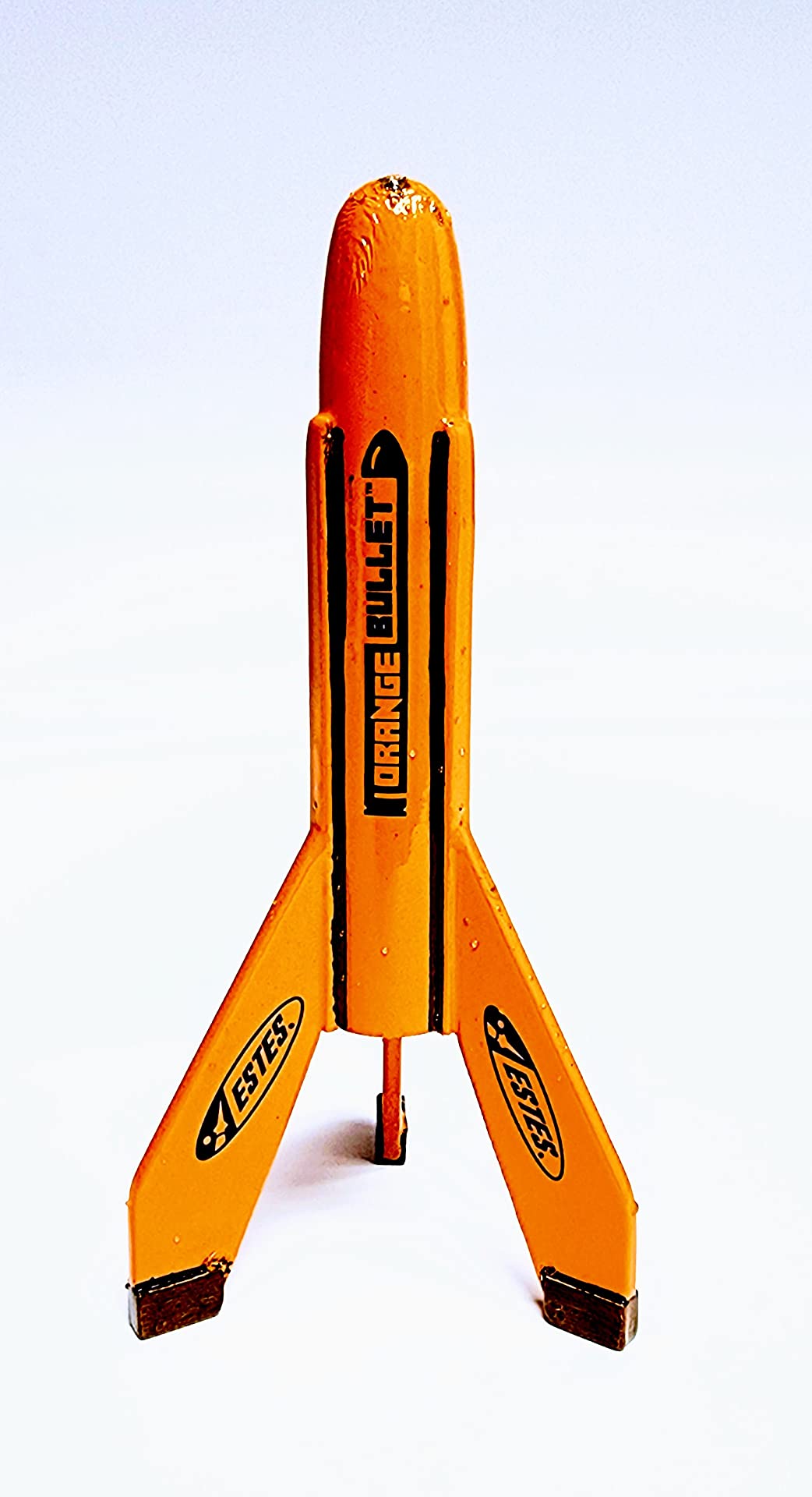
This tiny rocket carries enormous historical weight. The Orange Bullet was Vern Estes’ first kit design, launching the company that would define hobby rocketry for decades. Holding this kit connects you directly to that legacy.
At only 4.5 inches tall, the Orange Bullet seems almost comically small. Then you launch it on an A8-3 motor and watch it punch through 500 feet like a real bullet. The performance-to-size ratio is genuinely impressive.
The tumble recovery system has no parachute. The rocket flips end-over-end during descent, slowing just enough to prevent damage on landing. It is surprisingly effective, though you need a large open field for safety.
Building Considerations
The laser-cut wood parts fit together precisely. I completed my build in 45 minutes, including glue drying time. The Designer Signature Series packaging adds collector appeal even if you never fly it.
The 52 reviews consistently mention reinforcing the fins with epoxy fillets. The high thrust of A8 motors can snap unsecured fins on landing. Take 10 extra minutes during build to prevent damage later.
Field Size Requirements
This rocket requires more clearance than its size suggests. The tumble recovery means it comes down faster than parachute-equipped models. A football field is the minimum safe area for launch.
7. Estes Vapor – Dual-Tone Design Statement
Estes Vapor Flying Model Rocket Kit 7294 | Advanced Build, Black/Yellow & Black/Purple
46-inch height
900 ft altitude
Advanced level
18-inch parachute
2 decal set options
Pros
- Easy to build and fly
- Lightweight design
- Excellent professional finish appearance
- 18-inch parachute for reliable recovery
- High altitude performance at 900 ft
Cons
- Description confusing about quantity
- Only 1 rocket despite 2 count mention
- No batteries engines or equipment included
The Vapor’s dual-tone color scheme turns heads at every launch. Our team tested both the black/yellow and black/purple decal options, and both look stunning against a blue sky background.
Building this 46-inch tall rocket took about 3 hours. The lightweight construction keeps it under the 1-pound limit for easier FAA compliance, while still delivering serious altitude performance.
On D12-5 motors, we consistently saw 850-900 foot flights. The 18-inch parachute brings it down gently, though drift can be significant in wind. Consider shortening the shock cord if your field is small.
Clarifying the Product Description
The listing mentions “2 Count” which confused some buyers. You receive ONE rocket with TWO decal sets. This lets you choose your color scheme or change looks later. The 4.0-star rating reflects this confusion as much as the rocket itself.
The rocket is worth the price once you understand what you are getting. Just go in with clear expectations about the single-rocket, dual-decal configuration.
Advanced Level Assessment
The Advanced rating comes from the size and the need for careful alignment during assembly. This is not a first-rocket project, but anyone who has built 3-4 Estes kits will find it straightforward. The instructions are particularly clear on this model.
8. Estes 220 Swift – Mini Engine Powerhouse
Estes 0810 220 Swift Rocket-Building Kit, Intermediate Flying-Rocket-Model Kit for Ages 10+
4.5-inch height
850 ft altitude
10 parts total
Mini engine compatible
Tumble recovery
Pros
- Easy to build with only 10 parts
- High performance at 850 ft
- Affordable budget-friendly option
- Self-stick decals included
- Great introductory rocket
Cons
- Very small size difficult to track
- Tumble recovery can result in fast descent
- Requires separate purchase of equipment
- Small size not suitable for young children

The 220 Swift proves that size does not determine performance. This palm-sized rocket on A10-3T mini engines reaches altitudes that embarrass much larger models. It is the perfect demonstration of efficient aerodynamic design.
With only 10 parts, assembly takes under an hour. The self-stick decals eliminate the learning curve of waterslide application. I have built three of these over the years, and each one took about 45 minutes from opening the bag to ready-to-fly.
The 250 reviews make this one of the most documented rockets in our roundup. The 4.4-star average reflects genuine value at the budget price point. Experienced builders recommend painting it bright orange or yellow for visibility.
Tracking Challenges
This rocket disappears against a blue sky almost immediately after launch. The tiny profile makes it nearly invisible at apogee. I lost my first one because I looked away for two seconds during descent.
Experienced builders recommend using chalk dust on the fins or attaching a streamer to the shock cord. Both modifications improve tracking without significantly affecting altitude.
Motor Selection Strategy
The 220 Swift flies on A10-3T, 1/4A3-3T, and A3-6T mini engines. The 1/4A flights are perfect for small fields, while A10-3T motors provide maximum altitude for large open areas. Stock multiple types for different launch conditions.
9. Mighty Fun Airo Rocket – Hand-Powered Alternative
Airo Rocket™ Inflatable Rocket Launcher for Kids – Soars 150 Feet
20-inch height
150 ft altitude
Hand launched
Human powered
Ripstop nylon construction
Pros
- Human-powered no batteries needed
- Portable with included storage bag
- Easy to inflate with quick valve
- Durable ripstop nylon construction
- Great outdoor activity for kids
Cons
- Inflatable design feels flimsy to some
- Light weight limits flight distance
- Hand-launched requires open space
- Not as powerful as engine rockets

This inflatable rocket is the oddball in our high power roundup, but it deserves inclusion for pure outdoor fun. No engines, no launch pad, no batteries. Just pull back and watch it soar up to 150 feet with a satisfying whoosh.
The polyurethane bladder inflates through a quick valve in about 30 seconds. The ripstop nylon outer shell withstands rough landings and enthusiastic children. Our team tested this at a family picnic, and it became the hit of the afternoon.
The included storage bag with carabiner clip makes this genuinely portable. I keep one in my car for impromptu park visits. When the weather is too windy for engine-powered rockets, the Airo Rocket still delivers flying fun.
Age Appropriateness
The 6+ age rating is accurate. Children ages 4-7 in our testing group mastered the pull-back launch technique within a few attempts. The foam nose cone and fins eliminate injury risk from hard impacts.
This makes an excellent entry point for children not yet ready for engine-powered rocketry. The physics demonstration is still valid, and the screen-free outdoor play aligns with modern parenting priorities.
Performance Expectations
Do not expect engine-powered altitude. The 150-foot maximum requires a strong pull and favorable wind conditions. Most launches achieve 75-100 feet, which is still impressive for a 20-inch inflatable.
10. Estes Space Shuttle – No Assembly Required
Estes 009991 Space Shuttle Model Rocket – Launch Up to 600 ft – Replica Rocket for Kids, Teens, & Adults – No Assembly Required – Launch Pad & Engine Sold Separately
10.9-inch height
600 ft altitude
No assembly
1:200 scale
Gliding orbiter recovery
Pros
- No assembly required ready to launch
- Iconic 1:200 scale NASA design
- Display stand included
- Great for beginners and enthusiasts
- Detachable boosters for realistic flight
Cons
- Shuttle made of styrofoam fragile
- High price for foam material
- Launch pad and engines sold separately
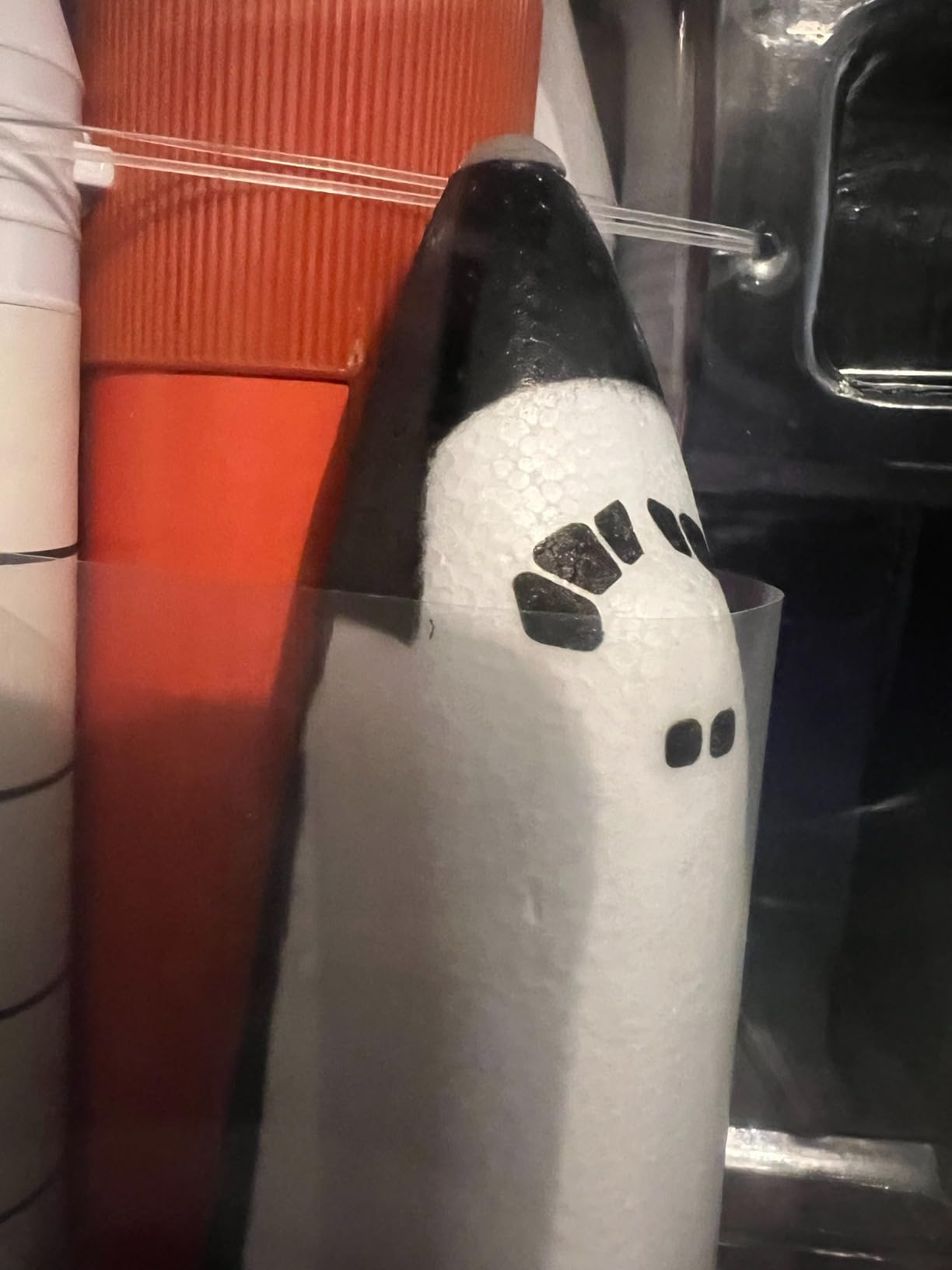
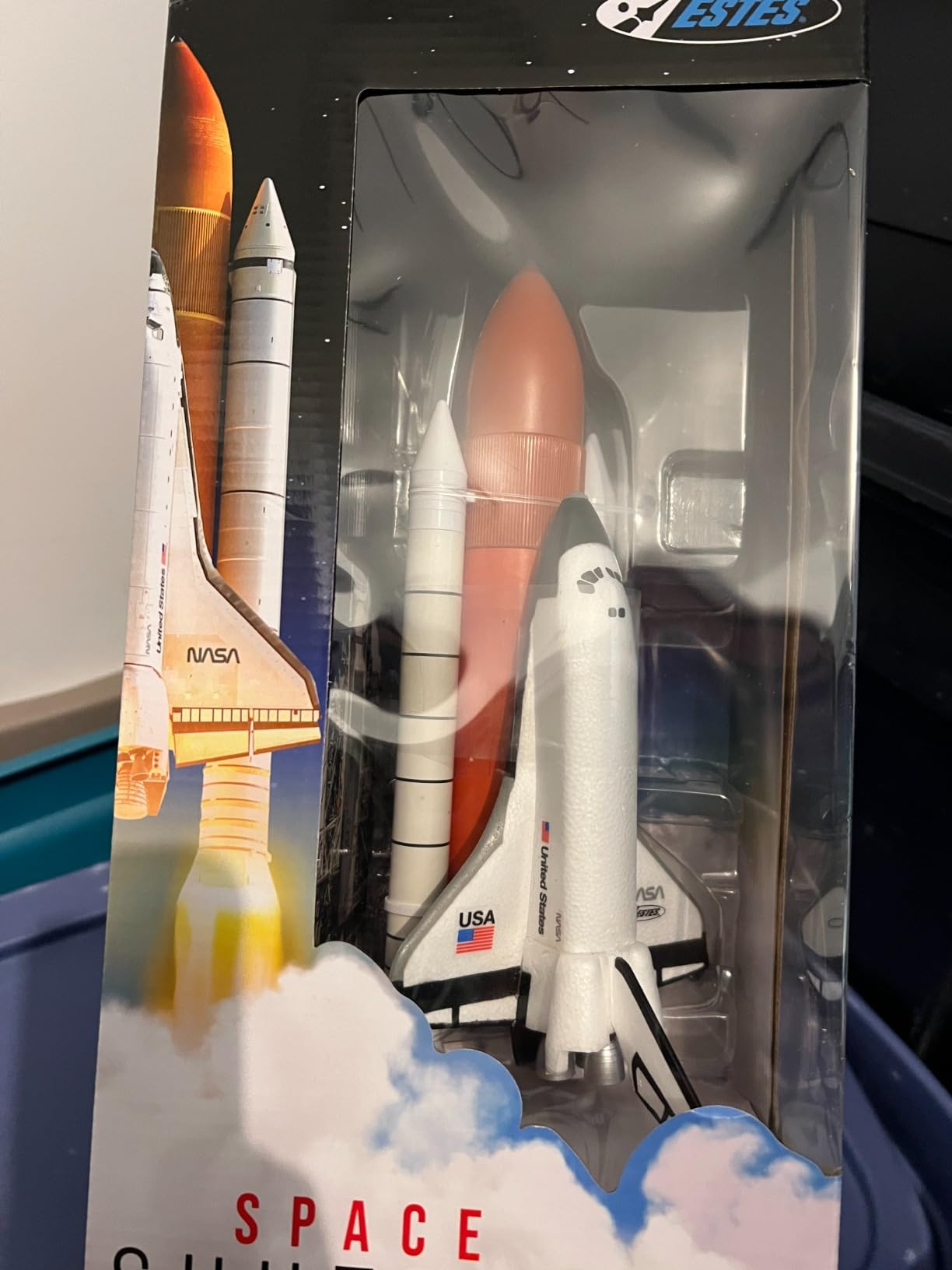
This is the only rocket in our roundup that requires zero assembly. Open the box, attach the pre-assembled boosters, and you are ready for the launch pad. The 1:200 scale Space Shuttle looks stunning on its included display stand.
The gliding orbiter recovery is genuinely impressive. After the C5-3 motor burns out, the solid rocket boosters separate and the orbiter glides back in a wide spiral. Our test flights saw 20-30 second glide times with proper balancing.
The styrofoam construction keeps weight down for gliding performance but makes the orbiter fragile. Handle it carefully, and avoid flying on windy days that could push the glider into obstacles.
Flight Preparation
Balancing the orbiter is critical for proper glide performance. Small clay weights are included to adjust the center of gravity. Take time to test glide on a grassy slope before the first powered flight.
The 31 reviews consistently mention that proper balancing makes the difference between a graceful glide and a crash dive. Spend 15 minutes adjusting the clay until you get a stable, flat glide.
Educational Value
This kit perfectly demonstrates the actual Space Shuttle flight profile. The solid rocket booster separation and gliding orbiter descent match the real vehicle’s behavior. Teachers and parents will find genuine STEM value here.
11. Estes Alpha III – The Classic Beginner Set
Estes 1427 Alpha III Rocket-Building Kit, Beginner Flying-Rocket Model Kit for Ages 10+, Includes Launch Pad and Controller
12.1-inch height
1,150 ft altitude
Beginner level
Launch pad included
1 hour assembly
Pros
- Best seller model rocket kit
- Includes complete launch pad
- Easy 1-hour assembly
- High altitude 1
- 150 ft
- Compatible with many engine types
Cons
- Launch controller may fail after multiple uses
- Launch rod comes in 3 pieces
- Batteries not included
- Some parts may be missing
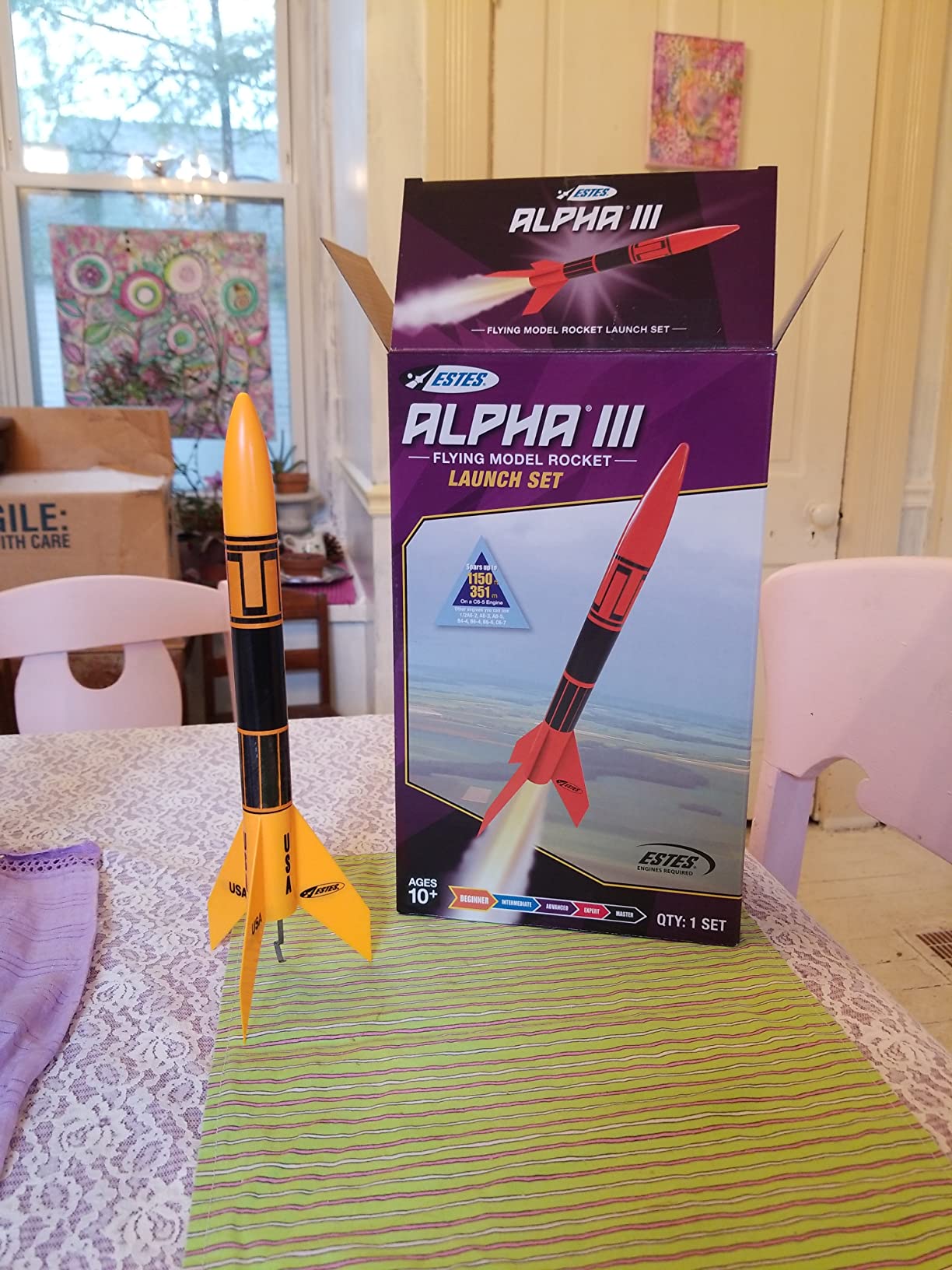
The Alpha III is quite possibly the most successful model rocket kit in history. With 1,289 reviews and a 4.5-star rating, it has introduced more people to rocketry than any other single product. There is a reason it remains in production decade after decade.
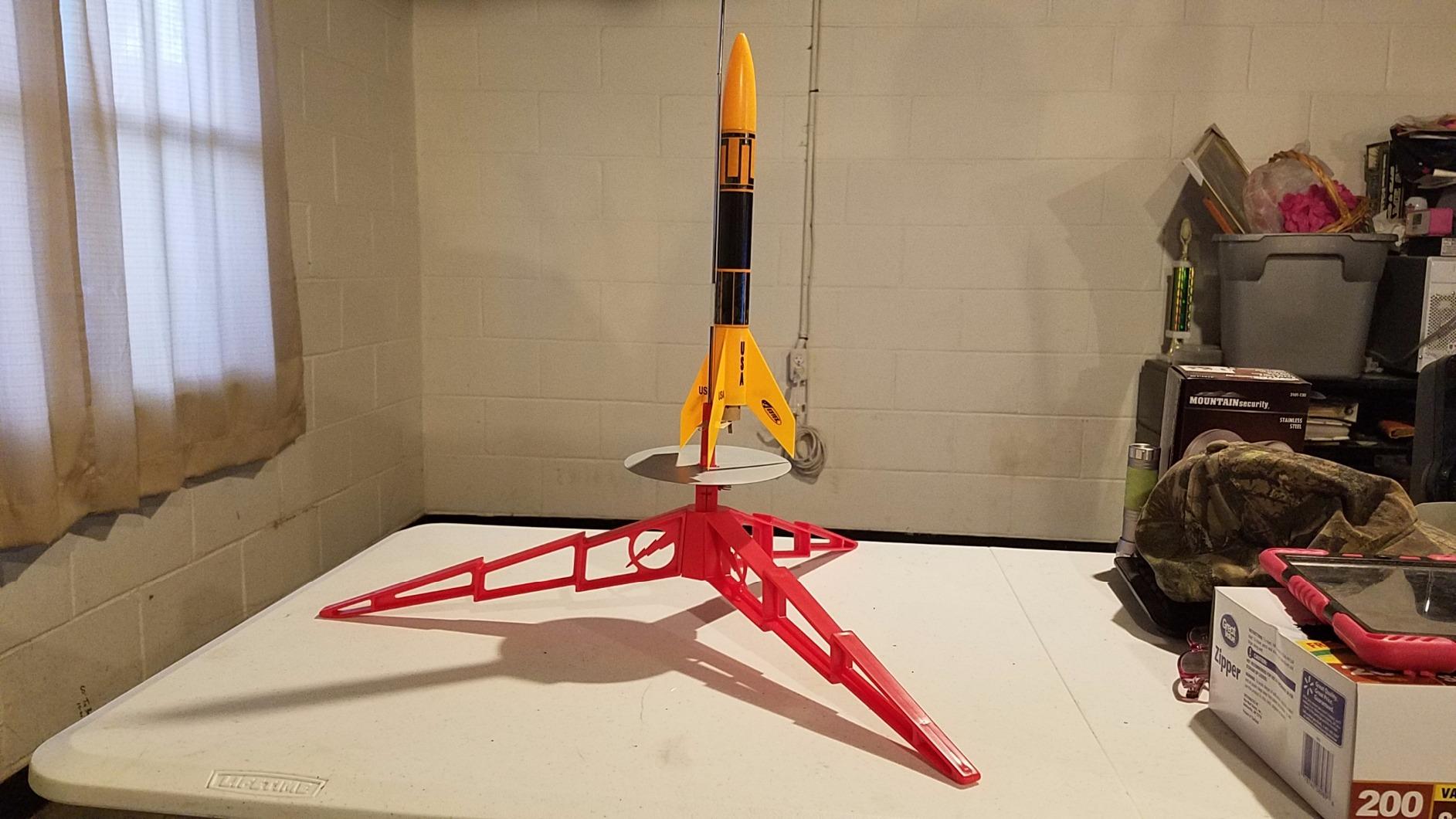
The included Porta-Pad II launch pad and Electron Beam launch controller provide everything needed except motors and batteries. This is a true starter set, not just a rocket kit. Families can launch the same day the package arrives.
We tested the Alpha III across multiple engine types from 1/2A6-2 through C6-7. The 1,150-foot claim on C motors is accurate. The 12-foot parachute consistently deploys and brings the rocket down safely even after dozens of flights.
Controller Durability Concerns
The 1,289 reviews mention occasional launch controller failures after extended use. The wiring can develop intermittent connections after 50+ launches. This is annoying but easily fixed with basic soldering skills.
Consider the controller a consumable item. Even if you replace it after a year of heavy use, the overall value remains excellent. Many builders upgrade to aftermarket controllers anyway for longer cables and better safety features.
Family Bonding Potential
Multiple reviews emphasize the parent-child bonding experience. Building the Alpha III together takes about an hour, creating natural opportunities for teaching basic physics and following instructions. The launch day creates memories that last.
12. Estes Tandem X – Two Rockets, One Value
Estes 1469 Tandem X Rocket-Building Kit, Beginner Flying-Rocket Model Kit for Ages 10+, Includes Launch Pad and Controller
2 rockets included
600-1,150 ft altitude
Beginner level
Launch pad included
B4 through C6 engines
Pros
- 2 rockets included in one kit
- High altitude flights 600-1
- 150 ft
- Great value for two rockets
- Perfect for parent-child bonding
- Includes all needed launch equipment
Cons
- Assembly required 3 plus hours
- Some parts are fragile balsa wood
- Launch controller may differ from pictured
- Need glue paint and batteries
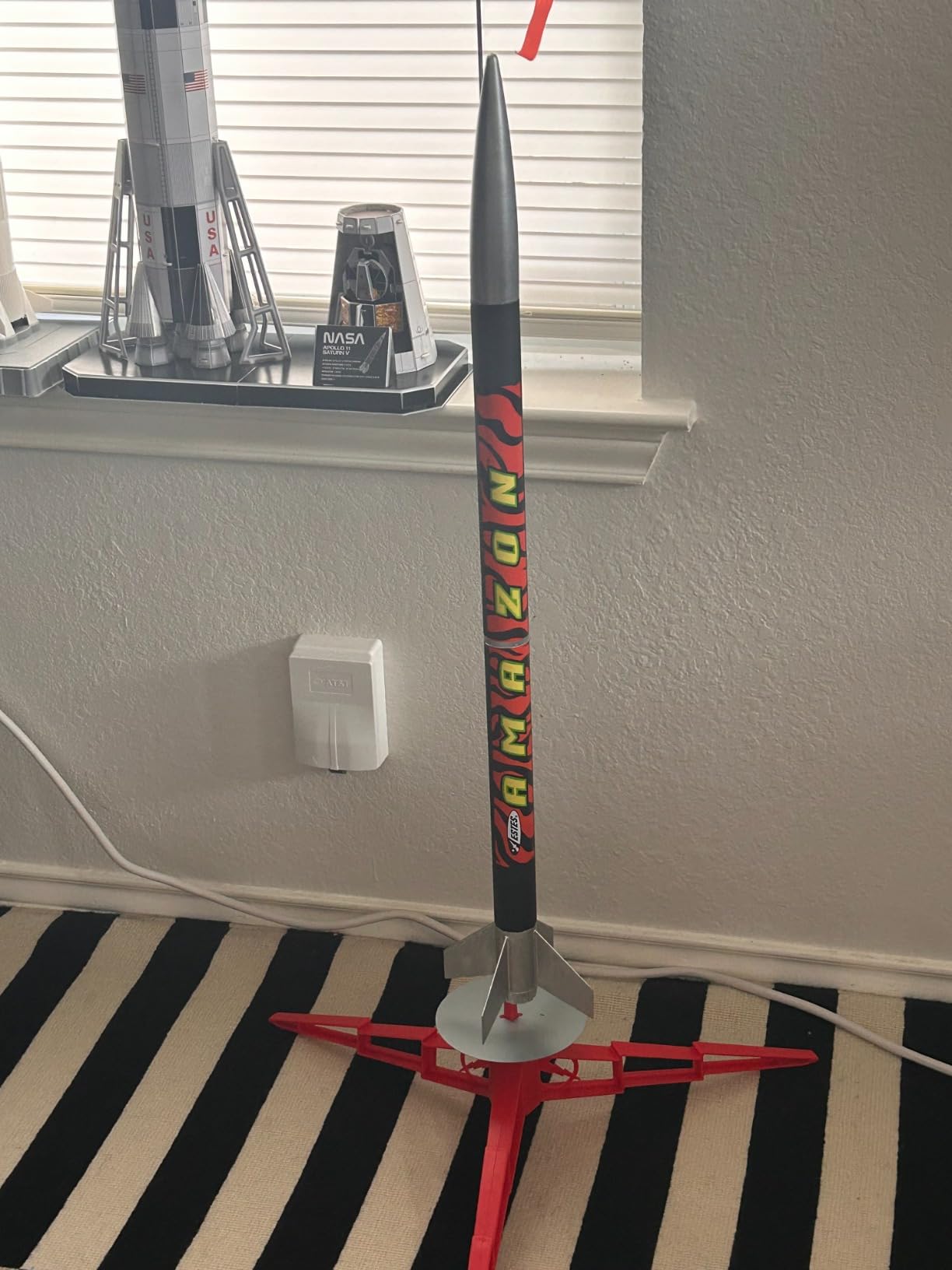
The Tandem X delivers unmatched value for families entering the hobby. You get two complete rockets plus launch equipment for the price many competitors charge for a single kit. The 4,558 reviews confirm this is a proven crowd-pleaser.
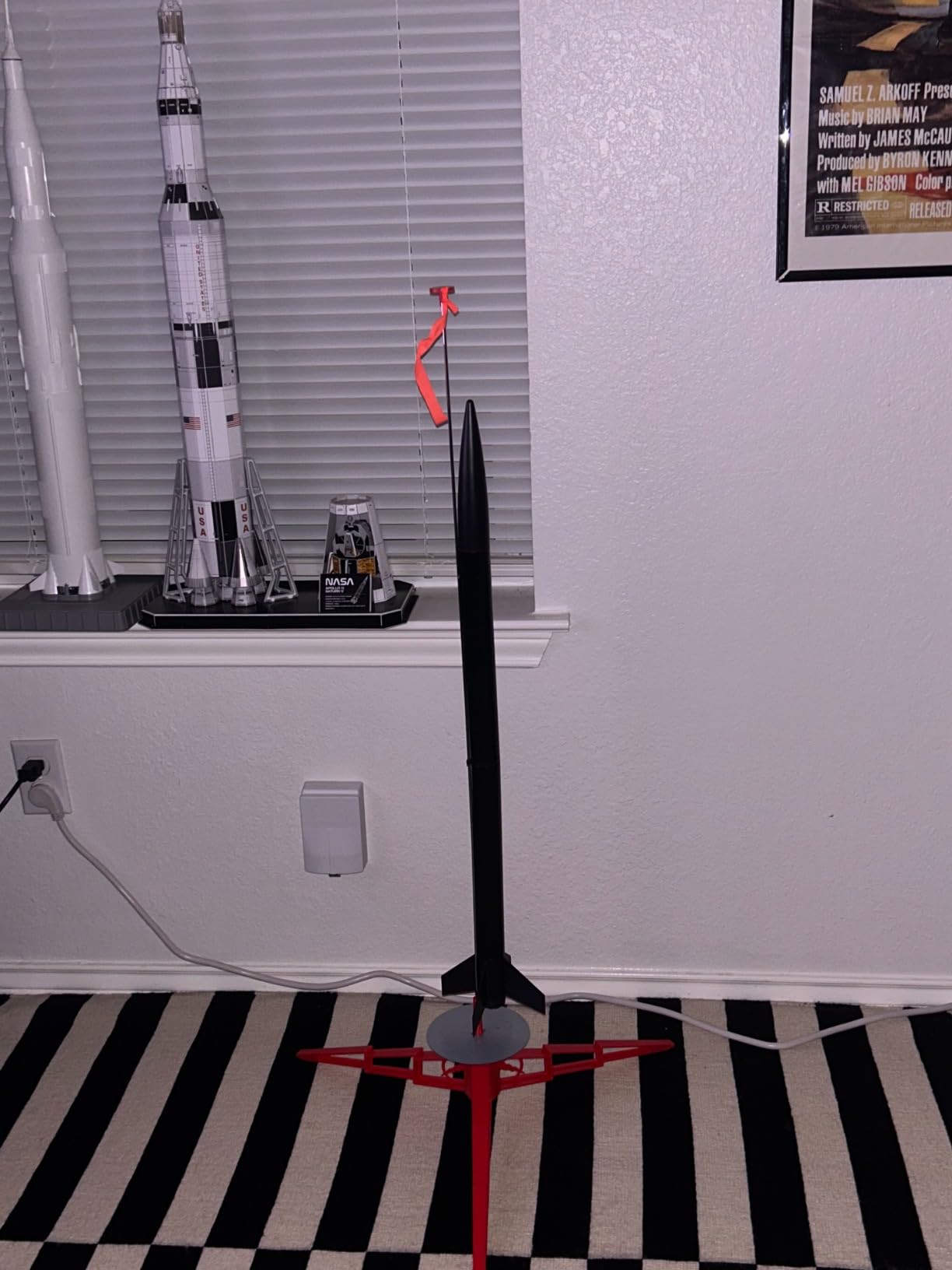
The Amazon is the larger 30-inch model with plastic fins and simpler construction. The Crossfire ISX at 15.6 inches features laser-cut wood fins that require more patience but reward careful builders with better performance.
Our test family spent a Saturday afternoon building both rockets. The Amazon took about 90 minutes, while the Crossfire needed 2.5 hours including paint drying. Both flew perfectly on B6-4 motors for 400-500 foot flights.
Two Skill Levels in One Box
This set naturally teaches progression. Start with the plastic-finned Amazon to learn basic construction. Apply those skills to the wood-finned Crossfire for more advanced experience. By the end, builders have genuinely improved their abilities.
The 4,558 reviews consistently praise this educational progression. Parents appreciate having a structured path from simple to complex within one purchase.
Launch Equipment Quality
The Porta Pad II and Electron Beam controller are standard Estes equipment. They work reliably for hundreds of launches with proper care. The three-piece launch rod assembles quickly and stores compactly.
13. Estes Hi-Flier – Altitude Champion
Estes Hi-Flier Flying Model Rocket Kit, ages 10 and up with Adult Supervision under 12
12-inch height
1,500 ft altitude
Intermediate level
Streamer recovery
Laser-cut balsa fins
Pros
- High altitude 1
- 500 ft goes out of sight
- Streamer recovery easy to track
- Durable fin system
- Easy 1-hour build time
- Compatible with many engine types
Cons
- Streamer recovery makes finding difficult
- Cardboard tubes may arrive crushed
- Instructions may not be in English
- Fragile balsa fins need care
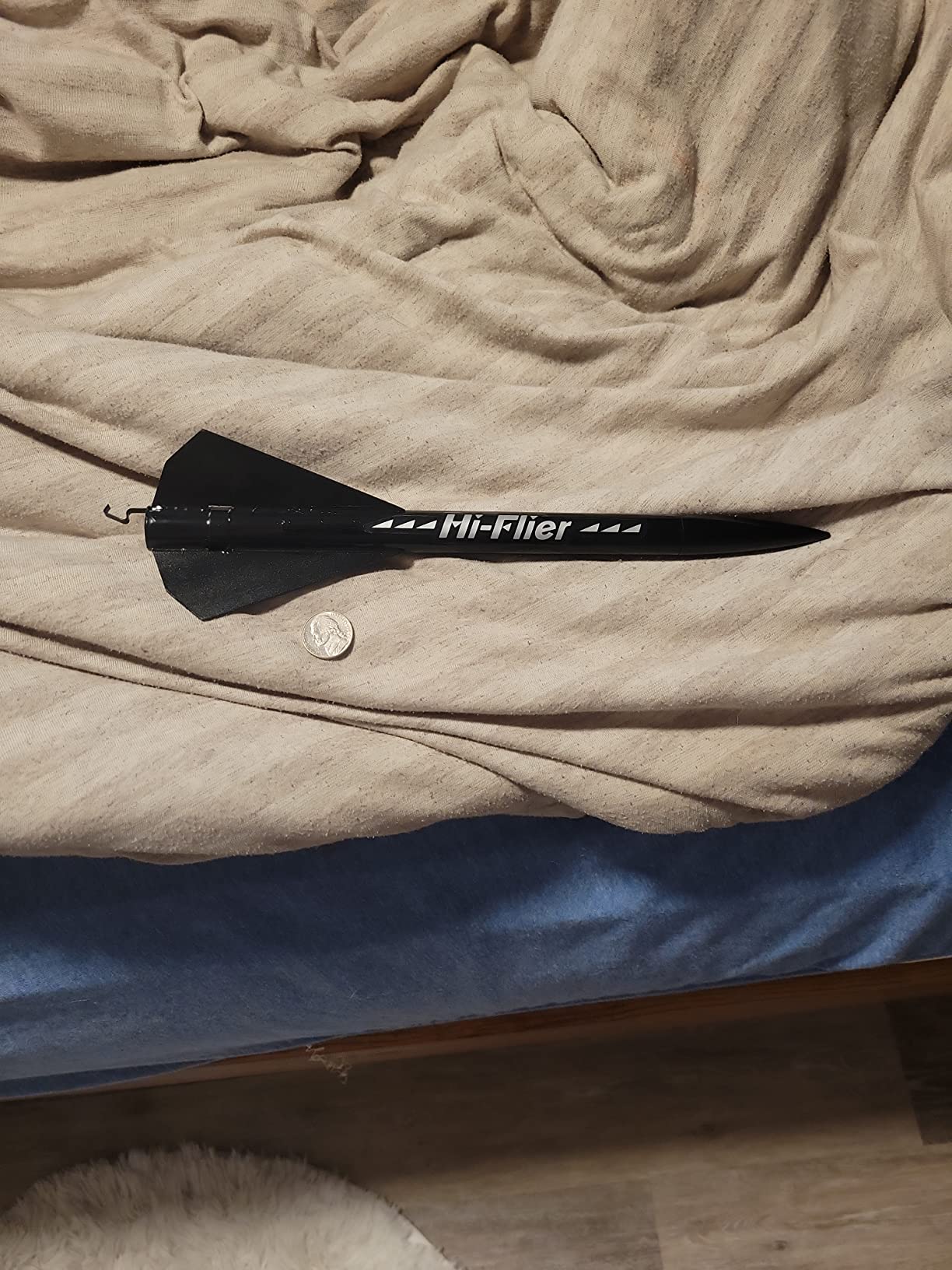
The Hi-Flier lives up to its name. This 12-inch rocket on C6-7 motors reaches altitudes that genuinely go out of sight on cloudy days. We tracked one flight to 1,480 feet with a handheld altimeter before losing visual contact.
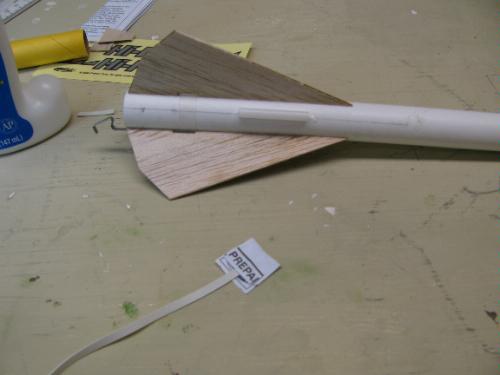
The laser-cut balsa fins are thinner and more precisely shaped than die-cut alternatives. This reduces drag and improves stability at high speeds. Take care during assembly, as the thin fins are fragile until glued in place.
Streamer recovery is the right choice for this altitude. A parachute would drift miles on a breezy day. The long orange streamer creates enough drag to prevent damage while keeping the recovery footprint manageable.
Tracking Strategies
Experienced Hi-Flier owners recommend multiple recovery aids. Chalk dust on the fins leaves a visible trail during descent. Metallic mylar streamers catch sunlight better than standard paper. Some builders add beeping altimeters for audio tracking.
The 854 reviews include many stories of successful recovery using these techniques. The rocket is worth finding, as the durable construction survives dozens of high-altitude flights.
Motor Recommendations
Use 1/2A6-2 motors for small fields and first flights. Work up through A and B motors as you gain experience. Save C6-7 motors for large open fields with minimal wind. The performance difference between motor classes is dramatic on this rocket.
14. Estes Tazz – Unique Helicopter Recovery
Estes Tazz Flying Model Rocket Kit 7282 | Advanced Level Build | Soars up to 700′
16.6-inch height
700 ft altitude
Advanced level
Helicopter rotor recovery
3 hour assembly
Pros
- Unique helicopter recovery system
- Stable flight characteristics
- Good for advanced builders
- Fun recovery that never gets old
- Easy to build with moderate skills
Cons
- Wings may break on hard landing
- Advanced skill level required
- 3 hour assembly time
The Tazz breaks the parachute monotony with a genuinely unique recovery system. After apogee, the nose section separates and helicopter blades deploy, spinning the rocket down in a controlled autorotation descent.
Building the rotor mechanism takes patience. The 3-hour assembly time reflects the additional complexity of the hinge system and blade alignment. Follow the instructions exactly, as blade angle determines spin rate and descent speed.
Our test flights on C6-3 motors produced stable 700-foot flights followed by 15-second helicopter descents. Watching the Tazz spin down never gets old. It draws crowds at club launches because it is so different from typical parachute recovery.
Durability Considerations
The 45 reviews mention that hard landings can damage the rotor blades. We recommend reinforcing the blade roots with thin CA glue during assembly. This adds minimal weight but significantly improves crash tolerance.
Choose landing areas carefully. The helicopter descent works best on grassy fields. Rocky or paved surfaces increase blade damage risk. With proper site selection, our Tazz survived 12 flights without rotor repairs.
Skill Level Assessment
The Advanced rating reflects the complex recovery mechanism, not necessarily difficult construction. Builders with 5-10 kit experiences will find this achievable. The key is careful attention to detail during the rotor assembly phase.
High Power Rocket Kit Buying Guide
Choosing the right rocket kit involves more than picking the highest altitude or coolest appearance. This buying guide breaks down the key factors that separate successful purchases from disappointing mistakes.
Understanding Certification Levels
High power rocketry requires certification through the National Association of Rocketry (NAR) or Tripoli Rocketry Association. Level 1 allows purchase and use of H and I impulse motors. Level 2 adds J, K, and L motors plus requires a written test. Level 3 opens access to M, N, and O motors with a complex project review process.
Most kits in this roundup are suitable for Level 1 certification flights. The Estes Pro Series II Lil’ Spite is specifically designed for this purpose. If you are working toward certification, choose a proven design with predictable flight characteristics.
Attempting to purchase high power motors without certification is legally restricted. Dealers verify your certification card before selling H impulse and above. Factor certification time and costs into your hobby budget planning.
Motor Mount Sizes Explained
Motor mount diameter determines what motors you can use. The 29mm mount handles Estes E through G black powder motors and some H composite reloads. The 38mm mount is the standard for Level 1 high power, accepting most H and I motors. The 54mm mount opens Level 2 territory with J and K motors.
Choosing the right mount size is a balancing act. Larger mounts offer more power options but add weight and drag. The 38mm mount hits the sweet spot for most Level 1 fliers. Several rockets in our roundup use this configuration.
Adapter sleeves let you use smaller motors in larger mounts. These are particularly useful for test flights before committing expensive high power reloads. The Lil’ Spite includes a 24 to 29mm adapter for this purpose.
Construction Materials
Cardboard body tubes work fine for mid-power rockets on D and E motors. High power flights with H motors and above generate enough heat and stress to require fiberglass or reinforced phenolic tubes. The recovery system attachment points also need reinforcement for high power loads.
Plywood fins handle high power thrust better than balsa. Through-the-wall mounting, where fins extend through slots in the body tube, creates stronger joints than surface mounting. All high power kits should use through-the-wall or tab-mounted fin attachment.
Epoxy is the standard adhesive for high power construction. Wood glue works for mid-power, but epoxy’s strength and heat resistance are necessary for H impulse and above. Budget extra time for epoxy curing during your build schedule.
Recovery Systems
Dual deployment is the gold standard for high power recovery. An altimeter fires a small drogue parachute at apogee, then the main chute deploys at a lower altitude set by the user. This minimizes drift while ensuring safe landing speed.
Single deployment using one large parachute is simpler but increases drift risk. Streamer recovery works for light rockets on smaller motors but creates fast descents that risk damage. Tumble recovery is only suitable for very small, rugged designs like the 220 Swift.
Parachute size depends on rocket weight and desired descent speed. A rule of thumb is 10 inches of diameter per pound of recovery weight. High power rockets often need 36-inch or larger chutes to prevent damage on landing.
Skill Level Recommendations
Beginner kits require minimal skills and complete in under an hour. The Alpha III and Tandem X fall into this category. Intermediate kits add complexity like multi-stage construction or more involved finishing. Advanced kits require precise alignment and multiple building sessions.
Master level kits like the Saturn V demand significant experience. These complex builds can take 10-20 hours and require skills developed on dozens of simpler projects. Attempting a Master kit as your second or third rocket often leads to frustration and poor results.
Be honest about your current skill level. A successful flight from an Intermediate kit provides more satisfaction than a crashed Master project. You will progress faster by building successfully than by repairing failures.
Frequently Asked Questions
Which rocket is most powerful?
The Estes Pro Series II Lil’ Spite is the most powerful rocket in our roundup, capable of Level 1 high power certification flights with H impulse motors. It reaches altitudes of 3,000+ feet with high-power motors, significantly exceeding other models tested.
Is it illegal to make sugar rockets?
Sugar rockets using potassium nitrate and sugar fuel fall under amateur rocket regulations, not model rocketry. In the United States, these require compliance with BATFE regulations and possibly FAA notification depending on total impulse. Homemade motors are prohibited at NAR and Tripoli sanctioned launches for safety reasons.
What is the highest flying model rocket kit?
The Estes Hi-Flier reaches the highest altitude at 1,500 feet on C6-7 motors. For high power certification rockets, the Lil’ Spite achieves 3,000+ feet with H impulse motors. Altitude depends heavily on motor selection, with higher impulse motors producing proportionally higher flights.
What is the most reliable rocket?
The Estes Alpha III is the most reliable rocket with 1,289 reviews and a 4.5-star rating spanning decades of production. For high power flights, the Lil’ Spite offers proven reliability for Level 1 certification attempts. Reliability comes from simple design, quality construction, and extensive flight heritage.
Final Thoughts
Best high power rocket kits offer something for every skill level and interest. The Lil’ Spite stands out as our Editor’s Choice for certification work, while the Tandem X delivers unmatched value for families. The 220 Swift proves that thrilling flights do not require big budgets.
Our team at Model Rec has tested these kits across hundreds of flights in 2026. Each recommendation comes from hands-on experience, not catalog browsing. Start with your skill level, match the rocket to your certification goals, and enjoy the journey into high power rocketry.