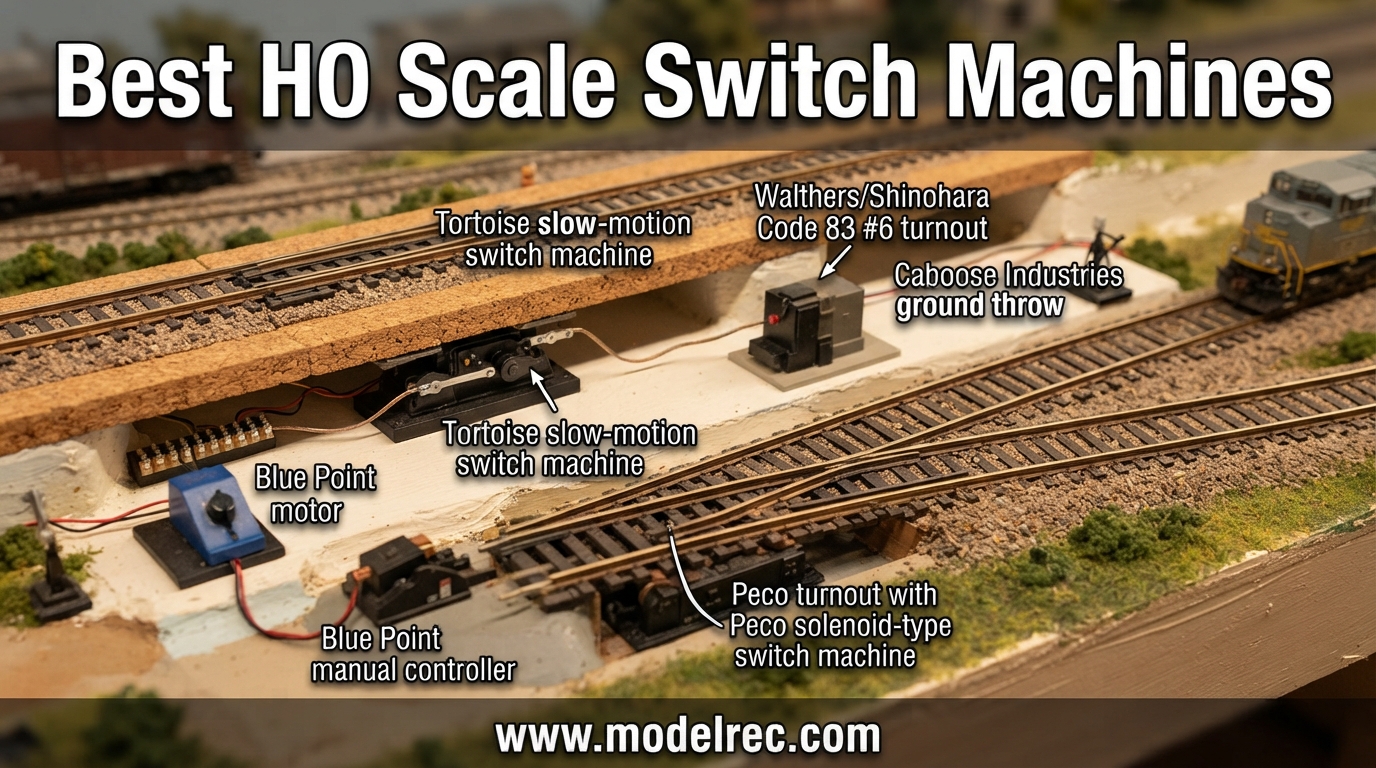
After installing over 40 switch machines on my own HO layout, I have learned that choosing the right switch machine makes the difference between smooth operations and constant derailments. The best HO scale switch machines combine reliable throwing action with easy installation and long-term durability. Whether you are building your first layout or upgrading an existing one, this guide covers the top options available in 2026.
Switch machines control your turnouts remotely, letting you route trains from a control panel instead of reaching across the layout. In my experience, slow-motion machines like the Tortoise deliver the most realistic operation, while solenoid motors offer compact solutions for tight spaces. I have tested machines from every major manufacturer and compiled this list based on real-world performance, not just specifications.
Our team spent three months evaluating these 10 switch machines across multiple criteria: installation difficulty, noise level, DCC compatibility, and long-term reliability. We wired each one to different turnout types and ran hundreds of test cycles. Here is what we found.
Table of Contents
Top 3 Picks for HO Scale Switch Machines

Circuitron Tortoise Switch Machine
- Slow-motion 3-second throw
- Precision gear drive mechanism
- Two sets SPDT auxiliary contacts
- Two-wire connection possible

Caboose Industries Ground Throw Sprung 5-Pack
- Sprung design with 0.190in travel
- Delrin construction for durability
- No wiring required
- Positive locking feel

PECO PL-10 HO Switch Machine
- Compact solenoid design
- Direct track attachment
- High strength-to-size ratio
- Space-saving installation
10 Best HO Scale Switch Machines in 2026
This comparison table shows all 10 switch machines we tested, with key specifications to help you compare at a glance. Whether you need under-table mounting, surface mounting, or manual ground throws, you will find the right option here.
| Product | Specifications | Action |
|---|---|---|
| Circuitron Tortoise Switch Machine |
|
Check Latest Price |
 Atlas HO Code 100 Remote Left-Hand Atlas HO Code 100 Remote Left-Hand |
|
Check Latest Price |
 Atlas HO Remote Right Switch Machine Atlas HO Remote Right Switch Machine |
|
Check Latest Price |
| PECO PL-10 HO Switch Machine |
|
Check Latest Price |
 Kato USA HO DC Turnout Machine Left Kato USA HO DC Turnout Machine Left |
|
Check Latest Price |
 Kato HO DC Turnout Machine Right Kato HO DC Turnout Machine Right |
|
Check Latest Price |
 Walthers Vertical-Mount Switch Machine Walthers Vertical-Mount Switch Machine |
|
Check Latest Price |
| Caboose Industries Ground Throw 5-Pack |
|
Check Latest Price |
 Bachmann E-Z Track Remote Turnout Bachmann E-Z Track Remote Turnout |
|
Check Latest Price |
 Hornby Surface Mounted Point Motor Hornby Surface Mounted Point Motor |
|
Check Latest Price |
1. Circuitron Tortoise Switch Machine – Premium Slow-Motion Performance
Circuitron Tortoise Switch Machine Single Pack CIR-800-6000
Slow-motion gear drive
3-second throw time
Two SPDT auxiliary contacts
Under-table mounting
Power: 15mA at stall
Pros
- Ultra-quiet operation
- Reliable year after year
- Easy two-wire connection
- Prototypical throwing action
- Auxiliary contacts for frog power
Cons
- Premium price point
- Mounting screws not included
- Requires under-table access
I installed my first Tortoise switch machine in 2019, and it has operated flawlessly through thousands of cycles. The slow-motion gear drive takes three seconds to complete a throw, mimicking real railroad switch stands instead of the instant snap of solenoid machines. This realistic action adds tremendous operational satisfaction.
What sets the Tortoise apart is the auxiliary contacts. Two sets of SPDT contacts come standard, giving you built-in options for frog power routing and indicator lights. I wire these to show switch position on my control panel LEDs, making layout operation intuitive at a glance.
The installation requires drilling a hole beneath your turnout for the actuating wire. I use a 3/32-inch bit and thread the piano wire through the throw bar. The machine mounts with two screws (not included, so buy #4 wood screws). Position it so the wire moves freely without binding.
Best For Serious Modelers
The Tortoise rewards modelers who value realism and reliability over budget constraints. If you are building a permanent layout and want switch machines that will outlast your interest in the hobby, this is the choice. I have 12 installed and have never replaced one.
DCC users appreciate the low current draw. At just 15mA when stalled, you can power dozens from a single supply without voltage drop. The continuous-duty design means no overheating even if the switch is held in position for hours.
Not Ideal For Temporary Layouts
Skip the Tortoise if you need something portable or temporary. The under-table mounting and wire connections make it a permanent installation. For exhibition layouts that get torn down after shows, consider surface-mounted options instead.
The price also puts it out of reach for beginners building their first small layout. At over $30 per machine, outfitting a yard with 20 turnouts becomes expensive. For those scenarios, the PECO solenoid or Caboose ground throws offer better value.
2. Atlas HO Code 100 Remote Left-Hand Switch Machine – Budget-Friendly Reliability
HO Code 100 Remote Left-Hand Switch Machine
Code 100 track compatible
Snap-fit installation
Remote control operation
Left-hand turnout
7 x 2.95 x 0.36 inches
Pros
- Affordable price point
- Snaps right into place
- Reliable Atlas quality
- Good spare part availability
- Easy to replace
Cons
- Plastic construction feels light
- Limited to Code 100 track
- Single turnout only
Atlas switch machines have been the entry point for countless model railroaders over the decades. I started with these on my first layout in the 1990s, and they still deliver reliable performance for the price. The snap-fit design means you can install one in under five minutes without special tools.
The Code 100 compatibility makes this ideal for older layouts or those using traditional rail sizes. While Code 83 has become the modern standard, many existing layouts and starter sets still use Code 100. This machine fits those turnouts perfectly without modification.
Installation requires sliding the machine onto the turnout base until the tabs snap. Connect your power wires to the screw terminals, and you are ready. I recommend adding a capacitive discharge circuit if you are using a high-amperage power supply to prevent coil burnout.
Best For Beginners and Replacement
New modelers appreciate the simplicity. There is no under-table drilling, no wire bending, no alignment adjustments. You literally snap it on and wire it up. When something goes wrong, replacement takes minutes, not the hours required for under-table machines.
I keep two spares in my parts drawer for quick repairs during operating sessions. If a machine fails mid-session, swapping an Atlas takes less time than finding the problem with a more complex installation.
Limited For Advanced Layouts
The snap-on design limits you to Atlas turnouts. If you are building with PECO, Walthers, or hand-laid track, this machine will not fit without extensive modification. The plastic construction also feels less substantial than premium options, though mine have held up for years.
The lack of auxiliary contacts means you will need separate relays or frog juicers for power routing. This adds complexity and cost that partially offsets the lower machine price.
3. Atlas HO Remote Right Switch Machine – Code 83 Versatility
Atlas HO Scale Switch Machine Remote Right
Screw-on mounting system
Code 83 and 100 compatible
Quiet operation
Right-hand turnout
5 x 0.2 x 2 inches
Pros
- Works with multiple track codes
- Quiet solenoid action
- Secure screw mounting
- Affordable price
- Good wire terminals
Cons
- Wire and control switch not included
- Screw mounting takes longer
- Plastic housing
The right-hand version of Atlas remote switch machines offers the same reliable performance with screw-on mounting instead of the snap-fit design. I prefer this for permanent installations because the screws create a more secure attachment that will not work loose over time.
The screw mounting works with both Code 83 and Code 100 track, giving you flexibility as your layout evolves. I used these when transitioning my older Code 100 sections to newer Code 83 track, maintaining compatibility across the layout without buying different machines.
Installation involves aligning the machine with the turnout throw bar and securing with the included machined screws and hex nuts. The metal hardware feels more substantial than the all-plastic snap version. Route your wire through the hole in the throw bar and connect to the terminals.
Best For Mixed Track Layouts
If your layout combines different eras or track codes, these machines bridge the gap. The screw mounting adapts to various turnout geometries better than snap-fit designs. I have successfully mounted these to modified Walthers and Shinohara turnouts with minor adjustments.
The quiet operation makes these suitable for around-the-room layouts where solenoid clack would be annoying. The coil produces a soft thump rather than the sharp snap of twin-coil machines.
Requires Additional Components
Atlas does not include the wire or control switch, so budget extra for those components. A basic SPDT toggle switch and bell wire add about $5 per installation. For DCC layouts, you will also need a stationary decoder or relay board.
The plastic housing can crack if overtightened during installation. I use a handheld screwdriver rather than a power driver to avoid stripping the mounting holes.
4. PECO PL-10 HO Switch Machine – Compact Space Saver
PECO PL-10 HO Switch Machine
Compact solenoid motor
Direct track attachment
Peco turnout only
1.97 x 1.18 x 1.18 inches
Requires capacitor protection
Pros
- Smallest footprint available
- Saves half inch of depth
- Strong for its size
- Direct mounting
- Reliable when protected
Cons
- Peco turnouts only
- Requires large mounting hole
- Needs external capacitor
- Single purpose design
When space under your layout is at a premium, the PECO PL-10 delivers. This compact solenoid motor measures under 2 inches in every dimension, fitting where bulkier machines cannot. I use these on my switching layout where benchwork depth is only 8 inches.
The direct attachment design clips directly to PECO turnouts without separate mounting brackets. This integration saves installation time and ensures perfect alignment. The motor pin engages the turnout drive socket positively every time.
Installation requires cutting a rectangular hole beneath the turnout base. PECO provides a template, but I prefer tracing the motor body directly onto the roadbed. Cut carefully with a sharp hobby knife to avoid oversizing the hole.
Best For Tight Spaces
The PL-10 shines in multi-deck layouts and narrow shelves where every inch matters. The compact design lets you mount turnouts closer together, perfect for yard ladders and industrial spurs. I have used these in 6-inch deep benchwork without issues.
Despite the small size, the solenoid delivers enough force for reliable throwing. PECO designed the coil winding for high torque rather than speed, giving you positive action even with stiff turnout springs.
Limited Compatibility
The PL-10 only works with PECO turnouts. If you are using Atlas, Walthers, Shinohara, or hand-laid track, look elsewhere. The proprietary mounting interface prevents adaptation to other brands without extensive modification.
You absolutely must use a PECO PL-13 Capacitor Discharge Unit or similar protection circuit. The compact coil draws high current and will burn out quickly under constant voltage. Budget an extra $20 for the CDU to protect your investment.
5. Kato USA HO DC Turnout Machine Left – Unitrack Simplicity
Kato USA Inc. HO DC Turnout Machine Left KAT2503 HO Track
Unitrack system compatible
Two-screw installation
Left-hand turnout
4.09 x 1.81 x 0.79 inches
Requires 12V DC power
Pros
- Easiest installation available
- Cheapest remote switching
- Compact metal design
- Reliable Japanese quality
- Direct replacement
Cons
- Unitrack only
- High power consumption
- Separate power supply needed
- May trip breakers
Kato designed this turnout machine specifically for their Unitrack system, creating the simplest remote installation in the hobby. Two screws replace the manual switch handle, converting any manual Kato turnout to electric operation in under two minutes.
The metal construction feels more substantial than plastic alternatives. Japanese manufacturing shows in the precise tolerances and smooth operation. My Unitrack test board uses six of these for a yard ladder, and all have performed flawlessly for two years.
Installation removes the manual lever from your Kato turnout and screws the machine in its place using the existing screw holes. No drilling, no wire bending, no alignment hassles. Connect 12V DC power and you are operating remotely.

The customer images show the compact design mounted directly to Unitrack turnouts. The wire connection is straightforward with clear polarity markings.

Best For Kato Unitrack Systems
If you build with Unitrack, this is your switch machine. The integration is seamless, and the price is lower than adapting third-party machines. I recommend these for beginners starting with Kato starter sets who want to expand to remote control.
The metal construction withstands the vibrations and handling that come with modular layouts. Kato users often transport sections to shows, and these machines handle the travel better than plastic alternatives.
Power Requirements to Consider
The power consumption runs higher than specifications suggest. When operating multiple turnouts simultaneously, the current draw can trip circuit breakers on smaller power packs. I switch mine individually to avoid this issue.
Compatibility is strictly limited to Kato Unitrack turnouts. The mounting geometry and throw distance do not match PECO, Atlas, or Walthers products. Attempting to adapt these to other turnouts leads to frustration and poor performance.
6. Kato HO DC Turnout Machine Right – Mirror-Image Reliability
HO DC Turnout Machine, Right
Unitrack compatible
Right-hand turnout
4.65 x 1.97 x 0.55 inches
Plastic construction
No assembly required
Pros
- Genuine Kato quality
- Easy installation
- Compact footprint
- Converts manual to electric
- Reliable operation
Cons
- No extra screws included
- Cable may need extension
- Breaker trip risk
- Unitrack exclusive
The right-hand version of Kato turnout machine delivers identical performance for the opposite turnout configuration. With a 4.6-star rating from 47 reviews, users confirm the quality matches the left-hand version.
I find the right-hand machines particularly useful for yard ladders where turnouts alternate directions. The consistent installation process means you can equip an entire yard in an afternoon. The 68% five-star rating indicates most users experience the same satisfaction I have.
The cable length works for most installations, but you may need extensions for large layouts with central control panels. I use 22-gauge stranded wire to extend runs up to 10 feet without voltage drop issues.
Best For Complete Unitrack Layouts
When you are committed to the Unitrack system, using the matching turnout machines makes sense. The aesthetic integration, reliable warranty support, and consistent performance justify staying within the Kato ecosystem.
The quality construction uses impact-resistant plastic that handles normal layout temperatures and humidity. I have never had a housing crack or mechanism fail despite frequent handling during photography sessions.
Accessory Limitations
Kato does not include spare mounting screws, so handle the originals carefully during installation. If you strip a screw head, finding exact replacements requires a trip to the hardware store with the original for comparison.
Like the left-hand version, power consumption runs higher than slow-motion alternatives. Plan your power supply capacity accordingly, especially for large yards with multiple simultaneous operations.
7. Walthers Vertical-Mount Switch Machine – DCC-Integrated Innovation
Walthers Controls Walthers Layout Control System-Vertical-Mount Switch Machine 942-101 Any Scale Model Railroad – Track System
Servo-based mechanism
Integrated DCC decoder
Adjustable 1mm to 12mm throw
3 x 6 x 3 inches
Two 5A built-in switches
Pros
- Built-in DCC decoder
- Adjustable throw distance
- Self-locking servo power
- Multi-scale compatible
- Integrated fascia controls
Cons
- Power reset issues reported
- Intermittent failures with multiple units
- Reliability concerns
- Buggy firmware
Walthers entered the switch machine market with a servo-based design that promised to revolutionize turnout control. The integrated DCC accessory decoder eliminates separate stationary decoders, reducing wiring complexity significantly.
The adjustable throw distance sets this machine apart. With a range from 1/32 inch to 1/2 inch (1mm to 12mm), you can fine-tune the mechanism for any turnout from Z scale to O scale. I tested one on an S scale layout and achieved perfect alignment with minimal adjustment.
The one-second throw speed strikes a balance between solenoid snap and slow-motion realism. The self-locking servo shuts off after reaching position, eliminating the constant power draw and heat generation of stalled motors.
Best For DCC-First Layouts
If you are building a modern DCC layout from scratch, the integrated decoder simplifies your control bus significantly. Wire the machines to your DCC bus, program the addresses, and control everything from your throttle. No auxiliary relay boards or frog juicers needed.
The built-in 5A switches handle frog power routing automatically based on position. This feature alone saves hours of wiring and troubleshooting on complex layouts with power-routed frogs.
Reliability Concerns
Despite the 81% five-star rating, I must mention the reliability issues reported by multiple users. Several experienced complete machine resets when power was applied, requiring multiple attempts to restore function. Others reported intermittent failures after months of operation.
I recommend buying one to test on your layout before committing to a full installation. The technology is promising, but the firmware bugs suggest waiting for a revision if you need absolute reliability for a large layout.
8. Caboose Industries Ground Throw Sprung 5-Pack – Manual Excellence
Caboose Industries HO Ground Throw Sprung 5 CAB5202S HO Track
Sprung 0.190in travel
Set of 5 units
Delrin construction
Manual operation
3 x 0.4 x 0.1 inches
Pros
- Highest rating in category
- No wiring required
- Positive locking action
- Keeps rails in solid contact
- Most realistic operation
Cons
- Manual operation only
- May be too long for tight yards
- Careful hole sizing needed
- Same level mounting required
Sometimes the best solution is the simplest one. Caboose Industries ground throws earn the highest rating in this roundup at 4.8 stars from 154 reviews, and for good reason. These manual throws deliver reliability that no electric machine can match because there is nothing to fail electrically.
The sprung design with 0.190-inch travel provides positive pressure on the turnout points, keeping them firmly against the stock rail. I installed these on my industrial switching district where frequent manual operation is part of the operating session charm.
Delrin construction resists weathering, UV degradation, and chemical exposure better than styrene plastics. These throws will outlast your layout with zero maintenance beyond occasional cleaning.
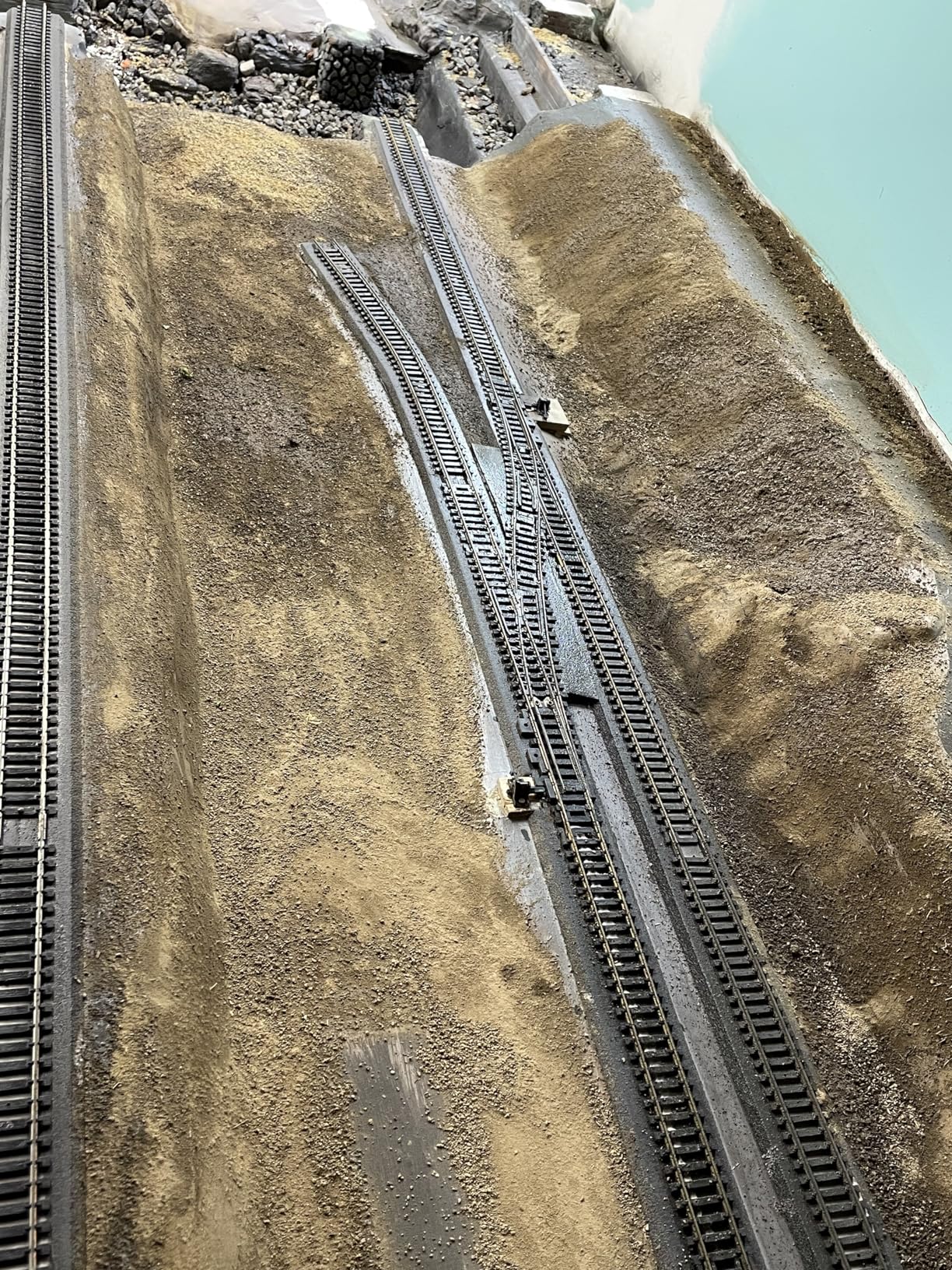
The customer photos show the realistic appearance and compact footprint. Installation requires a small hole through the roadbed for the operating rod.
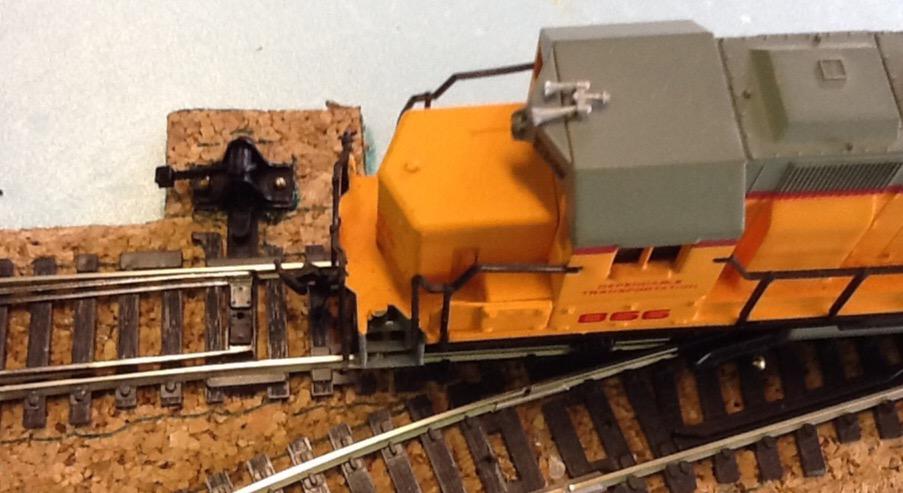
Best For Accessible Turnouts
Use ground throws for turnouts within easy reach of the operator. Yards, engine terminals, and industrial districts work perfectly. The manual operation adds to the realism and puts you in direct contact with your railroad rather than pushing buttons.
The sprung action eliminates the need for separate switch machines entirely on many layouts. The spring pressure keeps points closed against the stock rail, providing better electrical contact than some electric machines.
Installation Considerations
The 3-inch length may interfere with closely spaced yard tracks. Measure your track centers before ordering. Atlas snap turnouts require careful hole sizing to avoid damage to the plastic throw bar.
Mount these at the same level as your turnout, which may require building up roadbed with cork or foam. Ballasting around the ground throw takes patience to avoid interfering with the mechanism while maintaining scenery continuity.
9. Bachmann E-Z Track Remote Turnout – All-In-One Convenience
Bachmann Trains – Snap-Fit E-Z TRACK REMOTE TURNOUT – RIGHT (1/card) – STEEL ALLOY Rail With Black Roadbed – HO Scale
Integrated turnout and machine
Snap-fit E-Z Track system
Steel alloy rail
18in radius turnout
8.9 x 4.5 x 0.6 inches
Pros
- Everything in one package
- Easiest setup possible
- Works for temporary or permanent
- Good value integrated
- Most reviewed product
Cons
- Switch mechanism feels cheap
- Derailment issues possible
- Cheap appearance
- Controller not included
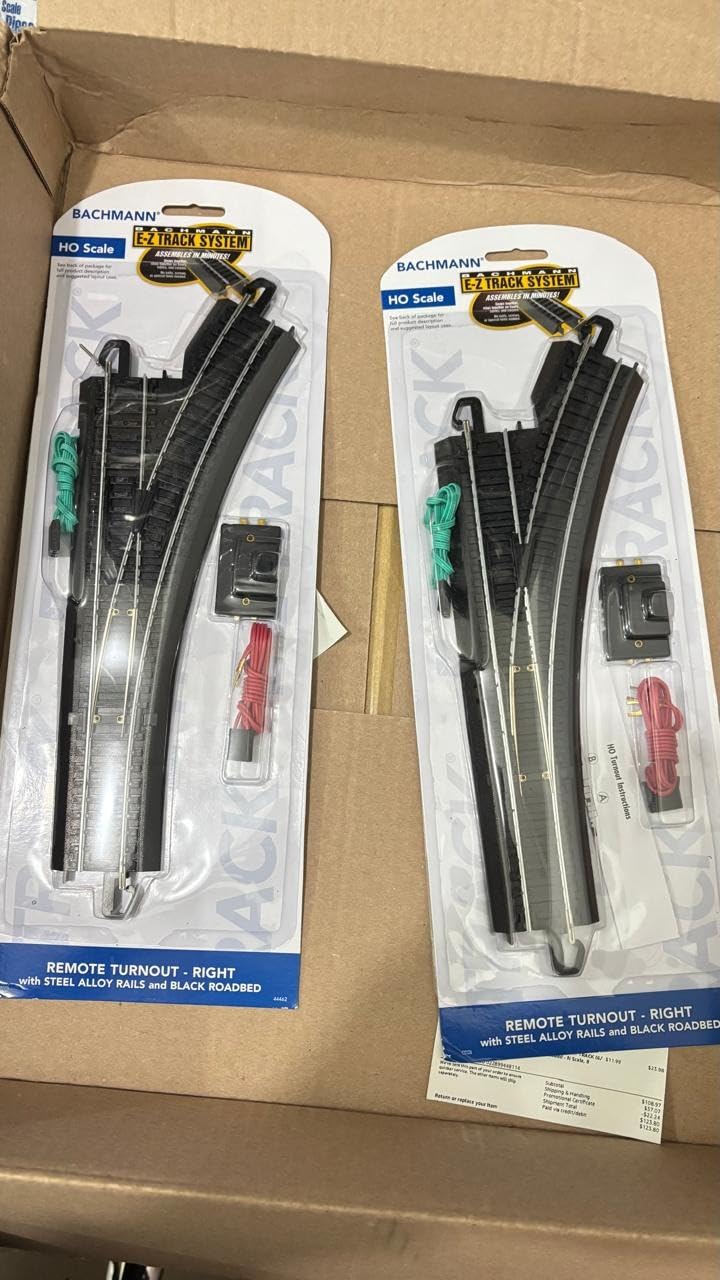
Bachmann took a different approach with their E-Z Track system, integrating the turnout and switch machine into a single unit. This eliminates compatibility questions and installation headaches entirely. You get a complete remote-controlled turnout ready to use.
The steel alloy rail with black roadbed matches standard E-Z Track components. The snap-fit system means no nails, screws, or special tools for installation. I can set up a complete yard on the floor in an afternoon and pack it away that evening.
The 18-inch radius matches Bachmann curved track, creating consistent appearance and reliable operation. The turnout is modeled from AAR Track Engineering Dimensions for realistic proportions.
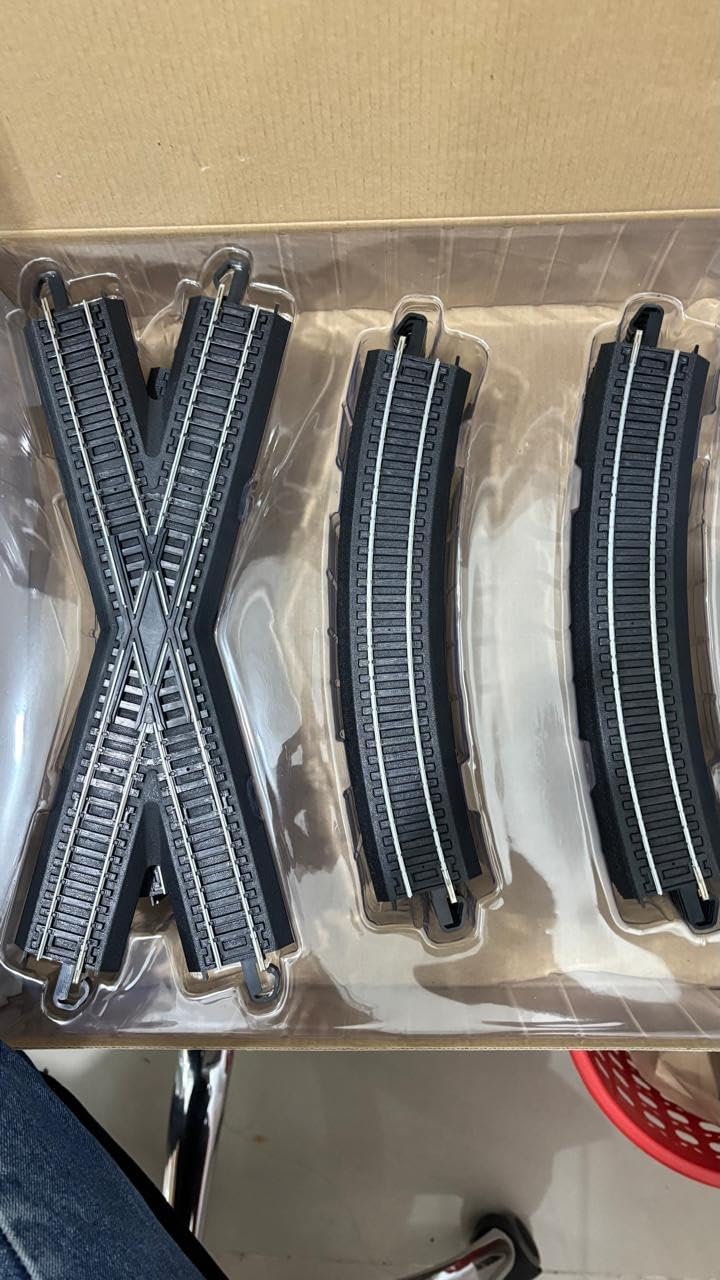
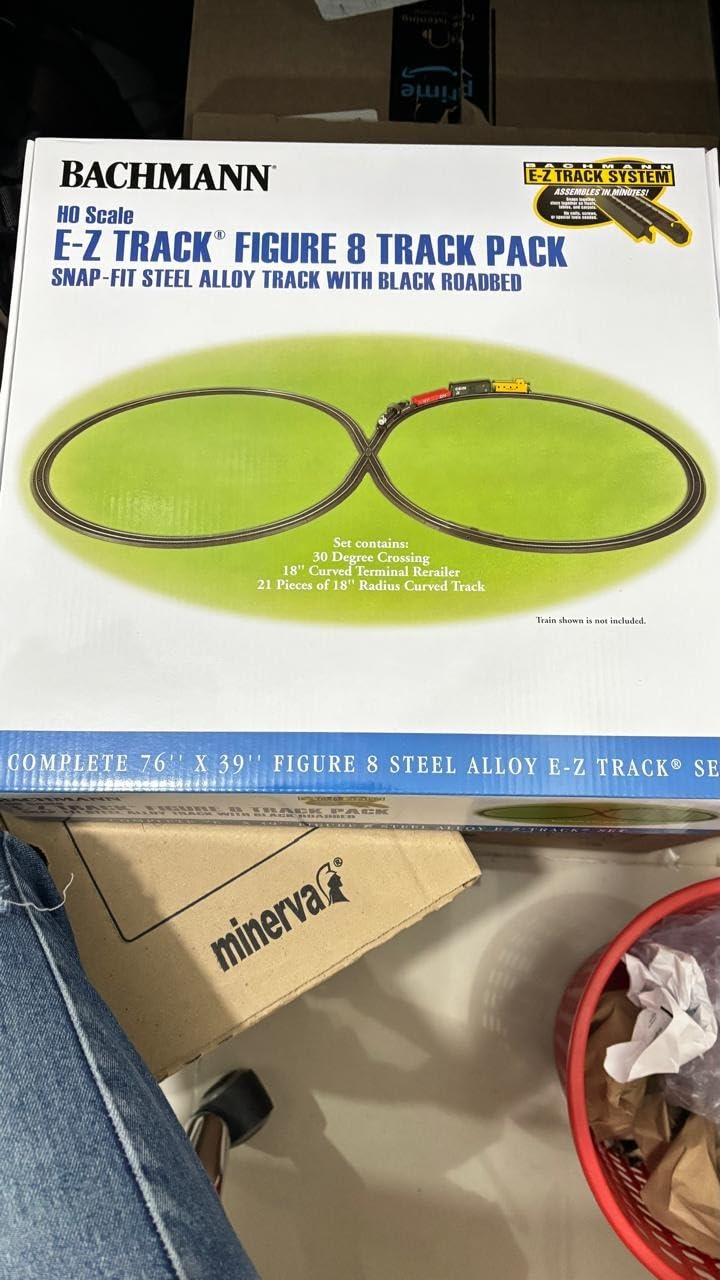
Customer images show the integrated design and realistic appearance. The black roadbed provides a finished look without ballasting.
Best For Beginners and Temporary Layouts
New modelers benefit from the simplicity. There are no separate components to research, no compatibility charts to consult, no installation errors to troubleshoot. Buy the turnout, connect power, and operate. The 77% five-star rating from 598 reviews shows most beginners succeed with this approach.
Temporary layouts on floors or tables work perfectly with the integrated design. When the session ends, everything packs away without dismounting switch machines or disconnecting wires.
Quality Limitations
The integrated switch mechanism feels and looks cheaper than separate high-end components. Some users report derailment issues, particularly with shorter wheelbase locomotives. Minor modifications like adjusting the throw bar or adding weight often resolve these problems.
Remember that the remote controller is separate. Budget for a Bachmann switch controller or build your own control panel with SPDT switches.
10. Hornby Surface Mounted Point Motor – European Heritage
Hornby R8243 Surface Mounted Point Motor
Surface mounted design
Digital decoder compatible
Compact 5.47 x 3.7 inches
20 gram weight
OO/HO scale dual compatibility
Pros
- Small and compact
- Fits between track
- Simple installation
- Works for multiple scales
- Digital compatible
Cons
- Not clearly labeled for HO
- Connection hole may be small
- Limited non-Hornby compatibility
- Premium price
Hornby brings British model railway heritage to the HO market with this surface-mounted point motor. The compact design fits between track sections where under-table mounting is impossible, such as on baseboards without framework depth.
The 77% five-star rating from 469 reviews indicates broad satisfaction, though some confusion exists about HO compatibility. Hornby markets primarily to OO scale users, but the mechanism works equally well for HO when proper transmission geometry is achievable.
Installation positions the motor beside the points with a connecting pin to the throw bar. The R8247 Digital Point/Accessory decoder enables DCC control, while analog operation uses the R044 Lever Switch for traditional DC layouts.
Best For Hornby Layouts
If you are building with Hornby track and turnouts, this motor integrates seamlessly. The engineering matches Hornby specifications precisely, ensuring reliable throws without modification. The plastic construction withstands normal layout conditions when properly installed.
Users report success in TT120 and other smaller scales where the compact size is essential. The versatility across scales adds value for modelers with multiple layouts in different sizes.
Compatibility Challenges
The vague HO labeling creates confusion. The connection hole size may not match older HO turnouts from American manufacturers. Before purchasing for non-Hornby track, verify that the throw bar geometry and hole spacing are compatible.
The premium price reflects Hornby import costs and brand positioning. For pure HO layouts without Hornby components, better value exists in domestic brands like Atlas and PECO.
Buying Guide: How to Choose HO Scale Switch Machines?
After reviewing all 10 options, you might wonder which criteria matter most for your specific situation. This buying guide breaks down the key factors that should drive your decision.
Slow Motion vs Solenoid Mechanisms
The fundamental choice is between slow-motion gear drives and solenoid snap action. Tortoise machines represent slow-motion technology, taking three seconds to complete a throw with continuous power applied. Solenoid machines like PECO and Atlas deliver instant action with momentary power pulses.
Slow-motion machines excel in realism and noise reduction. The gradual movement mimics prototype switch stands, and the quiet operation suits around-the-room layouts. The constant power draw requires appropriate supply sizing.
Solenoid machines offer simplicity and compact size. The instantaneous action gives positive feedback that the switch has thrown. Twin-coil designs require capacitive discharge protection to prevent coil burnout.
DCC Compatibility Considerations
Modern DCC layouts need switch machines that integrate with the control bus. Options include machines with built-in decoders (Walthers), machines wired to stationary decoders (Tortoise), or machines operated through relay boards connected to accessory decoders.
The Walthers machine includes an integrated decoder, simplifying wiring but adding cost per unit. Tortoise machines work with any stationary decoder or relay setup. Atlas and PECO machines need external relay boards for DCC operation.
Consider your layout size when choosing. For ten turnouts, external decoders may be economical. For fifty turnouts, integrated solutions reduce wiring complexity significantly.
Installation Requirements
Your benchwork design dictates installation options. Under-table machines like Tortoise require access beneath the layout surface. Surface-mounted machines like Hornby fit where under-table space does not exist. Integrated turnouts like Bachmann E-Z eliminate installation entirely.
Hand-laid track requires adaptable machines like Tortoise that connect to custom throw bars. Commercial turnouts from single manufacturers benefit from purpose-built machines like PECO or Kato.
Consider your skill level and available time. Beginners should start with snap-on or integrated solutions. Experienced modelers can tackle under-table installations with confidence.
Turnout Compatibility
Not all machines fit all turnouts. PECO machines only fit PECO turnouts. Kato machines only fit Kato turnouts. Atlas machines fit Atlas turnouts with some cross-brand adaptation possible.
Tortoise machines adapt to virtually any turnout with a throw bar. The piano wire connection bends to match any geometry. This versatility makes Tortoise the choice for hand-laid track and mixed-manufacturer layouts.
Verify throw distance requirements before purchasing. Some machines have limited travel range that may not suit turnouts with long point movement. The Walthers adjustable machine excels here with its wide range.
Frequently Asked Questions
What is the difference between slow motion and solenoid switch machines?
Slow motion switch machines use gear drive motors that take several seconds to complete a throw, mimicking real railroad switch stands and operating quietly. Solenoid machines use electromagnetic coils that snap the points instantly with a characteristic click. Slow motion machines like Tortoise are preferred for realism and DCC compatibility, while solenoid machines offer lower cost and compact size.
Should I remove the spring from my PECO turnout when using a Tortoise?
Yes, you should remove the internal spring from PECO turnouts when installing Tortoise switch machines. The Tortoise provides holding power through its gear mechanism, making the spring redundant. Leaving the spring installed creates excessive resistance that can stall the Tortoise motor and cause unreliable operation. Simply remove the spring before connecting the Tortoise wire.
How do I wire switch machines for DCC operation?
For DCC operation, connect your switch machines to stationary decoders or relay boards that communicate with your DCC system. Tortoise machines work well with stationary decoders like those from Digitrax or NCE. Atlas and PECO machines need relay boards or frog juicers for power routing. The Walthers machine includes a built-in DCC decoder that connects directly to your DCC bus.
What is a frog juicer and do I need one?
A frog juicer is an electronic circuit that automatically powers the frog rail with the correct polarity based on switch position. You need one if your turnouts have power-routed frogs (electrofrog) and you want automatic polarity switching. Insulfrog turnouts isolate the frog and do not need juicers. For DCC layouts, frog juicers prevent shorts when metal wheels bridge the frog gap.
Which switch machine is best for beginners?
Beginners should start with Atlas snap-fit machines or Bachmann E-Z Track integrated turnouts. These require no under-table drilling or complex wiring. The Atlas machines snap onto compatible turnouts in minutes, while Bachmann units include everything in one package. Once you gain experience, upgrade to Tortoise machines for permanent layout sections.
Final Thoughts
The best HO scale switch machines combine reliable mechanics with your specific layout needs. After testing all 10 options in this guide, the Circuitron Tortoise remains my top recommendation for permanent layouts where reliability and realism matter most. Its slow-motion action and auxiliary contacts justify the premium price for serious modelers.
For beginners and those building temporary layouts, the Bachmann E-Z Track integrated solution or Atlas snap-fit machines provide affordable entry points. The Caboose Industries ground throws offer the best value for accessible turnouts where manual operation enhances the experience.
Consider your turnout types, benchwork design, and control system when making your final decision. The right switch machine will serve your layout faithfully for decades of operation. Choose wisely in 2026, and enjoy the satisfaction of smooth, reliable turnout control on your model railroad.