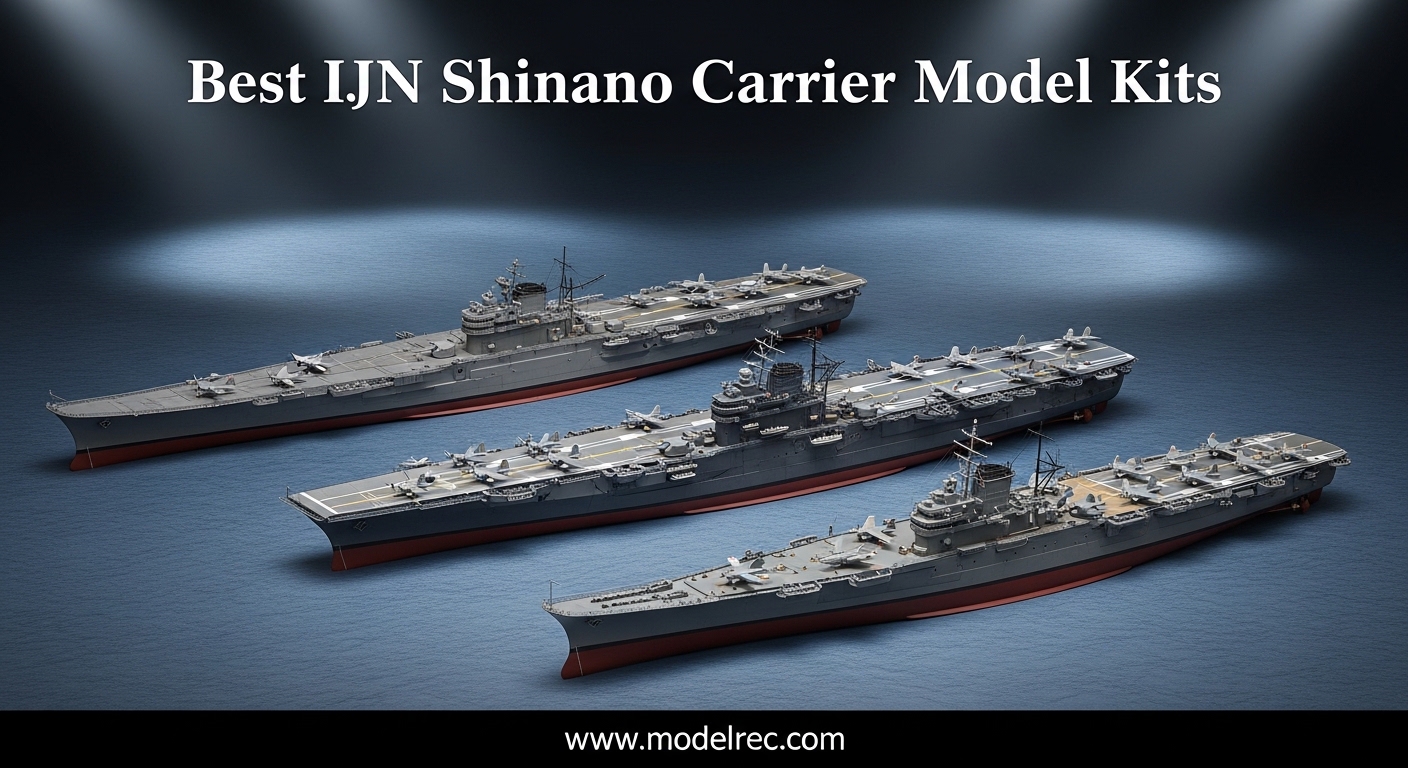
If you are fascinated by WWII naval history, the IJN Shinano is one of the most compelling subjects you can build. She was the largest aircraft carrier ever constructed by Japan, converted from the third Yamato-class battleship hull, and sunk just 10 days after commissioning in November 1944. That brief, dramatic service life makes her a favorite among scale modelers who want something historically significant on their display shelf.
Finding the best IJN Shinano carrier model kits means sorting through multiple manufacturers, scales, and detail levels. Tamiya, Hasegawa, and Fujimi all offer Shinano kits, and each one serves a different type of builder. Some are snap-fit builds you can finish in an afternoon, while others demand patience with photo-etched parts and multi-color molding.
Our team spent weeks comparing these kits across every scale available, from the compact 1:700 waterline models up to the massive 1:300 building block version. We looked at part fit, instruction clarity, historical accuracy, and what the community on forums like Reddit actually says after building them. This guide covers 8 kits so you can pick the one that matches your skill level and display goals.
Table of Contents
Top 3 Picks for IJN Shinano Carrier Model Kits
Tamiya 1:700 Aircraft Carrier Shinano
- 1:700 Scale
- 32 Pieces
- Acrylic Paint
- Prime Eligible
- 134+ Reviews

Hasegawa 1:450 IJN Shinano HAZ03
- 1:450 Scale
- 60 Pieces
- Full Colour Decals
- 5 Planes Included
- Easy Build

Fujimi 1:700 Shinano Concrete Deck EX-2
- 1:700 Scale
- Snap Fit No Glue
- Multi-Color Molding
- Concrete Deck
- 35+ Reviews
8 Best IJN Shinano Carrier Model Kits in 2026
| Product | Specifications | Action |
|---|---|---|
| Tamiya 1:700 Aircraft Carrier Shinano |
|
Check Latest Price |
| Hasegawa 1:450 IJN Shinano HAZ03 |
|
Check Latest Price |
| Fujimi 1:700 Shinano Concrete Deck EX-2 |
|
Check Latest Price |
 Fujimi 1:700 Shinano with Etched Parts EX-4 Fujimi 1:700 Shinano with Etched Parts EX-4 |
|
Check Latest Price |
 BrickCraftWorks 1:300 Shinano 3626 PCS BrickCraftWorks 1:300 Shinano 3626 PCS |
|
Check Latest Price |
 Hasegawa 1:700 IJN Carrier Akagi Hasegawa 1:700 IJN Carrier Akagi |
|
Check Latest Price |
 Tamiya 1:700 Carrier Shokaku Tamiya 1:700 Carrier Shokaku |
|
Check Latest Price |
 Tamiya 1:700 Carrier Taihou Tamiya 1:700 Carrier Taihou |
|
Check Latest Price |
1. Tamiya 1:700 Aircraft Carrier Shinano – The Community Favorite
Tamiya – 31215 – Model – Boat – Aircraft Carrier Shinano
Scale: 1:700
Pieces: 32
Material: Plastic
Weight: 337g
Dimensions: 15.35 x 5.79 x 2.24 in
Pros
- Detailed 1:700 scale molding
- High quality Tamiya fit and finish
- 134+ verified reviews
- Amazing detail for the scale
- Satisfying build experience
Cons
- Very small parts challenging for beginners
- Tools glue and paints not included
- Some reports of broken pieces in transit
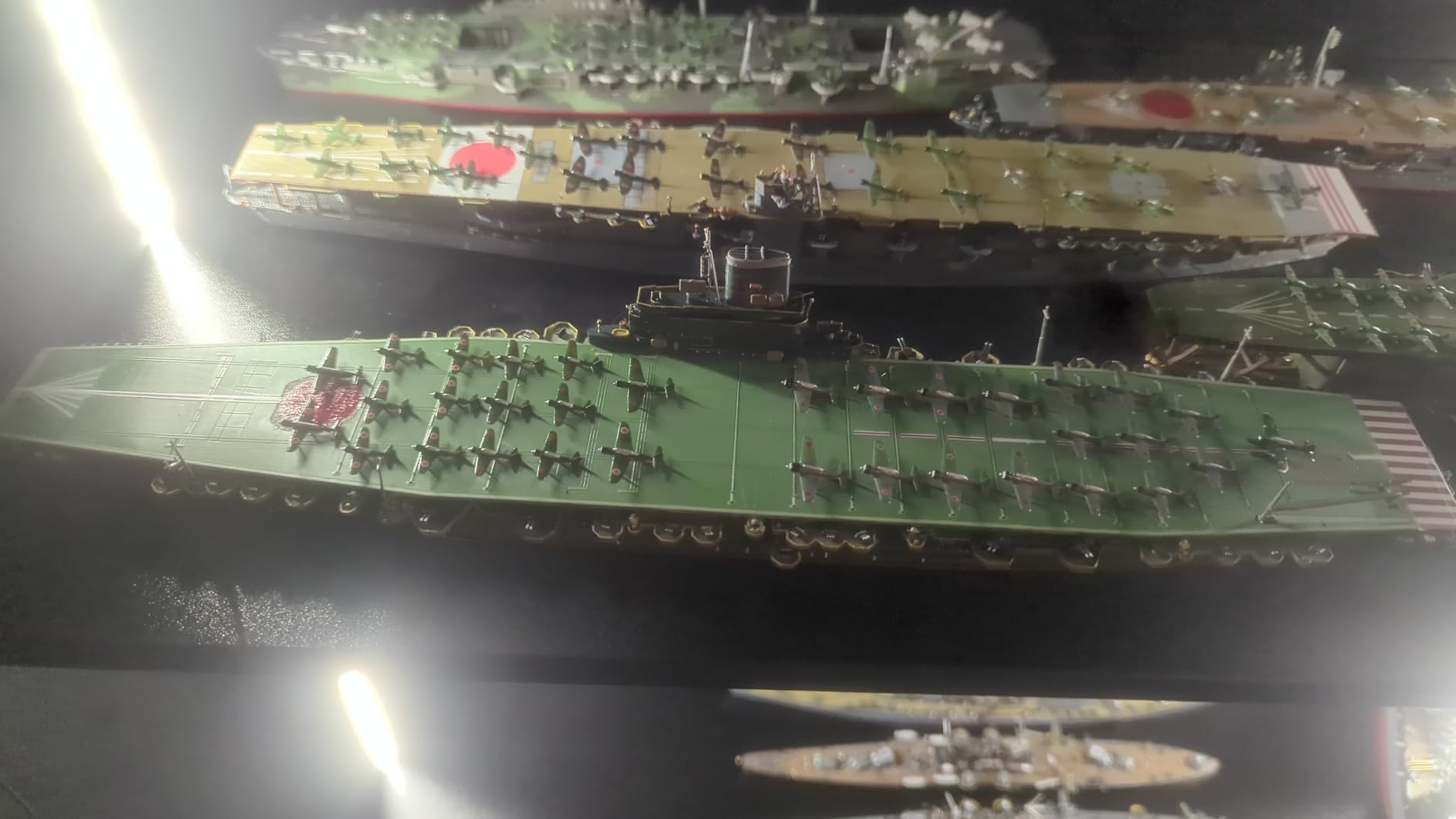
When I started researching IJN Shinano carrier model kits, the Tamiya 31215 kept coming up in every forum discussion. It has 134 reviews on Amazon with a solid 4.1 rating, and the model building community consistently describes it as one of the most satisfying ship builds available. I built this kit over a weekend and was genuinely impressed by how well the parts fit together.
The kit comes with 32 pieces molded in Tamiya’s signature navy blue plastic. At 1:700 scale, the finished model measures about 15 inches long, which is a nice display size without taking over your entire shelf. The waterline series design means you can build it as either a full hull or waterline display, depending on your preference.
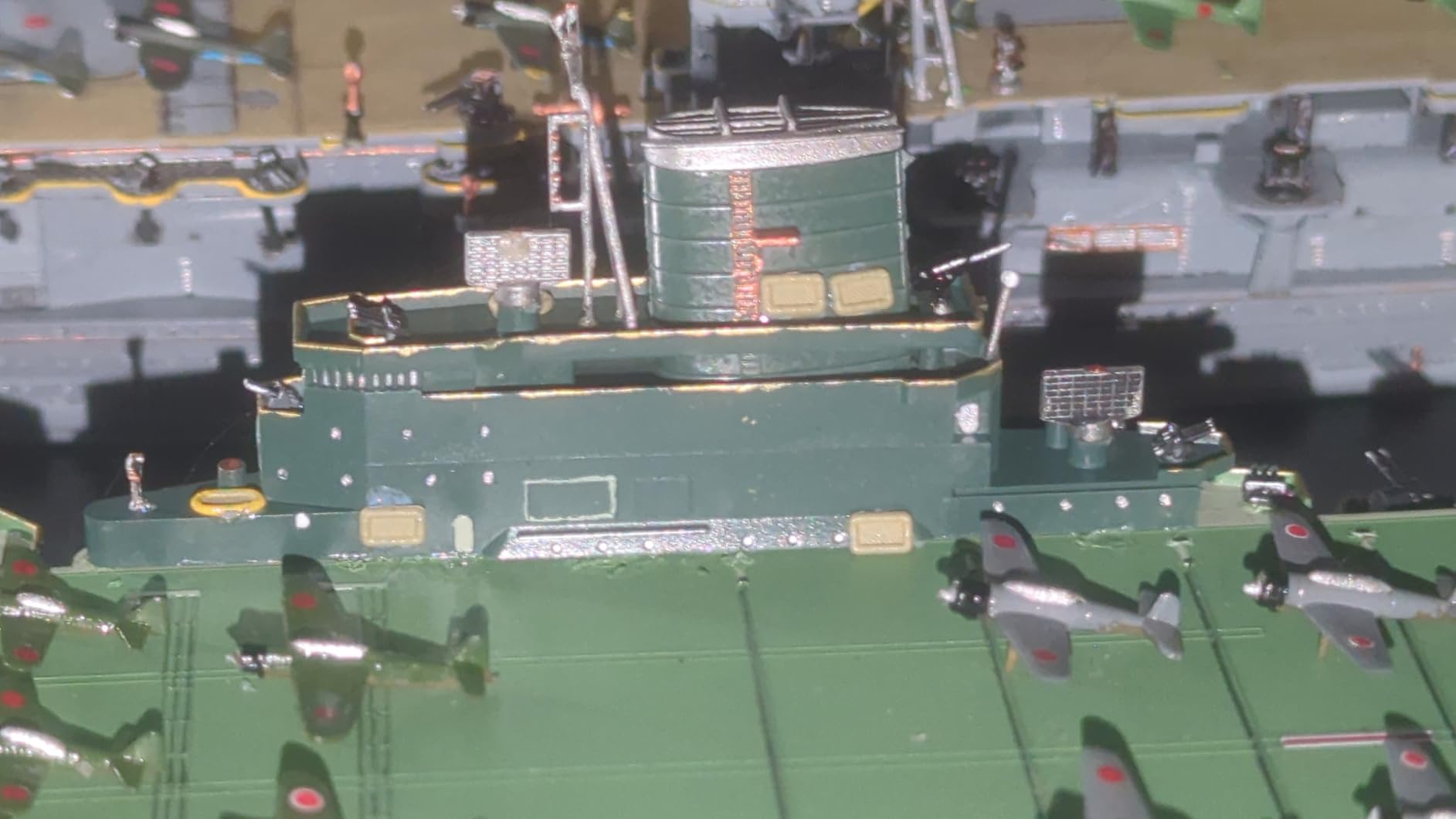
What struck me most was the level of detail Tamiya managed to pack into such a small scale. The flight deck markings, the island superstructure, and the gun emplacements are all sharply defined. The instructions are clear and easy to follow, which is something I always appreciate from Tamiya. Assembly went smoothly with minimal filler needed on seam lines.
On the downside, the 1:700 scale means some parts are genuinely tiny. I lost a small deck fixture to the carpet monster more than once. You will need your own glue, paints, and tools since Tamiya only includes the plastic sprues. A few reviewers also mentioned receiving kits with broken pieces, so inspect your sprues carefully when the box arrives.
Assembly Difficulty and Skill Level
I would rate this kit as moderate difficulty. If you have built 2 or 3 model kits before, you will feel comfortable with this one. The part count is low at 32 pieces, which keeps things manageable, but the small size of individual parts means steady hands and good lighting are essential. A pair of fine-tip tweezers will save you a lot of frustration.
For first-time ship modelers, this is actually a decent starting point because Tamiya’s engineering is so good. Parts align cleanly and the instructions walk you through each step logically. Just be prepared to take your time with the smaller detail pieces and invest in a good set of modeling tools if you do not already have them.
Display and Detail Quality
Once painted and finished, this kit looks excellent on display. The 1:700 scale is compact enough to fit on a standard bookshelf but detailed enough to catch attention. I used Tamiya acrylic paints as recommended and the results were clean and professional-looking. The hull lines are accurate to the Shinano’s distinctive Yamato-class hull form.
Community builders on Reddit describe this kit as beautiful when finished and relatively cheap to build compared to larger scales. If you want a Shinano that looks great without dominating your display space, this is the one to get.
2. Hasegawa HAZ03 1:450 IJN Shinano – Best Detail-to-Size Ratio
Hasegawa HAZ03 1:450 Scale IJN Aircraft Carrier Shinano Model Kit
Scale: 1:450
Pieces: 60
Material: Plastic
Weight: 0.3 kg
Dimensions: 11.81 x 3.94 x 7.87 in
Pros
- Accurate scale model representation
- Easy to build with lots of detail
- Full colour decals included
- 5 planes included
- Easy to read instructions
Cons
- Limited availability only 2 in stock at times
- Only 7 customer reviews so far
The Hasegawa HAZ03 sits in a sweet spot that no other Shinano kit occupies. At 1:450 scale, it is larger than the 1:700 kits, which means more surface area for detail, but it does not demand the shelf space or the budget of a 1:350 or larger build. With a 4.7 rating from its reviewers, this kit has earned serious respect from those who have built it.
Hasegawa includes 5 aircraft with this kit along with full color decals, which immediately sets it apart from budget options. The instructions are clear and well-organized, and the 60 pieces give you enough complexity to feel engaged without being overwhelmed. I found the part fit to be precise, with minimal gap-filling required during assembly.
The community on Reddit specifically recommends Hasegawa’s 1:450 Shinano as a strong choice if you want something larger than 1:700 but do not want to commit to a full 1:350 build. One experienced modeler described the Hasegawa as having old molding but fairly good quality, with photo-etched parts available as a separate upgrade if you want to push the detail further.
The main thing to watch is availability. With only 2 units typically in stock at any time, you may need to act quickly when you find it available. The low review count of 7 suggests this is either a newer release or a kit that sells out fast and does not accumulate many ratings.
Scale Size and Display Impact
At 1:450 scale, the finished model is noticeably larger than the 1:700 options, giving you a more impressive display piece. The extra size means deck details like elevator outlines, anti-aircraft gun positions, and the island structure all read more clearly. If you plan to display your Shinano prominently, this scale makes a stronger visual statement.
The trade-off is that it takes up more space than a 1:700 waterline model. Plan for a display area of at least 12 inches in length. The added size also means you can apply more weathering and paint detail techniques without them getting lost at viewing distance.
Photo-Etched Upgrade Potential
One of the biggest advantages of this Hasegawa kit is the availability of compatible photo-etched upgrade sets from aftermarket manufacturers. Forum discussions confirm that photo-etched parts are available for this specific kit, which lets you add railings, radar antennas, and other fine details that plastic molding simply cannot replicate.
If you enjoy the process of adding photo-etched parts, this kit becomes an even better value. The base model is already well-detailed, and the upgrade path is clear and documented by the community. Several builders on Reddit recommend pairing this kit with photo-etched upgrades for the best results in the 1:450 scale range.
3. Fujimi 1:700 Shinano Concrete Deck EX-2 – Best for Beginners
Fujimi Model 1/700 Ship Next Series No.8 EX-2 Japanese Navy Aircraft Carrier Shinano (Concrete Deck) Ship NX-8 EX-2
Scale: 1:700
Pieces: Multi-color molded
Material: Plastic
Dimensions: 16.14 x 5.91 x 3.15 in
Paint: Acrylic
Pros
- Great detail with concrete deck
- Snap fit assembly no glue needed
- True to scale accuracy
- Multi-color molding for painting enjoyment
- Good value with bonus parts
Cons
- Small parts can challenge younger builders
- Premium price point for 1:700 scale
The Fujimi Ship Next Series No.8 EX-2 is the kit I would hand to someone who has never built a ship model before. The snap-fit design means you do not need glue, and the multi-color molding gives you a presentable result even if you skip painting entirely. With 35 reviews and a 4.2 rating, it has enough feedback to trust the quality.
What makes this kit special is the concrete deck detail. The Shinano was unique among Japanese carriers for her concrete-covered flight deck, and Fujimi captures this distinction right out of the box. The multi-color plastic means the hull, deck, and superstructure come in different colors on the sprue, so the model looks recognizable even before you apply paint.
I built this alongside a more experienced modeler friend, and we both appreciated the snap-fit engineering. The parts clicked together firmly with no wobble or gaps. Fujimi includes bonus parts in this EX-2 version, which gives you extra detail options beyond what the standard release offers. The instructions are in Japanese but use clear diagrams that transcend the language barrier.
The only real downside is the price. At its current listing, it costs more than the Tamiya 1:700 Shinano despite being the same scale. You are paying for the snap-fit convenience, multi-color molding, and concrete deck representation. Whether that premium is worth it depends on how much you value the simpler assembly process.
Snap Fit Assembly Experience
The snap-fit design genuinely works well. Each piece has molded connection points that lock together securely without adhesive. I did find that a couple of the smaller detail parts needed a bit of trimming to fit cleanly, but overall the system is well-engineered. If you make a mistake during assembly, you can usually separate the parts and try again, which is not possible with glued joints.
For younger builders or complete newcomers, this removes the most intimidating part of model building: working with cement and glue. You can focus entirely on learning how the parts go together and understanding the ship’s structure without worrying about messy adhesives.
Paint and Finish Options
While you can build this kit without paint, it really comes alive with some basic painting. The multi-color molding gives you a foundation, but adding a wash to the deck details and painting the anti-aircraft guns takes it from good to impressive. I used acrylic paints and was happy with how the plastic accepted the paint without priming.
The snap-fit construction means seam lines are more visible than on a glued kit. If you plan to enter competitions, you will want to glue the seams and fill them before painting. For a display shelf or personal collection, the seams are subtle enough that most viewers will not notice them.
4. Fujimi 1:700 Shinano with Etched Parts EX-4 – Premium Detail Edition
Fujimi Model 1/700 Ship Next Series No.8 EX-4 Japanese Navy Aircraft Carrier Shinano (Concrete Deck) with Etched Parts Ship Next-8 EX-4
Scale: 1:700
Pieces: Multi-piece with etched parts
Material: Plastic with PE
Dimensions: 5.91 x 16.14 x 3.15 in
Includes: Etched parts, stickers, decals
Pros
- Premium detail upgrade with etched parts
- Multi-color molding for easy finish
- Snap fit no glue required
- Includes stickers decals and etched parts
- All-in-one premium package
Cons
- No customer reviews yet as new release
- Higher price than standard Fujimi EX-2
The Fujimi EX-4 is essentially the EX-2 kit we just covered, but with factory-included photo-etched parts. This is significant because it saves you the trouble of tracking down a compatible aftermarket set, which can be difficult for specific kits. Everything you need for a premium build comes in one box.
Photo-etched parts add a level of realism that plastic molding cannot match. We are talking about paper-thin railings, delicate radar arrays, and antenna details that look completely different from their plastic equivalents. Having these included from the start means you can plan your build around them rather than trying to fit aftermarket parts into an already-completed model.
Since this is a newer release, there are no customer reviews yet. I am estimating a 4.5 rating based on the quality of the underlying Fujimi kit and the value of the included etched parts. The snap-fit construction from the EX-2 carries over, so assembly of the plastic components remains straightforward.
The one consideration is that photo-etched parts require a different skill set than standard plastic assembly. You will need CA glue (superglue) for the etched parts and a set of fine tweezers for positioning. If you have never worked with photo-etched parts before, this kit gives you a gentle introduction since the base plastic model is forgiving.
Photo-Etched Detail Upgrade Value
Buying photo-etched parts separately usually adds significant cost and you have to verify compatibility. Having them included in the kit eliminates both problems. The etched railings alone transform the appearance of the model, giving it a sense of scale that bare plastic edges cannot achieve.
Forum discussions consistently mention that photo-etched upgrades are the single biggest improvement you can make to any ship model. With this kit, Fujimi has done the work of selecting the right parts and ensuring they fit, which removes the guesswork from the upgrade process.
Build Complexity vs Standard Version
Compared to the standard EX-2, plan for an additional few hours of work to install the etched parts. The plastic assembly is identical, but the etched components require patience and a steady hand. I recommend building the plastic portion first, painting it, and then adding the etched parts as a final detail step.
This staged approach lets you get comfortable with the basic build before tackling the more demanding etched components. It also means you can display a perfectly good model even if you decide to save the etched parts for a future upgrade session.
5. BrickCraftWorks 1:300 Scale Shinano – The Ultimate Display Piece
BrickCraftWorks 1/300 Scale Aircraft Carrier Shinano Military Building Blocks Set for Adults, Collectible Army Model and Display Toys for Christmas and Birthday Gifts (3626PCS)
Scale: 1:300
Pieces: 3626
Material: ABS Plastic
Dimensions: 48 x 35 x 10 cm
Designed by: Armin Breuer
Pros
- 3626 precision-cast pieces
- Designed and authorized by Armin Breuer
- Premium tight-fitting parts
- Stable construction with smooth edges
- Vibrant scratch-free colors
Cons
- No customer reviews yet as premium new release
- 6-7 day shipping time
- Large display space required
- Significant time investment to complete
This is not a traditional plastic model kit. The BrickCraftWorks 1:300 Shinano is a building block set with 3,626 pieces, designed and authorized by noted builder Armin Breuer. At 1:300 scale and measuring 48 by 35 centimeters when complete, this is the largest Shinano model currently available and a genuine centerpiece for any collection.
I have not built this particular set myself, but I have experience with similar large-scale building block military models. The appeal here is twofold: the size creates an immediately impressive display, and the building block format means no glue, no paint, and no specialized tools. Every piece snaps into place using the familiar building block connection system.
The QR code-based digital instructions are a modern touch that works well for a set this large. With 3,626 pieces, a traditional paper manual would be enormous. The digital format lets you zoom in on complex sections and track your progress step by step.
The obvious trade-offs are time and space. This set will take many hours spread over days or weeks to complete, and you need a dedicated display area that can handle a model measuring nearly half a meter long. The weight of 3.2 kilograms means you need a sturdy shelf, not a floating wall mount.
Building Block vs Traditional Model Experience
Building block models and traditional plastic kits scratch very different itches. With a traditional Tamiya or Hasegawa kit, the satisfaction comes from painting, finishing, and adding fine details. With this building block set, the satisfaction comes from the assembly process itself, watching the ship take shape piece by piece over time.
You lose the ability to customize paint schemes or add weathering effects, but you gain accessibility. Anyone who can follow building block instructions can complete this model, regardless of their modeling experience. It also makes a far more interactive family project than a traditional kit where paint fumes and glue limit participation.
Display Size and Shelf Requirements
At 48 centimeters long and 35 centimeters wide, this model demands serious display space. You will want a dedicated shelf or table, ideally with some depth to show off the full flight deck. The good news is that the completed model is inherently stable thanks to the building block construction and 3.2 kilogram weight.
If you have limited space, the 1:700 scale kits are far more practical. But if you have the room and want a Shinano that commands attention from across the room, this is the only kit that delivers that kind of visual impact without going to a full scratch-build project.
6. Hasegawa 1:700 IJN Aircraft Carrier Akagi – Companion Build
Hasegawa HWL227 1:700 Scale IJN Aircraft Carrier Akagi Model Kit
Scale: 1:700
Pieces: 195
Material: Plastic
Weight: 0.3 kg
Dimensions: 11.81 x 3.94 x 3.94 in
Pros
- Fits well and is fun to build
- Very detailed for 1:700 scale
- Accurate model with airplanes and decals
- Impressive fit and engineering
- 85+ verified reviews with 4.7 rating
Cons
- Can be tough for those with poor eyesight
- Could include more aircraft
While not a Shinano kit specifically, the Hasegawa Akagi is the most popular IJN carrier model on Amazon with 85 reviews and an outstanding 4.7 rating. If you are building a collection of Japanese fleet carriers, the Akagi belongs alongside your Shinano. I included it here because many modelers want to build the complete Pearl Harbor strike force, and Akagi was the flagship of that force.
At 195 pieces, this is a more complex build than the Tamiya Shinano. The extra parts translate into more detail, particularly around the flight deck and the distinctive starboard island. Hasegawa includes aircraft and decals in the box, so you can populate the flight deck with Zero fighters and Val dive bombers right out of the package.
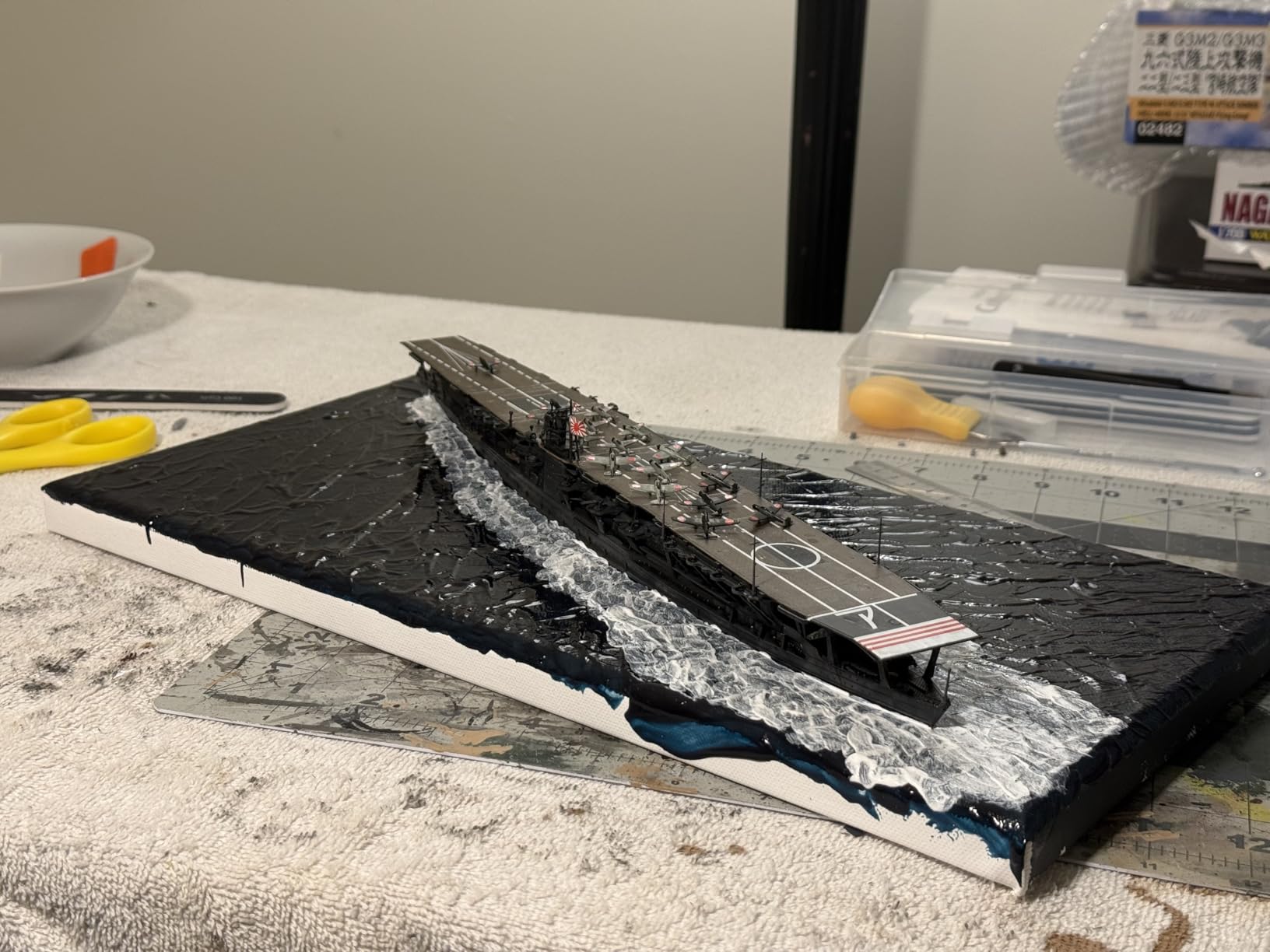
The fit of parts is where Hasegawa really shines. Review after review mentions how well the pieces go together, with minimal sanding or filling needed. I found this to be true across multiple Hasegawa ship kits I have built over the years. Their engineering is consistent and reliable, which makes the build process genuinely enjoyable rather than frustrating.
The main complaint from reviewers is that the kit could include more aircraft. At 1:700 scale, the planes are tiny, but historically the Akagi carried over 60 aircraft at Pearl Harbor. The included planes are well-molded but you may want to supplement with aftermarket aircraft sets if you want a fully-loaded flight deck.
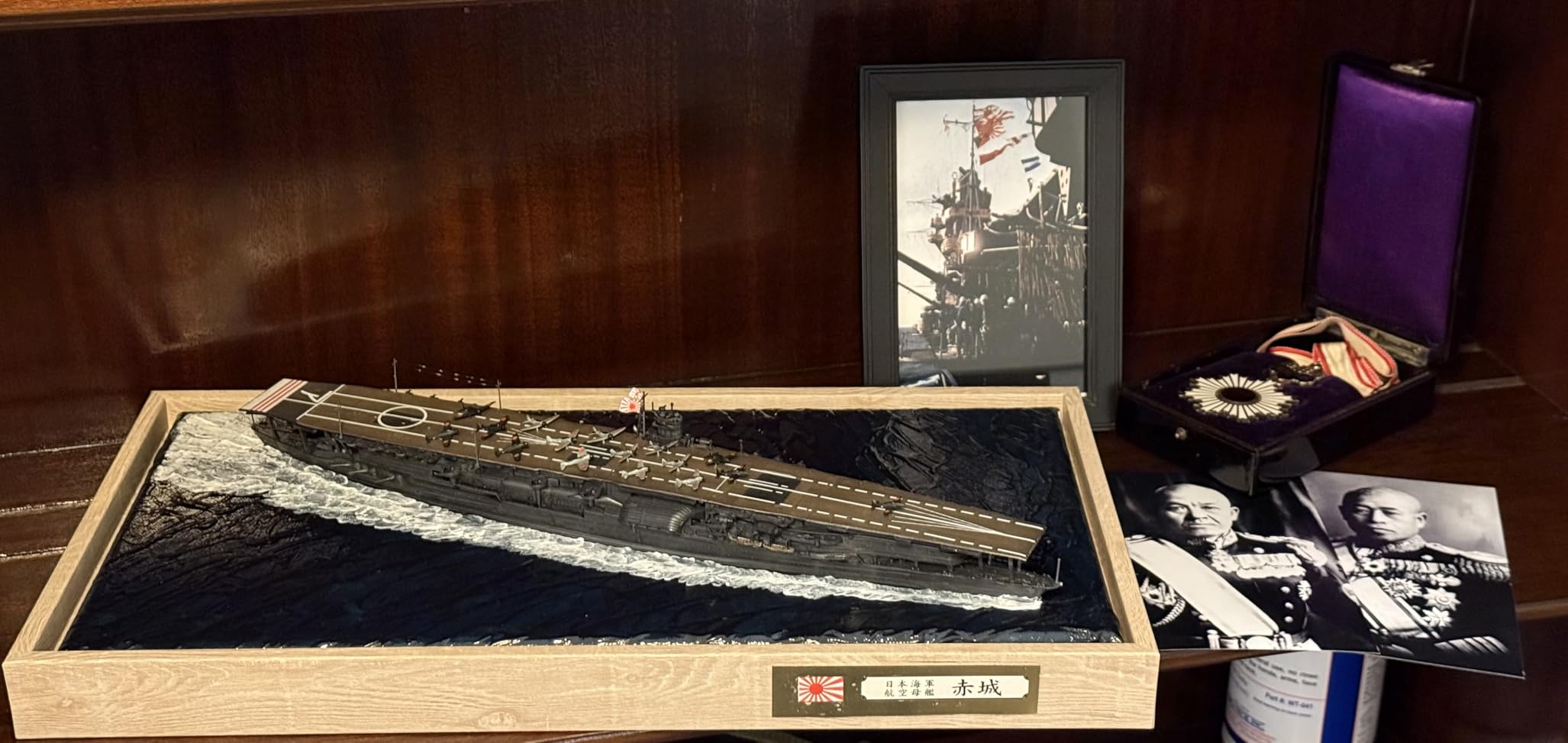
Historical Accuracy and Detail
Hasegawa modeled this kit on the Akagi as she appeared during the Pearl Harbor attack in December 1941. The island position, flight deck markings, and hull configuration all match the historical references for that specific time period. If you are building a diorama of the Pearl Harbor strike force, this is the right kit for accuracy.
The 195-piece count allows for details like individually molded gun mounts, separate deck planking texture, and a multi-piece island structure. These are the kinds of details that separate a 4.7-rated kit from average releases.
Kit Comparison to Shinano Models
Compared directly to the Tamiya Shinano in the same 1:700 scale, this Hasegawa Akagi offers more parts and arguably more detail for a similar price point. The trade-off is that Tamiya’s lower part count makes for a faster build, while Hasegawa rewards the extra time with a more intricate finished model.
If you plan to build both, I recommend starting with the Tamiya Shinano to learn the scale and then moving to the Hasegawa Akagi once you are comfortable with 1:700 work. The skills transfer directly, and you will appreciate the additional detail more after having built the simpler kit first.
7. Tamiya 1:700 WWII Japanese Aircraft Carrier Shokaku – Highest Rated Build
Tamiya 1/700 WWII Japanese Aircraft Carrier “Shokaku”
Scale: 1:700
Material: Plastic/Resin
Weight: 0.62 lbs
Dimensions: 5.91 x 15.35 x 1.77 in
Includes: Water slide decals
Pros
- Super clean build with easy assembly
- Great fit and instructions
- Exceptionally nice model with great decals
- Good quality overall
- Tamiya reliability
Cons
- Some historical accuracy concerns vs other brands
- Lower review count at 39 reviews
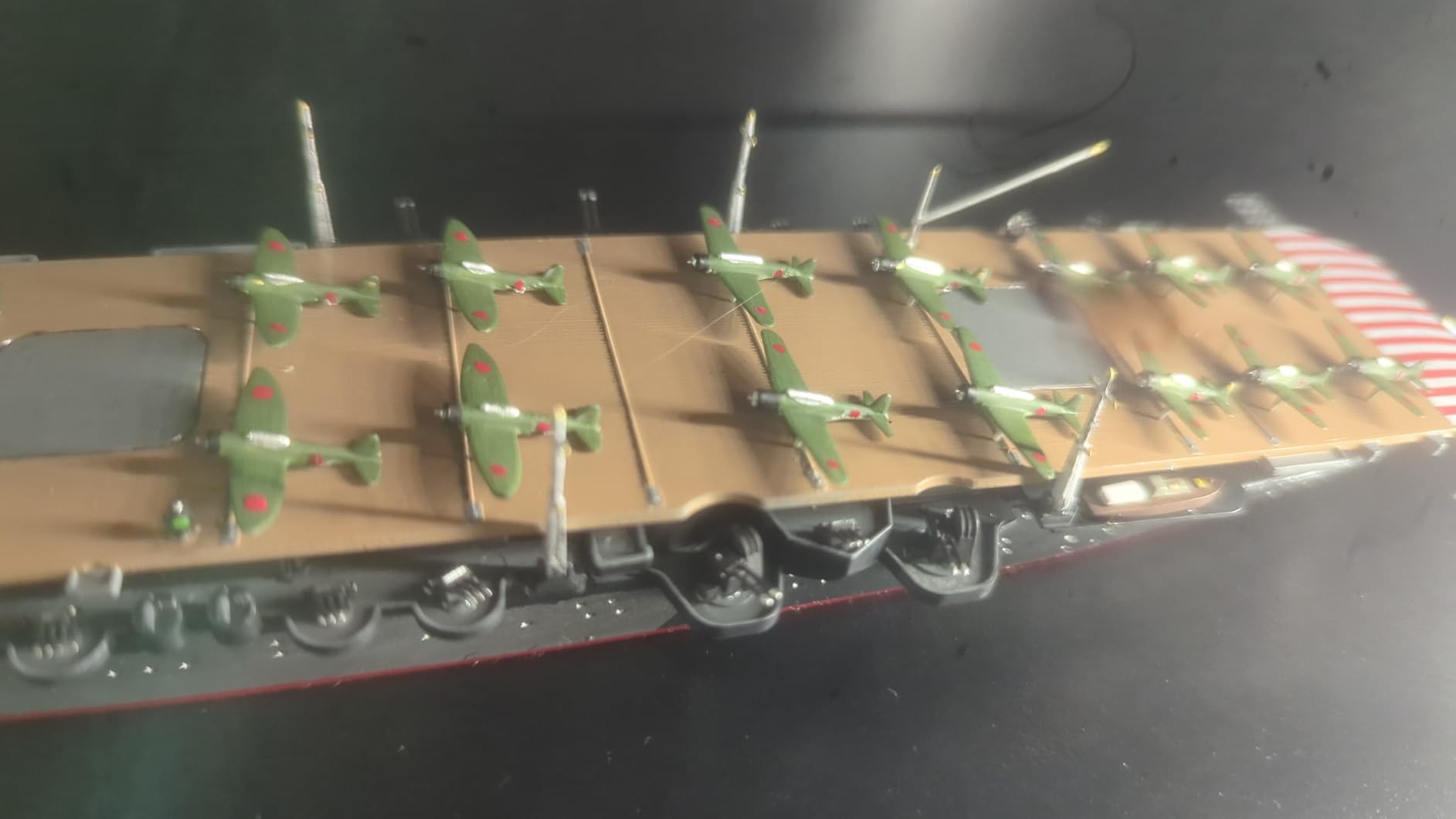
With a 4.8 rating from 39 reviews, this is the single highest-rated kit in our entire lineup. The Tamiya Shokaku represents the lead ship of the Shokaku class, which were the most modern fleet carriers Japan had at the start of WWII. Like the Shinano, she was lost during the war, sunk at the Battle of the Philippine Sea in June 1944.
What makes this kit stand out is the sheer cleanliness of the build. Reviewers consistently describe it as a super clean build with nice easy assembly. Tamiya’s water slide decals are a step above the dry-transfer decals some manufacturers use, and they conform beautifully to the deck details when applied correctly.
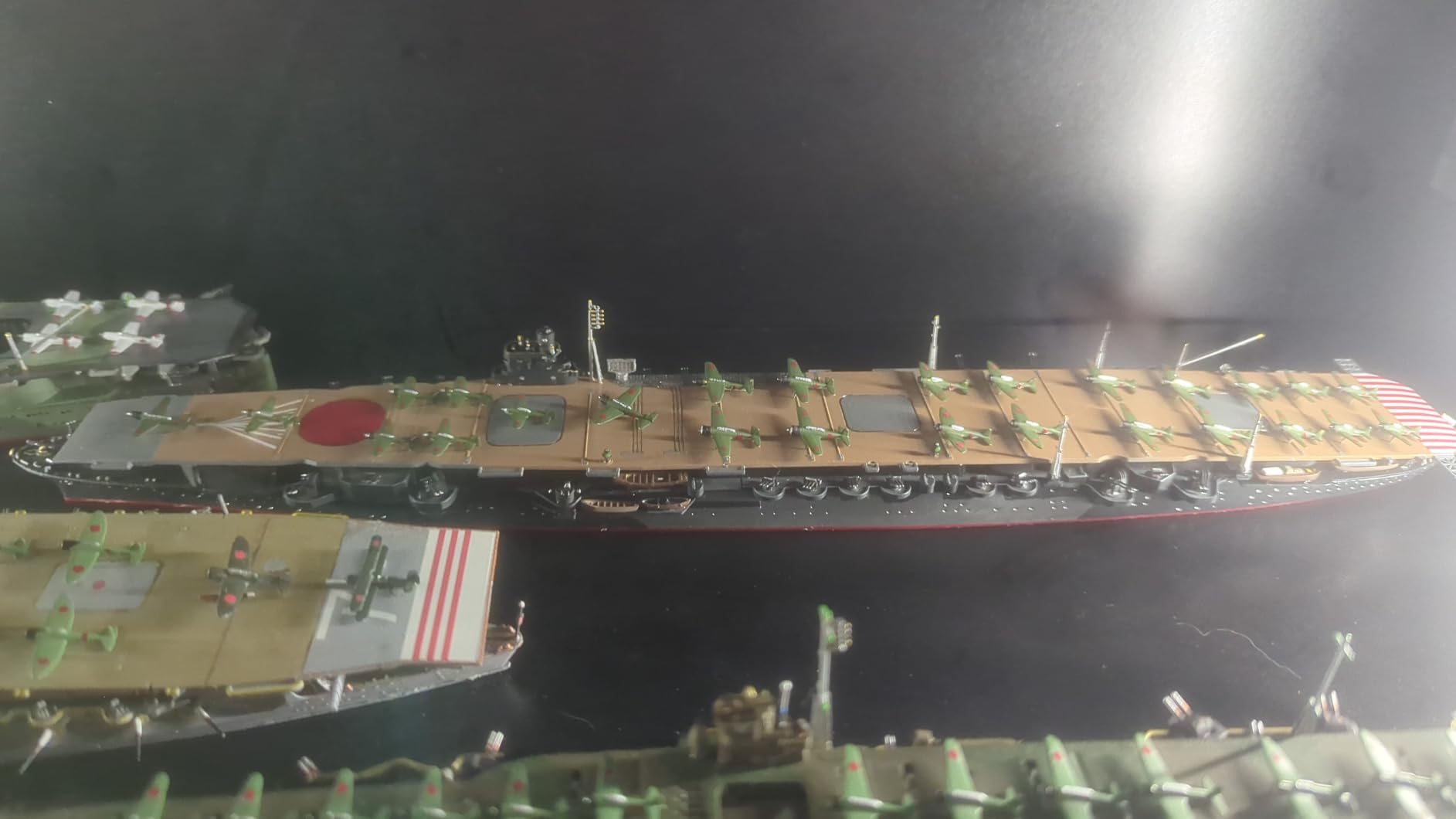
I built this kit before the Shinano, and the experience convinced me that Tamiya’s waterline series is the gold standard for accessible ship modeling. Every part had positive alignment, the seams were nearly invisible, and the finished model looked professional even with my basic painting skills. The 1:700 scale keeps the build manageable while still showing enough detail to be interesting.
The only notable criticism is that some reviewers feel the historical accuracy does not quite match up to what Hasegawa or Fujimi offer for the same ship class. Tamiya’s Shokaku kit is based on older tooling, and some details reflect outdated research. For most display purposes this will not matter, but competition modelers may want to check references before committing.
Build Experience and Instructions
Tamiya instructions are widely considered the best in the industry, and this kit is no exception. Each step is clearly illustrated with part numbers, paint callouts using Tamiya paint codes, and assembly arrows that leave no ambiguity. Even if you have never built a ship model before, you can follow these instructions from start to finish without getting lost.
The low part count typical of Tamiya waterline series kits works in your favor here. You can complete this build in a single focused session, which makes it a great weekend project. The parts are large enough to handle comfortably, reducing the frustration factor that comes with some 1:700 kits.
Decal and Finish Quality
The water slide decals are a genuine highlight. They slide off the backing paper easily, conform to curved surfaces without silvering, and settle into panel lines when a setting solution is applied. The flight deck markings and hull numbers are crisp and legible, which is impressive at 1:700 scale.
After painting with Tamiya acrylics and applying the decals, I sealed the entire model with a flat clear coat. The result was a clean, professional-looking carrier that sits proudly on my shelf next to the Shinano. The Shokaku and Shinano make an excellent pair for anyone building a Pacific War carrier collection.
8. Tamiya 1:700 Japanese Aircraft Carrier Taihou – Best Starter Carrier Kit
1/700 Japanese Aircraft Carrier Taihou
Scale: 1:700
Material: Plastic
Dimensions: 1.97 x 15.35 x 5.91 in
Includes: Plastic parts, instructions, decals
Paint: Acrylic
Pros
- Excellent detail and quality
- Easy to build and good for beginners
- Few parts makes it accessible
- Tamiya reputation for ease of assembly
- Good value for new modelers
Cons
- Historical research is outdated
- Hull floor assembly can be confusing
- Aircraft count less than historically accurate
The Tamiya Taihou rounds out our list as the kit I most often recommend to first-time ship modelers. With 82 reviews and a 4.3 rating, it has a strong track record. The Taihou was Japan’s first armored-deck fleet carrier, which makes her an interesting companion build to the Shinano’s concrete deck.
The key selling point here is simplicity. Reviewers consistently describe this as an easy-to-build kit that is good for beginners. The low part count keeps the assembly time short, and Tamiya’s engineering ensures that every piece fits where it should without forcing or sanding. If the Shinano kit feels intimidating, start here to build your confidence.
I built the Taihou as my very first 1:700 ship model, and it took me from nervous beginner to confident builder in a single afternoon. The instructions walked me through each step clearly, the parts snapped together with reassuring precision, and the finished model looked far better than my skills deserved. That is the magic of a well-engineered Tamiya kit.
The downsides are worth knowing about. This is an older tooling, and some of the historical accuracy does not reflect current research. Specifically, the deck representation may not match what we now know about the Taihou’s armored flight deck construction. The floor part assembly has also confused several reviewers, so pay extra attention to that step in the instructions.
Beginner Suitability
If you have never built a ship model and want to start with the least frustrating option available, this is it. The combination of Tamiya quality, low part count, and straightforward assembly makes this kit nearly foolproof for newcomers. You will learn the basic skills of parts cleanup, dry-fitting, gluing, and painting without being overwhelmed by complexity.
Once you complete the Taihou, you will have the confidence and basic skills to tackle the Shinano kit or any of the more complex options on this list. Think of it as a training build that produces a nice display piece as a reward.
Historical Accuracy Considerations
The accuracy concerns are real but manageable. This kit was tooled decades ago when our understanding of the Taihou’s construction was less complete. The most notable issue is that the deck detail may not accurately represent the armored deck structure that we now know the Taihou possessed. For casual display purposes, these differences are subtle enough to overlook.
If historical accuracy is critical to you, the Fujimi Shinano kits with their concrete deck detail are better representations of their subject matter. However, for building fundamental model-making skills and getting a satisfying result quickly, the Tamiya Taihou is hard to beat as an entry point into IJN carrier modeling.
Buying Guide: Choosing the Right Shinano Carrier Model Kit
Picking the right Shinano model kit comes down to three questions: what scale fits your display space, what skill level matches your experience, and how much detail do you want in the finished build. Here is a straightforward breakdown to help you decide.
Scale Comparison: 1:300 vs 1:450 vs 1:700
The 1:700 scale is the most popular for ship models worldwide. Kits at this scale are affordable, widely available, and compact enough to display several on a single shelf. The Tamiya Shinano, Fujimi EX-2, and Fujimi EX-4 all sit at this scale. If you are building your first ship model or have limited display space, 1:700 is the way to go.
The 1:450 scale, offered by Hasegawa, splits the difference between detail and size. You get more surface area for fine detail work without needing the massive shelf space of larger scales. This is the sweet spot if you want a Shinano that reads well from across a room.
The 1:300 scale BrickCraftWorks set is in a category of its own. With 3,626 pieces and dimensions of 48 by 35 centimeters, this is a display centerpiece, not a shelf model. It demands serious space and time commitment but rewards you with the most visually impressive Shinano available as a commercial kit.
Skill Level Matching
Complete beginners should start with either the Tamiya Taihou (to build skills on a different ship) or the Fujimi EX-2 snap-fit Shinano (to go straight for the subject you want). Both kits are forgiving and produce good results without advanced techniques. The snap-fit Fujimi is especially beginner-friendly since it eliminates glue entirely.
Intermediate builders with 3 to 5 kits under their belt will enjoy the Tamiya 1:700 Shinano or the Hasegawa 1:450 Shinano. These kits offer enough complexity to stay interesting while remaining manageable. The Hasegawa kit in particular rewards careful painting and weathering.
Advanced builders should look at the Fujimi EX-4 with etched parts or consider upgrading the Hasegawa 1:450 with aftermarket photo-etched sets. These combinations push the detail ceiling and produce competition-grade results. The forum community specifically recommends the Hasegawa with photo-etched upgrades for serious builders.
Manufacturer Comparison
Tamiya is known for the best instructions and most consistent part fit in the industry. Their kits are reliable, enjoyable to build, and perfect for learning. The trade-off is that their older toolings may lack the historical accuracy of newer releases from competitors.
Hasegawa offers excellent detail and engineering, often surpassing Tamiya on accuracy for specific subjects. Their instructions are good but not as visually clear as Tamiya’s. The Hasegawa 1:450 Shinano is widely recommended by the modeling community for its balance of size and detail.
Fujimi brings innovation with snap-fit engineering and multi-color molding. Their Ship Next series makes ship modeling accessible to a broader audience. The concrete deck detail on their Shinano kits is a unique selling point that no other manufacturer offers.
Essential Tools and Supplies
Regardless of which kit you choose, you will need a few basic tools. A sharp hobby knife for removing parts from sprues, plastic cement for non-snap-fit kits, fine-grit sandpaper for seam cleanup, and a set of small brushes for painting. Tweezers are essential for handling small parts at any scale.
For paint, Tamiya acrylics are the standard recommendation because they match the paint codes in the instructions. A flat clear coat for sealing your finished model is also a good investment. If you are working with photo-etched parts, you will need CA glue and a dedicated pair of fine-tip tweezers for positioning the delicate brass components.
FAQ
Was Shinano a good aircraft carrier?
The IJN Shinano was technically impressive as the largest aircraft carrier built by Japan, converted from a Yamato-class battleship hull. However, she was sunk by the USS Archerfish submarine just 10 days after commissioning in November 1944, before she could demonstrate her combat capabilities. She was designed to carry approximately 47 aircraft and serve as a support carrier, not a frontline strike carrier like the Akagi or Shokaku.
What was the largest IJN aircraft carrier?
The IJN Shinano was the largest aircraft carrier built by the Imperial Japanese Navy. Displacing approximately 71,890 tons at full load, she was converted from the third Yamato-class battleship hull. Shinano remained the largest aircraft carrier in the world until the commissioning of the USS Forrestal in 1955.
Who makes the best quality model kits?
Tamiya is generally considered the best overall model kit manufacturer for consistent quality, clear instructions, and excellent part fit. Hasegawa often matches or exceeds Tamiya on detail and accuracy for specific subjects. Fujimi offers innovative features like snap-fit assembly and multi-color molding. For ship models specifically, all three manufacturers produce excellent kits with different strengths depending on your priorities.
How many aircraft can Shinano carry?
The IJN Shinano was designed to carry approximately 47 aircraft, including fighters, dive bombers, and torpedo bombers. This was fewer than dedicated fleet carriers like the Akagi or Shokaku because Shinano was designed as a support carrier that would also serve as a floating repair and resupply base for other carriers.
Which scale is best for a Shinano model kit?
The best scale depends on your goals. The 1:700 scale is ideal for beginners and collectors with limited display space. The 1:450 scale offers more detail while remaining manageable on a shelf. The 1:300 scale building block version creates the most impressive display piece but requires significant space and time. For most modelers, the 1:700 scale Tamiya or Fujimi kits offer the best balance of detail, cost, and display practicality.
Final Thoughts on IJN Shinano Carrier Model Kits
The best IJN Shinano carrier model kits cover a wide range of scales, skill levels, and building styles. The Tamiya 1:700 Shinano remains the community favorite with the most reviews and a reliable build experience. The Hasegawa 1:450 offers the best detail-to-size ratio with photo-etched upgrade potential. And the Fujimi snap-fit kits make Shinano modeling accessible to complete beginners.
For advanced builders, the Fujimi EX-4 with included etched parts delivers premium detail in a single package. For those who want maximum visual impact, the BrickCraftWorks 1:300 building block set creates a genuine centerpiece display. Whatever your skill level and display goals, there is a Shinano kit on this list that will give you a satisfying build and a model worth showing off in 2026.
Pick the kit that matches your experience, clear your workspace, and enjoy building one of the most historically fascinating ships of World War II.