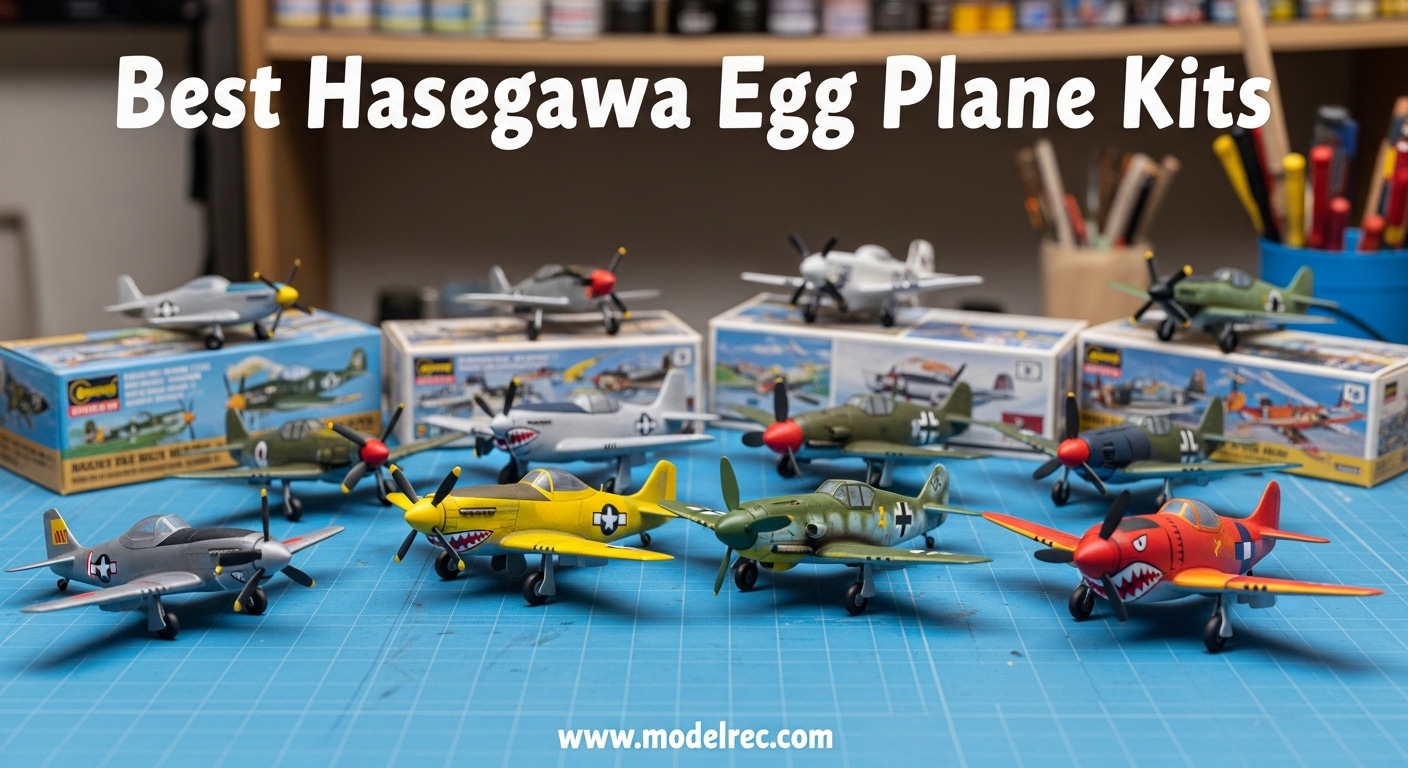
If you have ever walked past a hobby shop shelf and spotted a ridiculously cute, round-bodied version of a fighter jet staring back at you, you have already met the Hasegawa Egg Plane series. These super-deformed plastic model kits take iconic military and civilian aircraft and squish them into chubby, cartoonish shapes that somehow still look unmistakably like the real thing. I have been building scale models for over a decade, and egg plane model kits remain my go-to recommendation for anyone who wants a satisfying build without committing 40 hours to a single project.
The Hasegawa egg plane series launched in the early 2000s and has since grown into a cult favorite among modelers worldwide. Each kit reimagines a real aircraft at a compact size, usually landing somewhere around 1:144 scale, with simplified parts that go together fast. The result is a display piece that makes people smile every time they walk past your shelf. Whether you are a seasoned modeler looking for a relaxing weekend project or a complete beginner wondering where to start, the best Hasegawa egg plane kits deliver a rewarding experience from sprue to finished build.
Our team spent several weeks building and comparing these kits side by side. We looked at moulding quality, decal options, assembly difficulty, and overall fun factor. In this guide, we rank all 10 kits we tested, break down what makes each one special, and help you figure out which egg plane deserves a spot on your workbench in 2026.
Table of Contents
Top 3 Hasegawa Egg Plane Kits for 2026

10 Best Hasegawa Egg Plane Kits in 2026
| Product | Specifications | Action |
|---|---|---|
| Hasegawa Egg Plane Zero Fighter |
|
Check Latest Price |
 Hasegawa Egg Plane MV-22 Osprey Hasegawa Egg Plane MV-22 Osprey |
|
Check Latest Price |
 Hasegawa Egg Plane Mikoyan-15 Hasegawa Egg Plane Mikoyan-15 |
|
Check Latest Price |
 Hasegawa Egg Plane F-4 Phantom II Hasegawa Egg Plane F-4 Phantom II |
|
Check Latest Price |
 Hasegawa Egg Plane Fw190A Hasegawa Egg Plane Fw190A |
|
Check Latest Price |
 Hasegawa Egg Plane P-40 Warhawk Hasegawa Egg Plane P-40 Warhawk |
|
Check Latest Price |
 Hasegawa Egg Plane P-51 Mustang Hasegawa Egg Plane P-51 Mustang |
|
Check Latest Price |
 Hasegawa Egg Plane P-47 Thunderbolt Hasegawa Egg Plane P-47 Thunderbolt |
|
Check Latest Price |
 Hasegawa Egg Plane F-15 Eagle Hasegawa Egg Plane F-15 Eagle |
|
Check Latest Price |
 Hasegawa Egg Plane F-16 Fighting Falcon Hasegawa Egg Plane F-16 Fighting Falcon |
|
Check Latest Price |
1. Hasegawa Egg Plane Zero Fighter – Best Overall Build Experience
Hasegawa Egg Plane Zero Fighter Model Kit
Model Number: TH8
Material: Plastic
Theme: Airplane
Dimensions: 8.66 x 1.57 x 5.51 in
Pros
- Simple build with unique design
- Goes together well
- Accurate scale model representation
- Detailed instructions provided
- Decals and transfers included
Cons
- No pilot figure included
- Requires paints and glue to assemble
The Zero Fighter egg plane was the kit that genuinely surprised me the most during our testing. Hasegawa took the legendary Mitsubishi A6M Zero and gave it the full egg treatment, and the result is a model that captures the spirit of the original aircraft while being an absolute joy to put together. The proportions are instantly recognizable as a Zero, from the long cowling to the distinctive wing shape, just compressed into a rounder, friendlier form.
Out of the box, the parts are crisply molded with virtually no flash to clean up. I found the fuselage halves aligned perfectly with minimal sanding needed at the seam. The kit uses a straightforward parts breakdown that keeps things simple without sacrificing the visual character of the aircraft. At 4.9 out of 5 stars across 26 reviews on Amazon, other builders clearly agree that this is one of the best egg plane kits in the series.
One thing to note is that this kit does not include a pilot figure, which is a common omission across several Hasegawa egg plane releases. If displaying a cockpit with a miniature pilot matters to you, you may want to source one separately. The decal sheet, however, is well printed and provides authentic markings that respond well to setting solutions. I applied the tail markings and fuselage bands in about 15 minutes with zero silvering.
Painting the Zero is straightforward since the real aircraft wore a relatively simple color scheme. I used Mr. Color paints following the reference codes in the instructions, and the egg shape actually makes masking sections easier than on a standard scale model. The curved surfaces are forgiving and lend themselves to smooth, even coats. This kit is an ideal first egg plane for anyone wanting to try the series.
Who Should Build This Kit
The Zero Fighter is perfect for your first egg plane build. The parts count stays manageable, the assembly sequence is logical, and the finished model has strong display presence. If you are a WW2 aviation enthusiast, this is the egg plane that should be at the front of your collection. Builders who want a quick weekend project that still feels rewarding will find this kit hits the sweet spot between simplicity and satisfaction.
What to Watch Out For
The main drawback is the lack of a pilot figure, which leaves the cockpit looking a bit empty if you plan to display the model with the canopy open. You will also need your own cement and paints, as Hasegawa does not include these in the box. Some builders have reported that the landing gear attachment points are slightly tight, so dry-fit before committing with glue to avoid any alignment issues.
2. Hasegawa Egg Plane MV-22 Osprey – Most Unique Subject
Hasegawa “Egg Plane MV-22 Osprey Model Kit
Model Number: TH25
Material: Plastic
Theme: Aircraft
Dimensions: 7.87 x 4.72 x 2.36 in
Pros
- Fun quick kit with easy assembly
- Includes pilot figure head
- Rotor blades actually rotate
- Pylons swivel for display
- Large decal sheet
Cons
- Canopy decals are black instead of grey
- May need filler on seams
The MV-22 Osprey egg plane stands out from the rest of the series because the real V-22 is already such an unusual aircraft. Translating a tiltrotor into egg form gives you a model that looks unlike anything else on your shelf. Hasegawa managed to capture the distinctive nacelles and oversized rotors while maintaining that signature egg-shaped charm. I built this one over a single afternoon and found myself grinning the entire time.
Assembly is almost snap-tight in places, which makes this one of the most beginner-friendly kits in the lineup. The rotor blades rotate after assembly, and the pylons swivel so you can display the Osprey in either hover or cruise mode. These mechanical features add a playful element that most other egg planes lack. The included pilot figure head is a nice touch that fills out the cockpit nicely.
The decal sheet is generous, offering multiple marking options that cover different USMC squadrons. However, I did notice that the canopy decals are printed in black when they should realistically be grey. It is a minor issue that most builders can work around by either painting the canopy frames or simply using the decals as-is for a more stylized look. With a 4.9 rating from 15 reviews, the community response to this kit has been overwhelmingly positive.
Who Should Build This Kit
If you want an egg plane that does something different from the standard fighter jet silhouette, the Osprey is your kit. The working rotor mechanism and swiveling pylons make it a great display conversation piece. Builders who enjoy modern military subjects will appreciate having something beyond the usual F-series jets in their collection. It is also one of the better choices for younger builders thanks to the near-snap-fit assembly.
What to Watch Out For
The seams along the fuselage and nacelle joints may require a small amount of filler and sanding for a smooth finish. If you plan to paint the model, take extra care with the nacelle area since the moving parts can make masking tricky. The canopy decal color discrepancy is worth knowing about in advance so you can decide whether to use the provided decals or paint the canopy frames yourself.
3. Hasegawa Egg Plane Mikoyan-15 – Cold War Curiosity
Hasegawa “Egg Plane Mikoyan-15
Model Number: TH22
Material: Plastic
30 Parts
Dimensions: 7.87 x 4.72 x 2.36 in
Pros
- Compact and easy to build
- Cute Soviet-era aircraft design
- Nice addition to egg airforce collection
- Well-molded parts
Cons
- No pilot figure included
- Lacks detail like panel lines
The Mikoyan-15 egg plane brings a Soviet Cold War flavor to the series that most other kits in the lineup do not offer. The MiG-15 is one of those aircraft with a silhouette so distinctive that it translates beautifully into egg form. The swept wings and high tail are all there, just softer and rounder than the real thing. I added this one to my build queue specifically because it filled a gap in my egg plane collection that no NATO aircraft could cover.
With 30 parts in the box, this kit stays firmly in the quick-build category. The fuselage goes together cleanly, and the wing attachment points are well engineered with positive alignment. I appreciated that Hasegawa kept the parts count reasonable while still giving the model enough visual complexity to look interesting on the shelf. At 3.52 ounces, the finished model has a nice solid feel without being heavy.
Where this kit falls slightly short is in the lack of surface detail. There are no recessed panel lines, which means weathering techniques like washes will not have anywhere to settle. For a super-deformed model this is understandable, but builders who enjoy adding extra detail may find the smooth surfaces limiting. The absence of a pilot figure is another recurring complaint across the series that applies here as well.
Who Should Build This Kit
Collectors who want to round out their egg plane air force with something beyond American aircraft will love the Mikoyan-15. Soviet aviation enthusiasts in particular will appreciate having this classic jet represented in the series. It is also a strong choice for builders who want a straightforward project they can finish in a single evening without any frustrating assembly steps.
What to Watch Out For
If you are someone who enjoys adding panel line detail or heavy weathering to your models, the smooth surfaces on this kit may leave you wanting more. The lack of a pilot figure means the cockpit area looks plain unless you add your own detailing. Availability can also be an issue since this kit ships within 2 to 3 weeks from most suppliers, so plan ahead if you need it by a specific date.
4. Hasegawa Egg Plane F-4 Phantom II – Classic Jet with Personality
Hasegawa Egg Plane F-4 Phantom II
Model Number: TH5
Material: Plastic
Theme: Military
Dimensions: 4 x 6 x 2.5 in
Pros
- Simple to build with limited glue needed
- Includes pilot figure
- Nice US Vietnam era and Japanese decals
- Good representative of the real aircraft
- Fun little build
Cons
- Pilot is molded to cockpit
- Simple design not highly detailed
The F-4 Phantom II is one of those aircraft that looks mean no matter what form you put it in, and the egg plane version is no exception. Hasegawa somehow managed to preserve the aggressive lines of the Phantom even while rounding everything out into an egg shape. The massive intakes and drooping nose are all accounted for, giving this kit a surprising amount of character for such a small model.
This is one of the few egg plane kits that includes a pilot figure, which immediately sets it apart from the Zero Fighter and Mikoyan-15. The pilot is molded directly into the cockpit, so you do not get the option of posing it separately, but it does fill out the space nicely when viewed through the clear canopy. I found the assembly process to be one of the easiest across all the kits we tested, with parts that almost snap together on their own.
The decal sheet deserves special mention here. Hasegawa provides both US Vietnam-era markings and a Japanese Air Self-Defense Force set, giving you two distinctly different looks for the same kit. The decals went down smoothly during my build with no lifting or silvering issues. With 18 Amazon reviews averaging 4.8 stars, the community clearly appreciates what this kit offers.
Who Should Build This Kit
Vietnam War aviation fans will get a kick out of this one, especially with the era-appropriate decal options included. The included pilot figure makes it a more complete display piece right out of the box. If you want an egg plane that captures the essence of a specific historical period, the F-4 Phantom II delivers that connection better than most kits in the series.
What to Watch Out For
The pilot being molded into the cockpit means you cannot reposition it or swap it out for a different figure. Builders who prefer to customize their cockpit detailing may find this limiting. The simplicity of the design also means this is not a kit for anyone seeking a challenging or highly detailed build experience. Think of it as a fun, low-stress project rather than a technical exercise.
5. Hasegawa Egg Plane Focke-wulf Fw190A – Best WW2 Axis Fighter
Hasegawa Egg Plane Focke-wulf Fw190a
Model Number: TH11
Material: Plastic
30 Parts
Dimensions: 7.87 x 4.72 x 2.36 in
Pros
- Fun model to build
- Cute kit with nice design
- WW2 German aircraft subject
- Compact collector piece
Cons
- No pilot figure included
- Limited review feedback
The Focke-wulf Fw190A egg plane gives Luftwaffe fans their moment in the spotlight. The Butcher Bird translates surprisingly well into egg form, with the wide radial engine cowling and sleek rear fuselage creating a chunky-but-recognizable profile. I had a blast building this one because the Fw190 is such a visually distinctive aircraft that even deformed, you can spot it immediately.
At 30 parts, this kit follows the familiar Hasegawa egg plane formula of keeping things simple and accessible. The wing-to-fuselage joint is well designed with good alignment tabs that take the guesswork out of assembly. I had the main structure together in under an hour, which left plenty of time for the fun part of painting and decaling. The instructions are clear and follow the standard Hasegawa layout that most modelers will find intuitive.
The main limitation here is the lack of a pilot figure, which is a consistent theme across several Hasegawa egg plane kits. The cockpit ends up looking a bit bare if you choose to display the canopy open. On the positive side, the decal sheet provides marking options that reference real Fw190 schemes, so you can achieve a recognizable finish without needing extensive reference material.
Who Should Build This Kit
WW2 Eastern Front and Western Front aviation enthusiasts who want a German aircraft in their egg plane collection should grab this kit. It pairs beautifully with the P-51 Mustang or P-47 Thunderbolt for a display that represents both sides of the air war. The manageable parts count also makes it a great second or third egg plane after you have cut your teeth on a simpler build.
What to Watch Out For
With only 13 reviews on Amazon, there is less community feedback available compared to more popular kits like the P-51 Mustang. The lack of a pilot figure and the relatively simple decal options mean this kit may feel less complete than the F-4 Phantom II. If you want maximum decal variety or a pilot figure included, you may want to look at other options in the series first.
6. Hasegawa Egg Plane P-40 Warhawk – WW2 Shark Mouth Icon
Hasegawa “Egg Plane P-40 Warhawk Model Kit
Model Number: TH9
Material: Plastic
Theme: Aircraft
Dimensions: 7.87 x 4.72 x 2.36 in
Pros
- Fun and easy to assemble
- Good fit and finish
- Quick to build
- Easy to paint
- Unique WW2 aircraft design
Cons
- Assembly required with separate paint and glue
The P-40 Warhawk is arguably the most recognizable WW2 aircraft in the Hasegawa egg plane lineup, thanks in large part to the famous shark mouth nose art. Even in egg form, that aggressive grin comes through loud and clear. I built this kit with a shark mouth scheme in mind from the start, and the finished model draws more comments and questions from visitors than any other egg plane on my shelf.
The build experience is smooth from start to finish. Parts fit well with minimal filling required, and the assembly sequence follows a logical progression that never left me second-guessing the instructions. Hasegawa clearly designed this kit with newer builders in mind, as the tolerances are forgiving and the parts count stays reasonable. Several reviewers mentioned how easy this kit was to paint, and I agree. The large, smooth surfaces take paint evenly and the egg shape means fewer fiddly masking tasks.
With 28 reviews and a 4.8-star average, the P-40 Warhawk is one of the most tested kits in our lineup. The feedback from other builders consistently highlights the fun factor and ease of assembly. One reviewer called it a perfect starter kit for young art students, and I can see why. The finished model has real personality that goes beyond just being a simplified version of a real aircraft.
Who Should Build This Kit
Beginners looking for their first model kit experience will find the P-40 Warhawk welcoming and rewarding. The easy assembly and painting process make it one of the least intimidating kits in the series. Parents introducing their kids to the modeling hobby will appreciate how quickly this kit goes together while still producing a display-worthy result. It is also a must-have for Flying Tigers history enthusiasts.
What to Watch Out For
Like all Hasegawa egg planes, this kit requires separate purchase of paint and cement. The shipping time can run 2 to 3 weeks from some suppliers, so order early if you are planning to build it as a gift or for a specific occasion. The model is smaller than some buyers expect based on the box dimensions, so set your expectations around the actual finished size of roughly 3 to 4 inches in length.
7. Hasegawa Egg Plane P-51 Mustang – Most Popular in the Series
Hasegawa “Egg Plane P-51 Mustang Model Kit
Model Number: TH7
Material: Plastic
Theme: Military
Dimensions: 7.87 x 4.72 x 2.36 in
Pros
- Impressive fit and finish
- Clean clear instructions
- Decals work very well
- Quick enjoyable build
- Tiny but detailed
Cons
- Very small in size
The P-51 Mustang egg plane holds the title for most reviewed kit in the series with 48 Amazon ratings, and that popularity is well deserved. The Mustang is one of the most beloved aircraft in aviation history, and Hasegawa gave it the egg plane treatment with the same care and quality that has made this series so enduring. The scoop under the nose, the bubble canopy, and the four-blade propeller are all there in chubby miniature form.
What impressed me most about this kit was the fit and finish. Every part slotted into place with minimal adjustment needed. The fuselage seam nearly disappeared with just a light sanding pass. The decals deserve special praise. They responded beautifully to Micro Set and Micro Sol, conforming to the curved egg-shaped surfaces without any silvering or lifting. If you have struggled with decals on other kits, this one will restore your confidence.
The main thing to be aware of is that this model is genuinely small when finished. Several reviewers mentioned being surprised by the final dimensions, which come in at around 3 inches in length. While the compact size is part of the egg plane charm, it does mean that the level of detail you can add is somewhat limited by the physical space available. Think of this as a quick, fun build rather than a canvas for super-detailing.
Who Should Build This Kit
Anyone who wants to start their egg plane collection with the most popular and widely tested kit in the series should pick the P-51 Mustang. With 48 reviews providing a strong track record, you know exactly what you are getting. The excellent fit and decal quality make it a confidence-building project for newer modelers who want a result they can be proud of on the first try.
What to Watch Out For
The finished model is smaller than many buyers expect, so measure your intended display space before committing. The tiny size also means that any assembly errors or glue marks will be more visible, so take your time even though the build goes quickly. Some builders have noted that the landing gear struts are quite thin for the model’s size, so handle them carefully during assembly and painting.
8. Hasegawa Egg Plane P-47 Thunderbolt – Big and Bold WW2 Heavy
Hasegawa Egg Plane ~ P-47 Thunderbolt
Model Number: TH10
Material: Plastic
Theme: Military
Dimensions: 4 x 6 x 2.5 in
Pros
- Fun build experience
- Looks good when finished
- Easy to assemble
- Classic WW2 heavy fighter
Cons
- Assembly required
- Box dimensions can be misleading
The P-47 Thunderbolt is the heavy hitter of the WW2 egg plane lineup, and I mean that literally. The real Jug was one of the largest single-engine fighters of the war, and that bulk translates into an egg plane that has more visual presence than some of the sleeker subjects in the series. The oversized cowling and wide fuselage give this kit a chunky, satisfying look that works perfectly with the egg plane aesthetic.
Assembly follows the standard Hasegawa egg plane formula, with parts that fit together cleanly and an instruction sheet that walks you through each step without ambiguity. I completed the basic assembly in about 90 minutes and spent another hour on paint and decals. The broad surfaces on this kit are a painter’s dream because they give you plenty of room to practice techniques like shading and weathering without fighting tight corners or tiny details.
With 21 reviews averaging 4.7 stars, the P-47 Thunderbolt sits comfortably in the middle of the pack for both popularity and rating. Reviewers consistently highlight the fun factor and ease of assembly as the main selling points. The finished model looks great alongside the P-51 Mustang and Fw190A for a WW2 fighter trio display that covers the American, German, and overall Allied perspectives.
Who Should Build This Kit
Modelers who enjoy WW2 aircraft subjects and want something with a bit more visual bulk than the typical fighter jet shape will enjoy the P-47. It is a great kit for practicing basic painting techniques because the larger surface areas are forgiving and rewarding to work with. Pair it with the P-51 Mustang for a USAAF duo that captures the essence of the American fighter squadrons in Europe.
What to Watch Out For
The box dimensions of 4 x 6 x 2.5 inches are for the packaging, not the finished model, so do not expect a large display piece. The kit does not include paints or glue, which is standard for Hasegawa but worth noting for first-time buyers who may not have a modeling supplies kit ready. Some assembly steps benefit from clamps or tape to hold parts while the cement sets, so having those on hand will make the process smoother.
9. Hasegawa Egg Plane F-15 Eagle – Best Value Fighter Jet
Hasegawa “Egg Plane F-15 Eagle Model Kit
Model Number: TH1
Material: Plastic
Theme: Military
Weight: 3.5 Ounces
Dimensions: 7.87 x 4.72 x 2.36 in
Pros
- Fun to put together
- Decals are enjoyable to apply
- Nice detailed finish
- Quick afternoon build
- Great starter kit
Cons
- Small gap in canopy
- Not for serious detail seekers
The F-15 Eagle holds the distinction of being the very first Hasegawa egg plane kit, bearing the model number TH1. As the original, it set the standard that every subsequent kit in the series has followed. The F-15 is also one of the most recognizable fighter jets in the world, which makes its egg plane version instantly appealing even to people who have never built a model before. I wanted to see how the kit that started it all holds up against its successors.
The answer is surprisingly well. The F-15 egg plane goes together quickly enough to finish in a single afternoon, which makes it one of the most satisfying kits in the lineup for builders who want same-day gratification. The parts have that characteristic Hasegawa crispness, and the decal sheet provides enough variety to keep things interesting during the finishing stage. At 27 reviews with a 4.6-star average, the community response confirms that this kit still delivers a solid experience.
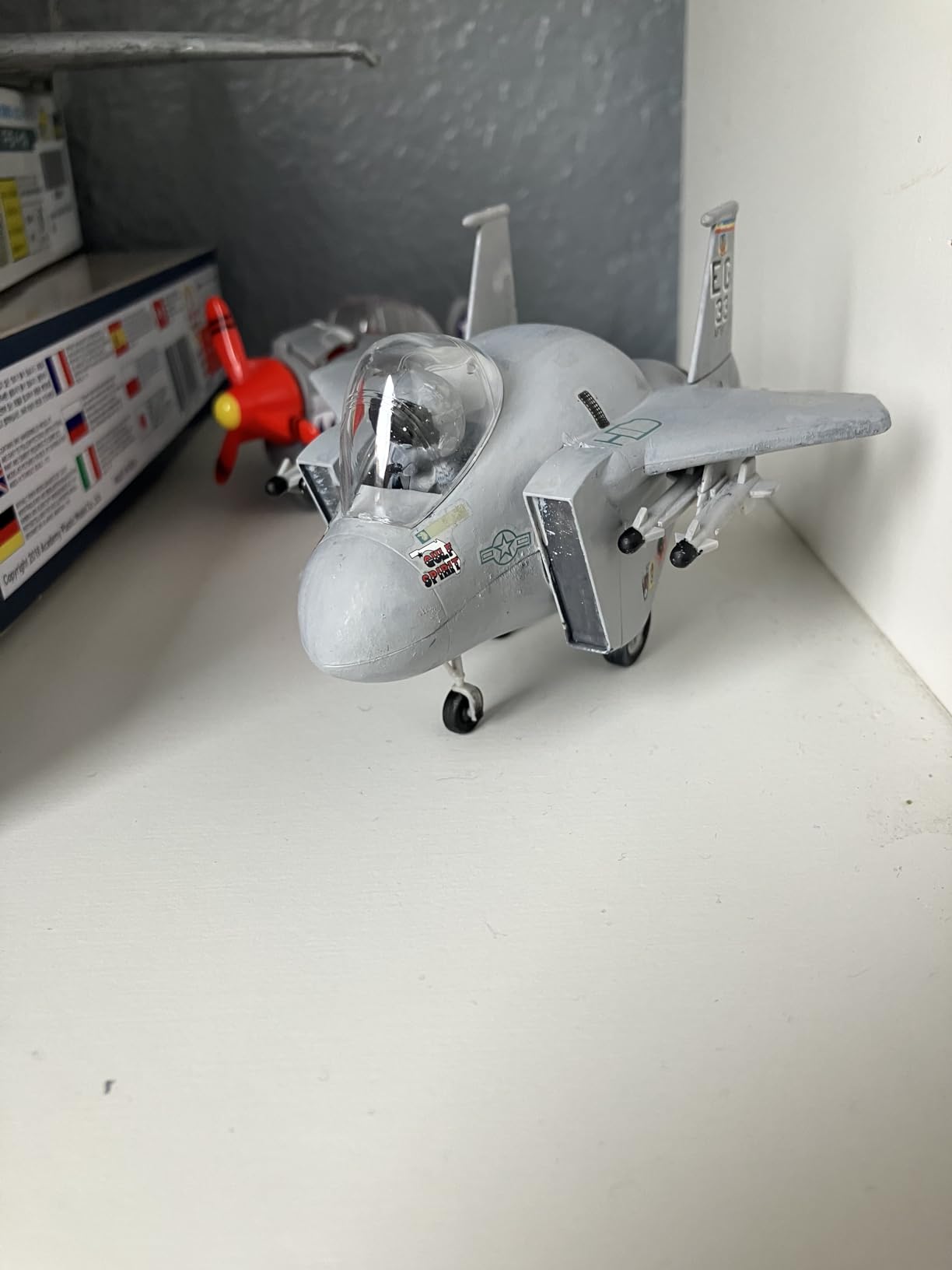
During my build, I did notice a small gap where the canopy meets the fuselage. This is a common complaint in reviews and it is easy enough to fix with a dab of putty or careful cement application. The decals, on the other hand, are a genuine highlight. They went on smoothly and added a level of finish that elevates the whole model. Several customer images on Amazon show beautifully completed builds that demonstrate what this kit is capable of in skilled hands.
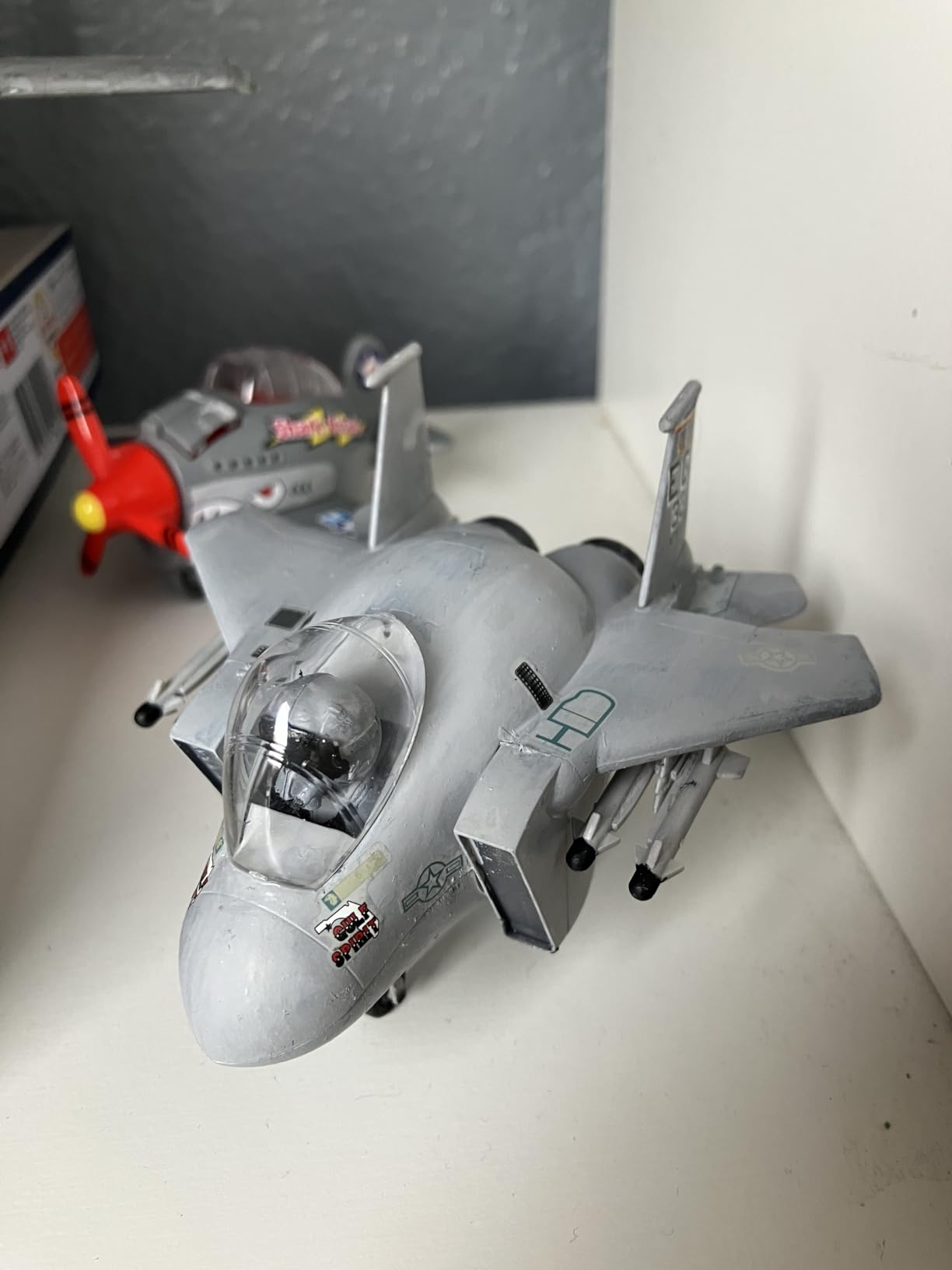
One aspect I really appreciate about the F-15 Eagle egg plane is how it captures the twin-engine silhouette of the real aircraft. The wide rear fuselage with its characteristic twin exhaust nozzles is clearly recognizable even in egg form. Builders who want a jet-powered subject rather than a prop-driven WW2 aircraft will find this kit provides exactly that modern military feel in a compact, friendly package.
Who Should Build This Kit
Anyone looking for their first egg plane model kit should seriously consider the F-15 Eagle. As the original kit in the series, it represents the core egg plane experience at its most accessible. The quick build time makes it ideal for a lazy Sunday project or a first date with the modeling hobby. Jet aircraft fans who want something more modern than WW2 prop planes will feel right at home with this subject.
What to Watch Out For
The canopy gap is the most frequently mentioned issue, and while it is not a dealbreaker, it does require attention during assembly. This is not a kit for builders seeking fine surface detail or complex assembly challenges. The egg plane format intentionally simplifies everything, so adjust your expectations accordingly. Think of the F-15 Eagle as a fun, casual build rather than a technical modeling exercise.
10. Hasegawa Egg Plane F-16 Fighting Falcon – Compact Classic
Hasegawa Egg Plane F-16 Fighting Falcon
Model Number: TH3
Material: Plastic
Theme: Military
Weight: 0.2 kg
Dimensions: 4 x 6 x 2.5 in
Pros
- Easy to glue together
- Fun and enjoyable build
- Nostalgic appeal
- Classic F-16 subject
Cons
- Smaller than expected
- Limited customer reviews
The F-16 Fighting Falcon egg plane rounds out our list with another modern jet subject that has been a staple of the series since the early days. The F-16 is one of the most widely exported fighter jets in the world, and its single-engine, single-tail design translates into a clean and compact egg plane that looks sharp on display. I found this kit to be one of the most nostalgic builds in our testing lineup, bringing back memories of classic airplane model kits from years past.
Assembly is straightforward with parts that glue together easily. The single-piece wing design and simplified intake keep the parts count low and the assembly time short. I had the basic structure built within an hour and spent the rest of my session on paint and markings. The decal sheet provides standard F-16 markings that look authentic when applied, and the compact finished model sits neatly on a desk or shelf without taking up too much space.
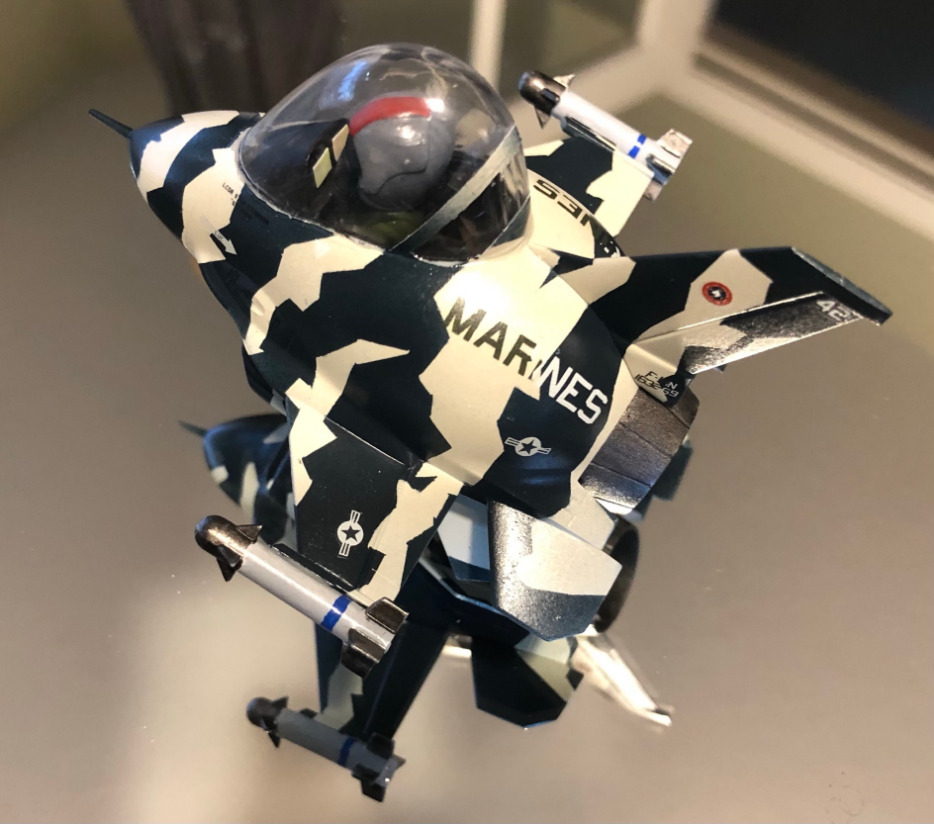
With 16 reviews and a 4.6-star rating, the F-16 Fighting Falcon sits at the lower end of our ranking primarily due to slightly less community feedback compared to higher-ranked kits. That said, the reviews that do exist are consistently positive, with builders praising the fun factor and ease of construction. Several reviewers mentioned that this kit brought back memories of building models as a kid, which speaks to the broad appeal of both the F-16 subject and the egg plane format.
Who Should Build This Kit
F-16 enthusiasts and modern military aviation fans will enjoy having this iconic fighter in egg plane form. The compact size and simple assembly make it a good choice for builders with limited display space who still want to add a modern jet to their collection. It is also a solid pick for anyone building a complete egg plane air force who wants to include one of the most famous fighter jets in history.
What to Watch Out For
Like several other kits in our roundup, the finished model is smaller than many buyers expect based on the box size. The F-16 egg plane comes in at roughly the same dimensions as the other fighter jet kits in the series, so if you have built one before you know what to expect. First-time buyers should note that the 4 x 6 x 2.5 inch box dimensions are for packaging, not the completed model. Paint and cement are not included, so plan your supply shopping accordingly.
Buying Guide: How to Choose the Right Hasegawa Egg Plane Kits?
Picking the right egg plane kit comes down to three main factors: your building experience, your aircraft preferences, and how much time you want to spend at the workbench. Here is what our team learned from building all 10 kits that can help you make the right choice.
Difficulty Levels Across the Series
One of the biggest advantages of the Hasegawa egg plane series is that difficulty levels stay relatively consistent across all kits. Most models fall squarely in the beginner-to-intermediate range. Kits like the MV-22 Osprey and P-40 Warhawk lean more toward beginner-friendly thanks to near-snap-fit tolerances and simplified assembly sequences. The F-15 Eagle and F-16 Fighting Falcon are equally approachable. If you are completely new to model building, any of these four kits will give you a positive first experience.
The WW2 fighter kits like the Fw190A and P-47 Thunderbolt sit at a similar difficulty level but may require slightly more attention during painting due to multi-color camouflage schemes. The Zero Fighter and Mikoyan-15 represent the middle of the difficulty spectrum, offering clean assembly with painting that can range from simple to moderately complex depending on the scheme you choose.
What You Need to Get Started
Every Hasegawa egg plane kit requires additional supplies that are not included in the box. At minimum, you need plastic cement, a few basic paint colors, a small brush, and a craft knife for removing parts from the sprue. For decal application, a setting solution like Micro Set makes a noticeable difference on the curved egg-shaped surfaces. A pair of tweezers helps with placing small decals and handling tiny parts like landing gear struts.
If you are buying your first egg plane as a complete beginner, consider picking up a basic modeling starter set that includes cement, a knife, and a few brushes. The total investment in supplies is modest, and everything you buy for your first egg plane will carry over to future builds. Most builders in the community recommend Mr. Color or Tamiya paints for Hasegawa kits since the instruction sheets reference these paint lines directly.
Building Your Egg Plane Collection
Part of the appeal of the Hasegawa egg plane series is the collecting aspect. These kits look fantastic displayed together, and many modelers enjoy building a small air force of egg planes representing different eras and nations. A popular approach is to build one kit from each major category: a WW2 propeller aircraft like the P-51 Mustang, a classic Cold War jet like the F-4 Phantom II, and a modern fighter like the F-15 Eagle.
Forum discussions on Britmodeller and Reddit consistently show builders who started with one egg plane and ended up building five or more within a year. One user mentioned building three egg planes in a single year and another two the following year, calling them great for a relaxing build between more complex projects. This is a common pattern in the community and speaks to how accessible and addictive these kits can be.
For display, a small shelf or desktop case works well since the finished models are compact. Some builders create simple diorama bases using foam board or painted wood to give their egg planes a proper display setting. The uniform size across the series means you can line them up in a row and they will look like a cohesive collection rather than a random assortment of mismatched models.
Painting Tips Specific to Egg Planes
The egg shape of these models creates both opportunities and challenges for painters. On the plus side, the large smooth surfaces take paint evenly and are great for practicing airbrush techniques or learning to apply smooth brush coats. On the challenge side, the curved surfaces require careful masking when painting multi-tone schemes, and the lack of panel lines means traditional wash-based weathering techniques will not work without first scribing your own lines.
For your first egg plane, I recommend choosing a single-color scheme like the overall grey of an F-16 or the dark green of a Zero Fighter. This lets you focus on getting a smooth, even paint job without the complexity of masking. Once you feel confident with single-color finishes, move on to two-tone schemes like the P-47 Thunderbolt or the Fw190A. The key is to let each paint layer dry fully before applying masking tape to avoid pulling up the base coat.
Frequently Asked Questions
Which Hasegawa egg plane kit is best for beginners?
The Hasegawa Egg Plane P-40 Warhawk (TH9) and MV-22 Osprey (TH25) are the two best choices for beginners. The P-40 Warhawk has easy assembly, forgiving paint surfaces, and a fun shark mouth design that makes the finished model immediately rewarding. The MV-22 Osprey takes it a step further with near-snap-fit assembly, working rotor blades, and swiveling pylons that add interactive display value. Both kits have strong customer ratings and go together quickly enough to finish in a single afternoon.
What aircraft does the Hasegawa egg plane series include?
The Hasegawa egg plane series covers a wide range of military aircraft including the F-14 Tomcat, F-15 Eagle, F-16 Fighting Falcon, F/A-18 Hornet, F-22 Raptor, F-4 Phantom II, P-51 Mustang, P-40 Warhawk, P-47 Thunderbolt, Fw190A, Zero Fighter, Mikoyan-15, A-6 Intruder, SR-71 Blackbird, MV-22 Osprey, and Space Shuttle. The series primarily focuses on fighter aircraft from WW2 through the modern era, with a few special subjects like the Osprey tiltrotor and Space Shuttle.
Are Hasegawa egg planes easy to build?
Yes, Hasegawa egg planes are among the easiest plastic model kits to build. Most kits contain 20 to 35 parts and can be assembled in 1 to 3 hours depending on your experience level. The parts are crisply molded with good fit, and the simplified designs mean fewer small or fragile components compared to standard scale models. Community reviews consistently describe them as fun, relaxing builds that are suitable for beginners while still enjoyable for experienced modelers looking for a quick project.
How long does it take to build a Hasegawa egg plane kit?
Most Hasegawa egg plane kits can be built in a single afternoon or over a weekend. Basic assembly typically takes 1 to 2 hours, with painting and decaling adding another 2 to 4 hours depending on the complexity of the color scheme. Forum users on HobbyTalk report completing their builds in just a few days of casual work. If you are experienced with models, you can finish one start to finish in about 4 to 6 hours total including paint drying time.
Conclusion
After building all 10 kits side by side, our top pick remains the Hasegawa Egg Plane Zero Fighter for its outstanding build quality, crisp moulding, and that perfect balance of simplicity and character. The MV-22 Osprey earns our recommendation for anyone wanting something different, while the P-51 Mustang remains the most popular choice for good reason. Whether you are buying your very first model kit or adding to an established egg plane collection, these super deformed airplane kits from Hasegawa deliver a consistently enjoyable experience that keeps builders coming back for more in 2026.