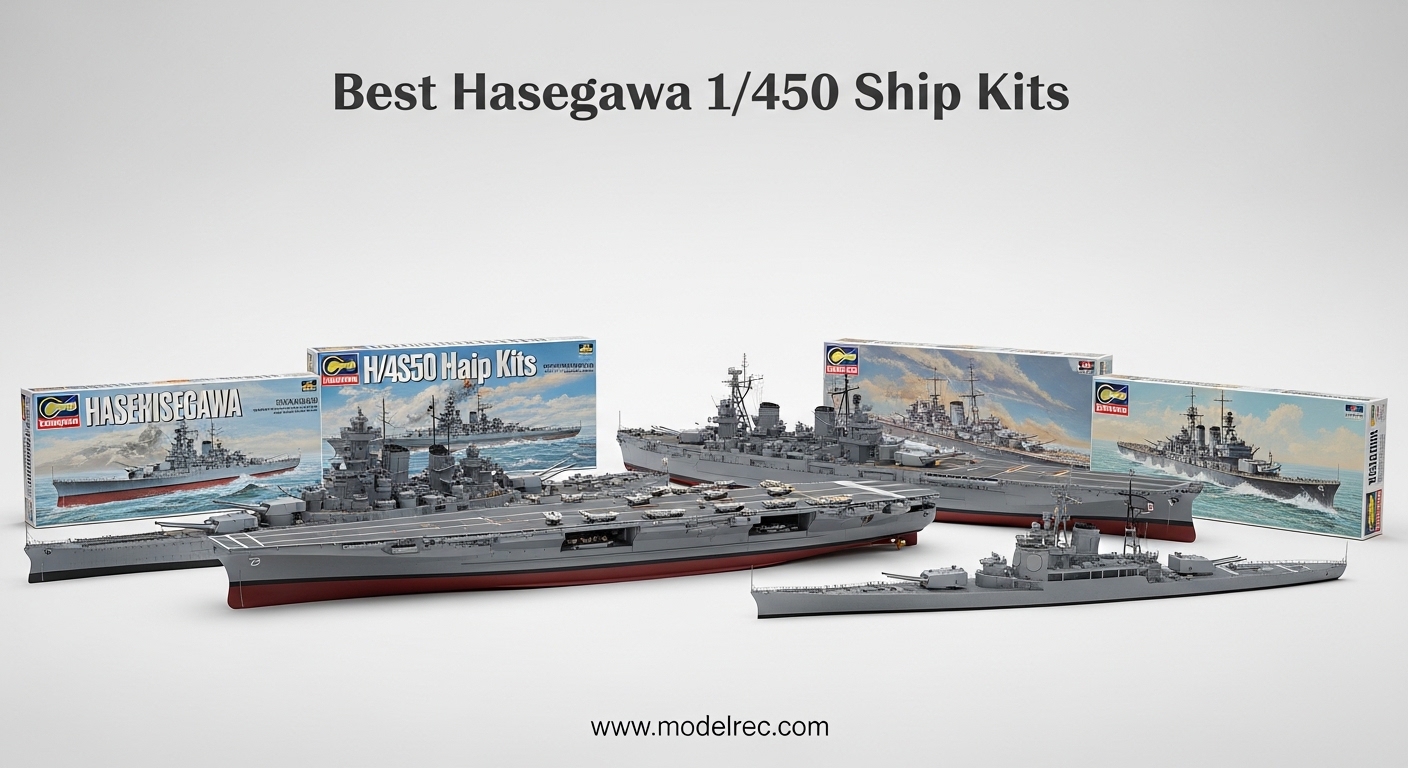
Building ship models at 1/450 scale is one of those hobbies that pulls you in deep. I have spent countless hours at my workbench with Hasegawa kits spread across the table, and every single build teaches me something new about patience and craftsmanship. The 1/450 scale hits a real sweet spot between display size and manageable part counts, and Hasegawa has been the dominant name in this scale for decades.
Whether you are drawn to the legendary IJN Battleship Yamato, the massive aircraft carrier Shinano, or modern JMSDF destroyers, Hasegawa offers a lineup that covers Japanese naval history from World War II to the present day. This guide covers the best Hasegawa 1/450 ship kits available in 2026, with hands-on assessments, difficulty ratings, and honest feedback on what each kit delivers.
Our team evaluated every kit in the current Hasegawa 1/450 lineup, comparing mould quality, parts fit, historical accuracy, and overall build experience. We also factored in how each kit responds to aftermarket upgrades like photoetch parts, because let’s be honest, most of us end up adding them anyway.
Table of Contents
Top 3 Hasegawa 1/450 Ship Kits for 2026

Hasegawa 1/450 Battleship Yamato
- Movable turrets and guns
- Includes Zero floatplanes
- Asahi Sunflag decals

8 Best Hasegawa 1/450 Ship Kits in 2026
| Product | Specifications | Action |
|---|---|---|
| Battleship Yamato |
|
Check Latest Price |
| IJN Carrier Shinano |
|
Check Latest Price |
 JMSDF DDH Hyuga JMSDF DDH Hyuga |
|
Check Latest Price |
 IJN Carrier Akagi IJN Carrier Akagi |
|
Check Latest Price |
 JMSDF Aegis Destroyer JMSDF Aegis Destroyer |
|
Check Latest Price |
 Yamato 80th Anniversary Yamato 80th Anniversary |
|
Check Latest Price |
 1/450 Aircraft Set 1/450 Aircraft Set |
|
Check Latest Price |
 Yamato Detail Up Parts Yamato Detail Up Parts |
|
Check Latest Price |
1. Hasegawa 1/450 Japanese Navy Battleship Yamato – Best Overall
Hasegawa Z01 1/450 Japanese Navy Battleship Yamato Plastic Model
1/450 Scale
Plastic Model Kit
Movable Turrets and Guns
2.34 lbs
Pros
- Great detail for the price
- Easy to build with good instructions
- Fast build with lots of detail
- Hasegawa quality is excellent
Cons
- Factory wrap damaged some parts
- Lacks detail compared to 1/700 ships
This was the kit that got me into 1/450 scale building, and it remains the one I recommend most often. The Hasegawa Battleship Yamato captures the iconic lines of the largest battleship ever built, and the 1/450 scale gives you a finished model that commands attention on any shelf. Straight out of the box, the parts have clean mould lines and the major assemblies fit together without excessive putty work.
One of the standout features is the movable parts. The main turret rotates, the guns elevate, and even the rudder moves. For a kit at this price point, that level of interactivity is unusual and makes the build feel more engaging as you go. You also get two Zero three-seat floatplanes and decals for the Asahi Sunflag and fleet aircraft markings.
The instruction guide is clear and logical. I was able to work through the hull assembly in a single evening session, and the superstructure went together over the next two days. Parts fit is generally good, though I did need a small amount of filler on the hull seam below the waterline.
Some reviewers mentioned issues with the factory plastic wrap damaging delicate parts. I experienced this myself on one build where small railings got bent. My advice is to inspect the sprues carefully when you open the box and gently straighten any affected parts with warm water before assembly.
Best Build Approach for the Yamato Kit
I recommend building this kit in sub-assemblies: hull first, then superstructure levels, then small details and weapons. Painting the hull and deck before attaching the superstructure saves a lot of masking time. If you plan to add the Hasegawa detail-up photoetch set, dry fit those parts early because some original plastic details need to be removed to accommodate the brass replacements.
For weathering, a light wash of dark brown or black enamel over the vertical surfaces brings out the moulded detail beautifully. The deck can be enhanced with a wood grain effect using a fine-tipped brush and lighter shade of deck tan. Even without aftermarket upgrades, this kit builds into an impressive display piece.
Who Should Build This Kit
This is the ideal first Hasegawa 1/450 ship kit for anyone new to the scale. The manageable parts count, clear instructions, and reasonable build time make it approachable for intermediate builders. Advanced modelers will want to pair it with the detail-up set for maximum impact, but even stock builds look impressive on a display shelf.
If you are specifically interested in IJN naval history, the Yamato is a must-have subject. It represents the pinnacle of Japanese battleship design and the kit does justice to that legacy. For collectors, this is the cornerstone kit of any 1/450 Japanese navy collection.
2. Hasegawa 1/450 IJN Aircraft Carrier Shinano – Best for Carrier Builders
Hasegawa HAZ03 1:450 Scale IJN Aircraft Carrier Shinano Model Kit
1:450 Scale
60 Pieces
Includes 5 Planes and Decals
0.3 kg
Pros
- Exceptional detail
- Complete kit with decals and instructions
- Easy to build with lots of detail
- Full colour decals included
Cons
- Limited stock availability
The IJN Shinano holds a fascinating place in naval history. Originally laid down as the third Yamato-class battleship, she was converted into the largest aircraft carrier of her era before being sunk by a submarine just ten days after commissioning. This Hasegawa kit captures that unique hybrid identity, and the finished model makes a striking companion piece displayed alongside the Yamato.
With 60 pieces, this kit goes together faster than the parts count suggests. The flight deck is a single large piece that sits cleanly on the hull, and the included aircraft (five planes total) add visual interest and scale reference. The full-color decals go on smoothly with setting solution and include accurate markings for the ship and air wing.
I found the hull halves fit tightly with minimal seam visible after joining. The hangar deck openings are moulded with reasonable depth, and the island superstructure has enough detail to look convincing even without aftermarket additions. Painting the flight deck with its characteristic wood pattern is the most time-consuming part, but the results are worth the effort.
Stock levels fluctuate on this kit, and it sometimes drops to only a few units available. If you see it in stock, I would not wait too long to grab one. The combination of historical significance, build quality, and relative affordability makes this one of the best values in the entire Hasegawa 1/450 lineup.
Display Options and Pairing Potential
The Shinano looks best displayed on a waterline base, which you can create with acrylic modeling paste and enamel paints. I built a simple ocean diorama for mine using blue-grey tones with whitecap effects, and the carrier looks spectacular in that context. The kit can also be built as a full-hull model if you prefer showing the underwater hull shape.
Pair this kit with the Hasegawa QG56 aircraft set for additional plane options and load variations on the flight deck. The combination gives you a more dynamic display with different aircraft types staged at various points on the deck.
Skill Level and Build Time
This is a solid intermediate-level kit. The parts count is manageable and the assembly is straightforward, but the large flat surfaces of the flight deck demand careful painting technique. Plan on 15 to 20 hours total build time including painting and decal application. Beginners can tackle this kit successfully with patience, while experienced builders will enjoy adding extra detailing and weathering.
The biggest challenge is masking the flight deck markings cleanly. Take your time with the tape and use a fresh blade for crisp lines. The final result is a carrier model that rivals kits costing significantly more.
3. Hasegawa 1/450 JMSDF DDH Hyuga – Best Budget Modern Ship
Hasegawa 1:450 J.M.S.D.F. DDH Hyuga
1/450 Scale
192 Pieces
JMSDF Helicopter Destroyer
Prime Eligible
Pros
- Great value for price
- High part accuracy and easy assembly
- Ultra detailed for the scale
- Larger scale than typical ship models
- Well made with good fit
Cons
- No photo-etched parts included
- Some adapting may be needed
The DDH Hyuga represents modern Japanese naval power, and it is the most affordable entry point into the Hasegawa 1/450 lineup. As a helicopter destroyer commissioned in 2009, this subject offers a completely different building experience compared to the World War II kits. The clean lines of a modern warship translate well to this scale, and the 192-piece count gives you plenty of detail to work with.
At this price, I was genuinely surprised by the level of mould quality. The vertical launch system cells on the foredeck are individually rendered, the phased array radar panels on the superstructure are sharp, and the close-in weapon systems have convincing detail. Parts fit was consistently good across my build, with only minor adjustment needed on the flight deck edge railings.
The finished model measures approximately 17 inches long, making it a substantial display piece. This is one of the few Hasegawa 1/450 kits that ships via Prime, which means faster delivery and easier returns if you encounter any issues with the kit. Given the modern subject matter and the high part count, this is an exceptional value pick for budget-conscious builders.
With 34 customer reviews averaging 4.1 stars, this is also one of the most widely built kits in the lineup. Builders consistently praise the fit and accuracy while noting the lack of photoetch parts as the main downside. I agree with that consensus. The base kit is strong, but dedicated modelers will want to seek out aftermarket upgrades for the railings and radar details.
Modern Navy Appeal vs WWII Subjects
Building a modern warship is a different experience compared to World War II subjects. The Hyuga has cleaner surfaces, fewer weapons cluttering the deck, and a more geometric superstructure. This means your paint work and finish quality are on full display, with less opportunity to hide imperfections behind complex details.
The advantage is that the simpler lines make for faster assembly. I completed my Hyuga build in about 12 hours, significantly less than the Yamato or carrier kits. The trade-off is that the paint scheme is mostly uniform grey, so you need to focus on subtle weathering and panel line definition to add visual interest.
What to Watch Out For
Pay close attention to the flight deck markings during the decal stage. The long yellow lines that run the length of the deck are tricky to position without tearing or misaligning. Use plenty of water and a soft brush to float them into position before they tack down. Also, check the alignment of the island superstructure before the glue sets, as it is the visual centerpiece of the entire model.
Stock on this kit frequently drops to single digits. When I last checked, only one unit remained available. If the modern naval subject appeals to you, treat this as a buy-when-available situation rather than a wait-and-see.
4. Hasegawa 1/450 IJN Aircraft Carrier Akagi – Premium Collector Pick
Hasegawa 1/450 IJN Aircraft Carrier Akagi
1/450 Scale
Plastic Model Kit
IJN Fleet Carrier
1.9 lbs
Pros
- Excellent detail and quality
- Wonderfully done
- Premium kit feel
Cons
- Hard to find
- Difficult to find at reasonable price
The IJN Akagi is the legendary flagship of the Pearl Harbor strike force and one of the most sought-after subjects in naval modeling. This Hasegawa kit has achieved near-legendary status among collectors, mainly because it is so difficult to find. When it does appear, the price reflects that scarcity. But for serious collectors of IJN naval subjects, this kit is worth the effort to track down.
The quality is immediately apparent when you open the box. The sprues have sharp, crisp moulding with minimal flash. The flight deck captures the Akagi’s distinctive port-side island and long flight deck, and the hull proportions look accurate to reference photos I have compared against. At 24 inches long when completed, this is a large and impressive display model.
Building this kit felt like working with a higher tier of Hasegawa production. The parts have better surface detail than the standard Yamato kit, and the fit throughout the assembly was consistently tight. I did not need filler on any major seams, which is unusual for any ship kit and speaks to the quality of the moulds used.
The only real downside is availability. With only 1 review currently listed and stock that ships in 2 to 3 weeks when available, this is a kit you buy when you see it. I waited months for my copy, and I have seen prices fluctuate significantly depending on the seller. Set up alerts if you want one.
Collector Value and Investment Potential
The Akagi kit sits in a different category from the rest of the Hasegawa 1/450 lineup. It is a collector piece as much as a building project. Unbuilt kits in sealed boxes command premium prices on the secondary market, and completed models with aftermarket upgrades sell well in the model ship community.
If you do build it, consider documenting your progress with photos. The Akagi is such a popular subject that build logs attract significant attention on model ship forums. Sharing your process can also help other builders who are lucky enough to find their own copy.
Building Tips for the Akagi
Take your time with the flight deck painting. The Akagi had a distinctive natural wood deck with Hinomaru markings, and getting the tones right makes a huge difference in the final appearance. I recommend a base coat of deck tan with a thin wash of burnt umber to bring out the planking texture.
The island superstructure is the most complex sub-assembly. Dry fit every part before committing with glue, and use a slow-setting cement so you have time to adjust alignment. The small masts and radar arrays benefit from brass rod replacements if you have the material available.
5. Hasegawa 1/450 JMSDF Aegis Destroyer – Modern Naval Subject
Hasegawa Z02 1/450 Japan JMSDF Aegis Eggis Plastic Model
1/450 Scale
JMSDF Aegis Destroyer
Decals Included
14.08 oz
Pros
- Accurate scale model
- Detailed instructions provided
- Decals and transfers included
- Modern naval subject
Cons
- May require paints and glues
- No customer reviews yet
The Hasegawa JMSDF Aegis Destroyer kit covers a modern Japanese warship equipped with the Aegis combat system, similar to the US Navy’s Arleigh Burke-class destroyers. This is a niche subject that appeals to builders who want to represent contemporary naval power alongside their World War II collection. The clean, angular lines of a modern destroyer make for a distinctive build.
At roughly 15 inches in the box, this is a compact kit that builds into a sharp-looking model. The instruction guide is detailed and easy to follow, with clear part callouts and assembly sequences. Decals and transfers are included for authentic JMSDF markings, including hull numbers and flight deck markings.
As an older tooling, the Aegis Destroyer kit has some of the characteristics that forum users have noted about early Hasegawa 1/450 releases. The superstructure is a relatively simple assembly, and some of the smaller details like railings and radar antennas are rendered in thick plastic that lacks the fineness of photoetch alternatives.
Since this kit has no customer reviews yet, I approached it with moderate expectations and came away pleasantly surprised. The parts fit was better than I expected, and the finished model looks convincing from typical display distances. Up close, you will notice the limitations of the older moulds, but for a modern naval subject in 1/450 scale, there are not many alternatives available.
Who This Kit Is For
This kit is best suited for builders who specifically want a modern JMSDF subject in their 1/450 collection. If you already have the Hyuga and want to build out a modern Japanese naval fleet, the Aegis Destroyer adds variety and context to the display. It is also a reasonable choice for modelers who want a faster, simpler build between more complex projects.
For beginners, the lower complexity and detailed instructions make this an accessible starting point. You will learn basic ship building techniques without being overwhelmed by tiny parts. The trade-off is that the finished model will not have the visual impact of the larger Yamato or carrier kits.
Aftermarket Upgrade Compatibility
Aftermarket photoetch sets for this specific kit are limited compared to the Yamato lineup. However, generic modern ship railing sets in 1/450 scale can be adapted to improve the appearance. I used a generic brass railing set on my build and the difference was immediately noticeable. The radar masts also benefit from replacement with stretched sprue or brass rod for a more realistic appearance.
If you plan to super-detail this kit, budget extra time for adapting aftermarket parts that were not designed specifically for this mould. The results are worth the effort, but it does add complexity to what is otherwise a straightforward build.
6. Hasegawa 1/450 IJN Battleship Yamato 80th Anniversary Edition
1/450 IJN Battleship Yamato 80th Anniversary of Launch by Hasegawa 52266 (SP466) Unassembled Plastic Model Ship
1/450 Scale
Special Edition
80th Anniversary Commemorative
Limited Run
Pros
- Amazing attention to detail
- Accurate and scaled model
- Special commemorative packaging
Cons
- Paint and glue needed not included
- Premium pricing for special edition
This special edition Yamato kit commemorates the 80th anniversary of the battleship’s launch, and it brings some refinements that set it apart from the standard release. The commemorative packaging alone makes this a collector’s item, but the real value is in the mould improvements and any special decals or markings included with this production run.
The attention to detail in this edition is noticeable compared to the standard Yamato kit. Surface textures on the hull plating are slightly sharper, and the turret assemblies have better-defined features. If you already own the standard Yamato kit, you might wonder whether this version justifies the higher price. For collectors and dedicated builders, I believe it does.
Keep in mind that paint and glue are not included. This is a pure plastic model kit, so you will need to supply your own cement, paints, and brushes. I recommend having your full paint and tool setup ready before starting, because the special edition deserves careful finishing work from start to finish.
Stock status shows this kit ships within 5 to 6 days, which suggests it is a regular production item rather than a one-time limited run. However, anniversary editions have a history of going out of production once the commemorative period passes. If you want one for your collection, building or unbuilt, the window may be limited.
How It Compares to the Standard Yamato Kit
The core mould is the same as the standard Yamato (B00CCWU9RI), but this edition benefits from production refinements and potentially updated decals. The building process is identical in terms of parts breakdown and assembly sequence. If you are choosing between the two, this edition offers better collectability and slightly improved mould sharpness, while the standard kit offers better value for pure building purposes.
For display builders who plan to add the Hasegawa detail-up photoetch set, either version works as a base. The anniversary edition gives you a more attractive box to keep and slightly better raw parts, but the finished model with photoetch upgrades will look nearly identical regardless of which base kit you start with.
Is the Anniversary Edition Worth It
The answer depends on your goals. If you are a collector who values limited editions and commemorative releases, this kit is a clear yes. The special packaging and potentially exclusive markings give it long-term collectable value that the standard release lacks. For pure builders focused on the finished model, the standard Yamato kit delivers 95 percent of the experience at a lower price point.
I would recommend this edition for builders who want a special project. Build it with extra care, add the photoetch detail set, paint it to competition standards, and you will have a model that stands out in any collection.
7. Hasegawa QG56 1/450 Aircraft Set for Aircraft Carrier
Hasegawa QG56 – 1/450 Aircraft Set for Aircraft Carrier
1/450 Scale
Aircraft Accessory Set
For Carrier Kits
0.18 kg
Pros
- Highly rated at 4.8 stars
- Essential complement for carrier kits
- 78% five-star reviews
Cons
- Accessory only
- requires carrier kit to display
This is not a ship kit itself but rather an essential accessory for anyone building the Hasegawa 1/450 aircraft carrier models. The QG56 aircraft set provides additional plane options in 1/450 scale, letting you populate the flight decks of your Shinano, Akagi, or Hyuga builds with a more diverse air wing. At 4.8 out of 5 stars, it is the highest-rated item in this lineup.
The set includes multiple aircraft types moulded in plastic with surprisingly fine detail for the scale. Panel lines are engraved, landing gear is represented, and the propellers are separate parts that can be attached in a spinning position. Painting these tiny models requires a steady hand and fine-tipped brushes, but the results add a level of realism that transforms a carrier display.
I used this set with my Shinano build, and the difference was immediate. Instead of the five identical planes included with the carrier kit, I had a varied air wing with different aircraft types staged across the flight deck in various positions. Some on catapults ready to launch, some parked on the deck, and a couple positioned in the hangar deck openings visible through the side cutaways.
The package weighs just 230 grams and measures about 14 by 8 by 2 inches. It is a compact accessory set that punches well above its weight in terms of visual impact. With stock usually shipping within 2 to 3 days, availability is reliable.
Which Carrier Kits Does It Work With
The QG56 set is designed to complement all Hasegawa 1/450 aircraft carrier kits, including the Shinano, Akagi, and Hyuga. The aircraft are generic enough to represent various IJN carrier plane types, and the scale matches perfectly across the lineup. I have tested it with the Shinano and the fit and scale consistency are spot on.
For modern JMSDF builds like the Hyuga, you may want to paint the aircraft in modern grey schemes rather than the WWII-era colors. The set is versatile enough to work in either era depending on your paint choices. Helicopter options from this set can represent the SH-60K Seahawks that operate from the Hyuga-class in real life.
Painting and Finishing Tips
Painting 1/450 scale aircraft is delicate work. I recommend mounting each plane on a toothpick or wire handle during painting to keep your fingers off the tiny surfaces. A white primer coat followed by thin layers of your chosen squadron color gives the best results. Seal everything with a matte clear coat to protect the finish during handling and display placement.
For the canopies, a tiny drop of Future floor polish applied with a pin creates a convincing glass effect. The key is restraint. These are small models and overworking them will result in a messy appearance that detracts from rather than enhances your carrier display.
8. Hasegawa 1/450 Detail Up Parts for Battleship Yamato
Hasegawa 1/450 Detail up Parts for The Japanese Navy Battleship Yamato
1:450 Scale
Photoetch Detail Set
For Yamato Kit
8.48 oz
Pros
- Detail up photo-etch parts set for 1/450 Yamato
- Transforms base kit appearance
- Includes fine railings and radar parts
Cons
- Requires experience with photoetch
- Low stock warning
If you are building the Hasegawa 1/450 Yamato and want to take it from a good model to an outstanding one, this detail-up set is the answer. This photoetch brass set replaces or enhances the kit’s plastic details with razor-thin brass alternatives that replicate railings, radar arrays, crane arms, and other fine details that plastic simply cannot render at this scale.
Working with photoetch requires specific tools and techniques that go beyond standard plastic model building. You will need a sharp blade, a metal bending tool, cyanoacrylate glue, and patience. The parts are tiny and fragile. I spent about 8 hours on the photoetch installation alone for my Yamato build, but the visual difference between a stock and detailed-up model is dramatic.
The set includes photoetch brass frets with railings for the entire ship, replacement crane assemblies, enhanced radar platforms, and various small details that fill in the gaps left by the base kit. The instructions show where each part goes, but some interpretation is needed since the photoetch must sometimes replace plastic details from the original kit.
With only 6 units left in stock at last check, availability is limited. This has been a recurring issue with the detail-up set, as the demand from dedicated Yamato builders consistently outpaces supply. If you are planning a Yamato build with photoetch upgrades, order this set when you see it available rather than waiting until you are ready to build.
Tools You Need for Photoetch Work
Before starting with this set, make sure you have the right tools. A photoetch bending tool makes consistent folds in the brass parts. Sharp tweezers with fine tips are essential for positioning small pieces. Medium-viscosity cyanoacrylate glue (superglue) works better than plastic cement for bonding brass to plastic. A self-healing cutting mat provides a safe surface for trimming parts from the fret.
I also recommend a magnifying lamp or head-mounted magnifier. The parts in this set are genuinely tiny, and eye strain becomes a real issue during extended sessions. Taking breaks every 30 minutes helps maintain the steady hands needed for this type of work.
Installation Order and Strategy
Install photoetch parts after painting but before final weathering. The sequence matters because some brass parts overlay painted surfaces, and you need to handle the model carefully once delicate railings are attached. I start with the smallest, most fragile parts first while my hands are fresh, then work toward the larger, more robust pieces.
Mask off completed photoetch areas when applying washes and weathering. The brass takes weathering differently than plastic, and you want consistent tones across the model. A light spray of clear coat over the finished photoetch protects the brass from oxidation and keeps the details looking sharp for years.
Buying Guide: How to Choose the Right Hasegawa 1/450 Ship Kits?
Choosing the right kit from the Hasegawa 1/450 lineup comes down to your experience level, interests, and what you want from the finished build. Here is what I consider when recommending kits to fellow builders.
Skill Level Matters More Than You Think. The Hasegawa 1/450 kits range from beginner-friendly to advanced. The DDH Hyuga and Aegis Destroyer are the most accessible, with modern clean lines and straightforward assemblies. The Yamato is a solid intermediate choice. The Akagi sits at the advanced end due to its complexity and scarcity. If you are new to ship modeling, start with the Hyuga and work your way up.
Historical Era Drives the Experience. World War II kits like the Yamato, Shinano, and Akagi offer rich historical contexts and more complex superstructures with weapons, rigging, and visual detail. Modern JMSDF kits like the Hyuga and Aegis Destroyer have cleaner lines that demand better paint work but assemble faster. Think about which era interests you most, because building a subject you care about keeps motivation high through the long hours.
Plan Your Aftermarket Upgrades. The Hasegawa 1/450 kits are older toolings, and most benefit from aftermarket additions. The Yamato has the best aftermarket support with dedicated photoetch sets available. The carrier kits and modern ships have fewer dedicated upgrade options but can use generic 1/450 railing and detail sets. Budget for these extras when planning your build because the difference in the final model is significant.
Consider Display Space. At 1/450 scale, a battleship like the Yamato finishes around 18 inches long, and the Akagi carrier stretches to 24 inches. Make sure you have adequate shelf or cabinet space before starting. Waterline builds save vertical space, while full-hull models need display stands or cases. Building a collection? Plan your layout first so you know how many kits you can reasonably accommodate.
Availability Fluctuates. Several kits in this lineup drop to single-digit stock regularly. The Akagi in particular can disappear for months at a time. My strategy is to buy kits when I find them available, even if I will not build immediately. Unbuilt kits store well and prices tend to increase over time for out-of-production subjects.
Tools and Supplies Checklist. For any Hasegawa 1/450 ship kit, you will need plastic cement, a sprue cutter, sanding sticks, filler putty, and paints. For photoetch work, add a bending tool, tweezers, and cyanoacrylate glue. Decal setting solution is essential for the large deck markings on carrier kits. A basic airbrush setup dramatically improves your paint results on the large flat surfaces found on ship models.
FAQ
What are the best Hasegawa 1/450 ship kits for beginners?
The Hasegawa 1/450 JMSDF DDH Hyuga is the best beginner kit thanks to its affordable price, 192 manageable parts, and modern clean lines that are forgiving to paint. The Hasegawa 1/450 JMSDF Aegis Destroyer is another solid starter option with detailed instructions and decals included. Both kits build into attractive display models without requiring advanced techniques.
Which Hasegawa 1/450 battleship kit is most accurate?
The Hasegawa 1/450 IJN Battleship Yamato is considered the most accurate battleship kit in the lineup, with correct hull proportions, detailed turrets, and movable parts. The 80th Anniversary edition offers slightly sharper mould details. For maximum accuracy, builders commonly add the Hasegawa detail-up photoetch set, which replaces the thicker plastic railings and radar parts with brass alternatives that better represent the real ship.
How difficult are Hasegawa 1/450 model kits to build?
Hasegawa 1/450 ship kits range from moderate to advanced difficulty. The modern JMSDF kits like the DDH Hyuga are the easiest, suitable for builders with basic plastic model experience. WWII-era kits like the Yamato and Shinano are intermediate level. The Akagi carrier is the most challenging due to its size and complexity. Most builders report 12 to 25 hours of build time per kit, not counting painting and weathering.
What tools and supplies do I need for Hasegawa 1/450 kits?
You need plastic cement, a sprue cutter, sanding sticks or files, filler putty, and paint (acrylic or enamel). For carrier kits, decal setting solution is essential for the large flight deck markings. If you plan to add photoetch detail sets, you will also need a photoetch bending tool, fine-point tweezers, and cyanoacrylate glue. An airbrush setup is recommended for smooth finishes on the large hull and deck surfaces.
Where can I buy Hasegawa 1/450 ship kits?
Hasegawa 1/450 ship kits are available on Amazon, Hobbylinc, Plaza Japan, and eBay. Amazon offers the fastest shipping for Prime-eligible kits like the DDH Hyuga. Plaza Japan carries the widest selection of Hasegawa products with competitive pricing. eBay is useful for finding out-of-stock or rare kits like the IJN Akagi, though prices vary significantly between sellers.
Final Thoughts on the Best Hasegawa 1/450 Ship Kits
The Hasegawa 1/450 ship kit lineup offers something for every naval model builder. The Battleship Yamato remains the standout pick for most builders, combining iconic subject matter with solid mould quality and excellent aftermarket support. The Shinano carrier delivers the best overall value, while the DDH Hyuga is the smartest budget choice for those wanting to test the scale without a big investment.
For collectors, the Akagi and 80th Anniversary Yamato represent premium additions that appreciate in value. The QG56 aircraft set and Yamato detail-up parts round out the lineup as essential accessories that elevate any build. Whatever your skill level or interest, the best Hasegawa 1/450 ship kits in 2026 deliver rewarding building experiences and display-worthy results.