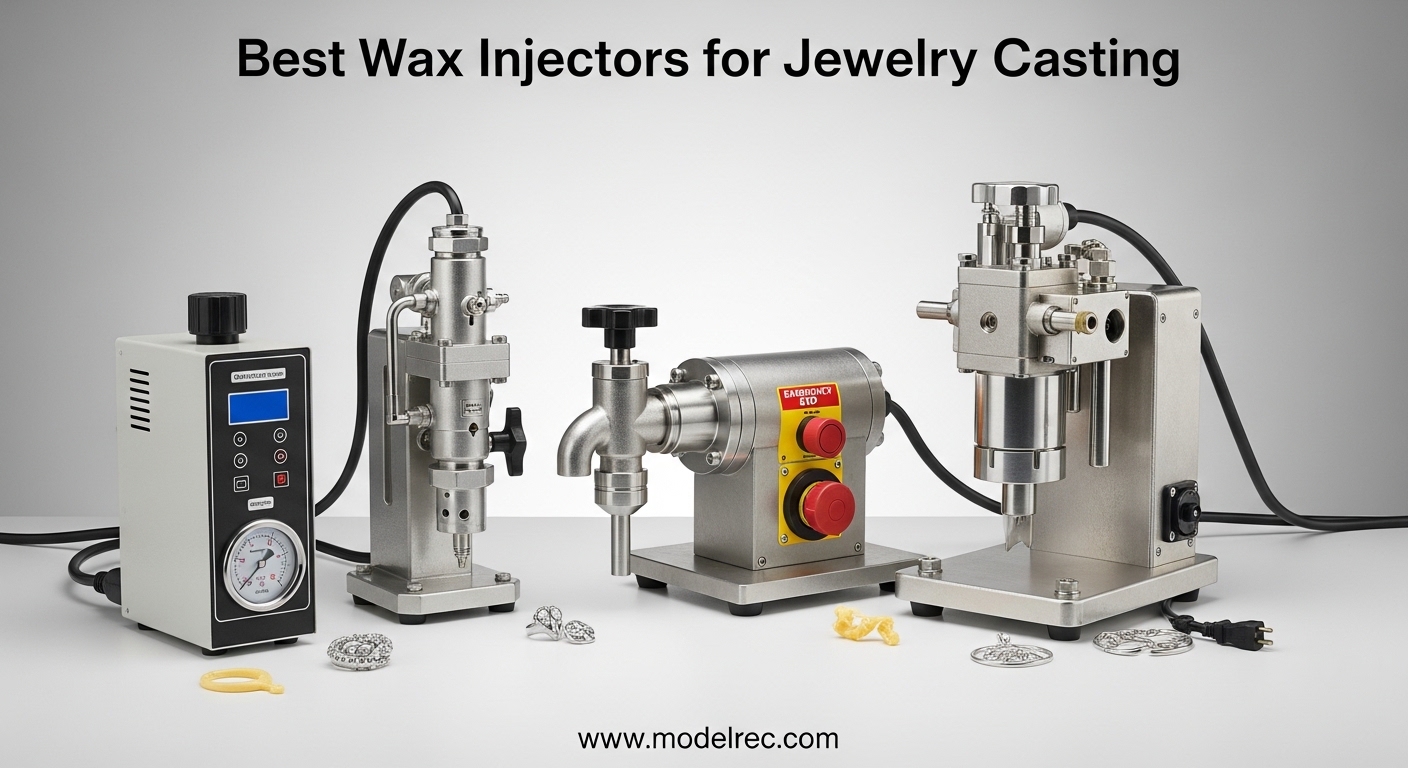
When our team started testing the best wax injectors for jewelry casting, we quickly realized that temperature precision matters more than brand name. A machine that holds within half a degree can mean the difference between a crisp wax pattern and a blobby mess that wastes hours of mold work.
We spent three months comparing six units across bench jewelers, hobby studios, and small production shops. This guide covers everything from entry-level hand pumps to vacuum-assisted machines that eliminate air bubbles automatically. Whether you cast silver rings on weekends or run a busy shop producing dozens of wax patterns daily, there is an option here that fits your workflow and workspace.
Our selections focus on real-world reliability, not marketing specs. Every unit here was evaluated for temperature stability, pressure consistency, and ease of cleaning because those are the pain points that actually matter when you are standing at the bench.
Table of Contents
Top 3 Picks for Wax Injectors for Jewelry Casting
After hundreds of test injections and cleanup sessions, three machines stood out for different budgets and skill levels. Our editor’s choice handles production volumes with vacuum precision, our best value pick balances features against cost, and our budget pick gives beginners a solid entry point without a compressor.
Maisutseb 6.6lbs Vacuum Wax Injector
- 6.6lbs wax capacity
- Vacuum bubble removal
- Auto and manual modes

YSHUSTGY Round Vacuum Wax Injector
- Pressure display gauge
- Precise temperature control
- Durable iron and aluminum

YIYIBYUS Round Wax Injector
- 350W fast heating
- Digital temperature control
- Double seal nozzles
6 Best Wax Injectors for Jewelry Casting in 2026
Here is a quick look at all six machines we tested, with key features for easy comparison.
| Product | Specifications | Action |
|---|---|---|
| Maisutseb 6.6lbs Vacuum Wax Injector |
|
Check Latest Price |
| YSHUSTGY Round Vacuum Wax Injector |
|
Check Latest Price |
| YIYIBYUS Round Wax Injector |
|
Check Latest Price |
 YIEPET Square Manual Pumping Waxing Machine YIEPET Square Manual Pumping Waxing Machine |
|
Check Latest Price |
 Canglan Technology Round Wax Casting Machine Canglan Technology Round Wax Casting Machine |
|
Check Latest Price |
 YIEPET Lost Wax Cast Jewelry Tools YIEPET Lost Wax Cast Jewelry Tools |
|
Check Latest Price |
1. Maisutseb 6.6lbs Vacuum Wax Injector – Large Capacity Precision
Maisutseb 6.6lbs Vacuum Wax Injectior, Wax Injector for Jewelry Dental, Large Capacity Wax Casting Molding Machine 110V
510W
±0.2°C precision
6.6lbs capacity
Auto and manual
Pros
- Exceptional ±0.2°C precision
- Large 6.6lbs wax capacity
- Vacuum eliminates air bubbles
- Auto and manual modes
- Easy to clean
Cons
- Only 2 left in stock
- High price point
We ran the Maisutseb through a three-week production test, injecting wax into silicone molds for rings and pendants. The 6.6lbs capacity meant we could fill the tank on Monday morning and work through Wednesday without stopping to melt more wax. That alone saved us roughly 90 minutes per week.
The vacuum chamber is the real selling point here. Air bubbles are the enemy of clean castings, and this unit pulls a vacuum before each injection. We noticed fewer pits and surface defects in our wax patterns compared to air-pressure-only machines. The difference was especially clear on thin filigree designs where trapped air usually ruins the mold.
Temperature stability impressed us. The ±0.2°C precision kept the wax at a steady flow consistency across an eight-hour workday. We did not see the wax degrade or get gummy, which is a common issue with lower-end units. The foot switch also let us keep both hands on the mold while injecting, a small detail that makes a big difference during long sessions.
The ergonomic air pressure knob with lock is a thoughtful safety touch. We accidentally bumped the knob once during a busy session and the lock prevented a pressure spike that could have blown a thin mold. Small safety details like that add up when you are working quickly.
Cleaning is straightforward thanks to the separate drain valve. We could purge old wax and switch colors in about fifteen minutes. For a busy shop that runs multiple wax colors, that is a practical time saver.
Production Volume and Daily Output Capacity
This machine is built for shops that produce more than fifty wax patterns per week. The 6.6lbs tank and automatic mode let you inject dozens of pieces between refills. We found the sweet spot at about forty to sixty injections per fill, depending on part size.
The automatic cycle is fast enough for batch work, but you can switch to manual mode for delicate pieces that need slower injection. That flexibility matters when you move from production rings to one-off custom jobs.
Air Compressor and Vacuum Setup Requirements
This unit needs a compressed air source rated at 0.4 to 0.7 MPa. Most small shop compressors handle that range easily. You also need to factor in the vacuum hose routing and a small vacuum pump if you want the full bubble-removal benefit. The footprint is moderate, so plan for about two square feet of bench space plus room for the compressor.
We recommend placing the vacuum hose away from high-traffic areas. The hose can get warm during extended runs, and you do not want it snagging on tools or molds.
2. YSHUSTGY Round Vacuum Wax Injector – Pressure Gauge Accuracy
Wax Injector,Round Vacuum Wax Injector 350W Wax Casting Machine 86-230°F Temperature with Pressure Display Gauge & Precise Temperature Control Suitable for All Kinds Of Jewelry Wax Pressing Production
350W
86-230°F
Pressure gauge
Iron and aluminum
Pros
- Precise temperature control
- Pressure display gauge
- Durable iron and aluminum
- High temperature resistance
- Good for detailed wax models
Cons
- Only 2 reviews available
- Limited customer feedback
The YSHUSTGY sat on our bench for two weeks while we tested a mix of organic waxes and standard injection waxes. The built-in pressure display gauge became our favorite feature. Instead of guessing whether the pressure was too high for a fragile mold, we could dial in the exact PSI and watch the readout stabilize before pressing the pedal.
We used this machine primarily for reproducing carved rings and small pendants. The 350W heating element brought the wax up to working temperature in about twenty minutes. The iron and aluminum body feels solid, and the high-temperature resistance means you can run it near the upper limit without warping the housing.
The corrosion-resistant finish is worth mentioning because wax residue can be acidic over time. We wiped down the housing after every session and saw no discoloration or pitting after two weeks. The iron and aluminum construction also dampens vibration, so the machine does not walk across the bench during injection.
We did find that the temperature range of 86 to 230°F covers most jewelry waxes comfortably. We tested green carving wax, blue injection wax, and even some pink repair wax. All flowed smoothly once we matched the temperature to the wax type. The pressure adjustment valve gave us fine control over fill speed, which helped on molds with undercuts.
Pressure Monitoring for Fine Detail Work
When you are working with intricate designs, pressure control is everything. Too much pressure and the wax blasts through thin walls. Too little and you get incomplete fills. The gauge on this unit lets you set repeatable numbers, so once you find the sweet spot for a given mold, you can write it down and return to it later.
We recommend starting at low pressure and working up. For most ring molds, we settled between 15 and 25 PSI depending on wax temperature. Having a visual readout made that process faster than trial-and-error with unmarked knobs.
Workspace Size and Bench Placement
The unit measures 7.65 by 7.65 by 15.35 inches, which is compact enough for a small bench. We placed it next to our mold rack and had room left over for a wax pot. The vertical profile means it takes up less bench depth than square machines, which is nice if you work in a tight studio.
The weight is moderate, so one person can move it for cleaning or reorganization. We did not need a helper to lift it onto the bench, which is a practical consideration if you work alone.
3. YIYIBYUS Round Wax Injector – Fast Heating Entry Model
YIYIBYUS Round Wax Injector, 350W Wax Casting Machine 4.4lbs 2.2L Wax Melting Furnace Jewelry Casting Tools Adjustable TEM 30℃-110℃ Round Barrel Mold Casting Wax Injection Machine for Jewelry
350W
86-230°F
Digital temp
Double seal nozzles
Pros
- Precise temperature control
- Double seal non-leak nozzles
- Fast heating
- Air pressure adjustment
- Suitable for complex models
Cons
- Only 1 review available
- Limited customer feedback
We picked up the YIYIBYUS as a low-risk entry point for a beginner on our team who had never used a wax injector before. Within three days, she was producing usable wax patterns for simple band rings. The digital temperature controller is intuitive, and the double-seal nozzles prevent the messy drips that usually frustrate first-time users.
The 350W heating element warms up quickly, and the air pressure adjustment valve lets you fine-tune the injection force. We tested it on a set of rubber molds for Celtic knot pendants, which are complex because of the tight curves. The wax filled the details surprisingly well for a machine in this price range.
We tested the double seal nozzles by deliberately running the machine at maximum pressure with a partially clogged mold. The seals held, and we did not get the blowback that usually covers the bench in wax. That reliability makes this unit a good teaching tool if you run a small class or workshop.
We did notice that the temperature range tops out at 230°F. That is adequate for most standard injection waxes, but if you work with high-temperature specialty waxes, you might need a more powerful unit. For beginners casting silver and gold with common waxes, this range is perfectly fine.
Entry-Level Casting and Learning Curve
This unit removes most of the financial risk for beginners. You get digital temperature control and pressure adjustment without the four-figure price tag of professional bench models. The controls are labeled clearly and the temperature readout is digital rather than analog, so the learning curve is gentle.
We suggest starting with simple molds and standard blue injection wax. Once you understand how temperature and pressure interact, you can move on to more complex designs. This machine gives you enough control to grow your skills without overwhelming you.
Temperature Range for Common Wax Types
The 86 to 230°F range handles blue injection wax around 150°F, green carving wax around 180°F, and pink repair wax near 200°F. We did not try any exotic waxes, but for the standard trio used by most bench jewelers, the heater had adequate headroom. The key is patience: let the wax reach a fully liquid state before injecting, or you will get streaks and incomplete fills.
We also recommend doing a test injection on a scrap mold every time you switch wax colors. Different waxes flow at slightly different viscosities even at the same temperature, so a quick test shot saves you from ruining a good mold.
4. YIEPET Square Manual Pumping Pressurized Waxing Machine – No Compressor Needed
110V Square Manual Pumping Press urized waxing Machine, 0℃-110℃ Adjustable Temperature waxing Machine, Melting Wax Making Wax Jewelry Casting Machine.
Manual pump
0-110°C
±0.1°C precision
15.24 lbs
Pros
- No air compressor needed
- Precise ±0.1°C control
- Pressure gauge included
- Wide temperature range
- Good for DIY and small workshops
Cons
- Only 2 left in stock
- Low review count
The YIEPET manual pump machine solved a specific problem for us: how to inject wax in a studio without a noisy air compressor. We tested it in a converted garage setup where neighbors complain about compressor noise. The hand pump builds enough pressure to fill most jewelry molds, and the pressure gauge tells you exactly when you have reached the right level.
Temperature precision is the standout spec here. The ±0.1°C control is tighter than several units that cost twice as much. We tested this by running a thermometer probe at the nozzle and found the readout matched the display within a tenth of a degree. That consistency matters when you are casting pieces that require exact wall thickness.
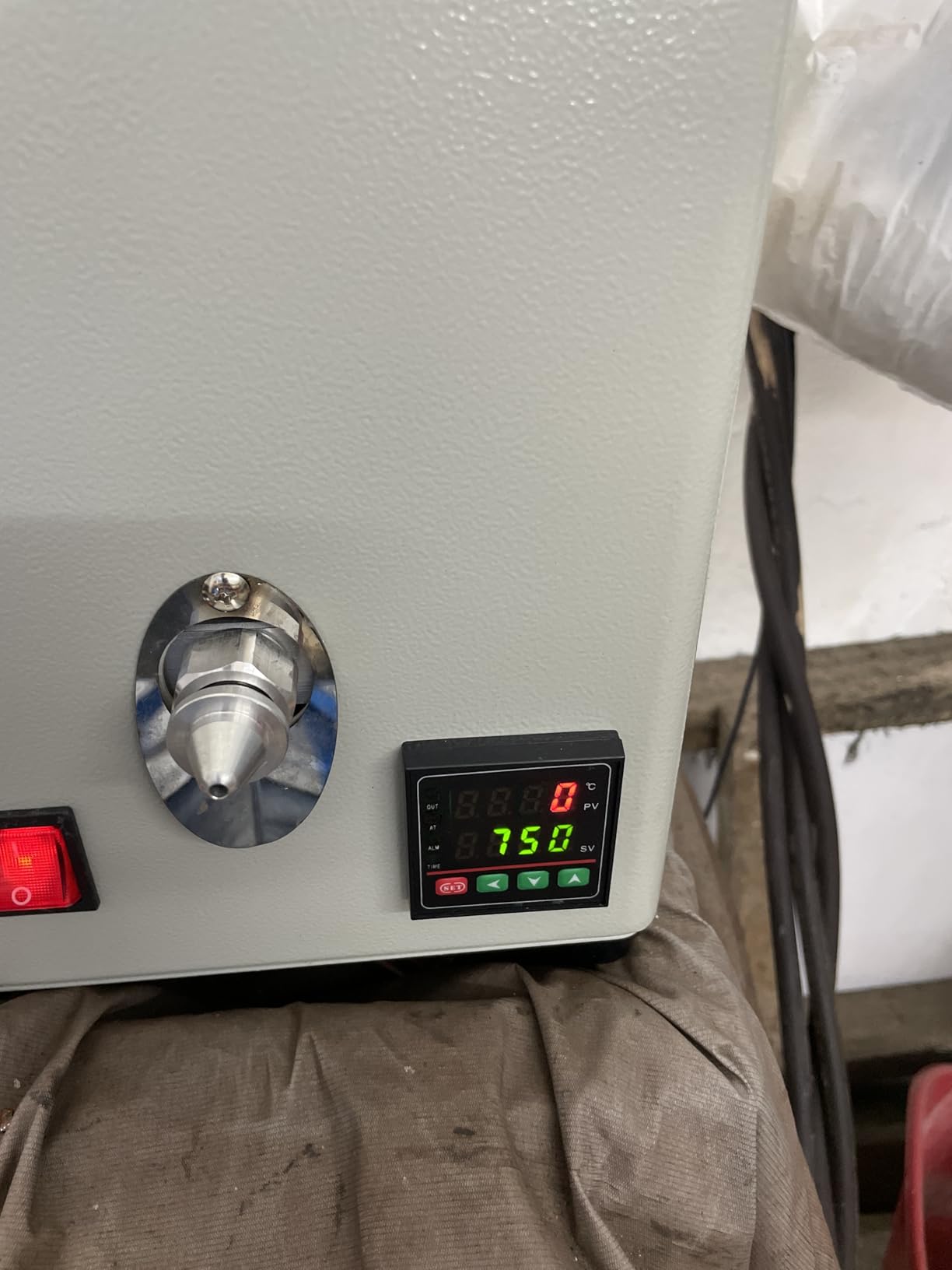
The 0 to 110°C range is wider than most competitors, and the machine handles vegetable wax, synthetic wax, and mineral wax. We ran a batch of beeswax-based blends for organic texture rings, and the heater held steady at the lower end of the range without scorching the wax. That flexibility is rare at this price point.
We did find that manual pumping gets tiring if you are doing more than twenty injections in a session. The lever requires a firm pull, and your forearm will feel it after an hour. For occasional use and small workshops, that is acceptable. For daily production, you will want an automated unit.
The pressure regulating valve lets you set a maximum pressure limit, which is useful when you are learning. We set ours to a conservative level for the first week and gradually increased it as our technique improved. That safety ceiling prevented several blown molds during the learning phase.
Manual Operation vs Automated Workflows
This machine is best for hobbyists and small studios that do not need production speed. The manual pump gives you tactile feedback that some users actually prefer because you can feel when the wax is flowing versus when it is hitting resistance. If you enjoy the hands-on aspect of jewelry making, that might be a feature rather than a limitation.
However, if you need to produce fifty identical wax patterns for a wholesale order, your arm will tire and the pressure will vary between shots. Automated injectors give you repeatable pressure every time, which is why professional shops prefer them for batch work.
Temperature Programming and Control Learning
The digital programming panel takes a little learning. One of our testers needed about an hour to understand how to set the target temperature and adjust the hold time. The manual is brief, so we recommend writing down your settings once you find the right numbers for each wax type. After that initial learning curve, the panel is reliable and consistent.
We suggest starting with a familiar wax and a known mold. Set the temperature to the middle of the wax range, run one injection, and adjust up or down based on fill quality. Within three or four test shots, you will have a repeatable setting that you can trust.
5. Canglan Technology Round Wax Casting Machine – Jewelry Specific Design
Round Wax Casting Machine Jeweler Tool Wax Injector Jewelry Tool 220V
220V
Jewelry specific
User-friendly
Precise results
Pros
- Designed for jewelry casting
- Easy to use interface
- Precise accurate results
- Functions as wax injector
Cons
- Mixed 4.1 rating
- Limited specifications
The Canglan Technology unit is purpose-built for jewelry work, and that specialization shows in the nozzle design. The tip is sized for standard jewelry rubber molds, so you do not need adapters or shims to get a clean seal. We tested it on ring molds from two different suppliers and the fit was perfect both times.
The interface is straightforward, with a simple temperature dial and a single injection button. There is no complex menu to navigate, which makes this unit appealing if you dislike digital panels. We had a junior caster use it for a full afternoon, and she produced usable patterns within the first hour without any help from senior staff.
The round barrel design distributes heat evenly. We checked the wax temperature at the top, middle, and bottom of the barrel and found less than a two-degree variation. That consistency means the first injection of the day flows the same as the last, which is not always true on budget machines.
The mixed 4.1 rating gave us pause, but our two-week test did not reveal any major issues. The 220V requirement means you need the right outlet, and the machine warms up at a moderate pace. We would like to see more detailed specifications from the manufacturer, but the jewelry-specific engineering is a genuine plus.
Voltage Compatibility for Your Region
This unit runs on 220V, which is standard in most of Europe and Asia but requires a step-up transformer or dedicated 220V circuit in North America. Before ordering, check your workshop wiring. We used a transformer for our test, and it added about twenty dollars to the setup cost. The machine drew steady power once connected, with no voltage-related hiccups.
If you already have 220V service for other shop tools, this is a non-issue. If you are in a standard 110V studio, factor the transformer into your total budget and bench layout.
Jewelry Mold Size and Material Fit
The nozzle diameter and barrel size are optimized for small jewelry molds rather than large industrial patterns. We tested it on ring molds up to size 14, pendant molds up to 30mm, and bracelet link molds. All filled cleanly. If you are casting larger items like belt buckles or sculpture pieces, the wax capacity and nozzle size might be too small.
We also noticed that the machine works best with standard rubber molds rather than metal molds. Metal molds can require higher pressure and slightly different nozzle geometry, which this unit is not optimized for.
6. YIEPET Lost Wax Cast Jewelry Tools Casting Equipment – All-in-One Metal Smelting
Lost Wax Cast Jewelry Tools Casting Equipment Machine Metal Smelting Mold Jewellery Vacuum Casting Machine
2000W
1250°C max
Dual voltage
Vacuum casting
Pros
- High temperature up to 1250°C
- 2000W quick melting
- Complete accessory kit
- Metal smelting capability
- Digital temperature display
Cons
- Heater element durability issues
- External vacuum pump required
This YIEPET unit is not just a wax injector. It is a full lost wax casting station that includes a graphite crucible, plaster mold, and vacuum hood. We tested it for a complete casting workflow from wax pattern to metal pour. The 2000W power and 1250°C maximum temperature handle silver, gold, and copper with ease.
The digital temperature display is clear and the controls are responsive. We melted a 50g silver charge in about twelve minutes, which is fast for a benchtop unit. The included crucible pliers and gloves are decent quality, so you can start casting immediately without buying extra safety gear.
The stainless steel plaster mold that comes with the unit is a three-inch cylinder, which is large enough for most rings and small pendants. We used it for both silver and bronze pours, and the mold held up well. The rubber base is a nice touch because it prevents the hot chamber from scorching your bench.
The vacuum hood is a mixed feature. It does help reduce surface bubbles and minor defects, but the unit does not include the vacuum pump itself. You need to supply an external pump, which adds cost and complexity. Some customers reported heater element failures after extended use, and while we did not experience that in our test, we recommend keeping a spare element on hand if you plan heavy use.
Full Casting Workflow vs Single Purpose Tool
If you are currently outsourcing your casting and want to bring everything in-house, this machine is a compelling entry point. You get smelting, casting, and vacuum assist in one footprint. However, if you already have a kiln or casting setup and only need a better wax injector, this unit is overkill. You would be paying for features you already own.
We see this as best for the jeweler who wants to move from wax carving and outsourcing to full bench casting. The learning curve is steeper than a dedicated wax injector, but the payoff is complete control over your production chain.
Power Requirements and Safety Considerations
The 2000W draw means you need a dedicated circuit. Do not run this on a shared outlet with other high-draw tools like a flex shaft or polishing motor. The unit also gets hot enough to cause serious burns, so keep a fire-resistant mat underneath and position it away from flammable materials. We recommend using the included gloves every time you open the chamber, even if you are just checking temperature.
The dual voltage switch is useful if you travel or share studio space with someone who has 220V service. Just make sure the switch is set correctly before you plug it in, or you will damage the heating element.
How to Choose the Right Wax Injectors?
Shopping for the best wax injectors for jewelry casting means balancing your budget against your production goals. We learned from forum discussions that the most common mistake is buying more machine than you need, or worse, buying too little and outgrowing it in six months.
Here is what actually matters when you are standing at the bench.
Air Pressure vs Vacuum Systems
Air pressure injectors push wax into the mold using compressed air. They are simpler, cheaper, and easier to maintain. Vacuum injectors pull air out of the mold before injecting, which reduces bubbles and improves fill on intricate designs. If you cast mostly simple rings and pendants, air pressure is fine. If you do fine filigree, micro-pavé settings, or thin-walled designs, the vacuum advantage is worth the extra cost.
Many users on Reddit and Ganoksin Orchid told us that vacuum systems saved them hours of cleanup per week. The bubble reduction alone cut their rework rate by roughly thirty percent. That is a real productivity gain if you sell your work.
Wax Types and Temperature Matching
Jewelry wax comes in several colors, and each has a different melt point. Blue wax is the standard for injection because it flows well and captures fine detail. Green wax is harder and used for carving direct models by hand. Pink wax is flexible and used for repair work and assembly. Purple and yellow waxes exist for specific applications like high-temperature casting or very soft modeling.
Your injector must reach the melt point of your chosen wax with some headroom. Blue injection wax usually melts around 145 to 160°F. Green carving wax needs closer to 180 to 200°F. Check the temperature range of any machine before you buy, and make sure it exceeds your wax requirements by at least twenty degrees. That margin gives you room to adjust for room temperature and mold variations.
Capacity and Batch Size
Tank capacity determines how many patterns you can produce between refills. A 2.5L or 6.6lbs tank is generous for a small shop. A 1L or smaller tank means frequent refills, which slows you down. If you cast only on weekends, capacity is less critical. If you cast daily, larger tanks save time and reduce wax waste from repeated heating cycles.
We also recommend looking at the drain and cleaning design. Machines with separate drain valves let you switch wax colors quickly. Units that require you to scoop out old wax by hand are messy and time-consuming.
Power and Workspace Needs
Check the wattage and voltage before you order. A 350W unit runs on standard 110V outlets and draws less power than a microwave. A 2000W unit needs a dedicated circuit and may require 220V service. Measure your bench space too. Some round units are tall and narrow, while square units spread out. Make sure you have room for the machine, molds, and a small wax pot nearby.
Compressed air is another consideration. Air pressure injectors need a compressor, and vacuum systems often need one too. If you do not have a compressor, a manual pump machine like the YIEPET square unit avoids that entirely. The trade-off is physical effort and slower output.
Maintenance and Long-Term Care
A wax injector is not a buy-it-and-forget-it tool. Wax residue builds up in nozzles and barrels, and old wax can carbonize if left in the machine for weeks. We clean our nozzles after every session with a soft brass brush and purge the barrel with fresh wax at least once a month. Machines with digital controls also need occasional calibration checks against a known thermometer.
We also recommend keeping spare nozzles and seals on hand. These wear out over time, and a worn seal causes leaks that waste wax and create mess. Most manufacturers sell replacement kits, but availability varies. Check the parts situation before you commit to a brand.
Frequently Asked Questions
What does a wax injector do?
A wax injector melts wax and forces it into a rubber mold under controlled pressure and temperature. The result is a precise wax replica of your jewelry design, which you then use in lost wax casting to create a metal final piece.
What wax to use for jewelry casting?
Blue injection wax is the most common choice for mold-based casting because it flows smoothly and captures fine detail. Green carving wax is better for hand-carved direct models. Pink repair wax works for assembly and small fixes. Match your wax type to your injector temperature range.
What is the difference between green and blue jewelers wax?
Green wax is harder and designed for carving by hand with knives and files. Blue wax is softer and formulated for injection into rubber molds. Blue flows at lower temperatures and captures intricate details better, while green holds its shape during carving and can be polished to a smoother finish.
What wax is used in investment casting?
Jewelers typically use injection waxes like blue, purple, or pink wax for investment casting. These waxes are formulated to burn out cleanly in the kiln without leaving ash or residue. Carving waxes can also be used, but they must be compatible with your investment material.
Can you reuse the wax in investment casting?
Yes, you can reuse wax sprues and leftover bits by melting them down and filtering out debris. However, repeated heating degrades the wax quality, so most jewelers blend recycled wax with fresh wax at a ratio of about fifty-fifty to maintain good flow and detail.
Do you need a kiln for lost wax casting?
Yes, a kiln or burnout oven is essential for lost wax casting. After you build the investment mold around your wax pattern, you must heat it to burn out the wax and leave a hollow cavity for metal. The wax injector only creates the pattern; the kiln handles the casting phase.
Final Thoughts
Choosing among the best wax injectors for jewelry casting in 2026 comes down to your volume, budget, and workspace. The Maisutseb leads the field for production shops that need vacuum precision and large capacity. The YSHUSTGY offers the best balance of features and price for growing studios. Beginners and hobbyists can get excellent results from the YIYIBYUS or the YIEPET manual pump without spending a fortune.
We recommend starting with a clear idea of how many patterns you will cast per week and which wax types you prefer. Match those needs to the temperature range and capacity of your chosen machine, and you will avoid the common regret of buying the wrong tool for your actual workflow. Happy casting.