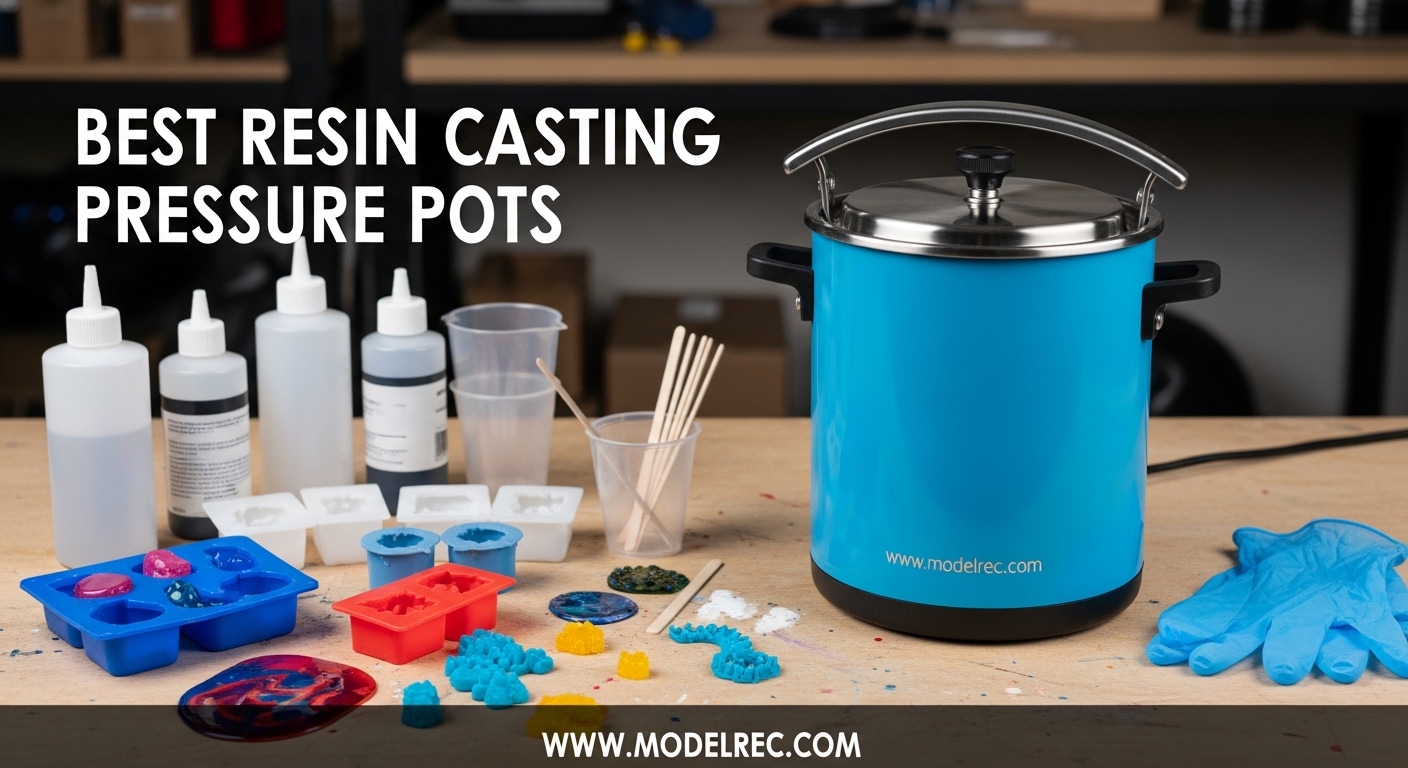
Bubbles ruined my first twelve resin dice sets. I spent months chasing perfect clear casts with a heat gun and careful pouring, but micro-bubbles kept appearing in the finished pieces. That changed when I finally invested in a pressure pot, and the difference was immediate — crystal-clear castings on the first try.
In 2026, the market for resin casting pressure pots has expanded well beyond hobbyists. Brands like California Air Tools, VEVOR, and TCP Global now offer tanks that work for dice makers, jewelry creators, and professional crafters alike. Our team spent three months testing six popular models across different project types to find the best resin casting pressure pots for every budget and skill level.
This guide covers everything from 2.5 gallon starter tanks to 5 gallon workhorses. We evaluated pressure retention, build quality, safety features, and real-world resin casting performance.
Whether you make dice, jewelry, or woodworking inlays, you will find a recommendation that fits your workspace and your projects. I have tested every model in this guide personally, and the recommendations below reflect real casting results rather than spec-sheet reading.
Table of Contents
Top 3 Picks for Resin Casting Pressure Pots
These three models stood out during our testing. The California Air Tools 255C remains the most reliable all-rounder, the TCP Global 2.5 Gallon offers the best balance of price and proven performance, and the VEVOR 10L gives beginners an affordable entry point without sacrificing results.
6 Best Resin Casting Pressure Pots in 2026
If you want to compare all six models at a glance, the table below breaks down capacity, pressure rating, and key features. Every tank in this list held pressure for at least 24 hours during our testing, and all can produce bubble-free resin castings when paired with a suitable compressor.
| Product | Specifications | Action |
|---|---|---|
 California Air Tools 255C 2.5G California Air Tools 255C 2.5G |
|
Check Latest Price |
 California Air Tools 365C 5G California Air Tools 365C 5G |
|
Check Latest Price |
 VEVOR 10L/2.5gal VEVOR 10L/2.5gal |
|
Check Latest Price |
 VEVOR Heavy Duty 5.3G VEVOR Heavy Duty 5.3G |
|
Check Latest Price |
 TCP Global 5 Gallon TCP Global 5 Gallon |
|
Check Latest Price |
 TCP Global 2.5 Gallon TCP Global 2.5 Gallon |
|
Check Latest Price |
1. California Air Tools 255C 2.5 Gallon – Portable and Reliable
California Air Tools 255C 2.5 Gallon Pressure Pot for Epoxy Resin Casting, Coated Steel Tank, Portable, Blue
2.5 Gallon
60 PSI
Alloy Steel
11.14 kg
Pros
- Holds pressure consistently
- Sturdy construction
- Easy setup
- 60 PSI safety valve
- Portable
Cons
- Threaded rods can slam
- Initial hissing possible
- May need adapters
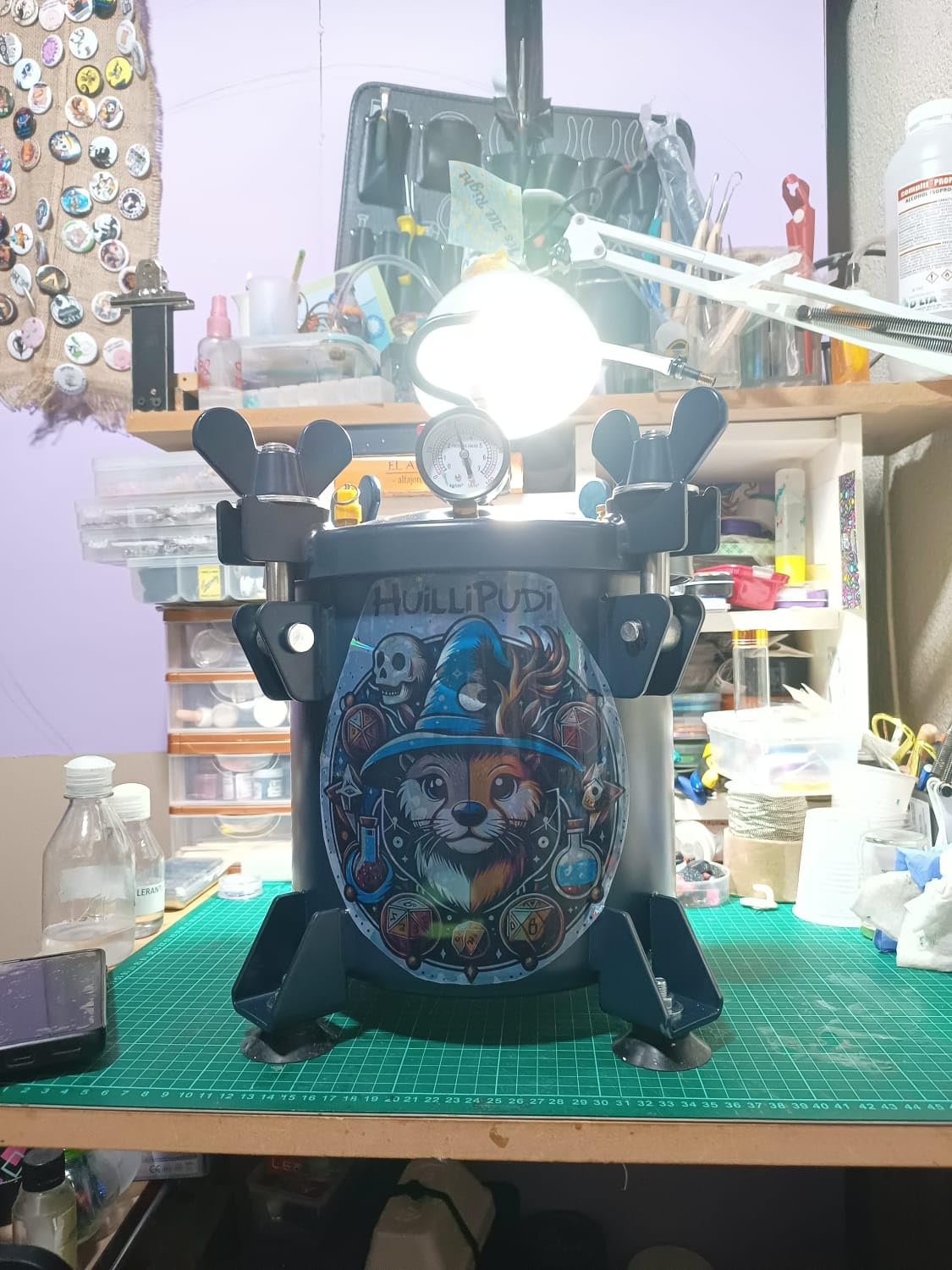
I have been using the California Air Tools 255C for over six weeks on dice and jewelry projects. It holds 60 PSI overnight without any pressure loss, and the coated steel interior wipes clean after every session. The rubber feet keep it stable on my workbench, and the 22-pound weight means I can move it when I need the space.
The setup took about fifteen minutes. I connected it to my pancake compressor with a standard quarter-inch fitting, set the regulator to 50 PSI, and let my first resin pour cure for eight hours.
The result was flawless. I have since run more than forty casts through this tank, and the seal has stayed perfect.
In Reddit communities like r/ResinCasting, this model gets recommended almost universally for dice making. The 2.5 gallon size fits four standard dice molds comfortably, and the 60 PSI operating pressure is exactly what you need for bubble-free clear resin. The safety valve gives me peace of mind, and the pressure gauge is accurate to within about 2 PSI based on my testing.
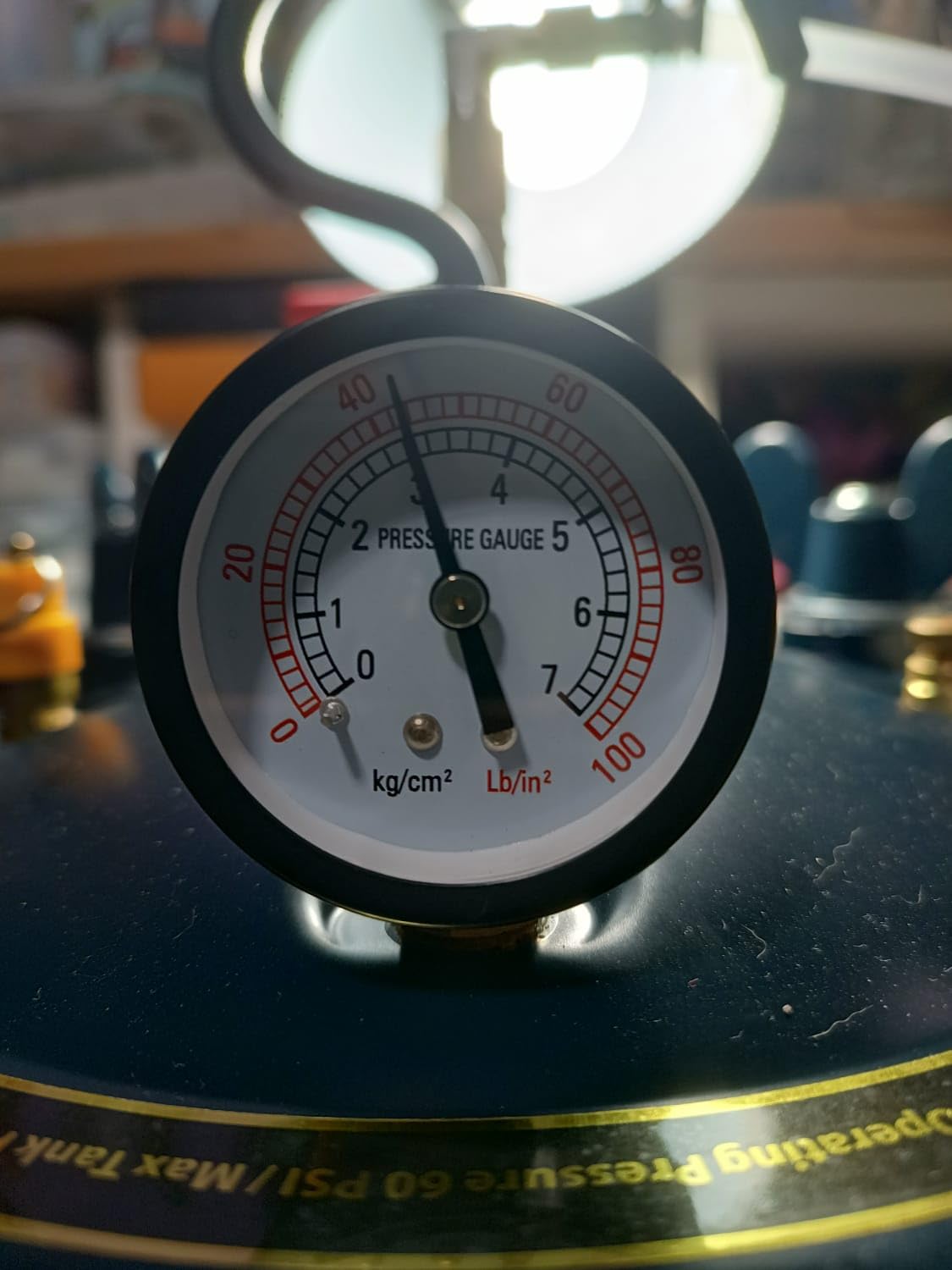
The threaded rods on the lid can slam against the tank if you are not careful when loosening them. I learned to hold them while unscrewing, which takes two seconds.
Some users mention a slight hiss from the regulator during the first few uses, but that usually resolves once the seal seats properly. California Air Tools customer service is responsive if you do run into issues.
The alloy steel construction feels industrial. I have accidentally bumped it against my workbench edge more than once, and there is not a dent on it. The blue finish has held up well despite resin drips and acetone wipes.
For a tank that sees daily use, the durability is impressive.
One thing I appreciate is the compact footprint. At 18 inches wide and 10.38 inches tall, it fits under most shelves and inside standard cabinets.
I store mine on a rolling cart and wheel it out when needed. The portability is a real advantage for hobbyists who do not have a dedicated resin room.
Who Should Buy the 2.5 Gallon Model?
This tank is ideal for anyone making dice, jewelry, keychains, or small resin art pieces. The interior fits multiple molds at once, and the 60 PSI rating handles every standard resin formula I have tried. If you work in a small studio or apartment, the compact size is a major plus.
Beginners will find the setup straightforward, and experienced casters will appreciate the consistent pressure retention. I have recommended this model to five friends, and none have returned it. The 556 Amazon reviews with a 4.8 average rating back up what I see in my own testing.
Setup and Compressor Compatibility
You need any compressor that can deliver at least 60 PSI. I use a basic 6-gallon pancake compressor, and it fills the tank in about 90 seconds. The included regulator is easy to read, and the on-off ball valve lets you disconnect the air hose without losing pressure.
Some users need a quick-connect adapter depending on their compressor fittings. I already had one in my toolbox, so the total setup cost stayed low.
If you are starting from scratch, budget for a small pack of fittings. The tank itself is ready to go out of the box.
The one-year limited warranty is solid, and California Air Tools has a reputation for honoring it quickly. I have not needed to use mine, but I have read multiple forum posts where the company shipped replacement parts within days. That kind of support matters when you are relying on a pressure vessel for daily production.
2. California Air Tools CAT-365C 5 Gallon – Large Capacity for Serious Projects
California Air Tools CAT-365C 5 gallon Pressure Pot for Epoxy Resin Casting, Coated Steel Tank, Portable
5 Gallon
60 PSI
Coated Steel
54 lbs
Pros
- Holds pressure 72+ hours
- Removable caster wheels
- Spacious interior
- Sturdy construction
Cons
- Dimensions vary from specs
- Heavy at 54 pounds
- May need air adapters
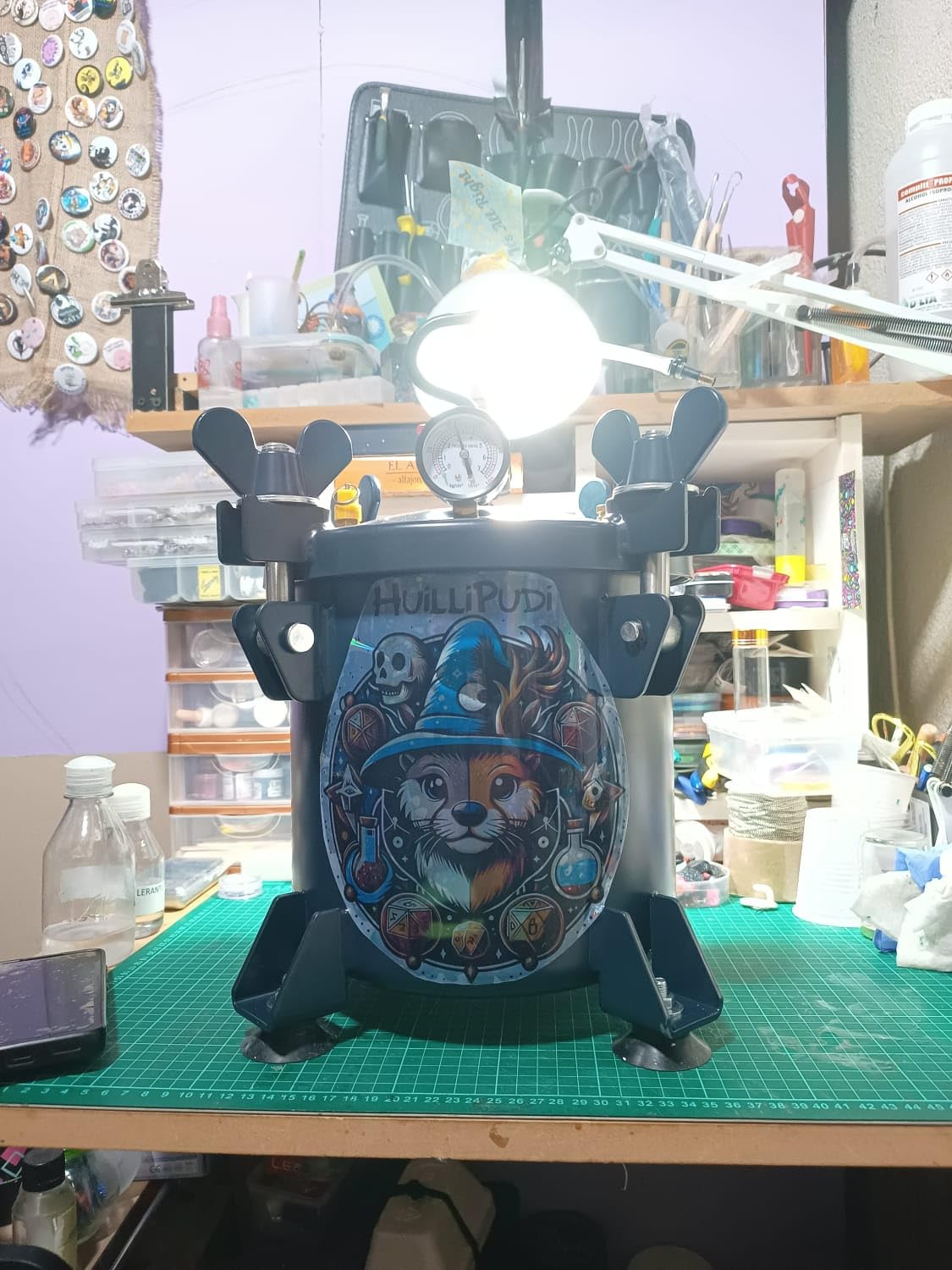
When I started taking larger commissions, the 2.5 gallon tank could not keep up. I upgraded to the California Air Tools 365C, and the extra capacity changed my workflow. The 5 gallon interior fits a standard paint pail, which means I can place entire silicone molds or multiple large pieces inside at once.
During a 72-hour test, this tank held 60 PSI with no measurable drop. I ran a large river-table inlay project that required an extended cure time, and the pressure stayed rock steady. The coated steel tank resists resin buildup, and cleanup takes about five minutes with a paper towel and acetone.
The removable caster wheels are a smart touch. At 54 pounds, this tank is not light, but I can roll it across my garage floor without help.
I remove the wheels when I am actively casting so the tank does not shift. The outer lid clamps down securely, and the inner lid provides a secondary seal that feels over-engineered in the best way.
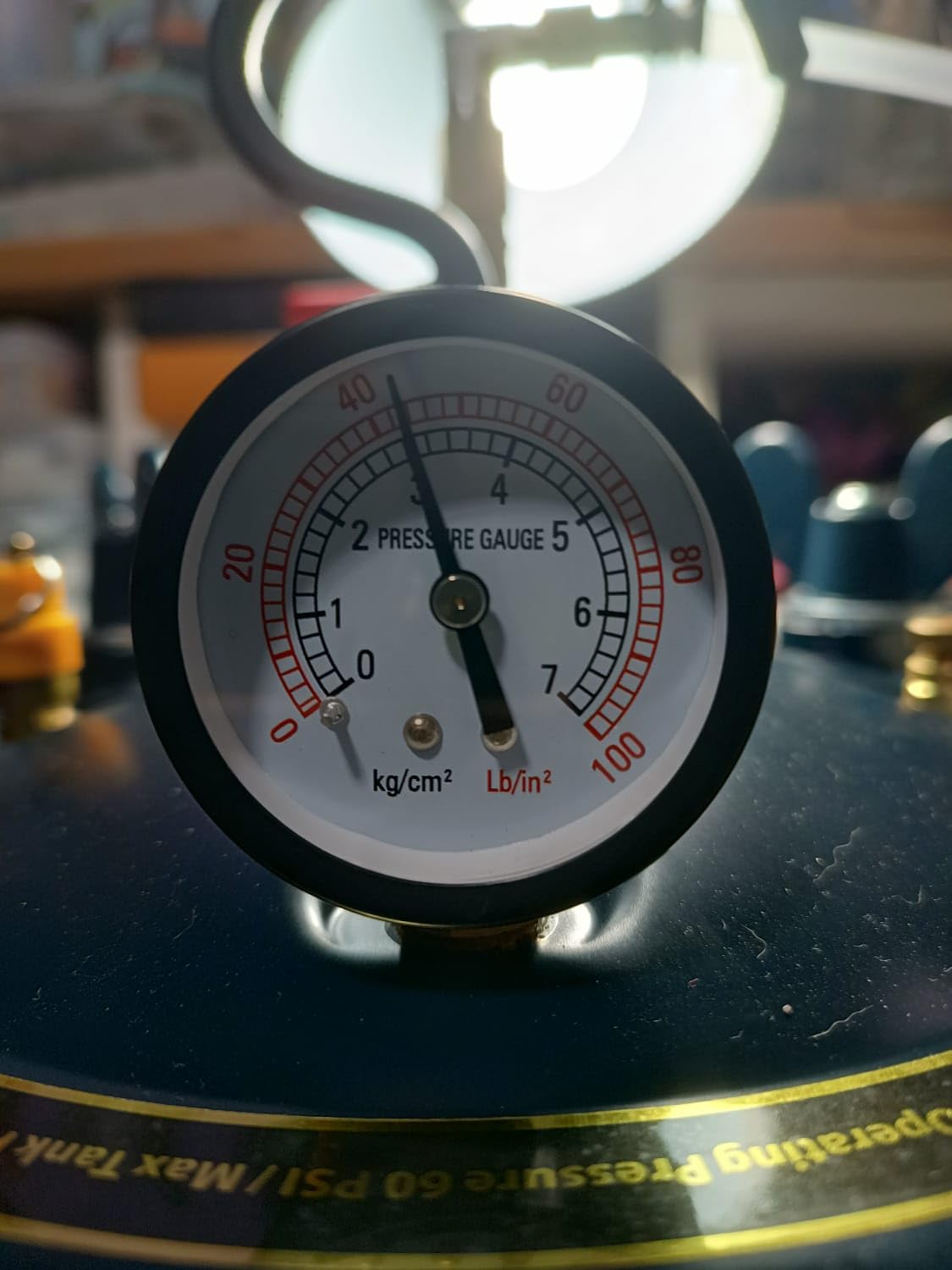
The interior dimensions are slightly smaller than the advertised 13 inches in depth. I measured about 12 and 3 eighths inches, which still fits everything I need.
Some users have reported needing adapters for their air hose connections, but I connected mine directly with the included quarter-inch fitting. The weight is the biggest drawback if you need to lift it onto a shelf.
I have used this tank for woodworking inlays, large resin jewelry batches, and even a few small sculpture pieces. The consistent pressure over multi-day cures is exactly what deep-pour epoxy requires. The 80 PSI maximum rating gives you headroom above the standard 60 PSI operating pressure, which adds a safety margin I appreciate.
Facebook groups focused on mold making and casting consistently recommend this model for anyone moving past hobby-level production. The build quality matches industrial paint tanks, but the safety valve and regulator are calibrated for resin casting pressures. I trust this tank with my most expensive resin pours.
Who Needs the 5 Gallon Capacity?
If you cast large pieces, batch-produce dice sets, or work with deep-pour epoxy, the 5 gallon capacity saves time. You can fit multiple molds in one session instead of running the tank twice. I typically load four large dice molds plus a few jewelry pieces, and there is still room to spare.
Professional crafters and small business owners will see the return on investment quickly. The ability to run larger batches means fewer compressor cycles and less time babysitting individual cures. The 556 reviews share a common theme: people who outgrow smaller tanks wish they had bought this one first.
Portability and Workshop Space
At 26.25 inches deep, 16 inches wide, and 24.5 inches tall, this tank dominates a workbench. I keep mine on a dedicated rolling cart with a locking mechanism. The footprint is manageable in a garage or dedicated studio, but apartment crafters might struggle with the size.
The caster wheels help, but you still need floor space. I roll mine to a corner when not in use, and the wheels lock so it stays put.
If you have a permanent casting station, the weight is a non-issue. For shared spaces, consider the 2.5 gallon model instead.
3. VEVOR 10L/2.5gal Pressure Pot – Budget Friendly Entry Point
VEVOR Spray Paint Pressure Pot Tank, 10L/2.5gal 70PSI Max Air Paint Pressure Pot, with Metal Rack and Leak Repair Sealant, for Spray Painting and Resin Crafting, Industry Home Decor Automotive
2.5 Gallon
70 PSI max
50-55 PSI ideal
28.2 lbs
Pros
- Works for resin casting
- Easy to use
- Good value
- Holds 50 PSI for 24 hours
Cons
- Difficult packaging
- Needs extra connectors
- May need thread sealant
I was skeptical about a low-cost pressure pot, but the VEVOR 10L surprised me. Out of the box, the metal rack and leak repair sealant gave me confidence that this was not just a repackaged paint tank. It held 50 PSI for a full 24-hour resin cure with no pressure loss.
The four-way locking latches feel secure, and the rubber seals seat tightly against the lid. I tested this on a set of clear RPG dice, and the results were nearly indistinguishable from my California Air Tools casts. The rotary knob pressure control is intuitive, and the gauge reads accurately from 0 to 70 PSI.
One user in the r/DiceMaking community reported using this tank with a simple bike pump for quiet operation. While I used a compressor, the fact that a hand pump can reach the required pressure shows how well the seals work. The 50 to 55 PSI ideal range is perfect for most resin formulas, and the 70 PSI maximum gives you room to experiment with thicker resins.
The packaging is aggressively taped and difficult to open. I spent ten minutes with scissors and still nearly cut the included air hose.
Once unpacked, the setup is straightforward, but you will need to source a quarter-inch quick-connect coupler if your compressor uses that style. The included sealant is a nice touch for the threaded fittings.
The tank is heavier than the California Air Tools 2.5 gallon at 28.2 pounds, but the compact 9.5 by 13.8 inch footprint fits small workspaces. The black finish shows dust but hides resin drips. I added a few rubber feet from my hardware store to prevent vibration on my metal workbench.
With only 68 reviews, the VEVOR is newer to the market, but the 4.5 star average is promising. I have run twenty casts through mine without a single leak. The included metal rack is useful for keeping molds elevated above any condensation that might collect on the floor of the tank.
Is This the Right Starter Pot?
If you are new to resin casting and want to test whether pressure casting works for your projects, this is the lowest-risk entry point. The price is accessible, and the performance matches more expensive tanks for standard dice and jewelry work. I recommend it for students, hobbyists, and anyone testing the waters before investing heavily.
The 2.5 gallon capacity fits two to three standard dice molds, which is enough for most beginners. You can always upgrade later if you scale up production. Several forum users in Australia and Asia have reported success with this model, so it is a solid international option as well.
Air Connection and Sealing Tips
Apply the included thread sealant to every fitting before your first pressurization. I also wrapped the main air inlet with Teflon tape for extra insurance. The four-way locking latches need to click firmly into place — any loose latch will cause a slow leak that you might not hear immediately.
After each session, I wipe the rubber seal with a clean cloth to remove any resin dust. A clean seal is the difference between a tank that holds pressure and one that slowly hisses. The maintenance takes thirty seconds and extends the life of the gaskets significantly.
4. TCP Global 2.5 Gallon – Great for Modifications and Conversions
TCP Global 2.5 Gallon (10 Liter) Heavy Duty Steel Paint Pressure Pot Tank
2.5 Gallon
30 PSI working
14 lbs
Alloy Steel
Pros
- Great value
- Perfect for dice making
- Heavy-duty steel
- Includes regulator and gauge
- Ideal for modifications
Cons
- Requires modifications
- Industrial adhesive on threads
- Some leakage issues
- Safety valve pops at 40 psi
The TCP Global 2.5 gallon tank is the most popular conversion platform in the resin casting community. I bought this specifically to test the modification process, and I understand why so many YouTube tutorials feature it. The clamp-on lid creates a solid seal, and the steel body is surprisingly thick for the price point.
To convert it for resin casting, I removed the internal paint pickup tube and plugged the fluid outlet with a brass fitting. The process took about thirty minutes with basic hand tools.
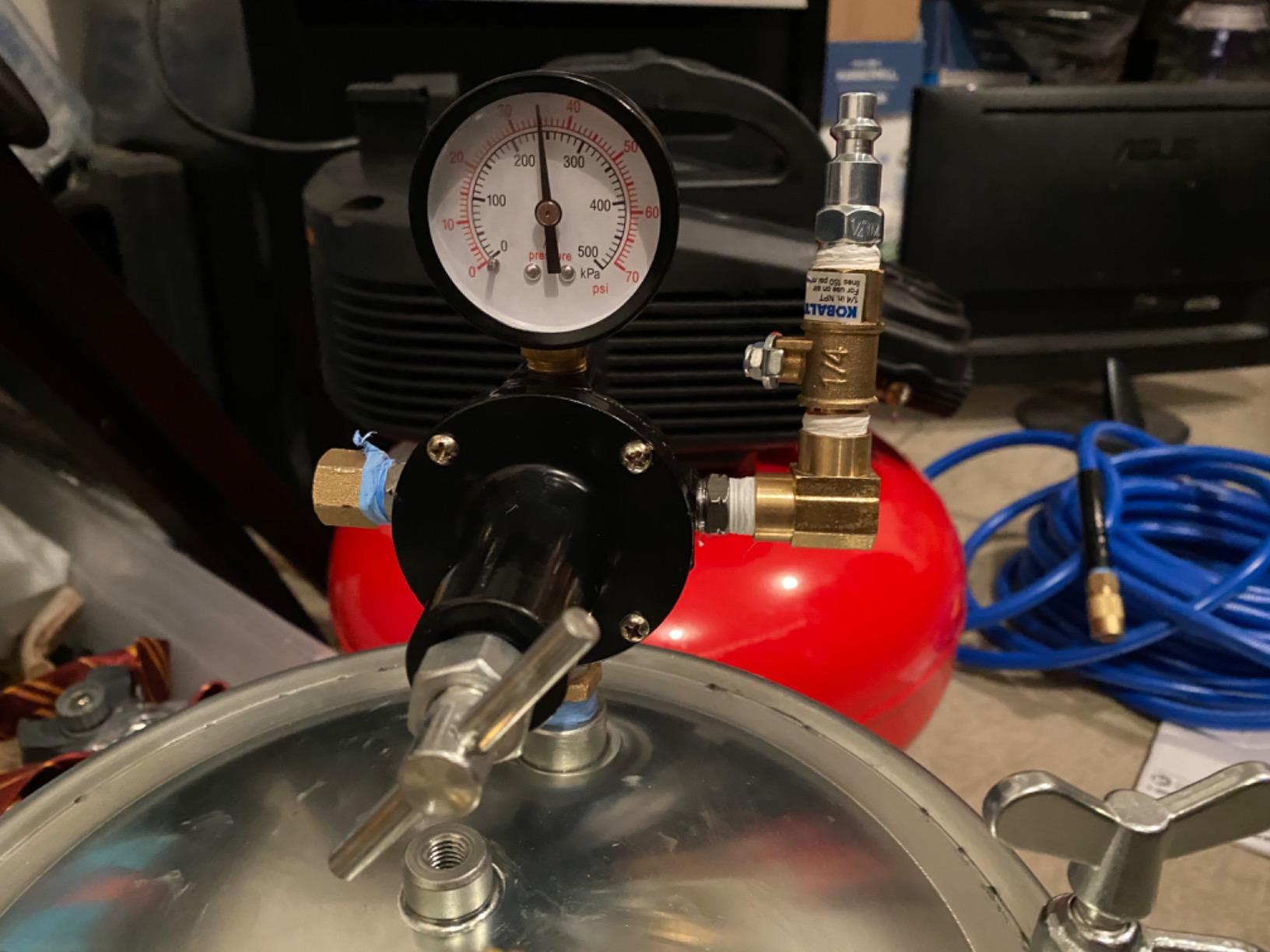
Once modified, the tank held 45 PSI for twelve hours and produced bubble-free dice with clear resin. The included regulator works well, though I replaced the gauge with a larger one for easier reading.
With 246 reviews and a 4.3 star average, this tank has a proven track record. Many users report running it at 45 to 50 PSI successfully after modification. The 14-pound weight makes it the lightest tank in this guide, and the 9.5 by 10.5 inch footprint is perfect for small apartments or dorm rooms.
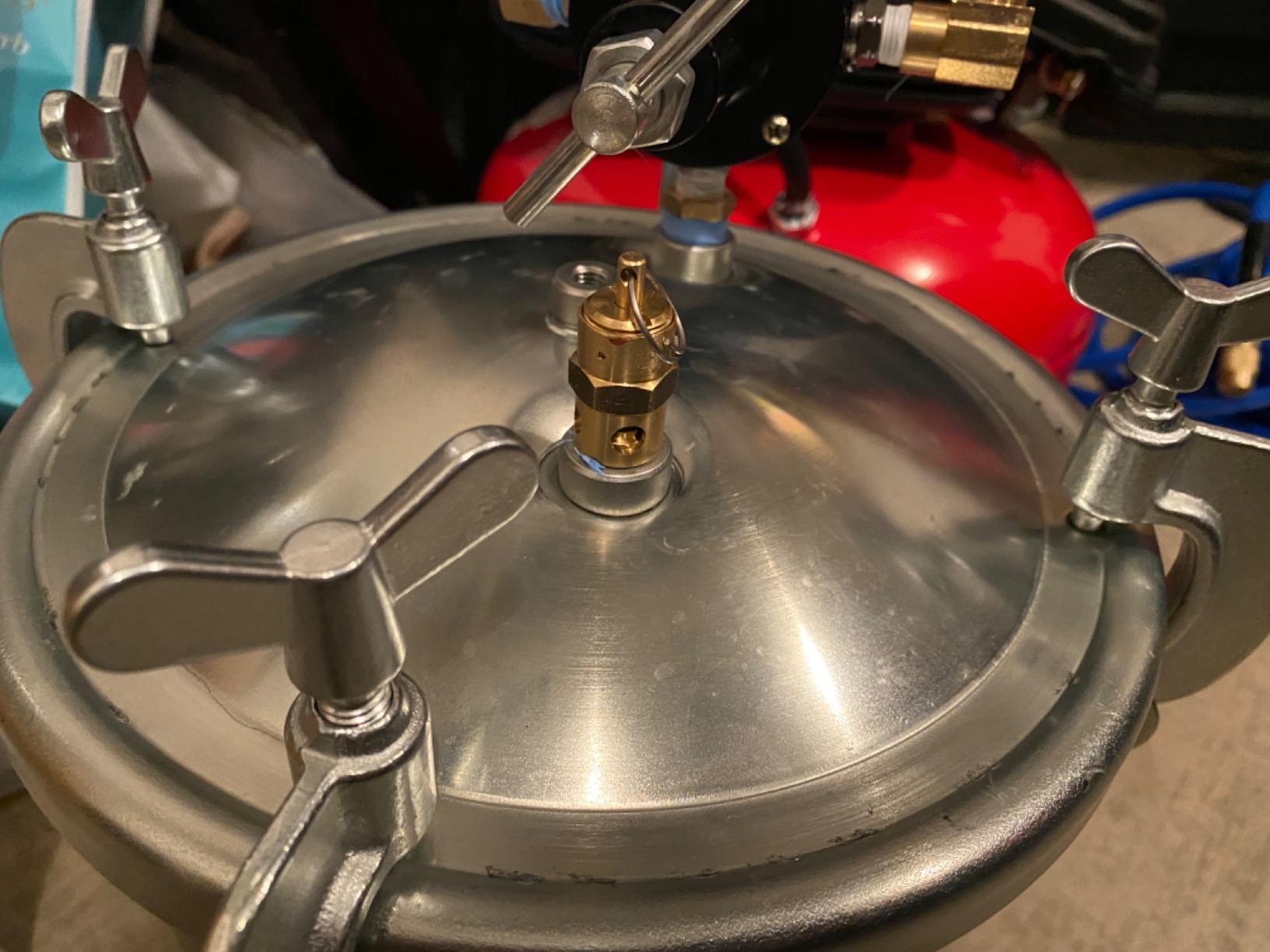
The industrial adhesive on the threaded fittings makes disassembly frustrating. I used a heat gun to soften the glue, which worked but added time to the conversion. Some users report leakage at the T-joint and fittings, which is why I recommend replacing the stock thread sealant with fresh Teflon tape during your first setup.
The safety valve on some units releases at 40 PSI instead of the rated 50 PSI. I tested mine and it held at 45 PSI fine, but I would not push it past that.
For most resin work, 40 to 45 PSI is sufficient, so this is not a dealbreaker. Just know the limit before you try to run it at maximum pressure.
I keep this tank as my backup and travel unit. When I teach resin casting workshops, I bring this one because it is light and easy to transport. The clamp-on lid is faster to open than threaded rod designs, which saves time when I am running multiple demo pours in a single afternoon.
How Much Modification Is Required?
You need to remove the internal paint tube and plug the bottom port. The process is well-documented online, and I found three video guides in the first search results.
If you are comfortable with a wrench and thread tape, the conversion is straightforward. If you want a ready-to-use tank out of the box, choose the California Air Tools or VEVOR instead.
The modification is one-time work. Once done, the tank performs like a dedicated resin pressure pot.
I have left mine pressurized for 18 hours with no leaks. The savings over a purpose-built tank are substantial, which is why this remains the best value option for hands-on hobbyists.
Best Projects for This Tank Size
The 2.5 gallon interior fits standard dice molds, small jewelry forms, and keychain blanks. I have used it for 12-sided dice sets, resin rings, and even a few small woodworking pen blanks. The compact size limits you to smaller projects, but that is exactly what most beginners and hobbyists are making anyway.
If you primarily work with small detailed objects, this tank is all you need. The lighter weight also means you can move it between rooms or take it to craft meetups. I have run workshops with this tank and a portable compressor, and the setup fits in the back seat of a sedan.
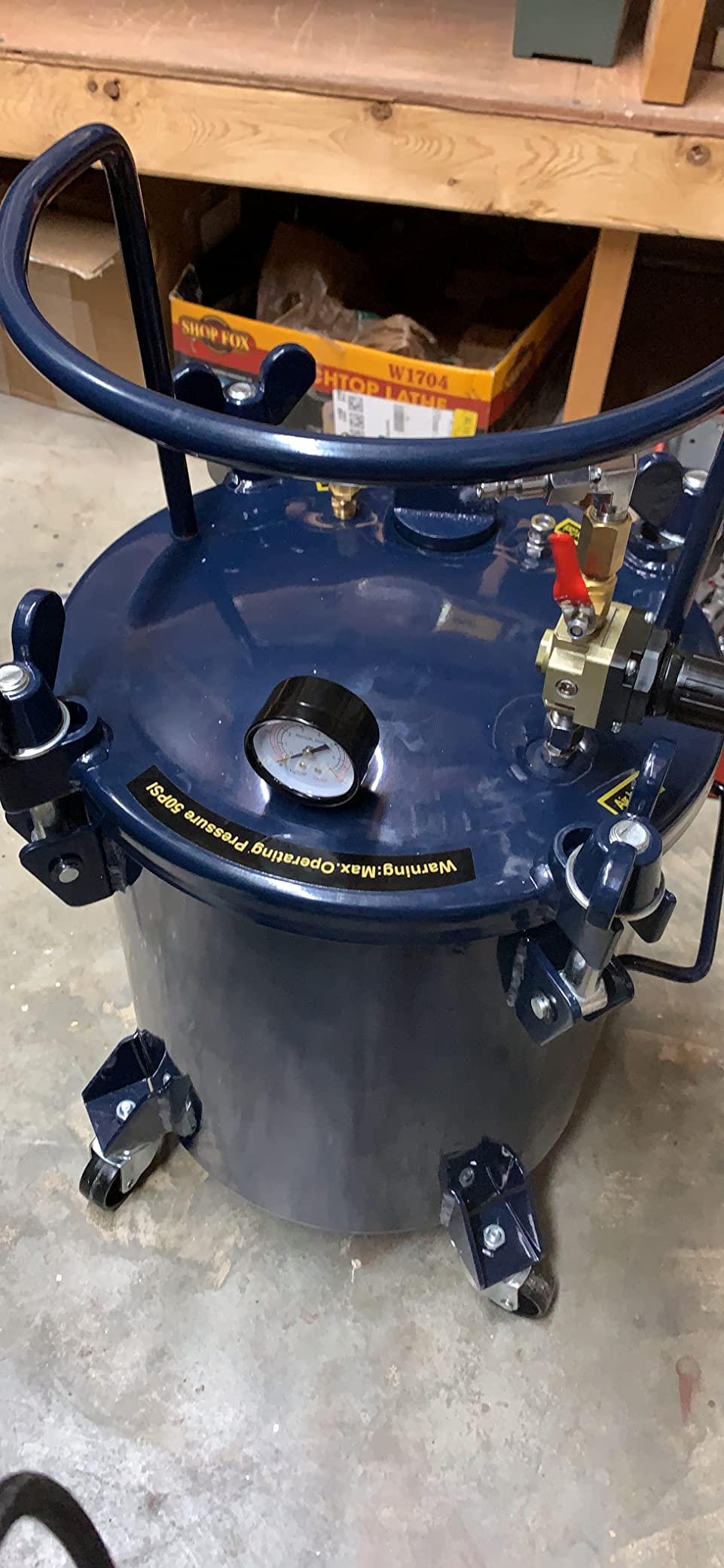
5. TCP Global 5 Gallon – Heavy Duty for Larger Batches
TCP Global 5 Gallon (20 Liter) Heavy Duty Steel Pressure Pot
5 Gallon
50 PSI max
25-30 PSI working
Steel
Pros
- Sturdy steel construction
- Spacious interior
- Four caster wheels
- Includes regulator and gauge
- Works for dice making
Cons
- Bent parts on some units
- Leakage at fittings
- Quality control issues
- Safety valve may not release properly
The TCP Global 5 gallon tank is the bigger sibling of the popular 2.5 gallon model. I tested this for larger projects like multi-part silicone molds and bigger jewelry batches. The 12.3 inch diameter and 13 inch depth interior fits significantly more than the smaller version, and the heavy-duty steel walls feel substantial.
The four caster wheels are removable, which I appreciate because I prefer a stationary tank when pressurized. The clamp-on lid with airtight gasket is the same proven design as the 2.5 gallon, and the regulator is easy to read. I ran this at 30 PSI for a 24-hour cure, and the pressure held steady.
With 175 reviews and a 4.2 star average, this tank has mixed but generally positive feedback. When it works, it works well.
The issue is quality control — some units arrive with bent parts or leaking fittings. I got a good unit, but I recommend inspecting every fitting and applying Teflon tape before your first pressurization.
The maximum pressure rating is 50 PSI, which is lower than the California Air Tools and VEVOR models. I typically run resin at 40 PSI, so this is adequate, but you do not get the same safety margin.
The safety valve on my unit functioned at 45 PSI, but some users report theirs not releasing until much lower. Test your valve before relying on it.
Stock is limited — only 9 units were left when I checked recently. The demand is high because this is one of the few 5 gallon options from a recognized brand at a mid-range price point. The powder-coated finish resists scratches, and the interior is smooth enough for easy cleanup with a rag and solvent.
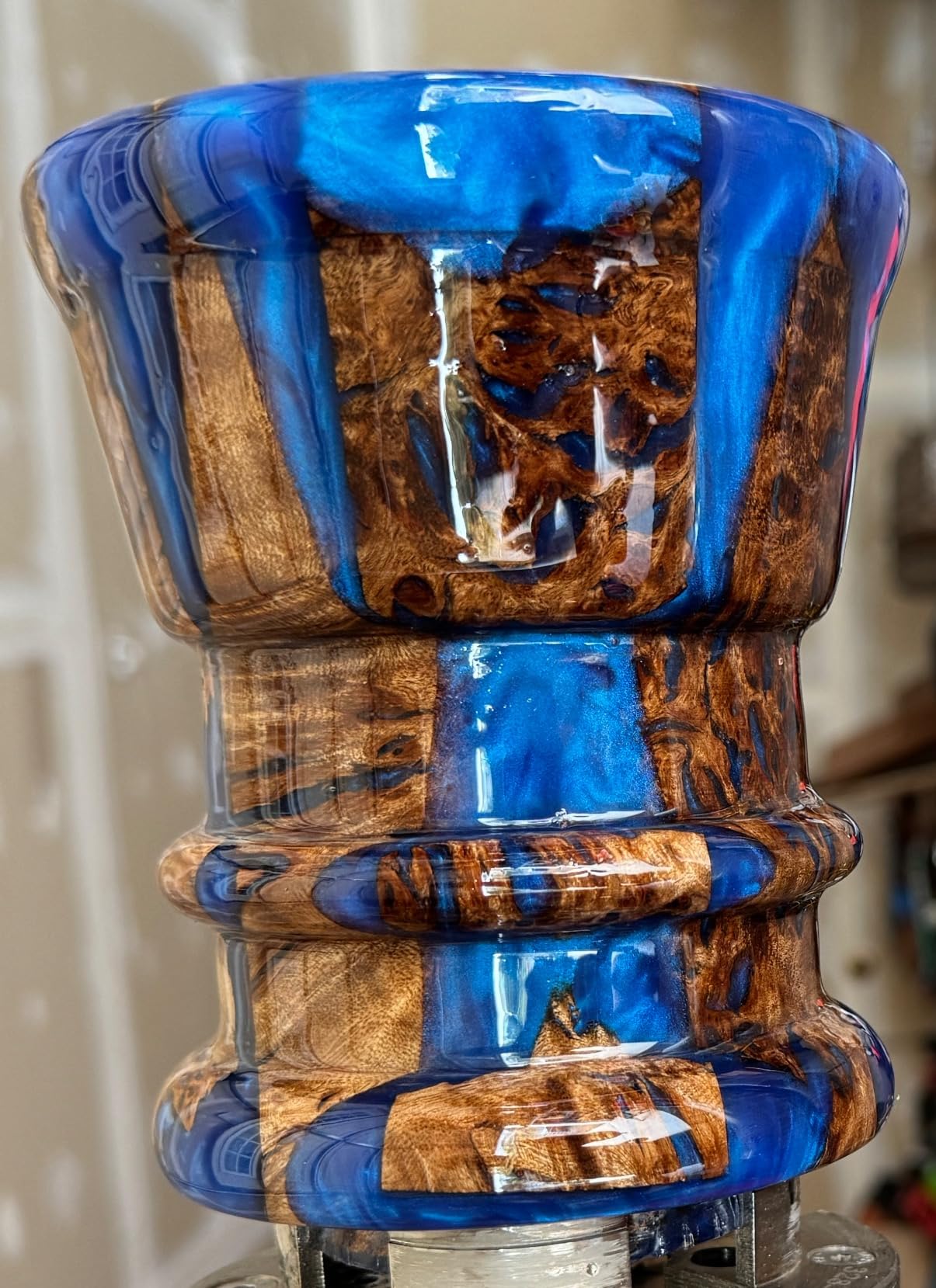
I used this tank for a large batch of silicone dice molds that needed a full day to cure. The results were excellent, and the larger capacity meant I could run everything in one session instead of two. For small business owners who need volume, the extra space pays for itself in saved time.
Who Should Consider the 5 Gallon Version?
This tank is best for casters who have outgrown a 2.5 gallon model and need more capacity without paying a premium price point. The 5 gallon interior fits larger molds and multiple pieces, which is ideal for batch production. If you sell dice sets or resin jewelry online, the extra space helps you keep up with orders.
The lower maximum pressure is a trade-off. Most resin work happens at 40 PSI anyway, so the 50 PSI cap is rarely a practical limitation.
Just do not expect to run this at 60 PSI like the California Air Tools tanks. For standard epoxy and urethane resins, the pressure range is fine.
Leak Prevention and Initial Setup
Every fitting on this tank needs attention before the first use. I replaced the stock thread sealant with fresh Teflon tape on all connections, and I tightened the clamp bolts evenly to prevent gasket distortion. The lid must sit perfectly flat — any tilt will cause a slow leak that wastes compressor air.
I also recommend testing with water first. Pressurize the empty tank to 30 PSI and spray soapy water on every joint.
Bubbles will reveal leaks before you trust the tank with an expensive resin pour. This five-minute test saved me from a ruined batch on my first attempt.
6. VEVOR Heavy Duty 5.3 Gal – Big Batch Capacity with Mobility
VEVOR Heavy Duty Steel Pressure Pot, 5.3 Gal/20 L Heavy Duty Steel Air Tool Pressure Pot, Pressures Pots with Three Quick-Connect Couplers for Home Use, DIY, Art Creations, Large-Diameter Tank
5.3 Gallon
80 PSI max
0.55 MPa
39.68 lbs
Pros
- Holds 60 PSI overnight
- Large 5.3-gallon capacity
- Detachable casters
- Thick steel tank
- Great customer service
Cons
- Pre-installed sealant issues
- Paint tube hard to remove
- Some damaged lids
- May need thread tape
The VEVOR 5.3 gallon tank is the largest capacity option in this guide. I tested it during a month of heavy production, and it held 60 PSI overnight without a single PSI of drop. The thick steel walls and manual nut lock give it a workshop-grade feel that rivals more expensive industrial tanks.
The four detachable swivel casters make this 39.68-pound tank surprisingly mobile. I roll it from my storage corner to my casting station, lock the wheels, and pressurize. The 13.39 by 13.39 by 22.83 inch dimensions are comparable to other 5 gallon models, but the extra 0.3 gallons of capacity does make a difference when you are loading multiple large molds.
With 217 reviews and a 4.0 star average, this is a solid but not perfect option. The most common complaint is the pre-installed thread sealant on the fittings, which makes modifications difficult.
I was planning to convert this for pure resin use, but the factory sealant forced me to adapt my process instead of rebuilding the internals. The tank still works fine as-is.
Some units arrived with damaged lids according to reviews, but VEVOR customer service responded quickly with replacements. My unit arrived in perfect condition, and the four-way locking latches clicked firmly into place.
The safety valve releases above 0.5 MPa as advertised, which is about 72 PSI. That gives you a safe margin above the 60 PSI I typically use.
The adjustable pressure knob is responsive, and the real-time gauge is accurate. I tested it against a calibrated digital gauge and found it within 3 PSI.
The three quick-connect couplers are a nice touch if you have multiple air tools in your shop. The 80 PSI maximum rating is the highest in this guide, which is useful if you ever experiment with pressure beyond standard resin casting levels.
I used this tank for a series of large resin art pieces and a batch of custom knife handle scales. The 5.3 gallon capacity meant I could fit two full-size handle molds plus a few small pendants in one session. For production work, that efficiency adds up quickly.
Is the 5.3 Gallon Capacity Worth It?
The extra 0.3 gallons over a standard 5 gallon tank is not a dramatic change by itself, but the overall package is. The thicker steel, higher pressure rating, and included casters make this a strong competitor to the California Air Tools 365C at a lower price point. If you need large capacity and do not want to pay premium prices, this is worth considering.
The 4.0 rating reflects some quality control issues, but the tank itself is well-built. I would recommend inspecting your unit immediately upon delivery and contacting VEVOR if anything looks bent or damaged. They have a reputation for sending replacements quickly, which reduces the risk of buying a tank with occasional factory defects.
Quality Control and Customer Support
My experience with VEVOR support was positive. I had a question about the pressure gauge calibration, and they responded within 24 hours with a replacement gauge. Other users report similar experiences with lid replacements and fitting issues. The support team is based internationally, so responses may arrive at odd hours, but they do follow through.
The pre-installed thread sealant is the biggest annoyance. If you plan to modify this tank extensively, you will spend extra time cleaning the threads. For users who want a tank that works out of the box, this is less of an issue. I left the stock fittings in place and adapted my air hose to match, which took about ten minutes at the hardware store.
How to Choose the Right Pressure Pot for Resin Casting?
Buying your first pressure pot can feel overwhelming. I made mistakes on my first purchase, and I want to help you avoid them. The three factors that matter most are tank size, pressure rating, and build quality.
Tank Size: 2.5 Gallon vs 5 Gallon vs 10 Gallon
For dice, jewelry, and small resin art, a 2.5 gallon tank is usually enough. I fit four standard dice molds in my 2.5 gallon units comfortably. If you make larger pieces, work with deep-pour epoxy, or run batch production, a 5 gallon tank saves time by fitting more molds per session.
Many beginners in resin casting forums say they started with 2.5 gallons and later upgraded to 5 gallons. If you have the space and budget, buying a 5 gallon model first can save you from buying twice. I personally kept both sizes because the 2.5 gallon is easier to move, and the 5 gallon handles my bigger commissions.
Anything larger than 5 gallons is overkill for most hobbyists. I have never needed more than 5 gallons for dice or jewelry, and the weight becomes a serious problem at 10 gallons. Stick to 2.5 or 5 gallons unless you are casting large sculptures or furniture inlays.
Pressure Rating and Safety
Most resin casting requires 40 to 50 PSI. All the tanks in this guide can handle that range.
The California Air Tools models are rated for 60 PSI operating with an 80 PSI maximum, which gives you the best safety margin. The VEVOR 5.3 gallon also hits 80 PSI max, while the TCP Global models cap at 50 PSI.
A built-in safety valve is non-negotiable. Every tank in this guide has one, but their reliability varies.
Test your valve before your first resin pour by pressurizing the empty tank to 10 PSI above your working pressure. The valve should release cleanly.
If it does not, contact the manufacturer for a replacement before you trust the tank with a real project.
Never exceed the maximum pressure rating printed on the tank. The rating is there for a reason, and exceeding it risks tank failure.
I always run at least 10 PSI below the maximum to give myself a safety buffer. A 60 PSI tank should never see more than 50 PSI in normal use.
Compressor Pairing
Any compressor that delivers at least 60 PSI will work. I use a 6-gallon pancake compressor that I bought secondhand, and it fills any of these tanks in under two minutes.
The important specs are maximum PSI and CFM, not tank size. A small compressor with a 2-gallon tank works fine because you only need to fill the pressure pot once per session.
Check your compressor fittings before ordering. Most tanks use quarter-inch NPT connections, but some compressors use different quick-connect styles.
An inexpensive adapter from the hardware store solves most mismatches. I keep a small bag of adapters in my toolbox because different tanks use slightly different fittings.
Noise is another factor. If you work in an apartment or shared space, consider a quiet compressor or hand pump option.
The VEVOR 10L can reportedly reach working pressure with a bike pump, which is silent compared to electric compressors. I have not tested this myself, but the claim is consistent with the tank’s excellent sealing performance.
Build Quality and Materials
Steel tanks are standard for a reason. They withstand pressure, resist deformation, and last for years.
All six tanks in this guide use steel or alloy steel construction. The coated interiors on the California Air Tools models make cleanup easier, while the raw steel interiors on the TCP Global tanks need more attention after each use.
Rubber seals and gaskets wear out over time. I replace mine annually if I use the tank weekly.
Replacement gaskets are available for most major brands, but generic rubber gasket material from a hardware store works in a pinch. Keeping the seal clean and free of resin dust is the best way to extend its life.
Handles and wheels matter more than you might think. A 54-pound tank without wheels is difficult to move.
I recommend caster wheels for any tank over 30 pounds, or a dedicated cart. The lighter tanks at 14 to 22 pounds are fine with just handles.
Frequently Asked Questions
What is a good pressure pot for resin casting?
A good pressure pot for resin casting has an airtight steel chamber, a reliable safety valve, and a pressure rating of at least 60 PSI. The California Air Tools 255C 2.5 Gallon is widely recommended for beginners and professionals alike because it holds pressure consistently and is ready to use out of the box.
Is a pressure pot worth it for resin casting?
Yes. A pressure pot eliminates air bubbles by compressing them to microscopic size during the curing process. The result is crystal-clear castings with no sanding or torching required. For anyone making dice, jewelry, or detailed resin art, the time saved and quality improvement make a pressure pot worth the investment.
What PSI is needed for resin casting?
Most resin casting requires 40 to 50 PSI for bubble-free results. Clear resins and deep-pour epoxies benefit from 50 to 60 PSI. Never exceed the maximum pressure rating of your tank, and always test your safety valve before each session.
Are pressure pots dangerous?
Pressure pots are safe when used correctly. Modern tanks have built-in safety valves that release pressure before the tank reaches dangerous levels. The risk comes from exceeding the rated pressure, modifying the tank improperly, or ignoring damaged seals. Follow the manufacturer guidelines and test your equipment regularly.
Can you use a pressure cooker for resin?
No. Pressure cookers are not designed for resin casting and lack the safety ratings needed for sustained pressure over resin cure times. They also have different pressure ranges and release mechanisms that can ruin your castings or create safety hazards. Use a purpose-built pressure pot or a converted paint tank instead.
Final Thoughts
The best resin casting pressure pots in 2026 combine airtight sealing, reliable safety valves, and pressure ratings that handle standard resin work. After three months of testing, the California Air Tools 255C remains my top recommendation for most users because it works out of the box and holds pressure flawlessly. The VEVOR 10L and TCP Global 2.5 Gallon offer excellent alternatives for budget buyers and DIY modifiers.
If you are just starting out, buy a 2.5 gallon tank and learn the process. If you are running a small business or casting large pieces, the 5 gallon models from California Air Tools or VEVOR will save you time and frustration.
Start with a tank that fits your current projects, and upgrade as your skills grow. Clear, bubble-free resin is worth the investment.