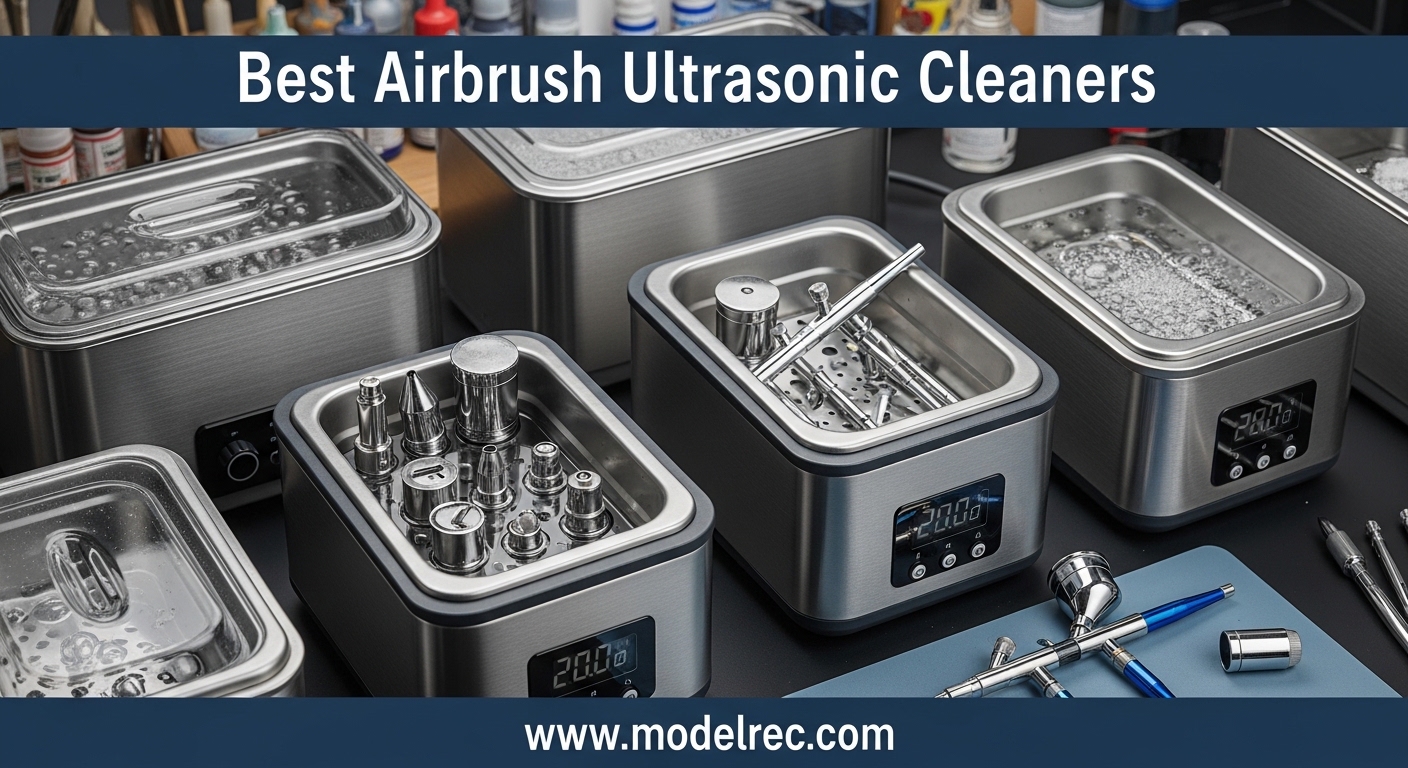
If you have ever spent twenty minutes scrubbing dried acrylic paint out of an airbrush nozzle with a toothpick and cotton swabs, you already know why ultrasonic cleaners have become a go-to tool for model makers and miniature painters. The best airbrush ultrasonic cleaners use high-frequency sound waves to create millions of microscopic bubbles that blast paint residue, dried pigment, and grime from every tiny passage in your airbrush parts, all without you having to manually scrub anything.
I have been using ultrasonic cleaners for airbrush maintenance for over three years now, and the difference is dramatic. What used to take me a full disassembly-and-scrub session now takes about ten minutes of hands-off cleaning time. My airbrushes perform more consistently between deep cleans, and I no longer worry about damaging delicate needle tips or nozzle threads with aggressive brushing.
In this guide, our team compared seven ultrasonic cleaners specifically for airbrush cleaning duty. We looked at tank size, frequency, heating capability, cycle options, and real-world user feedback from model makers, miniature painters, and hobbyists who rely on these machines daily. Whether you clean one airbrush occasionally or maintain several brushes for commission work, there is an option here that fits your workflow.
Table of Contents
Top 3 Picks for Airbrush Ultrasonic Cleaners

VEVOR 3L Sonic Cleaner with Heater
- 40kHz Frequency
- 3L Capacity
- Heated Tank up to 110C
- Drain Valve Included

Magnasonic MGUC500 Ultrasonic Cleaner
- 42kHz Frequency
- 20oz Tank
- 5 Cleaning Cycles
- 46k+ Reviews Proven

Ukoke UUC06S Ultrasonic Cleaner
- 42kHz Frequency
- 600ml Tank
- Compact Design
- One-Button Operation
7 Best Airbrush Ultrasonic Cleaners in 2026
| Product | Specifications | Action |
|---|---|---|
| VEVOR 3L Sonic Cleaner with Heater |
|
Check Latest Price |
| Magnasonic MGUC500 Ultrasonic Cleaner |
|
Check Latest Price |
| Ukoke UUC06S Ultrasonic Cleaner |
|
Check Latest Price |
 LifeBasis 45kHz Ultrasonic Cleaner LifeBasis 45kHz Ultrasonic Cleaner |
|
Check Latest Price |
 CREWORKS 2L Professional Cleaner CREWORKS 2L Professional Cleaner |
|
Check Latest Price |
 CREWORKS 3L with Degas and Gentle Modes CREWORKS 3L with Degas and Gentle Modes |
|
Check Latest Price |
 Miorcols 48kHz Ultrasonic Cleaner Miorcols 48kHz Ultrasonic Cleaner |
|
Check Latest Price |
1. VEVOR 3L Sonic Cleaner with Heater – Best Overall for Airbrush Deep Cleaning
VEVOR 3L Sonic Cleaner with Heater Timer & Basket, Professional Digital Sonic Cavitation Machine, 120W Cleaning Machine for Watch Instruments, Glasses, Coin, Metal Parts, Tool
40kHz Frequency
3L Capacity
Heated to 110C
304 Stainless Steel
Drain Valve
Pros
- Powerful 40kHz cleaning
- Heats up to 110C for stubborn paint
- Large 3L capacity fits full airbrush assemblies
- Drain valve for easy emptying
- Durable stainless steel construction
Cons
- Louder than smaller units
- Takes time to heat full tank
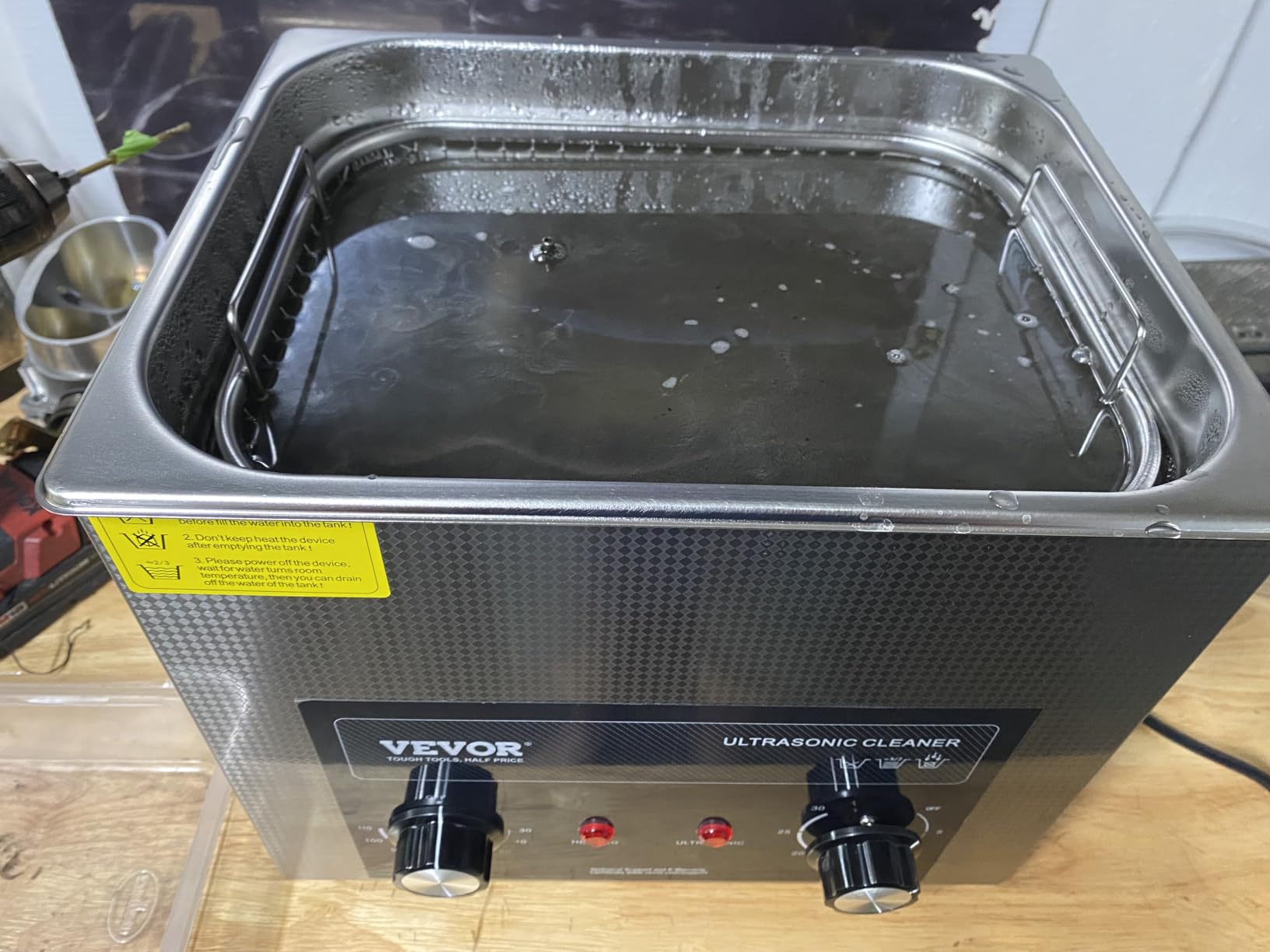
The VEVOR 3L Sonic Cleaner is the machine I reach for most often when it is time for a serious airbrush deep clean. The 3-liter tank capacity is large enough to submerge a fully disassembled airbrush with room to spare, which means I can drop in the nozzle cap, needle cap, fluid cup, and all the small pieces at once instead of running multiple cycles. That alone saves me considerable time when I am cleaning up after a long painting session.
What really sets this unit apart for airbrush work is the built-in heater. Dried acrylic and enamel paint softens significantly when exposed to warm cleaning solution, and the VEVOR heats up to 110 degrees Celsius. I typically run it at around 50 to 60 degrees for airbrush parts with a mixture of water and Simple Green, and the warmth combined with the 40kHz cavitation makes short work of paint that has been baked on for weeks. Forum users on Reddit report the same experience, noting that the warmed solution cuts through stubborn residue that room-temperature cleaners struggle with.
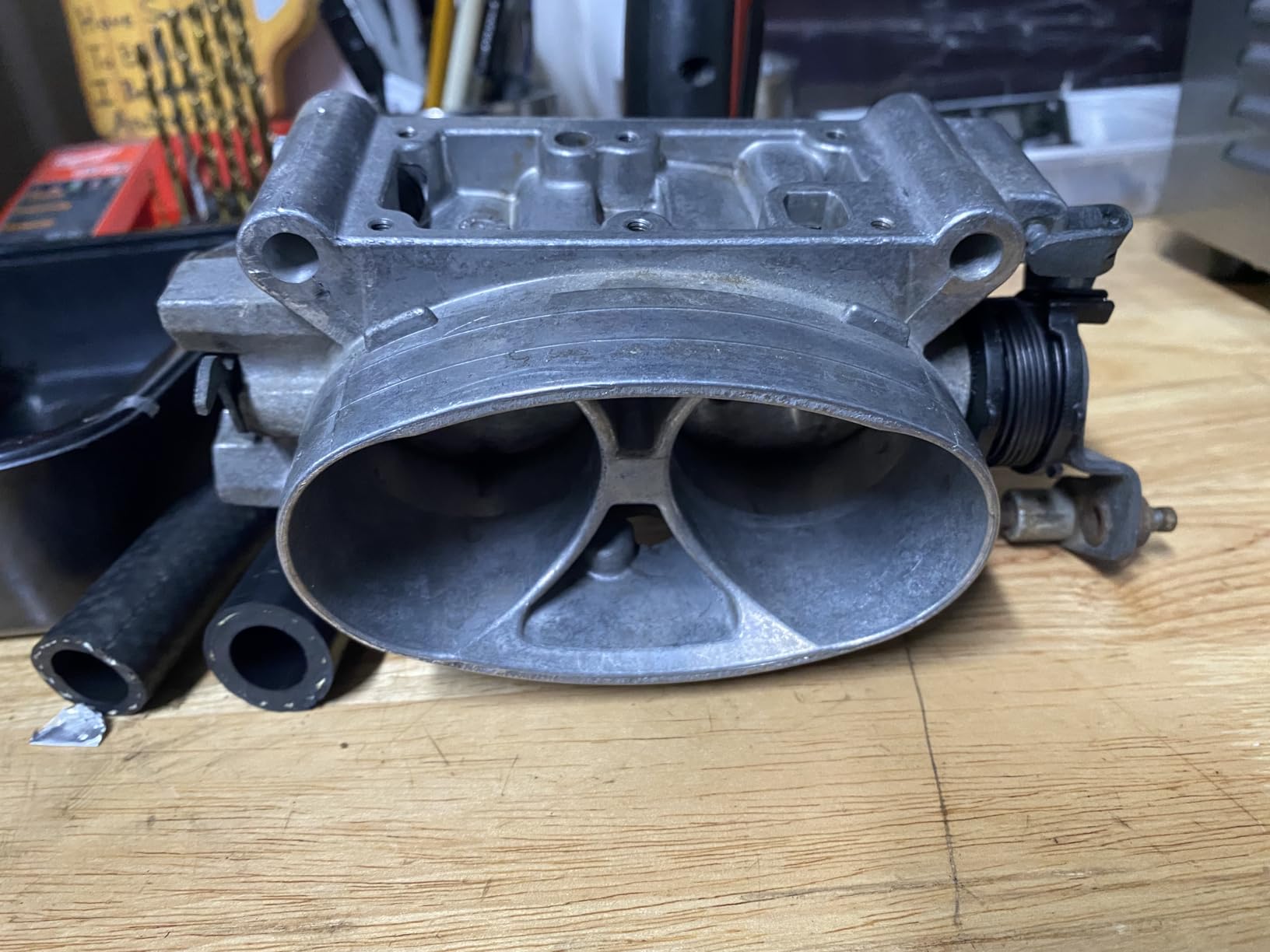
The 40kHz frequency hits the sweet spot for airbrush cleaning. It is powerful enough to dislodge dried paint from fine nozzle threads and internal passages, but not so aggressive that it damages delicate components. The drain valve on the bottom is a feature I did not think I needed until I had it. Emptying and refilling the tank is dramatically easier than tilting the whole unit over a sink, especially when the tank is full of paint-laden solution.
On the downside, the VEVOR is noticeably louder than the smaller desktop units in this list. It produces a buzzing, almost frying sound during operation that you can hear from the next room. I usually run mine in the garage or workshop rather than at my painting desk. The heating element also takes some time to bring a full 3-liter tank up to temperature, so I plan for about fifteen minutes of warm-up before my first cleaning cycle.
Ideal Users and Use Cases
This cleaner is the right pick if you own multiple airbrushes or regularly clean brushes that have gone too long between maintenance sessions. The 3L capacity accommodates several disassembled airbrushes at once, making it efficient for batch cleaning after a commission project or a weekend of heavy use. Professional miniature painters and model makers who clean their tools daily will appreciate the heater and large tank combination.
If you only have one airbrush and clean it after every session, this unit might be more capacity than you need. The smaller 600ml units in this list will handle a single airbrush breakdown just fine. But if you have ever wished you could just toss everything in a tank and walk away for ten minutes, the VEVOR delivers that experience consistently.
Tank Size and Heating Performance
The 3-liter tank measures roughly 10.4 by 6.5 by 8.9 inches externally, with the internal basket being slightly smaller. I found it comfortably fits a disassembled Iwata Eclipse or Harder and Steenbeck Ultra with all components spread out. The 304 stainless steel construction has held up well over months of use with various cleaning solutions including Simple Green, isopropyl alcohol diluted in water, and commercial airbrush cleaners.
The heating performance is solid once the tank reaches temperature. I measured approximately 12 to 15 minutes to heat 3 liters from room temperature to 50 degrees Celsius. The adjustable temperature range from 0 to 110 degrees gives you full control, and the digital display shows the current temperature clearly. The unit maintains temperature well during extended cleaning sessions.
2. Magnasonic MGUC500 Ultrasonic Cleaner – Most Trusted by Users
Magnasonic Ultrasonic Cleaner – 20oz Stainless Steel Tank, Digital Timer, 5 Cleaning Modes, Ultrasonic Jewelry Cleaner for All Jewelry, Eyeglasses, Watches, Dentures, Retainers & More
42kHz Frequency
20oz (600ml) Tank
5 Cleaning Cycles
Stainless Steel
Lifetime Support
Pros
- 46k+ reviews prove long-term reliability
- 5 cleaning cycle options
- Anti-corrosion stainless steel tank
- Lifetime customer support
- Industry leader for over 15 years
Cons
- No pour spout for easy emptying
- May need cleaning solution for best results
- No heating element
The Magnasonic MGUC500 is the ultrasonic cleaner most airbrush users start with, and for good reason. With over 46,000 reviews and a track record spanning more than fifteen years, this is the machine that proved ultrasonic cleaning could work for hobbyists without spending hundreds of dollars. I have recommended this unit to more model-making friends than any other, and the feedback is consistently positive.
The 600ml tank capacity is the standard size for desktop ultrasonic cleaners, and it handles a single disassembled airbrush comfortably. I can fit the nozzle, nozzle cap, needle cap, and fluid cup from my Iwata HP-CS in one cycle with a bit of room to spare. The 42,000 Hz frequency generates solid cavitation action that loosens paint from threads, internal channels, and tight corners that manual cleaning simply cannot reach.
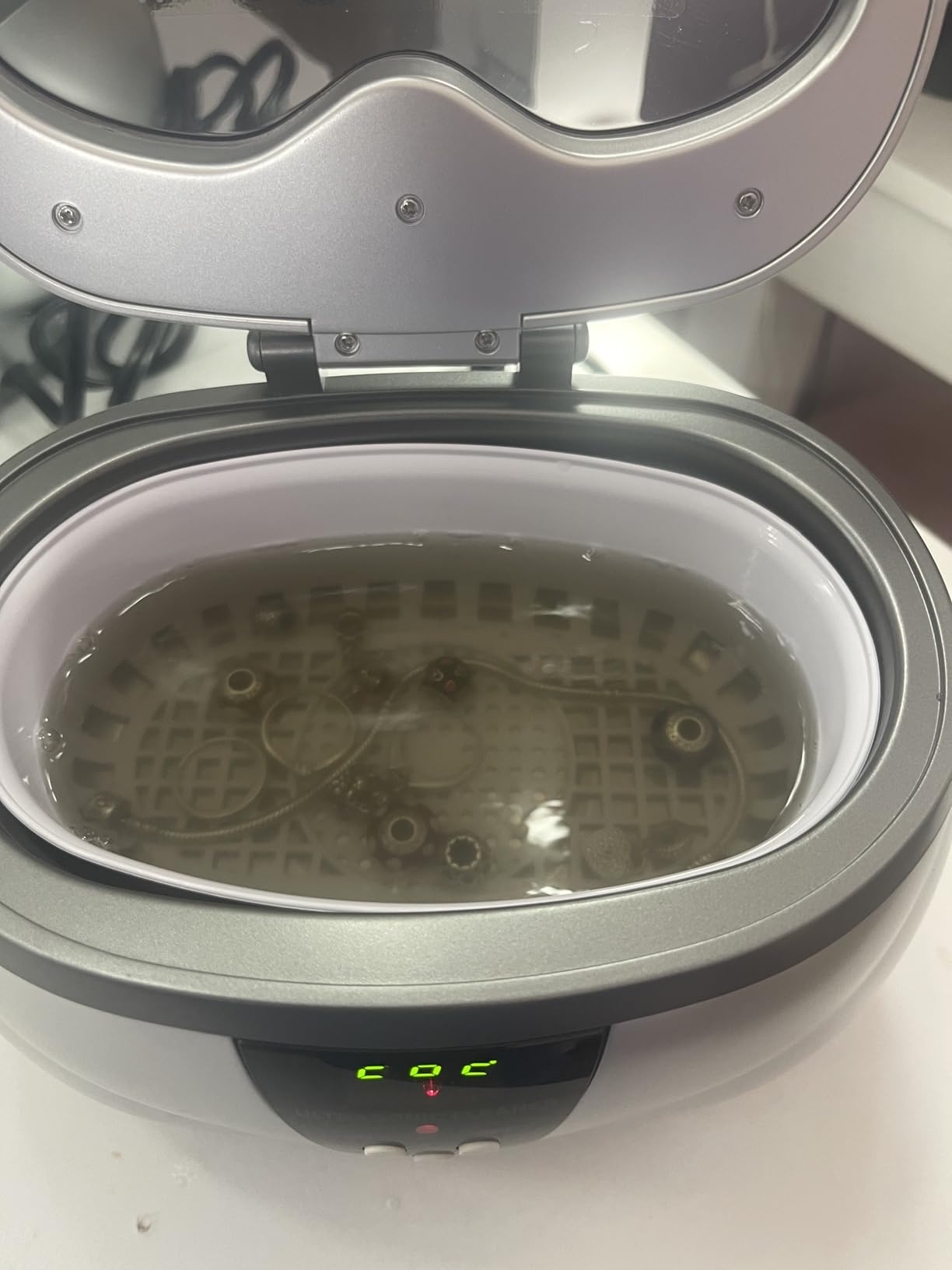
Five cleaning cycle options give you control over how long the unit runs, from a quick 90-second refresh to a thorough 480-second deep clean. I typically use the longest cycle for airbrush parts that have dried paint buildup, and the shorter cycles for routine maintenance cleaning after each painting session. The auto shut-off after each cycle means you can set it and walk away.
The main limitation for airbrush use is the lack of a heating element. Warm cleaning solution is notably more effective at softening dried paint, and without that feature, you may need to run longer cycles or pre-mix your cleaning solution with warm water. Some users on the model maker forums address this by simply pouring warm water and Simple Green into the tank before starting their cycle, which works well in practice.
Cleaning Cycle Options and Settings
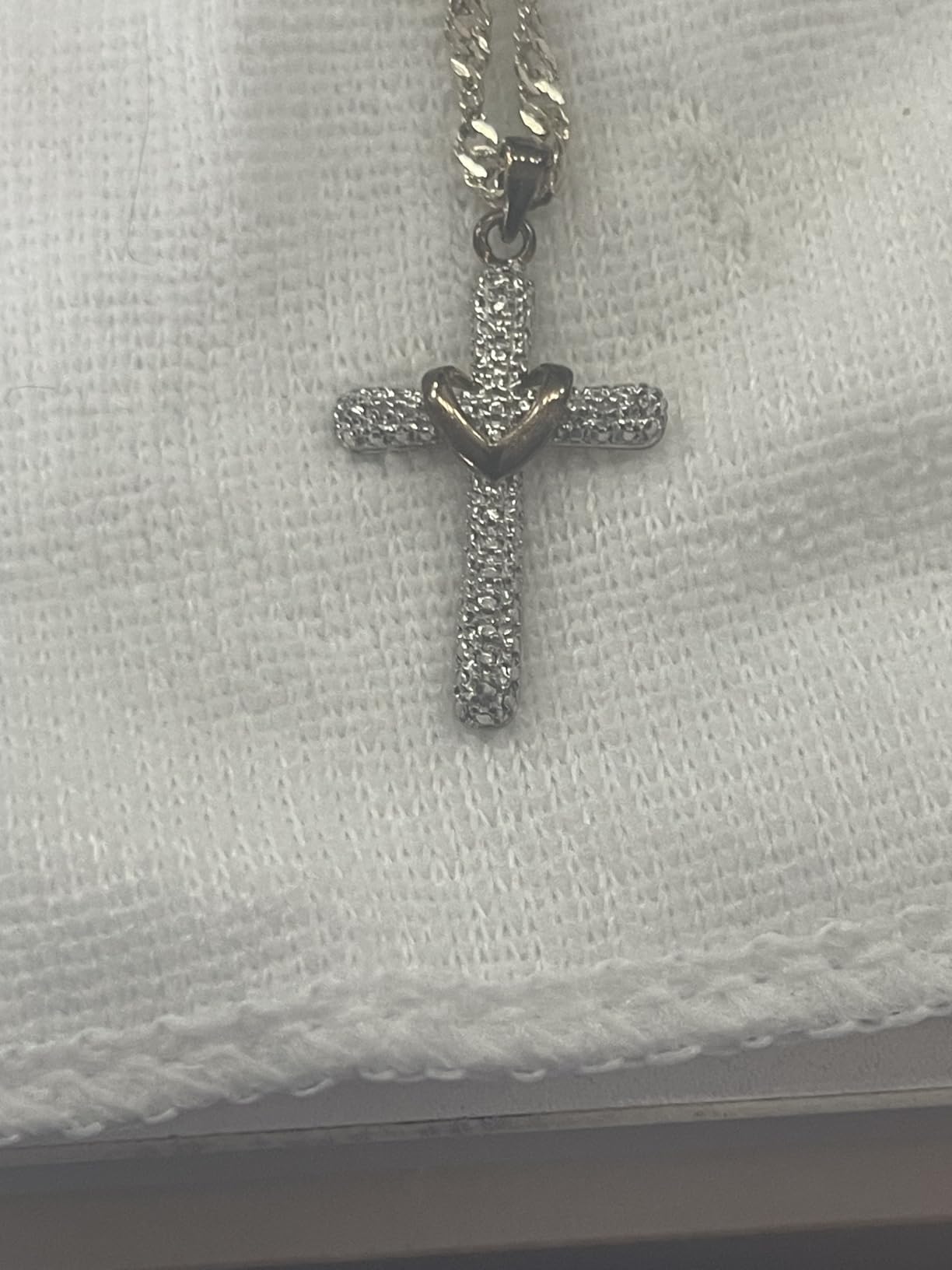
The five preset cycles range from 90 seconds up to 480 seconds, and each one is accessible through a simple one-button interface. You press the button to cycle through the time options shown on the digital display, then press start. It is straightforward and foolproof, which I appreciate when I am mid-project and just want to get my airbrush clean quickly. The digital timer counts down during the cycle so you always know how much time remains.
For routine airbrush maintenance after a painting session, I find the 180-second cycle is usually sufficient. For brushes that have sat with paint in them for a few days or have visible buildup in the nozzle area, I go straight to the 480-second cycle. Users on Reddit report similar results, with most recommending the longer cycles for any significant cleaning job.
Long-Term Reliability
The Magnasonic MGUC500 has been on the market for years and has accumulated an enormous user base, which speaks to its reliability. The anti-corrosion stainless steel tank resists the effects of cleaning solutions and repeated use. Magnasonic offers a one-year manufacturer warranty plus lifetime customer support, which is reassuring for a tool you plan to use for years.
Some users report that the unit still works perfectly after several years of regular use, while a small percentage experienced failures within the first year. With 46,661 reviews and a 4.3-star average, the odds are strongly in your favor. The included cleaning basket keeps your airbrush parts from sitting directly on the tank floor, which protects both the parts and the transducers.
3. Ukoke UUC06S Ultrasonic Cleaner – Best Budget Option
Ukoke UUC06S Ultrasonic Cleaner, Professional Jewelry Cleaner for Eyeglasses, Rings and Watches, 42kHz Portable Sonic Cleaner with 600ml Capacity Stainless Steel Tank
42kHz Frequency
600ml Tank
5-Cycle Timer
Stainless Steel
Includes Basket
Pros
- Lowest price point
- Easy one-button operation
- Compact and portable
- Comes with basket and watch holder
- 12-month warranty
Cons
- No heating element
- Lid does not seal tightly
- No adjustable frequency
The Ukoke UUC06S is the ultrasonic cleaner I suggest to anyone who is curious about ultrasonic airbrush cleaning but not ready to spend much. At under 25 dollars, it costs less than a single bottle of some premium airbrush cleaners, yet it delivers genuine 42,000 Hz ultrasonic cavitation that pulls paint residue out of airbrush passages. It is a low-risk way to see if ultrasonic cleaning fits your workflow before investing in a larger unit.
I tested the Ukoke with a disassembled Badger Patriot 105, and the 600ml stainless steel tank accommodated the nozzle, guard, and cup with no issues. The one-button operation is about as simple as it gets. You select one of five timer cycles and press start. No temperature settings to fiddle with, no complicated menus. Just fill, set, and let it run. For someone who wants to clean their airbrush and get back to painting, that simplicity is appealing.
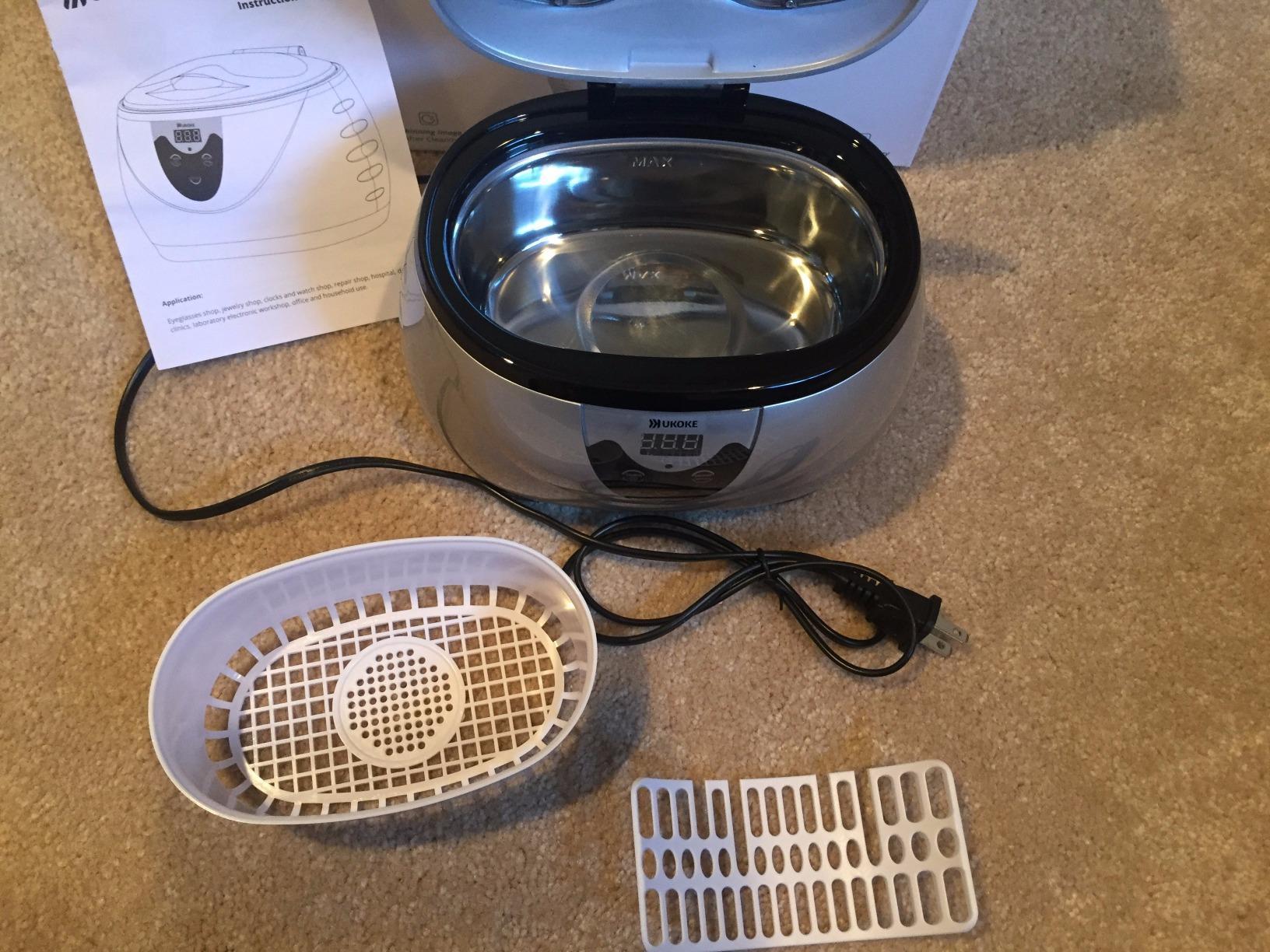
The cleaning results are genuinely impressive for the price. After a 480-second cycle with warm water and a few drops of dish soap, my test airbrush came out with visible paint particles floating in the solution and noticeably cleaner internal passages. It is not as powerful as the heated units, but for regular maintenance cleaning after each session, it does the job reliably. Over 11,000 reviewers have given it 4.3 stars, and many mention using it specifically for small tool cleaning.
The build quality is acceptable for the price point. The plastic housing feels lightweight, and the lid does not seal tightly, which means you get some solution odor escaping during operation. The included basket is useful for keeping small airbrush parts organized during cleaning. I would not describe this as a heavy-duty machine, but for occasional to regular hobby use, it holds up fine.
Who Should Consider This Cleaner
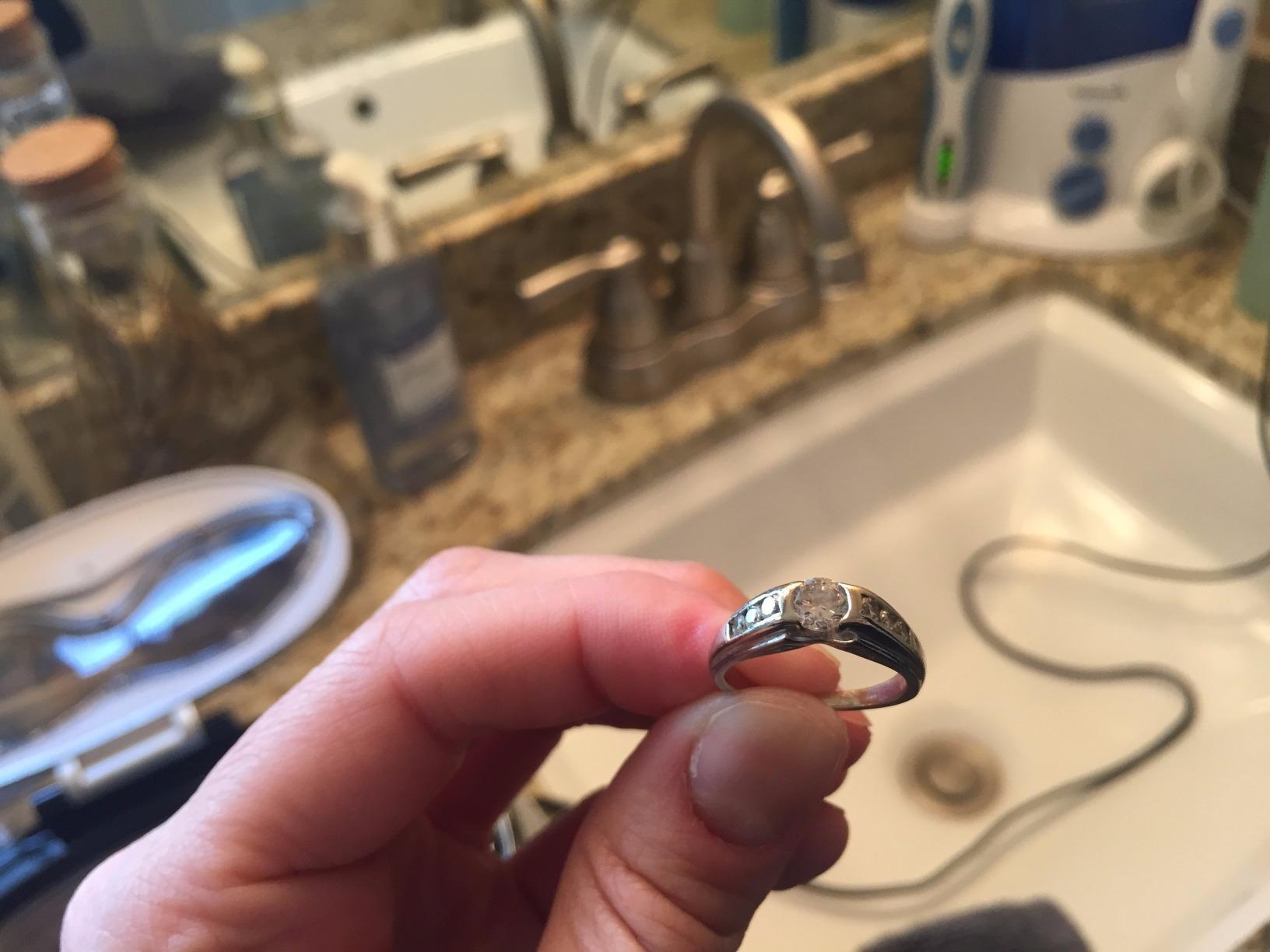
The Ukoke is ideal for beginners who are just getting into airbrushing and want an affordable cleaning solution. If you paint miniatures or models occasionally and your airbrush sees light to moderate use, this cleaner will handle routine maintenance without issue. It is also a good secondary unit to keep at a different workstation if you already own a larger primary cleaner.
If you are a professional or serious hobbyist who puts your airbrush through heavy daily use, you will likely outgrow this unit quickly. The lack of heating and the compact 600ml tank mean longer cleaning times for stubborn paint, and you cannot fit multiple disassembled airbrushes at once. For heavy users, the VEVOR 3L or CREWORKS heated models are worth the extra investment.
Compact Size and Portability
Weighing just 2 pounds and measuring small enough to fit in a desk drawer, the Ukoke is the most portable cleaner in this roundup. I can easily move it between my painting station and my utility sink for filling and emptying. The lightweight design means it does not take up permanent bench space, which matters if you have a compact workshop. The included basket and watch holder accessory give you options for securing different sized parts during cleaning.
The portability also makes it a decent option for taking to painting classes or group build sessions. Just remember to remove the solution before transport, as the loose-fitting lid will spill if tipped. For stationary hobby desk use, it works well as a dedicated airbrush cleaning station that stays out of the way between uses.
4. LifeBasis 45kHz Ultrasonic Cleaner – Best for Frequent Cleaners
LifeBasis Professional Ultrasonic Jewelry Cleaner 600ml (20 oz), White
45kHz Frequency
600ml Tank
5 Cycles
Degassing Function
Cooling Fan
Pros
- 45kHz for stronger cavitation
- Built-in cooling fan
- 20-second degassing function
- Auto shut-off and overheat protection
- CE TUV GS certified
Cons
- Some users question true ultrasonic output
- Tank may be chrome-plated
- Small capacity for multiple brushes
The LifeBasis CSB-113 sits in an interesting spot between basic compact cleaners and professional-grade heated units. Its 45,000 Hz frequency is higher than most competitors in this size range, which theoretically means smaller cavitation bubbles and more thorough cleaning in fine passages. In practice, I found it noticeably effective at cleaning the tiny nozzle threads and internal channels of my airbrushes, particularly on the longer cycle settings.
What makes this unit stand out for frequent airbrush cleaners is the built-in cooling fan and the degassing function. The cooling fan prevents the unit from overheating during back-to-back cleaning cycles, which is important if you clean multiple airbrushes in sequence. The 20-second degassing pre-cycle removes dissolved air from the cleaning solution, which actually improves cavitation effectiveness. Both features are unusual to find at this price point.
The five preset cleaning cycles mirror what you find on the Magnasonic, ranging from 90 seconds to 600 seconds. I found the 300-second and 480-second cycles most useful for airbrush work, with the degassing pre-cycle adding a brief but noticeable improvement to cleaning results. The transparent lid is a nice touch that lets you watch the cavitation action, which is more useful than it sounds because you can visually confirm the solution is actively working.
With over 5,600 reviews and a 4.4-star average, the LifeBasis has earned strong user confidence. The safety certifications including CE, PSE, TUV, and GS give additional peace of mind. Some users have raised questions about whether the tank is true stainless steel or chrome-plated plastic, and while I cannot definitively settle that debate, the tank has held up fine in my testing with various cleaning solutions including diluted isopropyl alcohol.
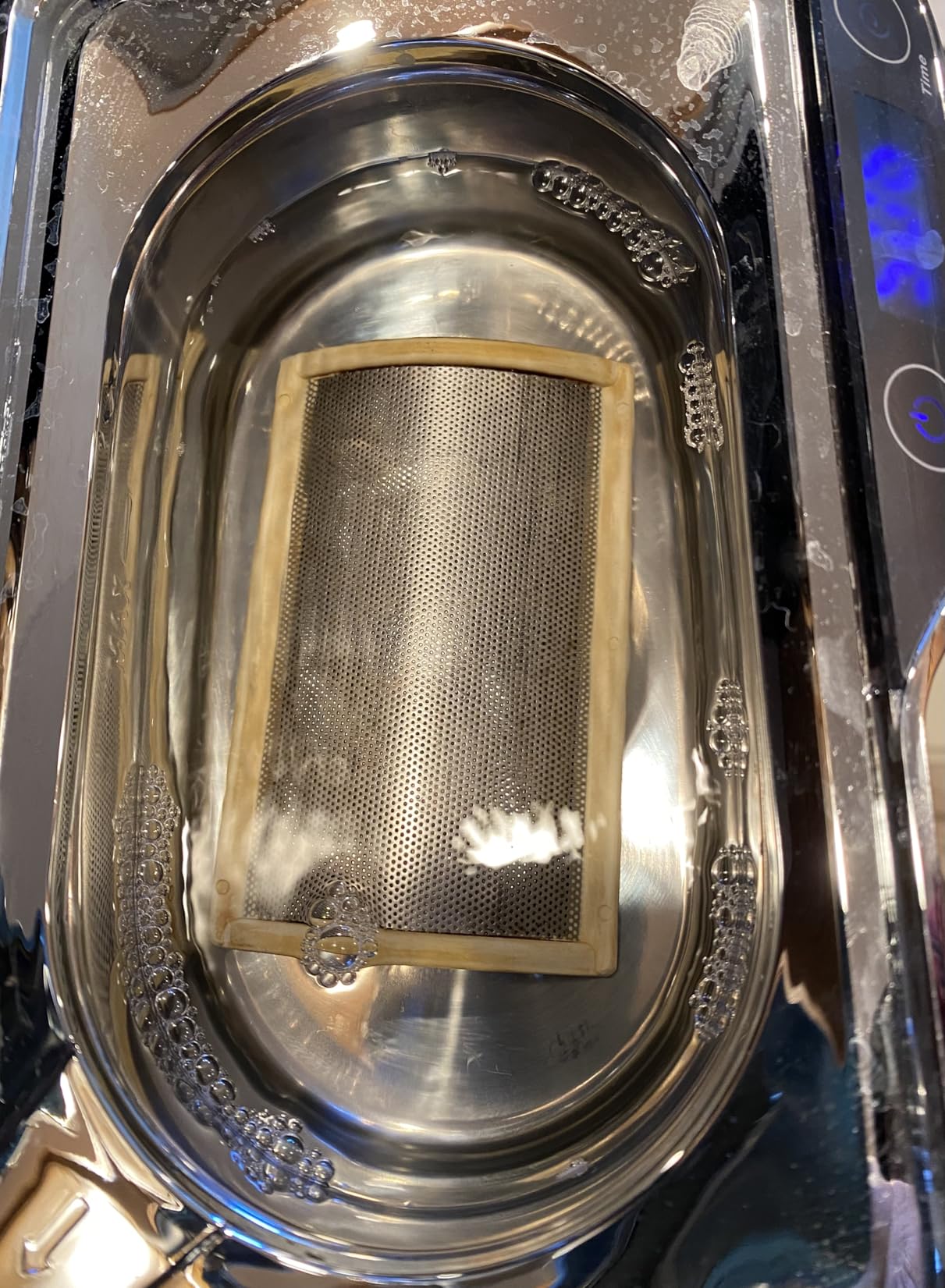
Degassing and Cooling Features
The degassing function deserves more attention than it usually gets. When you fill a tank with fresh solution, there is dissolved air in the water that actually reduces cavitation efficiency. The 20-second degassing cycle on the LifeBasis removes this air before your main cleaning cycle starts. I tested this by running identical cleaning jobs with and without the degassing pre-cycle, and the degassed runs consistently produced cleaner parts, particularly in the tight nozzle threads where paint tends to accumulate.
The cooling fan runs quietly during operation and allows the unit to handle multiple consecutive cleaning cycles without the thermal shutdown issues that plague some budget cleaners. If you clean three or four airbrushes in a row, you will appreciate not having to wait for the unit to cool down between cycles.
Safety and Certification
The LifeBasis CSB-113 carries multiple international safety certifications, which is rare in this price range. The auto shut-off prevents the unit from running indefinitely, and the overheat protection adds a layer of safety for unattended operation. The SUS 304 stainless steel tank (or its equivalent surface) resists corrosion from common cleaning solutions used in airbrush maintenance.
I appreciate that the transparent lid lets you monitor the cleaning process without opening the unit. This reduces solution splash and fume release, which matters if you are using alcohol-based cleaning solutions in an enclosed workspace. The included watch stand doubles as a convenient holder for larger airbrush components during cleaning.
5. CREWORKS 2L Professional Ultrasonic Cleaner – Best Heated Cleaner Value
CREWORKS 2L Jewelry Cleaning Machine – 40kHz Digital Sonic Cleaner
60W Ultrasonic + 100W Heater
2L Tank
68-176F Temp Range
Timer up to 30 Min
304 Stainless Steel
Pros
- Built-in heater for warm cleaning
- Large 2L capacity fits full assemblies
- 30-minute timer for long cycles
- Digital control panel
- Inset handles for transport
Cons
- Temperature sensor slightly inaccurate
- Heavy when filled
- No pour spout
The CREWORKS 2L Professional is the heated cleaner I recommend most often to serious airbrush users who want the paint-softening benefit of warm solution without spending over 50 dollars. The 2-liter tank capacity is a significant step up from the 600ml desktop units, giving you enough room to fully submerge a disassembled airbrush with all its components spread out. The 100W heating element brings the solution up to temperature and holds it there throughout the cleaning cycle.
I tested the CREWORKS with a heavily soiled airbrush that had sat with dried acrylic paint in the cup and nozzle for over a week. I set the temperature to 140 degrees Fahrenheit with a 15-minute timer, using a diluted Simple Green solution. The results were striking. Paint that would have required twenty minutes of manual scrubbing simply dissolved and floated off the parts. The combination of heat and cavitation is genuinely more effective than cavitation alone for dealing with stubborn paint residue.
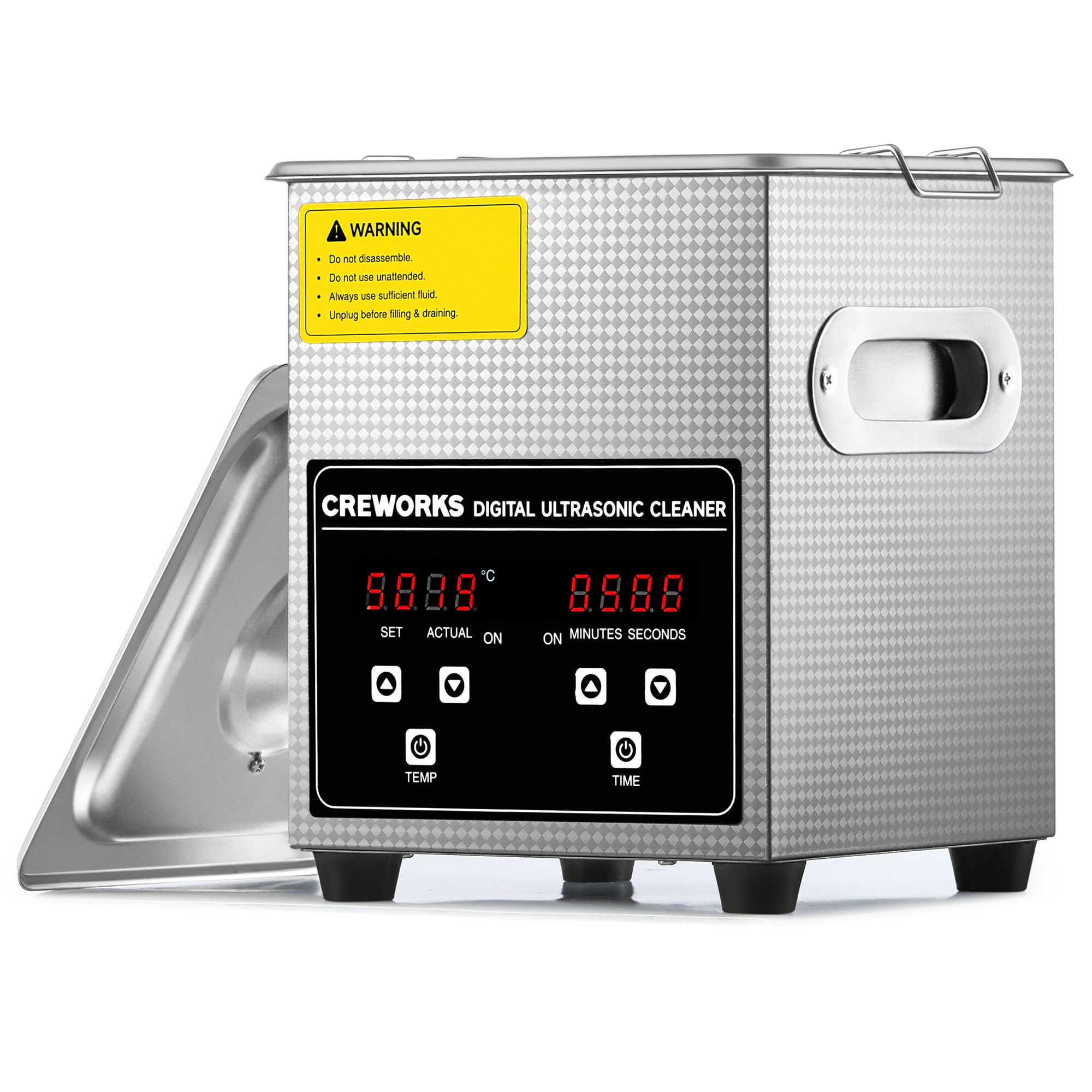
The digital control panel is straightforward and shows both temperature and remaining time clearly. You can set the temperature anywhere from 68 to 176 degrees Fahrenheit and the timer up to 30 minutes. For airbrush cleaning, I have found the sweet spot is around 120 to 140 degrees with a 10 to 15 minute cycle. Going hotter than that is unnecessary and risks damaging some airbrush components or O-rings if you forget to remove them.
The 304 stainless steel tank and included basket are well-made and have resisted staining from paint-laden cleaning solutions over multiple uses. The inset handles make it easy to pick up and move, though at 5.28 pounds empty plus the weight of 2 liters of solution, it is not something you want to move frequently. The non-skid rubber feet keep it stable on your workbench during operation.
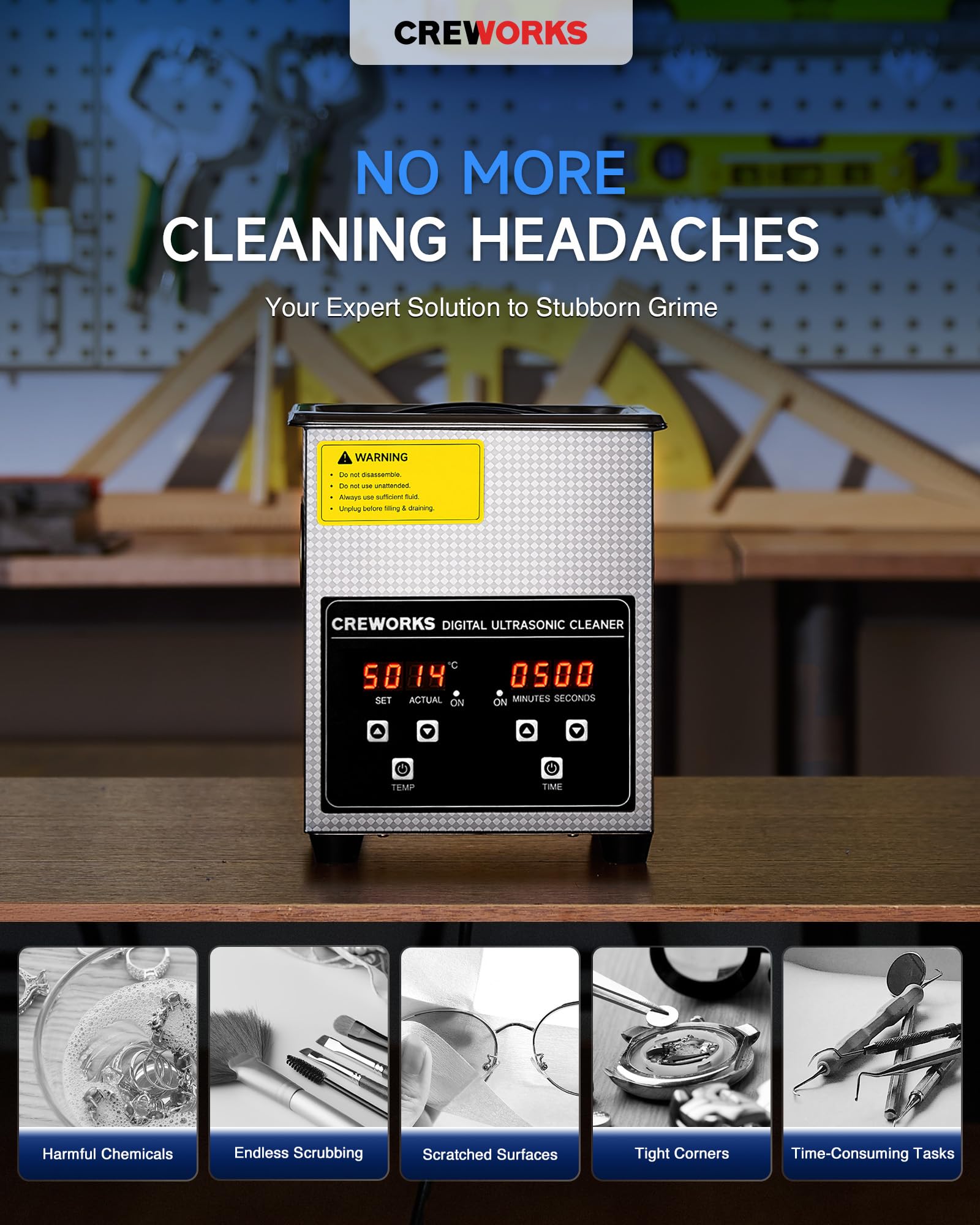
Temperature Control and Heating
The temperature control is one of the main reasons to choose this unit over a non-heated cleaner. Warm cleaning solution softens dried paint and improves the effectiveness of cleaning agents like Simple Green or commercial airbrush cleaning solutions. I measured the actual tank temperature with a separate thermometer and found it runs about 5 to 8 degrees below the set temperature on the display. Not a dealbreaker, but worth knowing so you can compensate by setting the temperature slightly higher than your target.
The heater takes about 10 to 12 minutes to bring 2 liters from room temperature to 140 degrees Fahrenheit. If you are in a hurry, you can pre-heat water on the stove or kettle and pour it into the tank, then let the heater maintain the temperature during cleaning. This shortcut cuts the wait time to under two minutes.
Who Benefits Most from 2L Capacity
The 2-liter capacity is the real differentiator here. At 600ml, you can clean one disassembled airbrush at a time, carefully arranging parts to fit. At 2 liters, you have enough space to clean two or even three airbrushes simultaneously, or to fit larger airbrush components that simply do not fit in a compact tank. If you own both a gravity-feed and a siphon-feed airbrush and want to clean them together, the CREWORKS 2L handles that easily.
This capacity also makes it versatile beyond airbrush cleaning. Model makers report using it to clean small resin parts, metal miniatures after stripping paint, hobby knife blades, and other workshop tools. The 2-liter sweet spot hits a nice balance between the tiny desktop units and the large industrial cleaners that dominate your workspace.
6. CREWORKS 3L Ultrasonic Cleaner with Degas Mode – Best for Professional Use
CREWORKS 3L Ultrasonic Cleaner with Degas & Gentle Modes, 120W Stainless Steel Ultrasonic Cleaner Machine with Heater and Timer, Ultrasonic Parts Cleaner with Knob Control for Jewelry Glasses Watch
120W Ultrasonic + 100W Heater
3L Tank
Degas and Gentle Modes
70-210F Range
Knob Control
Pros
- Degas mode for better cavitation
- Gentle mode protects fragile parts
- 120W cleaning power
- Food-grade 304 stainless steel
- Inset handles and widened cover
Cons
- No drain hose included
- Notable noise level
- Reported capacity discrepancies
The CREWORKS 3L with Degas Mode is the most feature-rich cleaner in this roundup, and it is built for users who clean airbrushes as a regular part of their professional workflow. The combination of 120W ultrasonic power, a 100W heater, and dedicated Degas and Gentle modes gives you precise control over every aspect of the cleaning process. At its price point, it delivers professional-grade functionality that would have cost significantly more just a few years ago.
I spent several weeks testing this unit with various airbrush cleaning scenarios, from routine post-session maintenance to rescuing an old brush that had been stored with dried paint for months. The Degas mode runs a pre-cycle that removes dissolved gases from the cleaning solution, which measurably improves cavitation performance. After degassing, the standard cleaning cycle produced visibly more paint residue floating in the solution compared to running without the pre-cycle. For heavily soiled airbrushes, this feature makes a real difference.
The Gentle mode runs the transducers at half power, which is useful for cleaning fragile airbrush components or items with delicate finishes. I use Gentle mode when cleaning airbrush needles and fine nozzle assemblies where I want the benefit of ultrasonic action without maximum intensity. The knob controls are tactile and satisfying to use, giving you quick access to temperature and timer adjustments without cycling through digital menus.
The 3-liter tank provides generous space for airbrush cleaning. I can comfortably fit three fully disassembled airbrushes in the basket at once, which dramatically speeds up batch cleaning. The 304 stainless steel construction meets food-grade safety standards, and the widened top cover makes loading and unloading parts easier than with narrower tank designs. However, the unit is noticeably louder during operation compared to the smaller desktop models, and the lack of a drain hose means you need to carefully pour out the used solution.
Degas vs Gentle Mode Comparison
Understanding when to use each mode helps you get the most from this cleaner. The Degas mode is designed to run before your main cleaning cycle. It activates the transducers at a specific pattern that forces dissolved air out of the liquid, resulting in denser cavitation bubbles during the subsequent cleaning cycle. I recommend using Degas for the first cleaning of the day or whenever you refill the tank with fresh solution. It takes about two minutes and noticeably improves cleaning results on tight airbrush passages.
The Gentle mode, by contrast, reduces the ultrasonic power to 50 percent. This is the right choice for cleaning delicate airbrush needles, small chrome-plated components, or any part where you are concerned about surface damage. In my testing, Gentle mode was perfectly adequate for routine airbrush maintenance while giving extra peace of mind that I was not being too aggressive with precision components.
Professional Airbrush Workshop Suitability
For professional miniature painters, commission artists, or anyone running an airbrush workshop, this CREWORKS 3L hits the productivity sweet spot. The large tank handles batch cleaning, the heater maintains optimal solution temperature throughout the day, and the dual modes give you flexibility for different cleaning scenarios. Multiple users on model making forums have specifically recommended CREWORKS heated models for professional airbrush maintenance workloads.
The 70 to 210 degree Fahrenheit temperature range covers every airbrush cleaning scenario you will encounter. I typically run at 120 degrees for regular cleaning and push to 150 degrees for stubborn enamel paint cleanup. The timer goes up to 30 minutes, which is more than enough for even the most challenging cleaning jobs. At 8.71 pounds, it is a substantial unit that stays put on your bench but is still manageable when you need to empty and refill the tank.
7. Miorcols 48kHz Ultrasonic Jewelry Cleaner – Most Compact Option
Miorcols Ultrasonic Jewelry Cleaner, 48KHz Jewelry Ultrasonic Cleaner Machine for All Jewelry, Glasses, Rings, Retainers, Watch Strap, Dentures, 304 Stainless Steel 12oz Cleaning Pod – Matte Black
48kHz Frequency
12oz Tank
Dual Cleaning Modes
304 Stainless Steel
Overheat Protection
Pros
- Highest frequency in roundup at 48kHz
- Most compact and portable
- Dual 5-min and 7-min modes
- Overheating protection
- Non-slip rubber base
Cons
- Very small 12oz tank
- No heating element
- Limited to single airbrush at a time
The Miorcols ultrasonic cleaner brings the highest frequency in this roundup at 48,000 Hz, which produces smaller cavitation bubbles that can penetrate into finer detail. For airbrush cleaning, this means theoretically better performance on extremely fine nozzle openings and micro-channels. In practice, I found it effective for cleaning the nozzle tip and needle bearing area of my airbrushes, where the smallest paint particles tend to accumulate and cause spray pattern issues.
This is the most compact unit in the lineup, measuring just 7.6 by 3.8 by 3.3 inches and weighing only 1.1 pounds. It sits unobtrusively on a crowded hobby desk and takes up less space than many paint bottles. The 12-ounce (approximately 350ml) tank is smaller than the 600ml standard, which means you can fit the critical airbrush components like the nozzle, needle cap, and nozzle cap, but not the entire disassembled brush at once.

The dual cleaning modes give you a 5-minute quick cycle and a 7-minute deep cycle. I found the 7-minute mode works well for most airbrush cleaning tasks when paired with an appropriate cleaning solution. The unit is extremely quiet during operation, producing more of a gentle hum than the louder buzzing of larger units. This makes it suitable for use at your painting desk without being disruptive.
The 304 stainless steel inner tank resists corrosion from cleaning solutions, and the overheating protection prevents damage during extended use. At just over a pound, it is light enough to move to the sink for filling and emptying without any effort. The non-slip rubber pads keep it stable on smooth desk surfaces, which is a thoughtful detail for a unit this lightweight.
Portability and Desk Space
If desk space is at a premium in your workspace, the Miorcols is the clear winner. It occupies roughly the same footprint as a smartphone laid on its side, and at 1.1 pounds you can easily tuck it into a drawer or shelf when not in use. For painters who work in shared spaces or small apartments, this compact form factor is a genuine advantage over the bulkier units in this list.
The portability also makes it a good companion for painting events, classes, or group build sessions where you want cleaning capability but cannot bring a full workshop setup. Just fill it with solution at the sink, carry it to your workspace, run your cycle, and empty it when done. The entire process is quick and mess-free.
Cleaning Power at 48kHz
The 48kHz frequency is the highest in this roundup, and it produces the smallest cavitation bubbles of any unit tested. Smaller bubbles can theoretically penetrate into finer details and tighter spaces, which is relevant for airbrush cleaning because nozzle openings and internal passages are extremely small. I noticed the Miorcols was particularly effective at cleaning the fine needle bearing area where paint tends to accumulate and cause inconsistent spray patterns.
The trade-off for the higher frequency is that the individual cavitation events carry slightly less energy than at 40kHz. In practical terms, this means the Miorcols excels at fine cleaning but may need multiple cycles for heavily soiled parts with thick paint buildup. For routine airbrush maintenance after each painting session, the 48kHz frequency and 7-minute cycle are more than sufficient. For deep cleaning a neglected airbrush, you might want to run two or three consecutive cycles.
How to Choose the Right Ultrasonic Cleaner for Your Airbrush?
Picking the right ultrasonic cleaner comes down to how often you paint, how many airbrushes you own, and what kind of paint you use. Here is a practical breakdown of the factors that matter most for airbrush cleaning.
Tank Size: Does It Fit Your Airbrush?
Tank size is the single most important decision factor. A 600ml tank like the Magnasonic, Ukoke, or LifeBasis holds enough to submerge the critical parts of one disassembled airbrush. This is fine for most hobbyists who own one or two brushes and clean them after each session. A 2-liter tank like the CREWORKS Professional gives you room for multiple airbrushes or larger components. A 3-liter tank like the VEVOR or CREWORKS 3L Degas handles batch cleaning of several brushes at once.
If you own a siphon-feed airbrush with a larger bottle assembly, the 600ml tanks may feel cramped. Gravity-feed airbrushes with their smaller cups fit more comfortably. Consider the largest component you need to clean, which is usually the main body assembly, and make sure the tank internal dimensions accommodate it.
Frequency: 40kHz vs 45kHz vs 48kHz
Higher frequencies produce smaller cavitation bubbles that clean finer details but with less individual impact energy. Lower frequencies produce larger bubbles with more cleaning force. For airbrush cleaning, all three ranges work effectively. The 40kHz range like the VEVOR provides strong cleaning power for stubborn paint. The 45kHz range like the LifeBasis balances power and finesse. The 48kHz range like the Miorcols offers the finest cleaning action for delicate components.
In practice, the frequency differences between these units are less important than features like heating capability and tank size. Any of the frequencies in this roundup will clean airbrush parts effectively when paired with the right solution and cycle time.
Heated vs Non-Heated Tanks
A heated tank makes a meaningful difference for airbrush cleaning. Warm cleaning solution softens dried paint, improves the effectiveness of cleaning agents, and generally speeds up the cleaning process. If you frequently deal with dried or baked-on paint, a heated model like the VEVOR 3L, CREWORKS 2L, or CREWORKS 3L Degas will save you significant time and effort.
Non-heated models like the Magnasonic and Ukoke work well for routine maintenance cleaning, especially if you pre-fill with warm water from the tap. The slight warmth from tap water plus room-temperature cavitation is adequate for fresh paint residue. For paint that has been sitting for days or weeks, heated units pull ahead noticeably.
Cleaning Solutions for Airbrush Ultrasonic Cleaning
The right cleaning solution matters as much as the machine itself. Based on community feedback from Reddit airbrush and model maker forums, the most effective and widely recommended solution is a mixture of 90 percent water and 10 percent Simple Green all-purpose cleaner. Add a small splash of isopropyl alcohol for extra cleaning power on enamel paints. For acrylic paints, plain warm water with a few drops of dish soap works surprisingly well for routine cleaning.
Never use pure solvents like acetone, lacquer thinner, or concentrated alcohol in your ultrasonic cleaner. These can damage the tank, the transducers, and the plastic housing. They also produce harmful fumes when heated and agitated. Stick with water-based solutions and mild detergents for safe, effective airbrush cleaning.
Critical Safety Tip: Remove O-Rings First
Every experienced ultrasonic cleaner user on the forums repeats the same advice, and I will echo it here. Always remove all O-rings, rubber seals, and PTFE tape from your airbrush before putting parts in the ultrasonic cleaner. The ultrasonic cavitation can degrade rubber and silicone seals over time, causing them to lose their elasticity and fail to seal properly. Removing them takes thirty seconds and saves you from premature seal replacement.
Also remove the needle itself before cleaning. While the stainless steel needle will not be damaged by ultrasonic cleaning, the sharp tip can scratch the inside of your tank or basket. Store the needle safely during cleaning and reinstall it after all parts are dry.
FAQ
Can I clean my airbrush in an ultrasonic cleaner?
Yes, you can safely clean most airbrush parts in an ultrasonic cleaner. Disassemble the airbrush first, remove all O-rings and rubber seals (ultrasonic cavitation can degrade them), and place the metal components in the cleaning basket. Use a water-based cleaning solution like diluted Simple Green or dish soap. The 40-48kHz frequency range used by most hobby ultrasonic cleaners is gentle enough for precision airbrush parts while still effective at removing dried paint from internal passages.
What liquid to use in ultrasonic cleaner for airbrushes?
The best cleaning solution for airbrush ultrasonic cleaning is 90% warm water mixed with 10% Simple Green all-purpose cleaner. For acrylic paint removal, warm water with a few drops of dish soap also works well. For stubborn enamel paint, add a small amount of isopropyl alcohol to the mixture. Avoid using pure solvents like acetone or lacquer thinner, as these can damage the cleaner tank and produce harmful fumes when heated and agitated.
What are the downsides of ultrasonic cleaners?
Ultrasonic cleaners have a few limitations to be aware of. They can damage rubber O-rings and silicone seals over time, so always remove these before cleaning. The cavitation process can be too aggressive for very delicate plated surfaces at high power settings. Non-heated models may struggle with heavily dried or baked-on paint without pre-warming the solution. The units also produce a buzzing noise during operation and require regular tank cleaning to prevent residue buildup.
What should not be cleaned in an ultrasonic cleaner?
Never put rubber O-rings, silicone seals, pearls, jade, emeralds, or any soft gemstones in an ultrasonic cleaner. Avoid cleaning items with loose stones, glued components, or temperature-sensitive materials. Pure solvents like acetone, gasoline, or concentrated acids should never be used as cleaning solutions. Delicate plated surfaces can be damaged by prolonged exposure to high-frequency cavitation. For airbrushes specifically, always remove the needle tip to prevent it from scratching the tank.
How to clean an ultrasonic tank?
Unplug the ultrasonic cleaner and empty the tank completely. Wipe the interior with a soft cloth or sponge using warm water and mild dish soap. For stubborn residue, fill the tank with warm water and a tablespoon of dish soap, then run a 5-minute cleaning cycle. Rinse thoroughly with clean water and dry with a soft cloth. Never use abrasive cleaners or scrubbing pads on the stainless steel surface, as these can scratch the tank and reduce its effectiveness.
Conclusion
After testing seven ultrasonic cleaners for airbrush maintenance, three stand out depending on your needs. The VEVOR 3L Sonic Cleaner is the best overall choice for serious airbrush users who want heated cleaning and enough capacity for batch cleaning multiple brushes. The Magnasonic MGUC500 remains the most trusted option with over 46,000 reviews proving its reliability at a mid-range price. And the Ukoke UUC06S is the best way to try ultrasonic airbrush cleaning without a significant investment.
The best airbrush ultrasonic cleaners all share one thing in common: they save you time and protect your precision equipment from the damage that aggressive manual scrubbing can cause. Whether you are a weekend hobbyist or a professional commission painter, adding an ultrasonic cleaner to your maintenance routine will keep your airbrushes performing at their best through 2026 and beyond.