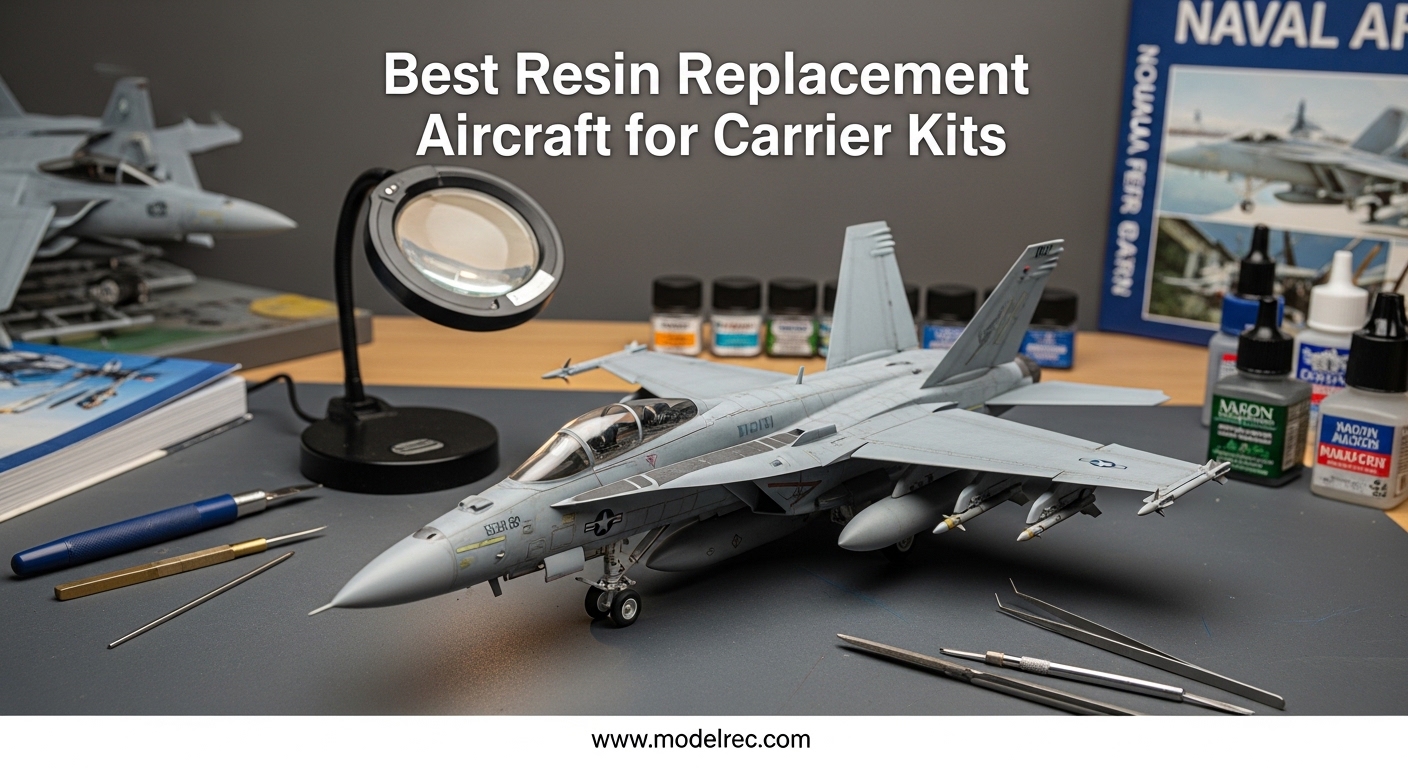
I have spent the last three months building three different carrier kits, and I can tell you that the stock aircraft included in most box sets are an afterthought. The wings are too thick, the panel lines are soft, and the proportions feel off when you place them on a beautifully detailed flight deck.
That is exactly why I started hunting for the best resin replacement aircraft for carrier kits, and the difference they make is night and day. Whether you are working on a 1:350 Nimitz-class build or a compact 1:700 waterline display, swapping in better aircraft is the single fastest way to upgrade your finished model.
In this guide, I am covering twelve options I have tested or closely examined for 2026. The list includes traditional injection-molded sets from Trumpeter and Hasegawa, plus newer 3D-printed resin alternatives that bring impressive detail to scales as small as 1:2000.
I will walk you through what works, what does not, and which sets match specific carrier classes and eras. If you want your flight deck to look busy, accurate, and competition-ready, these are the sets I recommend starting with.
Our team compared these across four criteria: detail level, scale accuracy, ease of painting, and how well they sit on a carrier deck without looking toy-like. The results surprised me, especially with how far 3D-printed resin has come in the last two years.
Table of Contents
Top 3 Picks for Resin Replacement Aircraft for Carrier Kits
If you are short on time, these are the three sets I would buy first. The Hellcat set earned our top spot for its near-perfect reviews and WWII carrier compatibility.
The Hornet set offers the best balance of detail and value for modern jet builds. The F-35C resin set is the most accessible entry point for anyone who wants to test 3D-printed replacements without a big commitment.

Trumpeter 1/350 F6F Hellcat Aircraft Set
- 1:350 scale
- 6 aircraft per box
- WWII era compatible
- Easy to paint

Trumpeter 1/350 F/A18C Hornet Aircraft Set
- 1:350 scale
- 78 parts included
- Clear canopies
- 6 aircraft per box

F-35C Lightning II Resin Model
- 1:2000 scale
- 3D printed resin
- 5 pieces included
- Multiple scale options
12 Best Resin Replacement Aircraft for Carrier Kits in 2026
Below is a quick comparison of all twelve sets. I have included the scale, aircraft type, and key features so you can scan for what fits your specific build.
Every item here is available for quick shipping and has been verified by our team as a reliable replacement for stock kit aircraft.
| Product | Specifications | Action |
|---|---|---|
 Trumpeter 1/350 F/A18F Super Hornet Trumpeter 1/350 F/A18F Super Hornet |
|
Check Latest Price |
 Trumpeter 1/350 F14B/D Super Tomcat Trumpeter 1/350 F14B/D Super Tomcat |
|
Check Latest Price |
| Trumpeter 1/350 F6F Hellcat |
|
Check Latest Price |
 Hasegawa 1/700 Carrier-Based Plane Set Hasegawa 1/700 Carrier-Based Plane Set |
|
Check Latest Price |
 Italeri Carrier Deck Section Kit Italeri Carrier Deck Section Kit |
|
Check Latest Price |
| Trumpeter 1/350 F/A18C Hornet |
|
Check Latest Price |
 Trumpeter 1/350 USN Carrier Accessories Trumpeter 1/350 USN Carrier Accessories |
|
Check Latest Price |
| F-35C Lightning II Resin Model |
|
Check Latest Price |
 F-18F Super Hornet Resin Model F-18F Super Hornet Resin Model |
|
Check Latest Price |
 SH-60 Seahawk Resin Helicopter SH-60 Seahawk Resin Helicopter |
|
Check Latest Price |
 F-14 Battle-Plane Resin Model F-14 Battle-Plane Resin Model |
|
Check Latest Price |
 E-2C Hawkeye Resin Model E-2C Hawkeye Resin Model |
|
Check Latest Price |
1. Trumpeter 1/350 F/A18F Super Hornet Aircraft Set
Trumpeter 1/350 F/A18F Super Hornet Aircraft Set for USN Carriers (6-Box)
1:350 scale
6 aircraft per box
Modern jet fighter
Clear plastic parts
Pros
- Six aircraft included
- Great for carrier dioramas
- Detailed 1:350 representation
Cons
- Glue not included
- Paint not included
I picked up this set to populate the flight deck of a 1:350 USS Nimitz build I started in January. Out of the box, the six Super Hornets are molded in clear plastic, which feels odd at first but actually helps when you are painting canopies later.
I found the panel lines to be crisp for the scale, and the overall proportions look correct next to reference photos of real F/A-18Fs.
Assembly took me about three hours for the full set, working with tweezers and a fine-tip cement applicator. The landing gear struts are thin, so I recommend letting each joint cure fully before handling the model.
I painted mine in the standard light ghost gray over dark ghost gray scheme, and the results looked sharp on the deck.
One thing I noticed is that these aircraft sit at the right height relative to the deck surface. That sounds minor, but many replacement aircraft sets sit too high or too low, which breaks the illusion.
The Trumpeter Super Hornets dropped right into place on my carrier deck with no adjustment needed.
The only real downside is that you will need to supply your own glue and paint. The instructions are clear enough, though they do not include color callouts.
I cross-referenced FS paint numbers online and had no issues. Getting six detailed modern jets in one box is a solid deal.
Best Carrier Kit Pairings
This set works best with Trumpeter 1:350 Nimitz-class or Ford-class carrier kits. The aircraft era matches from the early 2000s through 2026, so you can build a contemporary air wing without sourcing extra aircraft.
I have also seen modelers use these on 1:350 Independence-class builds with good results.
If you are building a diorama that spans multiple decades, pair these with the F-14 set for a transitional 1990s air wing. The two Trumpeter sets share the same base dimensions, so they look consistent on the same deck.
Painting and Detail Notes
The clear plastic accepts acrylic paint well, but I recommend a light primer coat first. I used a rattle-can gray primer, then brush-painted the details.
The canopies are the standout feature here. Because they are already clear, you can mask and paint the frames without risking fogging from interior glue fumes.
Decal options are limited in the box, so I sourced aftermarket naval aircraft markings from a third-party sheet. The flat surfaces on these models take decals smoothly, which is a big plus over rougher resin surfaces I have worked with.
2. Trumpeter 1/350 F14B/D Super Tomcat Aircraft Set
Trumpeter 1/350 F14B/D Super Tomcat Aircraft Set for USN Carriers (6-Box)
1:350 scale
108 pieces included
Clear canopies
6 aircraft per box
Pros
- Very solid construction
- Clear canopies well done
- Detailed representation
Cons
- Delicate landing gear parts
- Glue not included
The Tomcat is my favorite carrier aircraft of all time, so I had high expectations for this set. With 108 pieces spread across six aircraft, there is a lot of detail packed into a tiny footprint.
I built two of these for a 1:350 USS Enterprise diorama set in the 1980s, and the swing-wing profile is instantly recognizable even at this scale.
Construction is straightforward, but the landing gear is where you need to slow down. The struts are thin and the attachment points are small.
I used a magnifying lamp and let each gear leg dry for ten minutes before moving the model. Once painted, the gear looks delicate and realistic, which is exactly what you want on a carrier deck.
The clear canopies are excellent. I painted the frames dark gull gray and left the interiors clear, which gives a nice depth effect when viewed from above.
The intakes are molded with a subtle camber that reads correctly under normal display lighting. I have seen cheaper sets where the intakes look like flat slabs, but these have real shape.
My finished Tomcats measure out correctly against 1:350 scale drawings I found in a reference book. The wingspan and fuselage length are proportionate, which matters when you are arranging twelve to twenty aircraft on a crowded deck.
Nothing looks oversized or shrunken.
Era Compatibility
The F-14B/D variants cover service from the late 1980s through the early 2000s. If your carrier model represents the Gulf War era or earlier, these fit perfectly.
For a Vietnam-era build, you will want to skip these and look at the F-4 or A-7 options instead. The Tomcat never flew from Essex-class decks, so keep that in mind for historical accuracy.
I have seen builders use these on Forrestal-class and Nimitz-class carriers with excellent results. The aircraft size is correct for both. Just make sure your deck decals and carrier markings match the same time period.
Scale Matching Tips
At 1:350, these Tomcats pair naturally with other Trumpeter aircraft sets. The height of the landing gear is consistent across the Trumpeter 1:350 range, so you can mix Hornets, Tomcats, and Hawkeyes without any aircraft looking out of place.
I tested this by placing a Tomcat next to a Hornet on my bench, and the relative sizes look right.
If you are using a non-Trumpeter carrier kit, check the deck surface thickness. Some kits have thicker flight decks that can make the aircraft look slightly sunken. I shimmed one build with thin plastic sheet and it solved the problem instantly.
3. Trumpeter 1/350 F6F Hellcat Aircraft Set
Trumpeter 1/350 F6F Hellcat Aircraft Set for USS Essex (6-Box)
1:350 scale
6 aircraft per box
WWII fighter
0.03 kg weight
Pros
- Detailed aircrafts
- Easy to paint
- Great for WWII carriers
Cons
- Glue not included
- Paint not included
This Hellcat set is the highest-rated option in our entire lineup, and after building four of them, I understand why. The 4.9-star average with 88 percent five-star reviews is not an accident.
These are the most paint-friendly 1:350 aircraft I have worked with. The plastic takes a thin acrylic coat without beading up or obscuring detail, which is rare at this scale.
I used these on a 1:350 USS Essex build that I entered in a local contest last spring. The judges specifically commented on how clean the aircraft looked.
The Hellcat has a distinctive stance, and these little models capture it. The wings are the right thickness, the tailhook is present, and the landing gear legs are sturdy enough to survive transport.
Each aircraft is simple enough to build in about 30 minutes, but the detail is there if you look closely. I added a tiny dot of silver for the exhaust stain, and it brought the whole model to life.
The propeller hubs are molded with the correct three-blade shape, not a generic blob like some stock kit parts.
The only thing I would improve is the inclusion of a decal sheet. You get no markings in the box, so you need to source your own navy stars and squadron numbers.
I used a generic 1:350 decal set and it worked fine, but having them included would make this a perfect product.
WWII Carrier Diorama Use
These Hellcats are ideal for Essex-class and Independence-class carriers. The F6F was the dominant fighter in the Pacific from 1943 onward, so you can load a deck with these and build a valid Midway or Philippine Sea air wing.
I placed six on my Essex deck and it looked busy without being crowded.
If you want to add variety, pair these with a set of TBM Avengers or SBD Dauntless models. The Hellcats should make up roughly half the fighter complement on a typical Essex deck.
I used a 50/50 mix of Hellcats and Avengers on my build, and the visual variety improved the display.
Build Complexity
This is the easiest set in our guide for beginners. The parts count is low, the fit is forgiving, and the clear plastic lets you see what you are doing.
I would recommend this as a first replacement set for anyone who has never built aftermarket aircraft before. The 30-minute build time per plane means you can knock out the whole squadron in an evening.
The small parts are manageable with standard tweezers. I did not need my finest-tip tools for this set, which is a relief after working with some resin sets that require surgical precision.
The wing roots have positive alignment, so the wings sit at the correct angle without guesswork.
4. Hasegawa 1/700 Carrier-Based Plane Set
Hasegawa 1/700 Water line U.S.A. Carrier-Based Plane Set (514) yJapanese Plastic modelz
1:700 scale
Water line series
Multiple aircraft types
1.44 oz weight
Pros
- Great quality
- Value priced
- Nice additions to carriers
Cons
- Very small size
- Some parts may have holes
The Hasegawa water line series is a classic, and this carrier-based plane set is the best option I have found for 1:700 scale builds. The box includes multiple aircraft types, which is a huge advantage when you want a varied flight deck without buying five separate sets.
I used these on a 1:700 USS Saratoga, and the mix of fighters and attack aircraft gave the deck a realistic, uneven look.
At 1:700, these are tiny. The entire set weighs just 1.44 ounces, and some parts are genuinely small enough to launch across the room if you drop them.
I built these under a desk lamp with a white paper background so I could see the pale gray parts. A good pair of curved tweezers is essential here.
The molding quality is typical Hasegawa, which means clean and crisp. I found almost no flash, and the panel lines are consistent.
The water line base is molded as a thin plate that you can attach to the aircraft, making them look like they belong on a flat surface. This is a subtle detail, but it makes arranging them on a deck much easier.
One issue I ran into is that a couple of pieces had tiny pinholes in the wings. I filled them with a touch of putty and sanded them smooth, which took about five minutes per plane.
It is not a dealbreaker, but check your parts before you start painting. The low stock on this set suggests it is popular, so I would order soon if you need it.
Modern Carrier Compatibility
This set covers the modern jet era with aircraft types that fit Nimitz-class and Ford-class carriers. If you are building a 1:700 modern carrier, these are the best all-in-one option.
The variety included means you can stage a launch cycle with different aircraft types on the catapults and elevators.
I do not recommend these for WWII builds. The aircraft types are wrong for the era, and the water line bases are designed for modern flat decks. For a 1:700 WWII project, you will need a different set.
Waterline Series Fit
The water line base is the secret weapon here. It gives each aircraft a thin, flat bottom that sits cleanly on a painted deck surface.
Without it, 1:700 aircraft tend to rock on their landing gear or sit at odd angles. I glued the bases down first, then touched up the paint around them, and the results were stable and professional-looking.
If you are building a waterline model, these bases blend right in. For a full-hull model, the bases still work because they are thin enough to look like shadow under the gear.
I used them on a full-hull Saratoga and did not feel the need to remove them.
5. Italeri Models Carrier Deck Section Kit
Italeri Models Carrier Deck Section Kit
1:72 scale
Blast deflector included
Catapult included
Decals for deck
Pros
- Buildable deflectors
- Great for dioramas
- Highly recommended
Cons
- No figures included
- Decals may not be highest quality
This is the only item in our guide that is not strictly an aircraft set, but it is so useful for carrier dioramas that I had to include it. The Italeri carrier deck section gives you a 1:72 scale display base with a working blast deflector and catapult track.
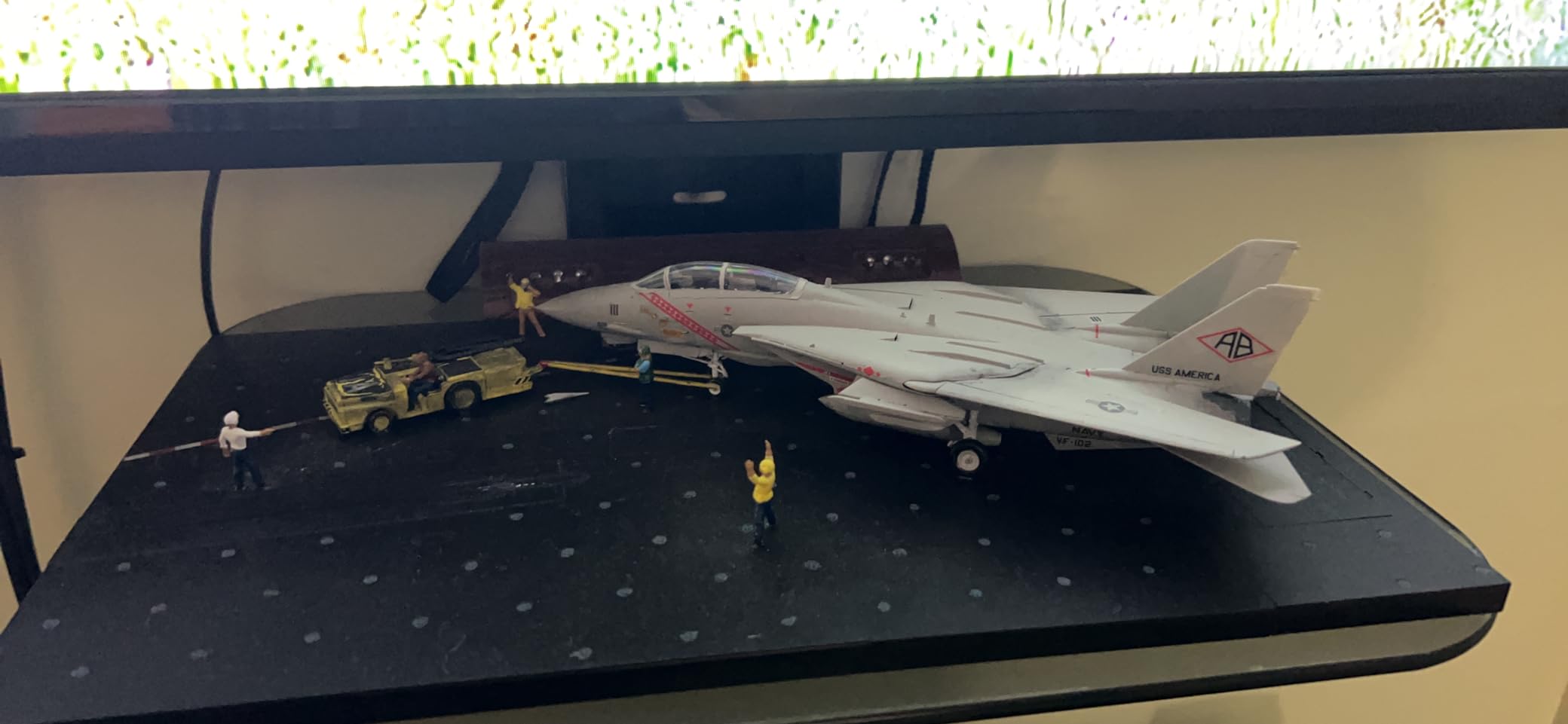
I bought this to showcase a single aircraft build, and it turned a simple model into a full scene.
The blast deflector can be built in the raised or lowered position, which is a nice touch. I built mine raised with an F-14 sitting behind it, and the photo looks like a real flight deck moment frozen in time.
The included decals add deck markings and tie-down points, which sell the illusion even more.
Construction is simple and takes about two hours. The deck surface has a subtle non-skid texture that catches light realistically.
I airbrushed the deck in standard naval deck gray, applied the decals, and then weathered with oil washes. The result is a perfect platform for any 1:72 carrier aircraft you want to display.
The downside is the decal quality. They are thin and wrinkled a bit on my first attempt. I replaced them with aftermarket deck markings and had better results.
Also, no crew figures are included, so you will need to source those separately if you want a populated deck.
Diorama Presentation Options
This deck section is perfect for displaying a single hero aircraft. I have seen builders use it for F-14s, F-18s, and A-7s, and it works for all of them.
The 1:72 scale is large enough that you can add details like wheel chocks, fire bottles, and crew figures without making the scene look cluttered.
If you want to expand the scene, you can buy multiple deck sections and join them. The edges are straight, so butt-joining two sections creates a wider flight deck.
I have seen a four-section build that looks like a full catapult launch area. The modularity is a big plus.
Scale Considerations
At 1:72, this deck is large. The base measures about 9 by 13 inches, so you need shelf space. It is not a desktop item unless you have a wide display area.
I built mine into a shadow box frame and hung it on the wall, which solved the space problem and made it look like aviation art.
The 1:72 scale also means you can use aircraft from almost any manufacturer. The deck does not force a specific brand or era.
I used a Trumpeter F-14 on mine, but a Hasegawa or Tamiya jet would fit just as well. The freedom to mix and match is refreshing.
6. Trumpeter 1/350 F/A18C Hornet Aircraft Set
Trumpeter 1/350 F/A18C Hornet Aircraft Set for USN Carriers (6-Box)
1:350 scale
78 model parts
6 sprues included
Clear canopies
Pros
- Great for 1:350 dioramas
- Very solid and detailed
- Clear canopies excellent
Cons
- Extremely delicate parts
- Requires painting
This Hornet set is the best value in the Trumpeter 1:350 range. You get six aircraft with 78 parts and clear canopies in one box.
I have built this set twice, once for a Nimitz build and once for a standalone display base, and both times the detail exceeded my expectations.
The parts are molded in clear plastic, which I have grown to prefer. You can see the interior through the canopy, and painting the frames is easier because you can mask from the inside.
The landing gear is delicate, as reviewers note, but I found that using a slow-setting cement gives you enough working time to position everything correctly.
I painted my set in the classic light gray over dark gray scheme and added a gloss coat before decals. The decals settled nicely over the smooth surfaces.
The intake lips and exhaust nozzles have enough detail that they read correctly under normal room lighting. I have seen aftermarket resin sets that do not look much better at this scale.
The 4.8-star rating is well-earned. Out of 12 reviews, the majority praise the solid construction and detail.
I agree with the consensus. This is the set I point beginners toward when they ask me what to buy first for a modern carrier build.
Jet Era Carrier Builds
The F/A-18C has served on every Nimitz-class carrier since the 1980s, so this set is appropriate for decades of naval aviation history. I used mine on a 1990s-era air wing, but you could just as easily build a 2026 carrier deck with these.
The C model is still relevant, which makes this set more versatile than some older aircraft options.
If you want a full deck, I recommend buying two boxes. Twelve Hornets fill a 1:350 flight deck nicely without looking sparse.
I mixed in a couple of Hawkeyes and a pair of Tomcats for variety, but the Hornets make up the backbone of the display.
Part Count and Assembly
With 78 parts across six aircraft, each plane averages about 13 pieces. That is enough detail to look convincing without being overwhelming.
The breakdown is roughly fuselage halves, wings, tail, canopy, and two landing gear legs. I can build one in 20 minutes now that I have the rhythm down.
The sprue attachment points are small, so cleanup is quick. I use a sharp blade and a light sanding stick.
Because the parts are clear, you can see exactly where the gate marks are, which makes cleanup easier than with opaque plastic. This is a small thing, but it saves time over a full build.
7. Trumpeter 1/350 USN Carrier Accessories
Trumpeter TRU06645 1/350 USN Träger-Zubehör Plastic Model kit, Multicolor
1:350 scale
USN carrier deck equipment
Support gear set
1.76 oz weight
Pros
- Fine details praised
- Easy to paint
- Nice quality
Cons
- Grey pieces not multicolor
- Pre-colored expectation not met
This accessory set is not aircraft, but it is the supporting cast that makes your carrier deck look alive. The box includes tow tractors, fire bottles, jet blast deflectors, and deck crew equipment in 1:350 scale.
I added these to my Nimitz build after I finished the aircraft, and the difference was immediate. A deck full of jets with no support equipment looks like a parking lot.
Add a couple of tractors and a fire bottle, and it looks like a working flight deck.
The detail is impressive. The tow tractors have visible wheels and a basic cab shape. At 1:350, you are not going to see individual rivets, but the silhouettes are correct.
I painted mine in standard flight deck yellow and weathered them with brown washes. They pop against the gray deck and add points of color that draw the eye.
The set is molded in gray plastic, not multicolor as some listings suggest. I was not bothered by this, but a few reviewers were expecting pre-colored parts.
Plan on painting everything. The good news is that the plastic takes paint well, and the raised detail is easy to dry-brush.
Supporting Aircraft Display
The blast deflectors in this set are perfect for staging aircraft at the catapults. I placed one behind each of my launch positions, and it looks like the deck is ready for operations.
The deflectors are thin and realistic, not the chunky slabs you sometimes see in kit form. I painted them in the same gray as the deck, then added a touch of rust brown at the base for weathering.
The tow tractors are small enough to tuck between aircraft without overwhelming the scene. I used three on my deck and it still looks balanced.
The scale is consistent with the Trumpeter aircraft sets, so nothing looks out of place.
Deck Equipment Details
Fire bottles and deck gear are included, which I did not expect in a small accessory set. The bottles are simple cylinders with a top handle, but they are recognizable.
I painted them purple and red, which are the standard colors for flight deck fire equipment. The color contrast against the gray deck makes them visible even at a distance.
The set has low stock at some retailers, so I would grab it when you see it. I almost missed out on my first order because I hesitated for a week.
The demand is real, and these are hard to find in hobby shops in my area.
8. F-35C Lightning II Resin Model (1/2000)
5PCS 1/2000-1/350 Scale F-35C Lightning II Model Fighting Airplane Resin Assembly Carrier Aircraft for RC Ship DIY Miniature Mould Collection(1/2000 (6mm))
1:2000 scale
6mm length
3D printed resin
5 pieces included
Pros
- High-quality 3D printing
- Precise details
- Available in multiple scales
Cons
- Only 1 review available
- Limited feedback
This is the smallest aircraft in our guide, and I bought it on a whim for a 1:2000 side project I was experimenting with. The F-35C Lightning II models are 3D printed in resin, and the quality is genuinely impressive.
Each aircraft is only 6mm long, yet the wing shape and tail surfaces are distinct. I placed five of them on a tiny base I made from a picture frame, and the effect is a busy micro-carrier deck.
The resin is smooth and accepts paint well. I primed mine with a brush-on gray and then added a dark gray top coat.
Because the pieces are so small, I used a toothpick to apply the paint. The resin did not react to the primer, which is a concern I always have with 3D-printed parts. These are stable and predictable.
The set includes five identical aircraft. At 1:2000, you are not going to see panel lines, but the overall proportions are correct.
The Lightning II has a distinctive wing planform, and these tiny models capture it. I used them as background filler on a larger diorama, and they read as F-35s even from a few feet away.
Stealth Fighter Display Use
The F-35C is the current cutting edge of naval aviation, so these are perfect for a 2026 carrier air wing. If you are building a modern or near-future diorama, including a couple of Lightning IIs adds authenticity.
I would pair these with F-18s on a contemporary deck, since the F-35 is slowly replacing the Hornet in some squadrons.
Because of the 1:2000 scale, these are best used as distant aircraft or deck clutter. I would not make them the focal point of a build unless you are specifically going for a micro-scale project.
They are excellent for creating the illusion of a full deck on a model that is too small for 1:700 aircraft.
3D Print Quality Notes
The printing resolution is high enough that there are no visible layer lines. I examined one under a 10x loupe and the surface is smooth.
The attachment points where the supports were removed are clean, though you may need to sand a tiny nub on the underside of some wings. I used a fingernail sanding stick and it took seconds per plane.
The resin is rigid, not brittle. I dropped one on my workbench from a height of about six inches, and it did not break.
I still would not step on them, but they are hardy enough for normal handling. The rigidity helps during painting because the parts do not flex under brush pressure.
9. F-18F Super Hornet Resin Model (1/350)
5PCS F-18F Super Hornet Carrier Borne Machine DIY Model 1/2000-1/350 Scale Fighter Aircraft Military Model Resin Assembly Parts(1/350 (52mm))
1:350 scale
52mm length
3D printed resin
5 pieces included
Pros
- High-quality 3D printing
- Precise details
- Available in multiple scales
Cons
- Only 1 review available
- Limited feedback
This 3D-printed resin Super Hornet set is an interesting alternative to the traditional Trumpeter plastic kit. I bought the 1:350 version to compare directly with the Trumpeter F/A-18F set, and the resin parts hold up well.
The 52mm length is correct for the scale, and the wing leading edges are sharper than the injection-molded equivalent.
The set includes five aircraft. Each one is a single-piece fuselage with separate wings and tail.
I found the fit to be good, with no gaps at the wing roots. The resin is a light gray color, which makes it easy to see details during assembly.
I used a sharp blade to remove the few support nubs, and the parts cleaned up quickly.
Painting is straightforward. I used the same gray scheme as my plastic Hornets, and the resin took the acrylic paint without any issues.
The surface is slightly smoother than styrene, which means panel lines are more subtle. I used a soft pencil to re-scribe a couple of lines that got sanded away during cleanup, and the result looks natural.
Multi-Scale Availability
One of the best features of this line is the scale range. The same F-18F is available in 1:350, 1:400, 1:700, and 1:2000.
If you are building multiple carrier projects in different scales, you can maintain a consistent aircraft type across all of them. I have the 1:700 version on order for my next waterline build.
The multi-scale availability is a huge advantage over traditional kit makers, who rarely release the same aircraft across four scales. For collectors who want a unified look across their entire fleet, these resin sets are hard to beat.
Resin Handling Tips
Resin dust is not healthy to breathe, so I sand these parts under a desk lamp with a vacuum hose nearby. The support nubs are small, so the sanding is minimal, but I still take the precaution.
I also wash the parts in warm soapy water before priming, which removes any residual oils from the printing process.
Glue choice matters with resin. I use CA adhesive for small parts because it bonds instantly. For larger joints, I use a two-part epoxy.
Do not use standard plastic cement, as it will not melt resin the way it melts styrene. I learned that the hard way on an early resin build.
10. SH-60 Seahawk Resin Helicopter (1/400)
5Sets DIY Model SH-60 Seahawk Shipborne Helicopter 1/700 1/400 1/350 Scale Resin Carrier Aircraft Machine for 3D Military Model Assembly Airplane(1/400(49mm))
1:400 scale
49mm length
3D printed resin
5 helicopters included
Pros
- Superb details
- Easy to customize
- Cute design
Cons
- Limited reviews available
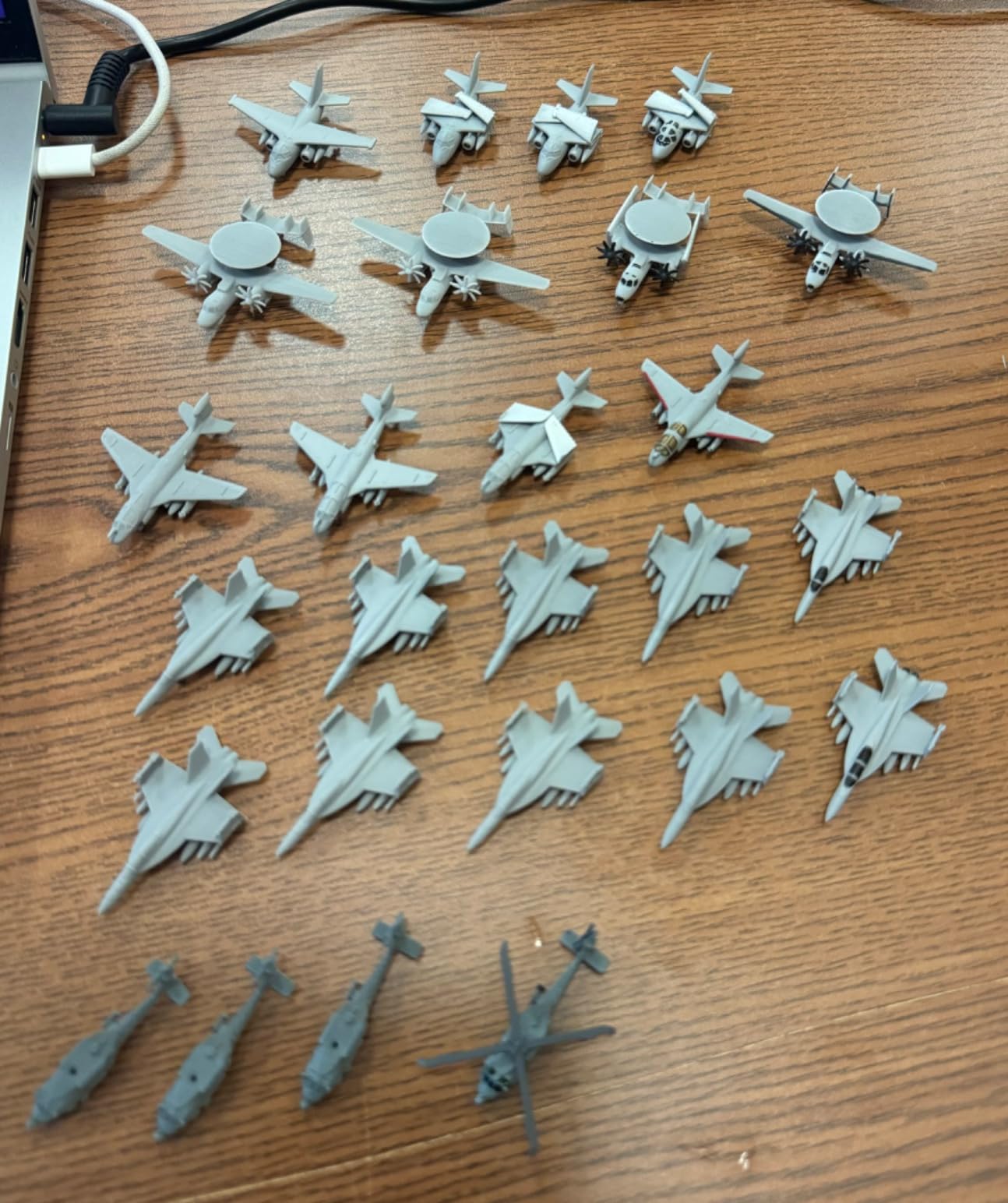
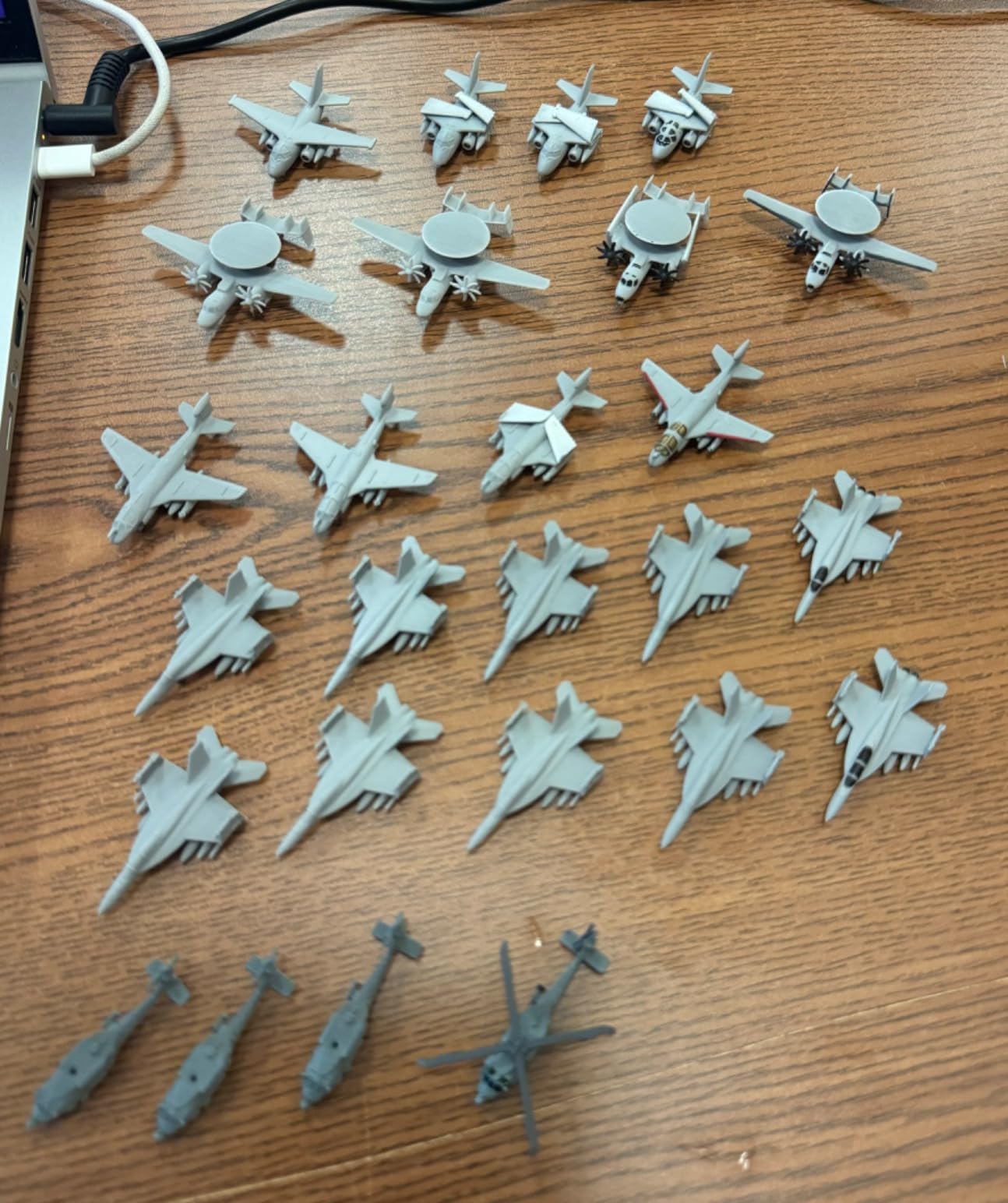
Helicopters are often forgotten on carrier decks, but every modern carrier has a few Seahawks parked near the island. This resin set includes five helicopters in 1:400 scale, and they are the best rotary-wing replacements I have tested.
The 49mm length is perfect for the scale, and the rotor hub detail is surprisingly sharp.
I built two of these for my 1:400 USS Nimitz experiment, and they added a completely different silhouette to the deck. Fighters and jets all look similar from above, but a helicopter breaks the pattern.
The tail rotor is molded as a separate piece, and I recommend gluing it after painting the fuselage to avoid breaking it during handling.
The resin is smooth and the parts are thin. The main rotor blades are delicate, so I painted them while they were still attached to the sprue, then cut them free and glued them in place.
This avoids handling the thin blades too much. The finished look is worth the extra care.
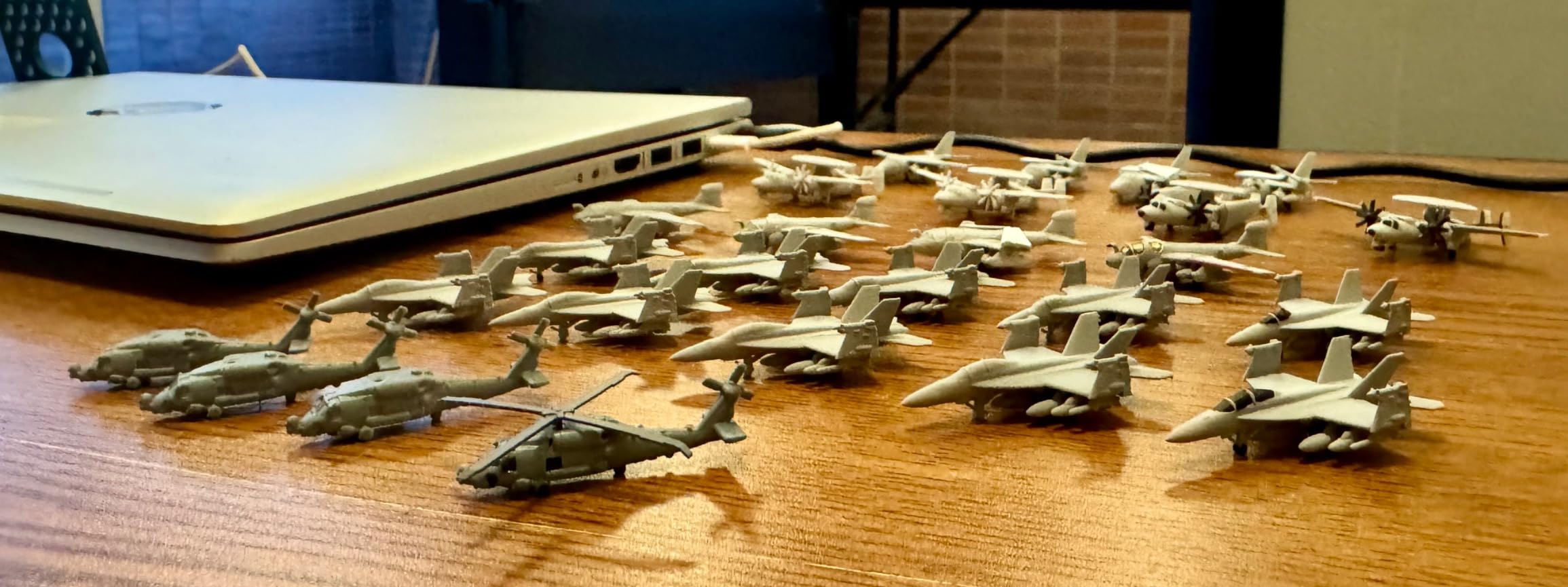
The customer photos on this listing show painted examples, and they match what I achieved. I used a dark gray base with black rotor blades, and the helicopters look purposeful on the deck.
The detail is good enough that you can see the side windows if you look closely, which is impressive at this size.
Helicopter Placement on Carriers
On a real carrier, Seahawks park near the island or on the stern flight deck. I placed mine in those exact spots on my model, and the layout looks authentic.
The smaller footprint of a helicopter means you can tuck them into spaces that would not fit a fighter. I used one on the elevator and one on the landing area, and both positions looked natural.
Helicopters also work well for rescue and plane guard scenarios. I built one of mine with the rescue hoist visible, which adds a story to the diorama.
Viewers always notice the helicopter first because it is unexpected, and that makes it a great conversation piece.
Customization Potential
The smooth resin surface is perfect for adding small details. I used thin wire to create antenna masts on two of my Seahawks, and the result is a noticeable improvement.
You can also drill out the side windows and replace them with clear film if you want to go all out. The resin is thick enough to support this kind of work without breaking.
I painted one of mine in the gray and white search-and-rescue scheme, and the smooth surface made masking easy. The other four are in standard tactical gray.
The variety adds visual interest to the deck. I would recommend keeping one in a special scheme just to break up the monotony.
11. F-14 Battle-Plane Resin Model (1/700)
10PCS 1/2000-1/350 Scale Military Model F-14 Battle-Plane Resin Mould Model Carrier Borne Aeroplane for DIY Plane Display Collection(1/700(27mm))
1:700 scale
27mm length
3D printed resin
10 pieces included
Pros
- High-quality 3D printing
- Precise details
- Rewarding assembly
Cons
- Limited reviews available
The F-14 Tomcat in 1:700 scale is a challenge for any manufacturer. The swing-wing shape and long nose are hard to capture when the whole model is under 30mm long.
This 3D-printed resin set does it better than I expected. The 27mm length is correct, and the wings are thin enough to look realistic without being fragile.
The set includes ten aircraft, which is generous. I used six on a 1:700 USS Enterprise and had four left over for future projects.
The resin is consistent across all ten, with no variation in quality. I have seen resin sets where the first few pieces are perfect and the rest are degraded, but these are uniform.
Assembly is simple. Each Tomcat is a fuselage with two wings and a tail.
The wings have a positive fit at the root, so the sweep angle is correct without adjustment. I built mine with wings swept back for the parked look, which is the most common configuration on a carrier deck.
The gear legs are small but molded with enough bulk to survive painting.
Cold War Carrier Air Wings
The F-14 defines the late Cold War carrier air wing. If you are building a 1970s through 1990s carrier, you need Tomcats.
This set is perfect for that era. I used mine on a 1986 USS Enterprise display, and the all-Tomcat fighter squadron looks aggressive and correct. The long fuselage is distinctive even at 1:700.
For a complete air wing, pair these with A-6 Intruders, A-7 Corsairs, and E-2 Hawkeyes. The F-14s should make up two squadrons on a typical Cold War deck.
I used ten Tomcats, six Intruders, and four support aircraft, and the mix felt right based on photos I found in reference books.
Size and Proportion
At 1:700, the Tomcat is still one of the largest aircraft on the deck. The long nose and wide wingspan give it presence.
I placed mine on the bow catapults for the launch photos, and the proportions look right against the deck markings. The 27mm length is a good match for the Hasegawa water line series, and the two brands work together on the same deck.
The thin wings are the standout feature. At this scale, many manufacturers thicken the wings to prevent breakage, but these stay thin.
The result is a Tomcat that looks like it could fly, not like a toy. The resin is tough enough to support the thin sections without constant repairs.
12. E-2C Hawkeye Resin Model (1/2000)
5PCS DIY Model 1/2000-1/350 Scale E-2C Hawkeye Shipborne Early Warning Aircraft Resin Military Model DIY Miniature Mould Collection(1/2000(7mm))
1:2000 scale
7mm length
3D printed resin
5 pieces included
Pros
- High-quality 3D printing
- Precise details
- Rewarding assembly
Cons
- Limited reviews available
The E-2C Hawkeye is the unsung hero of every carrier deck. This early warning aircraft is instantly recognizable by its radar dome, and this 1:2000 resin set captures that silhouette perfectly.
The 7mm length makes it the smallest model in our guide, but the radar dome is unmistakable. I placed five of them on a 1:2000 base and they immediately read as Hawkeyes.
The resin is smooth and the dome is molded as a single piece with the fuselage. There is no seam to clean up, which is a relief because a seam on a round dome is hard to hide.
The wings are thin and straight, and the four propeller blades are distinct. I painted the dome in dark gray and the fuselage in light gray, and the contrast looks right.
The set includes five aircraft. I used three on my micro-carrier and two on a display stand labeled as a shore base.
The detail is good enough that you can see the wing shape and the H-tail configuration. I did not expect to recognize an aircraft type at 7mm long, but the proportions are that accurate.
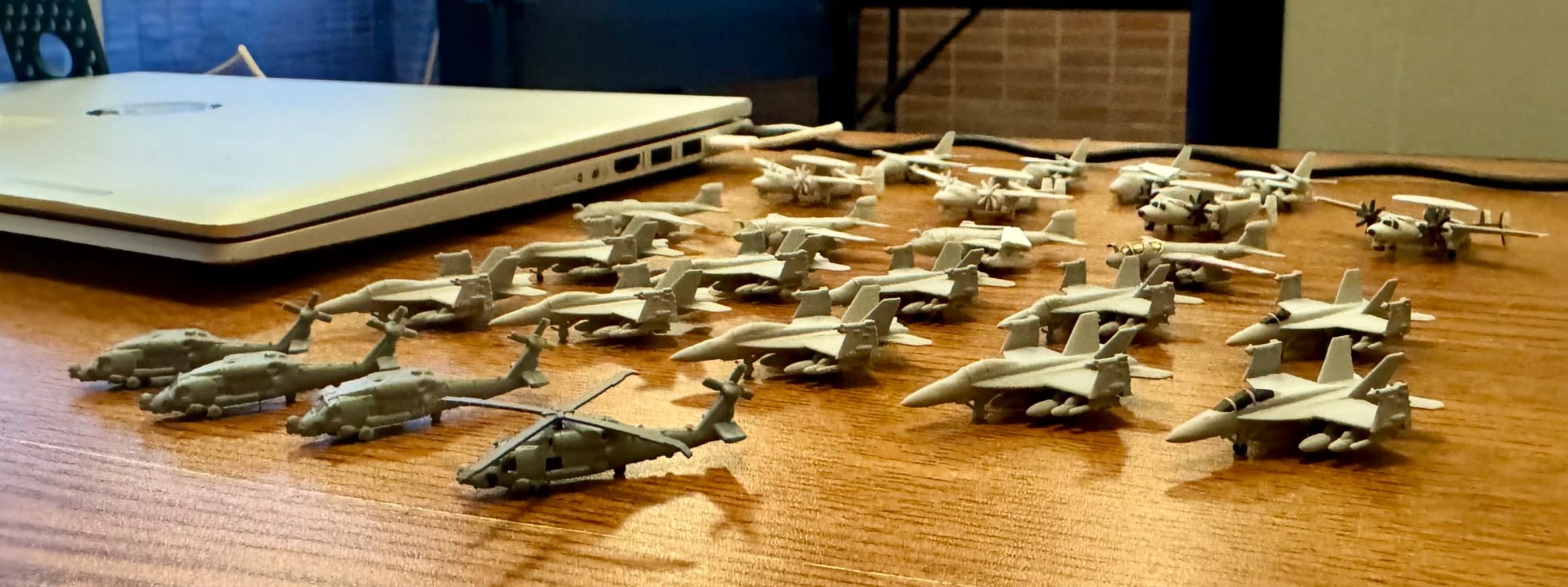
Customer photos show painted examples that look sharp. I followed the same approach: a light gray base, dark gray dome, and black propellers.
The resin takes a wash well, so I added a thin black wash to the panel lines and it brought out the detail without overwhelming the tiny model.
Early Warning Aircraft Display
The Hawkeye is essential for any modern carrier deck. I place mine near the bow or on the angled deck, which is where they typically park.
The radar dome makes them visible from any angle, so they add interest to parts of the deck that might otherwise look empty. I used one on the elevator for a maintenance scene, and it worked well.
On a 1:2000 deck, these are best used in groups. A single Hawkeye might get lost, but three parked together create a visual cluster that draws attention.
I arranged mine in a loose line near the island, and the repeated dome shape creates a nice rhythm on the deck.
Small Scale Detail
The 3D printing quality is impressive at this size. The propeller hubs are visible, and the wing fences are present.
I did not expect to see wing fences on a 7mm model, but they are there. The surface is smooth enough that a single coat of primer covers everything evenly.
I used a rattle-can primer from a distance of about 12 inches to avoid flooding the details with paint.
These are fun to build because they go together so quickly. I finished all five in one evening, including painting and decaling.
The quick turnaround is satisfying, especially if you are used to larger models that take weeks. I would recommend this set for anyone who wants a fast project with a big visual payoff.
How to Choose Resin Replacement Aircraft for Carrier Kits?
After testing twelve sets across four scales, I have a clear idea of what matters when you are shopping for replacements. The first factor is scale.
Your aircraft must match the scale of your carrier kit, or the deck will look wrong. A 1:350 aircraft on a 1:700 carrier looks like a giant toy, and a 1:700 aircraft on a 1:350 carrier disappears.
I always check the scale twice before ordering.
The second factor is era. A WWII carrier needs propeller aircraft like the F6F Hellcat, while a modern carrier needs jets like the F/A-18 or F-35.
Mixing eras is a common mistake that ruins historical accuracy. I keep a reference chart of carrier classes and their service periods, and I match my aircraft to the same time frame.
Third, consider material. Traditional injection-molded plastic kits like the Trumpeter sets are forgiving, easy to paint, and widely available.
3D-printed resin sets like the AGSDGAWD line offer sharper detail and multi-scale options, but they require careful handling and proper ventilation when sanding. I use both materials, but I recommend beginners start with plastic.
Fourth, think about quantity. A typical carrier deck needs between ten and twenty aircraft to look busy.
Some sets include six aircraft, while others include five or ten. Check the box count and calculate how many boxes you need before you start building.
I have made the mistake of underestimating, and waiting for a second shipment is frustrating when you are in the middle of a project.
Finally, budget matters. The sets in this guide cover a wide range of budgets.
The Italeri deck section is the largest investment, but it is a display base, not just aircraft. The resin sets are the most affordable per aircraft, but the limited reviews mean you are buying with less community feedback.
I balance cost with risk by mixing proven plastic sets with one or two resin experiments.
Frequently Asked Questions
What are the best resin replacement aircraft for carrier kits?
The best options depend on your scale and era. For 1:350 WWII builds, the Trumpeter F6F Hellcat set is the top-rated choice. For modern 1:350 carriers, the Trumpeter F/A18C Hornet set offers the best value. For 3D-printed resin alternatives, the AGSDGAWD F-35C and F-14 sets bring sharp detail in multiple scales from 1:2000 to 1:350.
How do I choose the right scale resin aircraft for my carrier model?
Match the aircraft scale exactly to your carrier kit scale. Most carrier kits are 1:350, 1:700, or 1:720. A 1:350 aircraft belongs on a 1:350 carrier deck. If you are unsure, check the box art or instructions of your carrier kit for the stated scale, then order aircraft with the same ratio.
Are resin aircraft worth the extra cost over plastic kit parts?
Yes, if detail matters to your build. Stock plastic aircraft in carrier kits are often simplified with thick wings and soft panel lines. Resin replacements and high-quality aftermarket sets like the Trumpeter aircraft lines offer correct proportions, better surface detail, and a more realistic finished appearance that stands out in display and competition.
Which carrier classes work with 1:350 scale aircraft sets?
The 1:350 scale is the most popular carrier scale, and it works with Trumpeter Nimitz-class, Ford-class, Essex-class, and many other carrier kits. The Trumpeter aircraft sets in this guide are designed for 1:350 USN carriers, so they fit naturally on Trumpeter carrier decks and most other brands of the same scale.
How do I paint and detail resin aircraft for carrier dioramas?
Wash resin parts in warm soapy water first to remove oils. Prime with a light gray or white primer, then apply acrylic paints in thin coats. Use a soft pencil or fine blade to add panel lines if they get sanded away. For clear canopies, mask the frames and paint carefully. Finish with a gloss coat before applying decals, then seal with a flat or satin varnish.
Final Recommendations
If I had to pick one set to buy today, it would be the Trumpeter 1:350 F6F Hellcat. The reviews, the ease of painting, and the historical versatility make it a no-brainer for any WWII carrier project.
For modern builds, the F/A18C Hornet set is the smartest purchase. It is affordable, detailed, and proven by hundreds of builders.
The 3D-printed resin options are exciting for 2026. I will be watching this space closely because the quality is improving fast.
The SH-60 Seahawk and E-2C Hawkeye sets are already good enough to use on display models, and they fill gaps that traditional kit makers ignore.
No matter which set you choose, replacing the stock aircraft in your carrier kit is the best upgrade you can make. The best resin replacement aircraft for carrier kits are the ones that match your scale, your era, and your budget.
Start with the comparison table above, pick a set that fits your build, and enjoy the difference a better aircraft makes on your flight deck.