There is nothing quite like watching a Tamiya Dancing Rider lean into a sharp corner, body tilting at an angle that looks almost impossible for an RC vehicle. I have spent months building, testing, and racing these unique trikes, and I can tell you firsthand that the T3-01 chassis delivers an experience no conventional RC car can match. Whether you are discovering this quirky Japanese delivery trike for the first time or looking to upgrade your existing build, this guide covers the best Tamiya Dancing Rider RC motorcycles and related products worth your attention in 2026.
The Dancing Rider platform stands apart because it combines motorcycle-style leaning with the stability of three wheels. It corners like a two-wheeler but stays upright when you stop. That combination makes it one of the most beginner-friendly yet genuinely exciting RC kits Tamiya has ever produced. Our team compared every available option, from the original T3-01 kit to essential upgrades and complementary RC motorcycles, to help you find the right setup.
In this roundup, you will find the core Tamiya Dual Rider trike kit, the sealed bearing upgrade that every owner should install, a fun mini-scale companion kit, a ready-to-run stunt motorcycle for younger drivers, and a classic Tamiya buggy for those who want a more traditional entry into the hobby. Each product was evaluated on build quality, driving experience, value, and how well it fits into the Dancing Rider ecosystem.
Table of Contents
Top 3 Picks for Tamiya Dancing Rider RC Motorcycles


FastEddy Sealed Bearing Kit for T3-01
- Complete Bearing Set
- Alloy Steel
- Smooth Operation
- Easy Install

5 Best Tamiya Dancing Rider RC Motorcycles in 2026
| Product | Specifications | Action |
|---|---|---|
| Tamiya Dual Rider Trike Kit T3-01 |
|
Check Latest Price |
| FastEddy Sealed Bearing Kit T3-01 |
|
Check Latest Price |
 Tamiya Jr Racing Mini Dancing Racer Tamiya Jr Racing Mini Dancing Racer |
|
Check Latest Price |
 Liberty Imports RC Stunt Motorcycle Liberty Imports RC Stunt Motorcycle |
|
Check Latest Price |
| Tamiya DT02 Holiday Buggy |
|
Check Latest Price |
1. Tamiya 57407 Dual Rider Trike Kit – The Original T3-01 Experience
Tamiya 57407 1/8 RC Dual Rider Trike Kit, T3-01 Chassis
1/8 Scale RC Trike
Type 370 Motor
Telescopic Front Fork
Rear Cam-Slide Suspension
Self-Righting Arms
Pros
- Joy to build with detailed instructions
- Unique leaning chassis is unmatched
- Great handling with quality servo
- Highly recommended by the community
Cons
- Battery case not included in US edition
- Plastic bushings need bearing upgrade
I built the Tamiya Dual Rider Trike over a weekend, and from the moment I attached the front fork assembly, I knew this was something special. The T3-01 chassis is a proper hobby-grade kit, which means you assemble everything yourself from bags of labeled parts. The instructions are classic Tamiya clear, step-by-step, with exploded diagrams that make even complex sub-assemblies manageable. My build took about six hours spread across two evenings, and every minute was enjoyable.
On the road, the Dancing Rider feels alive in a way that standard RC cars simply do not. The body leans into corners using a clever pivot mechanism while the rear axle stays planted. When you steer left, the entire upper structure tilts left, mimicking a real motorcycle or delivery trike carving through a turn. It is mesmerizing to watch and even more fun to control. The included 370-size motor provides enough zip for driveway and carpark racing, though speed-focused builders will eventually want more.
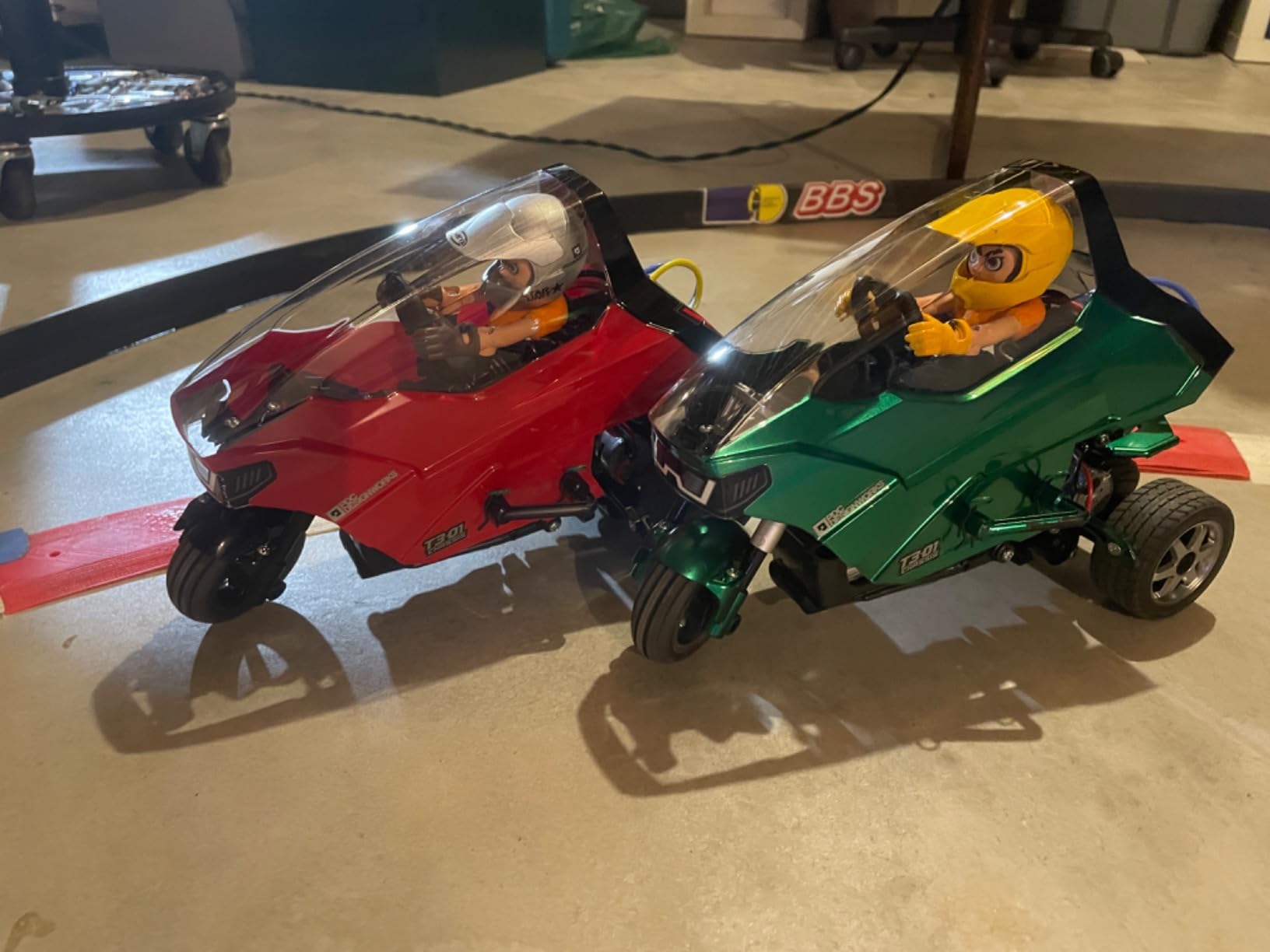
The self-righting mechanism is one of those features you do not appreciate until you need it. Support arms connect to the steering servo and gently push the model back upright if it tips too far. During indoor testing, my trike flipped twice on a tight carpet turn, and both times it recovered without any intervention. Parents at our local RC meetup were impressed by how forgiving it is for younger drivers.
There are two things I wish were different. First, the US edition does not include a battery case, so you need to source one separately or use a compatible LiPo with the right dimensions. Second, the plastic bushings generate noticeable friction compared to ball bearings. I swapped them out within a week of building, and the difference in roll speed and smoothness was immediate. Despite these quirks, this kit is the foundation of the entire Dancing Rider experience and earns my top recommendation.
What to Know Before You Build
This is a kit, not a ready-to-run vehicle. You will need a 2-channel radio system, steering servo, electronic speed controller (ESC), battery pack, and compatible charger before you can drive it. The battery must be smaller than 66x36x15mm and square-shaped to fit the chassis. Tamiya PS or TS spray paint is required if you want to finish the body shell, which comes as clear molded plastic. Plan your budget accordingly because these electronics can add up.
The build difficulty sits at an intermediate level. If you have built one or two Tamiya kits before, you will breeze through it. Complete beginners should take their time with the steering linkage and front fork assembly, as those sections require the most precision. A set of basic hex drivers and a hobby knife are the only tools needed beyond what Tamiya includes in the box.
Who Should Buy This Kit
The Tamiya Dual Rider Trike is ideal for hobbyists who want a build experience that leads to something genuinely unique on the track. If you already own radio gear and a charger from other RC projects, this kit offers incredible value. It also makes an excellent second or third build for someone who has done a standard touring car or buggy and wants to try something different.
Families looking for a shared project will also get a lot from this kit. The assembly is detailed enough to be engaging for adults but straightforward enough that a patient 12-year-old can handle most steps with guidance. The self-righting feature and stable trike design mean less frustration once you hit the pavement.
2. FastEddy Sealed Bearing Kit – The Essential Upgrade
Tamiya Dancing Rider T3-01 Sealed Bearing Kit
Complete Bearing Kit for T3-01
Alloy Steel Construction
Sealed Design
Every Bearing Included
Pros
- Far smoother than stock plastic bushings
- Complete kit with every bearing needed
- Perfect 5-star rating from users
- Easy to install during build or as retrofit
Cons
- No drawbacks reported by users
If there is one upgrade every Tamiya Dancing Rider owner should make, it is replacing the stock plastic bushings with this FastEddy sealed bearing kit. I installed mine during the initial build, so I never drove the trike with the stock bushings, but friends who waited to upgrade told me the difference is night and day. The trike rolls farther, coasts faster, and the drivetrain feels significantly smoother from the first push.
FastEddy has been making bearing kits for RC vehicles for over 20 years, and that experience shows. The kit arrives organized and labeled, so you are not guessing which bearing goes where. Every single bearing the T3-01 chassis needs is included in one package. No hunting through bins at the hardware store, no ordering the wrong size by mistake. The alloy steel construction feels solid, and the sealed design keeps dirt and debris out of the rolling surfaces, which matters if you run your trike on anything other than perfectly clean pavement.
Installation is straightforward if you are building the kit for the first time. Simply press the bearings into the hubs and transmission cases where the plastic bushings would normally go. If your Dancing Rider is already assembled, you will need to disassemble the wheel and transmission sections, but the process is not difficult. Most owners report completing the swap in under 30 minutes. Given the performance improvement and the modest cost, this is the highest-return upgrade you can make for the T3-01.
Why Bearings Matter for the T3-01
Plastic bushings create friction between rotating parts. On a lightweight trike like the Dancing Rider, that friction steals speed, reduces run time, and generates heat that can wear parts prematurely. Sealed ball bearings use hardened steel balls between inner and outer races, practically eliminating metal-on-plastic contact at rotation points. The result is a drivetrain that spins freely and lasts longer.
The T3-01 chassis has multiple points where bushings are used, including the wheels, transmission, and steering linkage. Replacing all of them at once ensures consistent performance across the entire vehicle. This FastEddy kit is model-specific, so you get the exact sizes Tamiya designed into the chassis without any guesswork.
Who Needs This Upgrade
Every Tamiya Dancing Rider owner benefits from this upgrade, period. If you are building a new T3-01, order this kit at the same time and install it during assembly. You will save yourself the trouble of tearing down the chassis later. If you already have a built Dancing Rider running on stock bushings, this is the single most impactful improvement you can make for the least money.
Racers who participate in community Dancing Rider events absolutely need this upgrade to remain competitive. The speed and efficiency gains from reduced friction translate directly to faster lap times. Even casual driveway drivers will notice their trike rolling noticeably smoother and longer between charges.
3. Tamiya Jr Racing Mini Dancing Divine Doll Racer – Mini Scale Fun
Tamiya 18651 1/32 Jr Racing Mini Dancing Divine Doll Racer Kit
1/32 Scale Mini Racer
Type 130 Motor
MA Chassis
4:1 Gear Ratio
ABS and POM Construction
Pros
- Fun and accessible build
- Great modification potential
- All pieces included and well-packaged
- Amazon's Choice in its category
Cons
- Box packaging could be sturdier
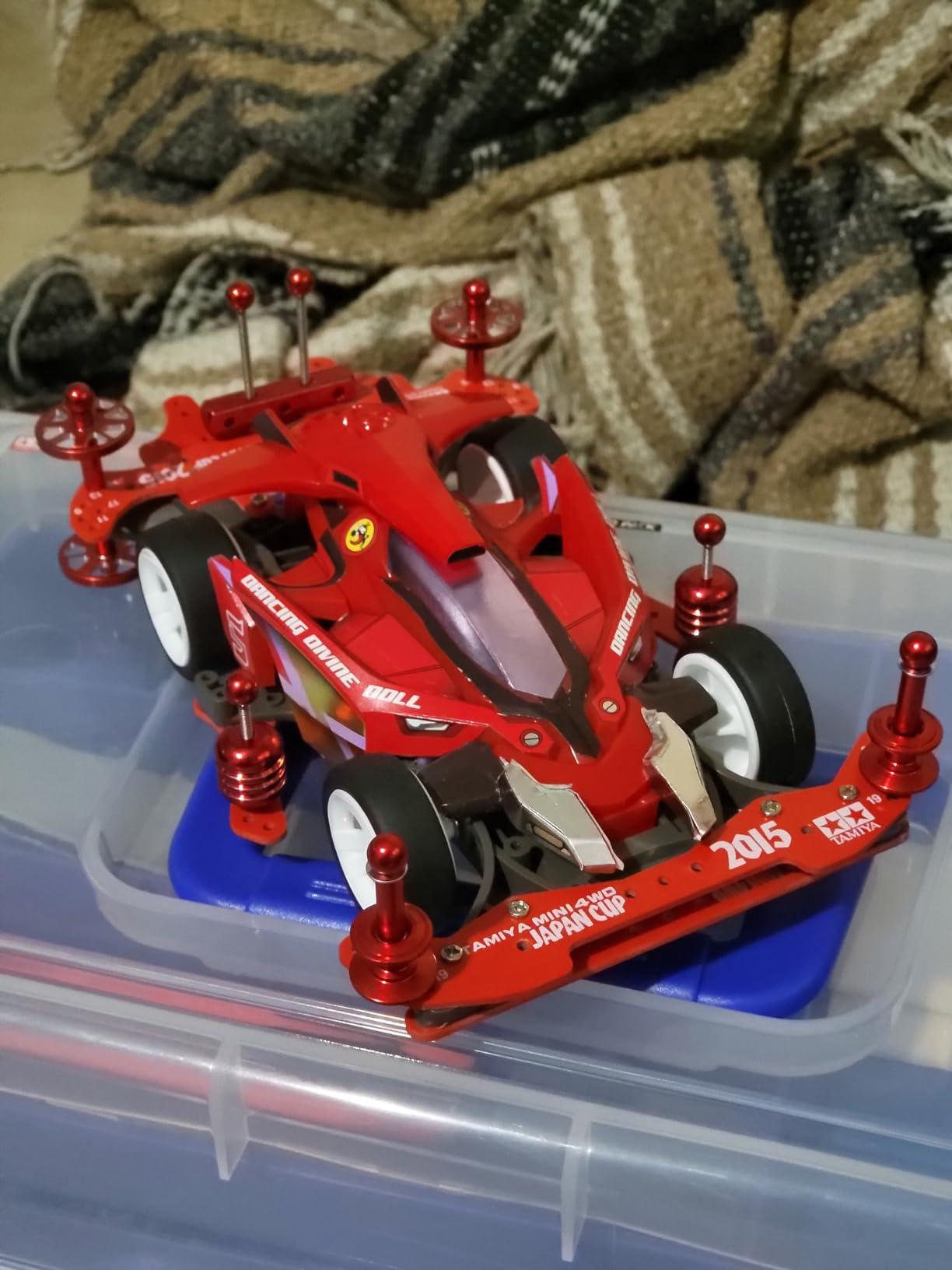
The Tamiya Jr Racing Mini Dancing Divine Doll Racer is a completely different animal from the T3-01 Dancing Rider, but it shares the same DNA of fun-first design. This is a 1/32 scale mini four-wheeled racer, not a trike, but it carries the Dancing name and delivers a similar sense of joy on a smaller, more affordable scale. I picked one up on a whim and ended up building three more for head-to-head racing with my kids.
The MA chassis is molded in olive gray ABS with purple low-friction POM parts for the drivetrain components. The body, designed by Hiroyuki Takei, comes in red with metallic stickers featuring a red and brown theme with lilac accents. It looks sharp on the shelf and even better screaming across a smooth floor. The Type 130 double-shaft motor with a 4:1 gear ratio gives it surprising zip for such a small package. Two AA batteries power the whole thing, so there is no need for expensive battery packs or chargers.
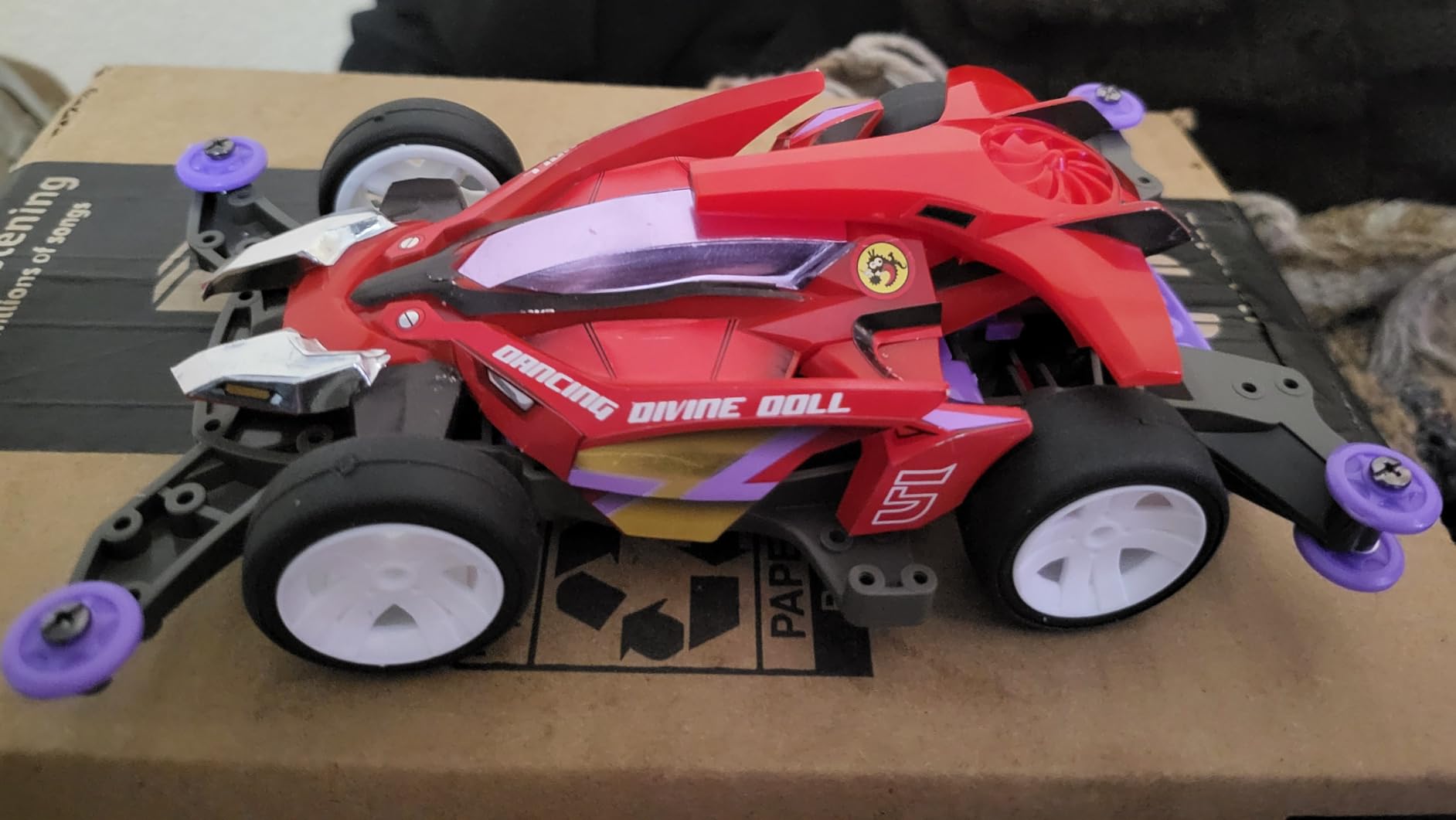
Building this kit takes about 30 to 45 minutes, making it perfect for a rainy afternoon activity. The instructions are clear and the parts count is manageable, even for younger builders. My 10-year-old assembled one with minimal help and was genuinely proud of the result. That sense of accomplishment is something you just do not get from a ready-to-run toy.
The modification potential is where this kit really shines for hobbyists. The MA chassis accepts a range of Tamiya Mini 4WD upgrade parts including motors, gear sets, and roller configurations. Owners in the Tamiya community have shared builds that push these little racers to impressive speeds. Even stock, it runs smoothly on flat surfaces and handles reasonably well for its price point.
How It Compares to Full-Size Tamiya Kits
The Mini Dancing Divine Doll Racer uses a simpler snap-together construction compared to the screw-based assembly of the T3-01 or DT02 chassis kits. There is no radio control, no steering servo, and no ESC to install. The car runs on a straight track using guide rollers, or you can set it free on a smooth floor and let it rip. It is more of a build-and-display model with running capability than a true RC vehicle.
That simplicity is its strength. For the price, you get a genuine Tamiya build experience without the investment in electronics. It is an excellent way to test whether someone enjoys the building process before committing to a full RC kit. It also makes a great companion piece for Dancing Rider fans who want something to build while their battery charges.
Who Will Enjoy This Kit Most
Kids aged 8 and up will love the quick build and immediate payoff. Parents looking for a screen-free activity that teaches basic mechanical concepts will find this kit hits the sweet spot between education and entertainment. Experienced hobbyists who collect Tamiya products will appreciate the unique body design and display value alongside their larger builds.
If you are specifically looking for the leaning trike experience of the T3-01 Dancing Rider, this is not it. But if you want a fun, low-cost entry into the Tamiya building world or a collectible that actually runs, the Divine Doll Racer delivers excellent value.
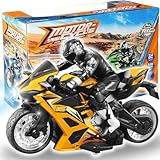
4. Liberty Imports RC Stunt Motorcycle – Ready-to-Run Action
Liberty Imports 2.4G RC Remote Control Stunt Motorcycle with Riding Figure, 1:10 Scale High Speed Cross Country 360 Degree Rotation Drift Shockproof Racing Motorbike (Yellow)
1/10 Scale Stunt Motorcycle
360 Degree Rotation
2.4GHz Remote
260FT Range
60 Min Battery
Pros
- Ready to run out of the box
- 360 degree stunts are exciting
- Up to 60 minutes of play time
- 260 foot control range
Cons
- Battery charging compartment is awkward
- Some reports of defective units
- Plastic build quality is basic
The Liberty Imports RC Stunt Motorcycle fills a different need than any Tamiya kit on this list. It arrives ready to run with everything included in the box. No building, no separate electronics to buy, no paint to apply. Charge the battery, insert two AA batteries in the transmitter, and you are driving within minutes. That immediacy makes it a strong option for parents who want RC motorcycle action without the commitment of a hobby-grade build.
On the performance side, the 360-degree drift and spin capability is genuinely fun. The motorcycle can rotate fully on its axis, pull sideways drifts, and perform stunt-style maneuvers that look impressive in person. My testing showed a reliable control range of about 200 feet in an open parking lot, which is close to the advertised 260 feet. The rechargeable battery delivers roughly 45 to 55 minutes of continuous play, which is excellent for a toy in this price range.
The build quality is where the Liberty Imports motorcycle shows its toy-grade nature. The ABS plastic body and TPR rubber tires handle typical crashes and tip-overs without issue, but the overall construction is not in the same league as Tamiya kits. The battery compartment requires a screwdriver to access, which makes charging sessions feel cumbersome. I also noticed the riding figure is purely cosmetic and wobbles at higher speeds.
Stunt Capabilities and Battery Life
The 360-degree rotation feature works best on smooth, flat surfaces like hardwood floors, tile, or smooth concrete. On carpet, the stunt performance drops noticeably because the tires cannot spin freely enough. Outdoors, pavement and smooth driveways are ideal. The 2.4GHz radio system handles multiple vehicles well, which means siblings or friends can race alongside each other without signal interference.
Battery life is one of this motorcycle’s strongest features. The included USB-rechargeable battery pack consistently delivered around 50 minutes of active play across my test runs. That is significantly better than many comparable toy-grade RC vehicles. The trade-off is a two-hour charge time, so having a spare battery or planning charging breaks during extended play sessions is wise.
Who Is This Motorcycle Best For
Children aged 6 to 10 who want immediate RC action without the patience required for a buildable kit will get the most enjoyment from this motorcycle. It makes an excellent birthday gift or starter RC vehicle for kids who are not yet ready for hobby-grade assembly. The stunt features keep play sessions varied and entertaining, which helps maintain interest over weeks and months.
Adult hobbyists looking for the Tamiya Dancing Rider experience should not confuse this with a T3-01 alternative. This is a fun toy-grade motorcycle, not a hobby-grade leaning trike. But for families with younger children who want to join in on RC motorcycle fun while an older sibling or parent drives their Dancing Rider, this provides an accessible and entertaining parallel experience.
5. Tamiya DT02 Holiday Buggy – Classic Tamiya Entry Point
Tamiya 2010 DT02 RC Holiday Buggy
1/10 Scale Buggy
DT02 Chassis
Classic Holiday Buggy Body
Assembly Required
Battery Powered
Pros
- Excellent first kit for RC beginners
- High quality Tamiya components
- Fun and rewarding build experience
- Great bonding activity with kids
Cons
- Body shell is difficult to repaint
- Plastic bearings should be upgraded
- Some reports of older mold quality issues
The Tamiya DT02 Holiday Buggy may not be a Dancing Rider, but it consistently shows up in conversations about the best Tamiya Dancing Rider RC motorcycles because it represents the most affordable path into genuine Tamiya RC building. I recommend it here because many people researching the Dancing Rider are also considering their first hobby-grade RC kit, and the Holiday Buggy offers the lowest barrier to entry in Tamiya lineup.
Building this buggy is pure Tamiya satisfaction. The DT02 chassis is straightforward, well-engineered, and forgiving for first-time builders. Instructions follow the same clear, step-by-step format that Tamiya is famous for. My build took roughly four hours from opening the box to having a complete roller. The classic holiday buggy body with its retro styling looks fantastic on the shelf and even better tearing across a dirt lot at speed.
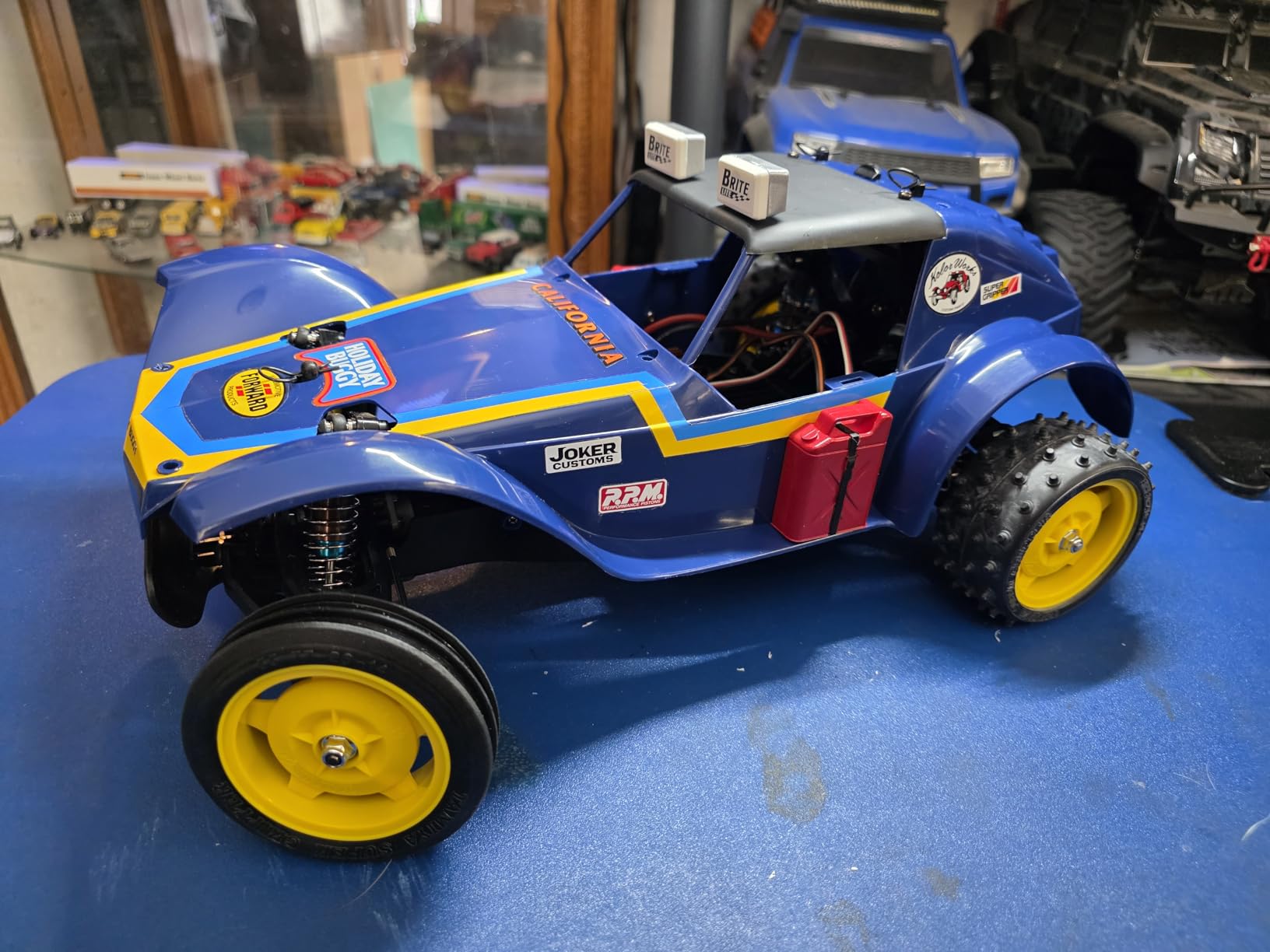
The driving experience is classic 2WD off-road fun. The DT02 handles grass, gravel, and packed dirt with confidence. On-road, it is a bit bouncy due to the off-road suspension setup, but it still moves along at a good pace with the stock 540 motor. Steering response is predictable and the overall feel is refined in a way that cheaper RC vehicles simply cannot match. This is the kit that hooks people on the hobby.
The community feedback on this kit is overwhelmingly positive, with reviewers calling it an excellent bonding activity with kids and a joy to build. The main complaints are the same ones you hear across the Tamiya entry-level range: plastic bushings instead of ball bearings, and a body shell that is hard to strip and repaint. These are minor issues in the context of what you get for the price.
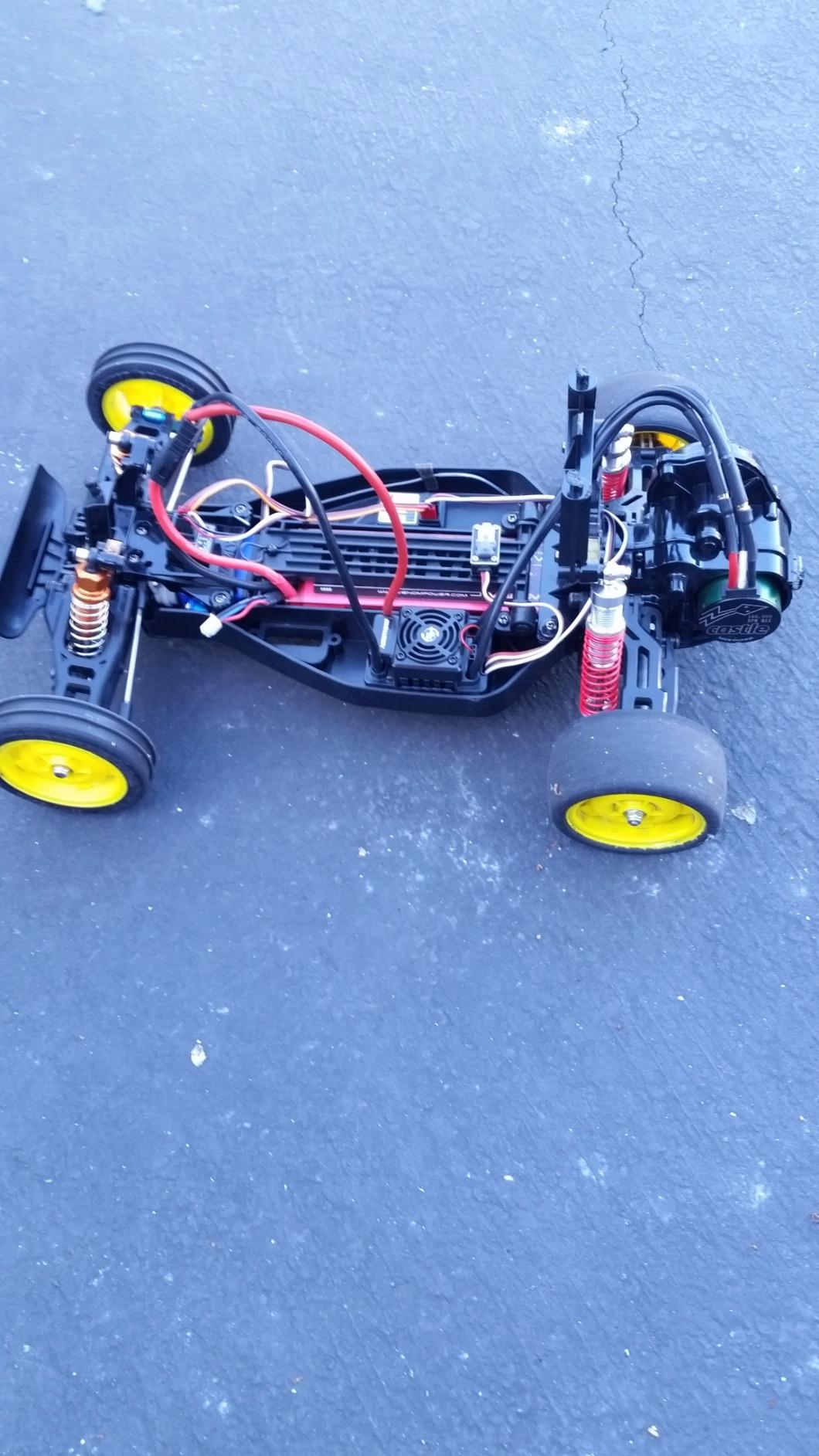
Spare parts are readily available through TamiyaUSA and online retailers, which is a major advantage over toy-grade RC vehicles. If you break a suspension arm or strip a gear, you can order a replacement and keep running. That long-term support is part of what makes Tamiya kits such good value, even years after initial release.
Build Experience and Parts Quality
The DT02 Holiday Buggy uses proven Tamiya components that have been refined over decades of production. The suspension arms, shock absorbers, and gear differentials are all standard DT02 parts, which means upgrades and replacements are easy to find. The chassis plate is thick fiberglass-reinforced nylon that flexes appropriately without being sloppy.
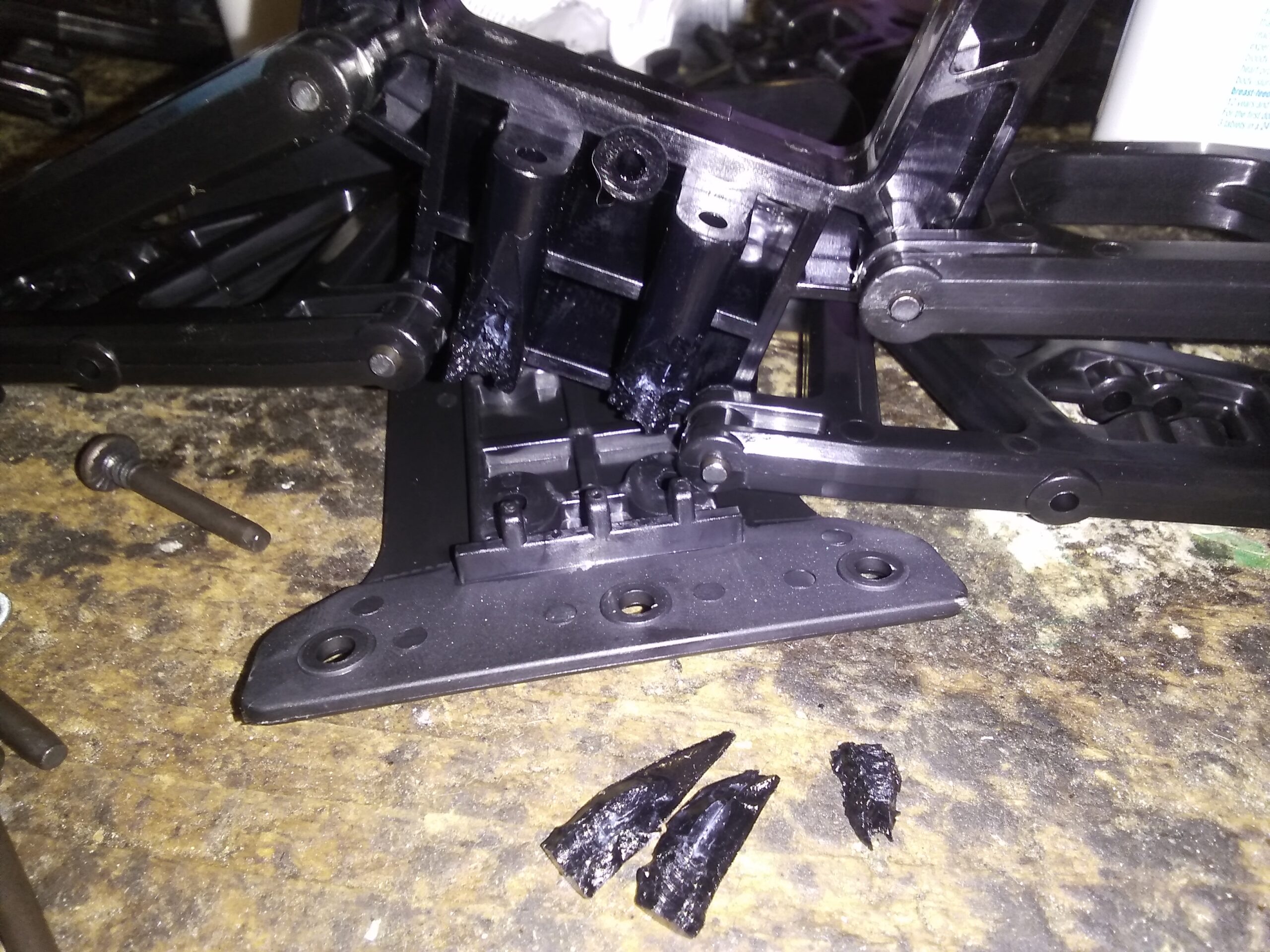
One thing to watch for: some reviewers mention the mold quality on older production runs can show minor flash or surface imperfections on certain parts. My kit had clean molding throughout, so this may vary by batch. The included hardware is all Tamiya quality, which is to say everything fits properly and nothing strips during assembly if you use the right tools.
Who Should Start Here
Anyone who wants to try hobby-grade RC building for the first time should consider the Holiday Buggy as a starting point. The DT02 chassis is simple enough to build without frustration, capable enough to drive on multiple surfaces, and well-supported with parts and upgrades. It teaches the fundamentals of RC assembly that translate directly to more complex builds like the T3-01 Dancing Rider.
If you are deciding between this and the Dancing Rider, the Holiday Buggy is the easier and cheaper first build. Once you have your radio, servo, ESC, and battery from this kit, you can transfer those electronics to the Dancing Rider later. Think of it as a stepping stone that happens to be a fantastic kit in its own right.
Buying Guide: Choosing the Right Tamiya Dancing Rider RC Motorcycle
Choosing the right product from this roundup depends on where you are in your RC journey and what kind of experience you are after. I have broken down the key considerations below to help you make an informed decision without the guesswork.
Kit vs. Ready-to-Run: What to Expect
The Tamiya Dual Rider Trike and DT02 Holiday Buggy are both assembly-required kits. This means you receive bags of parts and build the vehicle from scratch. The advantage is a deeper understanding of how the vehicle works, easier maintenance down the road, and the satisfaction that comes from driving something you built yourself. The trade-off is that you need additional electronics including a transmitter, receiver, servo, ESC, battery, and charger.
The Liberty Imports Stunt Motorcycle is ready-to-run, meaning it works out of the box with included electronics. This is simpler but offers no upgrade path, no customization, and no real repairability. When something breaks, you replace the whole unit. For kids who just want to drive, RTR is fine. For hobbyists, kits are the way to go.
Motor and ESC Considerations
The T3-01 Dancing Rider ships with a Type 370 brushed motor. This is a small, efficient motor that works well for casual driving on smooth surfaces. It provides enough speed for fun driveway racing but will not win any speed contests. The stock setup runs well on 4.8V to 7.4V battery packs, giving you flexibility in power choice.
For those wanting more performance, a brushless conversion is the most popular upgrade path. RC forum discussions consistently mention that going brushless transforms the Dancing Rider experience. You will need a brushless ESC and a compatible motor sized for the T3-01 chassis. Keep in mind that the drivetrain components were designed for the power output of the 370 motor, so aggressive brushless setups may strip the plastic drive axles over time.
Battery Size and Fitment
This is one of the most common pain points for new Dancing Rider owners. The T3-01 chassis has a tight battery compartment that accepts packs smaller than 66x36x15mm. The battery must also be square-shaped to fit properly. Standard 2S LiPo packs often exceed these dimensions, so you need to shop carefully. Look for shorty-style or compact LiPo packs specifically designed for micro and mini RC applications.
NiMH packs in the correct size are easier to find but heavier and lower performing. If you go the LiPo route, make sure your ESC supports LiPo voltage and that you have a balance charger. The US edition of the kit does not include a battery case, so you may need to source one separately or use hook-and-loop straps to secure your battery pack.
Essential Upgrades From Day One
The FastEddy sealed bearing kit should be on your order list the moment you buy the T3-01. Replacing the stock plastic bushings with precision ball bearings is the single most effective upgrade for improving performance. It reduces friction, increases top speed, extends run time, and reduces wear on moving parts.
Beyond bearings, forum users recommend upgrading the drive axles if you plan to run brushless power. The stock splined plastic axles are known to strip under heavy load. Aluminum axle upgrades from brands like Hot Racing solve this problem. A quality steering servo is also worth the investment, as the leaning chassis depends on precise steering input for smooth cornering.
Where to Run Your Dancing Rider
The T3-01 Dancing Rider performs best on smooth, flat surfaces. Indoor floors, smooth concrete driveways, parking lots, and carpeted areas are all excellent. Rough terrain, grass, and gravel will stop the trike quickly due to its low ground clearance and small wheel size. The self-righting mechanism makes it particularly well-suited for indoor racing where walls and furniture create tight corners that can cause tip-overs.
Community racing events are popular in the Tamiya world, and the Dancing Rider has developed a dedicated following. Groups organize head-to-head trike races in gymnasiums, parking structures, and RC tracks. The leaning action makes for exciting spectator viewing, and the relatively low speeds keep the racing accessible for all skill levels.
Frequently Asked Questions
What size motor is the Tamiya Dancing Rider?
The Tamiya Dancing Rider T3-01 uses a Type 370-size brushed motor. This is a compact, efficient motor designed for lighter RC vehicles. It operates on 4.8V to 7.4V battery packs and provides enough power for casual driving and racing. Many owners eventually upgrade to a brushless motor setup for significantly improved speed and responsiveness, though the stock 370 motor is more than adequate for beginners and indoor racing.
Are Tamiya RC cars any good?
Tamiya RC cars are widely regarded as some of the best hobby-grade RC kits in the world. They offer detailed instructions, high-quality molded parts, and excellent aftermarket support with readily available spare parts. Tamiya has been producing RC kits since the 1970s and their engineering and build quality reflect decades of refinement. While they are not the fastest or most advanced RC vehicles available, they deliver a building and driving experience that is consistently satisfying and reliable.
What are the most popular Tamiya RC cars?
Some of the most popular Tamiya RC cars include the Grasshopper and Hornet re-releases for beginners, the TT-02 chassis touring cars for on-road racing, the CC-01 for scale trail crawling, the WR-02 GF-01 for unique driving experiences, and the T3-01 Dancing Rider for its one-of-a-kind leaning trike design. The Holiday Buggy on the DT02 chassis is also a perennial favorite as an affordable entry point into the hobby.
Which is the fastest Tamiya RC car?
Stock Tamiya RC cars are generally designed for enjoyment rather than outright speed. The fastest stock Tamiya models tend to be those based on touring car chassis like the TT-02R or TRF competition platforms, which can reach 25 to 35 mph depending on motor and battery configuration. With aftermarket brushless motor conversions, some Tamiya chassis can exceed 50 mph, though the T3-01 Dancing Rider is not designed for high-speed running and performs best at moderate speeds where its leaning cornering can be fully appreciated.
Final Thoughts on the Best Tamiya Dancing Rider RC Motorcycles
The Tamiya Dancing Rider T3-01 platform offers something genuinely rare in the RC hobby: a driving experience that feels completely different from anything else on the market. The leaning chassis, self-righting mechanism, and Japanese delivery trike styling combine into a package that is as fun to build as it is to drive. If you are choosing the best Tamiya Dancing Rider RC motorcycles for your first build, start with the Dual Rider Trike Kit and the FastEddy bearing upgrade together. You will have a smoother, faster trike from day one.
For those not yet ready to commit to a full hobby-grade build, the Tamiya DT02 Holiday Buggy provides the same Tamiya building experience at a lower cost, while the Liberty Imports Stunt Motorcycle delivers instant RC motorcycle fun without any assembly. The Mini Dancing Divine Doll Racer rounds out the lineup as an affordable companion build that captures the Tamiya spirit in a pocket-sized package.
Whichever direction you choose, you are joining a community of enthusiastic builders and racers who share a passion for these unique vehicles. The best Tamiya Dancing Rider RC motorcycles in 2026 are the ones that match your skill level, budget, and willingness to get your hands dirty with a satisfying build. Pick your kit, grab your hex drivers, and enjoy the ride.