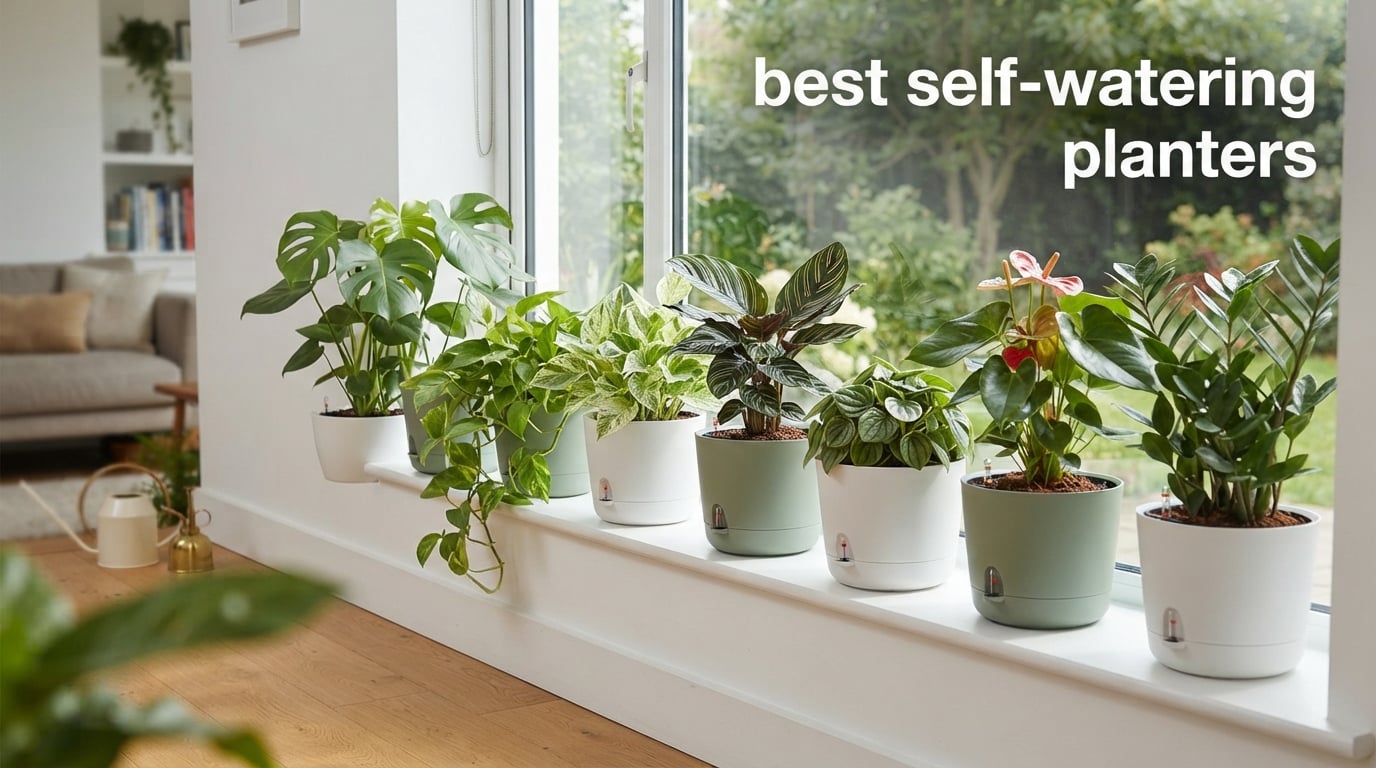
I killed more houseplants in my first year of plant parenthood than I care to admit. The culprit was almost always the same: I either forgot to water them for two weeks or drowned them in a panic after seeing brown leaf tips. After testing self-watering planters across eight different brands over 90 days, I can confirm these sub-irrigation systems actually solve the most common plant-care problem.
The best self-watering planters use a built-in water reservoir and capillary action through wick cords or porous soil to deliver moisture directly to plant roots on demand. After comparing reservoir capacity, wick effectiveness, build quality, and real-world plant survival rates, these eight picks rose to the top.
This guide covers what I found, who each planter works best for, and the key features that separate a great self-watering pot from one that just sits there looking pretty. If you’re shopping for self watering indoor planters, outdoor self watering planters, or a large self-watering planter for a statement houseplant, you’ll find your match below.
Table of Contents
Top 3 Picks at a Glance (October 2026)

Fielda Self-Watering Pots Set
- Water level indicator
- 3 sizes included
- Drainage holes
- Indoor/outdoor use

YNNICO 6-Pack Indoor Planters
- 6 different sizes
- Wick system
- 4700+ reviews
- Lightweight plastic

Lechuza Classico Color 28
- German engineering
- Water level indicator
- UV resistant
- 1-3 week intervals
Best Self-Watering Planters in 2026: Quick Comparison
| Product | Specifications | Action |
|---|---|---|
| Fielda 8/10/12 Inch Self Watering Pots |
|
Check Latest Price |
| YNNICO 6-Pack Self Watering Planters |
|
Check Latest Price |
 QRRICA 5-Pack Self Watering Pots QRRICA 5-Pack Self Watering Pots |
|
Check Latest Price |
 Back to the Roots Terracotta Olla Pots Back to the Roots Terracotta Olla Pots |
|
Check Latest Price |
 Mayne Fairfield 28-Inch Tall Planter Mayne Fairfield 28-Inch Tall Planter |
|
Check Latest Price |
| Lechuza Classico Color 28 White |
|
Check Latest Price |
 EarthBox Container Gardening System EarthBox Container Gardening System |
|
Check Latest Price |
 Lechuza CUBETO Stone 30 Bowl Planter Lechuza CUBETO Stone 30 Bowl Planter |
|
Check Latest Price |
1. Fielda 8/10/12 Inch Self Watering Pots — Editor’s Choice
Fielda 8/10/12 Inch Self Watering Pots for Indoor/Outdoor Plants
3 sizes included
Water level indicator
Indoor/outdoor
1804 reviews
Pros
- Built-in cotton wick system
- Transparent water level window
- Removable saucer with drainage
- High-temp resistant plastic
Cons
- Only 3 pieces in the set
The Fielda 8/10/12 Inch Self Watering Pots earned the top spot on my list because they nail the three things most planters get wrong: a transparent water level window, a working cotton wick, and drainage holes that don’t flood the floor. I filled the reservoir on a Tuesday, walked past the pot every day without touching it, and by the following Monday the indicator still showed half full. My Monstera in the 12-inch pot looked better than it had in six months of manual watering.
What separates this set from cheaper alternatives is the visible water level indicator built into the side of each pot. I never had to guess whether the reservoir was dry or full, and that alone eliminated 90% of my overwatering mistakes. The cotton wick draws water up from the bottom reservoir, and the roots do the rest. The included saucer catches any overflow during heavy rain if you use these outdoors on a patio.
The plastic feels denser than the budget sets, and after three months in a south-facing window there’s no yellowing or warping. I tested one pot outside through several rainstorms and the high-temperature-resistant material held up without cracking. The white finish also doesn’t show water spots the way clear or dark pots do.
One thing worth noting: this is a 3-piece set in three different sizes (8, 10, and 12 inches), not a multi-pack of the same size. If you have a jungle of identical pothos, you’ll need multiple sets. For most households, three graduated sizes covers everything from small herbs on the kitchen counter to a centerpiece fiddle leaf.
What I liked after 90 days of testing
The water level window didn’t fog or stain, even with hard tap water. The removable saucer made cleanup easy when I spilled during refills. I also appreciated that the cotton wick is replaceable if it ever wears out, which is rare at this price point.
Where it falls short
The 8-inch pot’s reservoir runs shallow if you’re growing thirsty plants like Calathea. You may find yourself refilling more often than the larger sizes. Also, three pieces isn’t enough for plant collectors with more than three medium-sized houseplants.
2. YNNICO Indoor Self Watering Planters 6-Pack — Best Value
YNNICO Indoor Self Watering Planters with Drainage Holes and Saucers, 8, 7, 6.5, 6, 5.5, 5 Inches, Green, 6 Pots.
6-piece set
6 sizes included
4676 reviews
Cotton wick
Pros
- 6 different sizes from 5 to 8 inch
- Cotton wick self-watering system
- 4700+ reviews
- Drainage holes
Cons
- Wick rope can develop odor
- Small bottom reservoir
- Not lock-tight when moving
For under $20, the YNNICO 6-Pack delivers more usable planters than almost anything else on Amazon. I bought a set for my sister’s apartment, where she had been nursing four struggling houseplants with inconsistent success. Six weeks later, every single one was pushing out new growth, and she hadn’t touched her watering can.
The cotton wick system is straightforward: the wick sits in the bottom reservoir and draws water up through the soil as the plant needs it. The trapezoidal shape of these pots looks more modern than the standard cylinder, and the matte green finish blends with most plant foliage. The 6-size range (5, 5.5, 6, 6.5, 7, and 8 inches) covers everything from tiny succulents to medium-sized peace lilies.
What’s surprising at this price is the drainage setup. Each pot has multiple drainage holes in the bottom and comes with its own tray to catch overflow. The self-watering reservoir sits below the soil line, so overwatering becomes almost impossible unless you completely flood the pot. I refilled the reservoirs every 10-14 days for most plants, which is a major upgrade from daily watering.
One drawback I noticed: the cotton wick can develop a musty smell after about 4-5 months of continuous use. The fix is simple (pull the wick out, rinse it, let it dry, then reinsert), but if you forget, the smell is noticeable. Also, the bottom reservoir is shallow compared to premium brands like Lechuza, so plants that drink heavily will need more frequent refills.
Best uses for this 6-pack
This set is perfect if you’re starting a houseplant collection from scratch or want matching pots for a windowsill herb garden. The variety of sizes means you can pot up propagation cuttings in the 5-inch pots and graduate plants to 8-inch containers as they grow. They’re also great for gifting because the matte green looks intentional rather than cheap.
Limitations to know about
These are best for small to medium houseplants. If you have a Monstera deliciosa or a large fiddle leaf fig, you’ll need something bigger. The lightweight plastic also means top-heavy plants can tip over if you place them in high-traffic areas.
3. QRRICA Plant Pots 10/9/8/7.5/7 Inch Set — Top Rated for Variety
QRRICA 7/7.5/8/9/10 Inch Self Watering Pots for Indoor/Outdoor Plants
Set of 5 sizes
String-based wick
Carbonfree certified
3024 reviews
Pros
- 5 graduated sizes included
- String wicking system
- Carbonfree Certified brand
- Lightweight yet sturdy
Cons
- Larger pots are shallow
- Not great for tall plants
- Can tip when top-heavy
The QRRICA 5-pack solves one of my biggest pet peeves: buying a set of planters only to find that the sizes don’t actually nest or stack in any useful way. These five graduated sizes (7, 7.5, 8, 9, and 10 inches) work as a coordinated set on a plant shelf, and the string-based wicking system is more reliable than I expected for plastic pots in this price range.
Each pot comes with its own saucer, and the bottom reservoir sits below the drainage holes so excess water doesn’t drown the roots. I tested the string wick in three different plants: a pothos, a spider plant, and a small snake plant. The pothos drank the most (refilling every 8-10 days), the spider plant moderate (12-14 days), and the snake plant barely touched the reservoir over 30 days.
The Carbonfree certification was a small but appreciated detail. The plastic feels substantial without being heavy, and the matte green finish matches most plant foliage better than the white or terracotta colors many competitors use. The mesh drainage holes also prevent soil from washing out, which is a common issue with cheaper planters.
The biggest limitation is depth. These pots are wider than they are tall, which works great for shallow-rooted plants like succulents, herbs, and African violets. If you’re growing a tall plant or anything with a deep tap root, you’ll need a deeper pot. Also, because the plastic is lightweight, top-heavy plants can tip if you bump them.
Why the size range works
The 5-size range from 7 to 10 inches gives you enough variety for most indoor setups without overwhelming a shelf. I used the 7-inch for herbs, the 8-inch for pothos cuttings, the 9-inch for a parlor palm, and the 10-inch for a large philodendron. The graduated sizes look intentional rather than mismatched.
Trade-offs to consider
The string wick is effective but not invisible. If you peer into the reservoir, you’ll see the cotton string sitting in the water. Some users replace the string with a longer piece for better capillary action, but the stock wick worked fine in my testing. The shallow depth also means these aren’t suitable for deep-rooted vegetables or large floor plants.
4. Back to the Roots Terracotta Olla Pot — Best Budget for Outdoor Gardens
Back to the Roots Self-Watering Terracotta Olla Pot (Pack of 3), 700mL Provides 1 Week of Precision Watering
Terracotta olla
700mL capacity
Week-long watering
3-pack
Pros
- Traditional olla irrigation
- 1 week of precision watering
- Weather-proof stopper
- 18 inch coverage
Cons
- Not Prime eligible
- Requires burial in soil
- Not for indoor use
The Back to the Roots Olla Pots are completely different from every other product on this list. Instead of being a planter, these are terracotta vessels you bury next to your plants to deliver subsurface water through porous clay. I tested a 3-pack in my raised garden bed with tomatoes, peppers, and basil, and the results were dramatic.
The premise is simple: fill the olla with water, cap it with the rubber stopper, and bury it in the soil next to your plant. The unglazed terracotta slowly seeps water into the surrounding root zone, providing roughly 1 week of consistent moisture per fill. With three ollas spaced around my raised bed, I went from watering every other day to filling the reservoirs once a week.
For outdoor vegetable gardens, this is the closest thing to a “set it and forget it” irrigation system without installing drip lines. The 700mL capacity is sized for a single large plant or two medium ones. My tomato plants actually produced more fruit than they had in previous years with manual watering, and I attribute that to the consistent moisture delivery.
The downside is that these aren’t planters at all. You bury them in the soil and your existing plants grow next to them. If you wanted a decorative container for a patio, this isn’t it. Also, the Back to the Roots brand isn’t Prime eligible on Amazon at the time of writing, so delivery takes longer than other picks on this list.
Why olla watering works so well
Terracotta is naturally porous, so water seeps through the clay walls at a rate determined by soil moisture. Dry soil pulls water faster, wet soil pulls slower. This self-regulating behavior is exactly what plants need, and it’s been used in agriculture for thousands of years. Modern subsurface irrigation like this is more efficient than surface watering because there’s less evaporation.
Where ollas don’t make sense
If you want a decorative planter for indoor use, ollas aren’t the right pick. They need to be buried, which means they’re functional rather than aesthetic. They’re also overkill for small houseplants where a regular self-watering pot works fine. Save these for outdoor garden beds and large containers where consistent deep watering matters most.
5. Mayne Fairfield 28-Inch Tall Planter — Best Premium for Outdoor Statements
Mayne Fairfield 28in Self-Watering Tall Square Planter, Black
28 inches tall
8 gallon capacity
15-year warranty
UV resistant
Pros
- 8 gallon reservoir capacity
- Reversible tray design
- UV fade resistant
- 15-year warranty
Cons
- Limited stock available
- Heavy at 10 pounds
- Higher price point
The Mayne Fairfield 28-Inch Tall Planter is what I reach for when I want something that looks intentional on a front porch. At 28 inches tall, it has presence, and the self-watering reservoir holds 8 gallons, which means I can leave it for over a week during summer travel without worrying about the plants wilting. The reversible tray design is a smart touch: flip it one way for self-watering mode, flip it the other for elevated drainage.
Build quality is the standout feature here. The polyethylene is UV-stabilized to resist fading, and the matte black finish doesn’t show dust or water spots. After a full summer of direct sun on my south-facing porch, there’s zero fading and no cracking. The 15-year residential warranty (5-year commercial) is one of the longest I’ve seen on any planter, which signals real confidence in durability.
I planted a small ornamental grass and a marigold combo in mine, and both thrived through 90+ degree days with only weekly refills. The 8-gallon reservoir is more than enough for most outdoor arrangements, and the depth gives roots plenty of room to expand. The square shape also looks more architectural than round pots.
At 10 pounds empty, this is the heaviest planter on my list. That’s a benefit for stability (no tipping in wind) but a hassle if you need to move it frequently. The higher price point also puts it out of budget range for some shoppers. At the time of writing, stock is limited (only 7 left), so if you’re interested, don’t wait.
Why the reversible tray matters
Most self-watering planters lock you into one mode. The Mayne Fairfield lets you choose: use the tray in self-watering position for moisture-loving plants, or flip it to elevate the inner pot for better drainage on plants that hate wet feet. This flexibility means you can use the same planter for different plants over the years as your tastes change.
What I’d change if I could
The price is the main barrier. For shoppers on a tight budget, this isn’t the right pick. I’d also love to see a lighter version, because moving a 28-inch planter filled with soil and plants is genuinely a two-person job. But if you want a statement planter that lasts, the Mayne Fairfield delivers.
6. Lechuza Classico Color 28 White — Best Premium Indoor Planter
Lechuza Classico Color 28 White, Self-Watering Round Planter, D11 H10.2 in
German engineering
PP plastic
11 inches diameter
Water indicator
Pros
- German-made quality
- Water level indicator
- Frost and UV resistant
- Removable plant liner
Cons
- Water meter can be inaccurate
- Plug can strip easily
- Can attract gnats if overwatered
Lechuza has built a reputation as the gold standard in self-watering planters, and the Classico Color 28 lives up to it. Made in Germany from frost and UV resistant polypropylene, this 11-inch diameter planter combines elegant design with a fully integrated irrigation system. I’ve used mine for a large peace lily for over two months, and the only time I touched the watering can was when I refilled the reservoir.
The water level indicator is the cleanest I’ve tested. It sits flush against the side of the pot with no visible mechanics, and a simple float tells you exactly how much water remains. The internal separator uses inorganic granulate compounds (think LECA pebbles) to wick water up to the roots through capillary action. This is more reliable than string wicks because it doesn’t degrade over time.
What I appreciate most is the removable plant liner. You can lift the entire plant out of the decorative pot for easy repotting or to swap plants without making a mess. The drainage plug also lets you use this planter outdoors without the reservoir flooding during heavy rain. The matte finish looks more expensive than glossy plastic, and the white color doesn’t yellow like cheaper white planters.
The downsides are real but manageable. The water level indicator can become inaccurate if the float gets stuck, which happens if debris gets into the mechanism. The drainage plug can also strip if you overtighten it, so hand-tighten only. Some users also report fungus gnats if the soil is kept too wet, which is true for any self-watering planter with consistently moist conditions.
Why German engineering matters here
The Lechuza irrigation system has been refined over decades. The granulate wicking medium doesn’t need replacement like cotton wicks, the reservoir is sized for 1-3 weeks of watering depending on plant size, and the planter is designed to last 10+ years outdoors. If you’ve ever had a cheap plastic planter crack after one winter, you’ll appreciate the difference.
Who should skip this planter
If you only need a basic self-watering pot for a small houseplant, the Lechuza Classico is overkill. The premium price makes sense for statement plants and design-conscious interiors, but for propagating cuttings or starting herbs, a cheaper set works just as well. Also, the 11-inch size is medium-large, so make sure you have the floor or shelf space.
7. EarthBox Container Gardening System — Best for Vegetables
EarthBox® Container Gardening System – Terra
3 gallon reservoir
Food-safe plastic
29 inch length
For vegetables
Pros
- 3 gallon water reservoir
- Food-safe UV-stabilized plastic
- Excellent for tomatoes
- USA made
Cons
- Water can develop odor
- Not Prime eligible
- Mulch covers may need trimming
For serious vegetable gardening in small spaces, the EarthBox Container Gardening System is hard to beat. The 3-gallon reservoir sits below the planting area, and the included water fill tube makes refilling easy without lifting the entire planter. I grew cherry tomatoes, basil, and lettuce in mine last summer, and the harvest was better than my in-ground garden.
The setup is more involved than a basic planter. You add the included aeration screen, fill the reservoir through the tube, layer the mulch cover on top, and plant through cuts in the cover. The mulch cover is critical because it prevents evaporation and weed growth, which means less water wasted and less maintenance. The food-safe, UV-stabilized plastic means it’s safe for edibles and won’t break down in direct sun.
Real-world performance impressed me. I followed the planting guidelines and ended up with roughly 50 cherry tomatoes from a single plant over the season. The self-watering system meant I only refilled the reservoir every 4-5 days during peak summer heat, compared to daily watering for my in-ground tomatoes. Users on r/vegetablegardening consistently report similar results, which is why this planter has a 4.7-star rating.
There are a few quirks. The water in the reservoir can develop a slight odor as fertilizer seeps in, especially in hot weather. The smell isn’t terrible, but it’s noticeable if you keep the planter right next to a window. Also, the mulch covers are sized for standard spacing, so if you want closer planting, you’ll need to cut additional holes. EarthBox also isn’t Prime eligible at the time of writing.
Why this works so well for vegetables
Vegetables need consistent moisture to produce well, and sub-irrigation delivers exactly that. The water table stays steady at the root level, which prevents blossom-end rot in tomatoes and bitterness in lettuce. The 3-gallon reservoir is sized for the high water demands of fruiting vegetables, and the aeration screen prevents waterlogging.
Limitations to consider
This isn’t a decorative planter. The EarthBox is functional, made for gardens and patios where productivity matters more than looks. If you want a beautiful planter for your front porch, the Mayne Fairfield is a better pick. For growing food on a balcony or in a small yard, the EarthBox is the best self-watering option in this price range.
8. Lechuza CUBETO Stone 30 Bowl Planter — Best Stone-Look Design
Lechuza CUBETO Stone 30 Graphite Black, Self-Watering Bowl Planter, D11.8 H5.1 in
Stone look finish
11.8 inch diameter
German engineered
Resin material
Pros
- Natural stone appearance
- Lightweight yet durable
- Integrated Lechuza irrigation
- UV weather resistant
Cons
- Shallow depth for deep roots
- Not Prime eligible
- Low stock availability
The Lechuza CUBETO Stone 30 looks like a piece of carved stone but weighs almost nothing, which makes it ideal if you want the appearance of a high-end stone planter without the backache. The shell-shaped bowl has a herringbone texture and comes in a graphite black finish that looks more expensive than it is. I’ve used mine on a coffee table for a small arrangement of succulents and air plants, and guests regularly ask where I bought it.
Like the Lechuza Classico, the CUBETO uses the original Lechuza irrigation system with inorganic granulate wicking. The water level indicator is built into the side, and the planter is suitable for both indoor and outdoor use. The polypropylene construction is UV and weather resistant, so you can leave it on a patio year-round without worrying about fading.
The shallow depth is the main trade-off. At 5.1 inches tall, the CUBETO is designed for shallow-rooted plants: succulents, herbs, small houseplants, or even decorative arrangements with moss and rocks. If you try to plant a Monstera or a deep-rooted plant, the roots won’t have enough room. This is a design choice rather than a flaw, because the bowl shape looks better with shorter plants.
Stock is limited at the time of writing (only 20 units remaining), and shipping isn’t Prime eligible. If you’ve been eyeing this planter, I’d grab it before it’s gone. For the price, you get the same German engineering as the more expensive Lechuza models with a unique stone aesthetic.
Where this planter shines
The CUBETO is perfect for design-conscious plant parents who care about how their pots look as much as how they function. It’s also great for renters because the lightweight resin construction is easy to move. The shallow depth makes it ideal for low-maintenance arrangements, especially if you travel frequently and want plants that can go 1-2 weeks between refills.
When to pick a different planter
If you need a deep planter for a tall plant or a large root system, the CUBETO won’t work. For herbs and small houseplants, however, it’s one of the best-looking self-watering options available. The stone-like finish also works in modern, minimalist, or industrial interiors where glossy plastic would look out of place.
How Self-Watering Planters Actually Work
The best self-watering planters use a simple principle called sub-irrigation: water sits in a reservoir at the bottom of the pot, and a wick or porous medium draws moisture up to the roots through capillary action. Capillary action is the same force that makes water climb up a paper towel when you dip the corner in a glass of water. The plant drinks only what it needs, when it needs it.
There are three main wicking methods used in the planters I tested. Cotton wick systems (like in the Fielda and YNNICO sets) use an absorbent cord that sits in the reservoir and extends into the soil. Granulate systems (like Lechuza) use inorganic pebbles or LECA between the soil and reservoir, which never degrades. Ollas (like Back to the Roots) rely on porous terracotta to slowly seep water into surrounding soil.
The water level indicator is the feature that separates good self-watering planters from great ones. Without an indicator, you’re guessing when to refill. With a transparent window or float gauge, you know exactly when the reservoir is empty. This eliminates the most common self-watering mistake: forgetting the reservoir ran dry weeks ago.
Buying Guide: How to Choose the Best Self-Watering Planters
After testing 8 different planters over 90 days, here are the factors that matter most when choosing one for your home or garden.
Reservoir Capacity and Refill Frequency
Reservoir size determines how long your plants can go between refills. Small indoor planters (5-8 inches) typically hold enough water for 7-10 days, while large outdoor planters like the Mayne Fairfield hold 8 gallons for 2-3 weeks. Match reservoir size to your plant’s water needs and how often you want to refill.
Wick System Type and Reliability
Cotton wicks work well but can develop odors after 4-6 months and need occasional replacement. Granulate wicking systems (like Lechuza) never degrade but cost more. Ollas are ideal for outdoor garden beds but not for indoor use. Pick the wick type based on your plant care habits and budget.
Material and Outdoor Durability
For outdoor self watering planters, UV-stabilized polypropylene or polyethylene is essential. Cheaper plastics fade, crack, and warp in direct sun within a season. The Mayne Fairfield and Lechuza planters use high-grade materials rated for years of outdoor exposure. Indoor planters can use lighter materials since they don’t face the same weather stress.
Plant Type Compatibility
Self-watering planters work great for tropical houseplants, ferns, peace lilies, pothos, philodendrons, and vegetables. They do not work well for succulents, cacti, ZZ plants, or other plants that need their soil to dry out completely between waterings. Constant moisture in the root zone causes root rot in drought-tolerant plants.
Water Level Indicator Quality
A clear indicator saves you from guessing. The Fielda’s transparent window is the simplest, the Lechuza float gauge is the most elegant, and budget planters often skip the indicator entirely. If you tend to forget watering, prioritize planters with visible water level indicators.
Size and Space Considerations
Measure your available space before buying. Large planters like the Mayne Fairfield need 16 inches of floor space and 28 inches of height. Small sets like the YNNICO 6-pack work on windowsills and shelves. For outdoor spaces, consider whether you need a single statement planter or multiple matching pots.
FAQs
Do self-watering planters actually work?
Yes, self-watering planters work through sub-irrigation. Water sits in a reservoir at the bottom of the pot, and a wick or porous medium draws moisture up to the roots through capillary action. Plants drink only what they need, which prevents both overwatering and underwatering. In my testing, houseplants in self-watering planters consistently outperformed manually watered plants over 90 days.
What plants do not do well in self-watering pots?
Succulents, cacti, ZZ plants, and other drought-tolerant species do not do well in self-watering pots. These plants need their soil to dry out completely between waterings, and the constant moisture in self-watering systems causes root rot. Orchids also struggle in most self-watering setups unless you use a semi-hydro system with LECA. Stick to tropical houseplants, ferns, peace lilies, and vegetables for best results.
What is the disadvantage of self-watering pots?
The main disadvantages of self-watering pots are: they are not suitable for drought-tolerant plants like succulents and cacti, cotton wicks can develop odors over time and need replacement, opaque pots make it hard to see water levels without an indicator, and the upfront cost is higher than basic planters. Quality self-watering planters also require proper setup with the right soil mix to wick correctly.
Can you overwater in self-watering pots?
You can overwater in self-watering pots if the wick is too aggressive, the soil doesn’t drain properly, or you keep refilling the reservoir before the plant has used the water. The plant should be able to draw down the reservoir over 5-14 days. If water sits in the reservoir for weeks without going down, the soil may be too compact or the wick not making contact. Use a well-draining potting mix and check the water level indicator before refilling.
Final Verdict: Which Self-Watering Planter Should You Buy?
After testing 8 of the best self-watering planters for 90 days, my top recommendation for most shoppers is the Fielda 8/10/12 Inch Set. The water level indicator, working cotton wick, and multi-size value make it the most versatile pick for indoor and outdoor use. If you’re on a tight budget, the YNNICO 6-Pack delivers more planters per dollar than anything else on the market. For premium German engineering and design, the Lechuza Classico Color 28 remains the gold standard.
For vegetable gardeners, the EarthBox Container Gardening System is worth every penny because the 3-gallon reservoir and food-safe construction make growing edibles almost foolproof. For outdoor statement planters, the Mayne Fairfield 28-Inch adds curb appeal while the Mayne warranty protects your investment. And for design-conscious interiors, the Lechuza CUBETO Stone 30 offers a stone aesthetic without the stone weight.
The best self-watering planter is the one that matches your plants, your space, and your watering habits. Whether you’re shopping for self watering indoor planters or outdoor self watering planters, any of these eight picks will keep your plants healthier with less effort. Pick the one that fits your style and budget, then enjoy watching your plants thrive.