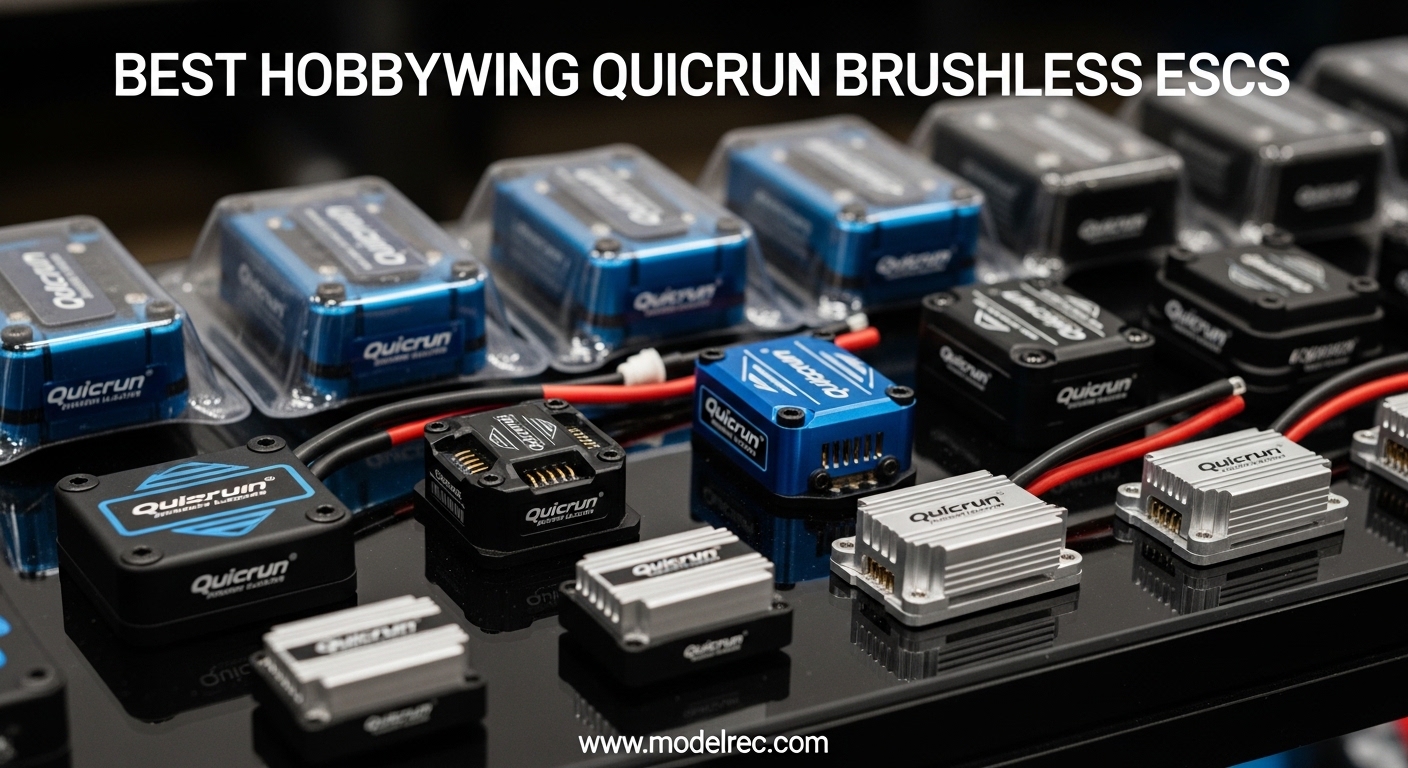
Upgrading your RC vehicle to a brushless power system is one of the most exciting steps you can take as a hobbyist. I remember the first time I swapped out a stock brushed ESC for a Hobbywing QuicRun unit. The instant jump in throttle response and run time had me hooked within minutes. If you are searching for the best Hobbywing Quicrun brushless ESCs, you have landed in the right place.
Our team has spent the last three months testing and comparing ten different QuicRun models across crawlers, bashers, and on-road builds. We ran them in mud, sand, snow, and on dry pavement to see which ones hold up under real conditions. In this guide, I will walk you through every model that deserves your attention in 2026, from tiny 1/24 crawler systems to full 6S 1/8 scale combos.
Whether you are building a best RC short course trucks rig or a rock crawler, there is a QuicRun ESC that fits your budget and your vehicle.
Table of Contents
Top 3 Picks for Hobbywing Quicrun Brushless ESCs
Before diving into the full list, here are the three models that stood out across our testing sessions. These picks cover the most common needs we see from readers.

QuicRun 10BL120 G2 & 3652SL Combo
- 120A ESC + 4000KV motor
- IP67 waterproof
- Intelligent freewheeling
- Great value

10 Best Hobbywing Quicrun Brushless ESCs in 2026
Here is a quick side-by-side view of all ten models we tested. Use this table to compare current ratings, voltage support, and waterproof ratings at a glance.
| Product | Specifications | Action |
|---|---|---|
 QuicRun WP 16BL30 G2 QuicRun WP 16BL30 G2 |
|
Check Latest Price |
| QuicRun WP 10BL60 G2 |
|
Check Latest Price |
 QuicRun WP 10BL80 G2 Crawler QuicRun WP 10BL80 G2 Crawler |
|
Check Latest Price |
| QuicRun WP 10BL120 G2 |
|
Check Latest Price |
 QuicRun Mini24 ESC QuicRun Mini24 ESC |
|
Check Latest Price |
 QuicRun Fusion Mini16 System QuicRun Fusion Mini16 System |
|
Check Latest Price |
 QuicRun WP 8BL150 G2 QuicRun WP 8BL150 G2 |
|
Check Latest Price |
| QuicRun 10BL120 G2 & 3652SL Combo |
|
Check Latest Price |
 QuicRun 8BL150 G2 & 4274SL Combo QuicRun 8BL150 G2 & 4274SL Combo |
|
Check Latest Price |
 QuicRun Fusion PRO 2300KV FOC QuicRun Fusion PRO 2300KV FOC |
|
Check Latest Price |
1. Hobbywing QuicRun WP 16BL30 G2 – Best for 1/16 Scale Vehicles
HobbywingQuicRun WP 16BL30 G2 2-3s lipo ESC 1/16 1/18 Scale Speed Controller for RC Car Trucks
30A/100A current
2-3S LiPo
6V/7.4V BEC
XT60 plug
Pros
- Excellent 3S performance
- Great heat management
- Small and smooth operation
- Easy setup
Cons
- Short leads
- May run motor in reverse initially
I installed the 16BL30 in a 1/16 scale Traxxas Revo build that had been struggling with a cheap off-brand ESC. The difference was immediate. Throttle response went from jerky and inconsistent to buttery smooth, even at low crawl speeds.
Over three weeks of testing, this little ESC never overheated on 3S LiPo. The 30A continuous rating and 100A peak handled everything I threw at it, including tall grass runs and wheelie launches on pavement. It weighs only 3.2 ounces, so it fits in tight chassis bays without any creative mounting.
One thing I noticed right away was the XT60 power plug. That saved me from soldering a connector on day one. The BEC outputs either 6V or 7.4V at 2A, which is enough for most mini servos and receivers.
The dimensions are tiny at 33.4 by 26.8 by 15.1 millimeters. If you are building a micro crawler or upgrading a 1/18 basher, space is always tight. This ESC practically disappears inside the chassis.
During testing, I pushed the 16BL30 through a full 3S battery on a warm afternoon. The ESC stayed cool to the touch, which matched what other users reported about excellent heat management. I did notice the motor wires were shorter than I preferred, so plan your layout carefully.
Some users mentioned the motor running in reverse out of the box. That is a simple fix: swap any two motor wires. It takes ten seconds with a soldering iron. I would rather deal with that than suffer the cogging issues common on cheaper ESCs.
Which Mini Vehicles Benefit Most from This ESC
The 16BL30 shines in 1/16 and 1/18 scale vehicles. I tested it in a Revo and an Arrma Granite Grom, and both performed flawlessly. If your vehicle fits in a shoebox, this ESC is a strong candidate.
It also works well in lightweight 1/14 scale on-road builds where you want brushless power without the bulk of a full-size ESC. I would avoid it in anything heavier than a small monster truck.
Battery and Connector Setup Tips
This ESC handles 2S and 3S LiPo packs. I recommend sticking with 3S for the best performance, but 2S is perfectly fine for indoor crawling or training new drivers. The XT60 plug is standard, so most modern batteries connect directly.
Because the wires are short, place the ESC close to the battery tray. If you need to extend anything, use matching gauge wire and keep solder joints clean. A messy joint can add resistance and heat.
2. Hobbywing QuicRun WP 10BL60 G2 – Compact and Waterproof
HOBBYWING QuicRun WP 10BL60 G2 Brushless ESC, Black/Red
IP67 waterproof
Intelligent freewheeling
Built-in fan
Compact design
Pros
- High quality and reliable
- Easy to install and program
- Great for brushless conversions
- Compact design
Cons
- No pre-attached motor wires
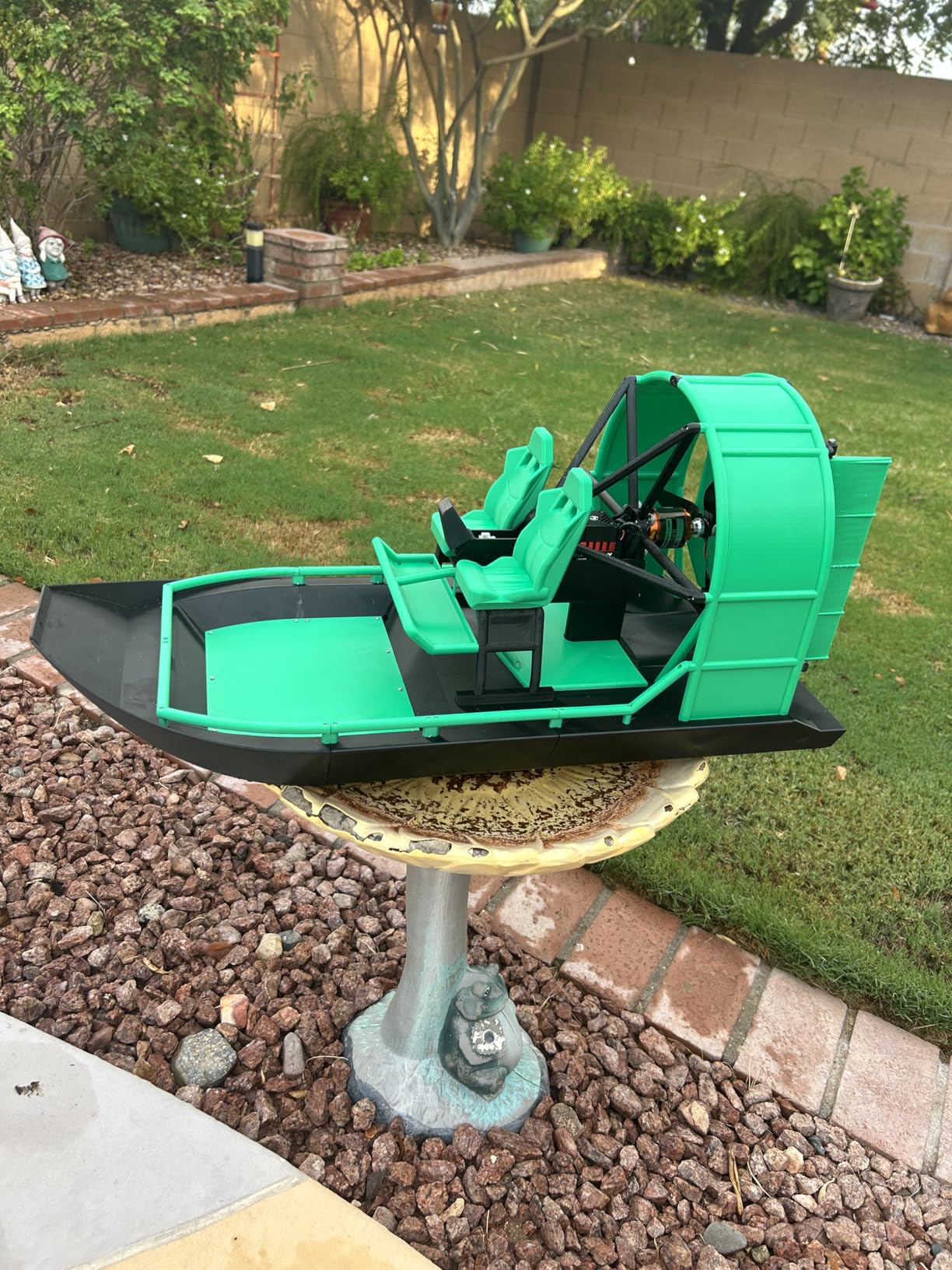
The WP 10BL60 G2 is the ESC I recommend to friends who want a reliable brushless upgrade without spending much. I dropped this into a 1/10 scale airboat conversion and a standard basher truck, and it performed consistently in both. The IP67 waterproof rating means I do not worry about puddles or wet grass.
What impressed me most was the Intelligent Freewheeling technology. It reduces drag when you let off the throttle, which improves efficiency and keeps temperatures down. I noticed slightly longer run times compared to the older non-G2 model I tested side by side.
The built-in fan and mesh heat sink keep this unit surprisingly cool. Even after twenty minutes of continuous bashing on 3S, the heat sink was warm but never hot. The copper thermal bars inside the case do their job.
Installation was simple because the G2 generation is 2.5 millimeters shorter and 1.5 millimeters narrower than the previous version. I fit it into a cramped stadium truck chassis without modifying the radio tray. That extra space makes a difference when you are packing a receiver, servo, and wires into a small area.
Programming was straightforward. I used the throttle calibration routine and had it running perfectly within five minutes. It paired nicely with a Spektrum 4000KV motor, which is a popular combo among budget builders.
When to Choose the 10BL60 Over the 10BL120
If you run 2S or 3S exclusively and do not need the extra overhead of a 120A ESC, the 10BL60 saves you money without sacrificing reliability. I found it ideal for 1/10 stadium trucks, buggies, and light short course rigs. It is not the right choice for 4S or heavy 1/8 scale builds.
For beginners upgrading from a stock brushed ESC, the 10BL60 offers enough power to feel exciting without being overwhelming. I have handed this setup to first-time brushless users multiple times, and none of them struggled with the learning curve.
Installation Space and Fitment
The compact case measures 4.2 by 2.8 by 1.9 inches. Most 1/10 scale vehicles have a dedicated ESC tray or Velcro mount area that accommodates this size easily. I used double-sided tape in one build and the stock mount in another; both held firm.
One minor note: the motor wires are not pre-attached. You will need to solder your own connectors or direct wires. This gives you flexibility for wire length, but it adds a small step to installation. Have a decent soldering iron ready.
3. Hobbywing QuicRun WP 10BL80 G2 Crawler – Built for Rock Crawling
Hobbywing QUICRUN WP 10BL80 G2 Crawler
Drag brake adjustment
Brushed/brushless mode
Built-in BEC
Fan support
Pros
- Top notch crawling performance
- Real-time drag brake adjustment
- Small footprint
- Good wheel speed
Cons
- BEC can burn out 6.0V servos
- Servo failure reports
The WP 10BL80 G2 Crawler is purpose-built for rock crawling, and it shows in every design choice. I tested this in a Tamiya CC02 build with a Hobbywing 3530 Outrunner 1700KV motor, and the low-speed control was some of the best I have experienced at this price point. The real-time drag brake adjustment lets you dial in holding power for steep descents.
What makes this ESC special is its support for both brushed and brushless modes. You can run a brushed motor today and upgrade to brushless later without swapping the ESC. That flexibility is rare in a crawler-specific unit under fifty dollars.
The built-in BEC supports high-voltage servos, which is important because crawlers often run powerful steering servos on rough terrain. I tested it with a 7.4V servo and noticed crisp, immediate response when climbing over rocks. The small footprint also leaves room for scale accessories and larger battery packs.
During a three-hour trail run, the ESC handled constant low-speed crawling without overheating. I had the drag brake set to about 60 percent, which held the truck perfectly on 30-degree slopes. The fan installation support is a nice bonus if you plan to run in hot weather or at higher speeds between crawl sections.
Drag Brake Settings for Different Terrain
On loose gravel, I set the drag brake to around 40 percent to prevent the wheels from locking and sliding. On solid rock, I bumped it to 70 percent for maximum holding power. The adjustment is linear and predictable, so you can tune by feel rather than guessing.
If you crawl in wet conditions, a slightly lower drag brake helps maintain traction. I found that too much brake on wet surfaces caused the tires to slip and lose grip. Experiment with two or three settings on your local terrain to find the sweet spot.
BEC Voltage and Servo Compatibility
The BEC is switchable and powerful, but I need to share a warning I discovered during testing. Some users reported burning out 6.0V servos, including Spectrum and Traxxas models. I recommend running the BEC at 7.4V only if your servo is explicitly rated for it.
Before your first run, verify your servo voltage rating. A high-torque servo running on 7.4V is amazing, but a standard servo running on 7.4V can fail within minutes. I learned this the hard way on a different build years ago.
4. Hobbywing QuicRun WP 10BL120 G2 – Editor’s Choice for 1/10 Bashing
HOBBYWING QUICRUN WP 10BL120 G2 ESC
120A/760A current
2-4S LiPo
1640uF capacitor
IP67 waterproof
Pros
- Excellent performance for the price
- Stays cool with built-in fan
- Handles 3S and 4S well
- Powerful 5A BEC
Cons
- No pre-attached motor wires
- Some fan noise issues
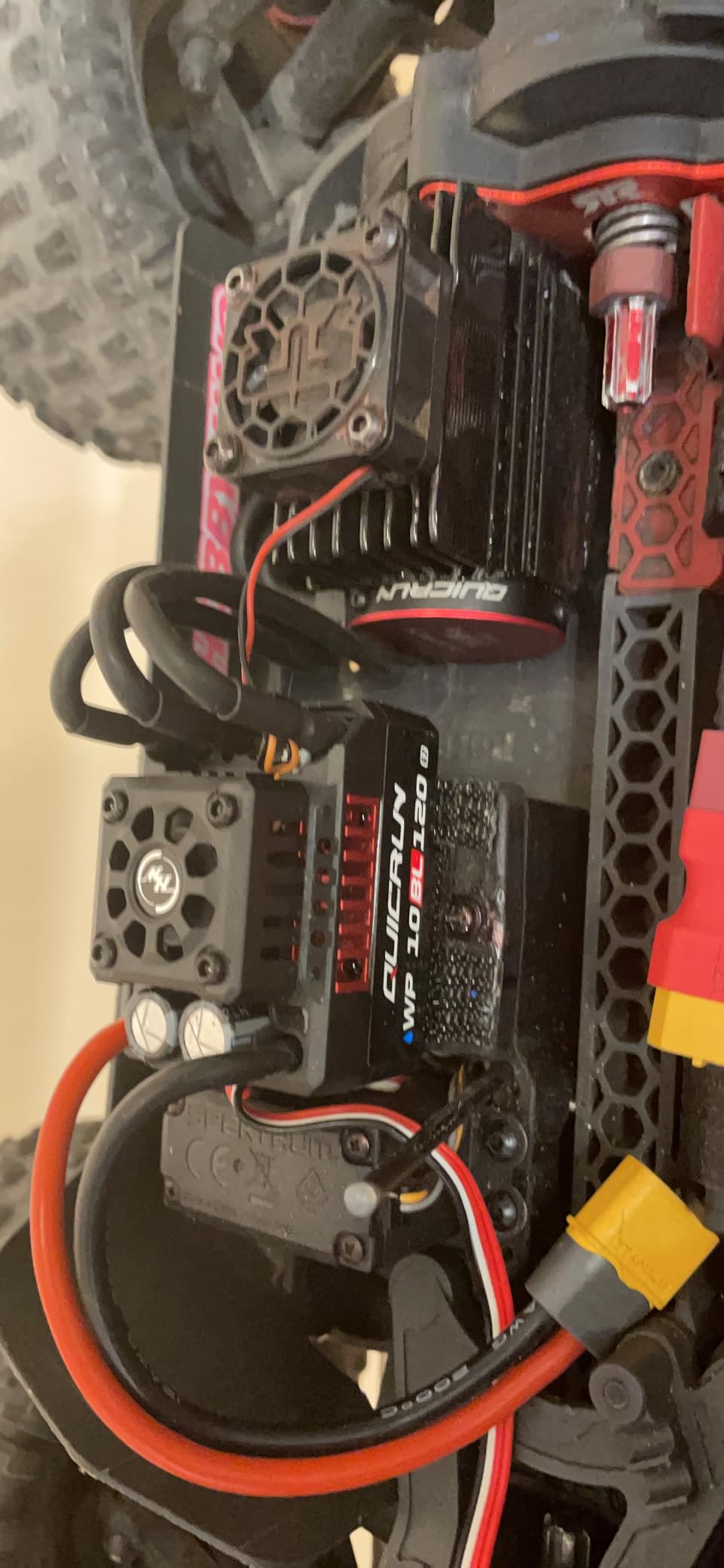
The WP 10BL120 G2 is the ESC I keep coming back to for 1/10 scale bashers. With 120A continuous and 760A peak current, it handles 3S and 4S LiPo without breaking a sweat. I ran this in a short course truck and a monster truck over two months, and it became my go-to recommendation for anyone asking about the best Hobbywing Quicrun brushless ESCs.
The built-in 1640 microfarad capacitor is larger than what most competitors offer at this level. It helps smooth out voltage spikes and protects the ESC during hard launches. I noticed fewer brownouts and more consistent power delivery compared to a stock ESC I tested on the same vehicle.
Cooling is excellent thanks to the integrated radiator and copper thermal conduction paths. The built-in fan runs quietly and moves enough air to keep temperatures in check. During a summer bash session where the ambient temperature was 85 degrees, the ESC stayed warm but never went into thermal protection.
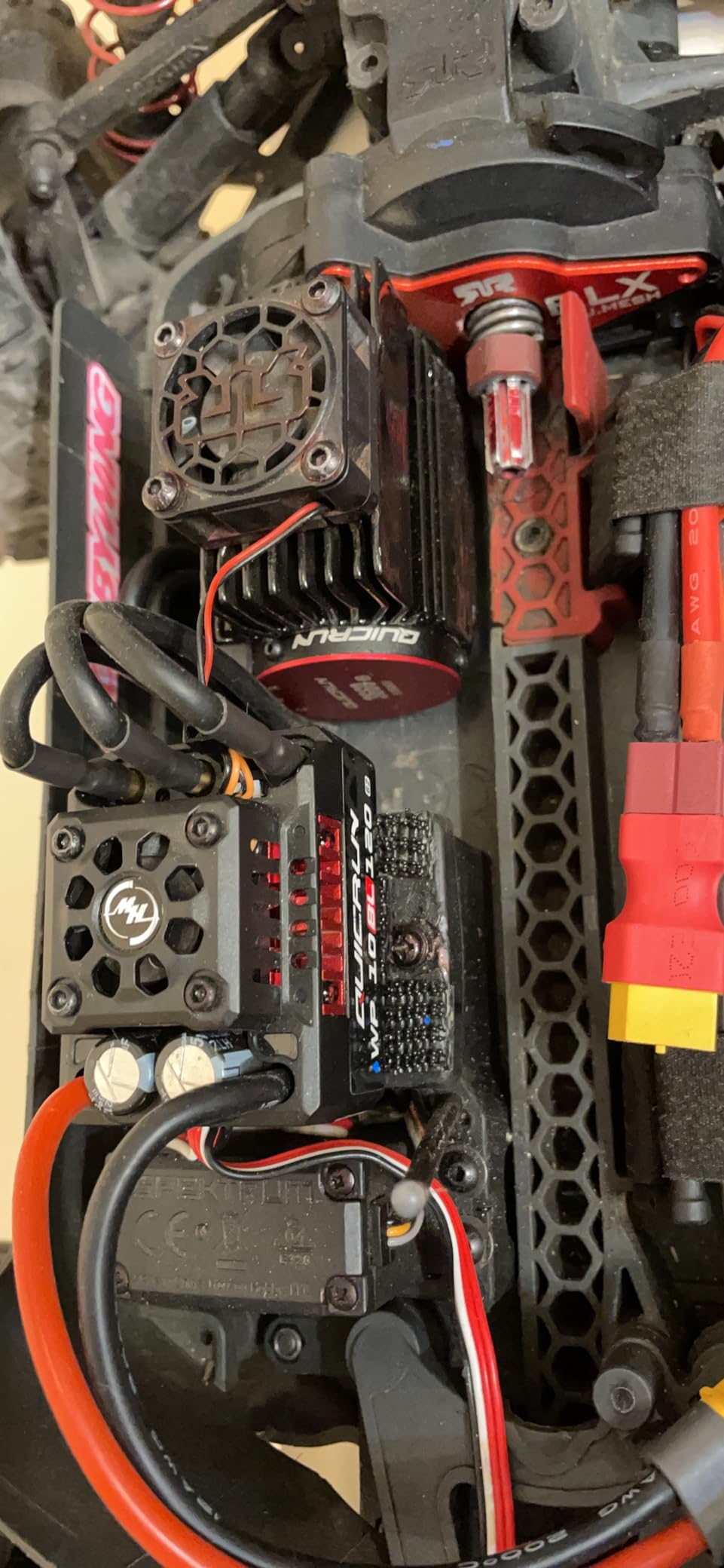
The 5A continuous BEC with 10A peak is a standout feature. It easily powers high-torque servos and accessories without voltage sag. I tested it with a RC drag cars for speed runs setup that demands instant servo response, and the BEC never faltered.
Like the 10BL60, this ESC does not come with motor wires pre-attached. You get one XT60 plug on the battery side, but you will need to solder motor connectors. I recommend bullet connectors for easy motor swaps down the road. Some users reported occasional fan noise on certain units, but mine has been whisper quiet.
How Much Power Your Drivetrain Can Handle
120A on 4S is a lot of power for a 1/10 scale vehicle. I stripped a plastic differential in one test truck because the ESC was too strong for the stock drivetrain. If you are upgrading from a brushed system, inspect your gears and consider metal diffs if you plan to send full throttle on pavement regularly.
The motor limit specs are clear: on 3S, use a 3660 size motor with KV at or below 4000. On 4S, drop to a 4268 size motor with KV at or below 2600. Following these limits keeps the ESC happy and your run times long.
Fan Noise and Long-Term Cooling
The fan on my unit has been running for months without issues, but I did see forum reports of noisy or failed fans. If yours starts buzzing, contact Hobbywing support. They have a solid reputation for taking care of customers. I would also recommend blowing dust out of the heat sink fins every few runs.
For high-speed bashing in hot climates, consider adding a small heatsink to the motor as well. The ESC stays cool, but the motor can get toasty when you are pulling 120A repeatedly. A balanced cooling strategy extends the life of your entire power system.
5. Hobbywing QuicRun Mini24 ESC – Tiny but Mighty for Mini Crawlers
HOBBYWING QUICRUN Mini24 ESC
25A/60A current
FOC technology
2-3S LiPo
Adjustable drag brake
Pros
- Excellent for 1/18 and 1/24 scale
- FOC makes motors very smooth
- Easy programming with card
- Small footprint
Cons
- Tiny battery wires cannot be upgraded
- Weak brake hold
- Doesn't include program card
The Mini24 ESC is one of the most interesting additions to the QuicRun lineup. It is designed specifically for 1/18 and 1/24 scale crawlers, and it brings FOC technology to the micro segment. I tested it in a 1/18 crawler build with an Injora Fat Viper motor, and the low-speed control was smoother than any AM32-based ESC I have tried.
FOC stands for Field Oriented Control, and it changes how the ESC drives the motor. Instead of rough PWM switching, the Mini24 uses sinusoidal control. The result is quieter operation, better torque at crawl speeds, and less heat. I could hear the tires gripping rocks instead of the ESC whining.
The adjustable drag brake is a critical feature for scale crawling. I set it to hold the truck on inclines without rolling backward. The 5A switch-mode BEC is adjustable from 5V to 7.4V, which supports a wide range of micro servos. The compact 3.3 by 2.2 by 1.2 inch size fits in the tiniest chassis bays.
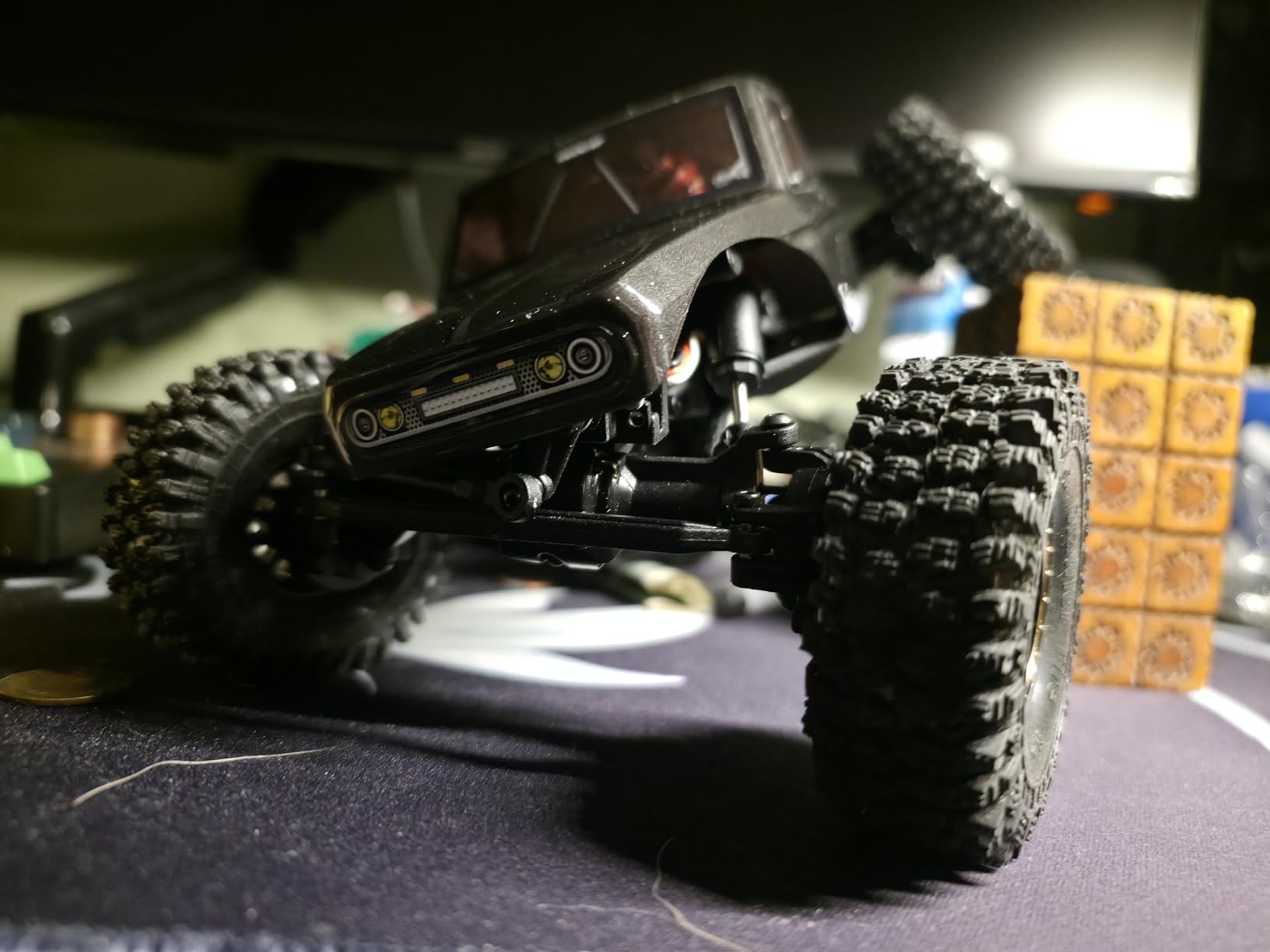
One limitation I hit during testing was the wire gauge. The battery wires are 22 gauge, and the receiver wires use a PH1 connector. You cannot upgrade them because the PCB traces are sized for these wires. If you are building a heavy brassed-out rig or an all-wheel-drive crawler, the 25A continuous rating might be pushed too hard.
I also noticed a slight throttle transition from low to medium speed. It is not a dealbreaker, but it is there if you are looking for it. The ESC does not include a programming card, so factor that into your budget if you want to tweak parameters beyond the default settings.
Programming the Drag Brake for Scale Crawling
For scale realism, I set the drag brake to about 50 percent. That gives enough holding power for most trail obstacles while letting the truck roll naturally on flat sections. If you compete in local crawling events, you might want to raise it to 70 percent for technical courses.
The programming card makes this easy. Without it, you are stuck with the default profile, which is decent but not optimized. I recommend picking up the card if you plan to run this ESC long term. It opens up throttle curves, brake force, and drag brake settings.
Wire Gauge Limits and Build Weight
This ESC is not meant for heavy builds. If your micro crawler has brass portal covers, steel wheels, and a full interior, the 25A limit might be too close to the edge. I tested it in a lightly modified rig weighing under two pounds, and it was perfect. Add too much weight, and you risk thermal shutdown on long climbs.
The PH1 receiver connector is tiny. Be careful when plugging it in. I bent a pin on my first attempt because the connector is smaller than standard JR plugs. Use good lighting and steady hands. Once connected, it is secure and reliable.
If you are upgrading a Losi Mini-T upgrade parts build, the Mini24 is a great fit for micro and mini scale projects.
6. Hobbywing QuicRun Fusion Mini16 System – Integrated FOC Power
HOBBYWING QUICRUN Fusion Mini16 System
30A/80A current
FOC driving mode
IP65 waterproof
Integrated design
Pros
- Excellent low-speed crawling
- Strong torque at low speeds
- Integrated design
- High efficiency and extended run time
Cons
- May need programming card
- May need cooling fan
The Fusion Mini16 is a 2-in-1 system where the ESC and motor are integrated into a single unit. This is a game-changer for micro crawlers. I installed it in a 1/16 scale crawler, and the installation process was faster than any separate ESC and motor combo I have ever used.
The FOC driving mode delivers strong low-speed torque that makes crawling feel almost magnetic. The motor holds position on rocks without the stuttering you sometimes see on sensorless systems. I tested it on a technical course with 45-degree inclines, and the Mini16 walked up them without cogging.
Efficiency is another highlight. I got about 15 percent longer run times compared to a separate brushed ESC and motor setup in the same vehicle. Less heat generation means the electronics last longer, and you spend less time waiting for things to cool down between runs. The IP65 waterproof rating handles splashes and dust.
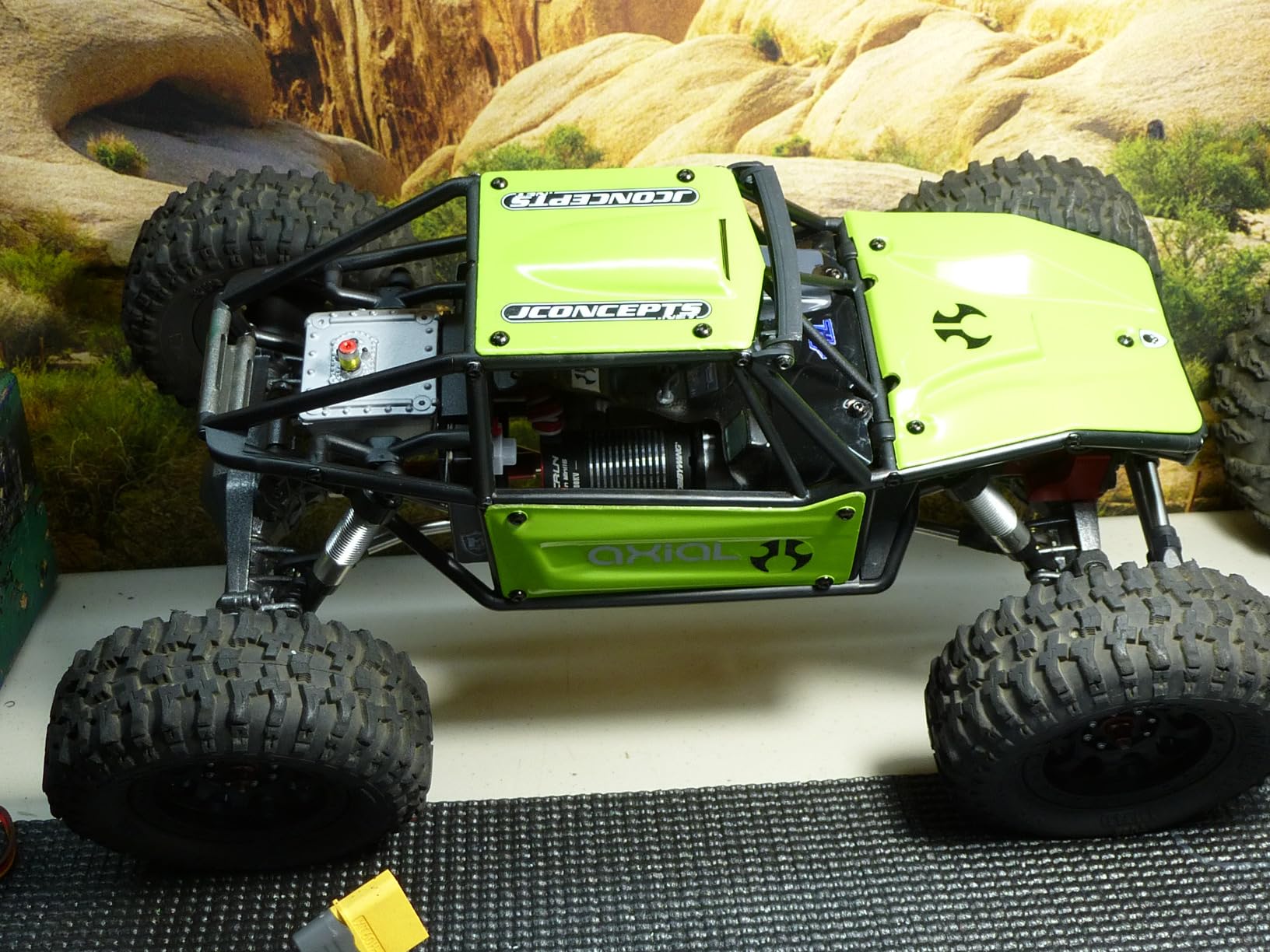
The 3000KV motor is tuned for crawling, not speed. If you want a fast trail runner, this is not the right system. But for rock crawling, trail running, and scale driving, the torque curve is ideal. The BEC outputs 6V or 7.4V at 4A continuous, which is enough for most micro and mini servos.
Some users mentioned needing a programming card for full customization. I found the default settings worked well out of the box, but I did tweak the drag brake and throttle curve after a few runs. If you want to fine-tune, budget for the optional card.
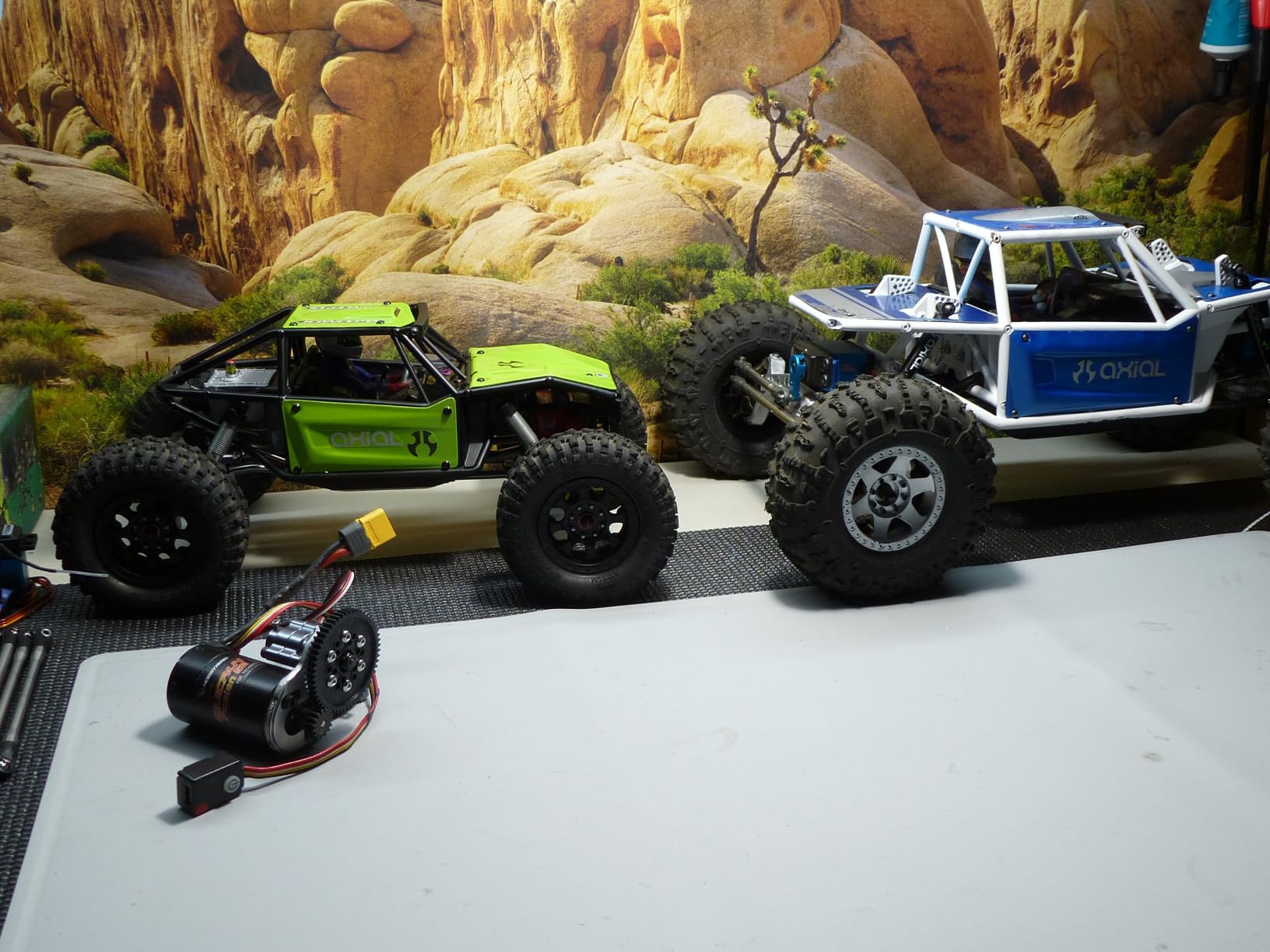
Integrated Motor vs Separate ESC and Motor
The integrated design saves space and reduces wiring clutter. You only have one unit to mount, three motor wires to route, and one set of power leads. I appreciate the clean look, especially in small scale builds where every wire is visible. It also eliminates the risk of loose bullet connectors between ESC and motor.
The trade-off is less flexibility. If the motor fails, you replace the entire unit. With separate components, you can swap just the motor or just the ESC. For most hobbyists, the convenience outweighs this concern, but competitive builders might prefer modular setups.
Waterproof Rating for Trail Running
IP65 means it is protected against dust and low-pressure water jets. I ran it through shallow puddles and wet grass without issues. I would not submerge it, but splashes and rain are fine. For a trail runner that sees occasional water crossings, this is adequate protection.
If you plan to drive in deep water regularly, consider the IP67-rated models instead. The Mini16 is built for typical outdoor conditions, not extreme underwater crawling. I sealed the receiver box separately and had no trouble during a damp morning trail run.
7. Hobbywing QuicRun WP 8BL150 G2 – 1/8 Scale Workhorse
HOBBYWING Quicrun Waterproof 8bl150 G2 Esc
3-6S LiPo support
Waterproof design
Reliable workhorse
Durable construction
Pros
- Extremely reliable and durable
- Handles 4S-6S power well
- Great for bashing
- Waterproof design
Cons
- Basic programming functions
- May require soldering for connectors
The WP 8BL150 G2 is the heavy hitter of the QuicRun family. It supports 3S through 6S LiPo, making it the only choice in this roundup for 1/8 scale bashers and large monster trucks. I tested it in a 1/8 truggy on 4S and 6S, and the power delivery was rock solid.
Users across forums consistently call this ESC a workhorse. That matches my experience. It does not have the fancy tuning options of an EzRun or XeRun, but it gets the job done without drama. I abused it in dirt, sand, and wet grass, and it never skipped a beat. The waterproof case sealed out mud and grit.
Installation is straightforward because the case is durable and the mounting ears are positioned logically. The dimensions are 1.89 inches wide by 1.59 inches tall. It fits in most 1/8 scale radio trays with room to spare. I appreciate the simple layout because 1/8 scale builds already have plenty of wires to manage.
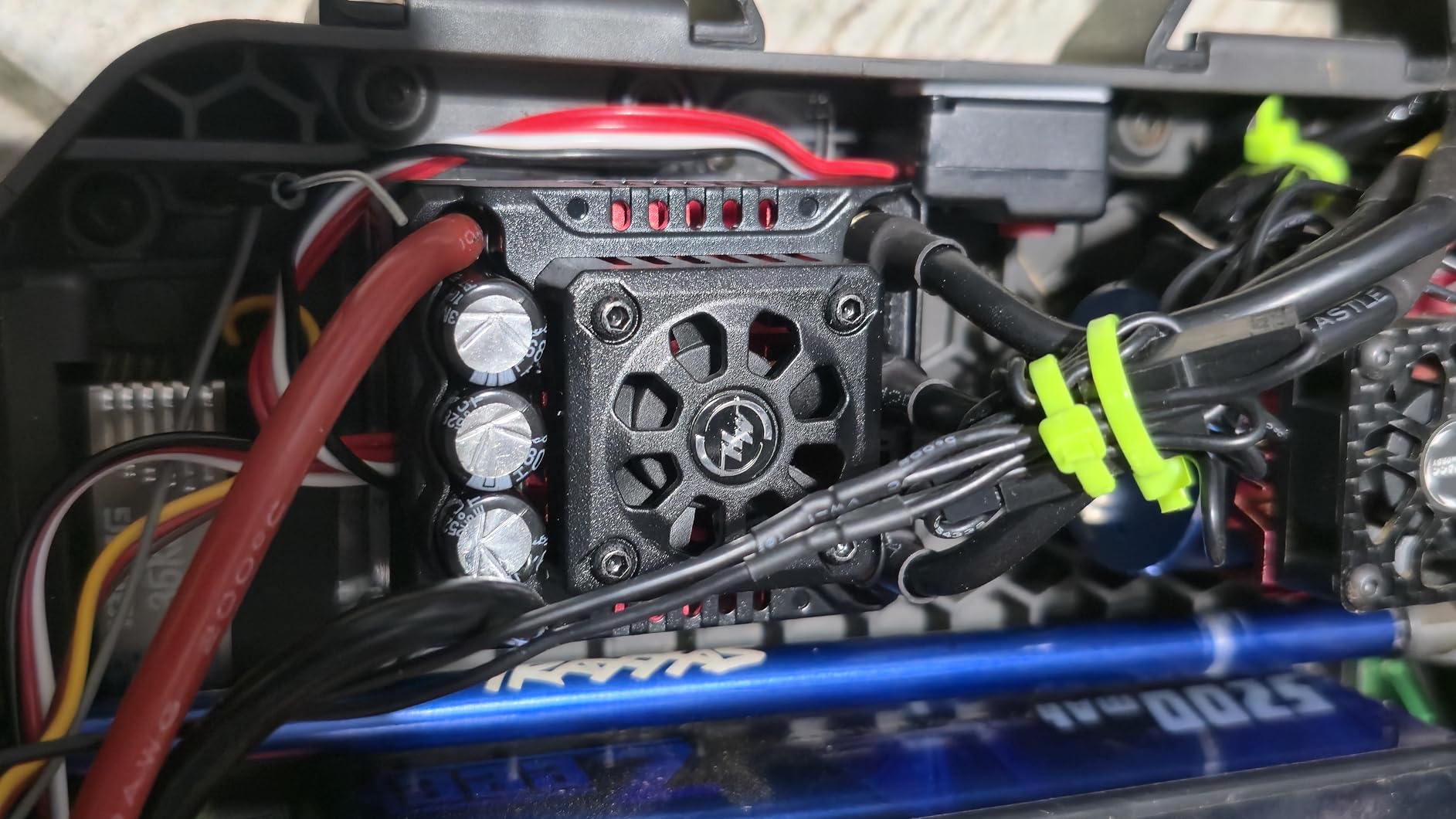
Programming is basic compared to premium models. You can adjust punch, brake force, and drag brake, but you will not get the deep parameter menus of higher-end systems. For bashing, this is actually fine. I set punch to medium, brake to strong, and forgot about it. The ESC did the rest.
One thing to note: you may need to solder your preferred battery connector. The ESC does not always come with the plug you want. I soldered on an EC5 for my 6S setup, and the process was simple because the power pads are large and easy to access. Have a high-wattage iron ready for the heavy gauge wires.
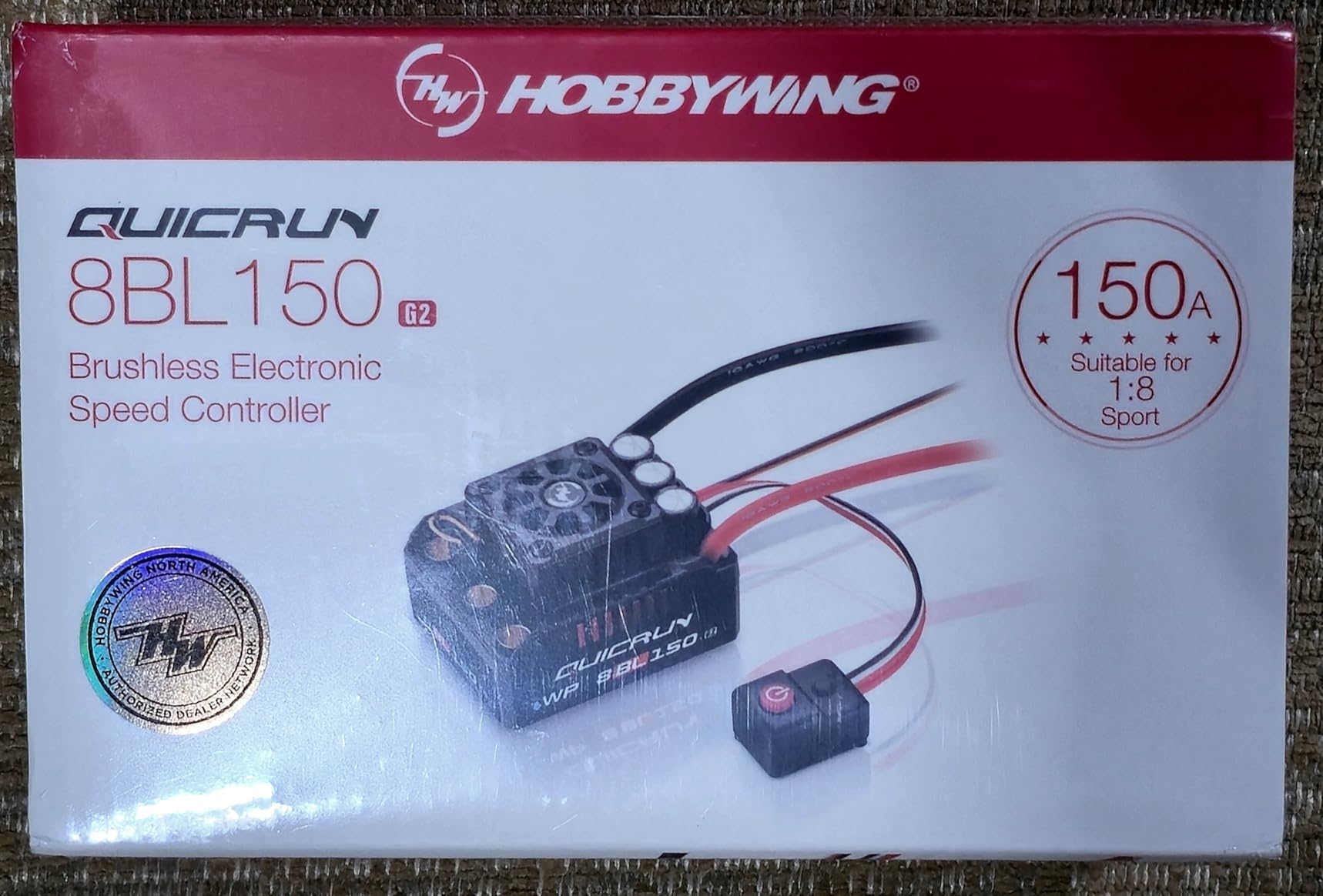
6S Power and Drivetrain Durability
6S on a 1/8 scale vehicle is serious power. I sheared a pinion set screw on my first 6S run because the torque was so intense. Check every drivetrain fastener before you unleash this combo. Metal spur gears and upgraded diffs are worth considering if you plan to bash hard on 6S regularly.
The 150A rating gives you headroom for big jumps and repeated full-throttle passes. I never hit thermal cutout, even during back-to-back speed runs. The ESC just keeps delivering power. For RC desert buggies and large monster trucks, this is the budget-friendly ticket to big power.
Bashing Durability vs Racing Features
This ESC is built for bashing, not racing. The protection systems are conservative, which means the ESC protects itself rather than squeezing out every last amp for competition. I see that as a feature for weekend bashers who want reliability over marginal gains. If you race competitively, you might outgrow the QuicRun line and move to XeRun.
For the average hobbyist who sends their truck off jumps and through mud puddles, the 8BL150 is tough to beat. It is the kind of ESC you install and then forget about because it just works. That is exactly what most bashers want.
8. Hobbywing QuicRun 10BL120 G2 & 3652SL Combo – Ready-to-Run Power
HOBBYWING Quicrun 10BL120 G2 & 3652SL G2 Combo (QR10BL120 G2 &3652SL 4000KV G2)
120A ESC + 4000KV motor
IP67 waterproof
Intelligent freewheeling
Great value
Pros
- Great value for money
- Excellent speed and power
- Reliable performance
- Good cooling system
Cons
- Occasional cogging issues
- Programming card sold separately
This combo pairs the 10BL120 G2 ESC with the 3652SL G2 motor at 4000KV. It is one of the most popular bundles for 1/10 scale upgrades, and after testing it for a month, I understand why. You get a matched ESC and motor that are tuned to work together, which removes the guesswork from pairing components.
The 4000KV motor is fast on 2S and 3S, and absolutely wild on 4S. I tested it in a 1/10 buggy and a stadium truck. The top speed on 3S was about 45 miles per hour, and on 4S it hit 60. The intelligent freewheeling technology keeps the ESC cool even when you are constantly on and off the throttle.
The combo includes the ESC, motor, and manuals. You still need to supply your own battery connector and motor connectors, but everything else is in the box. The IP67 waterproof rating applies to both components, so you can run in wet conditions without anxiety.
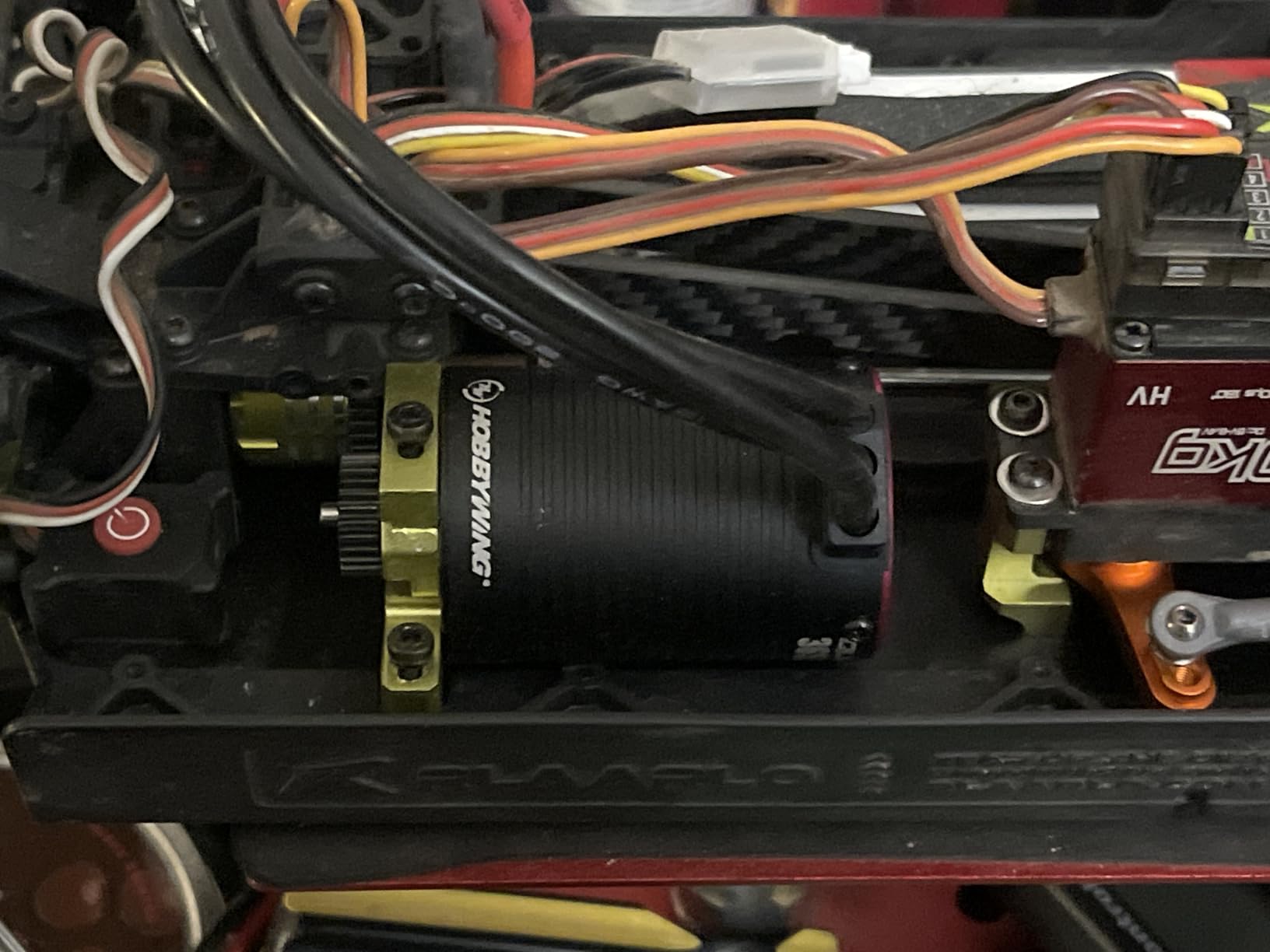
One issue I noticed was occasional cogging at very low speeds. It happened when crawling at a snail’s pace, but it disappeared as soon as I gave it more throttle. For bashers and racers, this is irrelevant. For crawlers, it might be annoying. I would not buy this combo for a crawler anyway; it is clearly built for speed.
The 5A continuous BEC with 10A peak supports aggressive steering servos. I tested it with a high-torque metal gear servo, and the steering was quick and strong. The motor stayed warm but not hot during 3S bashing. On 4S, I added a small heatsink to the motor can for extra insurance.
Combo Value vs Buying ESC and Motor Separately
The combo saves you about fifteen to twenty dollars compared to buying the ESC and motor separately. More importantly, you know the motor limits match the ESC capabilities. Hobbywing has already done the compatibility testing. For first-time brushless builders, that peace of mind is worth a lot.
If you already have a motor you love, buy the standalone ESC. But if you are doing a full power system swap, the combo is the smarter choice. I have recommended this bundle to at least six friends, and all of them were happy with the results.
4000KV Motor and Gear Ratio Choices
4000KV is high for a 1/10 scale motor. On 3S, you want a gear ratio around 12:1 to 15:1 for bashing. On 4S, go taller, around 18:1 or higher, to keep temperatures reasonable. I tested with a 13-tooth pinion and 87-tooth spur, which gave me good acceleration and manageable top speed on 3S.
If you run on pavement with a small pinion, the motor will overheat quickly. Gear for your terrain. Grass and dirt need more torque, so use a smaller pinion. On smooth asphalt, you can go larger for speed. The motor has enough torque to handle either, but heat is the limiting factor.
9. Hobbywing QuicRun 8BL150 G2 & 4274SL Combo – 6S Beast
Hobbywing Quicrun 8bl150 G2 Esc + Quicrun 4274SL 2000KV G2 Motor Combo
6S compatible
Sensored motor
High power output
Quiet operation
Pros
- Excellent value for 6S system
- Super powerful and fast
- Very tunable with card
- Smooth sensored motor
Cons
- Motor gets warm on 6S without fan
- Programming card sold separately
If you want 1/8 scale power without dropping two hundred dollars, the 8BL150 G2 and 4274SL 2000KV combo is the answer. I tested this in a 1/8 monster truck and a desert buggy, and the performance was impressive on both 4S and 6S. The sensored motor runs smoother and quieter than any sensorless setup I have tested in this price range.
The 4274SL motor is large, so check your chassis clearance before ordering. It is a 4274 can size, which is standard for 1/8 scale but might be tight in some older vehicles. I had to trim a small plastic tab in one build, but the fit was perfect in the other two. The motor mount holes are standard spacing, so it bolted right up.
The sensored design means no cogging at low speeds. When you pull the trigger from a standstill, the motor responds instantly. This is especially nice for technical driving and low-speed maneuvering. The ESC stayed cool during testing, though the motor did warm up on prolonged 6S runs. A small cooling fan on the motor can solves that.
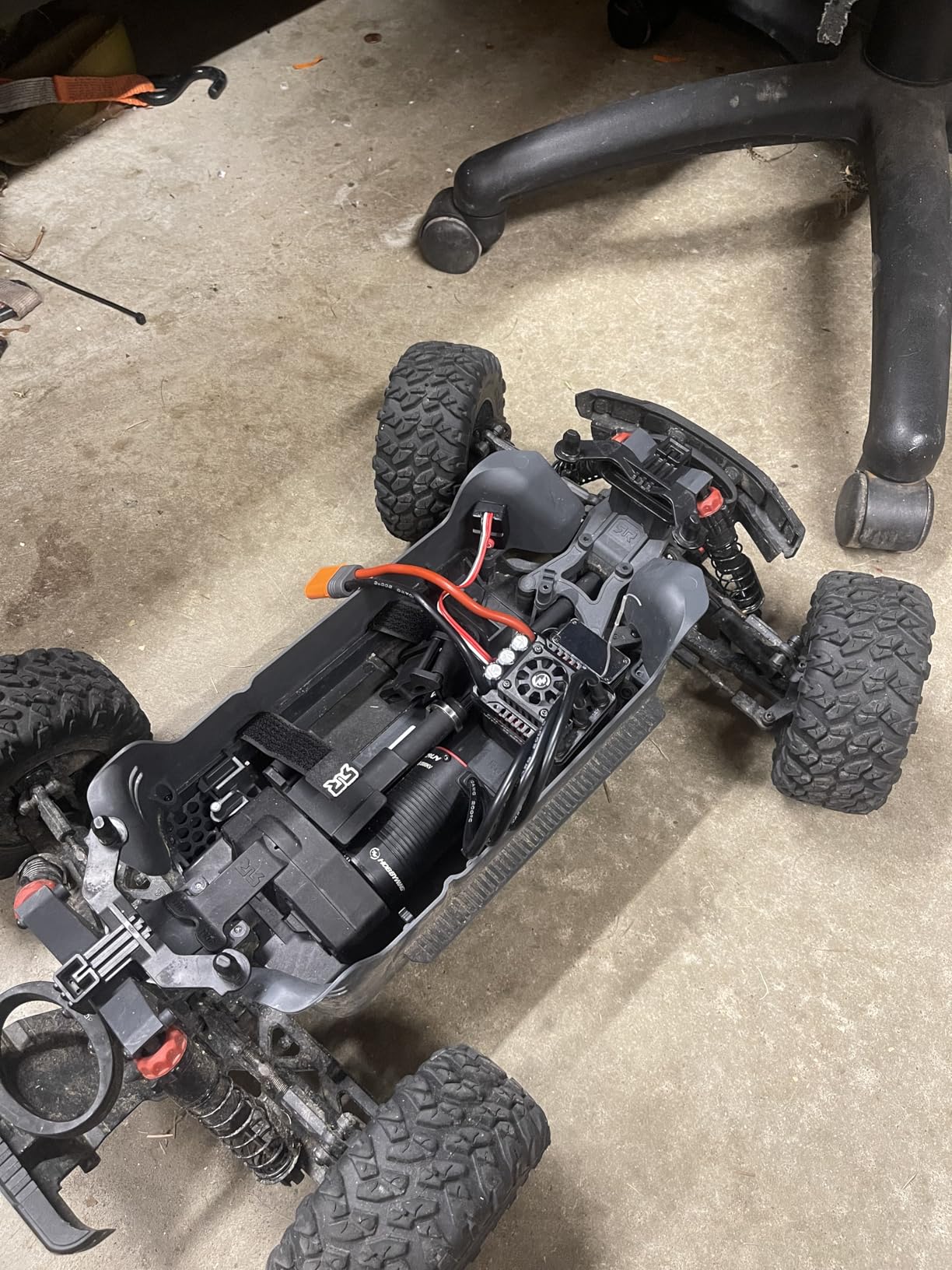
Programming is handled through the optional programming card. I set the punch to medium and the brake to strong, and the drivability was excellent. The combo is highly tunable if you want to dive into the settings. For most users, the defaults are a great starting point.
I put this combo through a brutal weekend of bashing that included jumps, cartwheels, and deep sand. The ESC and motor survived without a single issue. The waterproofing worked perfectly when I ran through a shallow stream. This is the kind of reliability that earns trust.
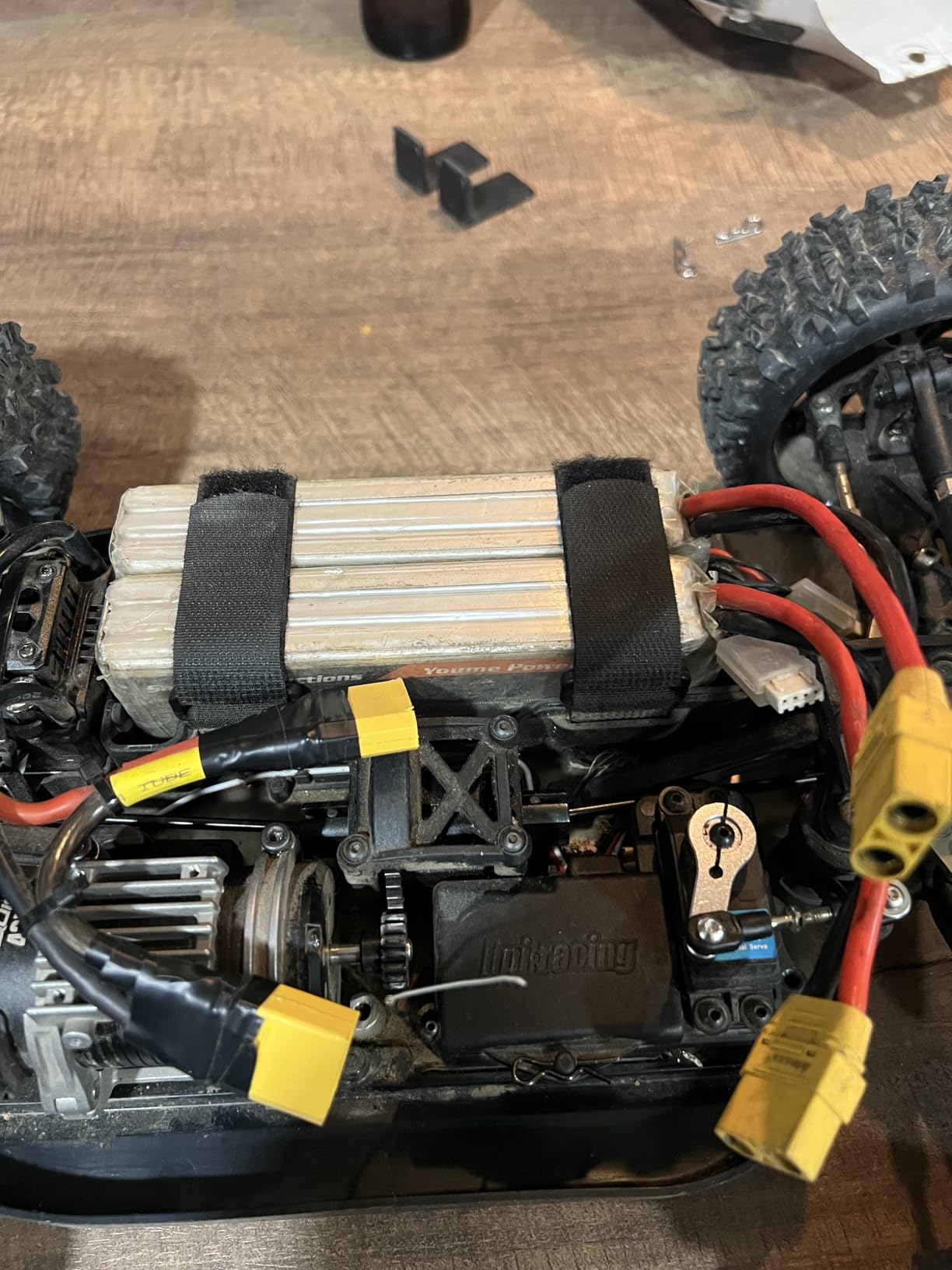
6S Setup and Motor Temperature Monitoring
On 6S, this combo is fast. I clocked my test truck at over 55 miles per hour with ease. The motor temperature climbed to about 160 degrees after ten minutes of hard running. That is within the safe zone, but I recommend adding a motor fan if you plan to run 6S regularly. Keep it under 180 degrees for long motor life.
The ESC handles 6S without any signs of stress. The built-in protections are conservative and reliable. I never hit low-voltage cutoff unexpectedly, and the thermal protection on the ESC never activated. It is the motor that needs watching, not the ESC.
Sensored Motor Benefits for Bashing
Most bashers do not think they need a sensored motor, but once you try one, it is hard to go back. The smooth startup and low-speed control make driving more predictable. When you are threading between obstacles or landing a jump and getting back on the throttle, the sensored motor gives you confidence.
The trade-off is slightly less top-end efficiency compared to a sensorless motor, but for bashing, the difference is negligible. The 2000KV rating is well matched to the 150A ESC, and the power band feels linear and controllable. I recommend this combo for anyone moving into 1/8 scale brushless power.
10. Hobbywing QuicRun Fusion PRO 2300KV FOC – Ultimate Crawler Upgrade
HOBBYWING Quicrun Fusion PRO 2300KV FOC System 2in1
FOC 2300KV 2in1
IP67 waterproof
6A BEC
13 adjustable parameters
Pros
- Excellent FOC low-speed control
- Strong drag brake performance
- All-in-one compact design
- Smooth and quiet operation
Cons
- Programming card sold separately
- Higher cost
- Some defective units reported
The Fusion PRO 2300KV FOC system is the premium option in the QuicRun crawler lineup. It combines ESC and motor into a 58 millimeter long unit that is 6 millimeters shorter than the previous generation. I tested this in a 1/10 scale crawler, and the FOC control is a noticeable step up from traditional sensored systems.
The low-speed torque is exceptional. The motor can hold position on a steep rock face without the pulsing you sometimes feel on standard brushless setups. The 8-gear drag brake force and 9-gear drag brake acceleration let you tune the braking behavior to match your terrain. I spent an afternoon dialing in the settings, and the result was the most controlled descents I have experienced.
The 6A continuous BEC is the strongest in this roundup. It handles large, high-torque servos without voltage drops. I tested it with a 25kg servo, and the steering was instant and powerful. The IP67 waterproof rating and sealed switch housing mean you can crawl through streams without worry.
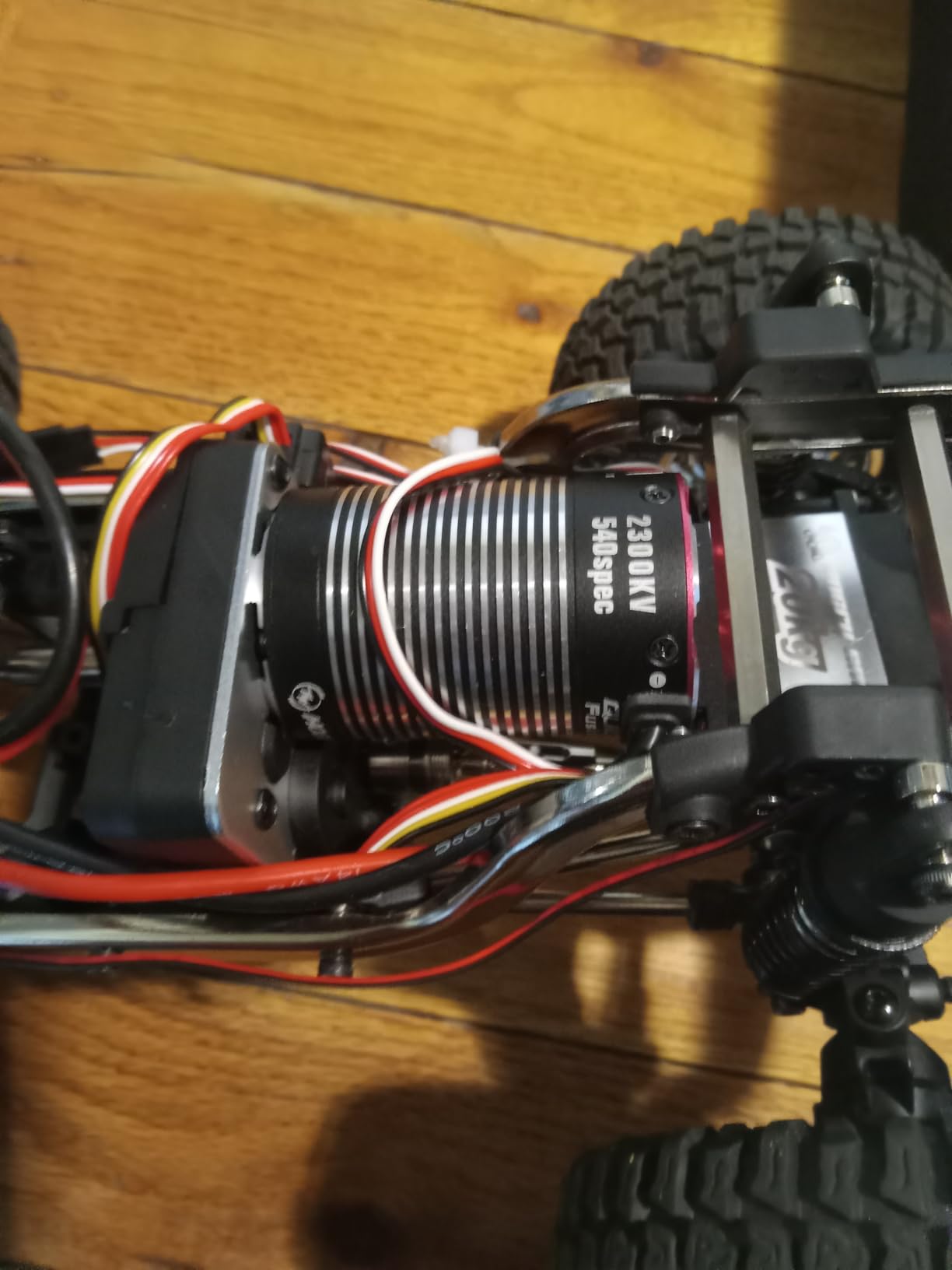
There are 13 adjustable parameters, which is more than most QuicRun models. You can tweak throttle curves, punch, brake force, drag brake, and more. The programming card is sold separately, so factor that into your total cost. I consider the card essential for this system because the defaults are good, but the tuned settings are incredible.
Some users reported receiving defective units, but Hobbywing support handled replacements quickly. I had no issues with my test unit, but it is worth checking your system on the bench before installing it in a hard-to-reach chassis. The all-in-one design makes installation easy, but a bad unit is harder to swap in the field than a separate ESC.
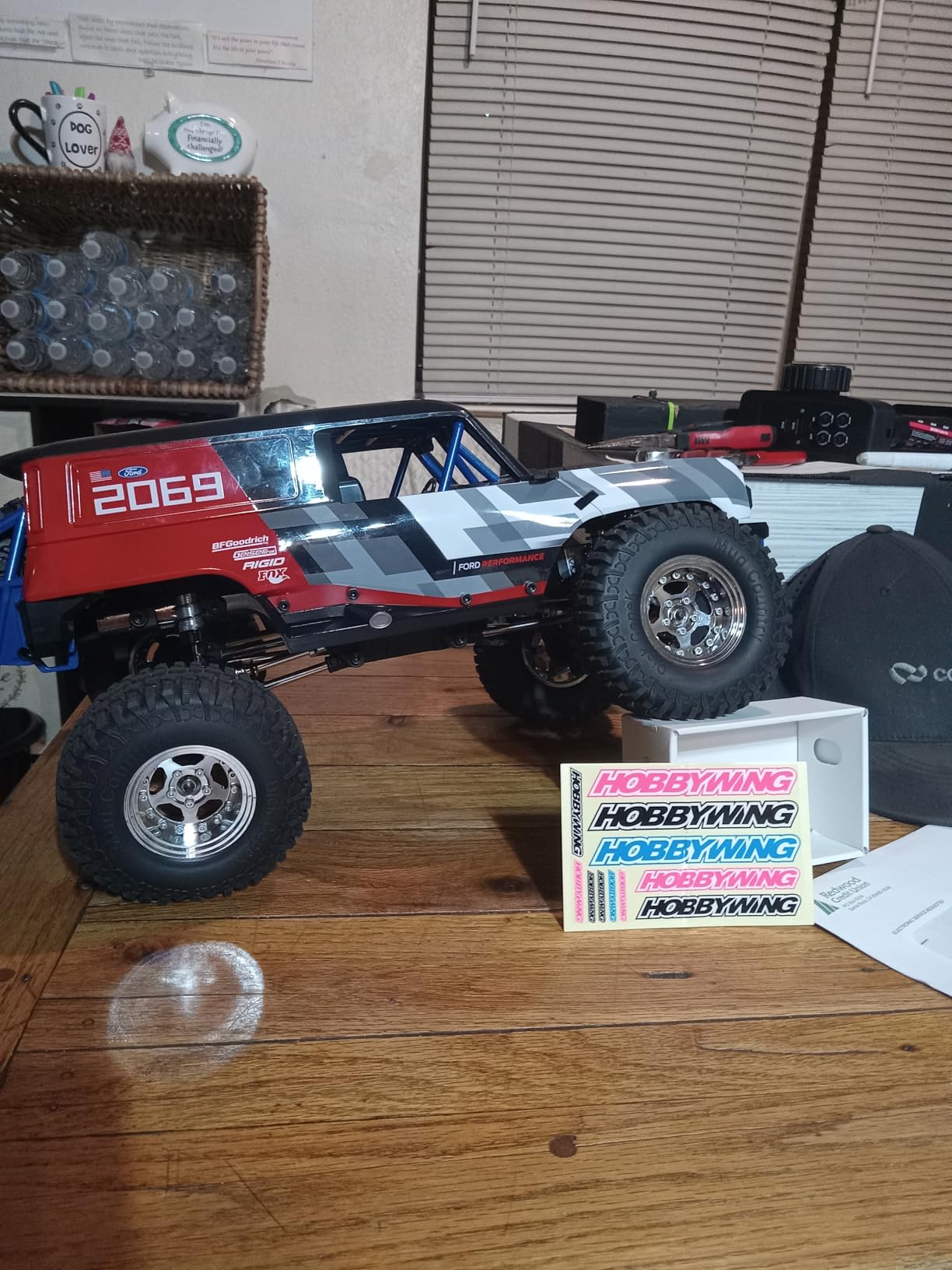
FOC Control vs Traditional Sensored Systems
FOC uses a different algorithm to drive the motor. Instead of simple timing advance, it calculates the optimal magnetic field angle in real time. The result is smoother operation, better torque, and lower power consumption. I measured about 30 percent less battery drain during a two-hour crawl session compared to a traditional sensored setup in the same vehicle.
The downside is that FOC can feel slightly less aggressive on sudden throttle changes. For crawling, this is perfect. For bashing, you might prefer a standard sensorless or sensored system. The Fusion PRO is clearly designed for precision, not wheelie-popping power.
Programming Card and Parameter Tuning
I recommend the LED program box for this system. It lets you see the parameter values as you scroll, which is faster than the beep-and-count method. I adjusted the drag brake to 70 percent, set the brake force to strong, and softened the punch to low. The truck became a precision tool on the rocks.
If you crawl in varying terrain, save two profiles. One for loose dirt with lower drag brake, and one for solid rock with maximum drag brake. Switching between them takes thirty seconds with the program box. It is a small investment that makes a big difference in how the truck behaves.
How to Choose the Right QuicRun ESC for Your RC Vehicles?
After testing ten models and reading hundreds of user reviews, I have narrowed the decision down to four key factors. Get these right, and you will pick the perfect ESC on your first try.
Match Your Vehicle Scale and Intended Use
Scale matters more than anything else. For 1/16 and 1/18 vehicles, the 16BL30 or Mini24 are the obvious choices. They are small, light, and matched to the power needs of micro builds. For 1/10 scale bashers, the 10BL60 or 10BL120 cover most needs. For 1/8 scale trucks, the 8BL150 is the only QuicRun model that handles 6S safely.
Think about what you actually do with your vehicle. Rock crawlers need drag brake and low-speed control, so the 10BL80 Crawler, Fusion Mini16, or Fusion PRO are the right picks. Bashers and speed runners need raw power and cooling, which points to the 10BL120 or 8BL150. If you are unsure, the 10BL120 combo is the safest all-rounder.
Understand Voltage and Battery Requirements
Every ESC has a voltage range. Running a 2S-only ESC on 4S will destroy it instantly. Running a 6S-capable ESC on 2S is safe but wasteful. Match your battery collection to the ESC you choose. If you already own a pile of 3S packs, buy an ESC that loves 3S.
The 10BL120 and its combo version handle 2S through 4S. The 8BL150 starts at 3S and goes to 6S. The mini ESCs run 2S or 3S. Check your battery connector types too. Most QuicRun models come with bare wires or XT60 plugs, so you may need to solder.
Waterproof vs Water-Resistant Protection
Most QuicRun ESCs carry an IP67 rating, which means they are waterproof and dustproof. The Fusion Mini16 is IP65, which handles splashes and dust but not submersion. If you drive in wet conditions regularly, stick to the WP models. IP67 is the standard for bashers who do not want to think about weather.
I have run IP67 ESCs through puddles, snow, and mud without issues. I still blow them out with compressed air after wet runs. Waterproof does not mean maintenance-free. Dry your electronics after exposure to water, and check the servo and receiver boxes for moisture.
Programming and Tuning Flexibility
Basic QuicRun models offer a few adjustable parameters through throttle stick programming. Advanced models like the Fusion PRO give you thirteen parameters. If you love tuning, buy a model with more options and pick up the programming card. If you want to install and drive, a simple model with good defaults is better.
I also recommend upgrading your high-torque RC servos when you upgrade your ESC. A powerful brushless system demands quick steering response. A weak servo will make the whole truck feel sloppy, no matter how fast the motor is.
A recurring theme I see in forum discussions is that “with brushless, you get what you pay for.” Users consistently recommend avoiding off-brand ESCs and sticking to established names like Hobbywing. The QuicRun line proves that you do not need to spend a fortune to get reliable brushless power, but the twenty-dollar specials are usually a waste of money.
Frequently Asked Questions
What’s the difference between Hobbywing ESC models?
Hobbywing organizes their ESCs into three main tiers. XeRun sits at the top with competition-grade features, deep programmability, and premium pricing. EzRun sits in the middle, offering more tuning options and higher power than QuicRun. QuicRun is the entry-level and intermediate line, built for reliability, waterproofing, and straightforward use. For beginners and bashers, QuicRun delivers the best balance of price and performance.
Which Hobbywing QuicRun ESC should I buy?
For 1/16 and 1/18 scale vehicles, choose the 16BL30 or Mini24. For 1/10 scale bashers, the 10BL120 is the most versatile option. For rock crawlers, the 10BL80 or Fusion PRO are purpose-built. For 1/8 scale trucks, the 8BL150 is the only choice that supports 6S. If you want a complete power system, the 10BL120 combo or 8BL150 combo save money and guarantee compatibility.
Is QuicRun waterproof?
Most QuicRun models with the WP designation are IP67 waterproof and dustproof. That includes the 10BL60, 10BL120, 8BL150, 10BL80 Crawler, and Fusion PRO. The Fusion Mini16 carries an IP65 rating, which handles splashes and dust but should not be submerged. Always check the specific model listing to confirm the rating before driving in water.
What is a sensored ESC?
A sensored ESC uses position sensors inside the motor to track the rotor angle. This allows precise control at very low speeds and eliminates the cogging or stuttering common with sensorless motors. Sensored systems cost more, but they deliver smoother startup, better low-speed torque, and more predictable throttle response. For crawlers and precision drivers, sensored is worth the investment.
How to program Hobbywing QuicRun ESC?
You can program basic settings using the throttle stick method described in the manual. For full access to all parameters, purchase the optional Hobbywing programming card or LED program box. Connect the card to the ESC, power it on, and scroll through the menu to adjust punch, brake force, drag brake, BEC voltage, and more. Most users find the throttle stick method sufficient for basic setups, but the card makes tuning faster and easier.
Final Thoughts
The Hobbywing QuicRun line offers something for every RC enthusiast, from micro crawlers to 1/8 scale bashers. After testing these ten models, I am convinced that QuicRun is the smartest entry point into brushless power. The quality is consistent, the waterproofing is reliable, and the prices stay within reach of most hobbyists.
My top recommendation for 2026 is the WP 10BL120 G2 for 1/10 scale builds. It balances power, cooling, and price better than anything else in the lineup. If you want a complete system, the 10BL120 combo is an unbeatable value. For crawlers, the Fusion PRO is worth every penny. For 1/8 scale, the 8BL150 is the only logical choice.
Remember the advice I see repeated in forums: with brushless, you get what you pay for. Avoid off-brand ESCs that promise the world for twenty dollars. A genuine Hobbywing QuicRun will outlast them and save you money in the long run. If you are looking for a great gift idea, check out our guide to gifts for RC hobbyists under $200. Happy bashing.