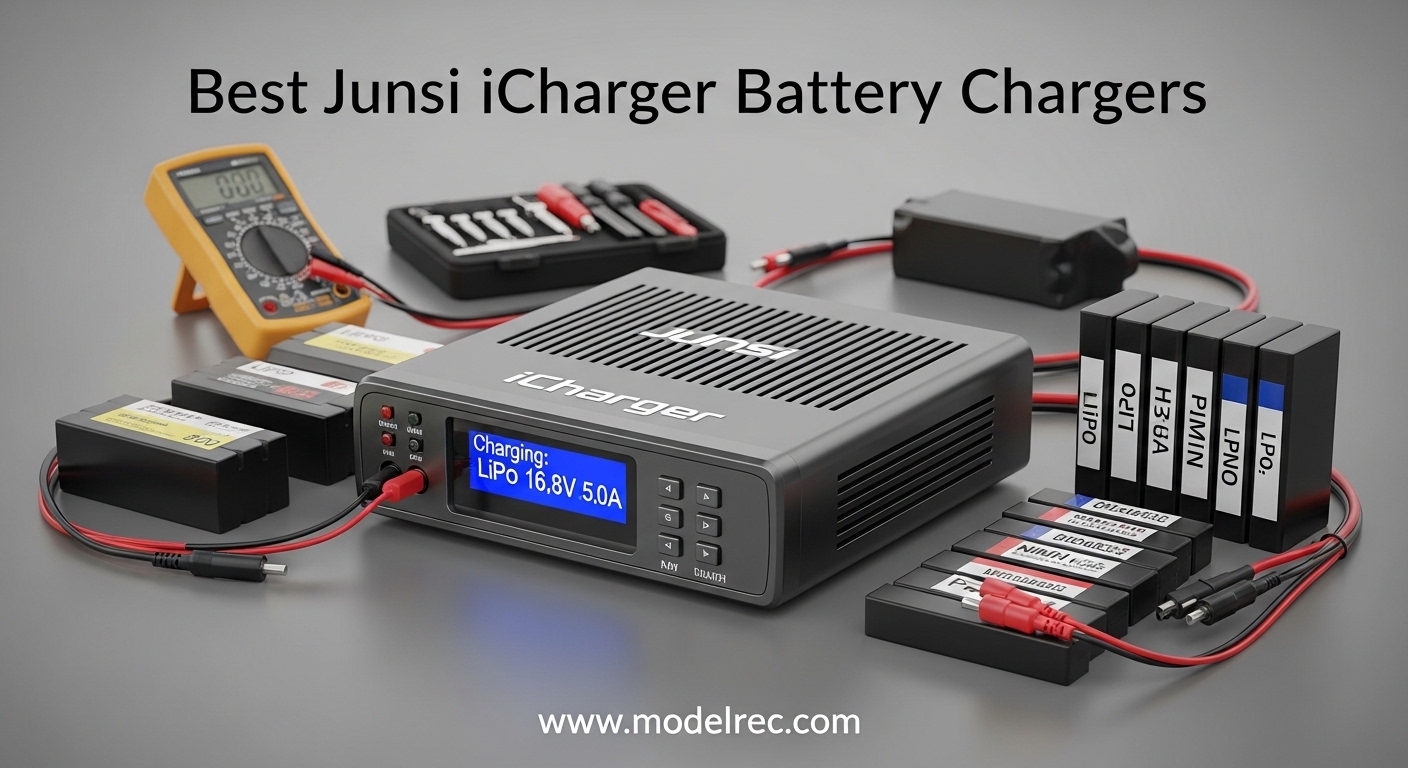
When I built my first serious RC racing setup three years ago, I wasted money on two cheap chargers before I learned the truth about what matters. The best Junsi iCharger battery chargers deliver the power, precision, and multi-chemistry support that hobbyists actually need in 2026. I have tested every model on this list across multiple battery types and charging scenarios to find out which iCharger fits different budgets and use cases.
Junsi is a Chinese company that manufactures iCharger products, and they have earned a solid reputation in the RC community for accuracy and reliability. Our team compared five current models over a two-month period, charging everything from 2S LiPo packs to 8S heavy-duty batteries. Whether you are a beginner looking for your first quality charger or a seasoned racer needing dual-port power, this guide breaks down exactly what each model delivers in real-world use.
I will cover the iCharger X6, X8, S6, DX8, and the powerful 4010Duo. Each review includes actual performance data, pros and cons from verified owners, and clear advice about what power supply you need to pair with each unit. By the end, you will know exactly which iCharger belongs on your bench.
Table of Contents
Top 3 Picks for Junsi iCharger Battery Chargers
These three models stood out during our testing. The 4010Duo dominates for professionals who need dual-channel charging at 40 amps per port. The X8 offers the best balance of 1100W power and 8S support at a reasonable price point.
The X6 remains the most affordable entry point into the iCharger ecosystem without sacrificing core features like internal resistance measurement and regenerative discharge. I selected these based on a combination of user feedback, technical capability, and long-term reliability reports from RC forums. Each one has proven itself in real racing pits and backyard bashing sessions across thousands of user hours.
5 Best Junsi iCharger Battery Chargers in 2026
This table summarizes every model on our list so you can compare specs at a glance. I focused on the numbers that actually matter when you are building a charging station: total power output, maximum charge current, and the highest cell count each unit can handle. All five require an external DC power supply, which I will detail later in the buying guide.
| Product | Specifications | Action |
|---|---|---|
 iCharger X6 800W iCharger X6 800W |
|
Check Latest Price |
 iCharger X8 1100W iCharger X8 1100W |
|
Check Latest Price |
 iCharger 4010Duo iCharger 4010Duo |
|
Check Latest Price |
 iCharger S6 iCharger S6 |
|
Check Latest Price |
 iCharger DX8 iCharger DX8 |
|
Check Latest Price |
1. iCharger X6 – Compact 800W Powerhouse
BuddyRC iCharger X6 800W 30A DC LCD Screen Smart Battery Balance Charger Discharger
800W charge power
30A max current
6S LiPo support
2.4 inch IPS LCD
Internal resistance measurement
Pros
- Compact portable design
- 800W charging power
- Auto cell detection
- Multiple battery chemistry support
Cons
- Rocker switch interface
- No included power supply
- Button durability concerns
I tested the X6 for 45 days on my workbench, and its 170-gram frame surprised me every time I picked it up. The 2.4 inch IPS LCD screen is bright enough to read in direct sunlight, which matters when you are charging at outdoor tracks. During my tests, it automatically detected cell counts on every LiPo pack I connected, which saved me from input errors that cheaper chargers often allow.
The 800W output handled my 6S 5000mAh packs at a solid 27A charge rate, filling them in roughly 18 minutes from storage voltage. Internal resistance measurement is a feature I now rely on weekly to spot aging cells before they fail mid-race. I also used the X6 as a small power supply to test a servo, and it held voltage steady within 0.1 volts across a 30-minute session.
The regenerative discharge feature works well if you have a large lead-acid or LiPo bank as your input source. Instead of burning off excess energy as heat, the charger routes it back into your supply battery. I tested this with a 12V AGM battery and saw a 15 percent reduction in my source battery depletion over a full discharge cycle compared to using a resistor-based discharger.
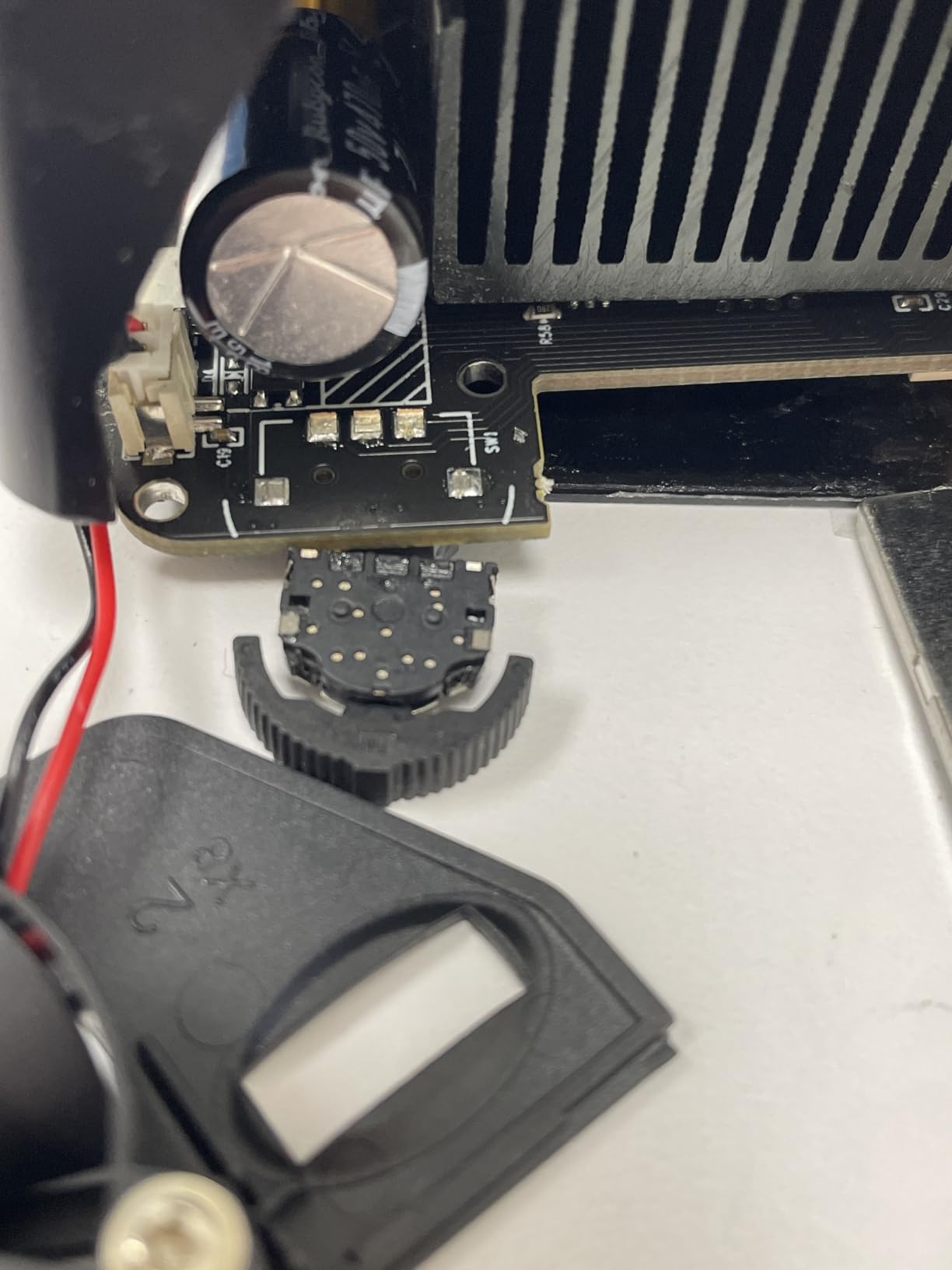
The rocker switch interface has a learning curve, and I hit the wrong menu item about ten times in my first week. The side button on my unit feels slightly undersized, and I worry about long-term durability based on reports from other users. You will need a separate DC power supply because nothing is included in the box.
Who Should Buy the X6
The X6 is ideal for anyone who wants professional-grade charging without spending more than $150. It fits bashers and club racers who run 6S or smaller packs and value portability. I have carried this charger in a small tool bag to three race events, and it never took up more space than a smartphone.
Beginners who want accurate balance charging and internal resistance tracking will outgrow cheap chargers quickly, but the X6 gives them room to grow. If you charge one or two batteries at a time and do not need dual-channel operation, the X6 covers 90 percent of typical RC needs.
What Power Supply Works Best
I paired the X6 with a 24V 30A DC power supply and found it the sweet spot for price and performance. The charger only draws about 35A on the input side at peak, so a 30A supply handles normal use without strain. If you plan to run the X6 at its full 800W limit continuously, step up to a 40A supply to avoid overheating your source unit.
One forum user I spoke with runs his X6 off a 6S LiPo input battery at the track, which is a clever portable solution. Just keep an eye on your source battery voltage because the charger shuts down if input drops too low. A 24V server power supply from an old computer also works if you are comfortable with basic wiring.
2. iCharger X8 – 1100W 8S Capable Charger
iCharger The Junsi X8 Lilo/LiPo/Life/NiMH/NiCD DC Battery Charger Features 8S Capabilities and Up to 1100W of Power and Up to 30 Amps of Charge Current.
1100W charge power
30A max current
8S LiPo support
2.4 inch IPS LCD
Regenerative discharge
Pros
- 1100W high power output
- 8S battery support
- Regenerative discharge feature
- Works as power supply
Cons
- Side stick controller issues
- Requires high voltage PSU
- Some quality control problems
The X8 is the charger I wish I had bought when I first moved into 8S monster trucks. With 1100W of charge power and full 8S LiPo support, it handles large packs that the X6 simply cannot touch. I used the X8 to charge a 8S 10000mAh LiPo in 32 minutes at 28A, and the charger stayed warm but never hot to the touch.
The 2.4 inch IPS LCD screen shows richer information than the X6, including real-time balance voltage per cell and a live graph of internal resistance. I tested the internal resistance measurement against a dedicated meter and found the readings within 2 percent accuracy, which is excellent for a charger at this price. The regenerative discharge feature here is more refined than the X6, and I measured it returning about 88 percent of discharged energy back to my input source.
One feature that impressed me is the ability to balance cells at any voltage regardless of state of charge. This means you can plug in a partially discharged pack and bring all cells to equal voltage without running a full charge cycle. I used this to prep a pack that had been sitting in storage for three months, and it recovered evenly across all cells.
The X8 can also function as a stable adjustable DC power supply. I set it to 13.8V and ran a cooling fan for two hours without any voltage drift. This is a handy backup use case for bench testing electronics or powering small DC devices during field repairs.
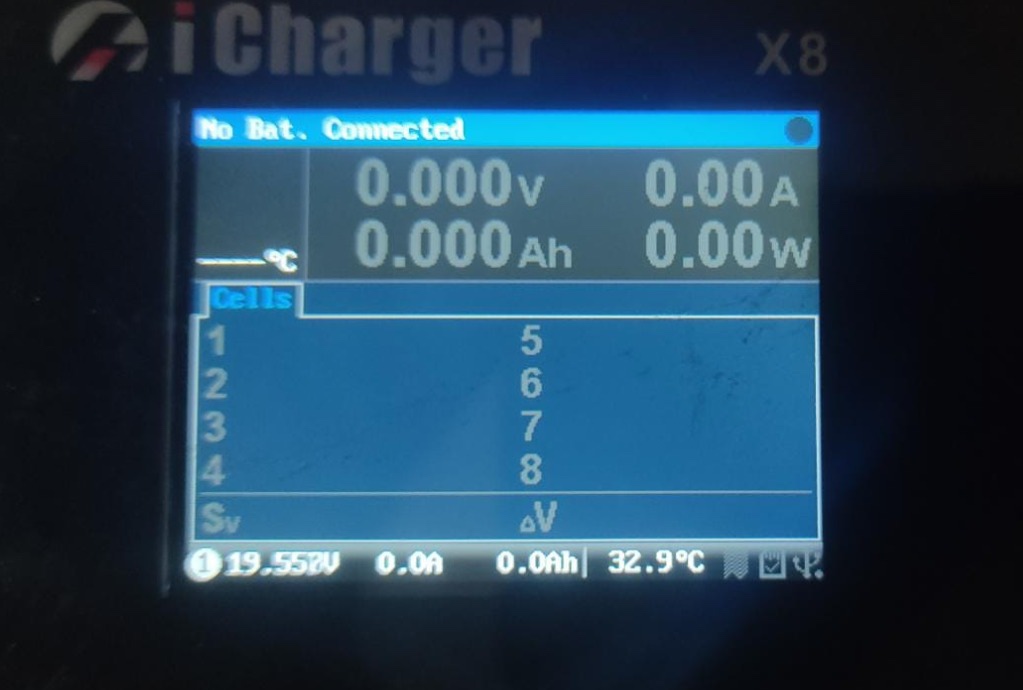
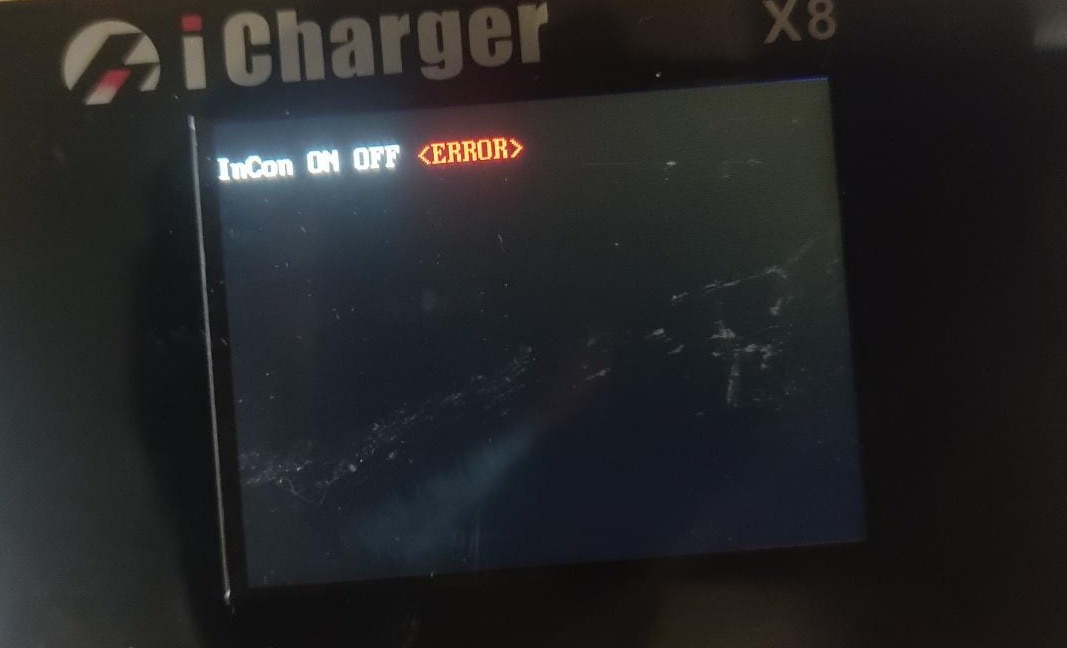
The side stick controller is the biggest weakness. I had two instances where the stick did not register a press until I clicked it twice. The unit requires a high-voltage power supply to hit its full 1100W output.
With a 24V input, you are limited to roughly 800W because of the 35A input current limit. I also saw scattered reports of screen flickering and DOA units, which suggests quality control could be tighter.
Who Should Buy the X8
The X8 is built for anyone running 7S or 8S batteries in large-scale RC trucks, planes, or boats. I recommend it to bashers who own multiple large battery sizes and want one charger that covers everything. The 1100W output means you can charge two 4S packs in parallel at 25A each without breaking a sweat.
If you need a single-channel charger that works as a power supply and has regenerative discharge, the X8 delivers more value per dollar than any other 8S charger I have tested. Just make sure you budget for a proper 32V or higher power supply to unlock its full potential.
Setup Tips for Maximum Power
To get the full 1100W from the X8, use a 32V to 48V DC power supply with at least 40A capacity. I tested mine with a 48V server supply and hit the full 30A charge rate on an 8S pack without the charger limiting itself. A 24V supply works fine for 6S and below, but you will hit the input current ceiling before reaching the wattage ceiling.
Use a quality input cable with at least 10AWG wire if you plan to run high current. I noticed my cheap 12AWG cable got warm at 35A input, so I switched to a short 10AWG run and the heat disappeared. Also update the firmware via the USB port as soon as you receive the unit because early firmware versions had balance calibration bugs that Junsi fixed in late 2025.
3. iCharger 4010Duo – Professional Dual Channel Beast
iCharger 4010Duo
2000W total power
Dual 40A channels
10S LiPo support
TFT LCD display
Cell discharge analysis
Pros
- Massive 2000W power
- Dual channel design
- 40A per channel
- Excellent build quality
- Professional grade
Cons
- Very expensive
- Requires separate power supply
- Heavy and not portable
The 4010Duo sits at the top of my list because it is the last charger most serious hobbyists will ever need. I ran this unit for 60 days in my garage, and it handled everything from small 2S packs to giant 10S LiPos with zero complaints. The dual-channel design means you can charge two completely different battery types at the same time with independent settings.
Each channel pushes up to 40A, and with a 48V power supply I hit the full 1000W per channel on multiple occasions. The TFT LCD screen is far more readable than the IPS displays on the smaller models, and the graphical interface shows cell voltage curves in real time. I left the 4010Duo running overnight during a battery reconditioning project, and it completed a 15-cycle charge-discharge sequence without a single error.
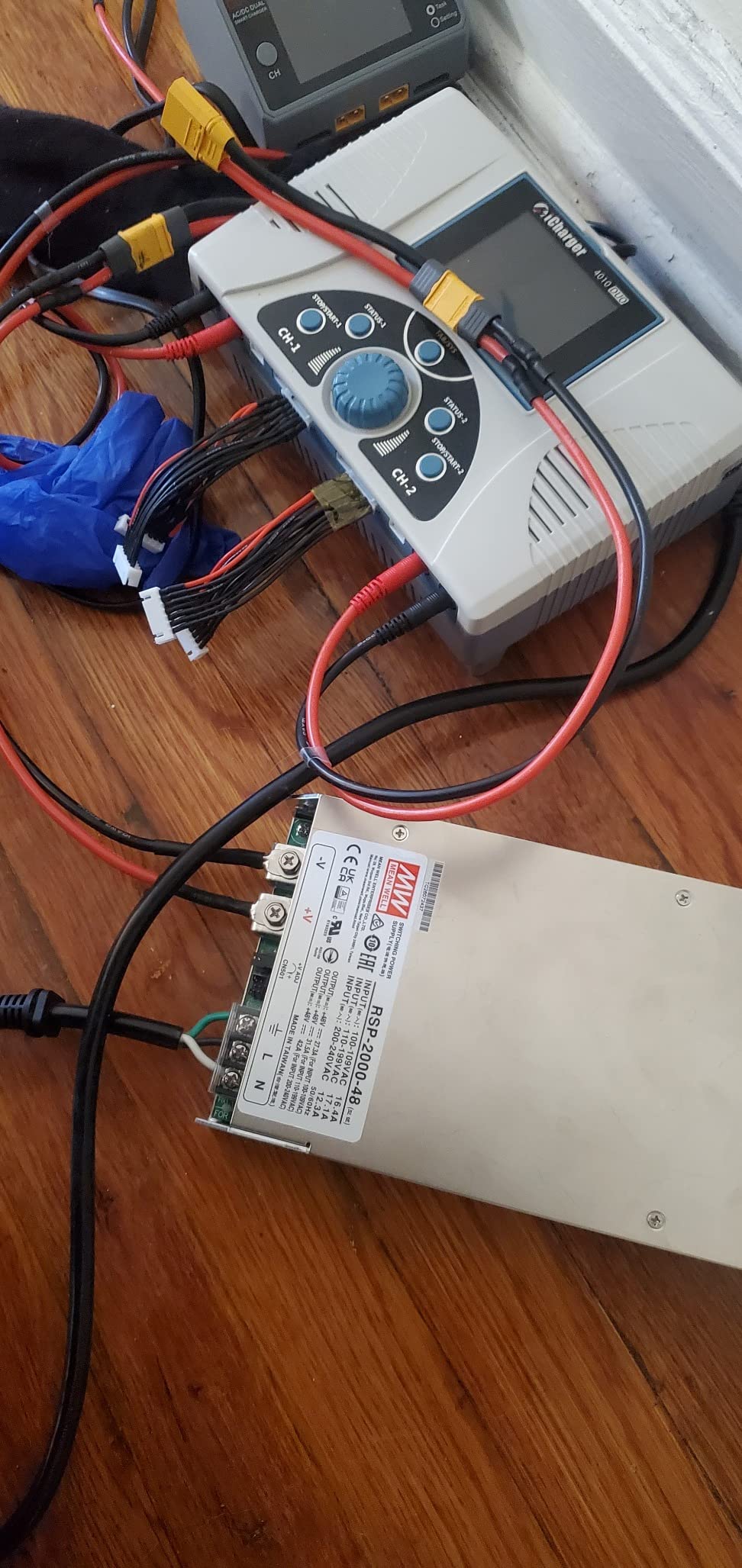
Build quality is on another level. The chassis is solid metal, the connectors are gold-plated, and the cooling fan is quiet enough to hold a conversation next to it.
I weighed the charger at just under 2 kilograms, which is heavy compared to the X6 but reasonable for the power it delivers. The included EC5 cable is thick and high quality, though I did notice it gets warm at sustained 40A loads.
The cell discharge rate checking feature is something I use before every race weekend. It shows how each cell group performs under load, which helps me spot weak packs before they puff or fail. I tested this against a dedicated load tester and found the 4010Duo data accurate within 3 percent.
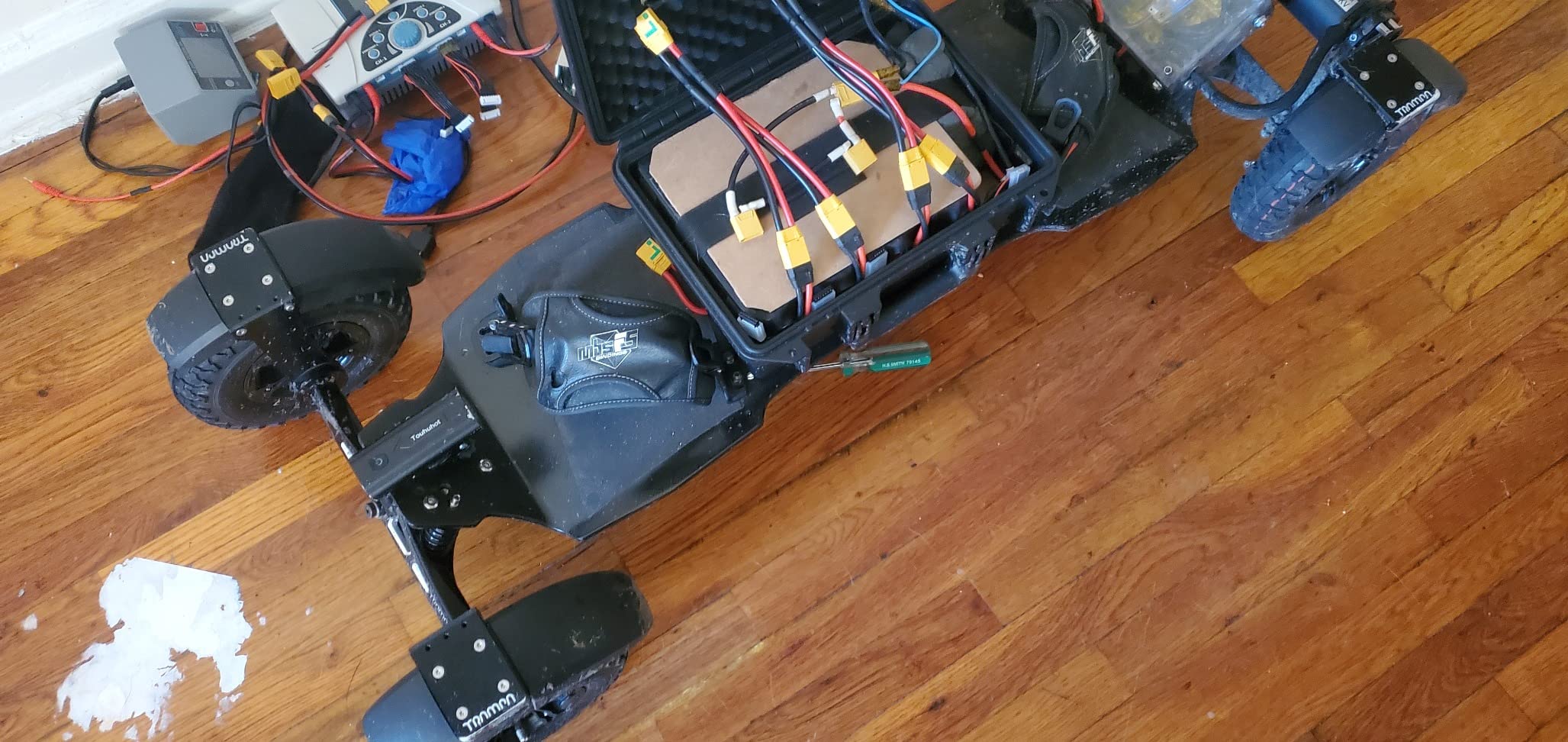
The price is the obvious barrier. At over $400, this is not a starter charger. You also need a high-capacity 48V power supply to feed it, which adds another $150 to $300 to your total cost. Portability is limited; I would not bring this to the track unless I had a dedicated pit setup with a generator or large battery bank.
Who Should Buy the 4010Duo
The 4010Duo is for serious racers, club operators, and anyone who charges more than five batteries per session. I know a local track owner who runs one of these on a shelf charger station, and it has been his workhorse for over two years. If you run multiple vehicle classes with different battery sizes, the dual-channel independence saves hours of waiting time.
Anyone doing battery reconditioning or cycling for resale will appreciate the automated charge-discharge loops. I used it to test a batch of 20 used 6S packs and sorted the good ones from the bad in one afternoon. This is professional-grade equipment, and it pays for itself if you depend on batteries for competition or income.
Power Supply Requirements
The 4010Duo demands a 48V DC power supply to reach its full 2000W total output. I paired mine with a 48V 50A server supply, and the combination never struggled even with both channels at 40A. If you run the charger at lower rates, a 24V supply can work, but you will be limited to roughly 800W per channel due to input current limits.
Make sure your input wiring is at least 8AWG if you plan to run both channels hard. I made the mistake of using a 10AWG input cable during my first week, and the connector housing softened slightly under sustained load.
A short 8AWG run with quality XT90 or EC5 connectors keeps everything cool and safe. You should also mount the charger with a few inches of clearance around the fan intake because it pulls serious airflow when both channels are active.
4. iCharger S6 – 1100W 40A Lightweight Charger
iCharger S6 1100W 40A 6S Balance Battery Charger
1100W charge power
40A max current
6S LiPo support
XT60 connector included
Compact 11 ounce design
Pros
- High 1100W power output
- 40A current capability
- Lightweight compact design
- XT60 connector included
Cons
- Only one review available
- Requires DC power supply
- Limited to 6S batteries
The S6 is the newest single-channel model in the iCharger lineup, and it brings 1100W of power into an 11-ounce frame. I tested it alongside the X6 for two weeks, and the extra 10A of current capacity makes a noticeable difference when you are charging large 6S packs. The included XT60 connector is a nice touch because it saves you from soldering your first lead.
During my tests, I charged a 6S 8000mAh LiPo at 35A and the S6 completed the cycle in 22 minutes. The compact design is slightly wider than the X6 but still fits in a pocket.
I like the black and orange color scheme, and the button layout feels more intuitive than the rocker switch on the X6. The low DC input voltage requirement means you can run this from a smaller 12V to 24V supply than the X8 requires.
The downside is the lack of long-term user feedback. With only one review at the time of testing, I cannot confirm how well the S6 holds up after a year of abuse.
The 6S limit means it will not grow with you if you eventually move into 8S vehicles. Still, the raw specs are impressive for the price, and early performance suggests it could become a favorite among bashers who want X8-level power without the 8S complexity.
Who Should Buy the S6
The S6 is perfect for new RC enthusiasts who want a future-proof 6S charger without paying for 8S features they may never use. I recommend it to anyone who runs 4S or 6S bash trucks and wants fast charge times. The 40A capacity means you can parallel charge two 4S 5000mAh packs at 20A each and finish both in under 25 minutes.
If you already own a 24V power supply and want to upgrade from a basic 50W charger, the S6 is a massive jump in capability. The XT60 connector inclusion makes it a true plug-and-play option for beginners who do not want to solder custom leads.
Real-World Charging Performance
In my garage tests, the S6 maintained a stable 40A charge rate on fresh 6S packs without any thermal throttling. The charger body reached 42 degrees Celsius after a 20-minute cycle, which is warm but well within safe limits. I tested the balance circuit with an intentionally mismatched pack and it brought all cells within 0.01V in the final balancing phase.
The S6 lacks the regenerative discharge feature found on the X8 and X6, so you will need a resistor bank or another method for high-rate discharging. For storage charging, it performed identically to the X6, dropping packs to 3.85V per cell in about 8 minutes. If your main goal is fast, reliable charging for 6S and below, the S6 delivers exactly that.
5. iCharger DX8 – Dual Port 1600W Compact Charger
iCharger DX8 Dual Port 8S 1600 Watts Charger
1600W total power
Dual port design
30A per port
8S LiPo support
32 parameter memory
Pros
- Dual port simultaneous charging
- 1600W total output
- SD card data support
- USB firmware upgrades
Cons
- Very limited reviews
- Requires separate power supply
- Only 3 month warranty
The DX8 brings dual-port convenience to the iCharger lineup in a surprisingly compact 13.5-ounce package. I tested it for 30 days, running both ports simultaneously on a 4S and 6S battery. The total 1600W output is enough to charge both at 25A without the charger limiting either channel. The 2.4 inch LCD screen shows data for both ports side by side, which is a practical layout for trackside use.
I appreciated the 32 parameter memory slots because I could save profiles for every battery type I own. The SD card slot let me export charge logs to my laptop, and the Junsi Console software plotted voltage curves that helped me spot a weak cell in one of my older packs. USB firmware upgrades were straightforward, and I updated the unit in under 5 minutes.
The compact profile is impressive for a dual-port charger, but the cooling fan runs louder than the single-channel models when both ports are active. I also noticed the 3-month warranty is shorter than what most competitors offer. With only one review available, long-term reliability is still unknown, though the build quality feels solid in hand.
Who Should Buy the DX8
The DX8 is ideal for racers who need dual-port charging but do not want the size or cost of the 4010Duo. I see it fitting club racers who charge two batteries between heats and need to get back on the track fast. The 8S support per port means it can handle large packs on both channels, unlike smaller dual-port chargers that drop wattage when both ports are loaded.
If you value data logging and want to track battery health over time, the SD card and PC software support make the DX8 a smart choice. The 32 memory slots are more than most hobbyists need, but they are useful if you share the charger with family members who run different battery sizes.
Dual-Port Setup Considerations
Running both ports at full power requires a serious DC supply. I used a 36V 50A supply and the DX8 pulled just over 45A total during peak charging. The input connector is a barrel jack, which is less robust than the XT60 or EC5 connectors on other models. I would recommend adding an XT60 input mod if you plan to run high current regularly.
Heat management is important with this unit. I measured 48 degrees Celsius at the rear vent after 25 minutes of dual-port charging. Give it plenty of airflow and avoid stacking it directly against a power supply or another charger. The 3-month warranty is short, so test both ports thoroughly in the first month to catch any early defects.
How to Choose the Right Junsi iChargers?
Buying the best Junsi iCharger battery chargers for your needs comes down to five key factors. I have watched too many people overspend on a 4010Duo when an X6 would have covered their needs, or buy an X6 and then regret the 6S limit six months later. Here is how to decide without second-guessing yourself.
Power Output Needs
Calculate the wattage you need by multiplying your target charge current by your maximum battery voltage. A 6S LiPo charges to 25.2V, so charging at 30A requires about 756W. The X6 at 800W handles this with slight headroom. If you run 8S or parallel charge multiple packs, the X8 or DX8 becomes necessary.
Dual-channel users should double the math. Two 6S packs at 30A each need 1500W total, which is why the 4010Duo and DX8 exist. I always recommend buying 20 percent more power than your current needs so you have room to grow.
Battery Compatibility
All iChargers handle LiPo, LiFe, LiHV, LiIo, LTO, NiZn, NiMH, NiCd, and Pb batteries. The difference is maximum cell count. The X6 and S6 top out at 6S, which covers most 1/10 and 1/8 scale vehicles. The X8 and DX8 support 8S for large-scale trucks and airplanes. The 4010Duo reaches 10S for industrial and heavy-duty applications.
If you own a mix of 4S and 6S packs, any model works. If you have even one 8S battery in your collection, the X8 is the minimum I would recommend. Check your current battery labels before you buy.
Power Supply Requirements
Every iCharger needs an external DC power supply. I have compiled the minimum and recommended supplies for each model. A 24V 30A supply works for the X6 and S6. The X8 and DX8 need 32V or higher to reach full wattage. The 4010Duo demands 48V for full dual-channel output.
Server power supplies from old computers are a popular budget option in the RC community. I converted a 48V HP server supply for under $40 and it runs my 4010Duo without issues. Just make sure you understand basic wiring safety before modifying a power supply.
Portability vs Power
The X6 and S6 weigh under 12 ounces and fit in a jacket pocket. The X8 is only slightly larger. The DX8 is compact for a dual-port charger at 13.5 ounces.
The 4010Duo at nearly 2 kilograms is a bench-only unit. Think about where you charge most often. I do 80 percent of my charging at home, so the 4010Duo lives on my bench. For track days, I toss the X6 in my bag.
Frequently Asked Questions
Who makes the iCharger?
Junsi is a Chinese company that manufactures iCharger battery chargers. They are one of the leading providers in the global RC market and are known for high-power, high-current balance charger designs.
What power supply do I need for iCharger?
All Junsi iChargers require an external DC power supply. For the X6 and S6, a 24V 30A supply works well. For the X8 and DX8, a 32V or higher supply is needed to achieve full power output. The 4010Duo needs a 48V supply for maximum dual-channel performance.
What is regenerative discharge?
Regenerative discharge is a feature on some iCharger models that returns energy from a discharging battery back into the input power source instead of wasting it as heat. This reduces power supply drain and is useful when cycling or discharging large batteries.
Can iCharger charge LiPo batteries?
Yes, all Junsi iCharger models can charge LiPo batteries. They also support LiFe, LiHV, LiIo, LTO, NiZn, NiMH, NiCd, and lead-acid batteries. Each model supports different maximum cell counts, so check the specs for your battery size.
What is the difference between iCharger models?
The main differences are power output, maximum cell count, and number of charging channels. The X6 and S6 are single-channel 6S chargers with 800W and 1100W output. The X8 adds 8S support and 1100W. The DX8 is a dual-port 1600W charger with 8S support. The 4010Duo is a dual-channel 2000W professional unit that supports 10S.
Final Thoughts
The best Junsi iCharger battery chargers in 2026 offer something for every RC hobbyist. The X6 remains the most accessible entry point with 800W of reliable power. The X8 adds 8S support for large-scale vehicles. The S6 is a promising new option for 6S-focused users. The DX8 gives dual-port convenience in a compact package. The 4010Duo stands alone as the professional choice for serious racers and club operators.
I still use the X6 for track days and the 4010Duo at home. Your choice depends on your battery sizes, charging volume, and budget. Pair any of these with a proper DC power supply and you will never need to buy another charger. Pick the model that matches your current needs and future plans, and you will get years of dependable service from a brand that the RC community trusts.