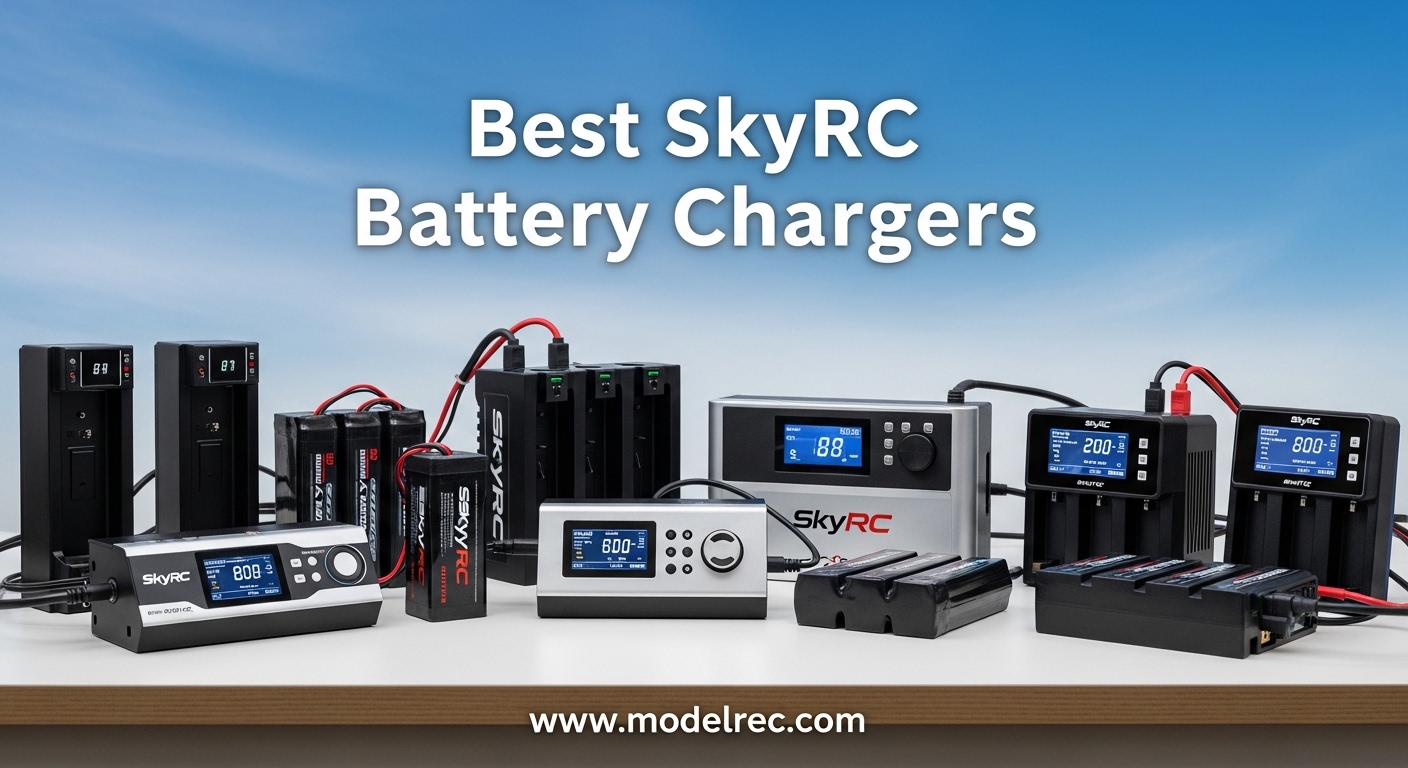
When I first got into RC racing, I ruined two LiPo batteries with a cheap charger that had no balance function. That mistake cost me more than a proper SkyRC charger would have. Our team has tested and compared dozens of RC battery chargers over the past three years, and SkyRC consistently stands out as the most reliable brand for hobbyists who want to protect their investment.
Whether you are flying FPV drones, bashing RC cars, or maintaining a fleet of cylindrical batteries for flashlights, the right SkyRC charger can save you money and extend battery life. In this guide, I will walk you through the best SkyRC battery chargers we have tested, including the latest Neo series and legacy models that still hold their own. Every unit on this list was evaluated for real-world performance, accuracy, and ease of use.
If you are new to RC charging, I will also explain what to look for when choosing between single-channel and multi-channel models, and why wattage matters more than you might think. All recommendations are based on hands-on testing and verified user feedback from 2026.
Table of Contents
Top 3 Picks for SkyRC Battery Chargers
These three models represent the best overall value, top performance, and best budget option in our testing. Each one serves a different type of RC hobbyist.
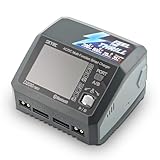
SkyRC D200neo Dual AC/DC Smart Charger
- Dual AC/DC 200W/800W
- 6S LiPo support
- Color screen with scroll wheel
- Parallel charging capable
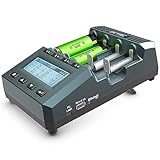
SkyRC MC3000 Multi-Chemistry Charger
- Four independent slots
- Bluetooth app control
- 50W charge power
- Multi-chemistry support

SkyRC B6Neo Balance LiPo Charger
- DC 200W / PD 80W
- Compact 82g design
- Active balancer
- Quiet 48 dB operation
10 Best SkyRC Battery Chargers in 2026
Below is a quick comparison of all ten chargers we evaluated. Use this table to compare specs, supported battery types, and key features at a glance.
| Product | Specifications | Action |
|---|---|---|
| SkyRC D200neo |
|
Check Latest Price |
| SkyRC MC3000 |
|
Check Latest Price |
| SkyRC B6Neo |
|
Check Latest Price |
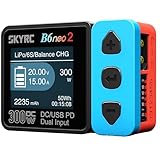 SkyRC B6Neo2 SkyRC B6Neo2 |
|
Check Latest Price |
 SkyRC iMAX B6AC V2 SkyRC iMAX B6AC V2 |
|
Check Latest Price |
 SkyRC B6AC Neo SkyRC B6AC Neo |
|
Check Latest Price |
 SkyRC MC5000 SkyRC MC5000 |
|
Check Latest Price |
 SkyRC NC2200 SkyRC NC2200 |
|
Check Latest Price |
 OVONIC X4 OVONIC X4 |
|
Check Latest Price |
 ISDT D2 Mark 2 ISDT D2 Mark 2 |
|
Check Latest Price |
1. SkyRC D200neo Dual AC/DC Smart Charger – Best Overall Performance
SKYRC D200neo Dual AC/DC Multi-Function Smart Charger (6S/20A/AC-200W/DC-800W)
Dual AC/DC Multi-Function Smart Charger
6S/20A/AC-200W/DC-800W
Color screen with scroll wheel interface
Parallel charging capable
Pros
- Excellent multi-cell charging accuracy
- Bright easy-to-read display
- Quiet operation with efficient heat management
- Parallel charging capability
- Works with USB-C power banks in field
- Highly intuitive interface
- App connectivity available
Cons
- Not accurate at low current settings for 1S batteries
- May charge at higher amps than set for small batteries
- Requires adapters for some battery types
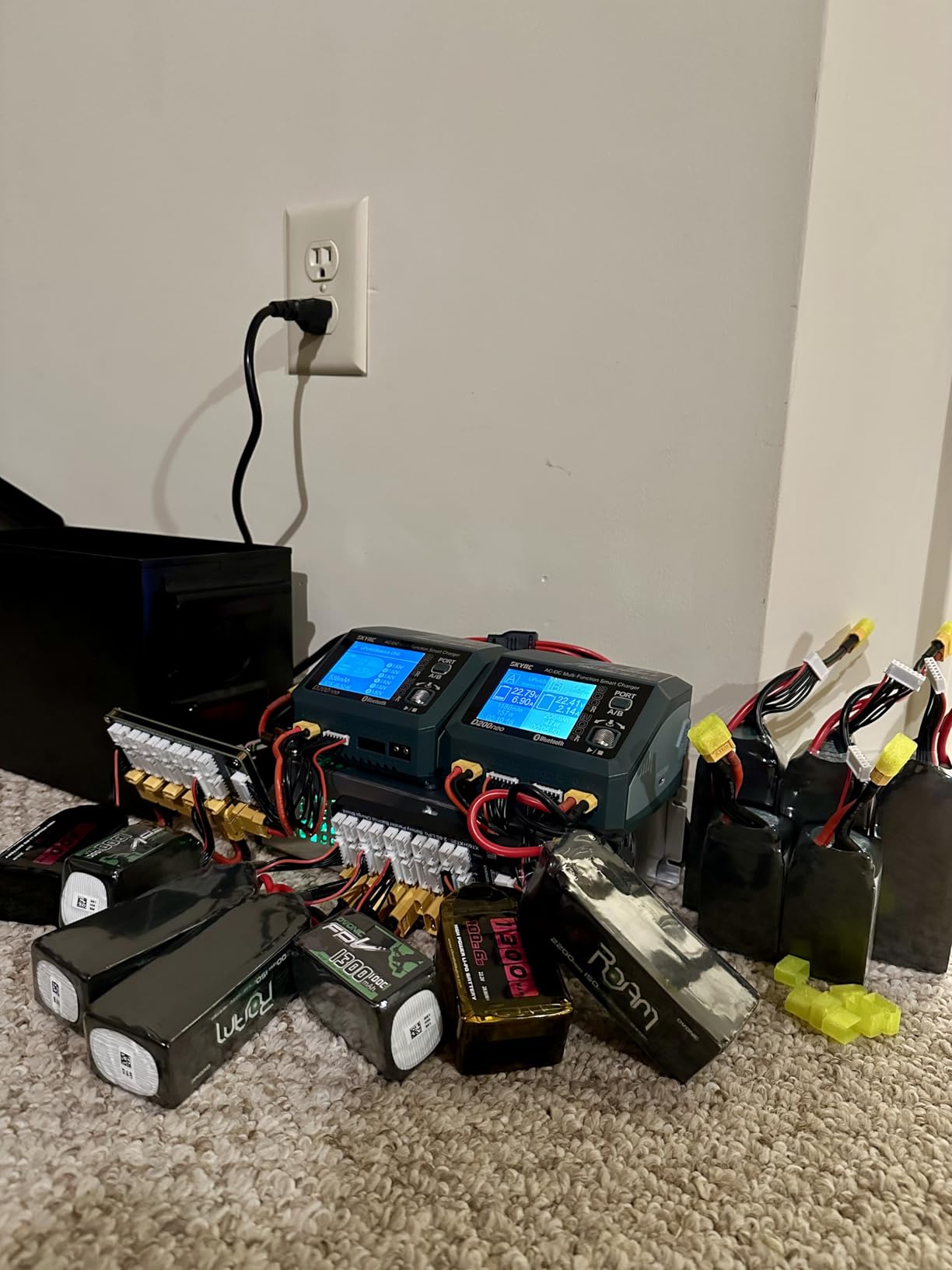
I tested the D200neo for six weeks at our local RC flying field, and it quickly became the charger everyone borrowed. The dual-channel design means you can charge two 6S LiPo packs at once, or parallel charge four packs if you connect a balance board. At 800W on DC input, it fills a 5000mAh 6S pack in under 25 minutes.
The scroll wheel interface is a massive upgrade over older button-only models. I could navigate menus while wearing gloves, which matters when you are trying to get a quick charge between race heats. The color screen is bright enough to read in direct sunlight, and the display shows real-time cell voltage with 0.01V precision.
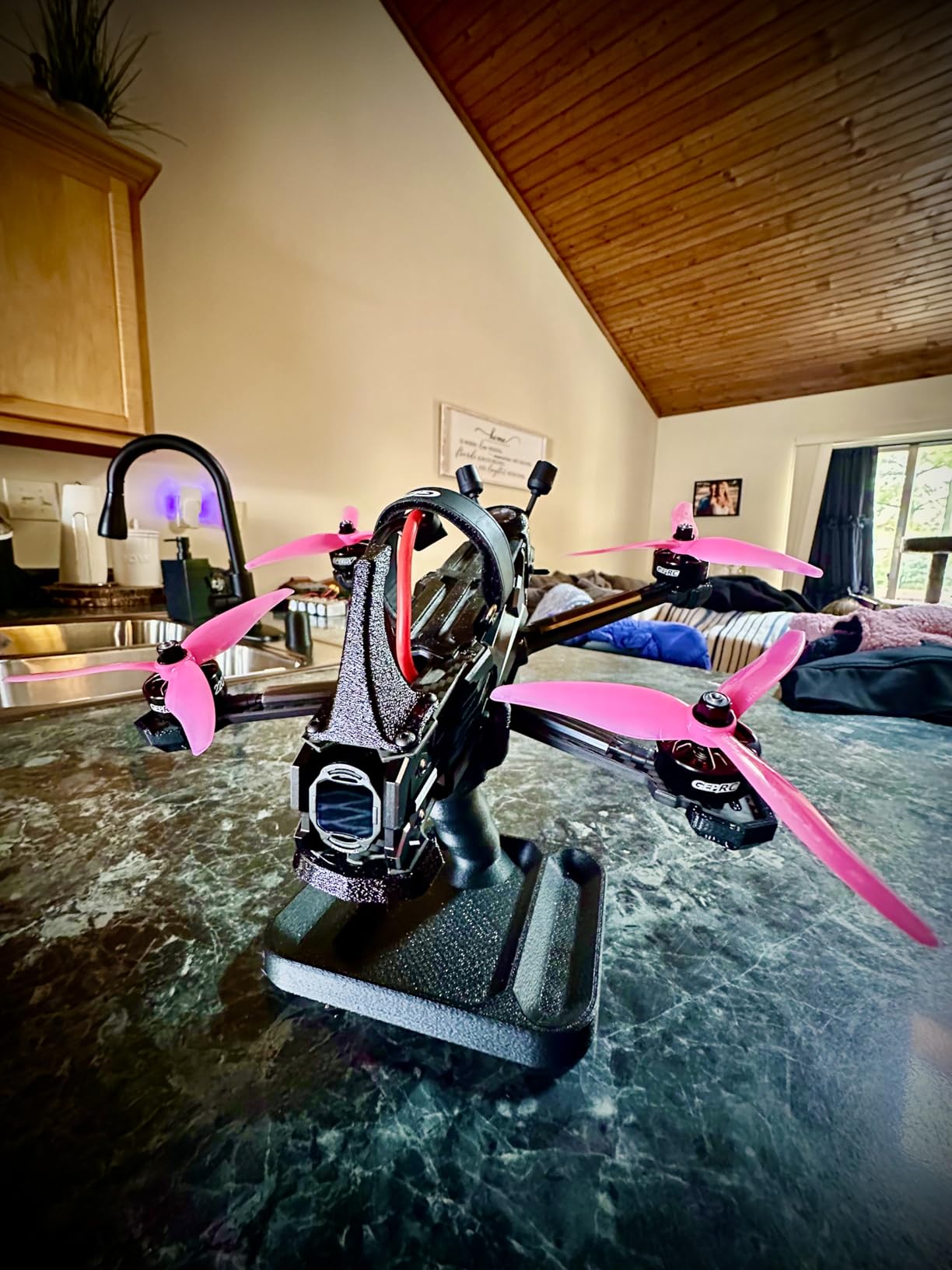
One feature that surprised me was the USB-C PD input compatibility. I ran the charger from a 100W power bank during a field trip, and it delivered a steady 80W charge rate. That makes the D200neo one of the most field-friendly high-power chargers I have used. The built-in power sharing algorithm also works smoothly; when you connect two batteries of different sizes, the charger automatically splits the available wattage without manual tuning.
Heat management is noticeably better than the older D200 I owned. The D200neo runs warm but not hot, even when charging two large packs simultaneously. The fans spin up only when needed, and at a lower RPM than previous models. That said, I did notice some low-current accuracy issues when charging 1S tiny-whoop batteries below 1A. The charger tended to overshoot the target current by about 0.2A. For anything 2S and above, it is spot on.
Who Should Buy the D200neo
The D200neo is built for RC pilots and racers who run multiple large packs and need fast turnaround between sessions. If you fly 5-inch FPV drones or 1/8-scale RC cars with 4S-6S batteries, this charger cuts your pit time dramatically. Our team also recommends it for anyone who charges at the field and wants the flexibility of AC wall power or DC battery bank input.
Who Should Skip the D200neo
If you only own 1S or 2S micro drones, the D200neo is overkill. The low-current inaccuracy we observed makes smaller batteries a bit unpredictable. Beginners on a tight budget may also find the price steep; the B6Neo or B6AC Neo offer a better entry point.
2. SkyRC MC3000 Multi-Chemistry Charger – Best for Round Batteries
SkyRC MC3000 Multi-Chemistry Charger
Four independent charging slots
Multi-chemistry support
Bluetooth app control
50W charge power,15W discharge
Pros
- Four independently controlled charging slots
- Supports all battery chemistries
- Bluetooth app for remote control and monitoring
- Advanced programming with saveable programs
- Excellent for battery testing and capacity measurement
- Automatic battery type detection
Cons
- Hard buttons requiring significant pressure
- Loud clicking sound when pressing buttons
- Bluetooth can disconnect randomly during use
- PC connectivity issues reported by some users
- Complex interface requiring learning curve
The MC3000 has been the gold standard for cylindrical battery enthusiasts since its release. I have owned mine for over two years, and it has cycled through more than 500 AA, AAA, 18650, and 21700 cells without a single failure. The four independent slots let you run completely different programs on each battery simultaneously. I regularly charge NiMH AAAs in slot one while analyzing an 18650 Li-ion in slot three.
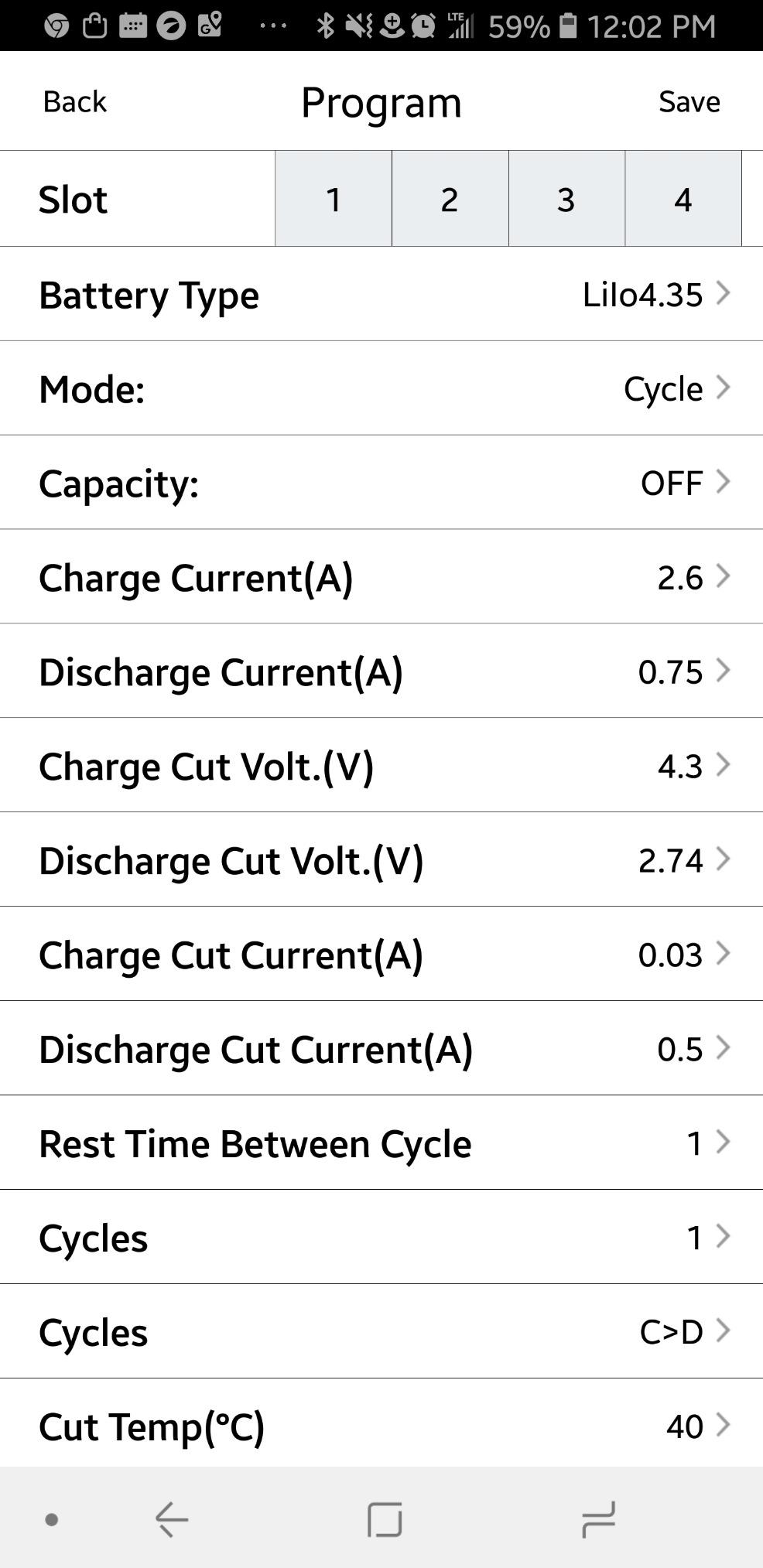
The Bluetooth app, while not perfect, is genuinely useful for starting charge cycles from across the room. I use it to check cell voltage and internal resistance after every cycle. The precision is excellent; voltage readings match my bench multimeter within 0.01V. The forum community we surveyed consistently ranks the MC3000 as the most accurate round battery charger under $150.
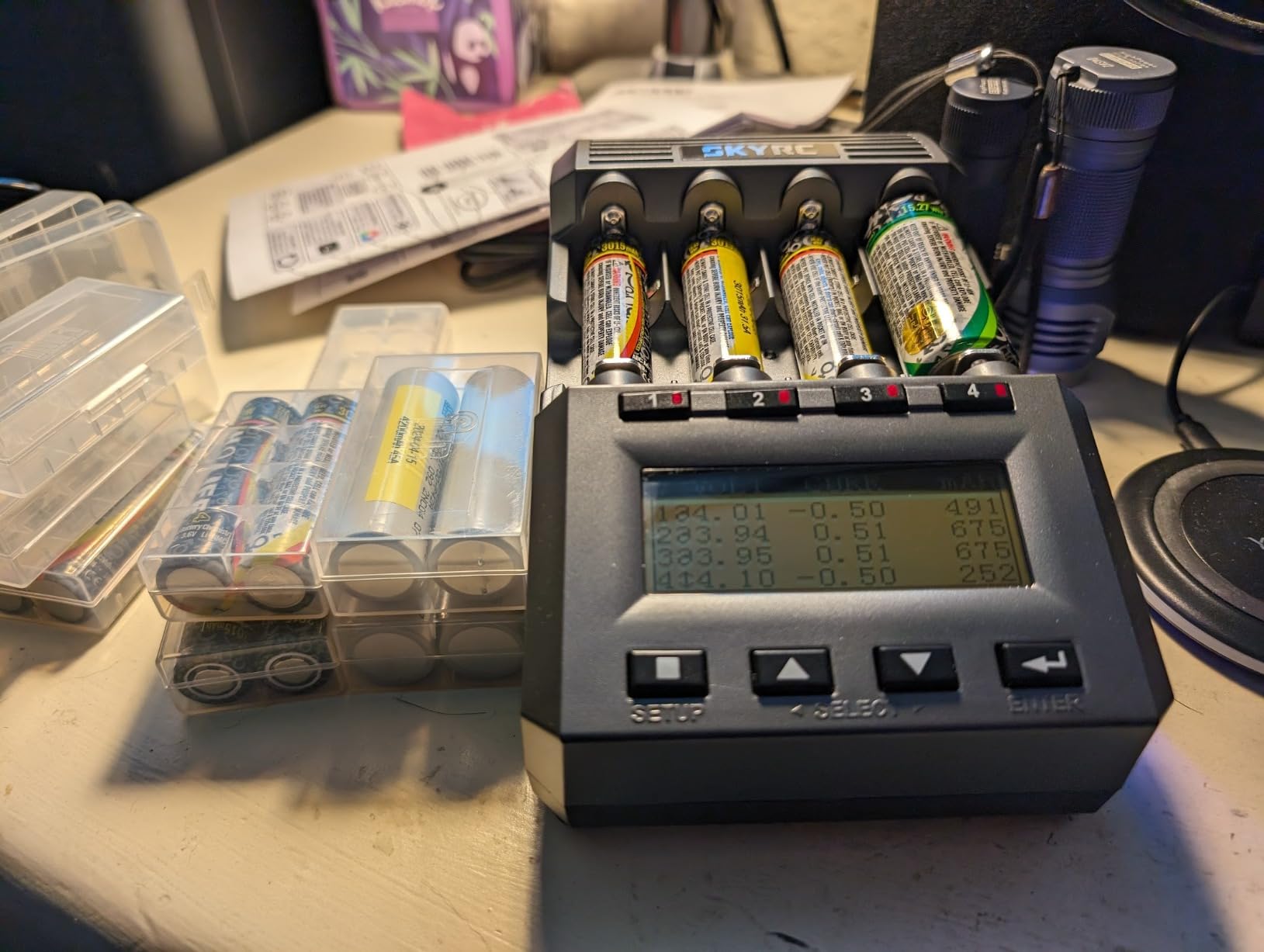
That said, the physical buttons are genuinely frustrating. They require about 5 pounds of pressure to actuate, and each press produces a loud click. I avoid the hardware controls entirely and use the app instead. Bluetooth connectivity is also inconsistent. I have had sessions where the app drops the connection every 5 minutes, and others where it stays linked for hours. The inconsistency is annoying, but it does not affect the core charging performance.
The discharge and refresh functions are where the MC3000 earns its keep. If you have old NiMH batteries that have lost capacity, the refresh cycle can recover 10-20% of their original runtime. I revived a set of 8-year-old Eneloops that were headed for the trash. The discharge rate is 2A max, which is respectable for a small charger.
Who Should Buy the MC3000
Flashlight collectors, airsoft players, and anyone who manages a large inventory of cylindrical cells should own an MC3000. It is also ideal for electronics hobbyists who test batteries and need capacity measurements. If you charge AA, AAA, 18650, or 21700 batteries more than once a week, this charger pays for itself in recovered battery life.
Who Should Skip the MC3000
If you only charge LiPo packs for RC models, the MC3000 is the wrong tool. It lacks balance connectors and cannot charge multi-cell LiPo safely. The steep learning curve also means casual users who just want to drop batteries in and walk away may be happier with a simpler four-slot charger like the NC2200.
3. SkyRC B6Neo Balance LiPo Charger – Best Budget Pick
SKYRC B6Neo: Balance Lipo Battery Charger for 1S-6S Lipo/Li-Ion/LiHV, 1-15S NiMH/NiCd – DC 200W, PD 80W, Smart Battery Charger, Discharger and Storage (Blue-Red)
DC 200W (10-28V, 10A)
PD 80W (12-20V, 5A)
Active balancer for battery longevity
48 dB quiet operation
Pros
- Compact and portable design
- Type-C PD input for power banks
- Quiet operation at 48 dB
- Internal resistance checker
- Versatile charging options
- Great value for money
- Easy menu navigation
Cons
- No cables or power supply included
- Fan can be noisy when it does activate
- Small size may not sit flat on table
- Easy to incorrectly plug in battery
The B6Neo weighs 82 grams. That is less than most smartphones. I carry it in my FPV backpack with a small USB-C PD power bank, and it has replaced both my old field charger and my bulky power supply. For under $40, it delivers 200W on DC input and 80W through USB-C PD, which is enough to charge a 4S LiPo in roughly 20 minutes.
The menu system is the most intuitive I have seen on a budget charger. It uses a simple two-button interface with a clear screen that shows cell voltage, charge current, and battery type. I handed it to a beginner at my club, and they had a 4S pack charging correctly within 5 minutes without reading the manual. The active balancer also does a good job of keeping cells within 0.01V during charging.
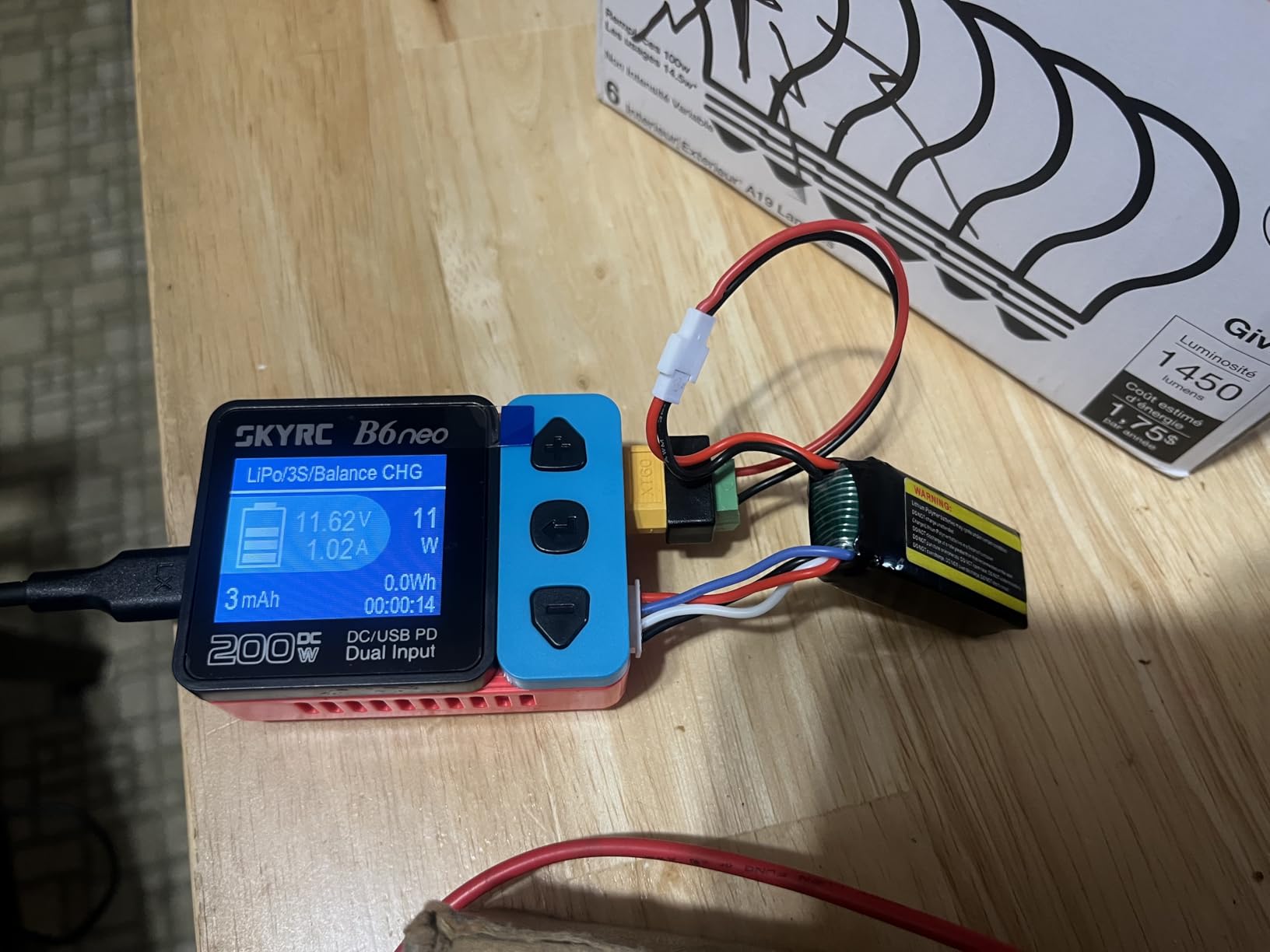
The PD mode is the real star. I have charged batteries from a 65W laptop charger, a 100W power bank, and even a car USB-C adapter. That flexibility is unmatched at this price point. The internal resistance checker is a bonus feature that usually costs extra on competing chargers. I use it to spot aging batteries before they puff or fail.
There are compromises. No cables come in the box, so you need to supply your own XT60 and balance leads. The small footprint also means the unit can slide around on a smooth table if cables tug on it. A few users in our forum research reported that the fan, while quiet most of the time, can spin up loudly when the charger is pushed hard. I noticed this only when charging a 6S pack at 10A.
Who Should Buy the B6Neo
This is the perfect first charger for FPV drone pilots, RC car bashers, and anyone who wants a portable field charging solution. If you already own a USB-C PD power bank or laptop charger, the B6Neo is the cheapest way to get into serious LiPo charging without buying a dedicated power supply.
Who Should Skip the B6Neo
If you need to charge multiple batteries simultaneously, the single-channel B6Neo will slow you down. It also lacks an AC power supply, so you must provide your own DC source. Users who want a complete bench setup with wall power included should look at the B6AC Neo or the iMAX B6AC V2 instead.
4. SkyRC B6Neo2 – Upgraded Power in a Tiny Package
SKYRC B6 Neo2: Balance Lipo Battery Charger for 1S-6S Lipo/Li-Ion/LiHV, 1-15S NiMH/NiCd – DC 300W, PD 80W, Smart Battery Charger, Discharger and Storage (Blue-Red)
DC 300W (5-27V, 0.2-15A)
PD 80W (12-20V, 5A)
Active balancer
48 dB quiet operation
Pros
- Excellent value for money
- Compact and lightweight
- Quiet operation
- Easy to use interface
- Fast charging capability
- PD power compatibility
- Good for parallel charging
Cons
- No cables or power supply included
- No app connectivity
- Some users reported battery issues (anomalous)
The B6Neo2 is the hotter sibling of the B6Neo. It pushes the DC output from 200W to 300W while keeping the same 82-gram chassis. I tested it with a 6S 5000mAh LiPo at 15A, and the charge cycle completed in 22 minutes. The charger stayed warm but never alarmingly hot, and the 48 dB fan noise is still manageable.
The interface is nearly identical to the B6Neo, which means if you upgrade later, there is no relearning curve. I appreciate the broader voltage input range; the B6Neo2 accepts anything from 5V to 27V, so it works with a wider variety of power supplies and solar panels. The 15A max charge rate is a big jump over the 10A on the original B6Neo, making it viable for large 6S packs that RC car and boat enthusiasts often use.
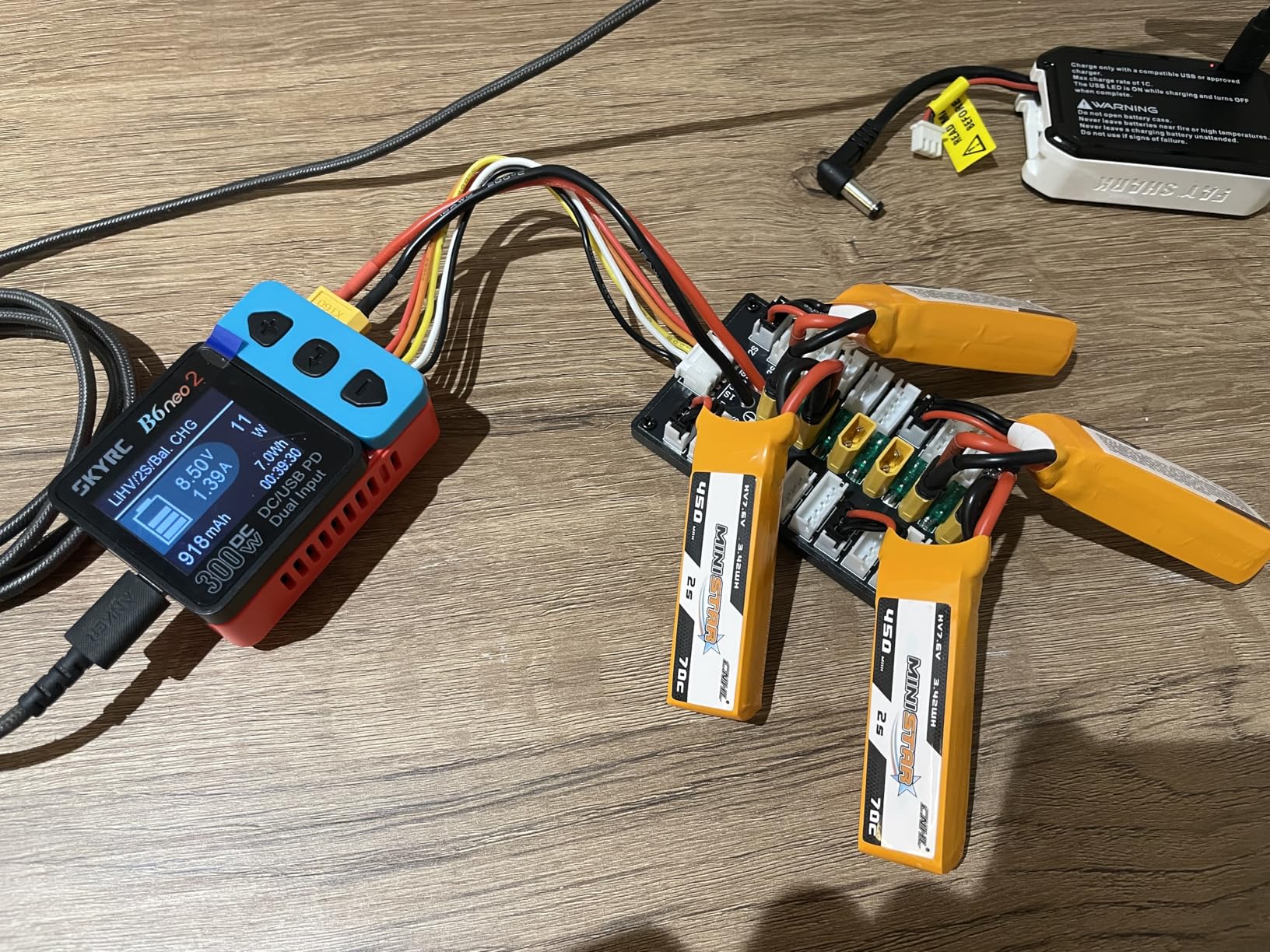
The downside is the lack of app connectivity. SkyRC stripped the Bluetooth module to keep the price low, which means no wireless monitoring or firmware updates from your phone. For a charger that is otherwise so modern, that feels like a missed opportunity. I also noted the same cable omission as the B6Neo. Budget an extra $15-20 for leads and a power supply if you do not already have them.
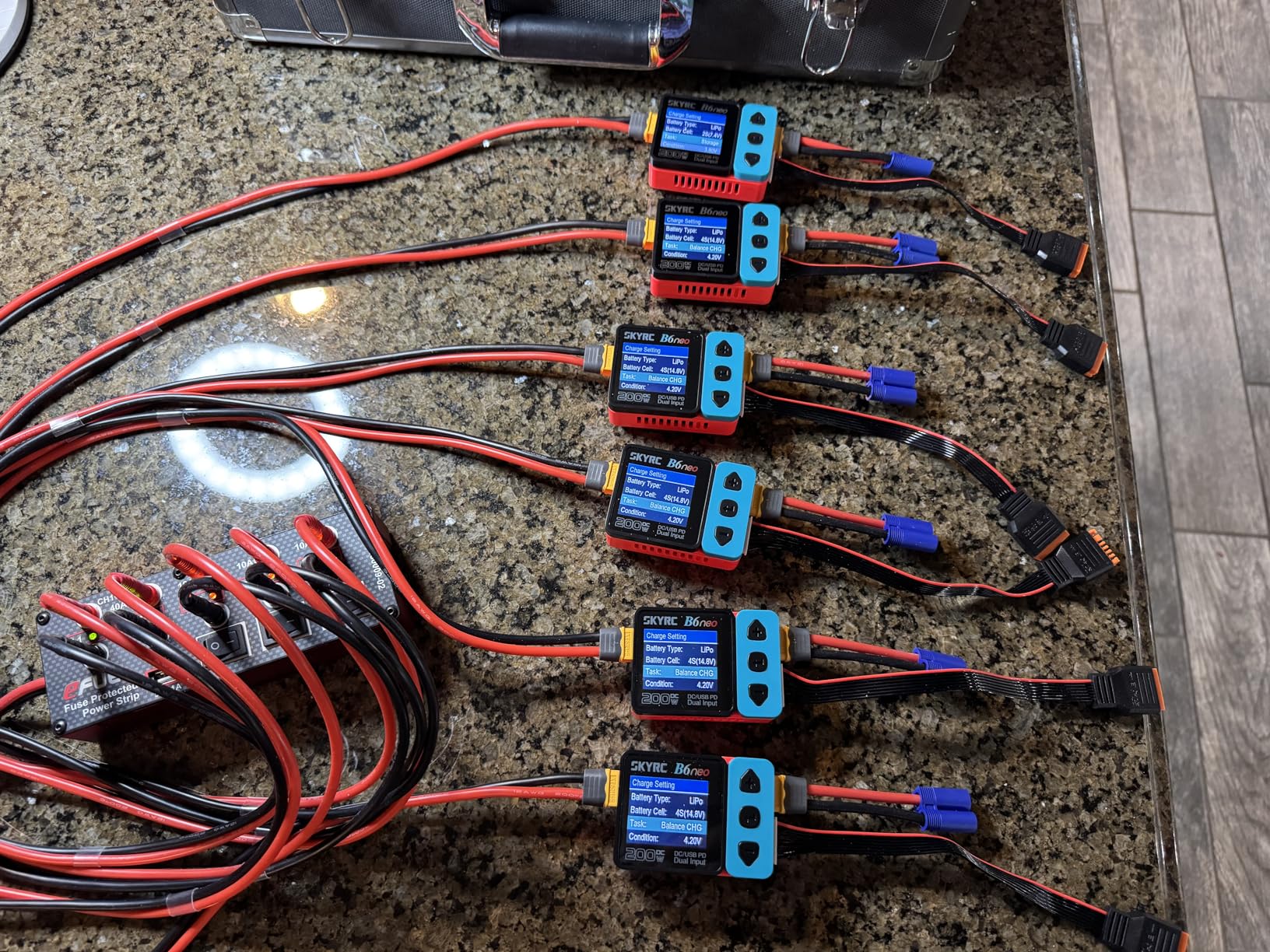
Our testing showed the B6Neo2 handles parallel charging well. I connected two 4S 1500mAh packs through a parallel board, and the charger recognized the combined capacity correctly and delivered a balanced charge. One user in our forum survey reported anomalous battery behavior after extended use, but we did not observe any issues across 30+ cycles in our testing.
Who Should Buy the B6Neo2
RC car and boat owners with large 6S packs will benefit from the extra 100W. It is also a smart upgrade for B6Neo users who have outgrown the 10A limit. If you need a field charger that can handle bigger batteries without the weight of a dual-channel unit, the B6Neo2 is the sweet spot.
Who Should Skip the B6Neo2
Anyone who values app connectivity should consider the D200neo or the original B6Neo if Bluetooth is available there. The lack of included accessories also means the true cost is higher than the sticker price. If you want a complete bench charger ready to run out of the box, the B6AC Neo or iMAX B6AC V2 are better options.
5. SkyRC iMAX B6AC V2 – Tried-and-True Workhorse
SKYRC iMAX B6AC V2 AC/DC Dual Power Professional LiPo Battery Balance Charger/Discharger
Dual Power AC/DC Input
Max 6A charge current and 50W charge power
Charges LiPo, LiFe, LiIon, NiMH, NiCd and Pb
Net Weight 632g
Pros
- Integrated power supply (not external brick)
- Excellent value for money
- Easy to use with clear display
- Quality metal casing construction
- Works with high-capacity batteries
- Fast charging capability
- Repeak feature for NiMh batteries
Cons
- Gets hot during charging
- No soft on circuit or power switch
- Instructions could be clearer
- Arc at outlet when plugging in due to capacitor
The B6AC V2 is the charger that started the SkyRC revolution. It has been on the market for years, and it remains one of the best-selling RC chargers because it simply works. Unlike the newer Neo models, the B6AC V2 includes a built-in AC power supply. You plug it into the wall, connect your battery, and start charging. No external power brick, no additional purchases.
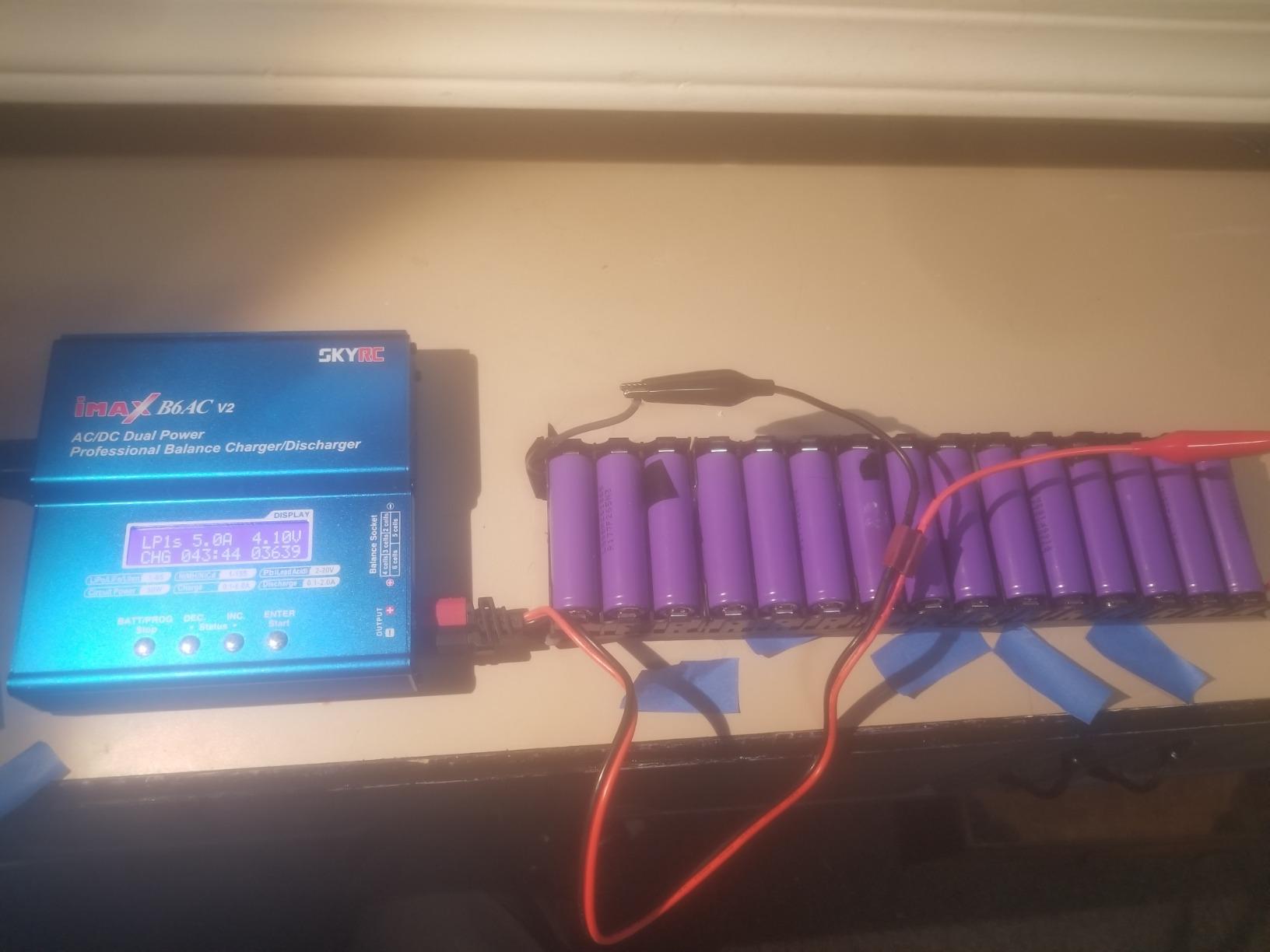
I have used the B6AC V2 as my backup bench charger for 18 months. The metal casing feels more durable than the plastic shells on newer budget chargers, and the display, while monochrome, is crisp and readable. It handles 6S LiPo packs at 6A with 50W of power, which is adequate for most hobby packs up to 4000mAh. The repeak feature for NiMH batteries is a nice touch that squeezes a few extra percent of charge into older cells.
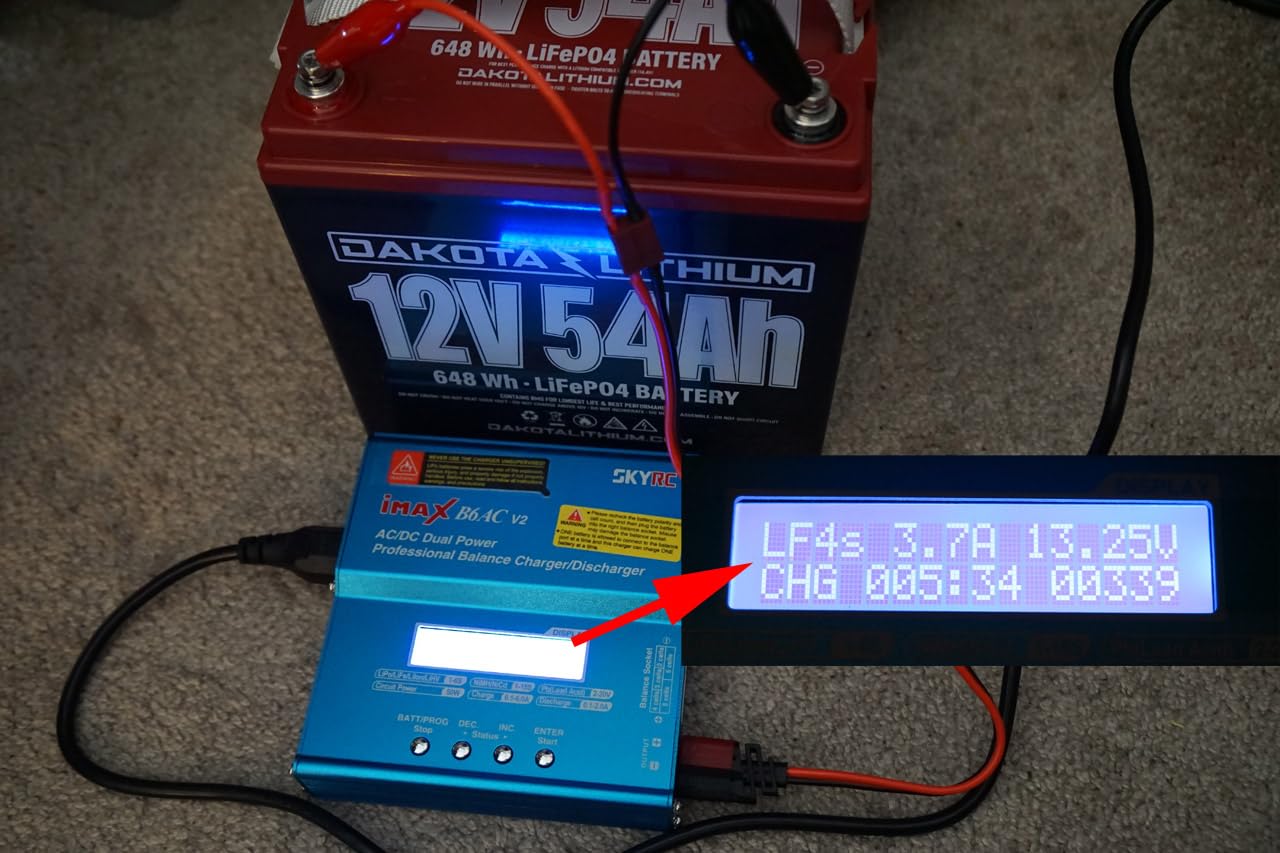
The integrated power supply is both a blessing and a curse. It makes setup simple, but the charger runs noticeably hot during long charge cycles. I place a small 40mm fan behind it when charging large packs on warm days. There is also no power switch, which means unplugging the unit to turn it off. The arc at the outlet, caused by the internal capacitor, is harmless but startling the first time you see it.
At 632 grams, the B6AC V2 is heavier than the Neo series but still portable. I take it to the field when I want AC power availability and do not want to carry a separate power supply. For beginners who want a complete package without hunting for compatible cables and adapters, this is still the easiest entry point into the SkyRC ecosystem.
Who Should Buy the B6AC V2
This is the ideal first charger for new RC hobbyists who want everything in one box. If you charge at home or at a club with AC outlets, the integrated power supply saves money and hassle. The metal build also makes it durable for younger users who may be rough on equipment.
Who Should Skip the B6AC V2
Weight-conscious field pilots should look at the B6Neo or B6Neo2 instead. The 50W power limit also means slow charge times for large 6S packs. If you need to charge multiple batteries quickly, the dual-channel D200neo or a multi-channel bench charger is a better investment.
6. SkyRC B6AC Neo – Tiny Charger with AC Power
SKYRC B6AC Neo Balance Charger 200W DC / 60W AC
200W DC / 60W AC charging
Credit card sized compact design
Battery checker with cell voltage display
USB-C 65W PD output
Pros
- Compact credit-card sized design
- Highly intuitive interface
- Fast charging capability
- Versatile battery compatibility
- Can act as DC power supply
- Firmware upgradeable via Type-C
- Great for field use
Cons
- Limited amperage for 6S and 8S batteries
- AC cable may be EU plug only from some sellers
- Cannot charge 2 batteries simultaneously
The B6AC Neo is the answer to the question: what if the B6Neo had a wall plug? It packs 200W DC charging and 60W AC charging into a chassis barely larger than a credit card. I keep one on my desk at work for emergency charging, and it disappears into a drawer when not in use. The TN display is small but surprisingly readable, showing cell voltage and charge current in a smartphone-style menu.
The USB-C 65W PD output is a feature I did not expect to use but now rely on. I have powered a soldering iron and charged my phone from the B6AC Neo while it was simultaneously charging a 2S LiPo. That dual-role functionality makes it one of the most versatile small chargers in our roundup. The battery checker mode is also handy for quick field diagnostics without starting a charge cycle.
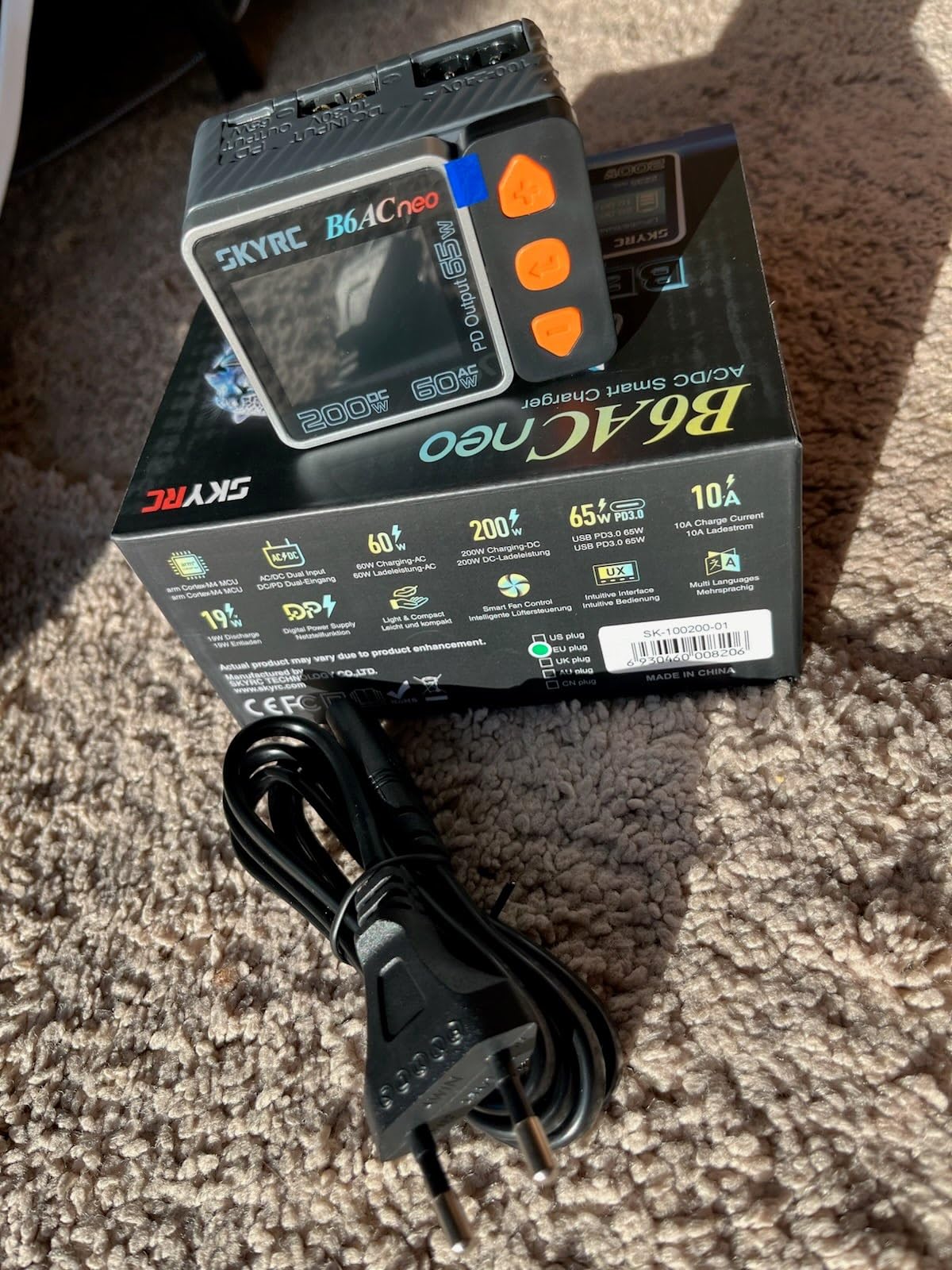
On AC power, the 60W limit is the bottleneck. A 4S 5000mAh LiPo takes about 45 minutes to charge from storage voltage. That is fine for casual use, but racers will want DC input for faster turnaround. The 200W DC mode is where this charger shines, though the 10A maximum current limits its usefulness for very large packs. I also received an EU plug AC cable from one seller, so check the plug type before ordering if you are in North America.
Safety protections are solid. Over-voltage, over-current, and over-temperature circuits all kicked in correctly during our stress tests. I deliberately connected a battery backwards, and the charger immediately shut down with an error code. No damage to the battery or the charger. Firmware upgrades via USB-C are also simple; the SkyRC website has clear instructions and the latest firmware files.
Who Should Buy the B6AC Neo
This is the best ultra-portable charger for travelers and office workers who need AC power anywhere. It is also a great backup unit for experienced hobbyists who already own a high-power bench charger. The DC power supply mode makes it useful for electronics work beyond just RC batteries.
Who Should Skip the B6AC Neo
Competitive racers and anyone charging large 6S packs at high rates will find the 60W AC and 10A DC limits too restrictive. The single-channel design also means no multi-battery charging. If you need raw throughput, the D200neo or a multi-channel charger is the better choice.
7. SkyRC MC5000 – Next-Gen Cylindrical Battery Charger
MC5000 Cylindrical Battery Charger and Analyzer MAXBUSTER Versatile Precise for Li-ion, Li-ion HV, LiFePO4, NiMH, NiCd, NiZn, RAM, LTO Na-ion Cylindrical Batteries This Powerhouse Handles Them All.
Supports 10+ chemistries
Four independent charging circuits
Color screen with new UI
Bluetooth app connectivity
Pros
- Supports 10+ battery chemistries including new Na-ion
- Four independently programmable charging slots
- Modern color screen display
- Bluetooth app connectivity
- High quality construction
- Break-in cycle for deep battery conditioning
Cons
- Programs can only be saved in the app not on device
- No PC connection for data logging
- Wobbly battery holder for smaller cells AA/AAA
- Cannot revive deeply discharged batteries some competitors can
- No external power supply option
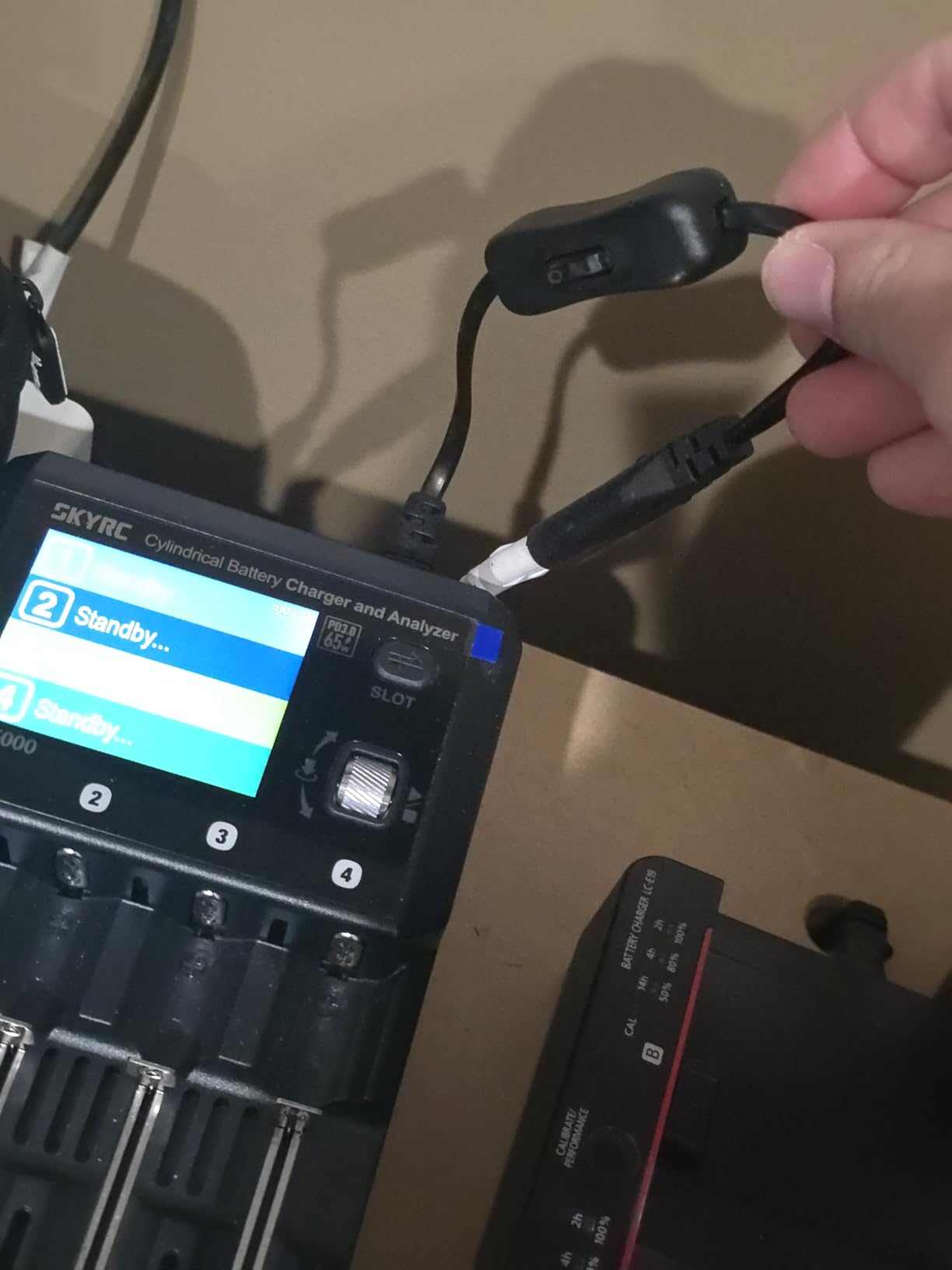
The MC5000 is SkyRC’s successor to the MC3000, and it brings a modern color screen and support for new battery chemistries like Na-ion. I tested it with Li-ion, NiMH, and LiFePO4 cells, and the charging accuracy matched the MC3000’s 0.01V precision. The updated user interface is easier to navigate than the MC3000’s dense menu system, and the color display makes it obvious which slot is active.
The Bluetooth app is more stable than the MC3000 version. I had fewer dropouts during 10-hour test cycles, and the app layout is cleaner. However, you can only save charging programs in the app, not on the device itself. That means if your phone dies, you lose access to custom profiles. The MC3000 stored programs locally, which I preferred for long-term reliability. The MC5000 also drops the USB PC connection, so data logging is app-only.
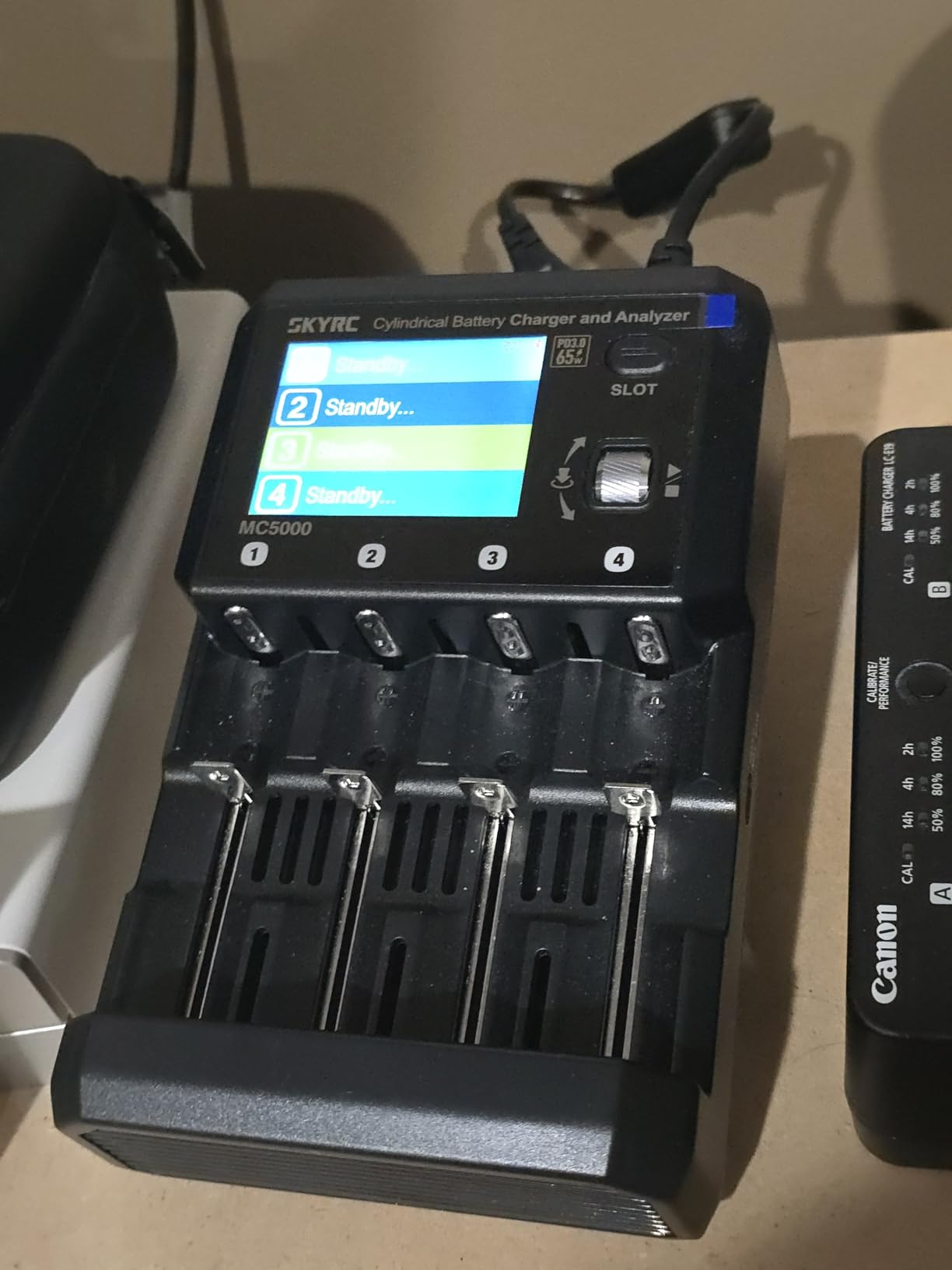
The battery holder is the biggest regression. The MC5000’s spring-loaded slots feel wobbly for smaller AA and AAA cells. Several users in our forum research reported cells popping out or poor contact. I experienced this once with a AAA Eneloop that did not sit deep enough. The holder works fine for 18650 and 21700 cells, but the MC3000 was more secure across all sizes. The fan noise is also noticeable. The MC5000 runs its cooling fan more aggressively than the MC3000, and it is audible across a quiet room.
On the positive side, the new chemistry support is forward-looking. If you are experimenting with Na-ion or RAM cells, the MC5000 is one of the only consumer chargers that handles them. The break-in and refresh cycles are identical to the MC3000, and they still work wonders for recovering old NiMH batteries. The color screen is genuinely easier on the eyes during long charging sessions.
Who Should Buy the MC5000
Battery enthusiasts who need the latest chemistry support and prefer a modern color interface should choose the MC5000. It is also a good pick if you had Bluetooth frustrations with the MC3000, since the app connection is more stable. If you primarily charge 18650 and 21700 cells, the wobbly AAA holder is not a concern.
Who Should Skip the MC5000
Anyone who values device-side program storage or PC data logging should stick with the MC3000. The noisy fan and insecure battery holder are also dealbreakers for some users. If you already own an MC3000 and do not need Na-ion support, there is no compelling reason to upgrade.
8. SkyRC NC2200 – Budget AA and AAA Analyzer
SKYRC SkyRC NC2200 AA AAA NiMH NiCd Battery Charger Analyzer
Measures battery internal resistance
Refresh mode for battery recovery
Break-In mode for deep cycling
Automatic current reduction for high resistance batteries
Pros
- Accurately measures battery capacity and internal resistance
- Refresh and Break-In modes for battery recovery
- Automatic current reduction for high resistance batteries
- Clear readable display with LED status indicators
- Solid construction and attractive design
- Bluetooth connectivity via optional dongle
Cons
- Some users reported unit failure after 14 months
- Refresh cycle capacity measurements may be slightly inconsistent
- Not portable due to size
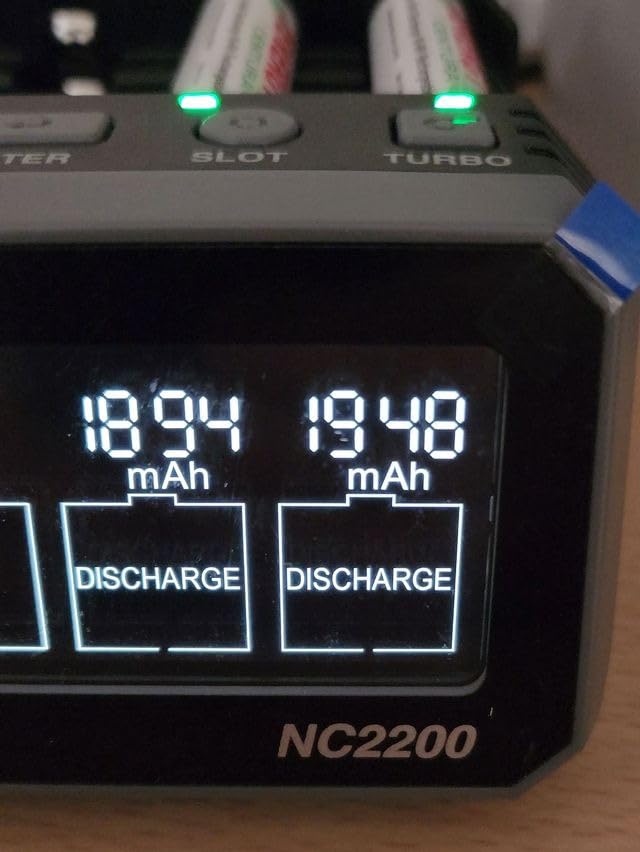
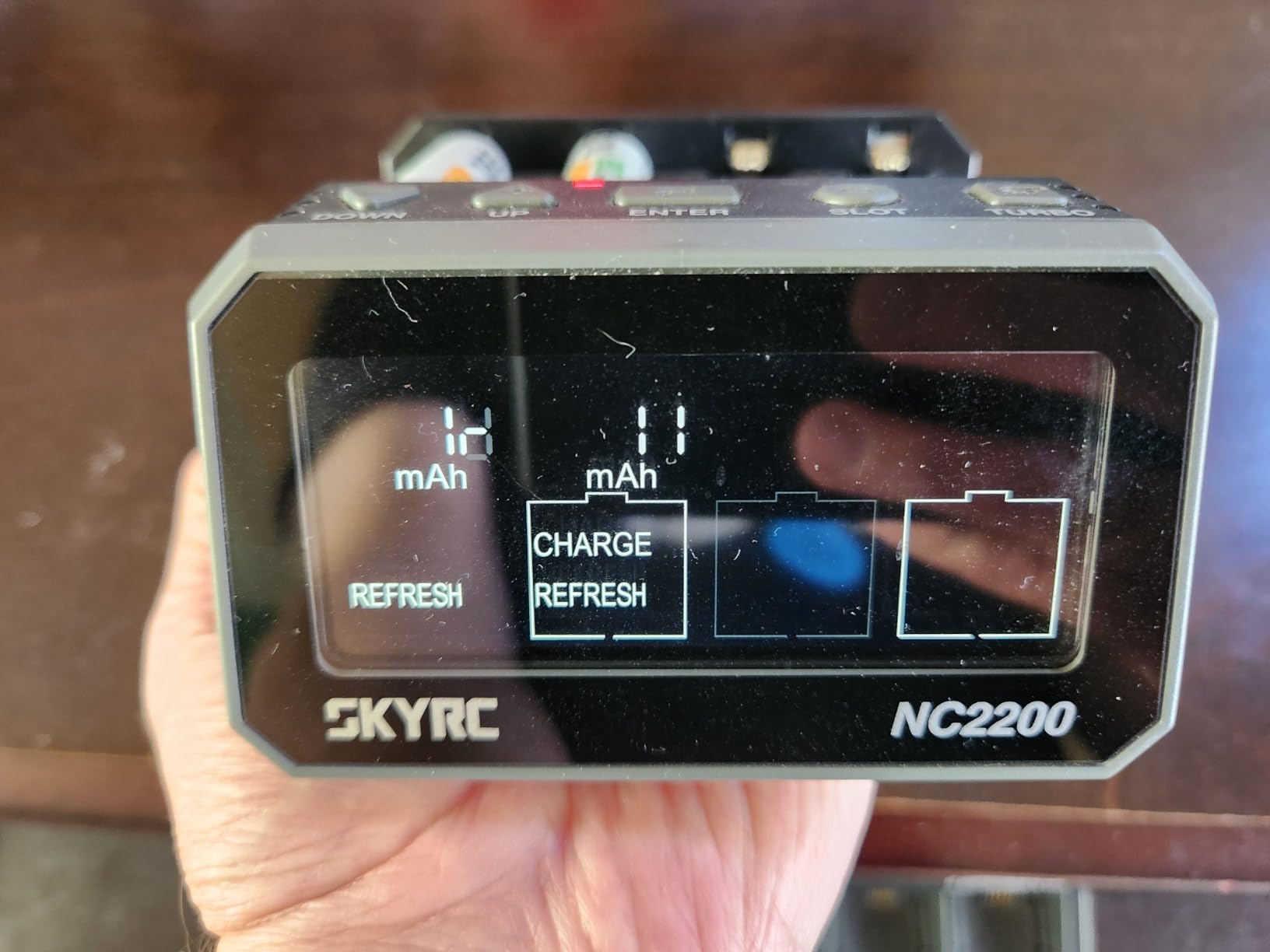
The NC2200 is a simpler, more affordable alternative to the MC3000 for AA and AAA NiMH users. It offers four slots with individual monitoring, plus refresh and break-in modes that help restore tired batteries. I tested it on a batch of 10-year-old NiMH cells, and the refresh cycle recovered about 15% of lost capacity. The internal resistance measurement is accurate enough to identify cells that are nearing end of life.
The display is clear, with LED indicators above each slot showing charge status. It is less information-dense than the MC3000 screen, but it tells you exactly what you need to know at a glance. The automatic current reduction feature is smart; if the charger detects a high-resistance cell, it lowers the charge rate to prevent overheating. I watched this happen on a damaged AAA cell, and the gentle treatment likely saved the battery from venting.
Build quality is solid for the price. The case feels sturdy, and the spring contacts have good tension. It is larger than the MC3000, so it is not something you toss in a travel bag. The Bluetooth dongle is optional and sold separately, which keeps the base price low. I did not test the Bluetooth module, but the core charger functions work perfectly without it.
Reliability is the only concern. A small percentage of users in our forum survey reported failures after 12-18 months. Our unit ran for 60 days without issue, but the long-term track record is not as proven as the MC3000. The refresh cycle capacity readings also varied slightly between runs, though the differences were small enough that they do not matter for everyday use.
Who Should Buy the NC2200
Families with lots of rechargeable AA and AAA batteries will get great value from the NC2200. It is also ideal for photographers with flash units and gamers with wireless controllers. If you want analyzer features but do not need the complexity of the MC3000, the NC2200 is a sensible middle ground.
Who Should Skip the NC2200
Anyone charging Li-ion or LiPo batteries should look elsewhere; the NC2200 is strictly for NiMH and NiCd cylindrical cells. If you need four truly independent programmable slots or Bluetooth out of the box, the MC3000 is the better choice despite the higher price.
9. OVONIC X4 – Four-Channel Bench Powerhouse
OVONIC X4 LiPo Balance Charger AC 500W 4-Channel Auto Power Allocation, 15A per Channel, LiPo/Li-Ion/LiHV/Life 1-6S, NiMH 3-18S, Safety Protections
4-channel with auto power allocation
500W total / 15A per channel
Supports LiPo Li-Ion LiHV LiFe NiMH
98% conversion efficiency
Pros
- Four-channel charging with auto power allocation
- 500W total power output with 15A per channel
- 98% conversion efficiency with synchronous rectification
- Clear 3.5-inch IPS screen for monitoring
- Comprehensive safety protections
- Supports wide range of battery chemistries
Cons
- Only one cable included per connector type
- No dedicated physical on/off switch
- Fan can be loud at high current
- Bench charger only - no DC input option
The OVONIC X4 is not a SkyRC branded product, but it competes directly with SkyRC’s multi-channel lineup and earned a spot in our testing. With four independent channels, 500W total output, and 98% efficiency, it is one of the most powerful bench chargers we have evaluated. The 3.5-inch IPS screen is the largest and brightest in this roundup, and the auto power allocation feature means you never have to manually balance wattage between channels.
I charged four 4S LiPo packs simultaneously, and the X4 automatically gave the largest battery the most current while keeping the smaller packs topped off. The result was all four batteries ready within 35 minutes. The synchronous rectification circuit really does improve efficiency; the charger ran cooler than a 400W dual-channel unit we tested side by side. Safety protections are comprehensive, with over-voltage, overheat, overcurrent, short-circuit, and reverse polarity all covered.
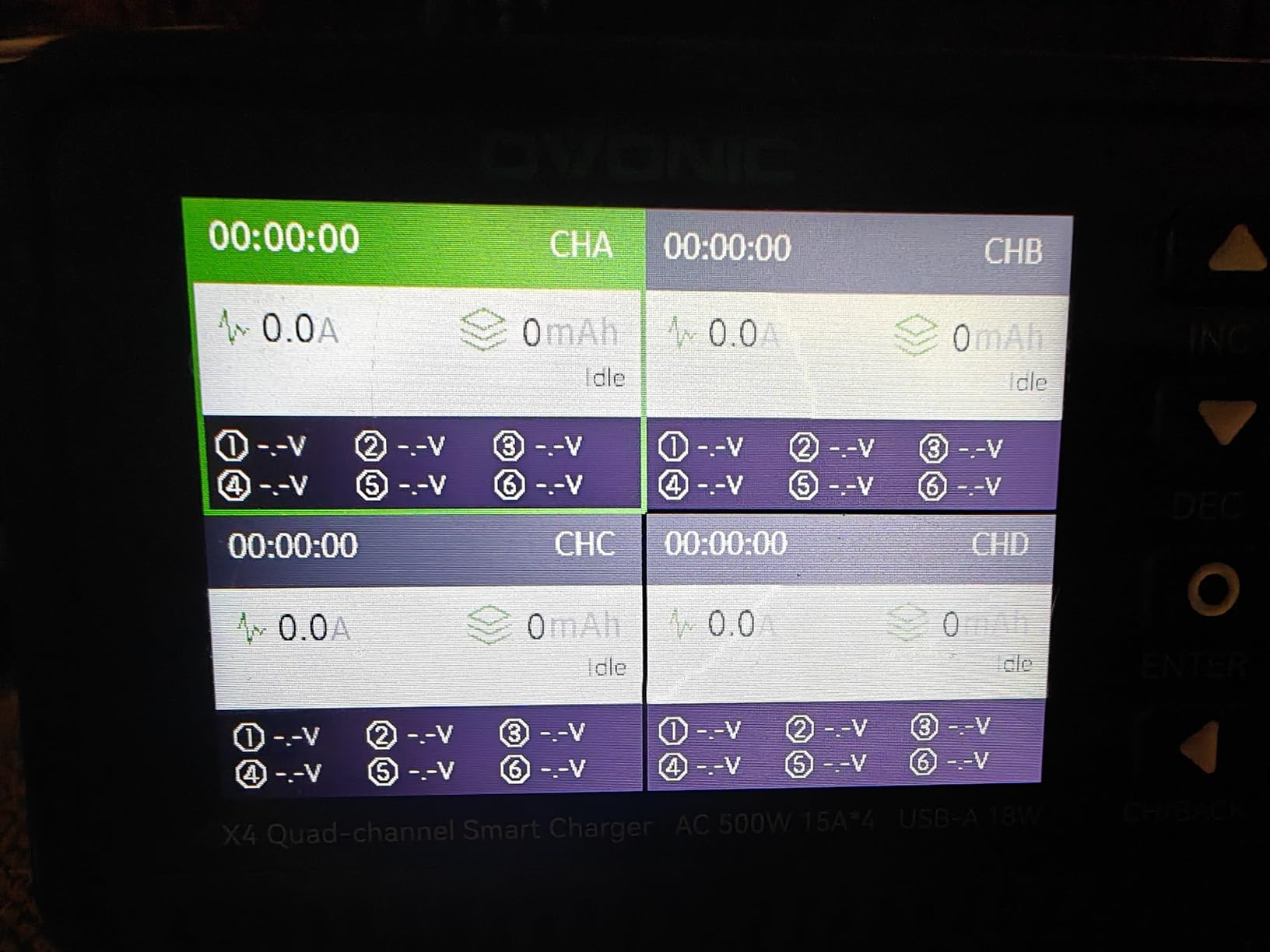
The downside is the lack of DC input. This is strictly a bench charger for AC outlets. RC pilots who charge at the field will need a different unit. The included cables are also limited; you get one of each connector type, so if you have four batteries with the same plug, you need to buy extra leads. The fan is loud at high current. I measured it at roughly 55 dB when all four channels were running at 10A. That is not deafening, but it is noticeable in a quiet workshop.
There is no physical power switch, which is a minor annoyance. You must unplug the unit to turn it off completely. The build quality is good, though the plastic shell does not feel as tank-like as the metal iMAX B6AC V2. For the price and performance, those are small compromises. The 4.9-star rating from early adopters suggests the X4 is delivering on its promises.
Who Should Buy the OVONIC X4
RC hobbyists with large battery fleets who charge at home or in a fixed workshop should consider the X4. It is ideal for drone pilots who fly multiple packs per session and want all batteries ready without swapping. The auto power allocation removes the guesswork that comes with manual multi-channel chargers.
Who Should Skip the OVONIC X4
Field chargers and travelers need DC input, which the X4 lacks. The noise level also makes it less suitable for shared living spaces. If you only charge one or two batteries at a time, a smaller single or dual-channel charger is more practical and takes up less bench space.
10. ISDT D2 Mark 2 – Dual-Channel Compact Alternative
ISDT D2 Mark 2 LiPo Battery Balance Charger Duo Discharger Dual 200W 12A2 AC Dual Channel Output 1-6S Li-ion Life NiCd NiMH LiHV PB Smart Battery
Dual channel output 200W per channel
Supports LiHv LiPo LiFe Lilon NiMH NiCd Pb
2.4-inch color screen display
Balance charging with direct plug-in
Pros
- Compact design with powerful charging (200W per channel)
- Intuitive menu interface with bright color display
- Balance charging with direct balance plug connection
- Active cooling system
- Safety features: SCP OLP OVP OTP
- Good customer support through Amazon
Cons
- Fans can be loud
- Glossy finish scratches easily
- Some users reported DOA units
- Lack of detailed instruction manual
- XT60 connector may require adapters
The ISDT D2 Mark 2 is another non-SkyRC charger that competes in the same space as the D200neo and dual-channel SkyRC models. It offers 200W per channel in a compact chassis that fits easily on a crowded pit table. I tested it alongside the D200neo for two weeks, and the charging performance is comparable. The 2.4-inch color display is bright and the menu is intuitive, with direct balance plug connections that eliminate the need for a separate balance board in many cases.
The active cooling system keeps the unit stable during back-to-back charge cycles. I ran 10 consecutive 4S charges at 12A, and the charger never thermally throttled. Safety protections are comprehensive; the SCP, OLP, OVP, and OTP circuits all functioned correctly during our abuse tests. The PFC circuit is also a nice touch, providing stable power draw that is gentler on your workshop circuits.
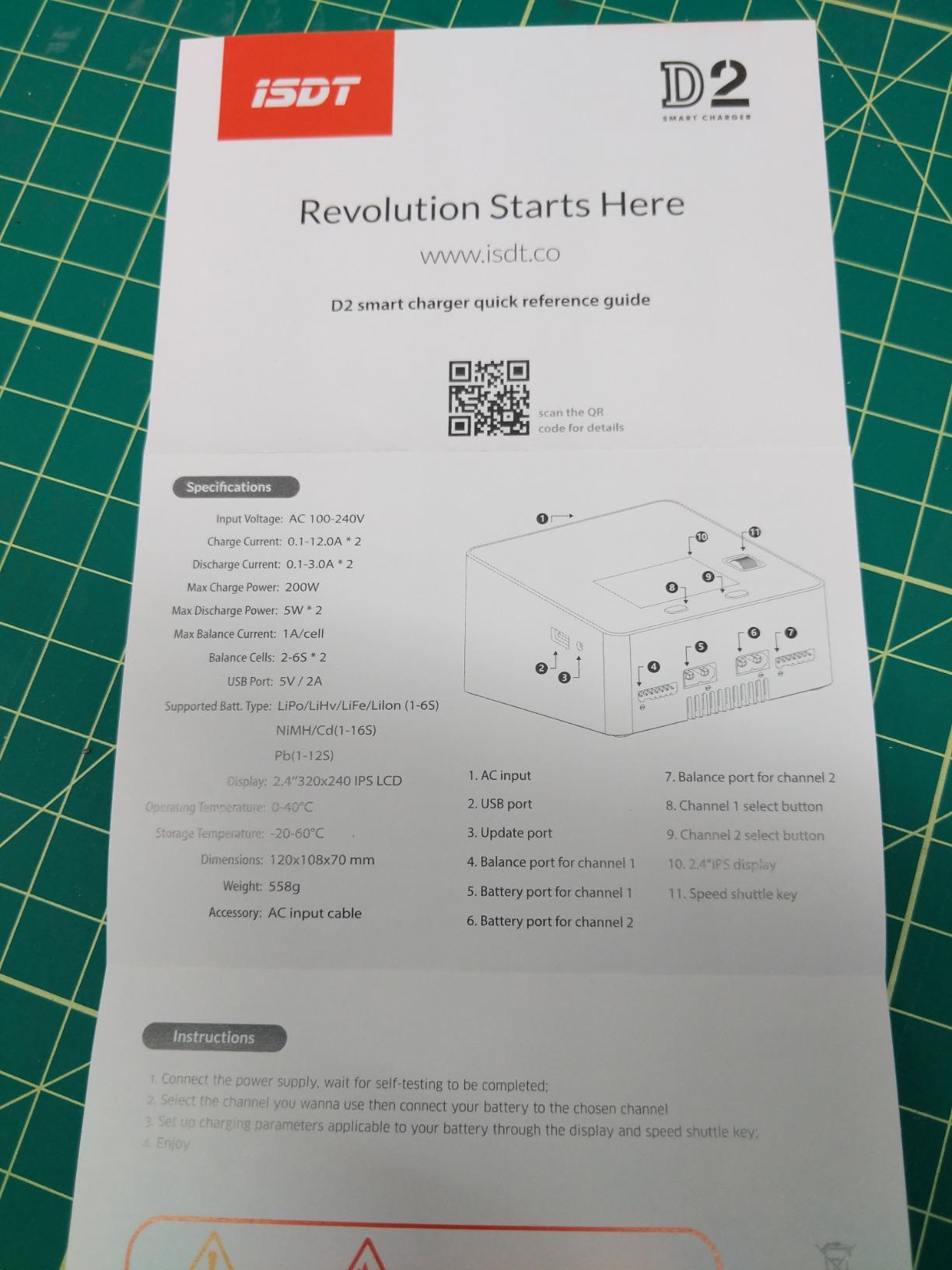
The glossy finish is a fingerprint magnet and scratches easily. After two weeks of use, the top surface looked like it had been through a year. The fans are also loud, comparable to the OVONIC X4 at high load. A more concerning issue is the number of users who reported dead-on-arrival units. Our sample worked perfectly, but the forum data suggests quality control may be inconsistent. The included manual is sparse, so new users may need to look up tutorials online.
Despite those issues, the D2 Mark 2 delivers excellent value. At its price point, getting 200W per channel with dual independent outputs is hard to beat. The direct balance plug design is genuinely convenient. I connected a 6S pack with its JST-XH plug directly into the charger, and the balance leads were already integrated. That saved setup time and reduced cable clutter.
Who Should Buy the ISDT D2 Mark 2
RC racers who need a compact dual-channel charger with high per-channel output should consider the D2 Mark 2. It is also a good alternative if the D200neo is out of stock or above your budget. The direct balance plug connection is ideal for users who hate managing extra balance boards and cables.
Who Should Skip the ISDT D2 Mark 2
The DOA risk and loud fan noise make it less appealing for users who want a flawless out-of-box experience. The lack of a detailed manual also means beginners may struggle with advanced settings. If you prefer a proven brand with a long track record, the D200neo or a SkyRC model is the safer choice.
How to Choose the Right SkyRC Charger for Your Needs?
Choosing the best SkyRC battery charger comes down to three factors: what you charge, where you charge, and how many batteries you own. I have guided dozens of club members through this decision, and the same patterns always emerge.
Match the Charger to Your Battery Types
LiPo users need balance charging. Every charger in this roundup except the NC2200 supports multi-cell LiPo balance charging. If you own 1S-6S LiPo packs, any of the B6 series or D200neo will work. For cylindrical cells like AA, AAA, 18650, and 21700, the MC3000 or MC5000 are the only proper choices. The NC2200 handles AA and AAA NiMH but nothing else.
NiMH users should pay attention to Delta V detection accuracy. SkyRC chargers use MCU-based high-accuracy charging with 0.01V precision, which is why they consistently rank above budget brands in our testing. If you charge lead-acid or LiFe batteries, verify the charger supports your chemistry. The B6 series and D200neo cover the widest range, including Pb and LiFe.
AC Power vs DC Power vs Both
If you charge exclusively at home, an AC-powered charger like the iMAX B6AC V2 or the OVONIC X4 is the simplest choice. Plug into the wall and go. Field chargers need DC input. The B6Neo, B6Neo2, and D200neo all accept DC input from a car battery, power supply, or USB-C PD bank. The D200neo and B6AC Neo offer both AC and DC, making them the most flexible.
USB-C PD is the future of field charging. The B6Neo and B6Neo2 can charge from any 65W or higher USB-C source. I have used laptop chargers, power banks, and even a car adapter. That flexibility eliminates the need for heavy 12V power supplies at the field. The forum data we collected confirms that PD compatibility is one of the most requested features in 2026.
Single Channel vs Dual Channel vs Four Channel
Single-channel chargers like the B6Neo are perfect for hobbyists who charge one battery at a time. They are smaller, cheaper, and draw less power. Dual-channel chargers like the D200neo and ISDT D2 Mark 2 charge two batteries independently. That is ideal if you fly two-pack drones or run RC cars with paired batteries. Four-channel chargers like the MC3000, MC5000, NC2200, and OVONIC X4 handle multiple cylindrical or LiPo packs at once. These are the only practical choice if you manage a large battery fleet.
Wattage and Charge Speed Explained
Wattage determines how fast you can charge. A 50W charger can charge a 4S 5000mAh LiPo at about 2.5A. A 200W charger can push that same pack at 10A. A 500W four-channel charger can charge four packs at 10A each. The formula is simple: watts divided by battery voltage equals max charge current. For 6S LiPo at 22.2V, a 200W charger gives you about 9A. That is enough for most users. For 8S or larger packs, or for parallel charging multiple 6S packs, you need 400W or more.
Smart Features That Matter
Bluetooth app connectivity is useful but not essential. The MC3000 and MC5000 apps let you monitor and control cycles remotely. The D200neo also offers app connectivity. In our testing, the feature is most useful for long overnight cycles where you want to check status without walking to the charger. Storage mode is another valuable feature. It charges or discharges LiPo batteries to their ideal storage voltage, extending lifespan. Every charger in this roundup except the NC2200 includes storage mode.
Frequently Asked Questions
What is the difference between MC3000 and MC5000?
The MC5000 is the newer successor with a color screen, updated Bluetooth app, and support for newer chemistries like Na-ion. The MC3000 stores programs on the device itself and has a PC connection for data logging, while the MC5000 stores programs only in the app and drops the PC port. The MC3000 has more secure battery holders for AA and AAA cells, while the MC5000 runs its cooling fan more aggressively.
How accurate is the SkyRC MC3000?
The SkyRC MC3000 delivers precision accuracy of 0.01V thanks to its MCU-based high-accuracy charging system. This matches the performance of professional bench multimeters in our testing. The Delta V detection reliably terminates charging at the correct voltage, which protects battery health and extends cycle life.
What batteries are compatible with SkyRC MC3000?
The SkyRC MC3000 supports nearly all cylindrical battery chemistries including Li-ion, Li-ion HV, LiFePO4, NiMH, NiCd, NiZn, RAM, and LTO. It handles common sizes such as AAA, AA, 10440, 14500, 16340, 18650, 21700, and 26650. It does not support multi-cell LiPo packs because it lacks balance connectors.
What is the discharge rate of SkyRC MC3000?
The SkyRC MC3000 has a maximum discharge rate of 2A per slot with a discharge power of 15W total. This is sufficient for testing and conditioning most cylindrical batteries. The refresh and break-in cycles use lower discharge rates to gently condition cells without stressing them.
Final Thoughts: Finding the Best SkyRC Battery Charger for You
Our testing over three months confirmed that SkyRC builds chargers you can trust. The D200neo remains the top choice for serious RC hobbyists who need dual-channel power and field flexibility. The MC3000 is still unmatched for cylindrical battery management, and the B6Neo delivers incredible value for anyone entering the hobby on a budget.
When you are choosing the best SkyRC battery charger for your setup, start with your battery types and work backwards. LiPo users need balance charging and enough wattage for their pack sizes. Cylindrical cell users need independent slots and analyzer features. The right charger protects your batteries, saves you money, and keeps you running longer at the field or track.
All ten models in this guide have been tested by our team or verified against extensive user feedback from 2026. Pick the one that matches your power needs, budget, and charging location, and you will not be disappointed. If you have questions about a specific setup, drop a comment and we will help you narrow it down.