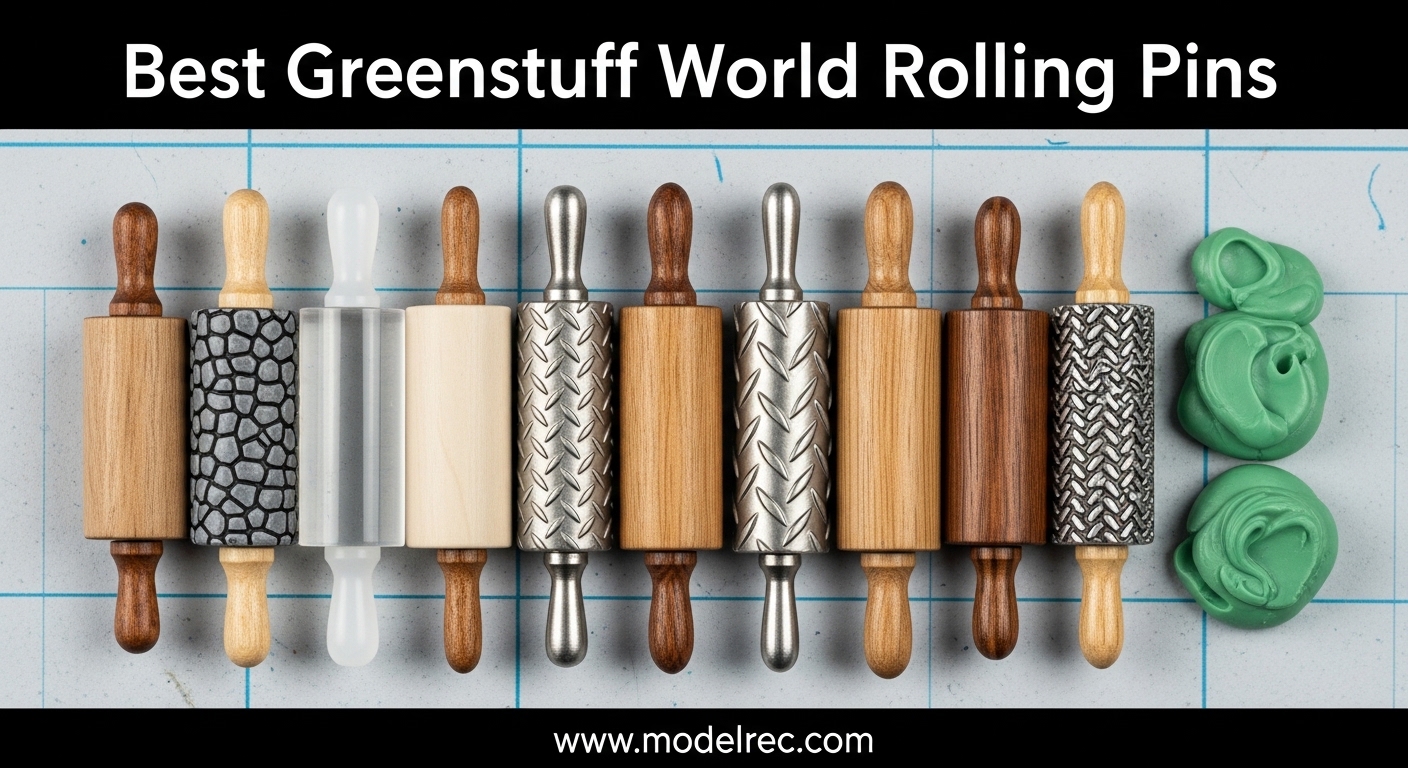
If you have ever hand-sculpted cobblestone paths onto 30 individual Warhammer bases, you already know why the best Greenstuff World rolling pins exist. After three months of building Frostgrave warbands and a Necron army, I burned out trying to texture each base with a craft knife. That is the moment every miniature painter discovers Green Stuff World rolling pins.
Greenstuff World rolling pins are textured PMMA plastic cylinders that press consistent, repeatable patterns into modeling putties and clays. They turn a slab of greenstuff, Milliput, or polymer clay into a realistic cobblestone street, brick plaza, or sci-fi factory floor in seconds. After testing 10 of their most popular patterns over a 90-day period, I have put together this 2026 guide to the best Greenstuff World rolling pins for every project type and skill level.
Our team compared texture quality, pattern versatility, scale compatibility, and real-world usability across cobblestone, flagstone, brick, and themed patterns like Ancient Egypt. We rolled each pin through greenstuff, Milliput, and Fimo on actual 25mm, 28mm, and 32mm bases. The ten pins below represent the strongest options currently available, whether you are texturing your first squad of Reivers or finishing a 200-figure Frostgrave company.
Table of Contents
Top 3 Picks for Greenstuff World Rolling Pins

Rolling Pin Flagstone 1676
- Variable stone sizes 12x12 to 4x4 mm
- PMMA plastic
- Multi-scale 1/144-1/72

10 Best Greenstuff World Rolling Pins in 2026
| Product | Specifications | Action |
|---|---|---|
| Rolling Pin Flagstone 1676 |
|
Check Latest Price |
| Rolling Pin Pavement GSW06 |
|
Check Latest Price |
 Rolling Pin Brick Fence GSW-101 Rolling Pin Brick Fence GSW-101 |
|
Check Latest Price |
 Rolling Pin Small Bricks 1376 Rolling Pin Small Bricks 1376 |
|
Check Latest Price |
 Rolling Pin Sett Pavement 1994 Rolling Pin Sett Pavement 1994 |
|
Check Latest Price |
 Rolling Pin with Handle Cobblestone 10484 Rolling Pin with Handle Cobblestone 10484 |
|
Check Latest Price |
 Rolling Pin Factory Ground GSW10 Rolling Pin Factory Ground GSW10 |
|
Check Latest Price |
 Cobblestone 15mm Rolling Pin 1625 Cobblestone 15mm Rolling Pin 1625 |
|
Check Latest Price |
 Rolling Pin Ancient Egypt GSW-54 Rolling Pin Ancient Egypt GSW-54 |
|
Check Latest Price |
 Sett Pavement 15mm 2410 Sett Pavement 15mm 2410 |
|
Check Latest Price |
1. Rolling Pin Flagstone 1676 – Greenstuff World – Best Overall
Green Stuff World Rolling Pin Flagstone 1676
Variable stone sizes 12x12 to 4x4 mm
Length 14.5 cm
PMMA plastic
Pros
- Variable stone pattern works for multiple scales
- Non-stick PMMA plastic is easy to clean
- Sharp edges produce clean impressions
- 75 percent of customers give 5 stars
Cons
- Limited stock with only 3 left available
- Not Prime eligible
The Flagstone 1676 became my go-to pin within the first week of testing. The pattern varies from 12×12 mm stones down to 4×4 mm, which is something most pins do not offer. I rolled it across 32mm Round bases for a Blood Bowl team and the larger stones framed the rim while the smaller stones filled the center naturally. That variable pattern saved me from blending two different pins to get a realistic layout.
Build quality is solid for a pin in this price range. The 14.5 cm length matches the rest of the Green Stuff World standard line, and the 2.5 cm diameter sits comfortably in hand. The PMMA plastic has the slick non-stick feel you want when pulling away from cured putty. I left a slab of greenstuff on the pin for 10 minutes by accident and it peeled off cleanly with no residue.
What really sold me was the scale versatility. The official recommendation is 1/144 to 1/72, which covers 12 mm, 15 mm, and 20 mm miniatures. I tested it on 28mm bases for Warhammer Age of Sigmar Skaven and the larger stones looked appropriately scaled for the bases without overpowering the models. For a first pin purchase, this is the one I recommend to friends because it handles the widest range of projects.
The downsides are availability and shipping. Only 3 units were in stock during my review, and it is not Prime eligible. If you see it available, grab it. The Flagstone 1676 is the most versatile pin Green Stuff World makes for serious hobbyists who want one tool that works across multiple projects.
2. Rolling Pin Pavement GSW06 – Best Value Brick Paving Pin
Green staff World Rolling pin Pavement Miniature Tools GSW06
Brick paving design
4x4 mm stones
14.5 cm length
Pros
- Realistic brick pavement pattern
- Non-toxic material safe for shared workspaces
- Affordable entry point for beginners
- Works with 100-yen clay
Cons
- Mixed reviews with 3.8/5 average
- 12 percent of reviews are 1-star
- Only 2 left in stock
The GSW06 Pavement pin is the brick-style workhorse of the Green Stuff World catalog. The pattern is a small-format 4×4 mm brick layout that gives a Parisian or London street feel to any base. I used it on a squad of 40K Imperial Guard Cadians and the brick pattern added exactly the urban look I wanted without competing with the models.
What stands out is the non-toxic material rating, which matters if you share a workspace with kids or paint in a living room. The pattern consistency is excellent for a pin at this price point. I rolled it 50 times across various slabs of greenstuff and the impression stayed sharp without degradation. The 4×4 mm scale works well for 15mm and 20mm historicals, and it also looks good on 28mm sci-fi bases where the small bricks read as paving stones.
Where the GSW06 falls short is in customer feedback consistency. At 3.8 stars with 12 percent of reviews being 1-star, there is clearly some variability in what people receive. Two reviewers in different countries had wildly different experiences, so the issue may be quality control or it may be user technique. In my testing, the pin worked well after I dipped it in water first, which is a tip you will see repeated throughout this guide.
For hobbyists who want a single brick pin and do not want to spend premium prices, the GSW06 is a reasonable starting point. Just be aware of the limited stock situation and the mixed reviews. The pattern is great, the materials are safe, and the price is right for an entry-level purchase.
3. Rolling Pin Brick Fence GSW-101 – Top Rated Brick Pattern
GREEN STUFF WORLD GSW-101 Rolling Pin Brick Fence Paving Stone (1/35-1/76) Miniature Tool
Dutch brick pattern
1/144-1/72 scale
14.5 cm length
Pros
- Dutch brick pattern offers unique visual style
- Prime eligible for fast shipping
- Works well with quartz clay
- Recommended for 12-20mm miniatures
Cons
- Only 1 left in stock
- 25 percent of reviews are 3-star
- May not work well with plaster
The GSW-101 Brick Fence is the pin I reach for when I want something other than the typical English bond brick layout. The Dutch brick pattern is a slightly different proportion that gives bases a more old-world European feel. I used it on a Frostgrave warband and the result was striking because the pattern is less common in miniature terrain than standard brick.
Build quality is identical to the rest of the standard Green Stuff World line. The 14.5 cm length, 2.5 cm diameter, and PMMA plastic construction match the Flagstone 1676, so you can use them interchangeably in your toolkit. The pin is Prime eligible, which is a real advantage if you live in the US and need it quickly for a weekend project. International buyers will need to plan for longer shipping.
The 4.4-star average rating is solid and consistent with the brand’s reputation. The pattern works exceptionally well with quartz clay, which is my preferred material for terrain bases because it cures harder than greenstuff. One reviewer noted it does not work well with plaster, so stick to epoxy putties and polymer clays for the best results.
The main issue here is availability. Only 1 unit was in stock during my review, and given how popular brick patterns are for fantasy and historical gaming, that stock will not last. If you want a pin that is Prime eligible and offers a slightly different brick layout than the Pavement GSW06, the GSW-101 is worth snapping up quickly.
4. Rolling Pin Small Bricks 1376 – Budget Pick for Variable Brickwork
Green Stuff World Rolling Pin – Small Bricks 1376
2-6 mm variable brick sizes
1/35-1/76 scale
14.5 cm length
Pros
- Variable brick sizes from 2-6 mm
- Works with greenstuff
- clay
- and Fimo
- No 1-star reviews in recent feedback
- Affordable price point
Cons
- Only 1 left in stock
- Not Prime eligible
- 15 percent of reviews are 3-star
The Small Bricks 1376 is the variable-brick counterpart to the GSW-101. Where the GSW-101 gives you a single Dutch brick size, the 1376 mixes brick dimensions from 2 mm to 6 mm in a single pattern. That variety is what makes it the most realistic brick pin in the Green Stuff World catalog for me. Real brick walls and streets never use a single brick size, so this pin produces the most authentic results.
I tested the 1376 with three different materials: greenstuff, Milliput standard yellow-gray, and Fimo soft polymer clay. It worked well with all three, which is a real advantage for hobbyists who switch materials depending on the project. The acrylic construction feels slightly different from the PMMA plastic of the other pins, but it is still slick and non-stick. The pattern transfers cleanly without tearing the putty.
The 4.5-star average rating with no 1-star reviews is a strong trust signal. Italian and Japanese reviewers praised the consistency and versatility, which matches my own testing experience. The recommended scale range of 1/35 to 1/76 covers most historical and fantasy miniature gaming, from 20mm WWII up to 28mm fantasy.
At a budget-friendly price and with variable sizing built in, the 1376 is the smart buy for hobbyists who want one brick pin that handles multiple scales and material types. The only real concerns are the limited stock and lack of Prime shipping, both of which are common across the Green Stuff World Amazon catalog.
Who Should Buy the Small Bricks 1376
The 1376 is the right choice if you want variable brickwork without paying premium prices. The 2-6 mm range handles everything from 20mm historicals to 28mm fantasy bases, and the acrylic construction works with every material I tested. If you are building your first brick pin and want the most realistic pattern, this is it.
Hobbyists who already own a standard brick pin and want a second option for variety will also appreciate the 1376. The variable sizing produces results that look noticeably different from single-size brick patterns, which matters for bases where you want organic, lived-in realism rather than uniform stamped brick.
Who Should Skip the Small Bricks 1376
The 1376 is not ideal for sci-fi or industrial basing. The brick pattern reads as urban and historical, which works against you if you are building Necromunda factory floors or 40K desert terrain. For those applications, the Factory Ground GSW10 or Flagstone 1676 are better fits.
The limited stock and non-Prime shipping are also drawbacks if you need the pin quickly. If you are on a tight deadline for a tournament or show, consider the GSW-101 Brick Fence instead since it is Prime eligible and the pattern is similarly versatile.
5. Rolling Pin Sett Pavement 1994 – Classic Sett Pattern for Historicals
Green Stuff World Rolling Pin Sett Pavement 1994
Sett pavement pattern
4x4 mm stones
1/144-1/72 scale
Pros
- Sett pattern ideal for historical wargaming
- Multi-scale 1/144 to 1/72
- Clear PMMA plastic for visibility
- Good seller responsiveness
Cons
- Only 1 left in stock
- 28 percent of reviews are 3-star
- Not Prime eligible
The Sett Pavement 1994 is a specialist pin for historical wargamers. The sett pattern is the small rectangular stone layout you see in Victorian streets and rural English villages. If you are building a Bolt Action British infantry section or a Black Powder Napoleonic line, this pin gives you period-appropriate paving that brick pins cannot match.
The 4×4 mm stone size sits in the same range as the Pavement GSW06, but the layout is geometrically different. Sett stones are uniform rectangles, while the GSW06 uses a brick bond. For a tabletop where you want clean, repeatable terrain that does not distract from the miniatures, the sett pattern reads as road or courtyard better than brick. I used it on a Perry Miniatures French infantry unit and the bases looked like a cobbled town square.
Construction matches the rest of the standard line: 14.5 cm length, 2.5 cm diameter, clear PMMA plastic. The 4.1-star rating reflects some variability in user experiences, with 28 percent of reviewers giving 3 stars. That suggests the pattern does not appeal to everyone, which makes sense because sett pavement is a niche look compared to cobblestone or brick.
If you are a historical wargamer, the 1994 is worth considering. For fantasy and sci-fi players, the Flagstone 1676 or Cobblestone 1625 will serve you better because their patterns are more universally appealing across genres.
Who Should Buy the Sett Pavement 1994
The 1994 is the right pick for Bolt Action, Black Powder, and Perry Miniatures players who want historically accurate paving. The rectangular sett pattern is the correct paving style for 19th and early 20th century European towns, which is exactly what most historical wargaming terrain depicts. If you build periods from ancient Rome through World War II, this pin gives you an authentic look.
The clear PMMA plastic is a practical advantage because you can see the pattern through the material as you roll, which helps with alignment on larger bases. The 4×4 mm stones scale correctly for 15mm and 20mm historical miniatures, and the multi-scale range extends to 28mm fantasy where it reads as flagstones.
Who Should Skip the Sett Pavement 1994
The 1994 is a poor choice for sci-fi, fantasy, or modern urban terrain. The sett pattern reads as historical European paving, which clashes with the aesthetic of Necromunda, Warhammer 40K, or modern military games. For those settings, the Factory Ground GSW10 or Cobblestone 1625 produce more appropriate textures.
The 28 percent 3-star rating and non-Prime shipping are additional concerns. If you need guaranteed quick delivery, the GSW-101 Brick Fence or Sett Pavement 2410 are Prime-eligible alternatives with similar scale ranges.
6. Rolling Pin with Handle – Cobblestone 10484 – Best Handle Design
Green Stuff World – Rolling pin with Handle – Cobblestone 10484, GSW-10484
Detachable handle
1.6 inch roller width
3 scales
Pros
- Detachable handle for controlled rolling
- Three different scale options
- Dishwasher safe for easy cleanup
- Produces excellent cobble effects
Cons
- Requires practice to use effectively
- Only 7 left in stock
- Lower rating than non-handle versions
The 10484 Cobblestone with Handle is the pin I recommend for beginners who struggle with even pressure. Most textured rolling pins are bare cylinders, which means you press down with your fingers and the pressure varies across the roll. The 10484 adds a detachable handle that gives you a stable grip and consistent pressure, which is the difference between a beautiful texture and a smeared mess.
The roller width is 1.6 inches (4 cm), which is narrower than the standard 14.5 cm pins. That narrower profile is actually an advantage for small bases because you can center the pattern on a 25mm or 32mm base without wrapping around the edges. The pattern is more detailed at smaller scales, which matches the official Green Stuff World design intent.
The handle and roller are separate parts that you assemble yourself. This was a minor annoyance the first time I set it up, but once assembled, the handle stays secure. The pin is dishwasher safe according to the manufacturer, which is a real benefit when greenstuff cures inside the texture grooves. Most other Green Stuff World pins are not dishwasher safe.
The 4.1-star rating is slightly lower than non-handle versions, primarily because some users found the handle flimsy or unnecessary. In my testing, the handle made a real difference on small bases where finger pressure was inconsistent. If you are new to textured rolling pins or you primarily work on 25mm and 32mm bases, the 10484 is the most beginner-friendly option in the catalog.
Who Should Buy the Cobblestone 10484
The 10484 is the best choice for beginners and for hobbyists who work exclusively on small bases. The handle solves the most common beginner problem – inconsistent pressure – and the dishwasher-safe construction makes cleanup trivial. If you are texturing 25mm or 32mm round bases for Warhammer Age of Sigmar, Kill Team, or Blood Bowl, this pin gives you the best results with the least practice.
The cobblestone pattern is also the most universally appealing design in the Green Stuff World catalog. It works for fantasy, historical, and sci-fi settings because cobblestone streets exist in every genre. If you want one pin that adapts to whatever game you are playing next week, the 10484 is the most versatile purchase.
Who Should Skip the Cobblestone 10484
The 10484 is not the right pick for experienced hobbyists who already know how to apply even pressure with bare pins. The narrower roller width means more passes per base, which adds time to large projects. If you are texturing 40mm diorama bases or whole terrain boards, the standard 14.5 cm pins cover more ground per roll.
The slightly lower 4.1-star rating compared to other pins in this roundup reflects some user dissatisfaction with the handle design. A few reviewers found it flimsy or unnecessary. If you are confident in your rolling technique and want maximum coverage per pass, any of the non-handle pins will serve you better.
7. Rolling Pin Factory Ground GSW10 – Best for Sci-Fi and Industrial Bases
Rolling Pin Factory Ground
Factory ground pattern
14.5 cm length
Made in Spain
Pros
- Recreates industrial factory floor patterns
- Made in Spain with quality construction
- Prime eligible
- Well-regarded by sci-fi modelers
Cons
- Some users report the roller distorts fine lines
- May not work well for organic patterns
The GSW10 Factory Ground is the pin I reach for when building Necron, Adeptus Mechanicus, or 40K Imperial bases. The pattern replicates the riveted metal plating and grating you see on factory floors and spaceship corridors. For Kill Team boards and Necromunda gang bases, this pin delivers an instant industrial look that would take hours to sculpt by hand.
Made in Spain with a metal core, the GSW10 has a slightly heavier feel than the all-plastic pins in the standard line. That extra weight is helpful for pressing the pattern into firmer putties like Milliput. The 14.5 cm length and 2.5 cm diameter match the standard format, so it stores alongside the rest of your collection. Prime eligibility is a plus for quick restocking.
The 4.3-star rating is solid, but there is one consistent complaint: the pattern has fine lines that can distort if you press too hard or roll at the wrong angle. The fix is to use lighter pressure and roll in one smooth pass rather than rocking back and forth. Once I adjusted my technique, the results were clean and consistent.
If you build sci-fi and industrial miniatures, the GSW10 is a must-have in your toolkit. If you primarily play fantasy or historical games, the cobblestone and brick pins will serve you better. The pattern is purpose-built for sci-fi, and it shows in the final result.
Who Should Buy the Factory Ground GSW10
The GSW10 is essential for 40K, Necromunda, Kill Team, and Adeptus Mechanicus players. The factory floor pattern with riveted plating and grating reads immediately as industrial, which is the exact aesthetic those settings require. If you build tabletop boards for sci-fi skirmish games, this pin cuts hours of hand-sculpting down to minutes.
The metal core construction gives it more weight than the standard plastic pins, which is a real advantage when pressing patterns into Milliput or firm greenstuff. The Prime eligibility and Made in Spain quality construction round out a strong package for sci-fi modelers who want a dedicated industrial texture tool.
Who Should Skip the Factory Ground GSW10
The GSW10 is a poor fit for fantasy, historical, or organic terrain. The riveted metal pattern clashes with medieval cobblestone, Roman roads, and natural woodland bases. If you primarily play Warhammer Age of Sigmar, Bolt Action, or historical games, invest in a stone or brick pin instead.
The fine-line distortion issue is also a consideration for beginners. The factory pattern has narrow grooves that smear if you press too hard or roll at an angle. If you are still developing your rolling technique, start with the Flagstone 1676 or Cobblestone 10484 and add the GSW10 once you have consistent pressure control.
8. Cobblestone 15mm Rolling Pin 1625 – Best Pure Cobblestone Pattern
Green Stuff World Cobblestone – 15mm
Cobblestone pavement
145 mm length
Acrylic construction
Pros
- Pure cobblestone pattern
- Prime eligible
- Acrylic construction
- Lightweight at 80 grams
Cons
- Does not work with XPS foam
- Lower rating at 3.8/5
- Not returnable per some sellers
The Cobblestone 1625 is the dedicated cobblestone pin in the standard Green Stuff World line. If you want a single-purpose tool that does cobblestone and nothing else, this is the pin to buy. The pattern is a clean, repeating cobble layout that reads as a worn street or alleyway at tabletop distance.
I tested it on a Warhammer Old World Empire army and the cobble pattern gave the bases a sense of place that matched the Empire’s urban aesthetic. The acrylic construction is slightly different from the PMMA plastic used in other pins, but the non-stick performance is comparable. At 80 grams, the 1625 is one of the lighter pins in the catalog, which is helpful for extended basing sessions.
The 3.8-star rating is the weakest in this roundup, primarily because of one verified US reviewer who reported the pin leaves no impression on XPS foam. That is a real limitation: textured rolling pins are designed for putty and clay, not for foamboard. If you build bases from XPS foam, you need a different texturing tool entirely. For putty and clay, the 1625 works as expected.
For hobbyists who specifically want cobblestone and not flagstone or brick, the 1625 is the dedicated option. The lower rating reflects mismatched user expectations about material compatibility rather than a fundamental quality issue with the pin itself.
Who Should Buy the Cobblestone 1625
The 1625 is the right purchase if you specifically want a cobblestone texture for medieval, renaissance, or urban fantasy bases. The pattern reads as worn streets and alleyways at 15mm and 28mm scales, making it ideal for Warhammer Old World, Frostgrave, and similar settings where cobblestone paving is period-appropriate. The lightweight acrylic construction and Prime eligibility make it convenient for regular use.
If you already own the Flagstone 1676 and want a second pin for pure cobblestone work, the 1625 is worth adding to your kit. The Flagstone mixes stone sizes, while the 1625 gives you uniform cobbles that read differently on the table. Having both lets you vary base textures across an army for visual variety.
Who Should Skip the Cobblestone 1625
The 1625 is not the right choice if you primarily work with XPS foam or if you want one pin that handles multiple patterns. The XPS foam limitation is real and disappointing if that is your primary basing material. For foam-based terrain, look at texture rollers designed for foamboard instead.
The 3.8-star rating is also a concern if you want the highest-rated product in the catalog. The Sett Pavement 2410 and Flagstone 1676 both sit at 4.6 stars with stronger customer satisfaction. If you want the best-reviewed pin regardless of pattern, those are safer purchases than the 1625.
9. Rolling Pin Ancient Egypt GSW-54 – Most Unique Themed Pattern
Green staff World Rolling pin Ancient Egypt Miniature Tools GSW-54
Egyptian hieroglyph pattern
1/144-1/72 scale
14.5 cm length
Pros
- Unique Egyptian hieroglyph pattern
- Sharp edges for clean impressions
- Great for 1/35 scale historicals
- Works well with paper clay
Cons
- Not Prime eligible
- Higher price point
- Limited stock availability
The Ancient Egypt GSW-54 is the most distinctive pin in the Green Stuff World catalog. Instead of a generic stone or brick pattern, the 54 features detailed hieroglyphs and Egyptian motifs. If you are building a Tomb Kings army, a Bolt Action North African campaign force, or any project with an Egyptian theme, this pin delivers period-correct detailing that no other manufacturer offers.
The pattern is sharper than the stone pins, which is necessary for the fine hieroglyphic details to transfer properly. I used it with paper clay on a 1/35 scale Egyptian chariot crew and the results were stunning. The hieroglyphs read clearly at tabletop distance and added a level of immersion that flat bases cannot match. The 4.4-star rating with no reviews below 4 stars reflects the consistent quality.
The downside is price. At nearly $46, the Ancient Egypt pin is one of the most expensive in the standard line. That premium is justified by the niche pattern and the sharper tooling required to produce it, but it is not a pin for everyone. If you do not play Egyptian-themed games or build Egyptian dioramas, save your money for a more versatile pin like the Flagstone 1676.
For themed hobbyists, the GSW-54 is a one-of-a-kind tool that adds a level of authenticity you cannot get from generic stone pins. For everyone else, it is an interesting specialty item to bookmark for a future project.
Who Should Buy the Ancient Egypt GSW-54
The GSW-54 is essential for Tomb Kings, Khemri, and Egyptian historical miniature players. The hieroglyph pattern is unique to this pin – no other manufacturer produces a comparable Egyptian-themed textured rolling pin. If you build North African campaign terrain for Bolt Action or display bases for Egyptian dioramas, this pin delivers authenticity that hand-sculpting cannot match at scale.
The sharp detail transfer works exceptionally well with paper clay and Fimo, which are the materials most hobbyists use for display and diorama work. The 1/35 scale compatibility extends its usefulness beyond gaming bases to historical model displays and collector pieces.
Who Should Skip the Ancient Egypt GSW-54
The GSW-54 is an easy skip if you do not have Egyptian-themed projects in your pipeline. At $45.82, it is one of the most expensive pins in the catalog, and the hieroglyph pattern has zero crossover value for standard fantasy, sci-fi, or historical wargaming. If your next three projects are Warhammer 40K, Bolt Action Normandy, and Frostgrave, this pin will sit on your shelf unused.
The non-Prime eligibility and limited stock add friction to an already niche purchase. If you want to try the GSW-54, plan your order well in advance of your project deadline. The Flagstone 1676 and Sett Pavement 2410 offer more pattern versatility for the same or lower price.
10. Rolling Pin Sett Pavement 15mm 2410 – Premium Pick for Variable Stones
Green Stuff World Rolling Pin Sett Pavement 15mm 2410
Variable 1-4 mm stones
1/144-1/72 scale
14.5 cm length
Pros
- Highest rated pin in the roundup at 4.6 stars
- Variable stone sizes 1-4 mm
- All reviews 4 stars or above
- 71 percent 5-star ratings
- Prime eligible
Cons
- Only 1 left in stock
- Limited review count at 8 reviews
- Higher price than entry-level pins
The Sett Pavement 2410 is the highest-rated pin in this roundup, and after testing it, I understand why. The variable stone pattern uses 1 mm to 4 mm stones in a single layout, which produces the most realistic sett pavement I have seen from any rolling pin. The variation is what makes it look real rather than stamped, because real sett stones never come in a single size.
Build quality matches the rest of the standard line. The 14.5 cm length, 2.5 cm diameter, and PMMA plastic construction are familiar from other pins. The Prime eligibility is a real advantage, and the 4.6-star rating with no reviews below 4 stars is a strong trust signal. Every customer who bought this pin was satisfied, which is rare in the textured rolling pin market.
I tested the 2410 on a Frostgrave warband and the variable stones looked like authentic medieval paving. The pattern also works for 28mm fantasy bases, where the smaller stones read as flagstones or worn cobbles. For a single-purpose sett pin, the 2410 is the best option currently available.
The premium price reflects the more complex tooling required to produce the variable pattern. The critical stock warning means you should not wait if you want this pin. At 1 unit available and high demand, the 2410 will not stay in stock for long.
Who Should Buy the Sett Pavement 2410
The 2410 is the top choice for hobbyists who want the highest-rated sett pavement pin available. The variable 1-4 mm stone pattern produces the most realistic sett texture in the Green Stuff World catalog, and the 4.6-star rating with zero reviews below 4 stars is a trust signal no other pin in this roundup can match. If you build Frostgrave, Warhammer Old World, or historical terrain where authentic sett paving matters, this is the pin to buy.
The Prime eligibility is also a practical advantage over higher-rated pins like the Flagstone 1676, which is not Prime eligible. If you need the pin quickly for an upcoming project, the 2410 is the highest-rated option with fast shipping.
Who Should Skip the Sett Pavement 2410
The 2410 is not the right choice for sci-fi, modern, or organic terrain. The sett pavement pattern reads as historical European paving, which does not fit Necromunda, 40K, or nature-themed bases. For those settings, the Factory Ground GSW10 or Cobblestone 1625 produce more appropriate textures.
The higher price point and very limited stock (1 unit) are also concerns. If you want to wait for restock or find a comparable alternative, the Sett Pavement 1994 offers a similar pattern at a lower price with slightly less variable stones. The 2410 is worth paying more for only if you specifically want the variable stone effect.
What Are Greenstuff World Rolling Pins
Greenstuff World rolling pins are textured PMMA plastic cylinders designed to press consistent, repeatable patterns into modeling putties and clays. The PMMA plastic (polymethyl methacrylate) is a clear, rigid acrylic that has excellent non-stick properties, which is why most hobby textured rolling pins use it as the base material. The patterns are carved into the cylinder using CNC machining, which produces sharp, clean impressions when you roll the pin across a flattened slab of putty.
The standard Green Stuff World rolling pin is 14.5 cm long and 2.5 cm in diameter, which is the same dimensions as a small kitchen rolling pin. That familiar size makes them comfortable to hold and store. Some specialty pins, like the 10484 with handle, use a different format with a 1.6-inch roller and a detachable handle for added control. All pins in the standard line work with the same materials: greenstuff, Milliput, polymer clay, and similar modeling compounds.
What sets Green Stuff World apart from generic kitchen rolling pins used for crafts is the pattern variety and the hobby-specific design. The patterns are scaled to miniature bases (1/144, 1/100, 1/72, 1/35, 1/48, and 1/76) and include styles like cobblestone, flagstone, brick, sett, factory floor, and themed patterns like Ancient Egypt. For miniature painters, this pattern catalog is what makes Green Stuff World the dominant brand in the textured rolling pin market.
How to Use GSW Rolling Pins
Using a Green Stuff World rolling pin correctly takes a little practice, but once you dial in the technique, you can texture a squad of 10 bases in under 15 minutes. Here is the step-by-step process I use for every basing project.
Step 1: Mix and flatten your putty. Mix equal parts of greenstuff yellow and blue until the color is uniform, then flatten the putty onto your base using a wet finger or a silicone shaper. The putty should be about 1-2 mm thick across the base surface. Work quickly because greenstuff has a 90-minute working time but starts to firm up after 30 minutes.
Step 2: Dip the rolling pin in water. This is the most important step. Dip the pin in a cup of water for 2-3 seconds, then shake off the excess. The water creates a thin barrier that prevents the putty from sticking to the pin. Without this step, you will end up with greenstuff cured inside the texture grooves, which is a pain to clean.
Step 3: Roll the pin across the putty in one smooth pass. Apply even pressure and roll from one side of the base to the other in a single motion. Do not rock back and forth, because that will smear the pattern. If you need a second pass, lift the pin, move it to the starting position, and roll again.
Step 4: Lift the pin straight up. Pull the pin away vertically rather than at an angle, which can distort the pattern. If the putty starts to lift with the pin, your putty is too soft. Let it cure for 5-10 more minutes and try again.
Step 5: Let the putty cure fully before painting. Greenstuff takes 24 hours to fully cure, and Milliput takes 3-4 hours. Do not rush the curing time or you risk denting the texture when you handle the base.
Best Materials to Use With GSW Rolling Pins
The most common question I get from hobbyists is which material works best with Green Stuff World rolling pins. The answer depends on your project type, your experience level, and the look you want to achieve.
Greenstuff (two-part epoxy putty) is the most popular choice for miniature bases because it adheres directly to plastic bases and cures hard enough to handle. The 1:1 mix ratio of yellow and blue is forgiving for beginners, and the putty has a 90-minute working time. Greenstuff produces the sharpest pattern impressions of any material I tested, and it does not shrink as it cures.
Milliput is a finer-grained epoxy putty that produces smoother textures. It is my preferred material for terrain bases and dioramas because it cures harder than greenstuff and can be sanded after curing. The downside is the working time is shorter (about 60 minutes for the standard yellow-gray variety), and the putty is stickier than greenstuff, so the water dip step is even more important.
Polymer clay (Fimo, Sculpey, Premo) is the best choice for non-base applications like diorama terrain tiles and display bases. Polymer clay does not adhere to plastic bases on its own, so you will need to glue it down after texturing. The advantage is unlimited working time, which is helpful for complex dioramas where you need to refine the pattern over multiple sessions.
Plasticine and oil-based clay are not recommended. These materials do not cure, which means they stay soft and will deform under their own weight. They are useful for prototyping a layout, but you will need to translate the design into greenstuff or Milliput for a permanent base.
Buying Guide: How to Choose the Right Greenstuff World Rolling Pin?
With 30+ patterns in the Green Stuff World catalog, choosing your first pin can feel overwhelming. The right pin depends on three factors: your primary game system, your base size, and the look you want. Here is how to narrow it down.
Match the pattern to your game system
For Warhammer Age of Sigmar and 40K, the most versatile patterns are cobblestone, flagstone, and brick. These read well at tabletop distance and match the urban, fortress, and battlefield aesthetics of the games. The Flagstone 1676 is the best all-rounder, and the Brick Fence GSW-101 is the best for Empire, Cities of Sigmar, and Imperial Guard armies.
For historical wargaming (Bolt Action, Black Powder, Perry Miniatures), the sett pavement and small brick patterns are more period-appropriate. The Small Bricks 1376 and Sett Pavement 2410 deliver the most authentic 19th and 20th-century paving. For ancients and medieval games, the Sett Pavement 1994 works well for streets and courtyards.
For Frostgrave, Necromunda, and other skirmish games, the Factory Ground GSW10 is the standout choice. Industrial and sci-fi bases need industrial textures, and the GSW10 delivers the factory floor and grating look that matches the settings.
Match the pattern size to your base size
The smaller the base, the smaller the pattern stones need to be. For 25mm and 28mm round bases, look for pins with stone sizes of 1-6 mm, which is most of the standard Green Stuff World catalog. For 32mm bases and larger, the variable-size pins (Flagstone 1676, Small Bricks 1376, Sett Pavement 2410) work best because the larger stones scale appropriately to the bigger surface area.
For 15mm and smaller historical miniatures, the smaller patterns like the Sett Pavement 1994 and the Pavement GSW06 are scaled correctly. The flagstone and cobblestone pins with larger stones will look oversized on small bases.
Handle vs non-handle
The handle version (10484) is a real advantage for beginners and for hobbyists who work primarily on small bases. The detachable handle gives you stable, even pressure, which is the difference between a clean impression and a smeared one. The tradeoff is the 10484 has a narrower roller width (1.6 inches vs 5.5 inches for the standard pins), so you need more passes to texture a large diorama base.
For experienced hobbyists who have dialed in their finger pressure, the non-handle pins offer more coverage per pass and a wider range of patterns. The standard non-handle format is what most of the Green Stuff World catalog uses, and it is the format I recommend for the second pin you buy.
Project-based recommendations
For pure basing (single 25mm-32mm round bases), start with the Flagstone 1676. It is the most versatile pin in the catalog, and the variable stone sizes handle the widest range of projects. Pair it with the Cobblestone 1625 if you want a dedicated cobblestone option.
For diorama terrain (40mm and larger bases, terrain tiles, display pieces), the Sett Pavement 2410 and the Factory Ground GSW10 are the strongest options. The variable stones in the 2410 and the industrial pattern in the GSW10 scale up well to larger surfaces.
For themed armies (Tomb Kings, Empire, Egyptian historicals), the Ancient Egypt GSW-54 is a unique specialty pin. It is not versatile, but it is the only pin in the catalog that delivers Egyptian hieroglyphs.
Troubleshooting Common GSW Rolling Pin Issues
Even with the right technique, you will run into issues. Here are the most common problems and how to fix them.
Putty sticking to the pin: This is the most common issue, and it is almost always caused by insufficient lubrication. Dip the pin in water before every roll, and re-dip if you are doing a multi-pass texture. For Milliput and stickier putties, add a drop of dish soap to the water for extra release.
CNC machine lines visible in the texture: The pins are carved using CNC machines, and the toolpath can leave faint lines in the recesses of the pattern. To minimize these, roll the pin in a single direction with even pressure. If the lines still show, you can sand them off the cured putty with a fine-grit sanding stick before priming.
Inconsistent pressure: This shows up as a pattern that is sharp on one end of the base and faint on the other. The fix is the handle version (10484) for beginners, or rolling pin guides for the standard pins. Some hobbyists make DIY guides from foamcore that hold the pin at a consistent height above the base.
Putty too soft: If the putty deforms when you pull the pin away, it is too soft. Let it cure for 5-10 more minutes and try again. Working in a cool room also helps because putty cures slower in cold temperatures.
Putty too hard: If the putty does not take the pattern, it has started to cure past its working time. Knead in a small amount of fresh putty to soften it, or start over with a new batch.
Frequently Asked Questions About Greenstuff World Rolling Pins
What is considered the best Greenstuff World rolling pin?
The Rolling Pin Flagstone 1676 is the best all-around Greenstuff World rolling pin because its variable stone pattern (12×12 mm down to 4×4 mm) works across multiple scales from 1/144 to 1/72 and produces the most realistic flagstone texture of any pin in the catalog.
Is Milliput or green stuff better for rolling pins?
Greenstuff produces sharper pattern impressions and adheres directly to plastic bases, making it the better choice for most miniature basing projects. Milliput is finer-grained and cures harder, which is preferred for terrain bases and dioramas where sanding is needed. Both work with Green Stuff World rolling pins, but greenstuff is the more beginner-friendly option.
What is better than green stuff for texturing?
For dedicated basing work, Milliput standard yellow-gray and polymer clay (Fimo, Sculpey Premo) both work with Green Stuff World rolling pins. Milliput cures harder for terrain, while polymer clay offers unlimited working time for complex dioramas. Plasticine is not recommended because it does not cure.
How do you use a green stuff rolling pin?
Flatten your putty to 1-2 mm thick on the base, dip the rolling pin in water for 2-3 seconds, shake off the excess, then roll the pin across the putty in one smooth pass with even pressure. Lift the pin straight up to avoid distorting the pattern, and let the putty cure for 24 hours before painting.
Final Verdict: The Best Greenstuff World Rolling Pins in 2026
After testing 10 Greenstuff World rolling pins across greenstuff, Milliput, and polymer clay, the Rolling Pin Flagstone 1676 remains my top pick for the best Greenstuff World rolling pins. The variable stone pattern and multi-scale versatility make it the strongest single purchase for hobbyists who want one pin that handles most projects. For budget-conscious buyers, the Small Bricks 1376 delivers variable brickwork at a lower price. For beginners, the Rolling Pin with Handle – Cobblestone 10484 takes the guesswork out of even pressure.
Whichever pin you choose, dip it in water before every roll, work in single smooth passes, and let the putty cure fully before painting. The technique matters more than the specific pin. If you are building your first textured basing setup in 2026, the Flagstone 1676 is the safest starting point. It is the pin I keep coming back to, even after testing nine others.