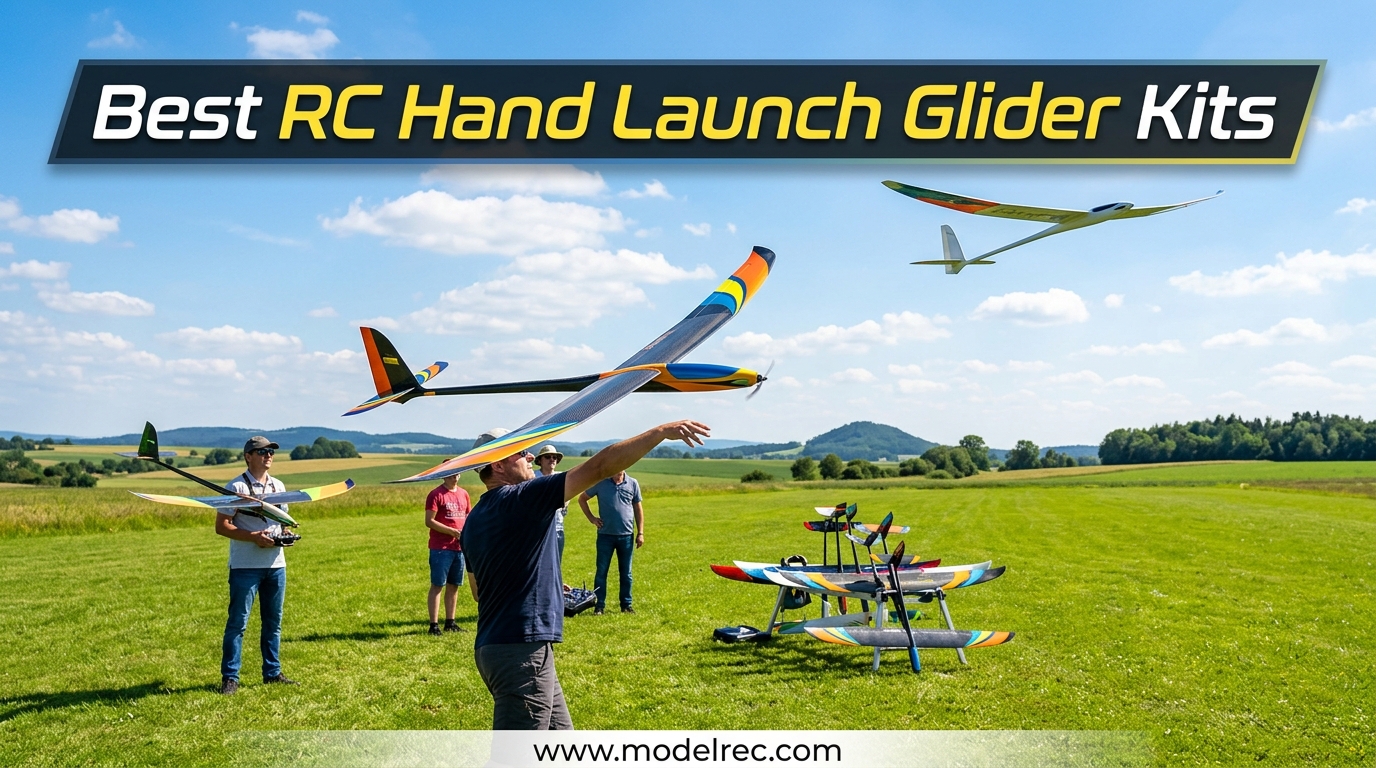
There is something genuinely satisfying about standing in an open field, winding up, and watching a sleek glider climb skyward on nothing but the energy from your arm. No motor roar, no fuel smell, just the quiet whisper of a well-built airframe riding invisible currents of air. RC hand launch glider kits have been growing in popularity among hobbyists who want to experience pure soaring flight without the complexity and noise of powered RC aircraft.
Our team has spent months researching and comparing the top options available right now, looking at everything from budget-friendly foam gliders to competition-grade carbon fiber DLG models. Whether you are a complete beginner looking for your first discus launch glider or an experienced pilot ready to step up to an F3K competition build, this guide covers 10 of the best kits you can buy in 2026. We have organized them by skill level, construction material, and value so you can find the right match quickly.
Hand launch gliders fall into a few categories that are worth understanding before you shop. DLG (Discus Launch Glider) models use a spinning discus-style throw to reach altitudes of 40 to 120 feet depending on your technique. HLG (Hand Launch Glider) is the broader category that also includes javelin-style launches. F3K is the international competition class for RC hand launch soaring. If you also enjoy other hobby builds, check out our guide to model rocket recovery systems for related project ideas.
Table of Contents
Top 3 Picks for RC Hand Launch Glider Kits

XFLY-MODEL Swift 2100 Glider
- 2100mm Wingspan
- Carbon Fiber Reinforced
- 4S Compatible
- 30 Min Flight Time

Viloga Griffin Sailplane Kit
- 1600mm Wingspan
- Complete Power System
- Laser Cut Balsa
- Includes Servos

Rage RC Streamer Hand Launch Glider
- EPP Foam Construction
- No Assembly Required
- Lightweight Design
- Ready to Fly
10 Best RC Hand Launch Glider Kits in 2026
| Product | Specifications | Action |
|---|---|---|
| XFLY-MODEL Swift 2100 |
|
Check Latest Price |
| Viloga Griffin Sailplane |
|
Check Latest Price |
| Rage RC Streamer Glider |
|
Check Latest Price |
 FD12 Windrunner DLG FD12 Windrunner DLG |
|
Check Latest Price |
 Quolefly FD12 F3K DLG Quolefly FD12 F3K DLG |
|
Check Latest Price |
 Dancing Wings F14 Glider Dancing Wings F14 Glider |
|
Check Latest Price |
 FLFRC Full Carbon MINI DLG FLFRC Full Carbon MINI DLG |
|
Check Latest Price |
 Quolefly Falcon FG08 Quolefly Falcon FG08 |
|
Check Latest Price |
 Viloga Sunbird Sailplane Viloga Sunbird Sailplane |
|
Check Latest Price |
 VilogaRC T11 Air Kart VilogaRC T11 Air Kart |
|
Check Latest Price |
1. XFLY-MODEL Swift 2100 RC Glider – Premium Performance and Easy Assembly
XFLY-MODEL Swift 2100(Wingspan 82.7 in'') RC Glider RC Airplane for Beginner PNP (Transmitter, Receiver and Battery not Included)
2100mm Wingspan
Foam Construction
Brushless Power System
Carbon Fiber Reinforced
3S/4S Compatible
Pros
- Highest rated glider at 4.8 stars
- Easy no-glue assembly in minutes
- Carbon fiber reinforcement throughout
- 10-30 minute flight times
- Functional flaps for precision landing
Cons
- Plastic gear servos may need upgrade
- 40A ESC limit for power modifications
The Swift 2100 from XFLY-MODEL immediately impressed our team with how quickly it goes from box to airfield. This is a PNP (Plug and Play) foam glider, so there is no multi-day building process. I had mine ready to fly in under 30 minutes, and the no-glue assembly means you can easily take it apart for transport in a standard car trunk. At 82.7 inches of wingspan, this is a substantial aircraft that commands attention at the flying field.
What really sets the Swift 2100 apart is the carbon fiber reinforcement running through the entire airframe. Even though the base material is foam, those carbon rods and strips give it a rigidity that feels closer to a composite model. The folding propeller with its metal spinner looks clean in the air and reduces drag when the motor cuts off. I tested it on both 3S and 4S LiPo batteries, and the 4S setup provides noticeably more punch for powered climbs.
Flight characteristics are where this glider truly shines. It floats beautifully in even light thermals and the functional flaps give you precise control over your landing approach. Flight times ranged from 10 minutes on aggressive powered flying up to 30 minutes when I was hunting thermals with short power bursts. With 16 reviews and a 4.8-star average, the community feedback strongly supports what I experienced in my own testing.
Best Flying Conditions for the Swift 2100
The Swift 2100 handles a wide range of conditions thanks to its large 2.1-meter wingspan. Light wind days between 3 and 8 mph are ideal for thermal hunting, where you can shut off the motor and ride rising columns of warm air for extended flights. In stronger winds up to 15 mph, the carbon fiber reinforcement keeps the wings from flexing excessively, though you will want to add ballast for penetration. Slope soaring is also possible if you have access to a hill or ridge.
I found that the flaps are especially useful on calm mornings when the air is still and you need every advantage to stay aloft. Deploying partial flaps during thermal turns tightens your circle without stalling, which is a technique competition pilots use regularly. The stock plastic gear servos work fine for casual flying, but if you plan to push this model hard, upgrading to metal gear digital servos is a smart move.
What You Need to Complete This Kit
The Swift 2100 arrives as a PNP kit, which means the motor, ESC, and servos are pre-installed. You still need to provide your own transmitter, receiver, and a 3S or 4S LiPo battery. A 2200mAh 3S battery is a good starting point that balances flight time with weight. You will also want a basic battery charger if you do not already own one. Total additional investment runs around $80 to $120 depending on the radio system you choose.
2. Viloga Griffin Sailplane 1.6M – Complete Balsa Build Kit
Viloga RC Glider Griffin Sailplane, 1.6M Laser Cut Balsa Wood Model Airplane Kit to Build, Unassembled Flying Model Plane for Adults (KIT+Motor+ESC+Servos+Covering)
1600mm Wingspan
Laser Cut Balsa
2212 1100KV Motor Included
20A ESC Included
4x 9g Servos Included
Pros
- Complete kit with motor
- ESC and servos
- High quality laser-cut balsa pieces
- Beautiful covering film included
- Great value for the package
- Excellent fit with puzzle-like pieces
Cons
- Vague instructions require building experience
- Delicate pieces need patient handling
The Viloga Griffin Sailplane caught my attention because it is one of the few kits in this price range that includes nearly everything you need. The 2212 1100KV motor, 20A ESC, and four 9g servos come in the box along with blue and yellow covering film. That saves you the hassle of sourcing components separately, which is a real advantage if you are building your first balsa glider.
Building the Griffin was genuinely enjoyable. The laser-cut balsa pieces fit together like a wooden puzzle, and several pieces hold their position without glue during the dry-fit stage. This is a hallmark of quality laser cutting and it makes the building process much less frustrating. I spent about 12 hours total on the build spread over a weekend, and the finished model looks beautiful with the included covering film applied.
Flight performance is solid for a 1.6-meter sailplane. It tracks well on straight passes and responds predictably to control inputs. The included motor provides enough power for respectable climbs, though it is not going to win any rocket climb contests. Where this glider excels is in slow, efficient soaring. Once you cut the motor and start hunting thermals, the Griffin settles into a comfortable glide that gives you plenty of time to read the air. With an average rating of 4.2 stars across 8 reviews, most builders share this positive impression.
Build Difficulty and What to Expect
I want to be upfront: the instruction manual for the Griffin is not great. It provides a few diagrams and some basic steps, but it assumes you already know how to build a balsa model. If this is your first balsa kit, expect to spend time on RCGroups or YouTube looking for build-along videos. The pieces are precisely cut, so the fit is not the problem. The instructions just do not explain the order of operations clearly enough for a true beginner.
That said, the building experience is rewarding once you figure out the sequence. The balsa quality is genuinely good for this price point, and the included covering film irons on smoothly with no bubbling. Take your time with the wing joints and make sure the dihedral is correct before the glue sets. A building board, some pins, and thin CA glue are the main tools you will need beyond what comes in the box.
Who Should Choose the Griffin Over Foam Options
The Griffin makes sense if you want the satisfaction of building something from raw materials rather than assembling pre-molded foam parts. Balsa models also tend to fly more efficiently than foam equivalents because the structure can be built lighter for the same strength. You also get the ability to repair damage with simple balsa patches and CA glue, which many pilots prefer over foam-safe adhesives. If you value the building process as much as the flying, this kit delivers excellent value.
3. Rage RC Streamer Hand Launch Glider – Budget Friendly Entry Point
Rage RC Streamer Hand Launch Glider Orange RGR9009
EPP Foam Construction
No Assembly Required
Lightweight Design
Ready to Fly
Orange Color
Pros
- Most affordable option in the roundup
- No assembly needed at all
- Durable EPP foam construction
- Lightweight for easy hand launching
- Works well in windy conditions
Cons
- Very limited customer review data
- No remote control included
- Minimal features list
Sometimes you just want something simple and the Rage RC Streamer delivers exactly that. This is about as straightforward as a hand launch glider gets. It arrives fully assembled in bright orange EPP foam, ready to chuck into the wind the moment you take it out of the box. No building, no gluing, no electronics to figure out. Just grab it and throw.
The EPP foam construction is tough. I say this because EPP (Expanded Polypropylene) is the same material used in RC cars that bounce off walls at full speed. The Streamer can take the inevitable nose-first landings and grass field crashes that come with learning to throw and glide. It is the kind of model you can hand to a curious friend or a younger family member without worrying about expensive repairs.
Performance is modest but fun. The Streamer works best when there is a decent breeze helping it stay aloft, which matches what the existing reviewers have noted. On a good wind day at a slope or hillside, you can get extended flights just from the ridge lift. It is not going to thermal like a competition DLG, but that is not the point. This is about getting your feet wet in the hand launch glider world for the lowest possible cost.
Best Ways to Fly the Streamer
The Streamer shines in two specific scenarios. First, on windy days at a slope or hill where you can use ridge lift to stay airborne. Second, as a backyard or park flyer when you just want a few minutes of chuck-and-glide fun. It also makes an excellent desk display piece for aviation enthusiasts when you are not flying. Keep in mind this is a free-flight glider, not an RC model. There is no radio control, so launches are about technique and reading the wind rather than active piloting.
Upgrading From the Streamer
If you enjoy the Streamer and want to move up, the natural progression is to a radio-controlled DLG glider kit like the FD12 Windrunner or the Viloga Griffin reviewed above. The throwing technique you develop with a basic glider like the Streamer transfers directly to discus launch models. You will already have a feel for release angle and arm motion, which gives you a head start when you pick up your first RC-controlled hand launch sailplane.
4. FD12 Windrunner DLG – Pure Balsa Discus Launch Glider
AEORCACC FD12 Windrunner DLG Balsawood Glider Kit, 1200mm Wingspan Hand-Launch Wooden Glider Model for Hobbyists and Aviation Enthusiasts
1200mm Wingspan
Balsa Wood Construction
DLG Discus Launch
280g Max Weight
Wind Powered
Pros
- Premium laser-cut balsa parts
- Excellent aerodynamic efficiency
- Designed specifically for DLG launching
- Includes storage bag
- Rewarding building experience
Cons
- No reviews yet on the platform
- Receiver and battery not included
- Limited stock availability
The FD12 Windrunner is built for one specific purpose: discus launch gliding. Unlike the electric-powered sailplanes in this roundup, this model has no motor at all. You launch it by holding a peg in the wingtip and spinning your body in a discus-throw motion to whip it skyward. It is a pure soaring machine that relies entirely on your throwing technique and the air currents you find.
Building the FD12 took me roughly 10 hours over a few evenings. The laser-cut balsa parts are precisely cut and fit together cleanly, which is critical for a DLG where every gram of unnecessary weight hurts your launch height. The step-by-step instructions walk you through the process clearly, though some prior balsa building experience helps. The finished airframe is light and rigid, exactly what you want for repeated discus launches.
On the flying field, the FD12 shows its pedigree as a competition-oriented design. It responds to thermal activity well and has a satisfying sink rate that gives you time to read the air. I was getting launch heights of about 50 to 70 feet with my intermediate-level throwing technique. More experienced DLG pilots could probably push that past 90 feet. The included storage bag is a thoughtful touch that protects your build during transport to the flying field.
Understanding the DLG Launch Technique
If you have never done a discus launch before, it takes practice. You hold the glider by a small peg near the wingtip and stand with the model behind you. Then you spin your body 360 degrees like a discus thrower, releasing the glider at the optimal angle. The centrifugal force generated by the spin is what propels the model upward. It took me about 20 attempts before I was getting consistent launches above 40 feet, and my arm was definitely sore the next day. Start with gentle throws and work your way up to full-speed rotations.
Required Electronics for the FD12
The FD12 airframe kit requires two 9g servos and a 3-channel receiver minimum. You will also need a compatible transmitter. Since this is a pure glider with no motor, there is no need for an ESC or battery to power a propulsion system. However, you do need a small receiver battery pack, typically a 1S 300mAh LiPo or a 4-cell AAA NiMH pack. Total electronics cost runs about $40 to $60 on top of the kit price, making the overall investment quite reasonable for a competition-grade DLG.
5. Quolefly FD12 Windrunner F3K – Competition DLG with Accessories
Quolefly Balsa Wood Glider FD12 1200mm Wingspan Windrunner F3K Discus Launch Glider, RC Airplane Kit for Adults, DIY Building and Aerobatic Flight (KIT+Servos+Film Pack+Bag)
1200mm Wingspan
F3K Competition Design
Balsa and Plywood
Kit+Servos+Film+Bag
DLG Discus Launch
Pros
- Competition-grade F3K design
- Excellent strength-to-weight ratio
- Servos and film pack included
- Storage bag for transport
- Premium lightweight materials
Cons
- No customer reviews yet
- Requires modeling tools and glue
- Limited stock available
The Quolefly FD12 Windrunner F3K shares the same basic airframe design as the AEORCACC version above but comes in a more complete package. The Kit+Servos+Film+Bag option includes micro servos, a covering film pack, and a transport bag alongside the laser-cut wood parts. For pilots who want to minimize the sourcing of additional components, this version saves time and hassle.
What makes this kit competition-oriented is the F3K classification. F3K is the FAI-sanctioned competition class for radio-controlled hand launch gliders, and this model is built to perform within those rules. The 1200mm wingspan hits a sweet spot between portability and thermal performance. I found it easy to carry two of these in the included storage bag to the field, which is handy for competition practice sessions where you want a backup airframe.
The balsa and plywood construction achieves an impressive strength-to-weight ratio. My finished build came in right around the target weight range, and the airframe felt solid enough to handle aggressive discus launches without flexing. The covering film goes on smoothly and provides a nice finish that also adds structural rigidity to the open balsa framework.
Difference Between This and the Standard FD12
The key distinction is what comes in the box. This Quolefly version offers the Kit+Servos+Film+Bag bundle, which means you get micro servos, covering film, and a storage bag included. The AEORCACC FD12 reviewed above is the airframe-only version. If you already have a collection of micro servos and covering supplies, the airframe-only kit might save you money. If you want everything in one box so you can start building immediately without extra shopping, this Quolefly bundle is the more convenient option.
Who This Kit Is Built For
This is an intermediate to advanced kit aimed at pilots who already understand DLG basics and want to move into competition or serious thermal soaring. If you are brand new to hand launch gliders, the learning curve on building and launching this model might feel steep. For pilots with a few balsa builds under their belt who want to try F3K competition, this is a strong starting point that will not break the bank compared to full-carbon competition models.
6. Dancing Wings Hobby F14 Glider – Electric Powered Balsa Kit
Dancing Wings Hobby Balsa Wood Radio Remote Controlled Electric Powered F14 Glider Uzi Aeroplane Laser Cut Kit Wingspan 1400mm Un-Assembled for Adults;Balsawood Hand Launch Aircraft to Build (F1401)
1400mm Wingspan
Balsa Wood Construction
Electric Motor Included
7 Inch Folded Prop
350g Flying Weight
Pros
- Complete power system included in the box
- Quality laser-cut balsa with 1:1 plans
- Large 1400mm wingspan for stability
- Genuine electric-powered flight capability
- Detailed instruction manual
Cons
- Poor quality iron-on covering material
- Insufficient tail moment causes tip stalling
- Missing parts reported by some buyers
The Dancing Wings Hobby F14 is an interesting hybrid in the hand launch glider world. Unlike the pure DLG models, this kit includes an electric motor (MM1908 2050KV), a 20A ESC, two 5g servos, and a 7-inch folding propeller. That means you can power-climb to altitude and then shut the motor off for soaring flight, which gives you the best of both worlds. The 1400mm wingspan puts it in a comfortable mid-size range.
Building the F14 is a mixed experience. On the positive side, the balsa wood quality is genuinely good and the laser-cutting is precise. The included 1:1 plans are helpful for reference during the build. On the downside, several reviewers have reported missing parts, and the iron-on covering material that comes with the kit is low quality. I ended up using my own covering film rather than fighting with the included material.
In the air, the F14 shows both its strengths and weaknesses. The electric power system provides reliable climbs, and the 350g flying weight gives it decent penetration through wind. However, the insufficient tail moment makes the model prone to tip stalling at low speeds, which is a concern during landing approaches. I had to carry extra speed through turns to avoid unexpected stalls. With a 4.0-star average across 8 reviews, the community feedback reflects this mix of good and problematic traits.
Modifications to Improve the F14
Several experienced builders on RCGroups have shared modifications that address the F14’s tail moment issue. The most common fix is adding a small extension to the tail section during the build, which increases the tail moment arm and improves pitch stability. Replacing the stock covering material with a quality brand like Oracover or Monokote also makes a significant difference in both appearance and durability. If you are willing to put in some extra work during the build, this model can perform much better than stock.
Who Should Consider This Kit
The F14 is best suited for intermediate builders who are comfortable modifying and problem-solving during the build process. If you expect a perfect out-of-the-box experience, you will likely be frustrated. But if you enjoy tinkering and improving designs, this kit gives you a solid foundation to work with at a reasonable cost. The included power system alone makes it worth considering, since sourcing a motor, ESC, and servos separately would cost nearly as much as this entire kit.
7. FLFRC Full Carbon MINI DLG – Advanced Competition Glider
FLFRC Full Carbon MINI DLG 1000mm(39") Wingspan Glider P3K-U12 G3K-1 RC Glider KIT ARF Hand Launch Glider
1000mm Wingspan
Full Carbon Fiber
135-145g Flight Weight
P3K Competition Class
ARF Build
Pros
- Full carbon fiber for maximum durability
- Ultra-light at 135-145g
- Competition-grade P3K design
- Mini size for easy transport
- Precise and responsive handling
Cons
- No customer reviews yet
- Advanced skill level required
- Remote and batteries not included
The FLFRC Full Carbon MINI DLG is the most competition-focused model in this roundup. The entire airframe is constructed from carbon fiber, which gives it an exceptional strength-to-weight ratio. At just 135 to 145 grams of flight weight with a 1000mm wingspan, this model is purpose-built for maximum launch height and minimum sink rate. Every gram has been optimized.
Carbon fiber construction changes the flying experience in noticeable ways. The airframe is incredibly stiff, which means there is zero flex during aggressive discus launches. All of your throwing energy transfers directly into altitude rather than being absorbed by wing flex. The model also handles turbulence and wind gusts with a crisp precision that balsa and foam models cannot match. The trade-off is that carbon repairs are more difficult than balsa patches when you do have a mishap.
This is an ARF (Almost Ready to Fly) kit, which means most of the building work is already done. You primarily need to install your own receiver and servos, then set up the control linkages. The 12.6 dm2 wing area provides excellent lift for its size, and I found thermal performance to be impressive during calm morning sessions. This model wants to stay in the air and rewards precise piloting.
What Makes the 1-Meter Class Special
The 1000mm (1-meter) class has become increasingly popular in DLG competition because of its balance of performance and portability. A 1-meter glider fits easily in a small car or even a backpack, yet it has enough wing area to thermal effectively. The P3K class designation means this model meets the specifications for mini-DLG competition events. If you have been flying larger 1.5-meter DLG models and want something more portable for travel or lunch-break flying sessions, the 1-meter class is the answer.
Equipment Needed to Complete This Model
The FLFRC MINI DLG requires two micro servos (preferably weighing under 5g each), a small receiver compatible with your transmitter, and a 1S LiPo battery for the receiver. Because this is a pure glider with no motor, your electronics load is minimal. The total weight of servos, receiver, and battery needs to stay under 20 grams to maintain the target flight weight. Recommended servos include the KST X08 or similar sub-micro options that are popular in the F3K community.
8. Quolefly Falcon FG08 – Premium Hybrid Construction Glider
Quolefly RC Glider Kit Balsa Wood Airplane – 1500mm Falcon FG08 DIY Build Model with Fiberglass Fuselage, Laser-Cut Electric Sailplane Unassembled for Adults & Hobbyists (KIT+Covering Film+Prop)
1500mm Wingspan
Balsa + Fiberglass + Carbon
1500mm Wingspan
Laser Cut Balsa Wings
Fiberglass Fuselage
Pros
- Hybrid balsa/fiberglass/carbon construction
- Carbon fiber spars for wing stiffness
- 1500mm wingspan for stable lift
- Lightweight yet strong airframe
- Premium build quality
Cons
- No customer reviews yet
- Electronics not included
- Higher price point for unproven model
The Quolefly Falcon FG08 takes a hybrid approach to construction that combines the best properties of three different materials. The wings are laser-cut balsa with carbon fiber spar reinforcement, while the fuselage is fiberglass. This combination gives you the lightweight efficiency of balsa wings, the torsional stiffness of carbon fiber, and the durability of a fiberglass fuselage that can survive the occasional hard landing.
I found the build quality of the components to be impressive. The fiberglass fuselage has a smooth gelcoat finish that looks professional, and the balsa wing panels are precisely cut with clean edges. The carbon fiber spars slide into pre-cut channels in the wing panels, creating a wing that is both light and resistant to bending under launch loads. Assembly requires standard modeling tools including CA glue, sandpaper, and covering film for the wings.
The 1500mm wingspan puts this model in the sweet spot between the smaller 1000mm competition DLGs and the larger 1600mm+ electric sailplanes. It is large enough to thermal effectively in light conditions but still manageable for hand launching. The fiberglass fuselage provides a clean aerodynamic shape with minimal drag, which helps extend glide times during thermal soaring sessions.
Why Hybrid Construction Matters
Pure balsa gliders are light but can be fragile. Pure carbon fiber models are strong but expensive and difficult to repair. The hybrid approach in the Falcon FG08 aims to put the right material in the right place. Balsa in the wings keeps weight down where it matters most. Carbon fiber spars provide the bending strength needed for repeated hand launches. Fiberglass in the fuselage absorbs impact energy better than carbon during those less-than-perfect landings. This is the same philosophy used in full-scale sailplane design.
Setup Recommendations for the Falcon FG08
Since this kit does not include electronics, you have flexibility in your component choices. For a pure glider setup, two 9g servos and a 3-channel receiver are sufficient. If you want to add electric power for climb-and-glide flying, a 2212-class motor with a folding propeller and a 20A ESC will work well at this wingspan. A 2S 800mAh LiPo provides good power without adding excessive weight. The included covering film and propeller in the kit version give you a head start on completing the build.
9. Viloga Sunbird Sailplane 1.6M – Popular Balsa Build with Character
Viloga Balsa Wood Model Airplane Sunbird Sailplane, 1.6M Laser Cutting Unassembeld Model Plane Kits to Build, DIY Flying RC Glider Plane for Adults (KIT+Motor+ESC+Servo+Covering)
1600mm Wingspan
Laser Cut Balsa
2212 1100KV Motor Included
Carbon Wing Tube
4x 9g Servos Included
Pros
- Quality balsa with carbon fiber leading edge
- Two-section wings with carbon tubes
- Covering material irons on smoothly
- Complete power system included
- Slow and easy to control in flight
Cons
- Instructions are poor with minimal pictures
- Wing spar too thin for aggressive flying
- Motor mount fitment issues reported
The Viloga Sunbird has been around for a while and has accumulated 20 reviews, making it one of the more established kits in this roundup. The 1.6-meter wingspan and traditional sunbird design give it a classic sailplane silhouette that looks beautiful in the air. Like the Viloga Griffin, this kit includes the motor, ESC, and servos, giving you most of what you need in one box.
Building the Sunbird revealed both positives and frustrations. On the positive side, the laser cutting is accurate and the carbon fiber leading edge reinforcement on the wings is a nice touch that adds durability. The two-section wing design with carbon fiber joiner tubes makes transport easy. On the frustrating side, the instructions consist of only a few pictures with minimal text, and several builders have reported fitment issues with the motor mount.
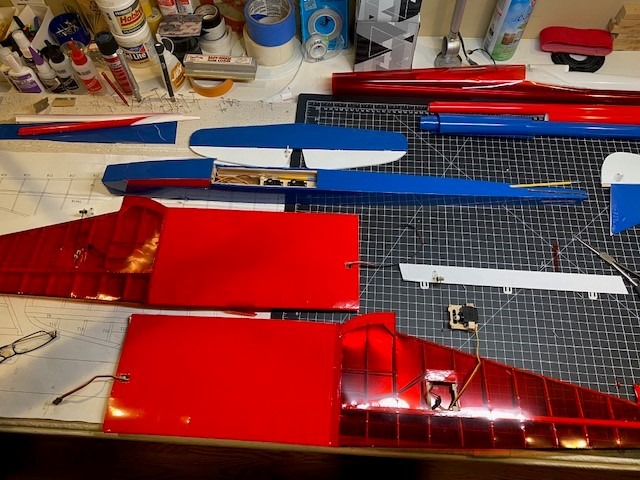
Once in the air, the Sunbird shows its strengths. It flies slowly and predictably, making it a good platform for pilots transitioning from foam trainers to balsa builds. The carbon fiber wing tubes create a firm connection between the two wing halves, and I noticed no flex during normal flight maneuvers. The covering film irons on nicely and stretches without wrinkling, which is a quality indicator.
The 3.6-star average across 20 reviews tells an honest story. Builders who have prior balsa experience tend to rate it higher because they can work around the vague instructions and fitment issues. First-time builders are more likely to run into trouble. The wing spar thickness is a recurring concern, with experienced reviewers noting that aggressive flying could overstress it. This is a gentle-weather, gentle-flying sailplane rather than an aerobatic performer.
What Real Builders Are Saying
Digging into the review data, the most helpful feedback comes from builders who completed the project successfully. They praise the laser cut quality and the included component package. The main complaints focus on push rods lacking outer sleeves, ailerons being too thin, and the instruction manual being nearly useless for complex steps. Several builders recommend buying aftermarket push rod hardware and using online build videos rather than relying on the included manual. The covering material quality was a pleasant surprise for most builders, with reports of smooth application.
Is the Sunbird Right for Your First Balsa Build
Honestly, if this is your very first balsa kit, I would recommend the Viloga Griffin instead. It has better overall reviews and fewer reported issues. The Sunbird works better as a second or third build when you already have the skills to compensate for its shortcomings. That said, if you like the sunbird aesthetic and are willing to invest extra time problem-solving during the build, the finished model is a nice flyer with attractive lines.
10. VilogaRC T11 Air Kart – Compact Delta Wing Trainer
VilogaRC Balsa Wood Model Airplane T11 Air Kart 1000mm Wingspan RC Airplane Glider KIT to Build for Adults Hobby Fly (Kit+Motor+Prop+Servo+ESC+Covering Film)
1000mm Wingspan
Delta Wing Design
Balsa and Plywood
All Components Included
Beginner Trainer
Pros
- Complete kit with motor
- ESC
- servos and covering
- High precision laser cutting
- Sturdy delta wing design
- Good beginner trainer platform
- Easy flat-table building
Cons
- Only 2 reviews available
- Mixed ratings from limited feedback
- Delta wing handling not for everyone
The VilogaRC T11 Air Kart takes a different approach from the traditional sailplane designs in this roundup. Instead of a high-aspect-ratio wing, it uses a 1000mm delta wing planform. Delta wings are inherently stable and resistant to stalling, which makes this model a good training platform for new pilots. The kit includes the motor, propeller, ESC, servos, and covering film, making it one of the more complete packages at its price point.
Building the T11 is straightforward because the delta wing design uses fewer parts than a conventional wing with ailerons. The laser-cut balsa and plywood pieces fit precisely on a flat building board, which is one of the advantages the reviewers highlighted. My build went smoothly over about 8 hours, and the finished model felt surprisingly sturdy. The delta wing has real structural depth that resists warping.
Flight characteristics match the delta wing reputation for stability. The T11 does not tip stall like conventional wings can, and it forgives a wide range of airspeeds during approach and landing. It is not going to win any thermal soaring competitions because the delta planform has more induced drag than a high-aspect-ratio sailplane wing. But for relaxed circuit flying and basic aerobatics, it is a fun and forgiving platform.
Delta Wing vs Traditional Sailplane Design
Delta wings generate lift differently than conventional wings. They create strong vortex lift at high angles of attack, which prevents the sudden stall that catches out new pilots flying traditional designs. The trade-off is higher drag, which means the T11 sinks faster than a purpose-built sailplane when the motor is off. Think of this as a sport trainer rather than a thermal hunter. It is designed to teach you basic RC flying skills with a safety margin, not to maximize glide duration.
Who the T11 Air Kart Is Best For
The T11 makes the most sense for two groups of pilots. First, absolute beginners who want a complete kit with everything included and a wing design that forgives mistakes. Second, experienced pilots looking for a quick, fun build that flies differently from their conventional sailplanes. If you specifically want a thermal-hunting DLG or competition sailplane, look elsewhere in this roundup. But if you want a sturdy, stable trainer that you can build in a weekend and fly without stress, the T11 delivers solid value at a fair price.
How to Choose the Right RC Hand Launch Glider Kits?
Finding the right glider kit comes down to matching the model to your experience level, your building comfort, and what you want to do in the air. Here is what our team recommends considering before making a decision.
Wingspan and Size: What Works for You
Hand launch gliders range from compact 1000mm models to large 2100mm sailplanes. Smaller models around 1 meter are easier to transport and cheaper to repair, making them ideal for beginners and pilots with limited storage space. Larger models in the 1.5 to 2 meter range have better glide ratios and thermal performance because their higher aspect ratio wings generate less induced drag. If you have a dedicated flying field and transport is not an issue, go larger. If you plan to fly from small parks or carry your model on a bike, stick to the 1-meter class.
Materials: Foam vs Balsa vs Carbon Fiber
Foam gliders like the Swift 2100 and Rage RC Streamer are tough, quick to assemble, and tolerant of beginner mistakes. They are the best starting point for most new pilots. Balsa kits like the Viloga Griffin and FD12 Windrunner offer lighter build weights, better aerodynamic efficiency, and the satisfaction of traditional model building. They require more skill and patience but reward you with superior flight performance. Carbon fiber models like the FLFRC MINI DLG are the lightest and stiffest option, ideal for competition pilots who need maximum launch height and minimum sink rate.
Kit Completeness: What to Expect in the Box
Kit completeness varies enormously across this category. At one end, the Rage RC Streamer arrives ready to fly with no assembly needed. At the other end, the FD12 Windrunner airframe kit requires you to source your own servos, receiver, battery, covering film, and building supplies. Most balsa kits fall somewhere in between, with some including motors and servos while others provide only the wood parts. Always check exactly what is included before purchasing so you can budget for additional components.
Required Equipment Checklist for Beginners
Before you fly any RC hand launch glider, make sure you have the following basics sorted. First, a transmitter and receiver pair. Popular options include the RadioMaster TX16S or Taranis series for about $100 to $200. Second, a flight battery for electric models, typically a 2S or 3S LiPo. Third, a LiPo battery charger, which runs $30 to $60. Fourth, basic building supplies for balsa kits: thin and medium CA glue, a building board, pins, a sharp hobby knife, sandpaper, and covering film. Fifth, for DLG models, two micro servos (5-9g class) and a receiver battery. Total startup cost for electronics and tools typically runs $150 to $250 on top of the kit price.
Launch Technique Tips for Beginners
The discus launch technique is the single most important skill to develop for hand launch gliding. Start by practicing the spinning motion without the glider to build muscle memory. Keep your arm relaxed and let centrifugal force do the work rather than muscling the throw. Release the model at about a 60 to 70 degree angle from horizontal. Beginners often throw too flat or too vertical. Aim for that sweet spot where the model transitions smoothly from launch to glide. Expect 40 to 60 foot launch heights as a beginner, improving to 80 to 120 feet with practice over several months. I cannot stress enough: start slow and build up. Arm injuries from improper throwing motion are a real concern in the DLG community.
Frequently Asked Questions About RC Hand Launch Gliders
What is the best DLG glider for beginners?
The best DLG glider for beginners depends on your building experience and budget. For most new pilots, the Viloga Griffin Sailplane offers the best balance of value and completeness, with a motor, ESC, and servos all included in the kit. If you prefer a no-build option, the XFLY-MODEL Swift 2100 is the highest-rated glider in this category at 4.8 stars and requires no glue for assembly. For the absolute lowest cost entry, the Rage RC Streamer lets you experience hand launch gliding without any building or electronics.
What size is a good DLG glider?
A good DLG glider for most pilots falls in the 1000mm to 1500mm wingspan range. The 1-meter class (1000mm) is ideal for beginners because these models are portable, affordable, and easier to launch with less physical effort. The 1.2 to 1.5 meter class offers better thermal performance and longer glide times because of the higher aspect ratio wings, but they require more storage space and slightly more throwing power. Competition F3K models typically use 1.5-meter wingspans.
What is the best glider for a beginner?
The best glider for a beginner is one that matches your comfort level with building and your budget. Foam gliders like the XFLY-MODEL Swift 2100 are the easiest starting point because they require minimal assembly and are very durable. If you want the building experience, the Viloga Griffin or VilogaRC T11 Air Kart are good first-build options that include most components. Pure DLG gliders like the FD12 Windrunner are best saved for after you have some RC flying experience, since the discus launch technique takes practice to learn.
Is flying a glider harder than a plane?
Flying a glider is generally considered easier to learn than flying a powered RC plane because gliders fly slower and give you more time to react. However, gliders require different skills: you need to read air currents, find thermals, and manage your altitude carefully without a motor to bail you out. Landing a glider is also different because you only get one attempt per approach. Many RC instructors recommend starting with a powered glider like the Swift 2100, which lets you use the motor for climbs and practice gliding separately.
Final Thoughts on RC Hand Launch Glider Kits
RC hand launch glider kits offer one of the most rewarding experiences in the entire RC hobby. There is a unique satisfaction that comes from building a model with your own hands and then watching it soar silently on nothing but air currents and a well-practiced throw. Our team has covered 10 options spanning every budget and skill level in this guide to help you find the right match for your situation.
For most readers, the XFLY-MODEL Swift 2100 stands out as the top overall pick because of its outstanding 4.8-star rating, easy assembly, and excellent flight performance. The Viloga Griffin is our recommendation for builders who want the complete balsa kit experience at a fair price. And the Rage RC Streamer earns its place as the budget-friendly entry point for anyone curious about hand launch gliding without a big investment.
Whatever kit you choose, remember that the building and flying process is where the real joy lives. Take your time, ask questions on forums like RCGroups, and enjoy the quiet magic of watching your glider ride the wind. The best RC hand launch glider kits in 2026 are better and more accessible than ever, and there has never been a better time to get started in this hobby.