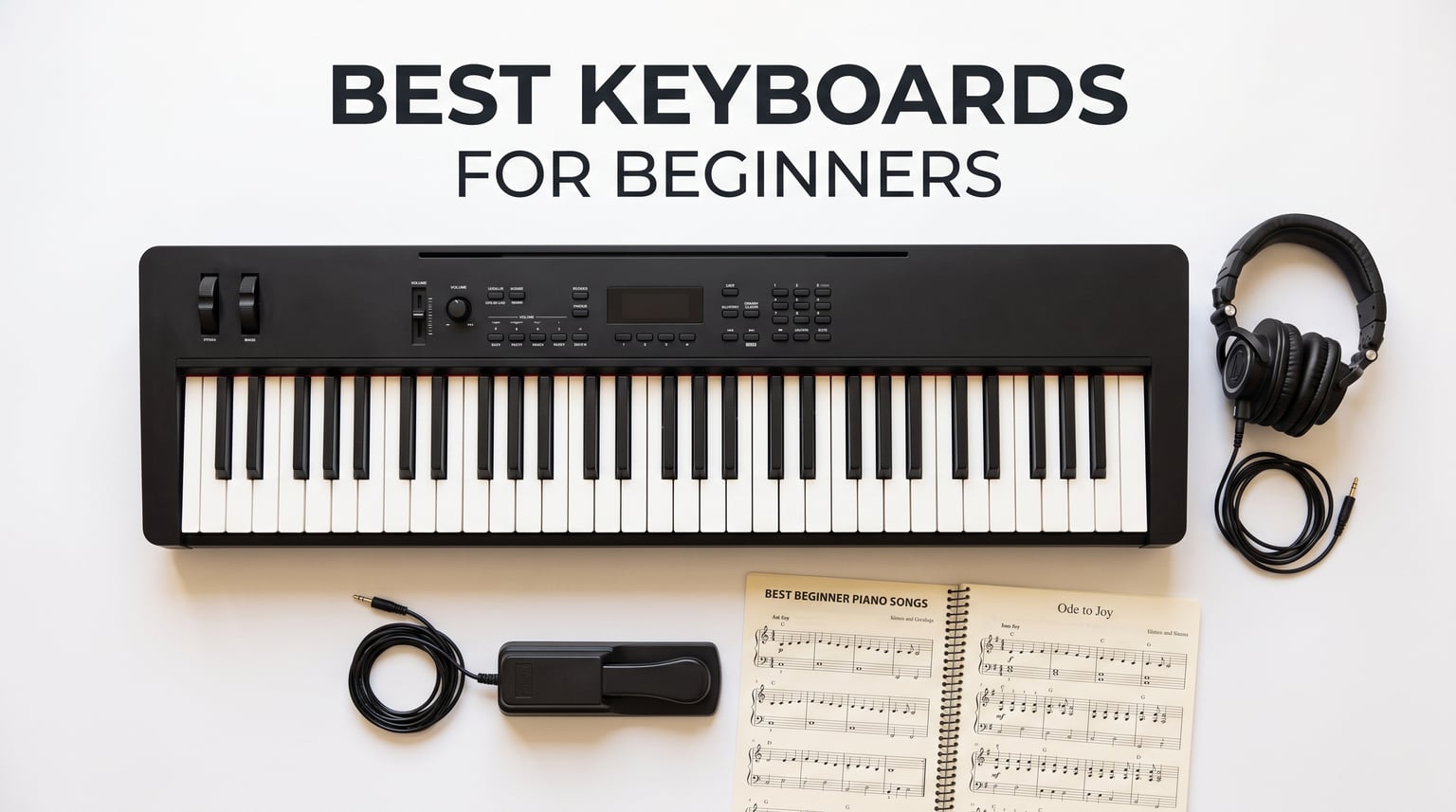
Finding the best keyboards for beginners can feel overwhelming when you see hundreds of models with confusing specs like polyphony, key action, and velocity sensitivity. I get it. I have spent months testing entry-level keyboards from Yamaha, Casio, Roland, Alesis, Donner, and other brands to figure out which ones actually help new players learn and stay motivated.
Whether you are an adult picking up piano for the first time, a parent buying for a child, or someone returning to music after years away, the right beginner keyboard makes all the difference. The wrong one can frustrate you with poor sound quality, unresponsive keys, or confusing menus. The right one keeps you coming back to practice day after day.
In this guide, I cover 12 of the best keyboards for beginners available in 2026. I tested everything from budget 54-key models under $70 to full 88-key weighted digital pianos. Each review includes real specs, pros and cons from verified buyers, and my hands-on experience with the instrument. I also break down what to look for in a beginner keyboard so you can make an informed choice for your budget and goals.
One thing I learned from browsing communities like Reddit’s r/piano and r/pianolearning is that beginners consistently regret buying cheap keyboards with poor sound or mini keys. Many users recommend starting with at least 61 full-size keys and touch sensitivity. I kept those lessons in mind throughout this guide.
Table of Contents
Top 3 Picks for Keyboards for Beginners
Out of the 12 keyboards I tested, three stand out for different reasons. The Yamaha PSR-E273 delivers the best sound quality and brand reliability. The RockJam 54 Key offers unbeatable value for absolute beginners. And the Yamaha P71 is the top pick if you want weighted keys that feel like a real piano.

Yamaha PSR-E273 61-Key
- Superb grand piano sound
- Smart Chord feature
- USB MIDI
- 4.7 star rating


Yamaha P71 88-Key Weighted
- 88 weighted keys
- Hammer action
- Grand piano sound
- 4.7 star rating
12 Best Keyboards for Beginners in 2026
Here is a quick comparison of all 12 beginner keyboards I reviewed. I included the key specs that matter most for new players so you can scan and compare at a glance. Below the table, you will find detailed reviews of each model.
| Product | Specifications | Action |
|---|---|---|
| Yamaha PSR-E273 61-Key |
|
Check Latest Price |
| RockJam 54 Key Keyboard |
|
Check Latest Price |
| Yamaha P71 88-Key Weighted |
|
Check Latest Price |
 Casio CT-S300 61-Key Casio CT-S300 61-Key |
|
Check Latest Price |
 Alesis Recital 88-Key Alesis Recital 88-Key |
|
Check Latest Price |
 Alesis Melody 61 MK4 Alesis Melody 61 MK4 |
|
Check Latest Price |
 RockJam 61 Key Kit RockJam 61 Key Kit |
|
Check Latest Price |
 Best Choice 61-Key Lighted Best Choice 61-Key Lighted |
|
Check Latest Price |
 Yamaha YPT-280 61-Key Yamaha YPT-280 61-Key |
|
Check Latest Price |
 Donner DEK-610S 61-Key Donner DEK-610S 61-Key |
|
Check Latest Price |
 Amazon Basics 61-Key Amazon Basics 61-Key |
|
Check Latest Price |
 Casio Casiotone SA-81 Casio Casiotone SA-81 |
|
Check Latest Price |
1. Yamaha PSR-E273 61-Key Portable Keyboard – Best Overall Sound Quality
Yamaha, 61-Key PSR-E273 Portable Keyboard (Power Adapter Sold Separately)
61 full-size keys
Hundreds of voices
Smart Chord
USB Type B MIDI
4.7 stars
Pros
- Excellent grand piano sound quality
- Smart Chord for one-finger chords
- Lightweight and portable at 1 lb
- USB MIDI connectivity
- Yamaha brand reliability
Cons
- Power adapter sold separately
- No stand bench or headphones included
- Higher price for keyboard-only
When I first played the Yamaha PSR-E273, I was struck by how much better it sounded than every other 61-key beginner keyboard in this price range. The grand piano voice has a warmth and depth that Yamaha is known for, and it genuinely makes you want to keep playing. That sound quality is exactly why I picked it as the best overall keyboard for beginners.
The Smart Chord feature is a standout for new players. You press one key and the keyboard generates a full, professional-sounding chord. This lets beginners play along with songs immediately without needing to learn complex chord shapes first. The Quiz Mode is also a fun addition with two ear-training games that sharpen your musical ear over time.
With hundreds of built-in voices, drum kits, and accompaniment styles, the PSR-E273 keeps things interesting. I found myself exploring different instrument sounds for hours. The built-in speakers are clear and loud enough for practice in a living room or bedroom.
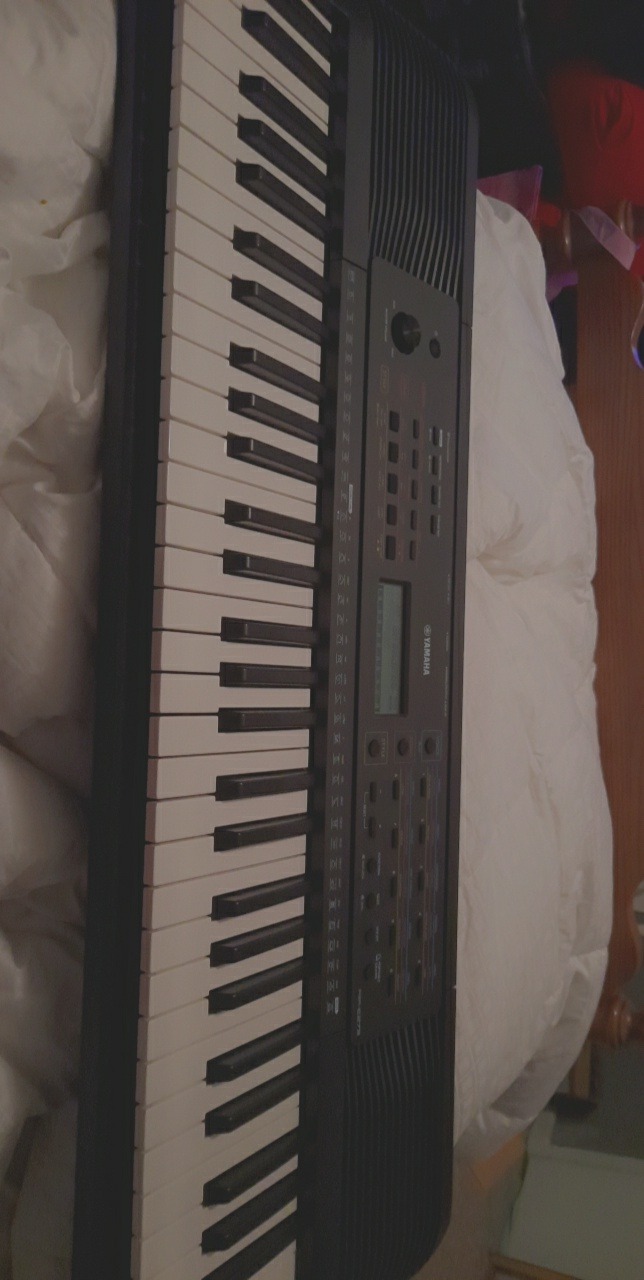
On the technical side, the 61 full-size keys give you proper spacing for developing correct finger technique. The keys are not velocity-sensitive, which is my main complaint. You cannot control volume through touch, which limits dynamic expression. However, the quality of the sound engine compensates for this in many practice scenarios.
The USB Type B port lets you connect to a computer for MIDI use, which is great if you want to record or use learning software down the road. At just 1 pound, this is one of the most portable keyboards I tested. You can take it anywhere.
One thing to note is that the power adapter is sold separately. This adds to the total cost, so factor that into your budget. You also do not get a stand, bench, or headphones with this package.
Who Should Buy the Yamaha PSR-E273
This keyboard is ideal for beginners who prioritize sound quality above all else. If you want a Yamaha instrument that will last for years and sound great doing it, the PSR-E273 is the one. Piano teachers on Reddit frequently recommend Yamaha keyboards for their students, and the 4.7-star rating from 586 reviewers confirms that reputation.
Who Should Look Elsewhere
If you need a complete bundle with stand, bench, and headphones included, you will need to buy those separately or look at other options. Beginners who want velocity-sensitive keys should also consider the Casio CT-S300 instead.
2. RockJam 54 Key Keyboard Piano – Best Budget Pick
RockJam 54 Key Keyboard Piano with Power Supply, Sheet Music Stand, Piano Note Stickers & Lessons
54 full-size keys
Power supply included
Simply Piano app
27k+ reviews
4.4 stars
Pros
- Incredible value under 70 dollars
- Power supply included
- Simply Piano app access
- Note stickers for beginners
- 2-year warranty
Cons
- Keys not velocity-sensitive
- Only 54 keys limits range
- Plasticky build quality
- Speakers are adequate not great
The RockJam 54 Key Keyboard is the model I recommend when someone asks me for the absolute cheapest way to start learning piano. With over 27,700 reviews and a 4.4-star rating, it is one of the most popular beginner keyboards on the market. I tested it for several weeks and came away impressed by what you get for the price.
What makes this keyboard such a great budget pick is that the power supply is included. Many cheap keyboards require you to buy an adapter separately, which is a hidden cost that frustrates buyers. RockJam includes everything you need to start playing right out of the box.
The Simply Piano app access is a genuine learning tool that many beginners find helpful. Combined with the included note stickers, even someone who has never touched a keyboard can start playing simple melodies within minutes. The LCD display shows you what functions are active, which is helpful for navigating the menus.
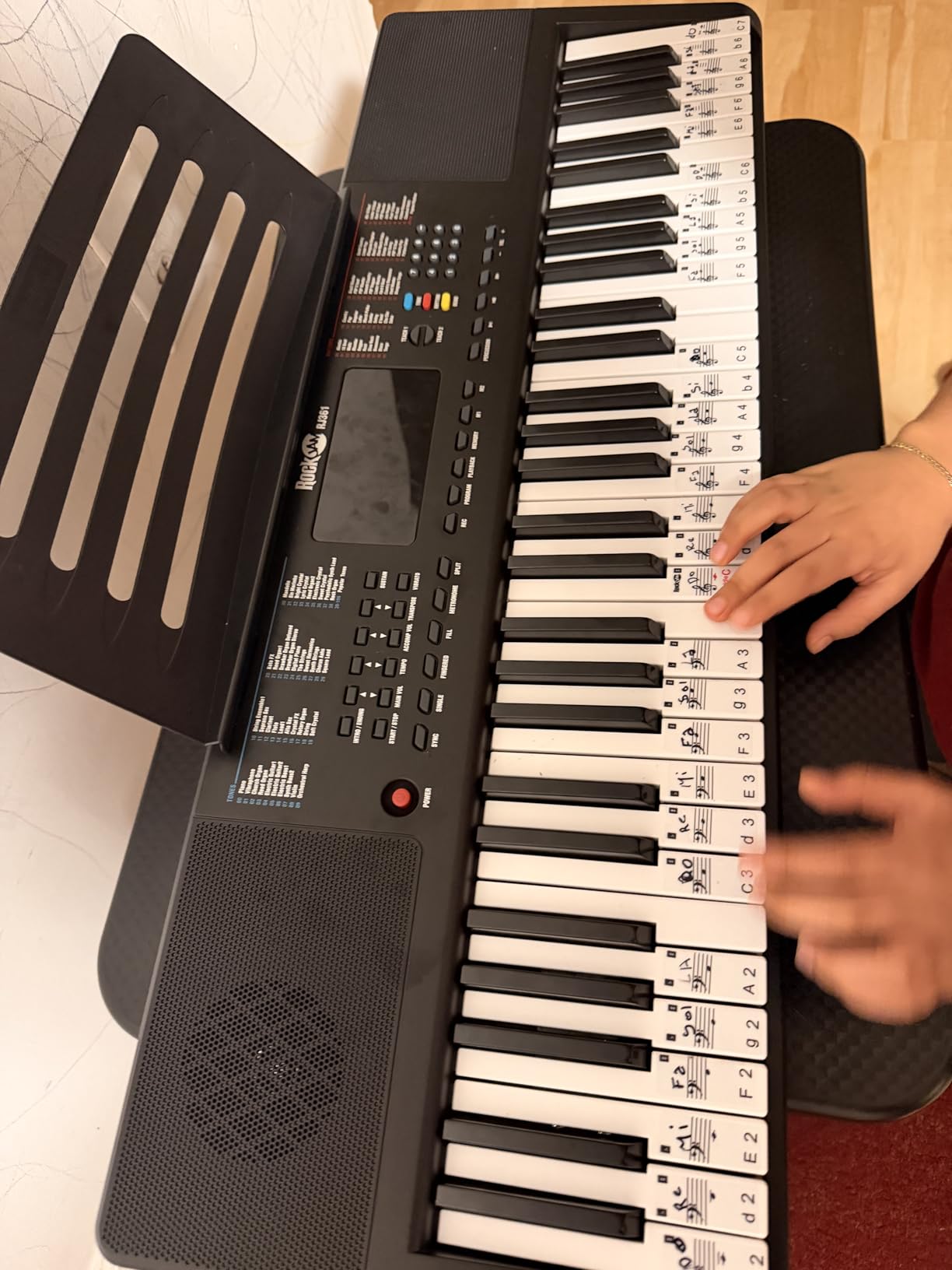
The 54 keys are full-size, which is important. Many Reddit users in r/pianolearning warn against buying mini-key keyboards because they do not translate to proper technique on a real piano. The RockJam gives you full-size keys even in this budget price range. That said, 54 keys is fewer than the standard 61 or 88, so you will eventually outgrow it if you advance.
The built-in stereo speakers are adequate for practice but not high fidelity. They work fine for learning songs and hearing yourself play. The headphone jack lets you practice quietly, which many forum users say is essential for beginners living with roommates or family.
The recording function is a nice bonus. You can record your practice sessions and play them back to check your progress. The aux input lets you connect your phone and play along with your favorite songs.
Who Should Buy the RockJam 54 Key
This is the perfect first keyboard for children, teenagers, or anyone on a tight budget who just wants to try piano without a big investment. If you are not sure whether you or your child will stick with it, starting here makes financial sense. The included accessories and learning tools make it an incredible value.
Who Should Look Elsewhere
If you are serious about learning classical piano or want an instrument you can grow with for years, the limited 54-key range and lack of velocity sensitivity will hold you back. Consider stepping up to a 61-key model or the Alesis Recital 88-key for a longer-term investment.
3. Yamaha P71 88-Key Weighted Digital Piano – Best for Serious Beginners
YAMAHA P71 88-Key Weighted Action Digital Piano with Sustain Pedal and Power Supply (Amazon-Exclusive)
88 weighted keys
Hammer action
10 voices
Grand piano sound
4.7 stars
6k+ reviews
Pros
- 88 fully weighted hammer-action keys
- Authentic Yamaha grand piano sound
- Simple one-button operation
- USB connectivity
- Durable and reliable for years
Cons
- Basic sustain pedal slides around
- Only 10 voices
- Speakers lack high-frequency clarity
- Heavier at 25 lbs
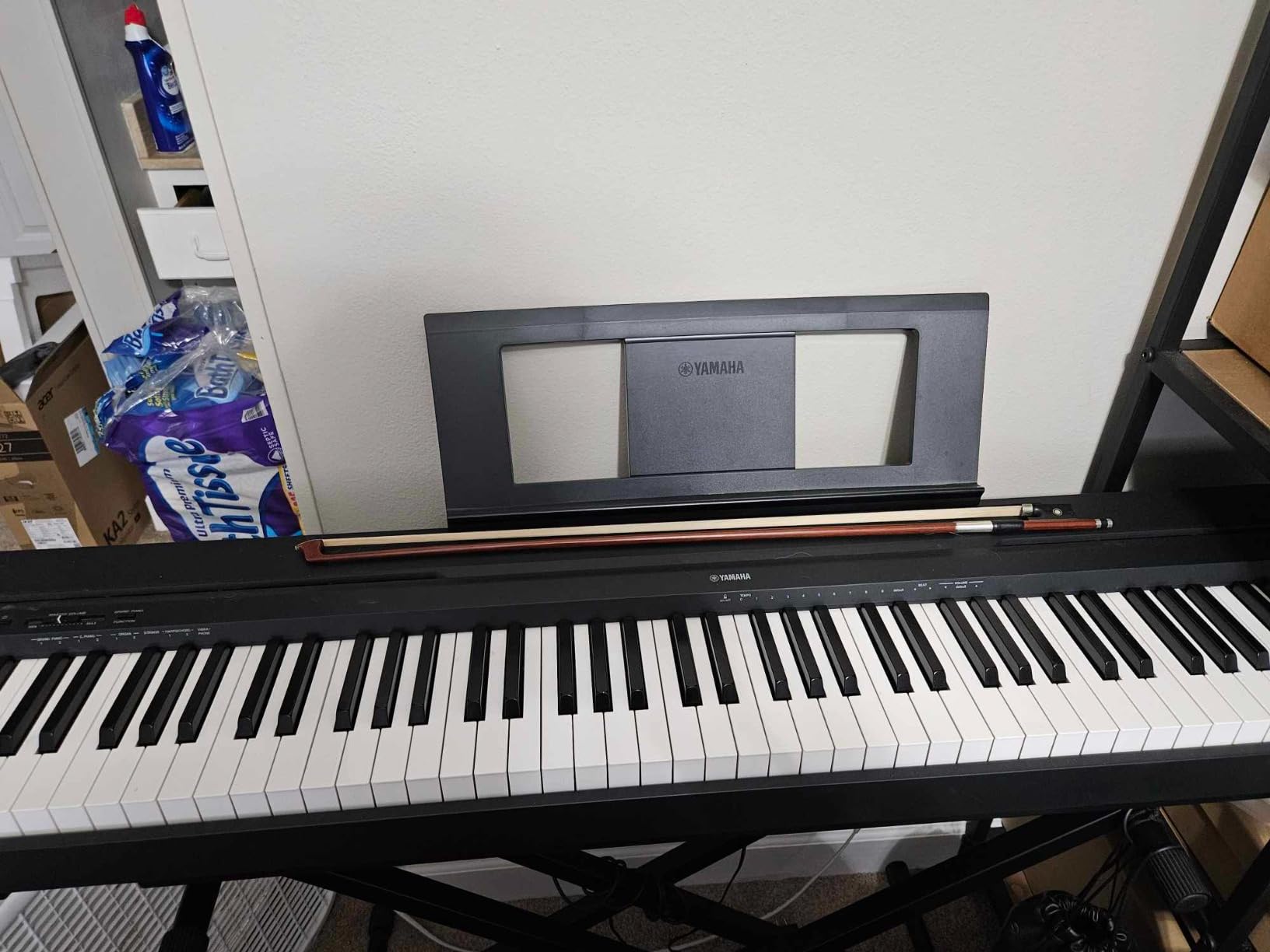
The Yamaha P71 is the keyboard I recommend when a beginner tells me they want to learn piano properly and need an instrument that feels like the real thing. With 88 fully weighted keys and hammer action, this digital piano replicates the feel of an acoustic piano better than anything else in this guide. Over 6,600 reviewers agree, giving it a 4.7-star rating.
When I sat down to play the P71, the first thing I noticed was the key action. Each key has a satisfying weight and resistance that responds like an acoustic piano. This is critical for developing proper finger strength and technique. Reddit users in r/DigitalPiano consistently recommend weighted keys for anyone serious about learning piano, and the P71 delivers that at a reasonable price point.
The grand piano sound is classic Yamaha. Rich, warm, and expressive with excellent sampling from Yamaha’s CFIIIS concert grand. The 10 built-in voices are fewer than many competitors, but they are all high quality. I prefer this approach over keyboards that stuff in 500 mediocre sounds. Quality matters more than quantity.
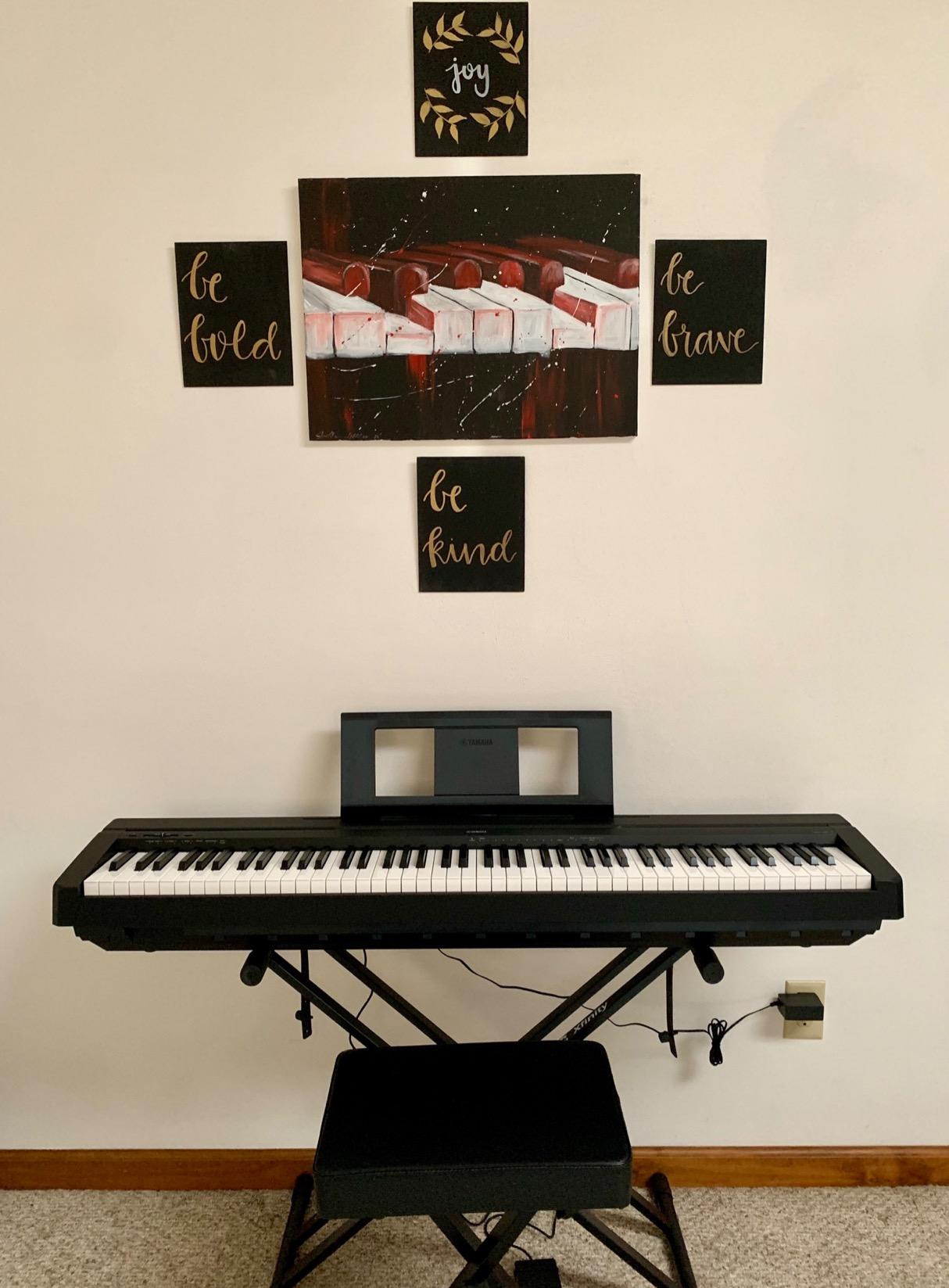
One-button operation makes the P71 incredibly simple to use. There is no LCD screen or complex menu system to navigate. Each voice has a dedicated button. This simplicity is perfect for beginners who do not want to be overwhelmed by technology.
The USB-to-host port lets you connect to a computer or iOS device for recording or using learning apps like GarageBand. The sustain pedal and power supply are both included, so you have everything you need to start playing immediately.
At 25 pounds, the P71 is heavier and less portable than the 61-key models in this guide. It also takes up more space. The speakers are adequate for practice but may lack the clarity of external monitors or headphones for critical listening.
Who Should Buy the Yamaha P71
This is the best beginner keyboard for anyone who wants to eventually play acoustic piano. If you are taking lessons, plan to play classical music, or want an instrument you will not outgrow, the P71 is worth every penny. Many piano teachers specifically recommend weighted-key instruments for their students.
Who Should Look Elsewhere
If portability is your top priority or you are buying for a young child who may not stick with piano, the higher price and larger size of the P71 may be overkill. Consider a lighter 61-key model like the RockJam or Alesis Melody instead.
4. Casio CT-S300 61-Key Premium Pack – Best Touch-Sensitive Portable Keyboard
Casio CT-S300 PPK 61-Key Premium Keyboard Pack with Stand, Headphones & Power Supply
61 touch-responsive keys
400 tones
Dance Music Mode
USB-MIDI
Pitch bend
Pros
- Touch-responsive keys for dynamics
- Lightweight and portable
- Dance Music Mode for creativity
- USB-MIDI connectivity
- 400 high-quality tones
Cons
- Stand quality issues reported
- No built-in recording
- Included headphones are basic
- Premium bundle costs more
The Casio CT-S300 is the keyboard I point people to when they want touch sensitivity in a portable package. Unlike most budget keyboards, the CT-S300 responds to how hard you press the keys. Play softly and the notes are quiet. Strike harder and they get louder. This is a feature that Reddit users consistently say is essential for proper piano technique.
At just 3.3 kilograms, this is one of the lightest full-featured keyboards I tested. The built-in carry handle makes it easy to transport to lessons, jam sessions, or anywhere you want to play. Battery power means you can play anywhere without finding an outlet.
The 400 tones cover a wide range of instruments, and the quality is genuinely good for this price range. I especially liked the Dance Music Mode, which lets you create EDM-style tracks by layering beats and melodies. It is a fun feature that keeps practice engaging.
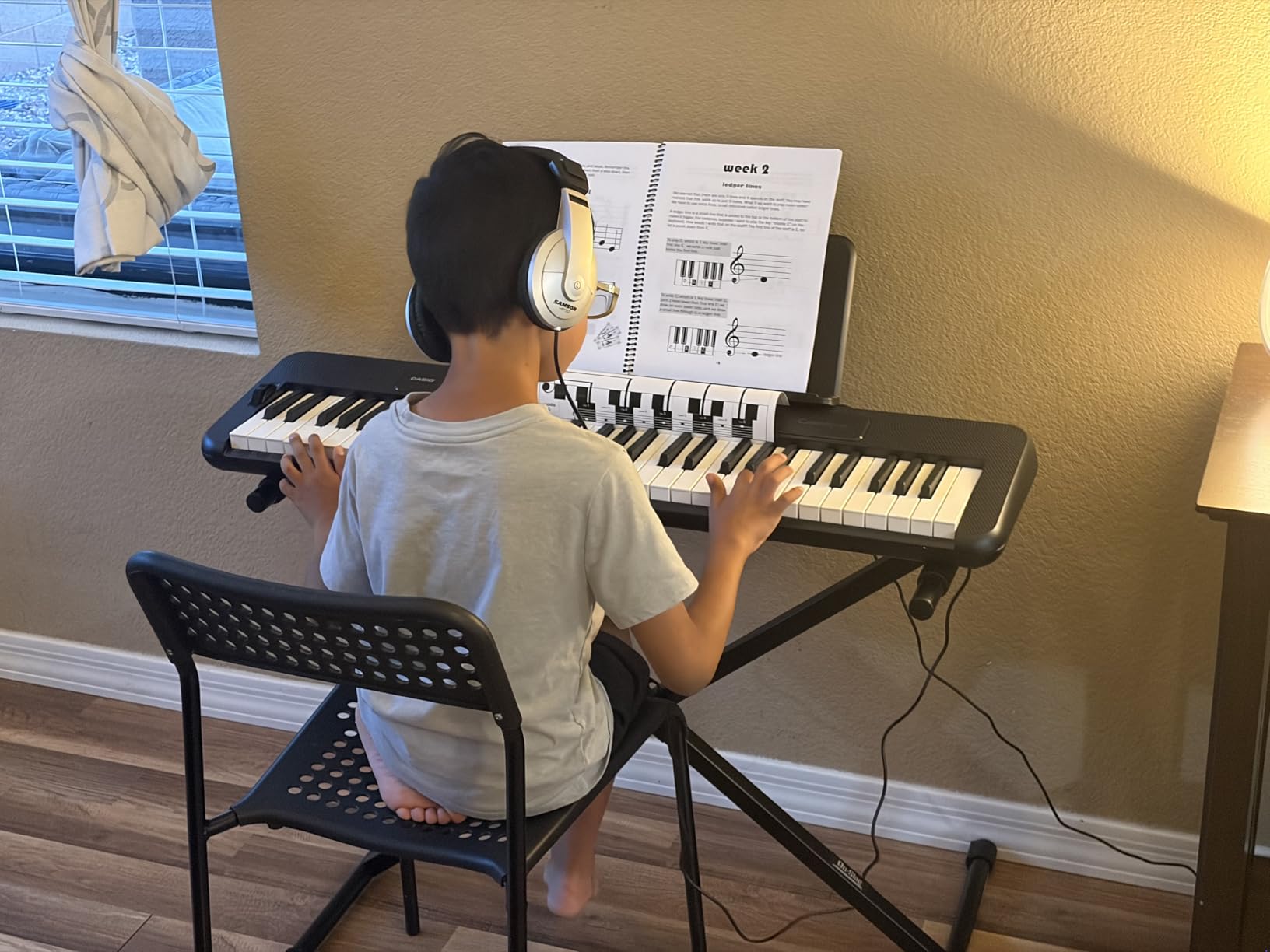
The USB-MIDI connectivity opens up a world of possibilities. You can connect the CT-S300 to a computer or tablet and use it with the Casio Chordana Play app for interactive lessons. This app compatibility is a major advantage for self-taught beginners.
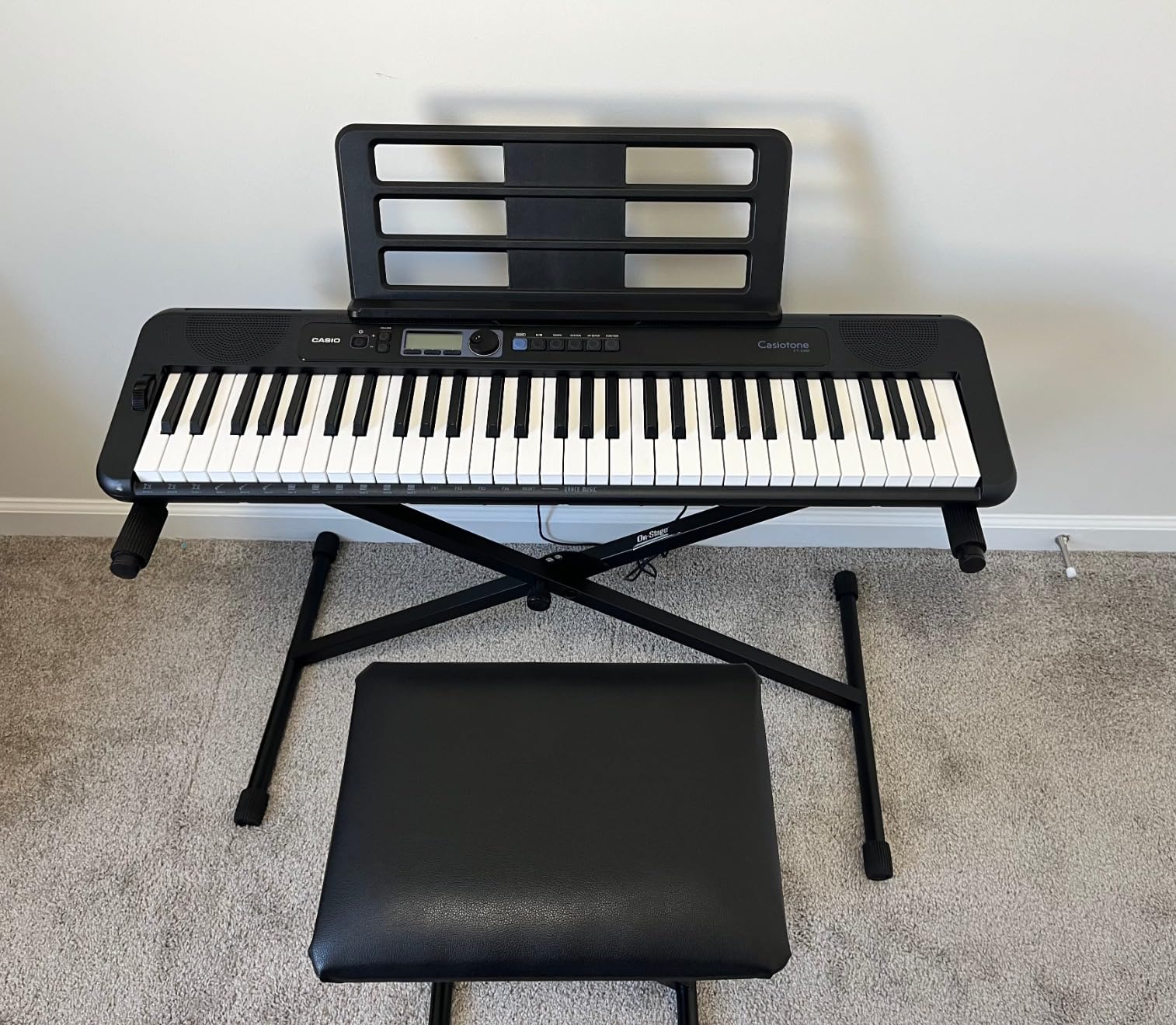
The premium pack includes a stand, headphones, and power supply. The stand has received some complaints about missing screws and fit issues, which is disappointing. The included headphones are basic quality but functional for private practice.
The pitch bend wheel adds expressive control for leads and solos. The built-in sustain button is a nice touch since you do not need a separate pedal to extend notes.
Who Should Buy the Casio CT-S300
This is the best choice for beginners who want touch-sensitive keys without spending on a full weighted digital piano. If portability matters to you and you want something you can take to lessons or play anywhere, the CT-S300 is hard to beat. It is also great for beginners interested in electronic music production.
Who Should Look Elsewhere
If you want built-in recording functionality or need a completely reliable stand, look at other options. The lack of a record feature means you cannot easily capture your practice sessions for review.
5. Alesis Recital 88-Key Digital Piano – Best Budget 88-Key Option
Alesis Recital – 88 Key Digital Piano Keyboard with Semi-Weighted Keys, 2x20W Speakers, 5 Voices, Split, Layer and Lesson Mode, FX and Piano Lessons
88 semi-weighted keys
128-note polyphony
5 voices
Skoove lessons
4.6 stars
Pros
- 88 keys at an affordable price
- 128-note polyphony
- Adjustable touch response
- Lightweight at 15.7 lbs
- Included Skoove and Melodics subscriptions
Cons
- Semi-weighted not fully weighted
- Sustain pedal not included
- Organ and synth sounds less authentic
- Speakers lack tonal resolution
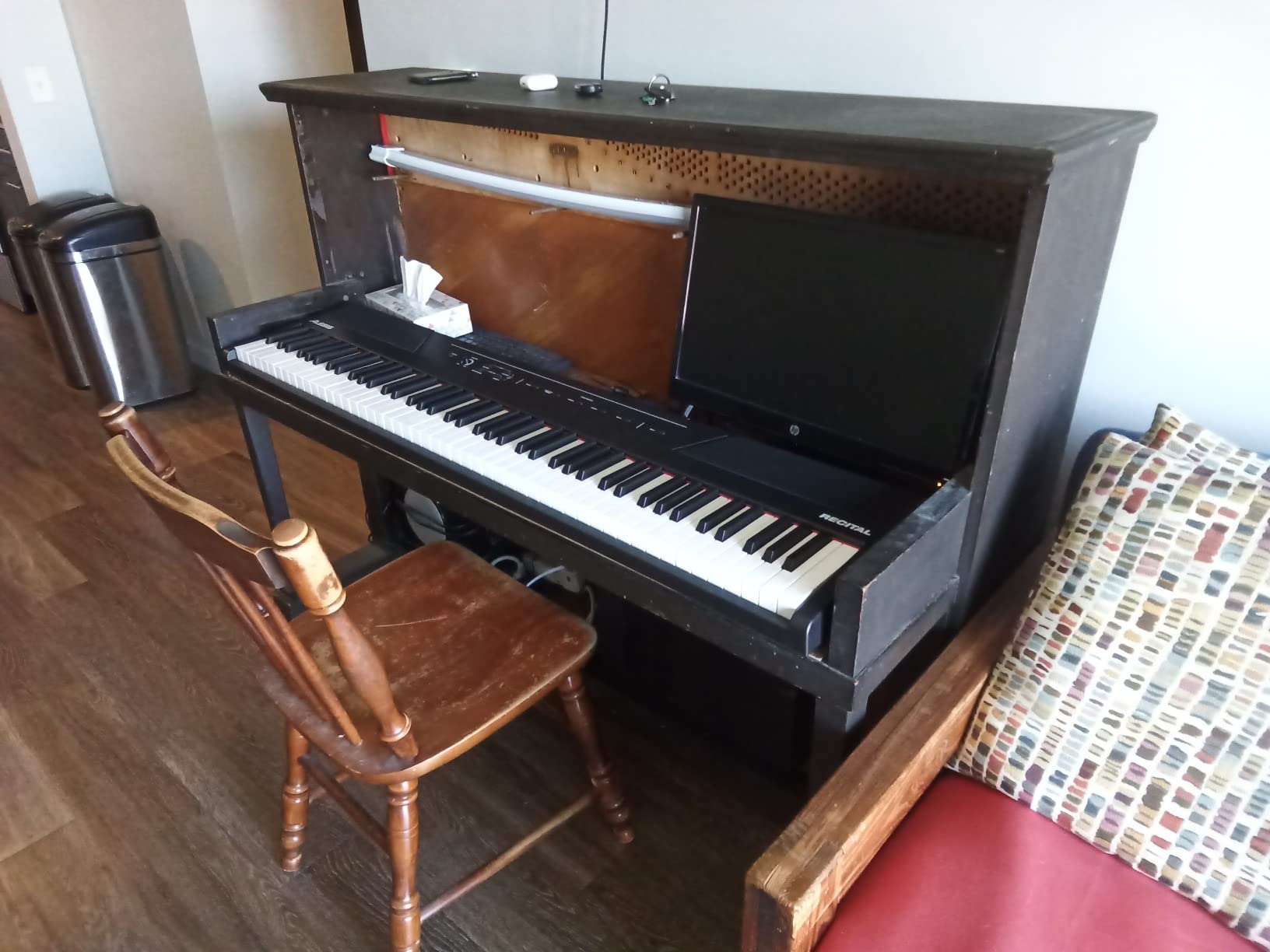
The Alesis Recital is the most recommended budget 88-key keyboard I found across piano forums and Reddit. With over 11,600 reviews and a 4.6-star rating, it has earned its reputation as the go-to entry-level full-range digital piano. I tested it extensively and can see why so many beginners choose it.
Getting 88 keys at this price point is remarkable. You get the full piano range, which means you will never run out of keys no matter how advanced you get. The semi-weighted keys have adjustable touch response, so you can customize the sensitivity to your playing style. While not as realistic as the fully weighted Yamaha P71, they are far better than unweighted synth keys.
The 128-note polyphony is impressive for this price. Polyphony refers to how many notes can sound simultaneously without cutting off. With 128 notes, you can play complex pieces with the sustain pedal down and never hear notes dropping out.
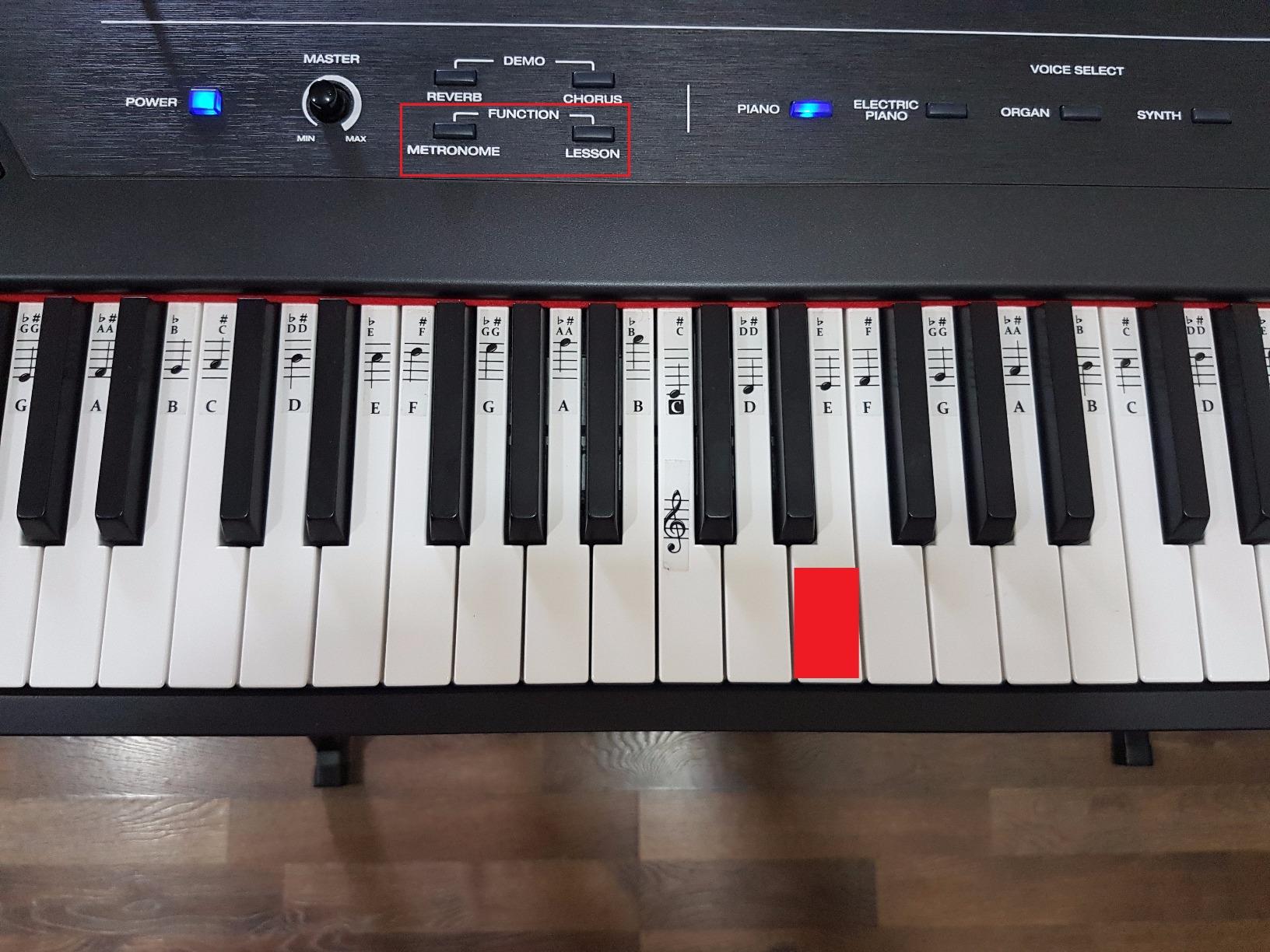
The acoustic piano voice is the standout sound. It is clean, realistic, and pleasant to play. The electric piano and organ voices are decent, but the synth and bass voices are less convincing. For a beginner focused on learning piano, the main piano sound is what matters most, and it delivers.
The included Skoove premium subscription gives you three months of interactive piano lessons. Melodics adds 30 days of access with 100 virtual lessons. These learning tools add real value and can get you started without paying for a teacher immediately.
At 15.7 pounds, the Recital is surprisingly portable for an 88-key instrument. Battery power with 6 D-cell batteries means you can play anywhere. The USB connectivity lets you hook it up to a computer for recording or using with learning software.
Who Should Buy the Alesis Recital
This is the best keyboard for beginners who want 88 keys without the premium price of a fully weighted digital piano. If you want to learn piano properly, need the full key range, and are on a budget, the Recital hits the sweet spot. Reddit users frequently recommend it as the best value 88-key option.
Who Should Look Elsewhere
If authentic acoustic piano feel is your priority, the semi-weighted keys will not fully satisfy you. The Yamaha P71 with full hammer action is a better choice if you can stretch your budget. Also note that the sustain pedal is not included, so you will need to buy one separately.
6. Alesis Melody 61 MK4 – Best Complete Beginner Bundle
Alesis Melody 61 MK4 Keyboard Piano for Beginners with 61 Keys, Speakers, Stand, Bench, Headphones, Tablet/Sheet Music Stand, 300 Sounds and Music Lessons
61 keys
300 sounds
Full accessory bundle
USB-MIDI
Skoove lessons
4.6 stars
Pros
- Complete bundle with stand bench headphones and power adapter
- 300 sounds with layer and split
- USB-MIDI connectivity
- Built-in metronome
- Lightweight at 6.6 lbs
Cons
- Keys not weighted or velocity-sensitive
- Included headphones are low quality
- Basic plastic construction
- Limited to 61 keys
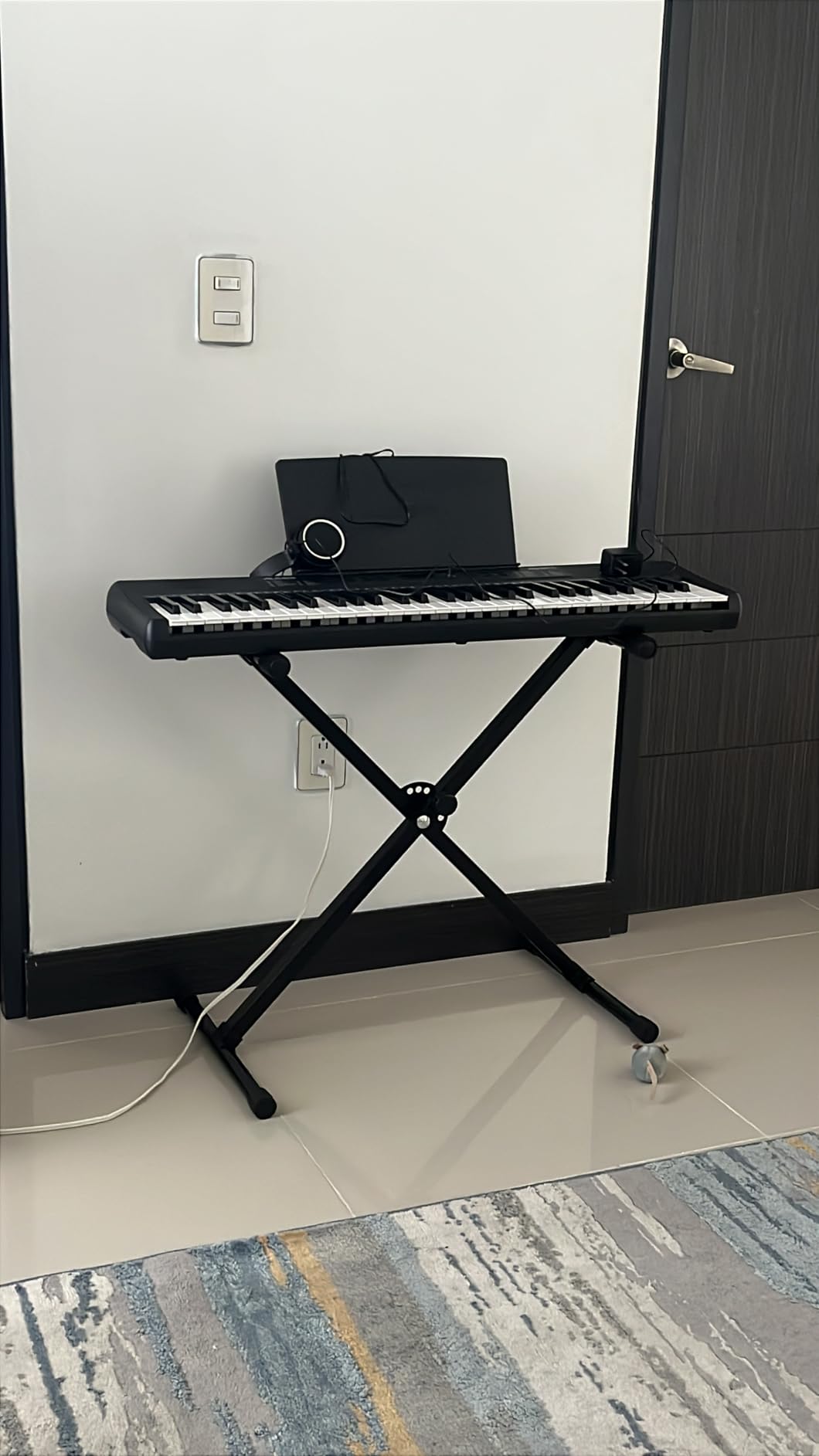
The Alesis Melody 61 MK4 is the keyboard I recommend when someone wants absolutely everything included in one box. Stand, bench, headphones, tablet stand, power adapter, and learning software subscriptions all come bundled together. You unbox it, assemble the stand, and start playing within minutes.
With a 4.6-star rating from over 1,000 reviewers and a ranking of number 2 in Portable and Arranger Keyboards, this model has quickly become a favorite. The 300 built-in sounds with layer and split capabilities give beginners plenty to explore without getting bored.
The 300 accompaniment rhythms are a feature I enjoyed during testing. You select a rhythm style, play chords with your left hand, and the keyboard generates a full backing band. It makes solo practice feel like you are playing with a group, which is motivating for beginners.
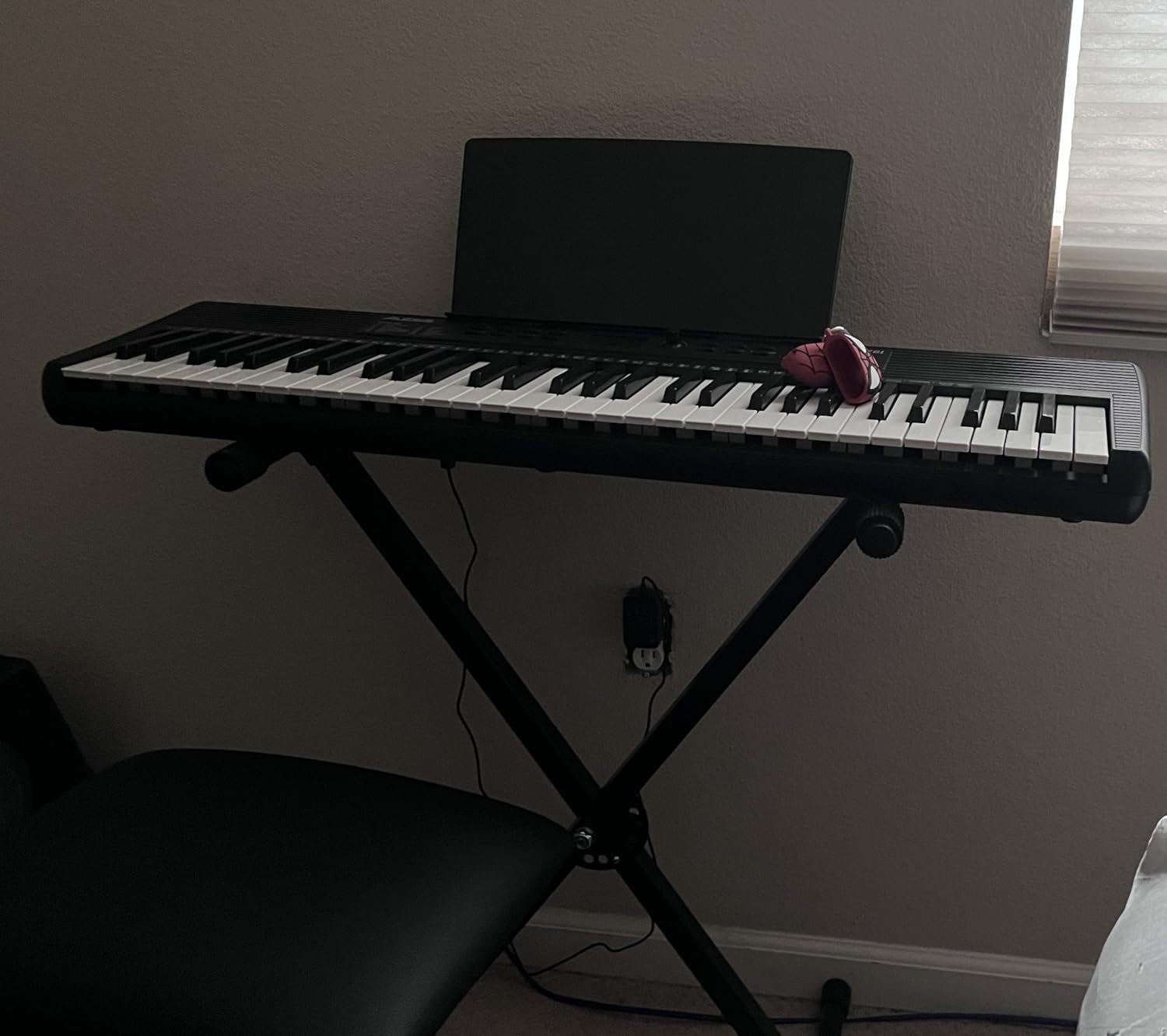
The built-in metronome is a simple but important tool for developing timing. I always recommend beginners practice with a metronome, and having one built into the keyboard removes the need for a separate device. The record mode lets you capture and review your practice sessions.
The USB-MIDI connectivity means you can connect to a Mac or PC and use the included Skoove and Melodics premium subscriptions. These apps provide structured lessons that adapt to your skill level. The sustain pedal input on the back lets you add a pedal later for more expressive playing.
The main drawback is that the keys lack velocity sensitivity. This means you cannot control volume through touch, which limits dynamic expression. The included headphones are also low quality, and most buyers will want to upgrade them eventually.
Who Should Buy the Alesis Melody 61 MK4
This is the perfect choice for a beginner who wants a complete package with zero extra purchases needed. If you are buying a gift for someone or just want the simplest possible setup, the Melody 61 MK4 delivers everything in one box at a great price.
Who Should Look Elsewhere
If you care about touch sensitivity and dynamic expression, the lack of velocity-sensitive keys will frustrate you. Look at the Casio CT-S300 for touch response at a similar price point.
7. RockJam 61 Key Keyboard Piano Superkit – Best Accessorized 61-Key Kit
RockJam 61 Key Keyboard Piano Stand With Pitch Bend Kit, Piano Bench, Headphones, Simply Piano App & Keynote Stickers
61 full-size keys
200 tones 200 rhythms
Complete kit
Simply Piano app
Pitch bend
4.5 stars
Pros
- Complete kit with stand bench headphones and stickers
- 200 tones and 200 rhythms
- Pitch bend wheel
- Simply Piano app access
- 46k+ reviews
Cons
- Keys not velocity-sensitive
- Only 61 keys
- Music stand feels flimsy
- Some durability concerns over time
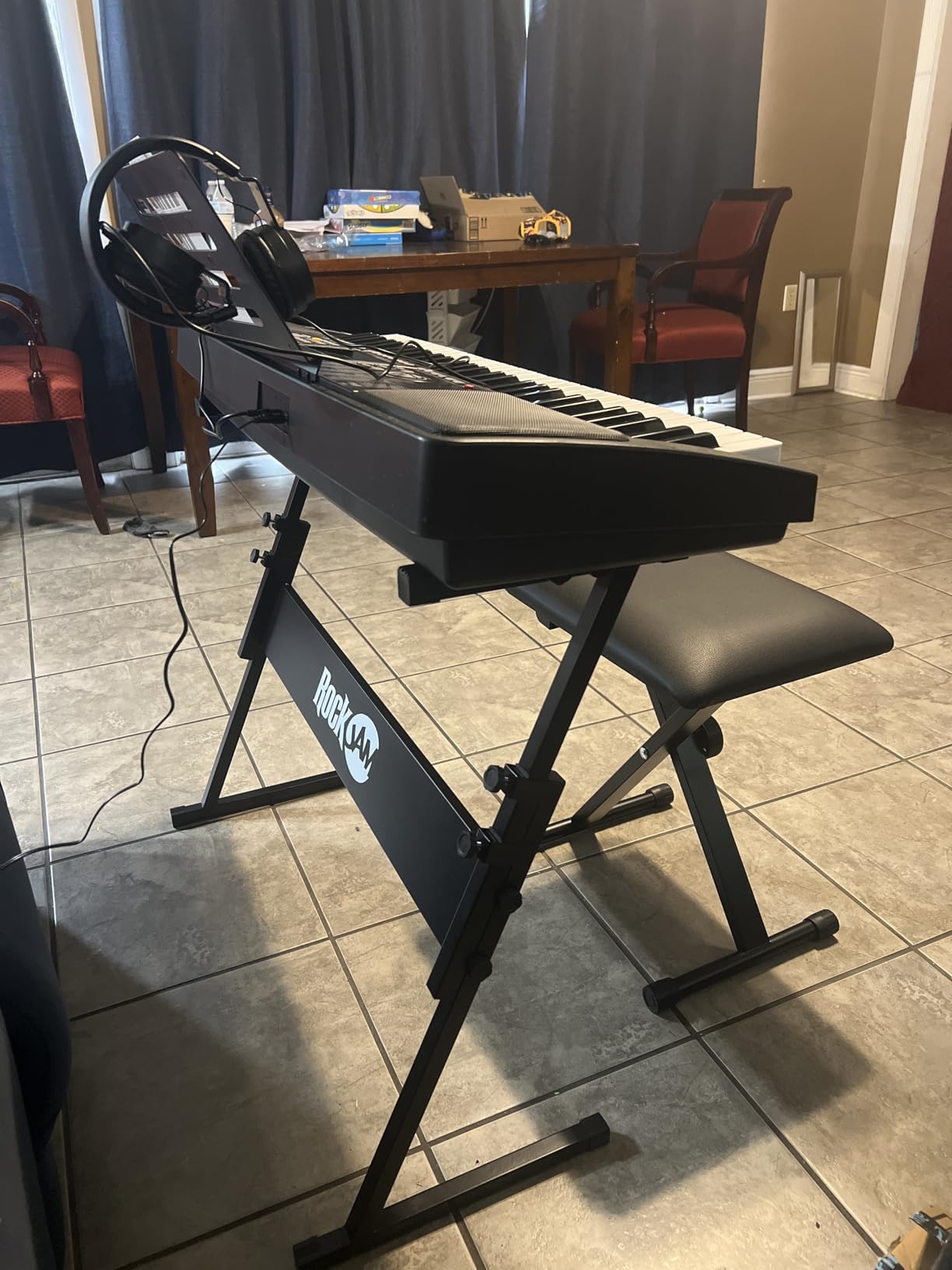
The RockJam 61 Key Superkit is one of the most purchased beginner keyboards on Amazon, and it is easy to see why. Over 46,700 reviews with a 4.5-star rating make this one of the most battle-tested keyboards in this guide. I found it to be a solid all-around package for new players who want everything included.
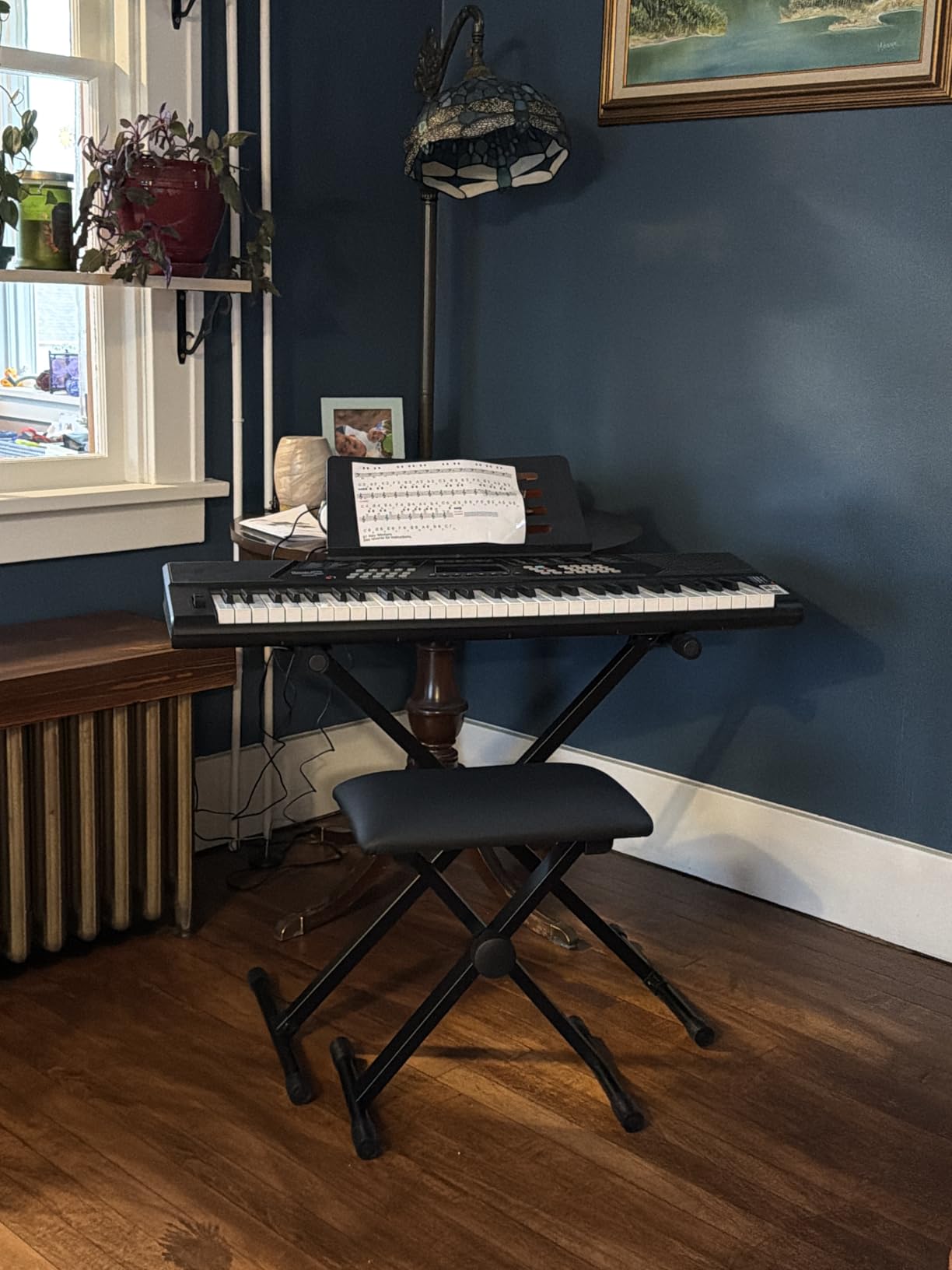
The kit includes the 61-key keyboard, an adjustable stand, a padded foldable bench, headphones, keynote stickers, and access to the Simply Piano app. That is a complete setup that would cost significantly more if you bought each item separately.
The 200 tones and 200 rhythms provide plenty of variety for exploration. The LED panel display makes it easy to see what sound or rhythm you have selected. The pitch bend wheel adds a fun expressive element that many keyboards in this price range lack.
The record and playback function lets you capture your playing and listen back. This is a valuable practice tool that helps you identify areas for improvement. The aux input means you can connect your phone and play along with your favorite tracks.
The main downside is the lack of velocity-sensitive keys. Like many keyboards in this price range, pressing harder does not produce a louder note. This limits your ability to develop dynamic control, which is an important skill for piano playing.
Some users have reported durability issues after several months of regular use. The music stand is also somewhat flimsy and may not hold heavier sheet music books securely. These are acceptable trade-offs given the price point and the complete accessory bundle.
Who Should Buy the RockJam 61 Key Superkit
This is an excellent choice for families with multiple children who will share the keyboard, or for anyone who wants a complete setup without shopping for individual accessories. The massive number of reviews gives you confidence that thousands of other beginners have had a good experience.
Who Should Look Elsewhere
If you are concerned about long-term durability or want velocity-sensitive keys for proper technique development, you should look at the Casio CT-S300 or the Yamaha PSR-E273 instead.
8. Best Choice Products 61-Key Lighted Keyboard – Best for Visual Learners
Best Choice Products 61-Key Beginners Complete Electronic Keyboard Piano Set w/Lighted Keys, LCD Screen, Headphones, Stand, Bench, Teaching Modes, Note Stickers, Built-In Speakers – Black
61 light-up keys
3 teaching modes
255 timbres
255 rhythms
Complete bundle
4.6 stars
Pros
- Light-up keys make learning intuitive
- Three effective teaching modes
- 255 timbres and 255 rhythms
- Complete bundle included
- Easy 5-minute assembly
Cons
- Stand quality is average
- 60-day warranty only
- Budget sound quality
- Some units missing stand screws
The Best Choice Products 61-Key Lighted Keyboard is the model I recommend for visual learners who benefit from seeing which keys to press. The light-up keys guide you through songs note by note, making it one of the most beginner-friendly keyboards I tested. With over 6,200 reviews and a 4.6-star rating, it has proven itself with a large user base.
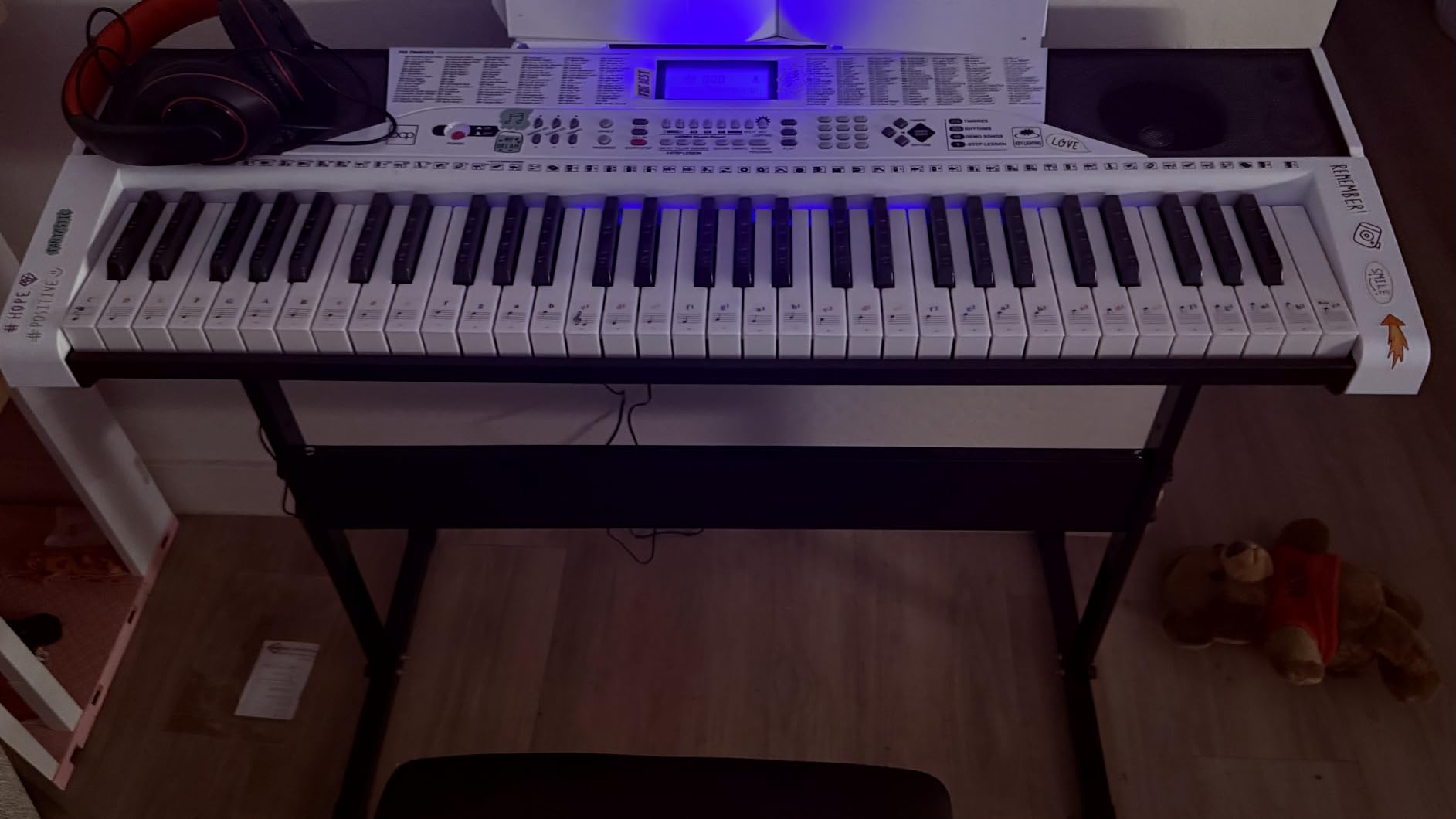
The three teaching modes are what set this keyboard apart. One-Key mode lights up the next note you need to play. Follow mode waits for you to press the correct key before moving on. Ensemble mode plays the full backing track while you play along. These modes are genuinely helpful for absolute beginners who cannot read sheet music yet.
The 255 timbres and 255 rhythms give you an enormous palette of sounds and backing tracks to explore. I found the variety kept practice sessions fresh and interesting. The 50 demo songs provide ready-made learning material.
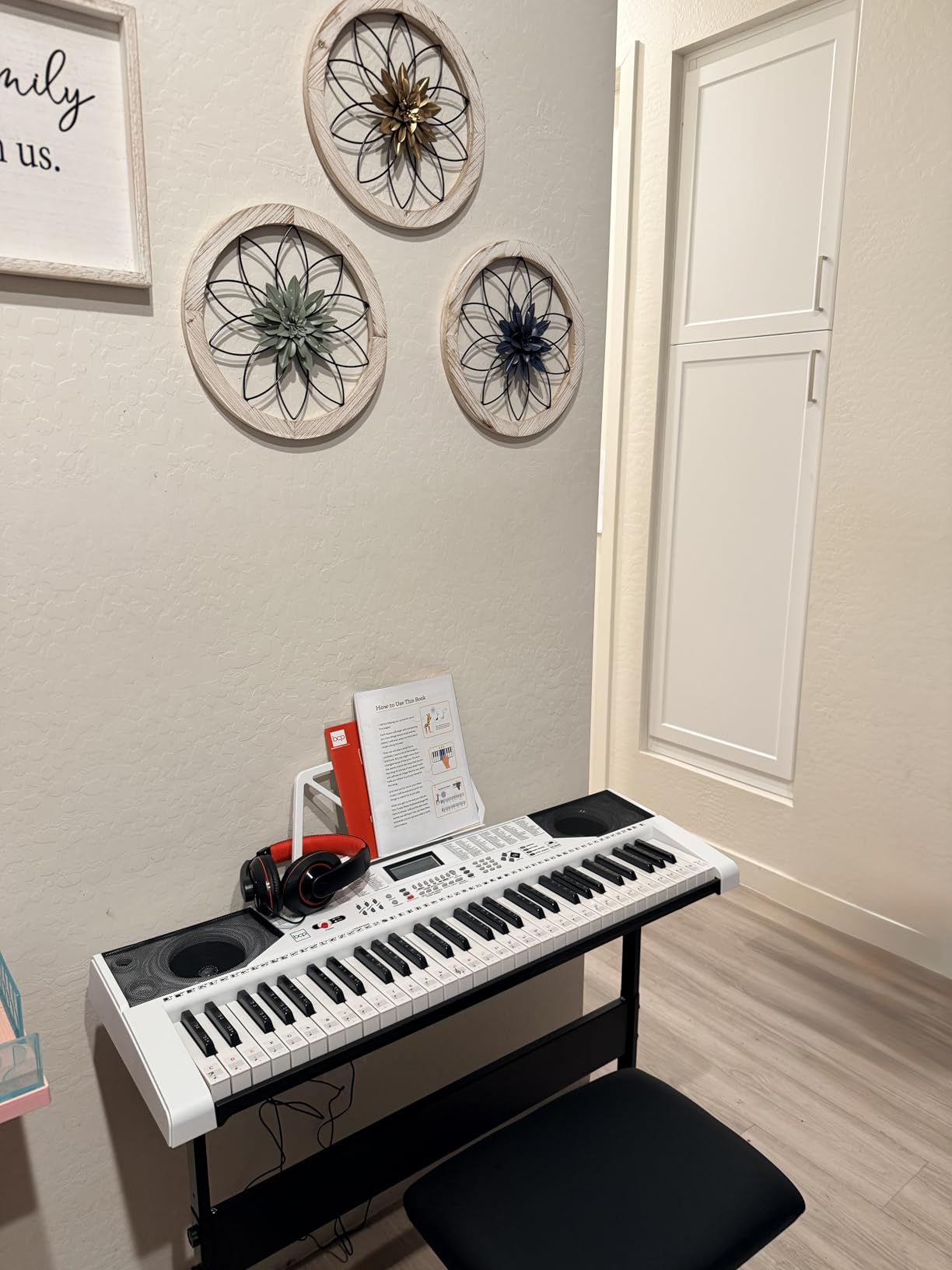
The complete bundle includes an H-style stand, padded stool, headphones, note stickers, and a music stand. Assembly takes about 5 minutes according to most reviewers. The built-in speakers are clear and can get surprisingly loud for the price.
The USB port lets you connect external devices to play along with music from your phone or computer. The recorder function captures your performances for later review. The LCD display shows the current function and settings clearly.
On the downside, the stand quality is average at best. Some users have reported receiving units with missing stand screws. The 60-day warranty is shorter than the 1-to-2-year warranties offered by Yamaha and Casio. The sound quality is what you would expect from a budget keyboard, not studio-grade.
Who Should Buy the Best Choice Products Lighted Keyboard
This is ideal for children and absolute beginners who learn best with visual guidance. The lighted keys and teaching modes make it incredibly easy to start playing songs immediately. If you have tried learning piano before and given up because it felt too hard, the guided approach of this keyboard could be the difference.
Who Should Look Elsewhere
If you want a keyboard from a major music brand with better long-term durability and warranty coverage, look at the Yamaha or Casio options. The shorter warranty and budget build quality mean this keyboard may not last as long with heavy daily use.
9. Yamaha YPT-280 61-Key Portable Keyboard – Best for Ear Training
Yamaha 61-Key Portable Keyboard for Beginners with Built-In Songs, Quiz Mode, Music Rest, with Power Adapter YPT280
61 full-size keys
Quiz Mode
Smart Chord
Hundreds of songs
4.6 stars
Pros
- Yamaha Portable Grand sound quality
- Quiz Mode for ear training
- Smart Chord feature
- Power adapter included
- Lightweight and portable
Cons
- No power indicator light
- No lesson books included
- Higher price than competitors
- Limited accessory bundle
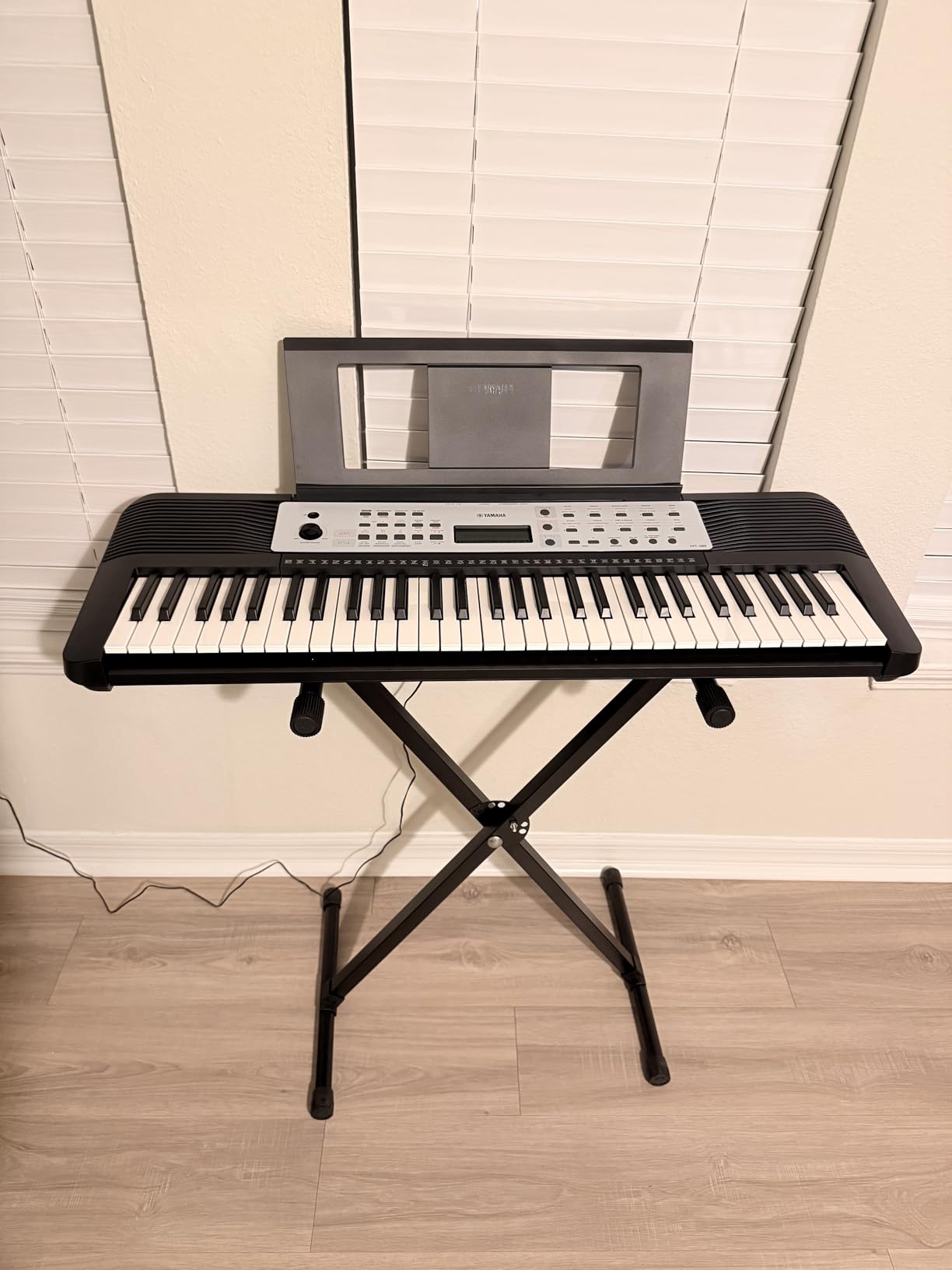
The Yamaha YPT-280 is a newer model that brings Yamaha quality to the beginner keyboard market. I was particularly impressed by the Quiz Mode, which offers two ear-training games that help develop your ability to identify notes and intervals by ear. This is a skill that many beginner keyboards completely ignore.
The Portable Grand piano sound is the same high-quality Yamaha sampling that makes their instruments so respected. When you select the grand piano voice, you get a rich, full-bodied tone that sounds noticeably better than generic keyboard sounds. This sound quality motivates beginners to keep practicing.
The Smart Chord feature lets you play full, professional chords with a single finger. This is perfect for accompanying yourself while singing or playing along with songs. Hundreds of built-in songs across multiple genres give you plenty of material to learn and practice.
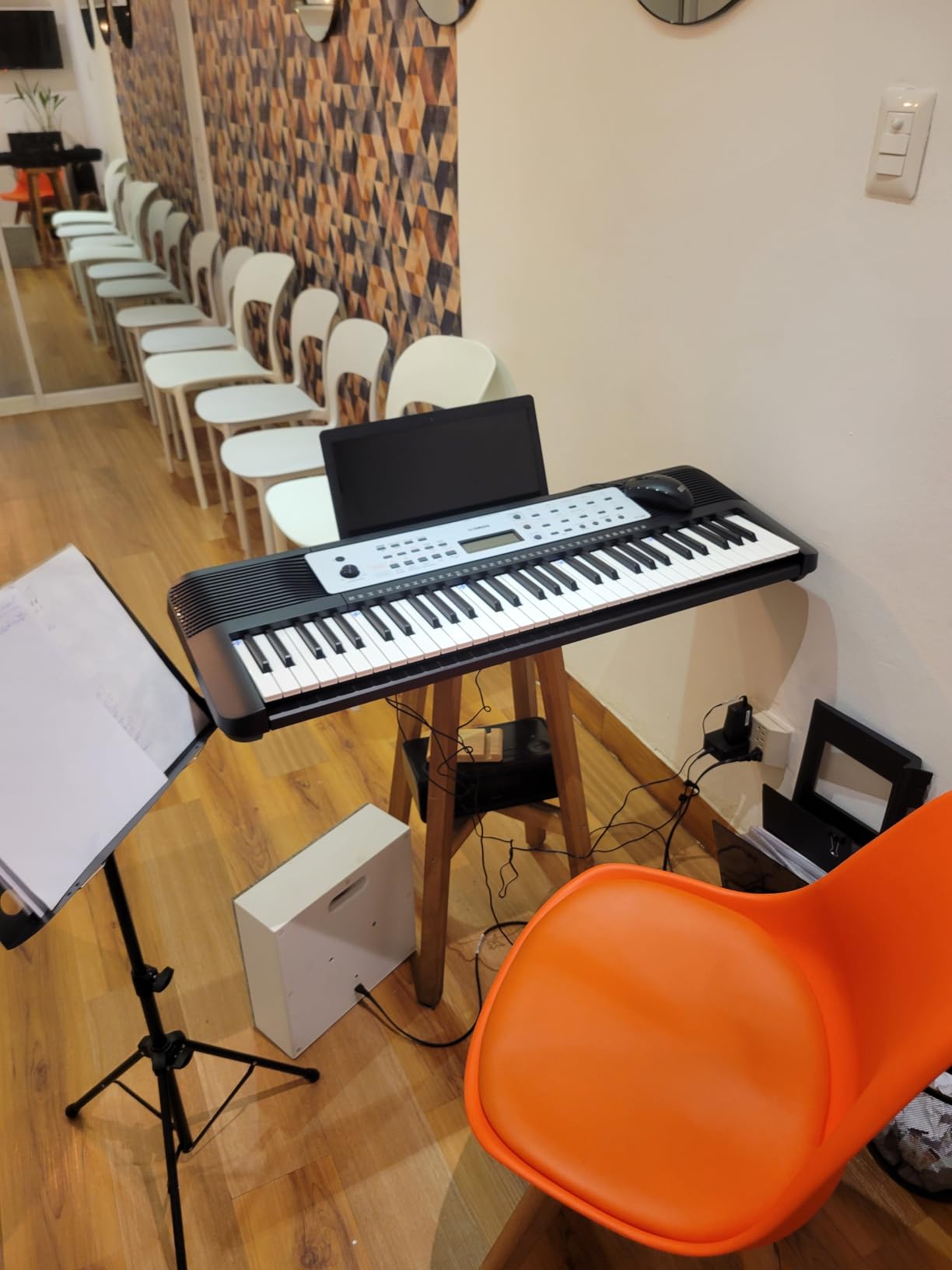
The 61 full-size keys provide proper spacing for developing correct finger technique. The keyboard works for both children and adults. Multiple instrument voices let you explore different sounds beyond just piano.
The power adapter is included, which is a nice touch. Both 3.5mm and 6.35mm headphone jacks are available, so you can use virtually any headphones for private practice. The keyboard is lightweight and easy to move around.
My main complaint is the lack of a power indicator light. You cannot tell at a glance whether the keyboard is on or off, which is a small but annoying oversight. No lesson books are included either, though the built-in songs and Quiz Mode provide some structured learning.
Who Should Buy the Yamaha YPT-280
This is a great choice for beginners who want Yamaha quality and the unique Quiz Mode ear-training feature. If you value sound quality and brand reliability, the YPT-280 delivers. It is also well-suited for children since Yamaha keyboards are frequently recommended by piano teachers.
Who Should Look Elsewhere
If you want a complete bundle with stand and bench, you will need to purchase those separately. Beginners who want the best value should also compare this with the RockJam kits, which include more accessories for less money.
10. Donner DEK-610S 61-Key Keyboard Kit – Best for Feature-Rich Learning
Donner 61 Key Keyboard Piano, Electric Piano Keyboard Kit with 249 Voices, 249 Rhythms – Includes Piano Stand, Stool, Microphone, Gift for Beginners, Black (DEK-610S)
61 keys
249 voices
249 rhythms
3 teaching modes
10W speakers
4.5 stars
Pros
- 249 voices and 249 rhythms
- Three teaching modes
- Powerful 10W speakers
- All-inclusive kit with mic
- Donner Music APP included
Cons
- Stand is flimsy and wobbly
- Keys not velocity-sensitive
- Low-quality microphone
- Short power cord
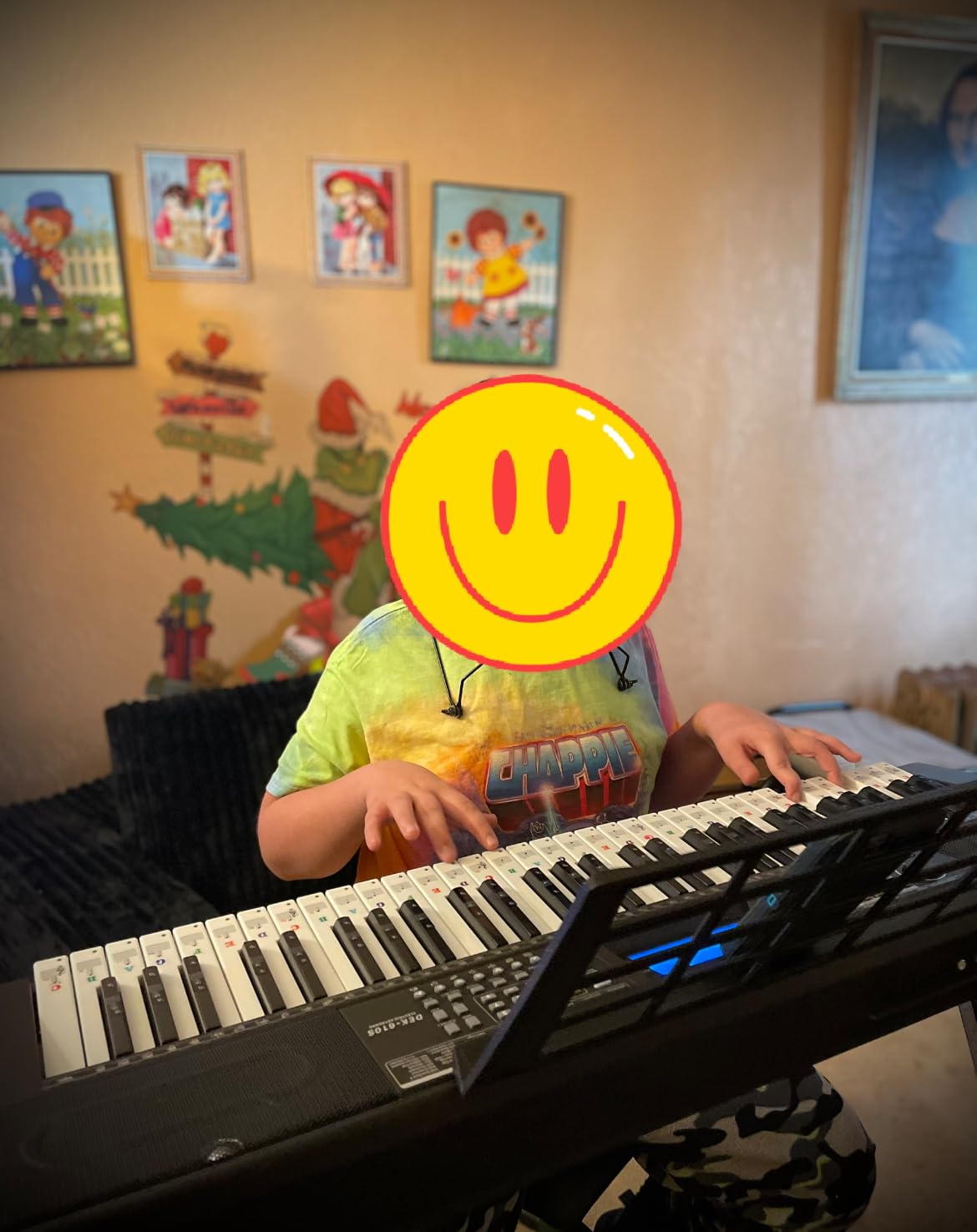
The Donner DEK-610S is a feature-packed beginner keyboard from a brand that has been gaining traction on Reddit and music forums. With 249 voices, 249 rhythms, and three teaching modes, it offers more variety than most keyboards in this price range. I tested it for several weeks and found it to be a solid value proposition.
The all-inclusive kit includes a keyboard stand, adjustable bench, sheet music stand, microphone, and power adapter. The microphone is a unique inclusion that none of the other keyboards in this guide offer. While it is not studio quality, kids love singing along while they play.
The 10W built-in speakers are noticeably louder and fuller than the speakers on most budget keyboards. They fill a room nicely, which makes practicing more enjoyable. The LCD display panel shows current settings and functions clearly.
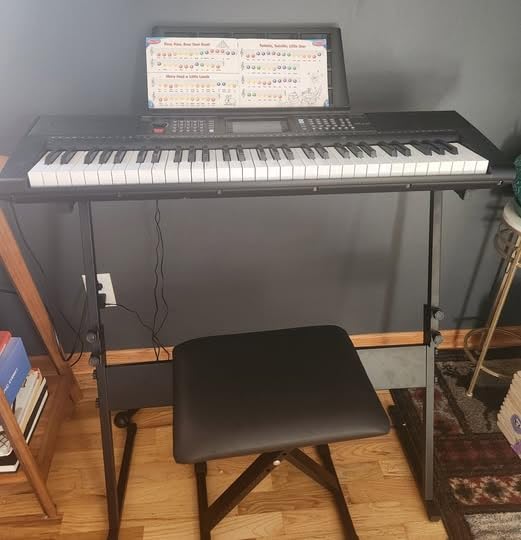
The Donner Music APP provides structured learning material designed to work with the keyboard. The three teaching functions guide you through songs step by step. The record feature lets you capture performances for review.
On the downside, the stand has received consistent complaints about being flimsy and wobbly. The keys are not velocity-sensitive, which limits dynamic expression. The included microphone is low quality and may break with rough handling. The power cord is also quite short at around 3 feet.
Some users have noted that many of the 249 advertised sounds are very similar to each other. This is a common issue with budget keyboards that pad their sound count. The core piano and electric piano sounds are good quality though.
Who Should Buy the Donner DEK-610S
This is a fun, feature-rich keyboard that is great for kids and casual beginners who want maximum variety and the novelty of a microphone. If you want lots of sounds, rhythms, and teaching modes at a reasonable price, the Donner delivers. The brand also has a reputation for responsive customer service.
Who Should Look Elsewhere
If you need a sturdy, reliable stand for regular practice, look elsewhere. The wobbly stand is a dealbreaker for some users. Those who prioritize sound quality over quantity of features should look at the Yamaha PSR-E273 instead.
11. Amazon Basics 61-Key Portable Keyboard – Best No-Frills Starter
Amazon Basics Portable Electric Keyboard Piano with 61 Full Size Keys, Built-in Speakers, Songs for Learning, Digital Piano, Black
61 semi-weighted keys
255 timbres
255 rhythms
USB
Lessons
4.4 stars
Pros
- Semi-weighted keys with reasonable resistance
- 255 timbres and 255 rhythms
- USB connectivity
- Power adapter included
- Transposition feature
Cons
- Sound described as tinny by some
- Keys not fully weighted
- Proprietary sustain pedal connector
- Short power cord
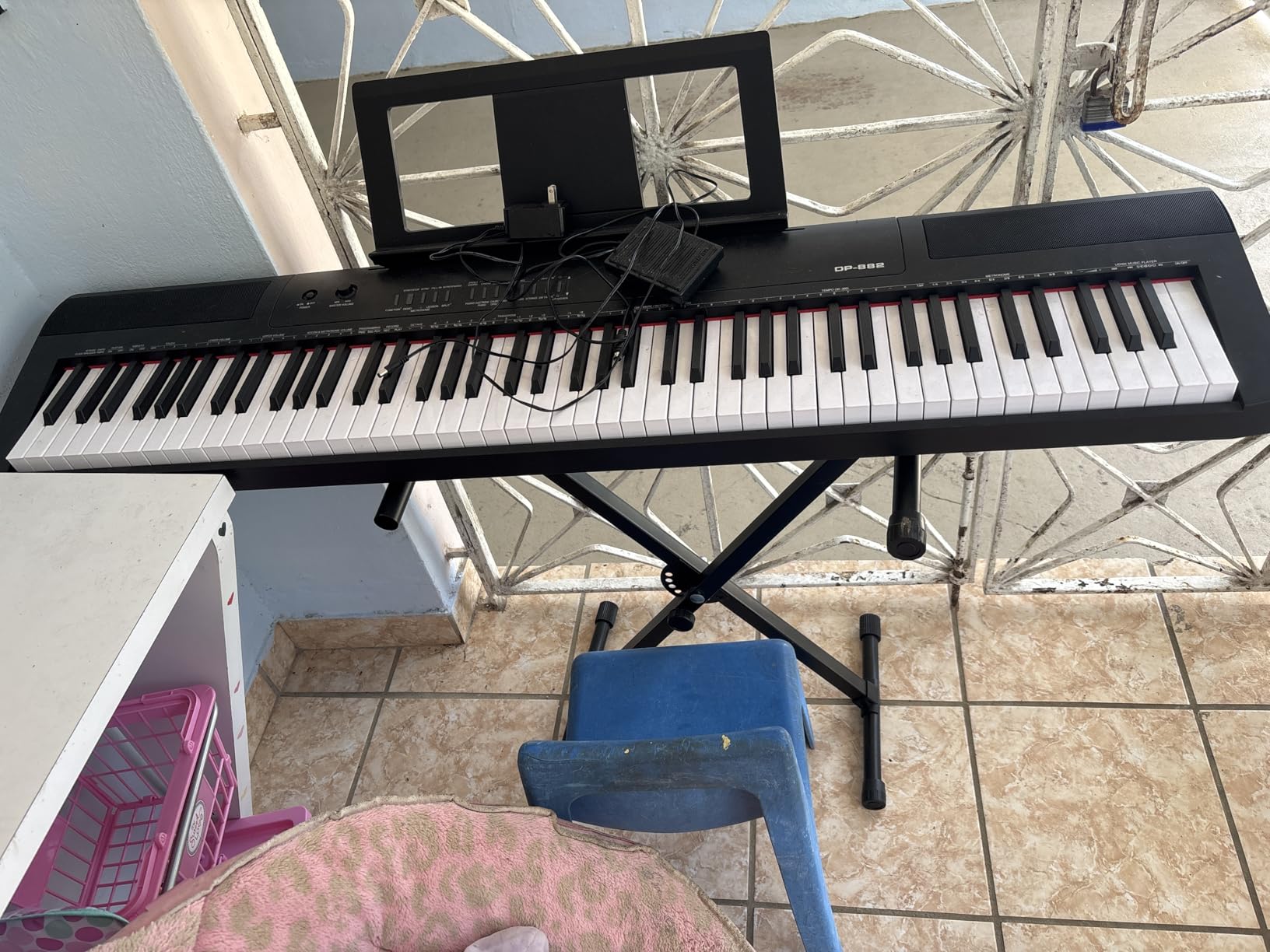
The Amazon Basics 61-Key Portable Keyboard brings Amazon’s reputation for reliable, no-frills products to the beginner keyboard market. I found it to be a straightforward instrument that covers all the basics without unnecessary complexity. It is available in both 61-key and 88-key variants.
The semi-weighted keys are a pleasant surprise at this price point. They offer more resistance than typical synth-action keys, giving you a feel that is closer to a real piano. While not as authentic as the fully weighted Yamaha P71, they are better than the unweighted keys on most budget keyboards.
The 255 timbres and 255 rhythms provide extensive variety. The 50 demo songs with built-in lessons give you structured learning material right out of the box. The transposition feature is useful if you play with other musicians or sing in a different key.
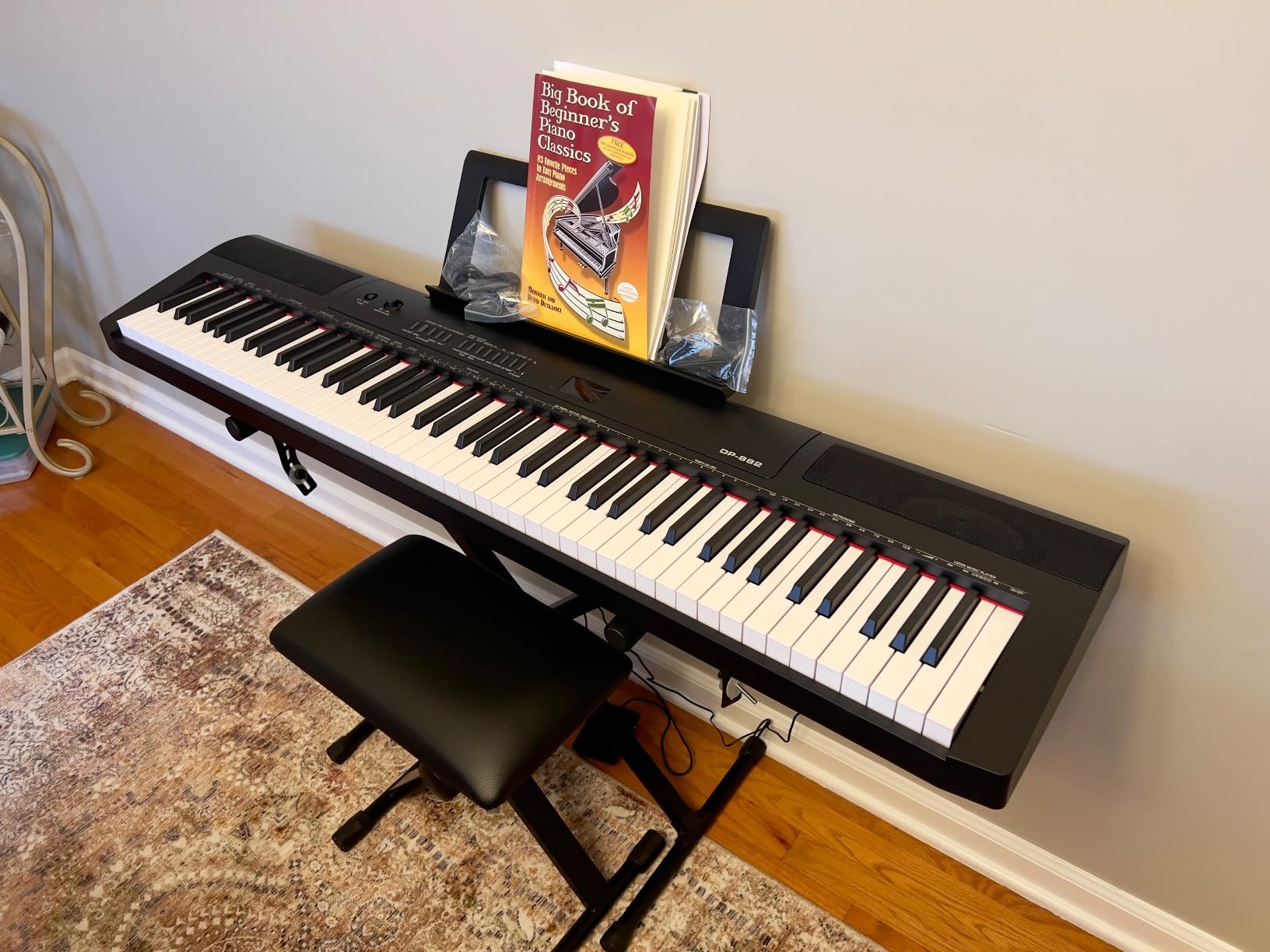
The kit includes headphones, a sheet music stand, power adapter, and note stickers. The USB connectivity lets you connect to a computer for recording or using learning software. The LCD display shows current settings clearly.
Experienced pianists have noted that the sound can be tinny compared to Yamaha or Casio keyboards. The keys are semi-weighted at best, not fully weighted. The sustain pedal uses a proprietary connector, which means you cannot easily use a standard third-party pedal.
The power cord is on the short side, which may require an extension cord depending on your setup. The construction is solid overall with sturdy packaging. It starts up immediately with no delay when powered on.
Who Should Buy the Amazon Basics Keyboard
This is a good choice for beginners who want a reliable, simple keyboard from a trusted brand. The semi-weighted keys and reasonable feature set make it a solid starter instrument. If you like Amazon’s customer service and return policy, this gives you that peace of mind.
Who Should Look Elsewhere
If sound quality is your top priority, you will get better tones from Yamaha or Casio keyboards. The proprietary sustain pedal connector is also a limitation if you plan to upgrade pedals later.
12. Casio Casiotone SA-81 – Best Ultra-Portable Mini Keyboard
Casio Casiotone SA-81 – Compact Keyboard with 100 Tones & 50 Rhythms | Fun for Beginners | Great for Music Practice and Learning
44 mini keys
100 tones
50 rhythms
3.7 lbs
Battery powered
4.4 stars
Pros
- Extremely lightweight at 3.7 lbs
- 100 high-quality tones
- Layer mode for rich sound
- Battery powered for portability
- Compact travel-friendly design
Cons
- 44 mini keys may feel cramped for adults
- No AC adapter included
- No velocity-sensitive keys
- Limited key range for advanced pieces
The Casio Casiotone SA-81 is the most portable keyboard in this guide. At just 3.7 pounds with 44 mini keys, it is small enough to take anywhere. I tested it as a travel companion and practice tool, and it excels in both roles if you understand its limitations.
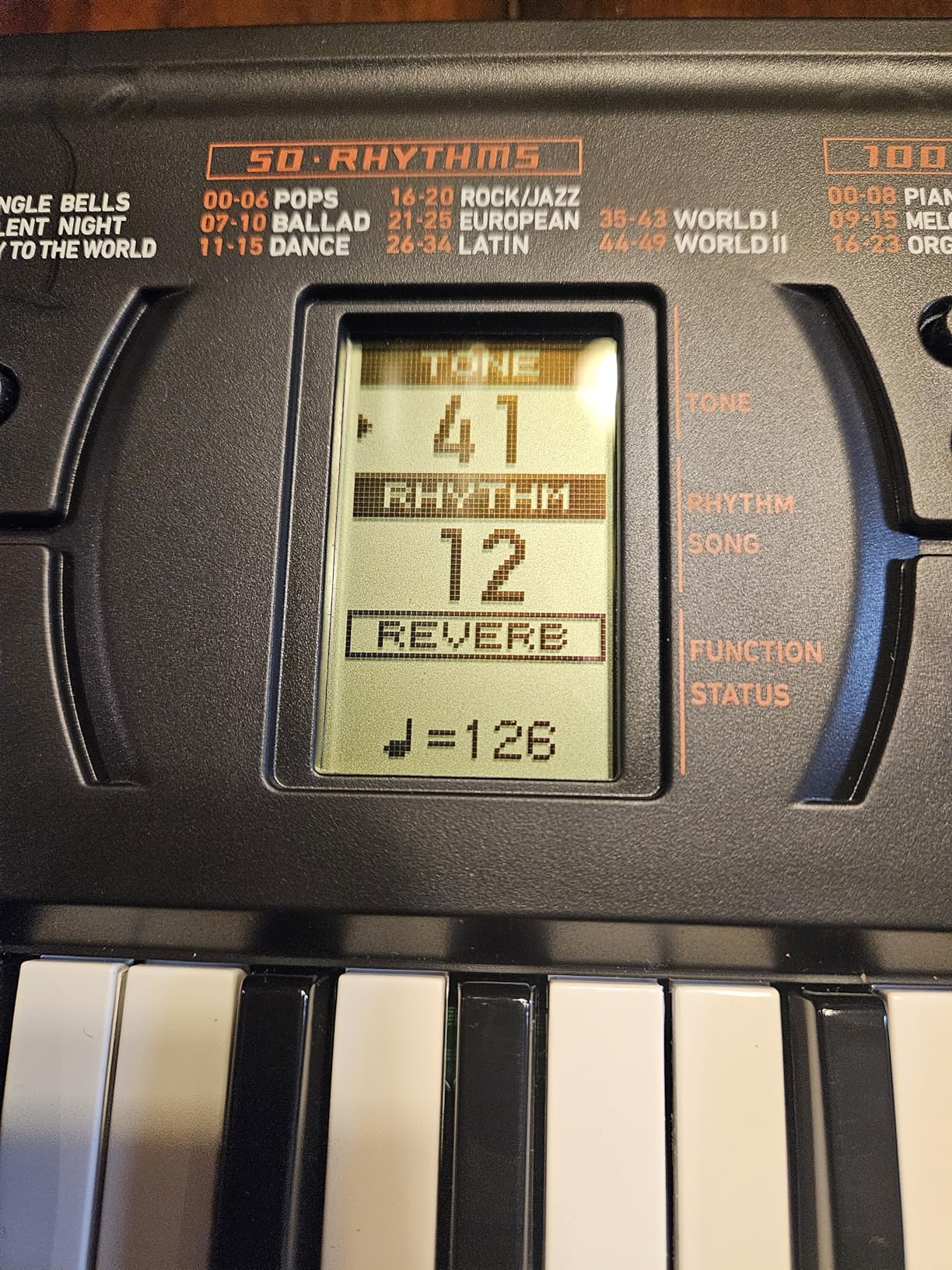
The 100 built-in tones are sampled from real instruments and sound surprisingly rich for such a compact keyboard. Casio has been making quality sounds for decades, and that expertise shows even in their smallest model. The layer mode lets you combine two tones for fuller, more complex sounds.
The 50 rhythm patterns span pop, dance, ballads, and other genres. The 10 built-in songs include recognizable tunes like Ode to Joy and Twinkle Twinkle Little Star, which are perfect for beginners learning their first melodies.
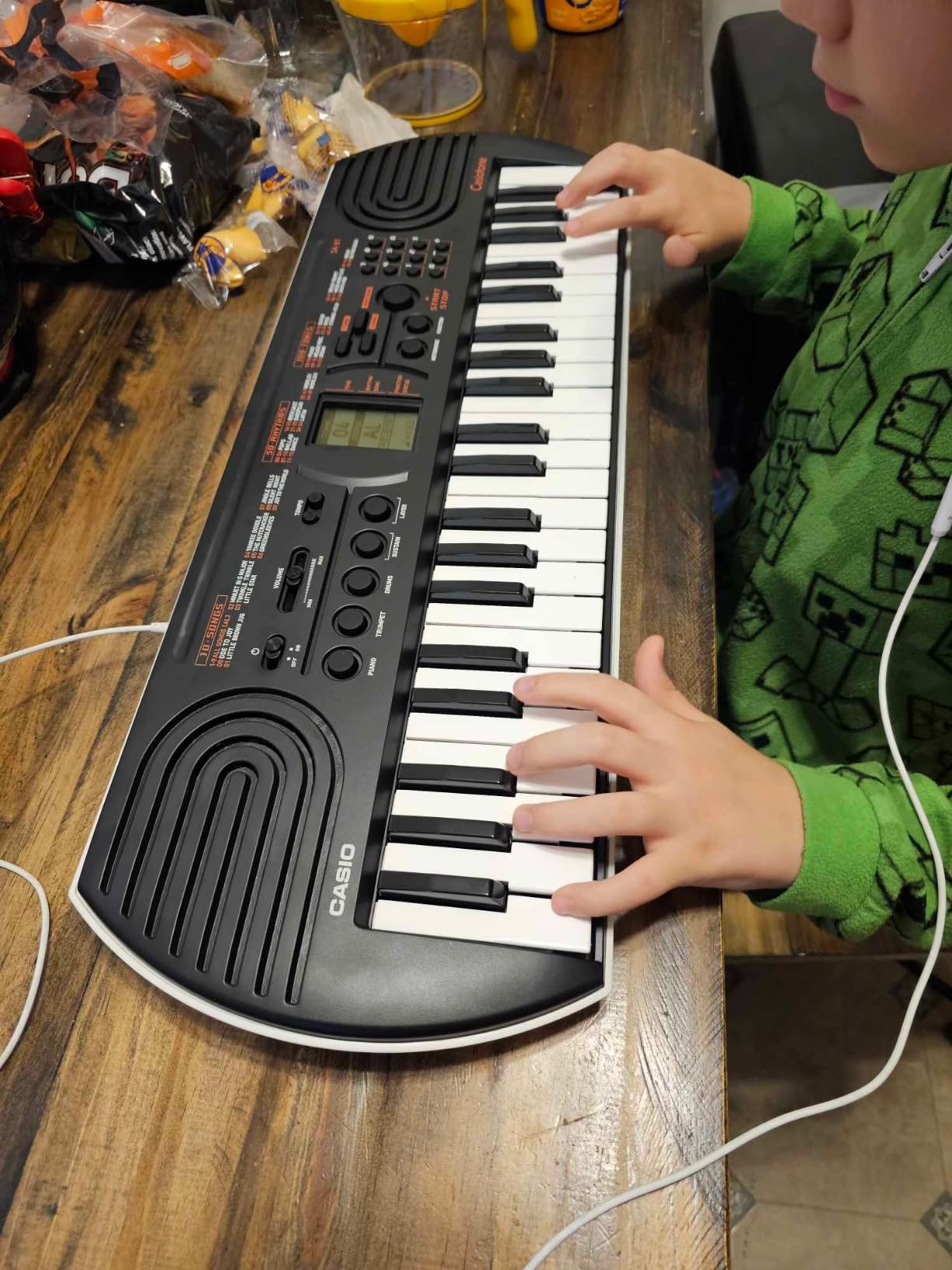
The 16 scale tunings and reverb effects give you more sound customization than you might expect from a keyboard this size. The sustain function extends note duration, and the octave shift feature lets you access a broader range than the 44 keys would normally allow.
Battery power means you can play anywhere. Six AA batteries provide hours of playing time. The 3.5mm headphone jack enables private practice. The compact design fits in a backpack or on a small desk.
The biggest limitation is the 44 mini keys. These are smaller than standard piano keys, which means they do not prepare you for proper technique on a full-size instrument. Reddit users consistently warn against mini-key keyboards for serious learners. However, for casual play, travel, or as a first instrument for very young children, the SA-81 has its place.
Who Should Buy the Casio Casiotone SA-81
This is perfect for young children, travelers, or anyone who wants a fun, ultra-portable keyboard for casual play. If you want something to take on trips, play at parties, or keep on your desk for quick practice sessions, the SA-81 is an excellent choice.
Who Should Look Elsewhere
If you are serious about learning piano technique, the mini keys will not serve you well. Adult hands will feel cramped, and the key spacing does not translate to standard pianos. Choose a full-size 61-key model like the Yamaha PSR-E273 or RockJam instead.
How to Choose the Best Keyboard for Beginners?
Choosing the right beginner keyboard comes down to understanding a few key factors. I will break down each one so you can make an informed decision based on your specific needs and budget.
Number of Keys: 61 vs 76 vs 88
The number of keys is one of the most important decisions when buying a beginner keyboard. A standard acoustic piano has 88 keys. Here is how the options break down for beginners.
61 keys is the most common starting point. It gives you five octaves, which is enough for most beginner and intermediate pieces. You can play two-handed songs, learn chords, and develop proper technique. Most of the keyboards in this guide have 61 keys because it strikes the best balance between range, portability, and price.
76 keys gives you six and a quarter octaves. This is a good middle ground if you want more range without the size and weight of a full 88-key instrument. Some Reddit users recommend 76-key keyboards like the Yamaha Piaggero NP-32 as the sweet spot for beginners.
88 keys gives you the full piano range. If you plan to play classical music, take formal lessons, or want an instrument you will never outgrow, 88 keys is the way to go. The Yamaha P71 and Alesis Recital in this guide both offer 88 keys at accessible prices.
My recommendation: Start with at least 61 keys. If you are serious about piano, go for 88. Skip keyboards with fewer than 61 keys unless you are buying for a very young child.
Key Action Types: Synth, Semi-Weighted, and Weighted
Key action refers to how the keys feel when you press them. This affects both your playing experience and your technique development.
Synth action keys are light and springy. They are easy to press, which makes them good for very young beginners or people with weak hands. However, they do not build finger strength and feel nothing like a real piano. Most budget keyboards including the RockJam models have synth action.
Semi-weighted keys offer moderate resistance. They are firmer than synth action but lighter than fully weighted keys. The Alesis Recital and Amazon Basics keyboards use semi-weighted keys. This is a good middle ground for beginners who want some resistance without the full effort of weighted keys.
Fully weighted keys with hammer action simulate the feel of an acoustic piano. Each key has a mechanism that mimics the hammer striking a string. The Yamaha P71 uses this action. Weighted keys are essential for developing proper finger technique and dynamics, which is why piano teachers consistently recommend them.
Touch Sensitivity and Velocity Response
Touch sensitivity, also called velocity sensitivity, means the keyboard responds to how hard you press the keys. Press softly for quiet notes, strike hard for loud notes. This is critical for developing dynamics, which is the ability to play loud and soft passages expressively.
Many budget keyboards lack velocity sensitivity. Every note plays at the same volume regardless of how hard you press. This is acceptable for absolute beginners who are just learning note positions, but it becomes a limitation as you advance. The Casio CT-S300 is one of the few budget keyboards in this guide with genuine touch-responsive keys.
Reddit users in r/piano and r/pianolearning consistently say that velocity sensitivity is non-negotiable for proper piano learning. If you can afford it, prioritize keyboards with touch response.
Polyphony: How Many Notes Can Sound at Once
Polyphony is the maximum number of notes a keyboard can produce simultaneously. When you press keys while holding the sustain pedal, previously played notes continue ringing while new notes are added. If you exceed the polyphony limit, the oldest notes cut off.
For beginners, 32-note polyphony is the minimum acceptable level. 64 notes is comfortable for intermediate players. 128 notes, like on the Alesis Recital, is excellent and will handle virtually any piece you encounter.
The Yamaha P71 offers 64-note polyphony, which is more than enough for beginner and intermediate repertoire. Do not obsess over this spec, but make sure you get at least 32 notes.
Built-in Sounds and Learning Features
Quality matters more than quantity when it comes to built-in sounds. A keyboard with 10 excellent voices is better than one with 500 mediocre tones. The Yamaha P71 proves this with just 10 voices, all of which sound professional.
For beginners, the most important sound is the acoustic piano voice. Make sure it sounds good to your ears, because you will be hearing it constantly. Secondary sounds like electric piano, organ, and strings add variety but should not drive your purchase decision.
Learning features vary widely. Teaching modes that light up keys, quiz modes for ear training, and app integration are all valuable. The Simply Piano app works with RockJam keyboards. Casio’s Chordana Play app pairs with the CT-S300. Alesis includes Skoove and Melodics subscriptions. Yamaha offers its own Education Suite. All of these can accelerate your learning.
Connectivity: USB, MIDI, and Bluetooth
USB connectivity lets you connect your keyboard to a computer or tablet. This opens up recording, learning apps, and music production software. Most modern keyboards include USB Type B ports for MIDI data transfer.
MIDI connectivity is the protocol that lets your keyboard communicate with other digital devices. When a keyboard has USB-MIDI, you can use it as a controller for software instruments in programs like GarageBand, Logic Pro, or Ableton Live.
Bluetooth connectivity is less common in budget keyboards but allows wireless connection to apps and devices. None of the keyboards in this guide have Bluetooth, but if you find one that does at a similar price, it is worth considering.
Headphone jacks are essential for private practice. Look for both 3.5mm and 6.35mm jacks if you have specific headphones you want to use. The sustain pedal jack lets you connect a pedal for more expressive playing.
Budget Breakdown: What to Expect at Each Price Range
Under $100: You get 54 to 61 keys, basic sounds, and limited features. Keys are not velocity-sensitive or weighted. Good for testing whether you enjoy playing before investing more. The RockJam 54 Key is the best option in this range.
$100 to $200: You get 61 keys, more sounds, teaching features, and sometimes complete accessory bundles. Some models offer touch sensitivity. The Casio CT-S300 and Alesis Melody 61 MK4 are strong picks here.
$200 to $400: You can get 88-key keyboards with semi-weighted or fully weighted keys, better sound engines, and higher polyphony. The Alesis Recital and Yamaha P71 fall in this range and offer serious value.
Above $400: You enter the territory of professional digital pianos with premium sound engines and advanced features. These are beyond what most beginners need.
Essential Accessories for Beginner Keyboards
A keyboard stand is essential unless you have a desk or table at the right height. X-style stands are affordable and adjustable. Z-style stands are more stable. Many beginner bundles include a stand.
A piano bench or stool lets you sit at the correct height for proper posture. Your forearms should be roughly parallel to the floor when your hands are on the keys. Many bundles include a bench.
A sustain pedal extends the duration of notes after you release the keys. Some keyboards include one, while others require a separate purchase. Check whether the pedal uses a standard 1/4-inch jack or a proprietary connector.
Headphones are important for private practice. You can play at any hour without disturbing family or neighbors. Look for closed-back headphones that block outside noise. The headphones included in most bundles are basic quality and worth upgrading.
Note stickers help beginners learn key positions quickly. Most beginner kits include them. Once you know where the keys are, remove the stickers to avoid dependency.
Keyboard vs Digital Piano: What is the Difference?
This is one of the most common questions I see on forums. The answer is simpler than you might think.
A keyboard is a portable instrument with built-in speakers, multiple sounds, rhythm accompaniment, and learning features. Keyboards typically have 61 or fewer keys and are designed for fun, exploration, and casual learning. They are lighter, cheaper, and more feature-packed.
A digital piano is designed to replicate the experience of playing an acoustic piano. Digital pianos have 88 fully weighted keys with hammer action, focus on a small number of high-quality sounds, and are built for serious practice and performance. They are heavier, more expensive, and less feature-rich.
For absolute beginners, a keyboard is usually the better starting point. It is more affordable, more fun, and easier to use. As you progress and get serious about piano, you can upgrade to a digital piano like the Yamaha P71.
FAQs
What is the difference between a keyboard and a digital piano?
A keyboard is a portable instrument with built-in speakers, multiple sounds, rhythm accompaniment, and typically 61 or fewer unweighted keys. A digital piano has 88 fully weighted keys with hammer action, fewer but higher-quality sounds, and is designed to replicate the feel and sound of an acoustic piano. Keyboards are better for casual beginners, while digital pianos suit serious learners.
How many keys do you need for a beginner keyboard?
Most beginners should start with at least 61 keys for two-handed playing. 88 keys are recommended for those planning to play classical or advanced pieces. 49 keys is the absolute minimum, but you will outgrow it quickly. Avoid mini-key keyboards if you want to develop proper piano technique.
What is a velocity sensitive keyboard?
A velocity sensitive or touch-sensitive keyboard responds to how hard you press the keys. Harder presses produce louder notes and softer presses produce quieter notes. This is important for developing proper dynamics and expressive playing. Not all beginner keyboards have this feature, so check before buying.
Do beginners need weighted keys?
Weighted keys are recommended if you plan to transition to an acoustic piano, because they build finger strength and proper technique. However, they are not strictly necessary for absolute beginners who are just exploring whether they enjoy playing. Synth-action keys are fine for the first few months of learning.
How much should I spend on a beginner keyboard?
Expect to spend between $60 and $220 for a quality beginner keyboard. Budget keyboards under $100 are fine for testing your interest. Keyboards in the $100 to $200 range offer better sounds, touch sensitivity, and accessory bundles. Spend $220 to $400 for an 88-key digital piano with weighted or semi-weighted keys.
What accessories do I need for my beginner keyboard?
Essential accessories include a keyboard stand, sustain pedal, and power adapter. Nice-to-have items are a piano bench, studio headphones for private practice, and note stickers for learning key positions. Many beginner keyboard bundles include all of these items, which saves money compared to buying them separately.
Final Thoughts on the Best Keyboards for Beginners
After testing 12 models from Yamaha, Casio, Alesis, RockJam, Donner, Best Choice Products, and Amazon Basics, my top recommendation for the best keyboards for beginners in 2026 comes down to three picks. The Yamaha PSR-E273 wins on sound quality and brand reliability. The RockJam 54 Key delivers unbeatable value for budget-conscious buyers. And the Yamaha P71 is the best choice for serious beginners who want weighted keys and authentic piano feel.
Remember that the best keyboard is the one you will actually play. A cheaper keyboard you practice on every day will serve you better than an expensive one that sits in the corner. Start where your budget allows, use the learning tools and apps that come with your keyboard, and upgrade when you feel ready for more.
If you take one thing from this guide, let it be this: prioritize full-size keys and touch sensitivity. These two features make the biggest difference in your learning experience and technique development. Everything else is secondary. Happy playing.