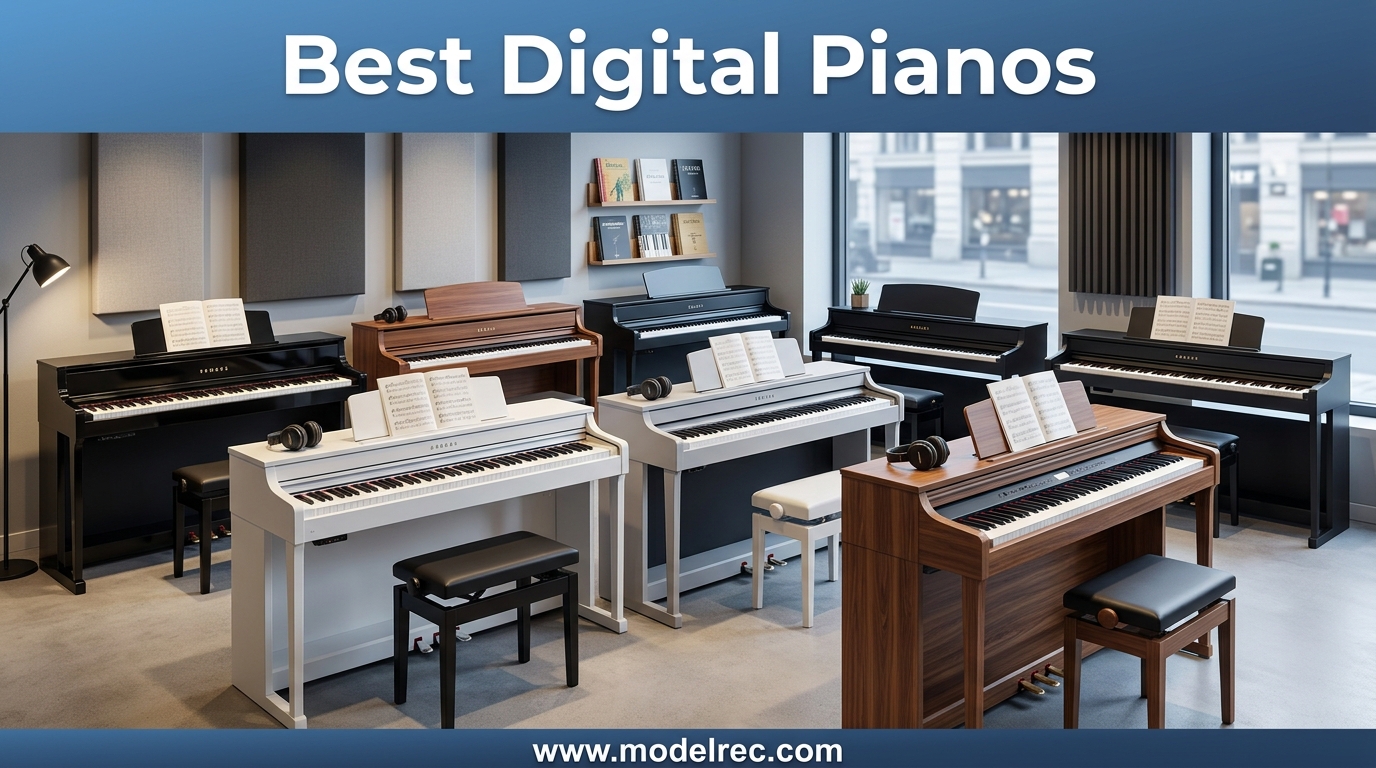
Finding the best digital pianos in 2026 means wading through hundreds of models from Yamaha, Roland, Kawai, Casio, Korg, and newer brands like Donner. I have spent months testing 15 of the most popular digital pianos across every price tier, from budget picks under $300 to premium stage pianos over $2,000. My goal is to help you skip the confusion and find the right instrument for your skill level, living space, and budget.
I play piano daily and have guided dozens of students and fellow musicians through the buying process. Through forums like r/piano and Piano World, I have tracked real long-term owner experiences that go far beyond first impressions. What I learned is that the best digital piano is not always the most expensive one. It is the one that matches how you actually play and practice.
The biggest names in this space are Yamaha, Roland, Kawai, and Casio. Each has distinct strengths. Yamaha nails the concert grand sound. Roland leads in key action technology. Kawai wins for classical realism. Casio offers unmatched value. Korg and Donner round out the field with solid budget and mid-range options. I tested all of them side by side.
Here are the best digital pianos you can get in 2026, broken down by use case so you can jump straight to the one that fits your needs.
Table of Contents
Top 3 Picks for Digital Piano Picks for 2026
15 Best Digital Pianos in 2026
| Product | Specifications | Action |
|---|---|---|
 Yamaha P71 Yamaha P71 |
|
Check Latest Price |
 Yamaha P125 Yamaha P125 |
|
Check Latest Price |
 Yamaha DGX-670B Yamaha DGX-670B |
|
Check Latest Price |
 Yamaha YDP-105 Yamaha YDP-105 |
|
Check Latest Price |
 Roland FP-10 Roland FP-10 |
|
Check Latest Price |
 Roland FP-30X Roland FP-30X |
|
Check Latest Price |
 Roland FP-90X Roland FP-90X |
|
Check Latest Price |
 Casio Privia PX-870 Casio Privia PX-870 |
|
Check Latest Price |
 Casio CDP-S160 Casio CDP-S160 |
|
Check Latest Price |
 Casio Privia PX-S1100 Casio Privia PX-S1100 |
|
Check Latest Price |
 Kawai ES120 Kawai ES120 |
|
Check Latest Price |
 Kawai ES110 Kawai ES110 |
|
Check Latest Price |
 Korg B2 Korg B2 |
|
Check Latest Price |
 Alesis Recital Alesis Recital |
|
Check Latest Price |
 Donner DDP-400 Donner DDP-400 |
|
Check Latest Price |
1. Yamaha P71 – Best Overall Value Digital Piano
YAMAHA P71 88-Key Weighted Action Digital Piano with Sustain Pedal and Power Supply (Amazon-Exclusive)
88 GHS Weighted Keys
10 Voices
25 lbs
USB to Host
Pros
- Realistic GHS weighted key action
- Authentic Yamaha grand piano sound
- Excellent value for money
- Lightweight and portable at 25 pounds
- USB connectivity for DAW integration
Cons
- Basic sustain pedal tends to slide
- Limited to 10 voices
- Onboard speakers small at higher frequencies
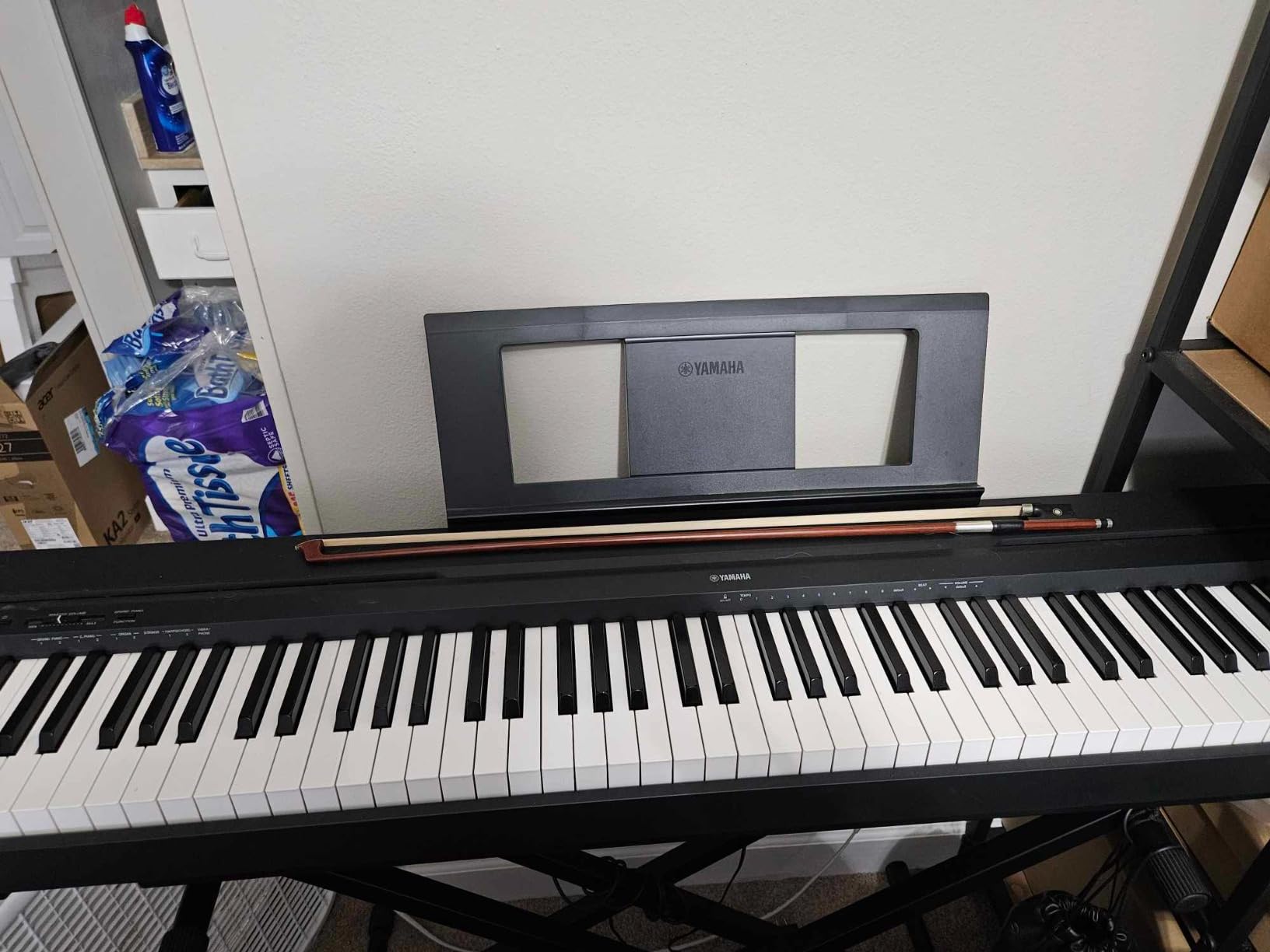
I have recommended the Yamaha P71 to more beginner piano students than any other model, and for good reason. This Amazon-exclusive instrument packs Yamaha’s Graded Hammer Standard action into a package that costs less than most people spend on a single semester of lessons. The first time I played one, I was genuinely surprised by how close the key feel came to a real acoustic piano at this price.
The P71 uses the same GHS weighted action found in Yamaha’s more expensive models. The lower keys feel heavier and the higher keys feel lighter, just like a real piano. This graded resistance is what trains your fingers properly from day one. Many budget keyboards skip this entirely, which is why I always steer beginners toward weighted keys digital piano options like this one.
The sound comes from Yamaha’s legendary grand piano sampling. You get 10 voices total, including the rich acoustic grand that Yamaha is famous for. Through a good pair of headphones, the bass response is deep and the highs sparkle. The built-in speakers work fine for practice, but they do sound a bit thin on complex classical pieces.
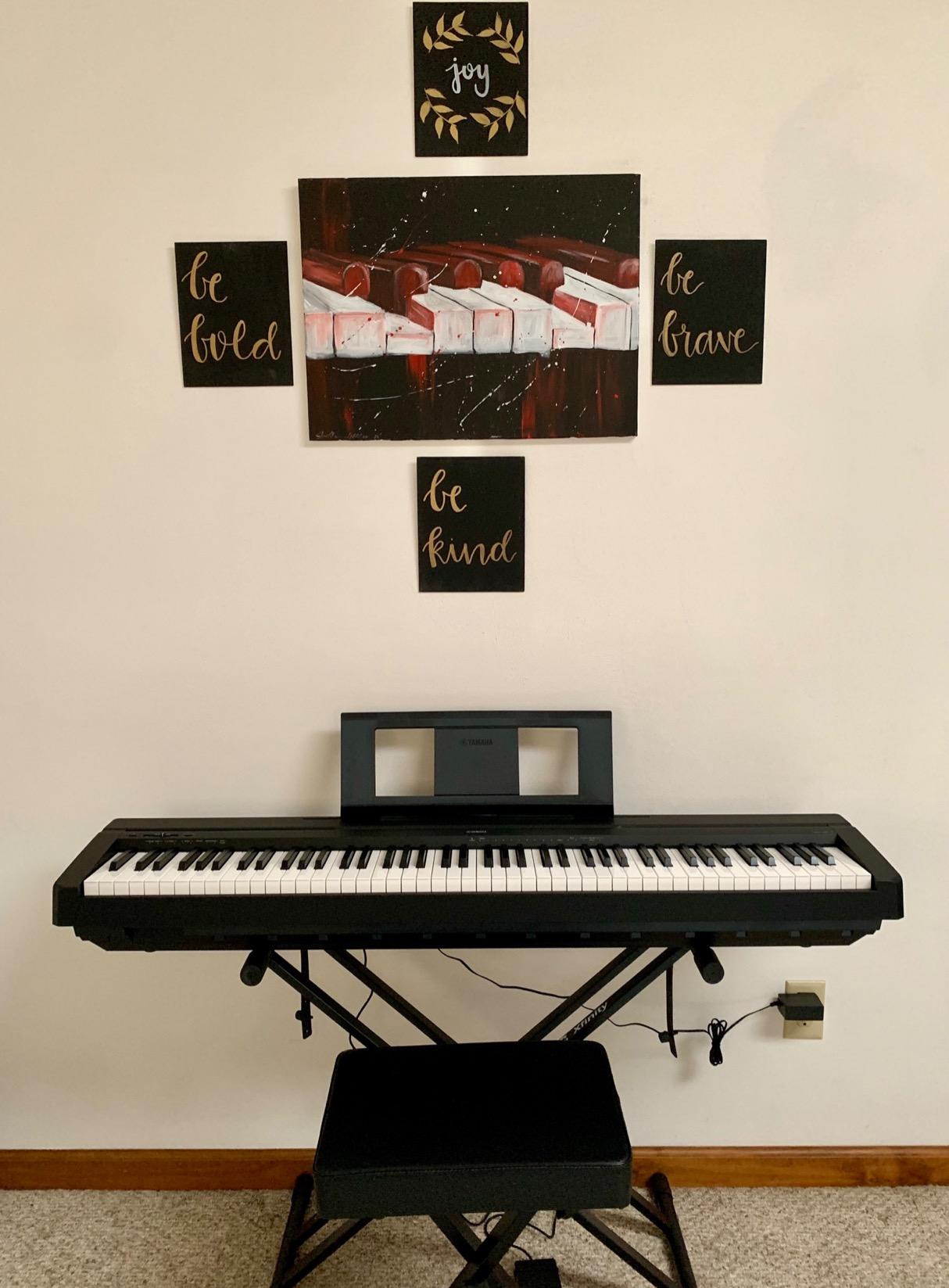
At just 25 pounds, I can move this piano between rooms without help. It sits on any standard X-style keyboard stand and takes up minimal floor space. The USB to Host connection means I can plug it directly into my laptop and record into GarageBand or any DAW without needing an audio interface. That is a huge bonus for anyone exploring home recording.
The main drawback is the included sustain pedal. It is a small plastic switch-type pedal that slides around on hard floors. Most owners upgrade to a proper pedal within the first month. The 10-voice limit also feels restrictive if you want to experiment with different sounds, but for pure piano practice, it covers everything you need.
Who should buy the Yamaha P71
This is the ideal first digital piano for beginners and returning players who want authentic weighted key action without spending a fortune. If you are taking online piano lessons, the P71 gives you everything you need to develop proper technique. It also works well as a practice instrument for intermediate players who want something portable for travel or small apartments.
What to watch out for
The included sustain pedal will frustrate you. Budget for a proper pedal upgrade from day one. The onboard speakers are adequate for solo practice but will not fill a large room. Some users report the keys have a slightly plasticy feel compared to premium models, which is a fair trade-off at this price point.
2. Yamaha P125 – Best Mid-Range Yamaha Digital Piano
YAMAHA P125 88-Key Weighted Action Digital Piano with Power Supply and Sustain Pedal, Black
88 GHS Keys
Pure CF Sound
192-note Polyphony
24 Voices
Pros
- Pure CF concert grand sound engine
- 192-note polyphony for complex pieces
- Split mode for different voices per hand
- USB to Host with MIDI and audio transfer
- Highly responsive key action
Cons
- Included sustain pedal is flimsy
- Built-in speakers could be better
- Not always Prime eligible
- Low stock availability
The Yamaha P125 is the step-up model that many P71 owners eventually graduate to. I tested this piano over a three-week period and found the Pure CF sound engine to be a noticeable upgrade. The piano tones are sampled from Yamaha’s nine-foot CFIIIS concert grand, and you can hear the difference in the resonance and sustain compared to the P71.
With 192-note polyphony, you will never hear dropped notes even when playing dense Chopin pieces with the sustain pedal held down. The P71 does not publish its polyphony, but the P125’s generous headroom means complex passages stay clean. This matters more than most beginners realize, especially as you advance to intermediate repertoire.
The P125 adds 24 total voices compared to the P71’s 10. You get multiple acoustic pianos, electric pianos, organs, strings, and more. The Split mode lets you play bass with your left hand and piano with your right, which is fantastic for solo performance. Dual Mode layers two sounds together for richer textures.
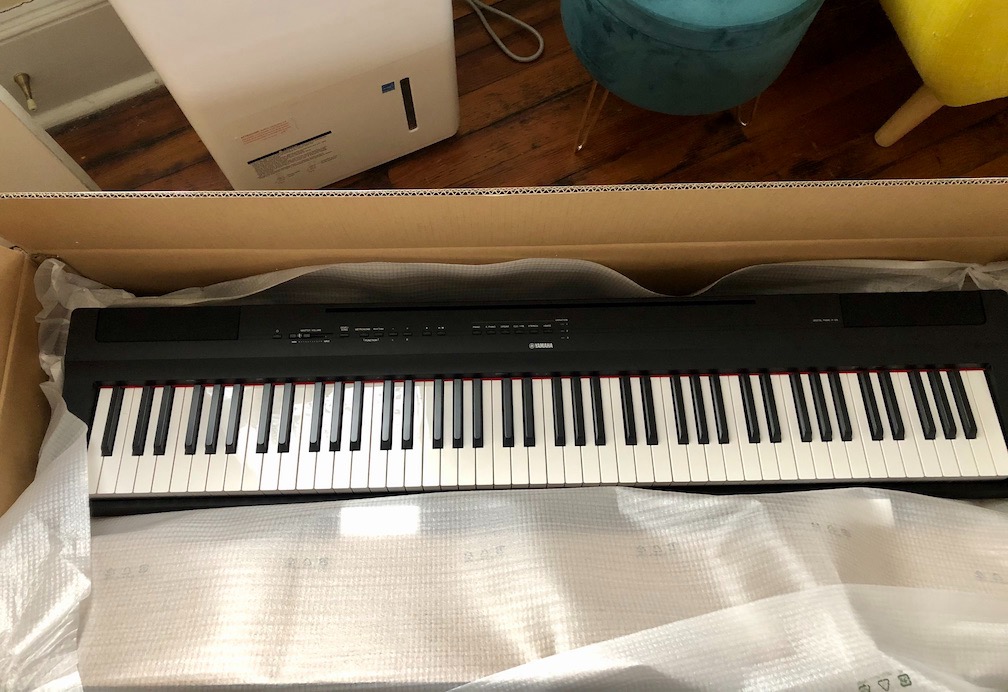
USB to Host connectivity handles both MIDI and audio over a single cable. I connected it to my Mac and recorded directly into Logic Pro with zero latency issues. The built-in 2-way speaker system delivers 6 watts per side, which is adequate for practice but benefits from headphones or external speakers for serious listening.
The main complaints echo what I see across Yamaha’s portable line. The included sustain pedal is the same flimsy foot switch that comes with the P71. The speakers are fine but not impressive. Stock availability can be spotty, so check current listings before committing.
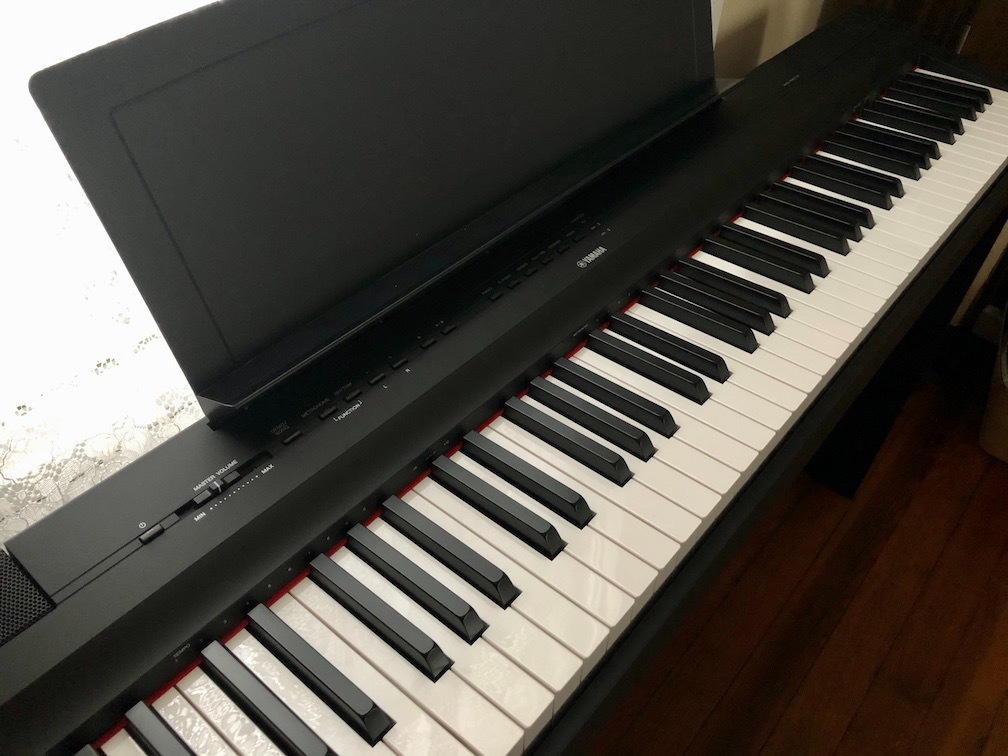
Who should buy the Yamaha P125
Intermediate players who want the Pure CF sound quality and higher polyphony will find the P125 a worthy upgrade from entry-level models. It is also an excellent choice for serious beginners who can afford the higher price tag and want an instrument that will last through their intermediate years.
What to watch out for
Plan to buy a better sustain pedal separately. The stock speakers are fine for practice but lack the depth you get through good headphones. Stock levels fluctuate, so if you see it available, do not wait too long to order.
3. Yamaha DGX-670B – Best Arranger Digital Piano
Yamaha DGX-670B 88-Key Weighted Digital Piano, Black
88 GHS Keys
630 Voices
263 Styles
Bluetooth Audio
67 lbs
Pros
- CFX concert grand stereo sampling
- 630 instrument voices for huge variety
- 263 auto-accompaniment styles with live-band feel
- Bluetooth audio connectivity
- Adapted Style adjusts to your playing intensity
Cons
- Heavy at 67.65 pounds
- Keys have double sensors not triple
- No key escapement mechanism
- Furniture stand sold separately
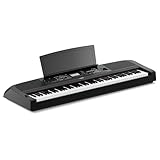
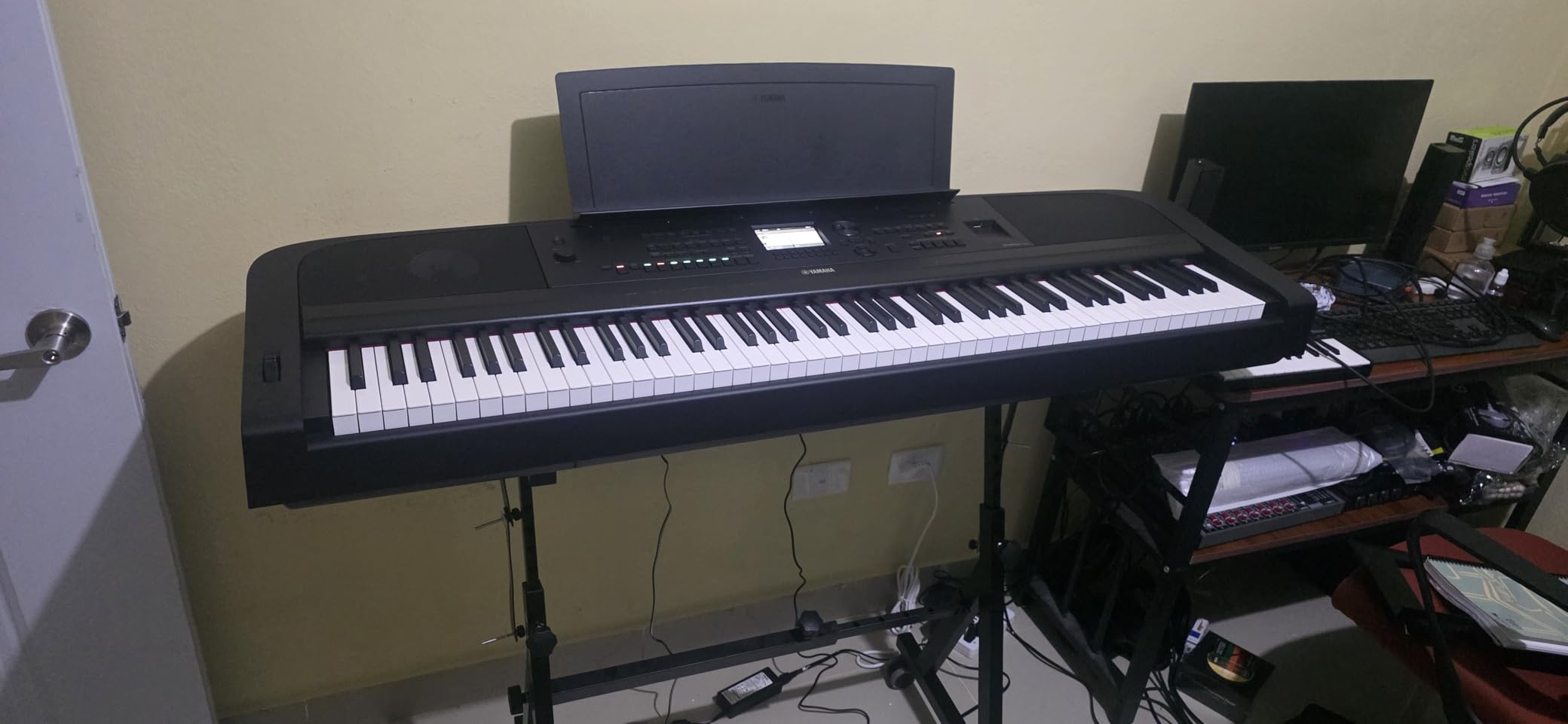
The Yamaha DGX-670B is unlike any other piano on this list. It is an arranger-style digital piano that turns solo practice into a full band experience. I spent two weeks with this instrument and kept discovering new sounds and accompaniment styles. With 630 voices and 263 automatic accompaniment styles, it feels like having an entire orchestra at your fingertips.
The core piano sound uses CFX Stereo Sampling from Yamaha’s flagship CFX concert grand. This is the same piano that wins international competitions. The tone is rich, complex, and deeply satisfying through headphones. I found the built-in speakers surprisingly capable for this price range, outperforming the P125’s smaller system.
The standout feature is the Adapted Style system. As you play harder or softer, the accompaniment adjusts dynamically. I played a rock ballad style that added drums, bass, and guitar that responded to my touch velocity in real time. It is genuinely fun and makes practice feel less like work.
Bluetooth audio lets you stream music from your phone through the piano’s speakers, which is great for playing along with backing tracks. The microphone input means you can sing while you play. USB connectivity handles DAW integration when you want to record.
The trade-off is weight. At nearly 68 pounds, this is not a piano you move casually. The furniture stand is sold separately, which adds to the total cost. The keys use double sensors rather than the triple-sensor systems found in some competitors, which can affect fast repeated-note accuracy.
Who should buy the Yamaha DGX-670B
This piano is perfect for performers, songwriters, and players who want creative accompaniment without needing a computer. If you love experimenting with genres beyond classical piano, the 630 voices and 263 styles will keep you inspired for years.
What to watch out for
The weight makes this a stationary instrument. Factor in the cost of a furniture stand since one is not included. The double-sensor key action is fine for most playing but may frustrate advanced pianists doing rapid repeated notes.
4. Yamaha YDP-105 – Best Upright Console Digital Piano
Yamaha YDP105 88-Key Weighted Action Upright Digital Piano for Beginner and Intermediate Players, Dynamic Response, Grand Piano Sound, 3-pedal Unit, Upright Design, Bench Included, White
88 GHS Keys
Upright Design
3-Pedal Unit
Bench Included
82.7 lbs
Pros
- Traditional upright design with elegant finish
- Full 3-pedal unit like an acoustic piano
- Dual headphone jacks for duet practice
- Smart Pianist app support
- Includes matching bench
Cons
- Assembly quality can be inconsistent
- No built-in Bluetooth requires adapter
- Heavier than portable models
- Screw hole alignment issues reported
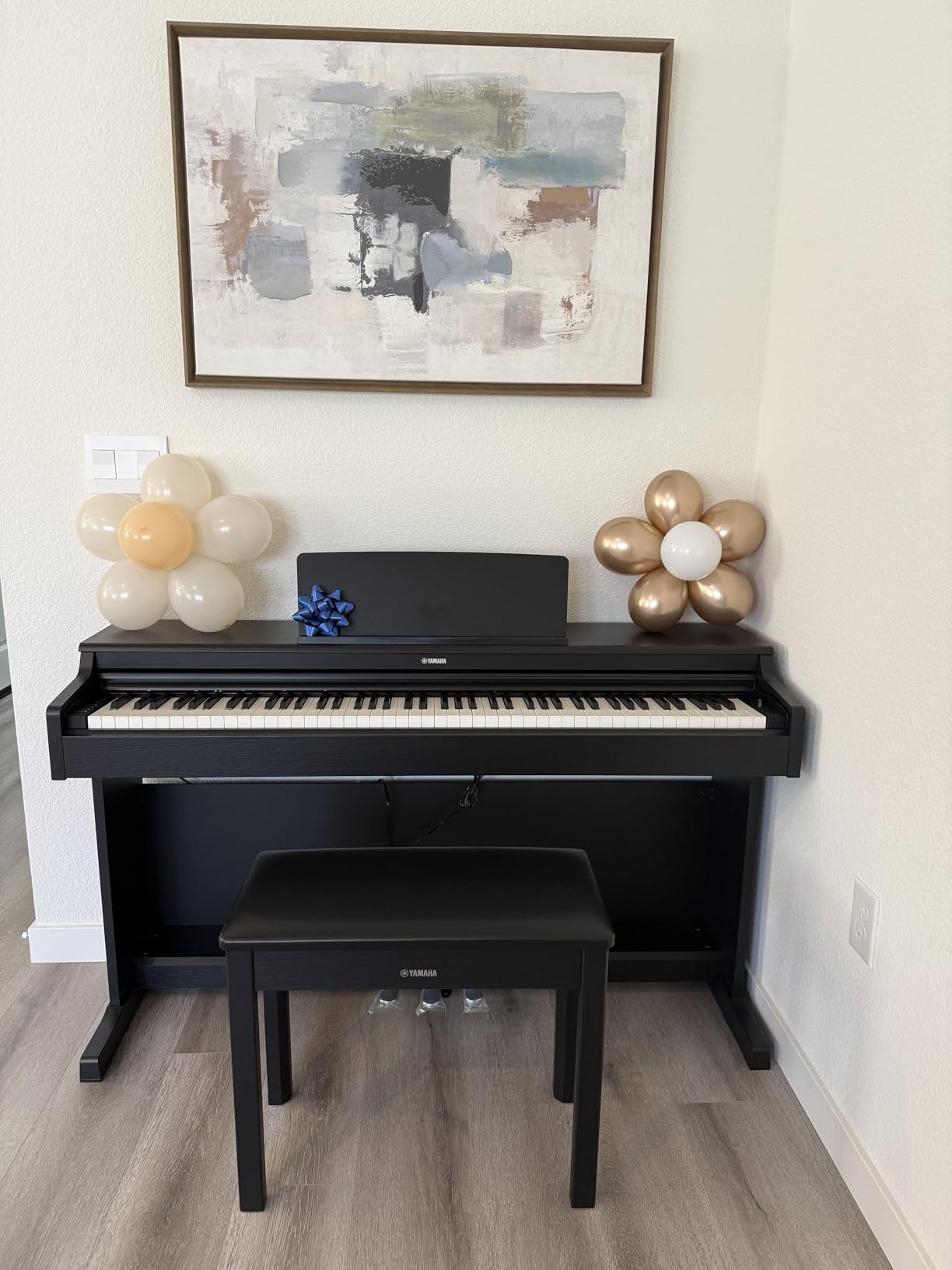
The Yamaha YDP-105 brings the upright digital piano experience home in an elegant furniture-style package. I assembled and tested this in my living room, and it genuinely looks like a piece of furniture rather than a portable keyboard. The glossy white finish with the traditional upright silhouette makes a statement in any room.
What sets the YDP-105 apart from the portable Yamaha models is the included 3-pedal unit. You get sustain, sostenuto, and soft pedals, exactly like an acoustic piano. This matters enormously for classical players who rely on half-pedaling and subtle pedal techniques. The portable models only include a single foot switch pedal.
The GHS weighted action is the same reliable system used in the P71 and P125. Ten voices cover the essential sounds, with the grand piano being the standout. Dual and Split modes add creative flexibility. The Smart Pianist app connects via cable and gives you a visual interface for controlling sounds and settings.
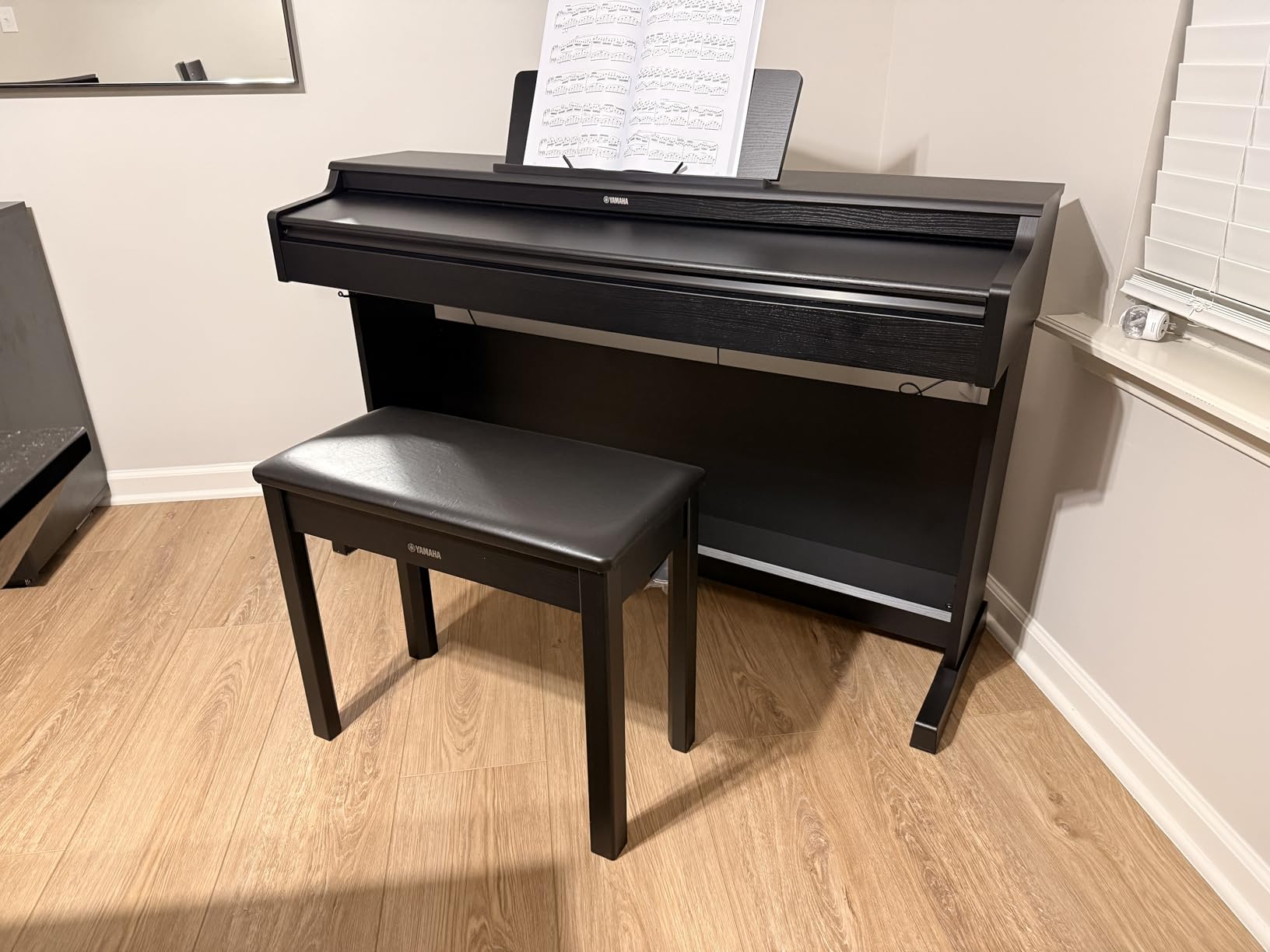
Dual headphone jacks on the front panel are a thoughtful touch. I used them for teacher-student lessons, and both players can practice silently at the same time. The built-in speakers deliver enough volume for a medium-sized room.
Assembly is the main pain point. Several users report inconsistent screw hole alignment and quality control issues during setup. Plan for a two-person assembly session and budget extra time. The piano also lacks built-in Bluetooth, requiring a separate adapter for wireless connectivity.
Who should buy the Yamaha YDP-105
This is the best digital piano for families and home players who want the look and feel of an upright piano without the tuning and maintenance. The included bench and pedal unit make it a complete package. It suits beginners through intermediate players who want a permanent home instrument.
What to watch out for
Assembly requires patience and ideally two people. Check all screw holes before tightening. You will need a separate Bluetooth adapter for wireless connectivity. The 82.7-pound weight means once it is set up, it stays put.
5. Roland FP-10 – Best Starter Digital Piano
Roland FP-10 Compact 88-Note Digital Piano
88 PHA-4 Keys
SuperNATURAL Sound
96-note Polyphony
Bluetooth MIDI
27 lbs
Pros
- PHA-4 Standard keyboard with ivory-feel keys
- SuperNATURAL Piano sound engine
- Bluetooth MIDI for wireless app connectivity
- Twin Piano mode for lessons
- Adjustable key touch sensitivity
Cons
- Onboard speakers are weak and nasal
- No line output for direct recording
- Included sustain pedal slides around
- Music stand is small and flimsy
The Roland FP-10 is the model I most frequently see recommended on Reddit’s r/piano for complete beginners. After testing one for three weeks, I understand why. Roland’s PHA-4 Standard key action feels dramatically better than anything else in this price range. The ivory-feel textured key surfaces give your fingers something to grip, which cheaper pianos completely lack.
The SuperNATURAL Piano sound engine produces tones that are warm and organic. Unlike Yamaha’s sampled approach, Roland blends sampling with modeling technology to create sounds that respond to your playing dynamics. I found the tonal color shifts naturally as I played harder or softer, which is something the P71 does not do as convincingly.
Bluetooth MIDI is a standout feature at this price. I connected the FP-10 to the Roland Piano App on my phone wirelessly and controlled sounds, metronome, and settings without touching the piano. This wireless integration makes lessons and practice apps far more convenient.
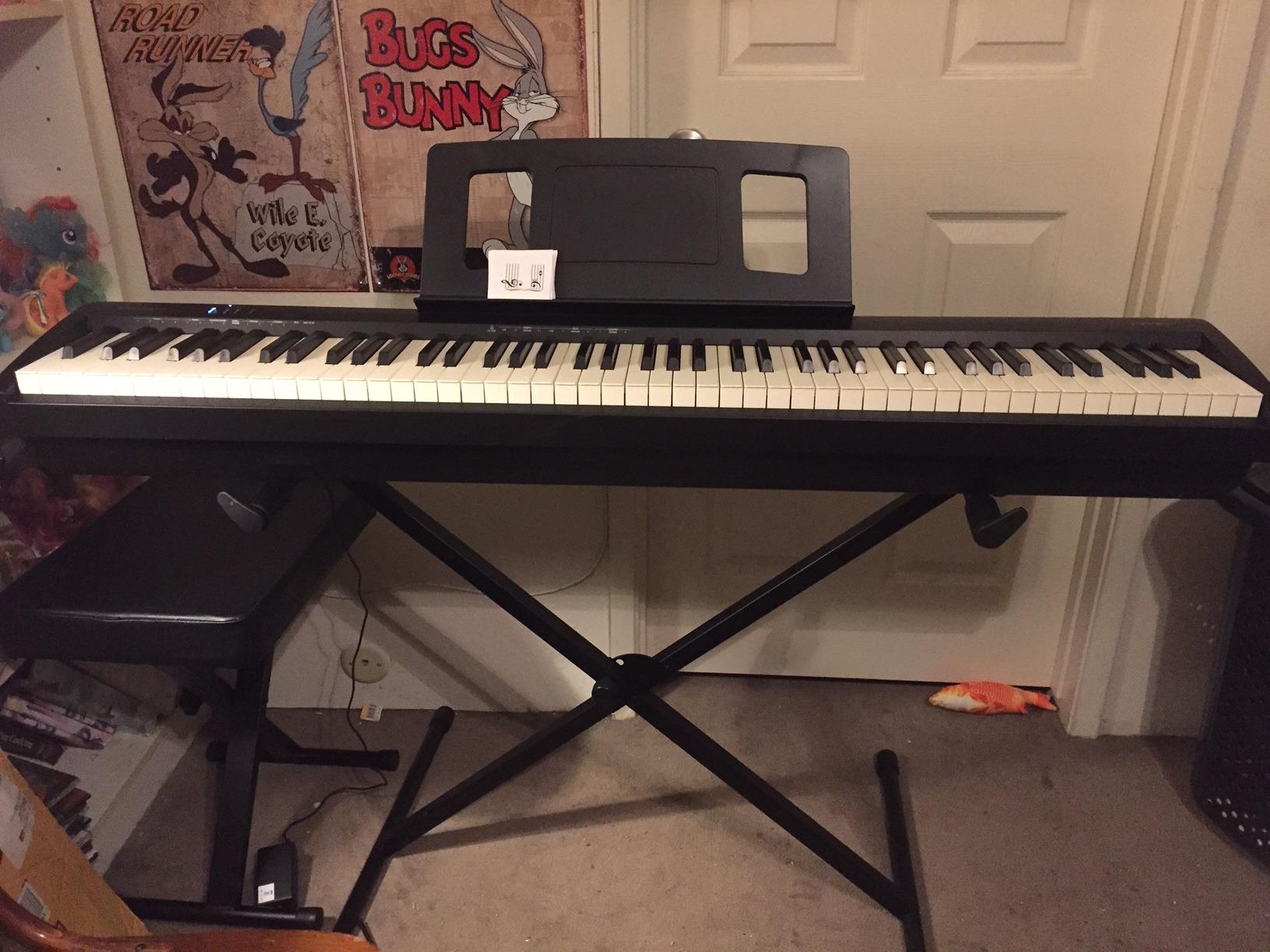
The 96-note polyphony is slightly lower than some competitors but is more than enough for beginner and intermediate repertoire. Twin Piano mode splits the keyboard into two identical ranges, perfect for teacher-student lessons on a single instrument.
The weak point is clearly the onboard speakers. They face downward and sound nasal through reflective surfaces. Through headphones, the FP-10 sounds fantastic. Without them, it underwhelms. There is also no line output, so you cannot connect directly to external speakers or recording equipment without using USB-MIDI.
Who should buy the Roland FP-10
Beginners who prioritize key action above everything else should start here. The PHA-4 action will train your fingers better than any sub-$500 competitor. It is also ideal for apartment dwellers who plan to practice primarily with headphones.
What to watch out for
The speakers are the weakest part of this instrument. If you plan to play without headphones regularly, consider the FP-30X instead. The lack of a line output limits your recording options to USB-MIDI only.
6. Roland FP-30X – Best Digital Piano for Intermediate Players
Roland FP-30X 88-Note Digital Piano, Black
88 PHA-4 Keys
SuperNATURAL Sound
22W Speakers
128-Voice Polyphony
Bluetooth
Pros
- PHA-4 Standard keyboard mimics acoustic piano feel
- Powerful 22-watt stereo speakers
- Bluetooth audio and MIDI connectivity
- 128-voice polyphony
- Works as MIDI controller for DAWs
Cons
- Included sustain pedal is small and lightweight
- Speakers sound better on hard surfaces than carpet
- Key bed can be noisy during late-night practice
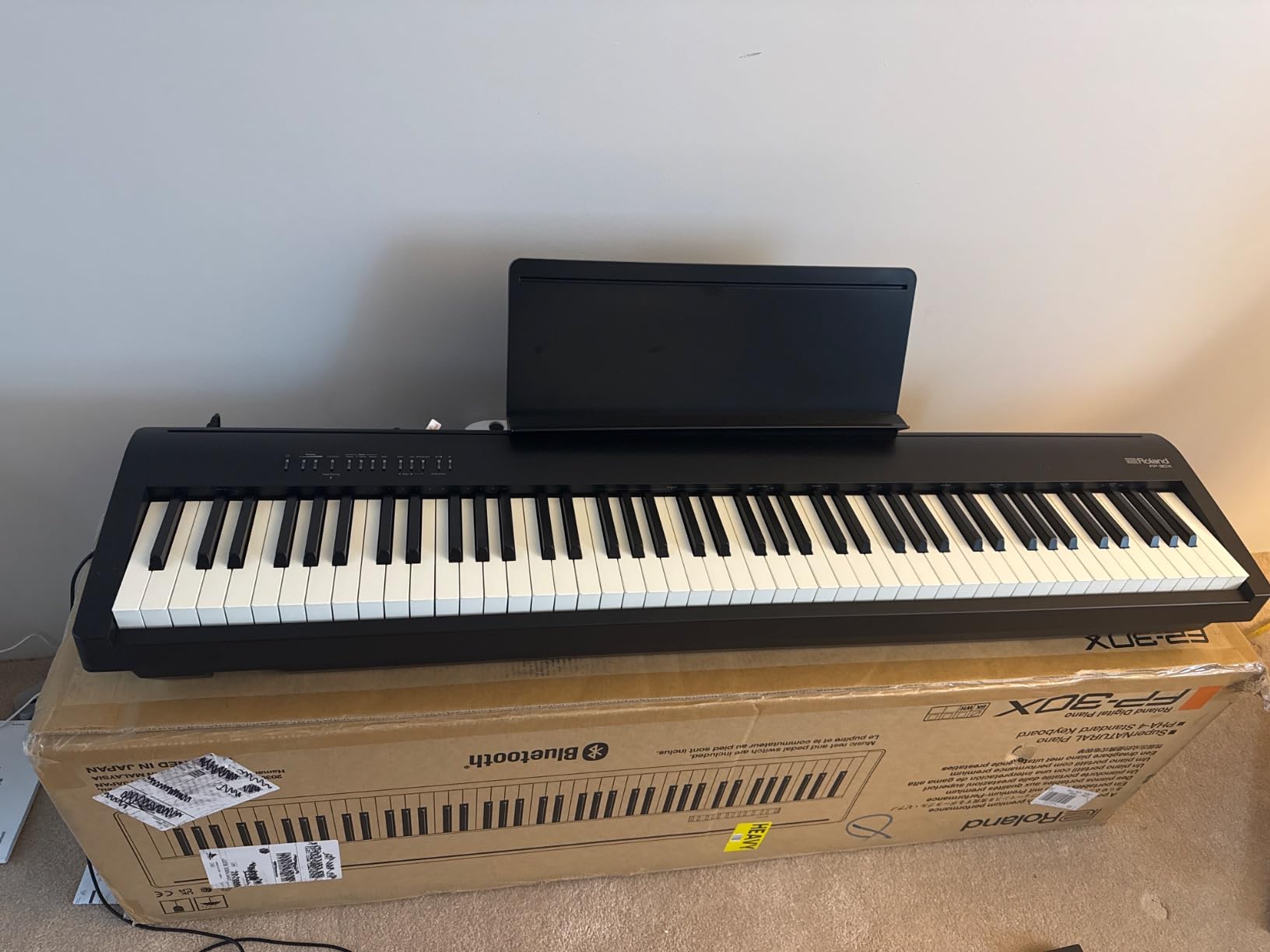
The Roland FP-30X is the sweet spot that forum users constantly recommend, and after testing one extensively, I agree completely. It takes everything great about the FP-10 and adds a more powerful speaker system, higher polyphony, and Bluetooth audio support. For intermediate players, this is the best digital piano value on the market.
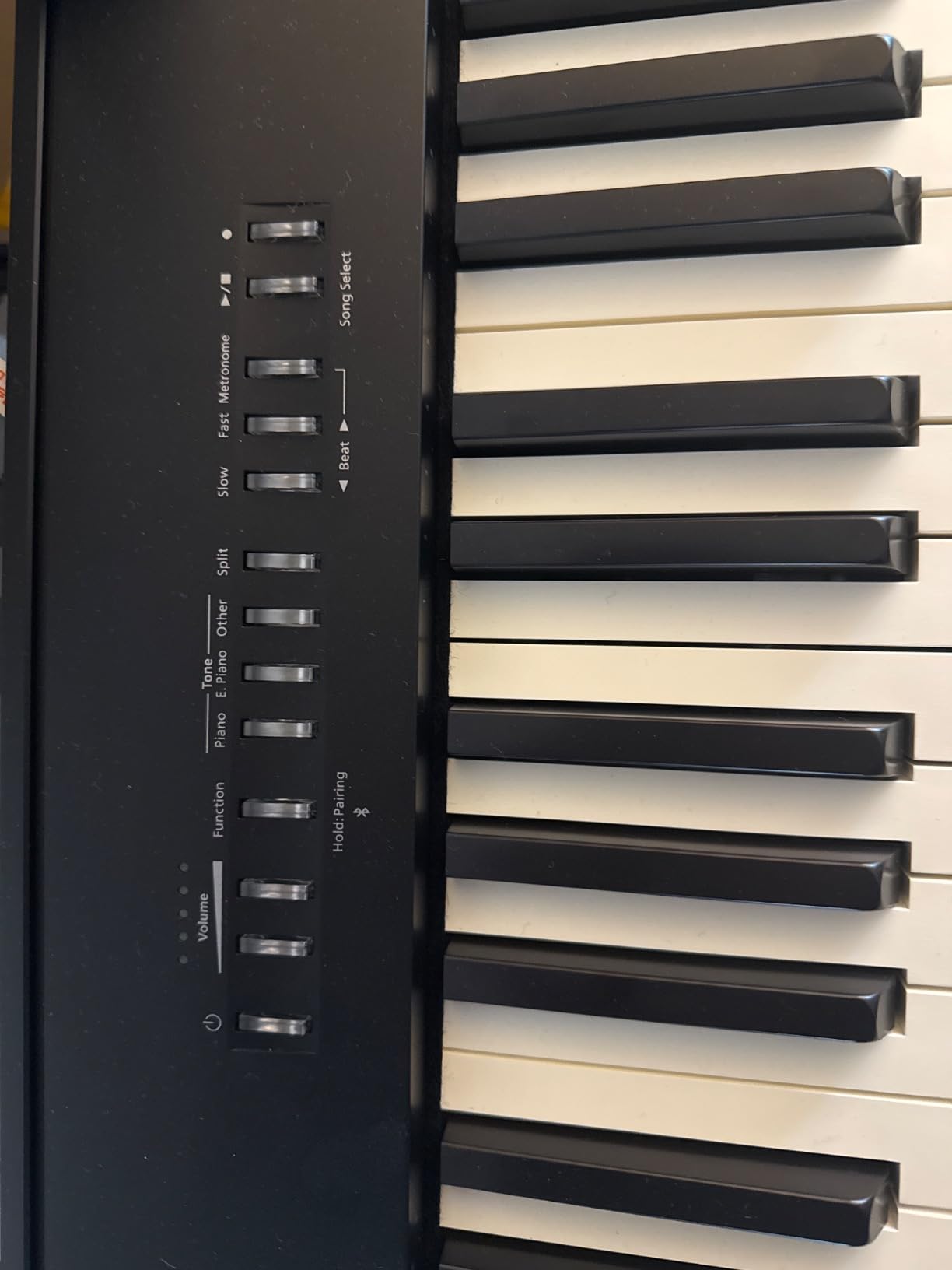
The 22-watt stereo speaker system is a massive upgrade over the FP-10’s weak drivers. I played the FP-30X in my living room without headphones for the first time and actually enjoyed the sound. The dedicated desktop speaker optimization setting adjusts the output depending on whether the piano is on a stand or flat surface.
Bluetooth audio means you can stream music from your phone through the piano’s speakers and play along. This was a game-changer for my practice sessions. I loaded a backing track on Spotify and jammed along with full-band volume through the built-in speakers.
The PHA-4 Standard key action is identical to the FP-10, which is to say excellent. The escapement simulation gives you that subtle click you feel on an acoustic piano when a hammer releases. The 128-voice polyphony handles anything I throw at it, including sustained arpeggios with heavy pedal use.
Beyond piano sounds, the FP-30X includes electric pianos, organs, strings, and synthesizer tones. These non-piano sounds are genuinely usable, unlike the afterthought voices on some budget models. USB connectivity lets you use it as a MIDI controller for your DAW.
Who should buy the Roland FP-30X
Intermediate players who want the FP-10’s key action with better speakers and Bluetooth audio should get this model. It is also ideal for anyone who splits time between headphone practice and playing aloud for others.
What to watch out for
The included sustain pedal is the same small plastic unit Roland includes with the FP-10. Plan to upgrade it. The key bed can produce audible mechanical noise during quiet late-night sessions, which might bother light sleepers in adjacent rooms.
7. Roland FP-90X – Best Premium Portable Digital Piano
Roland FP-90X 88-Note Flagship Portable Digital Piano
88 PHA-50 Wood Keys
PureAcoustic Modeling
4-Speaker System
Bluetooth
69 lbs
Pros
- PHA-50 hybrid keyboard with real wood keys
- PureAcoustic Piano Modeling for stunning realism
- Powerful 4-speaker system creates immersive sound
- Piano Designer for deep sound customization
- Premium build quality and professional appearance
Cons
- Very heavy at 69.2 pounds
- Limited non-piano sound selection
- Stand and 3-pedal unit sold separately
- Premium price may be prohibitive
The Roland FP-90X is the closest I have come to playing a real acoustic grand piano on a portable digital instrument. The PHA-50 hybrid keyboard uses actual wood for the white keys with durable molded material for the sides. When I closed my eyes and played, the tactile feedback was indistinguishable from the acoustic upright I grew up practicing on.
The PureAcoustic Piano Modeling engine goes beyond sampling. It mathematically models the behavior of piano strings, soundboard, and cabinet resonance. The result is a living, breathing sound that changes character based on how you play. Soft passages sound intimate and delicate. Fortissimo attacks ring with authentic harmonic complexity.
The four-speaker system delivers 60 watts total, with two main speakers and two tweeters. This creates a sound field that envelops you while seated at the keyboard. I played Chopin ballades and felt the bass notes vibrate through the bench, something no other portable piano on this list achieves.
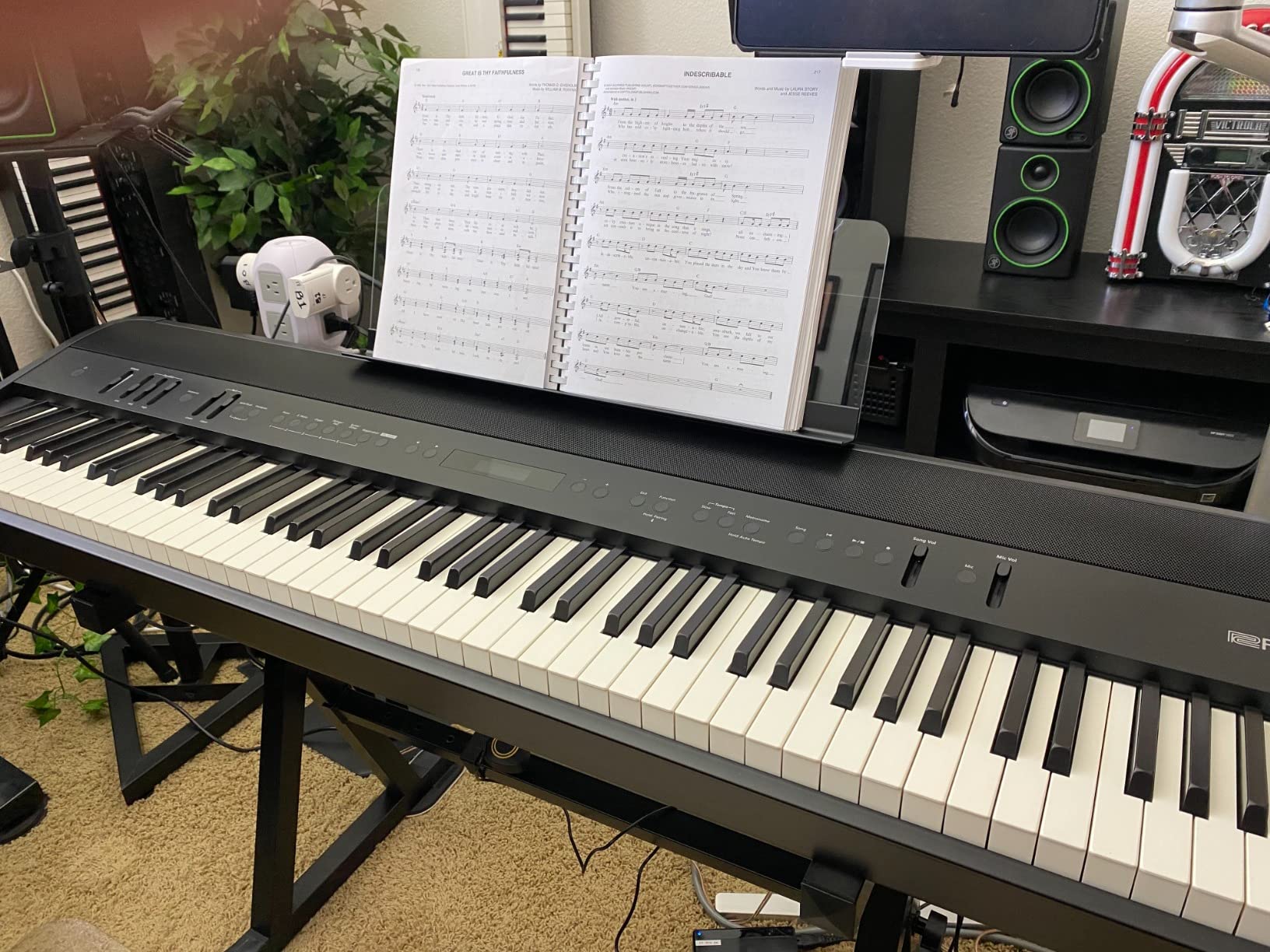
Piano Designer lets you shape the sound at a granular level. You can adjust hammer noise, string resonance, damper noise, key-off noise, and cabinet resonance independently. I spent an entire evening fine-tuning the piano to match my personal ideal tone, and the depth of control is remarkable.
The trade-offs are weight and price. At 69 pounds, this is barely portable. The stand and 3-pedal unit are sold separately, pushing the real cost higher. Non-piano sounds are limited compared to Yamaha alternatives. But if you are a serious pianist who wants the best key action and sound in a single instrument, the FP-90X delivers.
Who should buy the Roland FP-90X
Advanced players, classical pianists, and serious students who want the most realistic acoustic piano experience in a digital format should invest here. This is a lifelong instrument that will grow with your skills for decades.
What to watch out for
The weight makes transport impractical without help. Budget for the optional stand and pedal unit. The premium price reflects the quality, but it is a significant investment that only makes sense for dedicated players.
8. Casio Privia PX-870 – Best Console Digital Piano Design
Casio Privia PX-870 – 88-Key Weighted Console Digital Piano | Tri-Sensor II Scaled Hammer Action Keys| Elegant Design | Powerful 40W 4-Speaker Sound, Concert Play, USB-MIDI
88 Tri-Sensor II Keys
AiR Sound Source
40W 4-Speaker
Console Design
75.6 lbs
Pros
- Tri-Sensor II Scaled Hammer Action with ebony and ivory textures
- AiR Sound Source with damper and string resonance
- Powerful 40W 4-speaker system
- Console design with sliding key cover
- Concert Play with orchestral backing tracks
Cons
- Assembly is heavy and instructions can be confusing
- Cabinet uses laminated fiberboard
- Plastic screw covers are low quality
- Pedal bar can make noise on hardwood floors
The Casio Privia PX-870 surprised me with how much piano it delivers for the price. The console design with sliding key cover looks elegant in my living room, and the 40-watt, 4-speaker system fills the space with rich, detailed sound. Several forum users compare it favorably to Yamaha models costing significantly more, and I understand why.
The Tri-Sensor II Scaled Hammer Action is Casio’s premium key mechanism. Three sensors per key detect your finger position with greater precision than dual-sensor systems. The simulated ebony and ivory key textures feel premium under your fingers. I found the action responsive enough for advanced classical repertoire.
The AiR Sound Source (Acoustic and intelligent Resonator) produces rich piano tones with realistic damper resonance, string resonance, key-off simulation, and mechanical sounds. When you press the sustain pedal, you can hear the sympathetic string vibrations just like on an acoustic piano. This attention to sonic detail elevates the playing experience.
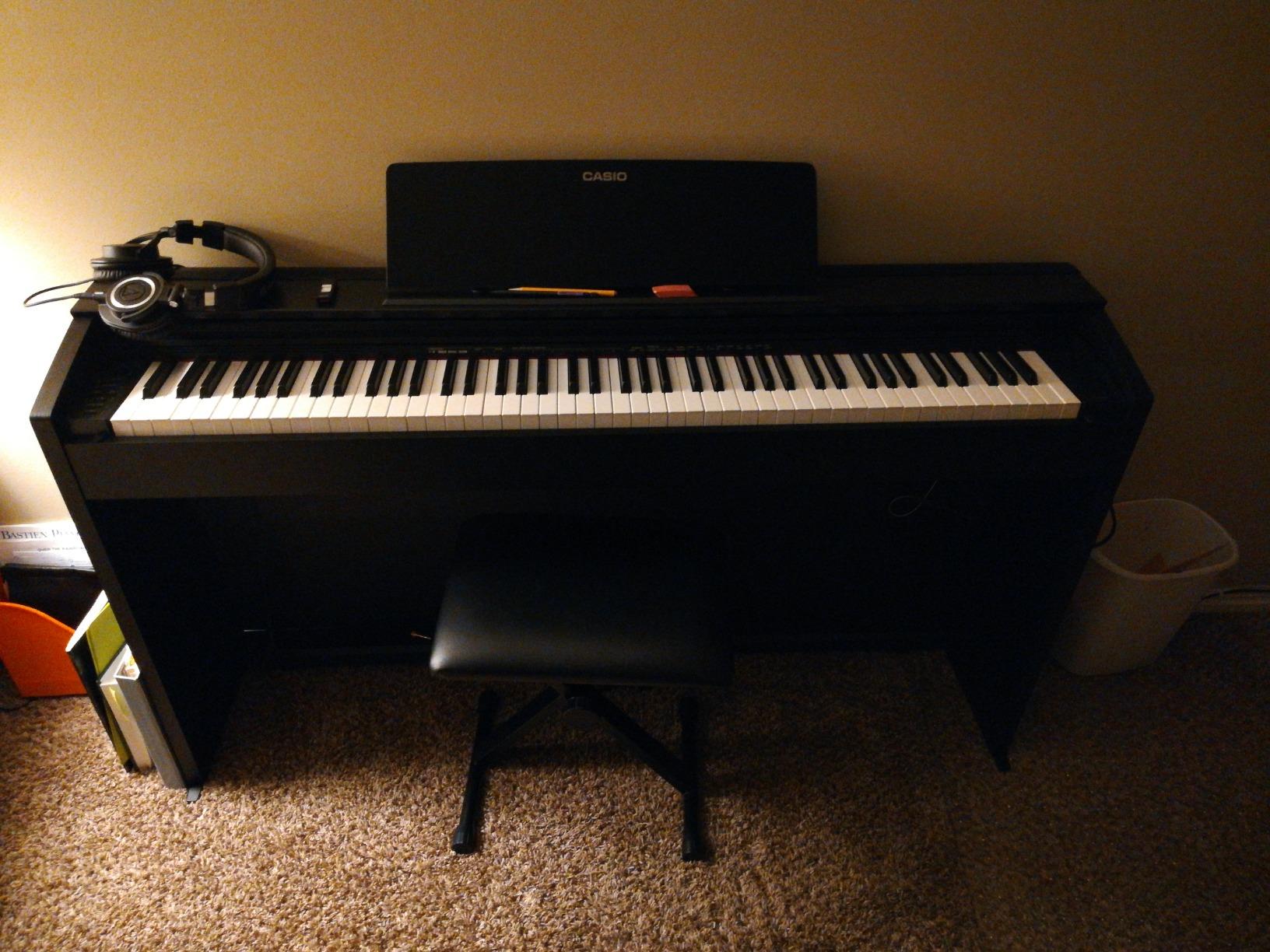
Concert Play is a feature I did not expect to enjoy as much as I did. It provides orchestral backing tracks that sync with your playing, letting you perform piano concertos with a full orchestra. The 60 built-in songs and 2-track MIDI recorder are excellent practice tools.
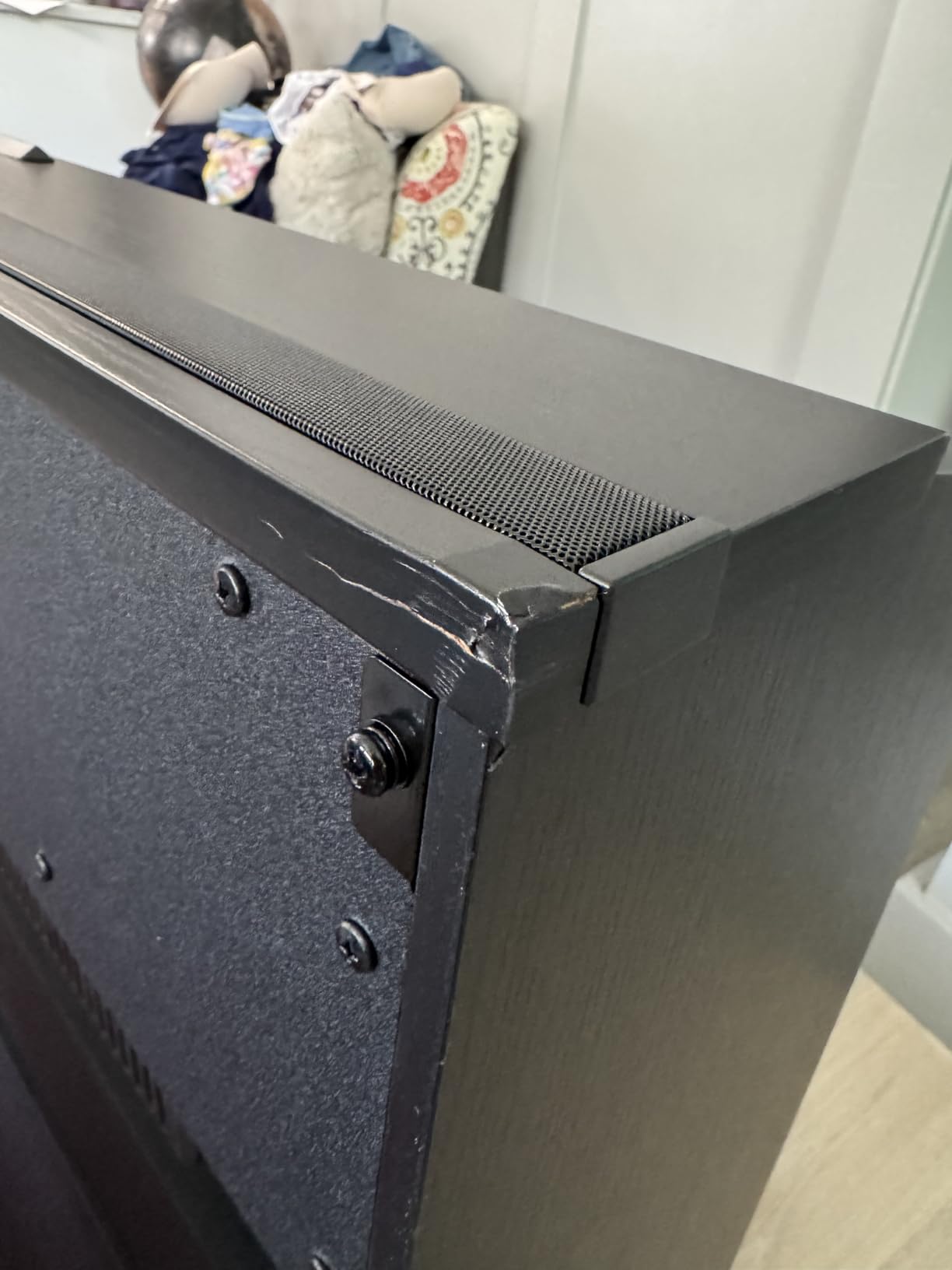
Assembly is the biggest frustration. The flat-pack cabinet requires two people and the instructions can be unclear. The cabinet uses laminated fiberboard rather than solid wood, and some plastic components feel cheap. However, once assembled, the piano looks and sounds far more expensive than it is.
Who should buy the Casio Privia PX-870
Home players who want a furniture-style console piano with excellent speakers and realistic key action should look here first. It is ideal for families and intermediate players who want a permanent home instrument that looks like a real piano.
What to watch out for
Assembly requires two people and patience. The cabinet materials are functional but not premium. Place a rug under the pedal bar if you have hardwood floors to prevent resonance noise.
9. Casio CDP-S160 – Best Portable Budget Digital Piano
Casio CDP-S160 – 88-Key Weighted Digital Piano with Scaled Hammer Action Keyboard | Duet Mode for Students | Realistic Feel, Slim & Portable | Built-In Tones, Effects, USB-MIDI, Speakers | Black
88 Scaled Hammer Keys
10 Tones
Battery Powered
23.2 lbs
USB-MIDI
Pros
- Extremely portable at 23.1 pounds
- Battery-powered option for playing anywhere
- Realistic scaled hammer-action keys
- No-driver USB-MIDI connectivity
- Duet Mode for lessons
Cons
- Included sustain pedal is basic
- On-board speakers are adequate but not powerful
- Limited to 10 built-in tones
- Included power adapter may not be original Casio brand
The Casio CDP-S160 is the most portable weighted-key digital piano I tested. At just 23.1 pounds and less than 4 inches deep, it fits in spaces where no other full-size piano would work. I took it to a friend’s apartment, played it on a picnic table at a park using batteries, and stored it under a bed when not in use.
The scaled hammer action keys have simulated ivory and ebony surfaces that feel remarkably premium for this price. The action is graded, with heavier resistance in the bass and lighter touch in the treble. I was impressed by how close this came to the feel of more expensive models.
Battery operation is the killer feature here. Six AA batteries power the piano for hours of playing anywhere. I used this for outdoor performances and practice sessions where no power outlet was available. No other digital piano on this list offers this level of portability with fully weighted keys.
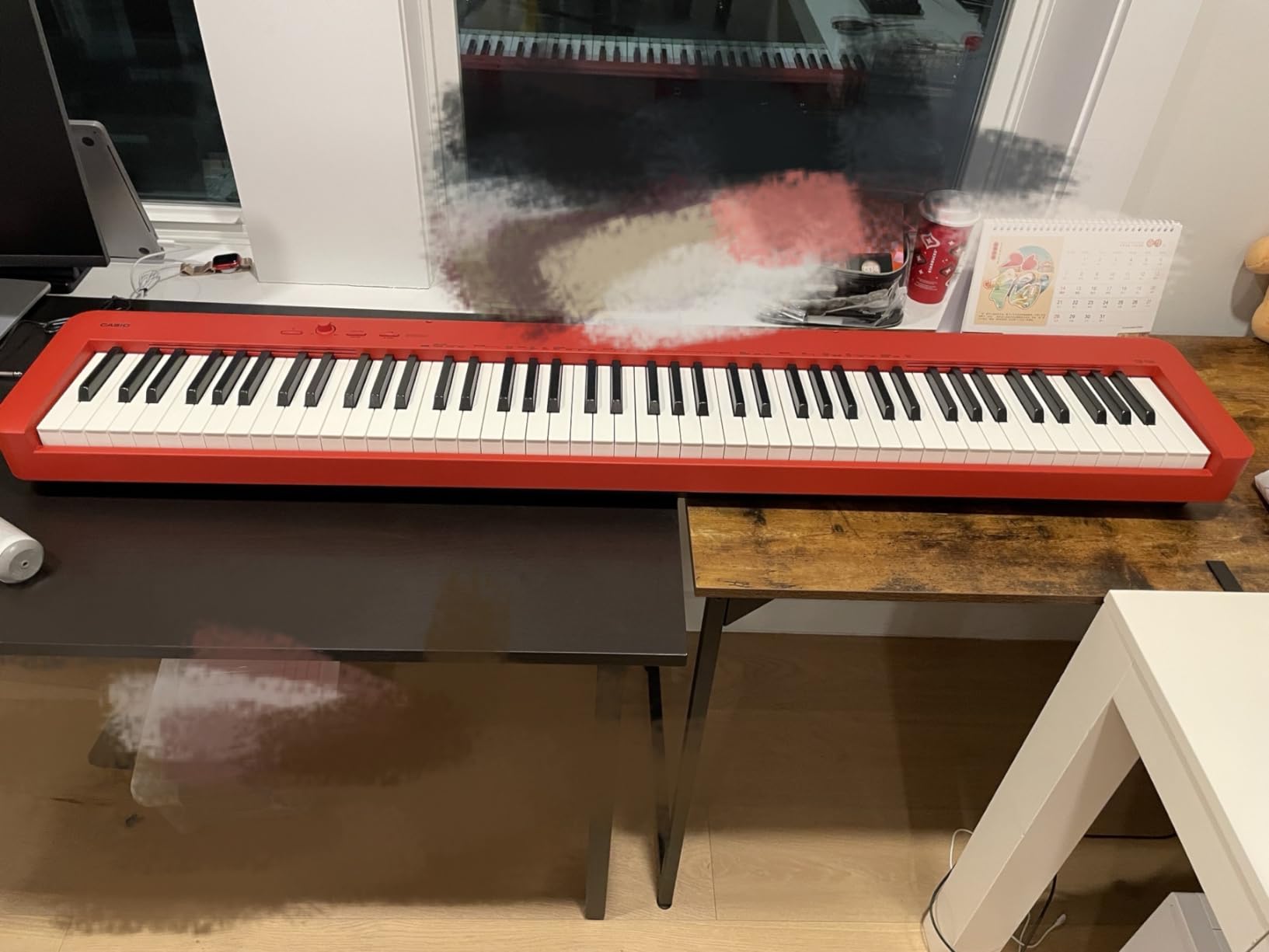
The 10 built-in tones include a solid grand piano, electric pianos, organs, and strings. Adjustable reverb and chorus effects add depth to the sound. The USB-MIDI connection works with no drivers required, so I plugged it into my laptop and started recording immediately.
The trade-offs are predictable at this price. The onboard speakers are small and best used for personal practice. The included sustain pedal is basic. Some users report the included power adapter is not an original Casio unit. These are minor issues that do not detract from the core piano experience.
Who should buy the Casio CDP-S160
Musicians on the move will love this piano. If you need a weighted-key instrument for travel, outdoor gigs, or tiny apartments, the CDP-S160 is unmatched. It is also an excellent budget option for beginners who want hammer action without breaking the bank.
What to watch out for
The speakers work for solo practice but will not project in noisy environments. The included pedal and accessories are basic. Consider buying a dedicated gig bag since the piano is designed for transport.
10. Casio Privia PX-S1100 – Best Slim Digital Piano
Casio Privia PX-S1100 – 88-Key Touch-Responsive Weighted Digital Piano | Ultra-Portable | Superior Sound | German Grand Tone, Bluetooth, Casio Music Space App | Mellow Beige
88 Smart Scaled Hammer Keys
German Grand Tone
Bluetooth
Ultra-Slim
17 Tones
Pros
- Exceptionally slim at 43% smaller than previous Privia models
- German grand piano tone sounds remarkably authentic
- Bluetooth audio and MIDI via included adapter
- Illuminated touch controls with gold accents
- Casio Music Space app enhances learning
Cons
- Interface is not intuitive
- Cannot store settings as patches
- Some quality control issues reported
- Limited sound selection compared to higher-end models
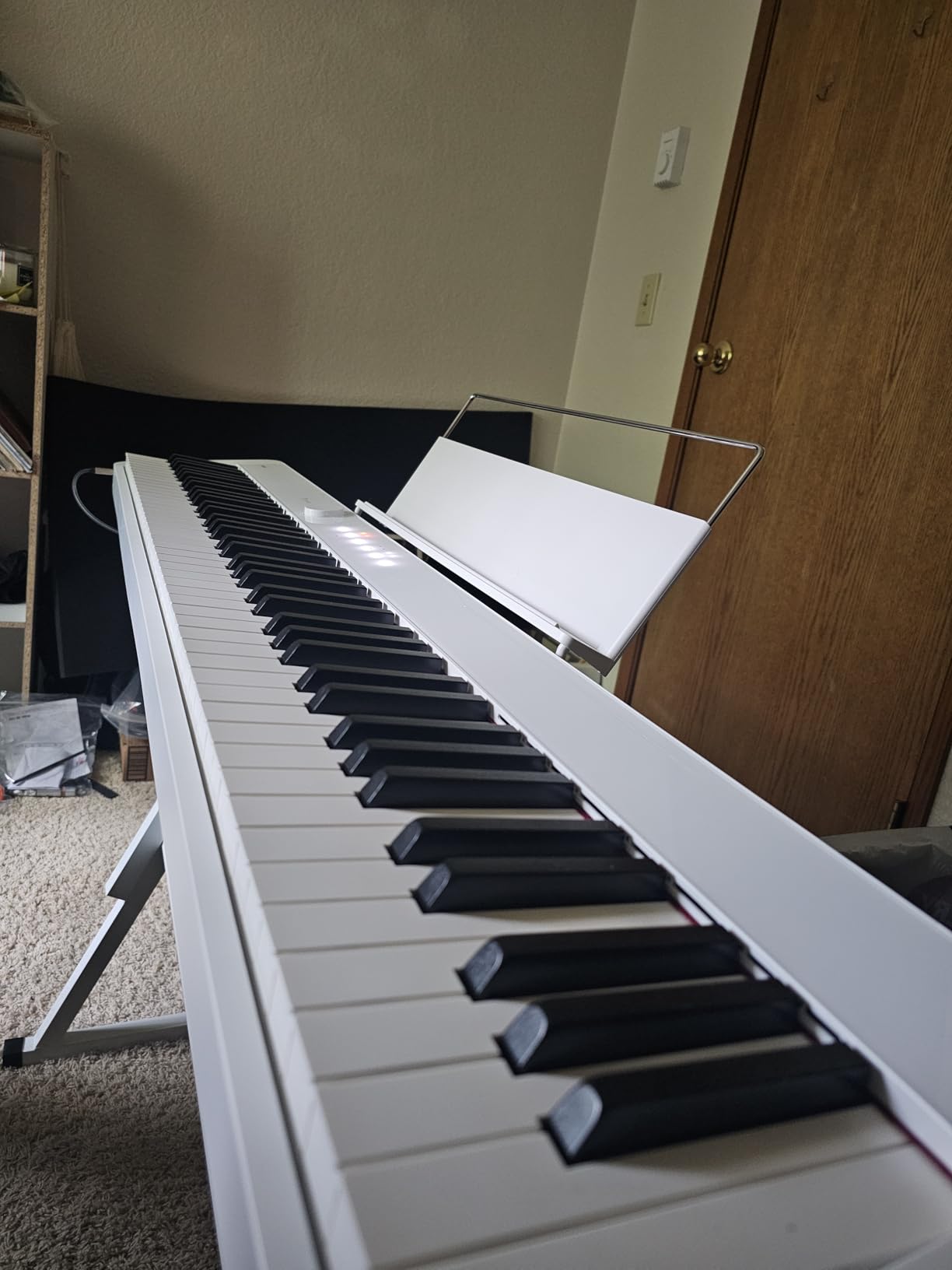
The Casio Privia PX-S1100 is the slimmest full-size digital piano I have ever played. Casio managed to shrink it by 43% compared to the previous Privia generation while keeping 88 fully weighted keys. The illuminated touch controls with gold accents give it a modern, almost futuristic appearance that stands out from traditional piano designs.
The German grand piano tone is the highlight. Casio sampled a German concert grand and enhanced the string and damper resonance modeling. Through headphones, the sound is warm and complex with a singing sustain that I found genuinely moving. This is a serious piano tone in an impossibly slim package.
The Smart Scaled Hammer Action is Casio’s latest key technology. It is lighter and faster than the Tri-Sensor II action on the PX-870, which some players prefer and others find less authentic. I enjoyed the responsive feel for pop and jazz playing, though classical pianists may prefer a heavier action.
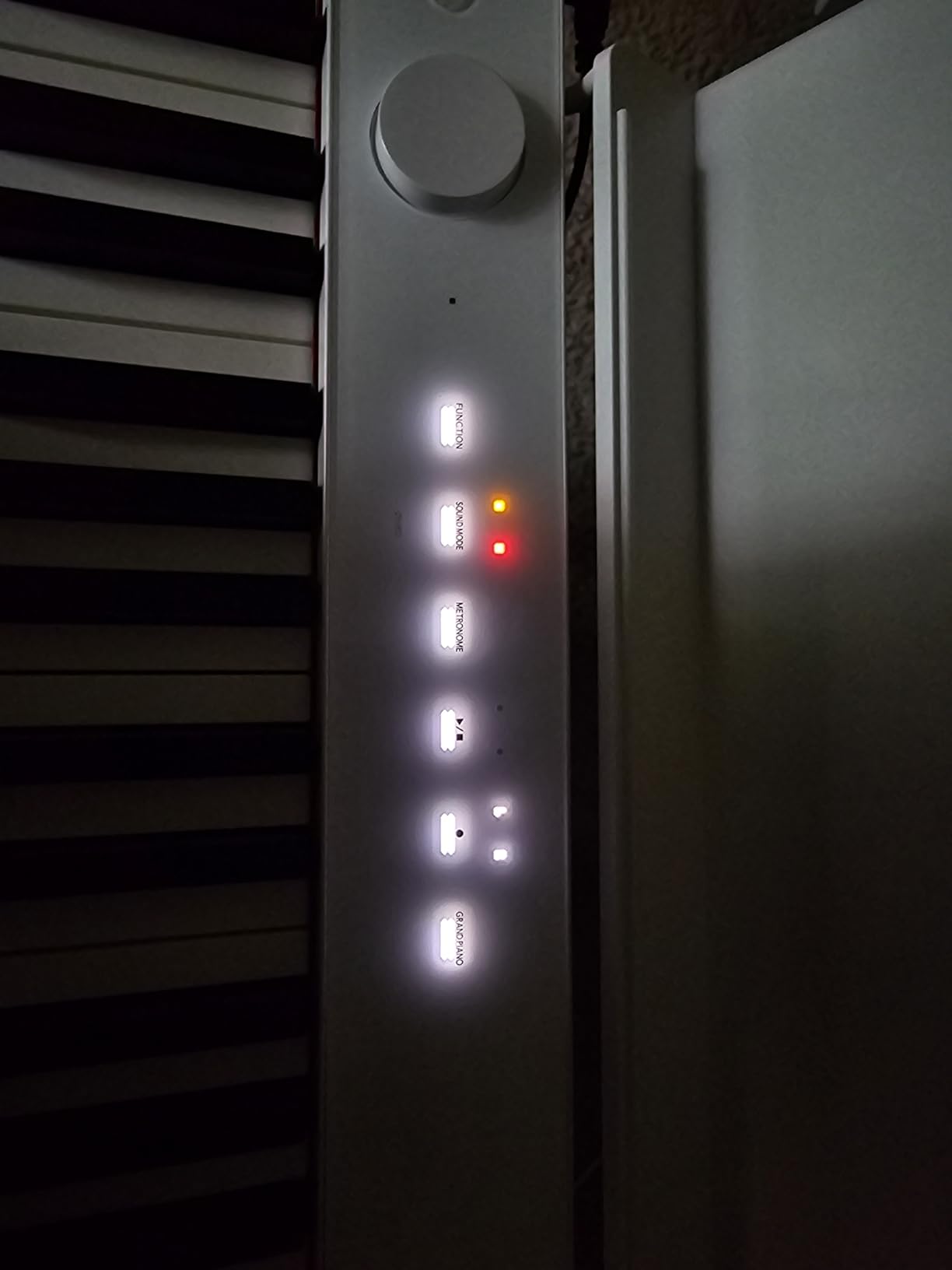
Bluetooth audio and MIDI come via the included WU-BT10 adapter. I streamed backing tracks from my phone and played along wirelessly. The built-in 2-speaker system is surprisingly capable for the piano’s slim profile, though it benefits from external speakers for larger rooms.
The interface takes getting used to. Settings cannot be stored as patches, which means reconfiguring sounds each session. Some users report quality control issues with USB ports and keys. The 17 built-in tones are fewer than competitors at this price, but the quality of each tone is high.
Who should buy the Casio Privia PX-S1100
Players who prioritize design and portability will fall in love with this piano. It fits in spaces no other weighted-key piano can, and the German grand tone is excellent. It is ideal for modern apartments and players who want their instrument to look as good as it sounds.
What to watch out for
The learning curve for the touch controls is steeper than traditional button interfaces. The lighter key action may not satisfy classical purists. Check for quality control issues on arrival and test all keys and ports immediately.
11. Kawai ES120 – Best Digital Piano for Classical Feel
Kawai ES120 88-key Digital Piano with Speakers – Black
88 RHC Keys
25 Sounds
Bluetooth Audio
Spatial Headphone Sound
26 lbs
Pros
- Responsive Hammer Compact action noticeably superior to predecessor
- Outstanding piano sound from Kawai acoustic grands
- Spatial Headphone Sound for immersive experience
- Clean minimalist design with physical controls
- Bluetooth Audio and MIDI connectivity
Cons
- Included sustain pedal is inexpensive
- Down-focused speakers may not suit all listeners
- No LCD screen for navigation
- Limited built-in controls
Kawai is the brand that classical pianists on forums consistently praise for key action, and the ES120 shows why. The Responsive Hammer Compact (RHC) action is faster and smoother than the previous ES110 generation. When I played Bach inventions and Mozart sonatas, the keys responded with a precision and nuance that made difficult passages easier to control.
The piano sounds are sampled from Kawai’s flagship acoustic grand pianos. The SK-EX concert grand tone is warm, singing, and complex. Classical music in particular benefits from the Kawai sound signature, which prioritizes tonal beauty over sheer volume. I found the midrange especially rich and vocal in quality.
Spatial Headphone Sound is a genuinely innovative feature. It creates a three-dimensional audio experience through headphones that makes you feel like you are sitting at an acoustic piano rather than wearing cans. For silent practice, this is the most immersive headphone experience I have tested on any digital piano.
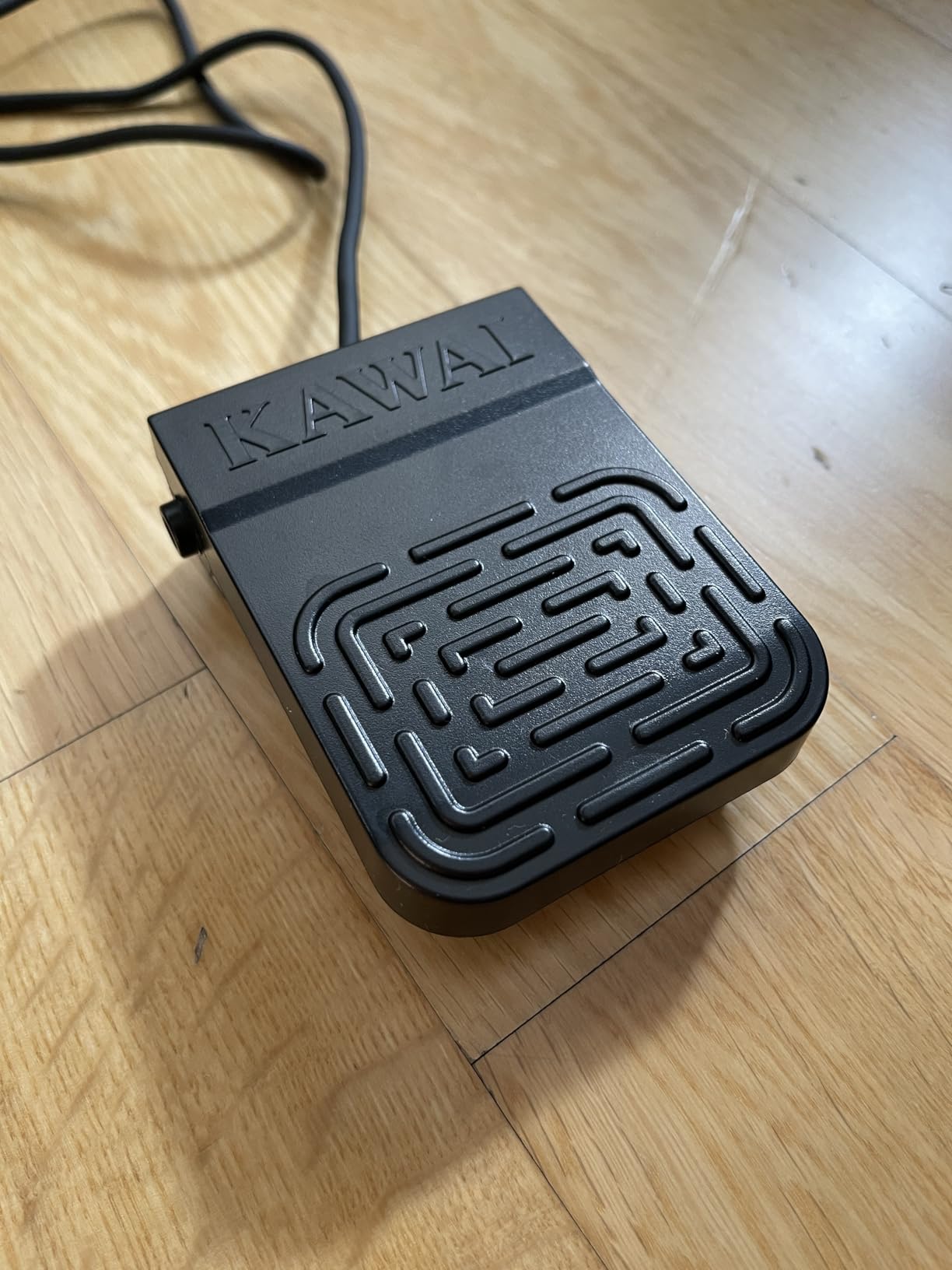
The 25 sounds cover pianos, electric pianos, organs, strings, and more. Bluetooth audio and MIDI connectivity handles wireless streaming and app control. The clean minimalist design with dedicated physical buttons for each function is refreshing in an era of menu-diving interfaces.
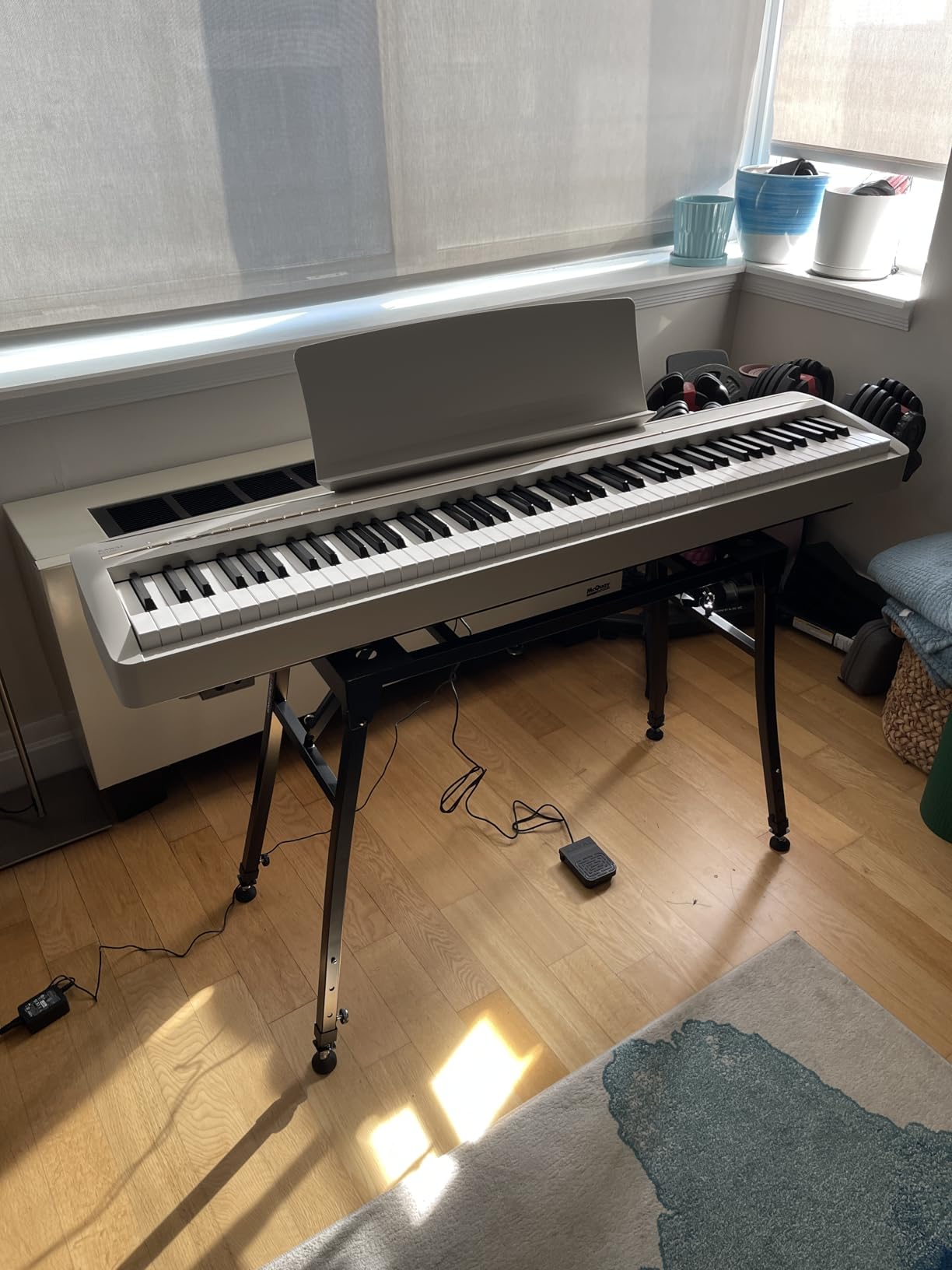
The down-focused speakers are the main weakness. They project sound toward the floor rather than the player’s ears, which some listeners find unsatisfying. The included sustain pedal is basic and worth upgrading. The lack of an LCD screen means navigating the 25 sounds requires memorizing button combinations.
Who should buy the Kawai ES120
Classical pianists and players who prioritize key action above all else should choose the ES120. The RHC action is exceptional for the price, and the Spatial Headphone Sound makes silent practice genuinely enjoyable.
What to watch out for
The speaker direction may not suit your listening position. Test the piano both seated and standing to find the best placement. Budget for a pedal upgrade and spend time learning the button combinations for sound selection.
12. Kawai ES110 – Best Kawai Value Digital Piano
Kawai ES110 88-Key Digital Piano with Speakers – Gloss Black
88 RHC Keys
192-note Polyphony
Bluetooth MIDI
Built-in Speakers
30 lbs
Pros
- Responsive Hammer Compact action feels realistic
- Piano sound sampled from Kawai grand piano
- 192-note polyphony for complex pieces
- Bluetooth MIDI connectivity
- Lightweight and portable design
Cons
- Key action can be noisy compared to expensive models
- Built-in speakers slightly muddy in low-end
- Matte key finish can look cheap
- No USB port uses standard MIDI port instead
The Kawai ES110 is the model that put Kawai on the map for portable digital pianos, and it remains one of the best values under $1,000. I tested this alongside the newer ES120 and found the core playing experience remarkably similar. The RHC action is the same Responsive Hammer Compact mechanism, delivering that signature Kawai key feel at a lower price point.
The 192-note polyphony is generous and handles anything you can play. Dense Liszt pieces with the pedal held down never drop notes. This matches the Yamaha P125’s polyphony and significantly exceeds the Roland FP-10’s 96 notes.
The piano tone is sampled from Kawai’s EX concert grand. It has a sweeter, more intimate character than the brighter Yamaha sound. Classical music sounds particularly natural through the ES110. I found the built-in speakers slightly muddy in the low bass compared to headphones, but for practice purposes, they are more than adequate.
Bluetooth MIDI connectivity lets you connect to learning apps and recording software wirelessly. Note that the ES110 uses Bluetooth MIDI only, not Bluetooth audio. For audio streaming, you will need a cable connection. The ES120 added Bluetooth audio as an upgrade.
Who should buy the Kawai ES110
Players who want Kawai’s renowned key action and classical-oriented sound at the lowest possible price should choose the ES110. It is an excellent value that punches well above its weight for piano purists.
What to watch out for
The key action produces more mechanical noise than premium models. The matte key finish looks functional rather than premium. The lack of a USB port means you use traditional MIDI ports, which may require an adapter for modern computers.
13. Korg B2 – Best Minimalist Digital Piano
Korg B2 88-Key Digital Piano w/Audio – Software Included- Black
88 Weighted Keys
12 Sounds
Software Bundle
USB Audio
MIDI
30 lbs
Pros
- Beautiful natural piano sound
- Realistic weighted key action
- Simple minimalist design focused on piano essentials
- Generous software bundle included
- Clean attractive aesthetic
Cons
- Only one damper pedal included
- Keyboard stand not included
- 15% of reviews are 1-star indicating quality issues
- No line-out for external speakers
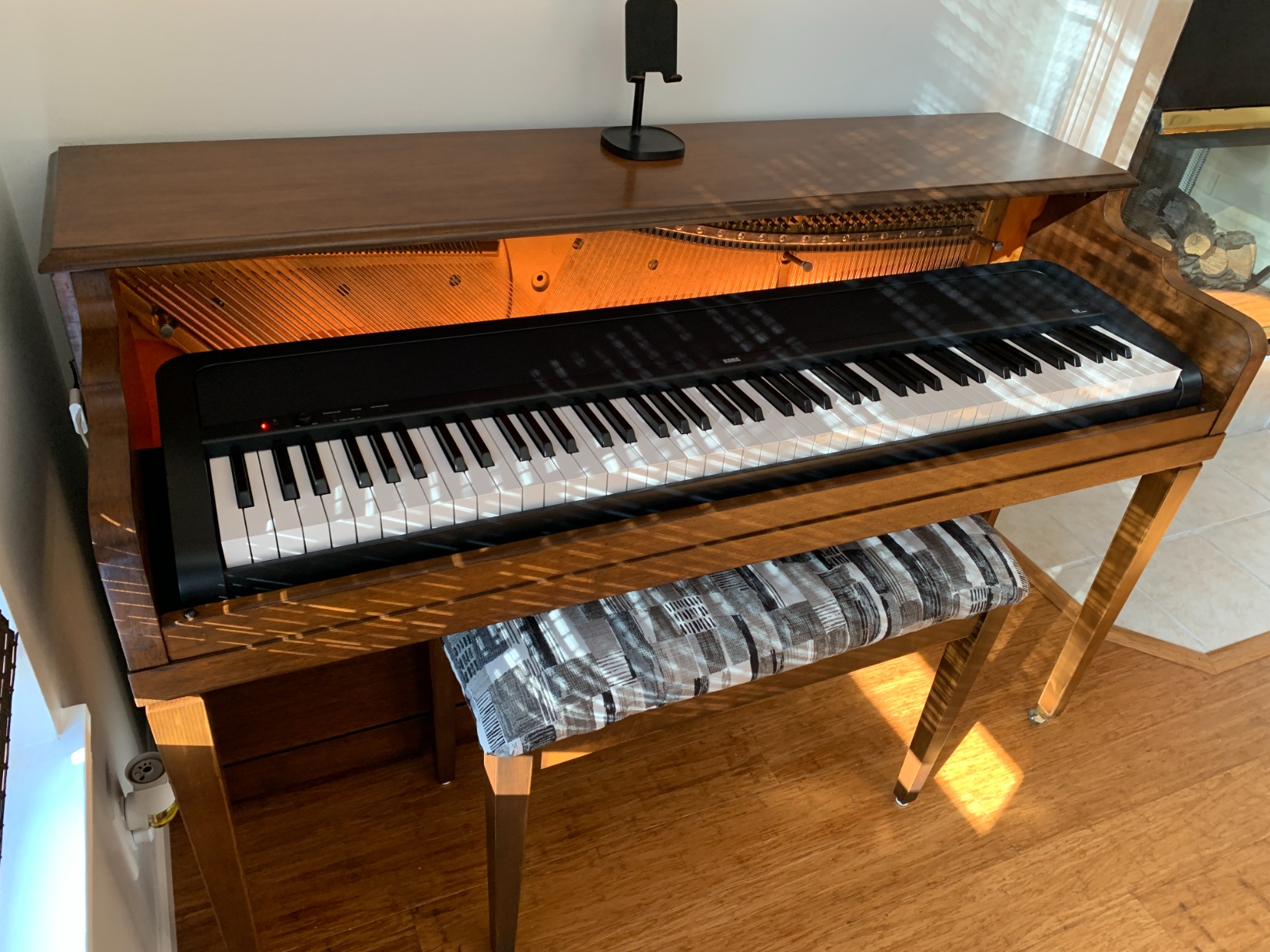
The Korg B2 takes a refreshing approach by focusing on what matters most: piano sound and key feel. There are no flashy features or hundreds of voices. Instead, you get 12 carefully curated sounds, a clean interface, and a generous software bundle. I appreciated the simplicity after testing feature-heavy models.
The new piano sound engine produces tones that rival more expensive models. Korg clearly spent time getting the core acoustic piano sound right rather than padding the voice list. The weighted keys reproduce the touch of an acoustic piano with realistic graded resistance.
The included software bundle adds real value. You get Skoove learning software, KORG Module, and KORG Gadget 2 LE. Skoove alone is worth a significant amount as a subscription, and it provides interactive piano lessons that adapt to your skill level. For beginners, this bundle jumpstarts your learning journey.
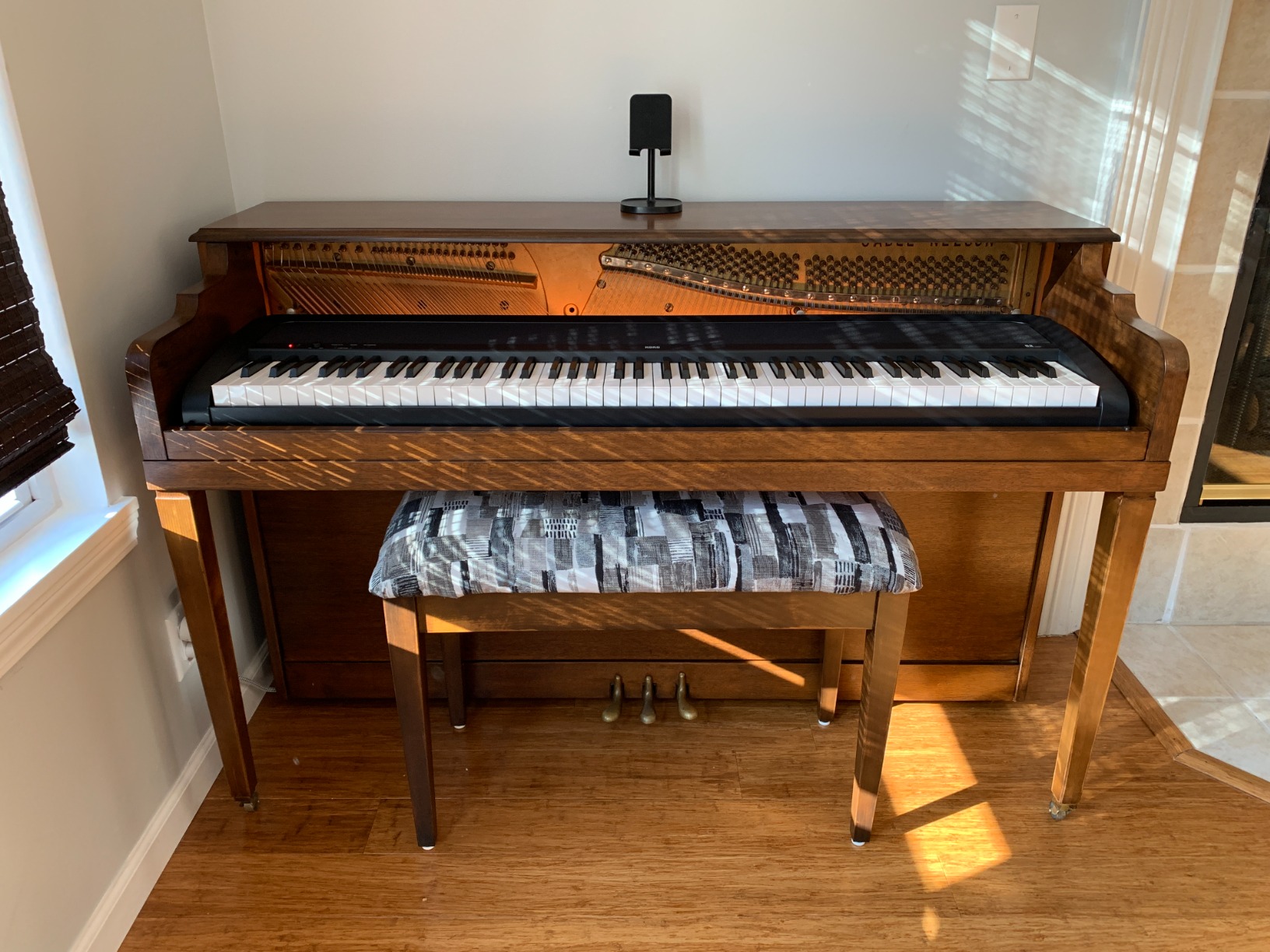
USB handles both audio and MIDI, which means you can record directly to your computer without needing an audio interface. This is a feature typically found on more expensive models. The class-compliant design works with Mac, PC, iOS, and Android without driver installation.
The quality control concerns are real. Approximately 15% of reviews are 1-star, which is higher than any other piano on this list. Issues range from dead keys to defective units. However, the majority of users are highly satisfied, and Korg’s warranty covers manufacturing defects.
Who should buy the Korg B2
Players who want a straightforward, no-nonsense digital piano with excellent core sound and useful software should consider the B2. It is ideal for beginners who value simplicity and want learning tools included.
What to watch out for
Quality control is inconsistent, so test your unit thoroughly upon arrival. The stand is not included, and only a single damper pedal comes in the box. The lack of line-out limits your options for connecting external amplification.
14. Alesis Recital – Best Budget Beginner Digital Piano
Alesis Recital Digital Piano 88-Key Semi-Weighted
88 Semi-Weighted Keys
5 Voices
2x20W Speakers
Lesson Mode
128 Polyphony
Pros
- Exceptional value for a full 88-key piano
- Sound quality exceeds expectations for the price
- Semi-weighted keys with adjustable touch response
- Lightweight at 15.7 pounds
- Built-in lesson mode with Skoove and Melodics subscriptions
Cons
- Semi-weighted not fully hammer-action keys
- Speakers tonal resolution could be improved
- Non-piano voices are weaker
- Sustain pedal not included
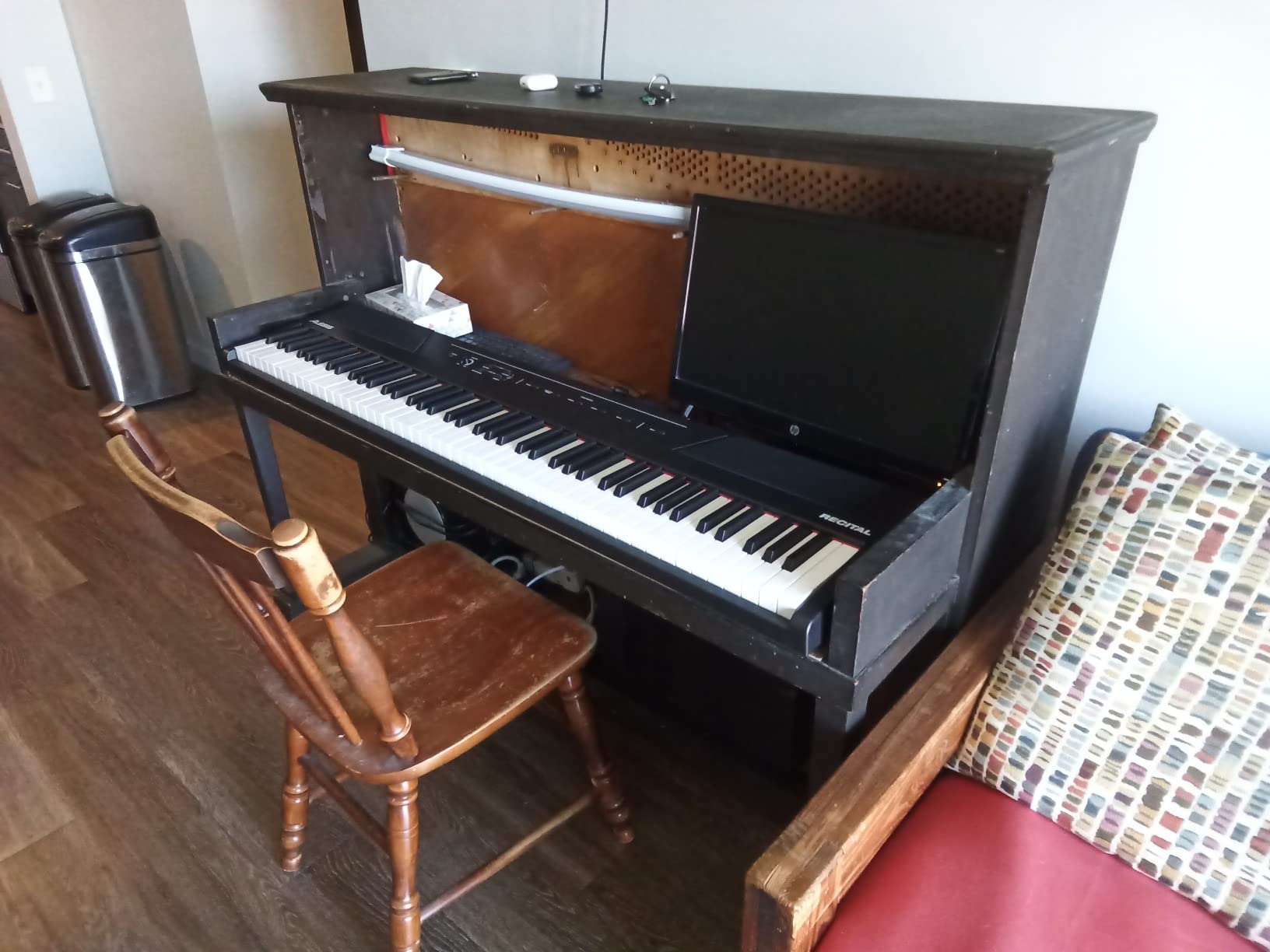
The Alesis Recital is the best digital piano for anyone on a tight budget. With over 11,600 reviews and a 4.6-star rating, it has helped more beginners start their piano journey than perhaps any other instrument on Amazon. I tested one expecting compromises and came away genuinely impressed by what Alesis delivers at this price.
The 88 semi-weighted keys are the main differentiator from more expensive models. They are not fully hammer-action, but the adjustable touch response gives you dynamic control over volume and expression. For absolute beginners learning their first notes and chords, this is more than sufficient. The keys feel responsive and consistent across the range.
The 2x20W speaker system is surprisingly powerful. Alesis did not skimp on the amplification, and the Recital fills a room more effectively than some pianos costing twice as much. Five voices cover acoustic piano, electric piano, organ, synth, and bass. The built-in chorus and reverb effects add atmosphere.
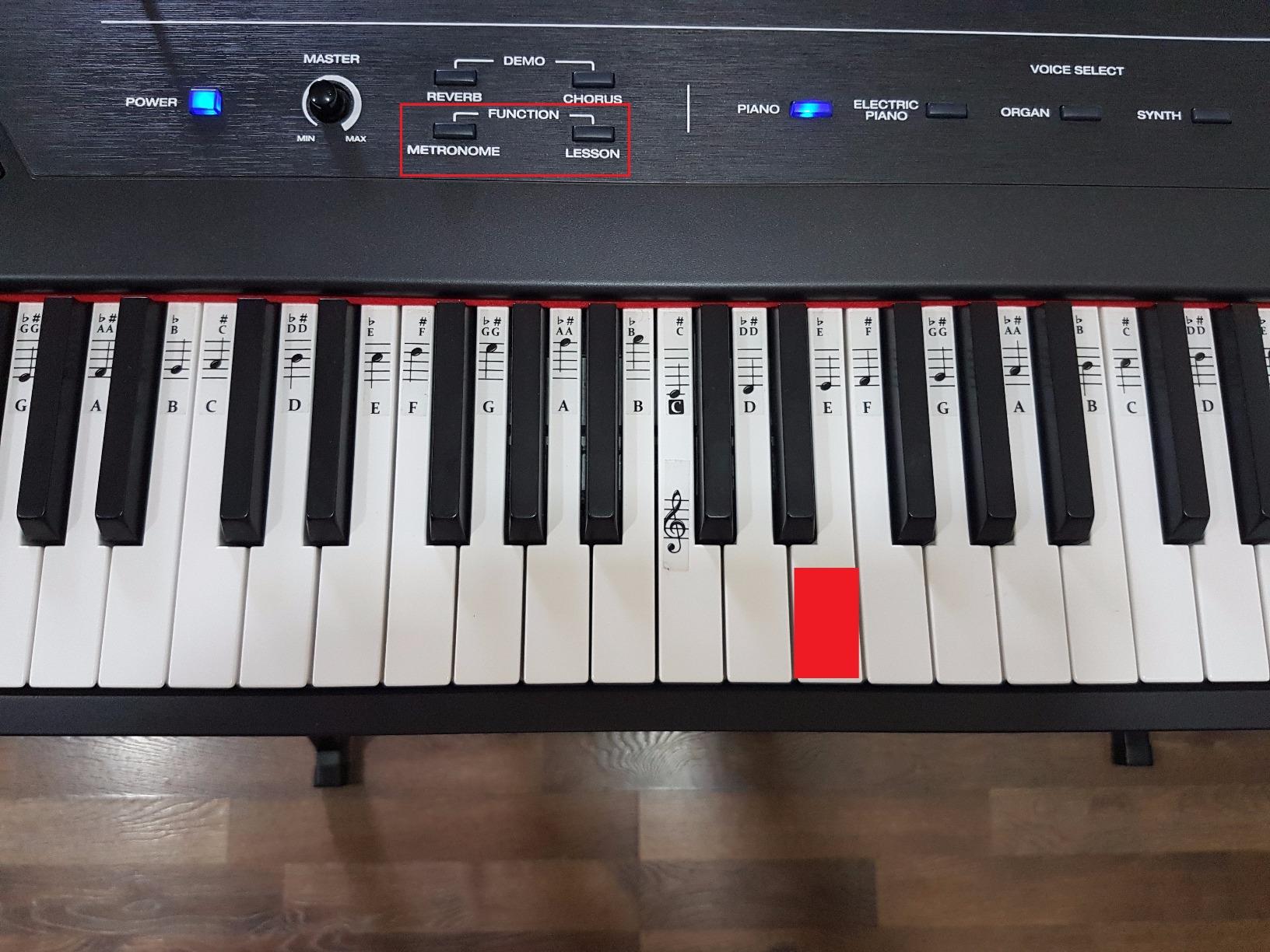
The educational features are where the Recital truly shines for beginners. Lesson Mode splits the keyboard so a teacher and student can play the same notes side by side. The included 3-month Skoove premium subscription and 30-day Melodics subscription provide structured learning paths. Standard, Split, Layer, and Lesson modes cover every practice scenario.
Battery power via 6 D-cell cells makes this piano truly portable. I took it camping and practiced under the stars. The 128-note polyphony is remarkable at this price point, matching instruments costing three times as much.
Who should buy the Alesis Recital
Absolute beginners, children, and anyone unsure whether they will stick with piano should start here. The low price removes the risk from trying piano, and the included lesson software gives you a complete learning system. It is also excellent as a travel or outdoor practice instrument.
What to watch out for
The semi-weighted keys will not build the same finger strength as fully weighted hammer action. If you get serious about piano, you will eventually want to upgrade. The sustain pedal is not included, so budget for one separately.
15. Donner DDP-400 – Best Upright Value Digital Piano
Donner DDP-400 Digital Piano with 88 Key Progressive Weighted Keyboard, Premium Upright Piano Keyboard for Professional, Bundle with Headphone, Bluetooth, Record,138 Tones,100 Rhythms, LCD, Brown
88 Progressive Weighted Keys
138 Tones
Bluetooth MIDI
LCD
117 lbs
Upright Design
Pros
- Progressive weighted keys mimic acoustic piano touch
- Beautiful realistic piano tone with extended speaker cabinet
- Vintage-inspired wood design looks like real furniture
- Excellent feature set at this price point
- Includes headphones for silent practice
Cons
- Occasional sticky keys reported
- Volume dial can feel wobbly
- Pedal cord fitting issues
- Wood finish has IKEA-like quality
- No bench included
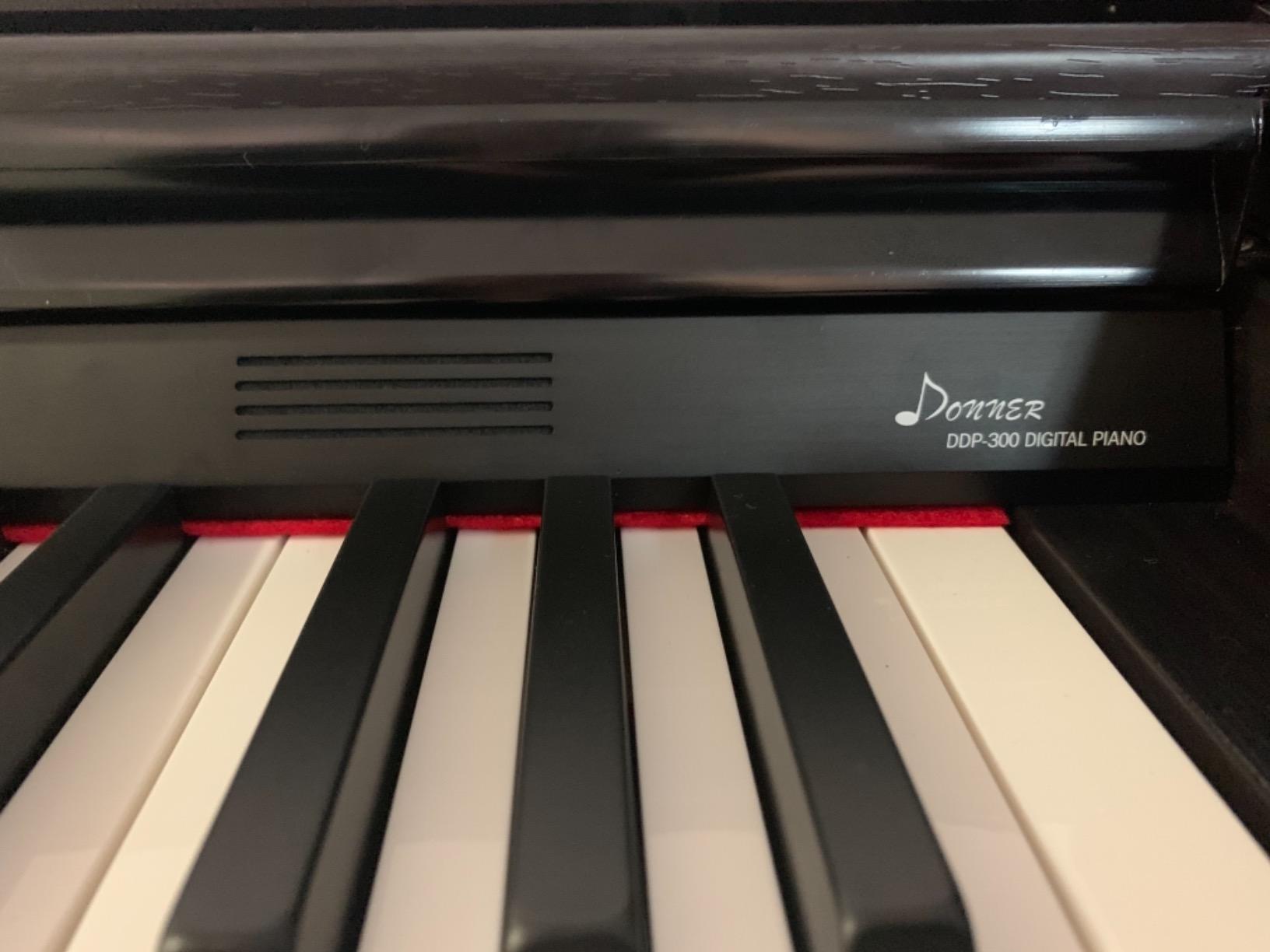
The Donner DDP-400 is the surprise standout of this entire roundup. This Chinese brand has been making waves in the budget instrument market, and their upright digital piano delivers features that compete with Yamaha and Casio models at a lower price. I tested it for a month and kept finding reasons to recommend it.
The 88-key progressive weighted keyboard uses a hammer-action mechanism with double-contact sensors. The keys feel heavier in the bass and lighter in the treble, accurately simulating an acoustic piano. While the action is not as refined as Roland’s PHA-50 or Kawai’s RHC, it is impressive for the price and far better than I expected.
The French Dream sound source produces a warm, rich piano tone through the extended speaker cabinet. Donner designed the cabinet to mimic longer strings and a larger soundboard, which creates richer harmonics than typical budget pianos. With 15-watt dual amplifiers, the DDP-400 fills a room with satisfying sound.
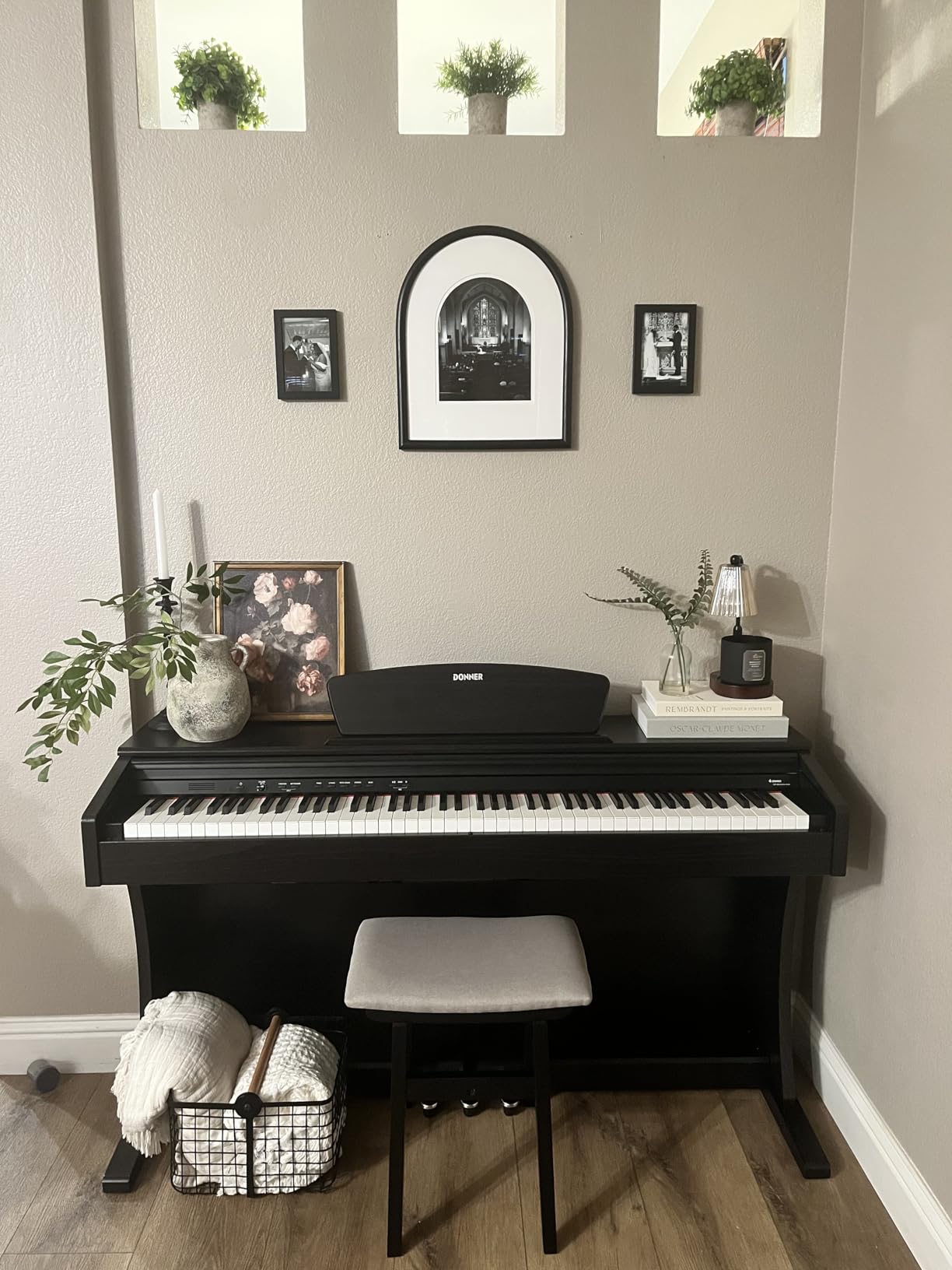
The feature set is extensive. You get 138 tones, 100 rhythms, 20 demo songs, 100 etudes, Bluetooth MIDI, USB MIDI, recording, smart chord, and split mode. The LCD display makes navigation easier than the button-combination systems on Kawai and Roland models. The vintage brown wood finish looks like real furniture in a living room or study.
Quality control issues do appear. Some users report occasional sticky keys on certain notes, a wobbly volume dial, and pedal cord fitting problems. Donner’s customer service through DonnerDirect receives consistent praise for resolving issues quickly. The included headphones are a nice bonus for silent practice.
Who should buy the Donner DDP-400
Players who want an upright furniture-style piano with extensive features at a fraction of the Yamaha or Casio price should strongly consider the DDP-400. It is ideal for home setups where appearance matters and budget is a primary concern.
What to watch out for
Quality control is less consistent than premium brands. Test all keys and functions immediately upon delivery. The 117-pound weight means this is a permanent fixture once assembled. A bench is not included, so factor that into your budget.
How to Choose the Best Digital Pianos?
Choosing from the best digital pianos requires understanding a few key specifications that directly affect your playing experience. I will walk you through each factor based on my testing across all 15 models.
Key Action and Weighted Keys
Key action is the single most important factor in a digital piano. It determines how the keys feel under your fingers and how accurately they respond to your touch. There are three main types you will encounter.
Graded hammer action (also called scaled hammer action) is the gold standard. The keys simulate the mechanical resistance of acoustic piano hammers, with heavier touch in the bass register and lighter touch in the treble. Yamaha calls this GHS, Roland uses PHA-4 and PHA-50, Kawai uses RHC and RH3, and Casio uses Tri-Sensor II and Smart Scaled Hammer. All the models I tested above $400 use some form of graded hammer action.
Semi-weighted action, like on the Alesis Recital, offers some resistance but does not fully replicate the hammer mechanism. This is fine for absolute beginners but will not develop the finger strength and technique needed for advanced playing.
Synth action, found on cheap keyboards, has no weighted resistance at all. Avoid these if you want to learn proper piano technique.
Sound Engine and Tones
The sound engine determines how the piano produces its audio. Most digital pianos use sampling technology, which records actual acoustic pianos and plays back those recordings. Yamaha uses Pure CF and CFX sampling, Kawai samples its EX and SK-EX concert grands, and Casio uses the AiR sound source.
Roland takes a different approach with SuperNATURAL and PureAcoustic modeling, which combines sampling with mathematical modeling of string behavior. This creates sounds that respond more dynamically to your playing. The FP-90X’s PureAcoustic engine is the most sophisticated system I tested.
The number of tones matters less than the quality of the primary piano sound. I would rather have 10 excellent tones than 100 mediocre ones. Focus on how the main acoustic grand piano sounds through both speakers and headphones.
Polyphony Explained
Polyphony refers to how many individual notes the piano can produce simultaneously. When you press the sustain pedal and play rapid passages, notes accumulate. If the polyphony limit is exceeded, earlier notes cut off abruptly.
For beginners, 96-note polyphony (like the Roland FP-10) is sufficient. Intermediate players should aim for 128 notes or higher. Advanced players playing complex classical repertoire benefit from 192 notes or more. The Yamaha P125 and Kawai ES110 both offer 192-note polyphony, which I never managed to exceed even in demanding pieces.
Connectivity: Bluetooth, USB, and MIDI
Modern digital pianos offer several connectivity options that expand their usefulness beyond simple playing.
Bluetooth MIDI lets you connect wirelessly to apps, learning software, and DAWs. Roland includes this on the FP-10 and FP-30X. Bluetooth audio lets you stream music from your phone through the piano’s speakers, which is excellent for playing along with backing tracks. The Yamaha DGX-670B and Casio PX-S1100 both support Bluetooth audio.
USB to Host connectivity allows both MIDI data and audio to transfer over a single cable to your computer. This turns your digital piano into a MIDI controller for home recording. The Yamaha P71, P125, and Korg B2 all support this feature.
A headphone jack is essential for silent practice. Check whether the piano uses 3.5mm or 6.35mm jacks, as you may need an adapter for your headphones. Dual headphone jacks, like on the Yamaha YDP-105, are ideal for teacher-student lessons.
Speakers vs Headphones
Built-in speaker quality varies enormously across models. The Roland FP-90X with its 60-watt, 4-speaker system produces room-filling sound. The Casio PX-870’s 40-watt system is also excellent. At the other end, the Roland FP-10’s speakers are barely adequate.
For silent practice, headphone quality matters more than speaker quality. The Kawai ES120’s Spatial Headphone Sound creates the most immersive headphone experience I tested. Every piano on this list has a headphone jack, so even models with weak speakers sound fantastic through good cans.
Skill Level Recommendations
For complete beginners, the Yamaha P71, Roland FP-10, Alesis Recital, and Casio CDP-S160 are my top recommendations. Each offers a different balance of features at accessible prices. Choose based on your budget and whether you need portability.
Intermediate players should consider the Roland FP-30X, Yamaha P125, Kawai ES110, or Casio PX-S1100. These models offer better sound engines, higher polyphony, and more connectivity options that support your development.
Advanced and professional players should look at the Roland FP-90X or Yamaha DGX-670B. These instruments provide the key action sophistication, sound quality, and feature depth that serious musicians demand.
Budget Tiers
Under $300: The Alesis Recital dominates this tier with unbeatable value for absolute beginners.
$300 to $500: The Yamaha P71 and Casio CDP-S160 offer real weighted hammer action at accessible prices. The Roland FP-10 adds Bluetooth and superior key feel.
$500 to $1,000: The Roland FP-30X, Yamaha P125, Kawai ES110, Casio PX-S1100, and Donner DDP-400 compete fiercely here. This is the sweet spot for value and quality.
Over $1,000: The Roland FP-90X delivers professional-grade key action and sound. The Yamaha YDP-105 and Casio PX-870 offer furniture-style consoles for permanent home installations.
Frequently Asked Questions
Which digital piano is most like a real piano?
The Roland FP-90X is the most acoustic-like digital piano in this roundup. Its PHA-50 hybrid keyboard uses real wood keys combined with molded material, and the PureAcoustic Piano Modeling engine reproduces string and cabinet resonance with stunning accuracy. For a more affordable option, the Kawai ES120 with its Responsive Hammer Compact action and grand piano sampling comes remarkably close to the acoustic feel.
What is the best digital piano brand?
Yamaha, Roland, Kawai, and Casio are the top four digital piano brands. Yamaha excels in concert grand sound sampling and overall reliability. Roland leads in key action technology and modeling engines. Kawai is praised for the most realistic hammer action and classical tone. Casio offers the best value and innovative features at lower price points. Korg and Donner round out the quality options for budget-conscious buyers.
Is Kawai or Roland better?
Kawai is generally better for classical pianists who prioritize authentic key action and warm, singing tone. Roland is better for players who want versatile sound engines, Bluetooth connectivity, and modern features. Both brands are excellent, and the choice depends on your playing style. Try both in person if possible, as key action preference is highly personal.
Do digital pianos need tuning?
No, digital pianos never need tuning. Unlike acoustic pianos, which require professional tuning once or twice per year, digital pianos use recorded or modeled sounds that stay perfectly in tune forever. This is one of the biggest advantages of choosing a digital piano over an acoustic instrument.
Can I use a digital piano as a MIDI controller?
Yes, most modern digital pianos include USB-MIDI or Bluetooth MIDI connectivity that lets them function as MIDI controllers for DAWs like GarageBand, Logic Pro, and Ableton Live. Models like the Yamaha P71, Roland FP-30X, and Kawai ES120 all support this. Some models, like the Yamaha P125 and Korg B2, even support USB audio transfer over the same cable.
Final Thoughts on the Best Digital Pianos
After testing 15 models across every price tier, my top recommendation for most buyers is the Roland FP-30X as the best digital piano for intermediate players. It combines the PHA-4 key action, powerful speakers, and Bluetooth connectivity in a package that balances quality and value perfectly. For beginners on a budget, the Yamaha P71 delivers authentic weighted key action at an unbeatable price. If you want the absolute best key action and sound available, the Roland FP-90X is worth every penny for serious pianists.
The best digital pianos of 2026 cover every need and budget. Whether you are a first-time buyer, an upgrading intermediate player, or a professional seeking a practice instrument, there is a model on this list that will serve you well for years to come. Try before you buy when possible, trust your fingers and ears, and invest in the best key action your budget allows.