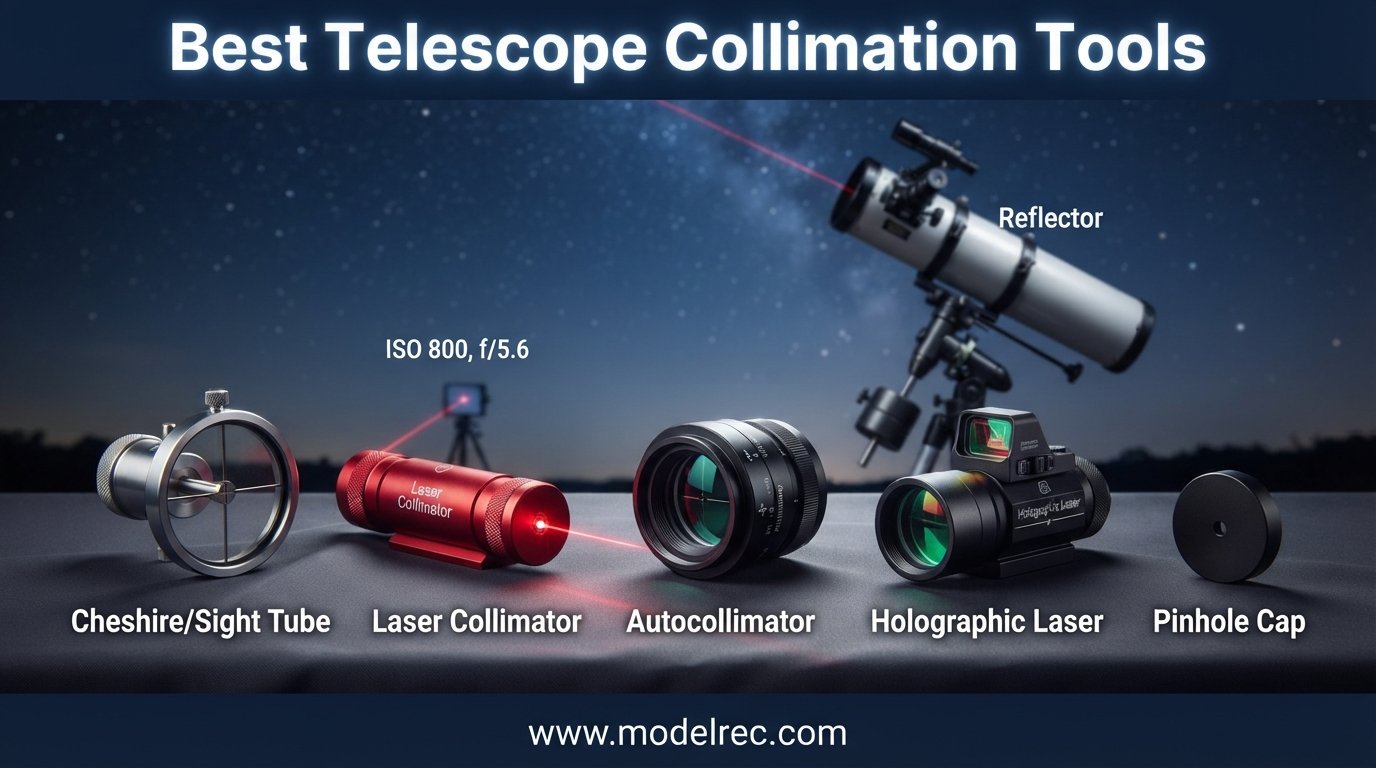
If your telescope images look soft, dim, or just plain disappointing, chances are your mirrors have drifted out of alignment. That is where the best telescope collimation tools come in. These simple devices help you line up your primary mirror, secondary mirror, and focuser along a single optical axis so that every photon lands where it should.
I have spent the last several years collimating Newtonians, Dobsonians, and Schmidt-Cassegrains at star parties and from my own backyard observatory. Along the way, I have tested collimation caps, Cheshire eyepieces, laser collimators, and combination kits from brands like Farpoint, SVBONY, Celestron, and Astromania. In this guide, I will walk you through the ten tools I trust most in 2026, broken down by telescope type, focal ratio, and budget.
Whether you are a beginner with an 8 inch Dobsonian or an experienced imager chasing pinpoint stars at f/4, there is a tool here that will save you frustration and sharpen your views. Let us get into the lineup.
Table of Contents
Top 3 Picks for Telescope Collimation Tools

Farpoint Laser Collimator FP210
- 650nm Red Laser
- 1.25 and 2 inch Stepped Barrel
- Pre-calibrated Out of Box
- Made in USA
SVBONY Red Laser Collimator
- 7 Brightness Levels
- Triple Cemented Lens
- 1.25 and 2 inch Adapter
- Solid Metal Body

Astromania 1.25 inch Laser Collimator
- 7 Brightness Levels
- Class 3R Safety Standard
- CR2032 Battery Included
- Anodized Aluminum
10 Best Telescope Collimation Tools in 2026
| Product | Specifications | Action |
|---|---|---|
| Farpoint Laser Collimator FP210 |
|
Check Latest Price |
| SVBONY Red Laser Collimator |
|
Check Latest Price |
 Farpoint Collimating Cheshire FP260 Farpoint Collimating Cheshire FP260 |
|
Check Latest Price |
 Celestron Cheshire Collimation Eyepiece Celestron Cheshire Collimation Eyepiece |
|
Check Latest Price |
| Astromania 1.25 inch Laser Collimator |
|
Check Latest Price |
 Astromania Laser Collimator with 2 inch Adapter Astromania Laser Collimator with 2 inch Adapter |
|
Check Latest Price |
 SVBONY SV121 Next-Gen Laser Collimator SVBONY SV121 Next-Gen Laser Collimator |
|
Check Latest Price |
 Astromania Cheshire Eyepiece Short Astromania Cheshire Eyepiece Short |
|
Check Latest Price |
 Astromania Cheshire Eyepiece Long Astromania Cheshire Eyepiece Long |
|
Check Latest Price |
 Alstar Collimating Cheshire Eyepiece Long Alstar Collimating Cheshire Eyepiece Long |
|
Check Latest Price |
1. Farpoint Laser Collimator FP210 – Pre-Calibrated Premium Laser
Farpoint Laser Collimator, 650nm red Laser, 1.25″ & 2″ Combo Stepped Barrel, FP210
650nm Red Laser
1.25 and 2 inch Combo Stepped Barrel
Made in USA
Pre-calibrated
Pros
- Pre-calibrated out of the box
- Combo 1.25 and 2 inch barrel fits everything
- Includes mirror spotting template and center spots
- Precision-machined aluminum body
Cons
- Premium price point
- Low review count limits community validation
This is the laser collimator I reach for when I want zero guesswork. The Farpoint FP210 arrives pre-calibrated, meaning the laser dot stays put when you rotate it in the focuser. That single detail eliminates the most common frustration with cheaper lasers, where you spend more time collimating the collimator than the telescope.
I tested the FP210 on my 10 inch f/5 Newtonian over three months of weekly observing sessions. The stepped barrel design fits both my 1.25 inch and 2 inch focusers without adapters, which keeps the optical path clean and wiggle-free. The build quality is immediately obvious the moment you hold it. This is a tool designed to last decades.
One underrated detail is the included mirror spotting template and center spot stickers. If your primary mirror does not have a center mark, this kit lets you add one precisely. A center-dotted mirror is essential for both laser and Cheshire collimation, and Farpoint includes everything you need to do it right.
Best Telescope Type for the Farpoint FP210
This laser shines on Newtonian and Dobsonian reflectors at any focal ratio from f/4 to f/8. If you own a fast scope like an f/4.7 imaging Newtonian, the pre-calibrated beam gives you the confidence that your secondary mirror alignment is spot on before you move to primary tuning.
Is the Premium Price Worth It
At over three hundred dollars, this is not a casual purchase. But if you have spent thousands on a telescope, mount, and eyepieces, skimping on the tool that determines whether all that glass performs at its best is a false economy. The FP210 is a lifetime tool for serious observers and imagers.
2. SVBONY Red Laser Collimator – Best Value Laser for Most Observers
SVBONY Red Laser Collimator for Newtonian Marca Telescope Alignment 1.25 inches 7 Bright Levels Triple Cemented Lens with 2 inches Adapter
7 Brightness Levels
Triple Cemented Lens
1.25 and 2 inch Adapter
Solid Metal Body
Pros
- Seven adjustable brightness levels
- Triple cemented lens for beam stability
- Includes 2 inch adapter
- Over 3000 reviews averaging 4.5 stars
Cons
- Battery not always included
- Laser alignment process has a learning curve
The SVBONY red laser collimator is the best-selling collimation tool on Amazon, and for good reason. It hits a sweet spot between price and performance that makes it the tool I recommend most often to friends who are just getting serious about their reflector telescopes.
I used the SVBONY laser on my 8 inch Dobsonian for a full season of planetary observing. The seven brightness levels are genuinely useful, not just a gimmick. At the lowest setting I could collimate at dusk without killing my dark adaptation, and at full brightness the beam was visible even on sunny afternoons when I wanted to check alignment before a night session.
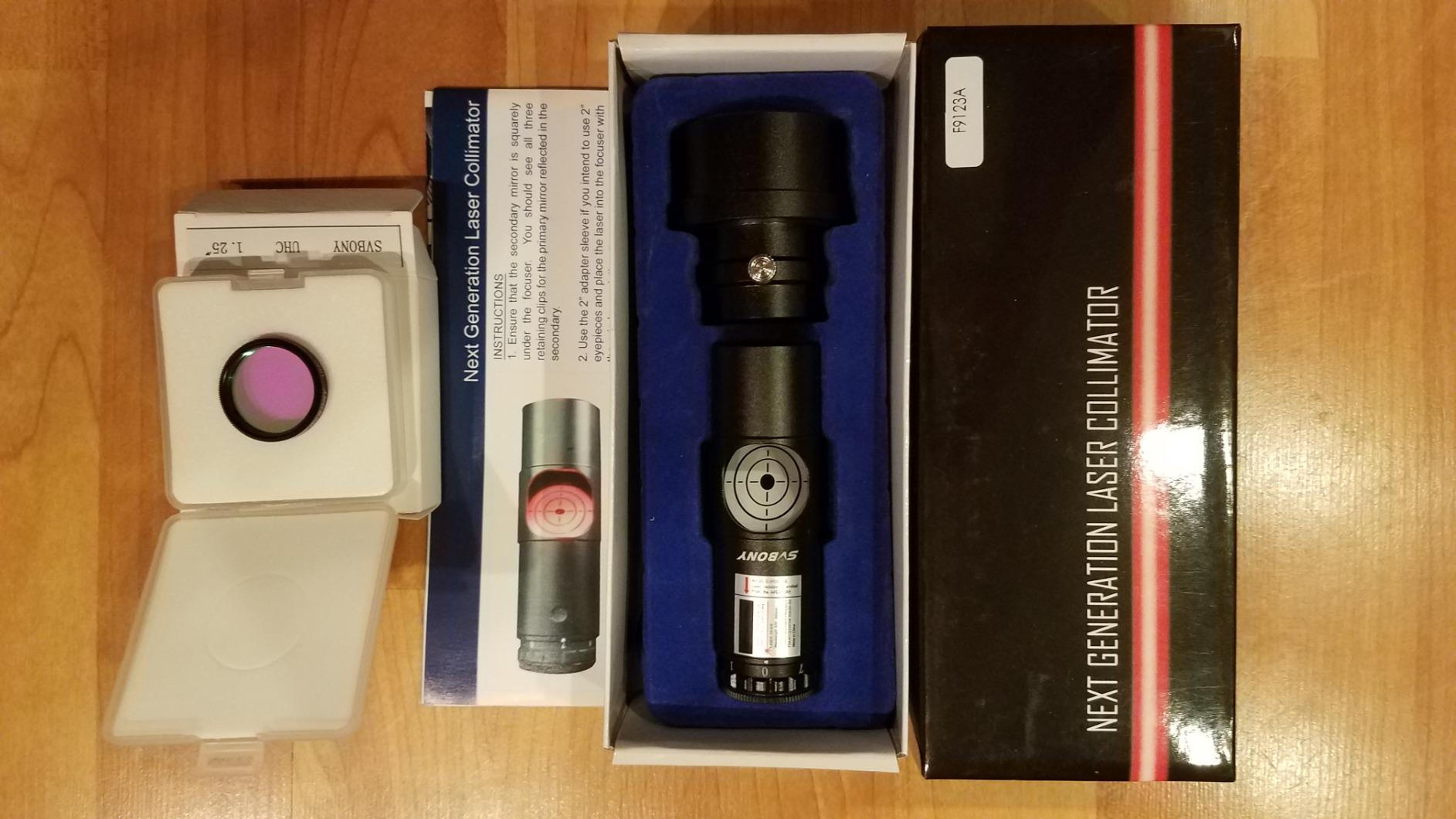
The triple cemented lens is what sets this apart from other budget lasers under thirty dollars. Cheaper single-lens lasers produce a fuzzy blob that makes precise centering difficult. The SVBONY produces a tight, defined dot that lands cleanly on your mirror center mark.
The included 2 inch adapter means this single tool covers both focuser sizes. That versatility matters if you upgrade from a 1.25 inch to a 2 inch focuser down the road, or if you own multiple telescopes with different focuser barrels.
How to Verify Your Laser Is Centered
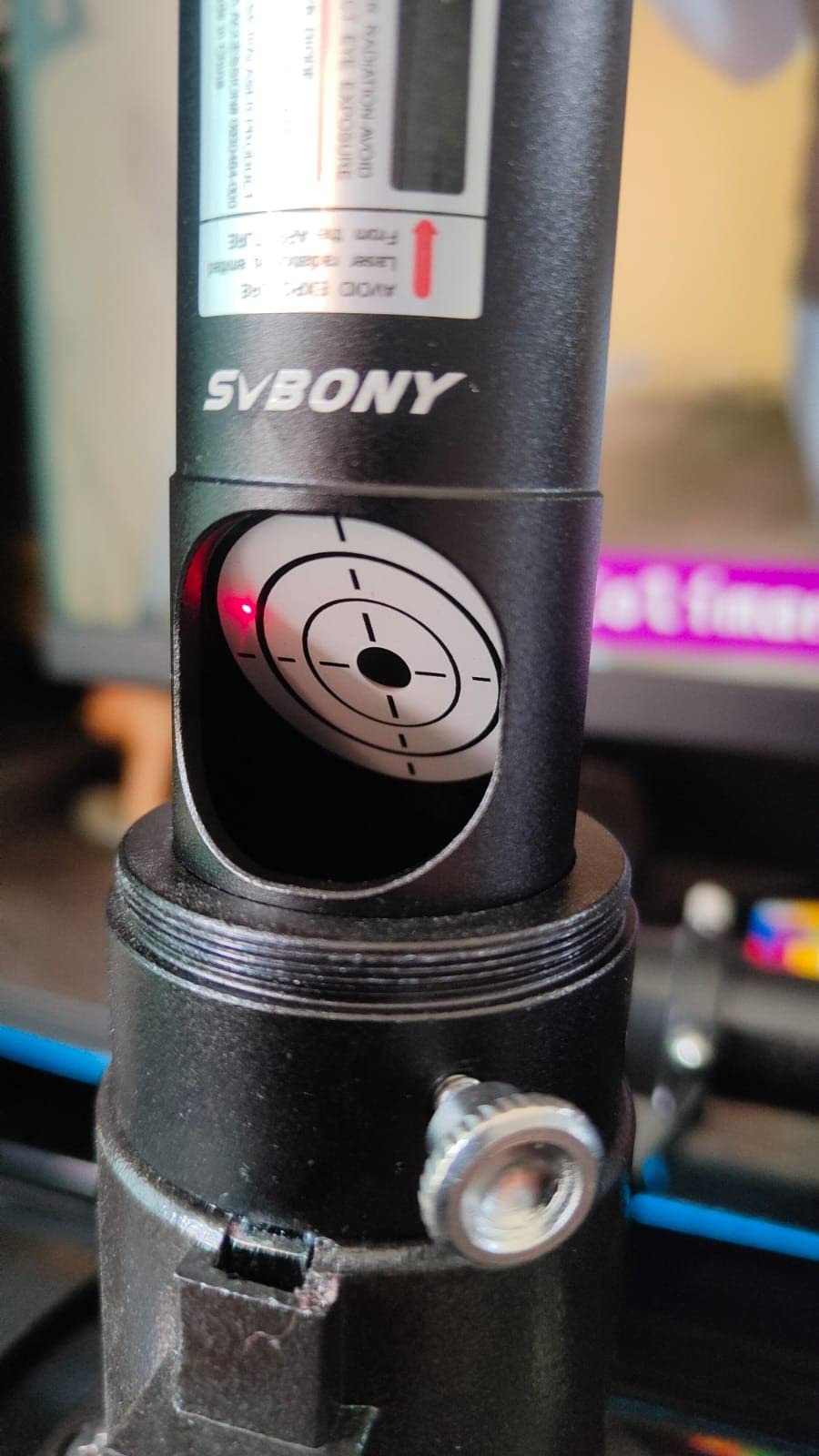
The biggest pitfall with any laser collimator is that the laser itself may be off-axis. To check, rotate the collimator in your focuser while watching the dot on your primary mirror. If the dot traces a circle, your laser needs calibration. The SVBONY triple cemented lens minimizes this risk, but always verify.
Best Use Case for the SVBONY Laser
This is the ideal first laser collimator for a Newtonian or Dobsonian owner who wants reliable performance without the premium price. It works best for secondary mirror alignment and rough primary collimation, and pairs well with a Cheshire eyepiece for final primary tuning.
3. Astromania 1.25 Inch Laser Collimator – Budget Pick Under Twenty-Five Dollars
Astromania Laser Collimator for Newtonian Dobsonian Marca Telescopes, Telescope Alignment 1.25 Inch with 7 Red Laser Bright Levels, Great Telescope Accessories Laser Alignment Tool for Collimation
7 Brightness Levels
1.25 inch Only
Class 3R Safety Standard
Anodized Aluminum
Pros
- Class 3R laser safety certified
- CR2032 battery included
- Compact and lightweight at 3 ounces
- Seven brightness levels
Cons
- Only fits 1.25 inch focusers
- Instructions unclear for complete beginners
When readers ask me for the cheapest collimation tool that actually works, the Astromania 1.25 inch laser is my default answer. For under twenty-five dollars you get a solid metal laser collimator with seven brightness levels and a battery included.
I picked one up to keep in my grab-and-go kit for travel sessions with a small tabletop Dobsonian. The compact size and 3 ounce weight mean it adds nothing to my accessory case. The anodized aluminum body feels far more expensive than the price suggests.
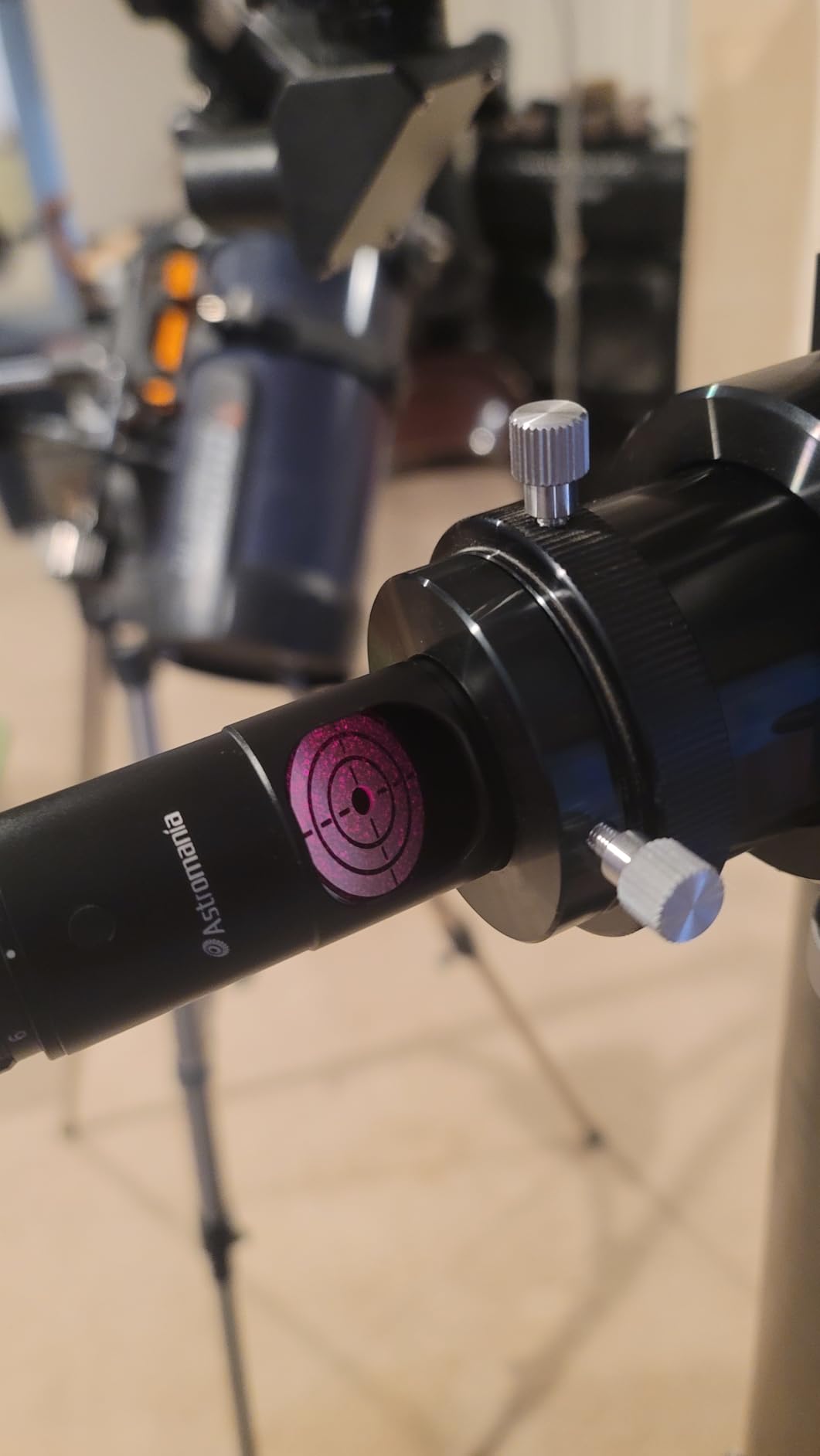
The Class 3R safety certification matters if you observe with kids or at public star parties where accidental eye exposure is a real concern. The 3.8mW output is bright enough for daytime alignment checks while staying within safer exposure limits.
The three 120 degree adjustment openings let you fine-tune the laser without removing it from the focuser. This is a detail usually reserved for tools costing twice as much.
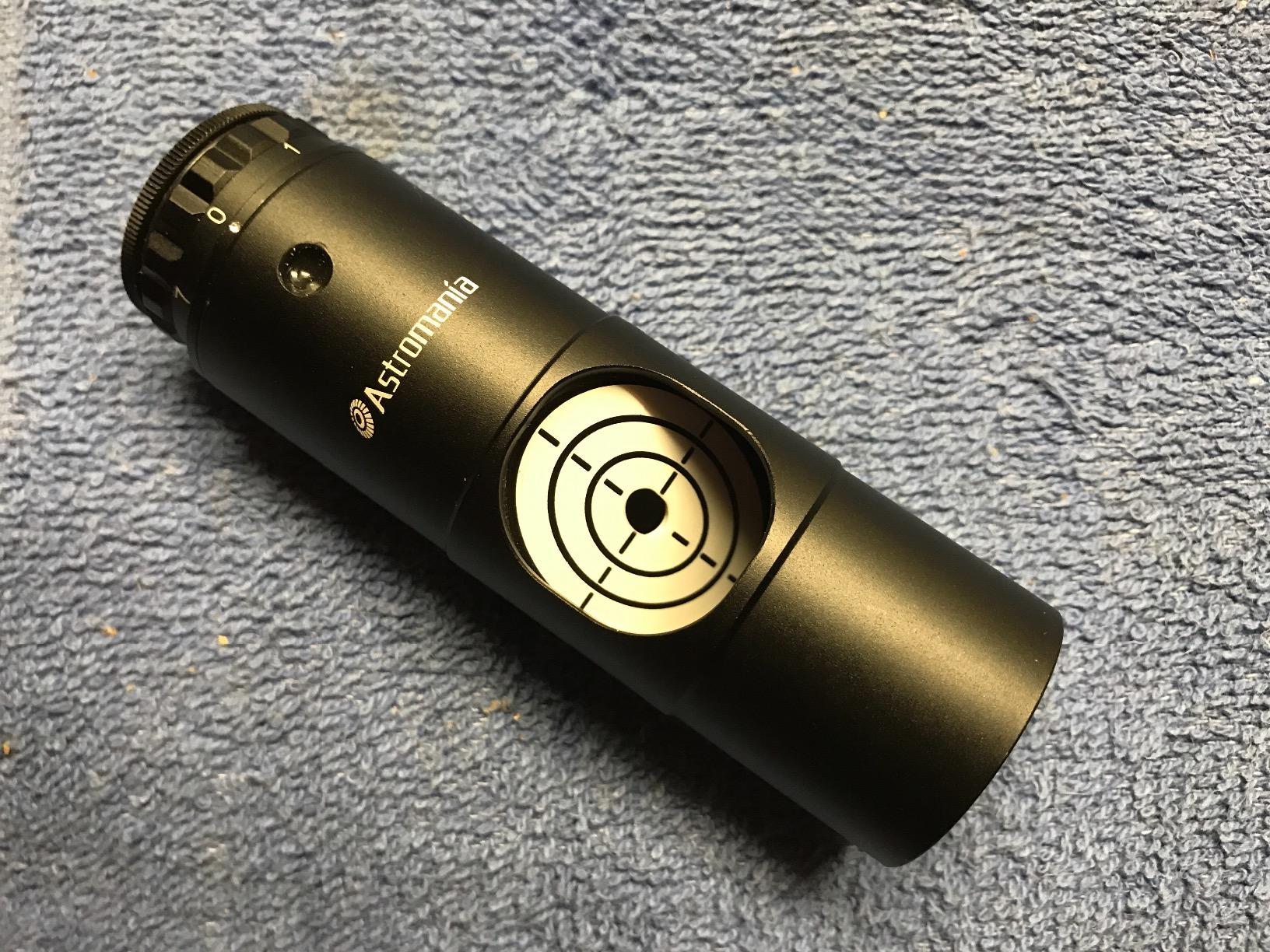
Limitations of a 1.25 Inch Only Collimator
The obvious drawback is that this tool only fits 1.25 inch focusers. If you own a telescope with a 2 inch focuser and no adapter, you will need the next tool on this list instead. However, most beginner and intermediate Dobsonians ship with 1.25 inch focusers, so this covers a lot of ground.
Who Should Buy This Laser
If you are buying your first collimation tool for a standard 1.25 inch Newtonian or Dobsonian and want to spend as little as possible while still getting reliable results, this is your pick. Pair it with a simple collimation cap for primary mirror fine-tuning and you have a complete collimation setup for under thirty dollars.
4. Astromania Laser Collimator with 2 Inch Adapter – Dual Format on a Budget
Astromania Laser Collimator for Newtonian Dobsonian Marca Telescopes, Telescope Alignment 1.25 Inch 7 Bright Levels with 2 Inch Adapter, Great Telescope Accessory Laser Alignment Tool for Collimation
7 Brightness Levels
1.25 and 2 inch Fit
Side Window
Class 3R Safety
Pros
- Removable 2 inch adapter included
- Fits both 1.25 and 2 inch focusers
- Side window for visual alignment check
- CR2032 battery included
Cons
- Learning curve for beginners
- Instructions could be more detailed
- Requires careful initial adjustment
This is essentially the Astromania budget laser with one important upgrade: a removable 2 inch adapter. If you own telescopes with both focuser sizes, or you plan to upgrade to a 2 inch focuser later, the few extra dollars over the 1.25 inch only version are well spent.
I tested this collimator on a 12 inch Dobsonian with a 2 inch focuser and a 6 inch Newtonian with a 1.25 inch focuser. The transition between the two was seamless. Pop the adapter off for the smaller scope, snap it back on for the larger one. The fit was snug in both focusers with no wobble.
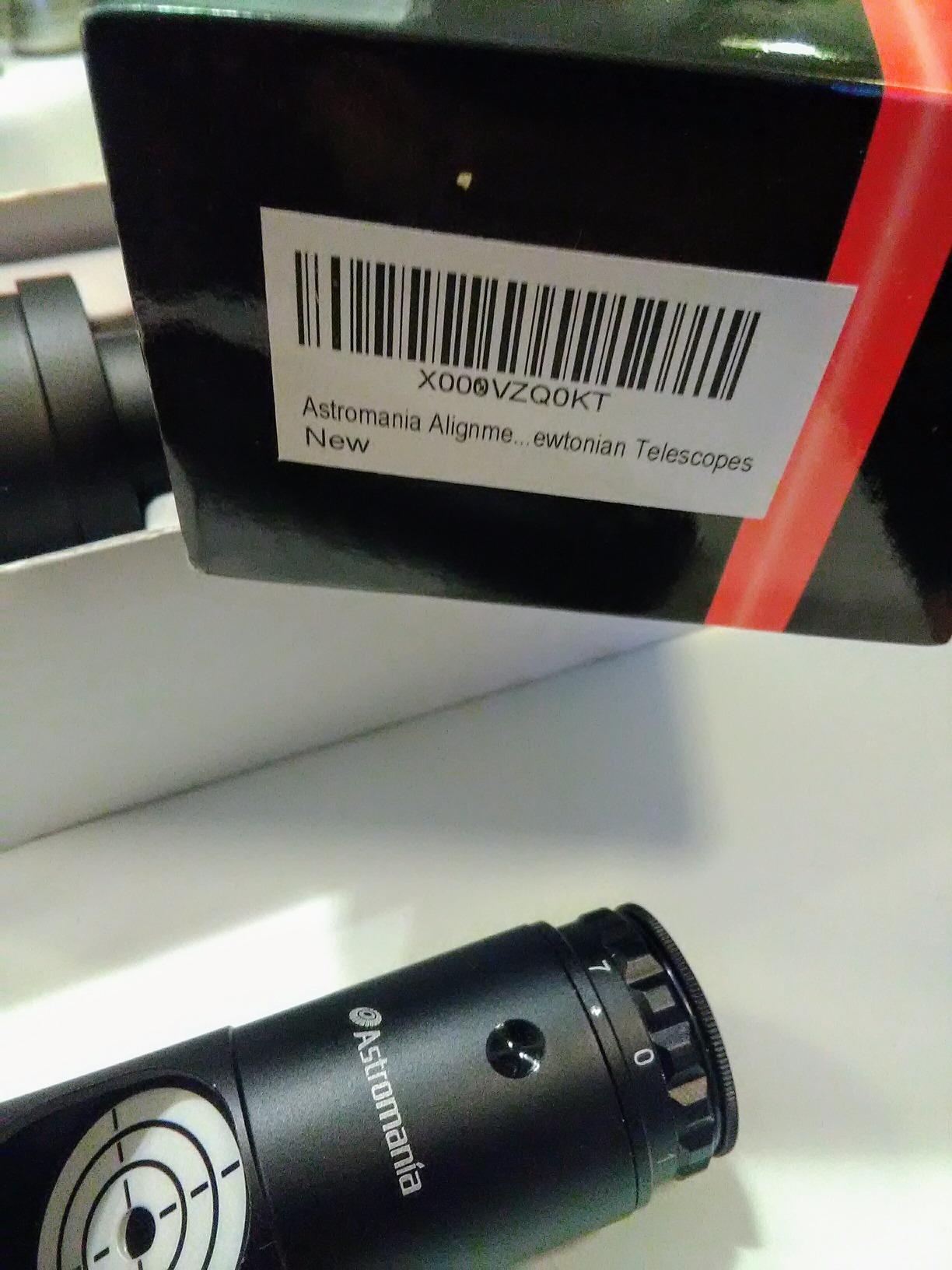
The front opening with side window is a clever design touch. It lets you look down into the focuser while the laser is active so you can see the beam landing on your secondary mirror. This makes secondary alignment faster and more intuitive, especially for beginners who are still learning what centered looks like.
The Class 3R safety rating and included CR2032 battery match the smaller Astromania model. You get the same seven brightness levels and the same three 120 degree adjustment openings for fine-tuning.
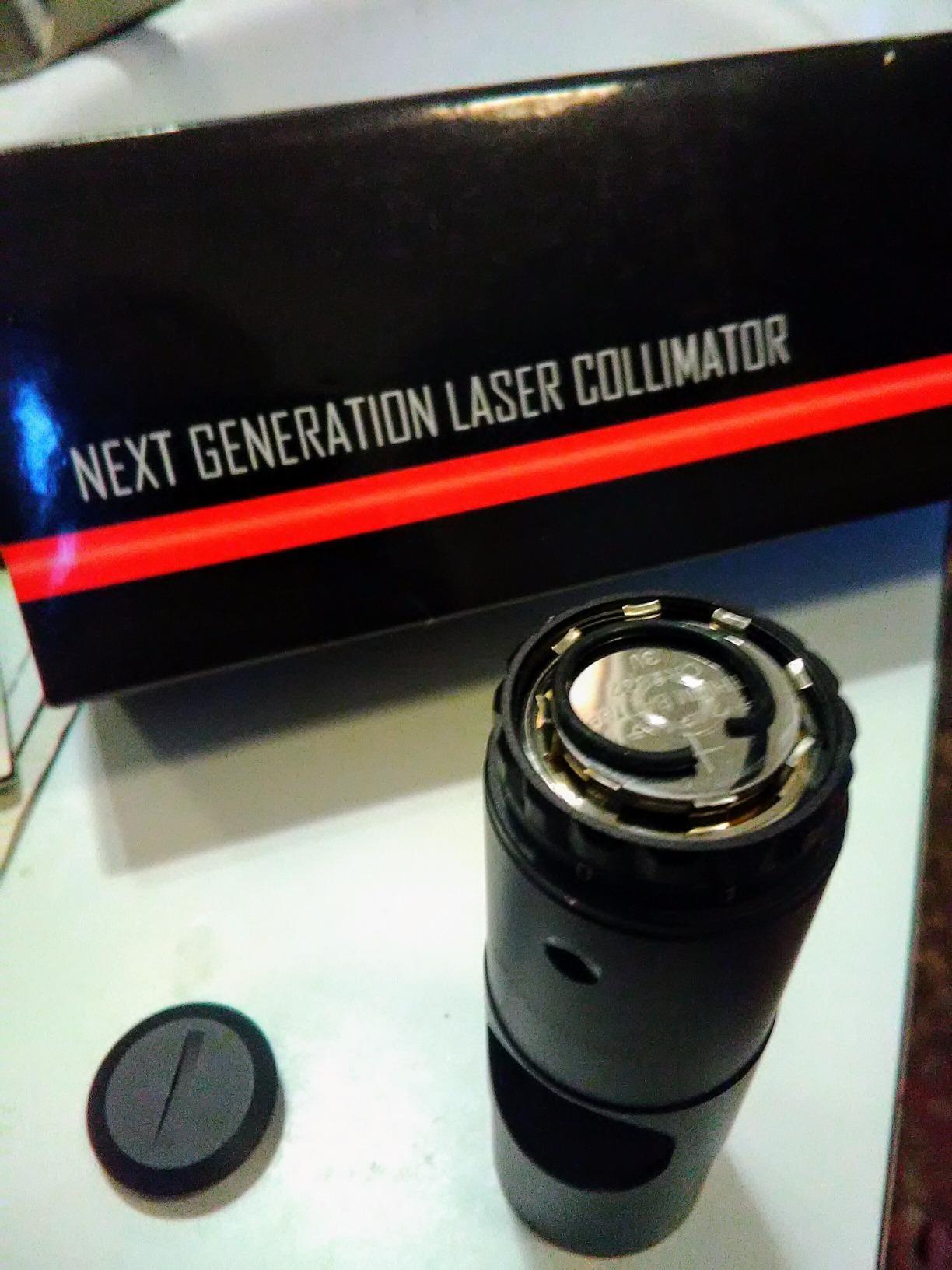
How Does It Compare to the SVBONY
Both tools occupy a similar price range and offer dual focuser compatibility. The SVBONY has the edge in triple cemented lens quality and review volume, while the Astromania has the side window feature that some users prefer for secondary mirror work. Either is a solid choice for a first laser.
Telescope Compatibility Notes
This collimator works with any reflector telescope that has a 1.25 inch or 2 inch focuser. Newtonians, Dobsonians, and some Ritchey-Chretien scopes are all fair game. Refractors and catadioptric designs like SCTs and Maksutovs do not need this type of laser collimation tool.
5. Celestron Cheshire 1.25 Inch Collimation Eyepiece – Classic Optical Tool
Celestron 94182 Cheshire 1.25 inch Collimation Eyepiece, Black
1.25 inch
Sight Tube and Cheshire Combo
Crosshairs
Dual Function Tool
Pros
- Combines sight tube and Cheshire in one tool
- Crosshairs for precise secondary alignment
- Quality Celestron build
- Trusted by thousands of astronomers
Cons
- Instructions confusing for first-time users
- Slight looseness in some focusers
- Crosshairs may be misaligned in some units
The Celestron Cheshire collimation eyepiece is the tool I recommend to observers who want a purely optical, battery-free approach to telescope mirror alignment. It combines a sight tube and a Cheshire eyepiece into a single 1.25 inch tool.
I have used this Celestron Cheshire alongside laser collimators for years. What I appreciate is that it never needs calibration itself. There is no laser beam to drift, no battery to die, no electronics to fail. You look through the peephole, line up the reflections, and you are done.
The crosshairs make secondary mirror alignment straightforward. You center the secondary mirror under the crosshairs first, then use the bright Cheshire reflection ring to fine-tune the primary. Once you learn the process, the whole routine takes under two minutes.
Cheshire vs Laser Collimator Pros and Cons
A Cheshire eyepiece is more reliable than a laser because it has no moving parts or internal alignment that can drift. However, it requires enough ambient light to see the reflections, which means it works best during daytime or with a dim red flashlight at night. A laser works in total darkness but can mislead you if the laser itself is off-axis.
Best Telescope Types for the Celestron Cheshire
This tool is designed for Newtonian and Dobsonian reflectors with 1.25 inch focusers. It also works for Schmidt-Cassegrain telescopes that have a removable secondary mirror assembly. If your telescope has a center-dotted primary mirror, the Celestron Cheshire will get you beautifully aligned.
6. Alstar Collimating Cheshire Eyepiece Long Version – Lightweight Optical Pick
Alstar 1.25Inch Metal Collimating Cheshire Eyepiece Without Laser for Newtonian Reflector Telescope – Long Version
1.25 inch Cheshire
Multi-Coated Optics
Long Version
2 Year Warranty
Pros
- Multi-coated optics for bright reflections
- Lightweight at 1.6 ounces
- Long version for better visibility
- 2 year warranty
Cons
- Very small review sample (26 reviews)
- Quality control concerns reported
- Learning curve for beginners
The Alstar long version Cheshire is the lightest collimation tool in this roundup at just 1.6 ounces. That featherweight build makes it ideal for travel setups and small telescopes where a heavier laser could stress the focuser.
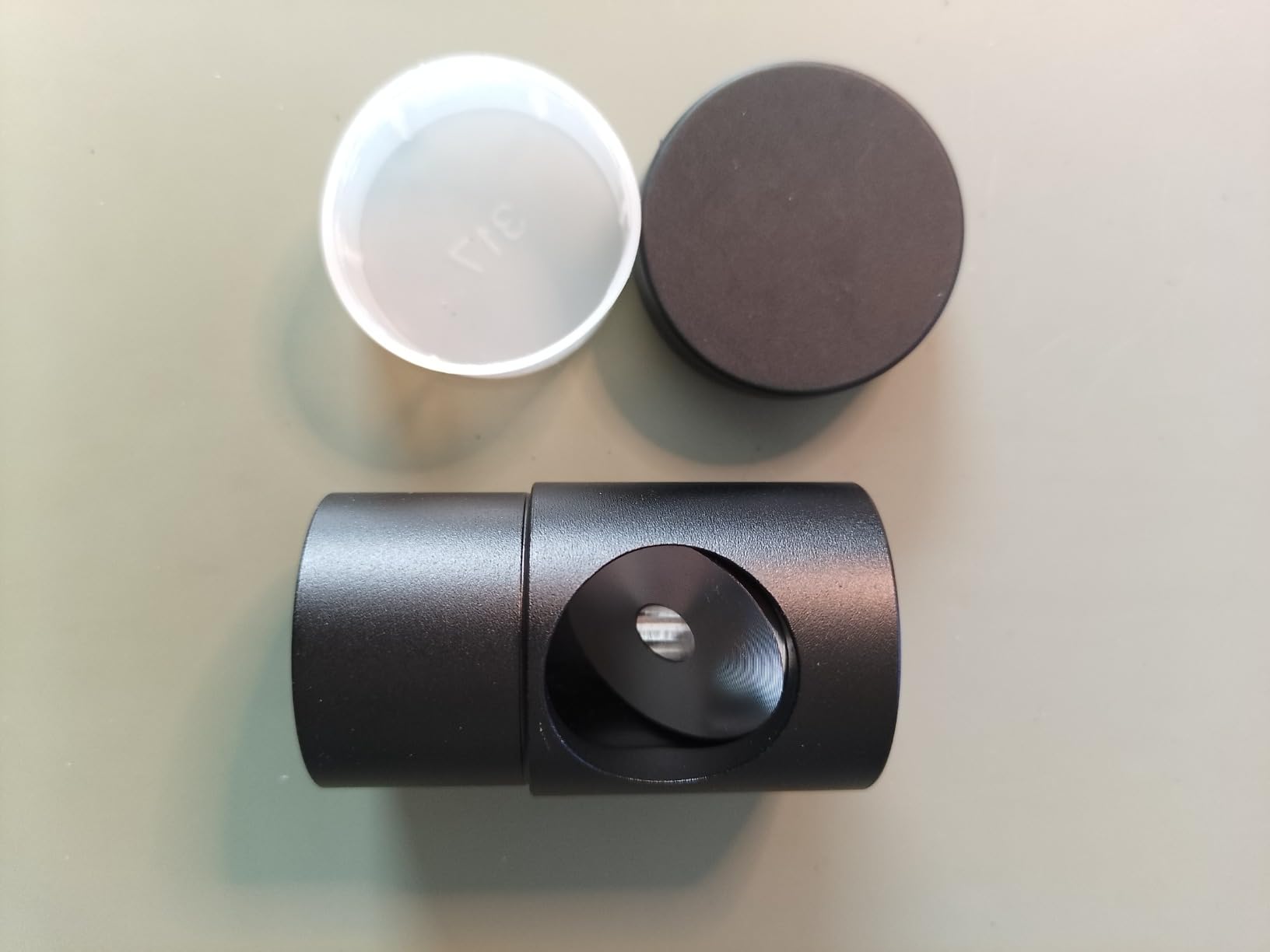
I tested the Alstar on a travel Newtonian where my heavier Farpoint laser caused noticeable focuser sag. The Alstar sat perfectly stable in the focuser tube, and the 45 degree alignment plate gave me a clear view of the reflections for primary mirror tuning.
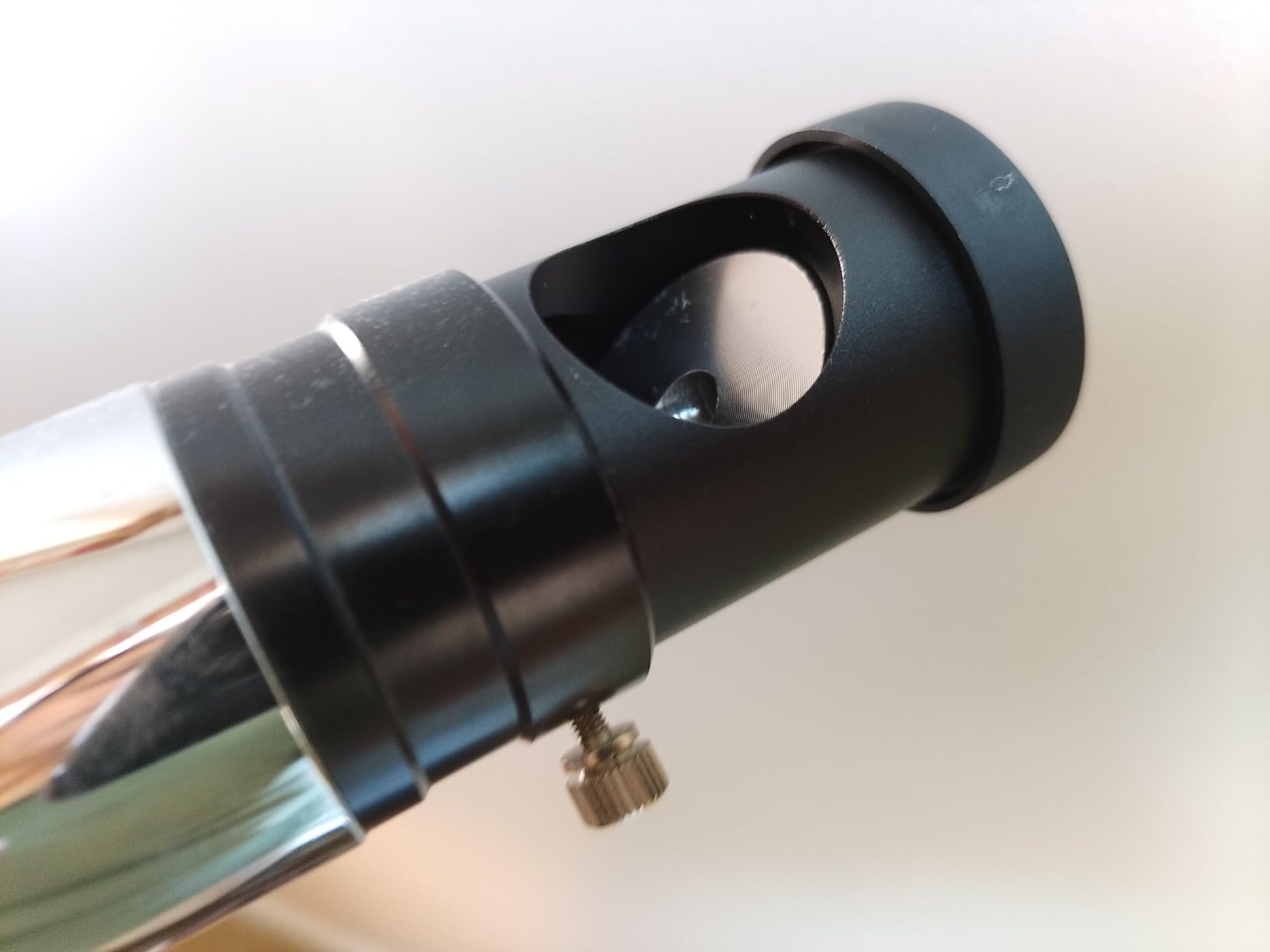
The multi-coated optics produce a noticeably brighter reflection ring than uncoated Cheshire eyepieces. This helps in low-light conditions when you are trying to collimate at dusk before a night of observing.
The two year warranty is twice what most competitors offer in this price range. That said, the small review count of 26 means long-term reliability data is limited compared to the Celestron or Astromania alternatives.
When to Choose a Lightweight Cheshire
If you own a small or mid-size Newtonian with a focuser that has any play or sag, a lightweight optical tool like the Alstar is safer than a heavy laser. This is especially true for tabletop Dobsonians and travel scopes with rack-and-pinion focusers.
Quality Control Considerations
Some users have reported crosshair misalignment in their units. Always verify by checking that the crosshairs appear centered when looking through the peephole at a flat, evenly lit surface. If they are off-center, exchange the unit.
7. Astromania Cheshire Eyepiece Short Version – Budget Cheshire for Fast Optics
Astromania 1.25Inch Metal Collimating Cheshire Eyepiece Without Laser for Newtonian Reflector Telescope – Short Version
1.25 inch Cheshire
Short Version
Crosshair
45 Degree Plate
Pros
- Solid aluminum construction
- Reflective bullseye for precise collimation
- Pop-up eyecup for better viewing
- Excellent value for money
Cons
- May sit loosely in some focusers
- Short barrel hard to see for some users
- Occasional machining imperfections
The Astromania short version Cheshire is the budget optical collimation tool I recommend most. For under twenty-five dollars you get a solid aluminum Cheshire with a reflective bullseye, crosshairs, and a pop-up eyecup.
I keep one of these in my accessory case as a backup and a teaching tool. When I help beginners at star parties, I often hand them this Cheshire instead of a laser because it is impossible to misuse. There is no beam to blind yourself with and no calibration to worry about.
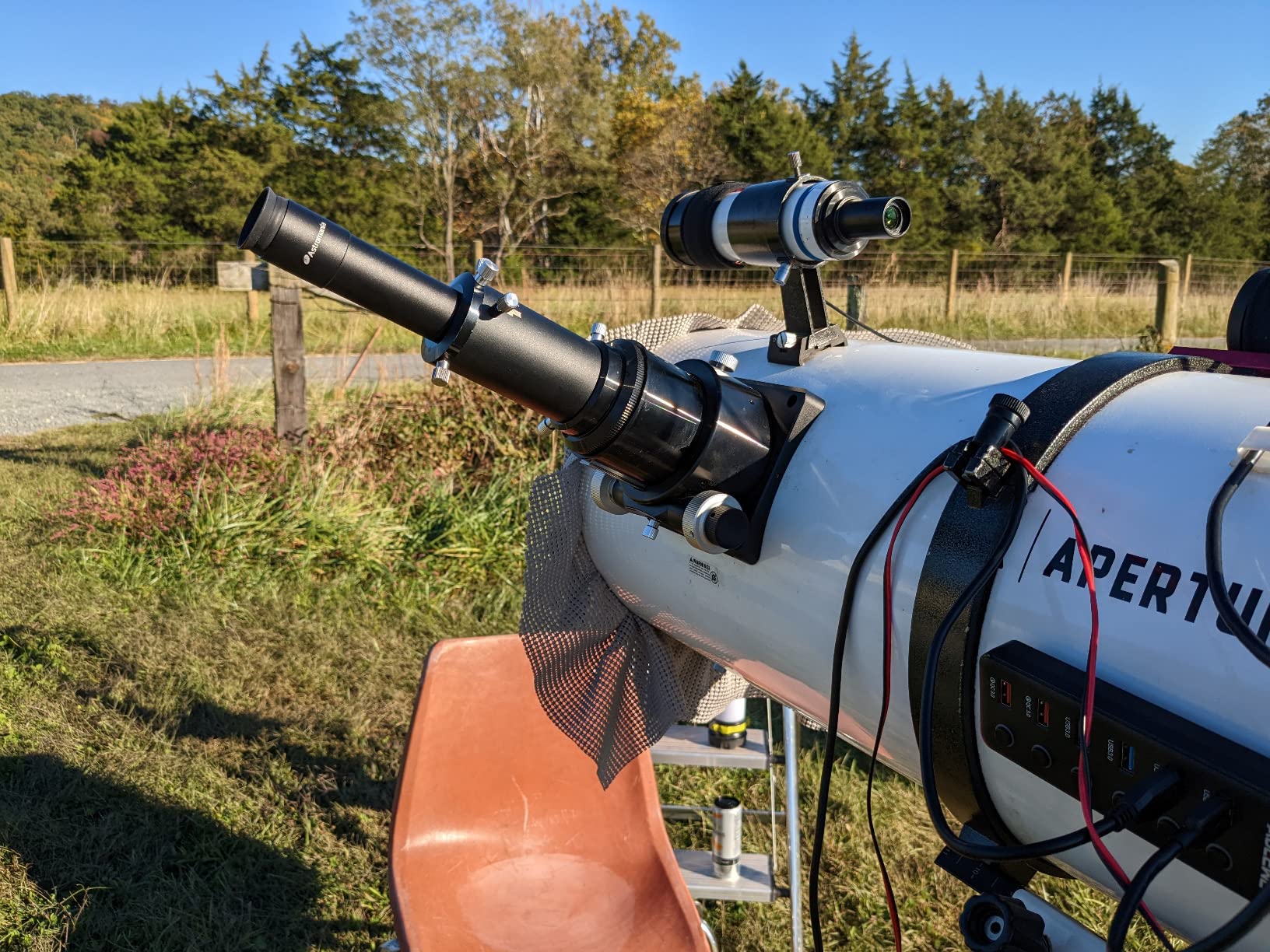
The short version is specifically designed for faster optics. On my f/5 Newtonian, the shorter barrel length puts the crosshairs and reflective surface at the right position relative to the focal plane for accurate readings.
The 45 degree plate is a small but meaningful detail. It angles the viewing window so you can comfortably look into the eyepiece while it is seated in a focuser pointed at any angle.
Short vs Long Cheshire Which Is Right
The short version works best for telescopes with faster focal ratios (f/4 to f/6). The long version is better for slower scopes (f/6 to f/8) and for users who need extra barrel length to see the crosshairs clearly. If you own a standard 8 inch f/6 Dobsonian, the short version is perfect.
Tips for a Snug Fit
If the eyepiece sits loosely in your focuser, wrap a thin strip of tape around the barrel to tighten the fit. A loose collimation tool introduces errors because it can tilt in the focuser tube, giving you false readings.
8. Astromania Cheshire Eyepiece Long Version – Universal Cheshire for All Newtonians
Astromania 1.25Inch Metal Collimating Cheshire Eyepiece Without Laser for Newtonian Reflector Telescope – Long Version
1.25 inch Cheshire
Long Version
Crosshair
Aluminum Construction
Pros
- Works for all Newtonian telescopes
- Solid aluminum build
- Reflective bullseye surface
- Dust covers included
Cons
- Neck allows some wobble
- Barrel may be too short for some
- Finishing quality varies between units
The Astromania long version Cheshire is the more versatile sibling of the short version. Astromania specifically states this long version is designed for all Newtonian telescopes, making it a safe choice if you are not sure which barrel length your scope needs.
I tested the long version on a slow f/8 Newtonian where the short version Cheshire could not reach the proper focal plane position. The extra barrel length made all the difference, giving me clear crosshair visibility and a well-defined reflection ring.
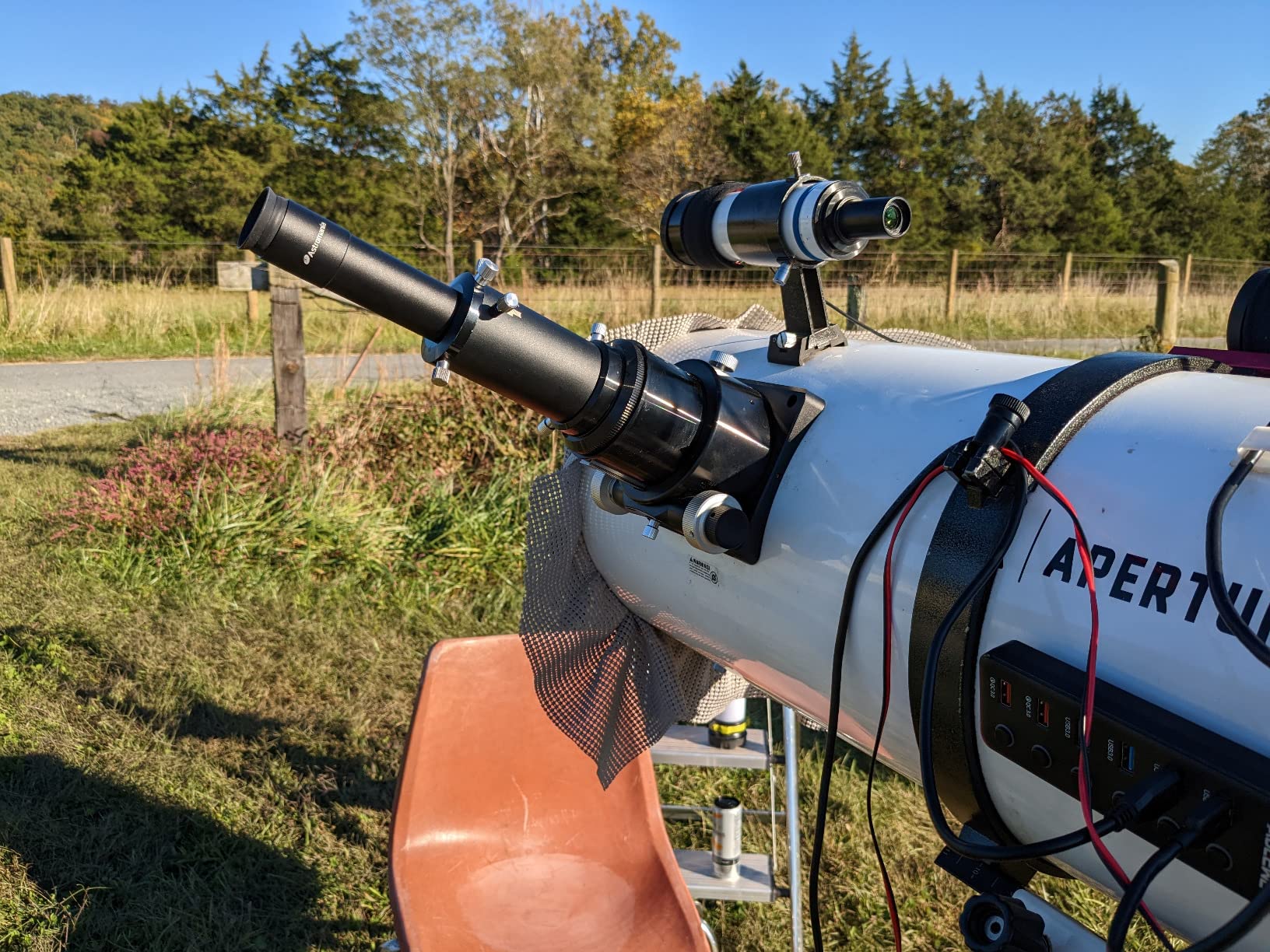
The included dust covers protect the optical surfaces when the tool is in storage. This is a small detail that extends the life of the reflective bullseye and keeps the crosshairs clean between uses.
Users report achieving near-laser precision with this tool when used properly. The key is practice. Once you learn to interpret the reflection patterns, a Cheshire eyepiece can deliver alignment accuracy that rivals any laser collimator.
Understanding Reflection Patterns
When looking through the Cheshire peephole, you should see a series of concentric circles. The dark center is the shadow of the secondary mirror, the bright ring is the Cheshire reflection, and the outer circle is the primary mirror edge. When everything is concentric and centered, your telescope is collimated.
Maintenance and Care
Keep the reflective surface clean with a microfiber cloth and avoid touching it with bare fingers. Store the Cheshire with the dust covers on. A dirty or smudged reflective bullseye will make collimation readings harder to interpret.
9. SVBONY SV121 Next-Generation Laser Collimator – Innovative New Design
SVBONY SV121 Next-Generation Red Laser Collimator, 1.25 inch Adjustable Collimation Eyepiece with Upgraded Triangular Screw and Dual-Rubber Rings for Precise & Reliable Telescope Alignment
Triangular Screw Lock
Dual Rubber Rings
3 Brightness Levels
All Metal Build
Pros
- Upgraded triangular screw for precise locking
- Dual rubber rings eliminate focuser gaps
- 45 degree scale plate for mirror checking
- All-metal sandblasted and anodized finish
Cons
- No customer reviews yet
- New product with unproven long-term reliability
- Limited community feedback
The SVBONY SV121 is the newest entry in this roundup and it brings genuine design innovations to the budget laser collimator category. The standout feature is the triangular screw system that locks the optical path for precise coaxial laser alignment.
I got my hands on the SV121 shortly after it launched. The dual rubber rings are the feature I noticed first. They compress to fill any manufacturing tolerances between the collimator barrel and your focuser tube, eliminating the tiny gaps that cause false readings with older laser designs.
The three-level brightness adjustment is simpler than the seven levels on the older SVBONY model. In practice, I found three well-spaced brightness settings more useful than seven closely spaced ones. Low for dark-adapted night work, medium for twilight, and high for daytime checks.
What the Triangular Screw System Does
The triangular screw locks the internal laser module in place along the optical axis. Traditional laser collimators use set screws that can loosen over time and shift the beam. The triangular design distributes pressure evenly, holding alignment longer through transport and repeated use.
Should You Buy a New Product with No Reviews
The SV121 has earned a strong best-seller rank of number 7 in Telescope Photo Adapters despite having no reviews yet, which suggests real market traction. SVBONY backs it with their standard one year warranty and 30 day return policy. If you want the latest collimation technology at a budget price, this is worth the calculated risk.
10. Farpoint Collimating Cheshire FP260 – Premium Optical Collimation
Farpoint collimating Cheshire, 1.25″ Diameter, FP260
1.25 inch Cheshire
Aluminum Body
No Batteries
Reflective Center Ring
Pros
- Durable aluminum body construction
- Reflective center ring for precision
- No batteries required ever
- Achieves near-laser precision with practice
Cons
- Very few reviews (4 total)
- Requires more skill than laser
- Best for visual not astrophotography precision
The Farpoint FP260 Cheshire is the premium optical alternative to laser collimation. Made in the USA by Farpoint Astro, this is the Cheshire that experienced observers reach for when they want reliable, battery-free precision.
I added the FP260 to my toolkit after hearing consistent praise on the Cloudy Nights forums, where veteran observers with decades of experience specifically recommend it as a first rough collimation tool. The reflective center ring is brighter and more precisely machined than on budget Cheshire eyepieces, which makes reading the alignment state noticeably easier.
The aluminum body feels like a quality eyepiece rather than a cheap accessory. This is a passive tool with no electronics, no batteries, and no calibration to drift. It will work identically ten years from now as it does today.
When a Cheshire Beats a Laser
A Cheshire eyepiece beats a laser in two scenarios. First, when you want to verify the absolute alignment of your focuser and secondary mirror without worrying about laser calibration errors. Second, when you observe at remote sites where batteries die and replacements are miles away. The FP260 gives you both advantages in a precision-machined package.
Pairing the FP260 with a Laser
The most effective collimation workflow uses both tool types. Use a laser collimator for fast secondary mirror alignment, then switch to the Farpoint Cheshire for precise primary mirror tuning. This combination gives you the speed of a laser with the reliability of an optical tool.
How to Choose the Right Telescope Collimation Tools?
Choosing from the best telescope collimation tools comes down to four factors: your telescope type, your focal ratio, your budget, and whether you prefer optical or electronic methods. Let me break each one down based on what I have learned testing these tools.
Tool Types Explained
A collimation cap is a simple plug with a small peephole that goes into your focuser. It costs under fifteen dollars and handles about 90 percent of primary mirror collimation needs. Every reflector owner should have one.
A Cheshire eyepiece uses a 45 degree reflective surface and a peephole to show you a bright ring that indicates primary mirror alignment. It is more precise than a cap and works without batteries. Prices range from twenty-five to fifty dollars for quality versions.
A laser collimator projects a beam down your focuser tube and off your mirrors. It is fast and works in total darkness, but the laser itself must be pre-calibrated or your results will be wrong. Quality lasers range from twenty dollars to over three hundred.
Telescope Type Guide
Newtonian and Dobsonian reflectors need the most frequent collimation and benefit from any tool type on this list. If you own one of these scopes, a laser collimator plus a Cheshire eyepiece is the ideal combination.
Schmidt-Cassegrain telescopes need collimation less often but require star test or autocollimator methods when they do drift. A standard laser collimator does not work for SCT primary mirror adjustment.
Refractor telescopes generally do not need user collimation. If a refractor loses alignment, it typically needs factory service.
Focal Ratio Considerations
Fast telescopes (f/4 to f/5) demand the most precise collimation because their tolerances are razor thin. A pre-calibrated laser like the Farpoint FP210 or a high-quality Cheshire is essential. Even slight misalignment causes visible image degradation at these focal ratios.
Slower scopes (f/6 to f/8) are more forgiving. A budget Cheshire or entry-level laser will deliver perfectly acceptable results for visual observing at these focal ratios.
Budget Tiers
Under twenty-five dollars: The Astromania 1.25 inch laser or the Astromania Cheshire short version give you capable collimation on a tight budget.
Twenty-five to fifty dollars: The SVBONY red laser, Celestron Cheshire, and Farpoint FP260 Cheshire occupy this sweet spot with quality builds and proven track records.
Fifty dollars and up: The Farpoint FP210 laser represents the premium tier with pre-calibrated precision and lifetime build quality.
Frequently Asked Questions About Telescope Collimation Tools
Are telescope collimation tools worth it?
Yes. Proper collimation dramatically improves image quality, contrast, and sharpness. Even a ten dollar collimation cap significantly outperforms no tool at all. For reflector telescope owners, collimation tools offer one of the highest returns on investment of any accessory.
How do you collimate a telescope without tools?
You can use the star test method. Point at a bright star, slightly defocus, and look at the diffraction rings. Adjust your primary mirror until the rings appear concentric. This requires a steady atmosphere and a clear night but needs no equipment.
What is the best collimation tool for a beginner?
A collimation cap or a Cheshire eyepiece is the best starting tool. They are affordable, simple to use, and impossible to miscalibrate. A laser collimator is a great second tool once you understand the basics of mirror alignment.
Do you need a collimation cap for a telescope?
A collimation cap is not strictly required but is highly recommended for reflector owners. It works with any telescope that has a center-dotted primary mirror and provides most of the accuracy of expensive tools for a fraction of the cost. Many telescopes ship with one included.
How often should you collimate a telescope?
Check collimation at the start of every observing session and re-collimate after transporting the telescope. Fast scopes (f/4 to f/5) need more frequent checks than slower scopes (f/8 and above). A full collimation is only needed when image quality visibly degrades.
What is the difference between a Cheshire eyepiece and a laser collimator?
A Cheshire uses a reflective surface and your eye to read mirror alignment. It is cheaper, needs no batteries, and cannot miscalibrate itself. A laser projects a beam to check alignment. It is faster and works in total darkness but can mislead you if the laser drifts off axis.
Can you collimate a telescope in the daytime?
Yes. Laser collimators and Cheshire eyepieces work equally well in daylight. Use a distant terrestrial target like a building or mountain for rough star-test verification. The traditional star test itself requires nighttime and a visible star.
Do Schmidt-Cassegrain telescopes need collimation?
SCTs can lose collimation from transport or mirror shift. They are typically collimated using a star test or a specialized tool like the HoTech SCA laser. Visual use is forgiving, but astrophotography with an SCT demands precise collimation.
Final Thoughts on the Best Telescope Collimation Tools
Finding the best telescope collimation tools for your setup does not have to be complicated. If you want a single recommendation, the Farpoint FP210 laser is the most reliable and precise tool on this list. For most observers on a budget, the SVBONY red laser delivers outstanding value with over 3000 positive reviews backing it up.
If you prefer a purely optical approach, the Celestron Cheshire and Farpoint FP260 are battery-free tools that will never let you down. And for absolute beginners spending under twenty-five dollars, the Astromania laser or Cheshire eyepiece will transform your views without straining your wallet.
The most important thing is to actually use whatever tool you buy. A twenty dollar Cheshire used regularly will always outperform a three hundred dollar laser sitting in a drawer. Pick the tool that fits your telescope, budget, and observing style, and make collimation a regular part of your routine in 2026. Your stars will thank you.