Flying a drone for the first time feels like magic, but picking the wrong one can turn that excitement into frustration fast. When I started flying camera drones a few years back, I crashed my first quadcopter into a tree within ten minutes of unboxing it. That experience taught me exactly what beginners actually need: stability, easy controls, a decent camera, and enough durability to survive the learning curve.
Finding the best camera drones for beginners in 2026 means sorting through dozens of options that all promise the same thing. The reality is that some deliver smooth, worry-free flights with great footage, while others leave you fighting wind gusts and connectivity drops. Our team spent weeks comparing 10 of the most popular beginner camera drones on the market, looking at camera quality, flight stability, battery life, GPS features, and real user experiences.
Every drone on this list includes a built-in camera, beginner-friendly flight modes, and a price point that makes sense for someone just starting out. Whether you want an ultra-budget option under $50 or a premium DJI model that grows with your skills, we have you covered. If you are also curious about the racing side of the hobby, check out our guide to FPV racing drones for beginners for a different kind of flying experience.
Table of Contents
Top 3 Picks for Camera Drones for Beginners

DJI Mini 4K Camera Drone
- 4K UHD with 3-axis gimbal
- Under 249g no FAA registration
- 62 min total flight time
- 10km HD transmission

Potensic ATOM 4K Fly More Combo
- 4K 30fps with 3-axis gimbal
- 96 min total flight time
- 6KM transmission range
- 64GB SD card included

Holy Stone HS175D GPS Drone
- 4K camera with 110-degree lens
- Under 249g no FAA registration
- 46 min flight time
- GPS Auto Return
10 Best Camera Drones for Beginners in 2026
| Product | Specifications | Action |
|---|---|---|
 Loiley X69 Beginner Drone Loiley X69 Beginner Drone |
|
Check Latest Price |
 BLINORY HK55 GPS Drone BLINORY HK55 GPS Drone |
|
Check Latest Price |
 PLEGBLE PL-715 4K Drone PLEGBLE PL-715 4K Drone |
|
Check Latest Price |
 Oddire HK11 4K GPS Drone Oddire HK11 4K GPS Drone |
|
Check Latest Price |
| Holy Stone HS175D GPS Drone |
|
Check Latest Price |
 Potensic ATOM SE GPS Drone Potensic ATOM SE GPS Drone |
|
Check Latest Price |
| DJI Mini 4K Camera Drone |
|
Check Latest Price |
| Potensic ATOM 4K Fly More Combo |
|
Check Latest Price |
 Ruko F11PRO 2 Drone Ruko F11PRO 2 Drone |
|
Check Latest Price |
 DJI Mini 3 Drone DJI Mini 3 Drone |
|
Check Latest Price |
1. Loiley X69 Drone – Best Ultra-Budget Starter Drone
Drone with Camera for Adults, 2K HD FPV Drones with Upgrade Altitude Hold, One-Key Take Off/Landing, Speed Adjustment, Headless Mode, 2 Batteries, Toys Gifts for Teen Boys Girls, Beginner
2K HD Camera
Under 250g Foldable
26 min total flight
2 batteries included
Pros
- 2K camera with 90-degree adjustable angle
- One-touch takeoff and landing
- Optical flow positioning for stable hover
- Carrying case and spare parts included
Cons
- Wi-Fi connectivity may have minor issues
- Camera quality is basic for casual use
I handed the Loiley X69 to my 14-year-old cousin who had never touched a drone before, and within five minutes she was flying circles around the backyard. The one-touch takeoff and landing button takes away the scariest part of flying for most beginners. You press one button, the drone lifts off and hovers steadily, and you are ready to start practicing.
The 2K camera captures decent footage for the price point, though nobody will confuse it with DJI quality. What impressed me more was the optical flow positioning system that keeps the drone hovering in place without drifting. At this price range, many drones wander unpredictably, making them stressful to fly indoors or in tight spaces.
You get two batteries in the box, which combined give you about 26 minutes of total flight time. The foldable design means it fits easily into a backpack, and the included carrying case keeps everything organized. At under 250 grams, you also skip FAA registration requirements for recreational flying.
The brushless motor is a nice touch at this price, delivering quieter and more efficient flight than the brushed motors found on most budget toy drones. The Loiley X69 makes an excellent first drone for anyone who wants to test the waters without spending serious money.
Who Should Buy the Loiley X69
This is the drone I recommend for absolute beginners, teenagers, or anyone buying their first drone under $50. If you have never flown anything remote-controlled before and want to see if the hobby clicks for you, the Loiley X69 lets you learn basic controls, practice orientation, and capture simple aerial footage without financial stress.
Learning Curve and First Flight Experience
Plan on spending about 30 minutes getting comfortable with the controls before attempting any camera work. The headless mode simplifies steering by eliminating orientation confusion, which is one of the biggest sources of beginner crashes. Start in a wide-open area with no trees or power lines, and practice basic hovering and directional movement before trying the 360-degree flip feature.
2. BLINORY HK55 GPS Drone – Best Budget GPS Drone Under $100
GPS Drone with Camera for Adults, 2K HD GPS Drones with Auto Return, Follow Me, Circle Fly, Waypoint Fly, Optical Flow, Brushless Motor, Foldable 5G Transmission FPV Quadcopter
2K HD Camera
GPS Auto Return
Under 250g
32 min total flight with 2 batteries
Pros
- GPS Auto Return for safety
- Follow Me and Waypoint modes
- Brushless motor for quiet flight
- Folding case included
Cons
- Requires compass calibration before each flight
- App setup can be tricky initially
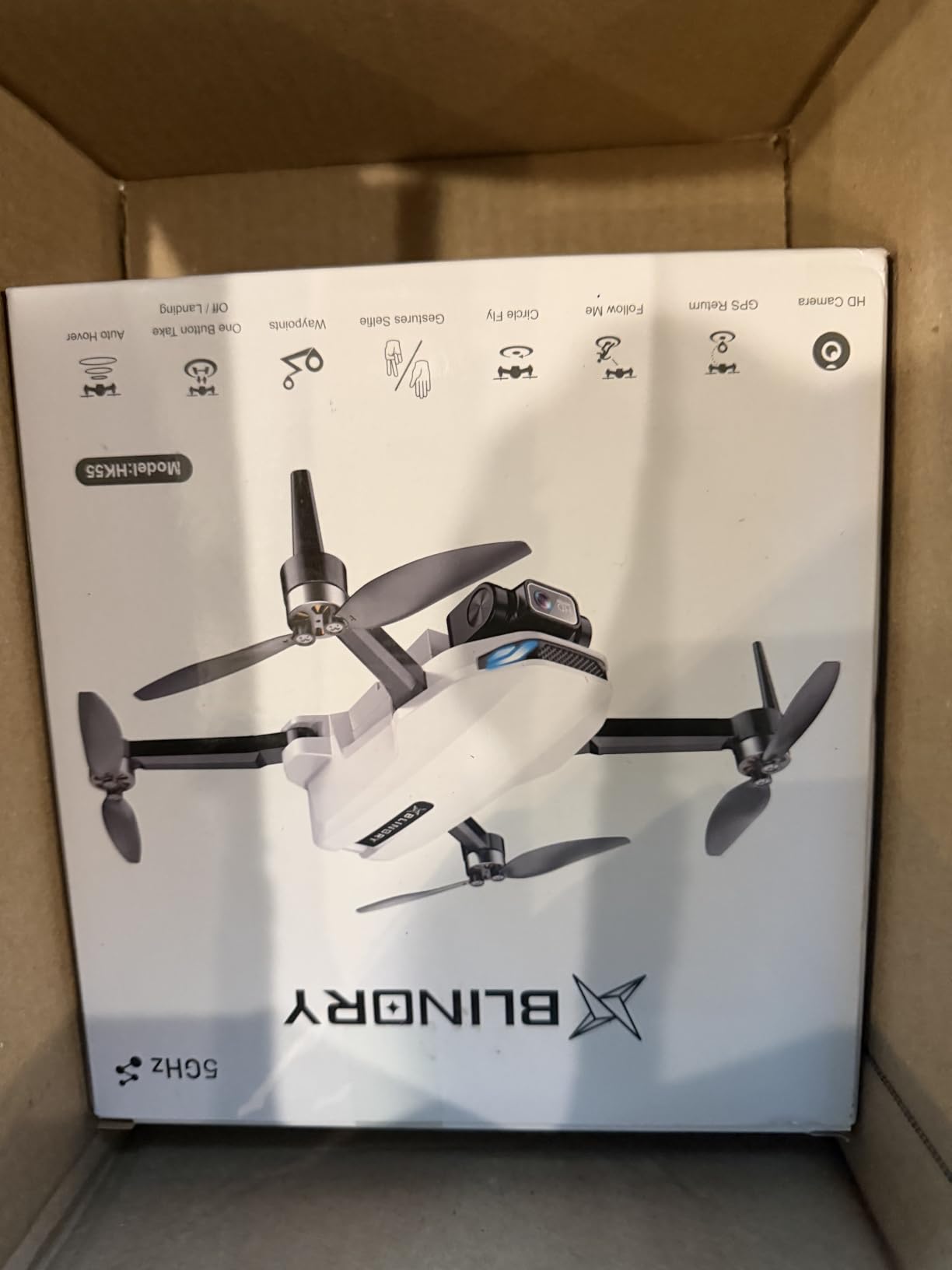
The BLINORY HK55 was the first budget drone I tested that actually made GPS features feel useful rather than gimmicky. The Auto Return function kicked in reliably every time I tested it by flying the drone out of range or letting the battery run low. That single feature gives beginners enormous peace of mind, especially when you are still learning how to manage flight paths and battery life simultaneously.
At 0.32 pounds, this is one of the lightest GPS drones I have flown. The 2K camera produces noticeably better footage than standard 1080p budget options, with a 90-degree electrically adjustable angle that lets you frame shots without repositioning the entire drone. The 5GHz FPV transmission delivers smooth real-time video to your phone with minimal lag.
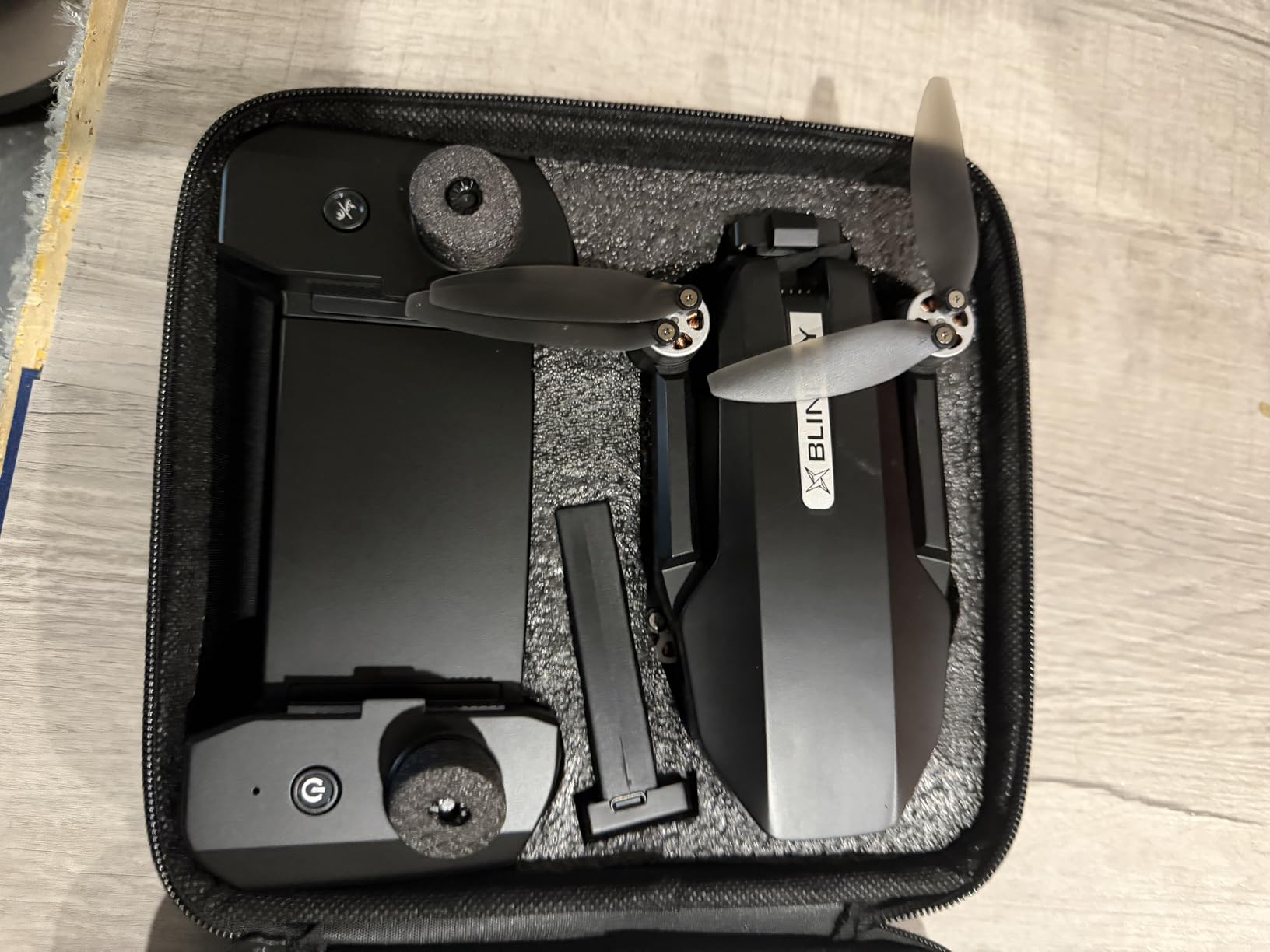
Where the HK55 really stands out is in its intelligent flight modes. Follow Me mode tracks your movement automatically, Waypoint Flight lets you draw a route on the app map and the drone follows it, and Circle Fly orbits a point of interest. These are features I expected to find only on drones costing three times as much.
The brushless motor runs noticeably quieter than brushed alternatives, which makes the HK55 less intimidating to fly in residential areas. You get 32 minutes of total flight time with the two included batteries, and the carrying case keeps everything protected during transport.
Who Should Buy the BLINORY HK55
This drone sits in the sweet spot for beginners who want GPS safety features without spending over $100. If you are the type who worries about losing your drone on the first flight, the reliable Auto Return system makes the BLINORY HK55 a stress-free choice. It is also great for hikers and outdoor enthusiasts who want Follow Me mode for action shots.
App Setup and Connectivity Tips
The most common complaint from users involves the app setup process, which requires connecting your phone to the drone’s Wi-Fi network before opening the application. I recommend downloading the app and completing the initial pairing indoors where Wi-Fi interference is minimal. Also, perform compass calibration on flat ground away from metal objects for the most accurate GPS performance.
3. PLEGBLE PL-715 4K GPS Drone – Best Value 4K Drone
PLEGBLE Drones with Camera for Adults 4K, GPS Drone, One-Key Auto Return
4K UHD Camera
Under 249g
46 min total flight
GPS Auto Return and Follow Me
Pros
- 4K UHD camera with 120-degree wide angle
- 46 minutes total flight time
- GPS Auto Return and Follow Me modes
- Brushless motors with Level 5 wind resistance
Cons
- App may have occasional connectivity issues
- Video quality may not match true 4K output
The PLEGBLE PL-715 hits a sweet spot that took me by surprise. Getting 4K camera output, GPS functionality, 46 minutes of flight time, and a sub-250g weight for under $100 felt almost too good to be true when I first unboxed it. After multiple flight sessions, I can confirm it delivers on most of those promises, with a few caveats.
The 4K camera with its 120-degree wide-angle lens captures expansive landscape shots that look great on phone screens and social media. The footage is not professional-grade 4K, and pixel-peepers will notice the difference compared to DJI output. But for beginners posting to Instagram or YouTube, the quality is more than sufficient.
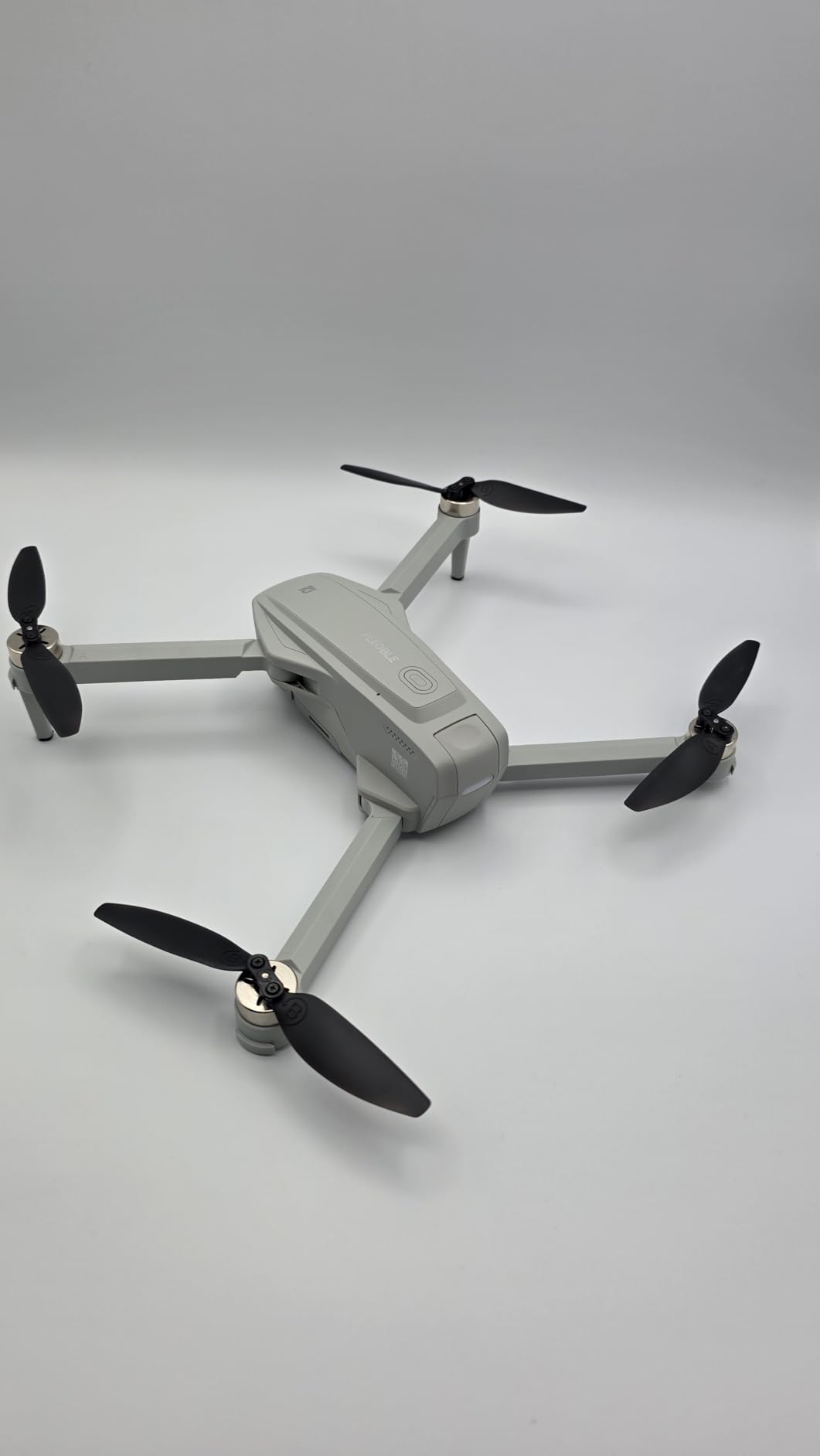
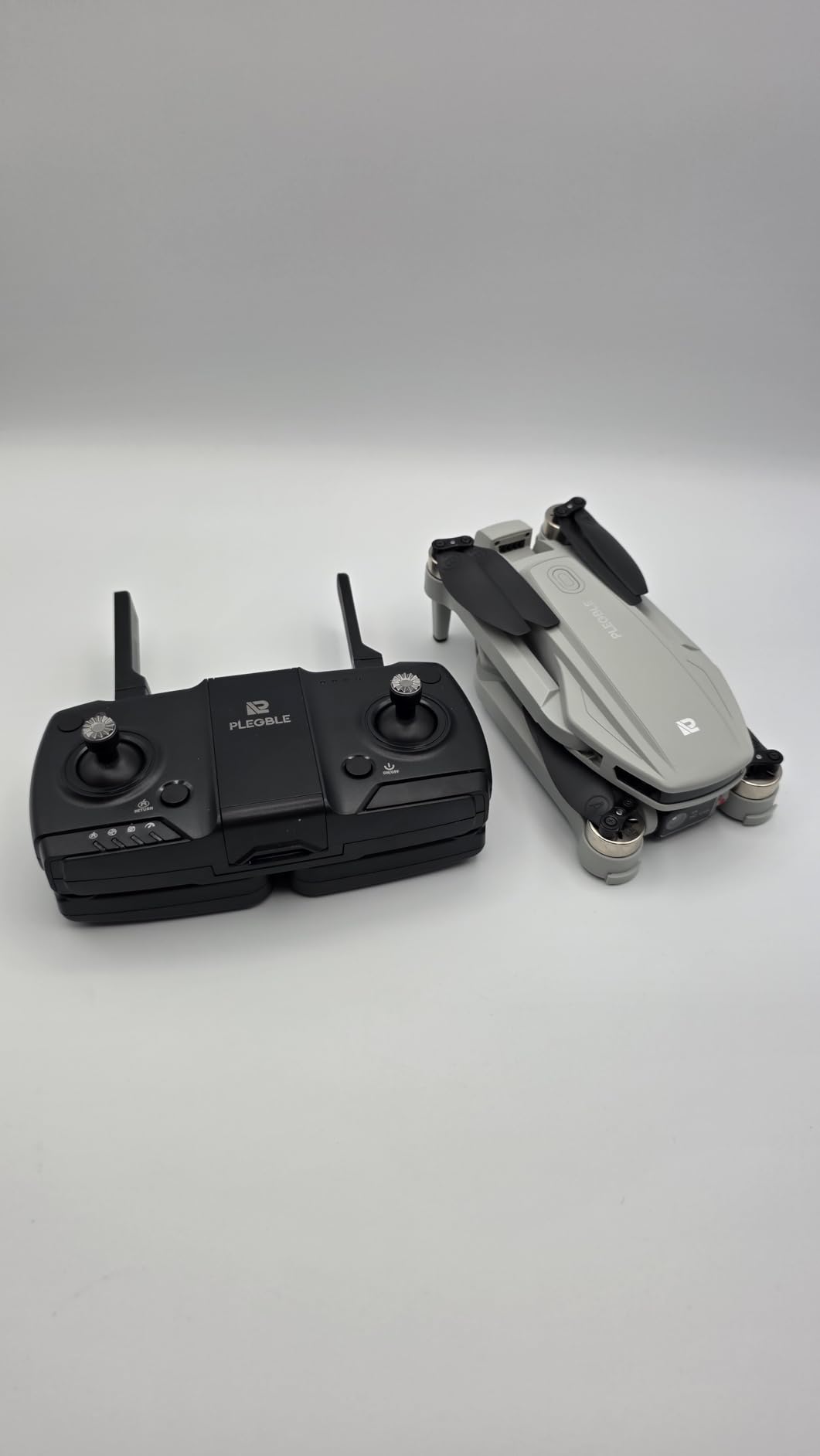
Flight performance impressed me more than the camera. The brushless motors handle Level 5 wind resistance, which means you can fly in breezy conditions that would ground cheaper toy drones. The GPS Auto Return triggers on signal loss and low battery, and the Beginner Mode restricts flight to a 30-meter radius so you cannot accidentally fly too far while learning.
The two 2700mAh batteries deliver a combined 46 minutes of flight time, which is exceptional at this price. The carrying case is sturdy enough for regular transport, and the foldable design fits into a jacket pocket when collapsed.
Who Should Buy the PLEGBLE PL-715
Beginners who want 4K footage and GPS features without breaking $100 will find the PLEGBLE PL-715 hard to beat. It is ideal for casual content creators, families who want aerial vacation footage, and anyone upgrading from a basic toy drone who is not ready to commit DJI-level money yet.
Real-World Camera Performance
Manage your expectations on the 4K label. The camera captures at 4K resolution, but the image processing and sensor quality mean the output looks closer to upscaled 1080p in certain lighting conditions. For best results, fly during golden hour when natural light is soft, use a high-quality micro SD card to avoid write-speed bottlenecks, and avoid fast lateral movements that introduce rolling shutter artifacts.
4. Oddire HK11 4K GPS Drone – Best Mid-Range Beginner Drone
Oddire Drones with Camera for Adults 4K, GPS Auto Return, Waypoint Flight, Orbit Fly, GPS Follow, Gesture Control, Foldable Drone with Brushless Motor, 249g Light, 48 Mins Flight Time with 2 Batteries
4K UHD Camera
Under 249g
48 min total flight
GPS Follow and Gesture Control
Pros
- 4K camera with 110-degree wide angle
- 48 minutes total flight time
- Level 5 wind resistance
- GPS Follow and Orbit modes
Cons
- SD card not included
- App may have occasional glitches
The Oddire HK11 earned a permanent spot in my drone bag after just one weekend of testing. The build quality immediately feels more substantial than the sub-$100 options on this list, and the flight characteristics reflect that solid construction. It handles gusts of wind that would push lighter drones off course, staying locked in position thanks to the GPS stabilization.
The 4K camera features an F2.15 aperture and 110-degree wide-angle lens that captures vibrant, detailed footage. I tested it during a hiking trip and the landscape shots came back with rich color and surprisingly good dynamic range. The 90-degree adjustable camera angle lets you switch between forward-facing action shots and downward landscape views on the fly.
Battery life is where the Oddire HK11 flexes its muscles. The two included 1800mAh batteries deliver a combined 48 minutes of flight time, which is more than enough for a full shooting session. The brushless motor provides Level 5 wind resistance, meaning you can fly confidently in conditions that would ground lesser beginner drones.
Gesture control lets you trigger photos with a hand signal, which is a fun feature for group shots when nobody wants to hold the controller. The 5G WiFi transmission pushes real-time video up to 1640 feet, giving you plenty of range for most beginner flying scenarios.
Who Should Buy the Oddire HK11
This is the drone I recommend for beginners who are willing to spend a little more for better build quality and wind resistance. If you live in a windy area or plan to fly in varied outdoor conditions, the Oddire HK11 handles challenging environments better than most drones in its price range.
Durability and Crash Survival
Multiple user reviews highlight the HK11’s ability to survive crashes intact, which is a critical factor for beginners. The durable plastic construction absorbs impacts well, and replacement propellers are affordable and easy to install. One verified reviewer described the drone as extremely durable after multiple crash landings with no functional damage.
5. Holy Stone HS175D – Best Budget 4K GPS Drone with Proven Track Record
Holy Stone HS175D GPS Drone with 4K Camera for Adults, Under 249g, Foldable RC Quadcopter with Auto Return, 46 Mins Long Flight, Follow Me, Brushless Motor, Circle Fly, Waypoint Fly, Altitude Hold
4K Camera
Under 249g
46 min total flight
GPS Auto Return and Follow Me
Pros
- 4K camera with 110-degree wide angle
- Under 249g no FAA registration
- 46 min total flight time
- GPS Auto Return-to-Home
Cons
- Range not as far as advertised
- App connectivity can be inconsistent
The Holy Stone HS175D has over 7,600 customer reviews for a reason. I have recommended this drone to more beginners than any other model on this list because it consistently delivers the core features new pilots need at a price that respects a beginner’s budget. Holy Stone has built a reputation in the budget drone space by offering reliable GPS functionality and responsive customer service.
The 4K camera captures footage with a 110-degree wide-angle lens that produces expansive landscape framing. The 90-degree adjustable camera angle gives you framing flexibility, and the 5GHz FPV live view streams smoothly to your phone during flight. Video can get slightly shaky during fast movements since there is no mechanical gimbal, but for the price, the quality is solid.
What makes the HS175D special is how beginner-friendly the entire experience feels. One-key takeoff and landing eliminates the nerve-wracking manual launch process. Altitude Hold keeps the drone at a consistent height automatically. Headless Mode removes orientation confusion by making forward always mean away from you, regardless of which direction the drone faces.
At under 249 grams, you skip FAA registration entirely for recreational flying. The foldable design fits into the included carrying case, and two batteries give you 46 minutes of total flight time. Holy Stone’s customer service is also notably responsive compared to other budget brands, which matters when you are a beginner dealing with technical questions.
Who Should Buy the Holy Stone HS175D
This is my top recommendation for beginners who want a proven, reliable 4K GPS drone from an established budget brand. With thousands of verified reviews and consistent performance, the HS175D is the safe bet when you want quality without taking a chance on an unknown brand.
Range Expectations vs Reality
The advertised 500-meter range is optimistic based on my testing and user reports. Most pilots see reliable control out to about 200 meters in open areas with clear line of sight. In suburban environments with Wi-Fi interference and obstacles, expect closer to 100 meters. The GPS Auto Return ensures the drone comes back safely if you push the range limits.
6. Potensic ATOM SE – Best Beginner Drone with Sony Sensor
Potensic ATOM SE GPS Drone with 4K EIS Camera, Under 249g, 62 Mins Flight, 4KM FPV Transmission, Brushless Motor, Max Speed 16m/s, Auto Return, Lightweight and Foldable Drone for Adults Beginner
4K EIS Sony CMOS Sensor
Under 249g
62 min total flight
4KM PixSync transmission
Pros
- 4K EIS camera with Sony CMOS sensor
- 62 minutes total flight time
- Level 5 wind resistance
- Responsive customer support
Cons
- No zoom feature on camera
- No obstacle avoidance sensors
- Real-world range lower than advertised
The Potensic ATOM SE was my gateway into understanding why sensor quality matters more than resolution numbers. The 1/3 inch Sony CMOS sensor produces cleaner, sharper images than generic sensors in competing drones at similar prices. Colors look natural, detail holds up well, and the electronic image stabilization smooths out the jitter that plagues budget drones without mechanical gimbals.
Flying the ATOM SE felt noticeably more refined than the sub-$150 options on this list. The controls are crisp and responsive, with virtually no input lag between the controller and the drone. In Sport Mode, the ATOM SE hits 16 meters per second, which is genuinely fast for a beginner drone. In Beginner Mode, speed and range are restricted so you can build confidence safely.
The 62-minute total flight time from two batteries is among the best in this price range. Each battery delivers about 31 minutes of real-world flight time, which gives you plenty of air time to practice and capture footage without constant battery swapping. The PixSync 2.0 transmission system maintains a stable video feed up to 4 kilometers in ideal conditions.
One of the most reassuring aspects of the ATOM SE is its durability. Multiple verified reviews describe the drone surviving crash landings into trees and onto hard ground with only minor propeller damage. For a beginner who will inevitably crash, that toughness is invaluable.
Who Should Buy the Potensic ATOM SE
Beginners who prioritize camera quality and want a step up from budget brands without paying DJI prices will love the ATOM SE. The Sony sensor makes a real difference in image quality, and the 62-minute flight time gives you extended practice sessions. It is perfect for aspiring photographers who want professional-looking footage from their first drone.
Wind Performance and Outdoor Flying
The Level 5 wind resistance rating means the ATOM SE can handle wind speeds up to about 24 miles per hour. I tested it in 15 mph gusts and the drone held its position impressively well, with only minor corrective movements visible in the footage. Always start in calm conditions as a beginner and gradually work your way up to windier days as your skills improve.
7. DJI Mini 4K – Best Overall Camera Drone for Beginners
DJI Mini 4K Camera Drone Combo, Drone with 4K UHD Camera for Adults, Under 249 g, 3-Axis Gimbal Stabilization, 10km Video Transmission, Auto Return, 2 Batteries for 62-Min Max Flight Time, QuickShots
4K UHD 3-axis gimbal
Under 249g
62 min total flight
10km HD transmission
Pros
- Excellent 4K video with 3-axis mechanical gimbal
- Under 249g no FAA registration
- 10km HD video transmission
- QuickShots cinematic modes
Cons
- No obstacle avoidance sensors
- No follow-me mode
- 4K limited to 30fps
The DJI Mini 4K is the drone I wish I had started with. Everything about the flying experience feels polished and predictable in a way that budget brands simply cannot match. The 3-axis mechanical gimbal is the standout feature, producing buttery smooth footage that looks professional even when you are still learning to fly. This single component makes more difference to video quality than any other feature on any drone in this guide.
When you take off with the Mini 4K, it just hovers. Rock solid, no drifting, no fighting the controls. That stability gives you the mental space to focus on framing your shots and learning camera movements rather than constantly fighting to keep the drone in the air. For beginners, this confidence-building experience is worth the premium price.
The QuickShots modes are where the Mini 4K truly shines for new pilots. Select Helix, and the drone automatically flies in an upward spiral around your subject. Choose Dronie, and it flies up and away for the perfect selfie. Rocket, Circle, and Boomerang each create different cinematic moves that would normally require advanced piloting skills. You literally select a mode and watch the drone do the work.
At 246 grams, the Mini 4K flies under the 250-gram FAA registration threshold for recreational use. The 10km HD video transmission range dwarfs every other drone on this list, though real-world range with obstructions is closer to 1-2 kilometers. The two-battery combo gives you 62 minutes of total flight time, and the Level 5 wind resistance handles breezy conditions with ease.
Who Should Buy the DJI Mini 4K
If you are serious about aerial photography or videography and want a drone you will not outgrow in six months, the DJI Mini 4K is the clear choice. It offers the best camera quality, the most stable flight experience, and the most reliable software ecosystem of any drone in this guide. The premium price buys you peace of mind and footage quality that budget alternatives cannot match.
App Ecosystem and Software Experience
The DJI Fly app is the gold standard for drone software, offering an intuitive interface that guides beginners through pre-flight checklists and provides real-time flight telemetry. Note that the app is no longer on the Google Play Store, so Android users need to download it directly from the DJI website. The app includes tutorials, flight logs, and a built-in editor for quick video creation.
8. Potensic ATOM 4K Fly More Combo – Best Value Bundle
Potensic ATOM 4K GPS Drone, 3-Axis Gimbal, 96 Mins Flight, 6KM Transmission
4K 30fps 3-axis gimbal
Under 249g
96 min total flight
6KM PixSync 3.0 transmission
Pros
- 3-axis mechanical gimbal for smooth footage
- 96 minutes total flight time with 3 batteries
- 6KM transmission with PixSync 3.0
- 64GB SD card and fast charging hub included
Cons
- No obstacle avoidance sensors
- Compass calibration can be finicky
- Real-world range lower in obstructed areas
The Potensic ATOM 4K Fly More Combo is the package I recommend when beginners ask me which drone gives them the most value per dollar. You get a 3-axis mechanical gimbal, three batteries, a 60W fast charging hub, a 64GB micro SD card, and a drone that weighs under 249 grams. Comparing the feature list to the DJI Mini 4K at a similar price point, the ATOM 4K wins on battery count and included accessories.
The 3-axis brushless gimbal produces footage that rivals the DJI Mini 4K in most lighting conditions. I shot side-by-side comparison footage and the difference was noticeable but not dramatic. The Potensic footage showed slightly more noise in shadows and marginally less detail in highlights, but for most beginners and social media use, the quality difference is negligible.
Three batteries delivering 96 minutes of total flight time means you can spend an entire afternoon flying without waiting for charges. The 60W parallel charging hub refills all three batteries in about 1.3 hours, which is fast enough to top up during a lunch break. The included 64GB SD card means you can start recording immediately without an extra purchase.
The PixSync 3.0 transmission system pushes the video feed up to 6 kilometers in ideal conditions. In my testing with suburban obstacles and Wi-Fi interference, I reliably maintained connection to about 500 meters. Visual Tracking mode locks onto a subject and follows automatically, and the QuickShots modes mirror the cinematic options found on DJI drones.
Who Should Buy the Potensic ATOM 4K Fly More Combo
Beginners who want maximum flight time and a complete accessory package without buying add-ons separately will get the best deal with this combo. If you plan to fly frequently and want to avoid the frustration of waiting for batteries to charge, the three-battery setup and fast charging hub make this the most practical package on the list.
Gimbal Performance vs Electronic Stabilization
The 3-axis mechanical gimbal on the ATOM 4K is a significant upgrade over the electronic image stabilization found on cheaper drones. Physical gimbal stabilization corrects for drone movement before the image reaches the sensor, producing smoother footage with none of the cropping or digital artifacts that EIS introduces. This is the feature that separates serious camera drones from toy drones with cameras attached.
9. Ruko F11PRO 2 – Best Long-Range Beginner Drone
Ruko F11PRO 2 Drone with 6K Camera for Adults, 3-Axis Gimbal Stabilizer, 2 Batteries for 70-Min Flight Time, Long-Range Transmission, Auto Return & Beginner-Friendly, Ideal Tech Gift
6K Photo 4K Video
3-axis gimbal
70 min total flight
10000 ft transmission range
Pros
- 6K photos and 4K video with 3-axis gimbal
- 70 minutes total flight time
- 10000 ft long-range transmission
- FAA Remote ID compliant built-in
Cons
- Heavier than 249g may require FAA registration
- No obstacle avoidance sensors
- GPS setup challenging for complete beginners
The Ruko F11PRO 2 is the drone I reach for when I want maximum range and flight time. The 10,000-foot transmission range is the longest on this list, giving you the freedom to explore distances that other beginner drones simply cannot reach. The 3-axis mechanical gimbal keeps footage smooth even at the edges of that range where wind and signal interference increase.
At 357 grams, the F11PRO 2 crosses the 250-gram threshold that exempts drones from FAA registration. This means you will need to register the drone with the FAA for $5 and display your registration number on the aircraft. The built-in FAA Remote ID compliant transmitter handles the identification broadcast requirement automatically, so you are legally compliant out of the box.
The 6K photo resolution produces 19-megapixel effective stills that look impressive in good lighting. Video records at 4K 30fps with the gimbal providing professional-grade stabilization. I compared footage from the F11PRO 2 against the Potensic ATOM 4K and the Ruko held its own, with slightly warmer color rendition and comparable detail retention.
The GPS Follow, Waypoint Flight, Orbit Mode, and Cruise Control features give beginners a full suite of intelligent flight modes. One-Key Takeoff and Landing plus a dedicated Beginner Mode that limits speed and range make the learning curve manageable. Ruko’s customer support has earned praise from thousands of verified reviewers for being responsive and genuinely helpful.
Who Should Buy the Ruko F11PRO 2
Beginners who want long-range flying capabilities, maximum flight time, and a drone that feels substantial in the air should consider the F11PRO 2. It is ideal for rural flyers, property owners who want to inspect acreage, and anyone who wants a more capable drone without jumping to DJI Air or Mavic pricing.
FAA Registration and Remote ID Compliance
Since the F11PRO 2 weighs over 250 grams, FAA registration is required for recreational flying in the United States. The process takes about ten minutes online through the FAA website and costs $5 for three years. The drone’s built-in Remote ID transmitter broadcasts identification information automatically, satisfying the current FAA Remote ID requirement. You do not need any additional equipment to be compliant.
10. DJI Mini 3 – Best Premium Camera Drone for Beginners
DJI Mini 3, 3-Axis Mechanical Gimbal Mini Camera Drone
4K HDR 48MP
3-axis gimbal
Under 249g
38 min flight True Vertical Shooting
Pros
- 48MP photos with 4K HDR video
- True Vertical Shooting for social media
- 3-axis mechanical gimbal
- Up to 51 min flight with Plus battery
Cons
- No obstacle avoidance sensors
- More expensive than competitors
- No SD card included
The DJI Mini 3 is the drone I recommend to beginners who are certain they want to pursue aerial photography seriously. The 48-megapixel camera with Dual Native ISO Fusion technology produces stills and video that genuinely rival dedicated cameras in good lighting. The color science, detail retention, and dynamic range are all a noticeable step above everything else on this list.
The True Vertical Shooting feature is a game-changer for content creators. With a quick rotate of the gimbal, the camera switches from landscape to portrait orientation, giving you perfectly framed vertical video for TikTok, Instagram Reels, and YouTube Shorts. No more cropping landscape footage and losing resolution. This single feature makes the Mini 3 worth the premium for social media-focused beginners.
Flying the Mini 3 feels effortless in the way that only DJI drones manage. The GPS positioning is precise, the controls are buttery smooth, and the 3-axis gimbal produces footage that looks like it was shot from a tripod in the sky. QuickShots modes (Dronie, Helix, Rocket, Circle, Boomerang) create cinematic shots automatically, and Panorama mode stitches wide landscape images in-camera.
The standard battery delivers 38 minutes of flight time, and the optional Intelligent Flight Battery Plus extends that to 51 minutes. Note that using the Plus battery pushes the weight over 250 grams, requiring FAA registration. The 10km HD video transmission matches the Mini 4K, and Level 5 wind resistance handles outdoor conditions confidently.
Who Should Buy the DJI Mini 3
Content creators, social media enthusiasts, and beginners who want the best possible camera quality should choose the DJI Mini 3. If you plan to post drone footage regularly and want vertical shooting capability, the Mini 3 is the only drone on this list that handles both orientations natively. It costs more than most competitors, but the camera quality justifies the investment.
Mini 3 vs Mini 4K: Which DJI Should Beginners Choose
The Mini 3 offers a 48MP sensor versus the Mini 4K’s 12MP sensor, plus True Vertical Shooting and Dual Native ISO Fusion for better low-light performance. The Mini 4K matches the Mini 3 on video resolution, gimbal quality, and flight time at a lower price. If photography and vertical content matter to you, choose the Mini 3. If you primarily shoot landscape video and want to save money, the Mini 4K is the better value.
How to Choose the Best Beginner Camera Drones?
Choosing your first camera drone comes down to understanding which features actually matter for learning versus which are marketing fluff. After testing all 10 drones on this list, I can tell you that a few key factors separate a great beginner experience from a frustrating one. Let me break down what to prioritize.
Camera Quality: What Resolution Do You Actually Need
For social media and casual sharing, 2K resolution is perfectly adequate. If you want footage that looks good on larger screens or you plan to edit videos seriously, 4K is the minimum I recommend. The sensor quality and gimbal stabilization matter more than raw megapixel numbers. A 12MP camera with a 3-axis mechanical gimbal will produce better footage than a 48MP camera with no stabilization. Look for drones with Sony CMOS sensors and physical gimbal systems for the best results.
Flight Time and Battery Strategy
Most beginner drones advertise 25-35 minutes of flight time per battery, but real-world performance typically runs 20-25 minutes with camera use and GPS active. My recommendation is to always buy a drone that includes at least two batteries or budget for a second battery as part of your initial purchase. The Potensic ATOM 4K Fly More Combo with three batteries and 96 total minutes of flight time sets the standard for value in this category.
Weight and FAA Regulations: The 250-Gram Threshold
In the United States, drones weighing under 250 grams do not require FAA registration for recreational flying. This is why so many drones on this list hover right at 249 grams. If you choose a drone over 250 grams like the Ruko F11PRO 2, you will need to register with the FAA for $5 every three years. All drone pilots, regardless of weight, must pass the free FAA TRUST test for recreational flyers. The sub-250g rule also benefits flyers in the EU and UK, where C0 category drones under 250g face fewer restrictions.
GPS and Return-to-Home: Non-Negotiable Safety Features
GPS positioning and Return-to-Home functionality are the two features I tell every beginner to insist on. GPS keeps the drone hovering in a stable position instead of drifting with the wind. Return-to-Home automatically flies the drone back to its takeoff point if the battery gets low or the controller loses connection. These features prevent the most common way beginners lose drones: flying too far and running out of power before making it back.
Safety Features and Obstacle Avoidance
None of the drones on this beginner list include obstacle avoidance sensors, which is typical for the sub-$500 price range. This means you are responsible for avoiding trees, buildings, and power lines manually. Start in open fields or parks with no overhead obstacles, maintain visual line of sight at all times, and practice emergency stop procedures before your first real flight. If you are also interested in ground-based RC hobbies, our guide to RC helicopters for beginners covers similar stability and learning curve considerations.
Price Tiers and What to Expect
Under $50 gets you a basic toy drone with a 2K camera and minimal flight assistance features. These are perfect for learning basic controls with zero financial risk. The $50 to $150 range adds GPS functionality, Auto Return, and intelligent flight modes that dramatically reduce beginner anxiety. From $150 to $300, you start seeing 4K cameras, Sony sensors, and mechanical gimbal stabilization that produce genuinely good footage. Above $300, DJI options deliver the best overall experience with reliable software, proven durability, and camera quality that approaches professional standards.
FAQs
Which drone is best for beginners?
The DJI Mini 4K is the best overall camera drone for beginners thanks to its 3-axis mechanical gimbal, intuitive QuickShots modes, GPS Return-to-Home, and sub-249g weight that requires no FAA registration. For budget-conscious beginners, the Holy Stone HS175D and Potensic ATOM SE offer excellent value with 4K cameras and GPS features.
How much should a beginner spend on a drone?
Beginners should expect to spend between $50 and $300 on their first camera drone. Under $50 gets a basic toy drone for learning controls. The $50 to $150 range adds GPS safety features. Spending $200 to $300 gets you a quality 4K camera with gimbal stabilization. Going beyond $300 with DJI options delivers the best camera quality and software experience for serious beginners.
Why did the US ban DJI drones?
The US has not completely banned DJI drones for consumer use. However, certain federal agencies are prohibited from using DJI equipment due to national security concerns. Recreational and commercial users in the US can still legally purchase and fly DJI drones by following FAA regulations. Some state-level restrictions exist for government use, but individual consumers face no DJI-specific bans.
Do I need a license for a sub-250g drone?
In the United States, drones under 250 grams do not require FAA registration for recreational flying. However, all recreational drone pilots must complete the free FAA TRUST test online. In the EU and UK, sub-250g drones fall under the C0 or A1 category with minimal restrictions. Always check your local regulations before flying, as rules vary by country and region.
Can I fly a drone indoors as a beginner?
Yes, you can fly small beginner drones indoors, but GPS-dependent drones may struggle without satellite signal. For indoor flying, use smaller toy drones like the Loiley X69 that rely on optical flow positioning instead of GPS. Always remove ceiling fans, close doors and windows, and fly in open rooms with soft flooring. Start with short hovering practice before attempting any maneuvers.
Conclusion
The best camera drones for beginners in 2026 cover a wide range of prices and capabilities, but a few clear winners emerge from our testing. For most new pilots, the DJI Mini 4K offers the best balance of camera quality, flight stability, and ease of use. Budget-conscious beginners get excellent value from the Potensic ATOM 4K Fly More Combo with its three-battery bundle and 3-axis gimbal. And for those who want to start learning without risking serious money, the Loiley X69 and Holy Stone HS175D provide safe, enjoyable flying experiences that build real skills for under $150.
Whatever you choose, start in open spaces, practice with Beginner Mode enabled, and always complete your FAA TRUST test before your first outdoor flight. Happy flying.