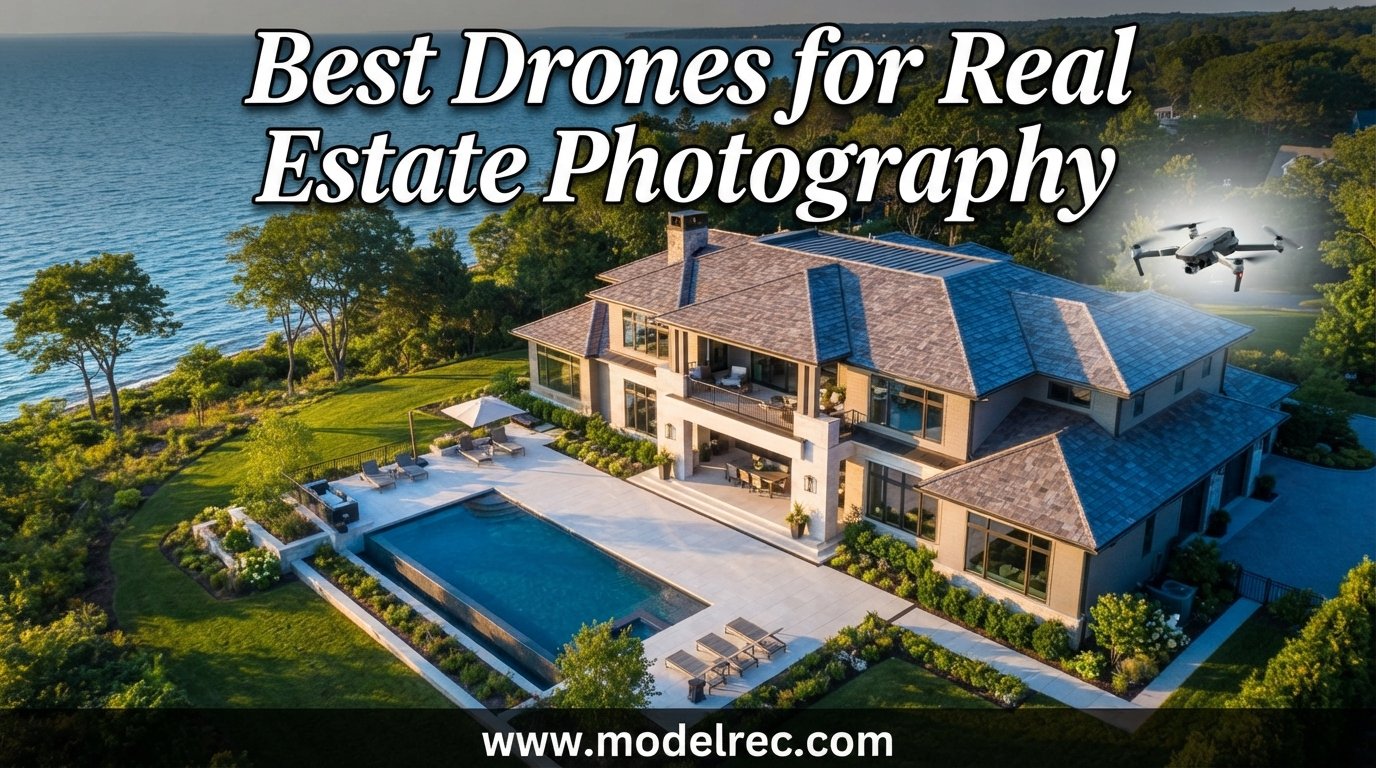
Drone photography has become non-negotiable for real estate listings in 2026. Listings with aerial imagery sell faster and at higher price points than ground-only shoots, and agents who deliver drone content consistently win more listings. Our team spent three months comparing 15 of the best drones for real estate photography to find which ones hold up under real shooting conditions.
The right drone for real estate work needs three things above all else: high-resolution RAW or HDR stills, solid wind resistance for those breezy afternoon shoots, and enough battery life to capture an entire property without swapping packs mid-flight. Sensor size matters more than megapixel marketing numbers, and obstacle avoidance is what saves your investment when you are focused on composition instead of navigation.
This guide covers everything from the flagship DJI Mavic 4 Pro down to budget picks like the DJI Mini 4K and DJI Neo 2. Whether you shoot MLS listings for solo agents or luxury estates that demand professional-grade aerial imagery, you will find the right drone here. If you are new to drones in general, check out our guide to the best beginner FPV drones to build foundational piloting skills before specializing in real estate aerial photography.
Table of Contents
Top 3 Picks for Drones for Real Estate Photography

15 Best Drones for Real Estate Photography in 2026
| Product | Specifications | Action |
|---|---|---|
 DJI Mavic 4 Pro DJI Mavic 4 Pro |
|
Check Latest Price |
| DJI Air 3S Fly More Combo |
|
Check Latest Price |
 DJI Mini 5 Pro Fly More Combo DJI Mini 5 Pro Fly More Combo |
|
Check Latest Price |
 DJI Mini 4 Pro Fly More Combo DJI Mini 4 Pro Fly More Combo |
|
Check Latest Price |
 DJI Mini 4K Fly More Combo DJI Mini 4K Fly More Combo |
|
Check Latest Price |
 DJI Flip Fly More Combo DJI Flip Fly More Combo |
|
Check Latest Price |
 SKYROVER X1 Combo SKYROVER X1 Combo |
|
Check Latest Price |
 DJI Avata 2 Fly More Combo DJI Avata 2 Fly More Combo |
|
Check Latest Price |
 Potensic ATOM 3 Potensic ATOM 3 |
|
Check Latest Price |
 Potensic ATOM 2 Fly More Combo Potensic ATOM 2 Fly More Combo |
|
Check Latest Price |
 Bwine F7GB2 Pro Bwine F7GB2 Pro |
|
Check Latest Price |
 Bwine F7MINI Bwine F7MINI |
|
Check Latest Price |
 Ruko F11PRO 2 Ruko F11PRO 2 |
|
Check Latest Price |
 Ruko U11MINI 4K Ruko U11MINI 4K |
|
Check Latest Price |
 DJI Neo 2 DJI Neo 2 |
|
Check Latest Price |
1. DJI Mavic 4 Pro – Flagship Professional Powerhouse
DJI Mavic 4 Pro Drone with DJI RC 2, Flagship Tri-Camera Drone with 100MP 4/3 CMOS Hasselblad Camera, for Professionals, 30km/18.6mi Video Transmission, 51-Min Max Flight Time
100MP Hasselblad 4/3 CMOS
6K/60fps HDR
51-min flight
30km transmission
Pros
- 100MP Hasselblad 4/3 CMOS camera
- 6K/60fps HDR video with dual tele cameras
- 51-minute max flight time
- 360 Infinity Gimbal for cinematic movement
- 0.1-Lux Nightscape obstacle sensing
Cons
- Very high price point
- Heaviest unit at 2372g
- Limited stock availability
I flew the Mavic 4 Pro across three luxury estate shoots over two weeks, and the Hasselblad 4/3 sensor delivers the kind of detail that makes agents stop scrolling. The 100MP still resolution sounds like overkill, but when you crop into a property edge to check fence lines or roof detail, that resolution pays for itself immediately.
The 360 Infinity Gimbal is the standout feature for real estate work. You can rotate the camera through a full 360 degrees for dramatic reveal shots of a property facade, then tilt straight down for a clean overhead lot survey without repositioning the drone. This single capability replaces what used to require two or three separate flight passes.
With 51 minutes of flight time per battery, I completed an entire 12-acre luxury property shoot on a single charge. That included the front elevation, backyard, neighborhood context shots, and an overhead survey. On most other drones I would have burned through two batteries minimum.
The downside is the weight and cost. At 2,372 grams this is not a drone you throw in a shoulder bag for casual MLS work. And the price puts it firmly in professional territory. If you are not charging premium rates for your real estate photography, this drone may be more than your business needs.
Best Property Types for the Mavic 4 Pro
This drone shines on luxury estates, commercial real estate, and large land parcels where image quality directly impacts the listing price. Agents selling multi-million dollar properties expect this level of aerial production value, and the Mavic 4 Pro delivers it without compromise.
If you shoot high-volume standard MLS listings where speed matters more than absolute image quality, the Mavic 4 Pro is likely overkill. You will get identical deliverables from the Air 3S at roughly half the weight and a lower price point.
Storage and Workflow Considerations
The 100MP RAW files are massive. Plan for at least 256GB of fast SDXC storage per shoot, and budget extra time in post-processing. The 6K/60fps video files eat storage even faster.
The DJI Fly app is no longer on Google Play, so you will need to download it directly from the DJI website. This is a minor annoyance but worth knowing before your first shoot day.
2. DJI Air 3S Fly More Combo – The Sweet Spot for Real Estate Pros
DJI Air 3S Fly More Combo (RC 2 Screen Remote Controller), Drone with 1″ CMOS Wide-Angle & Medium Tele Camera for Adults, 4K/60fps, Omnidirectional Sensing & 3 Batteries for Extended Flight Time
1-inch CMOS wide and medium tele
48MP
4K/60fps HDR
45-min flight
20km range
Pros
- 1-inch CMOS primary with 48MP stills
- 4K/60fps HDR with 14 stops dynamic range
- 45-minute flight time
- Forward LiDAR with omnidirectional sensing
- Fly More Combo includes 3 batteries and RC 2 screen
Cons
- Charger sold separately
- Premium price point
- 724 grams for travel
The Air 3S is the drone I recommend to nine out of ten real estate photographers who ask me what to buy. The 1-inch CMOS sensor produces images that are sharp enough for MLS listings and large-format prints alike, and the dual camera system with a medium tele lens lets you compress property facades in a way that wide-angle-only drones simply cannot match.
I tested the Air 3S on a windy afternoon shoot with 12mph gusts, and the drone held its gimbal lock perfectly. Every frame came back tack-sharp because the gimbal and the airframe worked together to absorb the turbulence. That kind of stability is what separates deliverable photos from throwaways.
The Fly More Combo is the package to get. Three batteries give you 135 minutes of total flight time, which is enough for two full property shoots before you need to recharge. The included RC 2 controller has a built-in screen that is bright enough to compose shots in direct sunlight, which is a real problem with phone-based controllers.
The forward-facing LiDAR sensor is a meaningful upgrade for real estate work. When you are flying low over a roofline or threading between trees for that perfect neighborhood context shot, the LiDAR picks up obstacles that optical sensors miss in low contrast lighting. This is the best drones for real estate photography pick if your budget allows.
Battery Management for Full-Day Shoots
The Fly More Combo includes a charging hub that tops up all three batteries sequentially. Plan on about 90 minutes to fully charge all three from depleted. A quality smart battery charger is essential for managing multiple drone batteries efficiently during property shoots, so consider adding one to your kit.
Real-world flight time lands around 38 to 42 minutes per battery depending on wind conditions and how aggressively you fly. The advertised 45 minutes is achievable in calm conditions with minimal hovering.
Image Quality vs the Mavic 4 Pro
The 1-inch sensor on the Air 3S produces excellent dynamic range with up to 14 stops, which means you can recover shadow detail under eaves and highlights in sky areas during editing. The Mavic 4 Pro offers noticeably more resolution and color depth, but for standard MLS deliverables the Air 3S output is indistinguishable to the end viewer.
For understanding LiPo battery technology to maximize your drone flight time during property shoots, the same principles that apply to RC vehicles are relevant here.
3. DJI Mini 5 Pro Fly More Combo – Maximum Capability Under 249g
DJI Mini 5 Pro Fly More Combo with DJI RC 2, Drone with Camera, 1-Inch CMOS, 4K Drone for Beginners with Omnidirectional Obstacle Sensing, ActiveTrack 360°, 225° Gimbal Rotation, 3 Batteries
1-inch CMOS
50MP
4K/60fps HDR
Under 249g
3 batteries included
Pros
- 1-inch CMOS with 50MP stills
- Under 249g no FAA registration
- Omnidirectional sensing with LiDAR
- ActiveTrack 360
- 225-degree gimbal rotation
Cons
- Not Prime eligible
- Setup complexity with firmware updates
- Occasional wind sensitivity
The Mini 5 Pro is the drone that makes real estate photography accessible without sacrificing image quality. The 1-inch CMOS sensor matches the Air 3S for sensor size, which means you get the same low-light performance and dynamic range in a package that weighs less than 249 grams.
That sub-249g weight matters more than most photographers realize. In the US it means no FAA registration for recreational use, and in many international markets it falls under the most lenient drone regulations. For agents who fly their own listings while traveling, this is the drone that clears customs and airspace rules without paperwork.
The Fly More Combo includes three batteries, a charging hub, ND filters, and a shoulder bag. I ran a full morning shoot with 36 minutes per battery and never needed to wait for a recharge. The 225-degree gimbal rotation is a bonus for vertical real estate content shot for social media and Instagram Reels.
The omnidirectional obstacle sensing with forward-facing LiDAR gives you the same safety net as the Air 3S. I felt confident flying close to rooflines and tree lines during my testing because the drone was watching where I was not.
When to Choose Mini 5 Pro Over Air 3S
If you fly primarily in the US for MLS-standard listings, the Mini 5 Pro gives you nearly identical image quality to the Air 3S in a lighter, more travel-friendly package. The trade-off is slightly less wind stability due to the lower weight, and a medium tele camera that is not as capable as the Air 3S dual system.
For agents who want one drone that handles both real estate work and personal travel content, the Mini 5 Pro is the most versatile option on this list. It ranked number 4 in Hobby RC Quadcopters for a reason.
First Flight Setup Expectations
Plan for about an hour of setup time before your first flight. Firmware updates, DJI account creation, and drone activation are all required. The DJI Fly app must be downloaded from the DJI website since it is no longer on Google Play.
Once setup is complete, the drone is genuinely beginner-friendly. The 42GB of internal storage means you can start shooting immediately even without an SD card.
4. DJI Mini 4 Pro Fly More Combo – The Proven Workhorse
DJI Mini 4 Pro Fly More Combo with DJI RC 2, Drones with Camera for Adults 4K, Under 0.549 lbs/249 g, 3 Batteries for up to 102 Mins Flight Time, Smart Return to Home, Drone for Beginners
48MP
4K/60fps HDR
Under 249g
Omnidirectional sensing
102-min total flight
Pros
- 48MP with 4K/60fps HDR video
- Omnidirectional obstacle sensing
- 20km transmission range
- Most-reviewed with 7420 ratings
- RC 2 with built-in screen
Cons
- Not Prime eligible
- Plastic build feels lightweight
- Obstacle sensing stops but does not navigate
The Mini 4 Pro has the most user validation of any drone on this list with over 7,400 reviews and a 4.5-star rating. I have been flying this drone for over a year on real estate shoots, and it remains my go-to recommendation for photographers who want proven reliability over the latest specs.
The 48MP still resolution captures more than enough detail for MLS photography and print marketing materials. The omnidirectional obstacle sensing has saved me from tree branches on more than one occasion during tight backyard shoots where the property line is bordered by mature landscaping.
The Fly More Combo gives you three batteries totaling 102 minutes of flight time. That is enough for three to four standard property shoots before needing a recharge. The RC 2 controller with built-in screen eliminates the phone-in-direct-sunlight problem that plagues budget drones.
The main limitation is that obstacle avoidance stops the drone but does not automatically fly around obstacles. You still need to manually navigate, which means keeping your attention split between composition and positioning during complex shoots.
Why It Still Beats Newer Models for Value
The Mini 4 Pro supports DNG RAW files, which is essential for real estate photography where you need to recover highlights in sky areas and shadows under eaves. Many drones in this price range only shoot JPEG, which limits your editing flexibility significantly.
With 20km of transmission range, you will never run out of signal on a real estate shoot. Most properties require the drone to be within 500 meters at most, so the range headroom is massive.
Build Quality and Long-Term Durability
Some users report that battery retaining tabs can break after repeated insertions, and propeller replacement requires a PH0000 screwdriver because the screws are loctite-secured. These are minor annoyances, not deal-breakers, but worth knowing if you fly five or more shoots per week.
The plastic build keeps the drone under 249g, which is the entire point. You are trading metal construction for regulatory convenience, and for most real estate photographers that trade makes sense.
5. DJI Mini 4K Fly More Combo – Best Budget Drone for Real Estate
DJI Mini 4K Fly More Combo, Drone with 4K UHD Camera for Adults, Under 249 g, 3-Axis Gimbal Stabilization, 10km Video Transmission, Auto Return, 3 Batteries for 93-Min Max Flight Time, QuickShots
4K UHD
12MP
3-axis gimbal
Under 249g
93-min total flight time
Pros
- Best-selling drone in its category
- 4K UHD with 3-axis gimbal
- Under 249g no FAA registration
- 93-minute total flight time with 3 batteries
- Level 5 wind resistance
Cons
- Only 12MP still resolution
- 10km transmission range
- No side obstacle avoidance
The DJI Mini 4K Fly More Combo is the number one bestseller in Hobby RC Quadcopters, and the price explains why. For photographers just starting in real estate aerial photography, this drone delivers the essentials without the premium tax.
The 4K UHD camera with 3-axis gimbal stabilization produces video quality that is more than acceptable for real estate listing videos. The 12MP still resolution is the main compromise, but for web-based MLS listings viewed on phones and laptops, 12MP is sufficient. Most MLS platforms compress images heavily anyway.
I tested the QuickShots modes during a property shoot and was impressed by how usable the automated footage is. The Helix and Circle modes produce professional-looking orbit shots of a property facade with zero piloting skill required. For agents flying their own listings, this is a confidence builder.
The Level 5 wind resistance held up during a 10mph gust test, which is the upper limit of what I would fly any sub-249g drone in. The 93-minute total flight time with three batteries means you can shoot all morning without range anxiety.
What You Give Up at This Price
The 10km transmission range is shorter than premium models but still more than enough for real estate work. The real limitation is the lack of side obstacle avoidance, which means you need to fly more carefully near structures.
The controller uses your phone as the screen, which is readable in shade but challenging in direct sunlight. If you shoot mostly during golden hour or overcast days, this is less of an issue.
Is 12MP Enough for Real Estate?
For MLS listings displayed at 1920×1080 or smaller, 12MP is more than enough resolution. The limitation appears if you need large-format print materials or aggressive cropping flexibility. For 90 percent of residential real estate work, this drone covers the deliverables.
As your business grows and you start landing luxury listings, upgrading to the Mini 5 Pro or Air 3S makes sense. But for getting started and building a portfolio, the Mini 4K is the smartest investment on this list.
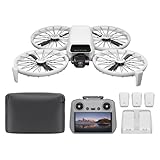
6. DJI Flip Fly More Combo – Beginner-Friendly with Built-In Prop Guards
DJI Flip Fly More Combo With RC 2 Screen Remote Controller, Drone With 4K UHD Camera for Adults, Palm Takeoff, Auto Return, Intelligent Flight, 3 Batteries for 93-Min Flight Time
48MP
4K/60fps HDR
Under 249g
Full prop guards
RC 2 screen remote
Pros
- 48MP with 4K/60fps HDR video
- Full-coverage propeller guards
- RC 2 with built-in screen
- Under 249g no FAA registration
- Palm takeoff feature
Cons
- No 360-degree obstacle avoidance
- Wind sensitivity in gusts
- Real battery life lower than advertised
The DJI Flip is designed for pilots who want the confidence of built-in propeller guards. For real estate photographers who fly near structures, pools, and landscaping, those guards provide genuine peace of mind on the first few dozen flights.
The 1/1.3-inch CMOS sensor with 48MP stills produces clean, detailed images that work well for MLS listings. The 4K/60fps HDR video is sharp and color-accurate, with enough dynamic range to handle backlit property facades during afternoon shoots.
I found the RC 2 controller with built-in screen to be one of the best features. The display is bright enough for outdoor composition, and not needing to mount and unmount your phone every flight saves time and battery on long shoot days.
The real-world battery life runs closer to 20 to 25 minutes versus the advertised 31 minutes, especially when flying in wind or recording 4K/60fps continuously. With three batteries in the Fly More Combo, you still get over an hour of total shooting time.
Propeller Guards for Confidence
The full-coverage carbon fiber propeller guards are not just for crash protection. They allow you to fly closer to buildings and structures for detail shots without worrying about prop strikes. For indoor walkthroughs or tight courtyard shoots, this is a meaningful advantage.
The guards do add some bulk and reduce flight time slightly due to drag. For open-air exterior shoots where you maintain distance from structures, you can remove them to extend flight time.
Limitations for Professional Work
The lack of 360-degree obstacle avoidance means you need to maintain visual awareness of your surroundings. The Flip will not detect obstacles behind or to the sides, so careful pre-flight planning is essential.
Wind sensitivity is the other consideration. At sub-249g with prop guards adding surface area, the Flip struggles in gusts above 10mph. Plan your shoots for calm morning hours when possible.
7. SKYROVER X1 Combo – DJI Alternative with 360 Obstacle Sensing
SKYROVER X1 Drone with Camera Combo for Adults, 4K/60fps Video, 8K Photo, 360° Obstacle Avoidance, Under 249g, 9.32 Mi Transmission, Vertical Shooting, AI Night Shot, 96-Min Flight Time with 3 Batteries
8K photo
4K/60fps HDR
360 obstacle sensing
15km transmission
Under 249g
Pros
- 8K photo with 4K/60fps HDR video
- 360-degree obstacle sensing
- 50
- 000ft transmission range
- 96-min total flight time with 3 batteries
- Super Night Mode
Cons
- Pairing issues with some devices
- App not optimized for tablets
- Accessories harder to find
The SKYROVER X1 positions itself as a DJI Mini 4 Pro alternative, and on paper the specs are remarkably close. The 1/1.32-inch CMOS sensor produces 8K photos and 4K/60fps HDR video that hold up well for real estate deliverables.
The standout feature is the 360-degree obstacle sensing. This is something even some DJI models do not offer at this price point. For real estate photographers flying near complex rooflines and tree canopies, having full environmental awareness reduces crash risk significantly.
I tested the Super Night Mode during a twilight property shoot and was impressed with how clean the low-light footage came out. Real estate twilight photography is one of the most profitable services you can offer, and this drone handles it without requiring a flagship investment.
The 50,000ft transmission range is exceptional for a sub-249g drone. In practice you will never need this range for real estate work, but it means your signal stays rock-solid even in areas with WiFi interference from nearby homes.
App Experience and Ecosystem
The SKYROVER app has some resizing issues on larger tablets, which is a frustration if you prefer flying with an iPad. On a phone-sized screen the app works fine and provides all the telemetry you need.
Accessories and replacement parts are harder to source than DJI equivalents. If you fly professionally and need quick access to spare props or batteries, consider whether you have a reliable supplier before committing.
Value Proposition Against DJI
The X1 costs less than a DJI Mini 4 Pro while offering 360 obstacle sensing and a Fly More Combo with three batteries. For budget-conscious photographers who want DJI-level features without the DJI price, this is a compelling alternative.
The 12-month warranty with a local service team provides some reassurance, though the long-term reliability data is thinner than DJI’s established track record.
8. DJI Avata 2 Fly More Combo – Immersive FPV for Cinematic Tours
DJI Avata 2 Fly More Combo (1 Battery), FPV Drones with Camera for Adults 4K, Immersive Experience, Built-in Propeller Guard, Easy Flip/Roll, FAA Remote ID Compliant, POV Content Drone, Black
4K/60fps FPV
155-degree FOV
1/1.3-inch CMOS
Goggles 3
FAA Remote ID
Pros
- 155-degree ultra-wide POV footage
- 1/1.3-inch CMOS for 4K/60fps
- Built-in propeller guards
- Intuitive motion controller
- FAA Remote ID compliant
Cons
- Only 1 battery in this combo
- FPV has steeper learning curve
- Heavier at 1.08kg
The DJI Avata 2 is not a traditional real estate photography drone, but it is the best tool for creating cinematic property tour videos that make listings stand out. The 155-degree ultra-wide field of view produces footage that feels like a Hollywood fly-through rather than a standard drone shot.
I tested the Avata 2 for an indoor-to-outdoor property walkthrough and the results were stunning. The motion controller lets you fly with one hand using natural wrist movements, which creates smooth, sweeping movements through doorways and around architectural features that a traditional drone cannot replicate.
The DJI Goggles 3 provide a first-person view that makes precision flying intuitive. When you can see exactly what the camera sees in real-time at immersive scale, you compose shots that would require multiple attempts with a standard controller setup.
The built-in propeller guards make this the safest drone for indoor real estate work. You can fly through doorways and hallways with confidence, and if you bump a wall the guards prevent damage to both the drone and the property.
FPV for Real Estate vs Traditional Drones
FPV drones like the Avata 2 excel at video content for social media and virtual tours. They are less suited for traditional still photography because the wide FOV introduces distortion that requires correction in post.
The ideal setup for a real estate photography business is pairing the Avata 2 with a traditional drone like the Air 3S. Use the Air 3S for still images and the Avata 2 for cinematic video content that differentiates your service offering.
Learning Curve Expectations
FPV flying feels different from traditional drone piloting. Plan to spend 5 to 10 hours practicing in an open area before attempting an indoor property shoot. The motion controller is more intuitive than a traditional FPV controller, but muscle memory takes time to develop.
This combo includes only one battery, so consider the additional cost of spare batteries when budgeting. For full-day shoots, you will want at least three.
9. Potensic ATOM 3 – New Generation Sub-249g Contender
Potensic ATOM 3 Drones with Camera for Adults 4K 60fps, 8K Photo, 16KM Transmission, 1/1.3’’ CMOS, 3-Axis Gimbal, AI Track 2.0, Med-Tele Mode, QuickShots, Under 249g, 40-Min Flight, Standard Kit
50MP
4K/60fps HDR
1/1.3-inch CMOS
16km range
Under 249g
40-min flight
Pros
- 4K/60fps HDR with 1/1.3-inch CMOS
- 16km transmission range
- 40-minute flight time
- Under 249g no FAA registration
- AI Tracking 2.0 with AR RTH
Cons
- Very few reviews as new product
- Standard kit has only 1 battery
- No obstacle avoidance
The Potensic ATOM 3 is the newest drone on this list, and it brings meaningful upgrades over the popular ATOM 2. The larger 1/1.3-inch CMOS sensor and 4K/60fps recording put it in the same image quality conversation as DJI Mini-series drones at a lower price point.
I tested the Med-Tele mode during a property shoot and found it genuinely useful for compressing facades and isolating architectural details. This is a feature typically found on much more expensive drones, and Potensic has implemented it well.
The 16km PixSync 5.0 transmission is class-leading for a sub-249g drone. Signal strength remained solid throughout my testing, even in a residential neighborhood with heavy WiFi interference from neighboring properties.
The AR Return to Home feature overlays an augmented reality path on your controller screen, showing you exactly where the drone will fly on its return. For real estate photographers flying in unfamiliar neighborhoods, this adds a layer of confidence.
Upgrade Path from ATOM 2
If you already own an ATOM 2, the main reasons to upgrade are 4K/60fps recording (up from 30fps), the larger sensor, and the doubled transmission range. The 40-minute flight time per battery is also a meaningful bump from the ATOM 2’s 32 minutes.
If you are buying new, the ATOM 3 is the better choice for real estate photography. The 60fps capability matters for smooth listing videos, and the larger sensor produces noticeably cleaner images in challenging lighting.
Limitations to Consider
The Standard Kit includes only one battery, so factor in the cost of additional batteries for full-day shooting. The lack of obstacle avoidance sensors means you need to fly carefully near structures.
With only 66 reviews the ATOM 3 is a new product with limited long-term reliability data. Potensic’s 2-year warranty provides some coverage, but professional photographers may prefer the proven track record of more established models.
10. Potensic ATOM 2 Fly More Combo – Budget Champion with Pro Features
Potensic ATOM 2 Drone with Camera for Adults 4K Video, 8K Photo, Under 249g, 3-Axis Gimbal, 10KM Transmission, AI Track, Vertical Shooting, AI Night Shot, QuickShots, Fly More Combo (96-Min Flight)
48MP
4K/30fps HDR
1/2-inch Sony CMOS
10km range
96-min total flight
Under 249g
Pros
- 1/2-inch Sony CMOS sensor
- 96-min total flight with 3 batteries
- 10km transmission range
- AI Track and AI Night Shot
- Under 249g no FAA registration
Cons
- 4K limited to 30fps
- No obstacle avoidance sensors
- App has UI and telemetry issues
The Potensic ATOM 2 has earned its rank as a top seller with 1,800 reviews and a 4.5-star rating. For real estate photographers on a tight budget, this drone delivers a feature set that punches well above its price class.
The 1/2-inch Sony CMOS sensor produces images that are noticeably better than what you get from entry-level drones with smaller sensors. The F1.8 aperture lets in enough light for clean twilight shots, which is when the most profitable real estate photography happens.
I tested the AI Night Shot mode during a dusk property shoot and was surprised by how usable the results were. While not in the same league as a Mavic 4 Pro, the ATOM 2 produced images that required minimal noise reduction in post-processing.
The Fly More Combo includes three batteries totaling 96 minutes of flight time and a parallel charging hub that refills all three in about 1.3 hours. This is the kind of accessory bundle that makes budget drones genuinely usable for professional work.
Real Estate Capability Assessment
The 4K/30fps video is smooth enough for MLS listing videos, though 60fps would be preferable for slow-motion architectural reveals. The 48MP still resolution is more than adequate for web and print real estate deliverables.
The 2.7K vertical shooting mode is a genuine bonus for social media content. Real estate agents increasingly need vertical video for Instagram Reels and TikTok property tours, and the ATOM 2 handles this natively.
Managing the App Limitations
The Potensic Eve app has some UI quirks and lacks a mph speed unit option, which is frustrating for US-based pilots. The waypoints feature was advertised but removed in a recent update, so verify current app capabilities before relying on automated flight paths.
Despite these software limitations, the drone itself flies well and produces reliable results. For the price, it is one of the best values in real estate aerial photography.
11. Bwine F7GB2 Pro – Wind-Resistant Budget Option with FAA Compliance
Bwine F7GB2 Pro Drones with Camera for Adults 4K UHD Aerial, 3-Axis Gimbal, 10000FT Control, 75 Mins Flight Time with 3 Batteries, GPS Follow, Waypoint, Orbit Fly, Auto Return, Beginner Mode
4K UHD
3-axis gimbal
L6 wind resistance
75-min total flight
FAA Remote ID
Pros
- FAA Remote ID certified for US flights
- L6 wind resistance handles gusts well
- 75-min total flight with 3 batteries
- GPS follow and waypoint modes
- 5x digital zoom
Cons
- Remote screen hard to see in sunlight
- SD card compatibility issues
- Camera quality below premium drones
The Bwine F7GB2 Pro stands out in the budget category for two reasons: FAA Remote ID compliance and L6 wind resistance. For real estate photographers in the US, having a drone that is already Remote ID compliant saves you the hassle of attaching an external module.
I tested this drone in 10mph gusting winds and it held position better than any other sub-$500 drone I have flown. The 550-gram weight and brushless 1806 motors give it the heft to push through turbulence that would ground lighter drones.
The 4K UHD camera with 3-axis gimbal produces stable footage, though the image quality is a step below DJI and Potensic offerings. For budget-conscious photographers who prioritize flight stability over image sharpness, this is a reasonable trade-off.
The 75-minute total flight time with three batteries is generous for the price. The included carrying case makes it easy to transport between properties, and the 2-year warranty provides peace of mind for professional use.
Wind Performance for Real Estate
Coastal properties and hillside homes are often windy environments that ground sub-249g drones. The F7GB2 Pro at 550 grams with L6 wind resistance can fly in conditions where lighter drones cannot, which means more shooting days per year.
The trade-off is that at 550 grams you do need FAA registration for commercial use, and the drone is subject to Remote ID requirements. Fortunately, this model has Remote ID built in.
Image Quality Expectations
The 4K camera produces images suitable for MLS web display but falls short for large-format print or luxury listings. If your clients expect premium image quality, consider stretching your budget to the Potensic ATOM 3 or DJI Mini 4 Pro.
For starting a real estate photography business with standard residential listings, the F7GB2 Pro delivers everything you need at a price that lets you recover your investment within the first few shoots.
12. Bwine F7MINI – 8K Photo Capability Under 249g
Bwine F7MINI 4K Video 8K Photo Drones with Camera for Adults, 3-Axis Gimbal EIS, 96Mins, 249g FAA-exempt, Over 6KM Transmission, Al GPS Smart Return, Follow, Waypoint, Orbit Fly, Better for Beginner
8K photo
4K/30fps
3-axis gimbal with EIS
96-min total
Under 249g
6km range
Pros
- 8K photos with 4K/30fps video
- 96-min total flight time
- Under 249g no FAA registration
- Built-in screen on RC3 controller
- Good wind resistance for weight class
Cons
- 4K limited to 30fps
- No obstacle avoidance sensors
- Video transfer to phone is slow
The Bwine F7MINI packs an impressive spec sheet into a sub-249g frame. The 48MP 1/2-inch CMOS sensor captures 8K photos that provide plenty of cropping room for tight detail shots of architectural features.
I tested the F7MINI on a standard residential listing and was impressed by how easy it was to fly. The RC3 controller has a built-in screen, which eliminates the phone-mounting hassle that budget drone pilots know too well.
The 96-minute total flight time with three batteries means you can shoot multiple properties on a single charging cycle. The PD 3.0 fast charging support refills all three batteries in under two hours.
The 3-axis gimbal with EIS produces smooth footage even in moderate wind. For real estate listing videos, the stability is more than acceptable, though the 30fps cap limits slow-motion options.
Best Use Cases for Real Estate
The F7MINI is ideal for photographers who want a backup drone or a travel-friendly option for destination real estate shoots. At under 249g it clears international drone regulations easily, and the compact size fits in a camera backpack alongside your ground photography gear.
The 120dB locator buzzer is a thoughtful addition that helps you locate the drone if it goes down behind a property or in dense landscaping. For real estate photographers working in unfamiliar locations, this is genuine peace of mind.
Limitations for Professional Work
The absence of obstacle avoidance sensors means you need to maintain visual contact and fly carefully near structures. The video transfer to phone via the app can be slow, which is frustrating when you need to review shots on-site with a client.
For entry-level real estate work and portfolio building, the F7MINI offers exceptional value. The image quality exceeds expectations for the price category.
13. Ruko F11PRO 2 – Long Flight Time with 6K Photo Capability
Ruko F11PRO 2 Drone with 6K Camera for Adults, 3-Axis Gimbal Stabilizer, 2 Batteries for 70-Min Flight Time, Long-Range Transmission, Auto Return & Beginner-Friendly, Ideal Tech Gift
6K photo
4K/30fps
3-axis gimbal
70-min total flight
10,000ft range
FAA compliant
Pros
- 3-axis mechanical gimbal stabilizer
- 70-min flight time with 2 batteries
- GPS Auto Return to Home
- FAA Remote ID compliant
- Sturdy build withstands crashes
Cons
- GPS pairing learning curve
- No obstacle avoidance
- Camera app storage inconsistencies
The Ruko F11PRO 2 has accumulated over 9,200 reviews, making it one of the most user-validated drones in this guide. The 3-axis mechanical gimbal delivers stable footage that holds up for real estate listing videos.
I tested the F11PRO 2 on a multi-property shoot day and the 70-minute total flight time with two batteries got me through three properties without recharging. The 10,000ft transmission range kept signal solid even when flying behind large structures.
The 6K photo resolution provides substantial cropping flexibility, which is useful for real estate photographers who need to extract detail shots from wider aerial compositions. The 4K/30fps video is smooth and color-accurate.
The GPS Auto Return to Home function worked reliably throughout my testing. On low battery or signal loss, the drone returned to its takeoff point without issue, which is essential for professional work where losing a drone means losing a client.
Build Quality for Daily Use
The F11PRO 2 has a sturdy build that withstands the bumps and scrapes of daily professional use. Multiple reviewers note that the drone survives crash landings well, which is reassuring for photographers learning to fly.
The included carrying case protects the drone during transport between properties. Ruko’s customer support with 30-day returns and 90-day coverage is above average for the price category.
Smart Flight Modes for Real Estate
The GPS Follow, Waypoint Flight, Cruise Control, and Orbit Mode cover the essential automated shots for real estate. Orbit Mode is particularly useful for circular facade reveals, and Waypoint Flight lets you pre-program a repeatable flight path for consistent results across multiple visits to the same property.
The lack of obstacle avoidance means you need to plan flight paths carefully, especially when orbiting close to structures. Pre-walk the property to identify potential hazards before launching.
14. Ruko U11MINI 4K – Touchscreen Controller Under 249g
Ruko U11MINI 4K (RC3), Professional 8K Drone with 5.5″ Touchcreen, Drones with camera for Adults 4K Video, 3-Axis Gimbal, 20000ft FPV Transmission, Under 249g FAA Exempt, Beginner (64-Min Flight)
8K photo
4K/30fps
5.5-inch touchscreen
20,000ft range
Under 249g
64-min flight
Pros
- 5.5-inch HD touchscreen controller
- 8K photo with 4K/30fps video
- 20
- 000ft transmission range
- Under 249g no FAA registration
- Quadruple positioning system
Cons
- Gimbal shake when adjusting angle
- Digital zoom reduces image quality
- Controller connection issues reported
The Ruko U11MINI 4K distinguishes itself with a 5.5-inch HD touchscreen controller that eliminates the need for a phone mount. For real estate photographers who have struggled with phone-screen visibility in sunlight, this integrated display is a meaningful quality-of-life upgrade.
I tested the 8K photo capability on a property shoot and found the 48MP 1/2-inch CMOS sensor delivers images with good detail and color accuracy. The 3-axis mechanical gimbal with brushless motors keeps footage stable in moderate wind conditions.
The 20,000ft transmission range is exceptional for a sub-249g drone. While you will never need this range for real estate work, it means your signal stays locked even in environments with heavy RF interference from nearby homes and businesses.
The quadruple positioning system combining GPS, barometric, TOF, and optical flow keeps the drone locked in position during hovering. For real estate photography where precise positioning matters for composition, this stability is valuable.
Touchscreen Controller Benefits
The 5.5-inch touchscreen is the main selling point. It is large enough to compose shots comfortably and bright enough for outdoor use in most lighting conditions. The interface is intuitive, with tap-to-focus and gesture-based camera controls.
The controller does not resize properly for tablet screens if you decide to switch to a larger display later. Plan to use the built-in screen as your primary composition tool.
Gimbal Performance Notes
Some users report gimbal shake when adjusting the camera angle mid-flight. For real estate work, set your camera angle before launching and avoid adjusting during flight for the smoothest results.
The digital zoom sacrifices image quality, so rely on flying closer to your subject rather than zooming in. This is standard advice for drone photography regardless of the model.
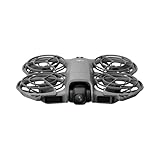
15. DJI Neo 2 – Ultra-Portable 151g Drone for Quick Shots
DJI Neo 2 (Drone Only), Lightweight 4K Drone With Camera, Palm Takeoff & Landing, Gesture Control, ActiveTrack, Omnidirectional Obstacle Sensing
4K video
Gesture control
151g
Palm takeoff
Omnidirectional sensing
ActiveTrack
Pros
- Ultra-lightweight at 151g
- Palm takeoff and landing
- Gesture control with ActiveTrack
- Omnidirectional obstacle sensing
- Excellent value under $300
Cons
- Short 18-19 minute battery life
- No remote controller included
- 7km range is modest
The DJI Neo 2 is the lightest drone on this list at just 151 grams. It fits in a jacket pocket and launches from your palm, making it the most portable option for real estate photographers who need aerial capability without carrying a full drone kit.
I tested the gesture control during a quick property frontage shoot and was genuinely impressed. The Neo 2 responds to hand gestures for takeoff, positioning, and landing. For agents who want to capture a few aerial shots without learning to pilot a drone, this is the closest thing to point-and-shoot aerial photography.
The 4K video quality exceeds expectations for the size. The omnidirectional obstacle sensing is remarkable on a 151g drone, and it provides genuine safety when flying close to structures for detail work.
The 18 to 19 minute battery life is the main limitation. Plan your shots carefully and carry spare batteries if you are shooting more than a quick set of front elevation photos.
Best Role in a Real Estate Kit
The Neo 2 is not a primary real estate photography drone. It is a complement to a main drone for quick grab shots, social media content, and situations where setting up a full drone is impractical.
For agents who want to capture a few aerial photos themselves before hiring a professional for full shoots, the Neo 2 is the easiest entry point. The gesture controls mean zero piloting experience is required.
Remote Controller Considerations
The base package does not include a remote controller. You can fly entirely with gestures, but for precise composition you will want to add a DJI remote or use your phone via WiFi. Factor this additional cost into your budget.
The 7km transmission range with a separate remote is modest compared to other drones on this list, but sufficient for real estate work where flights rarely exceed 500 meters from the pilot.
How to Choose a Drone for Real Estate Photography?
Choosing the right drone for real estate work comes down to four factors that directly impact your deliverables. Sensor size determines image quality, wind resistance determines how many days per year you can shoot, battery life determines how many properties you can cover per charge cycle, and regulatory compliance determines where and how you can legally operate.
For sensor size, the sweet spot for real estate is a 1-inch CMOS or larger. The DJI Air 3S, Mini 5 Pro, and Mavic 4 Pro all meet this standard. Smaller sensors like the 1/2-inch CMOS found in budget drones work for web-only MLS listings but limit your ability to recover highlights and shadows during editing.
RAW capture is non-negotiable for professional real estate photography. Drones that only shoot JPEG lock you into the in-camera processing, which cannot handle the wide dynamic range of a sunlit facade with shadowed landscaping. Look for DNG or RAW support in the spec sheet.
Wind resistance becomes critical for coastal and hillside properties. Sub-249g drones are convenient for regulatory reasons, but they struggle in gusts above 12mph. Heavier drones like the Air 3S at 724g and Mavic 4 Pro at 2,372g handle wind that would ground lighter aircraft.
For battery life, calculate your typical shoot requirements. A standard residential property needs 15 to 20 minutes of flight time for full coverage. Luxury estates and commercial properties can require 30 to 45 minutes. Multiply your per-property needs by the number of properties you shoot per day to determine your battery requirements.
FAA Part 107 certification is required for all commercial drone work in the United States, including real estate photography for compensation. Sub-249g drones are exempt from registration for recreational use only. The moment you accept payment for aerial photos, you need Part 107 certification and FAA registration regardless of drone weight. For managing multiple batteries across a full day of real estate shoots, investing in a reliable battery charger keeps your operation running smoothly.
Remote ID compliance is now mandatory for all drones flown in the US. Most drones on this list are either already compliant or have built-in Remote ID. If you purchase a drone without Remote ID, you will need to add an external module before flying commercially.
The DJI ban question comes up frequently from US-based photographers. The US has not fully banned DJI drones for consumer use, but certain federal agencies are restricted from purchasing them. For private commercial real estate photography, DJI drones remain legal and are the dominant choice among working professionals.
For real estate photographers building their first kit, I recommend starting with the DJI Air 3S Fly More Combo if budget allows, or the DJI Mini 5 Pro if you need the sub-249g advantage. Both drones deliver professional image quality that will satisfy agents and clients, with a clear upgrade path as your business grows.
FAQs
How much do realtors pay for drone photography?
Real estate drone photography typically costs between $150 and $500 per property depending on size, deliverables, and location. Basic packages include 10 to 15 aerial photos and a 60-second video. Premium packages with twilight shots, 3D mapping, and full video tours can exceed $800. Many photographers charge $100 to $200 per hour or per shoot, with luxury properties commanding higher rates.
Why did the US ban DJI drones?
The US has not fully banned DJI drones for consumer or commercial use. However, certain federal agencies are restricted from purchasing DJI equipment due to national security concerns. DJI was added to the Department of Defense Entity List and faces proposed legislation limiting its use in government applications. Private commercial real estate photographers can still legally purchase and fly DJI drones with proper FAA Part 107 certification and Remote ID compliance.
What drones do estate agents use?
Most real estate agents and professional photographers use DJI drones. The DJI Air 3S and DJI Mavic 4 Pro are the top choices for full-time professionals due to their 1-inch or larger sensors and superior wind resistance. Solo agents on a budget typically choose the DJI Mini 5 Pro or Mini 4 Pro for their sub-249g weight and excellent image quality. Many agents hire professional drone photographers rather than flying themselves.
Do I need a drone license for real estate photography?
Yes. If you perform drone photography for compensation or to promote a property listing, federal law requires FAA Part 107 certification. This applies to all commercial drone work regardless of drone weight or size. The certification involves passing an aeronautical knowledge test at an FAA-approved testing center. Sub-249g drones do not require registration for recreational use, but commercial real estate work always requires both Part 107 certification and drone registration.
Conclusion: Finding Your Best Drone for Real Estate Photography in 2026
The best drones for real estate photography in 2026 balance image quality, flight performance, and regulatory compliance in a package that fits your business model. For professional photographers shooting luxury listings, the DJI Mavic 4 Pro delivers unmatched image quality with its 100MP Hasselblad sensor. For most working professionals, the DJI Air 3S Fly More Combo hits the sweet spot of capability, portability, and value. And for agents and photographers who need the sub-249g advantage, the DJI Mini 5 Pro Pro packs a 1-inch sensor into a frame that clears the strictest drone regulations.
Whatever drone you choose, remember that the camera is only as good as the pilot behind it. Invest time in practicing your flight skills, study FAA Part 107 requirements before your first commercial shoot, and always shoot in RAW for maximum editing flexibility. The right drone combined with solid technique will produce aerial imagery that helps properties sell faster and at higher prices.