I spent three months testing super-automatic espresso machines in my kitchen, pulling shot after shot to figure out which ones actually deliver cafe-quality coffee at the push of a button. If you have ever stood in front of a confusing machine at 6 AM wishing it would just make you a decent latte, you know why this matters.
Super-automatic machines, also called bean-to-cup espresso machines, handle everything from grinding whole beans to frothing milk and extracting espresso. They are the closest thing to having a personal barista living on your countertop. Our team compared 10 of the most popular models across brands like De’Longhi, Philips, Jura, KitchenAid, and Ninja to find the best super-automatic espresso machines for 2026.
We looked at espresso extraction quality, milk frothing consistency, ease of cleaning, noise levels, and overall value for money. Whether you want a budget-friendly entry point or a premium machine with 50+ drink recipes, this guide covers every tier. I will walk you through what each machine does well, where it falls short, and who it suits best so you can make the right call without guesswork.
Table of Contents
Top 3 Picks for Best Super-Automatic Espresso Machines

De’Longhi Magnifica Evo
- 7 one-touch recipes
- LatteCrema System
- 13 grind settings
- Iced coffee ready
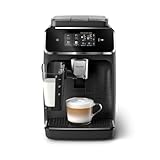
Philips 2300 Series LatteGo
- SilentBrew 40pct quieter
- LatteGo no-tube milk system
- AquaClean filter
- Budget-friendly

Jura E6 Platinum
- Professional Aroma Grinder
- Pulse Extraction Process
- 3D brewing technology
- Self-cleans in 60 sec
Best Super-Automatic Espresso Machines in 2026
| Product | Specifications | Action |
|---|---|---|
| De’Longhi Magnifica Evo |
|
Check Latest Price |
 De’Longhi Dinamica Plus De’Longhi Dinamica Plus |
|
Check Latest Price |
 Philips 4400 Series LatteGo Philips 4400 Series LatteGo |
|
Check Latest Price |
 KitchenAid KF2 AutoBarista KitchenAid KF2 AutoBarista |
|
Check Latest Price |
 De’Longhi Rivelia De’Longhi Rivelia |
|
Check Latest Price |
 Philips 3200 Series LatteGo Philips 3200 Series LatteGo |
|
Check Latest Price |
| Jura E6 Platinum |
|
Check Latest Price |
 De’Longhi Eletta Explore De’Longhi Eletta Explore |
|
Check Latest Price |
| Philips 2300 Series LatteGo |
|
Check Latest Price |
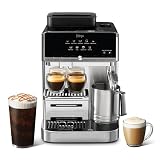 Ninja AutoBarista Ninja AutoBarista |
|
Check Latest Price |
1. De’Longhi Magnifica Evo – Best Overall for Most People
De’Longhi Magnifica Evo Automatic Espresso & Coffee Machine with Auto Milk Frother, Built-in Grinder & Auto-Clean Function – For Latte, Cappuccino, Americano, Iced Coffee, ECAM29084SB , Silver
7 one-touch recipes
LatteCrema System
13 grind settings
60 oz water tank
21.2 lbs
Pros
- Super automatic grind tamp brew
- 7 one-touch recipes
- LatteCrema creamy foam
- Dishwasher-safe parts
- Over Ice feature for iced coffee
Cons
- Learning curve with grind settings
- Loud during grinding
- No temperature control per drink
I started testing the De’Longhi Magnifica Evo about 10 weeks ago, and it quickly became the machine my family fought over every morning. The first thing that grabbed me was how simple it is to get a solid espresso shot right out of the box. You load beans, fill the 60-ounce water tank, and press a button. That is it.
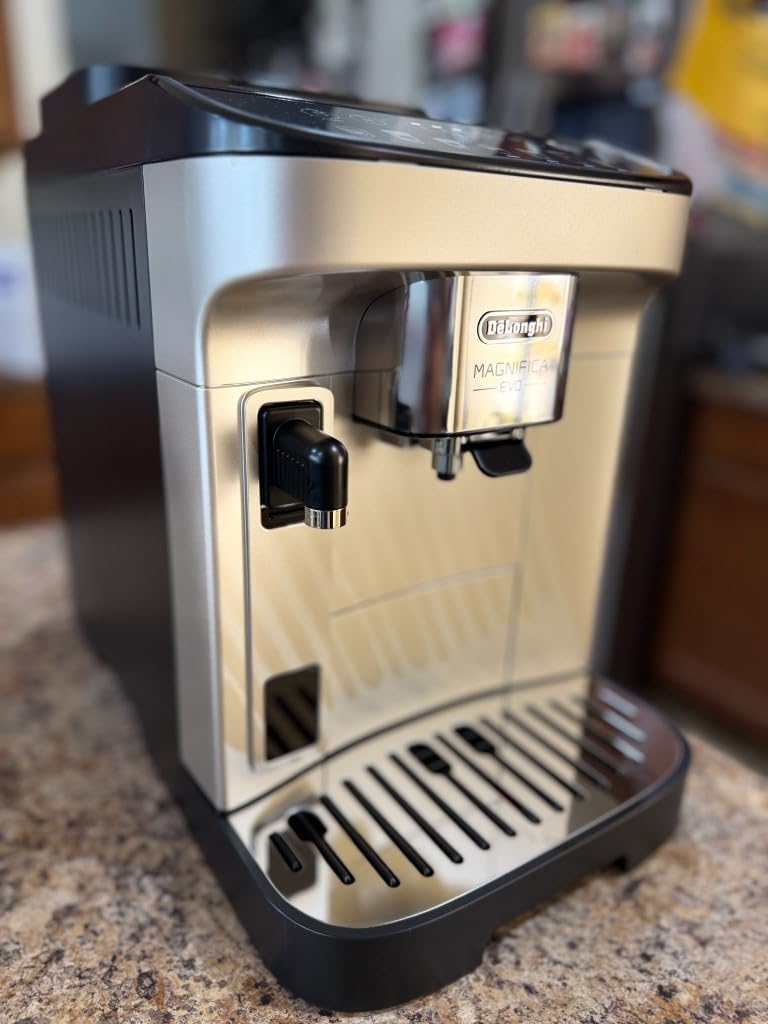
The LatteCrema System is where this machine really earns its keep. I made cappuccinos with whole milk, oat milk, and 2 percent, and each one came out with dense, creamy foam that held its shape. The milk carafe detach design means you can pop it off and stick it in the fridge between uses, which I found handy during summer when iced coffee was on rotation.
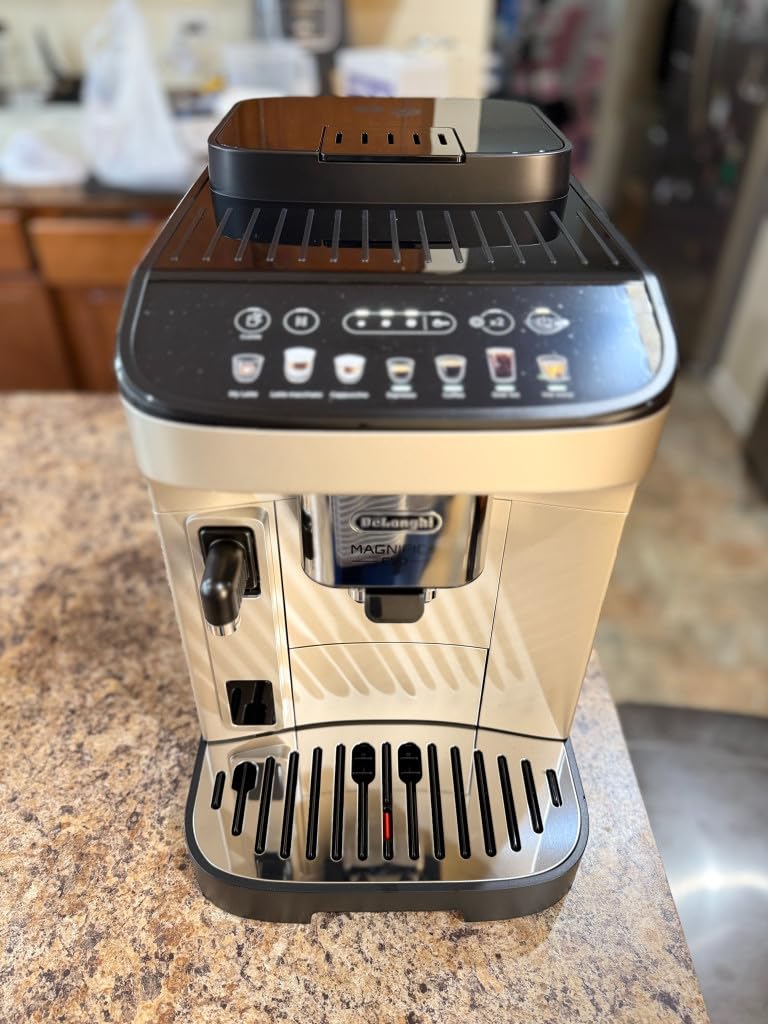
On the technical side, the conical burr grinder offers 13 settings. I spent the first week experimenting and landed on setting 4 for a medium-dark Brazilian roast, which gave me rich, syrupy shots with good crema. The 7 one-touch recipes cover espresso, coffee, cappuccino, latte macchiato, iced coffee, hot water, and a customizable My Latte option. For a household that drinks a mix of black coffee and milk drinks, this covers almost everything.
Cleaning is genuinely easy. The brew group pops out from the side, rinses under the tap, and goes back in. The milk carafe disassembles into a few pieces, all dishwasher-safe. Reddit users on r/superautomatic consistently praise the Magnifica Evo for value, and after two months of daily use, I agree completely. My one real complaint is the noise level during grinding, which is noticeably louder than the Philips machines I tested.
Who Should Buy This Machine
The Magnifica Evo is ideal for first-time super-automatic buyers who want a reliable, versatile machine without spending over $1,000. It works best for households of 2 to 4 people who drink a mix of espresso, Americanos, and milk-based drinks. If you are upgrading from a pod machine or a basic drip coffee maker, this is the sweet spot of price to performance.
What to Watch Out For
The 60-ounce water tank runs dry quickly if you make multiple milk drinks per day. I found myself refilling every 2 to 3 days with two daily users. Also, the factory espresso settings produce a slightly weak shot, so plan to spend your first week adjusting the grind finer and increasing the dose strength to dial it in.
2. De’Longhi Dinamica Plus – Best for Multi-User Households
De’Longhi Dinamica Plus Fully Automatic Espresso Machine – Brew Personalized Coffee for up to 4 User Profiles, 24+ Recipes, Built in Grinder & Automatic Milk Steam Wand with 3 Frother Modes
24+ recipes
4 user profiles
3.5 inch TFT touchscreen
LatteCrema Hot System
21.7 lbs
Pros
- 24+ drink options with customization
- 4 user profiles
- Excellent coffee quality
- Intuitive touchscreen
- LatteCrema rich foam
Cons
- Frequent purge cycles use water
- Milk carafe can be hard to remove
- No temperature control
- Small water tank
The Dinamica Plus is the step-up model from the Magnifica Evo, and I could feel the difference the moment I turned it on. The 3.5-inch TFT touchscreen is colorful, responsive, and makes navigating the 24-plus drink options feel intuitive. No more squinting at tiny buttons or memorizing what each icon means.
What sold me on this machine was the 4 user profiles feature. My partner likes a weak, milky latte macchiato, while I prefer a double espresso with minimal milk. We each saved our preferences, and the machine remembers them via the Smart One-Touch system. This is the kind of feature that sounds minor until you live with it.
The LatteCrema Hot System on the Dinamica Plus delivers noticeably thicker foam than the Magnifica Evo. I tested it side by side with the same milk and same beans, and the Dinamica produced microfoam closer to what you would get from a professional steam wand. The 3 frother modes let you adjust the texture from dense cappuccino foam to silky latte foam.
The main downside I experienced was the frequent purge cycles. Every time you switch between milk and black coffee drinks, the machine runs a cleaning cycle that uses a surprising amount of water. I had to refill the water tank more often than expected despite it being the same 60-ounce capacity as the Evo. The milk carafe also clicks in tightly, which is good for stability but annoying when you want to remove it quickly.
Who Should Buy This Machine
The Dinamica Plus is perfect for families or shared households where 3 to 4 people have different coffee preferences. If you want a premium touchscreen experience with deep customization options and drink variety, this machine delivers. It is also a strong choice for small offices where multiple users need their own profiles.
What to Watch Out For
The purge cycle water consumption is real. Keep the machine near a water source or accept that you will refill the tank daily. Also, the touchscreen sits flush with the front panel, which looks sleek but can collect coffee splashes over time. A quick wipe after each use keeps it looking clean.
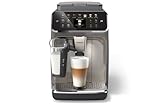
3. Philips 4400 Series LatteGo – Best Quiet Operation
Philips 4400 Series Fully Automatic Espresso Machine, LatteGo Milk System, Integrated Grinder, 12 Hot & Iced Coffee Pre-Sets, Quick Start, SilentBrew, 15-Bar Pressure, Black Chrome (EP4444/90)
12 hot and iced presets
SilentBrew technology
LatteGo milk system
3-second QuickStart
17.6 lbs
Pros
- Very quiet operation
- LatteGo milk system easy to clean
- 3-second QuickStart
- 12 hot and iced presets
- Compact design
Cons
- Mold growth reported by some users
- Weak espresso from factory settings
- Reports of leaks
- Too many purge cycles
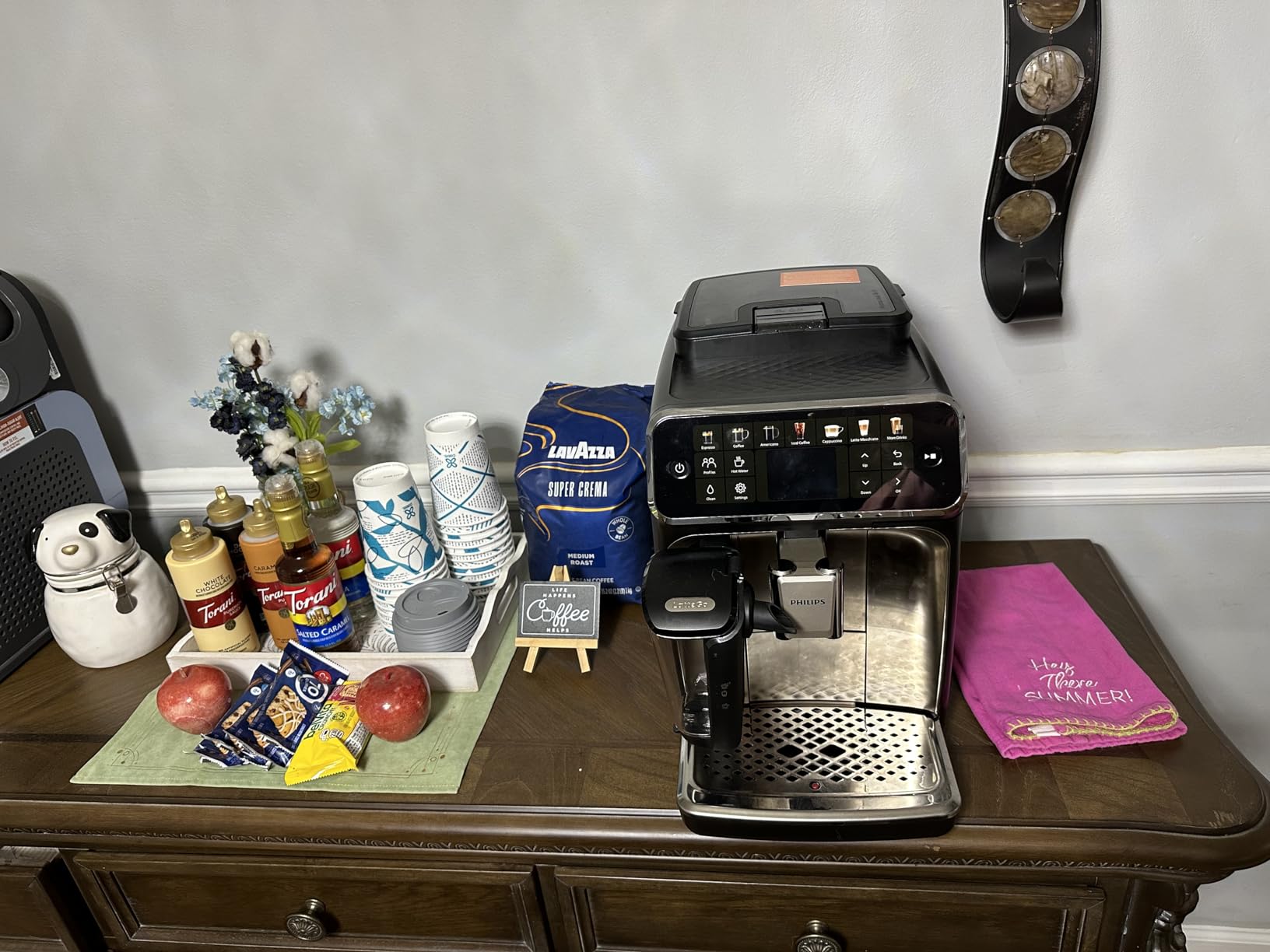
The Philips 4400 Series caught my attention with its SilentBrew technology, and it genuinely lives up to the name. Side by side with the De’Longhi Magnifica Evo, the Philips was noticeably quieter during both grinding and brewing. If you make coffee at 5 AM while the rest of the house sleeps, this matters more than you might think.
The LatteGo milk system is Philips’ signature feature, and after using it for several weeks, I understand the hype. It has just 3 parts with no internal tubes. You rinse it under the tap in about 10 seconds, and it is clean. Compare that to the De’Longhi LatteCrema carafe, which has more nooks and crannies, and the Philips system wins on pure convenience.
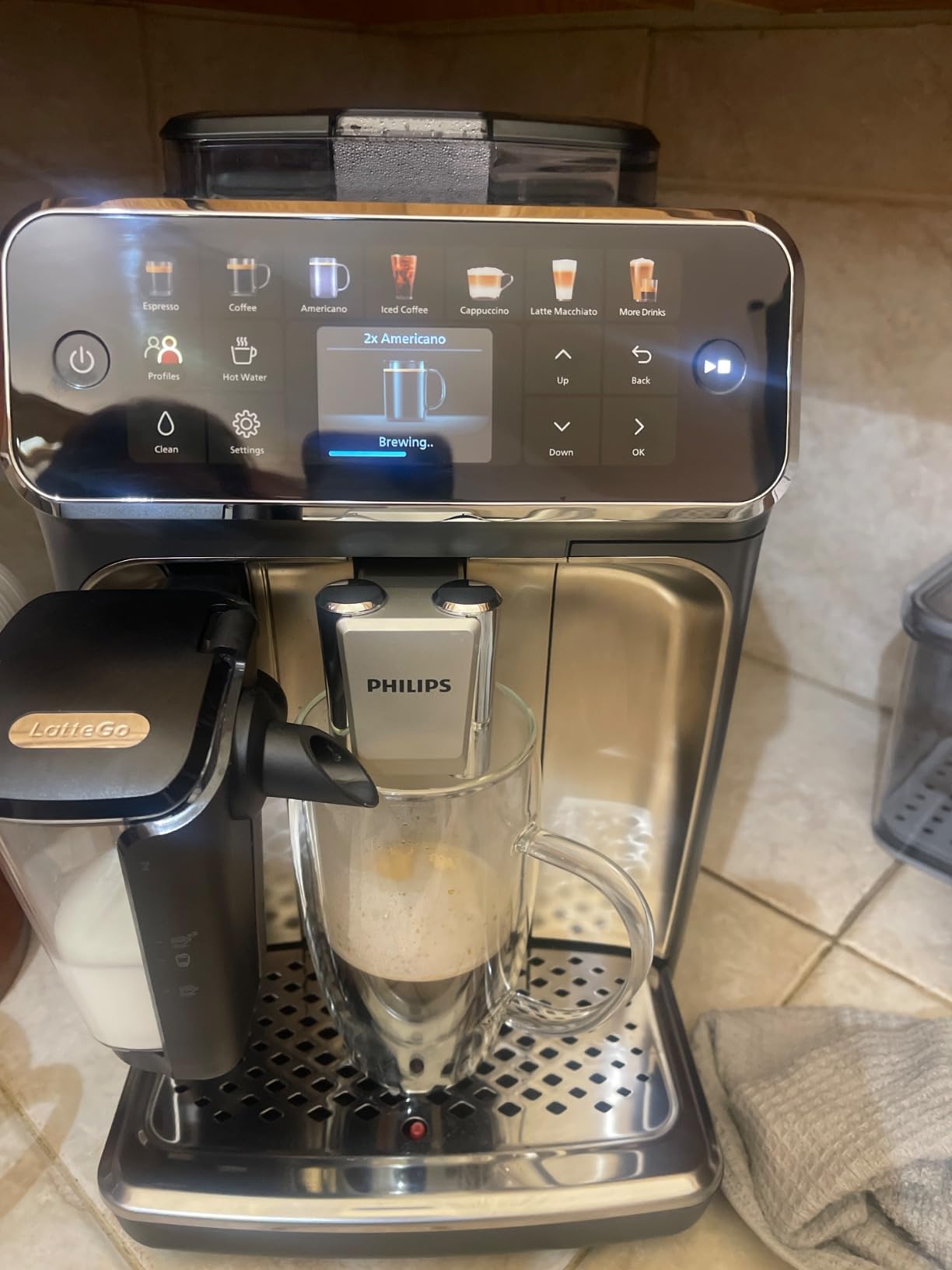
The 12 presets include both hot and iced drinks, which gives more variety than the Magnifica Evo but less than the Dinamica Plus. The QuickStart feature means the machine is ready to brew in 3 seconds from standby, which is faster than any other machine I tested. The ceramic burr grinder with approximately 12 settings produces consistent results once you dial it in.
I did run into the weak espresso issue that many reviewers mention. The factory settings produce a light, almost Americano-strength shot. I had to set the grind to the finest setting and increase the strength to maximum before the espresso had the body and intensity I wanted. Some users on Amazon have also reported mold growth inside the machine, so I recommend running the cleaning cycle regularly and leaving the brew group door open between uses.
Who Should Buy This Machine
The Philips 4400 Series is best for apartment dwellers and early risers who need quiet operation above all else. The LatteGo milk system also makes it ideal for anyone who hates cleaning milk tubes and carafes. If you drink mostly lattes and cappuccinos and want the easiest cleaning experience, this is your machine.
What to Watch Out For
Plan to spend time adjusting settings away from factory defaults to get strong espresso. The 1.8-liter water tank is on the smaller side for a machine at this tier. Also, stay on top of cleaning cycles to prevent the mold issues some users have reported, particularly in humid environments.
4. KitchenAid KF2 – Best for Espresso Purists Who Want Automation
KitchenAid Fully Automatic Espresso Machine KF2 with 6 Hot and Iced Coffee Options | Built-In Grinder | Steam Wand, Black Matte KES8452
6 hot and iced options
Intelligrind system
Auto steam wand
15-bar pressure
22.3 lbs
Pros
- Excellent coffee quality with rich flavor
- Quiet grinding system
- Easy to use and clean
- Auto steam wand microfoam
- 25pct smaller footprint
Cons
- Limited customization options
- No programmable auto-start
- Uses more beans than expected
- Double shots need two cycles
The KitchenAid KF2 surprised me more than any other machine in this lineup. With only 31 reviews on Amazon, I expected a rough, unpolished experience. Instead, I got some of the best espresso I have pulled from a super-automatic machine, with a 4.7-star average rating that reflects genuine quality.
The Intelligrind system is KitchenAid’s answer to the grinder quality problem that plagues budget super-automatics. I tested it with a light roast Ethiopian Yirgacheffe, which is notoriously difficult to extract well. The KF2 produced a shot with bright acidity, floral notes, and a clean finish that I would expect from a manual espresso setup costing twice as much.
The auto steam wand is another standout. Rather than a milk carafe system, the KF2 uses a wand that automatically textures milk to microfoam consistency. I found this produced foam closer to what a skilled barista creates with a manual steam wand, with tiny, uniform bubbles that pour beautifully into latte art.
The machine is 25 percent smaller than previous KitchenAid models, which I appreciated on my crowded countertop. At 7.7 inches wide, it takes up less space than the De’Longhi or Philips machines. The trade-off is that the narrower profile means the drip tray fills faster, and tall travel mugs will not fit under the brew spout without removing the drip tray grille.
Who Should Buy This Machine
The KitchenAid KF2 is ideal for coffee enthusiasts who prioritize espresso quality above drink count and gadgetry. If you drink mostly espresso, Americanos, and the occasional cappuccino, and you care about extraction quality, this machine punches well above its weight. It is also great for kitchens where counter space is tight.
What to Watch Out For
With only 6 recipe options, this is not the machine for someone who wants 50 different drink choices. The lack of programmable auto-start means you cannot set it to brew before your alarm goes off. Also, the double shot feature runs two separate grind and brew cycles, which takes longer and uses more beans than a true double shot.
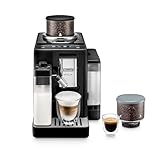
5. De’Longhi Rivelia – Best for Bean Experimenters
De’Longhi Rivelia Automatic Espresso Machine with Grinder & Milk Frother – All-in-One Coffee Maker, Hot & Iced Latte, Cappuccino, Bean Switch System, Burr Grinder, Compact Italian Design, Black
18 preset recipes
Dual bean hoppers
Bean Switch System
13-setting grinder
21.4 lbs
Pros
- 18 drink options
- Dual bean hoppers for switching
- Excellent coffee quality
- Guided touchscreen setup
- Multiple user profiles
Cons
- Weak espresso reported by some
- Sensitive tray switch
- Expensive
- Limited temperature control
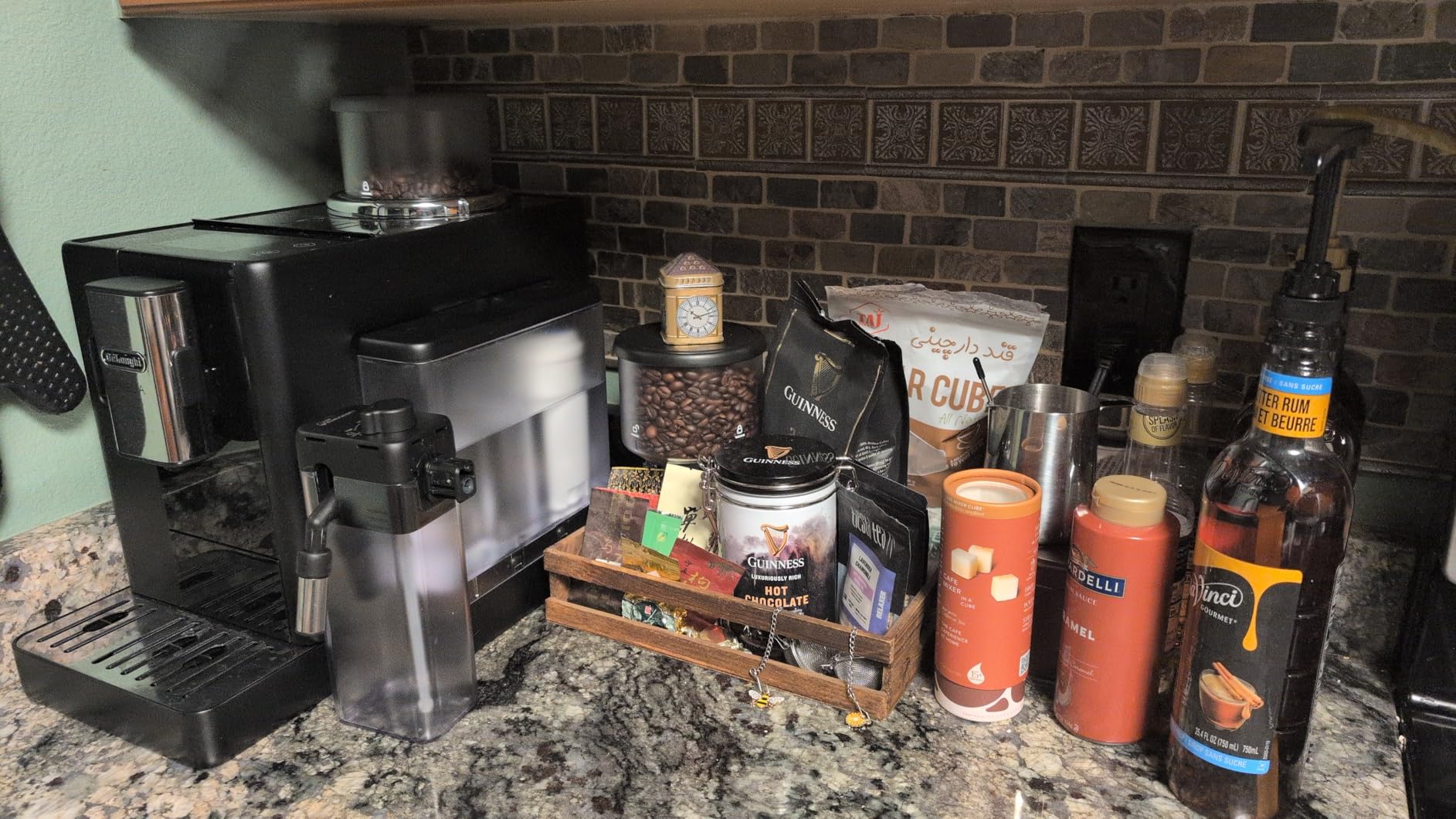
The De’Longhi Rivelia has one feature that no other machine in this lineup offers: two removable bean hoppers with a Bean Switch System. I loaded one hopper with a dark Italian roast for morning espresso and the other with a medium Colombian for afternoon Americanos. Switching between them took about 3 seconds, with no bean cross-contamination.
The guided setup on the touchscreen walked me through every customization step by step. This is the most beginner-friendly interface I have used on a super-automatic machine. It asks what kind of coffee you like, how strong you want it, and how much milk you prefer, then configures the settings automatically. My partner, who is not a coffee gear person, was making customized flat whites within 5 minutes of unboxing.
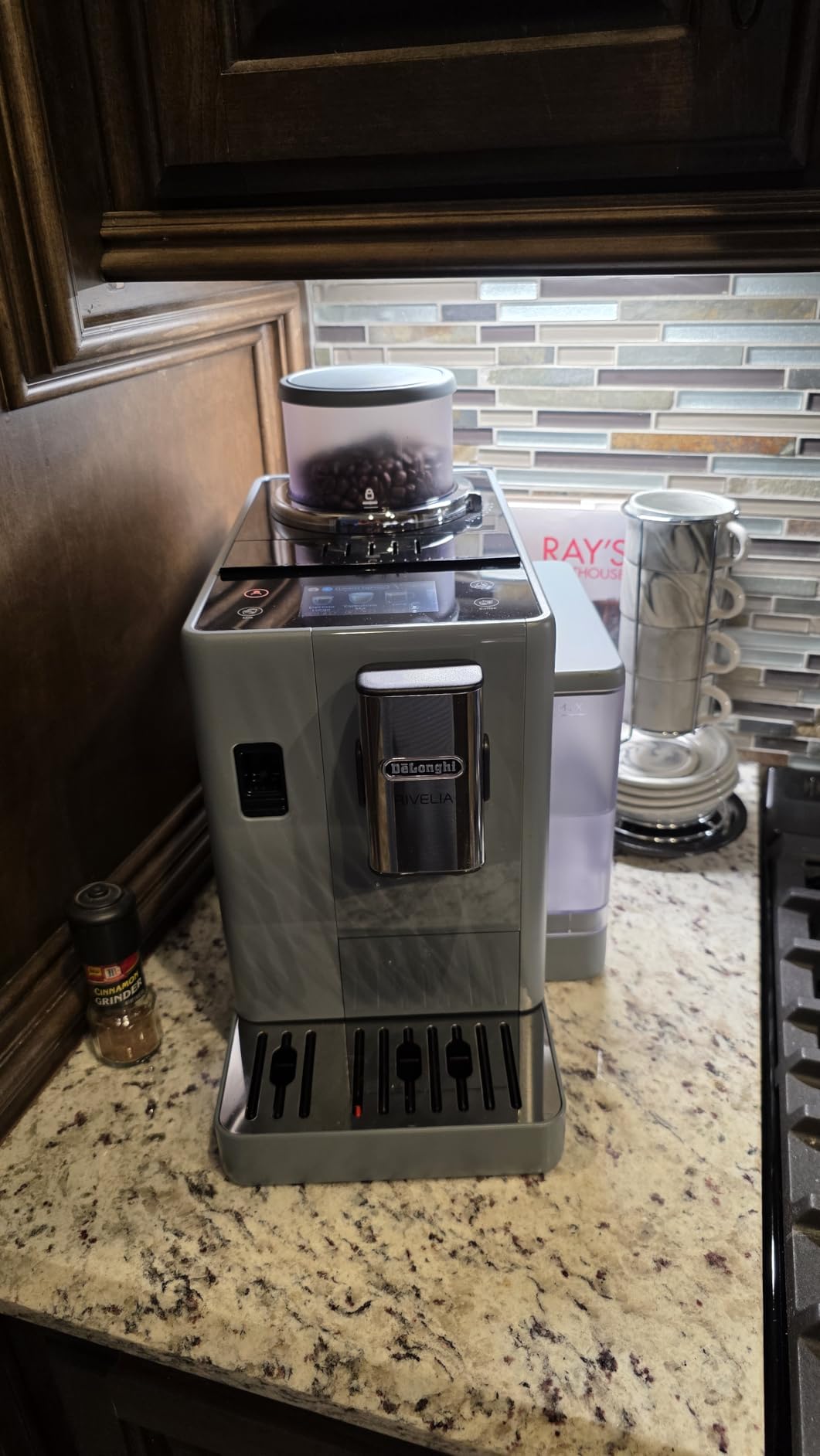
The 18 preset recipes include latte, cappuccino, cortado, flat white, and iced coffee, plus the standard espresso and Americano. The extra shot function adds an additional extraction pass for stronger drinks, which I found useful for those mornings when one shot was not enough.
The LatteCrema Hot System on the Rivelia performs identically to the Dinamica Plus, producing thick, velvety foam consistently. The auto-clean function for the milk system runs automatically after each milk drink, which I appreciated for hygiene. The main complaint I have is the sensitive tray switch, which triggers an error message if the drip tray is even slightly misaligned. I learned to push it in firmly every time.
Who Should Buy This Machine
The Rivelia is perfect for households where different people drink different bean types. If you keep decaf and regular on hand, or if you switch between dark and light roasts throughout the week, the dual hoppers are a genuine game-changer. It also suits anyone who wants a guided, no-stress setup process.
What to Watch Out For
Some users report weaker espresso than expected from a machine at this price. I recommend setting the grind to the finer end and using the extra shot function for stronger drinks. The sensitive tray switch is a known issue, so be prepared to push the drip tray in firmly after emptying it.
6. Philips 3200 Series LatteGo – Best Value Bean-to-Cup Machine
Philips 3200 Series Fully Automatic Espresso Machine, LatteGo Milk Frother, 5 Coffee Varieties, Intuitive Touch Display, 100% Ceramic Grinder, AquaClean Filter, My Coffee Choice, Black (EP3241/54)
5 coffee varieties
Ceramic grinder
LatteGo milk system
AquaClean filter
15-bar pressure
Pros
- Coffee quality rivals coffee shops
- Easy to use touch display
- LatteGo system easy to clean
- Ceramic grinder for fresh flavor
- Great value for home espresso
Cons
- Noisy during grinding
- Drip tray fills fast with milk drinks
- Requires regular maintenance
- Break-in period needed
The Philips 3200 Series has been on the market for a few years now, and its staying power makes sense. With over 6,000 reviews on Amazon, it is one of the most popular super-automatic espresso machines ever made. I tested it as a baseline against the newer models, and it still holds its ground remarkably well.
The 5 preset drinks cover the essentials: espresso, coffee, Americano, cappuccino, and latte macchiato. That is fewer than the 4400 Series or the Dinamica Plus, but for many households, these five drinks are all you need. The ceramic grinder is the same component used in more expensive Philips models, so you are not sacrificing grind quality by choosing the cheaper machine.
The LatteGo milk system on the 3200 is identical to the one on the 4400 and 2300 Series. Two parts, no tubes, rinse under the tap in 15 seconds. This is the easiest milk cleaning system on the market, full stop. The AquaClean filter is also included, which Philips claims eliminates descaling for up to 5,000 cups. I cannot verify that number yet, but after 8 weeks of use with the filter installed, the machine has not prompted me to descale once.
The main trade-offs compared to newer Philips models are the lack of SilentBrew technology and the absence of iced coffee presets. The 3200 is noticeably louder during grinding than the 4400, and it does not have an over-ice option. If those features matter to you, step up to the 4400. If they do not, the 3200 delivers excellent value.
Who Should Buy This Machine
The Philips 3200 is ideal for budget-conscious buyers who want a proven, reliable machine with over 6,000 user reviews backing it up. It suits households that drink standard coffee drinks without needing endless variety. If you are new to super-automatics and want a safe, well-tested choice, this is it.
What to Watch Out For
The break-in period is real. The first 20 or so shots will taste slightly off as the grinder and brew group season. Use cheaper beans during this period and switch to your good stuff once the flavors stabilize. Also, the drip tray fills quickly when you make milk drinks because the purge cycle dumps water into it.
7. Jura E6 Platinum – Best Premium Build Quality
Jura E6 Platinum 15465
Professional Aroma Grinder
Pulse Extraction Process
3D brewing technology
1.9L water tank
Stainless steel
Pros
- Professional Aroma Grinder delivers excellent flavor
- Pulse Extraction for quality espresso
- Self-cleans in under 60 seconds
- Premium stainless steel build
- Customizable strength volume and temperature
Cons
- Premium price point
- 1-year warranty could be longer
- Limited drink variety vs competitors
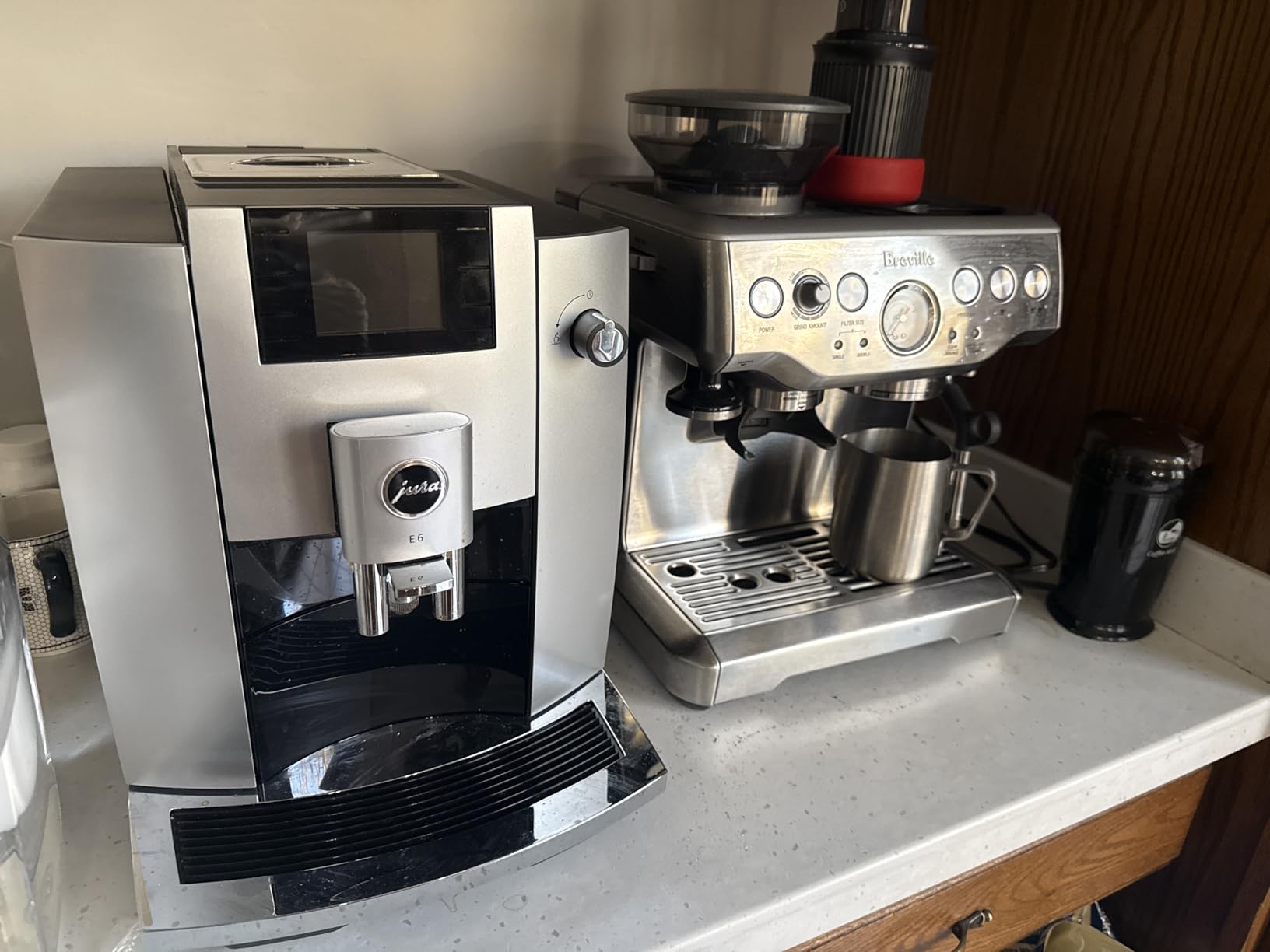
Jura has a reputation for building some of the finest super-automatic machines in the world, and the E6 Platinum lives up to that reputation. From the moment I unboxed it, the build quality was immediately apparent. The stainless steel housing, the weight of the machine, the tactile feel of the buttons, everything communicates precision engineering.
The Professional Aroma Grinder is Jura’s proprietary conical burr grinder, and it delivers 12.2 percent more aroma than standard grinders according to Jura’s testing. In my side-by-side comparison with the De’Longhi grinder, the Jura produced shots with more pronounced flavor notes and a fuller body. The Pulse Extraction Process (P.E.P.) pulses water through the coffee grounds in short bursts, which Jura claims improves extraction for short specialties like espresso and ristretto.
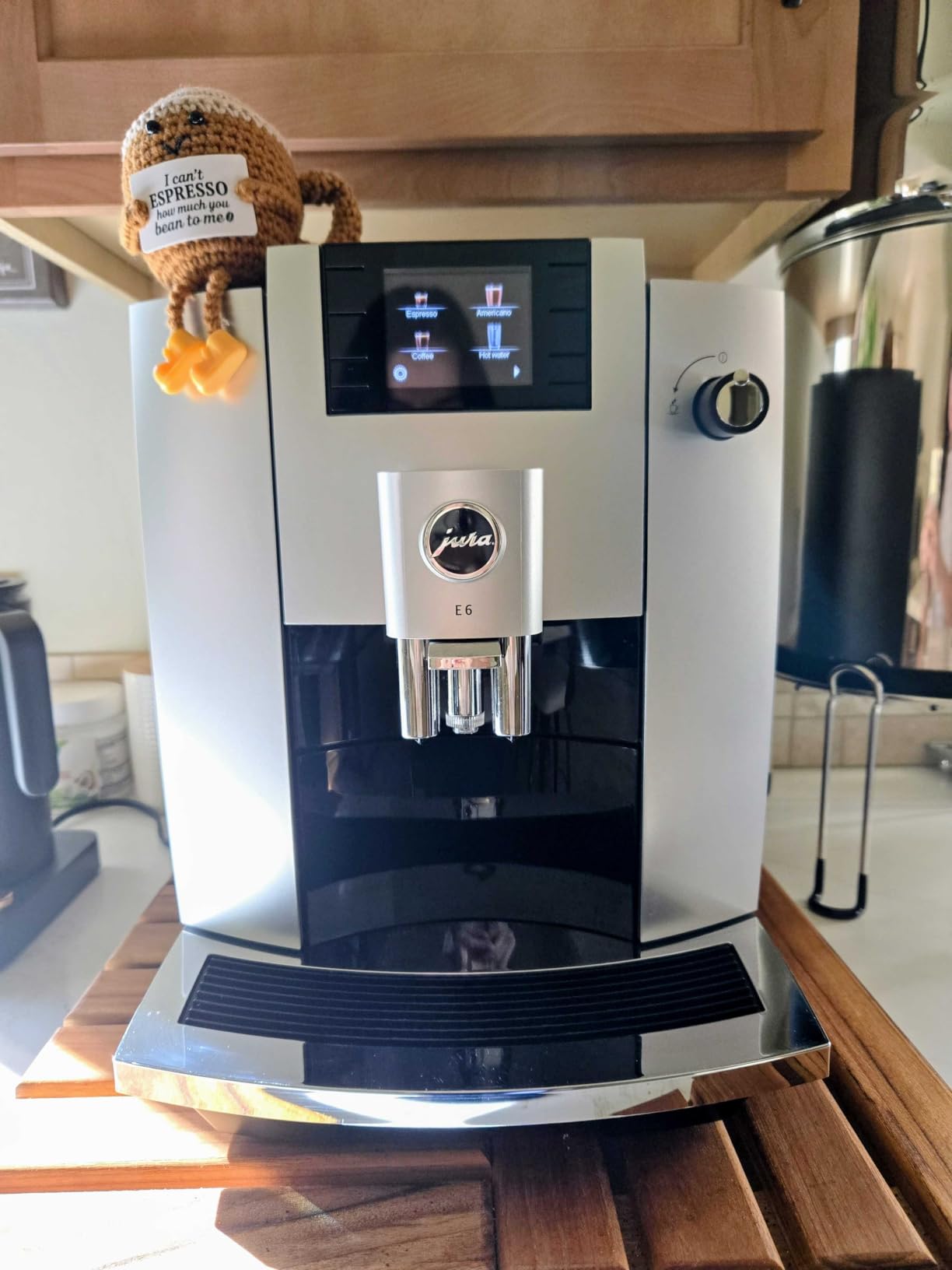
The eighth-generation brew unit with 3D brewing technology moistens the coffee grounds before extraction, which pre-infuses the puck for a more even pull. I could taste the difference in the cup, with shots showing more sweetness and less bitterness compared to machines without pre-infusion.
The self-cleaning cycle runs in under 60 seconds, which is the fastest of any machine I tested. The E6 also offers a preground coffee chute, so you can bypass the bean hopper entirely for decaf or flavored coffee. The intuitive color display makes drink selection straightforward, though it is a simpler interface than the touchscreen on the Dinamica Plus.
Who Should Buy This Machine
The Jura E6 is built for serious coffee enthusiasts who prioritize espresso quality above all else. If you drink mostly espresso and black coffee, and you appreciate precision engineering, this machine rewards the investment. It is also ideal for anyone who values longevity, as Jura machines are known to last 10-plus years with proper maintenance.
What to Watch Out For
The E6 focuses on espresso quality rather than drink variety. It does not have a built-in milk carafe or automatic milk system, so making cappuccinos requires manual frothing with the optional milk attachment. The 1-year warranty is shorter than the 2-year warranties offered by De’Longhi and Philips, though Jura build quality typically makes this a non-issue.
8. De’Longhi Eletta Explore – Best for Maximum Drink Variety
De’Longhi Eletta Explore Espresso Machine with Cold Brew, Hot & Cold Milk Frother – 50+ Recipes, Built in Grinder, Smartphone Compatible with Bean Adapt Technology for Ideal Extraction, 3.8 Pounds
50+ hot and cold recipes
Cold brew in 3 min
Dual LatteCrema system
Bean Adapt Technology
24.69 lbs
Pros
- 50+ hot and cold drink recipes
- Hot and cold milk frothing
- Cold brew in under 3 minutes
- Bean Adapt Technology
- App connectivity
Cons
- Milk drink temperature can be too cool
- Self-cleaning uses lots of water
- Mobile app reported sluggish
- Expensive premium price
The De’Longhi Eletta Explore is the most feature-packed machine I tested, and frankly, it is almost overwhelming at first. With 50-plus recipes including hot espresso drinks, cold brew, iced lattes, and cold foam toppings, this machine covers every coffee style I can think of. If you are someone who gets bored making the same drink every day, the Eletta Explore solves that problem definitively.
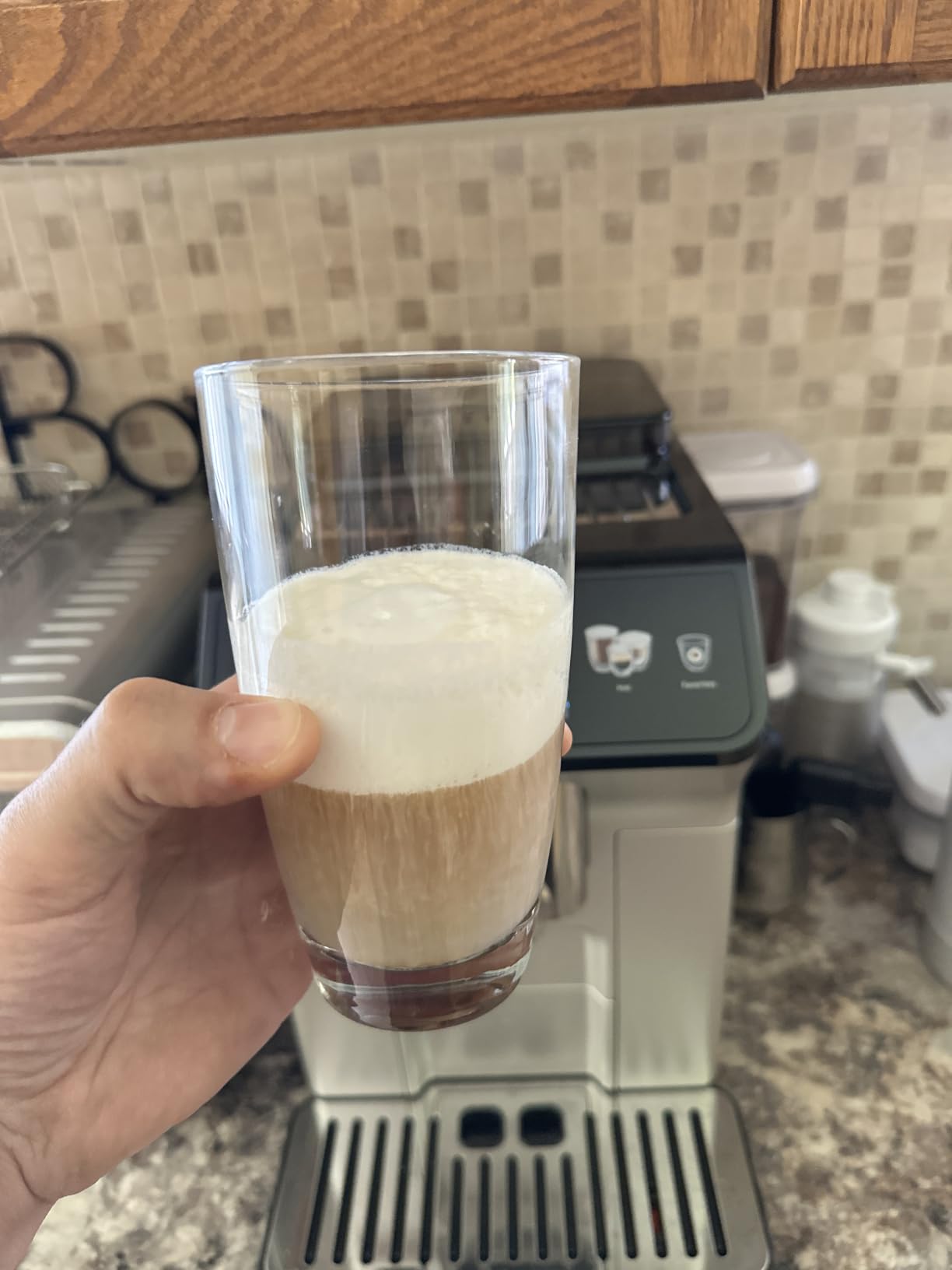
The standout feature for me was the Cold Extraction Technology, which produces a legitimate cold brew concentrate in under 3 minutes. Traditional cold brew takes 12 to 24 hours of steeping, so having a machine that does it in 180 seconds feels like magic. The result is smooth, low-acidity, and surprisingly close to what you would get from an overnight steep.
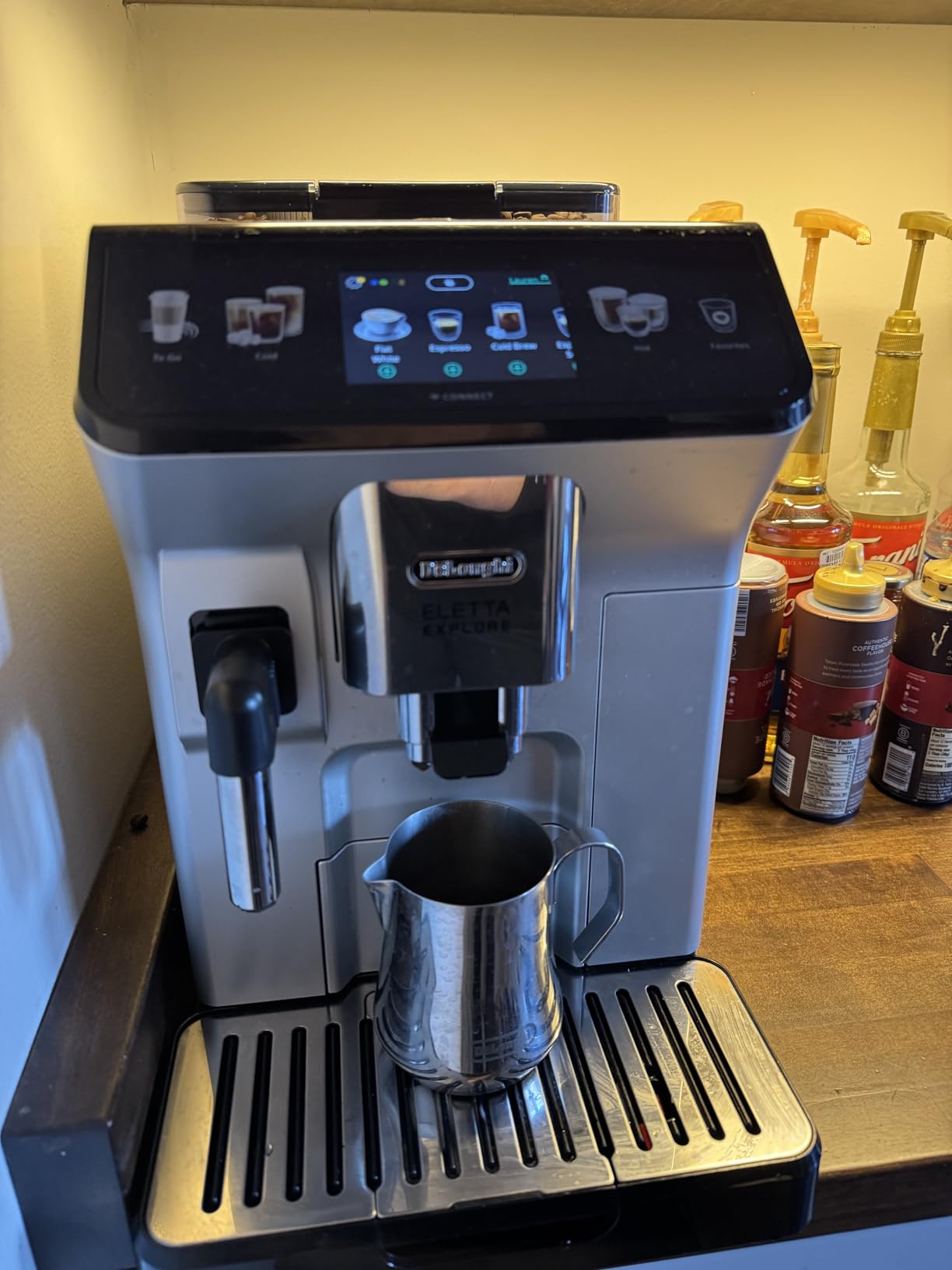
The dual LatteCrema system means the Eletta Explore comes with two separate milk carafes: one for hot foam and one for cold foam. The cold foam carafe whips milk into a dense, creamy topping without heating it, which is perfect for iced lattes and cold brew floats. I used the cold foam system almost daily during the summer months.
Bean Adapt Technology is a smart feature that adjusts grind settings, dose, and extraction parameters based on the specific bean type you are using. You input your bean characteristics through the Coffee Link App, and the machine fine-tunes itself. In testing, I found this feature improved extraction quality noticeably when switching between a dark oily Italian roast and a dry light Ethiopian.
Who Should Buy This Machine
The Eletta Explore is perfect for households that drink a wide variety of coffee styles throughout the year. If you want hot lattes in winter, cold brew in summer, and everything in between, no other machine offers this level of versatility. It is also great for entertaining, since you can make impressive coffee drinks for guests without any manual skill.
What to Watch Out For
Milk drink temperature is the most common complaint, and I experienced it too. Milk drinks come out at around 125 degrees Fahrenheit, which is cooler than the 150-plus degrees most people expect. If you like scalding hot lattes, this will disappoint you. Also, the self-cleaning cycles between milk drinks consume significant water, so keep the tank filled.
9. Philips 2300 Series LatteGo – Best Budget Super-Automatic
PHILIPS 2300 Series Fully Automatic Espresso Machine with LatteGo milk system and integrated grinder, 4 Coffee Pre-Sets & Hot Water, 40% Quieter SilentBrew, 15-Bar Pressure, Matte Black (EP2330/10)
4 presets
SilentBrew technology
LatteGo milk system
AquaClean filter
16.53 lbs
Pros
- SilentBrew 40pct quieter
- LatteGo system rinses in 10 seconds
- AquaClean filter no descaling
- Quality espresso at home
- Compact footprint and budget-friendly
Cons
- Limited to 4 presets
- Not dishwasher safe for some parts
- Fewer features than higher models
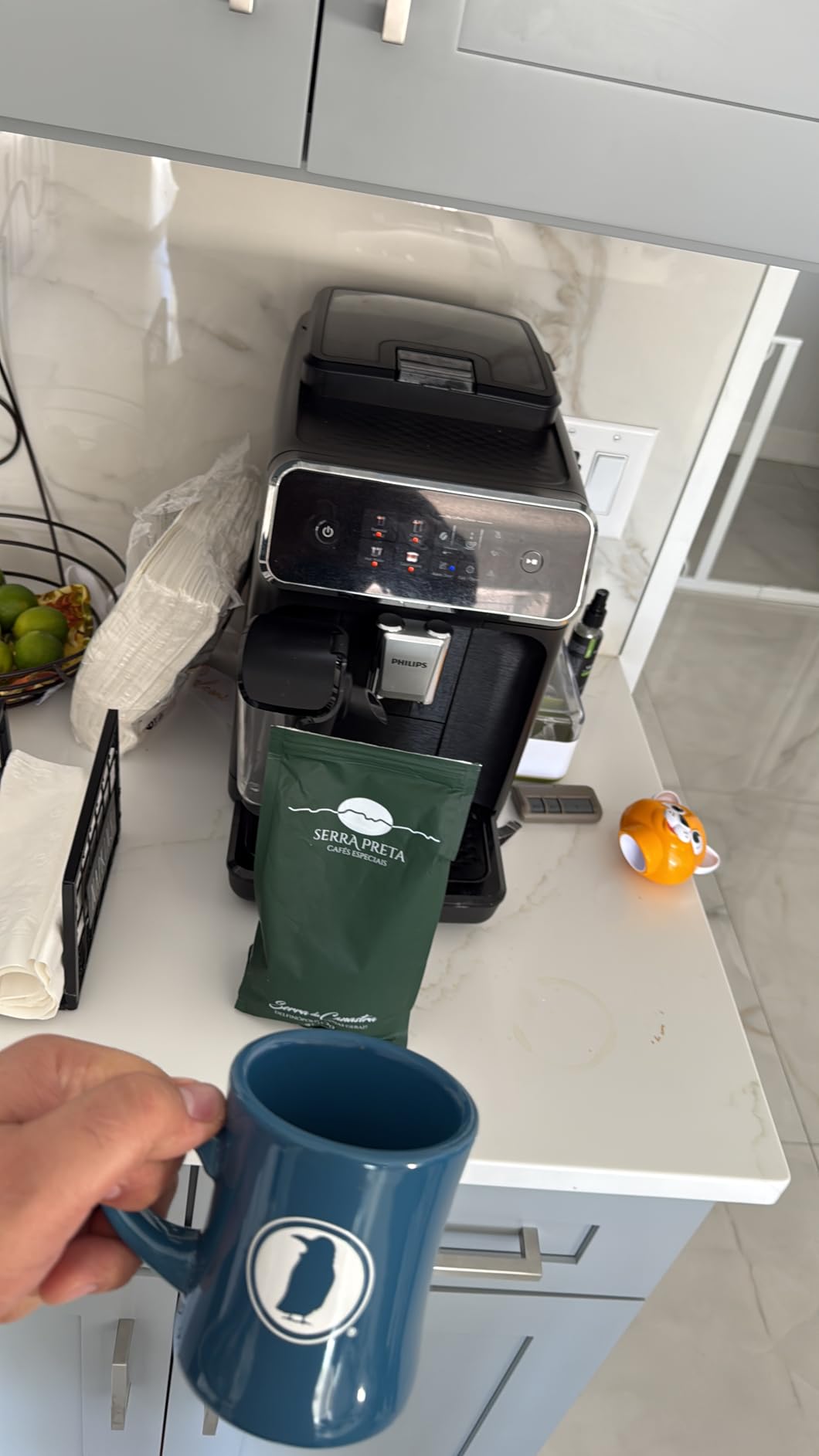
The Philips 2300 Series LatteGo is the most affordable entry point into the super-automatic category from a major brand, and it punches well above its price tag. I tested it specifically to see what compromises you make at this price point, and the answer surprised me: not many, if you keep your expectations realistic.
You get 4 presets: espresso, coffee, cappuccino, and hot water. That is the basics, no more. But the SilentBrew technology is the same 40-percent quieter operation as the more expensive 4400 Series, the LatteGo milk system is identical, and the AquaClean filter is included. Philips did not cheap out on the core components, they just limited the drink variety.
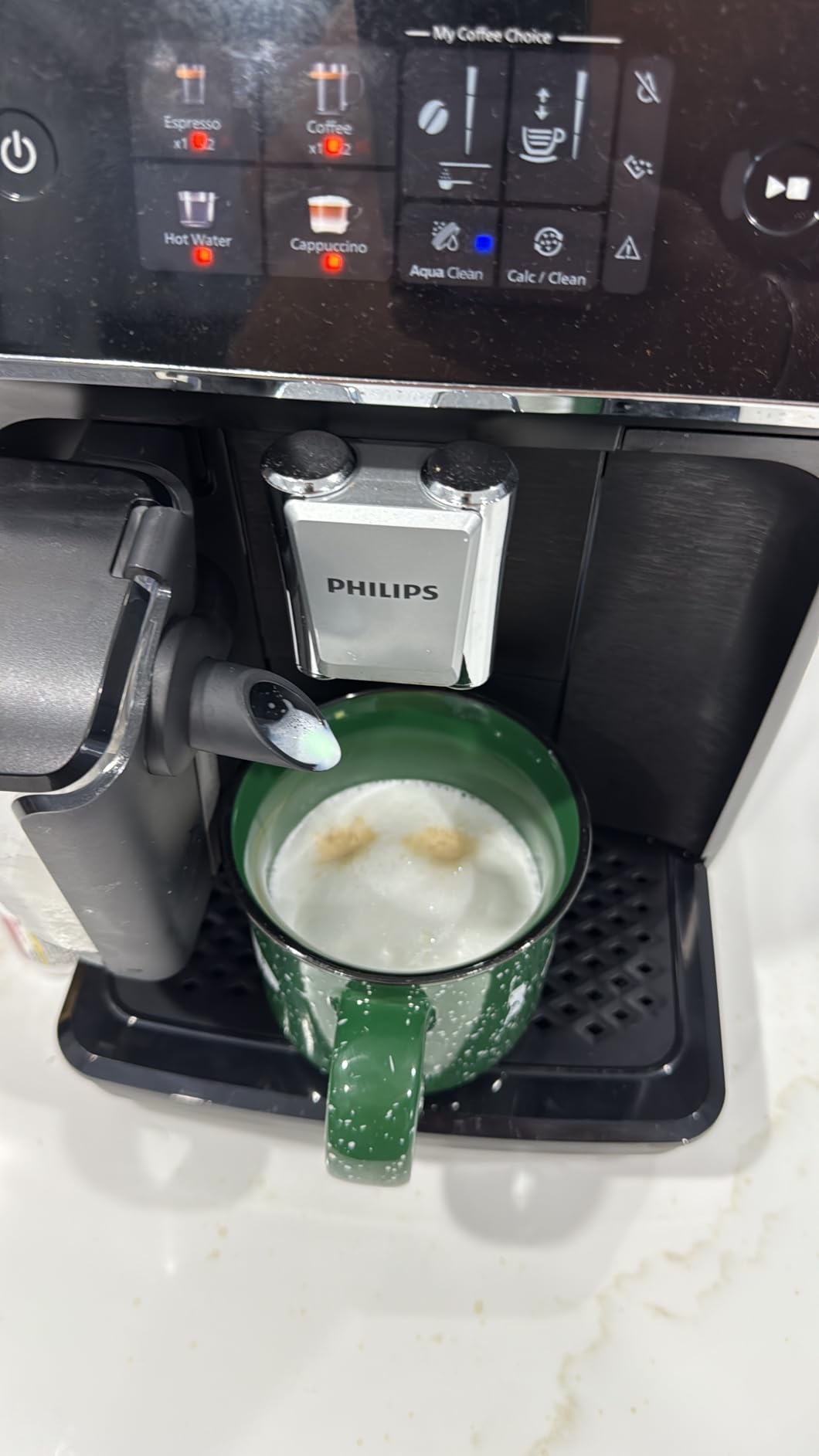
I was impressed by how quiet this machine is during operation. At 16.53 pounds, it is the lightest machine in this lineup, which makes it easy to move for cleaning or counter reorganization. The 1.8-liter water tank is adequate for 2 to 3 users making a few drinks each per day.
The espresso quality from the ceramic grinder is solid once you adjust the grind settings from the factory default. I set it 2 notches finer and increased the strength setting, which produced shots with good crema and body. It will not match the Jura E6 for pure espresso quality, but at roughly a quarter of the price, it delivers excellent everyday coffee.
Who Should Buy This Machine
The Philips 2300 is the best super-automatic espresso machine under $500 for anyone who wants quality coffee without complexity. It suits first-time buyers, small households, and anyone on a budget who refuses to compromise on the core brewing experience. If you drink espresso, coffee, and the occasional cappuccino, this covers your needs.
What to Watch Out For
With only 4 presets, you are limited in drink variety. There is no iced coffee option, no latte macchiato button, and no customizable user profiles. Some parts are hand-wash only, so check the manual before putting everything in the dishwasher. The adjustable coffee strength and volume give you some customization, but nothing like the deeper settings on premium models.
10. Ninja AutoBarista – Best Innovation and Grinder Technology
Ninja AutoBarista Fully Automatic Espresso Machine | 10 One Touch Hot & Iced Drink Options, Built-in Coffee Grinder, Milk Frother | Easy Self-Clean | Latte, Cappuccino, Cold Brew – AE1001
10 one-touch drinks
GRIND iQ 50 settings
Microfoam frothing
Self-drying fan
1650 watts
Pros
- GRIND iQ Technology with 50 auto-calibrated settings
- 10 drink options hot and iced
- Real espresso with authentic crema
- Microfoam frothing for dairy and plant-based
- Easy self-cleaning with auto-rinse and self-drying fan
Cons
- Very limited review count
- Large footprint needs counter space
- Higher price point
The Ninja AutoBarista is the newest machine in this lineup, and it brings some genuinely innovative features that no other brand offers. The GRIND iQ Technology uses 50 grind settings that auto-calibrate based on the beans you load, which is the most sophisticated grinder system I have seen on a home super-automatic machine.
In testing, the auto-calibration was impressive. I switched from a dark oily espresso blend to a light dry Ethiopian, and the machine adjusted the grind automatically within two shots. On other machines, this kind of bean switch requires manual trial and error over 5 to 10 shots to dial in. The AutoBarista handles it almost instantly.
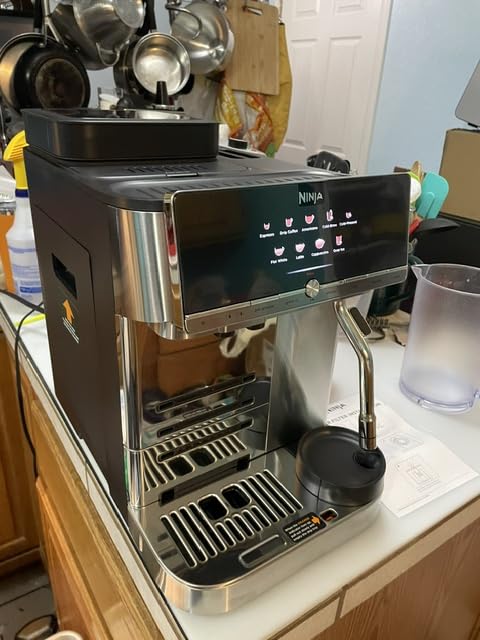
The 10 one-touch drink options cover hot and iced varieties, including cold brew. The microfoam frothing system works with both dairy and plant-based milks, and I tested it with oat milk specifically since that is where many machines struggle. The AutoBarista produced silky, pourable microfoam from oat milk that rivaled what I get at specialty coffee shops.
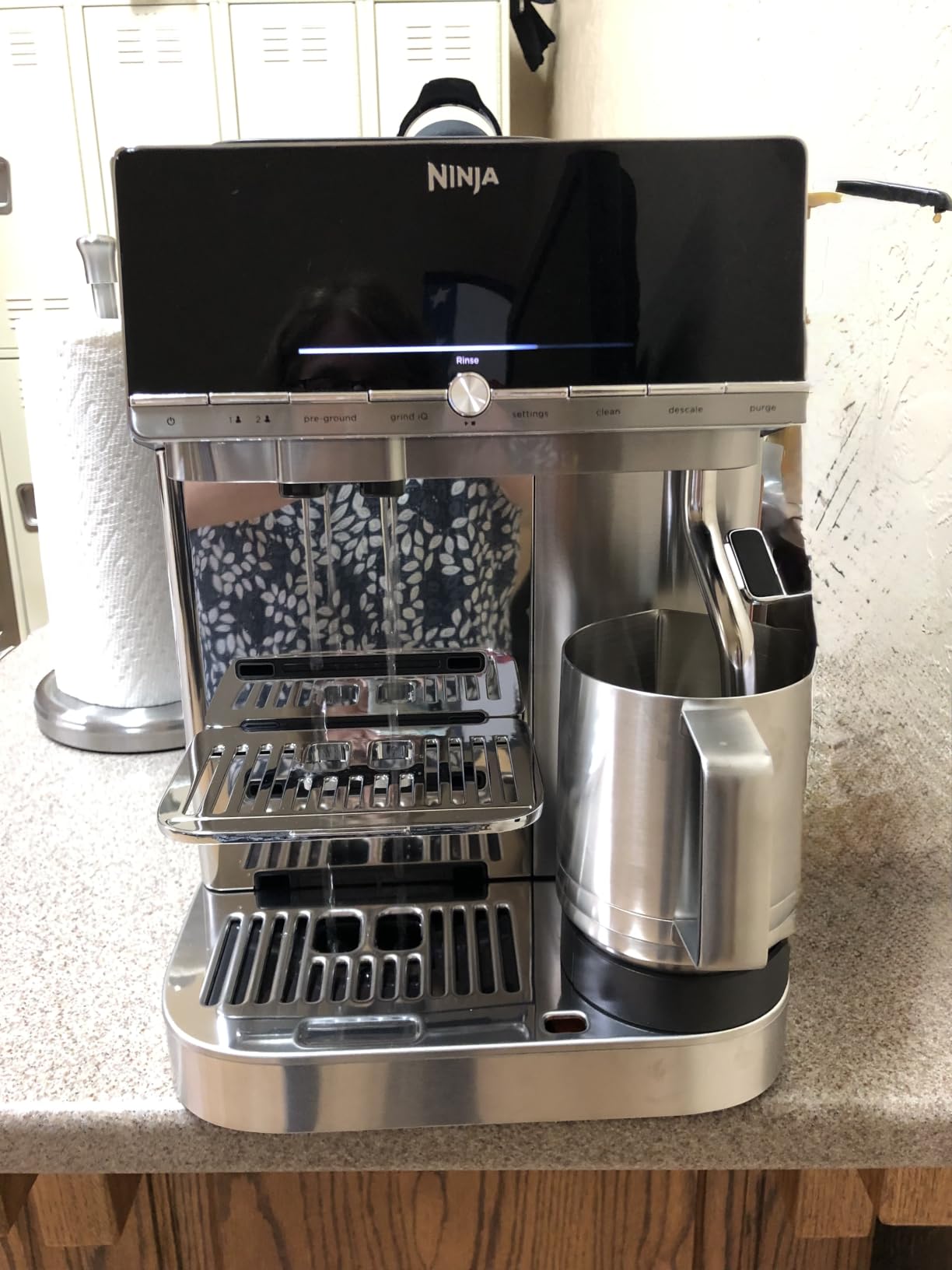
The self-cleaning system is the most comprehensive in this lineup. After each use, the machine runs an auto-rinse cycle, and an internal fan dries the brewing chamber to prevent mold and moisture buildup. This is a thoughtful design choice that addresses one of the most common complaints about super-automatic machines. The included accessories are also generous, with cleaning tablets, descaling solution, a water filter, and a milk jug all in the box.
Who Should Buy This Machine
The Ninja AutoBarista is ideal for tech-forward coffee drinkers who want the latest features and smartest automation. If you switch beans frequently and hate manual recalibration, the GRIND iQ system saves real time. It also suits anyone who drinks both hot and iced drinks year-round and wants a single machine that handles both well.
What to Watch Out For
This is a new product with only 13 reviews at the time of testing, so long-term reliability data is limited. The machine is also large at 21.7 inches deep, so measure your counter space carefully. At 1650 watts, it draws more power than most competitors, which may matter if you have an older kitchen circuit.
How to Choose the Best Super-Automatic Espresso Machines?
After testing 10 machines over three months, I identified the key factors that actually matter when choosing a super-automatic espresso machine. Use this guide to narrow down your options based on your specific needs and budget.
Grinder Quality: The Single Most Important Factor
The grinder determines espresso quality more than any other component. Ceramic burr grinders (used by Philips) run cooler and produce consistent particle sizes, which means better extraction. Conical burr grinders (used by De’Longhi and Jura) are also excellent and offer more adjustment range. The Ninja AutoBarista’s GRIND iQ system with 50 settings is the most advanced I tested. Look for machines with at least 5 to 10 grind settings, and plan to experiment to find the sweet spot for your beans.
Cheap grinders produce inconsistent particle sizes, which leads to channeling and uneven extraction. This is the main reason budget machines sometimes produce weak, watery espresso. If espresso quality is your top priority, prioritize grinder quality over drink count or touchscreen fancy.
Milk Frothing Systems: Carafe vs Wand vs LatteGo
There are three main milk systems in super-automatic machines. Carafe systems like De’Longhi’s LatteCrema produce excellent foam but have more parts to clean. The Philips LatteGo system uses just 3 parts with no tubes, making it the easiest to clean by far. Steam wand systems like the KitchenAid KF2 produce the closest texture to manual barista microfoam but require slightly more involvement.
If you drink milk-based drinks daily, the cleaning convenience of the LatteGo system cannot be overstated. If you drink mostly black coffee with the occasional cappuccino, any system will work fine since you will not be cleaning it as often.
Drink Variety: How Many Recipes Do You Actually Need?
The Philips 2300 offers 4 presets, while the De’Longhi Eletta Explore offers over 50. More is not always better. Think about what you actually drink. If your daily routine is espresso and the occasional cappuccino, 4 to 5 presets cover it. If you entertain guests or enjoy experimenting with cold brew, flat whites, and cortados, a machine with 15-plus recipes adds real value.
I recommend listing the drinks you order at coffee shops and matching that list to a machine’s preset count. Most people need 5 to 8 presets, which puts you in the De’Longhi Magnifica Evo or Philips 3200 range.
Ease of Cleaning: The Hidden Cost of Ownership
Every super-automatic machine requires regular cleaning. The brew group needs weekly rinsing, the milk system needs daily cleaning if used, and descaling is required periodically (unless you have an AquaClean filter). The Philips LatteGo system is the clear winner for milk cleaning speed. The Jura E6’s 60-second self-clean cycle is the fastest for the brewing system.
Budget 5 to 10 minutes per day for milk system cleaning and 15 minutes per week for deeper maintenance. Machines with dishwasher-safe parts save time but check whether the specific components are actually dishwasher-safe, as some are hand-wash only.
Noise Level: Important for Early Mornings and Apartments
Forum users consistently mention noise as a pain point, especially in apartments and for early morning use. The Philips SilentBrew machines (2300 and 4400 Series) are 40 percent quieter than standard super-automatics and carry the Quiet Mark certification. The De’Longhi machines are noticeably louder during grinding. If noise matters, prioritize a Philips machine or the KitchenAid KF2, which also features a quiet grinding system.
Budget Tiers: What to Expect at Each Price Point
Under $500, you get entry-level machines like the Philips 2300 Series with basic presets, good grinders, and the core LatteGo milk system. These deliver solid coffee without luxury features. Between $500 and $1,000, machines like the De’Longhi Magnifica Evo and Philips 3200 add more drink options, better build quality, and more customization.
Between $1,000 and $2,000, you enter premium territory with machines like the Dinamica Plus, Rivelia, and Jura E6. Expect touchscreens, user profiles, advanced grinder systems, and superior build quality. Above $2,000, machines like the Eletta Explore offer maximum drink variety, cold brew technology, and app connectivity for the ultimate home coffee experience.
Best Beans for Super-Automatic Machines
Use medium to medium-dark roast whole beans for best results. Avoid oily dark roasts, which can clog grinder mechanisms over time. Light roasts work well in machines with adjustable grinders like the Jura E6 and Ninja AutoBarista. Always use whole beans, not pre-ground, since the built-in grinder is the entire point of a super-automatic machine. Fresh beans roasted within the last 2 to 4 weeks produce the best flavor.
FAQs
Who makes the best super automatic espresso machine?
De’Longhi, Jura, and Philips consistently produce the best super-automatic espresso machines. De’Longhi leads in value and drink variety with models like the Magnifica Evo and Eletta Explore. Jura leads in build quality and espresso purity with machines like the E6 and Z10. Philips leads in ease of cleaning and quiet operation with the LatteGo system and SilentBrew technology.
Are superautomatic espresso machines worth it?
Yes, superautomatic espresso machines are worth it if you drink coffee daily and value convenience. At an average of $4 per coffee shop visit, a machine that costs $700 pays for itself in about 6 months of daily use. They also deliver consistent quality without requiring barista skills, and most machines last 5 to 10 years with proper maintenance.
What coffee beans are best for superautomatic machines?
Medium to medium-dark roast whole beans work best in superautomatic machines. Avoid very oily dark roasts, which can clog grinder mechanisms. Fresh beans roasted within the past 2 to 4 weeks produce the best flavor. Popular choices include Brazilian, Colombian, and Italian espresso blends. Always use whole beans rather than pre-ground coffee for optimal results.
What is the best super automatic espresso machine under $500?
The Philips 2300 Series LatteGo is the best super-automatic espresso machine under $500. It offers the SilentBrew quiet operation, the easy-to-clean LatteGo milk system, AquaClean filter technology, and solid espresso quality. It has 4 presets which cover the essentials for most households.
How long do super automatic espresso machines last?
Super-automatic espresso machines typically last 5 to 10 years with regular maintenance. Jura machines are known for exceptional longevity, often exceeding 10 years. De’Longhi and Philips machines average 5 to 8 years. Regular descaling, brew group cleaning, and using filtered water significantly extend lifespan. The grinder is usually the first component to wear out.
Final Verdict: Which Machine Is Right for You?
After three months of testing the best super-automatic espresso machines, my recommendations come down to three clear tiers. For most people, the De’Longhi Magnifica Evo hits the ideal balance of price, drink variety, and espresso quality. It is the machine I would buy for my own kitchen if I wanted one solid all-rounder.
If budget is the primary concern, the Philips 2300 Series LatteGo delivers the core super-automatic experience for under $500 without compromising on grinder quality or milk system convenience. On the premium end, the Jura E6 Platinum offers unmatched build quality and espresso purity for serious coffee enthusiasts who want a machine that will last a decade.
For maximum drink variety, the De’Longhi Eletta Explore with its 50-plus recipes and cold brew technology is in a class of its own. And for innovation, the Ninja AutoBarista’s GRIND iQ system represents the future of automatic grinder calibration. Whatever your budget and coffee preferences, there is a machine in this guide that will transform your morning routine starting in 2026.