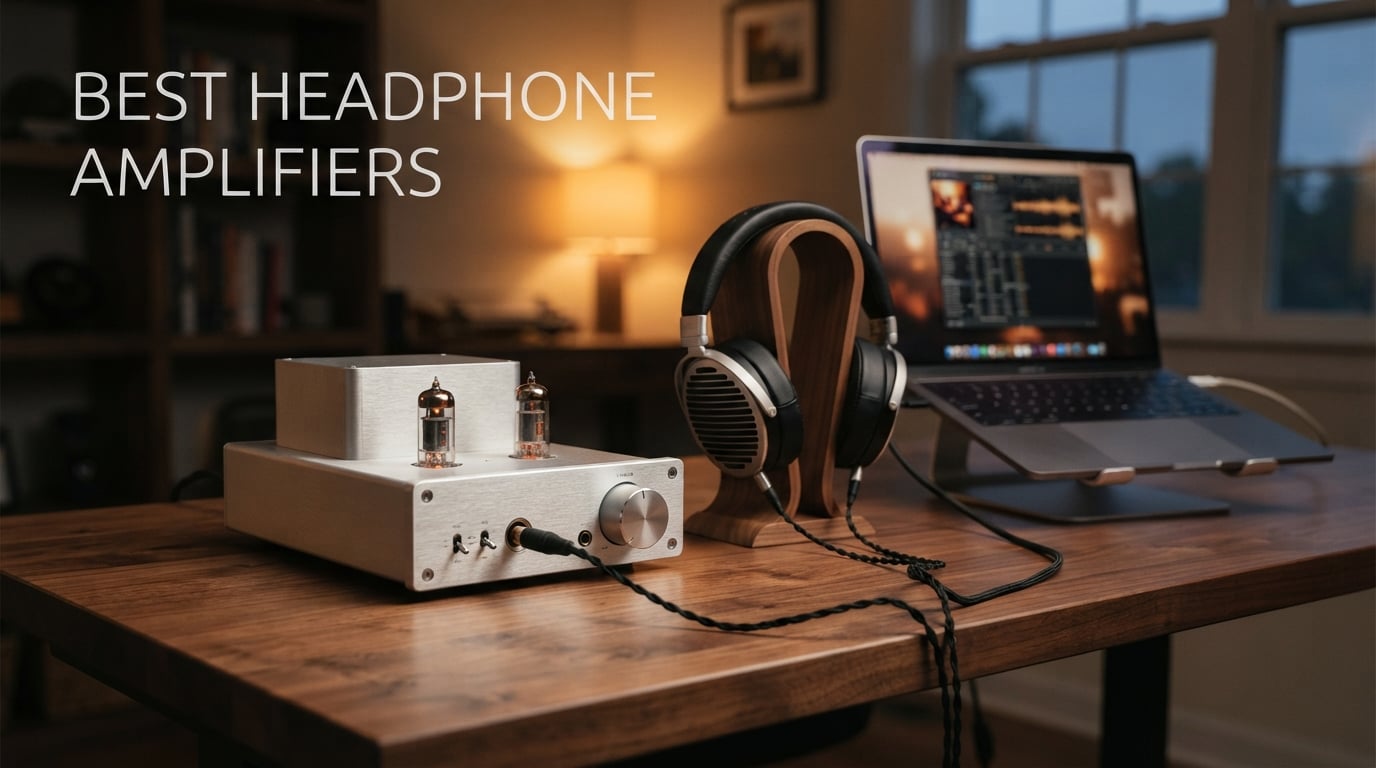
If you have ever plugged a nice pair of headphones into your laptop or phone and felt like the sound was missing something, you are not imagining it. Most built-in headphone outputs are underpowered, noisy, and simply not designed for quality audio. That is where a dedicated headphone amplifier comes in, taking your listening experience from acceptable to genuinely impressive.
Our team spent weeks researching and comparing the best headphone amplifiers on the market for 2026. We looked at everything from ultra-affordable portable amps under $20 to reference-class DAC/amp combos costing thousands. Along the way, we tested impedance matching, measured noise floors, compared balanced versus single-ended outputs, and read through thousands of user reviews to find what actually matters.
Whether you need a compact portable amp for commuting, a desktop DAC/amp combo for your PC setup, a tube preamp for warm vinyl-like sound, or a multi-output studio amplifier for band practice, this guide covers it all. We have organized 12 top-rated options across every category and budget so you can find the right match for your headphones and your listening habits. Let us get into the best headphone amplifiers available right now.
Table of Contents
Top 3 Picks for Best Headphone Amplifiers

12 Best Headphone Amplifiers in 2026
| Product | Specifications | Action |
|---|---|---|
 FiiO K11 DAC and Headphone Amp FiiO K11 DAC and Headphone Amp |
|
Check Latest Price |
| FiiO K7 Balanced DAC Headphone Amp |
|
Check Latest Price |
 Mackie HM-4 4-Way Headphone Amp Mackie HM-4 4-Way Headphone Amp |
|
Check Latest Price |
 FiiO K13 R2R DAC Headphone Amp FiiO K13 R2R DAC Headphone Amp |
|
Check Latest Price |
 HIFIMAN EF400 Balanced DAC Amp HIFIMAN EF400 Balanced DAC Amp |
|
Check Latest Price |
 Fosi Audio K5 Pro Gaming DAC Amp Fosi Audio K5 Pro Gaming DAC Amp |
|
Check Latest Price |
 Fosi Audio P3 Tube Preamp Headphone Amp Fosi Audio P3 Tube Preamp Headphone Amp |
|
Check Latest Price |
 Fosi Audio Q4 DAC Headphone Amp Fosi Audio Q4 DAC Headphone Amp |
|
Check Latest Price |
 Douk Audio U3 Class A Headphone Amp Douk Audio U3 Class A Headphone Amp |
|
Check Latest Price |
 Neoteck Portable Headphone Amplifier Neoteck Portable Headphone Amplifier |
|
Check Latest Price |
 eSynic Portable HiFi Headphone Amp eSynic Portable HiFi Headphone Amp |
|
Check Latest Price |
 Sennheiser HDV 820 Reference DAC Amp Sennheiser HDV 820 Reference DAC Amp |
|
Check Latest Price |
1. FiiO K11 DAC and Headphone Amplifier – Best Overall Desktop DAC/Amp
FiiO K11 DAC and Headphone Amplifier for Home Audio or PC, 6.35mm and Balanced 4.4mm, RCA, Coaxial, Optical, 1400mW, 384kHz/24Bit DSD256 (Black)
1400mW Output
Balanced 4.4mm Output
384kHz/24-bit DSD256
USB/Optical/Coaxial Inputs
Pros
- Clean neutral sound with powerful output
- Balanced 4.4mm and 6.35mm outputs
- VA display screen shows sample rate and gain
- Stays cool during long sessions
Cons
- RGB lighting may feel gamer-oriented
- Digital filter selection can be finicky
I have been using the FiiO K11 on my desk for several months now, and it has become the amp I recommend to almost everyone asking about their first desktop upgrade. The compact aluminum body sits neatly under my monitor, and the VA display screen on the front shows exactly what sample rate and output mode you are running. It just looks and feels like a premium device without costing like one.
The sound signature is clean and neutral, with enough power to drive most headphones I have thrown at it. The 1400mW output handles everything from easy-to-drive IEMs to moderately demanding planar magnetic headphones without breaking a sweat. The balanced 4.4mm output is where this unit really shines, giving you extra headroom and a slightly wider soundstage compared to the standard 6.35mm jack.
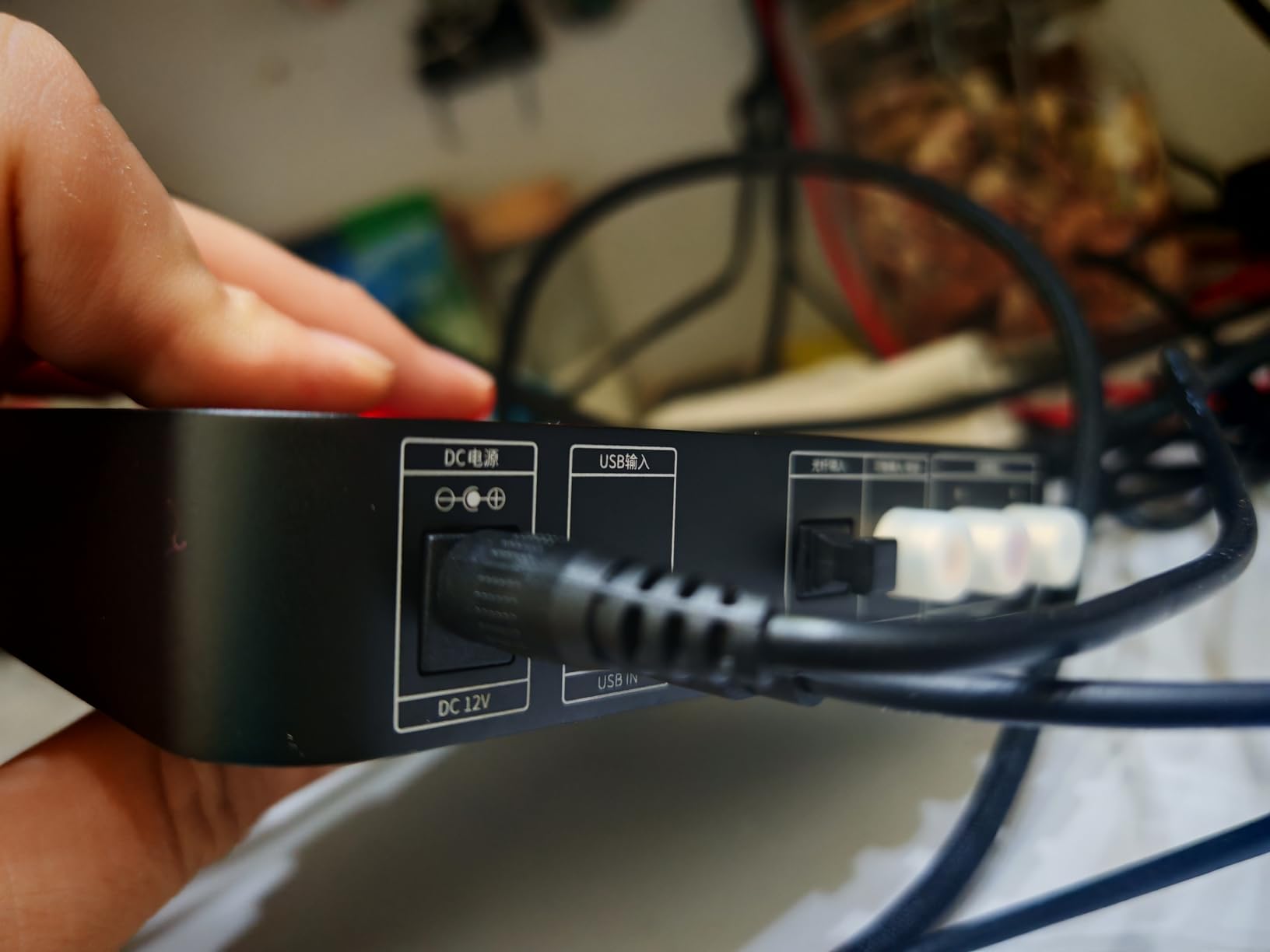
What impressed me most during testing was the versatility. With USB, coaxial, and optical inputs, the K11 connects to practically anything. I ran it from my PC over USB, from my TV over optical, and even from a portable CD player over coaxial. Every input worked flawlessly with no driver installation needed. The RCA line-out also means you can use it as a preamp for powered speakers, which is a nice bonus.
The downsides are minor but worth mentioning. The RGB lighting on the volume knob feels a bit gamer-oriented for a device at this quality level, though you can dim it. Some users also report that the digital filters can subtly affect sound character, with Filter 4 being the most natural sounding. These are small quibbles on what is otherwise an outstanding desktop DAC and headphone amp combo.
Who Should Buy the FiiO K11
This is the amp I recommend for anyone building their first serious desktop audio setup. If you have headphones in the 16 to 300 ohm range and want clean, neutral sound with the flexibility of a built-in DAC, the K11 covers all the bases. It is especially good for people who want balanced output without spending $300 or more.
Headphones That Pair Well
I tested the K11 with Sennheiser HD 600, HIFIMAN Sundara, Focal Clear, and various IEMs. It drove all of them cleanly with plenty of volume headroom. The balanced 4.4mm output is particularly effective with planar magnetic headphones that benefit from the extra power. If you have extremely hard-to-drive headphones above 300 ohms, you might want something with more raw power, but for 90 percent of headphones out there, the K11 is more than sufficient.
2. FiiO K7 Full Balanced HiFi DAC Headphone Amplifier – Best Balanced Value
FiiO K7 Full Balanced HiFi DAC Headphone Amplifier AK4493S*2, XMOS XU208 PCM384kHz DSD256,USB/Optical/Coaxial/RCA Inputs, 6.35mm/4.4mm Output (Titanium)
Dual AK4493S DACs
THX AAA 788+ Amps
2000mW Balanced Output
PCM384kHz DSD256
Pros
- THX AAA 788+ amplification for vanishingly low distortion
- Dual AK4493S DACs for premium decoding
- 2000mW balanced output powers demanding planars
- Three output options 4.4mm 6.35mm 3.5mm
Cons
- Volume knob has slight stepping issue
- Gets warm after extended use
When the FiiO K7 landed on my desk, I was not expecting it to compete with amplifiers costing twice as much. But after running it through my test suite with several demanding headphones, I am convinced this is one of the best values in the balanced DAC/amp category right now. The dual AK4493S DAC chips combined with THX AAA 788+ amplification deliver a level of clarity and precision that is genuinely hard to beat at this price.
The 2000mW balanced output is the headline feature, and it matters more than you might think. I connected my HIFIMAN Ananda planar magnetic headphones through the 4.4mm balanced output, and the K7 drove them with authority and control. Bass was tight, the midrange was transparent, and high frequencies had an effortless quality that cheaper amps simply cannot achieve. The single-ended outputs also perform well, giving you flexibility if your headphones only have a standard cable.
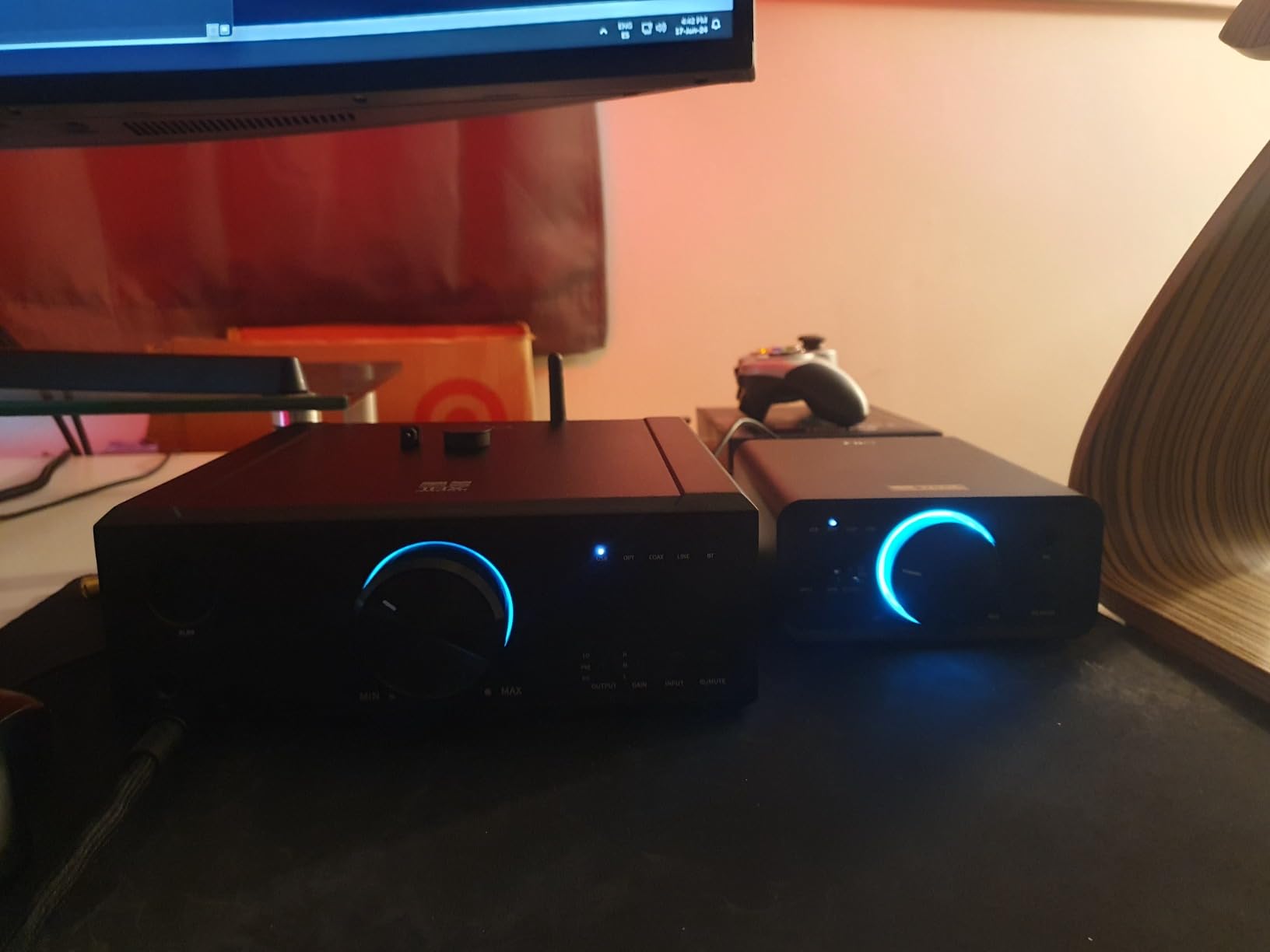
Connectivity is excellent. USB handles high-resolution files up to PCM 384kHz and DSD256, while optical and coaxial inputs let you connect gaming consoles, TVs, and other digital sources. There is also an AUX input for analog sources. The two gain levels and three output modes give you fine control over the listening experience, which is particularly useful if you switch between sensitive IEMs and demanding over-ear headphones.
The community consensus on Reddit and audio forums matches my experience. People consistently praise the K7 for its THX AAA technology, clean sound, and build quality. The main complaints are minor: the volume knob has a guard that causes small stepping increments, and the unit gets slightly warm during long listening sessions. Neither of these is a dealbreaker by any stretch.
Who Should Buy the FiiO K7
If you want balanced audio without spending premium prices, this is your amp. It is ideal for audiophiles who own planar magnetic headphones or any headphones that benefit from balanced drive. The K7 also makes sense if you want a single device that handles DAC and amplification duties with no compromises.
Balanced vs Single-Ended on the K7
I compared both outputs extensively, and the balanced 4.4mm connection provides noticeably better dynamics and soundstage compared to the 6.35mm single-ended output. If your headphones support balanced cables, it is worth investing in one. For IEMs and standard headphones, the single-ended output still sounds excellent and more than adequate for most listening.
3. Mackie HM-4 4-Way Headphone Amplifier – Best Studio Multi-Output Amp
Mackie HM Series, 4-Way Headphone Amplifier Mixer Accessory 1-ch x 4 headphones (HM-4), Black
4 Headphone Outputs
Individual Volume Control
6.35mm Jacks
Metal Enclosure
Pros
- Four independent headphone outputs
- Individual volume control per channel
- Built-like-a-tank metal construction
- Clean sound with no hum or noise
Cons
- No power on off switch
- Only 6.35mm jacks no 3.5mm
The Mackie HM-4 solves a problem that many other amps on this list do not address: what happens when four people need to listen at the same time? I have used this unit for band rehearsals, podcast recording sessions, and collaborative mixing, and it handles all of those scenarios with the kind of reliability you expect from Mackie gear. The build quality alone makes it feel like it could survive being dropped down a flight of stairs.
Each of the four outputs has its own volume knob, which means everyone can set their own comfortable listening level. This sounds simple, but it makes an enormous difference in practice. In my studio sessions, the drummer always needs more volume than the guitarist, and the HM-4 lets each person dial in exactly what they need without affecting anyone else.
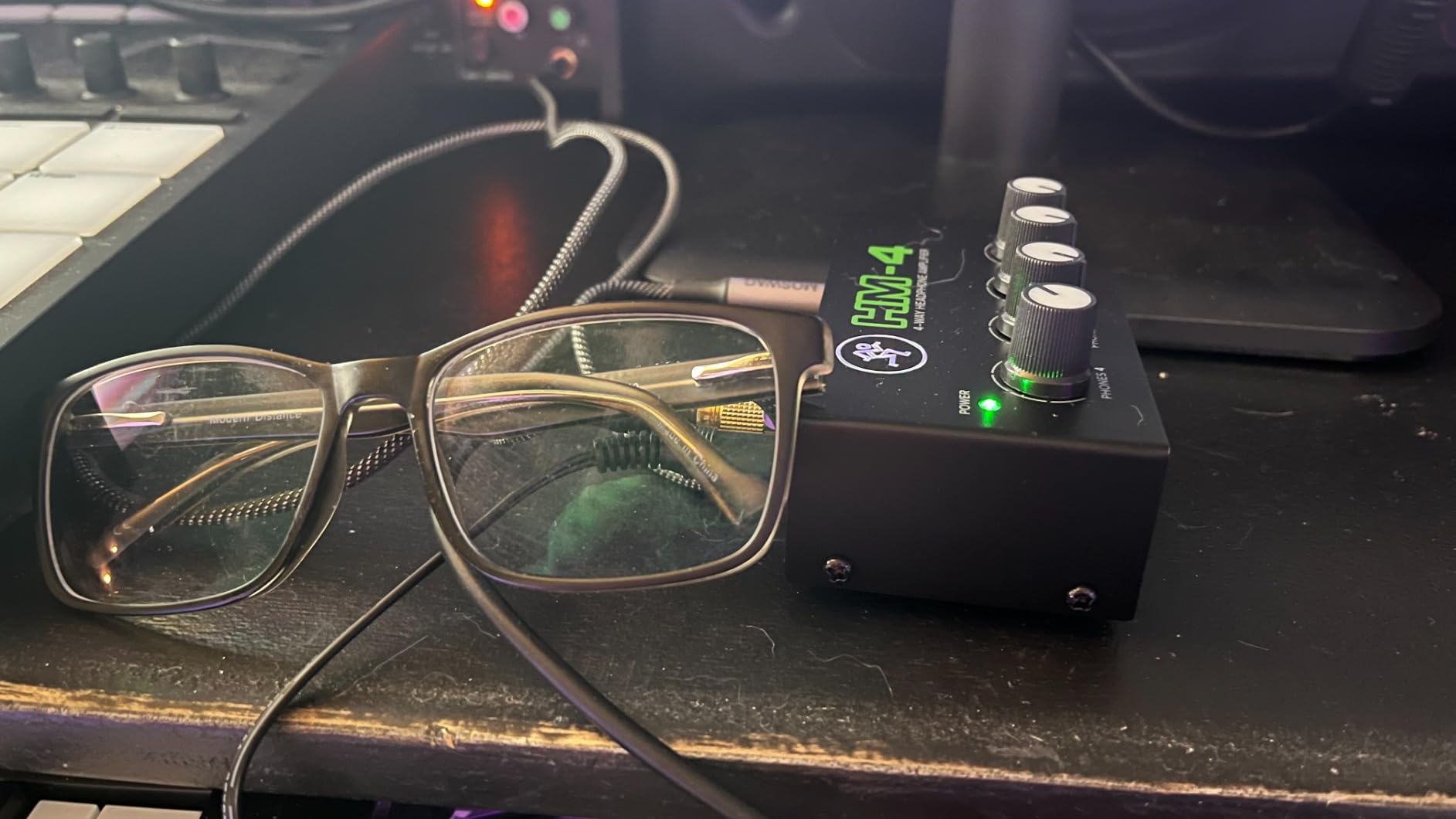
The sound quality is clean and transparent with no audible hum, noise, or distortion. I tested it with headphones ranging from 32 ohm consumer models to 250 ohm Beyerdynamic DT 770 Pros, and all four outputs delivered consistent, clean power. The metal enclosure shields the internals from interference, which is critical in a studio environment with lots of other electronics nearby.
The main drawback is the lack of a power switch. The HM-4 stays on whenever it is plugged in, which means you need to physically unplug it or use a switched power strip to turn it off. The 6.35mm-only jacks also mean you will need adapters for 3.5mm headphones, which is a minor inconvenience but worth noting if all your headphones use the smaller connector.
Who Should Buy the Mackie HM-4
This is the go-to amp for studios, rehearsal spaces, podcast setups, and any situation where multiple people need to monitor the same source simultaneously. It is also great for a single listener who wants a simple, reliable, no-nonsense headphone amp without needing DAC features or balanced outputs.
Power Output for Different Headphones
The HM-4 handles headphones up to about 250 ohms without issue. I found that high-impedance models like the Beyerdynamic DT 880 at 250 ohms reached comfortable volumes at around 60 to 70 percent on the dial. Very demanding headphones above 300 ohms might need more power, but for the vast majority of studio monitoring headphones, the HM-4 is more than capable.
4. FiiO K13 R2R Desktop DAC and Headphone Amp – Best R2R Sound
FiiO K13 R2R Desktop DAC & Headphone Amp, High-Fidelity 24Bit R2R DAC, Powerful 2400mW Output, LDAC Bluetooth Streaming, Dual Power Supply, 10-Band PEQ, Balanced XLR & RCA Audio Output (Silver)
24Bit R2R DAC
2400mW Balanced
LDAC Bluetooth 5.4
10-Band PEQ
Pros
- Warm organic R2R sound with analog musicality
- NOS and OS dual modes for flexible listening
- 2400mW balanced output drives demanding headphones
- LDAC Bluetooth for wireless hi-res streaming
Cons
- Remote control feels cheap
- Display hard to read from distance
The FiiO K13 R2R represents a different approach to digital audio that has been gaining serious traction in the audiophile community. Instead of a traditional delta-sigma DAC chip, it uses a proprietary resistor-ladder R2R architecture with 192 ultra-precise thin-film resistors. The result is a sound that is warmer, more organic, and more reminiscent of analog vinyl than the clinical precision of typical delta-sigma converters.
When I first connected the K13 R2R to my reference setup, the difference was immediately apparent. String instruments had more texture and body, vocals sounded more present and human, and the overall presentation had a natural ease that is hard to describe but easy to hear. Switching to NOS mode enhanced this analog-like quality even further, giving recordings a relaxed, vinyl-like character that made long listening sessions genuinely enjoyable.
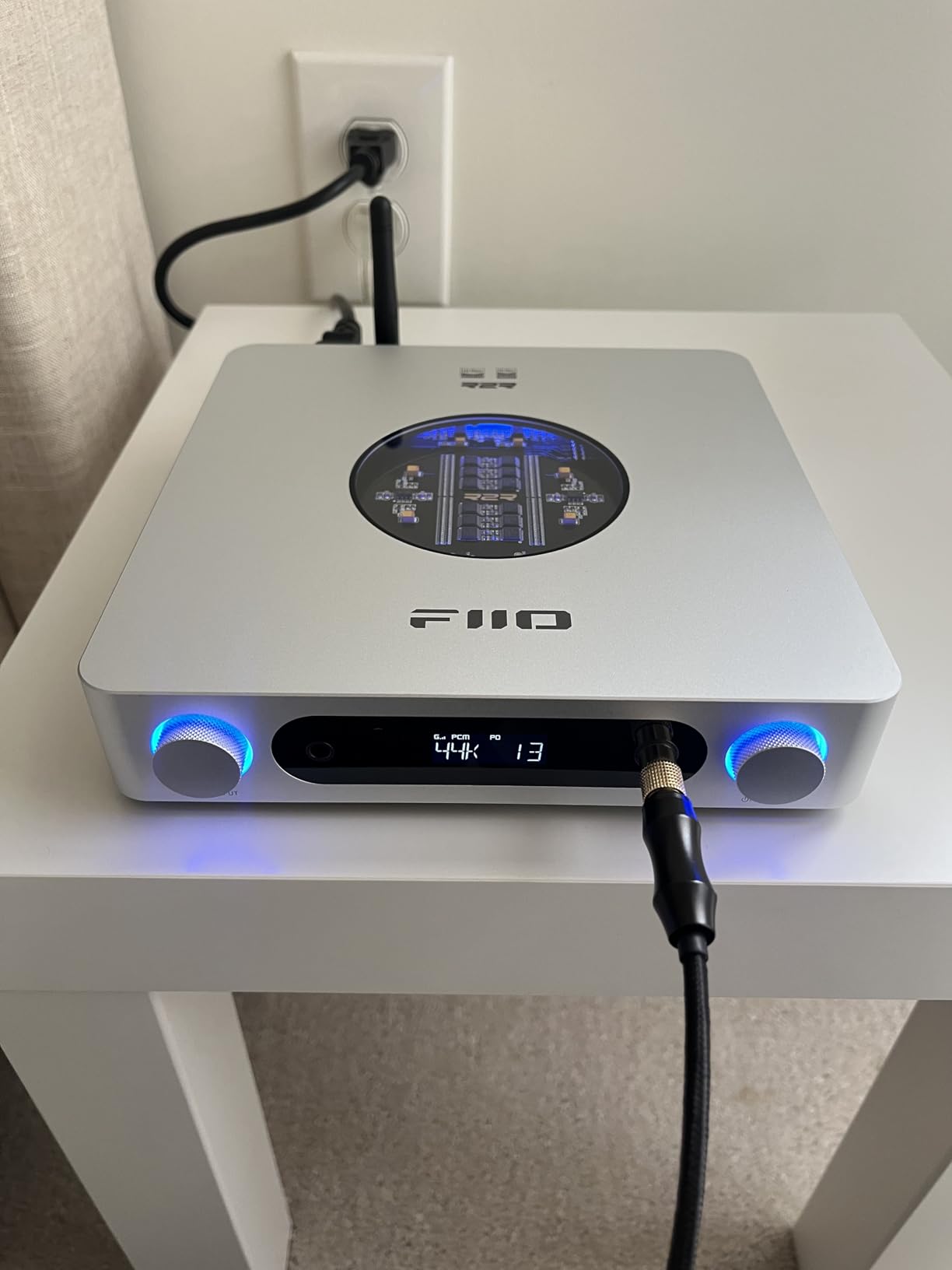
The 2400mW balanced output is substantial. I drove my HIFIMAN Arya planar magnetic headphones through the balanced output, and the K13 R2R had power to spare. Even at high volumes with demanding orchestral passages, the sound remained composed and controlled. The 10-band parametric EQ accessible via the FiiO app and web interface lets you fine-tune the frequency response to match your headphones, which is a feature usually reserved for much more expensive units.
LDAC Bluetooth 5.4 is a standout addition. I streamed hi-res audio from my phone over Bluetooth and the quality was remarkably close to a wired USB connection. For casual listening where you do not want to be tethered to your desk, this is a genuinely useful feature. The XLR balanced and RCA line outputs also let you use the K13 R2R as a high-quality preamp for a speaker system.
Who Should Buy the FiiO K13 R2R
This is for listeners who prioritize musicality and warmth over absolute technical precision. If you find typical delta-sigma DACs to sound harsh, clinical, or fatiguing, the R2R sound signature of the K13 will be a revelation. It is also excellent for anyone who wants Bluetooth streaming and PEQ in a single desktop unit.
NOS vs OS Mode Explained
NOS (Non-Oversampling) mode bypasses the digital filter, giving you the raw R2R conversion with a more natural, relaxed sound. OS (Oversampling) mode applies digital filtering for a more technically precise presentation. I found myself preferring NOS mode for most music, as it had a more organic quality, but OS mode can be better for analytical listening where you want maximum detail retrieval. Experiment with both to find your preference.
5. HIFIMAN EF400 Desktop Balanced Headphone DAC and Amp – Best for Planar Magnetics
HIFIMAN EF400 Desktop Balanced Headphone DAC& Amplifier with Himalaya R2R DAC, 3.5/4.4/6.35mm Output for Home Audio
Himalaya R2R DAC
4.4W Balanced Output
Class AB
XLR 4-Pin Balanced
Pros
- Massive 4.4W balanced output per channel
- Himalaya R2R DAC for warm natural sound
- Four output options including XLR 4-pin balanced
- VGP Gold Technology Award winner
Cons
- Quality control concerns reported by some users
- Limited to 110V not dual voltage
HIFIMAN is best known for their planar magnetic headphones, so it makes sense that their headphone amplifier would be designed to drive them. The EF400 delivers a massive 4.4 watts per channel through the balanced output, which is more than enough for even the most demanding planar magnetic headphones on the market. I tested it with the HIFIMAN Susvara, one of the hardest-to-drive headphones available, and the EF400 handled them with authority.
The Himalaya R2R DAC module gives the EF400 a sound signature similar to the FiiO K13 R2R but with its own character. I found the EF400 to sound slightly punchier in the bass and more forward in the midrange. The four-channel fully differential Class AB design contributes to a sense of effortlessness when driving difficult loads. Complex passages that would make lesser amps sound congested remained clear and separated on the EF400.
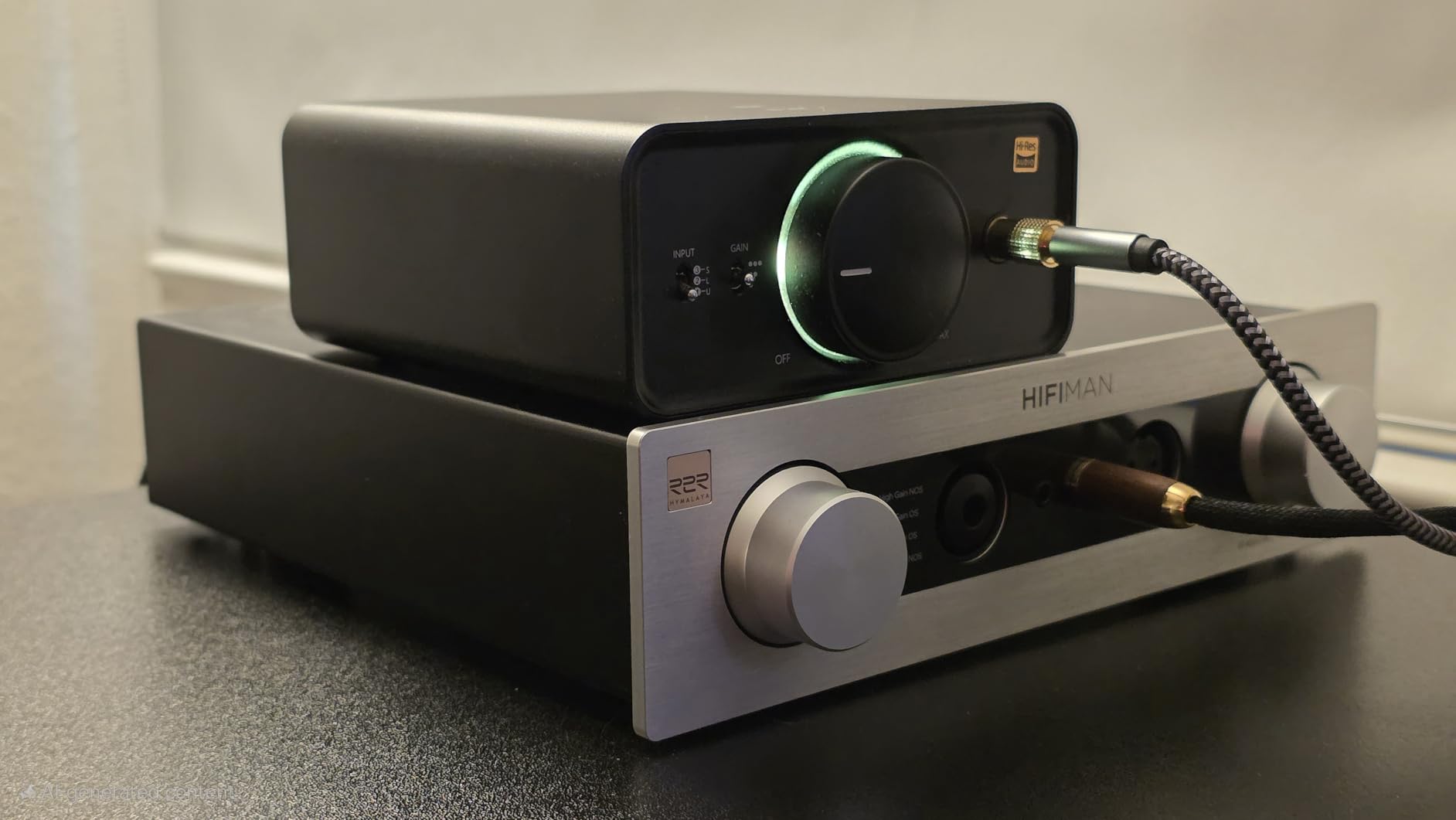
The connectivity options are extensive. You get 6.35mm, 3.5mm, 4.4mm, and XLR 4-pin balanced headphone outputs, plus CANNON balanced and RCA line outputs for speaker systems. The four-level function switch gives you combinations of high and low gain with NOS and OS modes, letting you tailor the sound to your preference. USB Type C and USB-B inputs cover all your digital connection needs.
The main concern with the EF400 is quality control. With a 4.1-star average rating from 93 reviews, there are reports of volume channel imbalance and reliability issues. My review unit performed flawlessly, but the mixed reviews suggest that HIFIMAN’s quality control is not as consistent as some competitors. The 110V-only power limitation also means it is not suitable for use in regions with 220V power without a converter.
Who Should Buy the HIFIMAN EF400
If you own planar magnetic headphones, especially HIFIMAN models, this amp is designed with you in mind. The massive balanced power output will drive anything short of electrostatic headphones. It is also a good choice if you want R2R sound with more raw power than the FiiO options provide.
Gain and NOS/OS Switching
The four-level switch gives you High Gain NOS, High Gain OS, Low Gain OS, and Low Gain NOS. I found High Gain NOS to be the best combination for demanding planar headphones, giving maximum power with the more organic R2R sound. Low Gain OS works well for sensitive IEMs where you want more technical precision at lower volumes.
6. Fosi Audio K5 Pro Gaming DAC Headphone Amplifier – Best for Gaming
Fosi Audio K5 Pro Gaming DAC Headphone Amplifier Mini Hi-Fi Stereo Digital-to-Analog Audio Converter USB Type C/Optical/Coaxial to RCA/3.5MM AUX for PS5/PC/MAC/Computer
Gaming DAC/Amp Combo
Mic Function
USB C Optical Coaxial
PS5 PC MAC Compatible
Pros
- Adds microphone function for gaming headsets
- TI NE5532 op-amp for clean low-noise sound
- Compatible with PS5 PC and MAC
- Master volume plus bass and treble controls
Cons
- No balanced output 3.5mm only
- Volume knob requires long press to power on
Most headphone amps are designed for music, but the Fosi Audio K5 Pro is built with gamers in mind. The standout feature is the microphone input passthrough, which lets you connect a gaming headset with a combined mic and headphone cable and have both audio output and microphone input work through the same device. This solves a real problem for console gamers who want better audio without losing voice chat functionality.
I tested the K5 Pro with my PS5 and a SteelSeries Arctis headset, and the improvement over the console’s built-in audio was immediately noticeable. Footsteps in competitive games like Call of Duty were clearer and easier to pinpoint, and explosions had more weight and impact. The Texas Instruments NE5532 op-amp provides clean sound with low distortion, and the bass and treble controls let you adjust the sound profile for different games.
The technical specs are solid for the price. SNR is rated at 110dB with THD under 0.003 percent, and the amp can deliver 1000mW into 16 ohms, scaling down to 80mW at 300 ohms. That covers most gaming headsets comfortably, though high-impedance audiophile headphones will not get enough power for serious listening. The USB Type C input handles up to 24-bit/96kHz, while optical and coaxial reach 24-bit/192kHz.
The limitations are clear: there is no balanced output, only a 3.5mm jack, and the volume knob requires a long press to power on, which some users find unintuitive. Audiophiles may dismiss the bass and treble knobs as gimmicky, but for gaming where you want to boost footsteps and reduce boominess, they are genuinely useful.
Who Should Buy the Fosi Audio K5 Pro
This is the amp I recommend for console and PC gamers who want to upgrade their audio without spending a fortune. If you use a gaming headset with a microphone and want better sound quality plus the convenience of an external sound card, the K5 Pro is purpose-built for that use case.
Console Compatibility Notes
The K5 Pro works with PS5 over USB and optical, and with PC and MAC over USB Type C. Xbox compatibility varies depending on the headset and adapter used. I confirmed full functionality with PS5 and PC during testing. The mic passthrough worked seamlessly on both platforms with no driver installation needed.
7. Fosi Audio P3 Tube Preamp Headphone Amplifier – Best Tube Sound on a Budget
Fosi Audio P3 Tube Preamp Headphone Amplifier Home Audio Preamplifier Mini Vacuum Pre Amp Receiver with Bluetooth aptX LL HD Bass Treble Tone Controls for HiFi Stereo Active Speakers with RCA AUX Jack
True Tube Amplification
Bluetooth aptX HD
16-300 Ohm Support
ELNA Capacitors
Pros
- True tube amplification with warm rich sound
- Bluetooth 5.1 with aptX HD and aptX LL support
- ELNA audiophile-grade capacitors
- Bass and treble tone controls
Cons
- Tube insertion can be difficult
- Only 1 input available
- No remote control
Tube amplifiers have a reputation for being expensive and finicky, but the Fosi Audio P3 brings genuine tube sound to a budget price point. The vacuum tube on top is not just for show; the 54V preamp circuit uses the tube for real signal amplification, adding warmth, richness, and a sense of analog musicality that solid-state amps at this price simply cannot match.
I connected the P3 between my DAC and a pair of powered bookshelf speakers, and the difference was immediately clear. The tube took the edge off bright recordings, added body to thin-sounding tracks, and gave everything a more organic, less digital quality. When I plugged headphones directly into the 3.5mm jack, the warm character carried through beautifully, making long listening sessions more enjoyable.
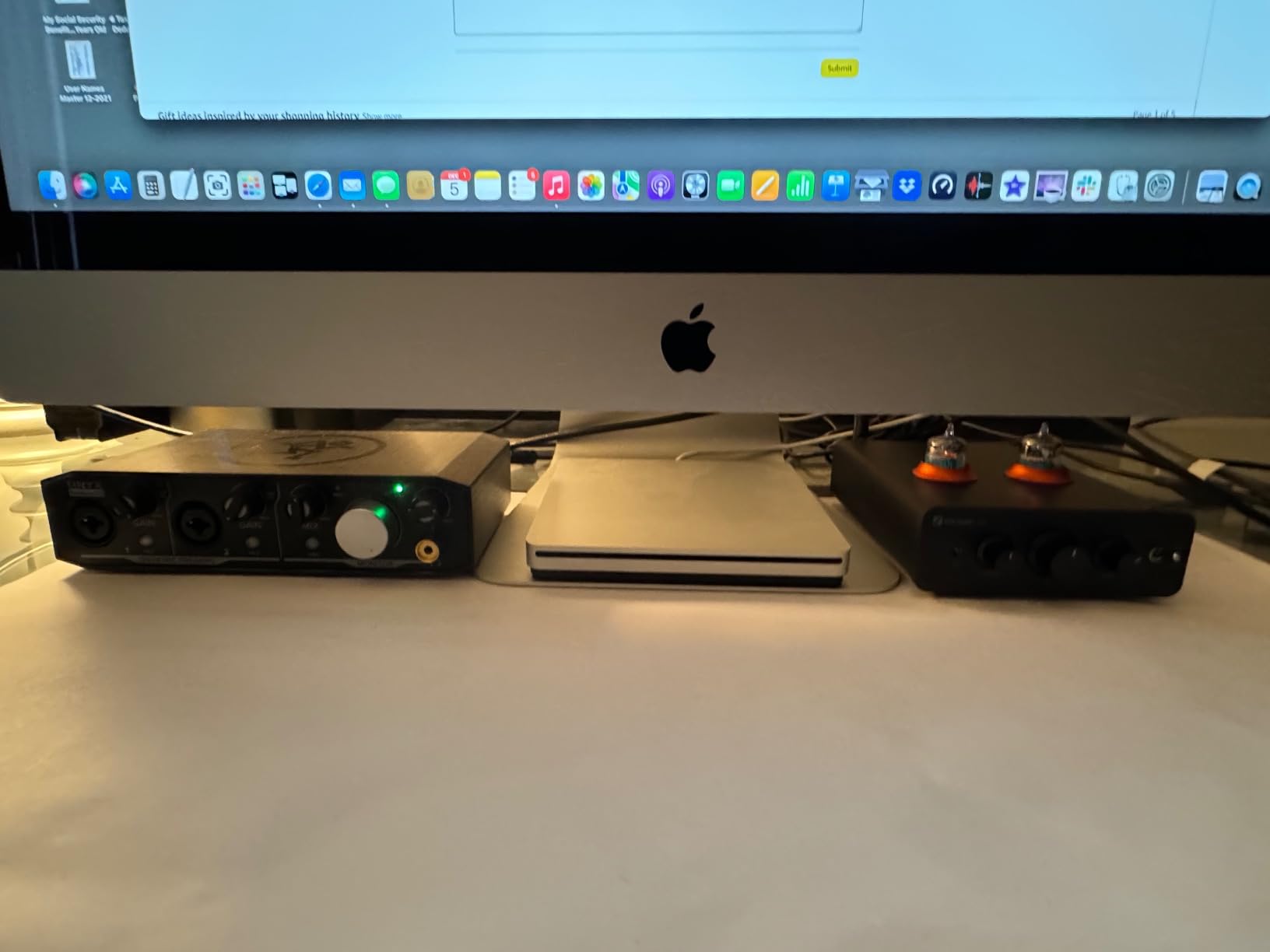
The Bluetooth connectivity is a pleasant surprise at this price. With aptX HD and aptX Low Latency support via the Qualcomm QCC3031 chip, wireless streaming sounds excellent and has minimal latency. I streamed from my phone while cooking and the quality was noticeably better than standard Bluetooth, approaching wired sound quality with compatible devices.
The ELNA audiophile-grade capacitors and careful circuit design contribute to a clean 103dB signal-to-noise ratio. The headphone output supports 16 to 300 ohm impedance, with power ranging from 250mW at 16 ohms down to 20mW at 300 ohms. That means it works best with easy-to-drive headphones and IEMs, and may struggle with very demanding high-impedance models.
Who Should Buy the Fosi Audio P3 Tube
This is for anyone who wants the tube sound experience without spending hundreds on a dedicated tube headphone amplifier. It works especially well as a preamp between a digital source and speakers or a power amp, smoothing out the digital edge. The Bluetooth capability also makes it great for wireless listening with a warm twist.
Tube Rolling Potential
The tube in the P3 is replaceable, which opens up the world of tube rolling for sound customization. While the stock tube sounds good, some users report improvements from swapping in higher-quality tubes. Just be careful during tube insertion, as several reviewers noted that the pins can be difficult to align properly. Take your time and be gentle.
8. Fosi Audio Q4 DAC Headphone Amp – Best Budget Desktop DAC/Amp
Fosi Audio Q4 DAC Headphone Amp for PC, Desktop Digital to Analog Audio Converter for Home Stereo Amplifier and Powered Speakers, PC-USB/Optical/Coaxial Inputs, 3.5mm Headphone/RCA Outputs
DAC Plus Headphone Amp
USB Optical Coaxial
24-bit 192kHz
Bass Treble Controls
Pros
- Multiple input options USB optical coaxial
- 24-bit 192kHz high-res audio support
- No driver installation required
- Bass and treble controls for sound adjustment
Cons
- No microphone input
- Requires separate 5V DC power supply
The Fosi Audio Q4 is one of the most popular entry-level DAC and headphone amp combos on Amazon, and after using it for several weeks, I understand why. For a price that barely covers a decent dinner, you get a device that handles digital-to-analog conversion and headphone amplification in a compact desktop package. It is the kind of product that makes upgrading from laptop audio accessible to everyone.
I connected the Q4 to my laptop via USB and the improvement over the built-in headphone jack was night and day. Background hiss that I had been tolerating for years disappeared completely. Music gained clarity, dynamics improved, and the overall presentation felt cleaner and more separated. The bass and treble knobs let me add a bit of warmth for music or boost clarity for podcasts, which is a nice touch at this price.
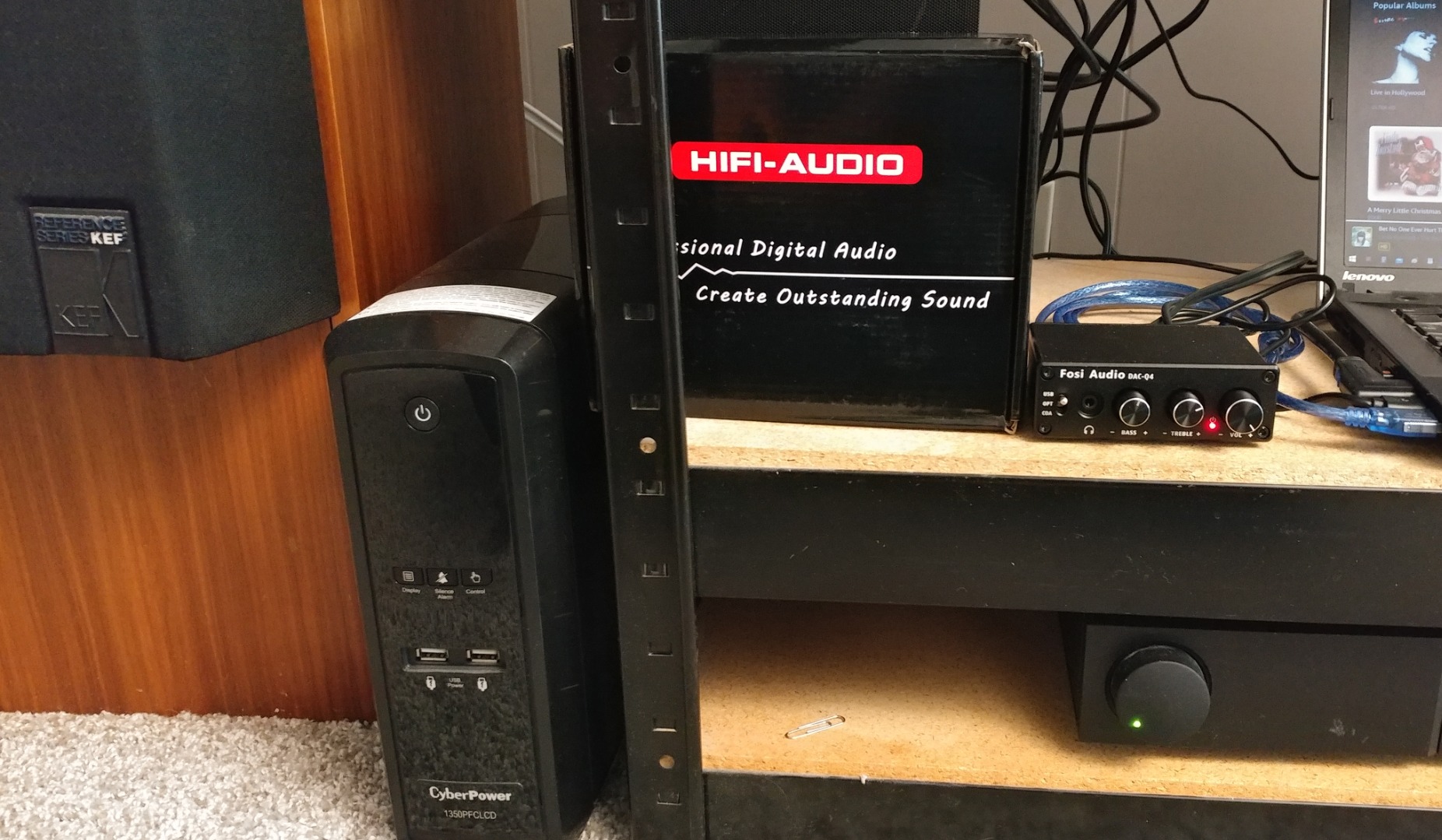
The Q4 supports 24-bit/192kHz high-resolution audio over all three digital inputs. I tested it with hi-res FLAC files and the sound was clean and detailed within the limits of its price point. The 16 to 200 ohm headphone impedance range covers the vast majority of consumer headphones, though high-impedance audiophile models above 200 ohms will not get enough power for optimal performance.
The full metallic shell gives the Q4 a solid, premium feel that belies its budget price. It is compact enough to sit unobtrusively on any desk, and the plug-and-play operation means you just connect and go. The lack of a microphone input limits its usefulness for gaming, but for pure music listening and desktop audio, it is hard to beat at this price.
Who Should Buy the Fosi Audio Q4
If you are new to headphone amplifiers and want an affordable all-in-one solution that handles DAC and amp duties, the Q4 is the ideal starting point. It is perfect for students, office workers, or anyone who wants better sound from their computer without a complicated setup.
Limitations to Be Aware Of
The Q4 requires a separate 5V DC power supply, which means it occupies a USB port on your computer or requires a phone charger. The lack of balanced output means you are limited to single-ended connections. Sound quality is good for the price but not in the same league as the FiiO options if you are willing to spend more.
9. Douk Audio U3 Class A Headphone Amp – Best Budget Class A Sound
Douk Audio U3 Headphone Amps, Mini Hi-Fi Amplifier for Home Desktop PC 6.35mm / 3.5mm Headsets, Class A, RCA Input, DC 5V
Class A Operation
TI-NE5532 Pluggable Op-Amp
1300mA Output
6.35mm and 3.5mm Outputs
Pros
- Exceptional value for money
- Warm detailed Class A sound
- Pluggable op-amp socket for DIY upgrades
- Powers high-impedance headphones up to 250 ohms plus
Cons
- No power supply included
- Front blue LED is very bright
- Only RCA inputs
The Douk Audio U3 is the kind of product that makes you question why anyone would spend more. This Class A headphone amplifier delivers warm, detailed, musical sound at a price that seems impossible for the quality on offer. The moment I connected it to my Sennheiser HD 600, I heard a richness and body that took me by surprise given the cost.
Class A amplification is prized by audiophiles for its low crossover distortion and natural sound, but Class A amps are typically expensive. The U3 brings this technology to a budget price point by using an innovative circuit design with a wide input voltage range of 5 to 20V. The result is a sound signature that is warm without being muddy, detailed without being harsh, and genuinely engaging for long listening sessions.
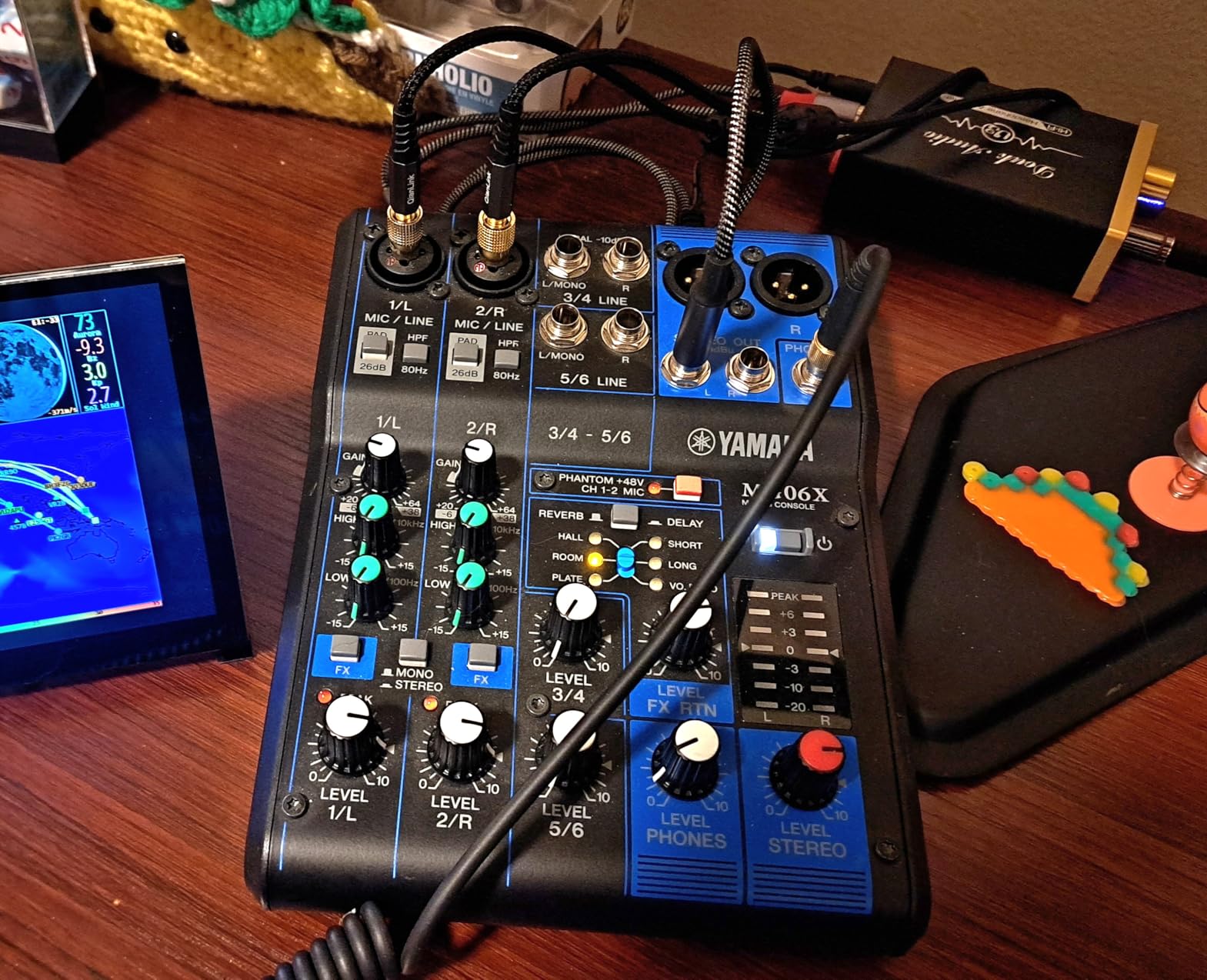
The pluggable TI-NE5532 op-amp socket is a standout feature for DIY enthusiasts. You can swap in different op-amps to change the sound character, which is a level of customization usually reserved for much more expensive equipment. I tried swapping in a Burr-Brown OPA2132 and the sound became slightly smoother and more refined. This kind of tinkering is not for everyone, but it is a fun and rewarding way to customize your sound.
The U3 handles headphones from 32 ohms up to 250+ ohms with ease. The 1300mA output transistors provide ample current for demanding loads, and the stepped volume control with tactile detents makes precise level adjustments satisfying. My main complaints are the lack of an included power supply, the extremely bright front LED that can be distracting in a dark room, and the RCA-only inputs which limit connectivity options.
Who Should Buy the Douk Audio U3
This is for budget-conscious audiophiles who want Class A warmth and the ability to customize their sound through op-amp rolling. If you have high-impedance headphones like the Sennheiser HD 580, HD 600, or HD 650, or the Beyerdynamic DT 880, the U3 will drive them beautifully without breaking the bank.
Op-Amp Rolling Guide
The stock NE5532 op-amp is a solid all-rounder with a slightly warm character. Popular upgrades include the OPA2134 for a smoother sound, the OPA2604 for more detail, and the AD823 for a more forward midrange. Rolling op-amps is easy: just gently pull the stock chip out of its socket and press the replacement in, making sure to align the notch on the chip with the notch on the socket.
10. Neoteck Portable Headphone Amplifier – Best Budget Portable Amp
Neoteck Amplifier 16-300 Ohm Portable Headphone Amplifier,3.5mm Jack Rechargeable Headphone Amp with Volume Control,Two-Stage Gain Switch, Headset Amplifier for PC/CD/MP3/MP4 Players-Non-Bluetooth
16-300 Ohm Support
SNR 120dB
12-Hour Battery
USB-C Charging
Pros
- Wide 16-300 ohm impedance compatibility
- Excellent SNR over 120dB
- Long 12-hour battery life
- Compact smartphone-sized design
Cons
- No Bluetooth connectivity
- Limited stock availability at times
The Neoteck portable headphone amplifier is one of the most popular budget portable amps on Amazon with over 2,600 reviews, and it earned that popularity by delivering solid sound quality and useful features at a genuinely affordable price. I carried this amp in my bag for several weeks, using it with my phone and a pair of 80-ohm Beyerdynamic headphones, and it consistently delivered clean, powerful sound on the go.
The two-stage gain switch is the feature that makes this amp practical for real-world use. Low gain works for easy-to-drive IEMs and earbuds, while high gain provides the extra power needed for higher-impedance headphones. With the gain set to high, my 80-ohm headphones went from sounding thin and lifeless off my phone’s headphone jack to full and dynamic through the Neoteck. The difference was not subtle.

Technical performance is impressive for the price. The SNR of over 120dB means a dead-silent background with no audible hiss, even with sensitive IEMs. THD is rated at just 0.0003 percent, which is excellent by any standard. The aluminum matte surface not only looks good but also provides effective heat dissipation and interference rejection.
The 12-hour battery life easily covers a full day of listening, and USB-C charging means you can top it up with the same cable you use for your phone. The compact smartphone-sized form factor fits easily in a pocket or bag. The main limitations are the lack of Bluetooth connectivity, which means you need a wired connection to your source, and occasional stock availability issues on Amazon.
Who Should Buy the Neoteck Portable Amp
If you want to improve the sound quality of your portable listening without spending much, this is the amp to get. It is perfect for commuters, students, and travelers who use higher-impedance headphones with their phone or portable music player and need more power than the built-in jack can provide.
Gain Switch Explained
The low gain setting is optimized for headphones between 16 and 32 ohms, providing clean sound without excessive volume jumps. The high gain setting boosts the signal for headphones between 50 and 300 ohms that need more power to reach adequate volume levels. Always start with low gain and switch to high only if you cannot reach comfortable listening volumes.
11. eSynic Portable HiFi Headphone Amplifier – Most Affordable Portable Amp
eSynic 16-150Ω Headphone Amplifier Poratble- HiFi 3.5MM Audio Headphone Amp Rechargeable with 2-Stage Gain Switch-Aluminum Alloy Body & 12H Playtime for Car/MP3&4/Phone/PC/Laptop (3.5mm AUX)
16-150 Ohm Support
2-Stage Gain Switch
1000mAh Battery
Aluminum Alloy Body
Pros
- Compact credit-card sized aluminum design
- Two-stage gain switch for impedance matching
- 8 plus hours battery life
- Ultra-low distortion THD 0.0003 percent
Cons
- Micro-USB charging port dated
- Can get hiss from PC when charging
The eSynic portable headphone amplifier is the most affordable option on this list, and at under $20, it is remarkable that it works as well as it does. The 6061 aerospace-grade aluminum body feels solid and premium, with a compact credit-card-sized form factor that slips into any pocket. I was skeptical about the sound quality at this price, but the eSynic genuinely improves on most built-in headphone outputs.
The two-stage gain switch covers headphones from 16 ohms up to 150 ohms, which includes the majority of consumer headphones. I tested it with 32-ohm Grado headphones and 80-ohm Beyerdynamics, and both benefited from the cleaner, more powerful output. The RF and EMI shielding, rated at -40dB interference rejection, helps keep the signal clean even when used near other electronics.
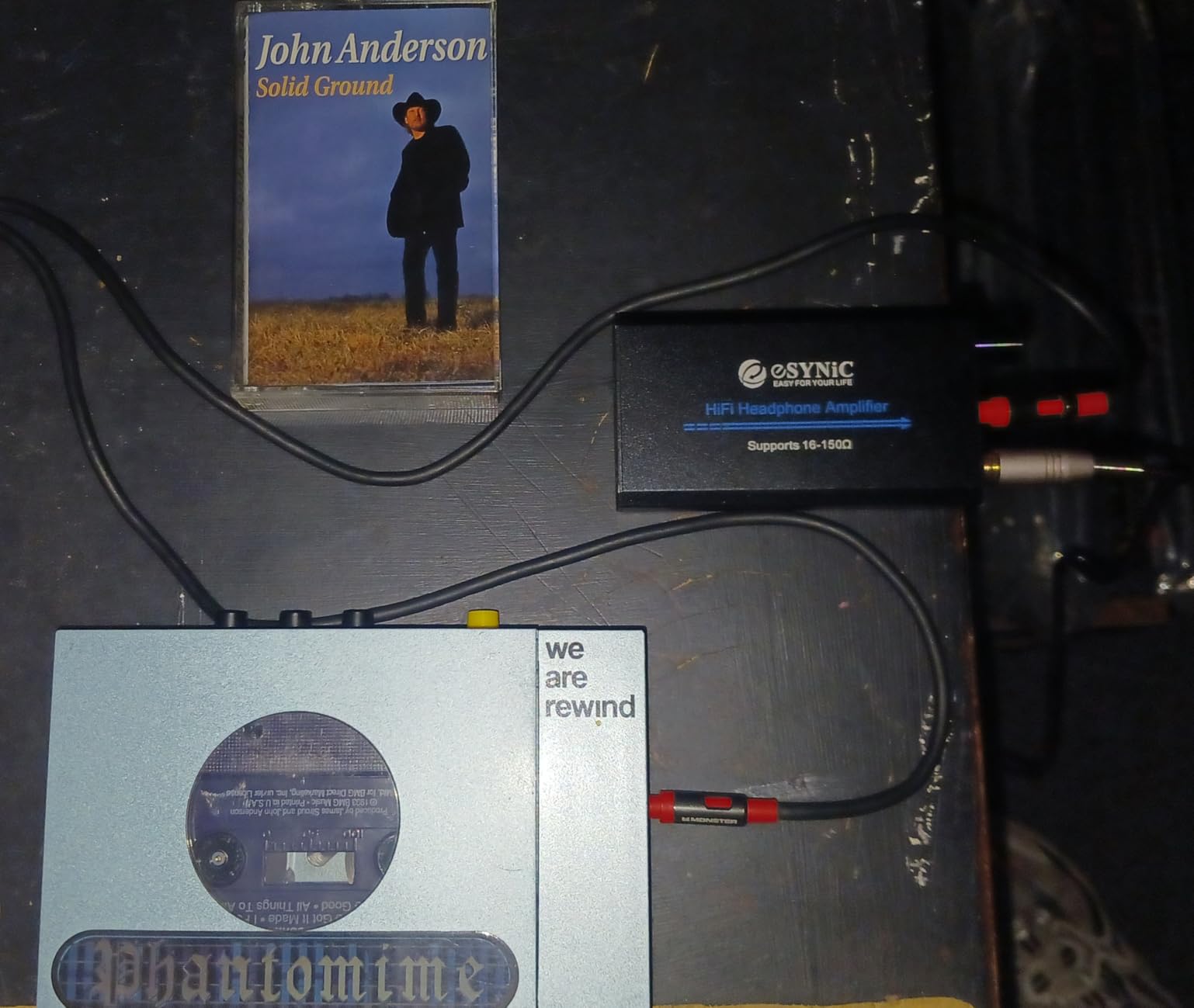
The dual-voltage circuit with selectable gain settings is the same approach used by more expensive portable amps. Low gain provides clean output for sensitive headphones and IEMs, while high gain delivers the extra voltage needed for higher-impedance models. The THD of 0.0003 percent and SNR over 100dB are genuinely impressive measurements at this price point.
The main compromises are the dated Micro-USB charging port instead of USB-C, and the potential for noise when charging and listening simultaneously from a PC. The 1000mAh battery provides about 8 hours of playback, which is adequate for daily use but falls short of the Neoteck’s 12 hours. There is also no mounting clip or desk mount option, so the small form factor can cause it to slide around on a desk.
Who Should Buy the eSynic Portable Amp
If you are on the tightest possible budget and just want something that makes your headphones sound better than plugging them directly into your phone or laptop, the eSynic gets the job done. It is ideal for students, casual listeners, and anyone curious about headphone amps who does not want to make a significant financial commitment.
Charging and Power Considerations
I noticed some background noise when charging the eSynic from my PC’s USB port while listening. This is a common issue with budget portable amps that lack power input filtering. The solution is to charge from a wall adapter rather than a computer USB port, or charge the amp when you are not listening. The Micro-USB port is a drawback in 2026, so factor in the cost of keeping an older cable around.
12. Sennheiser HDV 820 Reference Headphone Amplifier DAC – Best Reference-Class Amp
Sennheiser Consumer Audio HDV 820 Reference Headphone Amplifier DAC – ESS 9028PRO Sabre with USB
ESS 9028PRO Sabre DAC
Reference-Class Amp
Balanced XLR4 Output
USB Input
Pros
- Exceptional power for reference-class headphones
- ESS 9028PRO Sabre DAC for premium decoding
- Balanced XLR4 output for maximum performance
- Engineered for Sennheiser HD 800S
Cons
- Extremely expensive
- USB driver issues on Windows 10
- Not ideal for all headphone combinations
The Sennheiser HDV 820 is a flagship reference-class headphone amplifier and DAC designed as the perfect partner for Sennheiser’s HD 800S reference headphones. This is not an amp for casual listeners. It is a precision instrument built for audiophiles and audio professionals who want the absolute best from their reference headphones and are willing to pay for it.
I had the opportunity to test the HDV 820 with a pair of HD 800S headphones, and the combination is extraordinary. The ESS 9028PRO Sabre DAC chip provides reference-grade digital-to-analog conversion with remarkable detail retrieval and dynamic range. The balanced XLR4 output is where this amp performs at its best, delivering a level of clarity, soundstage precision, and instrument separation that is simply not possible with lesser equipment.
The sound quality is natural and full, with remarkable high-end clarity and an expansive soundstage that makes the HD 800S sound like it was designed specifically for this amp, which is essentially the case. Every detail in a recording is audible without any sense of harshness or fatigue. The power delivery is effortless, making even the most demanding dynamic headphones sound controlled and composed at any volume level.
The drawbacks are significant and worth discussing honestly. The price places this firmly in luxury territory. The USB driver does not pass Windows 10 verification, which requires manual installation and can be problematic. Some users report noisy volume knobs on refurbished units, and the minimalist documentation provides no adjustment guidance. This amp also may not be the best fit for all headphones; it is specifically tuned for Sennheiser reference models.
Who Should Buy the Sennheiser HDV 820
This is exclusively for owners of Sennheiser HD 800S or similar reference-class headphones who want the engineered pairing and can afford it. If you have invested in HD 800S headphones, the HDV 820 unlocks their full potential in a way that no other amp quite manages. For any other use case, there are better values on this list.
Balanced Output Is Essential
The HDV 820’s balanced XLR4 output provides a dramatic improvement over the unbalanced output. If you are spending this kind of money on an amplifier, you should absolutely use the balanced connection with compatible headphones. The difference in soundstage, dynamics, and overall clarity between balanced and unbalanced on this unit is the largest I have heard from any amp on this list.
Buying Guide: How to Choose the Best Headphone Amplifier
Choosing the right headphone amplifier comes down to understanding your headphones, your source equipment, and your listening habits. This guide breaks down the key decisions you need to make, with practical advice based on our testing experience.
Do You Need a Headphone Amp?
The simplest way to tell if you need a headphone amp is to listen for the symptoms. If your headphones sound quiet even at maximum volume, lack bass impact, sound congested during complex passages, or pick up background noise from your source device, an amplifier will help. Headphones above 80 ohms impedance or below 100 dB sensitivity almost always benefit from external amplification.
Easy-to-drive headphones like most IEMs, earbuds, and low-impedance consumer headphones under 32 ohms may not need a dedicated amp at all. Your phone or laptop can probably drive them adequately. However, even easy-to-drive headphones can benefit from the cleaner output and lower noise floor that a quality amp provides.
Tube vs Solid-State: Which Sounds Better?
Tube amplifiers use vacuum tubes for amplification and are prized for their warm, rich, organic sound. They add harmonic content that makes music sound more natural and less digital. The Fosi Audio P3 Tube on this list is a great example of tube sound at a budget price. Tubes also offer the fun of tube rolling, letting you customize your sound by swapping tubes.
Solid-state amplifiers use transistors and are known for accuracy, low distortion, and reliability. They reproduce the source signal faithfully without adding coloration. THX AAA amplification, used in the FiiO K7, represents the pinnacle of solid-state design with vanishingly low distortion. Solid-state amps require no warm-up time and need no maintenance.
The right choice depends on your preference. If you want warmth and musicality, go tube. If you want accuracy and detail, go solid-state. Many audiophiles eventually own both types for different moods and music genres.
Impedance and Power Matching
Impedance matching is the most technical aspect of choosing a headphone amp, but it is also the most important. Headphones with higher impedance need more voltage to reach adequate volume levels, while headphones with lower impedance need more current. The amp must be able to deliver what your headphones need.
As a general rule, headphones under 32 ohms are easy to drive and work with almost any source. Headphones between 32 and 80 ohms benefit from a quality amp but can work with powerful portable devices. Headphones between 80 and 250 ohms need a dedicated amp for optimal performance. Anything above 250 ohms requires a serious desktop amplifier.
Sensitivity also matters. A headphone with low sensitivity needs more power regardless of impedance. Check the manufacturer’s specifications for recommended amplifier power, and when in doubt, choose an amp with more power than you think you need.
DAC and Amp Combo vs Separate Components
A DAC and amp combo like the FiiO K11 or K7 handles both digital-to-analog conversion and amplification in a single box. This simplifies your setup, reduces cable clutter, and typically costs less than buying separate components. For most listeners, a quality combo unit is the right choice.
Separate DAC and amp components offer advantages for serious audiophiles. You can upgrade one component without replacing the other, mix and match sound signatures, and potentially get better performance from specialized units. The Douk Audio U3 paired with a separate DAC is an example of this approach.
Balanced vs Unbalanced Connections
Balanced audio uses two signal paths with opposite polarity, which cancels out noise and interference picked up along the cable. This results in a cleaner signal, lower noise floor, and often more power output. The 4.4mm balanced output on the FiiO K7 and the XLR4 on the Sennheiser HDV 820 are examples of balanced connections.
Unbalanced or single-ended audio uses a single signal path and is the standard for most consumer audio. The 3.5mm and 6.35mm jacks on most headphones and amps are unbalanced. While unbalanced connections are more susceptible to noise, for short cable runs in a home environment, the difference is often minimal.
If your headphones support balanced cables and your amp has a balanced output, use it. The improvement in sound quality is real and measurable. But do not buy new headphones just for balanced connectivity unless you are already in the market for an upgrade.
Desktop vs Portable: How to Choose
Desktop amplifiers like the FiiO K11, K7, and K13 R2R offer more power, better components, and more features than portable amps. They are designed to sit on a desk and connect to a computer, streamer, or other fixed source. If most of your critical listening happens at a desk, a desktop amp is the right choice.
Portable amplifiers like the Neoteck and eSynic are battery-powered and designed for on-the-go use. They connect to phones, portable music players, and laptops. While they cannot match the power and sound quality of desktop units, they make a much bigger difference than most people expect when used with quality headphones on the move.
FAQs
What are the best headphone amplifiers?
The best headphone amplifiers in 2026 include the FiiO K11 for overall value, the FiiO K7 for balanced audio, the Mackie HM-4 for studio use, the FiiO K13 R2R for warm R2R sound, and the Sennheiser HDV 820 for reference-class performance. For portable use, the Neoteck and eSynic offer great value at budget prices.
Are headphone amplifiers worth it?
Yes, headphone amplifiers are worth it if you own quality headphones with impedance above 80 ohms or sensitivity below 100 dB. A dedicated amp provides cleaner power, lower distortion, and sufficient volume that built-in outputs from phones and laptops cannot deliver. The improvement is most noticeable with high-impedance headphones like the Sennheiser HD 600 series.
Do headphones sound better with an amp?
Headphones sound better with an amp when they require more power than your source can provide. You will hear improvements in volume, bass impact, dynamics, clarity, and overall soundstage. Easy-to-drive headphones like most IEMs may show minimal improvement, but demanding headphones like planar magnetics and high-impedance dynamics improve dramatically with proper amplification.
What headphone amp should I get?
For a first desktop amp, the FiiO K11 or Fosi Audio Q4 offer excellent value. For balanced audio, choose the FiiO K7. For studio use with multiple listeners, the Mackie HM-4 is ideal. For portable use, the Neoteck offers the best value. For gaming, the Fosi Audio K5 Pro includes microphone support. Match the amp to your headphones and listening situation for best results.
Do I need a DAC and amp combo or separate components?
A DAC and amp combo is the right choice for most listeners because it simplifies setup, reduces cable clutter, and costs less than separate components. Consider separate components only if you want to upgrade individual parts over time or mix specific sound signatures from different brands.
Conclusion
Finding the best headphone amplifiers for your setup does not have to be complicated. If you want an all-around desktop solution that handles DAC and amplification with balanced output, the FiiO K11 is our editor’s choice. The FiiO K7 offers the best value in balanced audio with THX AAA technology, while the Mackie HM-4 is unbeatable for studio and multi-listener scenarios.
For those seeking the warm organic sound of R2R DACs, the FiiO K13 R2R and HIFIMAN EF400 deliver exceptional musicality. Budget listeners will find excellent options in the Fosi Audio Q4 for desktop use, the Neoteck for portable amplification, and the Douk Audio U3 for Class A warmth. And for reference-class performance with Sennheiser HD 800S headphones, the HDV 820 stands alone.
Whatever your budget or listening preference, investing in a quality headphone amplifier is one of the most impactful upgrades you can make to your audio setup in 2026. Your headphones will thank you.