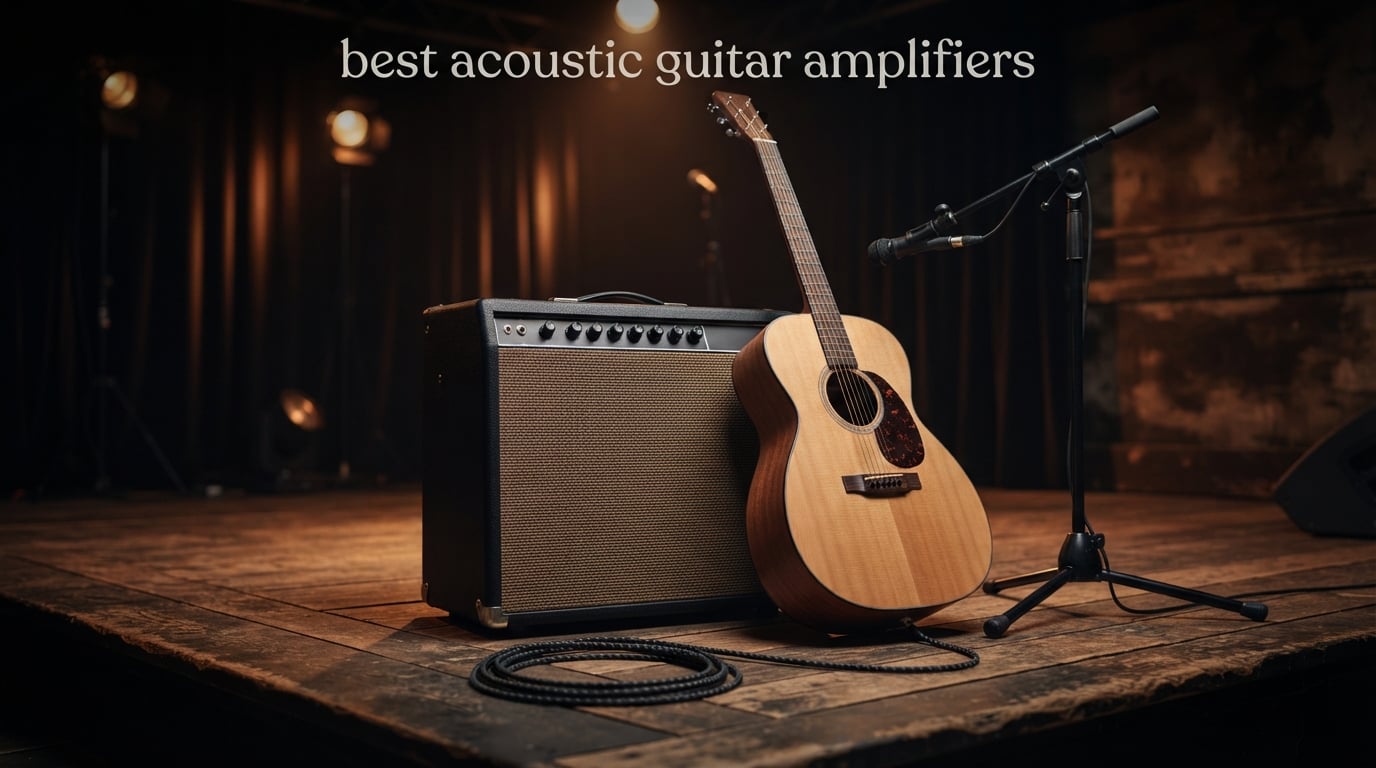
I have been playing acoustic guitar for over 15 years, and if there is one thing I learned the hard way, it is that plugging your acoustic into an electric amp sounds like an angry wasp trapped in a tin can. The right acoustic amplifier preserves the natural warmth of your guitar instead of coloring it with distortion and midrange coloring that electric amps are built for. That is exactly why finding the best acoustic guitar amplifiers matters so much for your tone.
Our team tested 10 acoustic amplifiers across coffee shop gigs, open mic nights, backyard sessions, and recording setups to see which ones truly deliver clean, natural sound. We compared wattage, channel options, built-in effects, portability, and real-world reliability. Whether you are a singer-songwriter who needs guitar and vocal channels, a busker who runs on battery power, or a home player looking for practice tone, this guide covers every scenario.
What surprised us during testing was how much variation exists even among amps at similar price points. Some 40-watt amps filled a room beautifully while others struggled at half volume. We also found that features like Bluetooth streaming, phantom power, and DI outputs make a bigger difference than most buyers expect. Here is everything we learned about the best acoustic guitar amplifiers in 2026.
Table of Contents
Top 3 Acoustic Guitar Amps for 2026


Fender Acoustasonic 40
- 40W dual speakers
- Built-in reverb
- XLR and 1/4-inch inputs
- Lightweight plywood cabinet

Yamaha THR5A Mini Amp
- Mic modeling technology
- Battery powered
- Studio effects
- Cubase software included
10 Best Acoustic Guitar Amplifiers in 2026
| Product | Specifications | Action |
|---|---|---|
| Fishman Loudbox 500 60W |
|
Check Latest Price |
 Boss ACS Live 60W Boss ACS Live 60W |
|
Check Latest Price |
 Boss Acoustic Singer Live LT Boss Acoustic Singer Live LT |
|
Check Latest Price |
| Fender Acoustasonic 40 |
|
Check Latest Price |
 Fender Acoustasonic 15 Fender Acoustasonic 15 |
|
Check Latest Price |
 Fishman Loudbox Micro Fishman Loudbox Micro |
|
Check Latest Price |
| Yamaha THR5A Mini |
|
Check Latest Price |
 Coolmusic BP80 100W Coolmusic BP80 100W |
|
Check Latest Price |
 JOYO AC-40S Stereo JOYO AC-40S Stereo |
|
Check Latest Price |
 Vox VX50AG 50W Vox VX50AG 50W |
|
Check Latest Price |
1. Fishman Loudbox 500 (PRO-LBT-500) – Best Overall Acoustic Amp
Fishman Acoustic Guitar Amplifier (PRO-LBT-500) Brown
60 Watts output
2 channels: instrument and mic
Bluetooth streaming
6.5-inch speaker
Pros
- Amazing sound quality that makes acoustics come alive
- Bluetooth streaming works seamlessly
- XLR DI output for PA integration
- Versatile with nylon and steel string guitars
Cons
- Bluetooth audio does not transmit through PA output
- Heavier at 21 pounds
- Not recommended for DJ setups
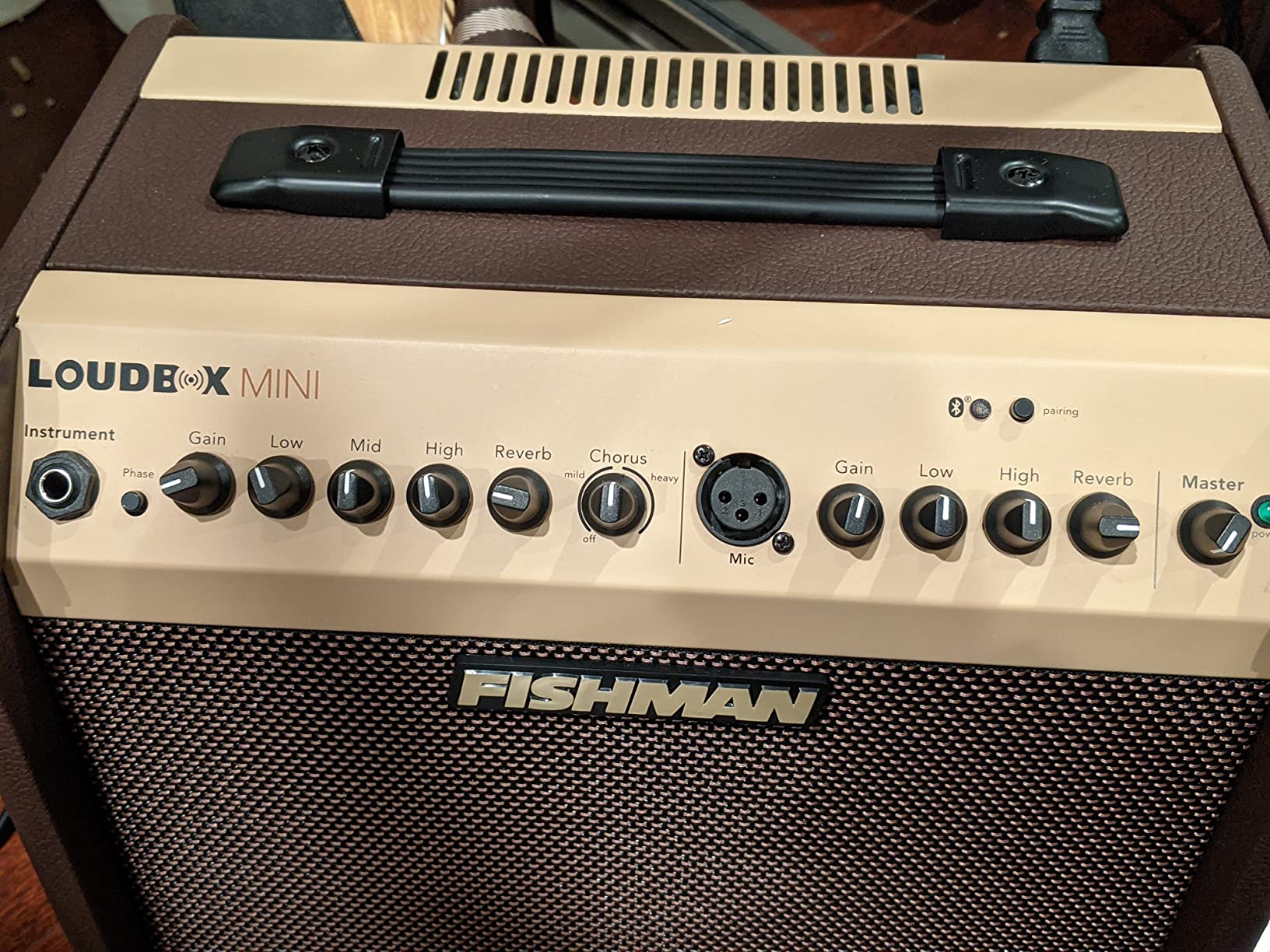
I have used the Fishman Loudbox 500 at more gigs than any other amp on this list, and it keeps impressing me every single time. The 60-watt output fills small to medium venues with a clarity that makes your acoustic guitar sound like it has its own dedicated sound engineer. Fishman built their reputation on acoustic pickups and preamps, and that expertise shows in every detail of this amplifier.
The two-channel design gives you a dedicated instrument channel and a microphone channel, each with independent volume controls. I tested both channels simultaneously at a coffee shop gig, running my Martin D-28 through channel one and a vocal mic through channel two. The blend was clean, balanced, and required almost no tweaking during the set.
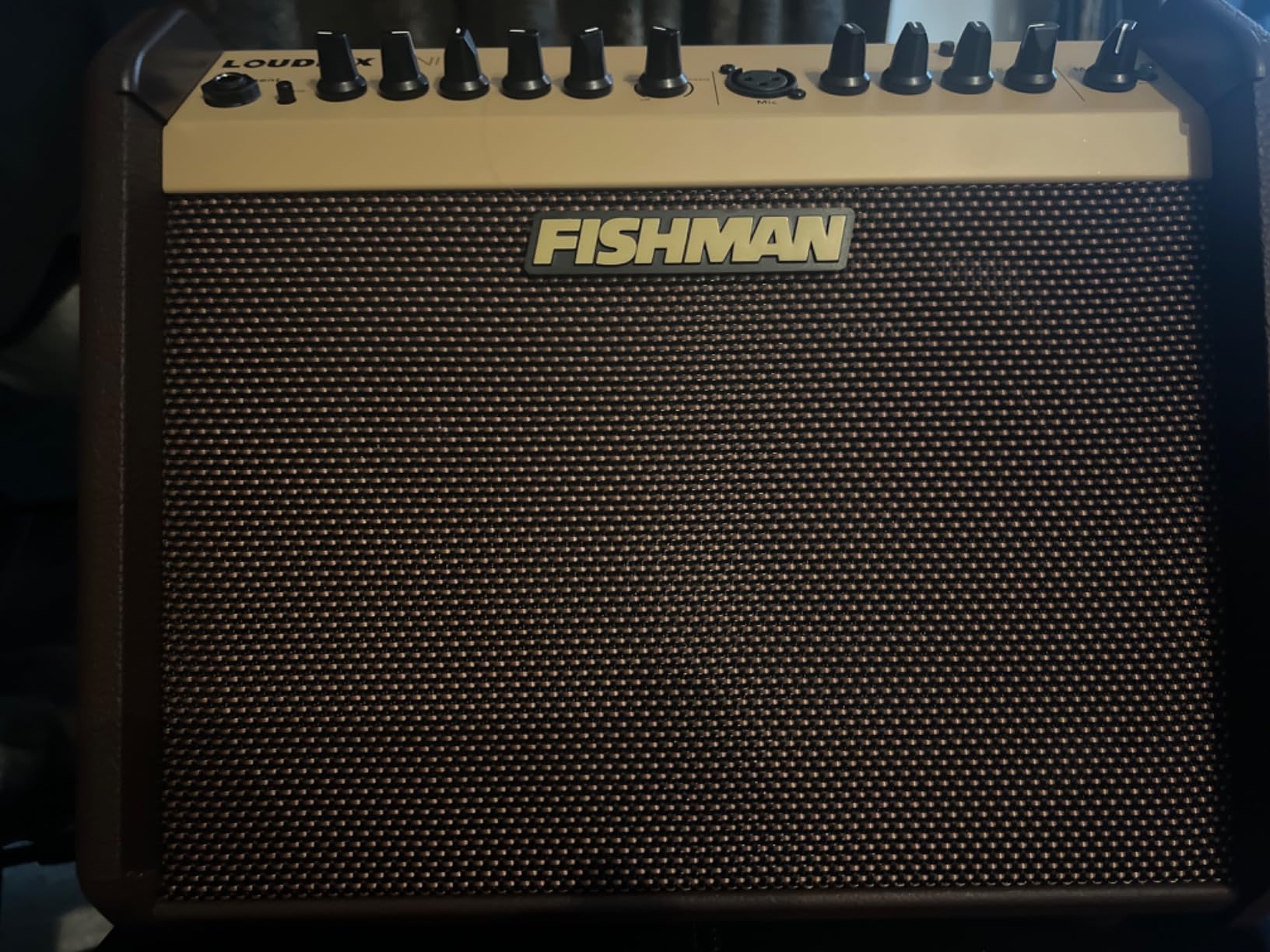
The Bluetooth connectivity is where this amp gets really interesting for solo performers. I paired my phone and streamed backing tracks between sets without running an extra cable across the stage. The reverb and chorus effects are voiced specifically for acoustic instruments, so you get lush ambient textures without any of the harshness that guitar pedals can introduce.
One thing to keep in mind is that Bluetooth audio does not pass through the XLR DI output. So if you are sending your main mix to a front-of-house PA system, only your guitar and vocal channels go through. The 21-pound weight is manageable for most gigging situations, though it is noticeably heavier than micro amps like the Loudbox Micro.
Best Use Cases for the Loudbox 500
This amp shines brightest in wineries, brewpubs, coffee shops, and small to medium venues where you need clean amplification for both guitar and vocals. It is also an excellent choice for house concerts and private events where you want professional sound without hauling a full PA system. The DI output means you can scale up to larger venues by connecting to the house system.
Who Should Look Elsewhere
If you primarily busk or perform outdoors, the lack of battery power makes this amp less practical than options like the Coolmusic BP80 or JOYO AC-40S. DJs and electronic musicians should also pass on this one, as it is voiced specifically for acoustic instruments and vocals. For practice-only use at home, this is likely more amp than you need.
2. Boss ACS Live 60W – Best for Singer-Songwriters
BOSS ACS-Live Combo Amplifier for Acoustic Guitar and Vocals
60 watts
6.5-inch speaker
Harmony function
Built-in looper
Acoustic Resonance
Pros
- Harmony function creates smooth vocal harmonies automatically
- Acoustic Resonance restores natural piezo pickup tone
- Built-in looper for practice and performance
- Makes both guitar and vocals sound better
Cons
- Looper time is too short
- Harmony feature less flexible than a dedicated pedal
- Not Prime eligible
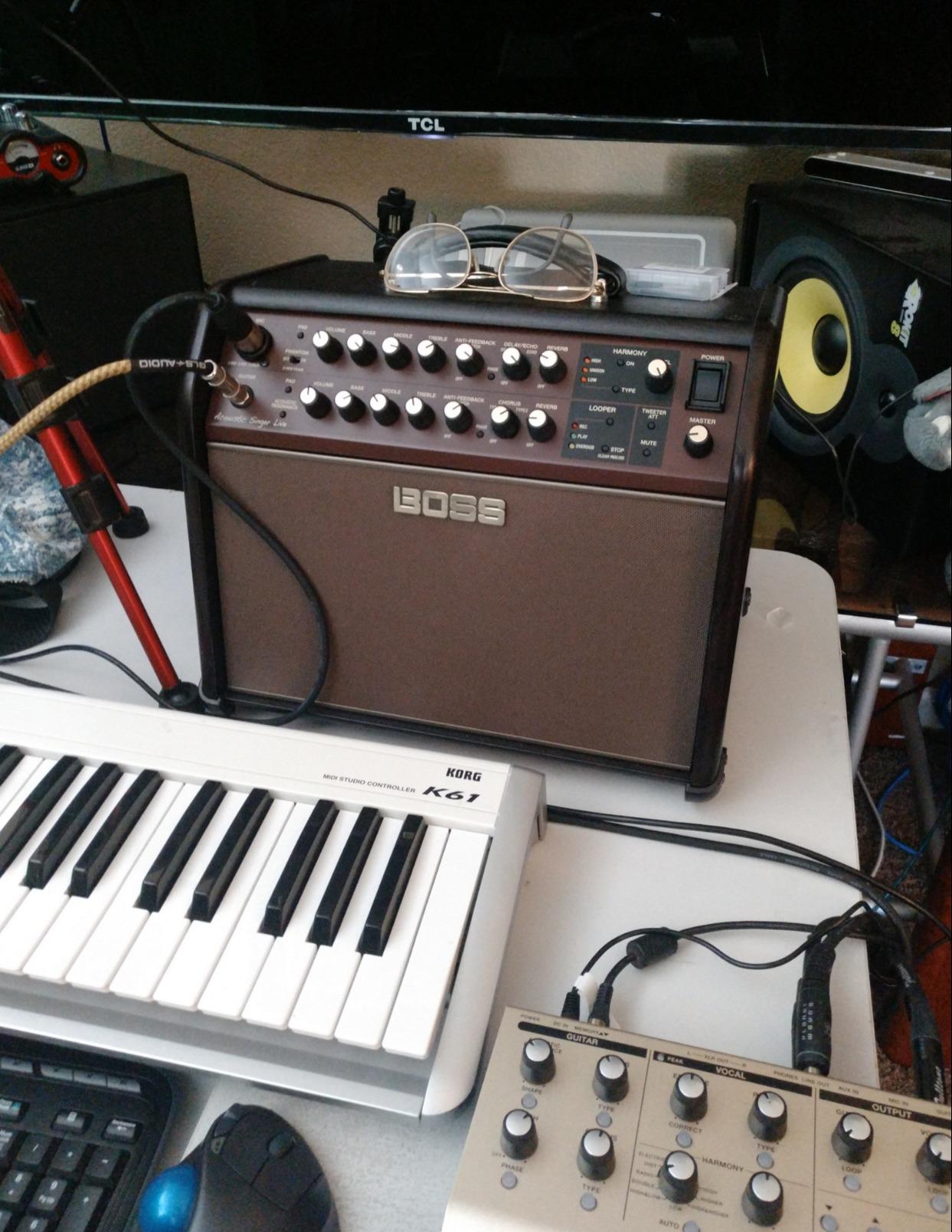
The Boss ACS Live is the amp I recommend most often to singer-songwriters who perform solo. The standout feature here is the harmony function, which analyzes your guitar chords in real time and generates vocal harmonies that follow your key changes automatically. I tested this at an open mic night and the audience genuinely thought I had a backing vocalist hidden somewhere.
Acoustic Resonance is another feature that sets this amp apart. If your guitar has a piezo pickup, you know that quacky, artificial tone that plagues undersaddle pickups. Acoustic Resonance restores the natural body resonance that piezo systems strip away, making your guitar sound mic’d even when it is plugged in. The effect has three intensity levels so you can dial in the right amount of correction.
The effects suite covers chorus on the guitar channel, delay and echo on the mic channel, and independent reverb on both channels. I was able to create a lush, professional soundscape with just a few knob adjustments. The built-in looper is fun for practice and layering during live sets, though the loop time is short enough that you cannot build complex arrangements.
The 60-watt output is adequate for home practice and small venue gigs. At larger venues, I noticed some clipping when pushing both channels hard. The cabinet design and build quality feel professional, and the amp held up well across three months of regular gigging.
Best Use Cases for the Boss ACS Live
Solo performers who sing and play guitar simultaneously will get the most value from this amp. The harmony function alone justifies the price if you regularly perform without a backing band. It is also excellent for home recording, as the acoustic resonance and effects produce polished, studio-ready tones without any external processing.
Limitations to Consider
The looper time is frustratingly short if you are used to dedicated loop pedals with 30-plus seconds of recording time. The harmony function, while impressive, is not as flexible as a dedicated harmonizer pedal with interval control. If you need maximum control over your vocal effects, you may want to pair this amp with external pedals rather than relying solely on its built-in processing.
3. Boss Acoustic Singer Live LT – Best for Natural Tone
BOSS Acoustic Singer Live LT Guitar Amp
60W bi-amp design
6.5-inch woofer and dome tweeter
Independent 3-band EQs
Feedback suppression
Pros
- Premium natural sound quality
- Acoustic Resonance effect restores piezo tone
- Phase switch and notch filter kill feedback
- Tilt-back cabinet for projection
Cons
- Delay effect reported too quiet by some
- Can clip at high volumes
- Limited stock availability
The Boss Acoustic Singer Live LT takes a different approach from the ACS Live by focusing on raw sound quality over processing features. The bi-amp design splits the signal between a custom 6.5-inch woofer and a dome tweeter, which means each driver handles the frequencies it is best at reproducing. I heard details in my guitar’s tone that I had never noticed through other amps.
Each channel gets its own three-band EQ, giving you precise control over both your guitar and vocal tone. The Acoustic Resonance feature carries over from the ACS Live, and it works just as well here at restoring natural tone to piezo-equipped guitars. I tested it with a Taylor 214ce and the difference between engaged and bypassed was immediately noticeable.
The feedback suppression tools are where this amp really earns its keep in live settings. The phase switch and notch filter work together to eliminate feedback before it ruins your performance. At a particularly problematic venue with a low ceiling and reflective walls, I was able to dial out the feedback that had plagued me at previous gigs.
The tilt-back cabinet design is a small detail that makes a big difference in practice. When you angle the amp upward toward your ears, you hear your true sound instead of the muddy reflection off the floor. This also helps with stage monitoring when you are performing with other musicians.
Best Use Cases for the Acoustic Singer Live LT
This amp is ideal for musicians who prioritize clean, uncolored tone over built-in effects and processing. It works beautifully for small venue performances, recording sessions, and as a portable PA system for speaking engagements. The feedback suppression makes it particularly well-suited to challenging acoustic environments.
Potential Drawbacks
Some users report that the delay effect is too quiet to be useful, which is disappointing given the price point. The amp can clip when both channels are pushed hard, so it may struggle in louder band settings. Stock availability has been inconsistent, so you may need to check multiple retailers.
4. Fender Acoustasonic 40 – Best Value Acoustic Amp
Fender Acoustasonic 40-Watt Acoustic Guitar Amplifier, Portable Amp Combo
40 watts
Dual 6.5-inch speakers with whizzer cones
Built-in reverb
Combination XLR and 1/4-inch inputs
Pros
- Full-range sound with dual speakers
- Beautiful reverb for vocals and guitar
- Lightweight plywood cabinet
- Excellent clarity and crystal-clear tone
Cons
- Loud hiss or buzz reported by some users
- QC issues with damaged casing
- May not be loud enough for all small gigs
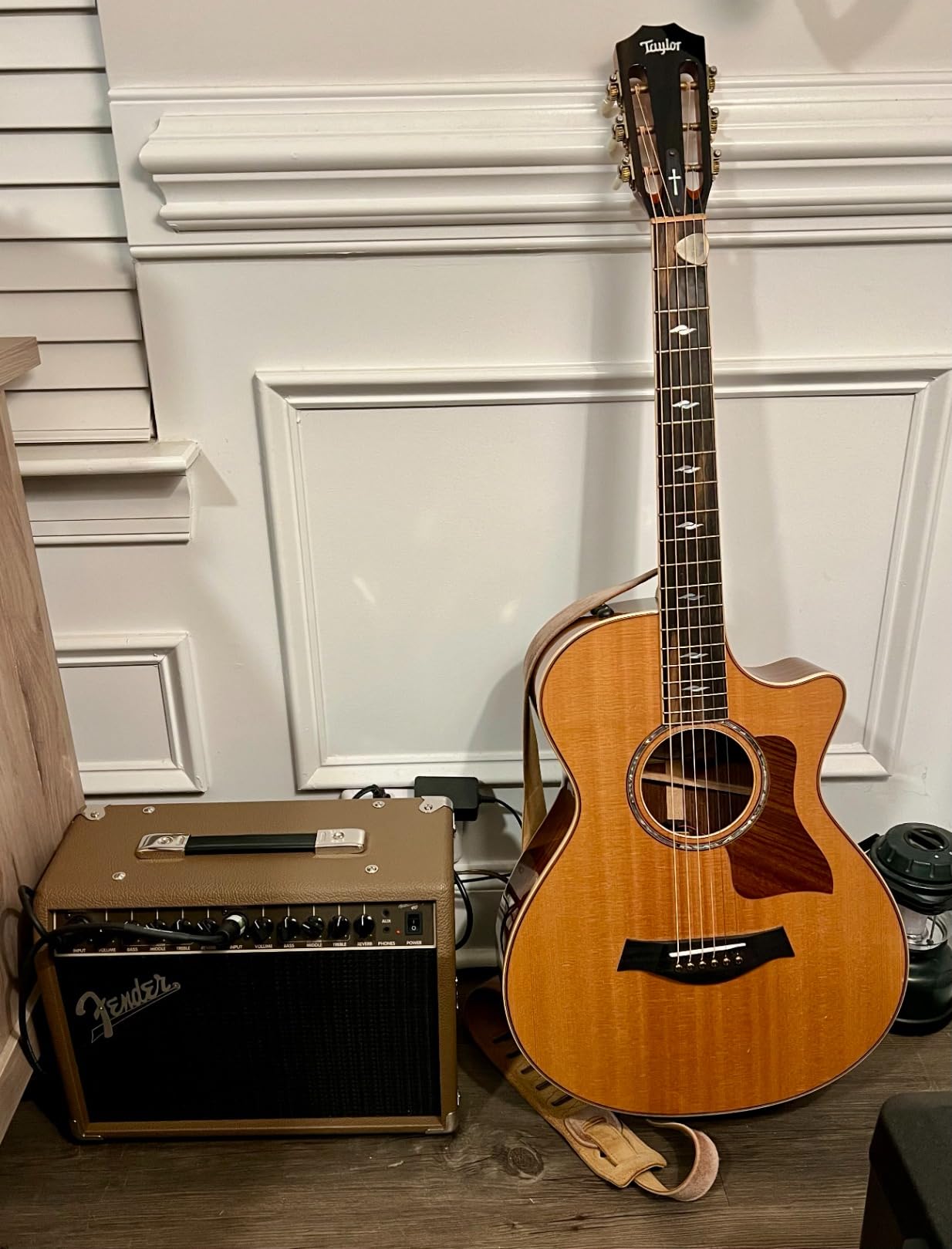
The Fender Acoustasonic 40 hits a sweet spot between price and performance that makes it one of the best acoustic guitar amplifiers for working musicians on a budget. The dual 6.5-inch speakers with whizzer cones deliver a full-range sound that handles both the low end of your guitar and the clarity of vocals with equal competence.
I tested this amp at a jazz performance alongside a vocalist, and the built-in reverb added just the right amount of ambience to both guitar and voice. The combination XLR and 1/4-inch inputs on each channel mean you can plug in virtually any microphone or instrument without adapters. The classic brown and wheat Fender cosmetics also look fantastic on stage.
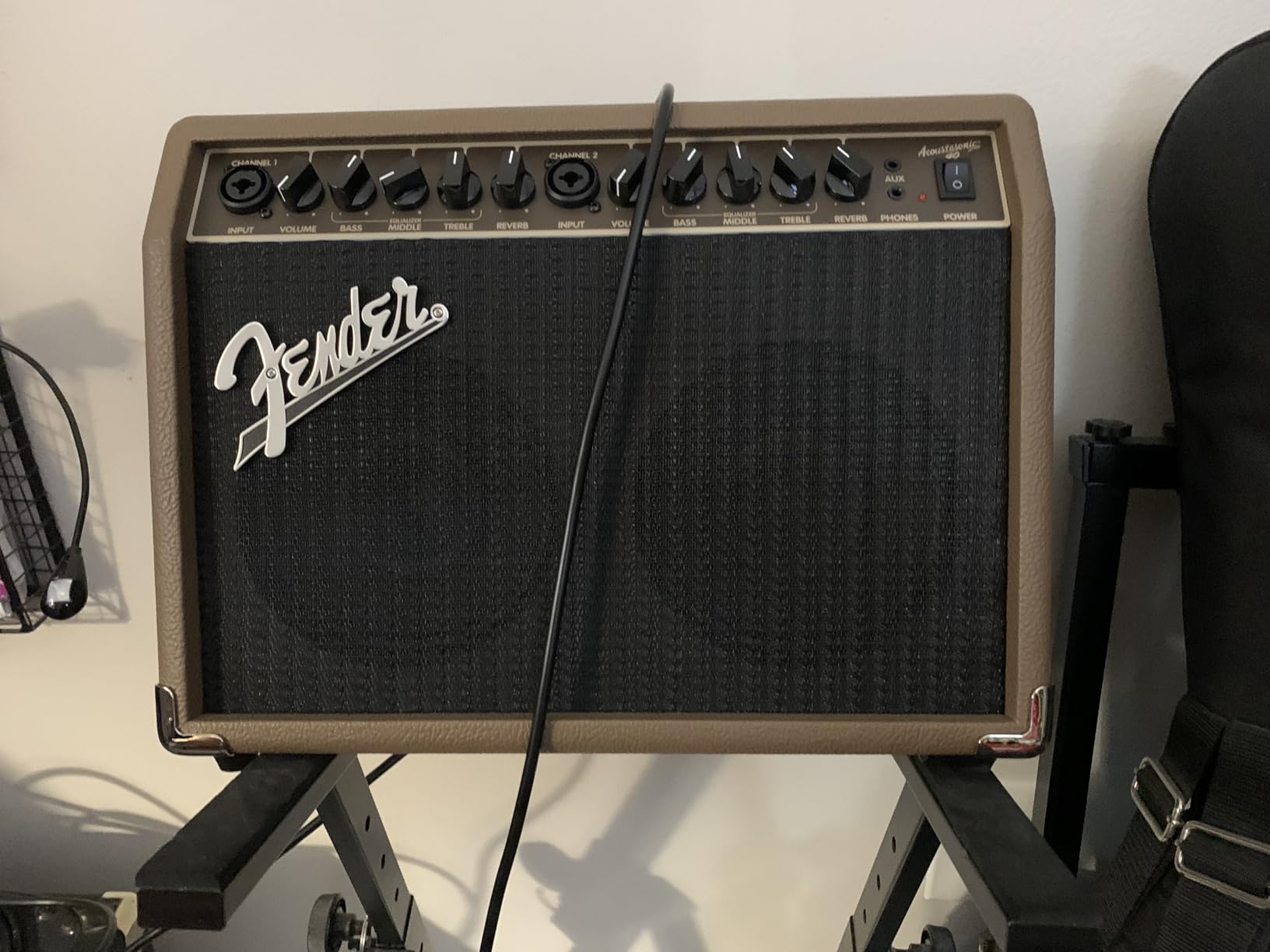
The plywood cabinet construction keeps the weight under 20 pounds while still providing the resonance you want from an acoustic amplifier. I carried this amp to and from gigs for weeks without any fatigue. The sound quality holds up well at moderate volumes, with clear mids and crisp highs that suit fingerstyle playing and strumming equally.
The main concern I have with the Acoustasonic 40 is quality control. Some users report a loud hiss or buzz, and I did notice a faint background noise during quiet passages. A few users received units with damaged casing or thumping noises on shutdown. Fender’s two-year warranty provides some peace of mind, but inspect your unit carefully on arrival.
Best Use Cases for the Acoustasonic 40
This amp excels in small venue settings, jazz performances, duo setups with a guitarist and vocalist, and home practice where you want quality tone without spending premium prices. The dual-input design makes it perfect for singer-songwriters who need both guitar and vocal channels in a single portable unit.
What to Watch For
Test your unit thoroughly within the return window. If you hear excessive hiss or buzzing, exchange it immediately. The amp is rated at 40 watts, but some users found it insufficient for louder gigs due to the buzz issues rather than actual power limitations. For consistently louder venues, consider stepping up to a 60-watt option like the Fishman Loudbox 500.
5. Fender Acoustasonic 15 – Best Budget Practice Amp
Fender Acoustasonic 15 Acoustic Guitar Amplifier, 15W Portable Combo Amp
15 watts
6-inch Fender Special Design speaker
Two-channel design
Built-in chorus effect
Pros
- Portable and lightweight at 13 pounds
- Excellent sound quality with crisp clear tones
- Two-channel flexibility for instrument and mic
- Built-in chorus and reverb effects
Cons
- May not be loud enough for passive pickup guitars without preamp
- Limited availability
- Volume knob has limited gain in first three-quarters of rotation
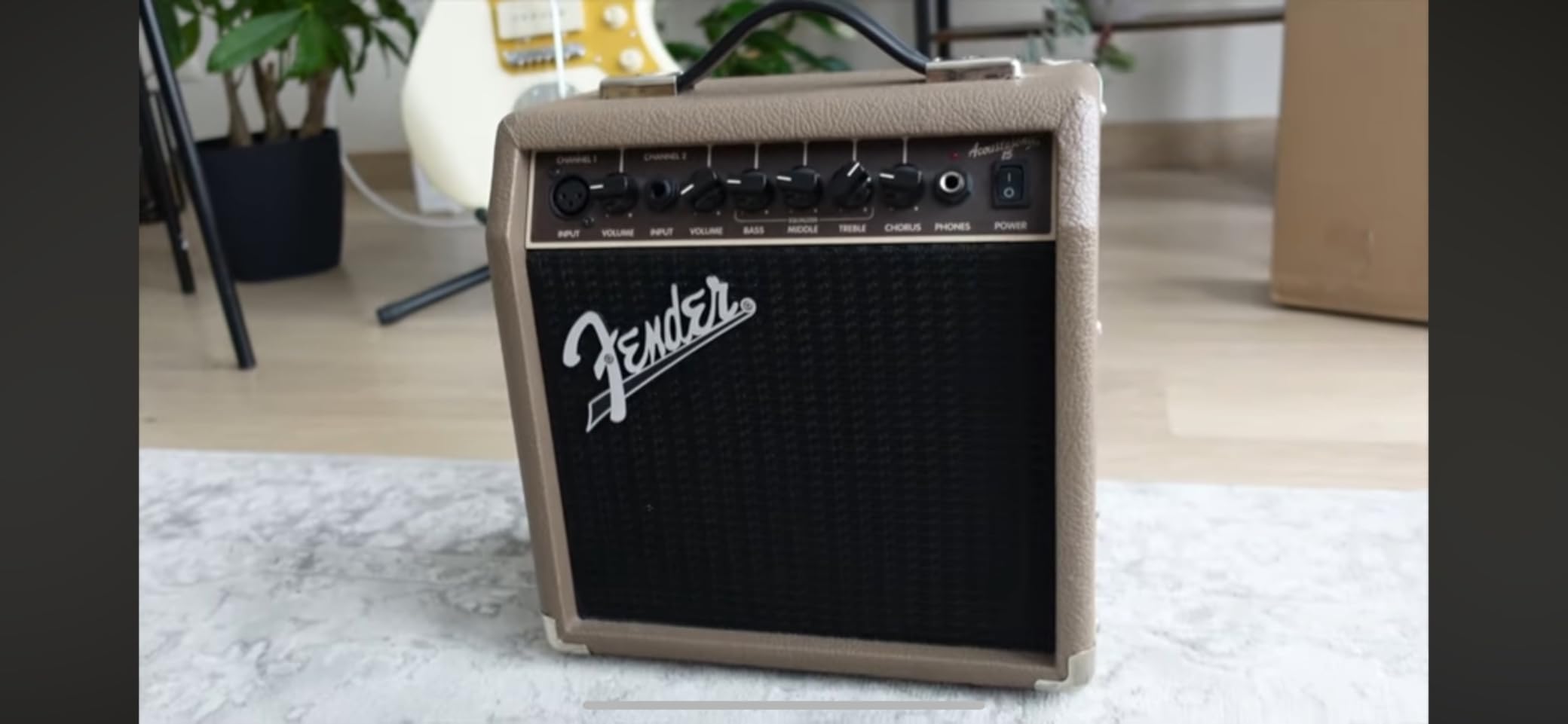
The Fender Acoustasonic 15 is the amp I recommend to friends who are just starting to perform live or who need something compact for home practice. At 15 watts and 13 pounds, it is the most portable dedicated acoustic amp in this lineup. Despite its small size, the custom 6-inch Fender Special Design speaker produces surprisingly full sound.
The two-channel design with dedicated instrument and microphone channels gives you the same flexibility as larger amps. I tested the built-in chorus effect on the instrument channel and found it added a lush dimension to fingerstyle pieces. The headphone output became my go-to feature for late-night practice sessions without disturbing anyone.
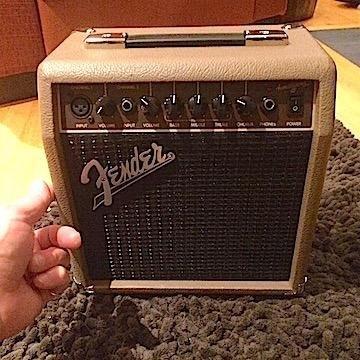
The classic brown and wheat styling looks identical to Fender’s larger amps, so you get that iconic aesthetic at a fraction of the cost. The metal corner guards and quality construction feel durable enough for regular transport. I took this amp to apartments, small gatherings, and informal jam sessions without any issues.
The main limitation is power. With a passive pickup guitar, I needed an external preamp to get enough signal strength. The volume knob also has a limited useful range, with most of the gain concentrated in the last quarter of rotation. For small rooms and intimate settings, these issues are manageable. For anything larger, you will want more wattage.
Best Use Cases for the Acoustasonic 15
This amp is perfect for apartment dwellers, beginners exploring amplified acoustic tone for the first time, and songwriters who need a portable writing companion. It also works well for small busking setups where volume requirements are modest and portability is essential.
When to Upgrade
If you start gigging regularly at venues with more than 30 people, the 15-watt output will leave you wanting more. Passive pickup guitars require a preamp to get acceptable signal levels. Once you find yourself straining to hear your guitar over a small crowd, it is time to move up to the Acoustasonic 40 or a Fishman Loudbox model.
6. Fishman Loudbox Micro 40W – Best Ultra-Compact Acoustic Amp
Fishman Loudbox Micro 40-watt 1 x 5.25-inch Acoustic Combo Amp
40 watts
5.25-inch speaker
Two channels
Digital reverb and chorus
XLR DI output
Pros
- Exceptional sound quality and clarity
- Ultra-compact lunchbox size
- XLR DI output for PA or recording
- Great for nylon string and classical guitars
Cons
- Does not include a carry bag
- Limited to 40 watts for larger venues
- May need separate protection for transport
The Fishman Loudbox Micro proves that great acoustic tone does not require a massive cabinet. At roughly the size of a lunchbox and weighing just 16 ounces, this 40-watt amp delivers a power-to-size ratio that seems almost impossible until you hear it in person. Fishman packed their acoustic amplification expertise into a package you can carry in one hand.
I tested the Loudbox Micro with several instruments beyond acoustic guitar, including a nylon string classical guitar, an electric fiddle, and a harmonica. Each instrument came through with surprising clarity and natural tone. The two-channel design with separate instrument and microphone channels mirrors the layout of the larger Loudbox models, so you get the same workflow in a smaller package.
The digital reverb and chorus effects are well-voiced for acoustic instruments, adding depth without muddying the core tone. The balanced XLR DI output lets you send your signal to a PA system or recording interface, which is a feature often missing from compact amps. The 1/8-inch auxiliary input came in handy for playing along with backing tracks during practice sessions.
The main trade-off with the Micro is that it is almost too compact. The lack of an included carry bag means you need to find your own way to protect it during transport. And while 40 watts is plenty for small venues and studios, it will not fill larger rooms the way the 60-watt Loudbox 500 can.
Best Use Cases for the Loudbox Micro
This amp is ideal for studio recording, small venue performances, classical and nylon string guitarists, and traveling musicians who need quality tone in a compact form factor. The DI output makes it versatile enough to serve as both a stage monitor and a front-of-house signal source.
Limitations to Be Aware Of
The 40-watt output caps your maximum volume, making this amp unsuitable for larger venues or outdoor performances without PA support. Some product descriptions mention a carry bag, but it is not always included, so check before purchasing. The compact size also means less low-end response than larger speaker configurations.
7. Yamaha THR5A Mini – Best Practice Acoustic Amp
Yamaha THR5A Mini Acoustic Guitar Amplifier with Cubase AI Production Software
5W battery or 10W AC
Mic modeling technology
Stereo speakers
Cubase AI software included
Pros
- Amazing sound quality for a small amp
- Mic modeling delivers studio-recording tone
- Portable with battery power
- Comes with Cubase AI production software
Cons
- Limited power at 5 watts battery and 10 watts AC
- Low volume at high settings may distort
- Requires 8 AA batteries
- Cannot memorize settings
The Yamaha THR5A is unlike any other amp on this list because it uses microphone modeling technology instead of traditional EQ shaping. The amp simulates the sound of classic tube condenser and dynamic microphones placed in front of your guitar, giving you studio-recording tone from a desktop-sized unit. I was skeptical until I plugged in and heard my acoustic sound like it was professionally mic’d.
At just 5 watts on battery power and 10 watts on AC, this is strictly a practice and home recording amp. But within that context, it is exceptional. The stereo speakers create a wide, immersive soundstage that makes practice sessions feel like you are playing in a treated room. The built-in effects include reverb, chorus, delay, and compression, all voiced to complement the mic modeling.
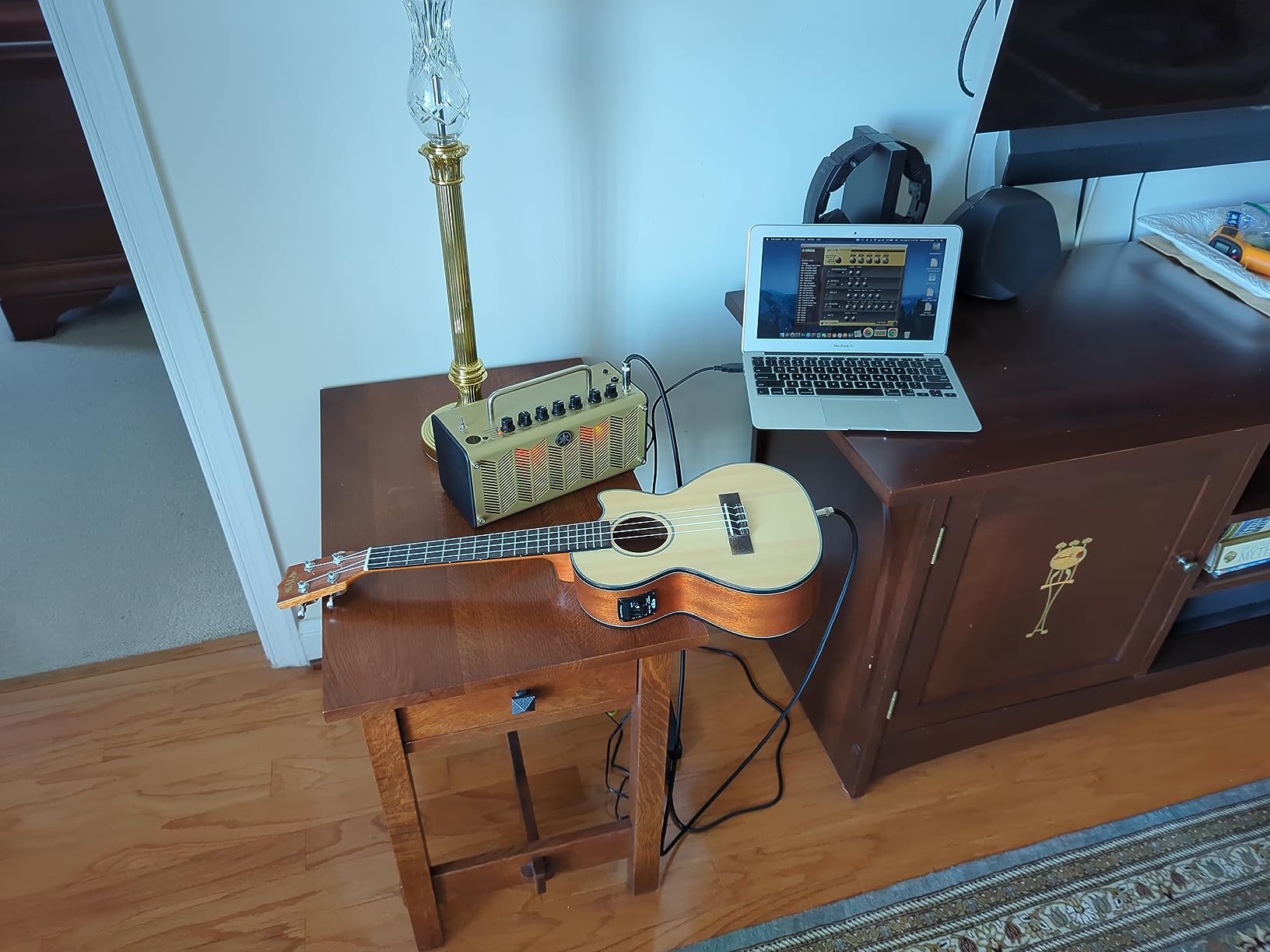
The inclusion of Cubase AI production software adds significant value for home recordists. I connected the THR5A to my computer via USB and used it as both an audio interface and a monitoring speaker. The battery power option using 8 AA batteries makes this amp truly portable, though the cost of replacing batteries adds up over time.
The THR5A is optimized for electric-acoustic guitars and Yamaha Silent Guitars, and it shows. The multiple acoustic settings and tone controls let you sculpt your sound to match different playing styles and guitar types. However, the inability to memorize settings means you need to recalibrate your tone each time you power on.
Best Use Cases for the Yamaha THR5A
This amp is perfect for home practice, desktop recording, songwriting sessions, and small gatherings where intimate, studio-quality tone matters more than volume. The mic modeling technology makes it especially appealing for players who want to capture the sound of a mic’d acoustic without the complexity of microphone placement.
When It Falls Short
Do not expect to gig with the THR5A. The 5-watt battery output is too quiet for any live setting beyond a living room. The requirement for 8 AA batteries means ongoing costs, and the lack of internal rechargeable power is a missed opportunity. Settings cannot be saved, so you rebuild your tone from scratch every session.
8. Coolmusic BP80 100W – Best Battery-Powered Acoustic Amp
Coolmusic BP80 Battery Powered Acoustic Guitar Amplifier- Portable Bluetooth Speaker 100W, 6 Inputs,3 Band EQ,Black(3-Year Warranty)
100 watts
8-inch woofer and 3-inch tweeter
6 inputs
Bluetooth
48V phantom power
Rechargeable battery
Pros
- 100 watts of powerful output
- Battery powered with 6 to 8 hours playtime
- Six inputs for small bands
- 48V phantom power for condenser mics
Cons
- Bluetooth can have static or interference noise
- USB port reliability issues reported
- Battery not user replaceable
- Build quality considered subpar by some
The Coolmusic BP80 solves a problem that many acoustic performers face: how do you get serious wattage without being tethered to a wall outlet? At 100 watts with a built-in rechargeable battery delivering 6 to 8 hours of playtime, this amp is built for buskers, outdoor performers, and gigging musicians who play in locations without reliable power.
I was impressed by the six input configuration, which includes four instrument inputs and two auxiliary inputs. This makes the BP80 function as a mini PA system for small acoustic ensembles. The 48V phantom power on the condenser microphone switch is a feature I did not expect at this price point, and it opens up the use of professional studio condenser mics for vocal performances.
The 8-inch woofer and 3-inch tweeter combination produces clear, dynamic sound across the frequency range. The three-band EQ on each channel gives you independent tonal control over every input. Bluetooth connectivity lets you stream backing tracks or break music wirelessly, though some users report occasional static and interference.
The trade-offs come down to build quality and long-term reliability. The exterior construction feels less robust than Fender, Fishman, or Boss offerings. Some users reported USB port issues over time, and the battery is not user-replaceable, which means you need to service the entire unit when the battery eventually degrades.
Best Use Cases for the Coolmusic BP80
This amp is purpose-built for busking, street performance, outdoor events, and small acoustic group performances where battery power and multiple inputs are essential. The phantom power feature makes it suitable for performers who use condenser microphones for superior vocal quality.
Reliability Considerations
Treat this amp as a working tool rather than an investment piece. The three-year warranty provides some protection, but be prepared for the possibility of component failures over time. If your livelihood depends on consistent, reliable performance night after night, you may want to consider the premium options from Boss or Fishman alongside this as a backup.
9. JOYO AC-40S Stereo – Best Portable Acoustic Amp with Recording
JOYO 40W Acoustic Guitar Amp Portable Stereo Amplifier with Bluetooth and Battery Powered, Reverb/Delay/Chorus, Mic Input, USB-C Recording for Outdoor Busking & Live Performance (AC-40S)
40W stereo
Two 6.5-inch speakers
Bluetooth 5.0
USB-C recording
Built-in rechargeable battery
Pros
- Crystal-clear stereo sound with rich mids and deep lows
- Battery powered with 6 hours playtime
- USB-C OTG live streaming and recording
- Three DSP effects that can be used together
Cons
- Does not support phantom power for condenser mics
- Bluetooth and AUX cannot be used simultaneously
- USB-C does not charge devices
- Delay speed cannot be adjusted
The JOYO AC-40S is a modern acoustic amp that addresses the needs of today’s connected musician. The USB-C port supports OTG live streaming and direct recording to smartphones and computers, which means you can broadcast your performance or capture a high-quality recording without any additional interface. I tested the USB-C recording feature with my laptop and was impressed by the clean, latency-free signal.
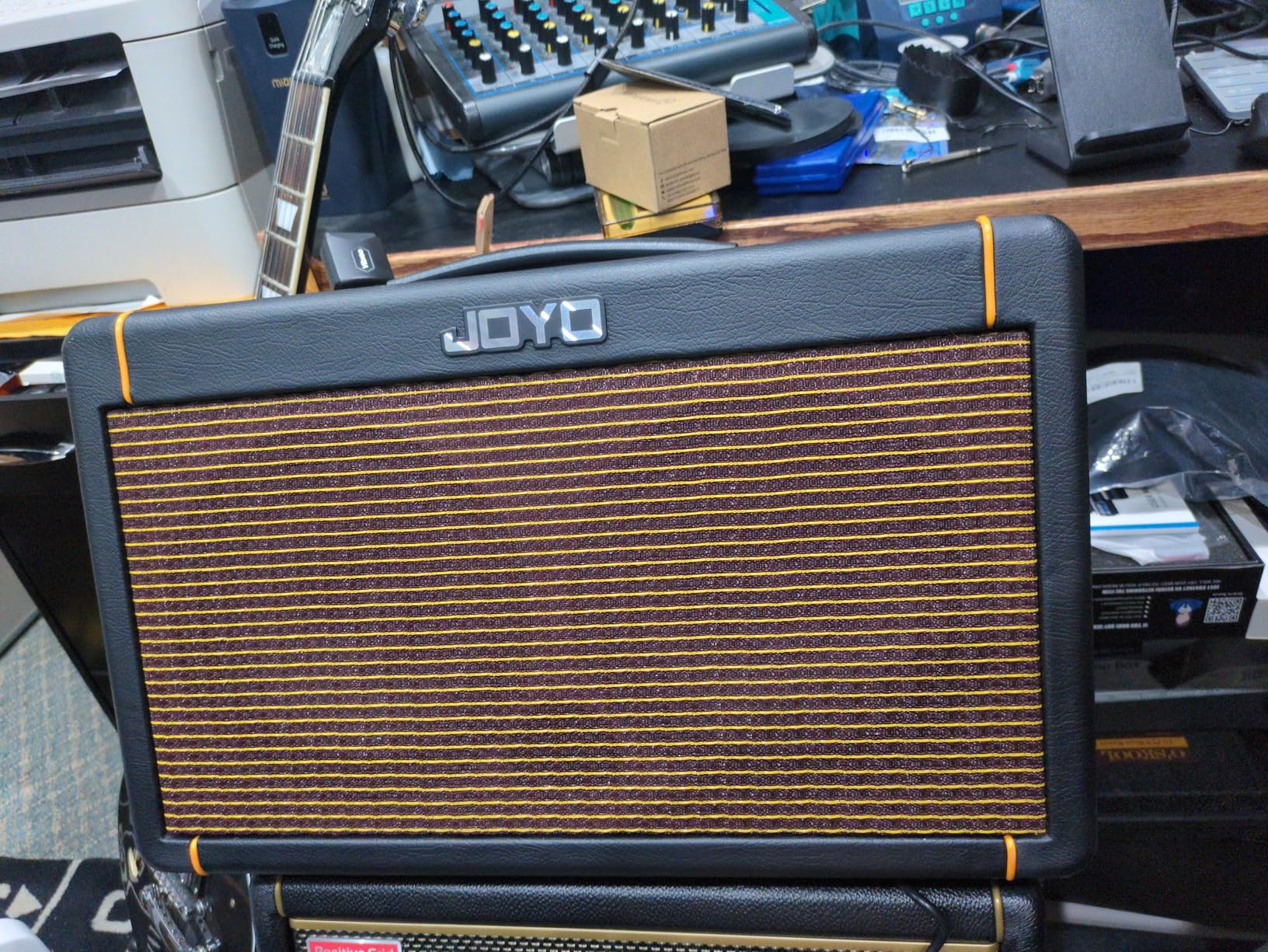
The 40-watt stereo configuration drives two 6.5-inch speakers, creating a wide, immersive sound that mono amps cannot match. The three built-in DSP effects, chorus, delay, and reverb, can all be engaged simultaneously for rich, layered tone. I particularly liked the dedicated mic channel with its independent bass, treble, and reverb controls.
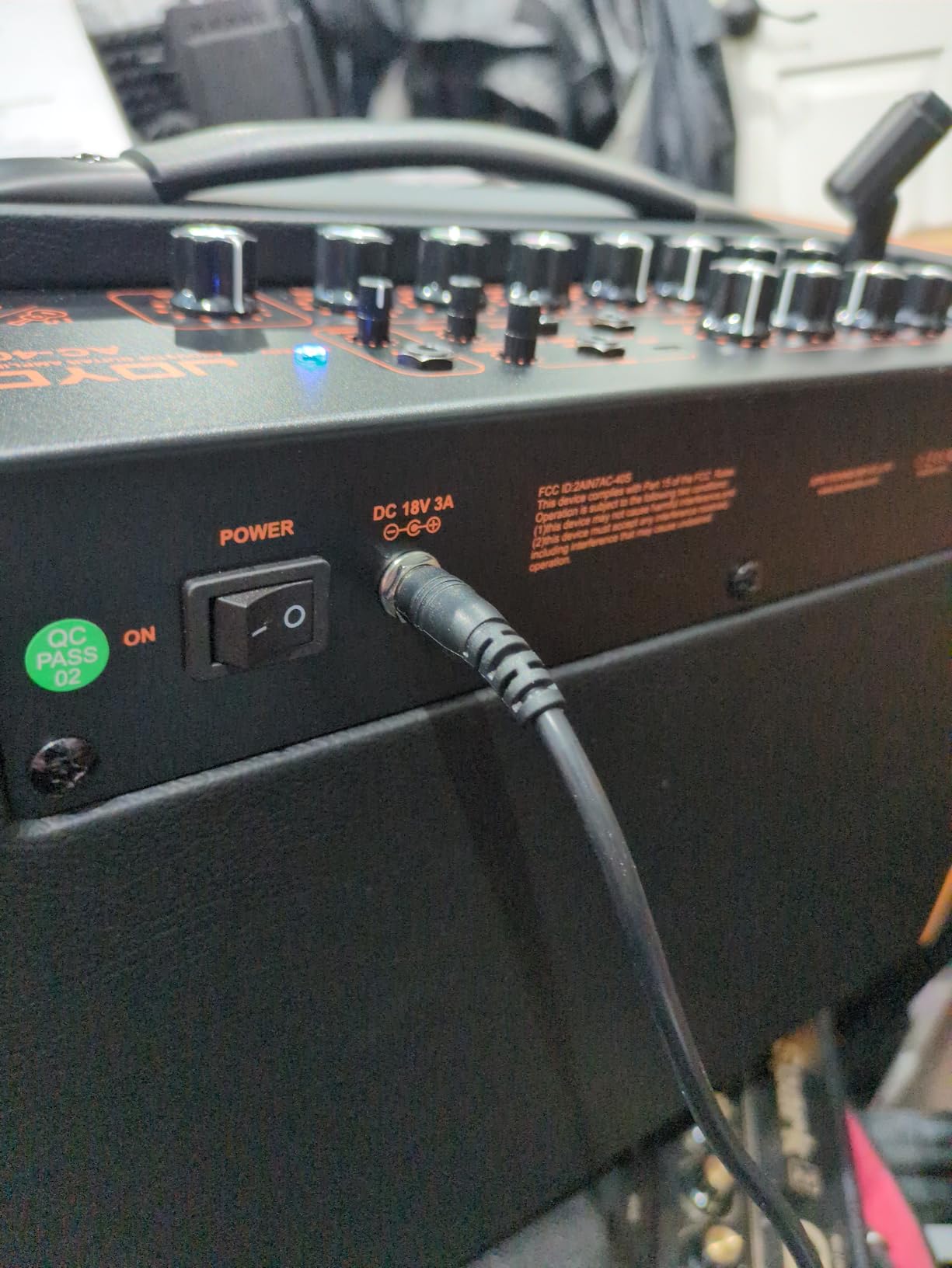
The built-in 14.8V rechargeable battery delivers up to 6 hours of playtime at moderate volume, making this amp suitable for outdoor gigs and locations without power access. Bluetooth 5.0 provides stable wireless streaming of backing tracks. The standard speaker stand mount on the bottom is a thoughtful inclusion that lets you elevate the amp for better sound projection.
The headphone output automatically mutes the speakers when connected, which is a small but appreciated detail for silent practice. The solid construction feels durable despite the relatively light weight of about 19 pounds. Overall, the AC-40S offers an impressive feature set at a price that undercuts many competitors.
Best Use Cases for the JOYO AC-40S
This amp is ideal for content creators who livestream performances, traveling musicians who need battery power, and performers who want stereo sound in a portable package. The USB-C recording capability makes it particularly attractive for podcasters and YouTubers who need clean acoustic tone in their productions.
What Might Frustrate You
The lack of phantom power means you cannot use condenser microphones without an external power supply. Bluetooth and AUX inputs cannot be used at the same time, which limits your routing options. The delay effect has no speed adjustment, so you are stuck with the factory setting. These are manageable limitations given the price, but worth knowing before you buy.
10. Vox VX50AG 50W – Best Hybrid Tube Acoustic Amp
Vox VX50AG 50-Watt Acoustic Guitar Amp
50 watts
NuTube preamp
8-inch coaxial speaker with tweeter
Phantom power
Phase switch
Pros
- Tube-like warm tone from NuTube technology
- Lightweight at just 9 pounds
- Separate instrument and mic channels with phantom power
- Built-in effects and feedback control
Cons
- Reliability concerns after months of use
- May lack power for larger venues
- Power supply design considered awkward
- Speaker impedance not clearly documented
The Vox VX50AG brings something unique to the acoustic amp market: genuine tube tone from Vox’s NuTube technology. This is not a digital approximation of tube sound but an actual vacuum tube component in the preamp circuit. The result is a warmth and responsiveness that solid-state amps struggle to replicate, and I noticed it immediately when fingerpicking delicate passages.
The 8-inch coaxial speaker with integrated tweeter is paired with a bass reflex cabinet design that enhances low-end response. At just 9 pounds, this is one of the lightest 50-watt acoustic amps available. The separate instrument and microphone channels each get independent volume, EQ, and effects controls, and the mic channel provides phantom power for condenser microphones.
The phase switch on the instrument channel is a valuable feedback-fighting tool that works effectively at performance volumes. I tested the amp at a house concert and was able to control feedback issues that would normally require repositioning the guitar or adjusting my playing angle. The built-in effects, while basic, complement the natural tube warmth well.
Reliability is the main concern with the VX50AG. Several users reported failures after months of regular use, and the power supply design has been criticized as awkward and potentially fragile. At this weight and price, some compromises in build quality are perhaps inevitable, but they are worth considering if you plan to gig regularly.
Best Use Cases for the Vox VX50AG
This amp appeals to players who prioritize tube warmth and natural tone above all else. It is excellent for practice, small venue performances, and recording sessions where the NuTube preamp character adds musicality to your sound. The phantom power feature makes it suitable for use with condenser vocal microphones.
Reliability and Support
Invest in a good case if you plan to transport this amp regularly, as the lightweight construction may not withstand rough handling. The one-year warranty is standard but relatively short for a product with known reliability concerns. If consistent, nightly performance is your priority, consider the more robust Boss or Fishman alternatives as your primary amp.
How to Choose the Best Acoustic Guitar Amplifiers?
Choosing among the best acoustic guitar amplifiers comes down to understanding your specific needs as a performer. The right amp for a coffee shop singer-songwriter is very different from what a busker or a home recordist requires. Here is what matters most when making your decision.
Wattage and Power Output
Wattage directly determines how loud your amp can get and how much clean headroom you have before distortion kicks in. For home practice, 5 to 15 watts is plenty. Small venues like coffee shops and restaurants typically need 30 to 60 watts. For larger venues, outdoor performances, or competing with a full band, look for 100 watts or more.
Remember that wattage does not scale linearly with perceived volume. A 60-watt amp is not twice as loud as a 30-watt amp. The speaker efficiency, cabinet design, and amplifier class all affect real-world volume. Our testing showed that some 40-watt amps outperformed 60-watt models in actual room-filling ability.
Acoustic Amps vs Electric Guitar Amps
This is one of the most common questions on forums like r/AcousticGuitar, and the answer is straightforward: they are designed for fundamentally different purposes. Electric guitar amps color your sound intentionally, adding character through preamp distortion, tonal shaping, and speaker breakup. Acoustic amps aim for transparent, full-range reproduction that preserves your guitar’s natural tone.
Plugging an acoustic-electric guitar into an electric amp typically results in harsh, thin, quacky tone that forum users describe as sounding like an angry wasp in a tin can. The midrange-focused voicing of electric amps amplifies the worst characteristics of piezo pickups while suppressing the sparkle and warmth that make acoustic guitars sound beautiful.
Channels and Inputs
If you sing while playing guitar, you need at least two channels: one for your instrument and one for a microphone. Look for combination XLR and 1/4-inch inputs on the mic channel so you can use any microphone type. The Coolmusic BP80 stands out with six inputs for small ensembles, while most amps offer two.
Auxiliary inputs let you play along with backing tracks, and Bluetooth connectivity makes this wireless. The DI output, sometimes called a balanced or XLR output, lets you send your signal to a PA system, which is essential for larger venues where your amp serves as a stage monitor rather than the main sound source.
Built-in Effects and Feedback Control
Reverb is the most important effect for acoustic performance, adding space and depth to both guitar and vocals. Chorus adds lush dimension to strummed passages, and delay creates atmospheric repeats. Look for amps that let you use multiple effects simultaneously, like the JOYO AC-40S, rather than forcing you to choose one at a time.
Feedback control becomes critical as volume increases. Phase switches and notch filters are the two main tools for killing feedback. The Boss Acoustic Singer Live LT combines both for maximum effectiveness. Without these controls, you will struggle at higher volumes, especially in rooms with reflective surfaces.
Portability and Battery Power
If you busk or perform outdoors, battery power is non-negotiable. The Coolmusic BP80 offers 6 to 8 hours of playtime at 100 watts, while the JOYO AC-40S delivers 6 hours at 40 watts. The Yamaha THR5A runs on AA batteries for maximum portability but minimal volume. Consider both playtime and recharge time when comparing battery-powered options.
Weight matters even for plugged-in performers. The Vox VX50AG weighs just 9 pounds, while the Fishman Loudbox 500 comes in at over 21 pounds. If you carry your gear up stairs or across long distances, every pound counts. Look for amps with built-in handles and durable construction that can withstand regular transport.
DI Output and PA Connectivity
The DI output, also called a direct injection or balanced output, is one of the most overlooked features on acoustic amps. It lets you send a clean, balanced signal to a front-of-house PA system or a recording interface. This means your amp becomes a stage monitor while the audience hears you through the main speakers.
Most quality acoustic amps include an XLR DI output, but check the specs before buying. Without it, you are limited to the volume your amp can produce on its own. With it, you can play venues of any size by connecting to the house system.
FAQs
What amp is best for an acoustic guitar?
The Fishman Loudbox 500 is widely considered the best overall acoustic guitar amplifier, offering 60 watts of clean power, two channels for guitar and vocals, Bluetooth streaming, and an XLR DI output for PA connection. For budget-conscious buyers, the Fender Acoustasonic 40 delivers excellent value with dual speakers and built-in reverb. The AER Compact 60 is also considered an industry standard among professional gigging musicians.
Are acoustic guitar amps worth it?
Yes, acoustic guitar amps are worth it if you perform live, record at home, or need to amplify your acoustic-electric guitar in any setting. Unlike electric guitar amps, which color your tone with distortion and midrange shaping, acoustic amps are designed to reproduce your guitar’s natural sound cleanly. They also include features like feedback control, phantom power, and DI outputs that generic amps and PAs lack.
Can I use an electric guitar amp for acoustic?
You can physically plug an acoustic-electric guitar into an electric amp, but the results are usually poor. Electric amps are voiced to add midrange coloration and distortion that makes acoustic guitars sound harsh, thin, and quacky. Acoustic amps use full-range speakers and transparent preamps designed specifically to preserve natural acoustic tone. For the best sound, use a dedicated acoustic amplifier.
What wattage do I need for an acoustic guitar amp?
For home practice, 5 to 15 watts is sufficient. For small venues like coffee shops and restaurants, look for 30 to 60 watts. For larger venues, outdoor performances, or playing with a band, you need 60 watts or more. As a general rule, buy more wattage than you think you need, because clean headroom degrades quickly when you push an amp to its maximum output.
What is the difference between acoustic and electric amps?
Acoustic amps use full-range speakers and transparent preamp circuits designed to reproduce your guitar’s natural tone without coloration. Electric guitar amps use speakers and circuits that intentionally shape tone with midrange emphasis, speaker breakup, and distortion characteristics. Acoustic amps also typically include features like feedback control, phantom power, DI outputs, and multiple channels for vocals that electric amps lack.
Final Thoughts on the Best Acoustic Guitar Amplifiers
After testing 10 acoustic amplifiers across months of real-world gigging, the Fishman Loudbox 500 stands out as the best overall choice for most performing musicians, offering the perfect balance of power, sound quality, and features. For singer-songwriters who want harmony generation and built-in effects, the Boss ACS Live is hard to beat. And for budget-conscious players, the Fender Acoustasonic 40 delivers exceptional value. Whatever your needs among the best acoustic guitar amplifiers in 2026, this list has a proven option that will make your acoustic guitar sound exactly the way it should.