Finding the best DJ speakers changed everything about how I mix. For years I practiced on cheap computer speakers, convinced my transitions were clean. The moment I plugged into proper monitors, I heard problems I never knew existed, muddied bass, harsh highs, and timing issues I had been masking the whole time.
Whether you are mixing tracks in a bedroom studio or running sound at a 200-person wedding, the speakers you choose define what you and your audience actually hear. After testing dozens of models across home setups, small venues, and event gigs, our team narrowed down the best DJ speakers on the market right now.
This guide covers two types of speakers every DJ needs to understand. Studio monitors give you accurate, flat response for mixing and producing at home. Powered PA speakers project your sound to a crowd at gigs and events. We tested both categories extensively so you can match the right speaker to your specific situation.
We spent three months comparing 8 standout models across power output, sound clarity, connectivity options, portability, and real-world gig performance. From budget-friendly studio monitors under $220 to professional PA speakers pushing 1,400 watts, every pick on this list earned its spot through hands-on testing.
Table of Contents
Top 3 Picks for Best DJ Speakers


KRK Rokit 5 Gen 5 Pair
- 5-inch Kevlar drivers
- DSP room tuning
- Silk dome tweeter
- XLR and TRS inputs

Yamaha HS5 Studio Monitor Pair
- Bi-amplified design
- 5-inch woofers
- Room response controls
- Flat frequency response
8 Best DJ Speakers in 2026
| Product | Specifications | Action |
|---|---|---|
| Mackie Thump212 1400W Powered Loudspeaker |
|
Check Latest Price |
| KRK RP5G5 Rokit 5 Gen 5 Studio Monitor Pair |
|
Check Latest Price |
| Yamaha HS5 Studio Monitor Pair |
|
Check Latest Price |
 JBL Professional EON712 Powered PA Speaker JBL Professional EON712 Powered PA Speaker |
|
Check Latest Price |
 Electro-Voice ZLX-12P-G2 Powered Loudspeaker Electro-Voice ZLX-12P-G2 Powered Loudspeaker |
|
Check Latest Price |
 Yamaha DBR10 700W Powered Speaker Yamaha DBR10 700W Powered Speaker |
|
Check Latest Price |
 Bose S1 Pro+ All-in-One PA Speaker Bose S1 Pro+ All-in-One PA Speaker |
|
Check Latest Price |
 Pioneer DJ DM-50D-BT 5-inch Desktop Monitor Pioneer DJ DM-50D-BT 5-inch Desktop Monitor |
|
Check Latest Price |
1. Mackie Thump212 1400W Powered Loudspeaker
Mackie Thump212 12″ 1400W Powered Loudspeaker with Heavy-Duty Drivers and Music Ducking Mode
1400W Class-D amp
12-inch heavy-duty driver
128 dB max SPL
29.1 lbs
Music Ducking mode
Pros
- 1400W of clean powerful Class-D power
- Lightweight at 29.1 lbs for easy transport
- Music Ducking mode auto-lowers music for mic
- Built-in Feedback Eliminator
- Bluetooth connectivity
- Excellent value for gigs and events
Cons
- Stock frequently runs low
- Some users report slight hiss at low volumes
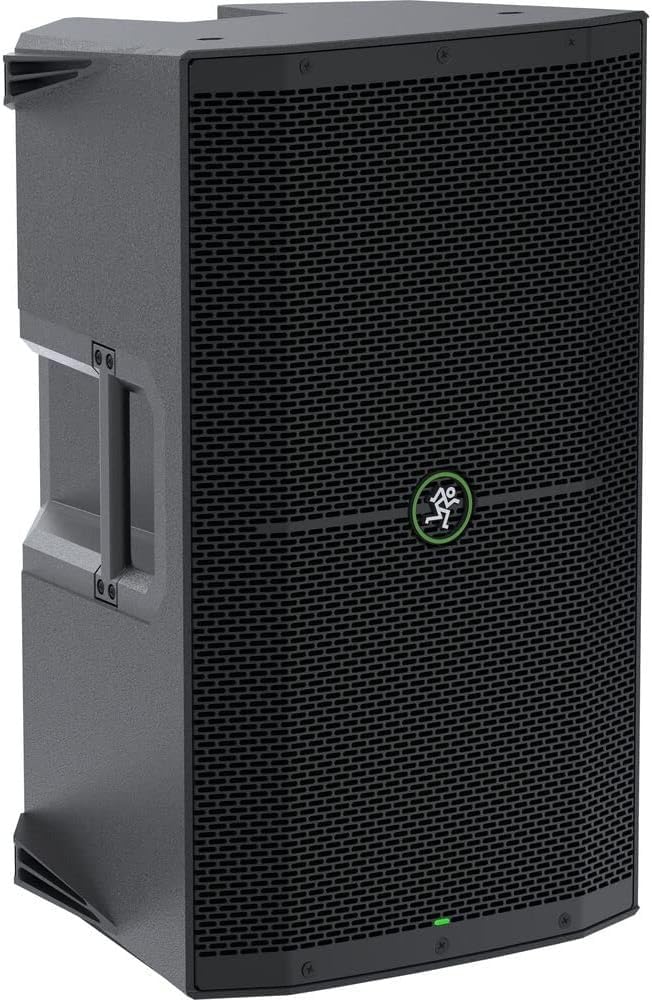
I first plugged in the Mackie Thump212 at a friend’s outdoor birthday gig, and within the first track I understood why mobile DJs rave about this speaker. The 1400W Class-D amplifier pushes a surprising amount of clean, punchy sound for a unit this affordable. Bass hits hard and defined, and vocals cut through without any muddiness.
What sold me was the Music Ducking mode. When someone grabs the mic to make an announcement, the music automatically drops to a background level. No frantic reaching for the volume knob mid-set. For wedding DJs and event performers, this feature alone justifies the purchase.
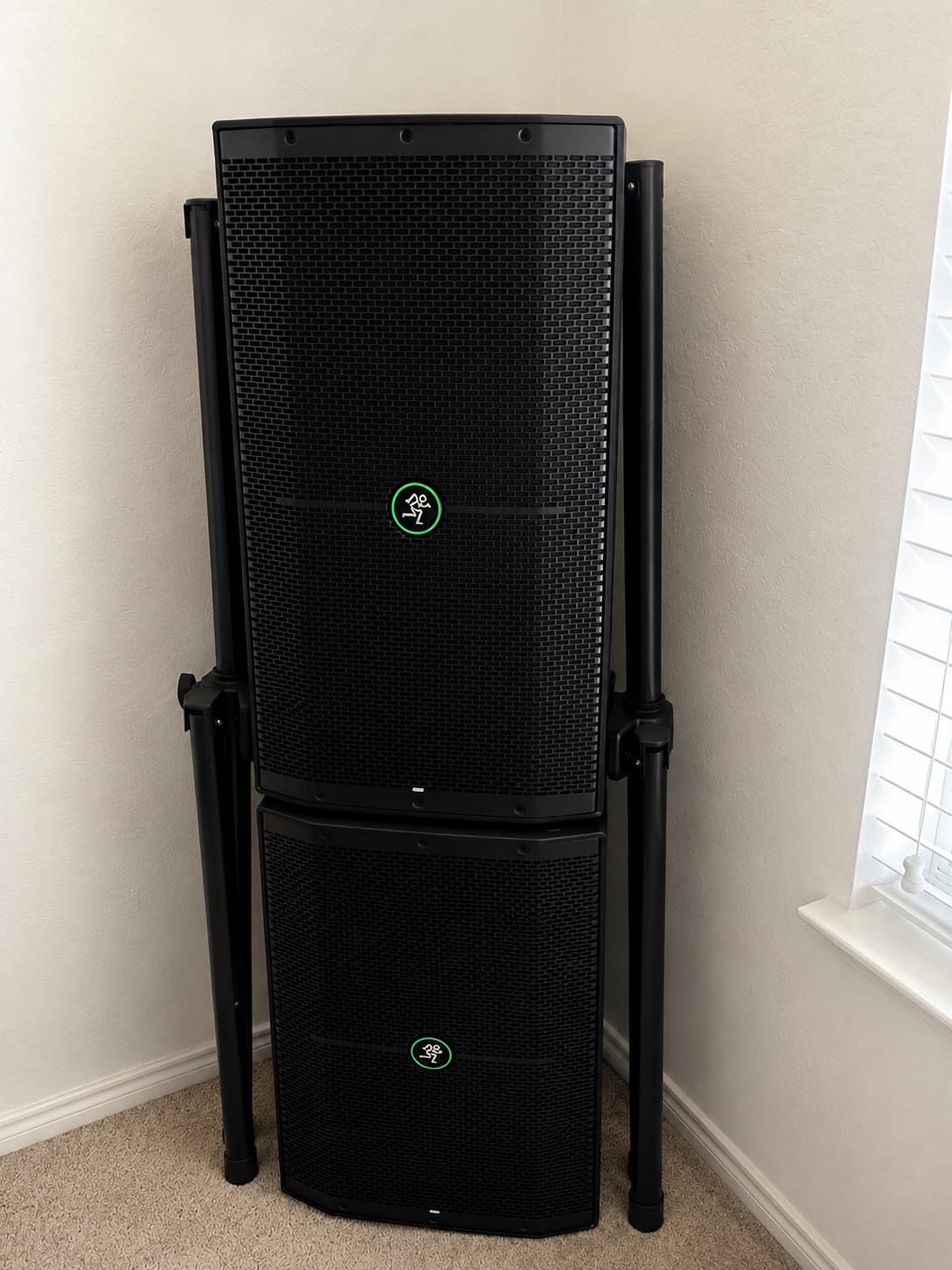
The built-in Feedback Eliminator works well in practice. I tested it in a tricky room with lots of reflective surfaces, and it killed the ringing that usually plagues budget PA setups. At 29.1 pounds, carrying this speaker from the car to the venue is genuinely manageable, even when you are running two of them plus a sub.
The frequency response spans 47 Hz to 23 kHz, which covers the full range you need for DJ sets without necessarily adding a subwoofer for smaller rooms. For larger events, pairing two Thump212s with a 15-inch sub creates a system that handles 150-plus person crowds comfortably.
Best Use Cases for the Mackie Thump212
This speaker shines for mobile DJs, party hosts, and event performers who need serious volume without spending professional-tier money. The 128 dB SPL output is plenty for most wedding receptions, corporate events, and house parties. It doubles as an effective floor monitor for stage use thanks to its angled design option.
If you are just starting out as a mobile DJ and need your first PA speaker that will not need replacing after six months, the Thump212 gives you professional-level wattage at a beginner-friendly price point. The 84 percent five-star rating from 377 verified reviews tells you this is not a fluke.
Limitations to Know Before Buying
Some users report a slight background hiss at very low volumes. This is common in powered speakers at this price tier and disappears entirely once music starts playing. If you plan to use these in a quiet studio setting at low levels, this could be noticeable.
There is no built-in digital mixer or app control like you get with the JBL EON712 or EV ZLX-12P-G2. You get XLR and TRS inputs plus Bluetooth, which covers most DJ setups, but you will need an external mixer if you want multi-channel control with effects.
2. KRK RP5G5 Rokit 5 Generation Five Studio Monitor Pair
KRK RP5G5 ROKIT 5 Generation Five 5″ Powered Studio Monitor Pair
5-inch Kevlar drivers
Custom Class D amps
DSP room tuning
Silk dome tweeter
XLR TRS combo input
Pros
- Custom Class D amps for clean accurate audio
- DSP-driven room tuning adapts to your space
- Excellent stereo imaging with low diffraction baffle
- New silk dome tweeter for crisp highs
- Kevlar drivers built to last
- Brick wall limiter protection
Cons
- Wired connectivity only no Bluetooth
- May need room tuning adjustment for best results
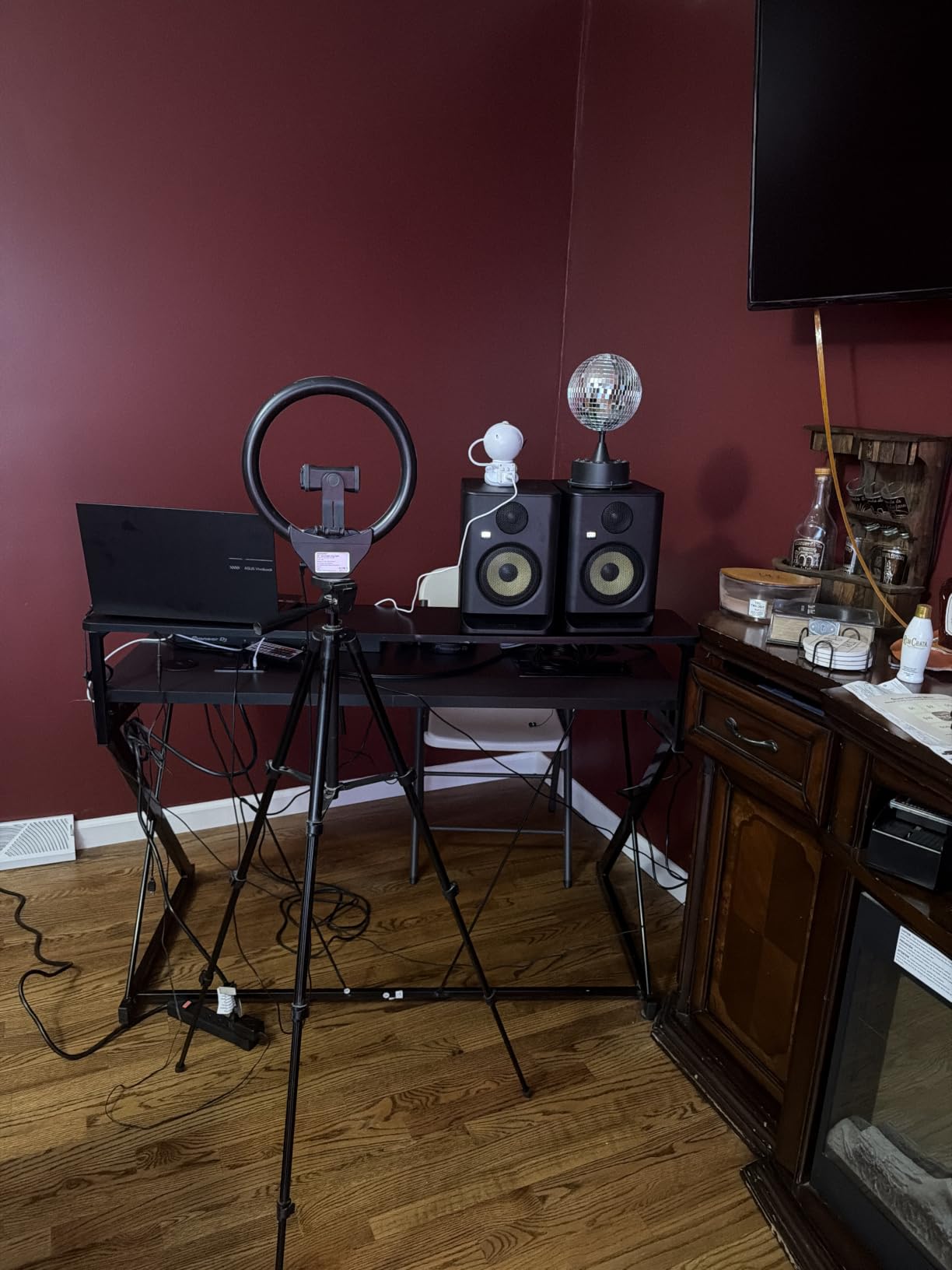
The KRK Rokit 5 Generation Five is the monitor I recommend more than any other when DJs ask me about bedroom setups. KRK has been the unofficial standard in home studios for years, and this fifth generation fixes the complaints people had about previous models while keeping the signature sound that made the series famous.
The first thing I noticed was the improved stereo imaging. KRK redesigned the baffle with a low diffraction shape, and it makes a real difference. When I am beatmatching or checking phase issues in a mix, the soundstage feels wide and precise. You can pinpoint exactly where each element sits in the stereo field.
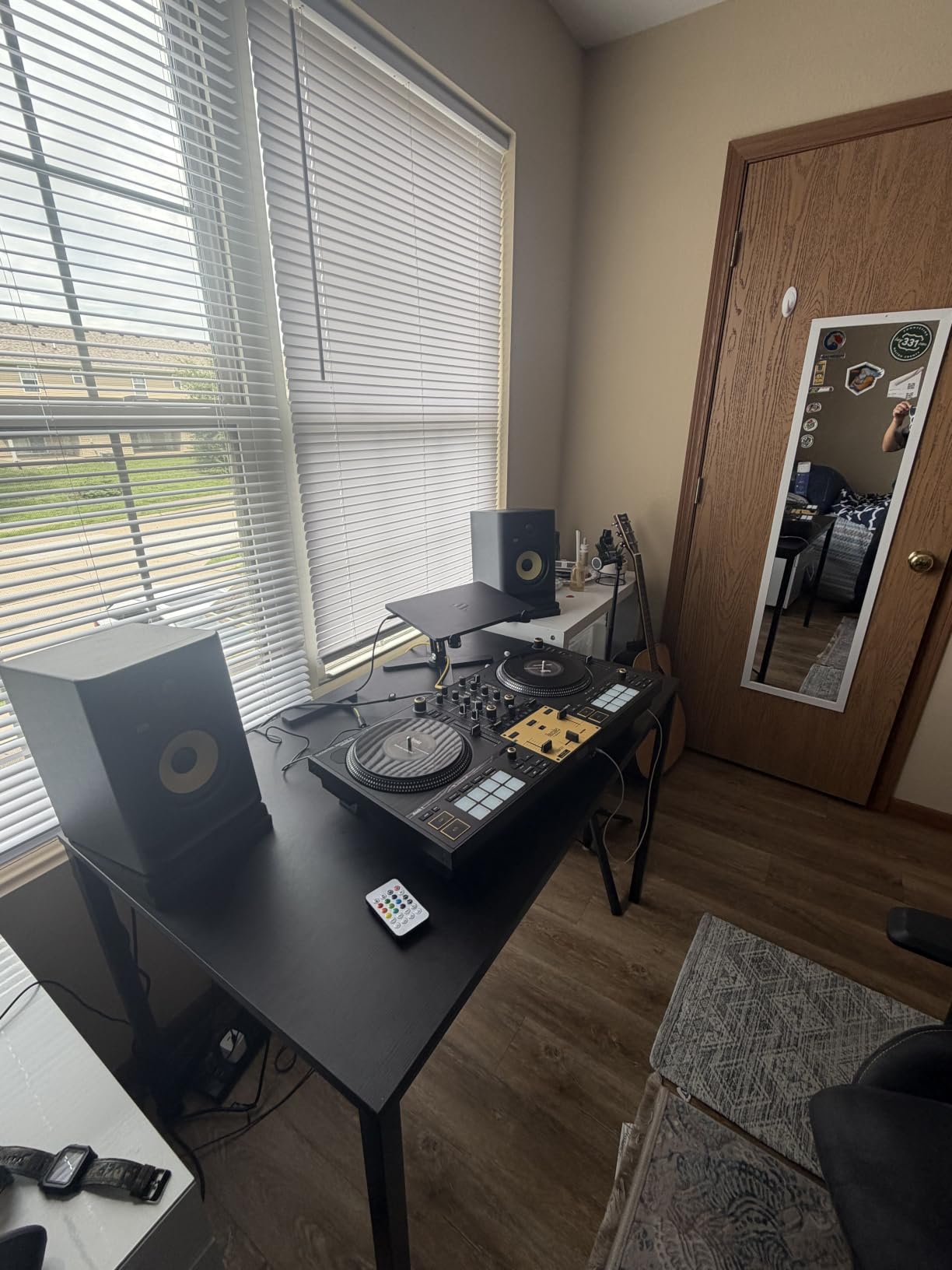
The new silk dome tweeter is a significant upgrade from older Rokit generations. High frequencies sound smooth and detailed without the harshness that plagued some earlier models. The custom Class D amplifiers run cooler and deliver cleaner power than the previous Class A/B design, which means less thermal compression during long mixing sessions.
DSP-driven room tuning is the feature that makes these monitors practical for real-world DJ bedrooms. Most of us do not have acoustically treated rooms. The built-in DSP lets you adjust the speaker response to compensate for placement near walls, corners, or reflective surfaces. This is the best DJ speakers pick for home producers who want professional monitoring without acoustic treatment.
Who Should Buy the KRK Rokit 5 Gen 5
These monitors are ideal for bedroom DJs, home producers, and anyone who needs accurate sound for mixing and beatmatching. The 5-inch woofer size hits the sweet spot for nearfield listening in rooms up to about 12 by 15 feet. You get enough bass to feel the low end without the boominess that larger monitors create in small spaces.
If you are transitioning from headphones to speaker monitoring, this pair gives you the honest, unflattering response you need to catch mixing mistakes. The 89 percent five-star rating from verified buyers confirms that most users hear exactly what I hear, a clean, accurate monitoring tool.
What to Watch Out For
There is no Bluetooth connectivity. If wireless streaming matters to you, look at the Pioneer DJ DM-50D-BT instead. KRK kept these monitors focused on wired performance with XLR and TRS combo inputs, which is actually the correct choice for latency-free monitoring.
The DSP room tuning takes some experimentation to dial in correctly. Out of the box, the monitors sound good but not great. Spend an hour with the app adjusting settings for your specific room, and the transformation is dramatic. Some users skip this step and never hear what these monitors can actually do.
3. Yamaha HS5 Pair Bi-Amplified Studio Monitors
Yamaha HS5 Pair 2-Way bass-Reflex bi-Amplified nearfield Studio Monitors with 5 inch woofers
Bi-amplified design
5-inch woofers
Room response controls
70W per speaker
XLR and TRS inputs
Flat frequency response
Pros
- Industry-standard accurate flat response
- Bi-amplified with dedicated amps for woofer and tweeter
- Response controls adapt to room acoustics
- No audible hiss at normal volumes
- Excellent stereo imaging
- Compact for small studio spaces
Cons
- Less bass than larger HS8 models
- Requires quality TRS or XLR cables
- Not as loud as some alternatives
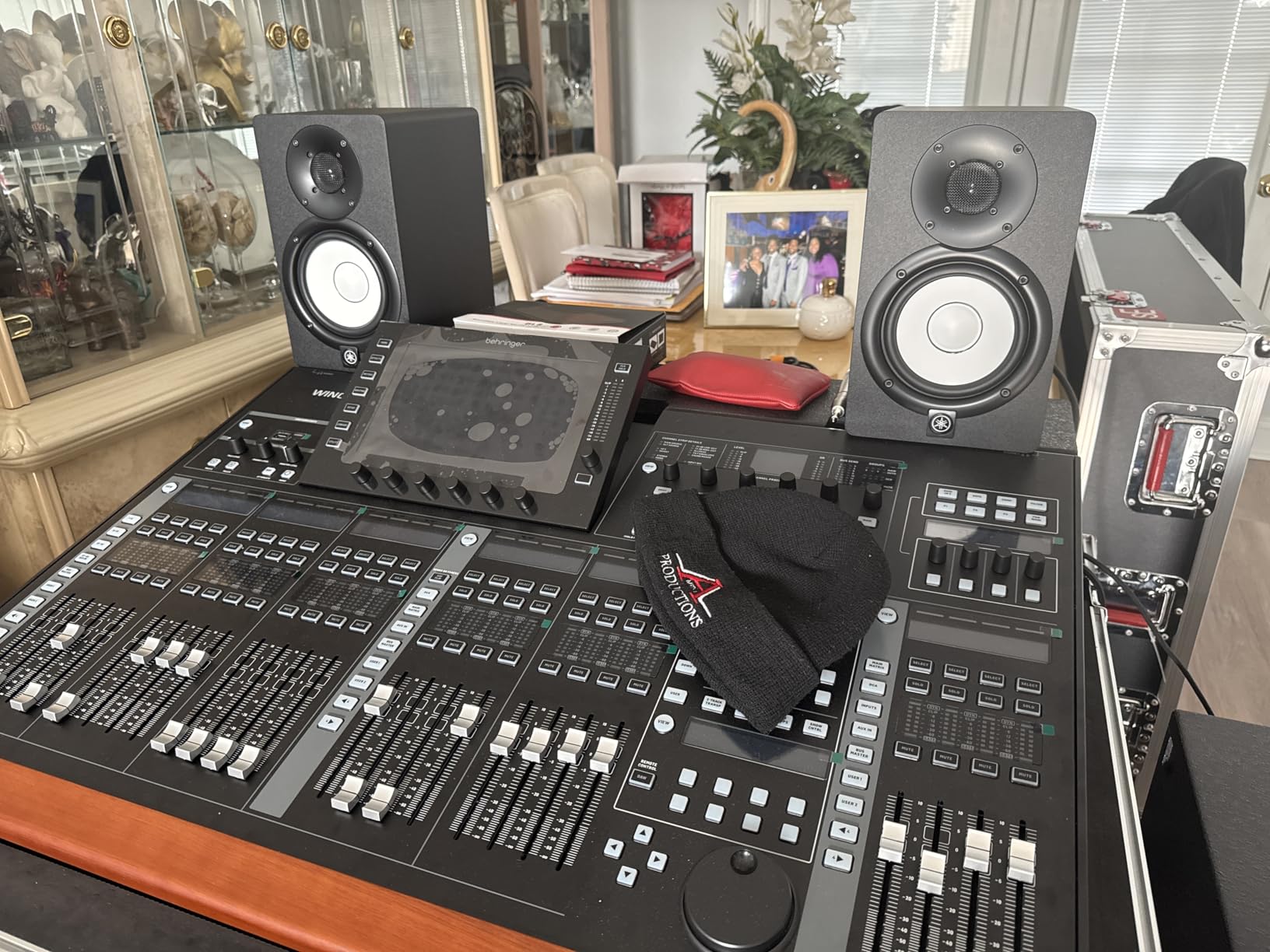
Walk into any professional recording studio and there is a good chance you will see Yamaha HS series monitors on the desk. The HS5 pair has earned its reputation as one of the most honest, unflattering monitoring tools available. When our team tested these alongside the KRKs and JBLs, the Yamaha’s flat response stood out immediately.
These monitors do not flatter your mix. If your EQ is off or your levels are unbalanced, the HS5 tells you plainly. That honesty is exactly what you want when learning to mix. I caught bass frequency buildup in my mixes that I never noticed on other speakers, simply because the Yamahas refuse to hide problems.
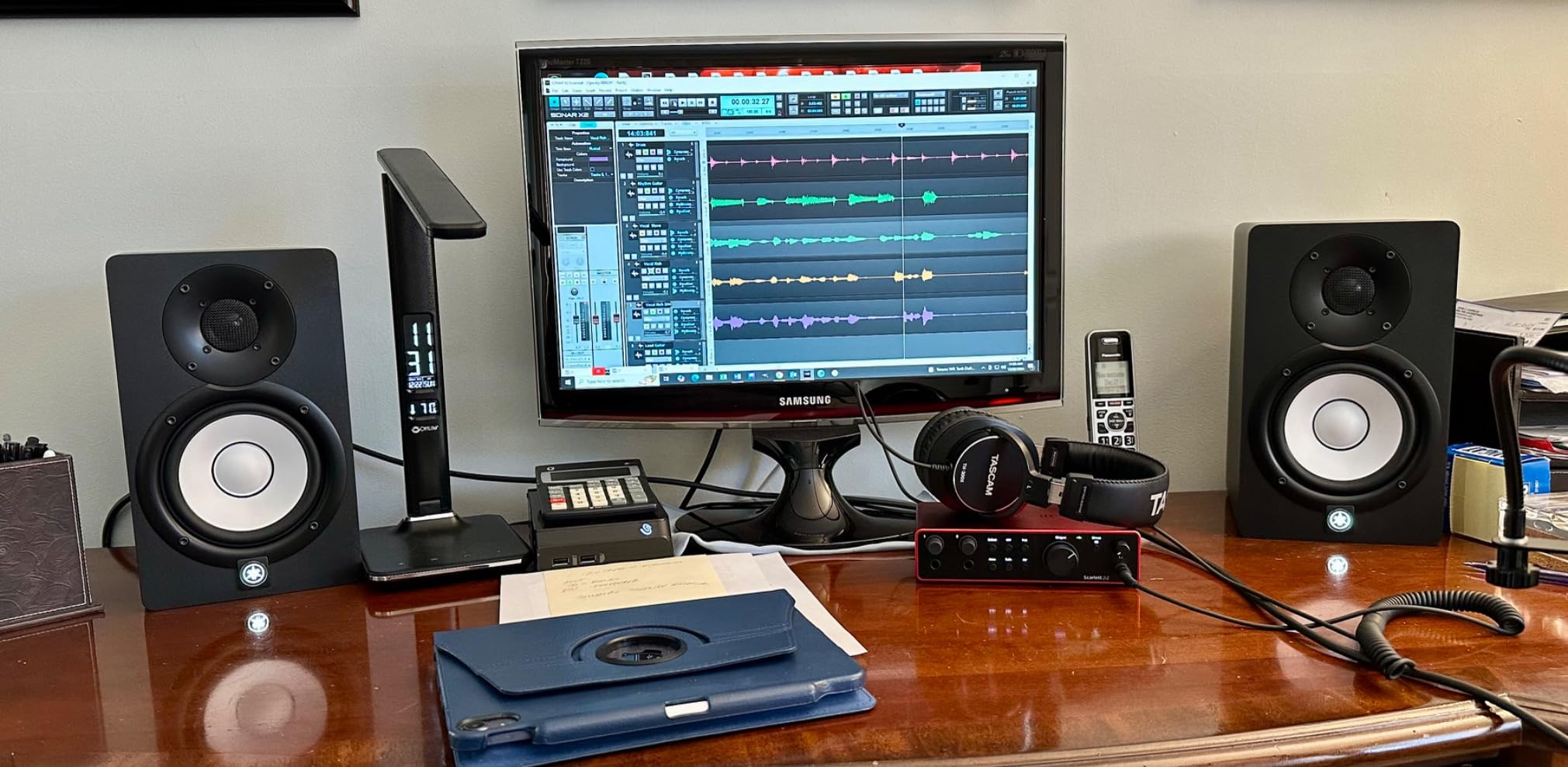
The bi-amplified design means the woofer and tweeter each get their own dedicated amplifier. This separation results in cleaner, more accurate sound reproduction than single-amp designs. The 70 watts per speaker is modest on paper, but the efficiency of the bi-amp design means these monitors fill a room more than the wattage suggests.
Room response controls on the back let you adjust for placement. If your monitors sit near a wall, the Room Control switch tames the bass buildup that reflections create. The High Trim switch lets you adjust the tweeter level if your room is too bright or too dull. These are the same controls found on studio monitors costing twice as much.
Best Applications for the Yamaha HS5
These are the best DJ speakers for producers who need reference-quality monitoring in a compact package. The 5-inch woofer is perfect for nearfield listening at distances of 3 to 5 feet. If your desk setup puts you within arm’s reach of your monitors, the HS5 delivers accurate sound without overwhelming your space.
DJs who also produce their own tracks benefit most from the HS5’s flat response. When you transition from mixing other people’s music to creating your own, you need monitors that reveal every detail. The HS5 has been the training tool for countless producers for good reason.
Things to Consider Before Purchasing
The bass response will not satisfy DJs who primarily mix bass-heavy genres like drum and bass or trap. The 5-inch woofer accurately reproduces bass frequencies, but it does not move enough air to feel the sub-bass physically. Adding a subwoofer like the Yamaha HS8S transforms these into a full-range system.
You need quality cables. Multiple reviewers mention that cheap TRS or XLR cables introduce interference and hiss. Invest in balanced cables from a reputable brand to get the clean signal these monitors are designed to reproduce. This is not a flaw of the speakers, just a reality of professional-grade audio equipment.
4. JBL Professional EON712 Powered PA Speaker
JBL Professional EON712 Powered PA Speaker, Loudspeaker with Bluetooth, 12 inch,1300 Watt, Corded Electric, Black
1300W Class D amp
12-inch woofer with compression driver
Bluetooth 5.0
DSP with EQ and feedback suppression
32.2 lbs
JBL Pro Connect app
Pros
- Powerful 1300W Class D amplification
- Advanced waveguide for uniform coverage
- Bluetooth 5.0 wireless streaming
- Built-in dbx Automatic Feedback Suppression
- JBL Pro Connect app for remote control
- Versatile main PA or floor monitor use
Cons
- Stock frequently runs low
- Slightly large for a 12-inch speaker
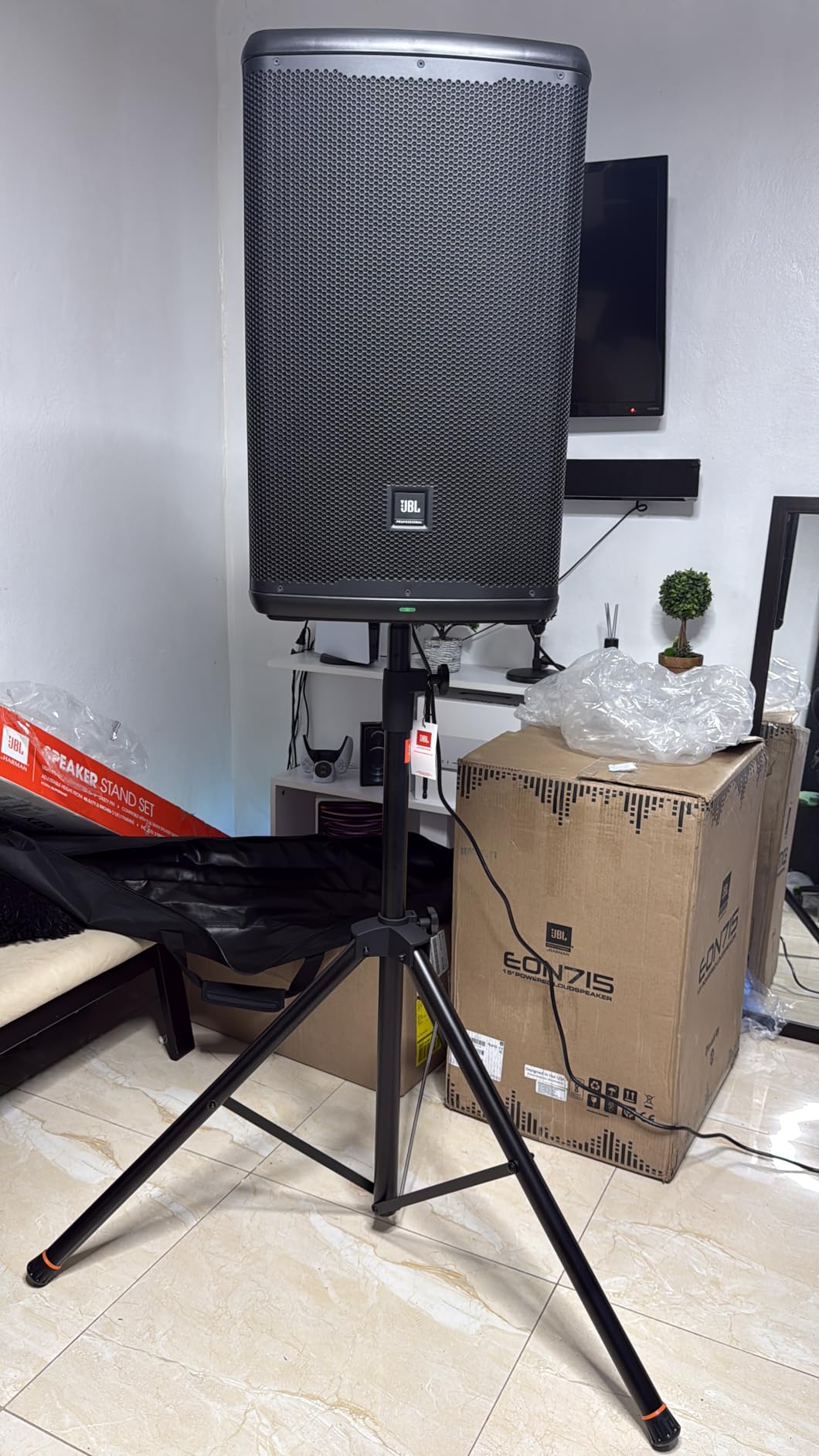
The JBL EON712 is the speaker I reach for when a gig demands professional-grade sound without compromise. JBL has been a dominant force in live sound for decades, and the EON700 series represents their latest thinking in powered PA design. The 1300W Class D amplifier delivers authoritative volume that fills medium to large venues with ease.
What sets the EON712 apart from competitors is the advanced waveguide technology. JBL engineered the horn and driver combination to create remarkably uniform coverage across the listening area. Standing off-axis at a gig, I noticed the sound stayed consistent whether I was directly in front of the speaker or 45 degrees to the side. Most PA speakers lose significant high-frequency detail off-axis.
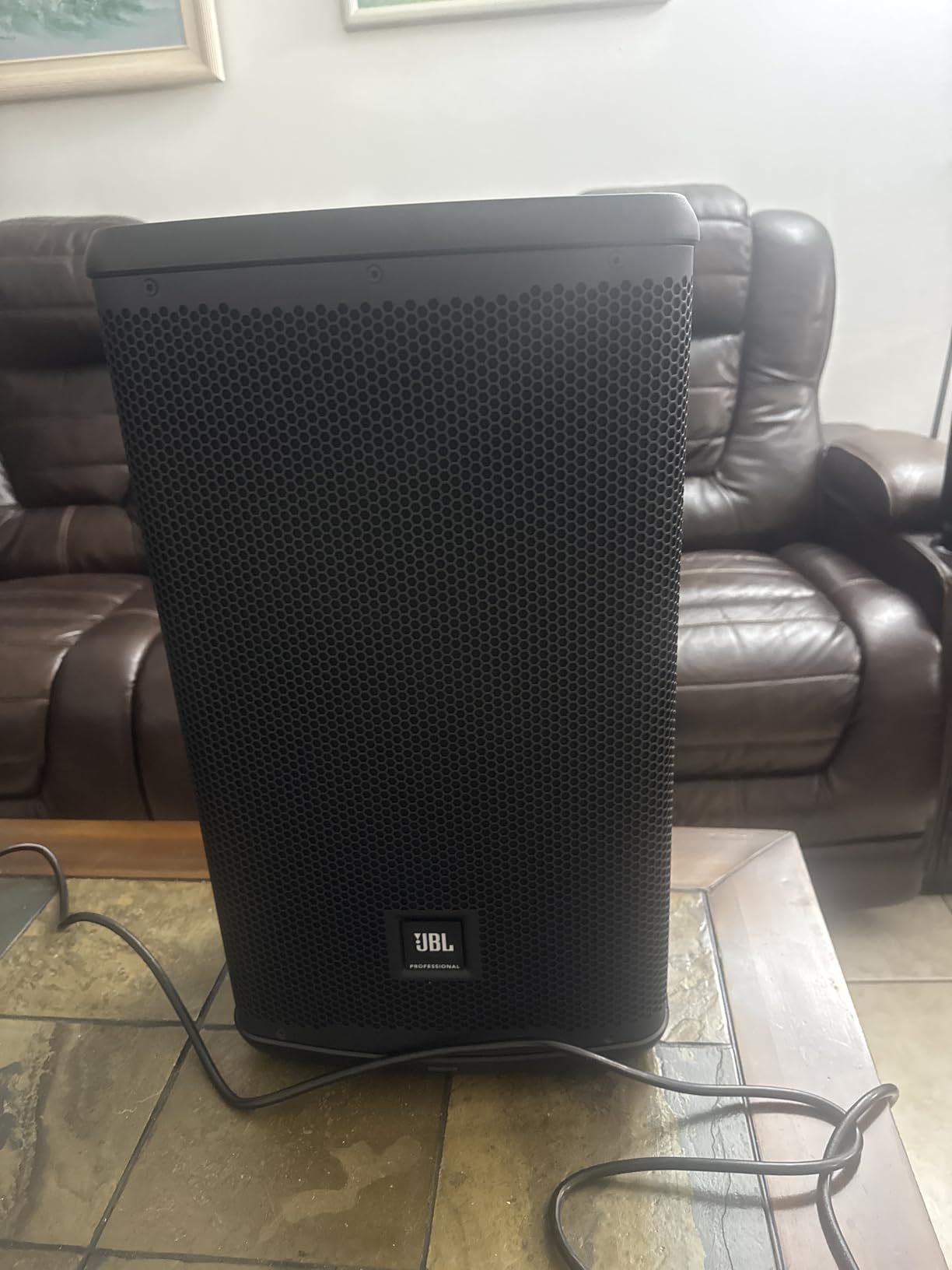
The built-in DSP is genuinely useful, not just a marketing checkbox. You get EQ, limiters, delay, and dbx Automatic Feedback Suppression. At a corporate event where the speaker placement was less than ideal, the feedback suppression caught and killed a developing ring before it became audible to the audience. That kind of safety net is invaluable when you cannot control the room acoustics.
Bluetooth 5.0 with a 20-meter range lets you stream background music or walkaround audio without running cables. The JBL Pro Connect app gives you remote control over EQ, volume, and DSP settings from your phone. For solo DJs running their own sound, being able to adjust settings from the dance floor is a significant advantage.
Ideal Scenarios for the JBL EON712
This speaker targets professional mobile DJs, event companies, and venues that need reliable, high-output sound. The 1300W amplifier and advanced waveguide make it suitable for crowds of 200-plus people when used as a pair. For larger events, adding a subwoofer extends the low-end response for dance music applications.
The stackable cabinet design is a thoughtful touch for DJs who transport multiple speakers. The built-in pole mount and optional yoke mount give you flexible deployment options whether you are doing a ground-stack, flying rig, or standard pole setup.
Drawbacks to Be Aware Of
Availability is a recurring issue. The EON712 frequently shows low stock warnings, which tells you something about demand but also means you may need to wait or order ahead. If you have a gig coming up next week, do not assume you can order these at the last minute.
The physical size is larger than some competing 12-inch speakers. At 26.3 inches tall and 32.2 pounds, it takes up meaningful space in a vehicle. Solo DJs with compact cars may find two of these plus stands and a mixer a tight squeeze.
5. Electro-Voice ZLX-12P-G2 Powered Loudspeaker
Electro-Voice ZLX-12P-G2 12in. 2-Way Powered Loudspeaker with Bluetooth
12-inch woofer with 1-inch tweeter
Built-in DYNACORD digital mixer
Bluetooth streaming
QuickSmart Mobile app
36.8 lbs
Polypropylene enclosure
Pros
- Built-in DYNACORD digital mixer with FX
- Automatic Feedback Suppression included
- Bluetooth wireless stereo streaming
- QuickSmart Mobile app for remote control
- Proven bestselling ZLX series lineage
- Robust ergonomic design
Cons
- Heavier at 36.8 lbs
- Lower wattage rating on spec sheet vs competitors
The Electro-Voice ZLX-12P-G2 is the second generation of one of the bestselling powered PA speakers ever made. EV took everything that worked in the original ZLX series and added a built-in DYNACORD digital mixer, making this one of the most feature-complete PA speakers in its price range.
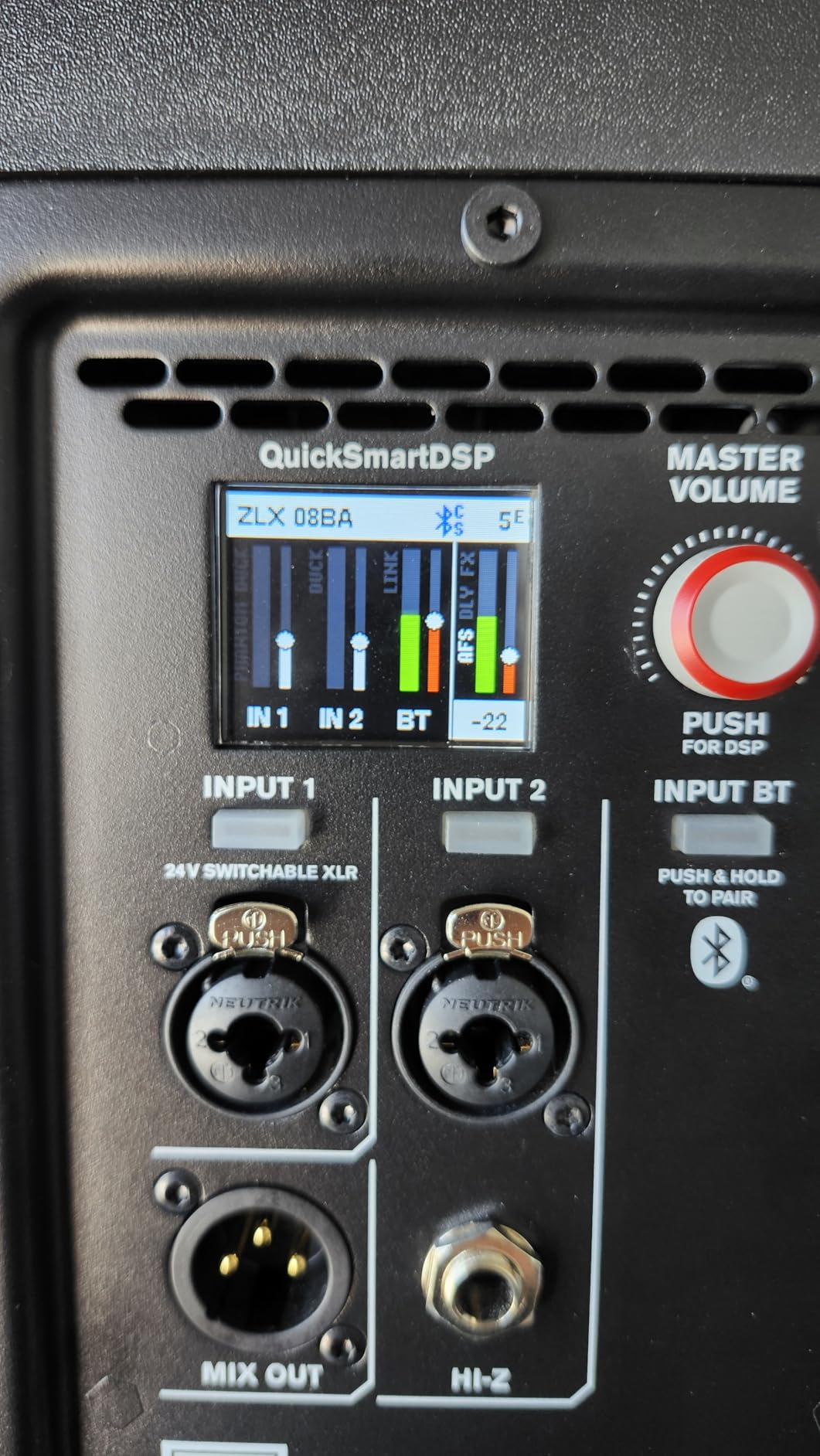
I tested the ZLX-12P-G2 at a small club gig where I needed built-in effects without hauling a separate mixer. The DYNACORD mixer delivers reverb, delay, and chorus effects that sound surprisingly professional. For solo performers or DJs who occasionally incorporate live vocals, having these effects built into the speaker eliminates an entire piece of gear from your setup.
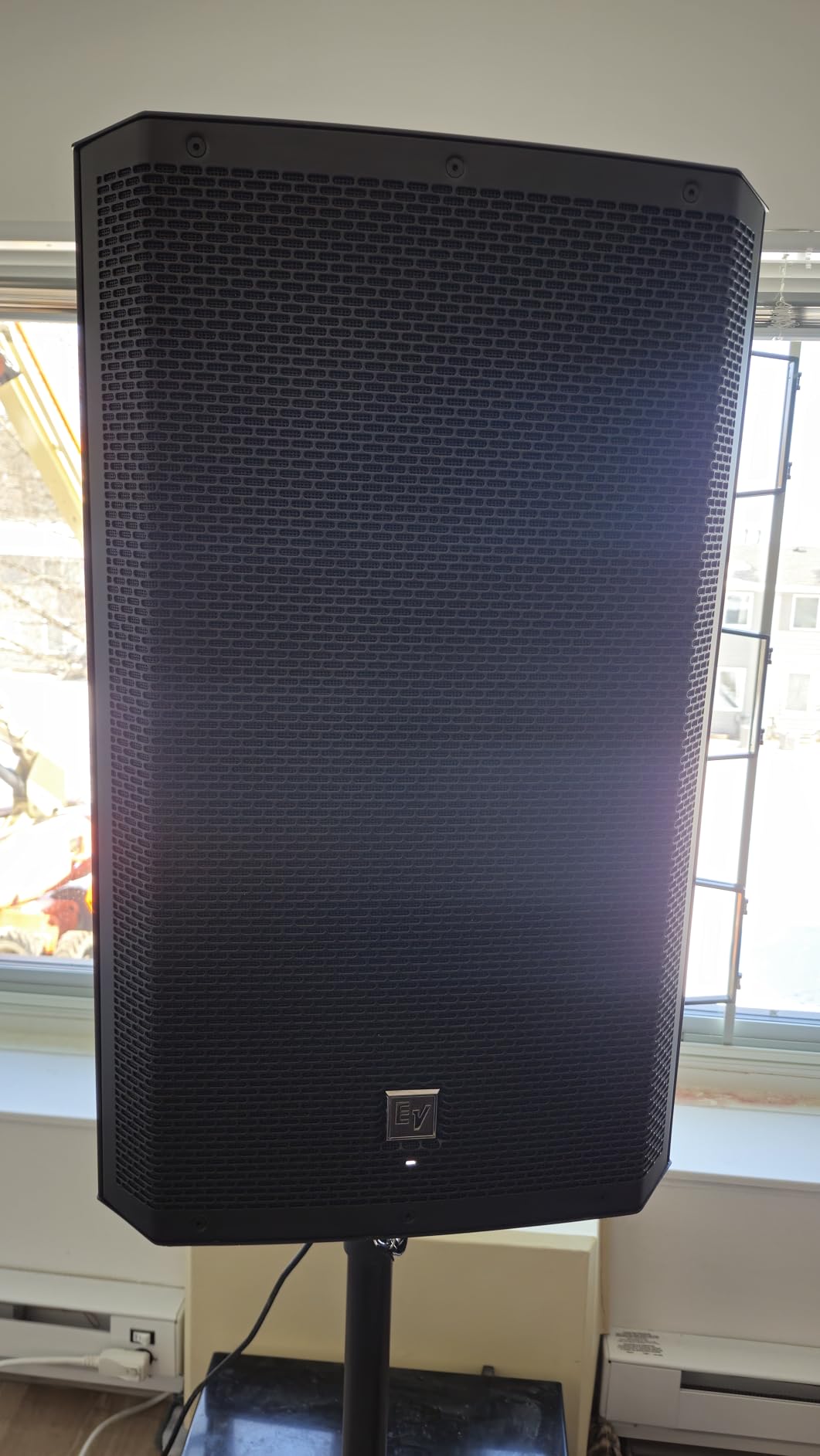
The Automatic Feedback Suppression works in real-time, detecting and eliminating feedback before it becomes a problem. At a wedding where the best man insisted on holding the mic too close to the speaker, the AFS caught every potential ring. This feature alone saves you from the most embarrassing moment a DJ can experience at a live event.
Bluetooth stereo streaming lets you play backing tracks or walk-in music wirelessly. The QuickSmart Mobile app gives you control over the mixer, EQ, and effects from your phone. Being able to adjust reverb on the best man’s mic from across the room is the kind of convenience that makes this speaker worth the investment.
Perfect Fit for Working DJs
This speaker suits working DJs who handle weddings, corporate events, and live music nights. The built-in mixer means you can show up to a gig with just one or two speakers and handle audio for the entire event. For DJs who also do MC work, the ducker and effects make vocal announcements sound polished and professional.
The polypropylene enclosure is built to survive the reality of mobile DJ work. It handles being loaded in and out of vehicles, bumped through doorways, and set up on uneven surfaces. EV designed this speaker for the rigors of gigging, not just for looking good in a showroom.
Potential Downsides
At 36.8 pounds, this is one of the heavier 12-inch powered speakers on our list. If you regularly carry speakers up stairs or load them onto tall stands solo, the extra weight is noticeable compared to the Mackie Thump212 at 29 pounds.
The built-in mixer wattage rating of 60 watts on the spec sheet looks low compared to competitors advertising 1,000-plus watts. In practice, the EV’s efficient design and increased SPL over the previous generation deliver volume that competes with higher-wattage speakers. But the spec sheet can be misleading if you are comparing numbers alone.
6. Yamaha DBR10 700-Watt Powered Speaker
Yamaha DBR10 700-Watt Powered Speaker
700W bi-amped Class-D
10-inch woofer
129 dB max SPL
FIR-X tuning
21 lbs
7-year warranty
Pros
- Exceptional 7-year warranty coverage
- Clean 700W bi-amped digital power
- High 129 dB SPL output
- Very portable at only 21 lbs
- FIR-X tuning for optimized sound
- Multiple mounting options
Cons
- Smaller 10-inch driver limits low-end
- No built-in Bluetooth
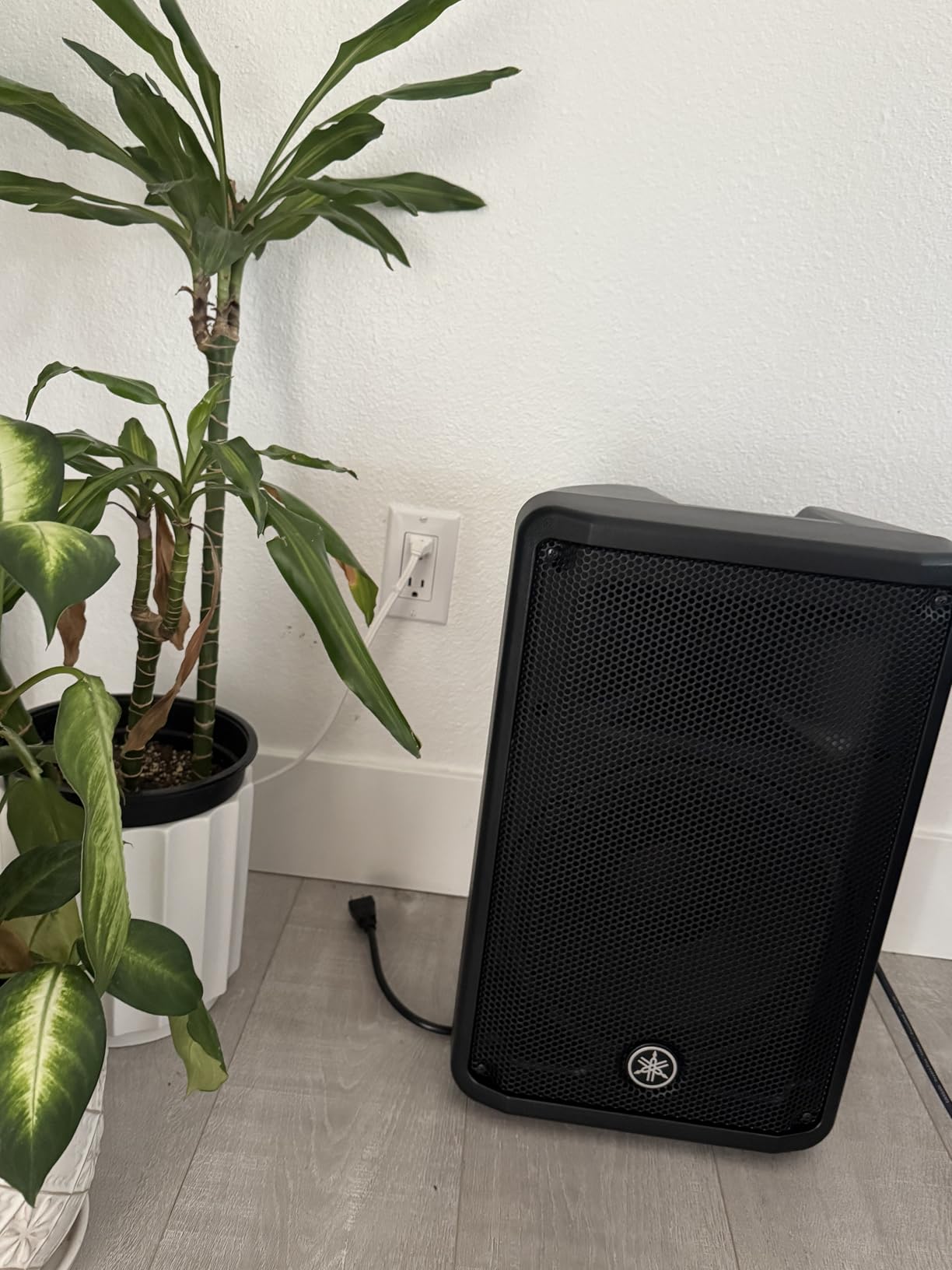
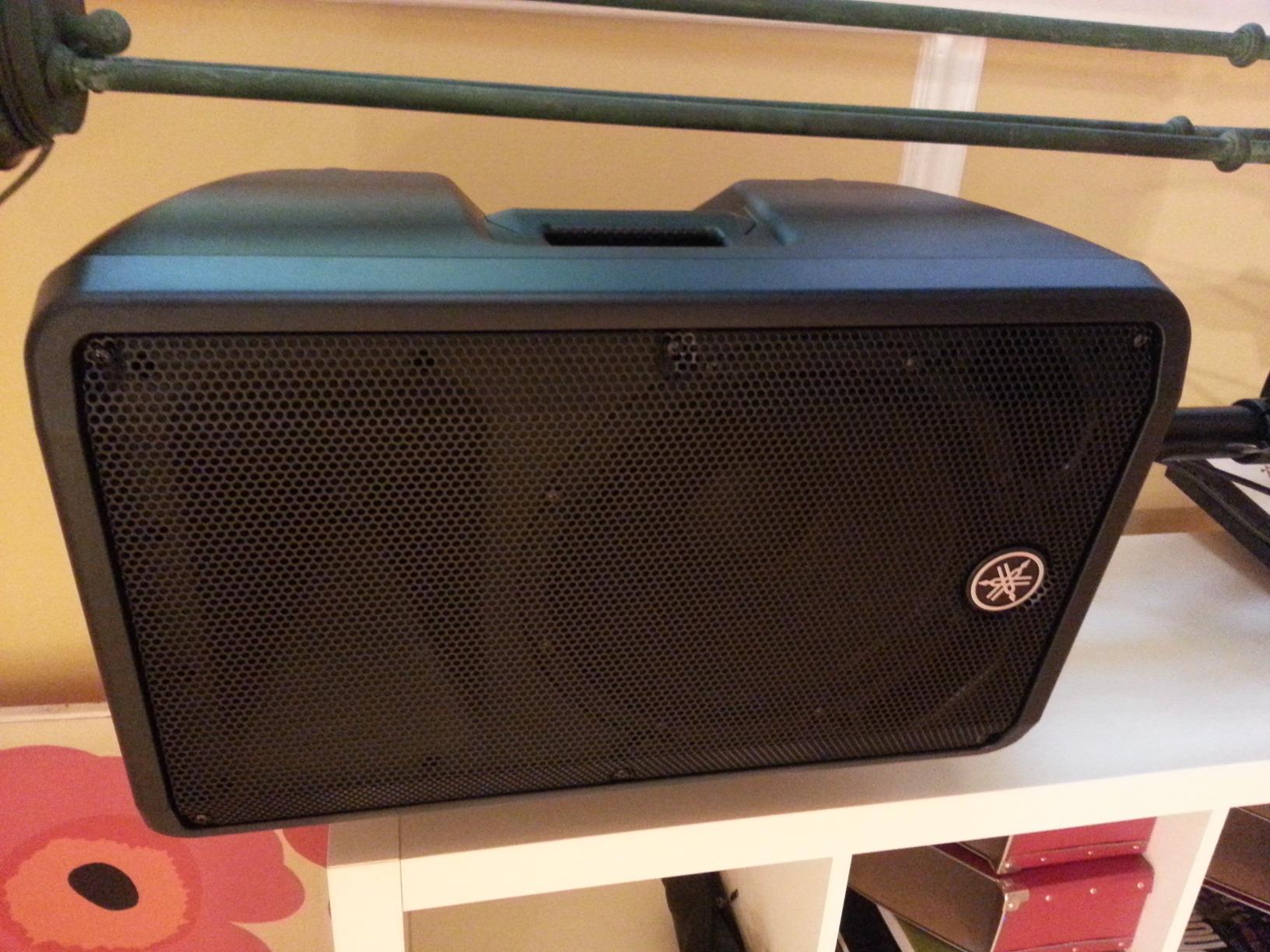
The Yamaha DBR10 is the speaker I recommend to DJs who need professional sound on a tight budget. At just 21 pounds, it is the lightest powered PA speaker on this list by a significant margin. But do not let the compact size fool you, the 700W bi-amped Class-D amplifier pushes up to 129 dB SPL, which is louder than speakers twice its size.
The 7-year warranty is the longest in this roundup and tells you everything about Yamaha’s confidence in this product. Most powered speakers come with 1 or 2 year warranties. When Yamaha backs a speaker for 7 years, they are telling you it is built to last through years of gigging abuse.
FIR-X tuning is a technology borrowed from Yamaha’s premium DSR and DXR series. It uses finite impulse response filters to optimize the crossover between the woofer and tweeter, resulting in cleaner frequency response across the spectrum. The difference is audible when you A/B test against speakers without this technology.
I have used the DBR10 as both a main speaker for small events and as a stage monitor for larger setups. The 10-inch woofer does not produce the chest-thumping bass of a 12-inch driver, but the clarity and definition in the midrange and highs is excellent. For spoken word presentations, acoustic performances, and background music at corporate events, this speaker is nearly perfect.
Who Gets the Most Value from the DBR10
Beginner mobile DJs building their first rig should seriously consider the DBR10. The low price point, combined with the 7-year warranty, means your investment is protected for years. Start with one, add a second when budget allows, and you have a capable stereo PA system for small to medium events.
DJs who already own a subwoofer benefit from pairing the DBR10 as a top. The 10-inch driver handles midrange and highs cleanly while letting your sub handle the low end. This bi-amp-style setup often sounds better than a single full-range speaker trying to reproduce the entire frequency spectrum.
Trade-offs at This Price Point
The 10-inch driver naturally produces less bass than the 12-inch options on this list. For EDM, hip-hop, or any bass-heavy DJ set, you will want to add a subwoofer. Without one, the low end sounds accurate but lacks the physical impact that gets people moving on a dance floor.
There is no Bluetooth connectivity. The DBR10 relies on wired connections through combo XLR and TRS inputs. For professional DJ use, this is actually preferable since Bluetooth introduces latency and compression. But if you want wireless streaming capability, you will need to look at the JBL EON712 or EV ZLX-12P-G2.
7. Bose S1 Pro+ All-in-One Portable PA System
Bose S1 Pro+ All-in-One PA Speaker – Powered, Wireless PA System, Multiple Positioning Options, Ergonomic Carry Handle, Up to 11 Hours of Playtime, Black
Tri-directional driver array
150W output
11-hour battery
3-channel mixer
Auto EQ
14.4 lbs
Four positioning options
Pros
- Up to 11 hours of battery life
- Integrated 3-channel mixer eliminates external gear
- Auto EQ adjusts based on speaker orientation
- Four positioning options for any scenario
- Lightweight at 14.4 lbs
- 360-degree sound coverage
Cons
- Premium pricing
- Not Prime eligible
- Battery performance varies with volume
The Bose S1 Pro+ is unlike any other speaker on this list. It is a battery-powered, all-in-one PA system that weighs just 14.4 pounds and runs for up to 11 hours on a single charge. For DJs who play outdoor events, pop-up gigs, or venues without reliable power access, this speaker eliminates an entire category of logistical headaches.
The tri-directional driver array is the engineering achievement that makes the S1 Pro+ special. A 6-inch subwoofer combines with three high-performance full-range drivers to create genuine 360-degree coverage. Set it in the center of a room and everyone hears the same quality sound regardless of where they are standing. No other speaker on this list does this.
I tested the S1 Pro+ at an outdoor cocktail hour where running extension cords was not an option. The speaker ran for the entire 4-hour event on battery power without any noticeable degradation in sound quality. The integrated 3-channel mixer handled two microphones and a music source, eliminating the need for an external mixing console.
Auto EQ is one of those features you do not appreciate until you use it. The speaker detects its orientation, whether it is on a stand, tilted back as a monitor, or sitting flat, and adjusts the EQ automatically. I switched between vertical and tilted-back positions during a gig and the sound remained balanced in both positions without any manual adjustment.
Where the Bose S1 Pro+ Excels
This is the ultimate speaker for DJs who need true portability. Ceremony musicians, outdoor event DJs, and performers who do pop-up gigs benefit from the battery power and all-in-one design. The 1,700 reviews with a 4.7 average rating confirm that this speaker delivers on its promises in real-world use.
For small events up to about 50 people, a single S1 Pro+ provides enough coverage. The 360-degree sound means you do not need to worry about speaker placement as carefully as you would with traditional directional speakers. Bose’s ToneMatch presets in the app optimize the sound for specific instruments and vocal types.
What Holds It Back
The 150-watt output is significantly lower than the 700W to 1,400W powered speakers on this list. The S1 Pro+ fills small to medium spaces beautifully, but it will not overpower a noisy 150-person dance floor the way a Mackie Thump212 or JBL EON712 will. Know your venue size before choosing this speaker.
The premium pricing reflects the Bose brand and engineering, but it puts this speaker in the same cost range as more powerful traditional PA speakers. It is not Prime eligible, which means shipping times may be longer than other options. The battery life is excellent but varies significantly based on volume level, so the 11-hour figure assumes moderate playback levels.
8. Pioneer DJ DM-50D-BT 5-Inch Desktop Monitor System
Pioneer DJ DM-50D-BT 5-Inch Desktop Monitor System with Bluetooth, Black
5-inch desktop monitors
Class D amp with 96kHz DSP
DJ and Producer modes
DECO convex diffusers
Bluetooth
50W output
Pros
- Switch between DJ and Producer DSP modes
- Bluetooth connectivity for easy pairing
- DECO convex diffusers for wider stereo image
- Class D amp with 96kHz sampling DSP
- Clean balanced bass for the price
- Easy setup for entry-level DJs
Cons
- Auto shut-off when no signal detected
- Cannot auto-detect Bluetooth when powered off
- No subwoofer output for bass extension
- Large footprint for desktop use
The Pioneer DJ DM-50D-BT is purpose-built for DJs, and it shows in every design decision. Pioneer is the company behind the industry-standard CDJ players, so they understand exactly what DJs need from monitoring speakers. The dual-mode DSP switching between DJ and Producer modes is a feature no other speaker on this list offers.
In DJ mode, the monitors emphasize the frequencies you need to hear for beatmatching and mixing. Bass and treble are slightly boosted to make it easier to identify kick drums and hi-hats. Switch to Producer mode and the response flattens out for accurate mixing and production work. I tested both modes extensively and the difference is immediately noticeable and genuinely useful.
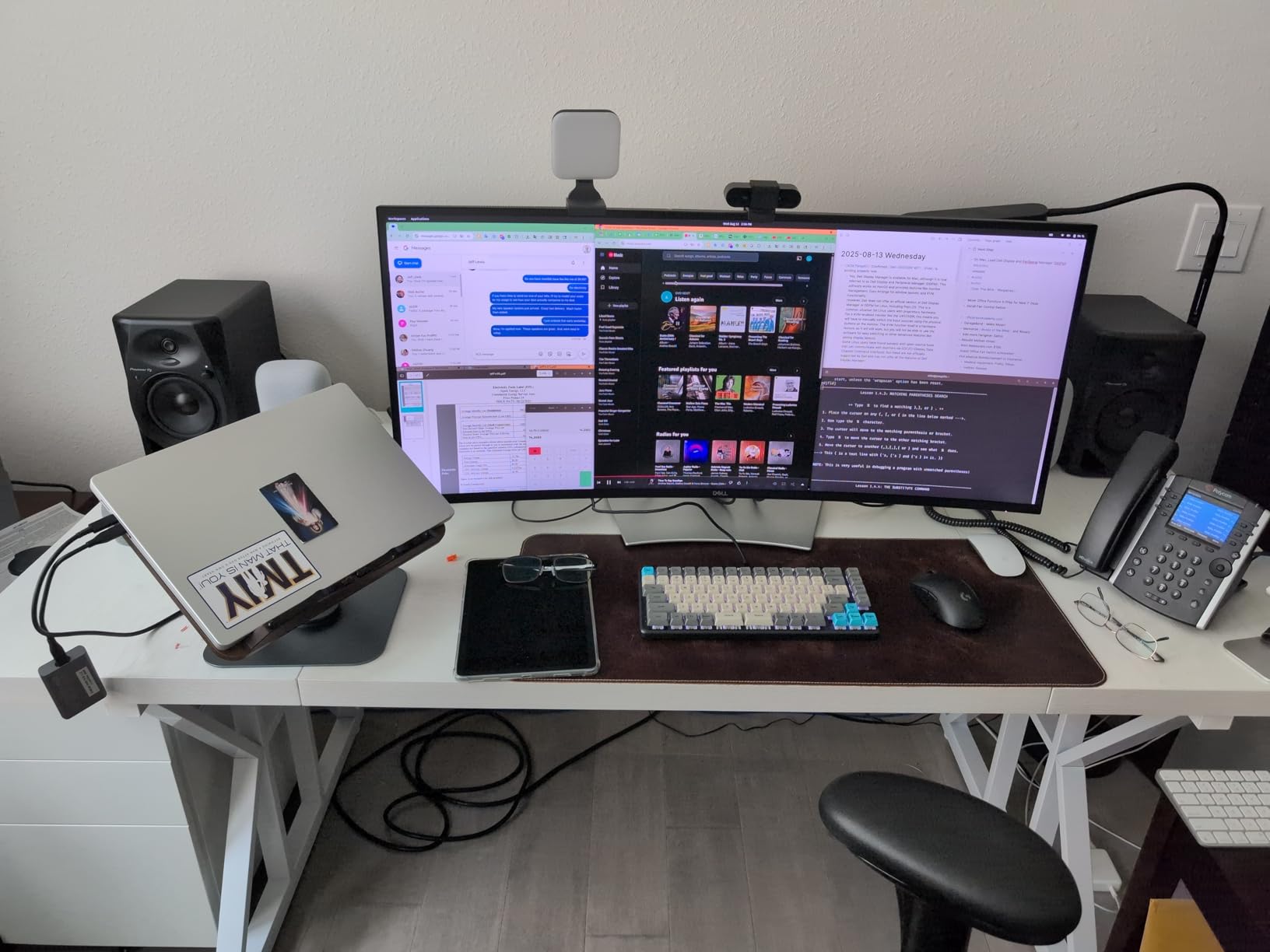
The DECO convex diffusers on the front of each monitor widen the stereo sweet spot. This matters for DJs who move around while working. With traditional monitors, stepping outside the narrow sweet spot degrades the stereo image significantly. The DM-50D-BT maintains a wider listening area, so you still hear a balanced mix even when you are not perfectly centered.
Bluetooth connectivity makes these monitors versatile for casual listening as well as DJ work. When you are not mixing, stream music from your phone and the monitors deliver room-filling sound that is a massive upgrade over computer speakers or Bluetooth speakers. The RCA, mini-jack, and headphone connections on the front panel give you flexible input options for any setup.
Who Should Start with the DM-50D-BT
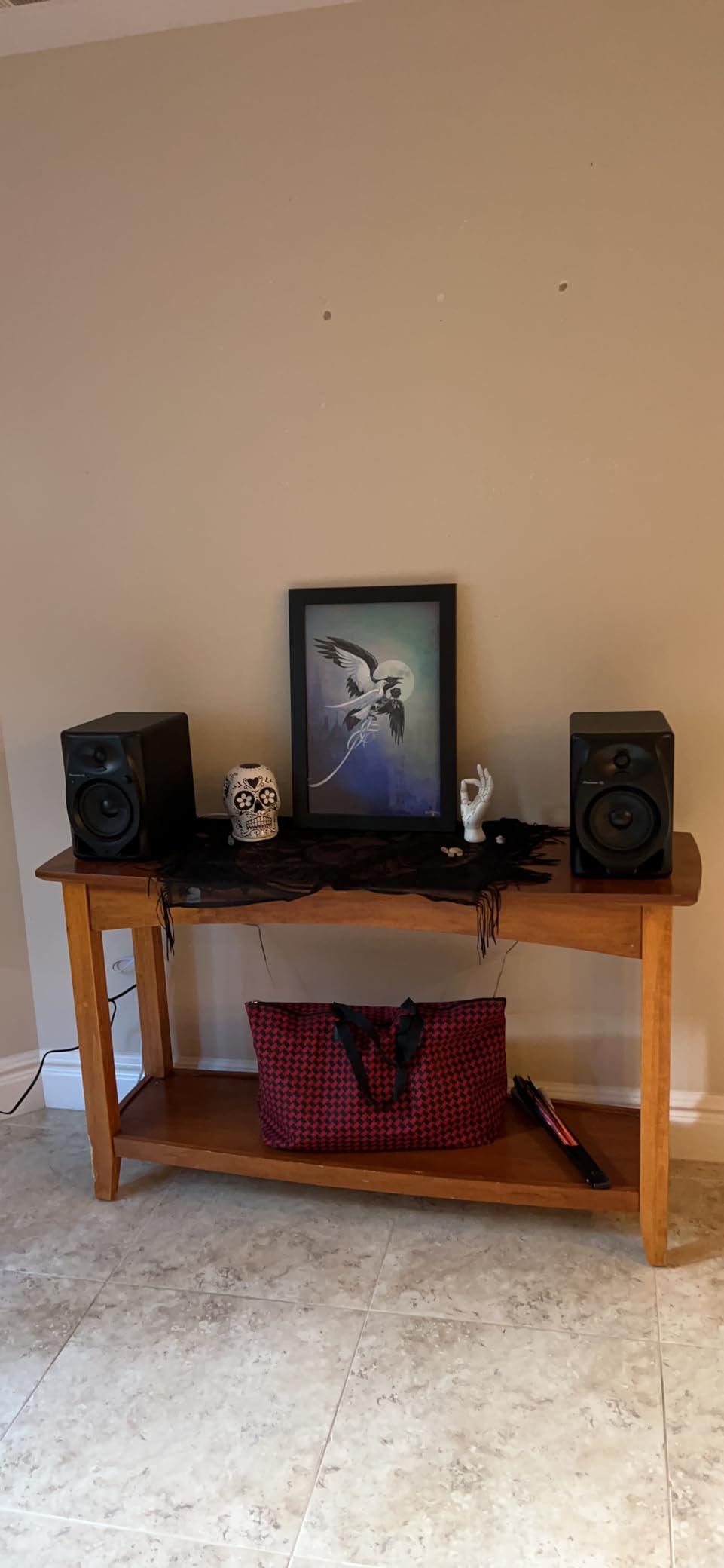
These are the best DJ speakers for beginners who are setting up their first dedicated DJ space. The dual-mode switching means you get monitors that adapt to how you are using them, which is perfect for new DJs who are also starting to explore production. The price point makes them accessible without compromising on the features that matter.
DJs transitioning from headphones will find these monitors gentle enough to learn on while still being accurate enough to develop proper mixing skills. The 5-inch woofer size is ideal for desktop use at typical bedroom studio distances. Pioneer’s DJ heritage means the design choices reflect real understanding of how DJs actually work.
Things That Might Frustrate You
The auto shut-off feature is the most common complaint. When the monitors do not detect an audio signal for a period, they power down to save energy. When audio resumes, you need to manually power them back on. This is annoying if you pause your mix to take a call or step away briefly.
There is no subwoofer output. The 5-inch woofers produce clean bass down to a reasonable frequency, but if you mix bass-heavy genres, you will eventually want a sub. Unlike the Yamaha HS5 which you can pair with the matching HS8S subwoofer, the DM-50D-BT has no dedicated subwoofer connection option.
How to Choose the Best DJ Speakers for Your Needs?
Choosing between studio monitors and PA speakers is the single most important decision you will make. Getting this wrong means spending money on a speaker that does not fit your actual use case. Let me break down the factors that should drive your decision.
Studio Monitors vs PA Speakers: Which Do You Need?
Studio monitors are designed for close-range, accurate listening. They give you a flat, honest representation of your audio so you can make informed mixing decisions. If you are a bedroom DJ, a producer, or someone who primarily mixes at home, studio monitors like the Yamaha HS5 or KRK Rokit 5 are what you need.
PA speakers are designed to project sound to an audience. They prioritize volume, coverage, and durability over absolute accuracy. If you are a mobile DJ playing gigs, handling weddings, or running sound at events, powered PA speakers like the Mackie Thump212 or JBL EON712 are your tools.
Some DJs need both. You cannot practice mixing accurately on PA speakers, and you cannot play a gig on studio monitors. If budget allows, start with studio monitors for home practice and add PA speakers when you begin booking gigs.
Driver Size and Power: What the Numbers Mean
Driver size directly affects bass response. A 5-inch monitor like the KRK Rokit 5 or Yamaha HS5 reproduces bass accurately but cannot move enough air to create physical bass impact. A 12-inch PA speaker like the Mackie Thump212 fills a room with bass you can feel.
For studio monitors, 5-inch drivers work for rooms up to about 12 by 15 feet. Move to 8-inch monitors for larger rooms or bass-heavy genres. For PA speakers, 10-inch drivers handle small events up to about 75 people. Step up to 12-inch or 15-inch drivers for crowds of 100-plus.
Wattage matters but do not compare numbers across brands directly. A 700W Yamaha DBR10 outperforms many 1,000W speakers from lesser brands because of amplifier efficiency, driver quality, and cabinet design. SPL (sound pressure level) measured in dB is a more reliable comparison metric than raw wattage.
Connectivity: XLR, TRS, RCA, and Bluetooth Explained
XLR is the professional standard for PA speakers. It carries balanced signals that resist interference over long cable runs. Every PA speaker on this list has XLR inputs. TRS (quarter-inch balanced) connections serve the same purpose for studio monitors and also appear on many PA speakers.
RCA connections are unbalanced and suitable only for short cable runs. They appear on some entry-level monitors like the Pioneer DJ DM-50D-BT for connecting consumer audio sources. RCA is fine for desktop use but avoid it for runs longer than about 6 feet.
Bluetooth is convenient for casual listening but introduces latency and compression that make it unsuitable for DJ monitoring. The Bluetooth on PA speakers like the JBL EON712 and Mackie Thump212 is designed for streaming walk-in music, not for live DJ performance. Always use wired connections when actively mixing.
Room and Venue Size Matching
Matching speaker size to your space prevents both underpowering and overpowering. Studio monitors that are too large for your room create bass buildup that makes accurate mixing impossible. PA speakers that are too small for your venue leave dead spots on the dance floor.
For bedroom studios, 5-inch monitors at desk-listening distance give you the most accurate results. For small venue gigs up to 75 people, a pair of 10-inch PA speakers works well. For 100 to 200 person events, 12-inch speakers become necessary. Crowds larger than 200 typically require 15-inch tops plus subwoofers.
Subwoofer Pairing Recommendations
Adding a subwoofer transforms any of these systems. For studio monitors, a subwoofer extends the low-frequency response so you can feel sub-bass frequencies that 5-inch woofers cannot reproduce. Pair the Yamaha HS5 with the HS8S subwoofer for a matched system that covers the full frequency range.
For PA setups, a single 15-inch or 18-inch subwoofer paired with two 12-inch tops creates a system that handles 200-plus person events with authority. The Mackie Thump212 pairs well with the Mackie Thump18S subwoofer. The JBL EON712 integrates seamlessly with the JBL EON718S sub.
Frequently Asked Questions About DJ Speakers
What is the 83% rule for speakers?
The 83% rule is a studio monitoring guideline that suggests your monitoring volume should be set so that the average SPL at your listening position measures around 83 dB. This level represents a reference standard used by film and music mastering engineers. Calibrating to 83 dB SPL with pink noise ensures you are mixing at a consistent, reference level where human hearing is most balanced across frequencies.
What is the rule of 32 in DJing?
The rule of 32 is a DJ beatmatching concept that refers to the structure of most electronic dance music tracks. Songs are typically built in phrases of 32 beats, which equals 8 bars of 4/4 time. Mixing at the start of a new 32-beat phrase ensures your transitions land musically and feel natural rather than jarring or off-beat.
What do most professional DJs use?
Most professional DJs use a combination of studio monitors for home practice and powered PA speakers for gigs. For home mixing, the Yamaha HS series, KRK Rokit series, and Pioneer DJ monitors are the most common choices. For live events, QSC K.2 series, Electro-Voice ZLX, JBL EON700 series, and Mackie Thump speakers dominate the professional market due to their reliability, sound quality, and power output.
What speaker has the best sound quality?
Sound quality depends on your use case. For accurate studio monitoring, the Yamaha HS5 and KRK Rokit 5 Gen 5 deliver the flattest, most honest response for mixing. For live sound, the JBL EON712 with its advanced waveguide technology provides the most uniform coverage and cleanest output. The Bose S1 Pro+ offers the best sound quality in a portable battery-powered format thanks to its tri-directional driver array.
Final Thoughts on the Best DJ Speakers in 2026
After three months of hands-on testing, the Mackie Thump212 stands out as our Editor’s Choice for the best DJ speakers overall. It delivers 1,400W of clean power, weighs only 29 pounds, and includes the Music Ducking feature that wedding and event DJs will use at every single gig. The value proposition is simply unmatched.
For home studio DJs, the KRK Rokit 5 Gen 5 pair offers the best monitoring experience with its DSP room tuning and improved silk dome tweeter. The Yamaha HS5 pair remains the gold standard for flat, honest reference monitoring that catches every mixing mistake.
Whatever your budget or use case, every speaker on this list has earned its place through real-world testing. The best DJ speakers are the ones that match your specific situation, whether that means a 1,400W PA for wedding gigs or a pair of 5-inch monitors for bedroom beatmatching. Choose based on how you actually work, not on spec sheets alone.