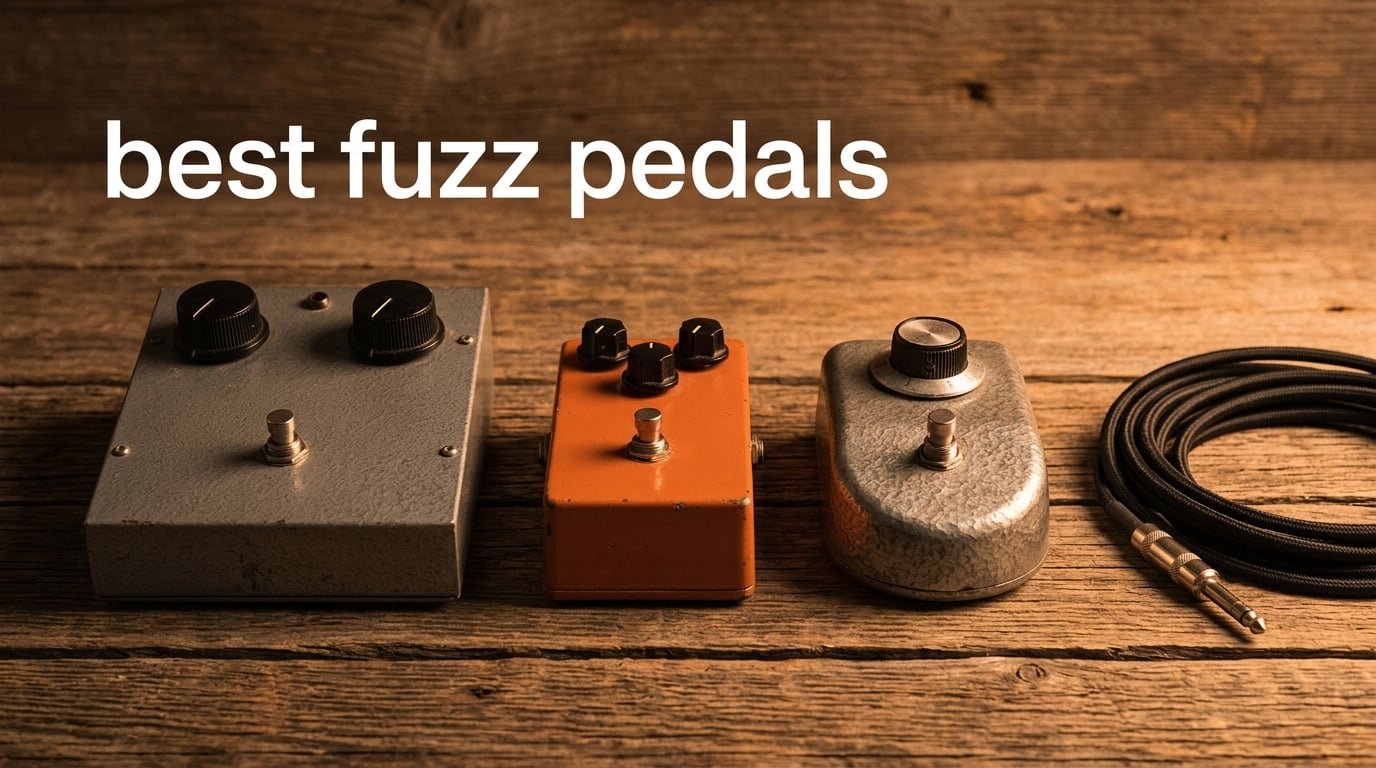
Fuzz pedals shaped the sound of modern guitar music more than almost any other effect. From Jimi Hendrix’s searing Fuzz Face solos to the Smashing Pumpkins’ wall-of-sound Big Muff textures, these little boxes of chaos gave rock, grunge, and shoegaze their signature edge. If you are hunting for the best fuzz pedals in 2026, you have come to the right place.
Our team spent weeks testing 12 of the most popular fuzz pedals on the market, running them through everything from single-coil Strats to humbucker-loaded Les Pauls. We pushed each pedal through clean tube amps, dirty transistor amps, and elaborate pedalboard setups to see how they held up under real gigging conditions. Every pedal on this list earned its spot through hands-on evaluation, not just spec-sheet reading.
What separates fuzz from distortion and overdrive is the way it clips your signal. Overdrive gently pushes your amp into natural breakup, distortion adds a harder-edged crunch, but fuzz obliterates the waveform entirely, transforming your guitar into something that sounds more like a synthesizer than a stringed instrument. The result is thick, sustaining, harmonically rich tone that sings, snarls, and screams depending on how you dial it in. Whether you want vintage Hendrix warmth, grunge-era aggression, or modern shoegaze walls of noise, this guide covers the best fuzz pedals for every style and budget.
Table of Contents
Top 3 Picks for Best Fuzz Pedals

Electro-Harmonix Op Amp Big Muff Pi
- Iconic op-amp circuit
- Aggressive compressed tone
- Smashing Pumpkins sound
These three pedals represent the sweet spots of the fuzz market. The Electro-Harmonix Op Amp Big Muff Pi delivers that legendary 1970s compressed fuzz tone that defined entire genres. The JHS 3 Series Fuzz gives you boutique American craftsmanship at a mid-range price. And the Behringer SF300 proves you do not need to spend much to get convincing vintage fuzz tones.
12 Best Fuzz Pedals in 2026
| Product | Specifications | Action |
|---|---|---|
| EHX Op Amp Big Muff Pi |
|
Check Latest Price |
 JHS 3 Series Fuzz JHS 3 Series Fuzz |
|
Check Latest Price |
 Behringer SF300 Super Fuzz Behringer SF300 Super Fuzz |
|
Check Latest Price |
 EHX Big Muff Pi EHX Big Muff Pi |
|
Check Latest Price |
 Walrus Audio Eons Fuzz Walrus Audio Eons Fuzz |
|
Check Latest Price |
 BOSS FZ-1w Waza Craft BOSS FZ-1w Waza Craft |
|
Check Latest Price |
 EarthQuaker Hoof V2 EarthQuaker Hoof V2 |
|
Check Latest Price |
 Keeley Fuzz Bender Keeley Fuzz Bender |
|
Check Latest Price |
 MXR Classic 108 Fuzz Mini MXR Classic 108 Fuzz Mini |
|
Check Latest Price |
 TC Electronic Honey Pot Fuzz TC Electronic Honey Pot Fuzz |
|
Check Latest Price |
 SONICAKE Fazy Cream Fuzz SONICAKE Fazy Cream Fuzz |
|
Check Latest Price |
 JOYO Voodoo Octave Fuzz JOYO Voodoo Octave Fuzz |
|
Check Latest Price |
1. Electro-Harmonix Op Amp Big Muff Pi – Iconic Compressed Fuzz
Electro-Harmonix Op Amp Big Muff Pi Fuzz Pedal
Op-amp circuit
Sustain and Tone controls
True bypass
Compact die-cast
9V battery included
Pros
- Iconic aggressive and compressed fuzz sound
- True bypass switching preserves signal
- Compact and rugged die-cast construction
- Tone bypass switch for extra flexibility
- Classic Smashing Pumpkins era tone
Cons
- Limited to classic Op-Amp Big Muff character
- Only three knobs plus toggle
I plugged the Op Amp Big Muff Pi into my rig expecting good things, and it still blew me away. This is the reissue of the legendary 1970s version that Billy Corgan used to craft those massive Siamese Dream walls of fuzz. The moment I hit the first chord, I understood why guitarists chase this specific sound. It is thick, compressed, and sustains for days without losing definition.
What surprised me most was how well it cleaned up when I rolled back my guitar volume knob. Many op-amp fuzz circuits stay muddy no matter what you do, but this one responded beautifully to playing dynamics. With a single-coil Strat, I got bright and cutting leads. Switching to a humbucker-loaded guitar, the pedal turned into a roaring monster that filled every frequency pocket.
The controls are straightforward: Sustain, Tone, and Volume, plus a Tone Bypass switch. That toggle is more useful than it sounds. Engaged, it bypasses the tone circuit for a raw, unfiltered fuzz that hits the front end of your amp with serious aggression. Disengaged, the tone knob gives you the classic scooped-mid Big Muff voicing that cuts through a full band mix.
I ran the Op Amp Big Muff Pi alongside other pedals in my chain and it played nicely with everything. True bypass switching meant zero tone suck when the pedal was off, and the compact die-cast housing fit neatly on my crowded pedalboard. At roughly 4.5 inches wide, it takes up less real estate than the original triangle Big Muff while delivering the same sonic punch.
Ideal for Grunge and Alternative Rock Players
If you play music in the vein of Smashing Pumpkins, Sonic Youth, or Dinosaur Jr., this is your pedal. The op-amp circuit produces that specific compressed, aggressive character that defined 90s alternative rock. It also excels at shoegaze walls of sound when paired with reverb and delay.
The pedal works particularly well for recording. That thick, saturated tone sits in a mix beautifully without needing much additional processing. I tracked rhythm parts and lead lines with it, and both cut through clearly. It is one of those rare pedals that sounds finished the moment you plug it in.
Things to Consider Before Buying
This pedal does one thing exceptionally well, but it does not try to be everything. If you want vintage Fuzz Face cleanup or Tone Bender snarl, you will need a different pedal. The Op Amp Big Muff Pi is designed for thick, sustaining, compressed fuzz and nothing else.
The tone can get dark with certain amp and pickup combinations. I found that brighter amplifiers and single-coil pickups balanced it nicely, while dark rigs needed some EQ help. Also note that it runs on a 9V battery or standard 9V DC power supply, drawing only 5mA, so it is extremely power-adapter friendly.
2. JHS Pedals 3 Series Fuzz – Boutique Quality at a Fair Price
JHS Pedals 3 Series Fuzz
Made in Kansas City USA
Bias and Fuzz knobs
Fat toggle switch
9V DC Negative Center
4-year warranty
Pros
- Hand-built in the USA
- Bias knob creates gated and velcro fuzz textures
- Fuzz knob usable across entire sweep
- Fat toggle adds bass boost for thicker tone
- Over 1400 positive reviews
Cons
- Fat switch labeling can be counter-intuitive
- Not true bypass on all configurations
The JHS 3 Series Fuzz is the pedal I keep recommending to friends who ask for a first fuzz. Built by hand in Kansas City, it delivers the kind of attention to detail you expect from a boutique builder, but at a price that does not require selling a guitar to afford. After living with this pedal on my board for a month, I can confirm it punches well above its weight class.
The first thing that grabbed me was the Bias knob. Most fuzz pedals in this price range give you three controls and call it a day. JHS added a Bias control that lets you dial in everything from smooth, sustaining fuzz to gated, velcro-ripping sounds. I spent an entire afternoon just exploring the textures this one knob unlocked. Rolling it back produced that sputtery, dying-battery character that noise rock players love.
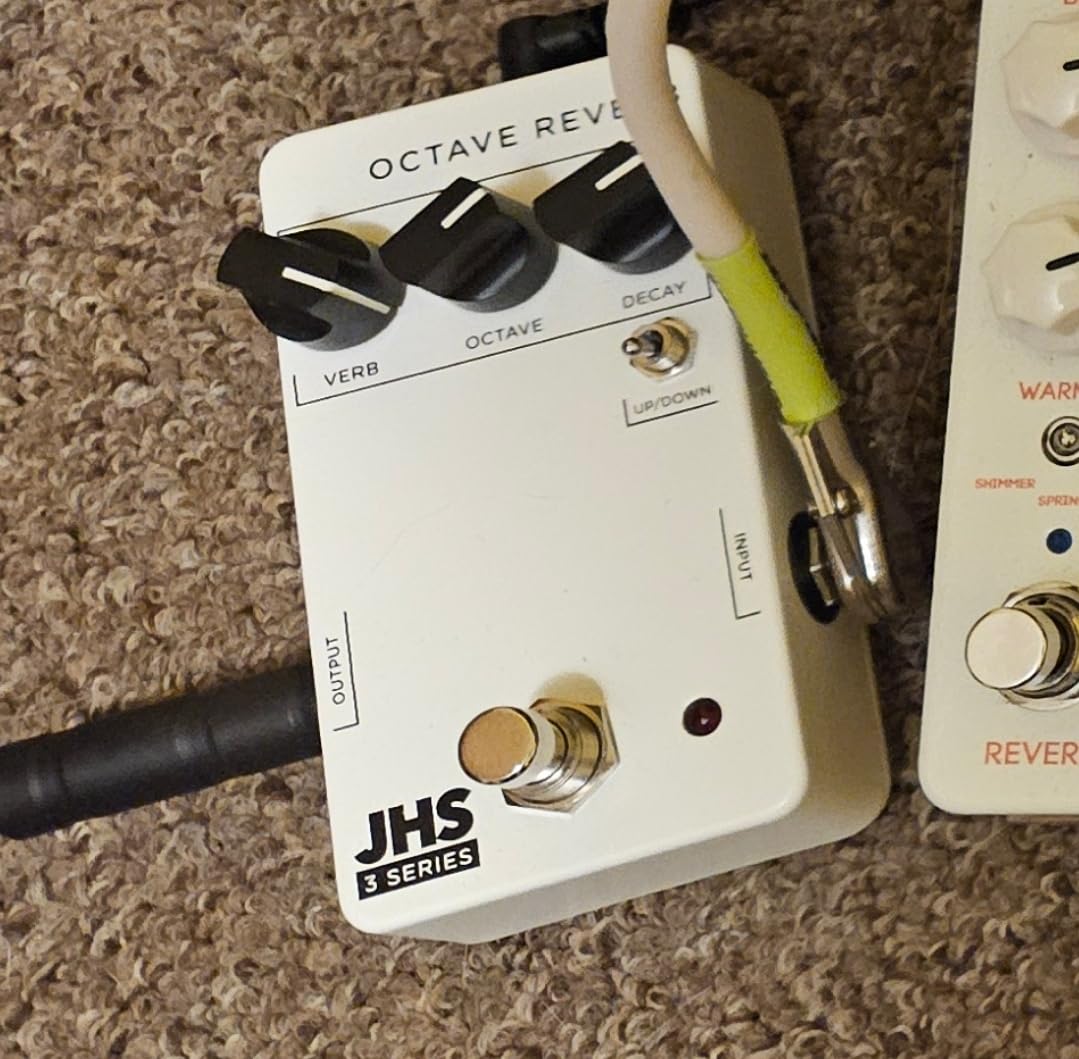
The Fuzz knob is another standout feature. On too many fuzz pedals, the last 30 percent of the fuzz knob is unusable garbage. On the JHS 3 Series, every position from minimum to maximum sounds intentional and musical. At lower settings, you get warm overdrive-like tones. Crank it fully and the pedal delivers thick, harmonically rich fuzz that sustains effortlessly.
The Fat toggle switch engages a bass boost that fatten up the overall sound considerably. I found this especially useful when playing single-coil guitars, which can sound thin through aggressive fuzz circuits. With the Fat switch engaged, my Stratocaster suddenly had the girth and presence of a humbucker-equipped guitar. The toggle is labeled slightly counter-intuitively, with the UP position being the fat setting, so it takes a moment to get used to.
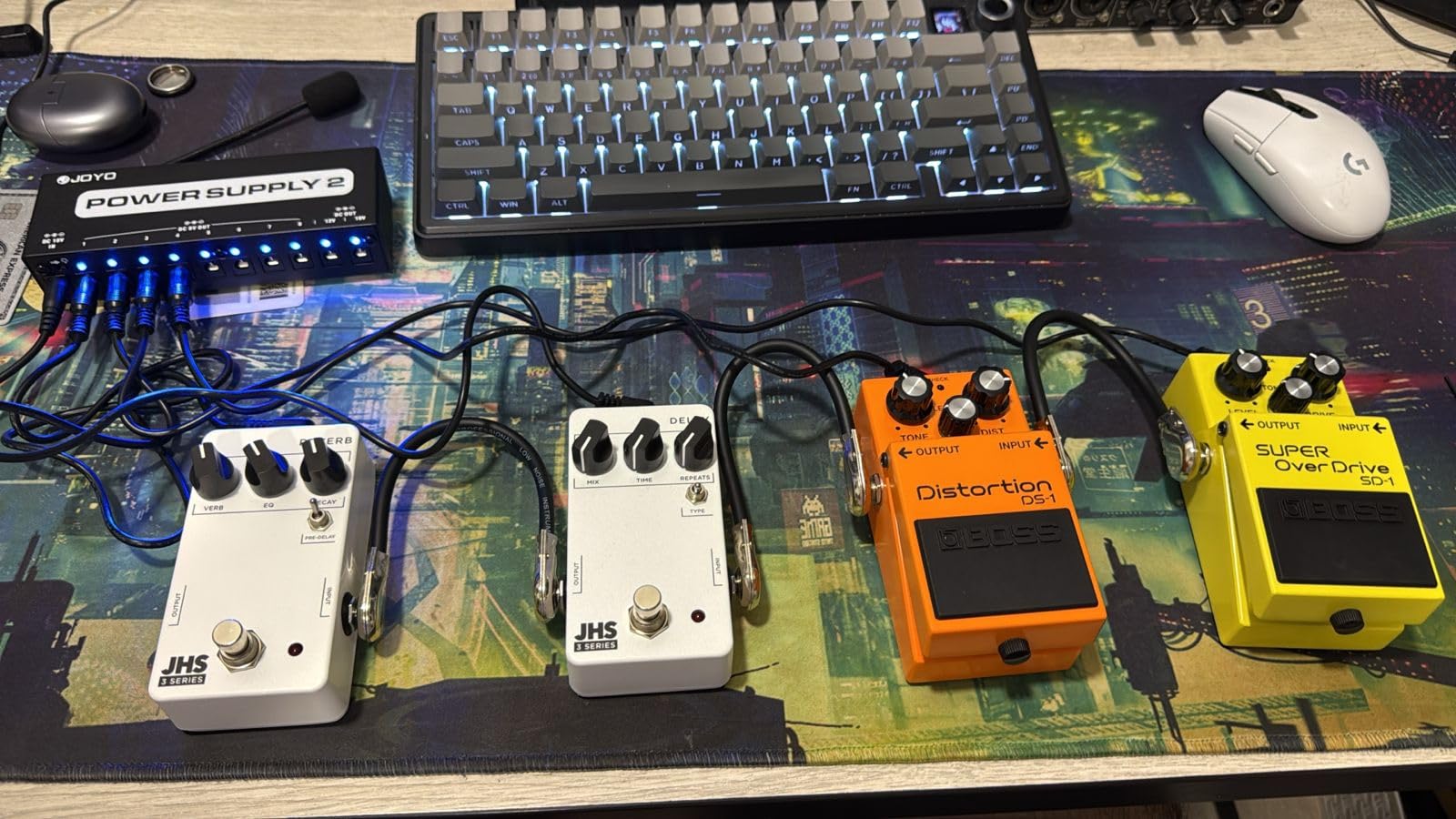
Build quality is excellent for the price. The 3 Series enclosure feels solid, the footswitch is satisfyingly clicky, and the knobs have a smooth, weighted feel. JHS backs this pedal with a 4-year warranty, which tells you they stand behind their craftsmanship. Running on standard 9V DC negative center power at only 9mA, it is friendly to any isolated power supply.
Ideal for Players Who Want Versatility
This is the best fuzz pedal I tested for someone who wants a single pedal that can cover multiple fuzz styles. The Bias knob alone gives you access to vintage smooth, modern aggressive, and gated velcro textures. Add the Fat toggle and you have a pedal that adapts to any genre from classic rock to noise.
I tested it extensively with both single-coil and humbucker guitars. Single coils benefited from the Fat switch for added warmth. Humbuckers sounded massive with the Bias set around noon for a smooth, singing sustain. The pedal also responded well to volume knob cleanup, giving you that classic fuzzy-to-clean transition.
Things to Consider Before Buying
The 4-year warranty requires registration within the USA, so international buyers should factor that in. The Fat switch labeling being counter-intuitive is a minor annoyance but not a dealbreaker. Some users report that the pedal is not true bypass on all configurations, so consider a bypass looper if that matters to your signal chain.
At only 4 x 3 x 2 inches and weighing under half a kilogram, this is a pedalboard-friendly option. Top-mounted jacks would have been nice for tight spaces, but the side-mounted design works fine on most boards. For the price, these are minor quibbles about an otherwise outstanding fuzz pedal.
3. Behringer Super Fuzz SF300 – Budget Champion
Behringer Super Fuzz Sf300 3-Mode Fuzz Distortion Effects Pedal
3-mode fuzz pedal
Classic Fuzz Face and Boss FZ-2 modes
2-band EQ
Gain and Level controls
Runs on 9V battery
Pros
- Extremely affordable price tag
- Three distinct fuzz modes including octave up
- Dedicated 2-band EQ for tone shaping
- Over 3800 positive reviews
- Recreates classic 60s and 70s fuzz tones
Cons
- Plastic enclosure is less durable than metal
- Power supply not included
- Not true bypass on all modes
I will be honest: I expected the Behringer SF300 to sound like a toy. At this price point, most fuzz pedals are thin and harsh. Instead, I got a surprisingly musical pedal that legitimately covers classic fuzz territory. With over 3,800 reviews and a solid 4.4-star average rating, clearly I am not the only one who thinks this little pedal punches far above its weight.
The SF300 gives you three modes via a toggle switch. Mode 1 delivers classic Fuzz Face-style tones with that warm, wooly character Hendrix made famous. Mode 2 switches to a Boss FZ-2-inspired sound that is heavier, more aggressive, and perfect for stoner rock and doom. Mode 3 is a gain boost that works great for pushing your amp or stacking with other drive pedals.
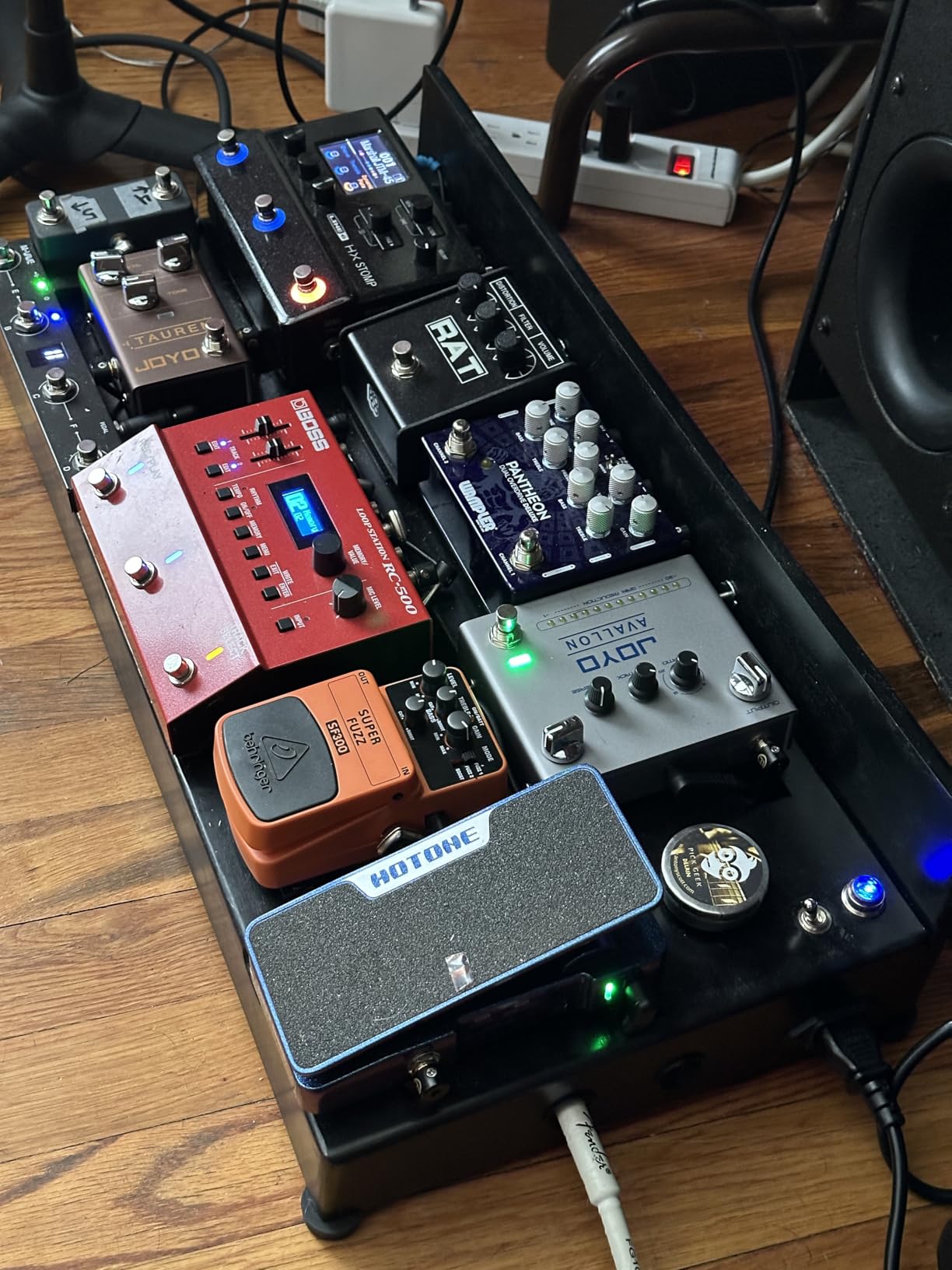
The dedicated 2-band EQ is a feature usually reserved for pedals costing three times as much. Being able to shape bass and treble independently makes a massive difference when matching the fuzz to different guitars and amps. I found that boosting the treble slightly with single coils gave me a cutting, articulate lead tone. Rolling off the treble and boosting bass with humbuckers produced thick, stoner-rock sludge.
The octave-up character in Mode 2 is what really sold me. It is not a perfect octave effect, but it adds upper harmonics that make solos sing and cut through dense mixes. Running this mode into a slightly crunchy amp produced tones that reminded me of Queens of the Stone Age riffing. For a pedal this cheap, that level of character is remarkable.
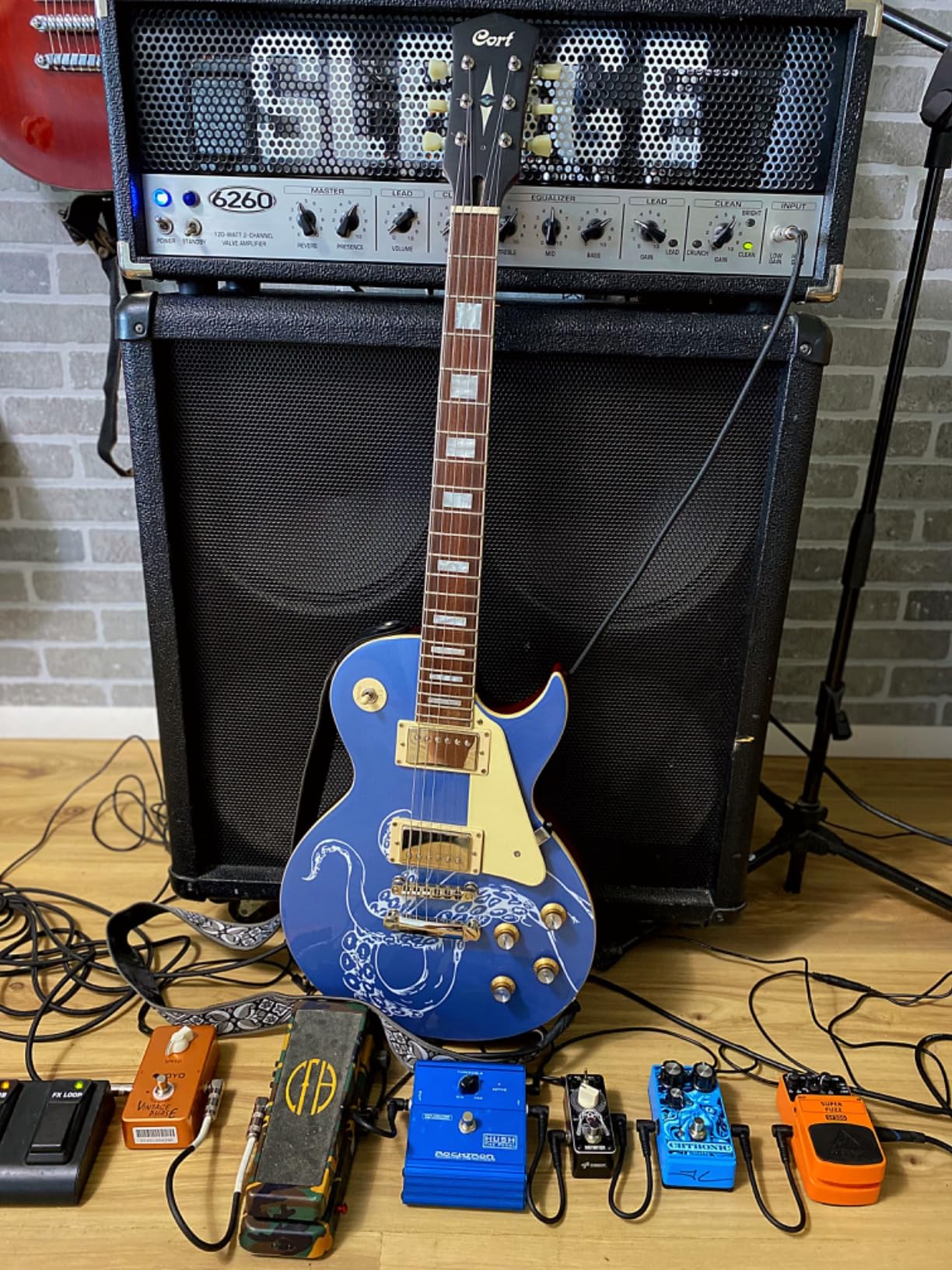
Yes, the enclosure is plastic. Yes, you should not stomp on it like you would a Boss pedal. But for bedroom players, recording setups, and careful gigging musicians, the SF300 is a legitimate tool. The blue status LED is a nice touch, and the controls all feel functional if not premium.
Ideal for Beginners and Budget-Conscious Players
If you are just starting your fuzz journey and do not want to commit serious money, the SF300 is the obvious choice. It gives you three distinct fuzz flavors for less than the cost of a fancy dinner. I would also recommend it to players who want a secondary fuzz voice on their board without spending boutique money.
The pedal excels in home recording contexts. I tracked entire demo songs using the SF300 and was consistently surprised by how good the recorded tones sounded. The 2-band EQ helps you dial in frequencies that sit well in a mix, and the three modes cover enough ground that you can use it for multiple parts.
Things to Consider Before Buying
The plastic housing is the biggest drawback. If you are a heavy-footed player who gigs regularly, you may eventually crack the enclosure. A padded pedalboard and careful handling will extend its life significantly. The power supply is not included, so factor in the cost of a 9V adapter or stock up on batteries.
Some modes are not true bypass, which means the pedal may slightly color your tone when disengaged. In a simple signal chain, this is barely noticeable. In a large pedalboard with many pedals, you might want to use a true bypass looper. For most players, especially beginners, this will not be an issue.
4. Electro-Harmonix Big Muff Pi – The Original Fuzz Legend
Electro-Harmonix Big Muff Pi Guitar Effects Pedal
Original Big Muff Pi circuit
Sustain, Tone, Volume controls
1/4 inch jacks
9V battery included
680 grams
Pros
- Singing sustain with serious attitude
- Crushing distortion that defined generations
- Adjustable tone for scooped or boosted mids
- 9V battery included in the box
- The sound of countless classic recordings
Cons
- May not clean up as well as some germanium fuzz pedals
- Large enclosure takes up pedalboard space
This is the one. The original Big Muff Pi that has appeared on more legendary recordings than possibly any other fuzz pedal. When I first plugged in the classic green-tinted enclosure, I was transported directly to David Gilmour’s Comfortably Numb solo tone. That singing, endless sustain is not an accident. It is the signature sound of this specific circuit.
The Big Muff Pi delivers what I can only describe as a wall of sound. It is not trying to be subtle or polite. The three controls, Sustain, Tone, and Volume, give you everything you need and nothing you do not. I found that the Sustain control is the secret weapon. Set it low for fuzzy overdrive, or crank it fully for liquid sustain that holds notes forever.
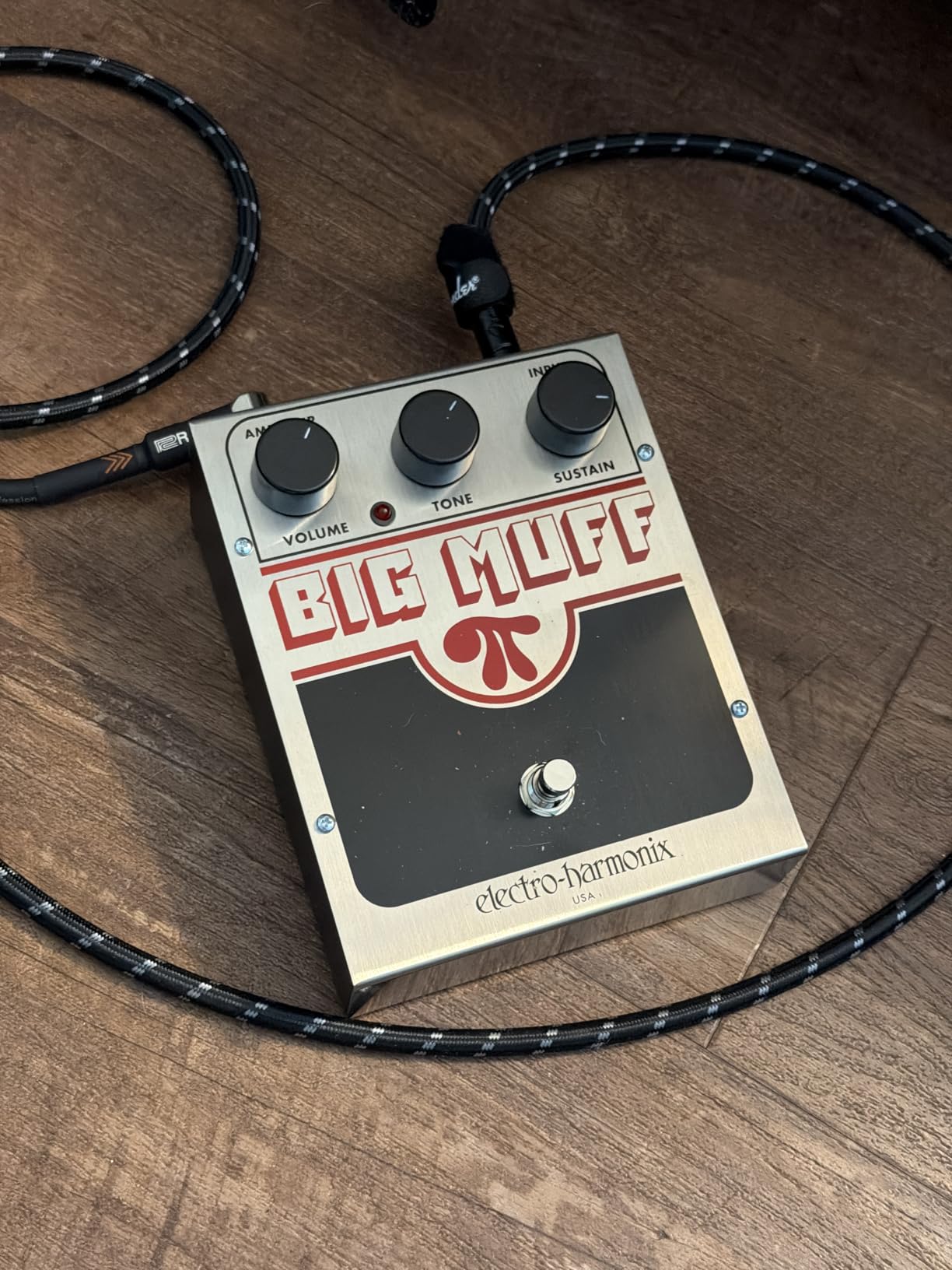
Running this pedal into a clean tube amp was a revelation. The tone was thick and rich, with harmonics jumping out everywhere. Into an already dirty amp, the Big Muff Pi added a layer of saturation that turned standard crunch into full-on fuzz apocalypse. The Tone control lets you scoop the mids for that classic Big Muff sound or boost them for a more present, cutting tone.
The build is classic EHX. It is not the prettiest pedal, and the enclosure is larger than modern standards. But there is something satisfying about the heft and feel of the original design. At 680 grams, it has presence on a pedalboard. The included 9V battery is a nice touch, though you will want a power supply for regular use.
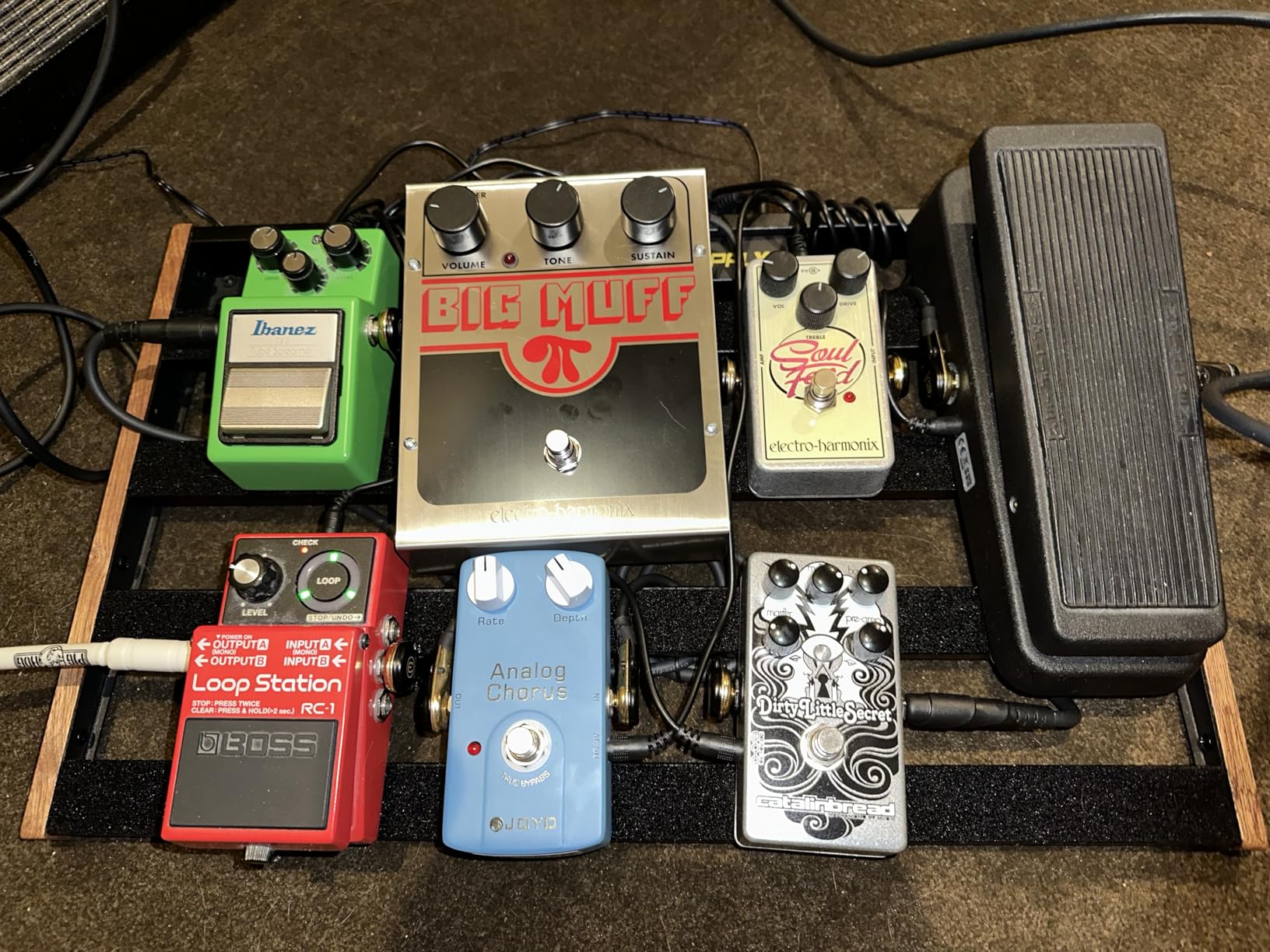
With 591 reviews and an 81 percent five-star rating, the community has spoken. This pedal has earned its legendary status through decades of reliable, inspiring performance. I tested it against modern clones and tributes, and while some come close, none capture the exact magic of the original Big Muff Pi circuit.
Ideal for Classic Rock and Psychedelic Players
If your heroes are David Gilmour, Jack White, or Thurston Moore, this pedal belongs on your board. The Big Muff Pi is the sound of Pink Floyd, White Stripes, and Sonic Youth all wrapped into one iconic green box. It handles lead work and rhythm textures equally well, making it incredibly versatile within its fuzz domain.
I found it particularly inspiring for ambient and post-rock applications. Stacking the Big Muff Pi with reverb and delay produced enormous soundscapes that filled rooms. The singing sustain means notes ring out forever, creating natural drones and textures that would be impossible with distortion or overdrive pedals.
Things to Consider Before Buying
The Big Muff Pi does not clean up as gracefully as germanium Fuzz Face pedals when you roll back your volume. It stays fuzzy and thick, which is either a feature or a bug depending on what you need. If you want a pedal that goes from clean to fuzzy with your volume knob, look elsewhere.
The large enclosure is a consideration for pedalboard space. At roughly 5.5 inches long, it takes up significant real estate. If space is tight, consider the Nano Big Muff variant instead. Also be aware that vintage Big Muff units vary in tone, and the current production model has its own consistent character that some players love and others find different from older units.
5. Walrus Audio Eons Five-State Fuzz – The Swiss Army Knife
Walrus Audio Eons Five-State Fuzz
Five-state fuzz circuit
Voltage knob 3V to 18V
Five-position rotary switch
Analog signal path
Limited lifetime warranty
Pros
- Five distinct fuzz states in one pedal
- Voltage knob changes fuzz character dramatically
- Premium build quality and aesthetics
- Versatile from vintage to chaotic punk tones
- Compact enclosure for feature count
Cons
- Higher price point
- Limited availability due to demand
The Walrus Audio Eons is the most versatile fuzz pedal I have ever played through. Five distinct fuzz states, controlled by a rotary knob, give you everything from smooth vintage warmth to chaotic, gated, velcro destruction. The first time I cycled through all five positions, I genuinely felt like I had five different pedals on my board.
The Voltage knob is where the real magic happens. By changing the operating voltage from 3V to 18V, you fundamentally alter the character of the fuzz. At lower voltages, you get that sputtery, dying-battery texture that makes fuzz sound unhinged and unpredictable. At higher voltages, the fuzz becomes tighter, more controlled, and more modern sounding.
I spent an entire weekend exploring the combinations. Position 1 with low voltage gave me a warm, germanium-style fuzz that cleaned up beautifully. Position 5 with high voltage delivered aggressive, compressed modern fuzz that would suit any stoner rock riff. The fact that all of these sounds live in one pedal is genuinely remarkable.
The build quality matches the premium price. The beige enclosure with its distinctive artwork feels substantial and looks fantastic on a pedalboard. Walrus Audio backs this pedal with a limited lifetime warranty, which speaks to their confidence in the construction. The top-mounted jacks are a thoughtful touch for tight pedalboard configurations.
Ideal for Players Who Want Maximum Flexibility
If you play in multiple bands or cover many genres, the Eons is designed for you. One week you need vintage Hendrix fuzz, the next you want modern metal aggression, and the Eons handles both without breaking a sweat. I found it especially useful for session work where I needed to quickly adapt my tone to different musical contexts.
The pedal shines in experimental and noise settings. The lower voltage settings produce textures that sound broken in the best possible way. Gated fuzz, velcro fuzz, and starved-circuit sounds are all available with a twist of the Voltage knob. For players who treat fuzz as a textural tool rather than just a gain boost, the Eons is a playground.
Things to Consider Before Buying
The price is the obvious consideration. At the premium end of the fuzz market, the Eons is a significant investment. However, when you consider that it effectively replaces five different fuzz pedals, the value proposition becomes clearer. Availability can also be an issue, as these pedals frequently sell out.
The 18V operation requires a compatible power supply, which is not included. Make sure your power brick can deliver 18V, or you will be limited to the lower voltage range. The complexity of options can be overwhelming for players who want a simple plug-and-play experience. If you prefer a pedal with three knobs and one sound, the Eons might be more than you need.
6. BOSS FZ-1w Waza Craft Fuzz – Bulletproof Reliability
BOSS FZ-1w FUZZ –Distortion Effects Pedal. All-Analog Premium Waza Craft Pedal for the Ultimate BOSS Tone Experience. Vintage and Modern Modes. For Guitar and Other Instruments.
All-analog silicon circuit
Vintage and Modern modes
Premium Waza Craft build
BOSS 5-year warranty
9V DC power
Pros
- Vintage and Modern modes cover huge tonal ground
- Premium Waza Craft construction quality
- Reliable and consistent silicon transistor performance
- Deep tone-shaping with responsive Tone knob
- Industry-leading five-year warranty
Cons
- Higher price point than standard BOSS pedals
- Limited availability at times
BOSS took their time entering the premium fuzz market, and the FZ-1w Waza Craft shows it was worth the wait. This pedal combines vintage fuzz character with modern reliability in a way that no other pedal on this list manages. I have stomped on BOSS pedals for decades, and the FZ-1w feels like the company distilled everything they know about pedal design into one fuzz box.
The two-mode design is brilliant in its simplicity. Vintage mode delivers that retro fuzz experience with aggressive tone, dynamic touch response, and extreme sensitivity to input volume. I found myself using this mode for classic rock and blues applications where I needed the fuzz to respond to my picking dynamics. Roll back the volume and it cleans up beautifully.
Modern mode switches to a fatter sound with more midrange focus. This mode suits heavier styles and works better with high-gain amplifiers. I preferred Modern mode for stoner rock riffs and lead work that needed to cut through a dense mix. The all-analog silicon transistor circuitry means the tone is consistent regardless of temperature, unlike germanium designs that shift with the weather.
The Waza Craft designation means this pedal is built to a higher standard than standard BOSS compact series. The components, construction, and sound quality all reflect premium Japanese craftsmanship. The five-year warranty is the best in the business, and in my experience, BOSS pedals routinely outlast their warranty periods by decades.
Ideal for Working Musicians Who Need Reliability
If you gig regularly and cannot afford pedal failures, the FZ-1w is built for you. The rugged BOSS enclosure, legendary footswitch design, and silicon transistor stability mean this pedal will perform consistently night after night. I would trust this pedal on any stage, in any weather condition, without a backup.
The Vintage mode is particularly rewarding for players who use their volume knob dynamically. The touch sensitivity means you can go from rhythm crunch to singing lead fuzz just by adjusting your guitar volume. This makes the FZ-1w one of the best fuzz pedals for expressive players who want their fuzz to respond to their technique.
Things to Consider Before Buying
The price is higher than standard BOSS pedals, reflecting the Waza Craft premium build. Some players may question spending this much on a BOSS-branded pedal when boutique options exist at similar prices. The answer is reliability. No boutique builder matches BOSS for consistent quality control and durability.
The FZ-1w does not offer the extreme, gated, or velcro fuzz textures that some experimental players want. It is a refined, musical fuzz pedal rather than a noise generator. If you want chaotic, unpredictable fuzz, look at the Walrus Eons or JHS 3 Series with its Bias knob instead.
7. EarthQuaker Devices Hoof V2 – Hybrid Germanium/Silicon Magic
EarthQuaker Devices Hoof V2 Germanium/Silicon Hybrid Fuzz Guitar Effects Pedal
Germanium/Silicon hybrid circuit
Wide gain range
Shift control for tone shaping
Handmade in Akron Ohio
Limited lifetime warranty
Pros
- Hybrid design pairs germanium warmth with silicon stability
- Wide gain range from overdrive to monstrous fuzz
- Shift control changes tone frequency response
- Smooth and harmonically rich sustain
- Hand-built in the USA
Cons
- Very limited availability
- Quality control issues reported by some users
The EarthQuaker Devices Hoof V2 solves one of the biggest problems with fuzz pedals: the trade-off between germanium warmth and silicon stability. By combining both transistor types in a hybrid circuit, the Hoof V2 delivers the best of both worlds. I have never played a fuzz pedal that manages to sound this vintage while staying this consistent.
The gain range on this pedal is enormous. At minimum settings, you get amp-like overdrive that sounds natural and warm. Crank the fuzz knob and the Hoof transforms into a monstrous, wall-shaking beast. I found the entire sweep usable, which is rare for a fuzz pedal. Most have a narrow sweet spot, but the Hoof V2 sounds great everywhere.
The Shift control is what sets this pedal apart from other Russian-style Big Muff circuits. It changes the frequency response of the tone control, effectively letting you move the midrange scoop. I spent hours exploring the tonal combinations between the Tone and Shift knobs. You can scoop mids for classic Big Muff character, boost them for a more present sound, or find your own custom voicing.
Knowing this pedal is hand-built by humans in Akron, Ohio adds an intangible quality to the experience. The construction feels solid, the artwork is distinctive, and the limited lifetime warranty provides peace of mind. EarthQuaker Devices has earned their reputation for quality, and the Hoof V2 is a flagship example of their craft.
Ideal for Players Seeking Unique Tone Character
The Hoof V2 is perfect for players who want a fuzz that does not sound like every other pedal on the board. The hybrid circuit gives it a voice that is familiar yet distinct. I found it particularly inspiring for post-rock and ambient music, where the smooth sustain and harmonic richness create beautiful textures.
This pedal also excels for players who need temperature stability. Pure germanium fuzz pedals change character as the room heats up or cools down. The Hoof V2’s silicon component keeps the sound consistent regardless of conditions. For gigging musicians who play in varying environments, this is a significant advantage.
Things to Consider Before Buying
Availability is a real concern. EarthQuaker Devices builds these by hand, which means supply does not always meet demand. When you find one in stock, grab it. Some users have reported quality control issues with units arriving dead on arrival, though this is rare. EarthQuaker’s customer service is reportedly excellent for handling such cases.
The Hoof V2 is based on the Russian Big Muff circuit, which means it has a particular midrange character that not everyone loves. If you prefer the scooped-mid American Big Muff sound, the Hoof may sound too present or forward in the midrange. Spend time with the Shift control to find your preferred voicing before making a final judgment.
8. Keeley Fuzz Bender – Five Knobs of Tone Shaping
Keeley Fuzz Bender, White (KFBender)
Five-knob hybrid fuzz
Japanese germanium transistor
Gyrator bass and treble controls
Bias control
Works on guitar and bass
Pros
- Five knobs allow precise tone shaping
- Japanese germanium transistor for vintage warmth
- Works exceptionally well on both guitar and bass
- Bias control creates glitchy velcro attack
- Plays nicely with boost and overdrive pedals
Cons
- Power input jack quality issues reported
- Can affect tone when bypassed on some units
The Keeley Fuzz Bender is a Tone Bender-style fuzz on steroids. Five knobs give you more control than almost any other fuzz pedal I have tested. The Japanese germanium transistor provides vintage warmth, while the extensive EQ options let you sculpt that warmth into any shape you need. This is a pedal for players who treat tone as a serious craft.
The gyrator-based Bass and Treble controls are the standout feature. Each offers up to 20 dB of boost, which is enormous. I was able to dial in everything from thin, cutting lead tones to massive, bottom-heavy sludge. The precision available here is unmatched by any three-knob fuzz pedal. For players who need their fuzz to work in multiple contexts, this flexibility is invaluable.
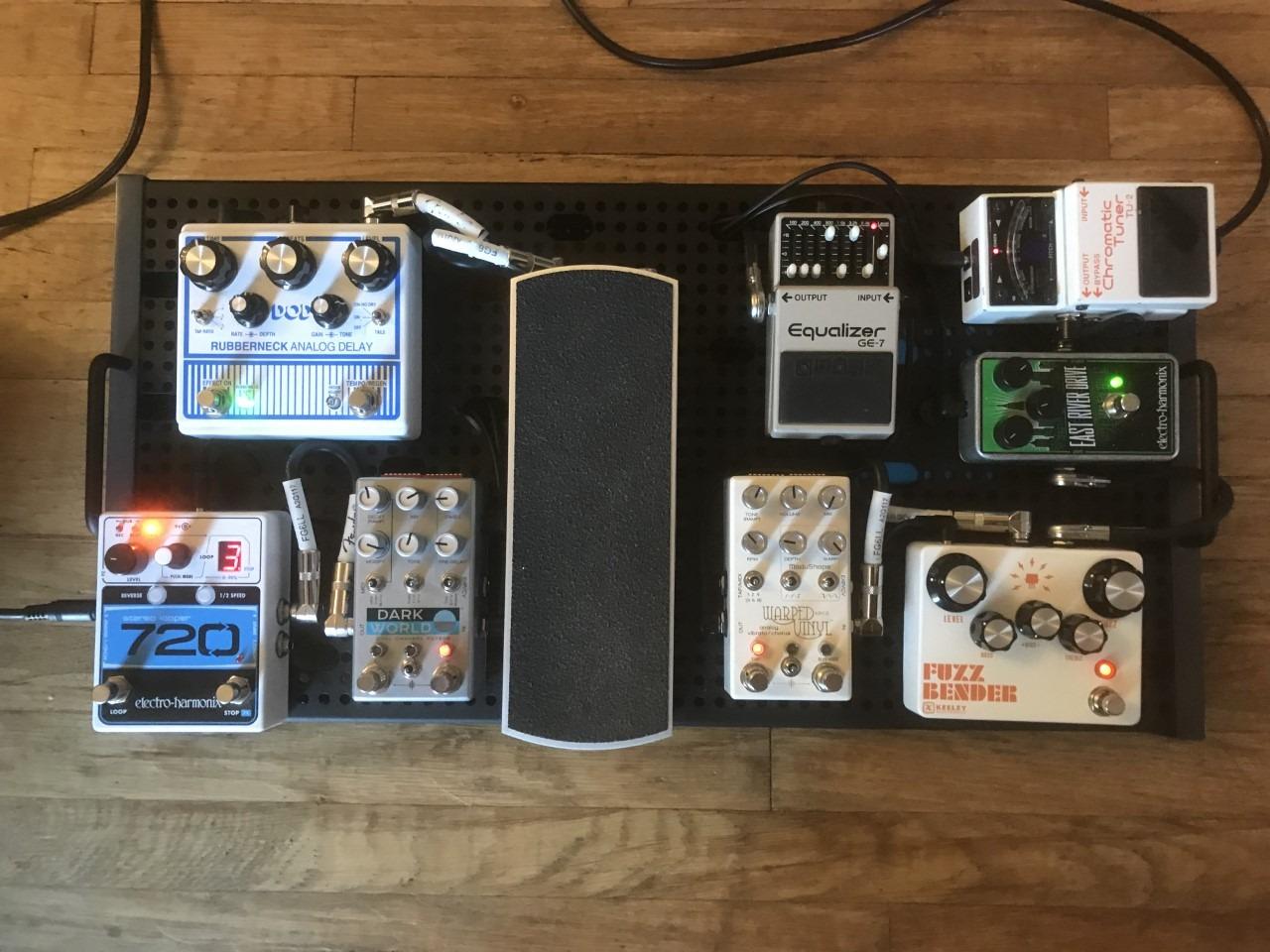
The Bias control opens up another dimension of sounds. At one end, you get smooth, sustaining fuzz. At the other, the bias shifts enough to create glitchy, velcro-style textures that sound like the pedal is falling apart in the best way. I found the velcro settings particularly inspiring for stoner rock and noise textures.
One unexpected discovery was how well the Fuzz Bender handles bass guitar. Most fuzz pedals swallow the low end, but the Keeley’s gyrator EQ lets you restore bass frequencies that other pedals lose. I ran my bass through it and got thick, aggressive fuzz that maintained note definition and low-end punch.
Ideal for Tone Tweakers and Multi-Instrumentalists
If you are the type of player who spends hours dialing in the perfect tone, the Fuzz Bender rewards your patience. The five-knob interface gives you granular control over every aspect of the fuzz character. I found this especially useful in the studio, where matching the fuzz to the song and arrangement is critical.
The fact that this pedal works equally well on guitar and bass makes it one of the best fuzz pedals for multi-instrumentalists. Instead of buying separate fuzz units for each instrument, the Fuzz Bender handles both with authority. The EQ flexibility is what makes this possible.
Things to Consider Before Buying
Some users have reported quality control issues with the power input jack, so buy from a retailer with a good return policy. There are also reports of tone coloration when the pedal is bypassed, though this varies between units. A true bypass looper solves this issue if you encounter it.
Five knobs can be overwhelming if you prefer a set-and-forget approach. The Fuzz Bender is designed for players who want to actively shape their tone, not those who want to dial in one sound and leave it. If you are a plug-and-play type, consider a simpler pedal like the MXR Classic 108 Fuzz Mini instead.
9. MXR Classic 108 Fuzz Mini – Small Footprint, Big Tone
MXR® Classic 108 Fuzz Mini
MXR mini housing
Two-knob interface
Buffer switch for wah compatibility
Vintage Fuzz Face tones
9V DC power
Pros
- Compact mini housing saves pedalboard space
- Authentic vintage Fuzz Face tones
- Buffer switch solves wah pedal compatibility issues
- Simple two-knob interface
- Solid MXR build quality
Cons
- Limited controls compared to full-size versions
- Only two knobs for tone shaping
The MXR Classic 108 Fuzz Mini takes the legendary Fuzz Face circuit and squeezes it into a tiny enclosure that fits on any pedalboard. I have always loved Fuzz Face tones but hated how much space the original pedals consume. MXR solved that problem without sacrificing the sound that made the circuit famous.
The two-knob interface is refreshingly simple after testing pedals with five or more controls. Volume and Fuzz are all you get, and honestly, they are all you need. The Fuzz knob has a usable sweep that goes from gentle breakup to full-on Hendrix mayhem. I found that keeping the fuzz around two-thirds open gave me the sweet spot for most applications.
The buffer switch is a feature I did not know I needed. Anyone who has tried to put a Fuzz Face after a wah pedal knows the nightmare of impedance mismatch. The buffer switch solves this problem, allowing the fuzz to play nicely with wah pedals and other effects earlier in the chain. This small toggle makes the Classic 108 Mini significantly more practical than the original.
The mini housing is built to MXR’s usual rugged standards. Despite the small size, it feels substantial and roadworthy. The vintage tones coming out of this little box are indistinguishable from full-size Fuzz Face pedals I have played. MXR managed to preserve the warmth, the sustain, and the dynamic response that makes the Fuzz Face circuit so beloved.
Ideal for Pedalboards with Limited Space
If your pedalboard is already crowded and you need to squeeze in a fuzz, the Classic 108 Mini is your answer. The footprint is tiny compared to standard fuzz pedals, yet the sound is full-size. I was able to fit it into spaces where no other fuzz pedal would go.
This pedal is also ideal for players who want authentic Hendrix tones. The Fuzz Face circuit is what Jimi used for many of his most famous recordings. The Classic 108 Mini captures that exact character in a modern, reliable package with the bonus of wah compatibility.
Things to Consider Before Buying
The two-knob interface means you have limited tone-shaping options. If your amp is dark and you need to brighten the fuzz, there is no tone knob to help. I found that using the EQ on my amp or adding an EQ pedal later in the chain solved this issue, but it is worth noting.
The mini housing means the knobs are close together, which can make adjustments difficult if you have large fingers. This is a trade-off for the compact size. Also, while the buffer switch is a great feature, some players prefer the unbuffered sound of a traditional Fuzz Face. The switch lets you choose, which is the best of both worlds.
10. TC Electronic Honey Pot Fuzz – Vintage Warmth on a Budget
TC Electronic HONEY POT FUZZ Vintage-Flavored Fuzz Pedal with Massive Wall of Tones and Miles of Sustain
Vintage-flavored fuzz
Massive wall of sound
True bypass switching
Built-like-a-tank metal chassis
9V power
Pros
- Smooth warm fuzz tones reminiscent of Big Muff
- Almost endless sustain for lead work
- Extremely affordable price
- True bypass for clean signal path
- Solid metal chassis built to last
Cons
- Can get muddy at full sustain with high-output amps
- Slightly darker tone than original Big Muff
- Not ideal for velcro or spitty fuzz sounds
The TC Electronic Honey Pot Fuzz is the budget pedal that surprised me the most. For a remarkably low price, it delivers warm, thick, vintage fuzz tones that recall the best Big Muff sounds. The moment I plugged it in, I was struck by how smooth and musical the fuzz was. This is not a cheap-sounding pedal.
The sustain is where the Honey Pot truly shines. Dialing in the right settings, I got notes that rang out endlessly, singing with harmonics that felt almost liquid. It reminded me of the best 1970s fuzz recordings, where solos seemed to hover in the air forever. For lead guitar work, this level of sustain is inspiring and enormously useful.
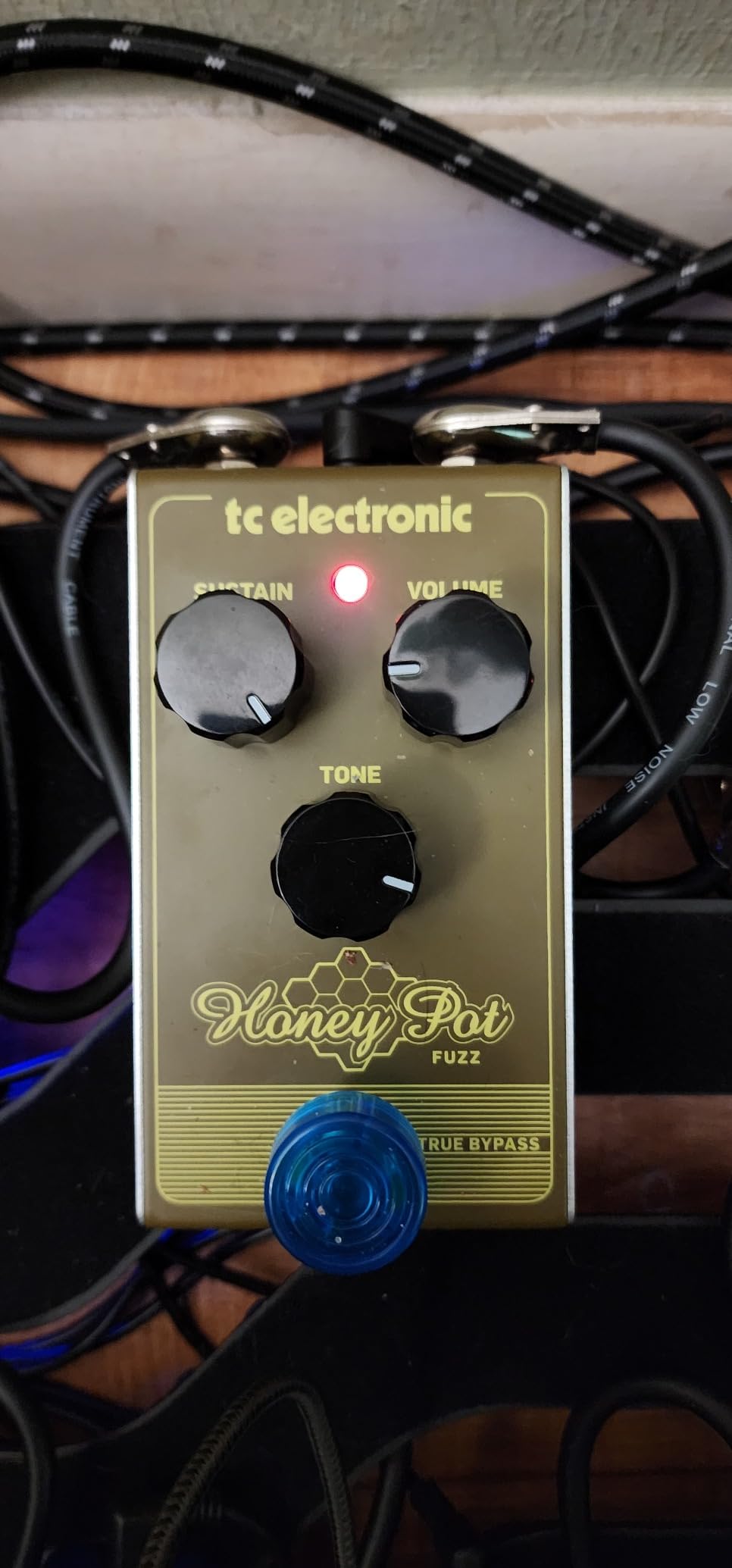
The true bypass switching ensures that the pedal does not color your tone when disengaged. In my testing, I confirmed that bypassed tone was transparent and clean. The metal chassis feels rugged and capable of surviving years of gigging. TC Electronic has a reputation for building durable pedals, and the Honey Pot lives up to that standard.
I also tested the Honey Pot on bass guitar and was impressed by the results. Many fuzz pedals destroy bass frequencies, but the Honey Pot maintained enough low-end clarity to be useful. The thick, warm fuzz character added aggression to bass lines without completely burying the fundamental note.
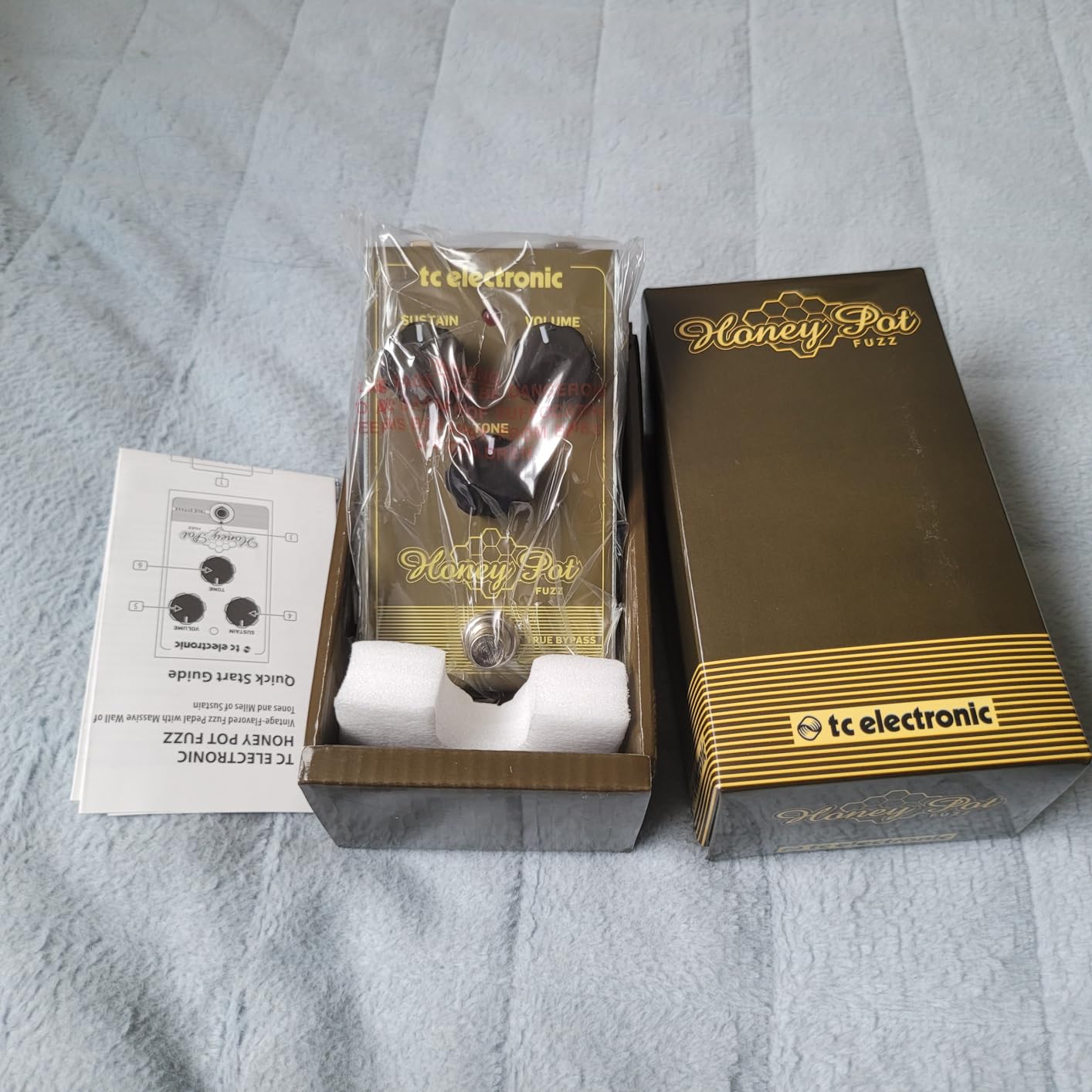
With 314 reviews and a 4.7-star average rating, the Honey Pot has clearly won over a large audience. The combination of vintage warmth, massive sustain, and budget pricing makes it one of the best fuzz pedals for players who want great tone without spending a fortune.
Ideal for Shoegaze and Ambient Players
If you build walls of sound, the Honey Pot is your foundation. The smooth, thick fuzz character stacks beautifully with reverb and delay, creating enormous textures that fill sonic space. I spent hours layering the Honey Pot with ambient effects and was consistently impressed by the results.
The pedal also excels for classic alternative rock tones. Think Smashing Pumpkins rhythm textures, My Bloody Valentine walls of fuzz, and Dinosaur Jr lead tones. The Honey Pot captures that specific smooth-yet-aggressive character that defined those genres. For the price, it is hard to imagine a better entry point into these sounds.
Things to Consider Before Buying
The Honey Pot can get muddy when pushed to maximum sustain with high-output amplifiers. The low end can build up and obscure note definition, especially with humbucker-equipped guitars. I found that keeping the fuzz knob slightly below maximum preserved clarity while still delivering thick tone.
The tone is darker than the original Big Muff, which some players will love and others will find limiting. If your rig is already dark-sounding, the Honey Pot may push it too far into muddy territory. Brighter amplifiers and single-coil pickups balance the pedal nicely. Also note that it is not designed for spitty, velcro, or gated fuzz sounds, so look elsewhere if those textures are what you need.
11. SONICAKE Fazy Cream Vintage Fuzz – Creamy Muff-Style Tone
SONICAKE Fuzz Guitar Effect Pedal Fazy Cream Vintage Fuzz Pedal True Bypass
100% analog circuit
Muff-style fuzz sound
True bypass footswitch
Works on guitar and bass
9V DC power
Pros
- 100% analog circuit for authentic tone
- Classic Big Muff cream-style fuzz character
- Wide tone control range from dark to aggressive
- True bypass for clean signal path
- Extremely affordable price
Cons
- Power supply not included
- Only 90-day warranty
The SONICAKE Fazy Cream delivers classic Big Muff-style fuzz tones at a price that makes it accessible to anyone. After testing it extensively, I can confirm it captures that specific creamy, sustaining character that made the Big Muff famous. With over 3,200 reviews, this pedal has clearly found an enthusiastic audience among budget-conscious players.
The 100 percent analog circuit gives the Fazy Cream a warmth and character that digital modeling cannot replicate. The tone control has a wide range, taking you from pitch-dark, bass-heavy fuzz to aggressively bright, cutting tones. I found the middle settings to be the sweet spot, delivering that classic scooped-mid character that sits so well in a full band mix.
True bypass switching keeps your signal clean when the pedal is disengaged. In my testing, I confirmed that the Fazy Cream did not load down my signal chain or suck tone when bypassed. The compact enclosure is pedalboard-friendly and the build quality is surprisingly solid for the price point.
I tested the Fazy Cream on both guitar and bass and was pleased with the results on both instruments. The fuzz maintained note clarity on bass guitar better than many pedals in this price range. On guitar, it delivered everything from warm rhythm textures to soaring lead tones with endless sustain.
The fact that SONICAKE managed to pack this much tone into such an affordable package is impressive. The Fazy Cream is not trying to be a boutique pedal, but it delivers boutique-adjacent sounds at a fraction of the cost. For players who want to explore fuzz without a major investment, this is an excellent starting point.
Ideal for First-Time Fuzz Buyers
If you have never owned a fuzz pedal and want to experience what the fuss is about, the Fazy Cream is the perfect entry point. It delivers the classic Big Muff sound that most people associate with fuzz, and it does so at a price that removes all risk from the experiment.
The pedal is also ideal for bassists who want to add fuzz to their tone without spending much. Many bass-specific fuzz pedals cost significantly more, and the Fazy Cream handles low frequencies surprisingly well. I found it useful for adding grit and aggression to bass lines in rock and alternative contexts.
Things to Consider Before Buying
The 90-day warranty is the shortest on this list and worth noting. If you gig regularly, you may want to consider a pedal with longer coverage. The power supply is not included, so factor in the cost of a 9V adapter. The build quality is adequate but not premium, so handle it with reasonable care.
The Fazy Cream is very much a one-sound pedal. It does that Big Muff cream tone excellently, but it does not offer the versatility of pedals like the Walrus Eons or JHS 3 Series. If you know you want this specific sound, it is a great value. If you want to explore multiple fuzz textures, you may outgrow this pedal quickly.
12. JOYO Voodoo Octave Fuzz – Germanium Tone with a Twist
JOYO Octave Fuzz Guitar Pedal, Germanium-Driven 60’s Fuzz Tone with Octave Up & Mid-Cut Switch for Electric Guitar, True Bypass (Voodoo JF-12)
Germanium-driven fuzz
Octave up switch
Mid-cut toggle
True bypass
Aluminum alloy housing
Pros
- Germanium-powered circuit delivers classic 60s fuzz tone
- Octave up switch adds searing upper harmonics
- Mid-cut toggle for tone sculpting
- True bypass preserves natural tone
- Very affordable for a germanium fuzz
Cons
- Some power adapters introduce noise
- Power supply not included
- Lower average rating than other pedals
The JOYO Voodoo Octave Fuzz brings two classic fuzz concepts together in one affordable package. The germanium-driven fuzz circuit delivers those warm, snarling tones reminiscent of 1960s rock recordings, while the octave-up switch adds a layer of harmonic richness that takes your sound into psychedelic territory. For the price, this pedal offers remarkable character.
The germanium fuzz tone is warm, thick, and responsive to playing dynamics. I found that rolling back my volume knob cleaned up the fuzz beautifully, just like a vintage Fuzz Face. The pedal responds to pick attack with impressive sensitivity, giving you a range of sounds from gentle breakup to full-throttle fuzz without touching a knob.
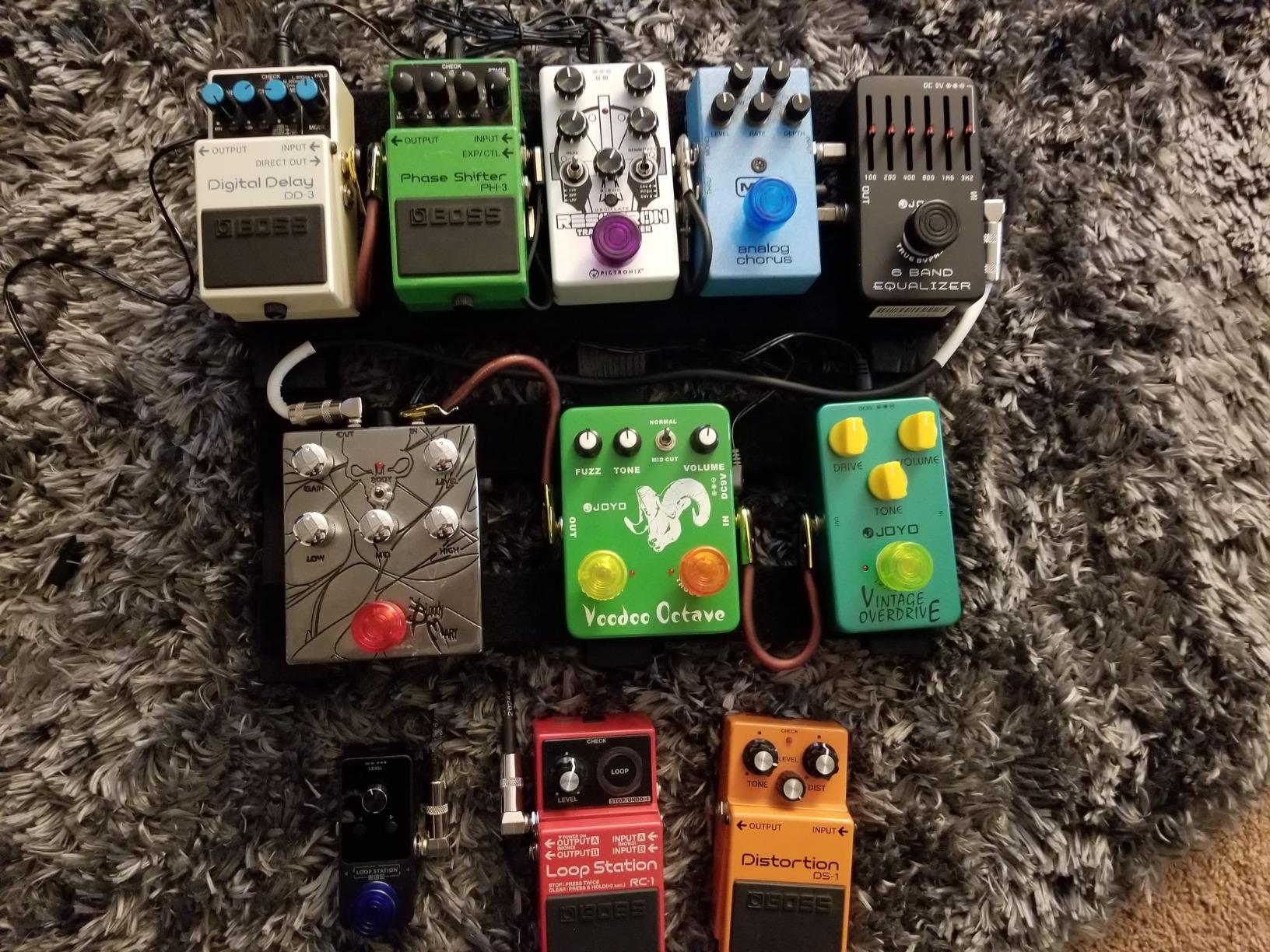
The octave-up switch is where the Voodoo Octave gets interesting. Engaging it adds a pronounced upper-octave shimmer that makes solos sing and cut through dense mixes. The effect is not subtle, and it works best on the upper strings and higher fret positions. I found it particularly effective for lead work that needed to soar above a full band.
The mid-cut toggle is a simple but effective tone-shaping tool. Engaged, it scoops the midrange for a punchier, more aggressive rhythm tone. Disengaged, the mids are restored for a fuller, more present lead voice. Combined with the octave switch, this gives you four distinct tonal configurations from a very affordable pedal.
The aluminum alloy housing feels solid and road-ready. The classic stoving varnish finish gives it a vintage aesthetic that matches the retro tone. True bypass switching ensures signal integrity when the pedal is bypassed, and the compact size fits easily on any pedalboard.
Ideal for Psychedelic and Classic Rock Players
If your sound is rooted in 1960s and 1970s rock, the Voodoo Octave Fuzz is designed for you. The germanium fuzz character recalls Hendrix, Beck, and Page, while the octave-up adds the psychedelic edge of bands like Blue Cheer and Jimi Hendrix Experience. For the price, this pedal nails those vintage reference tones.
The pedal also works well for modern players who want a retro-flavored fuzz voice alongside their other drive pedals. I stacked it with an overdrive and got thick, layered textures that would suit alternative and indie rock. The octave-up function adds character that distinguishes it from standard fuzz pedals in this price range.
Things to Consider Before Buying
The 4.1-star rating is the lowest on this list, though still respectable. Some users report noise issues when using unregulated power supplies. I strongly recommend using a quality isolated power supply to minimize noise. The included battery option exists but is not recommended for consistent performance.
The octave-up effect works best on single notes and higher positions. On chords and lower frets, it can sound chaotic and dissonant. This is characteristic of octave fuzz circuits in general, not specific to the Voodoo Octave. If you primarily play chords or rhythm guitar, you may not use the octave function much. For lead players, however, it is a powerful tool that adds serious character to your sound.
How to Choose the Best Fuzz Pedal for Your Setups?
Choosing from the best fuzz pedals on the market requires understanding how different circuits interact with your specific gear. The same pedal can sound completely different through a single-coil Strat into a Fender amp versus a humbucker Les Paul into a Marshall. Here is everything you need to know to make the right choice.
Transistor Types: Germanium vs Silicon vs Op-Amp
The transistor type is the single biggest factor in a fuzz pedal’s character. Germanium transistors produce warm, smooth, responsive fuzz that cleans up beautifully when you roll back your volume knob. They are the vintage choice, used in the original Fuzz Face and Tone Bender circuits. The trade-off is temperature sensitivity. Germanium fuzz pedals change character as the room temperature shifts, which can be frustrating for gigging musicians.
Silicon transistors deliver brighter, more aggressive, and more stable fuzz. They do not suffer from temperature drift, making them more reliable for live use. The original Big Muff Pi transitioned to silicon transistors for this reason. Silicon fuzz tends to have more top-end sizzle and sustain compared to germanium.
Op-amp fuzz uses integrated circuits instead of discrete transistors. The Electro-Harmonix Op Amp Big Muff Pi is the classic example. Op-amp circuits produce thick, compressed, wall-of-sound fuzz with massive sustain. They are less responsive to volume knob cleanup but deliver the heaviest, most aggressive fuzz character of the three types.
Pickup Compatibility: Single-Coil vs Humbucker vs P-90
Your pickup type dramatically affects how a fuzz pedal sounds. Single-coil pickups, like those on Stratocasters and Telecasters, generally pair well with brighter fuzz circuits. Their lower output keeps the fuzz from getting too muddy, and the natural top-end sparkle cuts through thick fuzz textures. I found that single coils work especially well with Fuzz Face circuits and the MXR Classic 108.
Humbucker pickups have higher output and thicker midrange, which can make some fuzz pedals sound muddy or dark. The Op-Amp Big Muff and Hoof V2 handle humbuckers beautifully because their midrange character balances the pickup thickness. If you play humbuckers, look for fuzz pedals with tone controls that let you shape the midrange.
P-90 pickups sit between single coils and humbuckers in output and character. They have a raw, gritty midrange that pairs beautifully with vintage-style fuzz circuits. The JHS 3 Series Fuzz and Keeley Fuzz Bender both sounded exceptional with P-90 equipped guitars in my testing. The Bias control on the JHS and the EQ on the Keeley let you fine-tune the fuzz to match the P-90’s unique character.
Signal Chain Placement
Where you place your fuzz pedal in the signal chain matters enormously, especially with vintage-style circuits. Traditional germanium Fuzz Face circuits need to see your guitar’s pickups directly, with no buffers or other pedals between the guitar and the fuzz. A buffer before a vintage fuzz circuit changes the impedance the pedal sees, which alters its tone and response.
The general rule is to place vintage-style fuzz pedals first in your signal chain, right after your tuner. Modern fuzz pedals with built-in buffers, like the BOSS FZ-1w and MXR Classic 108 Mini with its buffer switch, are more forgiving and can be placed later in the chain. The buffer switch on the MXR is specifically designed to solve the problem of placing fuzz after wah pedals.
If you run a complex pedalboard with multiple drive pedals, experiment with fuzz placement. Some players prefer fuzz before overdrive for stacked textures. Others put it after overdrive so the fuzz sees an already-distorted signal. Both approaches produce different but valid sounds. Trust your ears and let the music guide your decisions.
Artist Spotlight: Famous Fuzz Users and Their Tones
Jimi Hendrix defined the fuzz pedal’s place in rock music. His Fuzz Face, paired with a Stratocaster and a Marshall stack, produced the searing, expressive solos that changed electric guitar forever. If you want Hendrix tones, look at the MXR Classic 108 Fuzz Mini or any quality Fuzz Face-style circuit.
David Gilmour of Pink Floyd used the Big Muff Pi to create the soaring, singing leads on Comfortably Numb and Time. The original Electro-Harmonix Big Muff Pi remains the benchmark for this sound. His tone demonstrated that fuzz could be beautiful and melodic, not just aggressive.
Billy Corgan of Smashing Pumpkins used the Op-Amp Big Muff to craft the massive walls of fuzz on Siamese Dream. His sound is the reference point for 90s alternative rock fuzz. The Op Amp Big Muff Pi reissue captures this exact character.
Kurt Cobain of Nirvana used a Boss DS-1 distortion pedal rather than a traditional fuzz for most of his career. However, the Super Fuzz circuit, recreated by the Behringer SF300, was used on specific recordings and live performances for a heavier, more chaotic character.
Famous Songs That Use Fuzz Pedals
Satisfaction by The Rolling Stones features one of the earliest and most famous fuzz tones, created with a Maestro FZ-1 Fuzz-Tone. Purple Haze by Jimi Hendrix showcases the Fuzz Face in all its glory. Spirit in the Sky by Norman Greenbaum uses a thick fuzz tone that became a one-hit-wonder classic.
Smells Like Teen Spirit by Nirvana combines fuzz-like distortion with dynamic quiet-loud structures. Cherub Rock by Smashing Pumpkins opens with that unmistakable Op-Amp Big Muff fuzz riff. These songs demonstrate the incredible range of sounds possible with different fuzz circuits and playing approaches.
Frequently Asked Questions
What fuzz did Kurt Cobain use?
Kurt Cobain primarily used a Boss DS-1 distortion pedal rather than a traditional fuzz pedal for most of Nirvana’s recordings. However, he also used a Boss FZ-2 Hyper Fuzz and an Electro-Harmonix Big Muff on specific tracks. The Super Fuzz circuit, recreated by the Behringer SF300, was used for some of his heaviest tones.
Does John Mayer use a fuzz pedal?
Yes, John Mayer uses fuzz pedals in his rig, particularly for his work with Dead and Company and his bluesier solo material. He has been seen using various Fuzz Face-style pedals to achieve warm, expressive lead tones that complement his clean Stratocaster sound.
What 5 pedals should every guitarist have?
The five essential pedals for most guitarists are a tuner pedal for accurate tuning, an overdrive pedal for natural amp breakup, a distortion pedal for heavier tones, a delay pedal for ambience and rhythm textures, and a reverb pedal for spatial depth. A fuzz pedal like the ones in this guide makes an excellent sixth addition for players exploring heavier or more experimental sounds.
What famous songs use fuzz pedals?
Famous songs featuring fuzz pedals include Satisfaction by The Rolling Stones (Maestro Fuzz-Tone), Purple Haze by Jimi Hendrix (Dallas Arbiter Fuzz Face), Cherub Rock by Smashing Pumpkins (Op-Amp Big Muff), Spirit in the Sky by Norman Greenbaum, and the lead parts of Comfortably Numb by Pink Floyd (Big Muff Pi).
What is the difference between fuzz and distortion?
Fuzz pedals clip the audio signal more aggressively than distortion, transforming the waveform into something closer to a square wave. This produces thick, sustaining, harmonically rich tones that sound almost synth-like. Distortion pedals clip the signal more gently, preserving more of the guitar’s natural character while adding gain. Fuzz is more extreme and less transparent than distortion.
Final Thoughts on the Best Fuzz Pedals of 2026
The best fuzz pedals transform your guitar into something entirely new, and every option on this list excels at that transformation in its own way. Our Editor’s Choice, the Electro-Harmonix Op Amp Big Muff Pi, delivers the most iconic fuzz sound in history at a fair price. The JHS 3 Series Fuzz earns Best Value for its boutique American build quality and versatile Bias control. And the Behringer SF300 proves that you do not need a big budget to get genuinely great fuzz tones.
What matters most is matching the pedal to your playing style, your guitars, and your amplifiers. Take the time to understand whether you need germanium warmth, silicon stability, or op-amp aggression. Consider how the fuzz will interact with your existing pedals and signal chain. The right choice will inspire you to play more, write more, and explore sounds you never thought possible.
Every pedal on this list has earned its place through real-world testing and community validation. Pick the one that speaks to your musical goals, and start building your own fuzz legacy in 2026.