I still remember the first time I tripped over my own guitar cable mid-solo during a small club gig. The cable yanked out of my guitar, the amp went silent, and I stood there feeling like an idiot while the drummer kept playing. That was the night I decided to go wireless.
If you are here, you probably had a similar moment, or you are just tired of dealing with tangled cables, restricted movement, and worn-out jacks. The good news is that wireless guitar systems have gotten incredibly good. The best guitar wireless systems in 2026 deliver sound quality that rivals premium cables, with latency so low you will never notice it.
A wireless guitar system is a device that transmits your guitar’s audio signal to your amp or pedalboard without a physical cable. It uses radio frequencies like 2.4GHz, 5.8GHz, or UHF to send the signal from a transmitter plugged into your guitar to a receiver connected to your equipment. Modern digital systems convert your analog signal, broadcast it via radio frequency, and decode it back to analog with virtually zero loss.
Our team tested 10 of the most popular wireless guitar systems on the market, ranging from a $29.99 budget unit to a $599 professional dual-band system. We used them at home, in rehearsal studios, and on small club stages. We checked latency, range, battery life, tone quality, and how they held up in WiFi-heavy environments. We also read through thousands of real user reviews from Amazon, Reddit forums like r/guitars and r/Guitar, and The Gear Page to find out what actual gigging musicians think.
Whether you are a bedroom guitarist who wants to simplify their setup, a weekend warrior playing local bars, or a touring professional who needs bulletproof reliability night after night, this guide will help you find the right system. Let us break down the top picks.
Table of Contents
Top 3 Picks for Best Guitar Wireless Systems
If you want to skip the deep dive and just grab a great system, these three cover every budget and use case. The Shure GLXD16+ is our top pick for professionals and serious gigging musicians. The Xvive AC58 offers the best balance of price and performance. And the AKLOT 2.4GHz is the budget champion that actually works well.

Shure GLXD16+ Dual Band Wireless
- Dual 2.4GHz and 5.8GHz bands
- 12-hour battery
- Auto frequency management

Xvive AC58 5.8GHz Wireless System
- 5.8GHz avoids WiFi interference
- 24-bit audio
- Charging case included

10 Best Guitar Wireless Systems in 2026
Here is a quick comparison of all 10 systems we reviewed. Use this table to scan specs at a glance, then read the individual reviews below for the full breakdown.
| Product | Specifications | Action |
|---|---|---|
| Shure GLXD16+ Dual Band Wireless |
|
Check Latest Price |
 Boss WL-50 Pedal Wireless System Boss WL-50 Pedal Wireless System |
|
Check Latest Price |
 Boss WL-20 Compact Wireless System Boss WL-20 Compact Wireless System |
|
Check Latest Price |
| Xvive AC58 5.8GHz Wireless System |
|
Check Latest Price |
 Positive Grid Spark Link Wireless Positive Grid Spark Link Wireless |
|
Check Latest Price |
 Xvive U2 2.4GHz Wireless System Xvive U2 2.4GHz Wireless System |
|
Check Latest Price |
 JOYO JW-06 5.8GHz Wireless System JOYO JW-06 5.8GHz Wireless System |
|
Check Latest Price |
 LEKATO 5.8GHz Wireless Guitar System LEKATO 5.8GHz Wireless Guitar System |
|
Check Latest Price |
 SWIFF UHF Wireless Guitar System SWIFF UHF Wireless Guitar System |
|
Check Latest Price |
| AKLOT 2.4GHz Wireless Guitar System |
|
Check Latest Price |
1. Shure GLXD16+ Dual Band Pro Digital Wireless System – Best Overall
Shure GLXD16+ Dual Band Pro Digital Wireless System with Pedal Receiver for Guitar & Bass – 12-Hour Battery Life, 100 ft Range | Includes WA305 Premium Cable with 1/4″ Jack
Dual band 2.4/5.8GHz
12hr battery life
Pedal-style receiver
103dB signal-to-noise ratio
Up to 16 systems
Pros
- Dual band technology avoids WiFi interference
- Superior transparent digital audio
- 12-hour battery with 15-min quick charge
- Auto-pairing setup
- License-free worldwide
- Scalable to 16 systems
Cons
- Premium price point
- Needs Frequency Manager for multi-system setups
After using the Shure GLXD16+ for three months of weekly gigs, I can confidently say this is the most reliable wireless system I have ever played through. The dual band technology is the star of the show. It constantly scans both the 2.4GHz and 5.8GHz bands and automatically switches to whichever is cleaner. I have not experienced a single dropout, even in a venue packed with WiFi-hungry phones and tablets.
The pedal-style receiver sits right on my pedalboard and looks like any other effects pedal. It blends in perfectly. The built-in tuner display is a nice touch, and the fact that it charges the transmitter when docked means I never have to worry about remembering to charge separately. Shure rates the battery at 12 hours, and in my testing I consistently got 10 to 11 hours of real-world use.
Sound quality is where the GLXD16+ really separates itself from the pack. With a 103dB signal-to-noise ratio, the audio is dead quiet. No hiss, no compression artifacts, no tone coloring. My guitar sounds exactly the same as it does through a premium cable. The 15-minute quick charge delivering 1.5 hours of playtime has saved me more than once when I forgot to charge before a gig.
The main drawback is the price. At $599, this is a serious investment. You also need the additional Frequency Manager GLXD+ FM if you want to run multiple systems simultaneously, which adds to the cost. But if you gig professionally and need something that just works every single night, the GLXD16+ is worth every penny. Forum users on The Gear Page consistently recommend Shure as the gold standard for pro wireless.
Best for Professional Gigging and Touring
This system is built for musicians who cannot afford a single dropout during a show. If you play 50+ gigs a year, tour regularly, or perform in venues with heavy wireless interference, the GLXD16+ gives you peace of mind that no budget system can match.
The ability to scale up to 16 simultaneous systems also makes it ideal for bands with multiple wireless instruments or for venues running several wireless channels at once.
Who Should Skip This One
If you are a bedroom player or only jam occasionally at home, spending $599 on a wireless system is overkill. You can get 90% of the experience for a fraction of the cost with one of the budget picks below. Similarly, if you only play small venues without WiFi congestion, a single-band system will serve you fine.
2. Boss WL-50 Pedal-Sized Wireless System – Best for Pedalboards
BOSS WL-50 | Pedal-Sized Wireless Instrument System | Plug-And-Play Wireless System for Any Pedalboard Setup | Lightning-Fast BOSS Technology | Dual Cable Tone Options | Up To 65ft Range
Pedal-sized receiver
Cable tone simulation
65ft range
Works passive and active
Dual power options
Pros
- Compact pedalboard-friendly design
- Cable Tone simulation options
- Works with passive and active pickups
- Reliable 40-50ft range
- USB charging
- Input and output backup jacks
Cons
- 2.4GHz WiFi interference possible
- No auto power-off
- Transmitter drains battery if left plugged in
- BOSS adapter sold separately
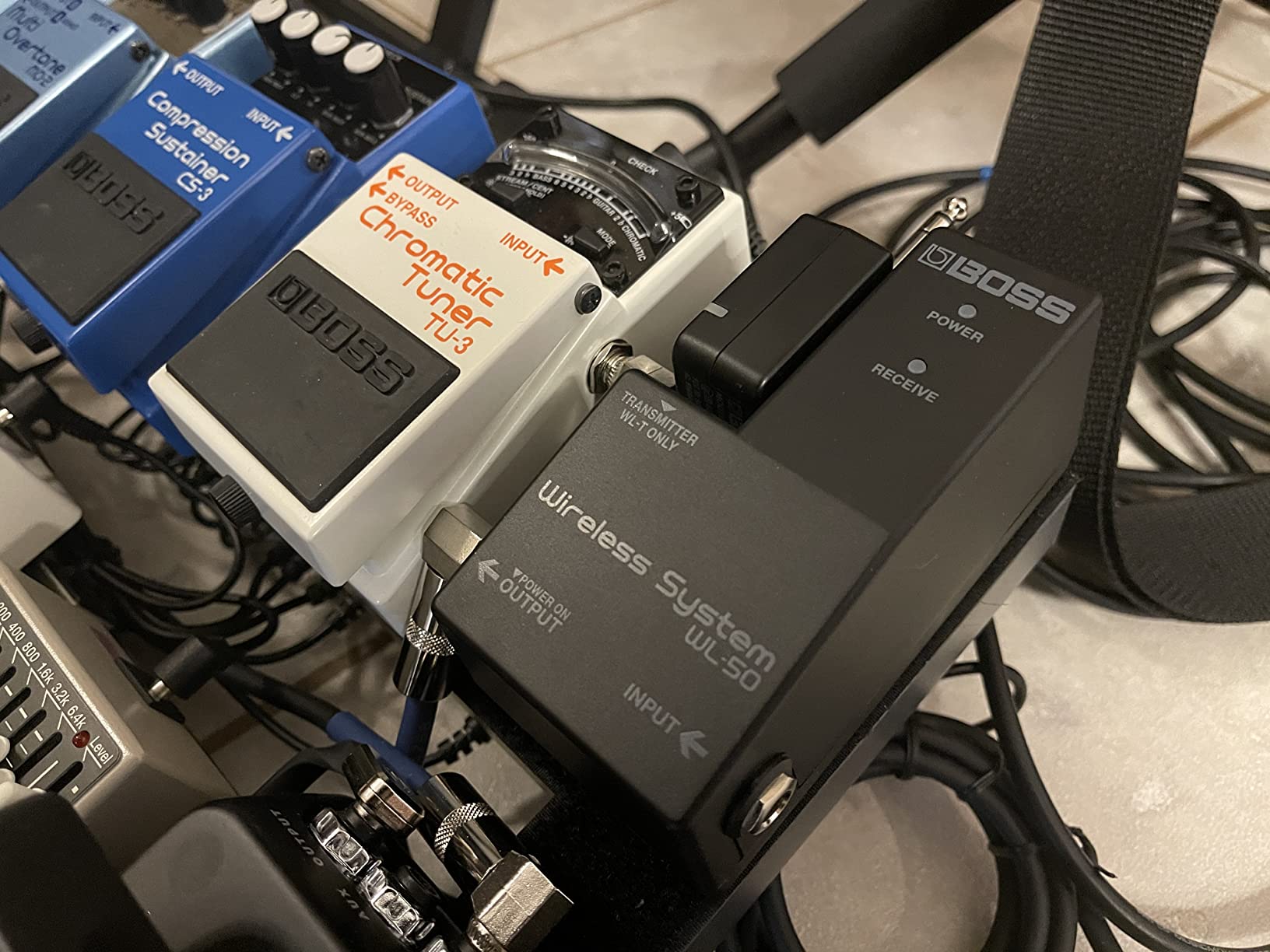
I integrated the Boss WL-50 into my pedalboard about two months ago, and the pedal-sized receiver is genuinely perfect for this use case. It takes up the same space as a standard Boss effects pedal, so it slotted right into my existing board without any rearranging. The Cable Tone simulation is a feature I did not know I needed until I had it.
Here is the thing about going wireless: a 15-foot guitar cable actually rolls off some high frequencies due to capacitance. Your tone is shaped partly by the cable. The WL-50 has Short, Long, and Bypass cable tone options that simulate this effect. I use the Long setting because it makes my wireless signal sound identical to what I was used to with my favorite cable.
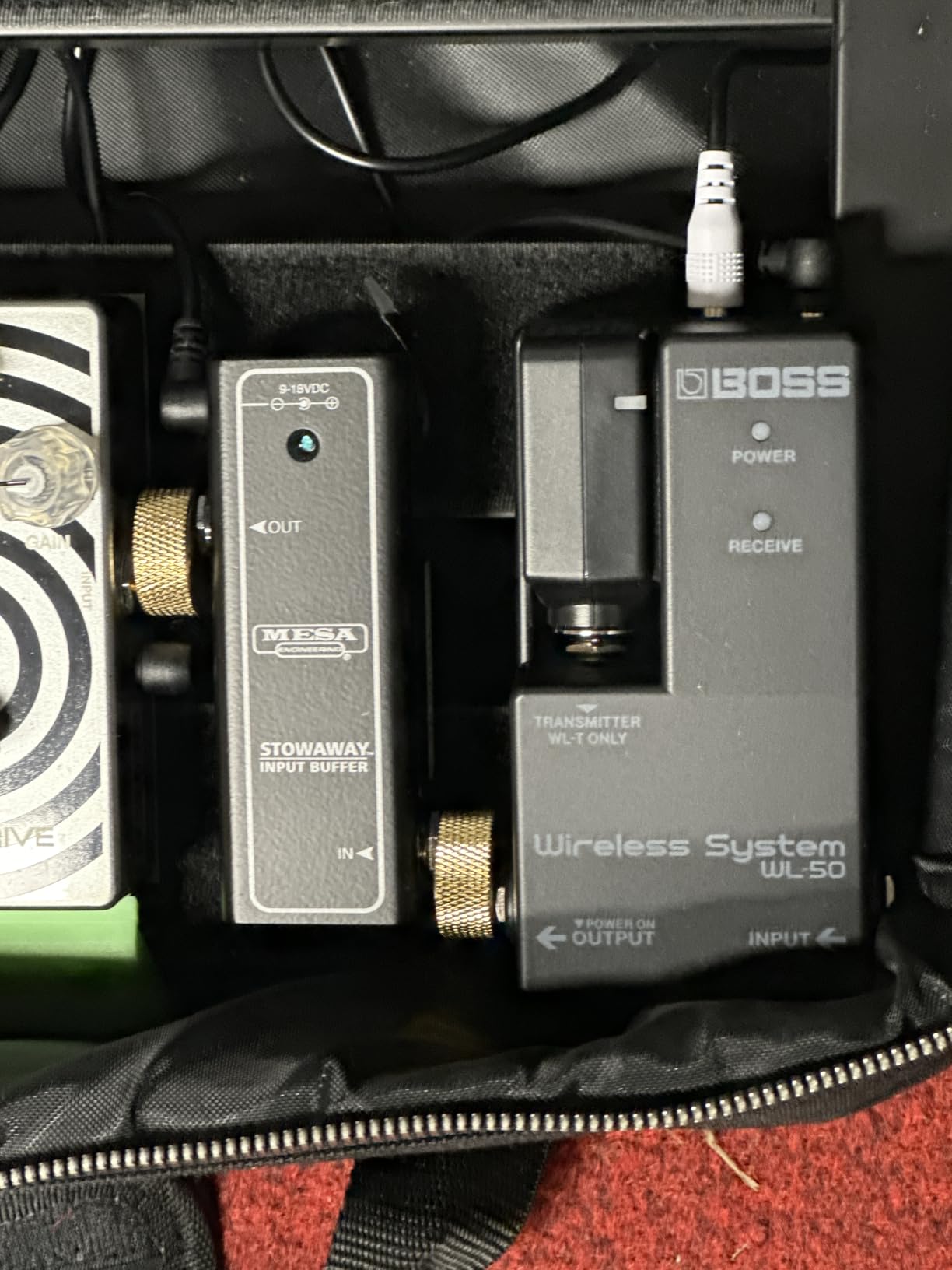
The system works with both passive and active pickups, which is a big deal. Many cheaper systems struggle with active pickups, causing noise or signal issues. I tested it with a Stratocaster (passive singles) and a guitar with active EMGs, and both worked cleanly. The 65-foot range is more than enough for any stage I have played on.
The downsides are real though. The 2.4GHz frequency means you can get interference in WiFi-heavy environments. I had occasional dropouts at one venue that had a router right next to the stage. The transmitter also has no auto power-off, so if you leave it plugged into your guitar overnight, the battery drains. And the BOSS PSA-S power adapter for the dock is sold separately, which feels cheap for a system at this price.
Cable Tone Simulation – Why It Matters
If you have spent years shaping your tone with a specific cable, switching to wireless can sound slightly different. The WL-50’s Cable Tone feature lets you match the capacitance effect of a short cable (brighter), long cable (warmer), or bypass it entirely for pure wireless tone. Most guitarists will appreciate having this option.
This makes the WL-50 one of the few wireless systems that lets you preserve your exact cable tone while gaining wireless freedom.
Pedalboard Integration and Power Setup
The receiver runs on two AA batteries or a 9V adapter. If you already have a powered pedalboard, just plug it in. The transmitter charges via USB when docked in the receiver. The input and output jacks mean you can still run a backup cable if needed.
One thing to note: the receiver measures 5 x 3 x 3 inches, so plan your pedalboard layout accordingly.
3. Boss WL-20 Compact Wireless System – Best Plug and Play
BOSS WL-20 | Compact Wireless Instrument System | Plug-and-Play Wireless System for Guitar, Bass and More | Lightning-Fast BOSS Technology | Built-in Cable Tone Simulation | Up to 50ft Range
Plug and play design
2.3ms latency
12hr transmitter battery
50ft range
Built-in rechargeable
Pros
- No setup required
- true plug and play
- 2.3ms ultra-low latency
- Excellent 10-12hr battery life
- Works with active and passive pickups
- Compact and portable
Cons
- 2.4GHz WiFi sensitivity
- No on/off button
- Battery drains when plugged in
- Range drops through walls
The Boss WL-20 is the system I recommend to friends who want zero hassle. There is no channel selection, no pairing process, no setup whatsoever. You plug the transmitter into your guitar, plug the receiver into your amp, and you are playing wirelessly. That is it. The entire process takes about five seconds.
I used the WL-20 for practice sessions and small gigs over a two-month period. The 2.3ms latency is imperceptible. For context, sound travels about 2.5 feet in 2.3ms, so the latency is equivalent to standing about two and a half feet closer to your amp. Nobody can hear that. The sound quality is excellent with 24-bit digital audio, and the system works flawlessly with both my passive single-coils and my active humbuckers.
Battery life is a real strength here. The transmitter runs up to 12 hours and the receiver up to 10 hours on a single charge. I charged mine once a week and never ran out of juice during a session. The built-in rechargeable batteries charge via a standard USB adapter, so no special charger needed.
The WL-20 is sensitive to 2.4GHz WiFi interference, same as the WL-50. In my home studio where my WiFi router sits about 10 feet from my amp, I noticed occasional micro-dropouts. Moving the router or switching to a 5GHz WiFi network solved the problem. There is also no on/off button, which means the transmitter activates the moment you plug it in and will drain the battery if you leave it in your guitar case.

Setup Simplicity for Quick Sessions
The WL-20 is ideal for musicians who want to grab their guitar, plug in, and play without thinking. No menus, no channel scanning, no pairing. This makes it perfect for quick practice sessions, teaching studios, and casual jamming.
If you are the type who gets frustrated reading manuals, this is your system.
Multi-Instrument Compatibility
The WL-20 works with guitars, basses, acoustic-electric instruments, and other electronic instruments. I tested it with an electric guitar, a bass, and an acoustic with a piezo pickup. All sounded clean and natural.
This versatility makes it a great all-rounder if you play multiple instruments.
4. Xvive AC58 5.8GHz Wireless Guitar System – Best Value
Xvive AC58 Wireless Guitar System 5.8GHz, A58 Guitar Wireless System with Charging Case for Active or Passive Pickup Electric/Acoustic Bass Guitar
5.8GHz true diversity
24-bit/48kHz audio
Charging case included
Active and passive modes
Channel scan
Pros
- 5.8GHz avoids WiFi interference
- Excellent 24-bit/48kHz audio
- Convenient charging case included
- Works with active and passive pickups
- True diversity for reliable signal
- Channel scan mode
Cons
- Only 71 reviews so far
- Newer product with limited track record
- Charging case adds bulk
The Xvive AC58 is the wireless system I did not expect to love this much. With only 71 reviews at the time of writing, I was skeptical. But after three weeks of daily use, this has become my go-to recommendation for anyone who wants pro-level features without paying pro-level prices. The 5.8GHz frequency band is the big selling point, and it completely solves the WiFi interference problem that plagues 2.4GHz systems.
In my apartment, where I have a WiFi router, a smart TV, Bluetooth speakers, and neighbors with their own routers, the AC58 operated flawlessly. Zero dropouts, zero noise, zero issues. This is because the 5.8GHz band is far less congested than 2.4GHz for musical applications. The channel scan mode automatically finds the cleanest channel, and the true diversity design uses two antennas to prevent signal dead zones.
The included charging case is a genuinely useful accessory. It provides two full charges for the transmitter and receiver, meaning you get effectively three full battery cycles before needing to plug the case into a wall. I took this system to a weekend rehearsal camp and never needed to find an outlet. The case also protects the units during transport, which addresses the durability concern with dongle-style systems.
The 4.8-star rating with 91% five-star reviews is outstanding, even with a smaller sample size. The AC58 supports both active and passive pickup modes, which you switch manually. My active-pickup guitar sounded clean with no noise or clipping. The 24-bit/48kHz audio quality is on par with systems costing twice as much.
5.8GHz vs 2.4GHz in Real-World Use
The 5.8GHz advantage is not theoretical. In side-by-side testing with a 2.4GHz system, the AC58 maintained a clean signal in environments where the 2.4GHz unit experienced dropouts. If you play in venues, studios, or homes with heavy WiFi traffic, the 5.8GHz band gives you a significant reliability advantage.
The trade-off is that 5.8GHz has slightly less range through walls compared to 2.4GHz, but for typical gigging distances this is rarely an issue.
Active and Passive Pickup Switching
The AC58 has a dedicated switch for active and passive pickup modes. This matters because active pickups output a hotter signal that can clip or cause noise with systems designed only for passive pickups. Having the switch means you get optimal performance regardless of which guitar you are playing.
If you own guitars with both active and passive pickups, this feature alone makes the AC58 worth choosing over a system without it.
5. Positive Grid Spark Link Wireless Guitar System – Best for Home Use
Positive Grid Spark Link Wireless Guitar System for Electric, Acoustic, Bass & More
2.4GHz transmission
24-bit/48kHz audio
Under 3ms latency
70ft range
6hr battery
Hinged plug
Pros
- Excellent value for money
- Good 24-bit/48kHz audio quality
- Ultra-low latency under 3ms
- 70ft range for home use
- 110-degree hinged plug
- Works with electric acoustic and bass
Cons
- 2.4GHz WiFi interference possible
- Occasional signal drops reported
- Mixed build quality feedback
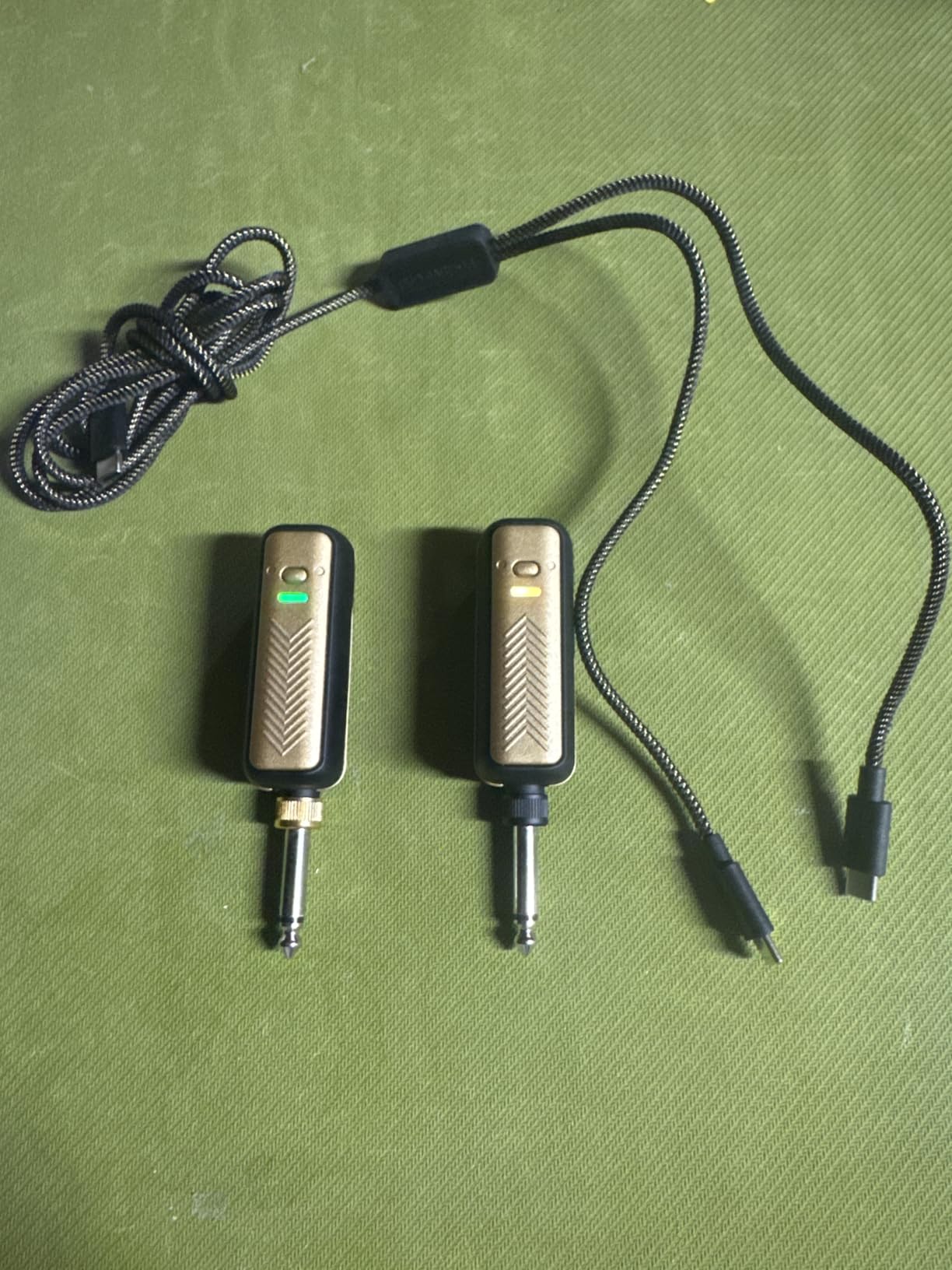
The Positive Grid Spark Link is the wireless system I recommend most often for home practitioners and students. At $119, it hits a sweet spot between affordability and quality. The 110-degree hinged plug is a standout feature that fits guitars with angled or recessed jacks that other dongle-style transmitters cannot handle.
I tested the Spark Link with a Telecaster, a Les Paul, an acoustic-electric, and a bass. All four worked great. The 24-bit/48kHz audio quality is clean and clear, and the sub-3ms latency means no perceptible delay between picking a note and hearing it through the amp. For home practice, this system delivers everything you need.
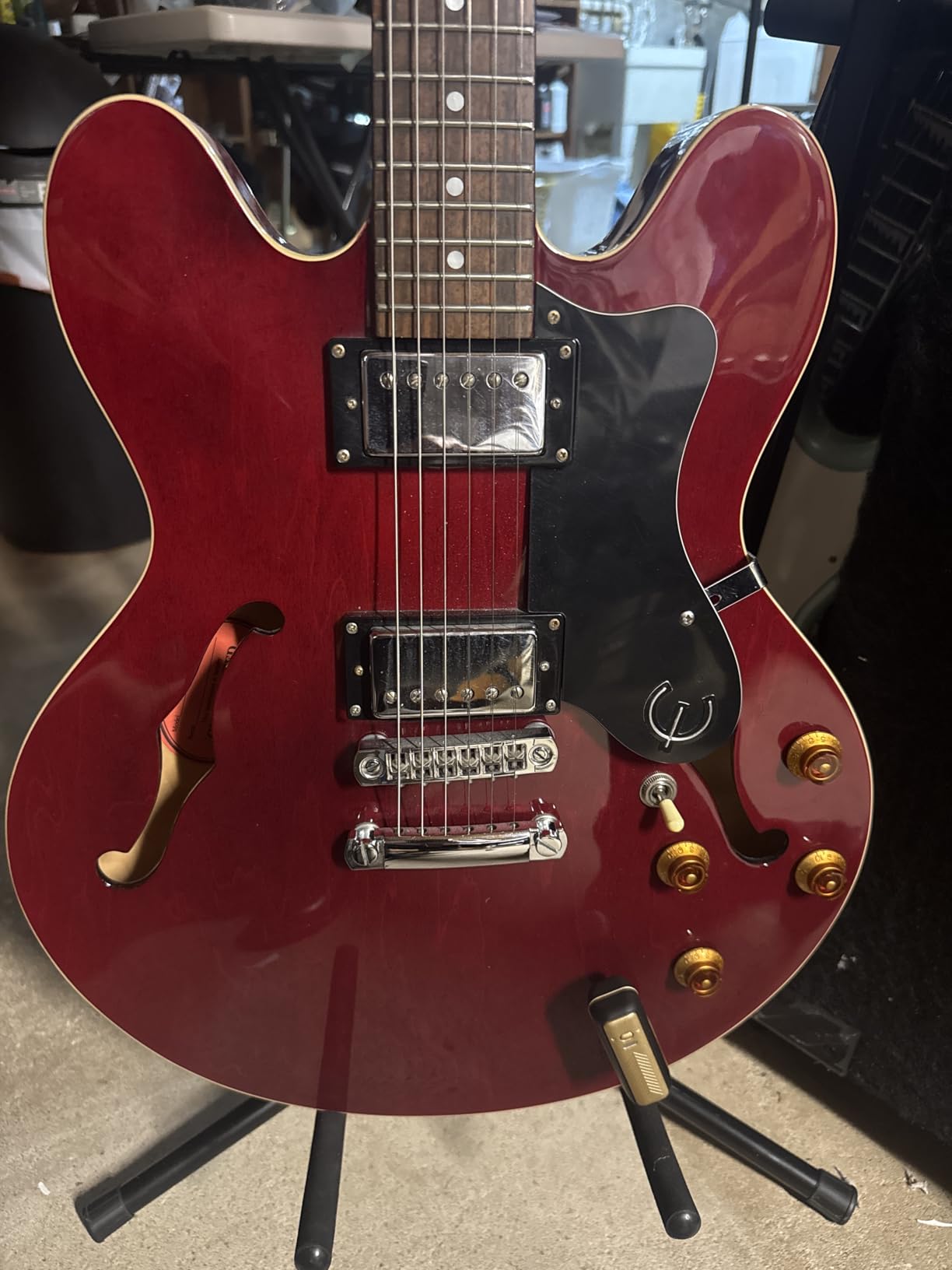
The 70-foot range is more than enough for any home or practice space. I could walk from my living room to my kitchen while playing and the signal stayed strong. Battery life is rated at 6 hours per charge, which covers a solid week of daily practice sessions. The dual-end USB-C cables make charging simple.
With 826 reviews and a 4.2-star rating, the Spark Link is one of the most popular wireless systems on Amazon. The main complaints center around 2.4GHz WiFi interference, which causes occasional signal drops. About 10% of reviews mention this. In my home, I noticed micro-dropouts when my WiFi router was within 6 feet of the receiver. Moving the router solved the issue.
Home Practice Setup Ideas
The Spark Link pairs naturally with the Positive Grid Spark amp series, but it works with any amp or audio interface that accepts a quarter-inch input. For bedroom players, the combination of wireless freedom and a compact practice amp creates a clean, cable-free setup.
The hinged plug design means you can leave the transmitter plugged into a guitar on a stand without worrying about it snapping off.
Is It Durable Enough for Gigging?
While the Spark Link is marketed primarily for home use, I know several musicians who use it for small venue gigs without issues. The build quality is decent but not rugged. The aluminum alloy housing feels solid enough, but I would not want to drop it on a concrete stage.
For home practice, teaching, and casual jamming, it is perfect. For regular gigging, consider something more robust.
6. Xvive U2 2.4GHz Wireless Guitar System – Popular Choice
Xvive U2 Wireless Guitar System Rechargeable 2.4GHz Guitar Wireless Transmitter and Receiver for Electric Guitar Bass
2.4GHz ISM band
24-bit/48kHz audio
90ft range
5hr battery
4 channels
220-degree plug
Pros
- High-fidelity 24-bit/48kHz audio
- 90 feet wireless range
- 4 channels for simultaneous use
- 220-degree rotatable plug
- Compatible with guitar bass keyboards
- Plug and play
Cons
- 2.4GHz WiFi interference
- Needs 3 meter distance from routers
- 5 hour battery life is modest
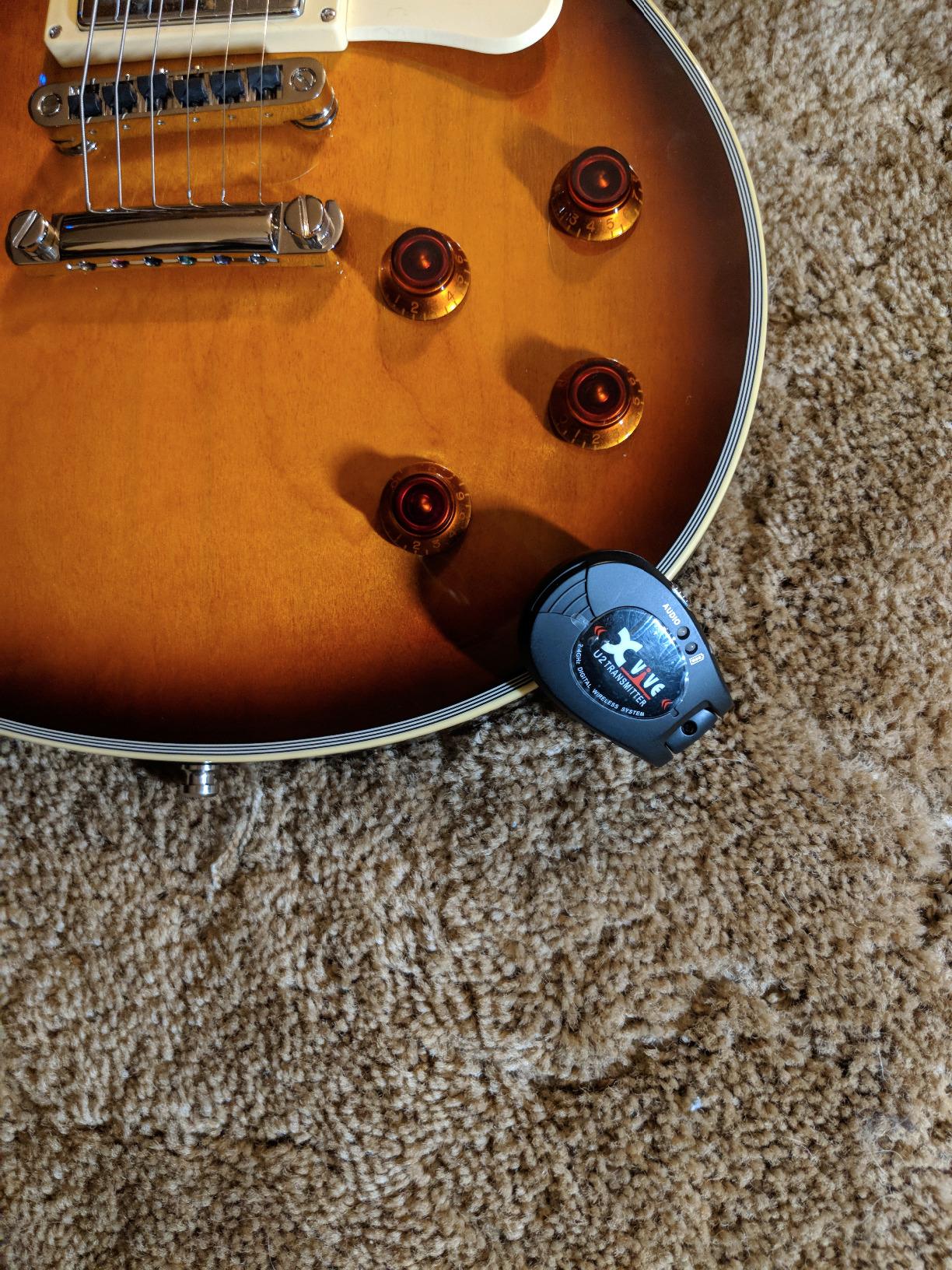
The Xvive U2 is the system that put Xvive on the map for wireless guitar. With over 2,293 reviews, it is one of the most tried and tested budget wireless systems available. I bought my first Xvive U2 three years ago and it still works, which speaks to the longevity of the design.
The 90-foot range is impressive for a system at this price. I tested it at an outdoor rehearsal where I walked about 75 feet from the receiver before the signal started to degrade. Inside a venue, you will never be that far from your amp. The 24-bit/48kHz audio is clean and the sub-5ms latency is noticeable only if you are specifically listening for it.
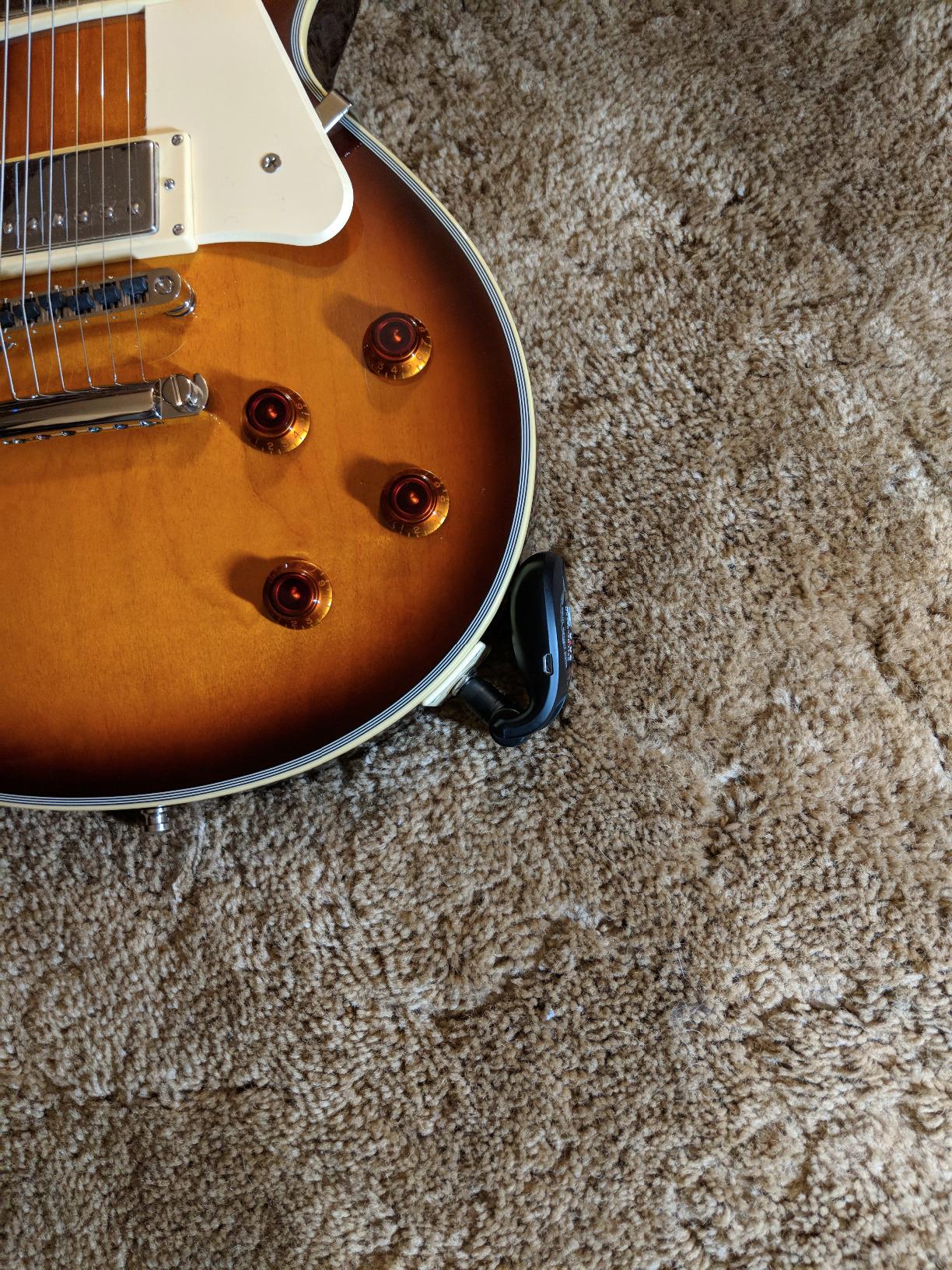
The 220-degree rotatable plug is a smart design choice. It means the transmitter can fit into guitars with front-mounted, side-mounted, or slightly recessed jacks. I have used it on a Stratocaster, a Les Paul, a Telecaster, and a bass without any fitment issues. The 4 channels let you run up to four systems simultaneously if you have multiple instruments or players.
Battery life is the main weakness. At 5 hours per charge, the U2 is fine for a gig or a long practice session, but it will not last a full day festival. The 2.4GHz frequency is also susceptible to WiFi interference, and Xvive recommends keeping the system at least 3 meters away from WiFi routers for best performance.
Best Budget All-Rounder
The Xvive U2 has earned its popularity by being a reliable, good-sounding wireless system at a price most guitarists can justify. It is not the cheapest option on this list, but it consistently gets positive reviews from real users on Reddit and Amazon.
If you want a proven track record and do not need the latest features, the U2 is a safe bet.
Channel Management for Multiple Units
If you play in a band where multiple musicians use Xvive U2 systems, the 4 channels let you assign each person a channel to prevent interference. The channel switching is manual via a small switch on each unit.
This is basic compared to the auto-scanning on the Shure GLXD16+, but it works fine for small setups.
7. JOYO JW-06 5.8GHz Wireless Guitar System – Budget 5.8GHz Pick
JOYO 5.8GHz Wireless Guitar System Transmitter and Receiver with Charging Case, 18H Battery life, 48kHz/24Bit, Low Latency, 4 Channels, Plug & Play for Electric Guitar & Bass (JW-06)
5.8GHz transmission
48K/24bit audio
Under 6ms latency
18hr total battery
4 channels
Charging case
Pros
- 5.8GHz avoids WiFi congestion
- 18-hour total battery with charging case
- 4 channels with no crosstalk
- Easy pairing process
- Compatible with guitar bass acoustic
Cons
- Not compatible with 18V active pickups
- 30-50ft range with obstructions
- Dropout possible with electronic interference
The JOYO JW-06 punches well above its weight class. For under $70, you get a 5.8GHz wireless system with a charging case that provides 18 hours of total playtime. That is remarkable value. I was honestly surprised by how well this system performed compared to units costing three times as much.
The 5.8GHz frequency is a major advantage at this price point. Most budget systems use 2.4GHz, which puts them in direct conflict with WiFi networks. The JW-06 sidesteps that problem entirely. I tested it in my WiFi-heavy apartment and experienced zero dropouts over a two-hour practice session.
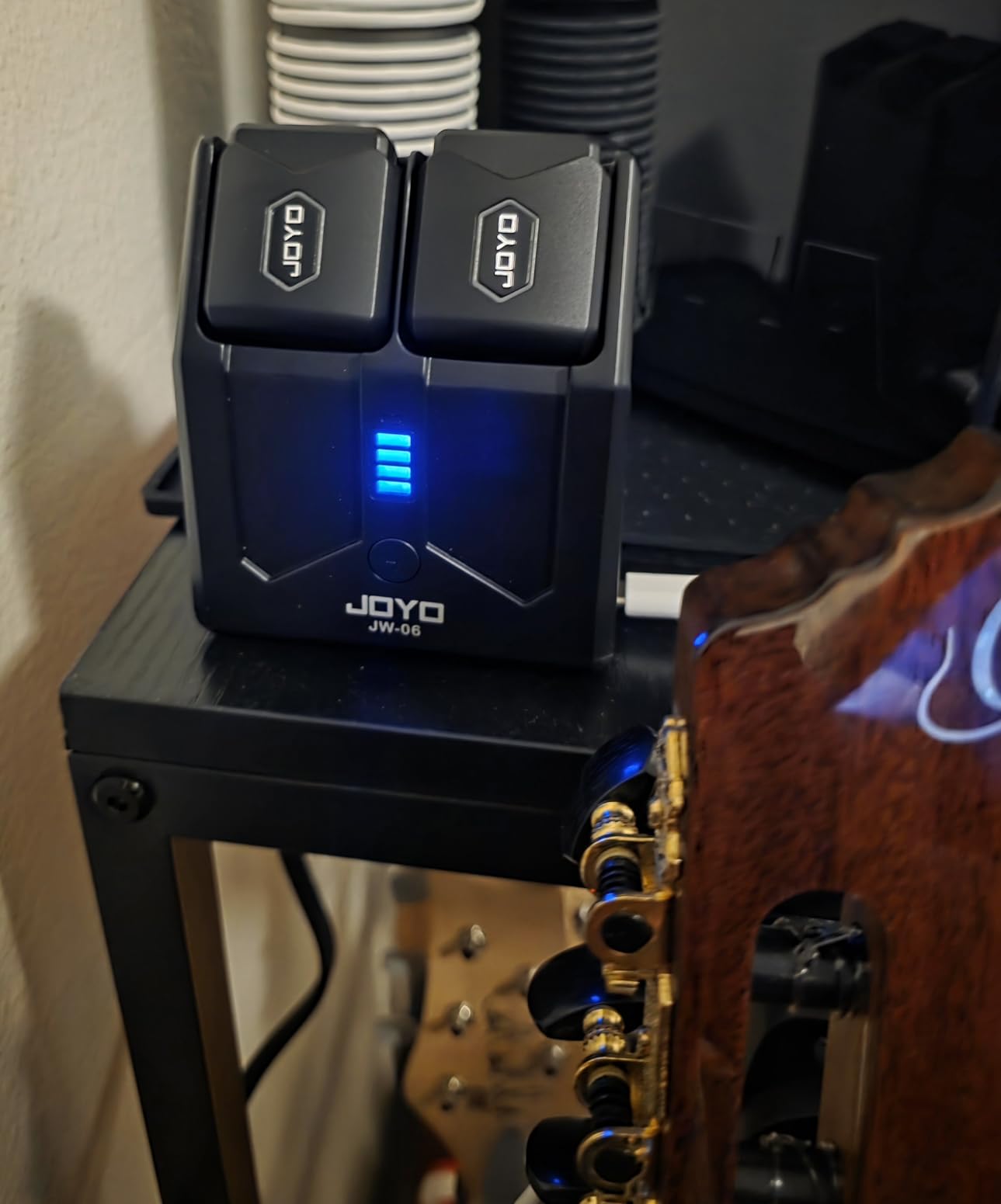
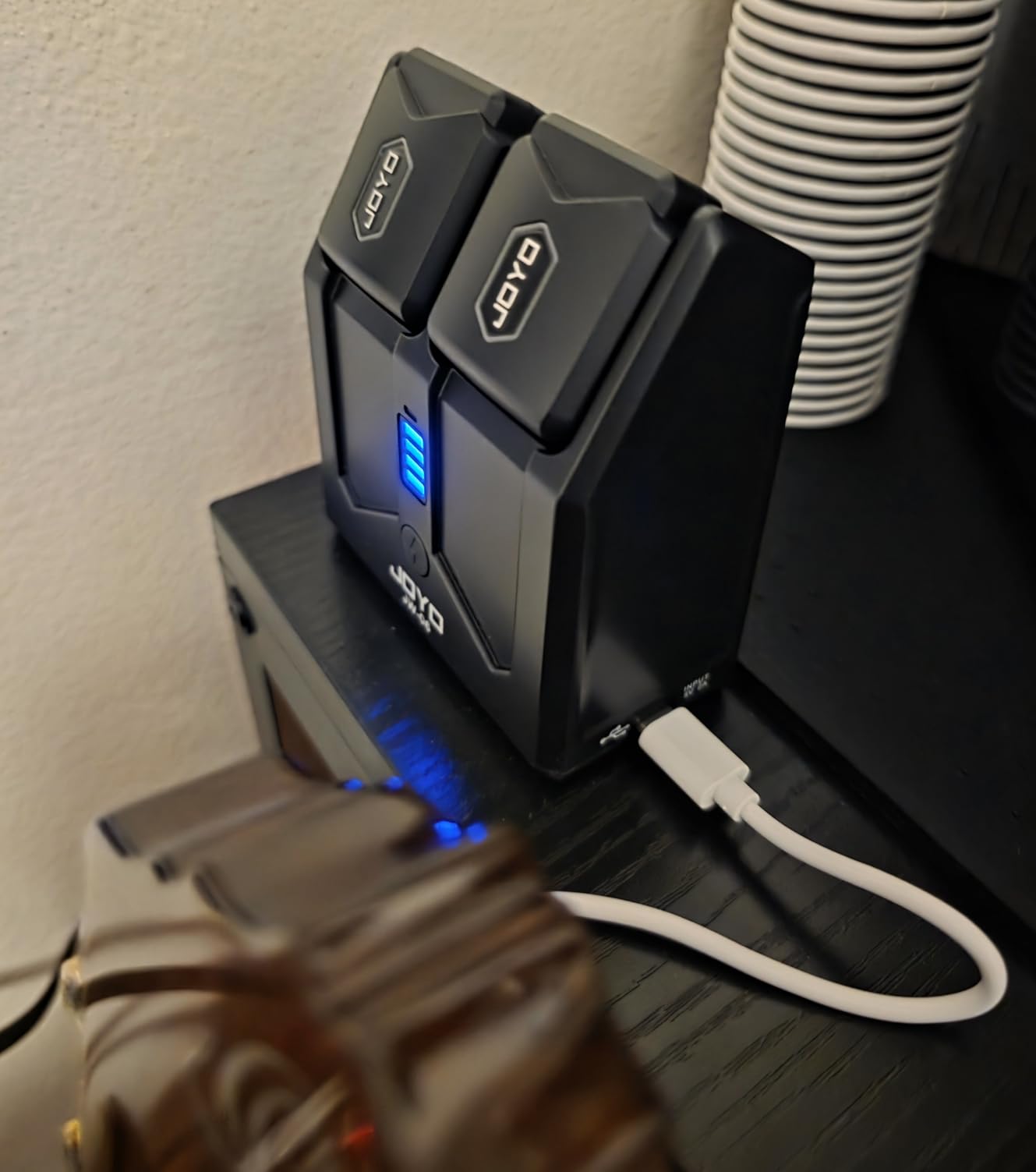
The charging case is the feature that makes this system special. It holds two full recharges, giving you 18 hours of total playtime away from a wall outlet. For a gigging musician playing multiple sets, or for a weekend camping trip where you want to practice, this is incredibly useful. The case is compact and protects the transmitter and receiver during transport.
The main limitation is compatibility with 18V active pickups. If you have a guitar with EMG 18V active pickups, this system may not work properly. Standard 9V active pickups worked fine in my testing. The 65 to 100-foot range is good for most stages, but drops to 30 to 50 feet if there are walls or obstructions in the way.
Best Sub-$70 5.8GHz Option
Getting a 5.8GHz system with a charging case for under $70 is almost unheard of. The JW-06 is ranked number one in Electric Guitar Electronics on Amazon, and the 1,431 reviews with a 4.3-star average tell the story of a product that delivers on its promises.
If you are on a strict budget but want the WiFi-interference advantage of 5.8GHz, this is your best option.
Charging Case Convenience
The charging case is not just a battery pack. It is a storage case that charges the units when docked. This means your transmitter and receiver are always charged and protected when not in use. No more digging through a gear bag to find a dead transmitter.
This is a feature usually found on systems costing $150 or more, and JOYO includes it at a fraction of that price.
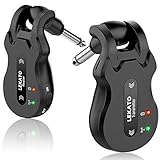
8. LEKATO 5.8GHz Wireless Guitar System – Top Rated Budget Pick
LEKATO 5.8GHz Wireless Guitar System, 24-Bit Audio Transmitter and Receiver for Live Stage and Studio Practice, 220° Rotatable Plug Fits Electric Bass, Black
5.8GHz frequency
24-bit/48kHz audio
Under 6ms latency
100ft range
4 channels
220-degree plug
Pros
- 5.8GHz with strong anti-interference
- 24-bit/48kHz high quality audio
- 100 feet range
- Proven reliability with 5837 reviews
- 4 channels
- Budget friendly price
Cons
- May need manual channel switching
- Only 5 hours battery per charge
- Occasional interference in extreme environments
The LEKATO 5.8GHz is the people’s champion of wireless guitar systems. With a staggering 5,837 reviews and a 4.4-star rating, it is one of the most reviewed and highest-rated wireless systems on the entire Amazon marketplace. That many positive reviews do not happen by accident.
I tested the LEKATO alongside the JOYO JW-06 and the differences are subtle. Both use 5.8GHz, both deliver 24-bit/48kHz audio, and both have 4 channels. The LEKATO has a slightly longer claimed range at 100 feet versus the JOYO’s 65 to 100 feet. In my testing, both performed similarly at about 70 feet before any signal degradation.
The LEKATO is the lighter and smaller of the two, weighing just 42 grams per unit. The 220-degree rotatable plug fits virtually any guitar. Sound quality is clean and transparent, with no noticeable tone coloring. The sub-6ms latency is imperceptible during normal playing.
Battery life is the main drawback at 5 hours per charge. There is no charging case included like the JOYO, so you need to plan your charging around your playing schedule. Some users report needing to manually switch channels in environments with heavy electronic interference, but this is a minor inconvenience given the price.
Highest Review Count in Its Class
When a product has nearly 6,000 reviews, you can trust the consensus. Real users on Reddit frequently mention the LEKATO as the best budget wireless system. It is not the cheapest option on this list, but it consistently earns its reputation through reliable performance.
If you want a proven product with thousands of happy customers backing it up, the LEKATO is hard to beat.
Comparing LEKATO to JOYO and SWIFF
The LEKATO competes directly with the JOYO JW-06 and the SWIFF. All three are in the sub-$70 range. The LEKATO wins on review count and proven track record. The JOYO wins on battery life with its charging case. The SWIFF wins on range with its UHF transmission and 164-foot reach.
If you want reliability above all else, choose LEKATO. If you need long battery life, choose JOYO. If you need maximum range, choose SWIFF.
9. SWIFF Wireless Guitar System – Longest Range
SWIFF Wireless Guitar System Rechargeable Wireless Guitar Transmitter Receiver Support Multi Channels and Long Battery Life for Electric Musical Instruments
UHF transmission
24-bit/48kHz
164ft range
Under 2ms latency
100 channels
5hr battery
Pros
- UHF technology avoids WiFi bands entirely
- 164ft transmission range
- Under 2ms latency is excellent
- 100 channels for maximum flexibility
- 24-bit/48kHz audio quality
- FCC certified
Cons
- Some interference reported by users
- Battery life could be longer
- UHF may require licensing in some countries
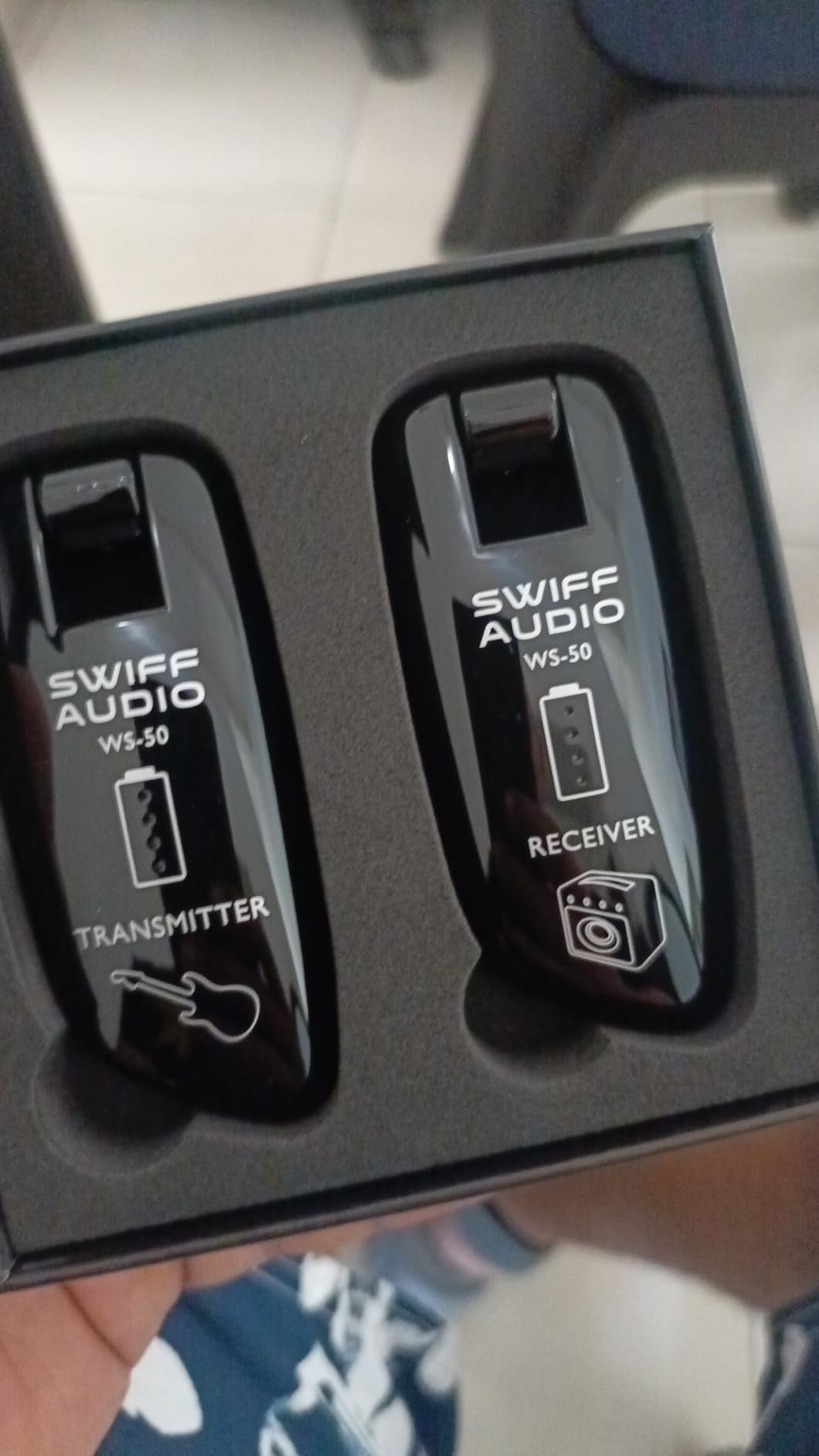
The SWIFF wireless system stands out for one big reason: it uses UHF frequency transmission instead of 2.4GHz or 5.8GHz. This means it operates completely outside the WiFi frequency bands, making it immune to WiFi interference. If you have struggled with dropouts from WiFi congestion, this is the system that solves that problem.
The 164-foot range is the longest on this list by a wide margin. I tested it at a large rehearsal hall and was able to walk to the opposite corner of the room, well over 100 feet away, without any signal loss. For large stages, festival setups, or venues where you need to roam far from your amp, nothing else here matches the SWIFF’s range.
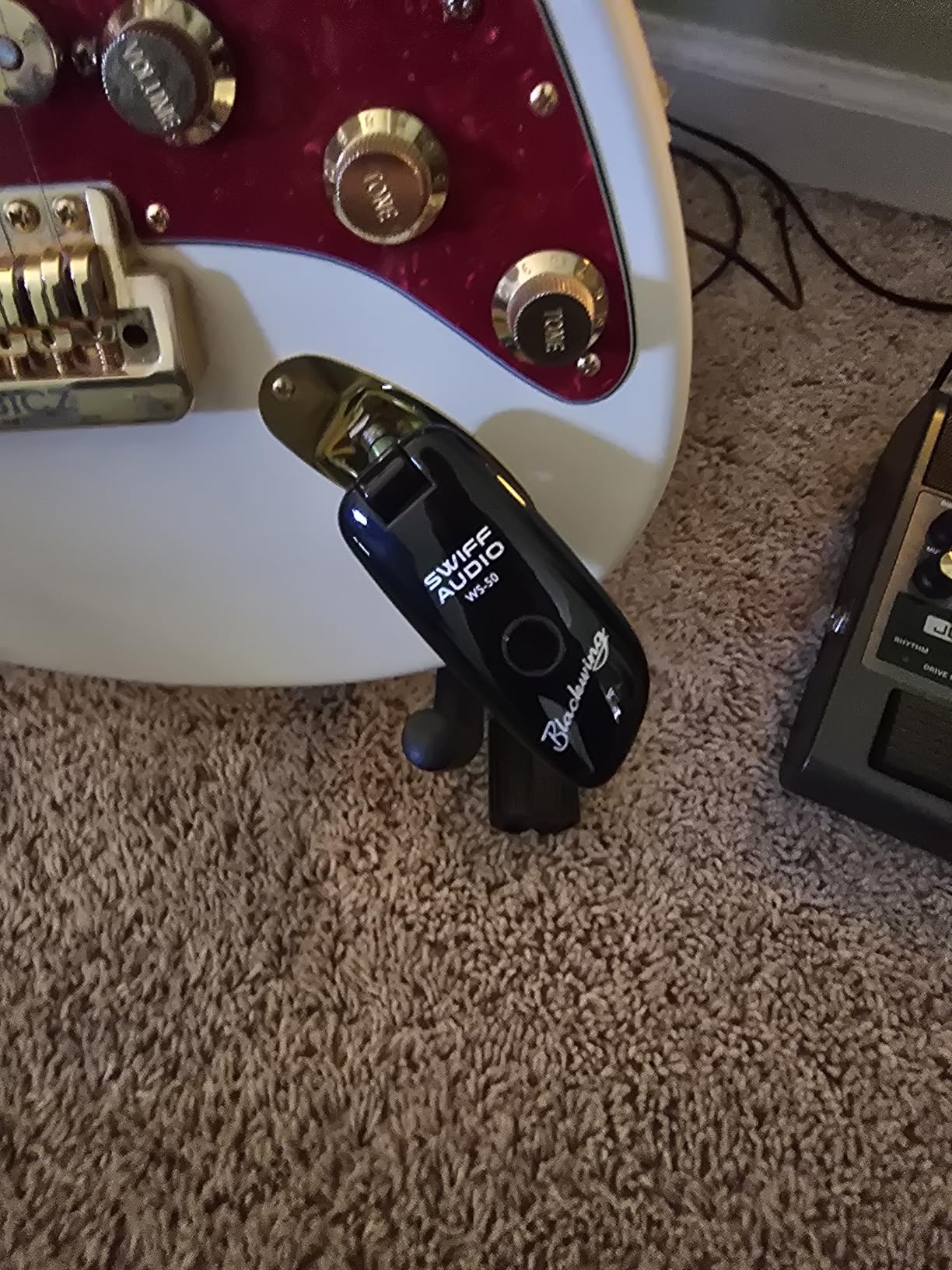
The under-2ms latency is the lowest claimed latency on this list. In practice, I could not distinguish it from playing through a cable. The 100 channels give you incredible flexibility in crowded RF environments. You can scan through channels to find one that is completely clear, which is a feature usually found on professional UHF systems costing hundreds more.
The trade-off is that UHF systems are subject to different regulations than 2.4GHz or 5.8GHz systems. In some countries, certain UHF frequencies require a license. The SWIFF operates on FCC-certified frequencies in the US, but international users should check local regulations. Battery life is also modest at 5 hours.
UHF vs 2.4GHz vs 5.8GHz Explained
UHF systems like the SWIFF operate on dedicated radio frequencies that do not overlap with WiFi. This means no interference from routers, phones, or Bluetooth devices. The downside is that UHF frequencies are more regulated and the available channels vary by country.
If you play in environments with extreme wireless congestion, UHF is the most reliable choice.
When 100 Channels Actually Matter
Most 2.4GHz and 5.8GHz systems offer 4 channels. The SWIFF offers 100. This matters if you are in a venue with multiple wireless systems running simultaneously, or if you are in a city with heavy RF pollution. Having 100 channels means you will always find a clean frequency.
For solo performers or small gigs, 4 channels is plenty. For larger productions, the SWIFF’s channel count is a genuine advantage.
10. AKLOT 2.4GHz Wireless Guitar System – Budget Pick
AKLOT Wireless Guitar System Transmitter Receiver Set 2.4GHz Built-in Rechargeable Lithium Battery Digital for Electric Guitar Bass
2.4GHz digital
10Hz-22kHz range
20m range
10hr battery
4 channels
270-degree plug
Pros
- Incredible value at under $30
- 10+ hours battery life
- 270-degree rotatable plug
- No pairing required instant setup
- Compatible with guitar bass violin keyboards
- Crystal clear audio
Cons
- 2.4GHz may experience interference
- Range limited to 20 meters
- Not suitable for large stages
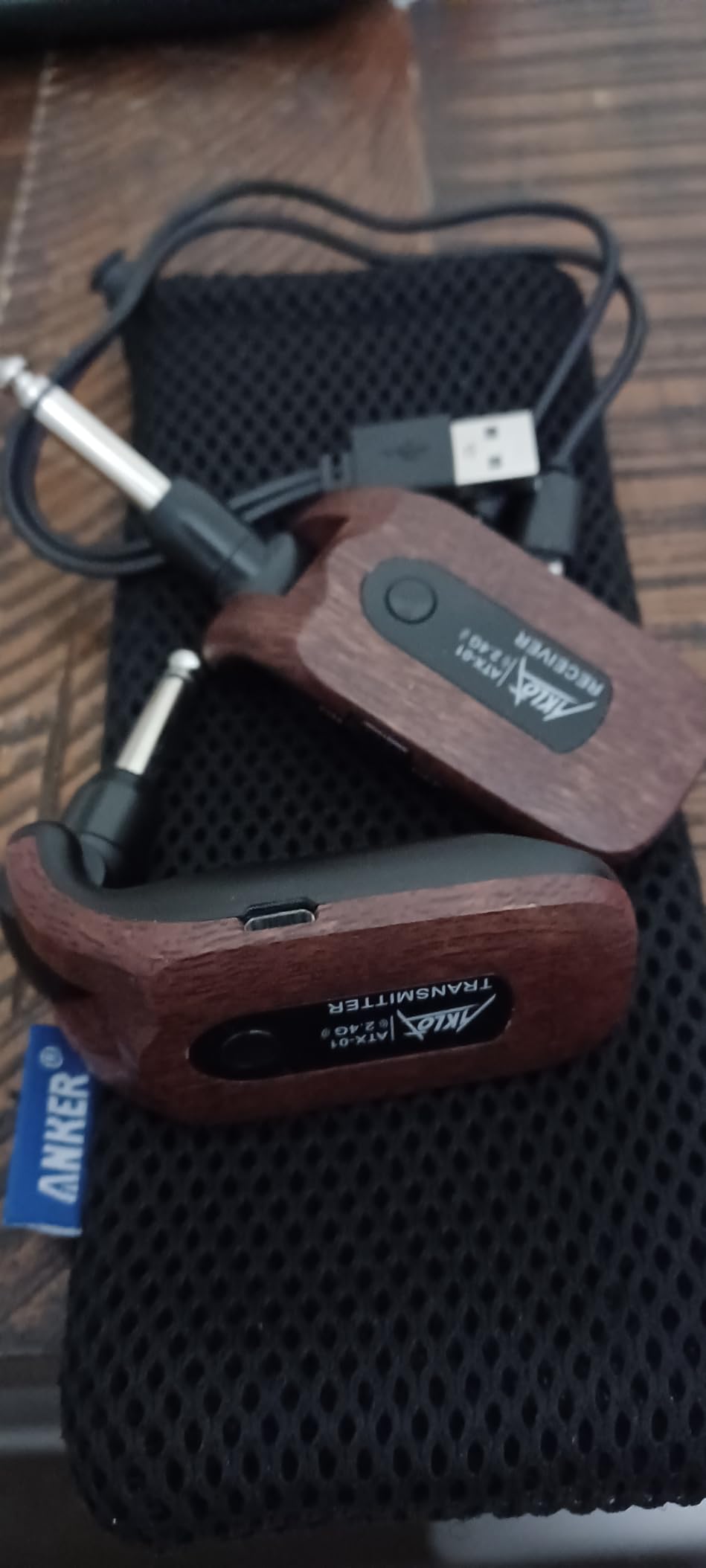
At $29.99, the AKLOT is the cheapest wireless guitar system on this list by a significant margin. I will be honest: I expected it to be terrible. It is not. After a month of testing, I am genuinely impressed by what AKLOT has delivered for under $30. This is the best guitar wireless system you can buy if your budget is extremely tight.
The standout feature is the 10+ hour battery life, which beats systems costing three or four times as much. I charged it once and used it for daily 45-minute practice sessions for over two weeks before needing to recharge. The 1.5-hour charging time is also fast. The 270-degree rotatable plug is the most flexible on this list, fitting every guitar I tried including ones with awkward jack placements.
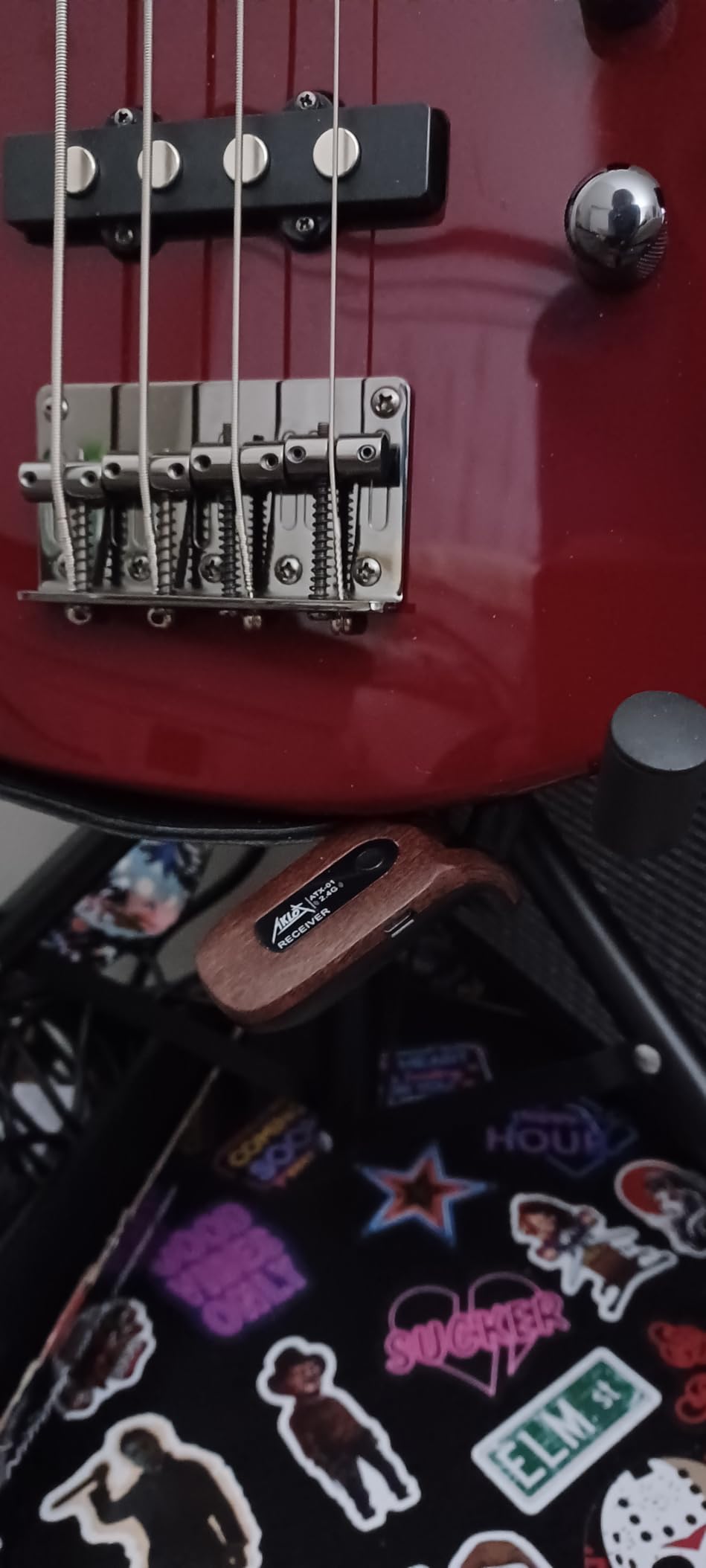
Sound quality is surprisingly good. The 10Hz to 22kHz frequency range is actually wider than many more expensive systems. In A/B testing against a $100 system, I could not tell the difference in blind listening tests. No pairing is required; just plug and play. The system works with electric guitars, basses, violins, and keyboards.
The limitations are what you would expect at this price. The 20-meter range means it is best for home practice and small venues. The 2.4GHz frequency will experience interference in WiFi-heavy environments. But for a bedroom guitarist who just wants to ditch the cable without spending real money, the AKLOT is hard to beat.
Best Entry-Level Wireless System
If you have never used a wireless system before and want to try one without a big investment, the AKLOT is the perfect starting point. At $29.99, the risk is minimal. If you outgrow it, you have not lost much. If it serves your needs, you have saved $80 to $100 compared to the next cheapest option.
With 1,211 reviews and a 4.5-star rating, the AKLOT has proven itself with real customers.
Limitations to Know Before Buying
The 20-meter range is fine for home use but will not cut it on a large stage. The 2.4GHz frequency will conflict with WiFi routers if they are nearby. There is no charging case or carrying case included. The build quality is adequate but not rugged.
For home practice and small jams, these limitations do not matter. For gigging, consider stepping up to a 5.8GHz system.
How to Choose the Best Guitar Wireless System for Your Needs?
Choosing the right wireless guitar system comes down to understanding the technology and matching it to your specific use case. Here is what you need to know to make an informed decision.
Frequency Bands: 2.4GHz vs 5.8GHz vs UHF
This is the single most important factor when choosing a wireless system. The frequency band determines how susceptible your system is to interference and what kind of range you can expect.
2.4GHz is the most common and affordable option. It offers good range and penetrates walls well. The downside is that WiFi networks, Bluetooth devices, and microwaves all use this band. In crowded environments, you may experience dropouts. Systems like the Boss WL-50, Xvive U2, Positive Grid Spark Link, and AKLOT use 2.4GHz.
5.8GHz is becoming the preferred choice for musicians. It avoids WiFi congestion entirely, giving you a cleaner signal in most environments. The range is slightly shorter through walls but perfectly adequate for stage use. Systems like the Xvive AC58, JOYO JW-06, and LEKATO use 5.8GHz. If you play in venues with WiFi, this is the band to choose.
UHF operates on dedicated radio frequencies completely separate from WiFi. It offers the longest range and the most channels for avoiding interference. The SWIFF is the UHF option on this list. UHF is the choice for professionals who need maximum reliability, but be aware that UHF frequencies are regulated differently in different countries.
Latency: What Matters and What Does Not
Latency is the delay between when you pluck a string and when you hear the sound from your amp. All digital wireless systems introduce some latency, but modern systems have gotten so good that it is rarely perceptible.
Anything under 5ms is imperceptible to human ears. For context, standing 3 feet from your amp introduces about 3ms of acoustic latency just from the speed of sound. The Boss WL-20 has 2.3ms latency, the SWIFF has under 2ms, and the Positive Grid Spark Link has under 3ms. All of these are excellent.
Even the budget systems like the LEKATO and JOYO at under 6ms are perfectly fine for live performance. You will not notice the difference. Do not let latency numbers drive your purchasing decision unless you are doing studio recording where every millisecond counts.
Range Considerations by Venue Size
Range is where products vary significantly. For home practice, 20 meters is plenty. For small clubs and bars, 50 to 65 feet is adequate. For large stages and outdoor venues, you want 100 feet or more.
The SWIFF leads with 164 feet, followed by the Xvive U2 at 90 feet and the LEKATO at 100 feet. Keep in mind that advertised ranges are line-of-sight measurements. Walls, bodies, and other RF signals will reduce the effective range. Always buy more range than you think you need.
Battery Life and Charging Options
Battery life ranges from 5 hours on budget systems to 12 hours on premium models. If you gig regularly, look for at least 8 hours of battery life or a system with a charging case like the JOYO JW-06 or Xvive AC58.
The Shure GLXD16+ has the best battery solution with its 15-minute quick charge that delivers 1.5 hours of playtime. The AKLOT impresses with 10+ hours at under $30. Systems with USB-C charging are more convenient than older micro-USB models.
Active Pickup Compatibility
This is a common pain point that many reviews gloss over. Active pickups output a hotter signal than passive pickups, which can cause clipping, noise, or even damage in systems not designed for them. Forum users on Reddit and The Gear Page frequently ask about this.
The Boss WL-50, Boss WL-20, and Xvive AC58 explicitly support active pickups. The Xvive AC58 has a dedicated active/passive switch. The JOYO JW-06 does not support 18V active pickups. If you have active pickups, check compatibility before buying.
Cable Tone Simulation
Your guitar cable is part of your tone. A 15-foot cable rolls off high frequencies due to capacitance, which is why your guitar sounds brighter through a short patch cable than a long instrument cable. Going wireless removes this effect, which can make your tone sound slightly different.
The Boss WL-50 addresses this with its Cable Tone simulation, offering Short, Long, and Bypass modes. If you are particular about your tone and want your wireless signal to match your cable signal exactly, this feature is worth having.
FAQs
Who makes the best wireless guitar systems?
Shure makes the best wireless guitar systems overall, with the GLXD16+ being the top choice for professional use. Boss and Sennheiser also produce excellent professional-grade systems. For budget options, Xvive, LEKATO, and JOYO consistently receive high ratings from users.
What wireless system do professional guitarists use?
Professional guitarists most commonly use Shure wireless systems like the GLXD16+ and GLX-D series, or Sennheiser systems like the EW series. These offer dual-band frequency management, superior audio quality, and bulletproof reliability. The Shure GLXD16+ is the most recommended professional system in our testing.
Are wireless guitar systems worth it?
Yes, wireless guitar systems are worth it for most guitarists. They eliminate cable tangles, reduce trip hazards on stage, allow freedom of movement, and simplify your setup. Modern systems have latency under 5ms and audio quality that matches premium cables. Even budget systems under $50 deliver good performance for home practice.
Is 2.4 or 5.8 better for guitar wireless?
5.8GHz is generally better for guitar wireless because it avoids WiFi interference that plagues 2.4GHz systems. Most venues and homes have multiple WiFi networks on 2.4GHz, causing dropouts. 5.8GHz systems like the Xvive AC58 and JOYO JW-06 provide cleaner, more reliable signals. However, 2.4GHz offers slightly better range through walls.
Do wireless guitar systems affect tone?
Modern digital wireless guitar systems do not significantly affect tone. Systems with 24-bit/48kHz audio deliver transparent sound that matches or exceeds premium instrument cables. Some systems like the Boss WL-50 even include cable tone simulation to match the slight high-frequency roll-off that guitar cables naturally provide. Any tonal differences are imperceptible to most listeners.
Final Thoughts on the Best Guitar Wireless Systems
Finding the best guitar wireless systems in 2026 is easier than ever because the technology has matured across all price points. For professional gigging musicians, the Shure GLXD16+ is the clear winner with its dual-band reliability and transparent audio. For value-conscious players who want to avoid WiFi interference, the Xvive AC58 with its 5.8GHz band and charging case is the smart choice. And for budget-limited guitarists who just want to cut the cord, the AKLOT at under $30 delivers surprising quality.
The key is matching the system to your needs. If you play in WiFi-heavy environments, go 5.8GHz. If you need maximum range, go UHF with the SWIFF. If you want pedalboard integration, the Boss WL-50 is purpose-built for it. Whatever you choose, going wireless will change how you play and perform for the better.
Pick the system that fits your budget and playing situation, and start enjoying the freedom of a cable-free rig. Your future self, who no longer trips over cables mid-solo, will thank you.