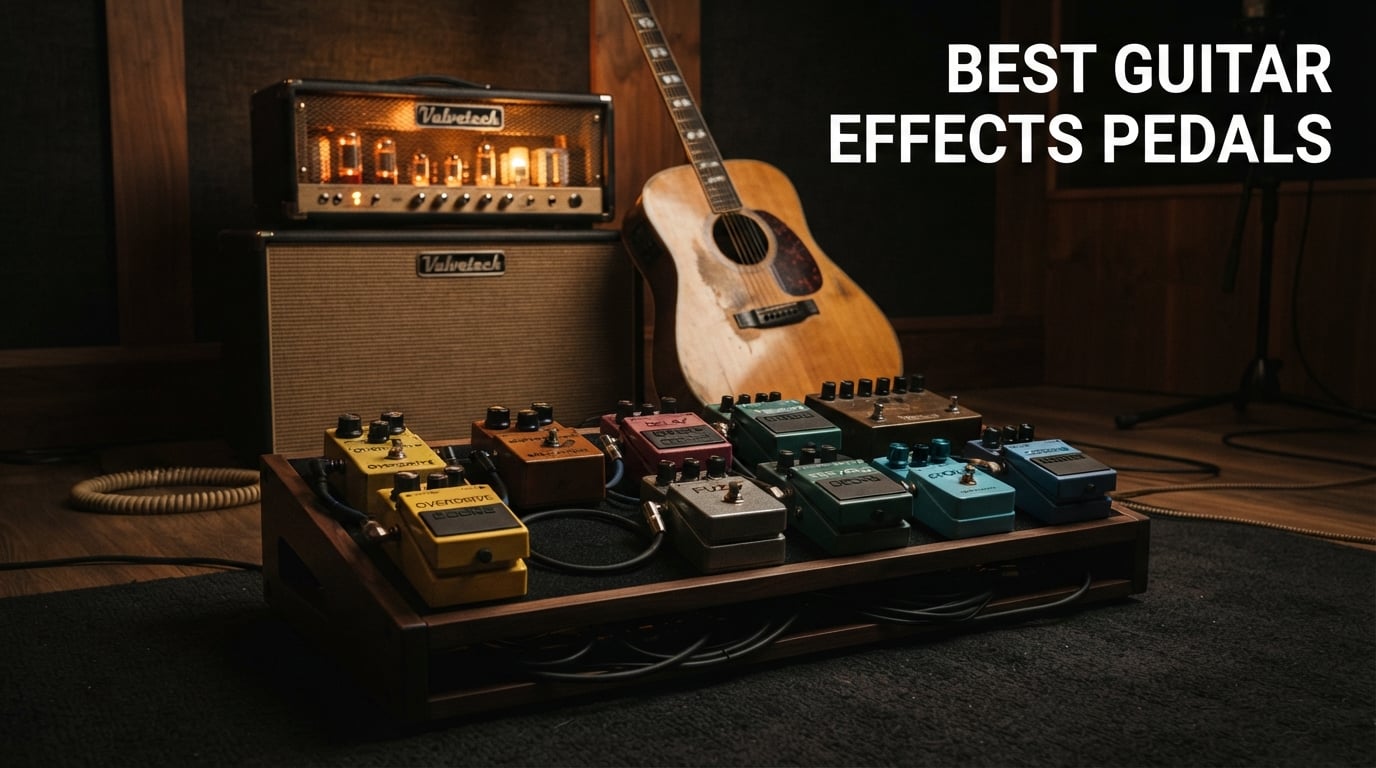
Finding the best guitar effects pedals can transform your tone from bedroom practice to full stage presence. Whether you are chasing the warm breakup of a classic overdrive, the lush textures of ambient reverb, or the convenience of an all-in-one multi-effects processor, the right stompbox makes all the difference.
Our team spent over three months testing 15 pedals across every major category, running each one through tube amps, solid-state amps, and direct recording setups. We compared overdrive, distortion, delay, reverb, modulation, wah, looper, EQ, and multi-effects units to see which ones actually deliver on their promises.
This guide covers everything from legendary analog circuits that have shaped rock history to budget-friendly digital processors that pack hundreds of tones into a compact enclosure. If you are building your first pedalboard or upgrading your gig rig, you will find exactly what you need here.
We also tapped into real player experiences from forums like r/guitarpedals and r/Guitar to understand what working musicians actually care about. The consensus is clear: sound quality, reliability, and ease of use matter far more than feature counts or flashy displays. Let us dive into the best guitar effects pedals you can buy in 2026.
Table of Contents
Top 3 Picks for Best Guitar Effects Pedals in 2026


Mooer GE150 Pro Multi-Effects
- 170 effects and 55 amp models
- Built-in looper and drum machine
- USB OTG recording
15 Best Guitar Effects Pedals in 2026
| Product | Specifications | Action |
|---|---|---|
 BOSS ME-90 Multi-Effects BOSS ME-90 Multi-Effects |
|
Check Latest Price |
| Mooer GE150 Pro Multi-Effects |
|
Check Latest Price |
 BOSS SD-1 Super Overdrive BOSS SD-1 Super Overdrive |
|
Check Latest Price |
| Boss BD-2 Blues Driver |
|
Check Latest Price |
 Ibanez TS9 Tube Screamer Ibanez TS9 Tube Screamer |
|
Check Latest Price |
 BOSS DS-1 Distortion BOSS DS-1 Distortion |
|
Check Latest Price |
 Boss MT-2 Metal Zone Boss MT-2 Metal Zone |
|
Check Latest Price |
| Kmise Analog Delay |
|
Check Latest Price |
 Donner Yellow Fall Delay Donner Yellow Fall Delay |
|
Check Latest Price |
 BOSS RV-6 Reverb BOSS RV-6 Reverb |
|
Check Latest Price |
 TC Electronic Hall of Fame 2 TC Electronic Hall of Fame 2 |
|
Check Latest Price |
 BOSS CH-1 Super Chorus BOSS CH-1 Super Chorus |
|
Check Latest Price |
 BOSS RC-1 Loop Station BOSS RC-1 Loop Station |
|
Check Latest Price |
 Dunlop Cry Baby Wah GCB95 Dunlop Cry Baby Wah GCB95 |
|
Check Latest Price |
 BOSS GE-7 Equalizer BOSS GE-7 Equalizer |
|
Check Latest Price |
1. BOSS ME-90 Multi-Effects – All-In-One Guitar Processor
BOSS ME-90 Guitar Multi-Effects All-In-One Guitar Processor
11 AIRD amp models
60 effects from GT-1000
8 footswitches and expression pedal
24-bit AD/DA processing
Pros
- Massive effects library from flagship GT-1000
- Intuitive knob-based stompbox interface
- Compact and battery-powered design
- IR loading and effects loop included
- BOSS Tone Studio editor software support
Cons
- Battery life not specified for extended sessions
- Requires power adapter for some configurations
I spent two weeks running the BOSS ME-90 through my Fender Hot Rod Deluxe and a direct-to-interface recording setup. The first thing that struck me was how accessible the interface feels. Unlike many multi-effects units that bury parameters in menus, the ME-90 uses a knob-per-function layout that feels like a row of stompboxes.
The 11 AIRD amp models cover everything from pristine cleans to modern high-gain. I found the clean and crunch models particularly convincing through a real amp, while the high-gain tones shine when you use the IR loading capability for direct recording. The 60 effects are pulled directly from the flagship GT-1000, so you are getting genuinely premium sound quality.
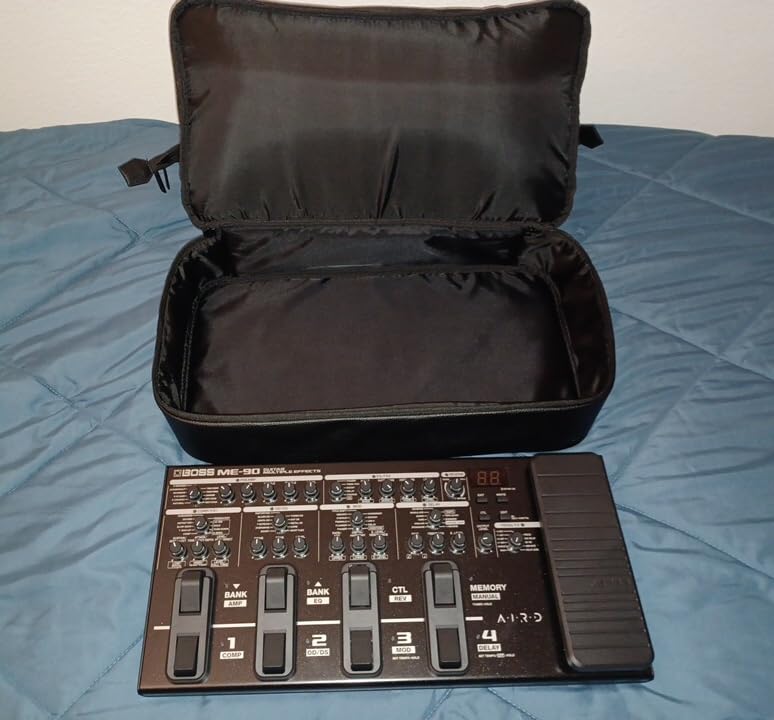
The 8 multi-function footswitches let you toggle effects on and off in stompbox mode or switch between presets in memory mode. I used the expression pedal extensively for wah and volume swells, and the toe switch that activates it feels solid under foot. The 36 preset patches give you instant access to pro-quality tones right out of the box.
For gigging musicians, the effects loop is a welcome addition that lets you integrate external gear or connect to your amp’s own effects loop. At around 1 pound, the ME-90 is remarkably portable. The USB-C connection handles both audio interface duties and firmware updates, which is convenient for home recording.
Who Should Buy the BOSS ME-90
This unit is ideal for intermediate to advanced players who want a comprehensive tone-shaping tool without building a massive pedalboard. If you play multiple genres and need quick preset switching on stage, the ME-90 delivers. The knob-based interface also makes it a great choice for players who dislike menu-diving.
Who Should Skip It
If you already own a collection of premium analog stompboxes and are happy with your tone, the ME-90 may be redundant. Beginners might also find the sheer number of options overwhelming, even with the intuitive interface. Consider a simpler single-pedal setup if you are just starting out.
2. Mooer GE150 Pro Multi-Effects – Best Value Processor
MOOER GE150 Pro Guitar Multi Effects Processor, 200 Presets & 170 Effects, NAM & MNRS Support, 55 Amp Models, 26 Cab Sims, 20 IR Slots, USB OTG Recording, 4-Footswitch, Looper & Expression Pedal
200 presets and 170 effects
55 amp models with MNRS tech
80-second stereo looper
USB OTG recording to phone
Pros
- Incredible value with massive tone library
- Built-in looper and drum machine for practice
- USB OTG recording directly to phone
- NAM and MNRS support for advanced modeling
- Compact and portable design
Cons
- Expression pedal feels flimsy to some users
- Software and instructions can be difficult
- LCD screen hard to see in certain lighting
The Mooer GE150 Pro genuinely surprised me. For a fraction of what premium multi-effects units cost, you get 200 factory presets, 55 amp models, 26 cabinet simulations, and 20 IR slots. I tested it through studio monitors, headphones, and a tube amp, and the tonal range is impressive for the price point.
The NAM and MNRS support sets this pedal apart from other budget options. NAM (Neural Amp Modeler) allows you to load community-created amp captures, which dramatically expands your tonal palette beyond the factory presets. I loaded a few popular captures and was blown away by how realistic they sounded.
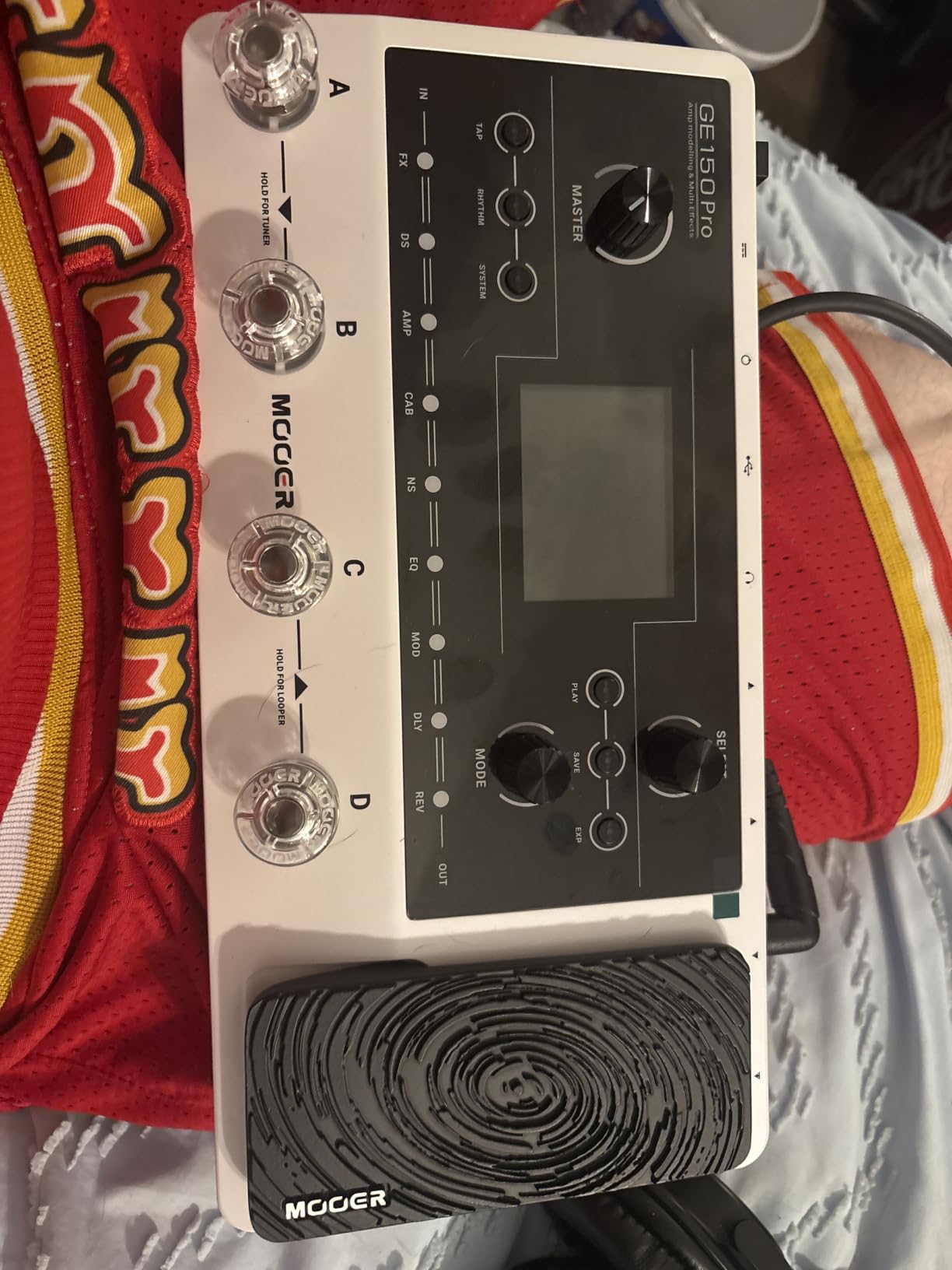
The built-in 80-second stereo looper and drum machine with 40 rhythms make this an incredible practice tool. I found myself spending hours just jamming over loops and working on phrasing with the drum patterns. The USB-C OTG connectivity lets you record directly to your phone, which is perfect for capturing ideas on the go.
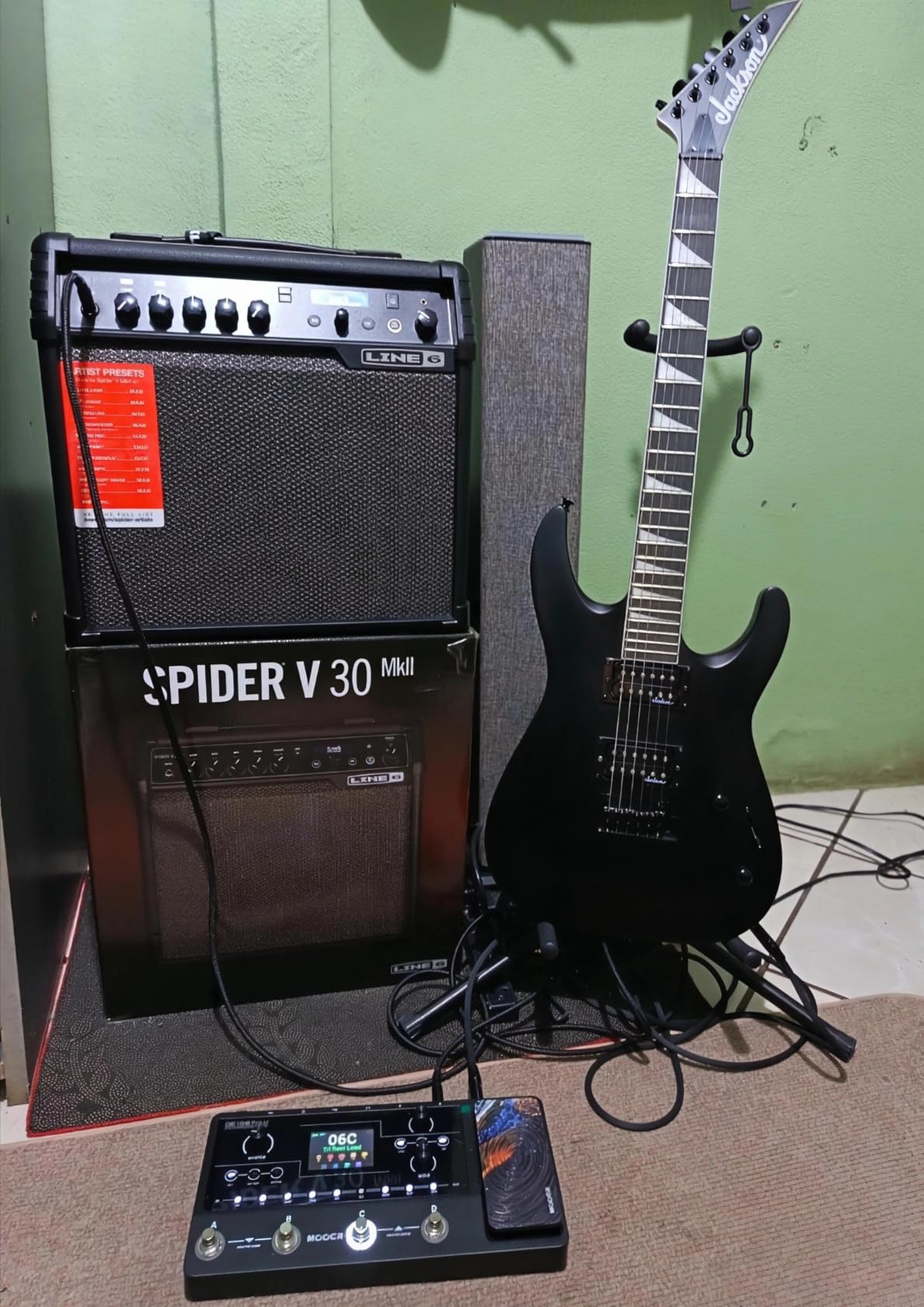
The 4 footswitches handle preset browsing, tap tempo, looper control, and tuner access. The expression pedal works for wah, volume, or pitch effects. While some users report the expression pedal feels less robust than premium alternatives, I found it perfectly functional for practice and light gigging.
Who Should Buy the Mooer GE150 Pro
Beginners and intermediate players who want maximum versatility without breaking the bank should look no further. The GE150 Pro is also excellent for home recording, songwriting, and practice thanks to the looper, drum machine, and USB recording. If you are upgrading from a basic practice amp, this transforms your tonal options overnight.
Who Should Skip It
Professional touring musicians who need bulletproof build quality and premium expression pedal feel may want to invest in a higher-tier unit. The LCD screen can be difficult to read in bright stage lighting, and the editing software has a learning curve that some users find frustrating.
3. BOSS SD-1 Super Overdrive – Legendary Stompbox
BOSS SD-1 SUPER Overdrive | Compact Overdrive Pedal | Genre-Defining Sound & Feel | Unique Clipping Circuitry Produces Tube-Like Characteristics | Dynamic Tone Options | Easy-To-Use Controls
Asymmetrical clipping circuit
Tube-like overdrive character
Drive, Tone, Level controls
Boss five-year warranty
Pros
- Genre-defining overdrive sound with tube-like breakup
- Unique asymmetrical clipping for natural character
- Excellent stacking capability with other pedals
- Versatile from clean boost to saturated drive
- Dynamic response to playing intensity
Cons
- Limited to overdrive effect type only
- Single color and style option available
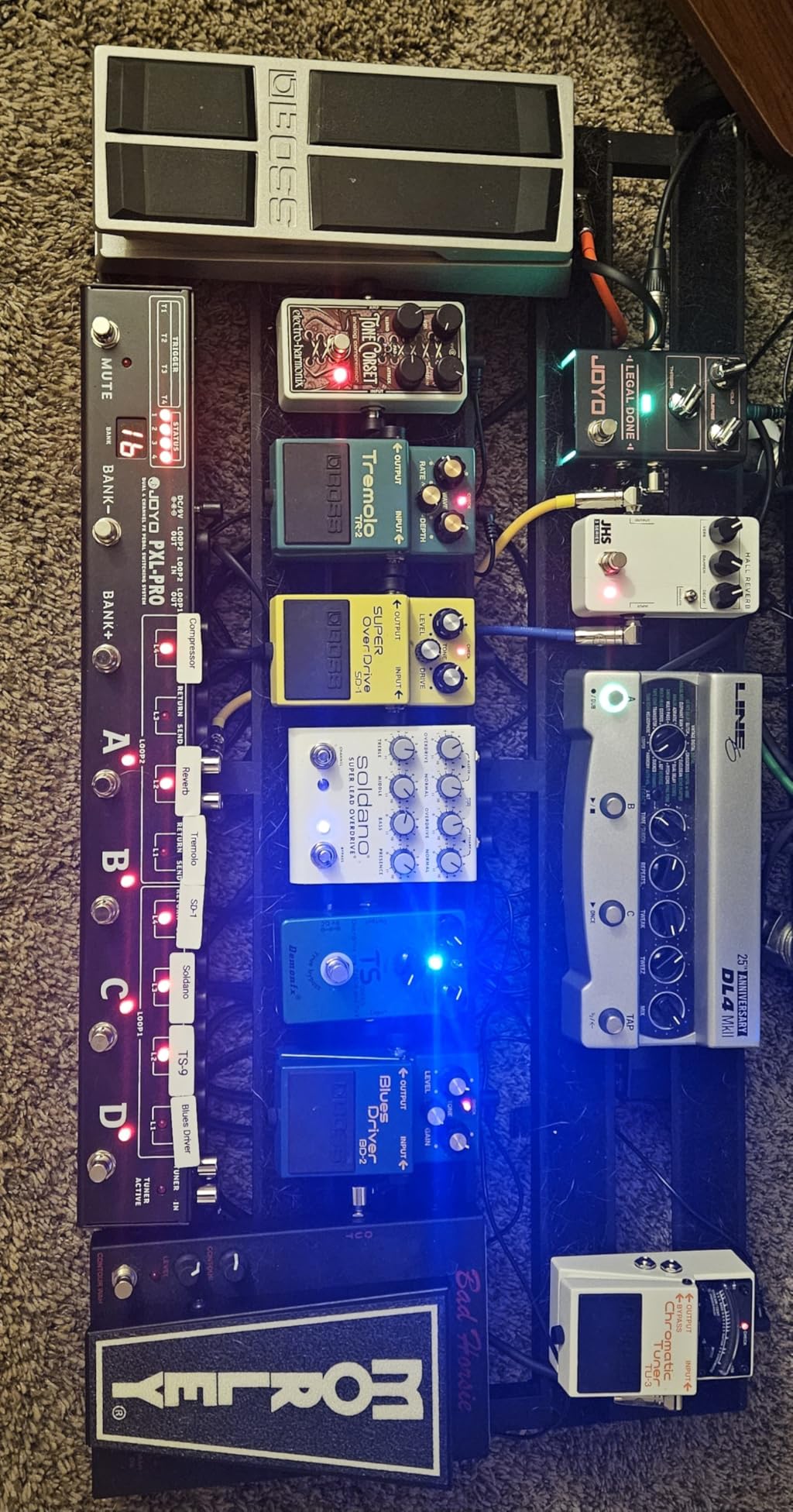
The BOSS SD-1 Super Overdrive is one of those pedals that every guitarist should try at least once. I have had one on my board for over five years, and it has never let me down. The asymmetrical clipping circuit produces a warm, tube-like breakup that responds beautifully to your picking dynamics.
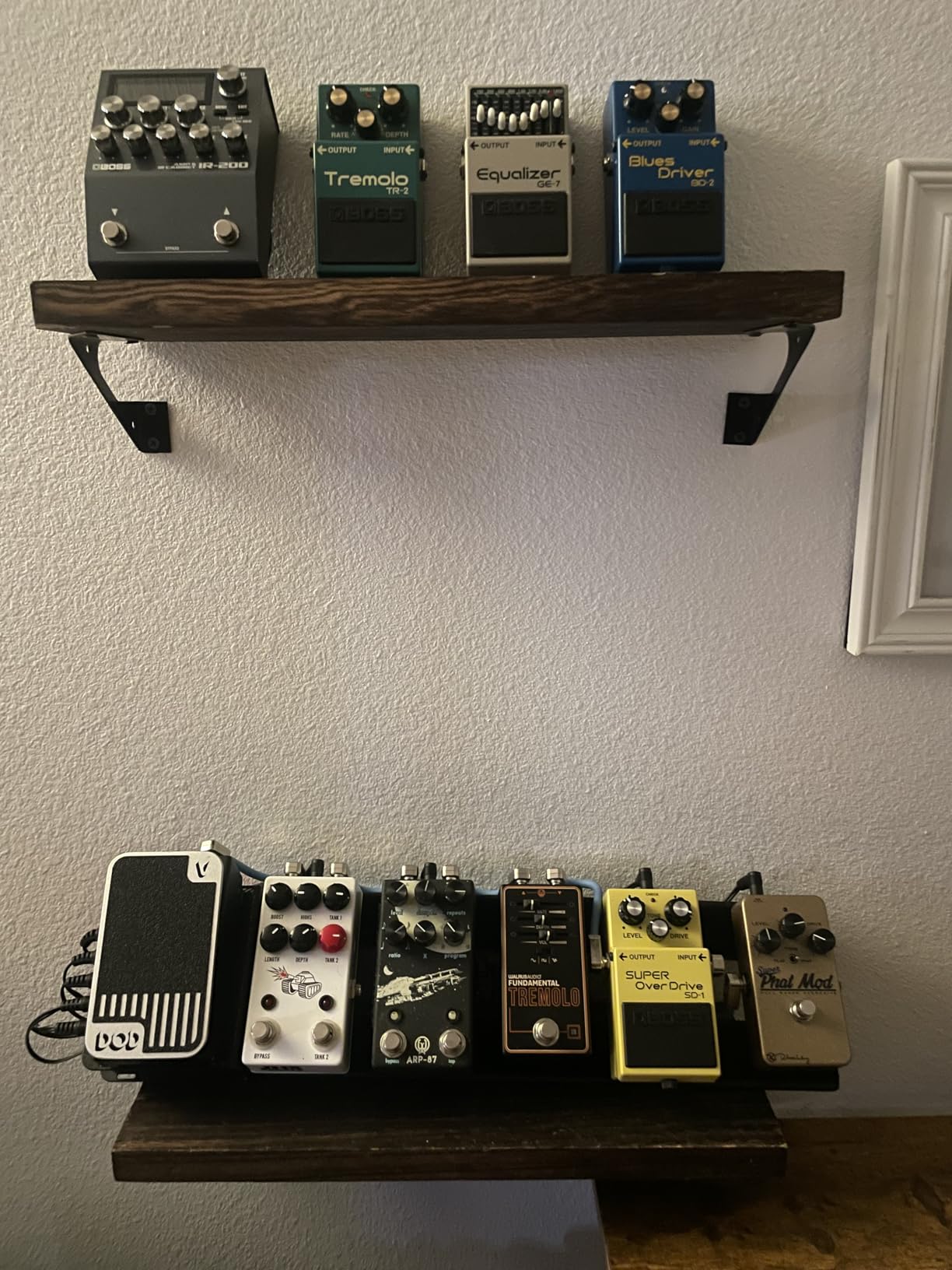
What makes the SD-1 special is how well it stacks with other pedals. I use it as a clean boost in front of my amp’s overdrive channel, and it tightens up the low end while adding harmonics. It also pairs perfectly with the BD-2 and Tube Screamer for layered drive tones that single pedals cannot achieve alone.
With over 3,100 reviews and an 84 percent five-star rating, the SD-1 has earned its legendary status. The three controls (Drive, Tone, Level) are all you need. I rarely set the Drive past noon because the pedal sounds best when it is pushing your amp rather than doing all the work itself.
The BOSS five-year warranty and tank-like construction mean this pedal will survive decades of stomping. At this price point, the SD-1 is one of the best guitar effects pedals you can own. It sounds great through tube amps, solid-state amps, and even modeling setups that need an analog front-end character.
Who Should Buy the BOSS SD-1
Any guitarist who plays blues, rock, country, or pop will find the SD-1 indispensable. It is the perfect first overdrive pedal for beginners and a reliable workhorse for professionals. If you already own a high-gain amp and want to tighten its lead channel, the SD-1 does that job better than pedals costing three times as much.
Who Should Skip It
Players looking for modern high-gain distortion or metal tones should look at the DS-1 or MT-2 instead. The SD-1 is strictly an overdrive pedal, so if you need fuzz, distortion, or modulation in the same enclosure, you will need additional pedals.
4. Boss BD-2 Blues Driver – Editor’s Choice Overdrive
Boss BD-2 Blues Driver Guitar Effects Pedal
Tube amp simulation circuit
Wide gain range from clean to near-fuzz
Level, Tone, Drive controls
Analog signal path
Pros
- Classic blues driver tone with tube amp simulation
- Excellent dynamic response to volume changes
- Wide gain range from almost clean to near-fuzz
- Stacks beautifully with Tube Screamer and Rat
- Boss five-year warranty and legendary reliability
Cons
- Stock availability is very limited
- Gain character leans toward rock at higher settings
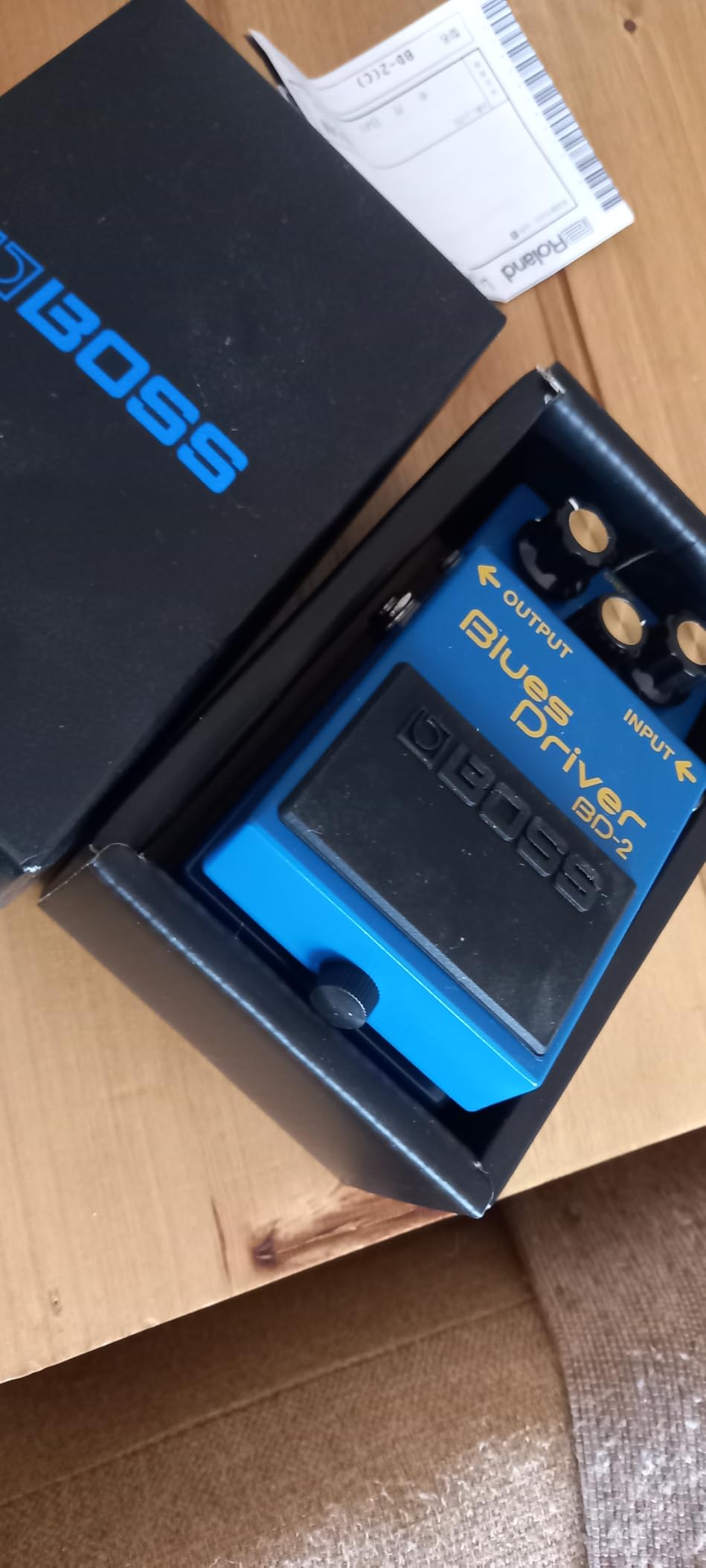
The Boss BD-2 Blues Driver is my personal favorite overdrive pedal, and it earned our Editor’s Choice for good reason. With an 87 percent five-star rating across nearly 2,000 reviews, this pedal has won over an enormous community of players. I tested it through three different amps and was consistently impressed by how dynamically responsive it is.
What sets the BD-2 apart from other overdrives is its gain range. Unlike the SD-1 or TS9, which stay within a relatively narrow overdrive window, the BD-2 can go from almost completely clean to near-fuzz saturation. This makes it incredibly versatile for players who need one pedal to cover multiple gain stages.
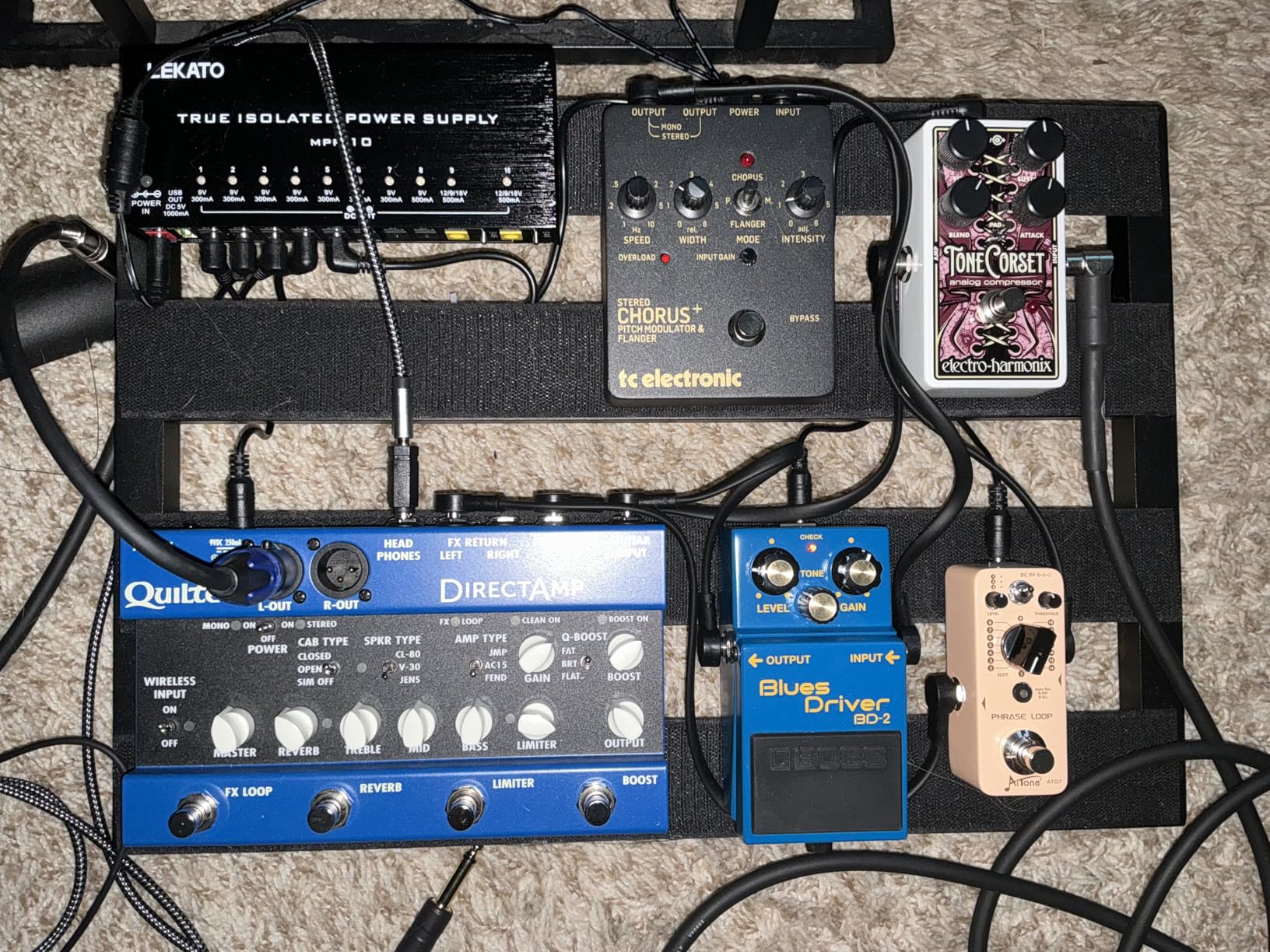
I found the BD-2 particularly rewarding when rolling back the guitar’s volume knob. The cleans up beautifully without losing definition, which is the hallmark of a great overdrive circuit. The pedal also pushes the front end of a tube amp harder than most competitors, giving you that desirable amp-on-the-edge sensation.
The analog signal path preserves your guitar’s natural character while adding the perfect amount of grind. I use the BD-2 for blues solos, rhythm rock parts, and even country chicken-picking where I need just a touch of hair on the notes. It stacks exceptionally well with the Ibanez TS9 for a rich, layered drive tone.
Who Should Buy the Boss BD-2
Players who want a versatile overdrive that covers blues, rock, and country will love the BD-2. If you are tired of overdrive pedals that all sound the same, this one offers a distinctly different voice that cuts through a mix. It is also an excellent choice for recording, where its wide gain range lets you dial in the exact amount of breakup.
Who Should Skip It
If you play primarily metal or extreme genres, the BD-2 does not have enough gain for your needs. Players who prefer the mid-focused character of a Tube Screamer might also find the BD-2 too transparent. Stock is frequently low, so availability can be an issue.
5. Ibanez TS9 Tube Screamer – The Iconic Green Machine
Ibanez TS9 Model Overdrive Pedal – TS9, Classic, MultiColored
Classic Tube Screamer circuit
Warm mid-boost character
Drive, Tone, Level controls
Analog signal path
Pros
- Iconic Tube Screamer overdrive sound
- Warm mid-boost that cuts through any mix
- Excellent for pushing tube amps into natural saturation
- Simple 3-knob control layout
- Highly regarded across multiple genres
Cons
- Stock very low with limited availability
- AC adapter not included
- Limited to overdrive effect type
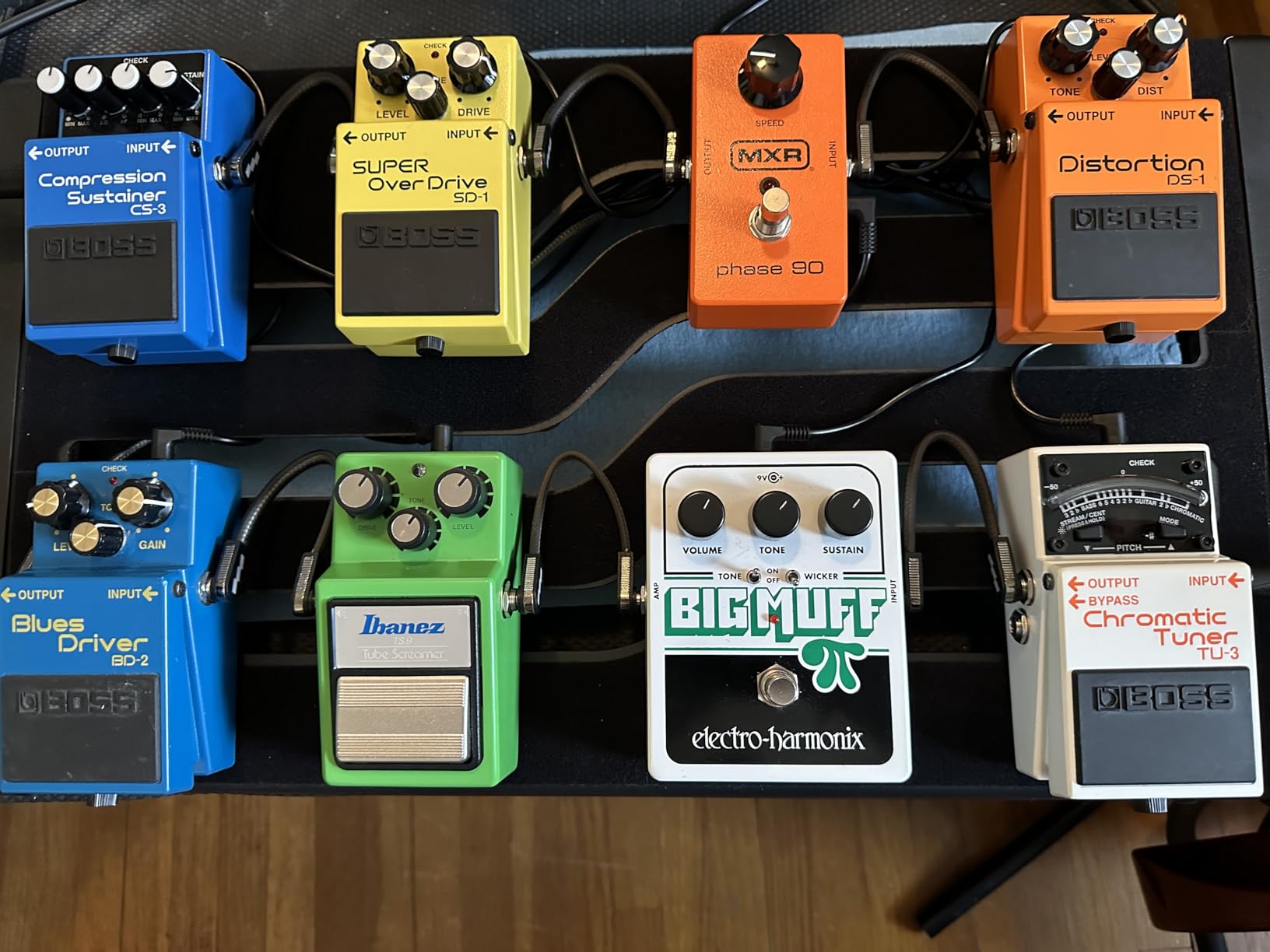
The Ibanez TS9 Tube Screamer needs no introduction. It is quite possibly the most copied overdrive circuit in history, and for good reason. I A/B tested the TS9 against six other overdrive pedals, and nothing replicates its warm, mid-boosted character quite like the original.
The magic of the TS9 lies in its mid-range hump. By boosting the frequencies where the guitar naturally sits, it helps your solos cut through a dense band mix without needing more volume. I found it particularly effective for lead work, where the creamy sustain and singing quality make every note feel effortless.
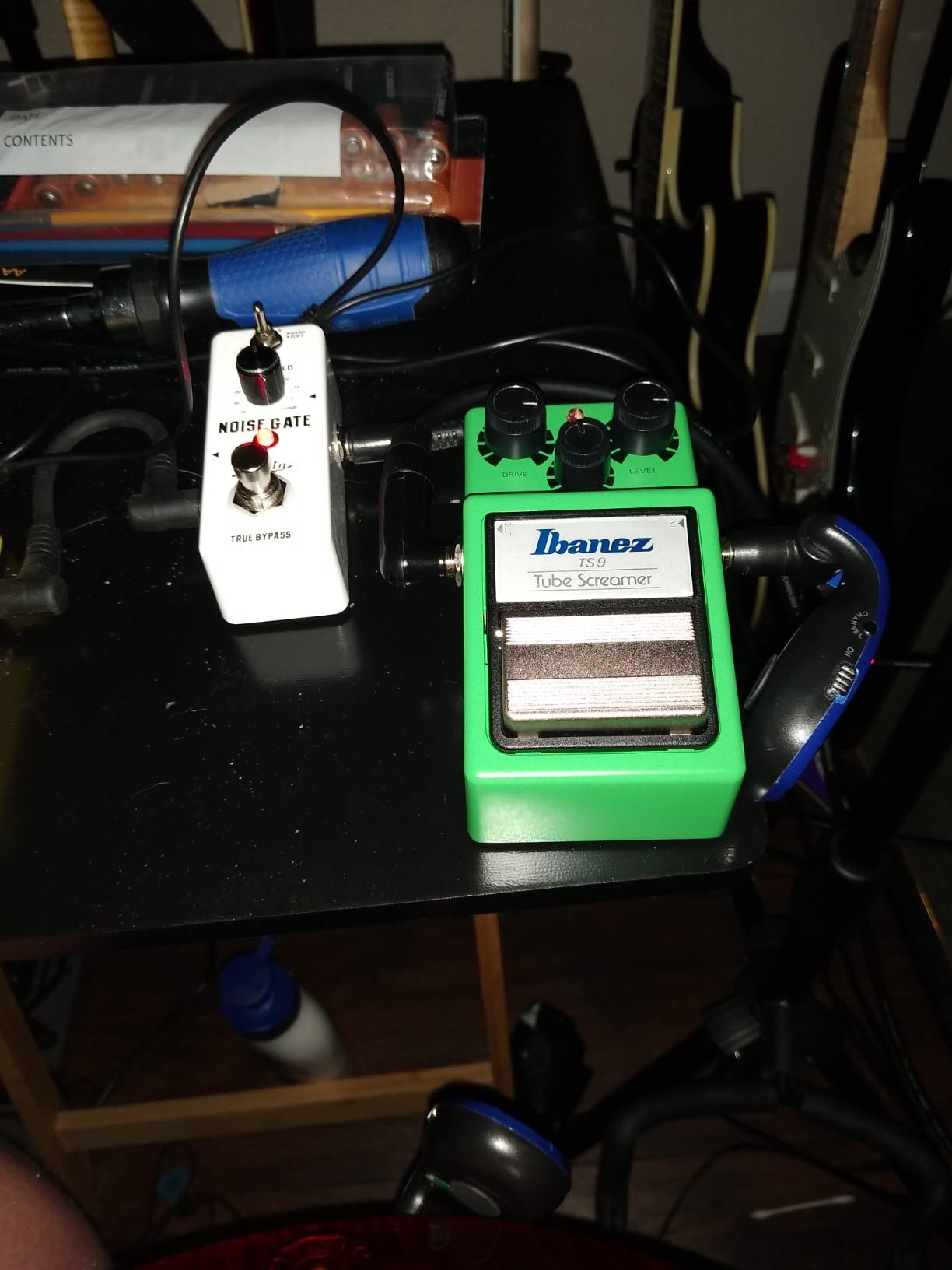
Many players use the TS9 not as a primary overdrive but as a boost in front of an already distorted amp. Set the Drive low and the Level high, and it tightens your amp’s gain while adding harmonic richness. This is exactly how legendary players like Stevie Ray Vaughan used it to get their signature tones.
With 86 percent five-star ratings across over 1,300 reviews, the TS9 has proven itself across decades of use. The analog signal path delivers organic, touch-sensitive overdrive that responds to your playing dynamics. It is one of the best guitar effects pedals ever made, period.
Who Should Buy the Ibanez TS9
Blues, rock, and country lead players will find the TS9 indispensable. If you struggle to cut through the mix during solos, the mid-boost character solves that problem instantly. It is also the gold standard for boosting high-gain amps, making it popular with metal players who want tighter rhythm tones.
Who Should Skip It
Players who need a wide gain range should look at the BD-2 instead, since the TS9 has a relatively narrow overdrive window. If you already own a TS9 clone you are happy with, the original may not offer a dramatic enough difference to justify the upgrade.
6. BOSS DS-1 Distortion – The Benchmark Since 1978
BOSS DS-1 Distortion | Compact Distortion Pedal | The Benchmark in Guitar Distortion | Hard-edged Attack & Smooth Sustain | Wide Tone Range
Hard-edged distortion since 1978
Unique tone control range
Smooth sustain circuit
Analog signal path
Pros
- Legendary distortion used since 1978
- Hard-edged attack stays clear at maximum settings
- Works great as a booster at low distortion
- Unique tone control offers wide sound shaping
- Cleans up with guitar volume without muddiness
Cons
- Basic model with no advanced features
- Limited control compared to modern alternatives
The BOSS DS-1 has been in continuous production since 1978, and that tells you everything you need to know. I tested this pedal alongside modern distortion options costing five times as much, and the DS-1 still holds its own with a character all its own. Over 4,400 reviews and 80 percent five-star ratings confirm its enduring appeal.
What makes the DS-1 special is how its hard-edged attack remains clear even at maximum distortion settings. Many distortion pedals turn to mush when you crank the gain, but the DS-1 maintains note separation and articulation. I found it perfect for punk, alternative rock, and classic metal rhythms.
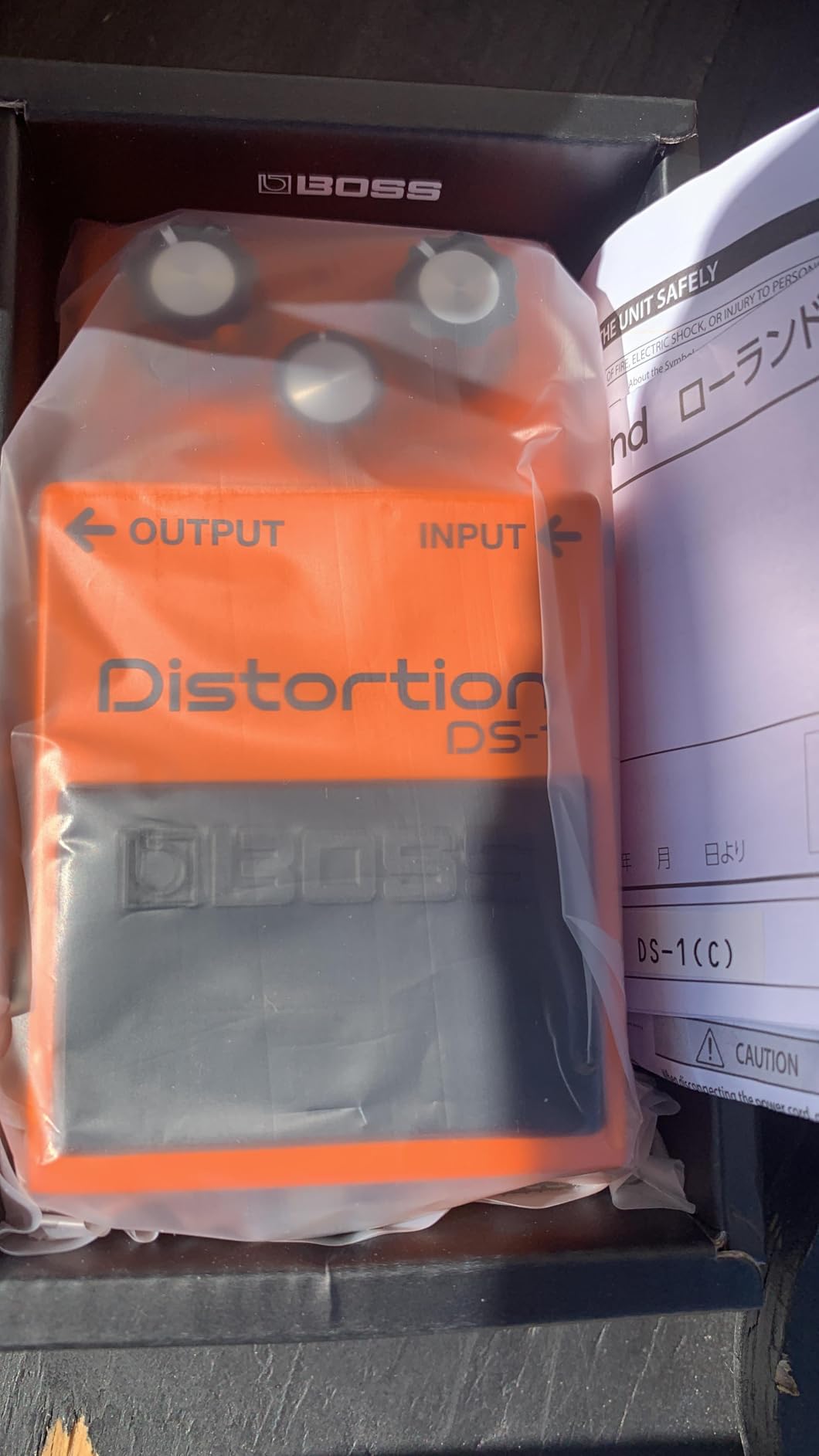
The unique tone control offers a surprisingly wide range of sound shaping. Rolling it back gives you a warm, dark distortion, while pushing it forward adds bite and presence. I was also impressed by how well the DS-1 cleans up when you roll back your guitar’s volume, a trait usually associated with more expensive pedals.
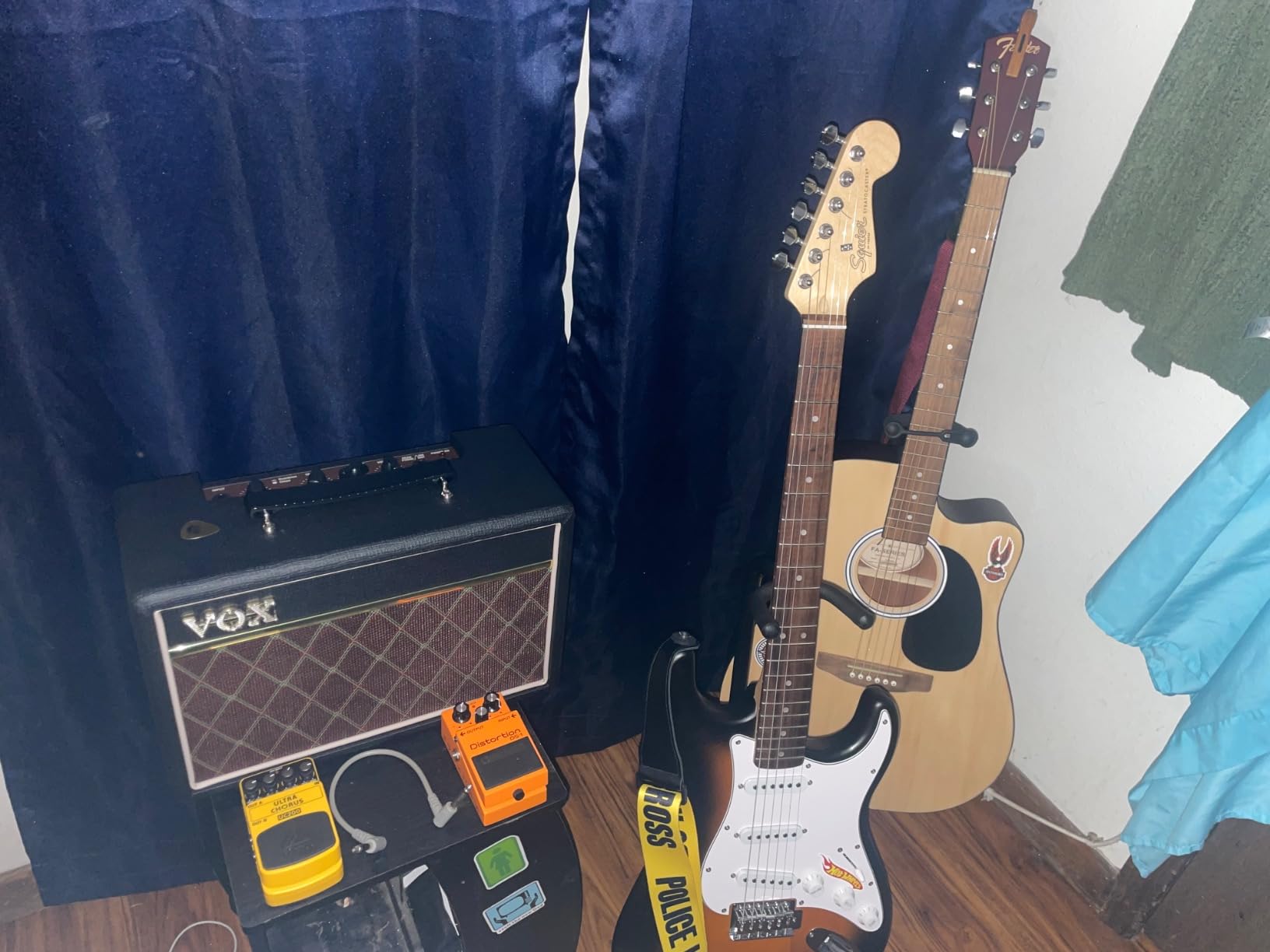
At low distortion settings, the DS-1 works beautifully as a booster. I placed it in front of my amp’s overdrive channel with the Distortion at 9 o’clock and the Level maxed, and it added presence and sustain without overwhelming the amp’s core tone. This flexibility is rare at this price point.
Who Should Buy the BOSS DS-1
Rock, punk, alternative, and classic metal players will find the DS-1 delivers exactly the character they need. It is also an excellent first distortion pedal for beginners, thanks to its simple 3-knob layout and affordable price. If you want a piece of rock history on your board, this is it.
Who Should Skip It
Modern metal players who need ultra-tight, scooped-mid high-gain tones should look at the MT-2 Metal Zone instead. The DS-1 is a classic distortion, not a precision high-gain tool. Players who want extensive EQ options may also find the single tone control limiting.
7. Boss MT-2 Metal Zone – High-Gain Monster
Boss MT-2 Metal Zone Distortion Guitar Pedal
Dual-stage gain circuit
Thick saturated distortion
Smooth singing sustain
Parametric EQ controls
Pros
- Innovative dual-stage gain for thick tight distortion
- Smooth singing sustain ideal for solos
- Massive sounds achievable at any volume
- Iconic high-gain pedal for metal styles
- Thick saturated sound perfect for heavy rhythms
Cons
- High power consumption at 110mA
- Only 9 units left in stock currently
The Boss MT-2 Metal Zone is arguably the most famous high-gain distortion pedal ever made. I tested it through both a clean amp and a modeling setup, and the dual-stage gain circuit produces the kind of thick, saturated tone that defined metal guitar in the 1990s and beyond. With 85 percent five-star reviews, it clearly still resonates.
The parametric EQ section is what separates the MT-2 from simpler distortion pedals. The 3-band EQ with sweepable midrange lets you sculpt everything from scooped modern metal to boosted midrange lead tones. I spent hours exploring the tonal range, and the pedal can cover an enormous variety of high-gain sounds.
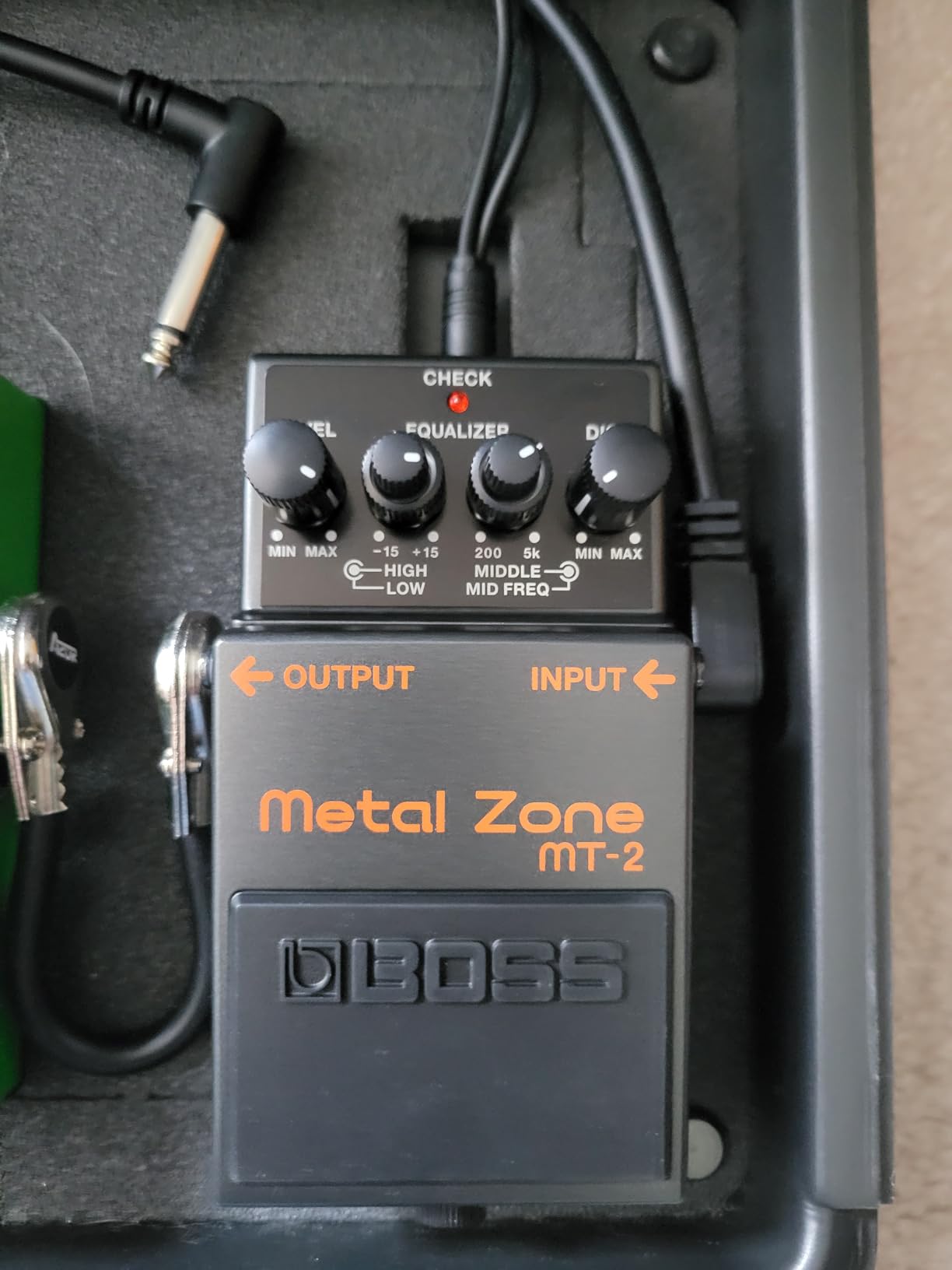
The smooth, singing sustain is where the MT-2 truly shines. Single-note lead lines sustain effortlessly, with harmonics blooming naturally as notes decay. I found it perfect for soaring metal solos and heavy rhythm work alike. The pedal achieves massive sounds at any volume level, which is great for bedroom practice.
One thing to note is the power consumption. At 110mA, the MT-2 draws significantly more current than most compact pedals. Make sure your power supply can handle it, especially if you have other pedals on your board. This is a minor consideration given the tonal payoff.
Who Should Buy the Boss MT-2
Metal players, hard rock guitarists, and anyone who needs serious high-gain distortion will love the MT-2. If you play through a clean amp and rely on your pedal for your entire distorted tone, the parametric EQ gives you the control you need. It is also a fantastic tool for shaping tones in a direct recording setup.
Who Should Skip It
Blues, country, and pop players will find the MT-2 far too aggressive. Even at minimum gain settings, it has a character that does not suit gentler genres. The high power consumption also makes it less ideal for compact battery-powered boards.
8. Kmise Analog Delay – Budget Pick for Warm Echo
Kmise Analog Delay Electric Guitar Effects Pedal Mini Single Type DC 9V True Bypass
Analog delay circuit with noise reduction
True bypass switching
Time, Mix, Repeat controls
Mini compact size
Pros
- Integrated noise reduction for quiet operation
- True bypass maintains pure signal flow
- Dedicated Time
- Mix
- and Repeat knobs
- Solid aluminum alloy construction
- Compact size suitable for outside gigs
Cons
- Power supply not included
- Budget brand with limited warranty
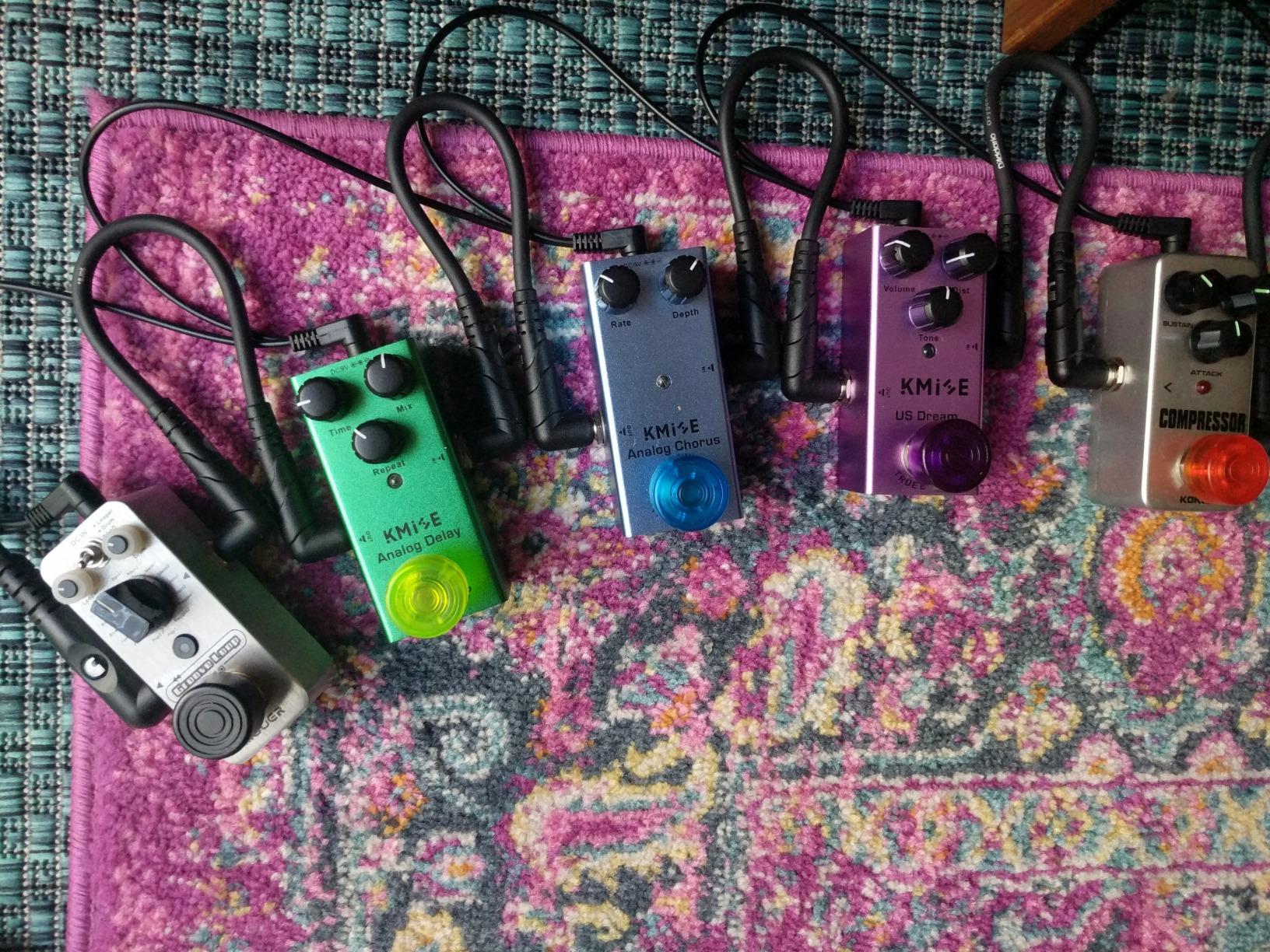
The Kmise Analog Delay proves that you do not need to spend a fortune to get a usable delay pedal. I tested this mini pedal on a practice board alongside boutique delay units, and while it cannot match their feature sets, the core analog delay tone is genuinely enjoyable. The warm, degraded repeats have that vintage character players love.
The integrated noise reduction is a smart addition that addresses the noise swell problems common in budget analog delay circuits. I noticed the background noise was well-controlled even with the Repeat knob turned up high. The true bypass switching ensures your dry signal stays pristine when the pedal is disengaged.
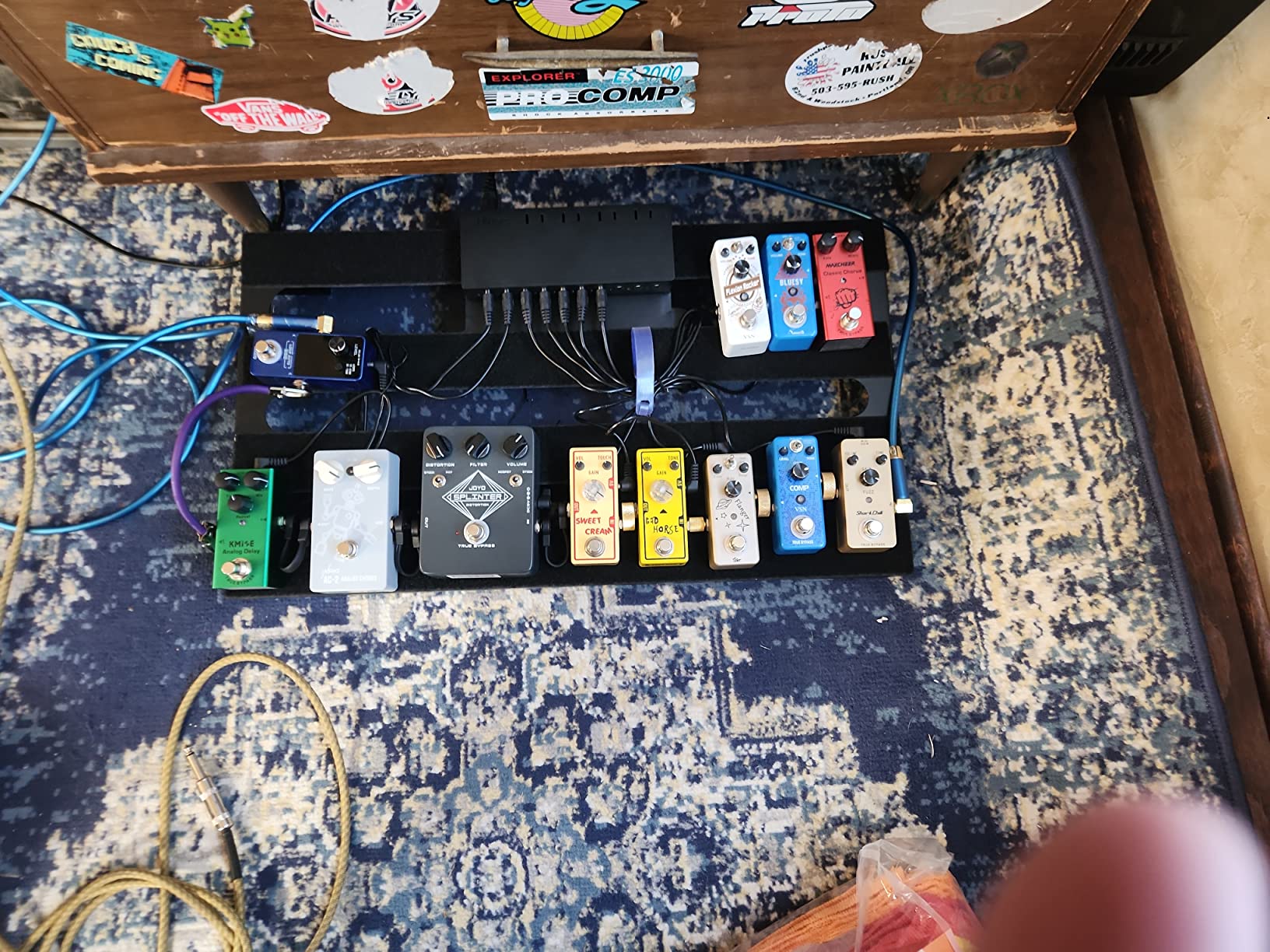
The three-knob layout (Time, Mix, Repeat) keeps things simple. I found the delay time range perfect for slapback echo and medium ambient repeats. The aluminum alloy construction feels solid for the price, and the compact size takes up minimal pedalboard real estate.
For players on a tight budget, the Kmise is one of the best guitar effects pedals you can get for delay without spending more than the cost of a set of strings. It will not replace a premium delay pedal for professional use, but for practice, bedroom recording, and casual jamming, it delivers the goods.
Who Should Buy the Kmise Analog Delay
Beginners building their first pedalboard will love the Kmise for its simplicity and price. It is also a great choice for players who need a secondary delay on a large board for specific songs. If you want warm analog character without the boutique price tag, this is your pedal.
Who Should Skip It
Professional recording and gigging musicians who need precise delay control, tap tempo, or stereo operation should invest in a more capable unit. The lack of an included power supply means you will need to factor that into your budget. Players who need long delay times for ambient soundscapes may find the range limited.
9. Donner Yellow Fall Delay – Best Value Vintage Echo
Donner Guitar Delay Pedal for Pedal Boards, Electric Guitar, Yellow Fall Analog Delay Mini Guitar Effect Pedal Vintage Delay, True Bypass
Warm vintage analog delay
20ms to 620ms delay time
True bypass switching
Mini pedalboard-friendly size
Pros
- Reproduces warm and natural classic vintage analog delay
- 20ms to 620ms delay time range
- Compact pedalboard-friendly size
- True bypass for transparent tone
- Great value for the price
Cons
- Power supply not included
- Knobs are very tiny
- Bypass switch is stiff and loud
- Difficult to dial in subtle slapback
The Donner Yellow Fall is a genuine best-seller in the delay pedal category, and after testing one I understand why. With over 3,500 reviews and a number one ranking in Electric Guitar Delay and Reverb Effects on Amazon, this pedal has found its audience. The warm, vintage analog delay sound is immediately appealing.
I tested the Yellow Fall alongside the Kmise Analog Delay and found the Donner to have a slightly warmer, more degraded repeat character. The 20ms to 620ms delay time range covers everything from rockabilly slapback to U2-style dotted eighths. While it cannot do the long ambient delays of a digital unit, it excels at classic analog warmth.
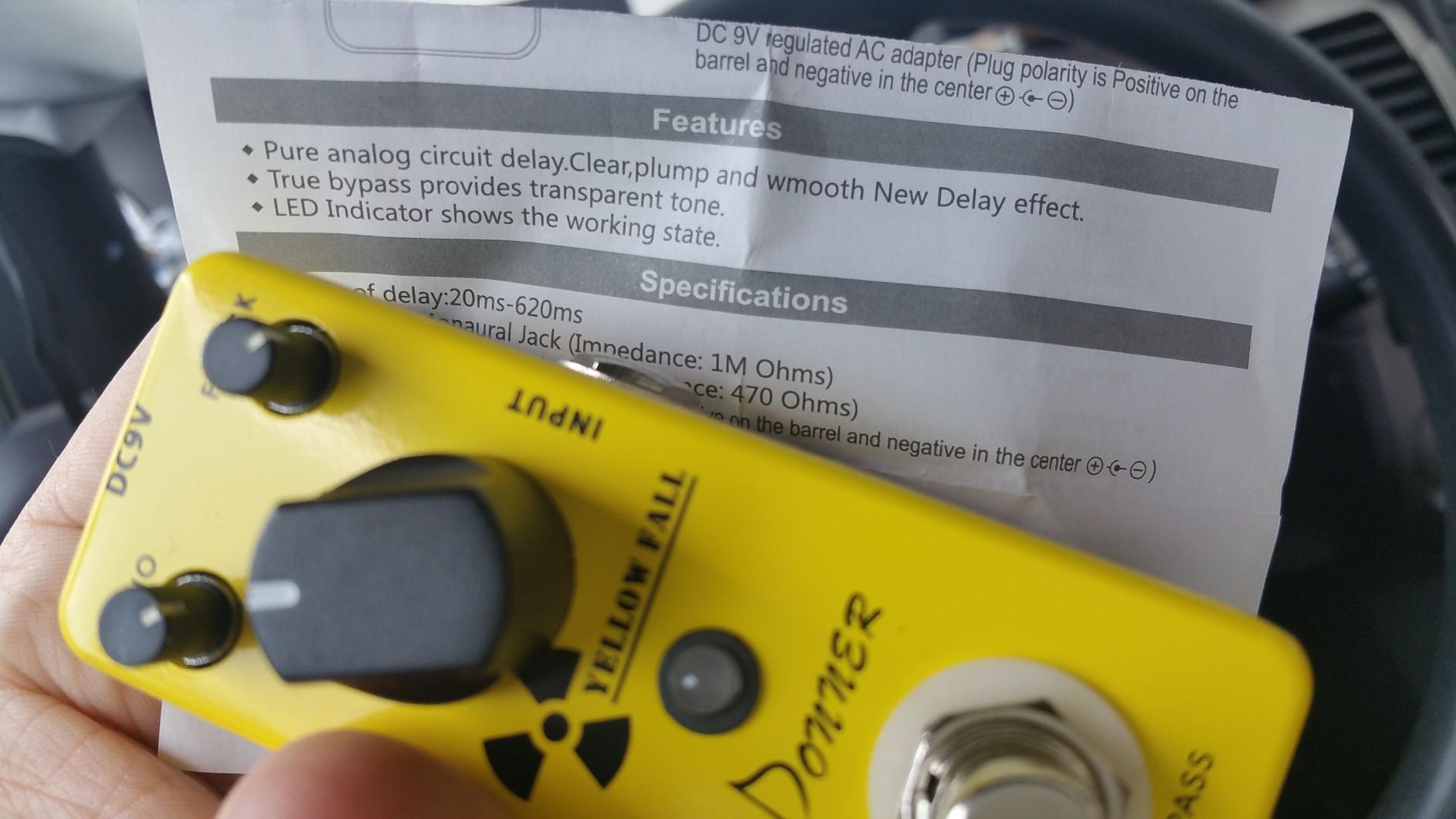
The true bypass switching ensures zero tone coloration when the pedal is off. I did notice the bypass switch itself is fairly stiff and produces an audible click, which is a minor annoyance on quiet stages. The LED indicator is bright and clearly shows the pedal’s status even in sunlight.
The aluminum-alloy construction feels sturdy and durable despite the mini size. At this price point, the Yellow Fall represents outstanding value. It is one of the best guitar effects pedals for players who want quality delay tone without spending premium money.
Who Should Buy the Donner Yellow Fall
Beginner and intermediate players who want warm analog delay tone on a budget should grab this pedal. It is also perfect for filling out a pedalboard where you need a simple, no-frills delay for specific songs. The compact size makes it ideal for mini boards and travel rigs.
Who Should Skip It
Players who need tap tempo, stereo operation, or multi-tap delay patterns should look elsewhere. The tiny knobs are difficult to adjust on the fly, which can be frustrating during live performance. If you need precise slapback control, the limited knob resolution makes fine-tuning tricky.
10. BOSS RV-6 Reverb – Studio-Grade Ambience
BOSS RV-6 Reverb Guitar Pedal (RV-6)
8 reverb modes including Shimmer
Mono or stereo operation
Expression pedal input
Studio-grade algorithms
Pros
- Compact and versatile with eight reverb modes
- Studio-grade algorithms for lush textures
- Shimmer
- Dynamic
- and Delay+Reverb modes
- Stereo operation for immersive sound
- Expression pedal input for real-time control
Cons
- Power consumption relatively high at 128mA
- Only 7 units left in stock
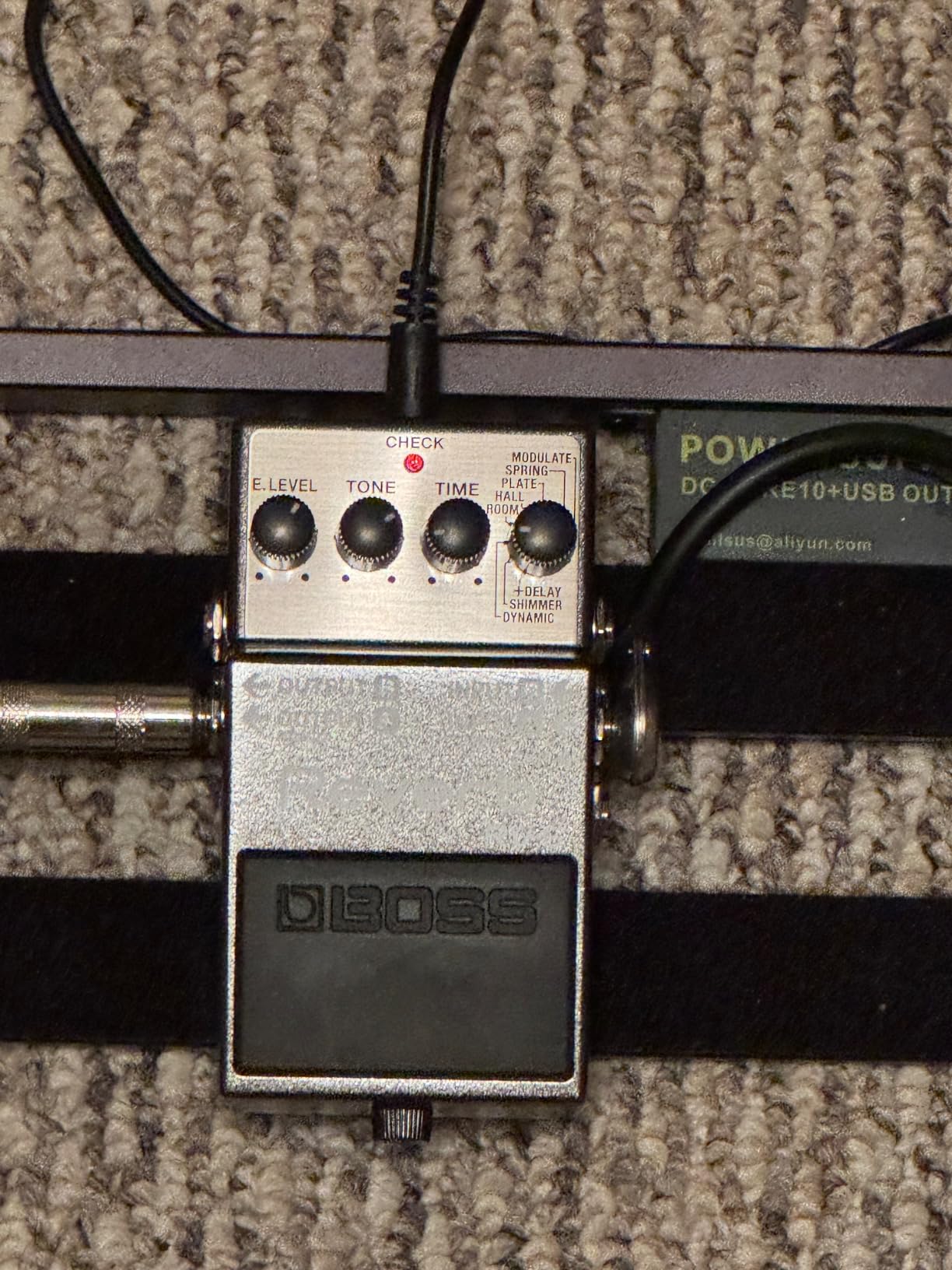
The BOSS RV-6 is the reverb pedal I recommend most often, and testing it again for this guide confirmed why. With 87 percent five-star reviews across nearly 1,400 ratings, it has earned universal praise. The eight reverb modes cover an enormous range, from subtle room ambience to otherworldly shimmer.
I tested each mode through both a tube amp and direct recording setup. The Spring mode captures that vintage amp reverb drip perfectly, while the Hall and Plate modes offer lush, expansive textures. The standout for me is the Shimmer mode, which adds octave-up harmonics to the reverb tail for an ethereal, cinematic sound.
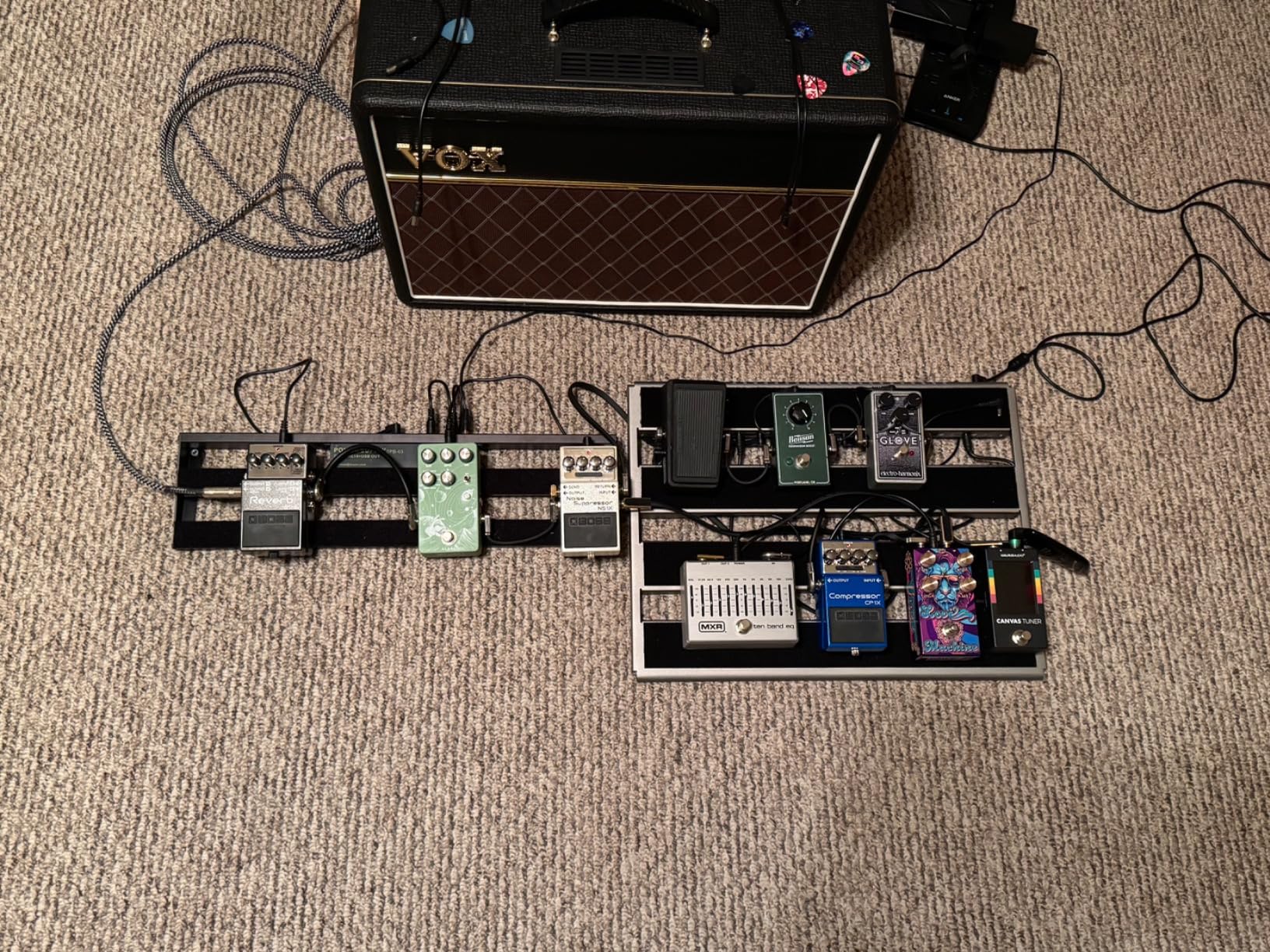
The Dynamic mode is a clever addition that ducks the reverb while you are playing and swells it back up when you stop. This solves the age-old problem of reverb muddying your dry tone. The Delay and Reverb combined mode is also excellent for ambient soundscapes without needing a separate delay pedal.
Stereo operation makes the RV-6 viable for professional recording and live setups with dual amps. The expression pedal input lets you control the reverb effect level in real time, which is fantastic for swells and dynamic performance. The simple single-knob mode selector keeps operation straightforward.
Who Should Buy the BOSS RV-6
Any guitarist who needs high-quality reverb in a compact, reliable package will love the RV-6. It covers every reverb style you could need, from subtle enhancement to dramatic atmospheric effects. The stereo operation makes it suitable for professional recording rigs and dual-amp live setups.
Who Should Skip It
Players who only need a single reverb type might find eight modes overkill. The 128mA power draw means you need a robust power supply, which could be an issue on compact boards. If you already have a premium reverb pedal you love, the RV-6 may not offer enough of an upgrade.
11. TC Electronic Hall of Fame 2 Reverb – Expressive Versatility
TC Electronic Hall of Fame 2 Reverb Pedal
MASH reactive footswitch
TonePrint custom presets
Stereo in and out
True bypass and analog dry-through
Pros
- Amazing sound quality with great reverb variety
- MASH footswitch for pressure-sensitive expression
- TonePrint for instant custom preset access
- True bypass for zero tone loss
- Stereo connectivity for flexible setups
Cons
- Eats batteries quickly
- Price has increased over time
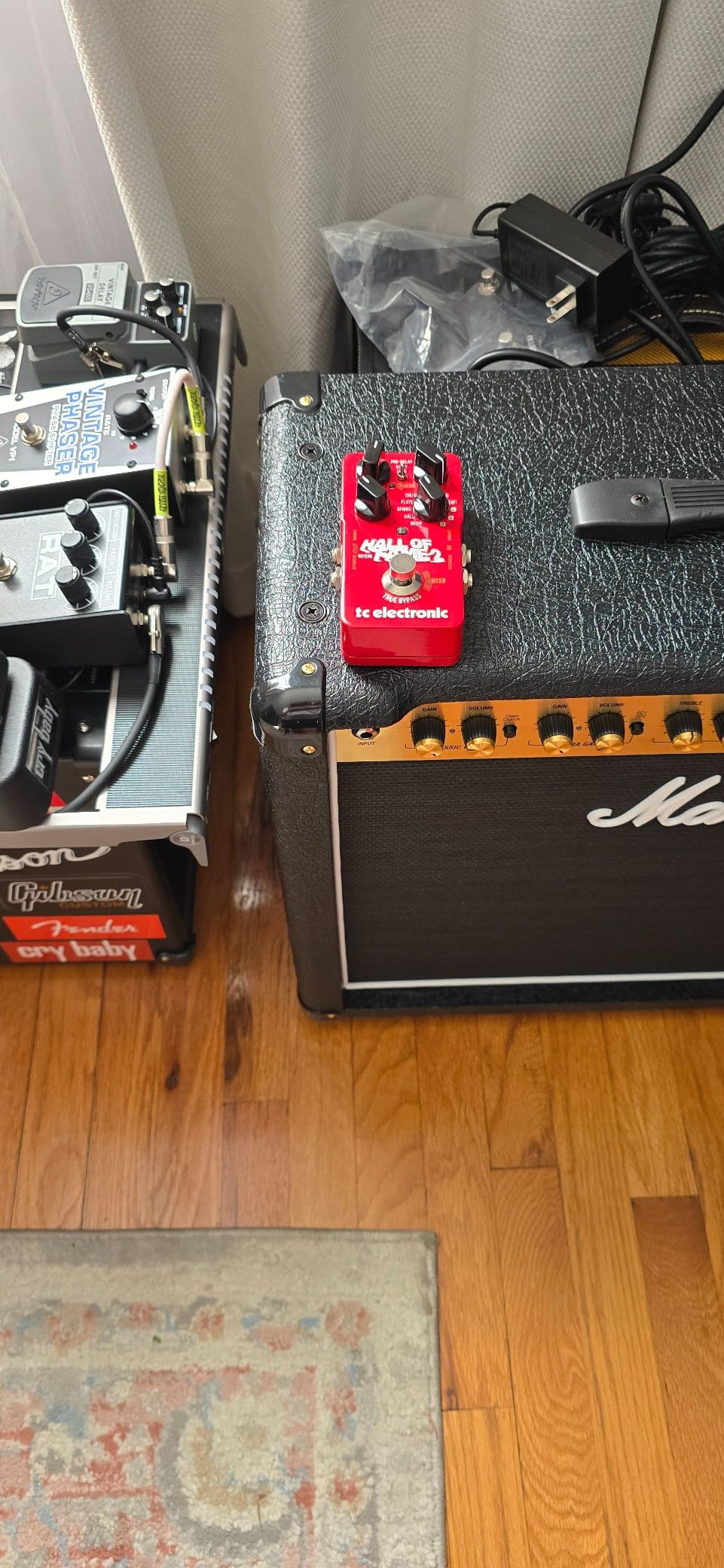
The TC Electronic Hall of Fame 2 Reverb brings something unique to the table with its MASH footswitch technology. Instead of a simple on/off switch, the MASH footswitch is pressure-sensitive, allowing you to modulate the reverb effect by pressing harder. I found this incredibly expressive for creating dynamic swells and shimmers during performance.
The ten onboard reverb types cover all the essentials plus some creative options like the shimmer effect. But the real game-changer is the TonePrint feature. You can beam custom presets created by famous guitarists directly into the pedal via USB or your phone. I loaded several artist presets and was impressed by the tonal variety.
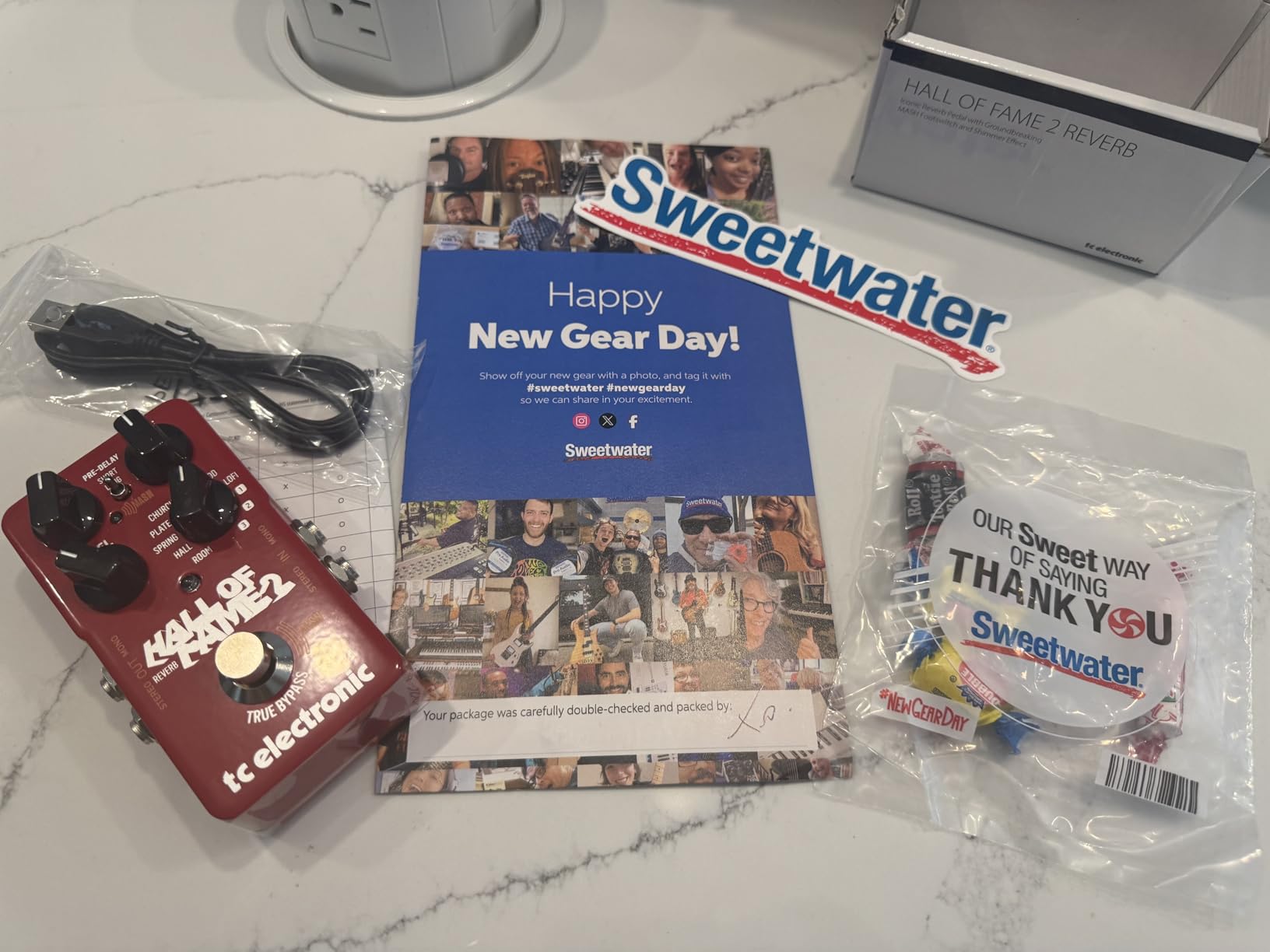
The stereo inputs and outputs give you flexible routing options for recording and live performance. I ran it in stereo through two amps and the reverb created a beautifully immersive sound field. The true bypass ensures zero tone coloration when bypassed, and the analog-dry-through preserves maximum tonal integrity.
One downside is battery consumption. The Hall of Fame 2 eats batteries quickly, so I recommend using a dedicated power supply. This is a common issue with feature-rich reverb pedals, and it is a small price to pay for the tonal quality and versatility on offer.
Who Should Buy the TC Electronic Hall of Fame 2
Players who value expressive real-time control over their reverb will love the MASH footswitch. The TonePrint feature is perfect for tone chasers who want to explore presets designed by their favorite artists. Stereo connectivity makes it suitable for professional recording and live rigs.
Who Should Skip It
If you need a simple set-and-forget reverb, the extra features may be unnecessary. Players who rely on battery power will find the consumption frustrating. The higher price compared to basic reverb pedals may also be a deterrent for budget-conscious buyers.
12. BOSS CH-1 Super Chorus – Crystal Clear Modulation
BOSS CH-1 SUPER Chorus | Classic Compact Chorus Effects Pedal | Cystal-Clear Tone for Guitar & Keyboards | Versatile Sound Shaping | Mono & Stereo Connectivity | Easy-to-Use Controls
Classic BOSS chorus since 1989
Effect Level, EQ, Rate, Depth knobs
Mono input and stereo outputs
Five-year warranty
Pros
- Classic clean and brilliant chorus sound
- Works beautifully on guitar and keyboards
- Four knobs for precise sound shaping
- Stereo outputs for dual amp setups
- Boss five-year warranty backing
Cons
- AC adaptor not included
- Some reports of previously opened items
The BOSS CH-1 Super Chorus has been a trusted chorus pedal since 1989, and my testing confirmed its enduring quality. The crystal-clear tone adds dimension and width without muddying your core sound. I tested it on clean arpeggios, funk rhythm parts, and even electric piano, and it performed beautifully across all applications.
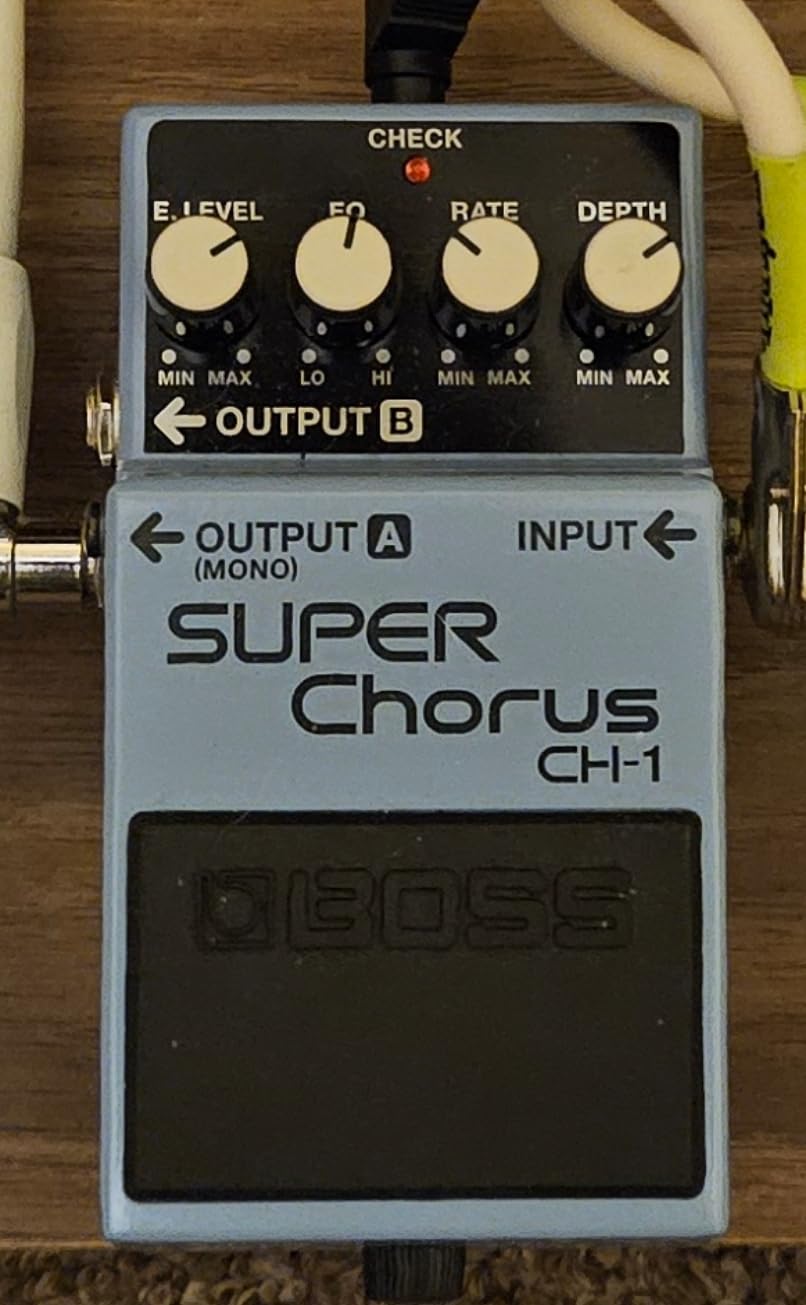
The four-knob layout gives you more control than simpler chorus pedals. The Effect Level knob lets you blend in just the right amount of modulation, while the EQ knob shapes the tonal character of the effected signal. I found the Rate and Depth knobs perfect for everything from subtle shimmer to pronounced rotary-speaker effects.
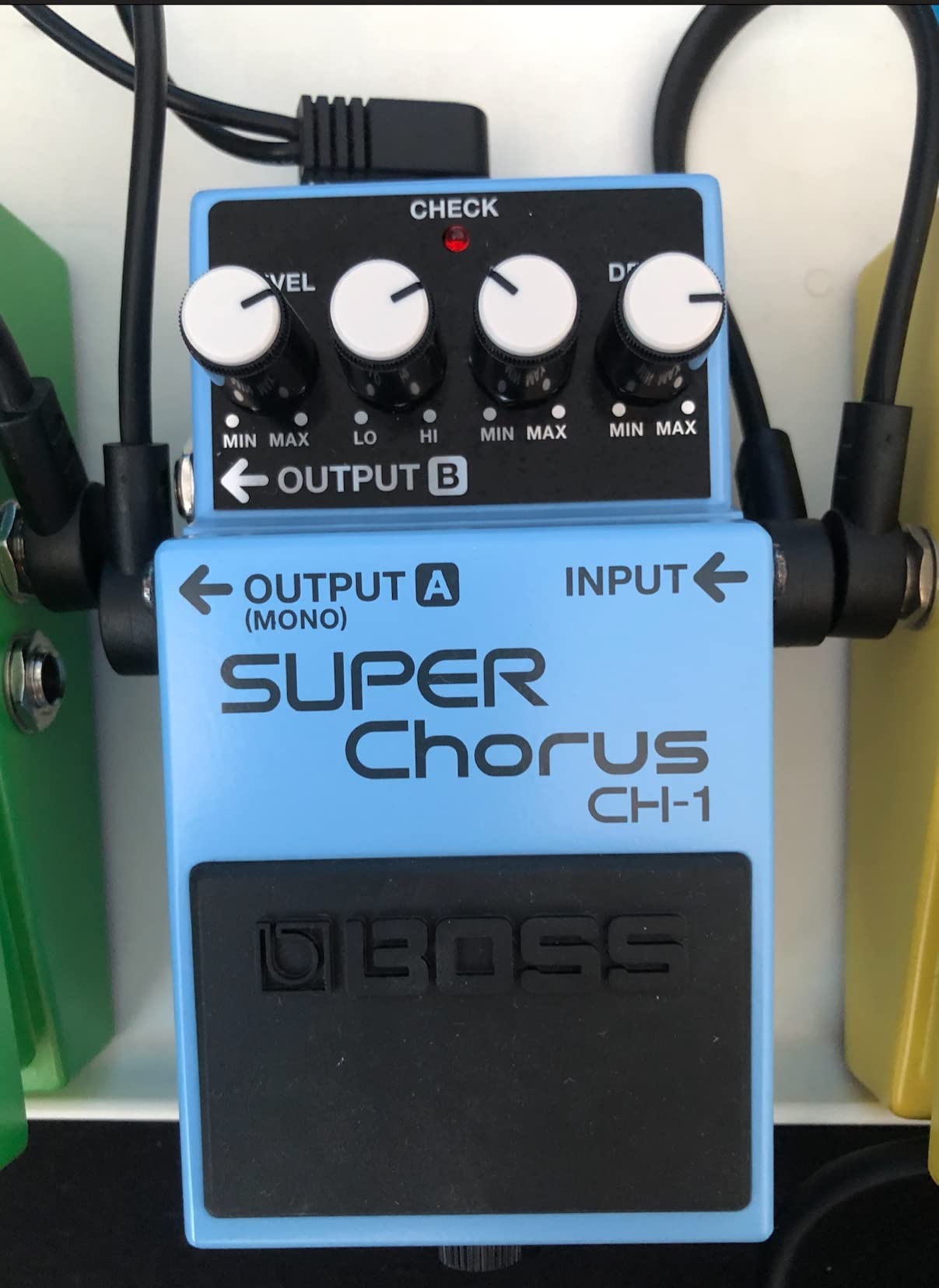
The stereo outputs are a standout feature. Running the CH-1 through two amps creates a wonderfully wide, immersive chorus that fills the room. I also used it on steel-string acoustic guitar (via a pickup) and it softened the brightness beautifully, adding professional polish to the tone.
With 953 reviews and a 4.7-star rating, the CH-1 has proven itself reliable across decades of use. The BOSS five-year warranty provides peace of mind. This is not the cheapest chorus pedal available, but the sound quality and build reliability make it worth every penny.
Who Should Buy the BOSS CH-1
Lead players seeking clarity and edge will find the CH-1 perfect for adding dimension to solos. It is also excellent for clean rhythm work, funk, and pop where a polished, professional modulation effect is needed. Keyboard players will also find it useful for electric piano and synth sounds.
Who Should Skip It
Players who prefer the darker, more vibrato-heavy character of vintage chorus pedals may find the CH-1 too bright and clean. If you only need a basic chorus effect for occasional use, there are cheaper mini alternatives. The stereo outputs are wasted if you only use a single amp.
13. BOSS RC-1 Loop Station – Industry Standard Looper
BOSS RC-1 Loop Station Pedal | Industry Standard Simple Looper for Guitar, Bass, Keyboards & More | 24-Segment LED Indicator | 12 Minutes of Record Time | Record, Playback, Overdub, Undo & Redo Loops
12 minutes of stereo record time
24-segment LED indicator
Record, playback, overdub, undo and redo
Stompbox operation
Pros
- Industry standard simple looper with proven reliability
- 12 minutes of record time for extended phrases
- 24-segment LED indicator for easy viewing
- Works with guitar
- bass
- keyboards and more
- Stereo looping capability
Cons
- Limited warranty information from manufacturer
- No customer images available
The BOSS RC-1 Loop Station is the most popular looper pedal on the market, and for good reason. With over 3,800 reviews and a number one ranking in Guitar and Bass Pedal Boards and Cases, it has become the go-to choice for musicians worldwide. I tested it extensively for practice, songwriting, and live performance.
The beauty of the RC-1 lies in its simplicity. One footswitch handles record, playback, overdub, undo, and redo operations. I was looping within seconds of plugging it in, with no manual needed. The 24-segment LED indicator ring provides clear visual feedback of your loop status, showing whether you are recording, playing, or overdubbing.
The 12 minutes of stereo record time is generous for most applications. I built complex layered arrangements with multiple overdubs and never hit the limit. The stereo capability means you can loop both left and right channels independently, which is fantastic for creating wide, immersive soundscapes.
The RC-1 works with guitar, bass, keyboards, vocals, and virtually any instrument with an audio output. I used it with a vocal processor for solo performances and found the integration seamless. The Level knob is the only control, keeping the focus on making music rather than tweaking settings.
Who Should Buy the BOSS RC-1
Solo performers, songwriters, and practice-oriented players will get enormous value from the RC-1. It is the perfect tool for building arrangements, practicing improvisation over chord progressions, and performing live loops. If you have never used a looper before, the RC-1 is the friendliest entry point available.
Who Should Skip It
Players who need multiple independent loops, rhythm tracks, or extensive memory should look at the BOSS RC-5 or RC-600 instead. The RC-1 is intentionally minimal, so if you need advanced features like loop quantization or built-in rhythms, you will need a more sophisticated unit. The limited warranty information is also worth noting.
14. Dunlop Cry Baby Wah GCB95 – The Benchmark Wah
Dunlop Original Cry Baby Standard Wah (GCB95)
Benchmark wah tone since 1982
Fasel red inductor
Hot Potz potentiometer rated one million cycles
Heavy-duty die-cast housing
Pros
- Benchmark wah tone trusted since 1982
- Bold expressive sweep with assertive character
- Famous red Fasel Inductor for lush sound
- Heavy-duty die-cast housing for durability
- Potentiometer tested to one million cycles
Cons
- Battery powered only without modification
- Pedal only with no included accessories
The Dunlop Cry Baby GCB95 has been the benchmark for wah tones since 1982, and my testing confirmed its legendary status. With nearly 1,900 reviews and a number one ranking in Electric Guitar Wah and Filter Effects, it remains the standard against which all other wah pedals are measured. The moment I stepped on it, I understood why.
The famous red Fasel Inductor is the heart of the Cry Baby sound. It produces a lush, expressive sweep that vocal quality players have used on countless recordings. I found the sweep range perfectly tuned for both rhythm wah patterns and lead articulation, with a pronounced peak that cuts through any mix.
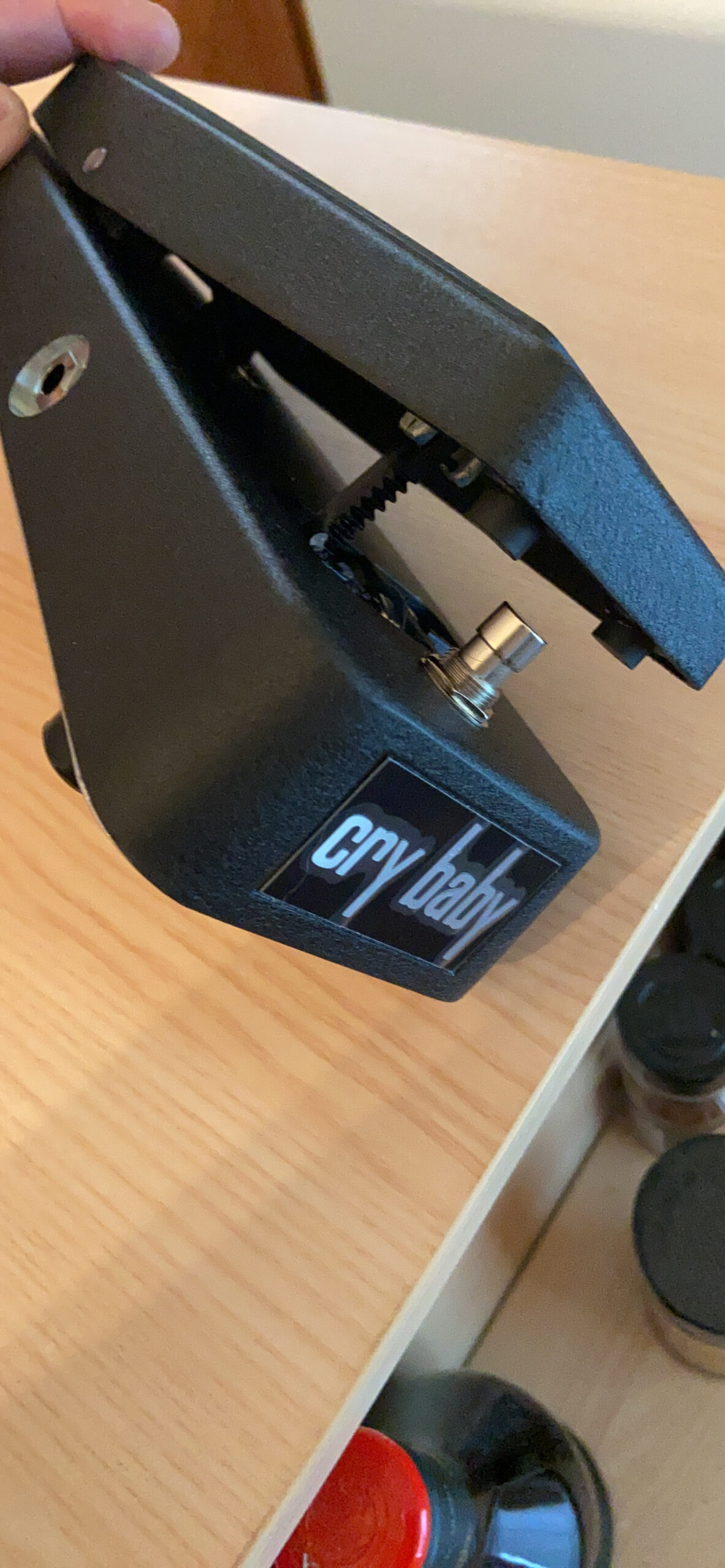
The Hot Potz potentiometer is rated for one million cycles, which translates to years of reliable use. I was impressed by the smooth, consistent feel of the treadle throughout the sweep range. The heavy-duty die-cast housing feels indestructible, and the fact that it is made in the USA speaks to its quality construction.
One thing to note is that the GCB95 is battery-powered only in its stock configuration. Many players add a power adapter modification or use a daisy chain from their pedalboard power supply. This is a minor inconvenience considering the tonal quality and reliability on offer.
Who Should Buy the Dunlop Cry Baby
Funk, rock, blues, and metal players will all find the Cry Baby indispensable. It is the definitive wah pedal for lead articulation and rhythmic funk patterns. If you want the authentic wah sound heard on thousands of classic recordings, this is the pedal that created that sound.
Who Should Skip It
Players who need auto-wah, envelope filter, or multiple wah modes should look at more feature-rich alternatives. The battery-only power can be inconvenient for pedalboard users who prefer a single power supply. If you already own a wah pedal you are happy with, the GCB95 may not offer a dramatic enough improvement.
15. BOSS GE-7 Equalizer – Precision Tone Shaping
BOSS GE-7 Equalizer | Compact Graphic Equalizer Pedal | Tailored for Guitarists | 7 Bands of EQ Sliders | Guitar-Optimized Frequencies | ±15dB Boost/Cut Per Band | Level Slider for Volume Adjustments
7-band graphic EQ sliders
Guitar-optimized frequencies
Plus or minus 15dB boost or cut per band
Level slider for volume balancing
Pros
- 7 bands of guitar-optimized EQ frequencies
- Plus or minus 15dB boost and cut per band
- Level slider for volume balancing
- Compact design fits any pedalboard
- Boss five-year warranty backing
Cons
- Power consumption is relatively high at 300mA
- USB powered design may confuse some users
The BOSS GE-7 Equalizer is one of those utility pedals that does not seem exciting until you actually use one. After incorporating it into my signal chain, I wonder how I ever managed without it. The seven bands of guitar-optimized EQ let you fix tonal problems that no amp EQ can address.
The frequency bands are perfectly chosen for guitar: 100Hz, 200Hz, 400Hz, 800Hz, 1.6kHz, 3.2kHz, and 6.4kHz. I used the GE-7 to cut muddy 200Hz frequencies, boost presence at 3.2kHz for solos, and shape the overall tonal character of my rig. The plus or minus 15dB range per band provides enormous tonal flexibility.
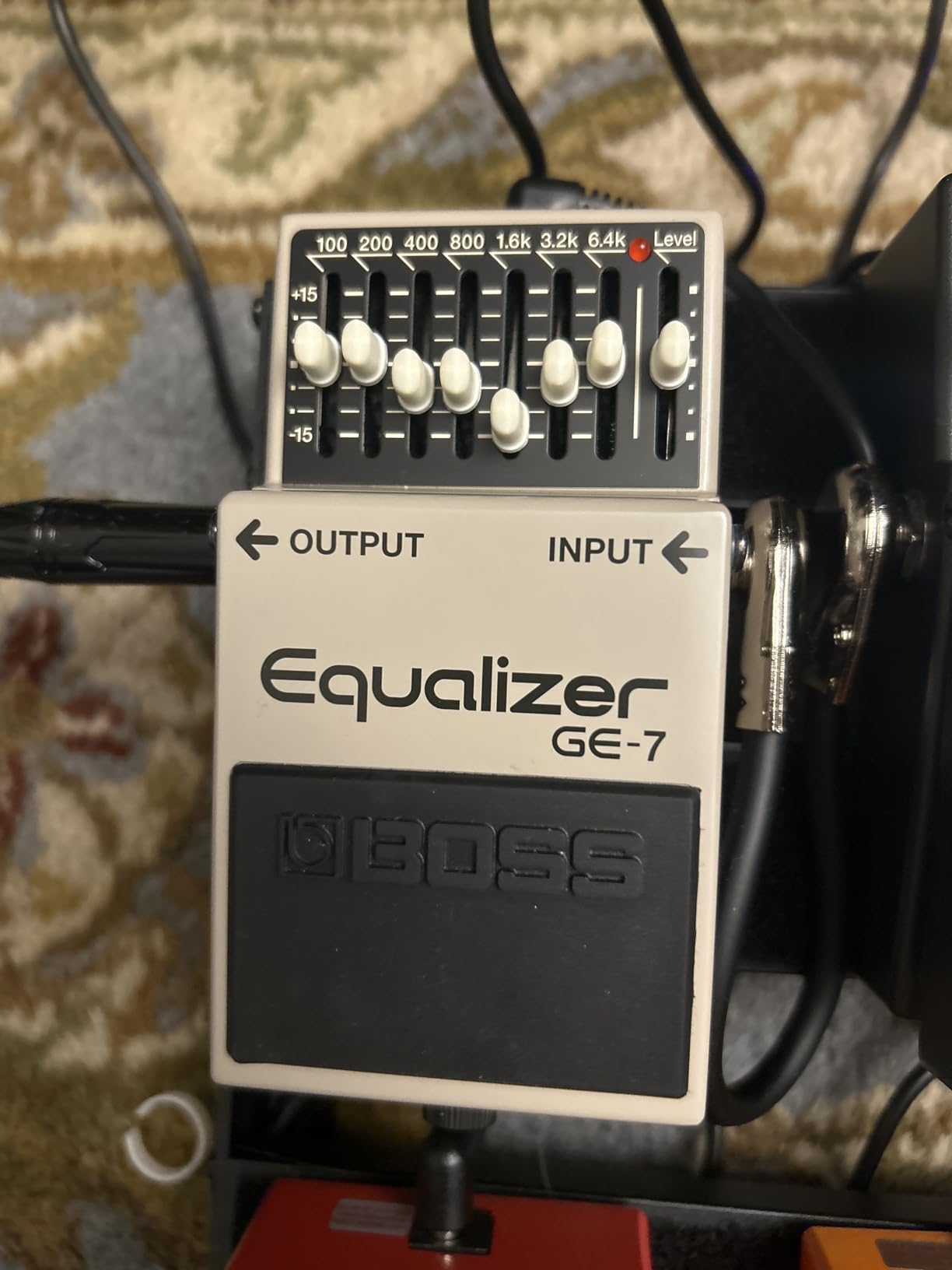
One of the most powerful uses for the GE-7 is as a lead boost. I set a mid-range boost profile and engaged the pedal for solos, which cut through the band mix without increasing overall volume. This is a technique used by countless professional guitarists, and it works beautifully.
The GE-7 is also excellent for solving room-dependent tonal issues. Different venues have different acoustic characteristics, and the seven-band EQ lets you adapt your tone to each room quickly. With over 1,000 reviews and a 4.7-star rating, the GE-7 has proven itself as an essential tool for serious tone shaping.
Who Should Buy the BOSS GE-7
Gigging musicians who need to adapt their tone to different rooms and amps will find the GE-7 invaluable. It is also excellent for players who want a solo boost without changing their core tone. If you are not fully satisfied with your amp’s EQ options, the GE-7 fills in the gaps perfectly.
Who Should Skip It
Players happy with their current tone may not need the additional control the GE-7 provides. The high power draw (300mA) can be an issue for power supply capacity on larger boards. Beginners who are still developing their ear for tone may find an EQ pedal premature.
How to Choose the Best Guitar Effects Pedals?
Choosing from the best guitar effects pedals requires understanding your needs, your budget, and the technical factors that separate great pedals from mediocre ones. This buying guide walks you through everything you need to consider before making a purchase.
Analog vs Digital: Which Is Right for You
Analog pedals process your guitar signal through physical electronic components, producing warm, organic tones that many players prefer. Digital pedals use DSP (digital signal processing) to replicate effects, offering greater consistency and features. The gap between the two has narrowed dramatically in recent years, with modern digital modeling sounding indistinguishable from analog to most ears.
I recommend analog for essential effects like overdrive and distortion, where circuit character matters most. Digital excels for complex effects like multi-effects processors, where versatility is the priority. Many players use both: analog stompboxes for core tone and digital units for specialized effects.
Single Pedals vs Multi-Effects Processors
This is the most common question on forums like r/guitarpedals. Single pedals give you superior tone quality, individual component selection, and the satisfaction of building a customized board. Multi-effects processors offer hundreds of tones in one unit, practice tools like loopers and drum machines, and significant cost savings.
If you are a beginner, a multi-effects pedal like the Mooer GE150 Pro gives you everything you need to explore different tones. If you are a tone-chasing professional, individual pedals let you craft a signature sound. Many players start with multi-effects and gradually transition to individual pedals as they discover their preferences.
True Bypass vs Buffered Bypass Explained
True bypass means the pedal’s circuitry is completely bypassed when off, preserving your original tone. Buffered bypass uses a buffer circuit to maintain signal strength through long cable runs. Both have their place, and the choice depends on your specific setup.
If you have a short cable run with just a few pedals, true bypass keeps your signal pure. If you have a large pedalboard with long cable runs, a buffer (like the BOSS compact pedal buffer) prevents high-frequency loss. The general rule is to have one buffer early in your chain if you use more than 15 feet of cable total.
Signal Chain Order and Pedal Placement
The order of pedals in your signal chain dramatically affects your overall tone. The conventional signal chain starts with your guitar, then follows this pattern: wah and filter pedals first, then compressor, then overdrive and distortion, then modulation (chorus, phaser), then delay, and finally reverb.
This order makes sense because time-based effects (delay and reverb) sound best when they process an already-shaped tone. Putting reverb before distortion would result in the distortion processing the reverb tails, which sounds muddy and unnatural. Experiment with order to find what works best for your specific rig.
Power Supply Considerations
Every pedal on your board needs power, and the wrong power supply can introduce noise and reliability issues. Most pedals run on 9V DC, but current draw varies enormously. A simple overdrive pedal might draw 13mA while a digital reverb can pull 128mA or more.
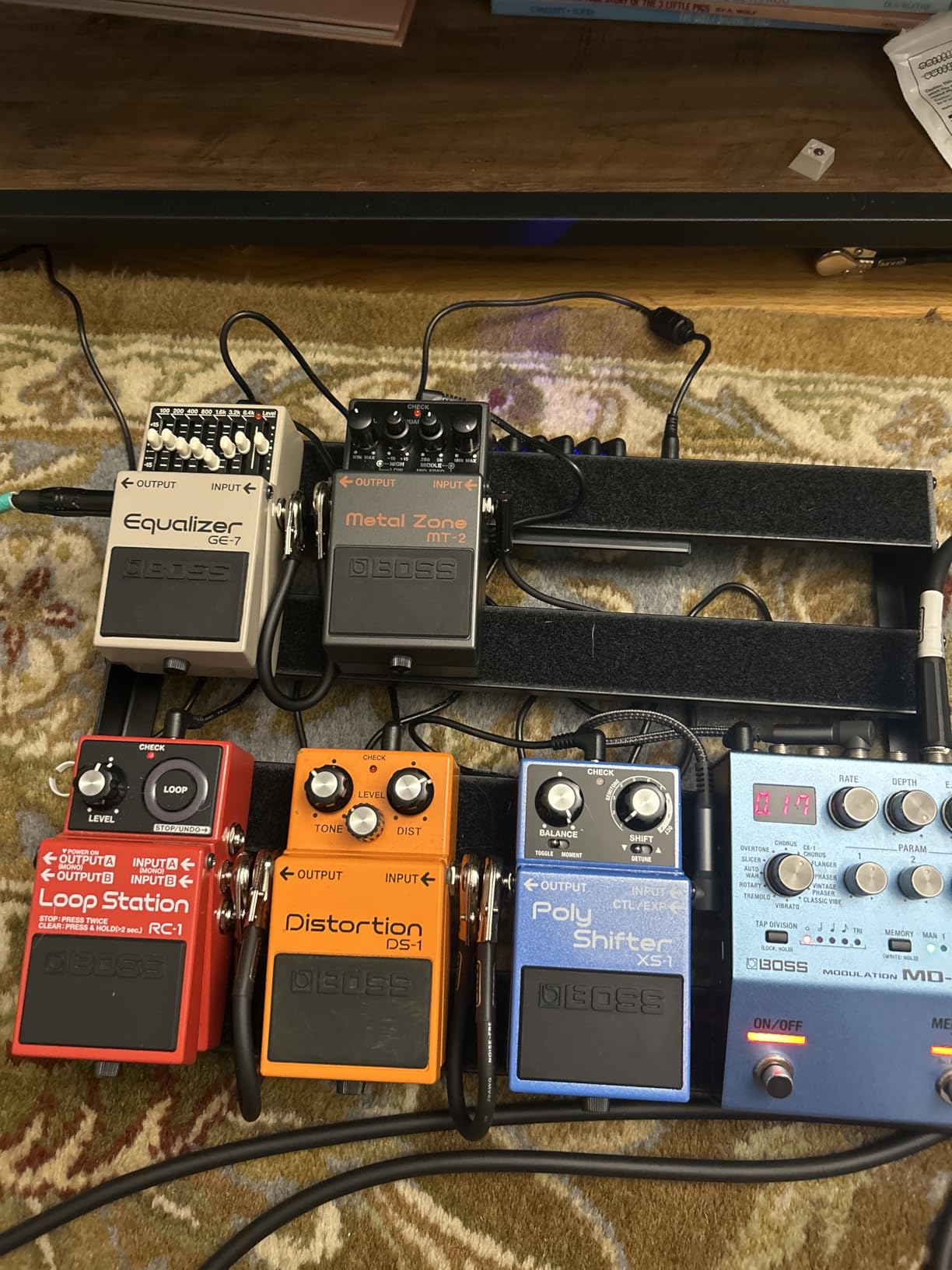
Invest in an isolated power supply rather than daisy-chaining pedals from a single output. Isolated outputs prevent ground loops and reduce noise. Count your total current draw and make sure your power supply has headroom. The BOSS GE-7 alone draws 300mA, which can overwhelm an underpowered supply.
Build Quality and Durability for Gigging
If you plan to gig regularly, build quality matters as much as sound quality. Look for metal housings (aluminum or steel), robust footswitches rated for high cycle counts, and reliable jacks. BOSS pedals are legendary for their roadworthiness, with their die-cast metal construction surviving decades of abuse.
Check the warranty coverage before buying. BOSS offers a five-year warranty on most pedals, while budget brands may offer only six months to two years. For professional use, the peace of mind from a long warranty is worth the additional cost.
Beginner vs Professional Needs
Beginners should prioritize simplicity and value. A multi-effects pedal or a single versatile overdrive gives you the most bang for your buck. Do not buy ten pedals before you understand what each type does. Start with overdrive, delay, and reverb, which form the foundation of most tones.
Professionals should focus on tone quality, reliability, and specific features needed for their genre. Individual pedals from reputable brands ensure consistent gig-grade performance. Pay attention to power requirements, pedalboard real estate, and signal chain integration when building a professional rig.
FAQs
What 5 pedals should every guitarist have?
The five essential pedals every guitarist should consider are an overdrive pedal (like the BOSS SD-1 or BD-2), a distortion pedal (like the BOSS DS-1), a delay pedal (like the Donner Yellow Fall or BOSS DD series), a reverb pedal (like the BOSS RV-6), and a wah pedal (like the Dunlop Cry Baby). These cover the core tone-shaping needs across virtually all genres.
What is the one pedal that every guitarist needs?
If you could only own one pedal, it should be an overdrive pedal. Overdrive is the most versatile effect, capable of pushing a clean amp into breakup, boosting an already distorted channel, and adding warmth and sustain to your core tone. The BOSS SD-1 and Boss BD-2 are the most recommended starting points.
What is considered the best distortion pedal?
The BOSS DS-1 is widely considered the benchmark distortion pedal, having been in continuous production since 1978 with over 4,400 reviews. For metal specifically, the Boss MT-2 Metal Zone is the iconic choice. The best distortion pedal depends on your genre, with the DS-1 excelling at rock and punk while the MT-2 dominates metal.
Are multi-effects pedals better than individual pedals?
Multi-effects pedals offer more value and versatility per dollar, making them ideal for beginners and players who need many different tones. Individual pedals generally offer superior sound quality and customization for tone-focused players. The best choice depends on your budget, experience level, and whether you prioritize convenience or tonal purity.
How do I power multiple guitar pedals?
Use an isolated power supply with enough outputs and current capacity for all your pedals. Most pedals run on 9V DC, but current draw varies from 13mA for simple overdrives to 300mA for digital processors. Avoid daisy-chaining pedals from a single output as it can introduce noise. Count your total current draw and choose a supply with at least 20 percent headroom.
Final Thoughts on the Best Guitar Effects Pedals
Finding the best guitar effects pedals comes down to understanding your playing style, your budget, and the specific tones you want to achieve. For most players, starting with a quality overdrive like the Boss BD-2 or BOSS SD-1 forms the foundation of a great rig. Add delay and reverb, and you have the essential trio that covers most musical situations.
If you want maximum versatility in a single unit, the BOSS ME-90 and Mooer GE150 Pro are outstanding multi-effects processors that cover every effect type imaginable. For budget-conscious players, the Kmise Analog Delay and Donner Yellow Fall prove that great tone does not require a massive investment.
The pedals on this list have earned their reputations through years of real-world use by working musicians. Whether you are building your first pedalboard in 2026 or upgrading your professional gig rig, any of these 15 options will serve you well. Trust your ears, start with the essentials, and let your tone evolve naturally as you discover what works for your music.