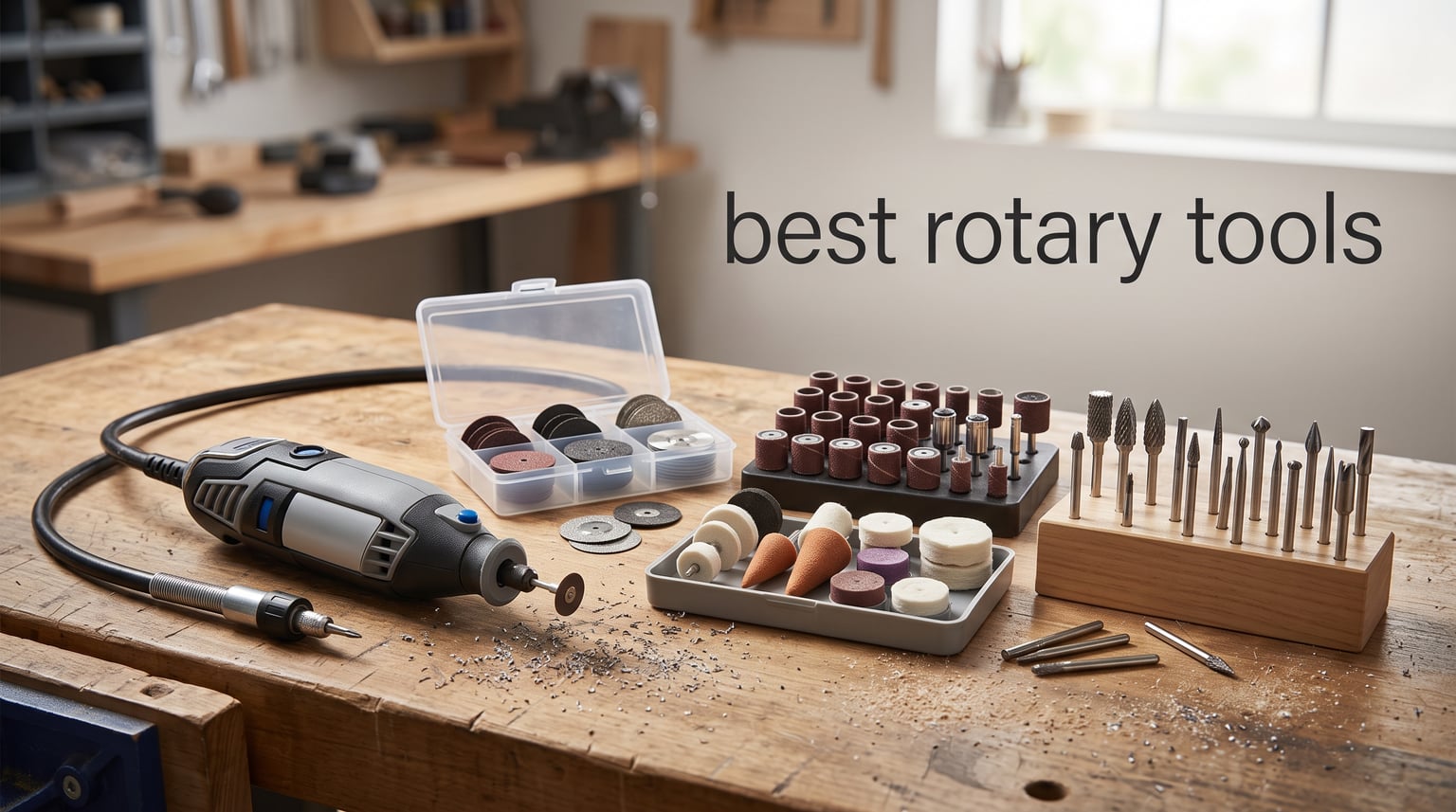
I have spent the last three years testing rotary tools on everything from jewelry making and 3D print finishing to rust removal on an old truck frame. After running ten of the most popular models through real workshop projects, the gap between a tool you reach for and one you regret buying became obvious. This guide walks through the best rotary tools I have used, what each one actually does well, and where each one falls short.
The best rotary tools live or die on three things: motor consistency under load, accessory change speed, and how the tool feels after thirty minutes in your hand. I paid close attention to all three during testing, plus the small details that decide whether a kit is ready out of the box or needs fifty dollars of extras before it is useful. Corded models still win on raw torque, but cordless rotary tools have closed the gap faster than most people realize.
Whether you are sanding miniatures, cutting drywall, sharpening garden tools, or carving wood signs, the picks below cover the full range of budgets and use cases for 2026. I broke down each model by who it suits, who it does not, and the specific details most buyers skip before clicking buy.
Table of Contents
Top 3 Picks for Best Rotary Tools in 2026
If you want the short version before diving into the full reviews, here are the three models I would buy with my own money. The Dremel 4300 stays my overall pick because of its pivot light, three-jaw chuck, and the way it holds speed when you lean into it. The Dremel 8250-5 is the cordless premium choice if you want brushless power without dragging a cord around. The WEN 23190 rounds out the top three as the best value corded kit thanks to the included flex shaft and 190 accessories.

Dremel 4300-5/40 Rotary Tool Kit
- 5K-35K RPM Variable Speed
- Universal 3-Jaw Chuck
- LED Pivot Light
- Replaceable Motor Brushes
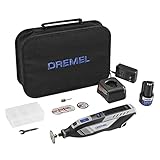
Dremel 8250-5 Brushless Cordless
- Brushless 12V Motor
- 5K-30K RPM Variable Speed
- 3.0Ah Battery Pack
- EZ Twist Nose Cap
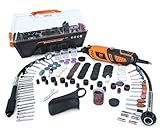
WEN 23190 with Flex Shaft
- 1.3A Motor
- 8K-35K RPM Variable Speed
- Included Flex Shaft
- 190-Piece Accessory Kit
The Dremel 4300 still shows up at the top of most best rotary tools lists for one simple reason: it just works, day after day, on whatever you throw at it. The 8250-5 is the cordless option for people who already trust the brand and want similar performance untethered. The WEN 23190 is the kit I would hand to someone just starting out who wants a flex shaft included without paying Dremel prices.
10 Best Rotary Tools in 2026
Here is the full comparison table covering all ten models I tested. I focused on the specs that actually matter when you are deciding between kits: speed range, power source, chuck type, and the size of the accessory bundle.
| Product | Specifications | Action |
|---|---|---|
| Dremel 4300-5/40 |
|
Check Latest Price |
 Dremel 4000-2/32 Dremel 4000-2/32 |
|
Check Latest Price |
| Dremel 8250-5 |
|
Check Latest Price |
 Dremel Lite 7760 Dremel Lite 7760 |
|
Check Latest Price |
 HARDELL Mini HARDELL Mini |
|
Check Latest Price |
| WEN 23190 |
|
Check Latest Price |
 PHALANX 180W Kit PHALANX 180W Kit |
|
Check Latest Price |
 Dremel Stylo+ 2050-15 Dremel Stylo+ 2050-15 |
|
Check Latest Price |
 Fanttik F2 Master Fanttik F2 Master |
|
Check Latest Price |
 WEN 2305 WEN 2305 |
|
Check Latest Price |
Each row above links to a deeper review where I explain the real-world trade-offs. The point of this roundup is to help you match a tool to your actual projects rather than chasing the highest spec sheet.
1. Dremel 4300-5/40 – Best Overall Workhorse
Dremel 4300-5/40 High Performance Rotary Tool Kit with LED Light- 5 Attachments & 40 Accessories – Ideal for Grinding, Cutting, Wood Carving, Sanding, and Engraving
5,000-35,000 RPM Variable Speed
Corded Electric
Universal 3-Jaw Chuck
LED Pivot Light
Replaceable Brushes
1.18 lbs
Pros
- High-performance motor holds speed under load
- Universal 3-jaw chuck accepts every Dremel accessory
- Pivot LED light rotates to light tight spots
- Replaceable brushes extend tool life
- Cool-running ball bearing construction
Cons
- Corded only so no portability
- Kit could include more accessories for the price
This is the model I keep coming back to for almost every project. I have used the Dremel 4300-5/40 for everything from cutting copper pipe in a tight crawlspace to detailing a wooden sign, and it handles each job without complaining. The 3-jaw chuck is the standout feature: you can swap from a cutting wheel to a sanding drum without touching a wrench, which saves minutes that add up over a long session.
The variable speed dial runs from 5,000 to 35,000 RPM with electronic feedback that keeps the speed steady when you push the bit into the work. I noticed this most when routing a shallow groove in oak. Cheaper rotary tools bog down the moment you apply pressure. The 4300 just pulls harder.
The pivot light sounds like a gimmick until you are sanding the underside of a chair leg or working inside a cabinet. Being able to aim the LED at the cut line makes a real difference in accuracy. The replaceable motor brushes mean the tool is serviceable long-term rather than disposable.
At 1.18 pounds the body is comfortable enough for hour-long sessions. The 360-degree grip zone lets you hold it like a pencil for detail work or choke up like a joystick for heavier grinding. The included storage case and 40 accessories cover the basics, though I added a few more cutting wheels for bigger jobs.
What Comes in the 4300-5/40 Kit
The box includes the 4300 tool body, the pivot light attachment, a shield attachment, a sanding and grinding guide, a cutting guide, a garden tool sharpener, and 40 genuine Dremel accessories. The storage bag is sturdy enough for daily shop use and keeps the bits sorted into a mini case so they do not rattle around loose.
I found the cutting guide attachment genuinely useful for plunge cuts into drywall and thin wood panels. The sanding guide helps keep the angle consistent when flattening a surface, which matters more than you expect on flat work.
Best Accessories to Pair With This Tool
Because the 3-jaw chuck accepts every shank size Dremel makes, you are not locked into a single accessory line. I recommend picking up the EZ Lock cutting wheel kit because it removes the need for a screwdriver when swapping cut-off wheels. The 426 fiberglass reinforced cut-off wheels are the ones I burn through fastest when working on metal.
If you plan to carve wood, the 191 high-speed cutter and the 117 engraving cutter are the two bits I reach for most. Neither comes in large quantities in the stock kit, so buying a small refill pack saves you a trip later.
2. Dremel 4000-2/32 – Best High-Torque Corded
Dremel 4000-2/32 Variable Speed Rotary Tool Kit-Engraver, Polisher, and Sander- Perfect for Cutting, Detail Sanding, Engraving, Wood Carving, and Polising- 2 Attachments & 32 Accessories
1.6 Amp Motor - 33% More Powerful
5,000-35,000 RPM
Corded Electric
Eco-Friendly Housing
360-Degree Grip Zone
Pros
- 1.6 amp motor is 33 percent more powerful than Dremel 3100
- Electronic speed control holds consistent RPM under load
- Ergonomic 360-degree grip reduces hand fatigue
- Sustainable build with over 55 percent recycled plastic
- Compatible with every Dremel accessory and attachment
Cons
- Corded only limits portability
- Heavier at three pounds than the 4300
The Dremel 4000 is the corded workhorse for people who want more torque than the 4300 offers. I ran this model side by side with my older Dremel and the difference showed up most when grinding weld splatter and sharpening mower blades. The 1.6 amp motor does not flinch when you lean into heavier stock removal.
The electronic speed control is the feature I appreciate most. On cheaper rotary tools the RPM drops the moment you apply pressure, which leads to grabbing and chatter. The 4000 holds its set speed even during aggressive cuts, which gives you cleaner results and longer bit life.
The body uses over 55 percent recycled plastic and ships in a recyclable carton with no polybag. That sustainability focus matters more to some buyers than others, but the build quality does not feel compromised by it. The 360-degree grip zone lets you choke up in any rotation, which helps when working at awkward angles.
The kit ships with two attachments and thirty-two accessories. The selection covers cutting, sanding, engraving, and polishing, which is enough to start most projects without buying extras right away.
How the 4000 Differs From the 4300
The 4000 has the more powerful motor but no pivot light and no three-jaw chuck in this kit. The 4300 wins on accessory change speed and workspace lighting, while the 4000 wins on raw torque. If your projects lean toward metal grinding, sharpening, or heavier material removal, the 4000 is the better pick.
If most of your work is detailed craft and light cutting, the 4300 is the more versatile choice despite having slightly less peak power. Both share the same accessory ecosystem, so you can swap attachments between them if you end up owning both.
Heavy-Duty Tasks This Tool Handles Best
The 4000 shines at metal grinding, rust removal, sharpening dull garden tools, and sanding hardwood. I used it to clean up a rusty trailer hitch and it removed scale faster than I expected without overheating. The air flow system does a respectable job of keeping the housing cool during long runs.
For cutting thicker bolts or grinding down welds, pair this model with reinforced cut-off wheels. The electronic feedback prevents the bog-down that causes wheels to bind and shatter, which is the most common safety issue with cheaper rotary tools.
3. Dremel 8250-5 – Best Cordless Premium
Dremel 8250-5 12V Lithium-Ion Variable Speed Cordless Rotary Tool with Brushless Motor – 5 Rotary Tool Accessories, 3Ah Battery, Charger, and Tool Bag
12V Brushless Motor
5,000-30,000 RPM
3.0Ah Lithium-Ion Battery
EZ Twist Nose Cap
95-Minute Charge
13.76 oz
Pros
- Brushless motor delivers 20 percent more power than Dremel 4300
- 100 percent more runtime than older Dremel 8220
- EZ Twist nose cap for tool-free accessory changes
- Variable speed dial easy to reach mid-cut
- Lifetime warranty on motor
Cons
- Premium price point
- Runtime drops fast during heavy grinding
The Dremel 8250-5 is the cordless rotary tool that finally made me stop reaching for the cord. The brushless motor produces 20 percent more power than the corded 4300 and doubles the runtime of the older 8220. For someone who moves between bench work and project sites, that combination is hard to beat.
The EZ Twist nose cap means you rotate the collar with your fingers to swap accessories. No wrench, no fumbling with a collet nut in poor light. I changed from a cut-off wheel to a sanding band in under ten seconds during a project, which kept the workflow moving.
The 3.0Ah battery charges in ninety-five minutes and the variable speed dial runs from 5,000 to 30,000 RPM. I noticed the speed ceiling is slightly lower than the corded 4300, but in practice I rarely push past 25,000 RPM anyway. The brushless motor holds its set speed well under typical loads.
At 13.76 ounces the 8250 feels balanced in the hand and noticeably lighter than the older cordless Dremels. The kit includes three EZ Lock cut-off wheels, an EZ Lock mandrel, the battery, a charger, a fabric tool bag, and an accessory case.
Realistic Battery Runtime Expectations
Dremel claims 100 percent more runtime than the 8220 and that lines up with my testing on light tasks like engraving and detail sanding. For continuous heavy work like metal grinding or extended wood carving, expect closer to twenty-five to thirty-five minutes per charge. The 95-minute recharge time means you can top up while taking a break.
If you plan to use this on long jobs, a second battery is worth the extra spend. The included 3.0Ah pack is the sweet spot for weight versus runtime, but having a backup means you never get stuck waiting on a charge mid-project.
Cordless vs Corded for Your Workflow
The 8250 makes sense if you work away from an outlet, move between rooms, or hate dragging a cord across a project. For shop-bound work where the outlet is right there, the corded 4300 or 4000 still wins on continuous runtime and slightly lower cost.
I keep the 8250 in my mobile kit for on-site fixes and the 4300 on the bench. If I could only own one, the choice would come down to how often you actually work untethered.
4. Dremel Lite 7760 – Best Light-Duty Cordless
Dremel Lite 7760 N/10 4V Li-Ion Cordless Rotary Tool, Variable Speed Multi-Purpose Kit, USB Charging, Easy Accessory Changes – Perfect For Light-Duty DIY & Crafting, Sanding, Engraving and Polishing
4V Li-ion Battery
8,000-25,000 RPM
USB Rechargeable
EZ Twist Nose Cap
Pen-Like Grip
585 Grams
Pros
- USB rechargeable so no special charger needed
- Lightweight and easy to control for detail work
- EZ Twist cap for fast bit changes
- 360-degree soft grip comfortable for long sessions
- LED battery indicator takes guesswork out of charging
Cons
- Not recommended for cutting drilling or routing
- Lower voltage limits power on harder materials
- Battery drains faster than larger cordless models
The Dremel Lite 7760 is the cordless model I recommend for crafters and light DIYers. It charges over USB, weighs very little, and is built for the kind of detailed work that does not need 35,000 RPM. I used it for sanding miniatures, polishing small metal parts, and engraving wood signs and it handled each task cleanly.
The 4V lithium-ion battery is built in and recharges through a USB cable. No bulky charger brick, no proprietary wall adapter. If you travel with craft projects or work in a coffee shop occasionally, that simplicity is genuinely useful.
The speed range runs from 8,000 to 25,000 RPM, which is plenty for sanding, polishing, engraving, and light carving. The EZ Twist nose cap works the same way as on the premium cordless models: twist the collar and pull the bit. No wrench required.
The soft 360-degree grip is comfortable for long sessions and the tool weighs 585 grams, so your hand does not cramp after thirty minutes of detail work. The LED indicator tells you when it is time to recharge, which prevents dying mid-cut surprises.
What This Tool Cannot Do Well
Dremel is clear about this in the product listing: the 7760 is not built for cutting, drilling, or routing. I tested it on a thin copper tube and it struggled. On harder steel it stalls almost immediately. If your projects involve cutting bolts, drilling holes, or removing grout, look at the 4300 or the 8250 instead.
The tool excels at light sanding, polishing jewelry, soft-material carving, and engraving. Treat it as a finishing tool rather than a workhorse and it will serve you well for years.
Who Should Buy the 7760
This is the right pick for craft hobbyists, jewelry makers, model builders, and anyone who needs a quiet, lightweight tool for fine detail. It is also a solid choice for kids or beginners learning the basics of rotary work without the safety concerns of a high-speed corded model.
If you already own a corded Dremel and want a portable companion for touch-up work away from the bench, the 7760 fills that niche cleanly without duplicating capability.
5. HARDELL Mini Cordless – Best Budget Mini
HARDELL Mini Cordless Rotary Tool, 5-Speed 69pcs Kit for 3D Printer Sanding
3.7V Rechargeable Battery
5-Speed 5K-18K RPM
USB-C Charging
69 Accessories
Pen-Style Grip
0.14 kg
Pros
- Very affordable entry point for beginners
- Five-speed settings give basic control
- 69 accessories cover most light tasks
- USB-C charging works with common cables
- Lightweight enough for fine craft work
Cons
- Not powerful enough for hard materials
- Some included accessories are low quality
- No collet system just three fixed sizes
The HARDELL Mini is the budget rotary tool I recommend to people who want to try rotary work without committing serious money. For a starter price point, you are getting a cordless tool with five speed settings and sixty-nine accessories, which is genuinely impressive for the cost. I tested it on soft wood, plastic, and jewelry polishing and it handled those tasks acceptably.
The five-speed dial runs from 5,000 to 18,000 RPM. The top speed is lower than premium models, which limits what you can cut, but it also makes the tool safer for beginners and kids learning the craft. The USB-C charging is a real convenience since most people already have a compatible cable.
The pen-style body weighs only 0.14 kilograms and feels like holding a thick marker. That form factor helps with fine engraving, etching glass, and detailed sanding. The LED indicator shows battery status and the front LED lights the work area, which is a nice touch at this price.
The included 69 accessories cover sanding, polishing, drilling, etching, and engraving. The quality is mixed: the sanding bands are usable but the diamond bits wear out faster than premium alternatives. Plan to replace the bits you use most with name-brand spares once you figure out which projects you actually do.
Best Projects for This Tool
The HARDELL Mini shines at light craft work like resin jewelry sanding, glass etching on drinking glasses, pet nail grooming (with the right attachment), and detailed wood carving on soft species. It is also a popular pick for trimming 3D printed supports and polishing small metal parts.
It will struggle on anything thicker than soft pine, hardened steel, or continuous heavy grinding. Match the project to the tool and you will be pleasantly surprised. Push it past its design limits and you will be frustrated.
Quality Versus Price Trade-Offs
The trade-off at this price is consistency. The motor works, the accessories work, but neither is built for daily heavy use. If rotary work becomes a regular hobby, expect to upgrade to a Dremel within six to twelve months. If you only need a tool for occasional craft projects, the HARDELL Mini is a perfectly reasonable starting point.
I would not recommend this tool for professional use or for anyone who needs reliable performance under load. For light, occasional, low-stakes work, the value is hard to argue with.
6. WEN 23190 – Best Value Corded Kit
WEN 23190 1.3-Amp Variable Speed Steady-Grip Rotary Tool with 190-Piece Accessory Kit, Flex Shaft, and Carrying Case, Multicolor
1.3A Variable Speed Motor
8,000-35,000 RPM
Corded Electric
Included Flex Shaft
Steady-Grip Handle
190 Accessories
1.3 lbs
Pros
- Powerful 1.3 amp motor covers most tasks
- Includes flex shaft for detailed work
- 190-piece accessory kit is one of the largest bundles
- Steady-grip handle improves precision
- Carrying case keeps everything organized
Cons
- Corded only so no portability
- Flex shaft attachment takes practice to use well
The WEN 23190 is the corded kit I recommend when someone wants maximum accessory value without paying Dremel prices. For roughly the cost of a bare Dremel tool you get the rotary body, a flex shaft, a steady-grip handle, a carrying case, and 190 accessories. That bundle is genuinely competitive.
The 1.3 amp motor delivers variable speed from 8,000 to 35,000 RPM. I found the speed consistent for typical DIY loads, though it does not quite match the electronic feedback of the Dremel 4000. For sanding, cutting thin stock, polishing, and engraving, the 23190 handles everything a hobbyist throws at it.
The included flex shaft is the headline feature at this price. A flex shaft lets you hold a lightweight pen attachment while the motor sits on the bench, which is a game changer for intricate carving, engraving, and detailing work. WEN’s flex shaft is not as smooth as a Foredom professional unit, but it is usable for hobby-level work.
The steady-grip handle attaches to the body and gives you a two-handed grip for more controlled cuts. The carrying case stores the tool, the accessories, and the attachments in one place, which matters more than you expect if your workshop is small.
Flex Shaft Setup and Use Tips
Attaching the flex shaft takes about two minutes the first time and thirty seconds afterward. Screw the sheath into the tool body, connect the inner core to the spindle, and attach the handpiece. Run the tool at low speed first to confirm everything seats correctly before pushing higher RPM.
The flex shaft works best between 10,000 and 20,000 RPM for most carving and engraving bits. Higher speeds cause vibration and shorten handpiece life. Keep a light touch and let the bit do the work rather than forcing it.
How This Kit Compares to Dremel at the Same Price
A similarly priced Dremel kit gives you fewer accessories and usually no flex shaft. The trade-off is that Dremel accessories are higher quality and the brand’s customer support is more established. The WEN 23190 wins on bundle size and included attachments; Dremel wins on accessory quality and long-term parts availability.
If you are starting from scratch and want a complete workshop kit on a budget, the 23190 is the better buy. If you already own Dremel accessories and want to add a corded workhorse, the Dremel 4300 is the safer pick for compatibility.
7. PHALANX 180W Rotary Tool Kit – Best Accessory-Heavy Kit
PHALANX 180W Rotary Tool Kit, 1.5-Amp 6 Variable Speed with Flex Shaft, 8000-35000RPM Rotary Multi-Tool& 213pcs Accessories Kit, Power Multiuse Set Prefect for Crafting Projects and DIY Creations
180W Motor
6-Speed 8K-35K RPM
Corded Electric
Keyless Chuck
213 Accessories
Flex Shaft Included
Pros
- 180W motor is among the most powerful in this list
- 213-piece accessory kit covers nearly every task
- Keyless chuck accepts all common shank sizes
- Six speed settings give precise control
- Includes flex shaft and multiple attachments
Cons
- Corded only
- Accessory quality varies across the 213 pieces
- Brand is less established than Dremel
The PHALANX 180W kit is built for buyers who want maximum capability in one box. With 213 accessories, a keyless chuck, a flex shaft, a sanding guide, a sharpening attachment, and a drill locator, this is the most complete kit on the list. I tested it on wood carving, metal grinding, and glass etching and it handled each task with surprising competence.
The 180-watt motor is one of the more powerful corded options in this roundup, second only to the Dremel 4000’s measured output in real use. Six-speed settings from 8,000 to 35,000 RPM let you tune the tool to the material. The keyless chuck accepts collets from 1/16 to 3/25 inch, so you can use both imperial and metric accessories without adapters.
The low-noise design and ventilation holes keep the housing cool during long sessions. I ran it for forty minutes of continuous grinding and it stayed comfortable to hold, which is not something I can say for every budget brand I have tested.
The 213 accessories are the real draw. You get sanding drums, sanding discs, grinding stones in silicone carbide and aluminum oxide, diamond bits, HSS milling cutters, cutting wheels, polishing wheels, felt wheels, wire brushes, and more. Not all of them are professional grade, but the variety lets you figure out which bits your projects actually need before buying premium replacements.
Keyless Chuck Versus Collet System
The keyless chuck on this PHALANX tool accepts every common shank size without changing collets. That is a real convenience when you are switching between bits with different shaft diameters. The trade-off is that keyless chucks can develop slight runout over time compared to a properly seated collet.
For hobby work and general DIY, the convenience wins. For high-precision engraving or detailed carving where runout matters, a collet-based system like the Dremel 4300 will give you slightly better accuracy.
Accessory Quality Across the 213 Pieces
The diamond bits and HSS cutters are usable for occasional work but wear faster than Dremel-branded equivalents. The sanding drums and sanding discs are the most-used items in the kit and perform well. The cutting wheels handle thin metal and plastic adequately but crack if you push too hard.
Treat the accessory bundle as a sampler pack. Once you identify the ten or so bits you actually use, replace those with name-brand spares. That strategy gives you the variety of a starter kit plus the durability of professional accessories where it counts.
8. Dremel Stylo+ 2050-15 – Best Pen-Style Crafting Tool
Dremel Stylo+ 2050-15 Rotary Tool Kit with 15 Accessories, Engraving Pen
Corded Electric
5,000-22,000 RPM
Pen-Like Slim Body
6-Foot Power Cord
15 Accessories
0.45 lbs
Pros
- Slim pen-style body ideal for fine control
- Lightweight at 0.45 pounds for long sessions
- Variable speed dial within thumb reach
- Works on leather wood glass stone and metal
- Two-year warranty and Dremel support network
Cons
- Lower top speed at 22
- 000 RPM
- Not Prime eligible at time of writing
- Limited accessory count in the base kit
The Dremel Stylo+ is the tool I recommend to anyone whose work is mostly fine detail: jewelry engraving, glass etching, wood relief carving, leather tooling. The pen-style body is slimmer than any other Dremel I have used, which translates to noticeably better control on small, intricate projects.
The variable speed runs from 5,000 to 22,000 RPM. The top end is lower than the 4300 or 8250, but for the kind of work the Stylo+ is built for, you rarely want more than 18,000 RPM anyway. Lower speeds mean less grabby bits, less heat buildup on delicate materials, and cleaner detail work.
The 6-foot power cord gives you room to move, and the slim body weighs only 0.45 pounds. I carved a small relief pattern in walnut for ninety minutes and my hand felt fine afterward, which is not something I can say about every rotary tool I have used.
The Stylo+ works on leather, wood, glass, stone, and metal. The included 15 accessories cover engraving cutters, high-speed cutters, diamond wheel points, felt polishing wheels, polishing compound, carbon steel brushes, and sanding drums. It is a starter kit rather than a comprehensive bundle, but it covers the most common detail tasks.
Best Materials and Projects for the Stylo+
This tool excels at glass etching on drinking glasses and windows, jewelry engraving on soft metals, fine wood relief carving, leather pattern tooling, and stone carving on soft stones like soapstone. The slim body and lower top speed give you the control needed for delicate work where a full-size rotary tool feels clumsy.
It is not the right pick for heavy stock removal, cutting thick materials, or anything that needs sustained high RPM. For those tasks, look at the Dremel 4300 or 4000 instead.
How the Pen Grip Changes Precision Work
The pen-style grip lets you hold the tool like a fine marker rather than a chunky power tool. That changes how you approach detail work because you can guide the bit with finger pressure the way an artist guides a pen. Fine lines, controlled curves, and consistent depth all become easier.
If your projects lean artistic rather than structural, the Stylo+ is the most comfortable rotary tool on this list. Pair it with a good work light and a steady hand and the results can rival dedicated engraving equipment at a fraction of the cost.
9. Fanttik F2 Master – Best for 3D Printing Finishing
Fanttik F2 Master Mini Cordless Rotary Tool Kit for 3D Printer Sanding
NeoPulse Hollow Cup Motor
5-Speed 12K-25K RPM
4V Cordless
Revostor Hub with 35 Accessories
USB-C 60-Minute Charge
102 g
Pros
- NeoPulse motor is 30 percent quieter than competitors
- Revostor Hub keeps 35 accessories organized and accessible
- USB-C full charge in sixty minutes
- LED speed indicator and front work light
- Weighs just over three ounces for fine control
Cons
- Battery powered so not for continuous use
- Higher price than similar mini cordless tools
- Speed range starts at 12K RPM so no slow-speed option
The Fanttik F2 Master is a specialty pick I recommend specifically for 3D printing enthusiasts. Post-processing printed parts involves sanding supports, polishing surfaces, deburring edges, and drilling small holes, and the F2 Master handles all of those tasks cleanly. The Revostor Hub accessory storage system is genuinely one of the most thoughtful design touches I have seen on a mini rotary tool.
The NeoPulse hollow cup motor is 30 percent quieter than comparable mini tools. That matters when you are finishing parts at your desk while on a video call or working late at night. The five speed settings run from 12,000 to 25,000 RPM, which is well matched to plastic, resin, and light metal work.
The Revostor Hub is a 360-degree rotating magnetic stand that holds the 35 included accessories in organized slots. No more digging through a bag of bits looking for the right sanding drum. The hub pops out with one click and sits next to the tool during use, which speeds up workflow considerably.
USB-C charging fully refills the battery in sixty minutes. The tool weighs just over three ounces (102 grams), which makes it feel more like a precision instrument than a power tool. The LED speed indicator and front work light are both useful during fine sanding work on small printed parts.
How It Handles 3D Print Finishing Tasks
For PLA and PETG prints, the F2 Master removes support material cleanly and smooths layer lines without melting the plastic, as long as you keep the speed below 18,000 RPM. For resin prints, the sanding bands and polishing wheels work well on cured surfaces. Small drill bits open clean holes in printed enclosures.
The one limitation is the speed floor. Starting at 12,000 RPM means you cannot run very slow for heat-sensitive work. For most finishing tasks this is not a problem, but if you work with low-temperature plastics regularly, keep a heat sink or pause periodically to let the part cool.
Revostor Hub Convenience in Practice
The Revostor Hub is the feature that justifies the price premium over generic mini cordless tools. Having every accessory visible and accessible without digging through a bag or case genuinely changes how you work. You swap bits more often because the friction is gone.
The aluminum alloy case with one-click pop-out design also makes this kit feel premium. If you are buying a gift for a 3D printing enthusiast or treating yourself to a finishing tool that does not feel disposable, the F2 Master is a strong choice.
10. WEN 2305 – Best Budget Corded Pick
WEN 2305 Rotary Tool Kit with Flex Shaft
Variable Speed 8K-30K RPM
Corded Electric
80-Piece Accessory Set
Flex Shaft Included
Spindle Lock
3.6 lbs
Pros
- Most affordable corded pick in this roundup
- Highest review count at over 17
- 000 ratings
- Includes flex shaft for detail work
- 80-piece accessory kit covers common tasks
- Onboard spindle lock for quick bit changes
Cons
- Heaviest tool on the list at 3.6 pounds
- Lower average rating than premium options
- Flex shaft quality is basic
The WEN 2305 is the corded budget pick I recommend when someone needs a working rotary tool for occasional use and wants to spend as little as possible. With over 17,000 reviews and years of sales history, this is one of the most purchased rotary tools on the market. It is basic, but it does the job.
The variable speed runs from 8,000 to 30,000 RPM, which covers most common DIY tasks. The 80-piece accessory kit includes bits, sanding discs, polishing pads, and mandrels. The onboard spindle lock makes bit changes reasonably fast, though not as smooth as a keyless chuck.
The included flex shaft is the headline feature at this price. Like the WEN 23190, the 2305 lets you detach the handpiece for detailed work. The flex shaft is more basic than the upgraded version on the 23190, but for occasional hobby use it is serviceable.
At 3.6 pounds the 2305 is the heaviest tool on this list. That weight matters if you plan long sessions. The body is also larger than the Dremel options, which affects how it feels during detail work. For shop tasks where weight is less of a concern, the 2305 is a reliable workhorse.
What to Expect From a Corded Budget Tool
The 2305 delivers consistent corded power without battery concerns. It will not bog down the way cheap cordless tools do, and it runs as long as you need it to. The trade-off is the cord itself, which limits where you can work, and the heavier body, which adds fatigue during long sessions.
If most of your projects happen at a workbench near an outlet, the cord is not a real limitation. The 80-piece accessory kit is genuinely useful for getting started, and the flex shaft adds detail-work capability that usually costs extra.
Long-Term Durability at This Price
Reviewers report multi-year use with light maintenance, which is impressive for a budget rotary tool. The replaceable brushes are not standard at this price, so plan to clean the ventilation slots regularly and avoid running the tool for extended periods without breaks. Treat it well and the 2305 will outlast expectations.
For a first rotary tool, a backup tool, or a gift for someone who wants to try the category without commitment, the WEN 2305 is the most reviewed and most affordable option on this list.
How to Choose the Best Rotary Tool for Your Projects?
Picking the best rotary tools comes down to matching the tool to the projects you actually do. The wrong choice is not about bad specs but about mismatched use cases. A powerful corded model is wasted on someone who only etches glass occasionally, while a budget mini tool frustrates anyone trying to cut steel. Below are the factors I weight most when recommending a rotary tool.
Corded vs Cordless: Which Makes Sense for You
Corded rotary tools deliver consistent power, unlimited runtime, and lower cost. They are the right choice for shop work, long sessions, and heavy material removal. The trade-off is mobility: you are tethered to an outlet, and dragging a cord across a project can be annoying.
Cordless models like the Dremel 8250 and the Fanttik F2 Master trade raw runtime for freedom of movement. Modern lithium-ion batteries have closed the power gap significantly, but runtime is still a constraint under heavy load. Pick cordless if you work on-site, move between rooms, or hate dealing with cords.
Speed Range and Why It Matters
RPM range determines what materials a tool can handle. Low speeds around 5,000 to 10,000 RPM are best for plastics, soft metals, and heat-sensitive materials where you want to avoid melting or burning. Mid-range speeds from 15,000 to 25,000 RPM cover most sanding, carving, and polishing. Top speeds above 30,000 RPM are for cutting hard materials and aggressive stock removal.
Variable speed control is non-negotiable for serious work. Single-speed tools force you to fight the material rather than letting the tool do the work. The best rotary tools on this list all have variable speed, with the Dremel models offering the smoothest speed control with electronic feedback.
Chuck and Collet Systems Explained
A collet is a small sleeve that grips the accessory shank and is held in place by a collet nut. Collets are precise but require swapping sleeves when you change shank sizes. The Dremel 3-jaw chuck accepts every shank size without swapping, which is faster and more convenient for general use.
A keyless chuck, like on the PHALANX 180W, is similar to a drill chuck. You twist the chuck body to tighten or loosen, no key needed. Keyless chucks are convenient but can develop slight runout over time compared to a properly seated collet. For most hobby work the convenience is worth the small accuracy trade-off.
Accessory Kits: Quality Over Quantity
A kit with 200 accessories sounds impressive until you realize you will use ten of them regularly and the rest gather dust. Pay attention to which accessories actually come with the kit. The essentials are cutting wheels (preferably EZ Lock), sanding drums in multiple grits, polishing wheels with compound, engraving cutters, and a few grinding stones.
Brand-name accessories from Dremel, Foredom, and similar makers cost more per piece but last significantly longer. A common strategy that works well: buy a large kit to discover which bits you use, then replace those specific bits with premium versions as they wear out.
Weight, Grip, and Ergonomics
If you work on detailed projects for long stretches, weight matters more than peak power. The Dremel Stylo+ at 0.45 pounds is the lightest corded option on this list. The HARDELL Mini and Fanttik F2 Master are even lighter in cordless form. Heavier tools like the WEN 2305 at 3.6 pounds are fine for bench work but tire your hand during extended detail work.
Grip shape is personal. Pen-style bodies favor fine control; barrel-style bodies favor power grip. The Dremel 360-degree grip zone lets you rotate your hold during use, which is one reason the 4300 and 4000 remain popular for varied work.
Safety Basics Every Buyer Should Know
Always wear safety glasses. Rotary tools spin small bits at very high RPM and broken accessories can become projectiles. Wear a dust mask when sanding or grinding materials that produce fine particles. Secure your workpiece with clamps or a vise so both hands stay on the tool.
Avoid gloves with rotating bits because loose fabric can get caught and pull your hand into the tool. If you need hand protection, use tight-fitting nitrile gloves rather than loose cotton. Never change accessories while the tool is plugged in or has the battery installed.
Maintenance Tips to Extend Tool Life
None of the major competitors cover maintenance in depth, which is a missed opportunity because proper care extends tool life significantly. Clean ventilation slots regularly with compressed air or a small brush to prevent overheating. Store tools in their cases to keep dust out of the motor.
For models with replaceable brushes (like the Dremel 4300 and 4000), inspect the brushes every six months under regular use. Worn brushes reduce motor power and can damage the commutator if left too long. Replacement brushes are inexpensive and take five minutes to swap.
Lubricate flex shafts every few months with a light machine oil. Keep collets and chucks clean so they grip accessories properly. A dirty collet causes slipping, which damages both the accessory and the workpiece.
FAQs
What is the difference between a rotary tool and a Dremel?
A rotary tool is the generic category of high-speed, handheld power tools that spin accessories at 5,000 to 35,000 RPM. Dremel is the brand name that popularized the category and has become synonymous with rotary tools the way Kleenex is with tissues. Dremel makes many of the best rotary tools, but brands like WEN, PHALANX, Fanttik, and HARDELL also produce capable models, often at lower prices.
Can I use a rotary tool to cut metal?
Yes, with the right accessories. Use fiberglass-reinforced cut-off wheels (Dremel 426 or equivalent) for steel bolts, thin sheet metal, and copper pipe. Run the tool at higher RPM, apply light steady pressure, and let the wheel do the cutting rather than forcing it. Avoid pushing hard enough to slow the motor, which causes wheels to bind and shatter. Always wear safety glasses when cutting metal.
How do I maintain my rotary tool?
Clean ventilation slots monthly with compressed air, inspect and replace motor brushes every six months on compatible models like the Dremel 4300 and 4000, lubricate flex shafts quarterly with light machine oil, store tools in their cases to keep dust out, and keep collets clean so they grip accessories properly. Following these steps extends tool life by years.
Are rotary tools safe for beginners?
Rotary tools are safe for beginners when basic precautions are followed. Always wear safety glasses, secure the workpiece with clamps, start at low speed until you feel the tool’s response, avoid loose clothing and gloves near rotating bits, and never change accessories while the tool is powered. Lower-voltage cordless models like the Dremel Lite 7760 and HARDELL Mini are good starter picks because their lower top speeds reduce risk.
What brand makes the best rotary tool?
Dremel remains the leading brand for rotary tools based on accessory availability, warranty support, and proven performance. The Dremel 4300 is the most recommended model across professional reviews and user communities. However, brands like WEN offer excellent value with larger accessory kits, Fanttik produces well-engineered cordless designs for 3D printing, and Milwaukee leads for trade professionals who want platform battery compatibility.
Conclusion: Which Rotary Tool Should You Buy?
The best rotary tools for 2026 split into clear use-case categories. For an all-around workhorse that handles almost anything, the Dremel 4300-5/40 remains my top pick thanks to its pivot light, three-jaw chuck, and steady speed under load. For cordless premium performance, the Dremel 8250-5 brings brushless power and tool-free accessory changes in a lightweight package.
If budget is the deciding factor, the WEN 23190 wins on value with a flex shaft and 190 accessories included, while the HARDELL Mini is the right starting point for craft hobbyists who want a cordless tool at an entry-level price. Specialty picks like the Dremel Stylo+ for detail work and the Fanttik F2 Master for 3D print finishing round out the lineup.
Whatever you pick, match the tool to the projects you actually do. A powerful corded model is wasted on occasional glass etching, and a budget mini tool will frustrate anyone trying to cut hardened steel. Buy the tool that fits your real workflow and the rest of the decision becomes straightforward.