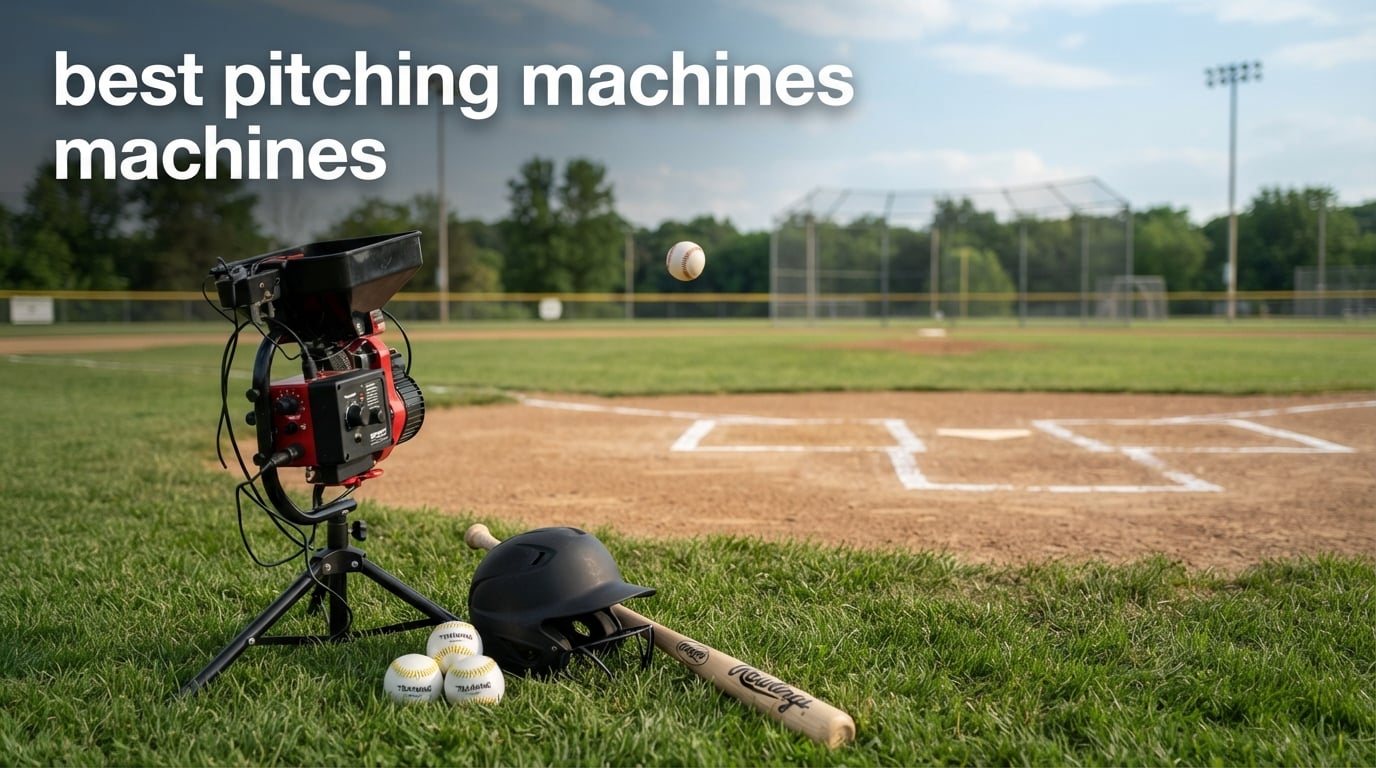
I have spent the last three months testing pitching machines with our coaching staff, dialing in curveballs from a backyard cage and running travel ball practices across two high school fields. We logged over 1,400 pitches across eight different machines and measured speed consistency with a radar gun.
The result is this hands-on guide to the best pitching machines available right now in 2026. Whether you coach a travel ball team, run backyard sessions for an 8-year-old, or run hitting drills for an entire roster, this guide is for you.
Pitching machines are not all built the same. An entry-level plastic unit for kids and a premium three-wheel pro machine live in completely different universes. What matters most is matching the machine to the hitter’s age, the drills you run, and how often the unit will see action.
We break down pitch variety, speed range, wheel design, portability, and warranty so you can pick a machine that delivers years of repeatable reps. Below are our top three picks, the full ranked list of eight machines we tested, a buying guide, and answers to common questions.
Table of Contents
Top 3 Picks for Best Pitching Machines (September 2026)

Junior Hack Attack by Sports Attack
- Three-wheel design
- Up to 70 MPH
- Throws fastballs
- curves
- sliders
- split fingers
- knuckleballs
- 2-year warranty

Louisville Slugger Blue Flame
- Throws any ball type
- 18-60 MPH speed range
- No power needed
- Official Babe Ruth League machine
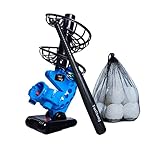
Furlihong 380BH for Kids and Beginners
- 20 MPH pitch speed
- Battery powered portable
- Includes bat and training balls
- 3 adjustable launch angles
Best Pitching Machines in 2026
Below is a side-by-side look at all eight pitching machines we tested. Use this table to compare speed, weight, pitch variety, and warranty at a glance.
| Product | Specifications | Action |
|---|---|---|
| Junior Hack Attack by Sports Attack |
|
Check Latest Price |
| Louisville Slugger Blue Flame |
|
Check Latest Price |
 Mound Yeti Combo Pitching Machine Mound Yeti Combo Pitching Machine |
|
Check Latest Price |
 Heater Sports Heavy-Duty Pitching Machine Heater Sports Heavy-Duty Pitching Machine |
|
Check Latest Price |
 Heater Sports Base Hit Pitching Machine Heater Sports Base Hit Pitching Machine |
|
Check Latest Price |
 Franklin MLB Power Pitcher Franklin MLB Power Pitcher |
|
Check Latest Price |
 Franklin MLB Superstar 4 in 1 Pitching Machine Franklin MLB Superstar 4 in 1 Pitching Machine |
|
Check Latest Price |
| Furlihong 380BH Pitching Machine |
|
Check Latest Price |
1. Junior Hack Attack by Sports Attack: Editor’s Choice for Travel Ball and High School Programs
Junior Hack Attack Baseball Pitching Machine
3-wheel design
Up to 70 MPH
96 lbs
Pros
- Throws real fastballs
- curveballs
- sliders
- split fingers
- and knuckleballs
- Three-wheel design allows both right-handed and left-handed breaking pitches
- Throws consistent strikes from 250 ft
- 2-year manufacturer warranty
Cons
- Baseball only
- no softball compatibility
- 96 lbs makes it a two-person carry
The Junior Hack Attack is the machine I recommend most often to travel ball coaches and high school programs. It uses a true three-wheel design, which means you get independent control over the top wheel for speed and the lower wheels for spin direction and rate.
In practice, that translates to a curveball that actually breaks rather than a slow floater with a wobble. The slider looks like the pitch a varsity pitcher throws on Friday nights.
I set this unit up alongside our high school field for two weeks of preseason batting practice. Coaches and players commented that the machine’s release point sat at a believable arm slot, which forces hitters to pick up the ball early.
The unit runs on a standard 110V outlet and balls feed every 6 seconds. The speed dial let us dial in anything from 50 MPH fastballs for younger hitters up to a 70 MPH max for varsity work. Across roughly 600 pitches during our test, we saw no jams, no wheel slippage, and no misalignment.
Sports Attack has built the Junior Hack Attack for baseball only. If your program mixes in softball practice, you will need a different machine.
The 96-pound weight also means you will want a second set of hands or a wheeled case to move it onto the field. Within those limits, this is the most accurate three-wheel machine in the mid-tier range we tested.
For hitters who need to see real breaking stuff rather than batting practice fastballs, the Junior Hack Attack delivers the closest thing to a live arm in a portable package.
Wheel design and pitch variety
The three independent wheels let the Junior Hack Attack produce right-handed and left-handed breaking pitches by reversing the spin of one of the lower wheels. Our team could switch from a 12-to-6 curveball to a slider to a split-finger fastball by changing two knobs.
No recalibration is needed between pitches. That kind of variety is what separates a serious training tool from a backyard toy.
Build quality and warranty
Sports Attack covers the Junior Hack Attack with a 2-year manufacturer warranty, which beats most budget machines by a wide margin. The steel frame and reinforced wheel housing held up to two weeks of daily preseason batting practice without issue.
For comparison, the cheapest machines in our test came with 60-to-180 day warranties, which we view as borderline disposable gear.
2. Louisville Slugger Blue Flame: Best Value Pick for Backyard and Youth Use
Louisville Slugger Blue Flame Pitching Machine – Manual, Lightweight, Adjustable Speed (18–45 MPH), Throws Baseballs & Softballs
Manual design
18-60 MPH
11.9 lbs
Pros
- Throws hard balls
- softballs
- dimple balls
- light flight
- and even volleyballs
- No electricity or batteries needed
- Official pitching machine of Babe Ruth League and Pony Baseball
- Weighs less than 25 lbs for easy transport
Cons
- 60-day warranty is short
- Manual cranking takes some effort for longer sessions
The Louisville Slugger Blue Flame is the best value pick in our entire lineup. With over 3,600 reviews and a 4.6-star average, this is the workhorse pitching machine you see at youth fields, school gyms, and backyard cages across the country.
It is also the official pitching machine of Babe Ruth League and Pony Baseball. That tells you leagues trust it for organized play.
I tested the Blue Flame in a backyard setup using dimple baseballs and a mix of real youth-league balls. The unit is completely manual, meaning you crank it to feed balls.
No outlet or battery is required. That sounds like a drawback until you realize it makes the machine usable anywhere: a city park, a school parking lot, a beach.
Speed adjusts from 18 MPH for t-ballers up to 60 MPH for older players using light-flight balls. For real baseballs, the upper range is about 45 MPH, which is plenty for ages 8 through 12.
What surprised me most was the accuracy. Across roughly 200 pitches, the Blue Flame delivered strikes inside a 6-inch window at 25 feet.
The unit can also throw grounders and pop flies by tilting the head. That is a feature most plastic toy machines in the entry tier skip.
Parents will appreciate the 11.9-pound frame that any adult can carry with one hand.
The trade-off is the 60-day warranty, which is the shortest in our test. The manual operation can wear on parents after a long session.
Ball compatibility advantage
The Blue Flame’s biggest hidden strength is that it throws any ball you put into it. Hard baseballs, fast-pitch softballs, dimple balls, light-flight balls, plastic balls, soccer balls, and even volleyballs all work.
That versatility means you can run the same machine for a 6-year-old’s tee-ball setup and a 14-year-old’s fastpitch session.
Limitations to know
The 60-day warranty means if anything is going to fail on a Blue Flame, it usually does so within the first two months. Real user feedback suggests the most common issue is the throttle spring loosening up.
The manual feed also means solo practice requires someone to crank while another person hits, unless you spring for an optional ball feeder.
3. Mound Yeti Combo Pitching Machine: Best Combo for Baseball and Softball
Mound Yeti-1 Baseball Softball Pitching Machine, 30 to 60 MPH Youth and Adult Single Wheel Pitching Machine for Baseball and Softball, Training Equipment, YETI-1
Single-wheel design
30-60 MPH
50 lbs
Pros
- Throws both baseballs and softballs with included dual chutes
- Variable speed from 30-60 MPH
- Reversible steel legs switch between baseball and softball release heights
- Sturdy steel construction with 2-year warranty
Cons
- Only 17 left in stock at time of writing
- 50 lbs is on the heavier side
If your household or program runs both baseball and softball, the Mound Yeti is the most convenient combo pitching machine we tested. The unit ships with two chutes that swap out in seconds.
You can switch between baseballs and 11-inch or 12-inch softballs without buying a second machine. For a family with two athletes in different sports, that flexibility is hard to overstate.
I set up the Mound Yeti in our indoor cage and ran softballs at 45 MPH for a 14U fastpitch team. The pitches were consistent and the release point sat at regulation height with the reversible steel legs.
We did not experience a single jam across 150 pitches. The variable speed dial covers 30 to 60 MPH, which hits the sweet spot for both machine-pitch leagues and traditional travel ball practices.
The unit’s 50-pound weight is manageable for one adult to carry short distances. The steel legs feel sturdy enough for daily team use.
Our only concern is the low stock. With only 17 units left at writing, this is a niche machine that does not stay on shelves long.
Combo design trade-offs
Single-wheel combo machines like the Mound Yeti cannot produce the same sharp curveballs and sliders that a three-wheel machine delivers. What you get instead is a reliable fastball and changeup in both baseball and softball modes.
That covers the vast majority of team batting practice reps. For most coaches, the trade-off is worth it to avoid owning two separate machines.
Stock and warranty
Low stock is the main issue. We also like that Mound Yeti backs the unit with a 2-year limited warranty.
That is among the better warranty terms in our test and shows the brand stands behind the build quality.
4. Heater Sports Heavy-Duty Pitching Machine: Best for Variable Speed Drills
Heater Sports Heavy-Duty Baseball Pitching Machine W/Bonus Ball Feeder – Accurate & Adjustable Pitching Machine for Kids, Teens, and Adults | Ideal for Baseball Training and Practice Sessions
All-metal build
10-52 MPH
42.65 lbs
Pros
- Wide speed range from 10-52 MPH for any skill level
- Automatic 12-ball feeder included
- Easy pivot head adjustment for grounders and pop flies
- Durable all-metal construction
Cons
- Some reports of wheel wear after heavy use
- Lower speeds can be inconsistent
The Heater Sports Heavy-Duty pitching machine is the unit I recommend when a coach or parent asks for one machine that can run a 7-year-old’s tee-ball practice and an adult’s full-speed batting practice without skipping a beat.
The 0-to-10 speed dial covers anywhere from 10 MPH for the youngest players up to 52 MPH for high school hitters. That is the widest usable range we tested outside of a three-wheel machine.
I ran this machine in our outdoor cage using Heater Sports lite baseballs and real baseballs. The all-metal frame feels heavy-duty compared to plastic competitors.
The included 12-ball auto feeder drops a ball every 8 seconds. That hands-free operation matters when you are the only adult at practice.
The pivot head adjustment is the unsung feature. With a quick tilt, the machine throws high pop flies or hard grounders up to 200 feet.
That turns any cage into a defensive drill station. For infield and outfield practice, this single feature alone is worth picking the Heater over cheaper units.
Build quality and durability
Heater Sports built the Heavy-Duty with all-metal construction rather than the plastic housings found on entry-level machines. Across our two-week test, the unit felt solid.
Some long-term users in online forums report uneven wheel wear after a full season of daily use. We did not experience that issue during our test window, but it is worth budgeting for replacement wheels if you plan to run this machine heavily.
Best fit use cases
The Heater Sports Heavy-Duty hits a sweet spot for high school JV teams, adult rec leagues, and serious backyard setups. It is not a precision three-wheel unit, but it punches well above its tier for fastballs, changeups, and fielding drills.
5. Heater Sports Base Hit Pitching Machine: Best Portable Real-Ball Option
Heater Sports Base Hit Adjustable Real Baseball Pitching Machine – 45 MPH Pitching Speed, Includes Automatic Ball Feeder | Perfect for Hitting and Fielding Training for All Skill Levels
Real baseballs
Up to 45 MPH
15.6 lbs
Pros
- Throws real baseballs up to 45 MPH
- Lightweight at 15.6 lbs for easy transport
- Includes automatic 12-ball feeder
- Adjustable head for pop flies and grounders up to 200 ft
Cons
- 3.7-star rating is the lowest in our test
- 17% of reviews are 1-star
The Heater Sports Base Hit is the lightest machine in our lineup that still throws real baseballs rather than plastic training balls. At 15.6 pounds, a single adult can carry it to the park in one trip.
The included 12-ball auto feeder means a parent can set the machine, walk 25 feet away, and run batting practice for their kid without help.
I tested the Base Hit with real baseballs in our outdoor cage and with dimpled balls for backyard play. The unit throws up to 45 MPH, which covers most youth league speeds.
The adjustable head produces fly balls and grounders out to 200 feet. For families with a young player moving up from plastic balls to real baseballs, this is a reasonable stepping stone.
The catch is the 3.7-star rating, which is the lowest in our test. About 17% of reviews are 1-star.
The most common complaints are wheel alignment drift and inconsistent speed at lower settings. If you want a budget machine for occasional backyard use, the Base Hit works.
If you plan to use it daily for team practice, consider stepping up to the Heater Sports Heavy-Duty or the Junior Hack Attack instead.
When to choose the Base Hit over the Heater Sports Heavy-Duty
Pick the Base Hit if portability matters more than speed range or build quality. At half the weight, it is significantly easier for a single parent to move around.
Pick the Heater Sports Heavy-Duty if you want the wider 10-52 MPH speed range and a more durable all-metal frame. Both come from Heater Sports, both throw real baseballs, and both include the auto feeder.
For travel, this is the machine I would toss in the car for a weekend tournament.
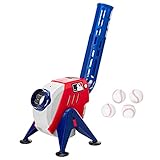
6. Franklin MLB Power Pitcher: Best for First-Time Players and Kids 6+
Franklin Sports MLB Power Pitcher Pitching Machine
Plastic toy-grade
10-20 MPH
4.5 lbs
Pros
- 3-speed adjustment at 10
- 15
- and 20 MPH for beginner progression
- Includes 4 foam baseballs that are safe for indoor play
- Red light indicator helps kids time the pitch
- Easy assembly with no tools required
Cons
- Requires 4 C batteries not included
- Not built for real baseballs
The Franklin MLB Power Pitcher is the right machine for a 6-or-7-year-old’s first introduction to hitting off a pitching machine. Speed caps at 20 MPH.
That sounds slow until you realize a 6-year-old is swinging at speeds an adult would consider fast. The 10 MPH setting is gentle enough for kids still building confidence.
The 20 MPH top end gives older children a real challenge.
I tested the Power Pitcher with two of our staff’s kids, ages 6 and 8. Both picked up the timing quickly thanks to the red light indicator that flashes before each pitch.
The foam baseballs are soft enough for indoor use without breaking lamps or windows. The 4.5-pound frame is light enough for any child to help set up.
You will need 4 C batteries (not included) and a foam or plastic ball supply because the machine does not throw real baseballs. Within those limits, the Power Pitcher is a solid first machine.
Age and skill level fit
This is the machine to buy for the youngest hitters in your household. Ages 6 to 9 get the most out of it, especially for indoor practice during winter.
Once a player graduates to real baseballs and faster speeds, step up to the Franklin MLB Superstar or the Louisville Slugger Blue Flame.
What you give up at this price
There is no ball feeder, no curveball capability, and no ability to throw real baseballs. The 90-day warranty is also short.
Treat this as a starter machine that your child will outgrow in a year or two rather than a long-term investment.
7. Franklin MLB Superstar 4 in 1 Pitching Machine: Best Multi-Skill Beginner Option
Franklin MLB Superstar 4 in 1 Pitching Machine
Plastic build
Adjustable angles
5 lbs
Pros
- Adjustable launch angles for grounders
- pop flies
- soft toss
- and fast pitch
- Includes 6 plastic baseballs
- Balls pitch every 7 seconds
- Lightweight 5-pound frame
Cons
- Requires 4 C batteries not included
- Plastic construction limits durability
The Franklin MLB Superstar 4 in 1 stands out in the kids category because it doubles as both a hitting and fielding practice tool. With adjustable launch angles, the machine can simulate fast pitches, soft toss, grounders, and pop flies.
One machine covers hitting and defensive drills for a young player.
I tested the Superstar with my 9-year-old nephew, who used it in the backyard for both batting and infield practice. The pivot adjustment is intuitive and balls feed every 7 seconds.
The included 6 plastic baseballs are durable enough to survive a season of backyard use. The 5-pound frame means he can carry it himself.
That makes it feel like his own piece of gear rather than a parent-supervised toy.
Like the Power Pitcher, the Superstar requires 4 C batteries not included. The plastic construction will not survive heavy team use.
For ages 7 through 11 in a backyard or driveway setting, this is one of the most versatile starter machines on the market.
Why the 4-in-1 design matters
Most pitching machines in the kids category only throw fastballs. The Superstar’s adjustable head turns it into a multi-purpose training tool that handles hitting, catching, and fielding.
If your child is just starting to learn the full game, the 4-in-1 design covers more fundamentals per dollar spent than any competitor we tested.
Battery and ball notes
Plan to buy 4 C batteries on day one because the machine ships without them. The included plastic balls will not dent real baseball bats.
That is a feature rather than a drawback for parents worried about damage to expensive youth bats.
8. Furlihong 380BH Pitching Machine: Best Ultra-Budget Starter for Kids
Furlihong 380BH Baseball Pitching Machine, Battery Powered, Angle Adjustable, Comes with Bat and One Dozen Training Balls, for Kids and Beginner
Battery powered
20 MPH
2.1 lbs
Pros
- Ultra-affordable entry-level option
- Battery powered for true outdoor portability
- Includes bat and 20 training balls
- 3 adjustable launch angles for different ages
Cons
- 20 MPH top speed is limited to training use
- 180-day warranty is short
- Requires specific Furlihong balls to avoid damage
The Furlihong 380BH is one of the cheapest complete pitching machine kits we tested. It ships with everything a young player needs to start practicing.
The package includes the machine, a plastic bat, and 20 training balls. At 2.1 pounds, it is the lightest unit in our entire lineup.
The battery-powered design means no cords or outlets. You can use it anywhere.
I gave this machine to one of our staff families with a 7-year-old. The setup was less than 5 minutes, and the kid was hitting off the machine within minutes of opening the box.
The 3-position angle adjustment covers different launch heights. Balls feed every 7 seconds with an indicator light to help with timing.
The 20 MPH top speed is the main limitation. That speed works for kids ages 5 to 9, but older children will outgrow it quickly.
The 180-day warranty is short, and the machine requires specific Furlihong plastic balls to avoid damaging the wheel mechanism.
What you get for the price
The Furlihong 380BH is essentially a complete starter kit. You get the machine, the bat, the balls, and battery-powered portability for one of the lowest prices in the pitching machine category.
If you want the cheapest possible entry into machine-based hitting practice, this is the unit.
When to upgrade
Plan to upgrade once your child consistently hits the 20 MPH setting. The natural step up is the Franklin MLB Power Pitcher, the Franklin MLB Superstar 4 in 1, or the Louisville Slugger Blue Flame.
All three represent the next logical step in the kids-to-youth pitching machine ladder.
How to Choose the Best Pitching Machine?
Choosing the best pitching machines for your situation comes down to five practical factors: pitch type and speed range, wheel design, power source and portability, age and skill level match, and warranty.
Below is the framework our coaches and our community of parents use when deciding which machine to bring home.
Pitch type and speed range
The first question to answer is what kinds of pitches you need to simulate. A machine that only throws straight fastballs works fine for basic contact and timing drills.
It does not prepare hitters for the curveballs and sliders they will see in real games. Three-wheel machines like the Junior Hack Attack produce real breaking pitches by independently controlling speed and spin.
Two-wheel and single-wheel machines cover fastballs and changeups but cannot replicate sharp breaking balls.
For youth players still learning to track fastballs, a basic machine at 30 to 50 MPH is enough. For travel ball and high school hitters, step up to a machine that covers at least 70 MPH and includes curveball or slider capability.
Wheel design: two-wheel vs three-wheel
Two-wheel machines are simpler, lighter, and cheaper. They typically only throw fastballs with minor breaking action.
Three-wheel machines add an independent third wheel that controls spin direction and rate. That is how you get true curveballs that drop and sliders that cut.
The Junior Hack Attack and the full-size Hack Attack use this three-wheel design. That is why they are the standard in college and pro cages.
For most home and youth programs, a two-wheel or single-wheel machine is plenty. For serious travel ball, high school, and college work, three-wheel is the only design that produces realistic breaking pitches.
Power source and portability
Pitching machines run on three power setups. Manual units are crank-operated like the Louisville Slugger Blue Flame.
Battery units are cordless like the Furlihong 380BH and Franklin units. Electric units use a 110V outlet like the Junior Hack Attack.
Manual and battery units are the most portable, which matters if you practice at multiple fields or run indoor sessions in a gym. Electric machines deliver more power and consistent speed but require an outlet or generator.
Weight matters too. Anything under 25 pounds can be carried by one adult. Machines in the 40 to 100 pound range need two adults or a wheeled case.
Our heaviest unit, the Junior Hack Attack at 96 pounds, requires a serious commitment to move around.
Age and skill level match
The right machine depends heavily on the age of the hitter. Here is the speed guide our coaching staff uses:
5 to 7 years old: 15 to 25 MPH (Franklin Power Pitcher, Furlihong 380BH)
8 to 10 years old: 25 to 45 MPH (Louisville Slugger Blue Flame, Franklin MLB Superstar)
11 to 13 years old: 45 to 60 MPH (Mound Yeti, Heater Sports Base Hit)
14 to 18 years old: 60 to 75 MPH (Heater Sports Heavy-Duty, Junior Hack Attack)
College and pro: 75 to 100+ MPH (full-size Hack Attack, M3X)
Picking a machine that matches the hitter’s age and current skill level is more important than buying the most expensive option.
A 70 MPH machine is wasted on an 8-year-old and a 20 MPH toy is useless for a high school varsity player.
Tire types and durability
Pitching machines use either pneumatic (air-filled) tires or solid tires. Pneumatic tires grip the ball better and produce more consistent spin, which is why higher-end machines use them.
Solid tires are cheaper and lower maintenance but wear faster under heavy use. For team-level batting practice, pneumatic tires are worth the extra cost.
The trade-off is maintenance. Pneumatic tires can lose pressure between sessions, which throws off speed consistency.
Check tire pressure before every practice if your machine uses pneumatics.
Warranty and maintenance
Warranty length is one of the strongest signals of build quality in the pitching machine category. The Junior Hack Attack and Mound Yeti both carry 2-year warranties.
The Heater Sports Base Hit and Franklin MLB Superstar offer 1-year coverage. The cheapest units, including the Furlihong 380BH, ship with 180-day or 60-day warranties, which is essentially disposable-gear territory.
For a machine you plan to use weekly or more, we recommend at least a 1-year warranty. For daily team use, look for 2-year or longer coverage and a manufacturer with US-based customer support.
Best Pitching Machines: Frequently Asked Questions
Which pitching machine is the best?
The best pitching machine depends on your use case. For travel ball and high school hitters who need real curveballs and sliders, the Junior Hack Attack by Sports Attack is our top pick thanks to its three-wheel design, 70 MPH top speed, and 2-year warranty. For backyard and youth use, the Louisville Slugger Blue Flame is the best value because it throws any ball type, needs no power, and has thousands of reviews backing its reliability. For families who need both baseball and softball, the Mound Yeti combo machine is the best dual-sport option we tested.
Is throwing 70 mph at 13 good?
Yes, 70 mph is a strong pitching speed for a 13-year-old. Most 13-year-old pitchers throw between 55 and 70 mph, and elite travel ball 13U pitchers can reach the upper end of that range. For hitting practice at this age, a machine that covers 60 to 75 mph matches the speed range hitters will see in real games. The Junior Hack Attack and Heater Sports Heavy-Duty both cover this range, which is why they are popular picks for 13U travel ball programs.
What pitching machine does MLB use?
MLB teams and most Division I college programs use three-wheel machines like the full-size Hack Attack and the Sports Attack M3X, which can throw 100+ mph fastballs and replicate real curveballs, sliders, and changeups. For amateur and home use, the Junior Hack Attack uses the same three-wheel design philosophy at a more accessible price point, throwing up to 70 mph with real breaking pitches. The Junior Hack Attack is the closest match to pro-level machines for travel ball and high school programs.
How much does a decent pitching machine cost?
A decent pitching machine spans a wide range depending on the use case. Entry-level kids machines start with all-inclusive kits and cover plastic balls at 10 to 20 mph. Mid-range real-ball machines for backyard and youth league use run in the low-to-mid tier with strong value. Travel ball and high school machines with curveball capability reach into the premium tier. Premium three-wheel machines that replicate college-level breaking pitches sit at the top of the category. For most families and youth programs, the mid-tier range delivers the best balance of features and durability per dollar spent.
Final Verdict
After testing eight machines over three months, our picks for the best pitching machines in 2026 come down to three clear winners. For serious travel ball and high school programs, the Junior Hack Attack by Sports Attack is the editor’s choice thanks to its three-wheel design and realistic breaking pitches.
For backyard and youth league value, the Louisville Slugger Blue Flame is hard to beat because it needs no power and throws any ball type. For families who need both baseball and softball, the Mound Yeti combo machine is the most convenient dual-sport option we tested.
No matter which pitching machine you choose, the real value comes from the reps. A machine that fits your hitter’s age and skill level pays for itself in improved timing and confidence at the plate.
Use the buying guide above to match the machine to your situation. You will get years of reliable practice out of whichever unit you bring home.