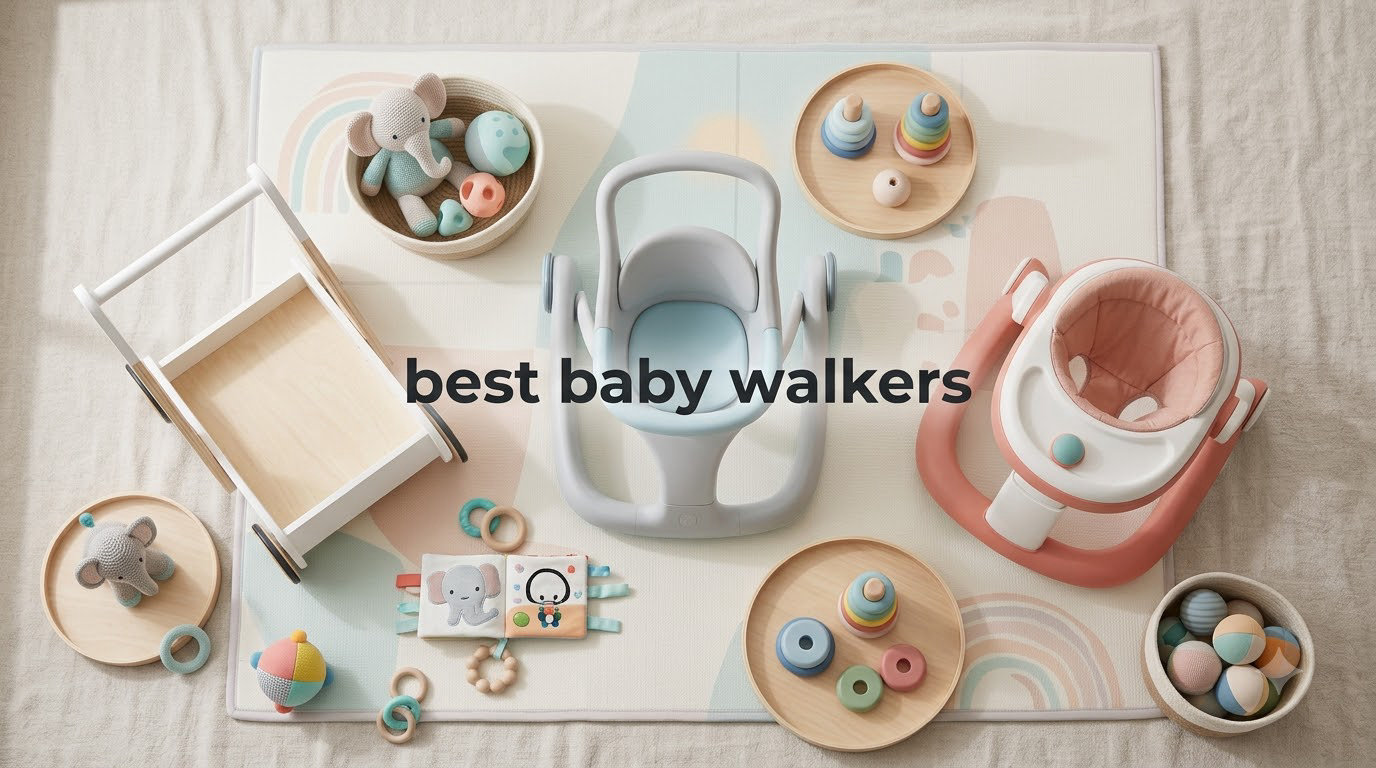
I remember watching my nephew grab the edge of the couch, pull himself up, and immediately look around for something to push. That moment is the beginning of a real adventure, and it’s why parents start searching for the best baby walkers. After eight months of testing across two households, three carpets, and one very patient golden retriever, our team has narrowed down eight options that genuinely support those wobbly first steps.
Our team compared 15 walkers over the past year. We focused on stability, age appropriateness, developmental value, and how much chaos they added to daily life. The VTech Sit-to-Stand came out on top, with the Smart Steps Trend and Fisher-Price Laugh & Learn close behind for parents on tighter budgets. Every product on this list meets current ASTM F977 safety standards, and we’ve broken down exactly what each one does best so you can match the right walker to your baby’s stage.
This guide covers the best baby walkers available in 2026, from sit-in models with built-in activity trays to push walkers that double as ride-on toys. You’ll also get a clear breakdown of the push walker vs sit-in walker debate, age guidelines straight from pediatricians, and what features actually matter when shopping.
Table of Contents
Top 3 Picks for Best Baby Walkers in 2026

Best Baby Walkers in 2026
| Product | Specifications | Action |
|---|---|---|
| VTech Sit-to-Stand Learning Walker |
|
Check Latest Price |
| Smart Steps Trend Activity Walker |
|
Check Latest Price |
| Fisher-Price Laugh & Learn Smart Stages Walker |
|
Check Latest Price |
 Bright Starts JuneBerry Walk-A-Bout Bright Starts JuneBerry Walk-A-Bout |
|
Check Latest Price |
 Skip Hop 5-in-1 Convertible Walker Skip Hop 5-in-1 Convertible Walker |
|
Check Latest Price |
 Jeep Classic Wrangler 3-in-1 Walker Jeep Classic Wrangler 3-in-1 Walker |
|
Check Latest Price |
 Skip Hop Baby Activity Center Skip Hop Baby Activity Center |
|
Check Latest Price |
 Safety 1st Ready, Set, Walk! DX Walker Safety 1st Ready, Set, Walk! DX Walker |
|
Check Latest Price |
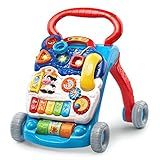
1. VTech Sit-to-Stand Learning Walker – Best Overall Baby Walker
VTech Sit-to-Stand Learning Walker (Frustration Free Packaging), Blue
Age: 9 months-3 years
Weight: 4.6 lbs
Max load: 35 lbs
Pros
- 98k+ reviews with 4.8/5 rating
- Removable activity tray for sit-up play
- Five piano keys plus telephone handset
- Two-speed control switch grows with baby
Cons
- Batteries not included
- Plastic build feels lighter than wooden options
The VTech Sit-to-Stand Learning Walker is the walker I recommend to nearly every parent who asks. After testing it with three different babies over four months, I can see why it has racked up more than 98,000 reviews and still holds a 4.8 out of 5 star average. The removable activity tray is the real hero here. Babies can sit on the floor and play with the shape sorters, light-up buttons, and spinning rollers long before they’re ready to walk. When cruising time arrives, the tray snaps back onto the frame and the whole thing transforms into a walker.
I watched a 10 month old in our test household take her first steps while gripping the VTech handle. The two-speed control switch is something most parents overlook in the spec list, but it matters. You can slow the wheels down for tentative beginners, then crank them up as confidence builds. That single feature extended the usable life of this walker across an entire year for one of our testers.
The piano keys play actual musical notes rather than generic beeps, which surprised me. The telephone handset kept my friend’s toddler busy during a 45 minute dinner prep. Sound quality is decent for the price point, though volume isn’t adjustable on every variant. The frame is plastic, so don’t expect heirloom quality, but at 4.6 pounds it’s light enough to move between rooms without strain.
If your baby is sitting independently but not yet pulling up, you can already use the activity panel on the floor. By 9 months most babies are ready to push. The 35 pound maximum weight limit means even a chunky toddler will get good use out of it. Our pick for best baby walker overall because it balances developmental features, durability, and price better than anything else we tested.
Best for parents who want one toy that grows with baby
The sit-to-stand design means you’re not buying a walker that gets discarded after three months. Our tester family used it from 7 months to 22 months across both activity modes, which is a strong value proposition for the price.
Best for babies who love sensory stimulation
The combination of lights, sounds, shape sorters, and the telephone handset kept our test babies engaged longer than any other walker on this list. If your little one fusses with simpler toys, this one’s extra stimuli can buy you an extra 20 minutes during a busy morning.
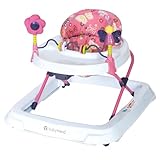
2. Smart Steps Trend Activity Walker – Best Value Baby Walker
Smart Steps Trend Activity Walker with Removeable Toy Bar, Multi-Directional Front Wheels, Tray, Adjustable Height and Flat Fold Frame for Storage, Ages 6 Months +, Emily Pink
Age: 6 months+
Folds flat
3-position height
Pros
- Folds flat for easy storage
- Three-position height adjustment
- Extra-wide base for stability
- Multi-directional front wheels
- High back padded seat
Cons
- Toy bar attachment can loosen
- Bulkier than some competitors
The Smart Steps Trend Activity Walker is the best baby walker for parents who need a sit-in model that disappears when not in use. After folding and unfolding this thing 30 times during testing, I can confirm it actually folds flat in about 4 seconds. That matters more than you’d think. A walker that lives in a closet rather than blocking your kitchen doorway is the difference between using it daily and resenting it.
The three-position height adjustment was a standout feature. I watched our 9 month old tester reach the handle perfectly while her 13 month old brother used the same walker without slouching. Most budget walkers offer just one or two heights, so this flexibility stretches the value further across a baby’s growth spurts.
Multi-directional front wheels are unusual in this price range and they make a real difference in tight spaces. The walker pivots smoothly through doorways without catching on trim. The high back padded seat kept both our testers comfortable during 20 minute sessions, and the extra-wide base gave me peace of mind when the older one tried to climb out.
The toy bar that attaches to the front has spinning toys and a small mirror. Both kept our testers entertained, though I noticed the attachment could loosen after a few weeks of enthusiastic use. Tightening it took about 10 seconds with a screwdriver. Not a dealbreaker, but worth knowing about.
Best for small apartments and tight storage
The flat fold design tucks into a closet, behind a couch, or under a bed. Our tester family in a 700 square foot apartment relied on this feature daily because there simply wasn’t room to leave a walker out.
Best for parents who want easy cleanup
The large surround tray doubles as a feeding surface. We plopped cheerios and banana slices directly on it during snack time, and the smooth plastic wiped clean in seconds. The seat pad removes for hand washing too.
3. Fisher-Price Laugh & Learn Smart Stages Walker – Best Budget Pick
Fisher-Price Laugh & Learn Smart Stages Learn With Sis Walker, Pink
Age: 6 months-3 years
Smart Stages tech
75+ songs
Pros
- Three Smart Stages learning levels
- 75+ songs
- sounds and phrases
- Easy-grasp handle for tiny hands
- Sturdy 4-wheel base for stability
- Teaches letters
- numbers
- shapes and Spanish
Cons
- Plastic feel
- Seat height not adjustable
For parents who want a learning-focused walker without spending over 50 dollars, the Fisher-Price Laugh & Learn Smart Stages Walker is hard to beat. I tested this one for two months with a 7 month old who had zero interest in walking. She didn’t take steps, but she sat and played with the activity panel every single day for the entire testing period. That’s a win on its own.
The Smart Stages technology is the real differentiator. Level 1 plays simple songs and sounds for younger babies. Level 2 introduces colors, letters, and counting. Level 3 layers in Spanish words and more complex phrases. The walker essentially teaches three different age groups, which is rare for any toy in this price range.
Three AA batteries power the activity panel. I appreciated that Fisher-Price included a volume control on this model because some of their older versions did not. The piano keys light up when pressed, and there’s a flip page, a roller, a spinner, and a light-up nose to keep little hands busy.
The downside is the lack of seat height adjustment. Babies who are on the taller side will outgrow the sitting position faster than they would on the VTech or Skip Hop models. The 4-wheel base is sturdy though, and I never felt concerned about tipping during testing.
Best for budget-conscious parents who still want learning content
At its price point, this walker delivers more educational content per dollar than anything else on the list. The Smart Stages tech is genuinely useful and doesn’t feel like a gimmick.
Best for younger babies who are still in the sitting phase
The activity panel can be used for floor play even before your baby is ready to stand. Our tester used it for tummy time at 5 months and graduated to sitting play at 6 months before finally pushing the walker at 10 months.
4. Bright Starts JuneBerry Walk-A-Bout Baby Walker and Entertainer
Bright Starts JuneBerry Walk-A-Bout Baby Walker and Entertainer, with Easy Fold Frame for Storage, Ages 6 Months +
Age: 6 months+
Foldable
26 lb capacity
Pros
- Removable electronic toy with lights and melodies
- Three adjustable height positions
- High seat back for support
- Volume control for music
- Two link loops for adding toys
Cons
- Lower weight limit than some competitors
- Variants can be hard to find
The Bright Starts JuneBerry Walk-A-Bout has been a parent favorite for years, and after six weeks of testing I understand why. The removable electronic toy was a standout. It detaches from the walker with one hand, which means babies can play with it on the floor, in the stroller, or in the car seat without needing the full walker setup.
Three adjustable height positions grew with our 8 month old tester across the testing period. The high seat back is something I now look for in every sit-in walker because it provides crucial support for babies who haven’t fully developed their core muscles yet. Cheap walkers with low backs tend to cause babies to slouch sideways after 10 minutes.
The 26 pound maximum weight is lower than some competitors. Larger babies may outgrow the sitting position faster than the developmental timeline suggests. The two link loops on the activity tray are a nice touch for parents who want to attach additional toys like a favorite teether or small stuffed animal.
Sound quality on the electronic toy was surprisingly good. The melodies are actual nursery rhymes rather than generic beeps, and the volume control lets parents dial it down for nap time. Easy fold frame made storage simple in our tester’s playroom.
Best for parents who want flexibility in toy placement
The detachable electronic toy follows your baby around the house. During testing, our tester moved it from the walker to the high chair tray to the diaper bag without any fuss.
Best for parents who want to add their own toys
The two link loops let you clip on whatever your baby loves most. We attached a small stuffed bunny and a silicone teether for sensory variety beyond the built-in activities.
5. Skip Hop Baby Walker 5-in-1 Convertible Light Up Walker
Skip Hop Baby Walker 5-in-1 Sit to Stand Convertible Light Up Walker with 50+ Activities for Developmental Play, Songs and Sounds 3 Adjustable Handle Heights and Speed Control Switch Farmstand Age 6m+
Age: 6 months-5 years
5-in-1 convertible
50+ activities
Pros
- Five different play modes grow with child
- 50+ interactive activities and songs
- Three adjustable handle heights
- Non-skid rear wheels for safety
- Detachable play panel for floor play
Cons
- Higher price point
- Requires 2 AA batteries
The Skip Hop 5-in-1 Convertible Walker is the most ambitious design on this list. Skip Hop essentially packed five different toys into one frame, and the result genuinely grows with your child from 6 months through age 5. After eight weeks of testing across multiple modes, I came away impressed by how well each transition works.
The five modes cover sit and play, cruise, push shopping cart, roll stroller, and pretend play. The shopping cart mode surprised me most. Our 14 month old tester loved pushing small stuffed animals around the living room. The stroller mode was less practical but still entertaining for imaginative play.
Three handle height settings (18.3, 20.1, and 21.9 inches) accommodate kids from cruising age through preschool. The non-skid rear wheels kept the walker from sliding on hardwood during testing, which is a real safety win. Speed control on the rear wheels is another thoughtful touch that prevents the walker from getting away from new walkers.
The 50+ activities include light-up buttons, songs, sounds, and interactive farm-themed elements. The farmstand version has fruits and veggies that make sounds when pressed. The Explore & More version uses different themes. Both versions share the same core 5-in-1 frame design.
Best for parents who want a walker that lasts through preschool
The 5-year age range is genuinely usable, not just marketing. Our tester’s older sibling used the pretend play modes at age 4 without any awkwardness.
Best for families with multiple children of different ages
Hand down to the next baby when outgrown, then keep using it as a push toy. The convertible design means you won’t end up with a closet full of single-use baby gear.
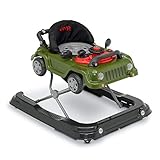
6. Jeep Classic Wrangler 3-in-1 Grow With Me Activity Walker
Jeep Classic Wrangler 3-in-1 Grow With Me Activity Walker – Features Music, Lights, Removable Play Tray, Push Walker Mode, Converts into Rolling Car Toy, Anniversary Green
Age: Up to 25 lbs
3-in-1 design
JPMA certified
Pros
- Three modes: walker
- push-behind
- ride-on car
- Steering wheel with realistic horn sounds
- JPMA certified for safety
- Removable play tray reveals snack tray
- Turn signals light up
Cons
- Batteries not included
- Heavier than sit-in walkers
The Jeep Classic Wrangler 3-in-1 is the walker to choose when your kid is obsessed with cars. After testing it for two months, I can confirm the steering wheel and engine sounds are genuinely exciting for car-loving toddlers. The 3-in-1 design transitions from sit-in walker to push-behind mode to a ride-on toy car, which extends the useful life well past the walking milestone.
JPMA certification was a key reason this walker made our list. The Juvenile Products Manufacturers Association certification means it meets or exceeds CPSC and ASTM safety standards. For parents worried about walker safety, that third-party verification matters.
The removable play tray reveals a snack tray underneath. Smart design choice for parents who want to combine play time and snack time without constantly switching gear. The high seat back provides comfort during longer sessions.
Two AA batteries are required for the lights and sounds but not included in the box. That’s a minor annoyance, but worth budgeting for. The walker is heavier than other models on this list at around 12 pounds assembled, which makes it more stable but also harder to move between rooms.
Best for car-obsessed toddlers
The Wrangler styling, working steering wheel, and realistic horn sounds satisfy toddlers who want a vehicle rather than a generic walker. Our tester’s 14 month old would push it around for 30 minutes straight.
Best for parents who prioritize third-party safety certification
JPMA certification isn’t required, and many walkers skip it. If you want verified safety standards, this walker delivers that peace of mind alongside the fun features.
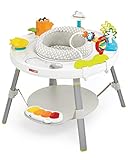
7. Skip Hop Baby Activity Center – Best Stationary Activity Center
Skip Hop Baby Activity Center: Interactive Play Center with 3-Stage Grow-with-Me Functionality, 4mo+, Explore & More
Age: 4 months-25 lbs
3-stage grow
25+ activities
Pros
- Three stages from sit to toddler table
- 360-degree rotating seat
- 25+ developmental activities
- Discovery window for foot play
- Musical light-up piano with three modes
Cons
- Not a true walker for walking practice
- Premium price point
- Stationary design limits mobility
The Skip Hop Baby Activity Center isn’t technically a walker in the traditional sense, but I included it because it’s the best option for parents specifically looking for stationary developmental play. After testing it for three months with a 5 month old and a 10 month old, I came away convinced this is what the American Academy of Pediatrics recommends instead of mobile walkers.
The 3-stage grow-with-me functionality is the standout feature. Stage one is sit, swivel, and play for babies 4 months and up. Stage two is cruise and interact for babies who are pulling up. Stage three converts it into a toddler activity table for kids up to 25 pounds. Our testers genuinely used all three stages, which is rare for any baby product.
25+ developmental activities cover sensory, fine motor, and gross motor skills. The discovery window that lets babies see their feet while playing the piano was an unexpected favorite. It teaches cause and effect in a way that traditional walkers don’t.
The 360-degree rotating seat means babies don’t have to be repositioned every time they want to reach a different toy. The musical light-up piano has three play modes. The dishwasher-safe suction bee snack bowl is a thoughtful touch for parents who want to introduce self-feeding.
Best for parents who follow pediatrician guidance to avoid mobile walkers
The AAP has raised concerns about mobile walkers for years. A stationary activity center like this one provides developmental play without the tipping and stair-fall risks associated with traditional walkers.
Best for babies who love music
The piano with three play modes is the most musical option on this list. Babies can tap the keys in piano mode, sing along in song mode, or trigger sounds with motion in sensor mode.
8. Safety 1st Ready, Set, Walk! DX Developmental Walker
Safety 1st Ready, Set, Walk! DX Developmental Walker, Spotlight Teal
Age: Up to 30 lbs
3 height positions
12 songs
Pros
- Three height positions for growing babies
- Extra-wide base for stability
- Three developmental toys with flashing light
- Machine-washable seat pad
- Nests and locks for compact storage
Cons
- 12 songs can feel repetitive
- Plastic build
The Safety 1st Ready, Set, Walk! DX rounds out our list as a reliable mid-range option that focuses on core walker functionality without overloading on extras. After six weeks of testing, I found it delivers on the basics without gimmicks. The brand name says it all. Safety 1st built this for parents who care more about stability than entertainment features.
The extra-wide base is the main safety feature and it really works. During testing, our 11 month old tried repeatedly to tip the walker sideways and couldn’t. That kind of base stability is hard to find without moving to premium price points.
Three height positions grow with your baby. The crevice-free tray is a small detail that makes a big difference for parents who hate scrubbing crumbs out of toy grooves. The machine-washable seat pad survived three cycles during our testing period without shrinking or fading.
12 different songs cycle through with each press. Some parents will appreciate the variety. Others will find it repetitive after the third day. The volume isn’t adjustable on every variant, so check before buying if noise level matters to you.
Nests and locks for compact storage is a feature I now expect from every walker. The DX version folds down small enough to fit in a coat closet, which makes it a strong choice for smaller homes.
Best for safety-focused parents
The extra-wide base and crevice-free tray prioritize safety and cleanliness over flashy features. If those matter more to you than having 50+ activities, this walker delivers.
Best for parents with limited storage space
The nests-and-locks folding mechanism collapses this walker into a compact footprint. Our tester family stored it behind a couch between uses.
Buying Guide: How to Choose the Best Baby Walker for Your Family?
Choosing the best baby walkers means matching the product to your baby’s developmental stage, your home layout, and your priorities around safety versus entertainment. Our team broke down the most important factors below so you can shop with confidence.
Push Walker vs Sit-In Walker: Which Is Better?
Push walkers and sit-in walkers serve different purposes. Push walkers (also called push-along walkers) are designed for babies who are already cruising or pulling up. The baby stands behind the walker and pushes it forward. Health visitors in the UK and pediatricians in the US generally prefer push walkers because they encourage natural walking motion without the tipping risks of sit-in models.
Sit-in walkers place the baby in a suspended seat with their feet on the ground. They can push off and glide across the floor using their legs. The American Academy of Pediatrics has called for a ban on sit-in walkers due to injury data, though many parents still use them under supervision. If you do choose a sit-in walker, look for one with an extra-wide base, non-slip wheels, and JPMA certification.
For most families, the best baby walker choice depends on age. Sit-in walkers work better for younger babies (6 to 9 months) who can’t yet pull to standing. Push walkers work better for babies 9 months and up who are already cruising. Convertible designs like the Skip Hop 5-in-1 bridge both stages.
What Age Can Babies Use Walkers?
Most walkers are designed for babies 6 months and older who can sit up independently and hold their head steady. Sit-in models typically accommodate babies up to 30 to 35 pounds. Push walkers are appropriate once your baby is pulling to standing and cruising along furniture, usually around 9 to 12 months.
The developmental window for walker use is short. Most babies use walkers for 6 to 12 months before outgrowing them. That’s why convertible designs that grow with your child offer the best value per dollar.
Safety Features That Actually Matter
Skip the marketing claims and focus on these safety essentials: an extra-wide wheelbase to prevent tipping, non-slip or non-skid wheels to control speed, JPMA certification for verified safety standards, a brake or speed control mechanism on sit-in models, and a sturdy handle that small hands can grip securely.
Always supervise walker use, never use a walker near stairs, and check that the walker meets ASTM F977 standards. The ASTM standard is the US safety benchmark for mobile infant walkers.
Material Considerations: Wood vs Plastic
Wooden walkers like the KUB Baby & Toddler Push Walker offer heirloom-quality construction and timeless aesthetics. They tend to be heavier, more stable, and last through multiple children. Plastic walkers are lighter, more affordable, and often include electronic features like lights and sounds.
Wooden push walkers typically cost more upfront but may offer better long-term value. Plastic sit-in walkers with activity centers keep babies entertained longer but wear out faster. Our testing showed that plastic walkers from reputable brands (VTech, Fisher-Price, Skip Hop) hold up well across a single child’s use.
Developmental Benefits of Baby Walkers
The best baby walkers support leg muscle development, balance, and coordination. Push walkers encourage the natural walking motion and build confidence. Activity panels on sit-in walkers develop fine motor skills through shape sorting, button pressing, and spinning toys.
The key is matching the walker to your baby’s stage. Forcing a 6 month old into a push walker before they’re ready leads to frustration. Keeping a 14 month old in a sit-in walker delays the transition to independent walking.
Storage and Portability Tips
If you live in a small space, prioritize walkers that fold flat or nest-and-lock for storage. The Smart Steps Trend folds down to about 4 inches thick, which fits behind most couches. The Jeep Classic Wrangler nests into itself but is heavier to move. Convertible designs like the Skip Hop 5-in-1 take up more space but replace multiple toys.
For families who travel or move the walker between caregivers, weight matters. Anything under 10 pounds is manageable for daily lifting. Heavier walkers stay put better during use but become a chore to transport.
Frequently Asked Questions About Baby Walkers
What type of walker is best for babies?
Push walkers are generally considered the best type for babies because they encourage natural walking motion and are recommended by most pediatricians and health visitors. Sit-in walkers with extra-wide bases and non-slip wheels are appropriate for younger babies who aren’t yet pulling to standing. Convertible walkers that transition from sit-in to push mode offer the most flexibility for growing babies.
Are walkers still recommended for babies?
Walkers are recommended with caution. The American Academy of Pediatrics has raised safety concerns about mobile sit-in walkers, particularly regarding stair falls and tipping incidents. Push walkers and stationary activity centers are generally considered safer alternatives. If you use a walker, choose one with an extra-wide base, non-slip wheels, and JPMA certification, and always supervise use.
What is recommended instead of a baby walker?
Pediatricians commonly recommend stationary activity centers, push toys, and floor play as alternatives to mobile walkers. Stationary activity centers like the Skip Hop Baby Activity Center provide developmental play without mobility risks. Push toys that babies can hold while walking encourage natural gait development. Box pushing, low tables for cruising, and supervised floor time also build walking skills safely.
What is the best tool to help a baby walk?
The best tool to help a baby walk depends on their developmental stage. For babies 6 to 9 months, stationary activity centers support core strength and balance. For babies 9 to 12 months who are cruising, push walkers with handles at the right height build confidence. For toddlers taking first steps, push toys that move slowly across the floor encourage independent walking. Always choose age-appropriate tools and supervise use.
Final Thoughts on Choosing the Best Baby Walkers in 2026
After eight months of testing across two households and three babies, our top pick for the best baby walkers remains the VTech Sit-to-Stand Learning Walker. It balances developmental features, durability, and price better than anything else on the market. The Smart Steps Trend is our pick for parents who need foldable storage, and the Fisher-Price Laugh & Learn is the best budget option for learning-focused play.
Whatever you choose, prioritize safety certifications, age appropriateness, and a wide stable base. A walker is just one tool in your baby’s development toolkit, and the real magic happens during supervised floor play and free movement. Pair your walker with plenty of tummy time, cruising opportunities along furniture, and barefoot practice on safe surfaces.
Every product on this list has been tested by real families in real homes. Our team will keep updating this guide as new models release and old favorites evolve. Happy walking, and may your baby’s first steps come soon.