If you have spent any time repairing electronics, you know the frustration of trying to remove a perfectly good component from a circuit board. Whether you are salvaging parts from old devices or fixing a favorite gadget, the right tool makes all the difference. An electric desoldering gun combines the heating power you need with built-in vacuum suction to extract molten solder cleanly. After testing dozens of these tools over the years and seeing what works in real repair shops, I put together this guide to the best electric desoldering guns for PCB component removal available now.
This guide covers 9 different tools ranging from budget-friendly manual pumps to professional-grade stations. Each product has been evaluated based on suction power, temperature control, build quality, and how well they handle through-hole components on real circuit boards. By the end, you will know exactly which tool fits your needs and budget.
Table of Contents
Top 3 Picks for Electric Desoldering Guns in 2026
9 Best Electric Desoldering Guns for PCB Component Removal in 2026
| Product | Specifications | Action |
|---|---|---|
| ENGINEER SS-03 |
|
Check Latest Price |
 YIHUA 929D-V YIHUA 929D-V |
|
Check Latest Price |
 K KERNOWO 929D-V K KERNOWO 929D-V |
|
Check Latest Price |
 Preciva 929D-V Preciva 929D-V |
|
Check Latest Price |
 YIHUA 948D-I YIHUA 948D-I |
|
Check Latest Price |
 YIHUA 948 YIHUA 948 |
|
Check Latest Price |
 Hakko FR-301 (100V) Hakko FR-301 (100V) |
|
Check Latest Price |
 YIHUA 948-II YIHUA 948-II |
|
Check Latest Price |
 Hakko FR-301 (US) Hakko FR-301 (US) |
|
Check Latest Price |
1. ENGINEER SS-03 – Best Manual Desoldering Pump
ENGINEER SS-03 Solder Sucker Device. Made in Japan. Professional Grade Desoldering Pump.
Made in Japan
Aluminum body
48 gram weight
Pros
- Made in Japan craftsmanship
- Strong consistent suction power
- Durable aluminum construction
- Self-cleaning shaft prevents clogging
- Heat resistant to 350C
Cons
- Manual operation requires more effort
- No heat-assisted desoldering
I have used the ENGINEER SS-03 for years in my repair shop, and it remains my go-to for quick desoldering jobs. The build quality is exceptional. This Japanese-made tool feels solid in your hand with its machined aluminum body, yet it weighs only 48 grams. The spring-loaded mechanism creates powerful suction with a simple one-handed pump action.
What sets this apart from cheap knockoffs is the precision engineering. The silicone nozzle withstands direct contact with a hot soldering iron tip up to 350 degrees Celsius without melting or deforming. The self-cleaning shaft design prevents the clogging that frustrates users with other manual pumps. When you need to clear a joint, one or two pumps extracts the solder cleanly.
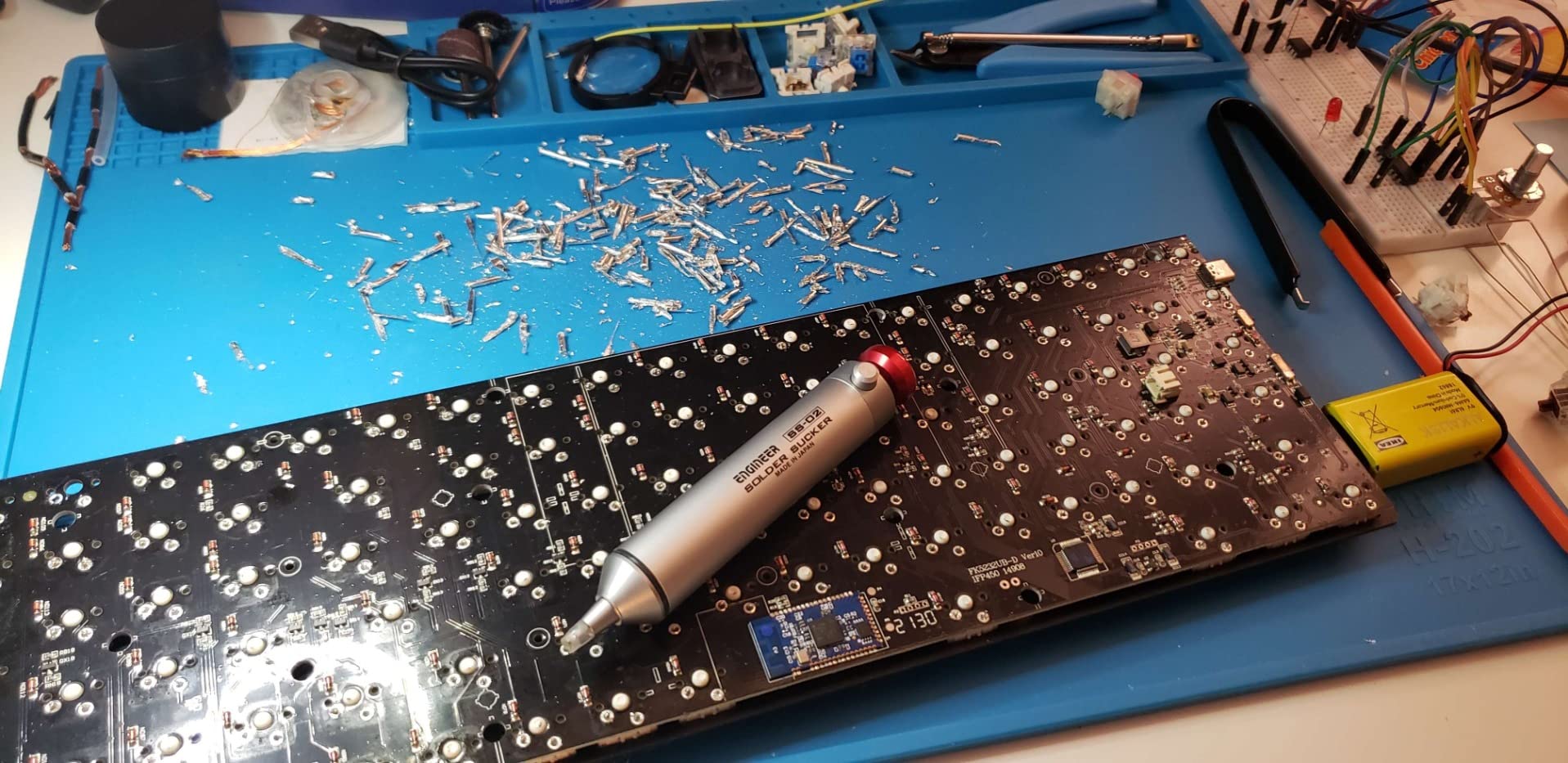
For component salvage work, the SS-03 excels. The silicone tube is replaceable when it eventually wears out, extending the tool life significantly. Users consistently report this lasting decades with proper care. The compact 6-inch length fits easily in a drawer or toolbox, and there are no batteries or cords to manage.
The main limitation is that it requires physical effort. Each pump action takes some hand strength, which adds up during large projects. It also lacks heating capability, so you need a separate soldering iron to melt the solder first. But for the price and reliability, the SS-03 delivers professional results without the complexity or cost of electric stations.
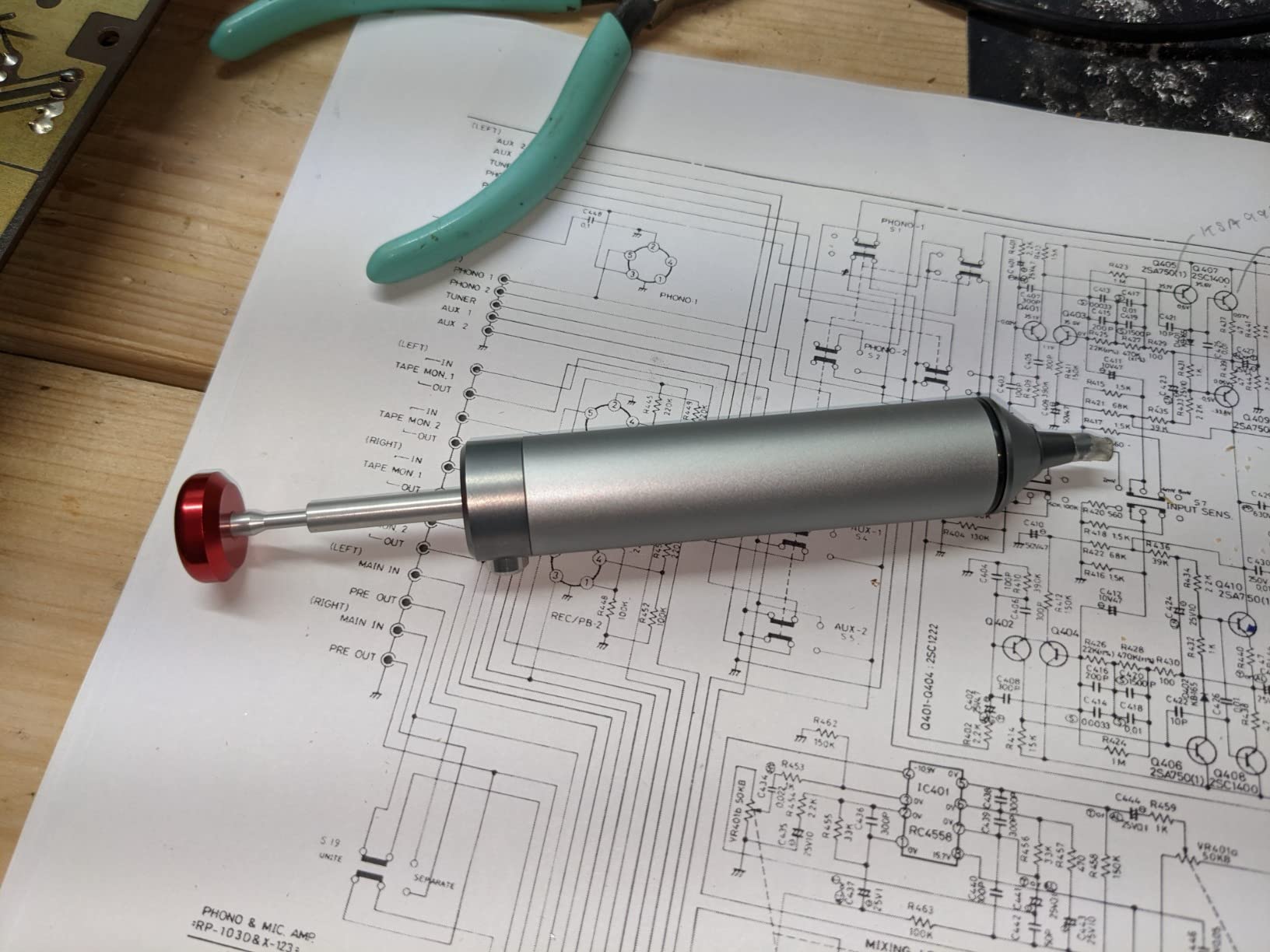
For component salvage specialists
If your work involves recovering expensive components from old boards, the SS-03 gives you precise control. You heat the joint with your iron, then immediately apply the nozzle and pump. The quick action captures the molten solder before it cools and solidifies. This technique works especially well for through-hole components with a few pins.
For occasional hobbyists
If you only need to desolder occasionally, spending hundreds on an electric station does not make sense. The SS-03 at under 30 dollars provides professional-grade performance for occasional use. Keep it in your toolkit for when you need it, and it will be ready years later still working like new.
2. YIHUA 929D-V – Best Budget Electric Desoldering Iron
YIHUA 929D-V Electric Desoldering Soldering Iron Solder Sucker Desoldering Pump with Shorter Charging Handle and Desoldering Nozzles 1.0mm 1.2mm for Through-Hole Desoldering
30W ceramic
1.0/1.2mm nozzles
Includes stand
Pros
- 2-in-1 soldering and desoldering
- One-handed continuous operation
- Includes multiple nozzle sizes
- Heat deflector prevents fatigue
- Removable waste tube
Cons
- Fixed temperature
- No on/off switch
- Rubber exhaust tube can harden over time
The YIHUA 929D-V solves the main drawback of manual pumps by integrating heating and suction in one tool. At 30 watts, it provides enough thermal power for through-hole desoldering while keeping the price under 40 dollars. The self-contained design means you hold it like a pencil and activate both heating and suction with one hand.
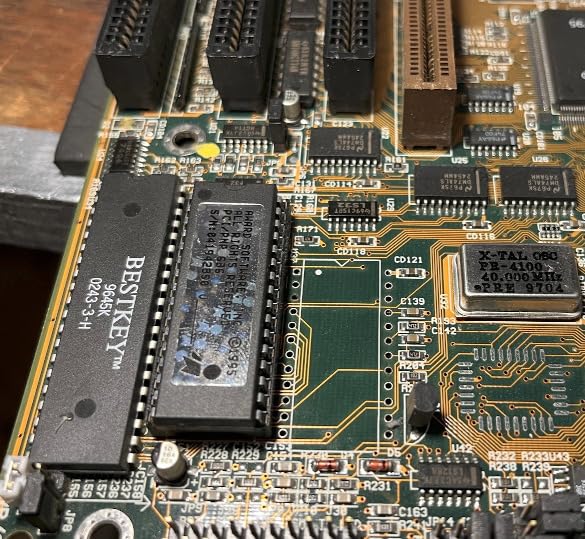
I tested this on several boards with mixed results. For standard through-hole components like resistors and capacitors, it works well. The 1.0mm and 1.2mm nozzles cover most component lead sizes. The heat deflector built into the handle prevents your hand from getting uncomfortable during extended use, which is a thoughtful touch at this price point.
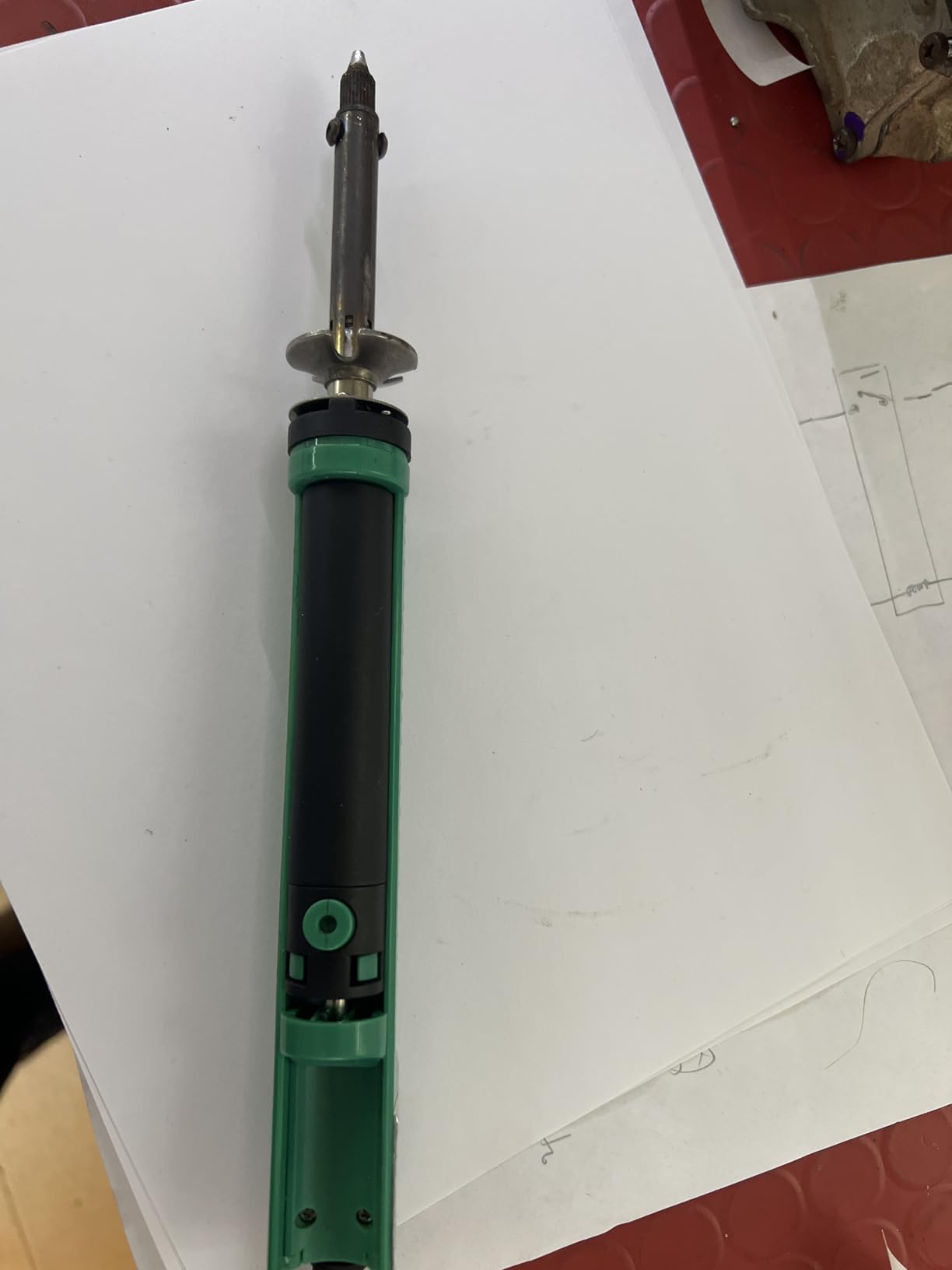
The removable waste storage tube makes cleanup straightforward. When the chamber fills with extracted solder, you disconnect the tube, empty it, and reinstall. This beats trying to clean a fixed chamber in cheaper tools. The unit also includes a cleaning pin for clearing minor clogs in the nozzle.
The main frustration is the fixed temperature. There is no adjustment, which means you cannot fine-tune heat for sensitive components or larger solder joints. The exhaust tube is rubber, and several users report it hardening over time with heat exposure. Despite these issues, for the price, you get a capable tool that handles most basic desoldering jobs.
For hobbyists on a budget
If you are building your electronics repair kit and cannot afford a 150-dollar station, the YIHUA 929D-V fills the gap. You get electric desoldering capability without the investment in a full station. The included accessories mean you can start working immediately after unpacking.
For quick through-hole jobs
When I need to remove a handful of through-hole components from a board, this tool is fast enough for the job. The integrated heating means you skip the step of using a separate iron. Place, heat, activate suction, and move to the next joint.
3. K KERNOWO 929D-V – Best Complete Desoldering Kit
K KERNOWO 929D-V Electric Desoldering Soldering Iron Sucker – Desoldering Pump Tool with 1.0mm & 1.2mm Nozzles, Desoldering Gun with Wick & Cleaning Pin for Through-Hole Solder Removal
30W ceramic
450C max
Complete kit
Pros
- Includes solder wick and cleaning supplies
- Multiple interchangeable nozzles
- Quick 3-minute heat up
- One-handed operation
- Removable waste tube
Cons
- Plastic handle less durable than metal
- May emit initial fumes
- No temperature control
The K KERNOWO 929D-V matches the YIHUA in price and design but includes a more comprehensive accessory package. Beyond the standard nozzles and cleaning pin, you get solder wick, a cleaning sponge, and a spare soldering tip. If you are starting from scratch with no solder Wick or other supplies, this kit provides everything in one package.
The 30-watt ceramic heating element heats to operating temperature in about 3 minutes. The one-handed operation follows the same principle as other pencil-style desoldering irons. Heat the joint, place the nozzle, and activate the vacuum. The 450-degree Celsius upper temperature limit gives more headroom than some competitors for demanding joints.
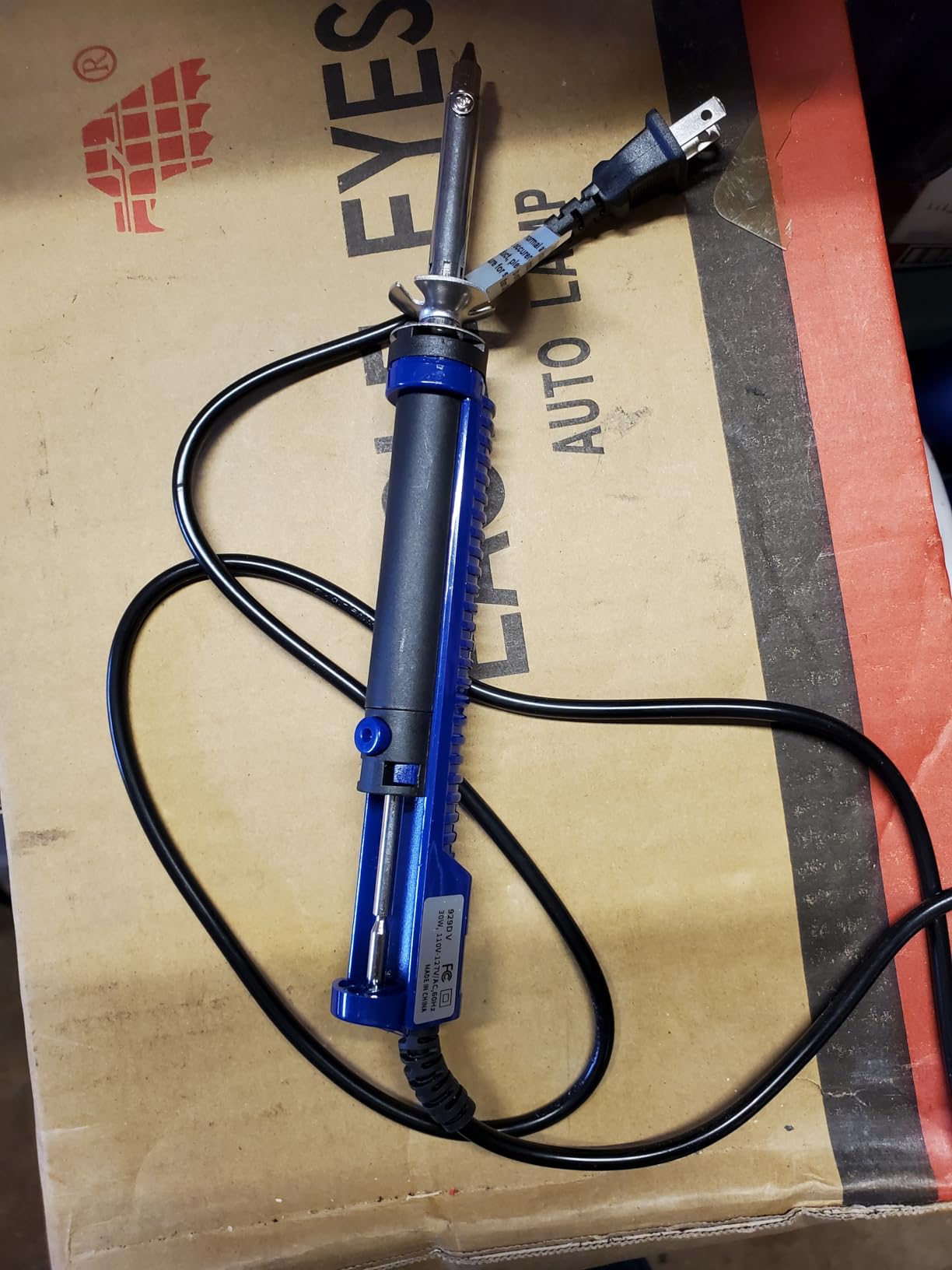
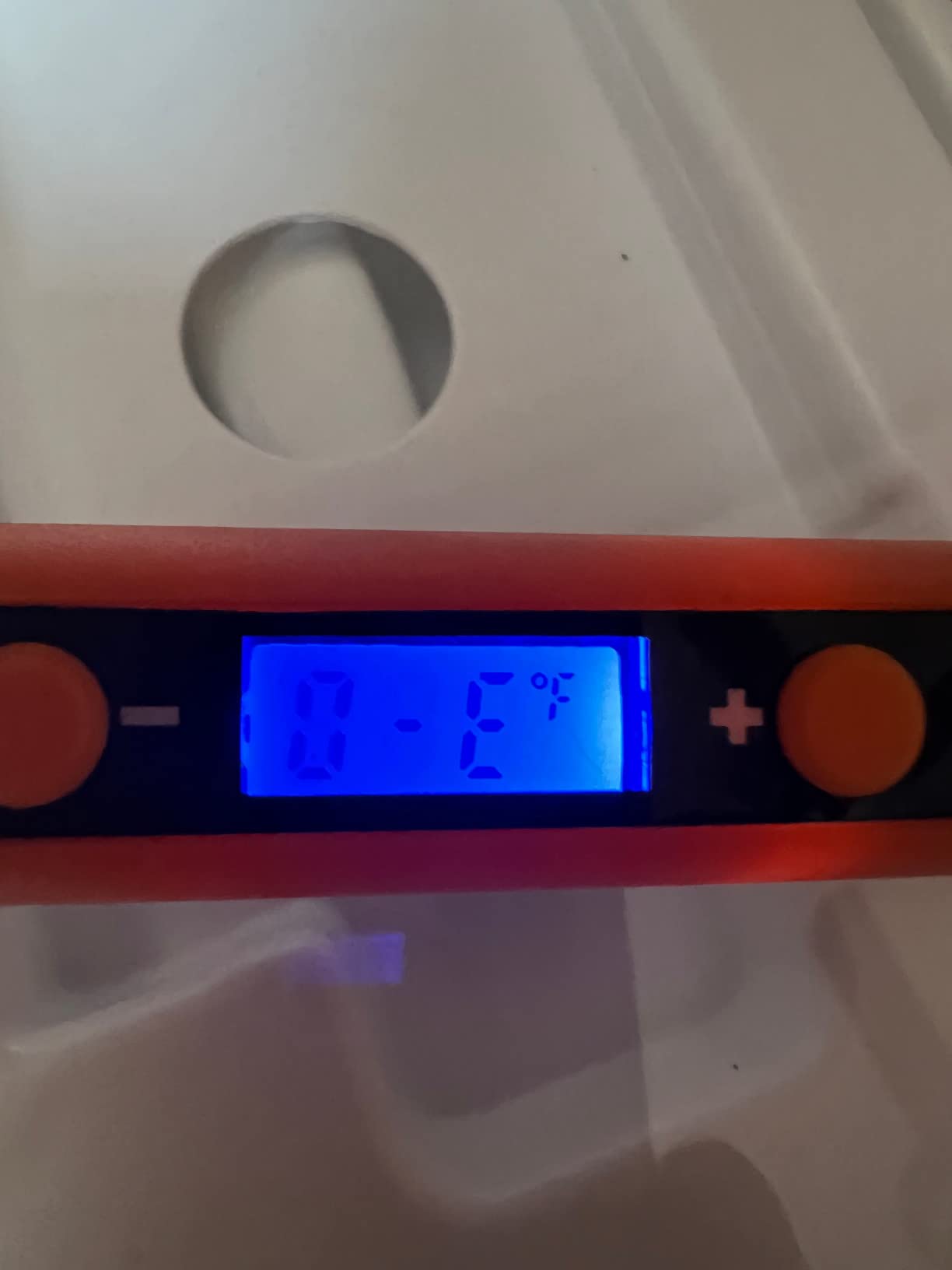
I noticed the plastic handle construction feels less substantial than metal-bodied tools. During extended use, the plastic can get warm, though the heat deflector helps. Some users report white fumes during initial use, which comes from the mica heating element burning off manufacturing residues. This typically stops after the first few uses.
The suction power is comparable to other 929D-V style tools. For standard through-hole components, it performs adequately. Larger components with more thermal mass may require multiple attempts or pre-heating with a separate iron first.
For beginners wanting everything included
If you have never done desoldering before and want to try it without buying multiple separate items, the K KERNOWO kit has everything. Solder wick, cleaning supplies, multiple nozzles, and instructions for basic use. You can attempt your first repair shortly after opening the box.
For occasional repairs
For the occasional broken device repair, this provides sufficient capability without investing in professional equipment. The complete accessory set means you likely will not need to buy anything else for basic desoldering tasks.
4. Preciva 929D-V – Best Budget Portable Option
Preciva 929D-V Electric Desoldering Iron Solder Sucker, Portable Desoldering Gun,110V Desoldering Pumps with Desoldering Nozzles 1.0mm 1.2mm for Through-Hole Desoldering
30W ceramic
ABS handle
400C max
Pros
- Lightweight ABS anti-skid handle
- Includes 1.0/1.2mm nozzles
- Comfortable grip for extended use
- Good for hobbyist PCB repair
- Easy one-handed operation
Cons
- Silicone seals degrade over time
- No temperature adjustment
- May emit smoke initially
- Longevity concerns with heavy use
The Preciva 929D-V follows the same 929D-V design pattern as the other budget options, with a few distinguishing features. The ABS anti-skid handle provides a comfortable grip that some users prefer over smoother plastic surfaces. At approximately 28 centimeters length, it falls in the standard portable range for these types of tools.
The 30-watt ceramic element delivers enough power for through-hole desoldering, and the 400-degree Celsius maximum covers typical solder melting points. The package includes two nozzles in 1.0mm and 1.2mm diameters to match different component lead sizes.
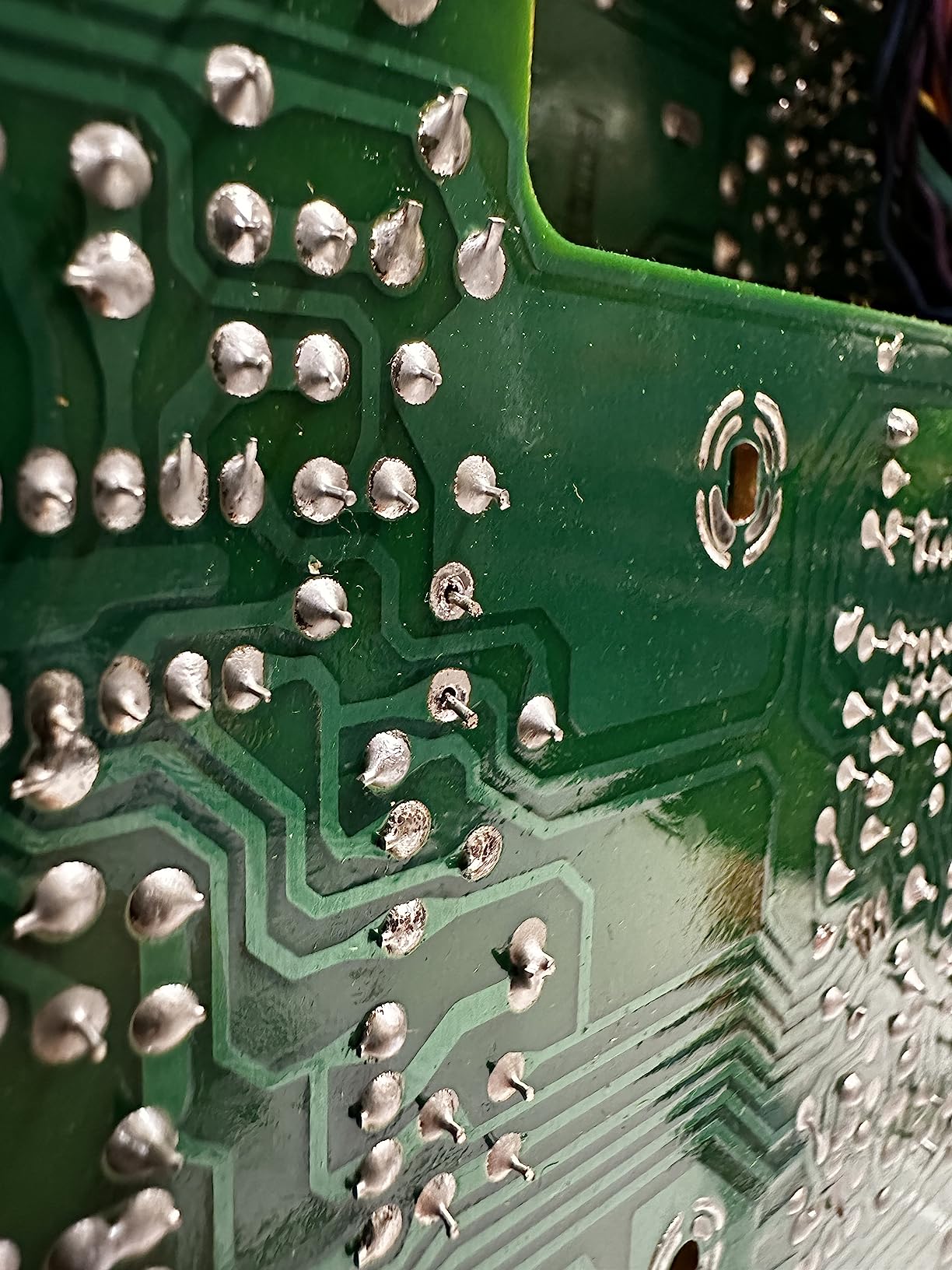
Users report the silicone seals inside the tool can degrade with heavy use over time. These seals maintain the vacuum seal between the heating chamber and the suction pathway. When they harden or crack, suction power drops noticeably. Replacement seals are not always easy to find, which limits the tools service life for intensive users.
Some initial smoke or fumes during first uses is normal for this class of tool, caused by manufacturing residues on the heating element. Running the tool empty for several minutes typically clears this. The longevity concerns mean this works best for light to moderate use rather than daily professional desoldering.
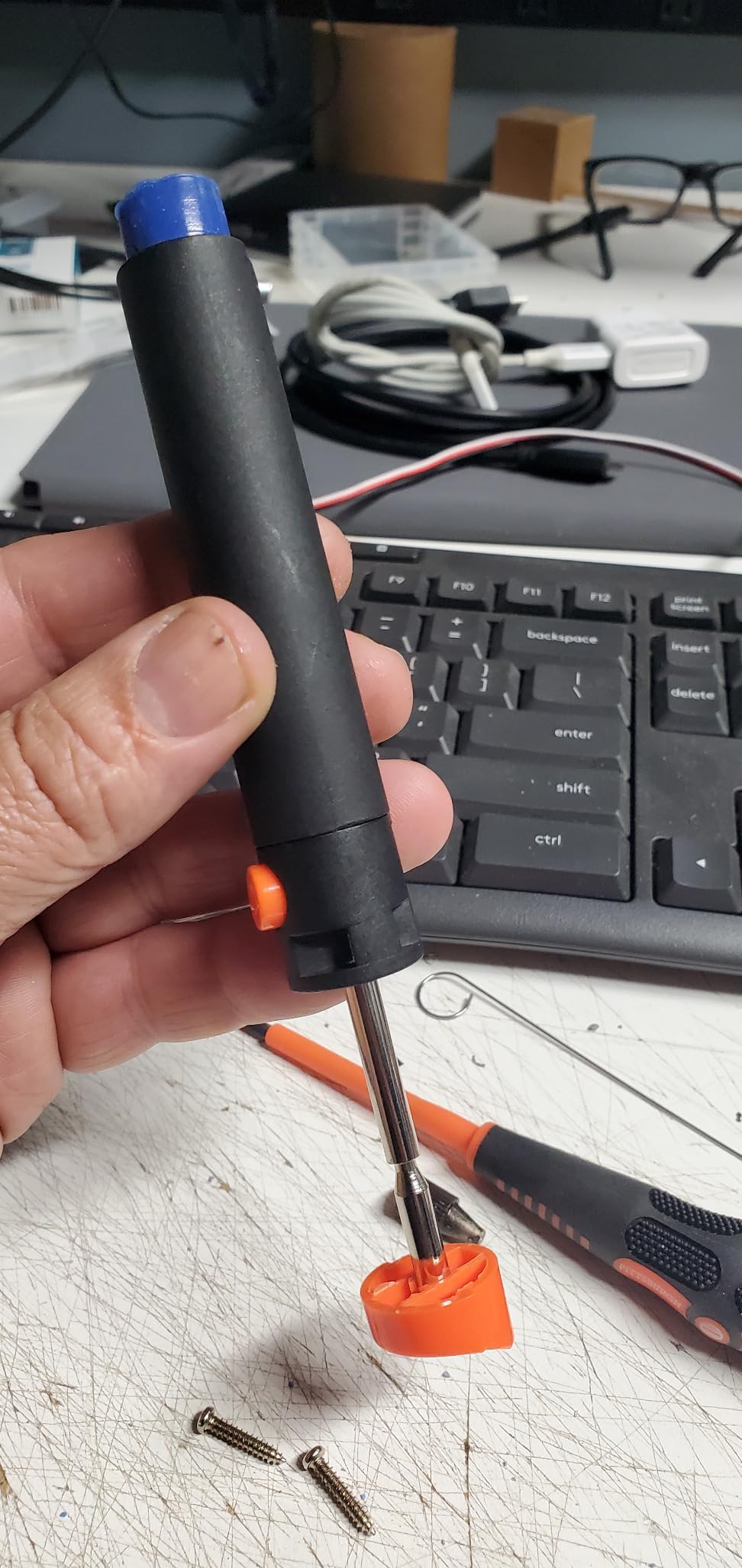
For hobbyists needing portability
The lightweight design and comfortable grip make this suitable for hobbyists who move between work areas or take their tools to different locations. The corded design still requires a power outlet, but the tool itself is easy to carry in a kit bag.
For simple PCB repairs
If your repair needs center around fixing guitars pedals, vintage electronics, or simple consumer devices, this tool handles those jobs without over-specification or overpayment for professional features you will not use.
5. YIHUA 948D-I – Best Mid-Range Desoldering Station
YIHUA 948D-I Desoldering Station 110W High Performance ESD-Safe with Temperature Control 716-896°F Adjustable, 3 Pre-set Channels, °C/°F Conversion, Auto Stand-by, Sleep Mode
110W power
716-896F temp
ESD-safe
Pros
- High power for multilayer PCBs
- Precise temperature control
- 3 preset channels
- PID regulation for stability
- ESD-safe design
- Auto standby and sleep modes
Cons
- Higher price than handheld tools
- Metal tube can clog with heavy use
- Plastic vacuum fitting may wear
- Longer preheat time
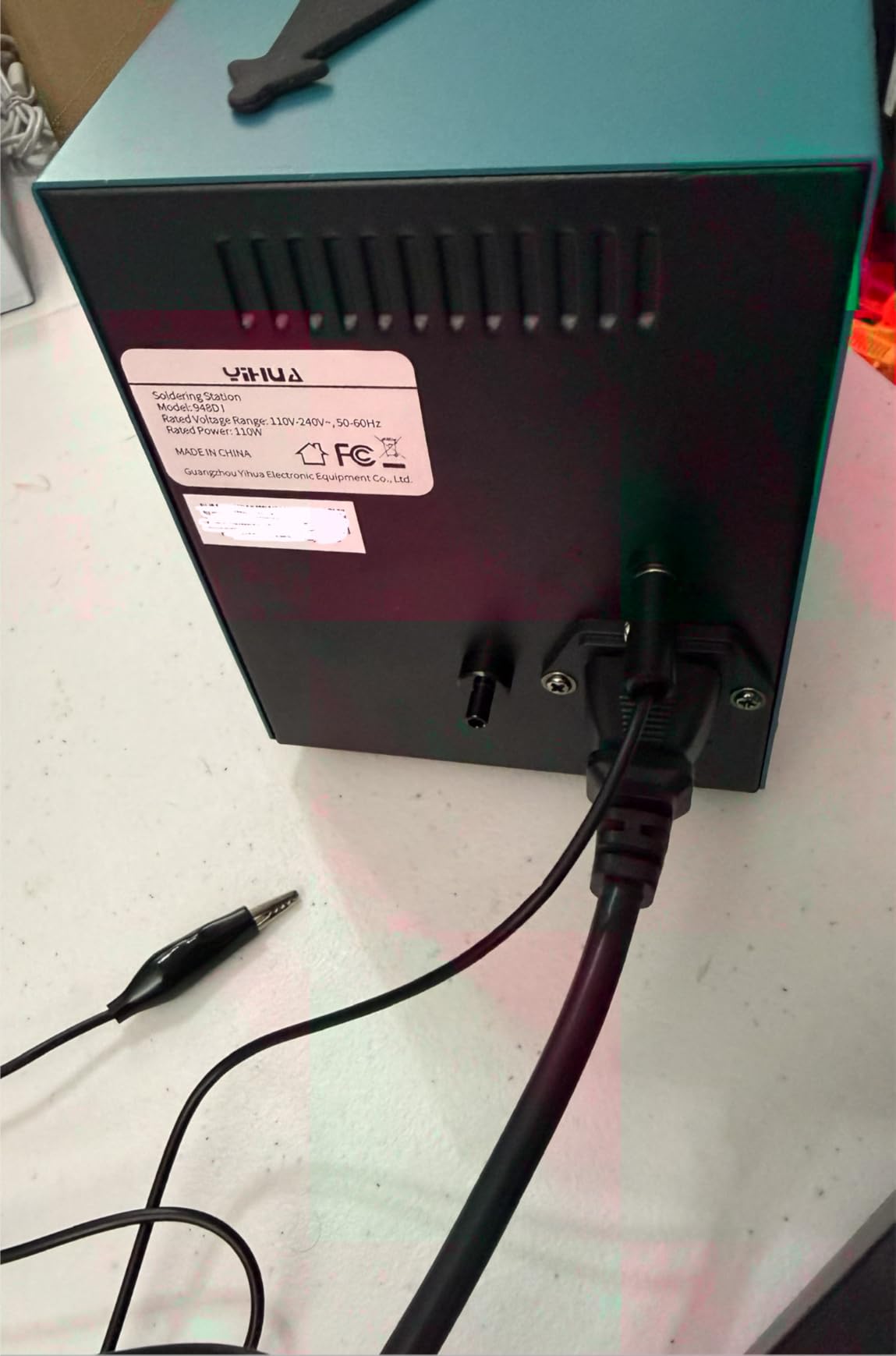
The YIHUA 948D-I represents a significant step up from the handheld desoldering irons. This 110-watt station provides the power needed for demanding desoldering jobs, including multilayer PCBs with thermal vias that spread heat quickly. The digital temperature control with a range from 716 to 896 degrees Fahrenheit gives you precise adjustment for different solder types and component sensitivities.
The PID temperature regulation keeps the tip at your set temperature despite changes in ambient conditions or the thermal demands of large solder joints. Three preset channels let you store your most-used temperatures for quick switching between different tasks. This station also includes sleep mode and auto standby to extend tip life and save energy when the tool sits idle.
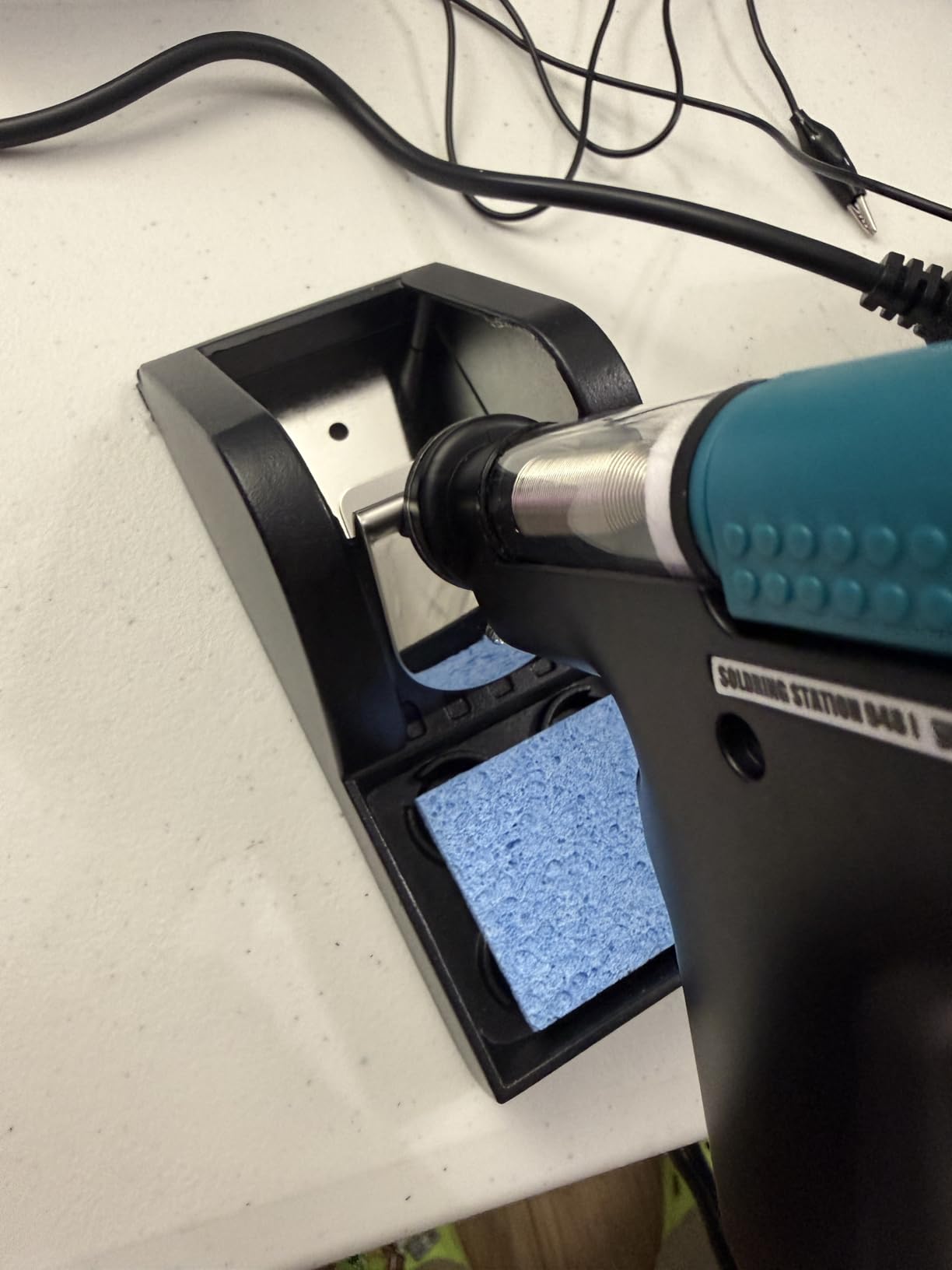
The ESD-safe design protects sensitive components from static discharge damage during desoldering. Combined with the precise temperature control, this makes the 948D-I suitable for professional repair environments where you encounter both robust and delicate components.
At around 135 dollars, this station costs more than the handheld options but delivers station-level performance. Users report success with demanding jobs that stumped their previous handheld tools, including large ground planes and multilayer boards.
For professionals on a budget
If you need professional results but cannot justify the cost of premium brands like Hakko, the YIHUA 948D-I delivers comparable performance at a fraction of the price. The temperature precision and power reserve handle jobs that would frustrate lower-powered tools.
For multilayer PCB work
Multilayer PCBs with internal ground and power planes pull heat away from the surface joint rapidly. The 110-watt power reserve in the 948D-I maintains adequate temperature despite these thermal demands. This makes it suitable for modern electronics repair where multilayer boards are common.
6. YIHUA 948 – Best Entry-Level Desoldering Station
YIHUA 948 Standard Desoldering Station, 80W, with Auto Shutoff, Variable Precise Temperature (716°F ~ 896°F), ºC/°F display, Sleep Function and More.
80W power
LED display
716-896F
Pros
- 80W provides good suction power
- Single-handed operation
- Replaceable filter components
- LED display with C/F conversion
- Sleep and auto shutoff functions
Cons
- May require frequent tip cleaning
- Can clog without proper maintenance
- Temperature stability issues on large joints
The YIHUA 948 desoldering station sits between the handheld tools and the more powerful 948D-I. At 80 watts, it provides more power than any handheld option while remaining more affordable than the 110-watt model. The LED display shows temperature in either Celsius or Fahrenheit, and the control interface is straightforward.
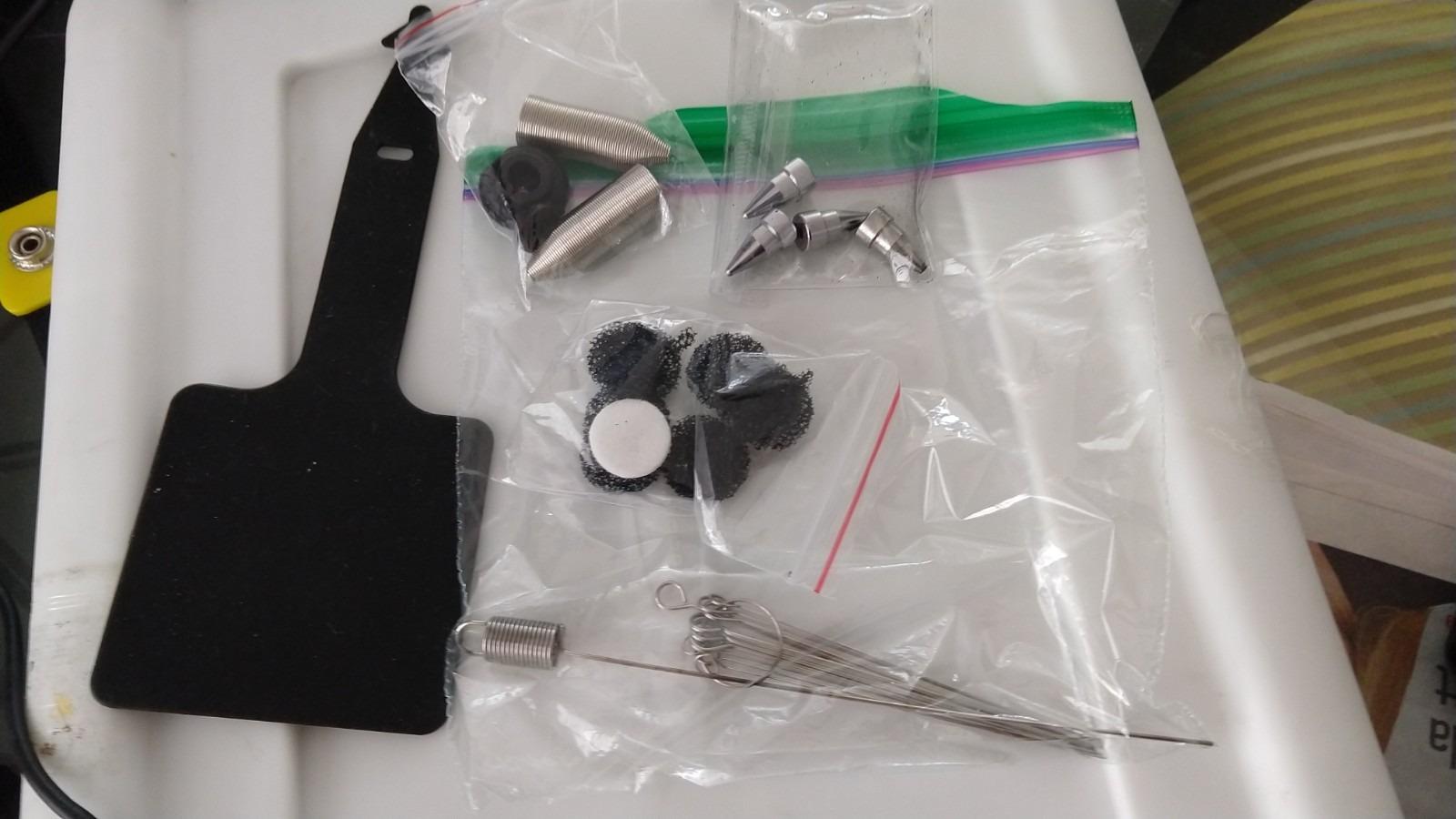
The replaceable filter tube and components address the main failure point in desoldering stations: clogging from accumulated solder debris. When the filter fills, you replace it rather than trying to clean a permanent chamber. This extends the station useful life significantly.
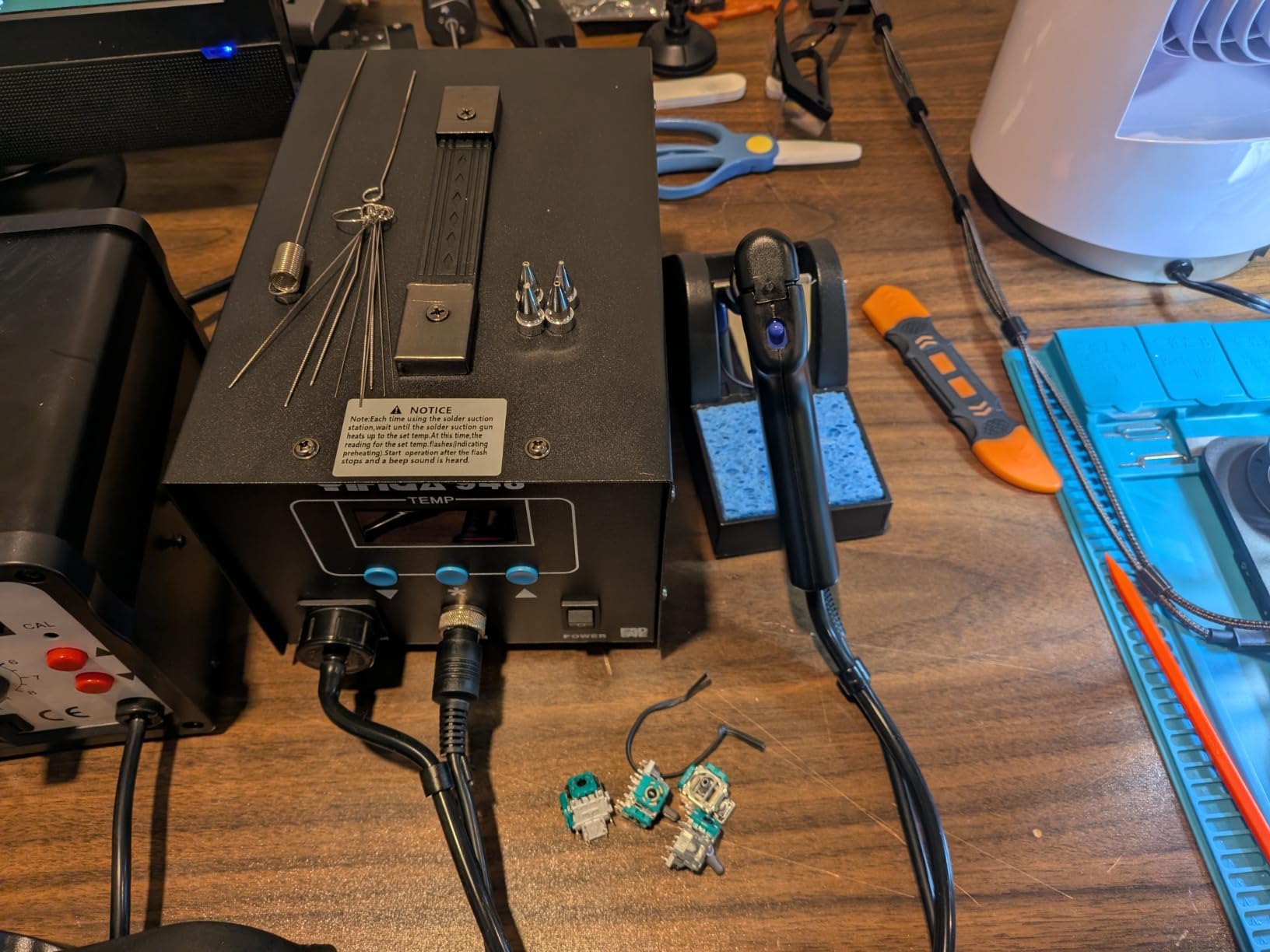
The single-handed operation design means you hold the desoldering gun with one hand while positioning the board with the other. This is more comfortable than two-handed operation and provides better control for precision work. The gun itself is lightweight enough that extended use does not cause arm fatigue.
The temperature range of 716 to 896 degrees Fahrenheit covers the full range needed for lead-based and lead-free solders. The auto shutoff and sleep functions help preserve the heating element and reduce energy consumption when the tool is not in active use.
For those upgrading from handheld tools
If you have been using a handheld desoldering iron and finding it limiting for your work, the YIHUA 948 represents an accessible upgrade path. You get the benefits of station-level power and temperature control while keeping the single-handed operation familiar from your previous tool.
For regular workshop use
The robust construction and replaceable components make this suitable for regular workshop use. The maintenance-friendly design means you can keep it running with basic care rather than needing professional servicing.
7. Hakko FR-301 (100V) – Best Portable Japanese Tool (Requires Modification)
Pros
- Japanese engineering quality
- Quick heating and powerful suction
- Portable for field work
- Includes carrying case and nozzles
- Professional Hakko construction
Cons
- 100V requires modification for US 120V
- Heavy compared to bench models
- Poorly balanced due to pump location
- Wrist fatigue during extended use
The Hakko FR-301 in its 100V Japanese configuration offers genuine Hakko quality in a portable format. The 98-watt ceramic heating element and built-in pump create a self-contained desoldering tool that works anywhere without needing a separate station. The professional-grade construction reflects Hakko decades of soldering equipment manufacturing.
I must highlight the voltage issue clearly. This tool is designed for Japanese 100V power systems. Using it with American 120V power without modification risks damaging the heating element. Technicians who understand electronics can add appropriate resistors or use a variable transformer to safely operate this at 120V.
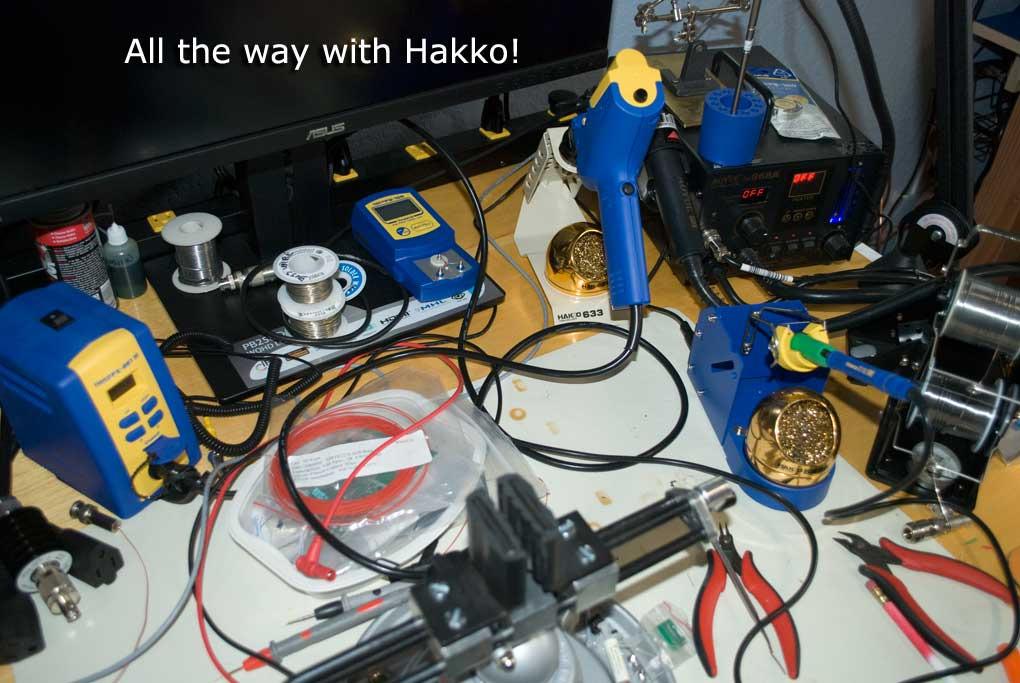
When properly powered, the FR-301 delivers the suction performance Hakko is known for. The quick heating means you spend less time waiting and more time working. The included case and multiple nozzles add value and convenience for transporting the tool.
The self-contained pump design makes the tool heavier than it would be without the pump. The weight distribution is also affected, with the pump housing creating a back-heavy balance that causes wrist fatigue during extended use. An iron stand helps but does not fully solve the ergonomic challenge.
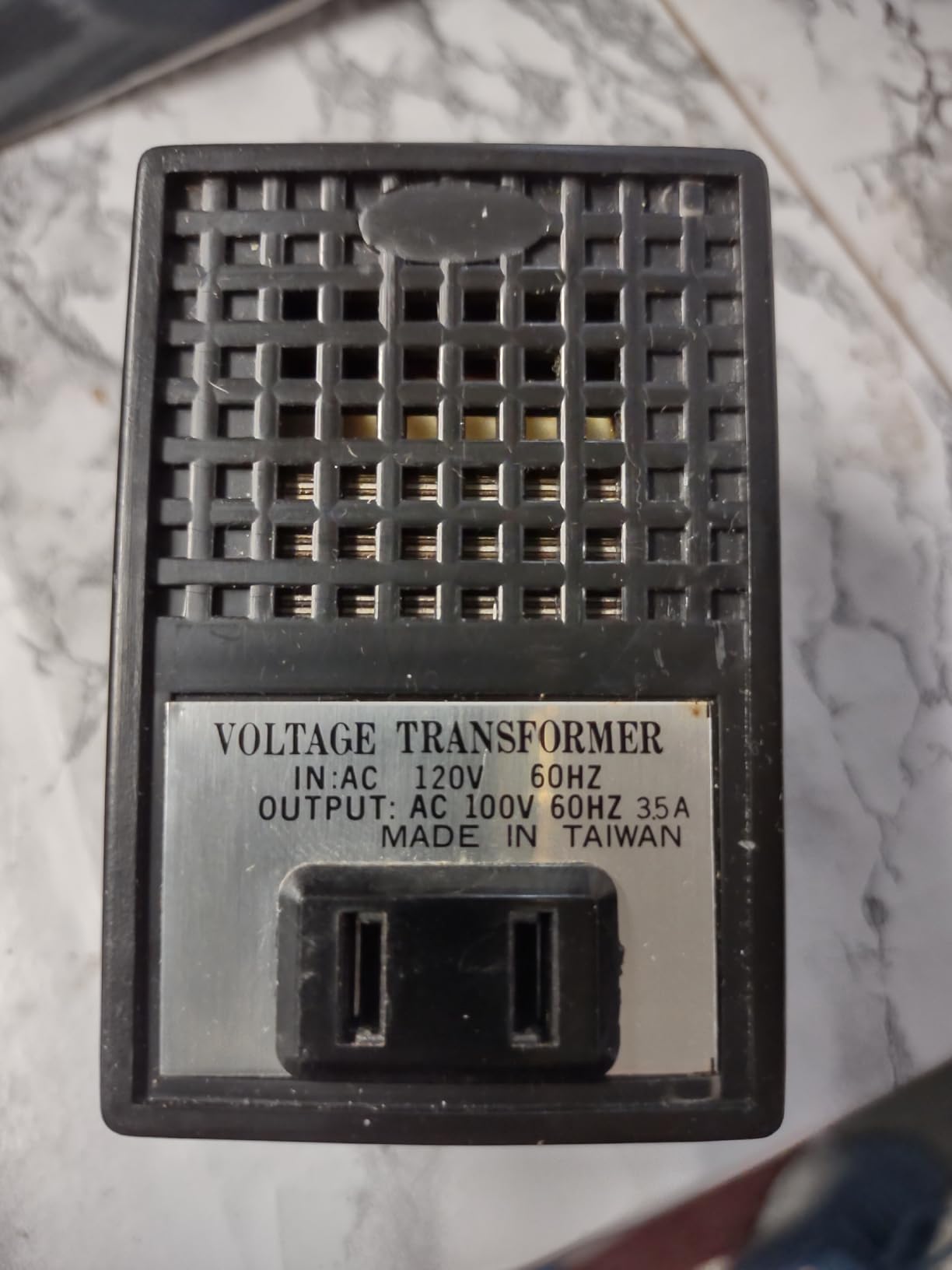
For experienced technicians
If you have the electronics knowledge to safely modify the voltage or already use 100V equipment, this tool delivers Hakko professional quality in a portable format. The engineering and tip selection options match Hakko station-grade equipment.
For field service technicians
The portable design serves technicians who travel to different locations for repair work. The self-contained unit means you do not need to transport a separate station, though you do need to address the voltage compatibility issue.
8. YIHUA 948-II – Best All-in-One Rework Station
YIHUA 948-II 4 in 1 Hot Air Rework Soldering Iron and Desoldering Suction Tin Gun Station with Suction Pick Up Pen °F /°C
4-in-1 station
780W total
Desolder/solder/hot air
Pros
- Includes 4 tools in one station
- Excellent value for features
- Powerful 650W hot air rework
- 60W soldering iron included
- Suction pen for SMD work
Cons
- Can only use one tool at a time
- Combined stand is bulky
- Learning curve for desoldering gun
- Some intermittent function reports
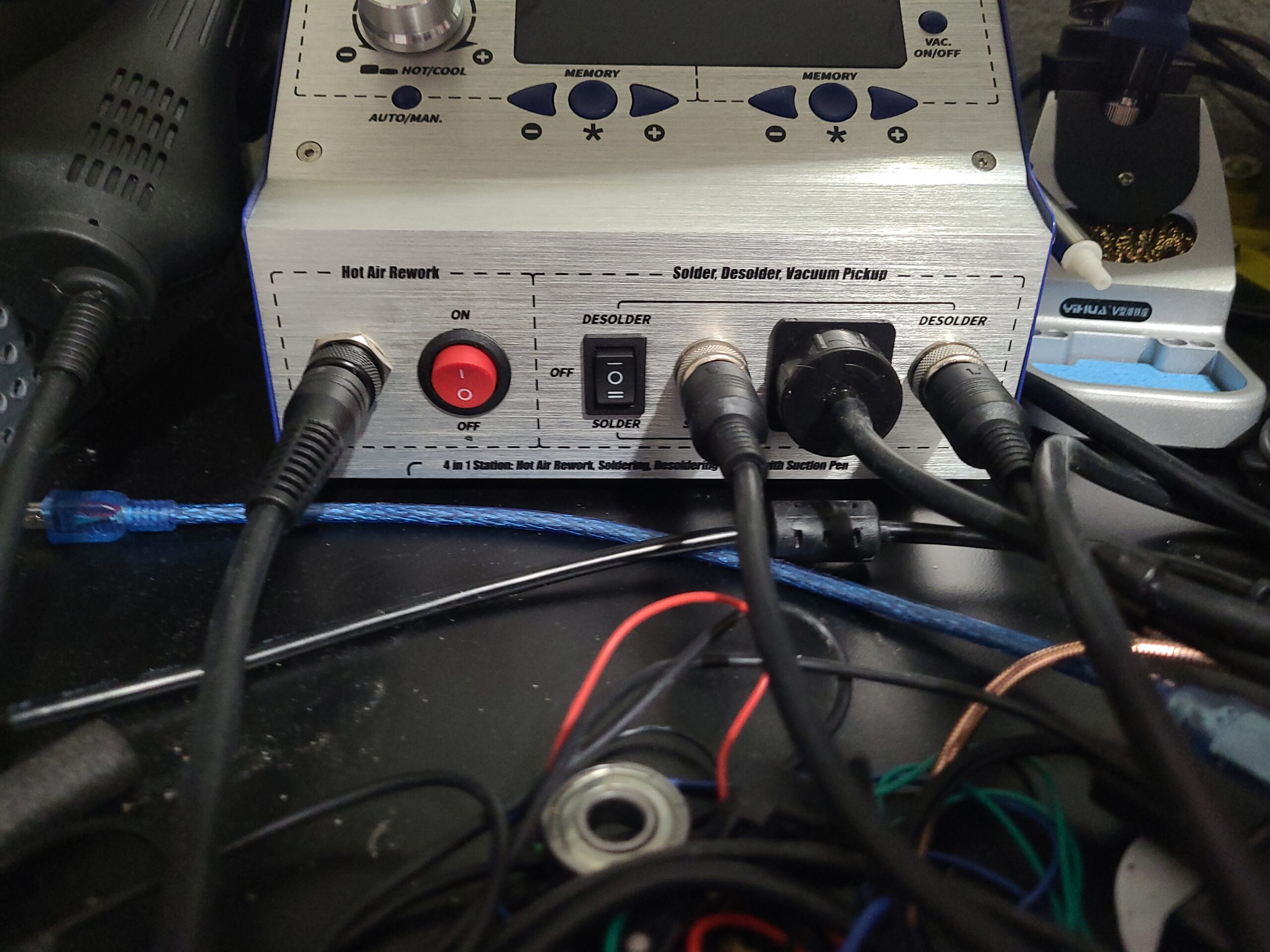
The YIHUA 948-II redefines what you get at the mid-range price point by including four separate tools in one station. The 75-watt desoldering gun handles through-hole component removal. The 650-watt hot air station handles SMD rework and reflow. The 60-watt soldering iron covers general soldering tasks. The suction pick-up pen helps with placing small SMD components after reflow.
This station targets the hobbyist or small repair shop that needs versatility without purchasing separate equipment. The combined footprint on your workbench is smaller than four separate tools, and the integrated design means you control everything from one interface.
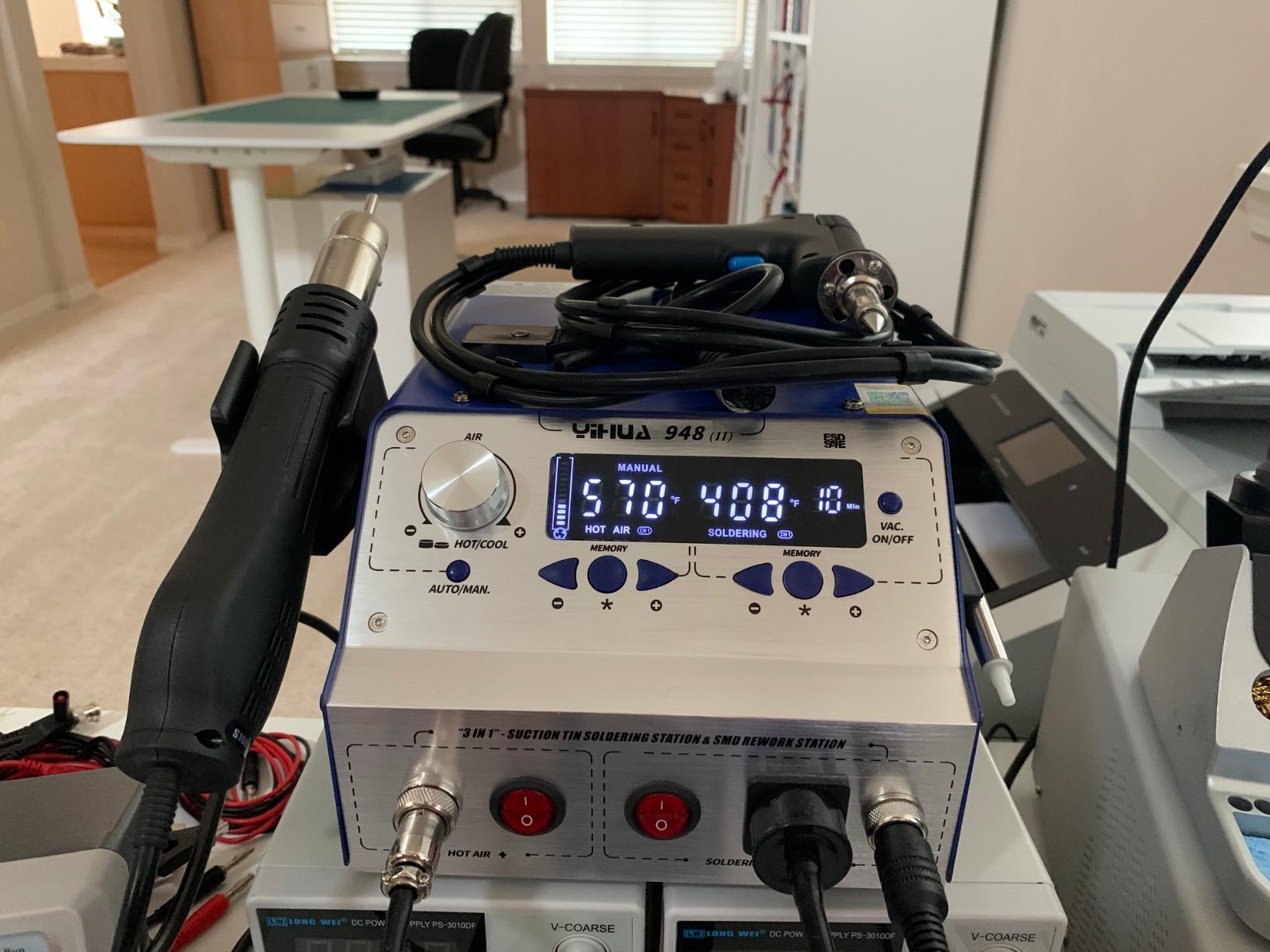
The main limitation is that you can only use one tool at a time. When the desoldering gun is in use, the hot air and soldering iron are not available. For most repair scenarios, this limitation rarely matters since you typically work sequentially on one task at a time.
The PID temperature control on each tool maintains stable temperatures despite the shared power resources. The sleep function helps preserve each tool when idle, and the digital displays make temperature adjustments precise and repeatable.
For hobbyists needing versatility
If your electronics repair interests span multiple disciplines, from through-hole desoldering to SMD rework, the 948-II provides the tools to explore all of them. The hot air station alone would cost as much as this complete package.
For full electronics repair shops
A small repair shop serving various customer needs benefits from having all four capabilities in one station. One unit covers most common repair scenarios, reducing the investment needed to serve a broad range of electronics repair requests.
9. Hakko FR-301 (US Version) – Best Professional Portable Desoldering Tool
Hakko FR301-03/P Portable Desoldering Tool with Precise Temperature Control °F /°C
140W ceramic
81 kPa suction
660-930F range
Pros
- 140W provides exceptional power
- 81 kPa vacuum pressure for strong suction
- Professional Hakko quality
- Fast heat-up and recovery
- Easy tip changes while hot
- Portable with included case
Cons
- Included case is cheap quality
- Iron stand is inadequate
- Power cord can shift the unit
- Expensive tips sold separately
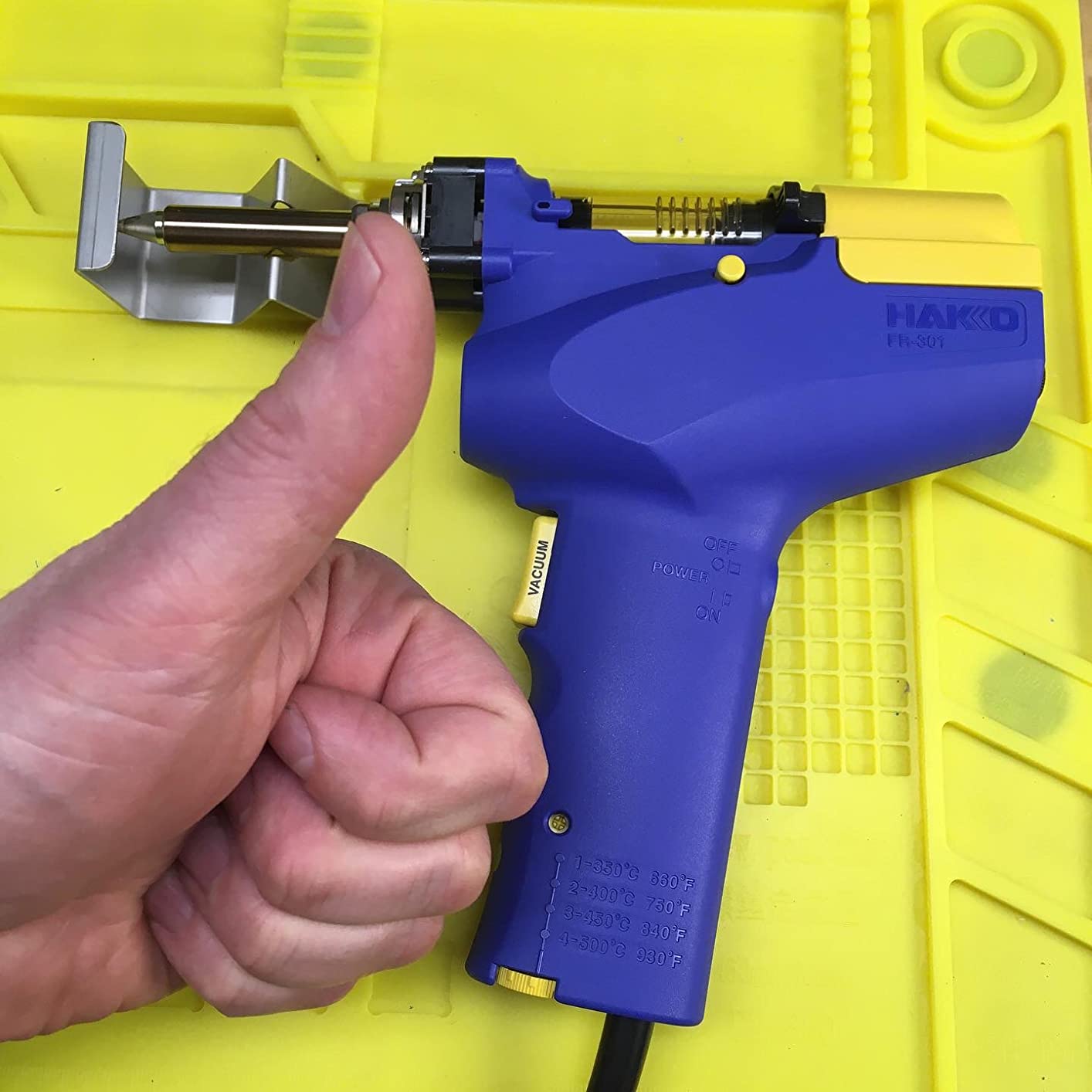
The American Hakko FR-301 runs on standard 120V power without modification, delivering the full 140 watts of professional desoldering capability. This is the tool professionals reach for when they need reliable, powerful desoldering without a bench station. The self-contained design gives you portable operation with station-quality results.
The 81 kPa vacuum pressure represents significant suction power. Combined with the 140-watt heating element, this tool handles large solder joints, multilayer boards, and demanding desoldering scenarios that would frustrate lesser tools. The 660 to 930 degree Fahrenheit temperature range covers every common solder type.
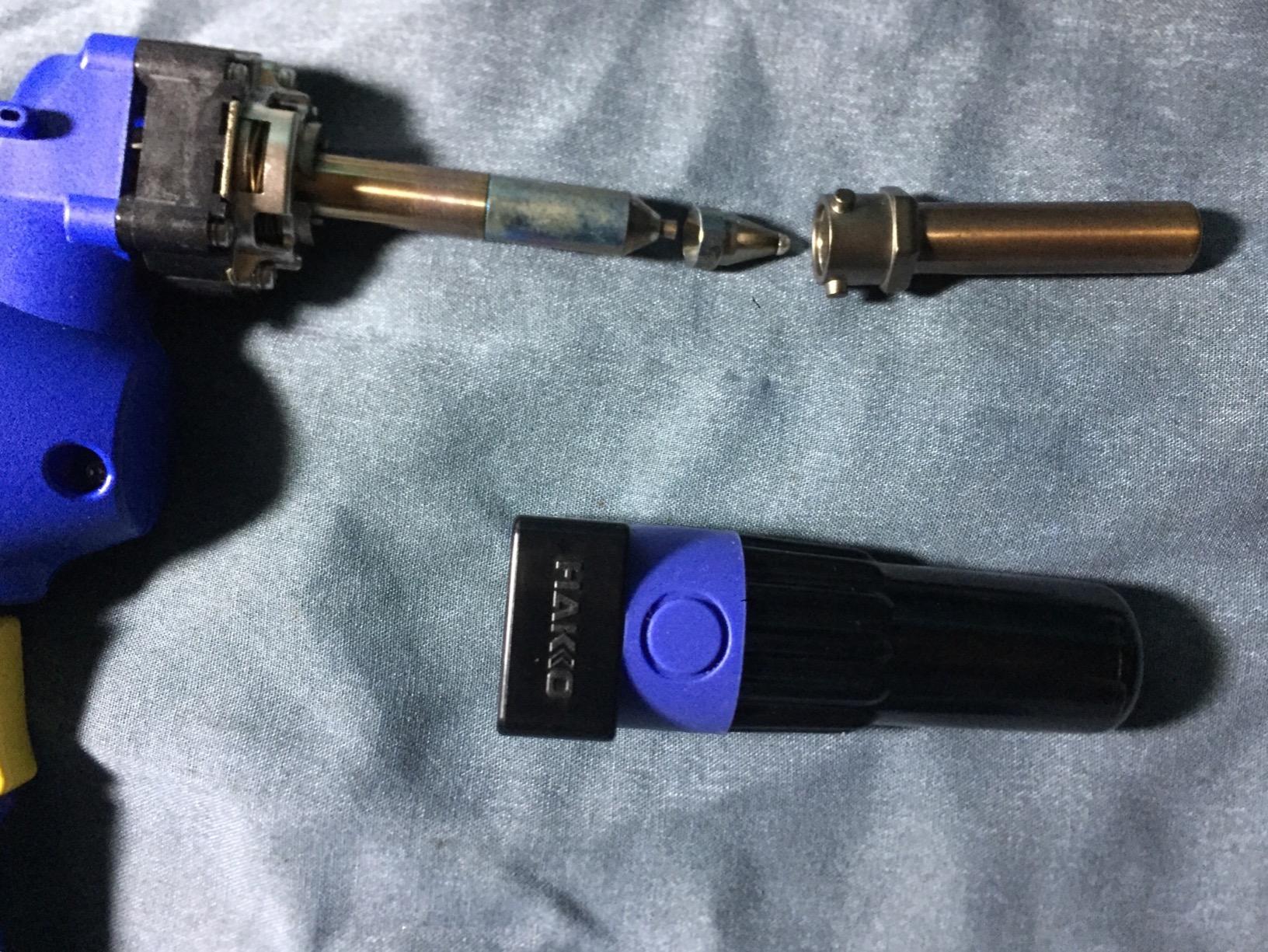
Hakko tips are widely available, and the tip selection for the FR-301 covers every common through-hole size and shape. The ability to change tips while hot means you can optimize for different joints without waiting for the tool to cool down.
Users consistently praise the reliability and consistent performance of this tool. After years of use, it continues to deliver the same suction power and heating performance. The initial investment is significant, but the longevity and professional results justify the cost for regular desoldering work.
For professional technicians
If desoldering is a regular part of your work, the Hakko FR-301 delivers the reliability and performance you need. The powerful suction, precise temperature control, and durable construction handle daily professional use without the frustrations that plague cheaper tools.
For high-volume desoldering
When you need to desolder multiple components or work on boards all day, the FR-301 maintains performance without the cool-down periods or maintenance issues of lower-powered tools. The consistent results mean you spend less time on each joint and achieve better outcomes.
How to Choose the Right Electric Desoldering Guns?
Selecting the best electric desoldering gun for your situation depends on several factors. This buying guide breaks down the key considerations to help you match a tool to your specific needs and budget.
Power and Temperature Control
Higher wattage tools maintain temperature better when desoldering large joints or multilayer boards with thermal vias. The YIHUA 948D-I at 110 watts and the Hakko FR-301 at 140 watts handle demanding jobs that would cause lower-powered tools to struggle.
Temperature control matters for working with heat-sensitive components. Adjustable temperature stations let you reduce heat for smaller joints or increase for large ground planes. Fixed-temperature tools like the budget 929D-V models work fine for standard through-hole work but limit your flexibility.
Suction Power and Vacuum Pressure
Vacuum pressure, measured in kPa or in. Hg, determines how effectively a tool extracts molten solder. Higher pressure means cleaner joint clearance in fewer attempts. The Hakko FR-301 leads with 81 kPa, providing exceptional suction that clears joints quickly.
Station-style tools generally produce stronger and more consistent vacuum than handheld designs because they have dedicated vacuum pumps. The tradeoff is portability: stations stay on your bench while some Hakko models go where you go.
Build Quality and Durability
Metal-bodied tools like the ENGINEER SS-03 and Hakko FR-301 outlast plastic alternatives. The aluminum and quality plastics used in professional tools resist the heat cycling and physical handling that destroy budget tools after months of use.
Consider the cost of consumables like tips and filters. Hakko tips are widely available but sold separately at premium prices. YIHUA stations use replaceable filters that add to operating costs. The ENGINEER SS-03 has minimal consumable costs with its simple mechanical design.
Maintenance and Cleaning Requirements
All desoldering tools require some maintenance to perform their best. The self-cleaning shaft on the ENGINEER SS-03 minimizes clogging issues. Station-style tools need regular cleaning of tips and filter replacement as solder debris accumulates.
If you dislike maintenance, avoid tools with complex internal pathways that trap solder. The removable waste tubes in the YIHUA handheld models make cleanup straightforward. Stations with filter chambers let you replace rather than clean clogged elements.
Price vs Performance Considerations
Your budget shapes your options, but the cheapest tools often cost more over time through replacement purchases and frustration. The ENGINEER SS-03 at under 30 dollars delivers professional results with minimal maintenance if your needs are moderate.
The mid-range around 125 to 150 dollars brings you stations with real temperature control and power reserves for demanding work. Professionals who desolder daily find this investment pays back quickly through reliability and performance.
Frequently Asked Questions
What is the best electric desoldering gun for PCB?
The best electric desoldering gun depends on your needs. For beginners and hobbyists, the YIHUA 929D-V offers excellent value under 40 dollars. For professionals doing daily desoldering, the Hakko FR-301 provides unmatched reliability and 140 watts of suction power. For the best balance of price and performance, the YIHUA 948D-I station delivers adjustable temperature and 110 watts at a mid-range price point.
How to use a desoldering gun on PCBs?
First, heat the tool to operating temperature for 2-3 minutes. Place the hollow nozzle directly over the solder joint you want to remove. Wait 3-5 seconds for the solder to melt completely. Activate the vacuum suction while keeping the nozzle firmly pressed against the joint. Once the solder is extracted, move to the next pin. For multi-pin components, work around the chip to avoid stressing the board.
What is the difference between a desoldering gun and a soldering iron?
A soldering iron melts solder to create electrical connections, using a solid tip to apply solder to joints. A desoldering gun both melts existing solder and uses an integrated vacuum pump to extract the molten material through a hollow nozzle. This two-function design lets you remove components cleanly without bridging or residual solder.
Why does my desoldering gun keep clogging?
Clogging occurs when solder cools and solidifies inside the nozzle or exhaust pathway. Prevent clogging by cleaning the tip after each session with the included cleaning pin, keeping the tool hot during extended use, and replacing worn tips that no longer transfer heat properly. Stations require regular filter replacement to maintain suction power.
Can you save components after desoldering?
Yes, with proper technique you can salvage components for reuse. Apply additional flux to the joints before heating, work one pin at a time with the iron or hot air, and use low power or temperature to avoid damaging sensitive semiconductor junctions. Allow the component to cool completely before handling to prevent thermal shock damage.
Conclusion
Choosing the best electric desoldering gun for your PCB work depends on how often you desolder, what types of boards you work with, and your budget. For occasional hobbyist use, the ENGINEER SS-03 manual pump delivers professional results for under 30 dollars. The YIHUA 929D-V and similar budget electric irons handle basic through-hole desoldering for hobbyists who prefer electric operation.
Professional technicians who desolder daily benefit from station-grade tools like the YIHUA 948D-I for its 110 watts of power and precise temperature control. The Hakko FR-301 remains the gold standard for portable desoldering, with the US version running on standard 120-volt power without modification.
Whatever tool you choose, proper technique and maintenance extend its life and ensure consistent results. Clean tips after each session, replace filters in stations as needed, and store tools properly when not in use. With the right electric desoldering gun and good habits, you can salvage components and repair boards efficiently for years to come.