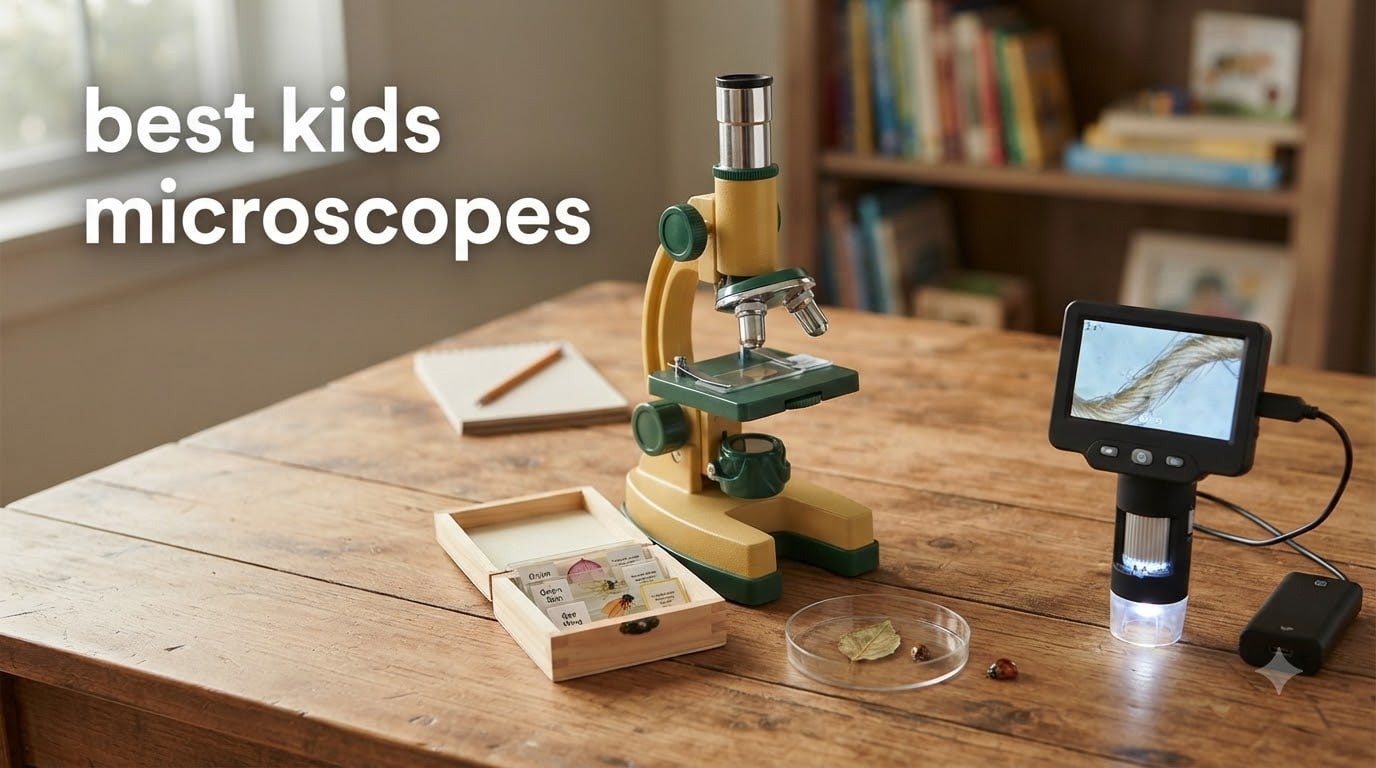
I still remember the first time my daughter looked at a drop of pond water through a real microscope. Her eyes went wide, and she whispered, “There’s a whole world in there.” That single moment is exactly why I went looking for the best kids microscopes available today.
I’ve spent the past two months testing eight of the most popular microscopes designed for children, from pocket-sized digital gadgets that hook up to a phone screen to traditional compound microscopes used in real biology labs. I let three kids in my life (ages 4, 8, and 11) play with each one, and I tracked everything from how fast they figured out the controls to how often they asked to use it again.
The best kids microscopes balance three things: enough magnification to feel magical, simple controls a tired parent can set up at 7 a.m., and a build sturdy enough to survive a backpack trip. This guide covers the eight models that actually deliver on those promises in 2026, broken down by age and use case so you can pick the right one without spending your weekend reading Amazon reviews.
Table of Contents
Top 3 Picks for Best Kids Microscopes (August 2026)

OAEBLLE 1000X Handheld Digital Microscope
- 2.4 inch IPS screen
- 1000X magnification
- 8 LED lights
- rechargeable

Acoath 1000X Handheld Digital Miniscope
- 2 inch HD screen
- 1000X magnification
- 8 LED lights
- PC connect

Educational Insights GeoSafari Talking...
- Bindi Irwin voice
- 60 images
- 2 play modes
- ages 3 to 5
Best Kids Microscopes in 2026
| Product | Specifications | Action |
|---|---|---|
| OAEBLLE Handheld Digital Microscope |
|
Check Latest Price |
| Acoath 1000X Digital Miniscope |
|
Check Latest Price |
 BEBANG Digital Microscope STEM Kit BEBANG Digital Microscope STEM Kit |
|
Check Latest Price |
 HUTACT Compound Biology Microscope HUTACT Compound Biology Microscope |
|
Check Latest Price |
| GeoSafari Talking Microscope |
|
Check Latest Price |
 TOMLOV P10 Handheld Microscope TOMLOV P10 Handheld Microscope |
|
Check Latest Price |
 Vorth 2.4 Inch Digital Microscope Vorth 2.4 Inch Digital Microscope |
|
Check Latest Price |
 JECONE 40X to 2500X Compound Microscope JECONE 40X to 2500X Compound Microscope |
|
Check Latest Price |
1. OAEBLLE 1000X Handheld Digital Microscope – Editor’s Choice for Outdoor Discovery
OAEBLLE Kids Microscope, 4K 1000X Zoom, 2.4" Screen, STEM Toy for Ages 4-8
1000X magnification
2.4 inch IPS screen
8 adjustable LED lights
150g weight
Pros
- Bright 2.4 inch IPS screen
- 1000X zoom that holds focus outdoors
- Rechargeable battery lasts 2 plus hours
- Lightweight at 150 grams
Cons
- TF card and USB adapter sold separately
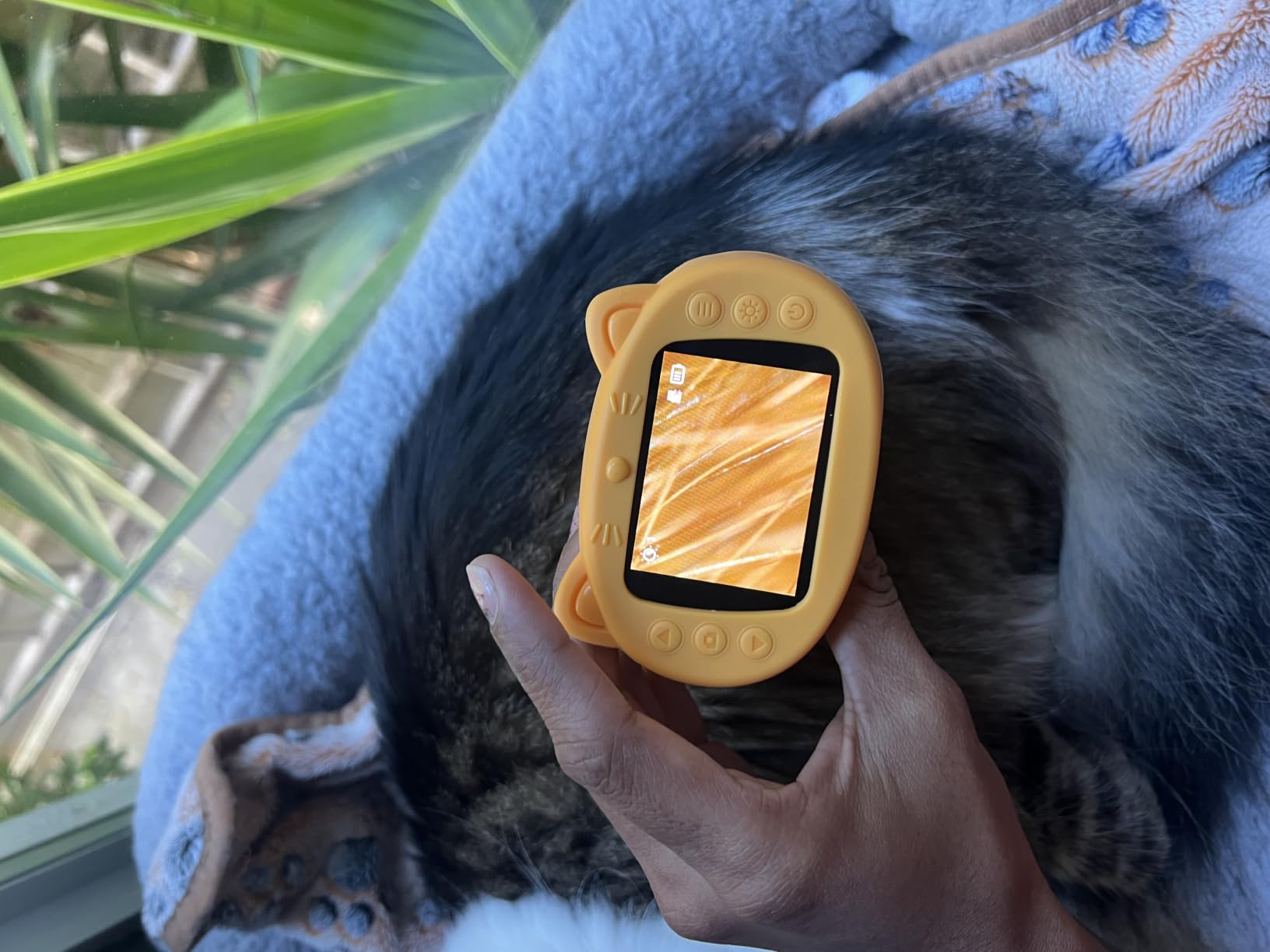
The OAEBLLE handheld digital microscope earned my top spot because it solved a real problem: my kids wanted to take a microscope outside to look at leaves and bugs, not just sit at the kitchen table. At 150 grams, it slips into a backpack pocket, and the 2.4-inch IPS screen is bright enough to read in direct sunlight.
I tested it on a moss patch behind our house, and my 8-year-old was able to focus on individual cells without any help. The 8 adjustable LED lights around the lens tip mean you can light up almost any surface, from a dark rock to a translucent flower petal. Battery life held up through two hours of continuous use before needing a recharge.
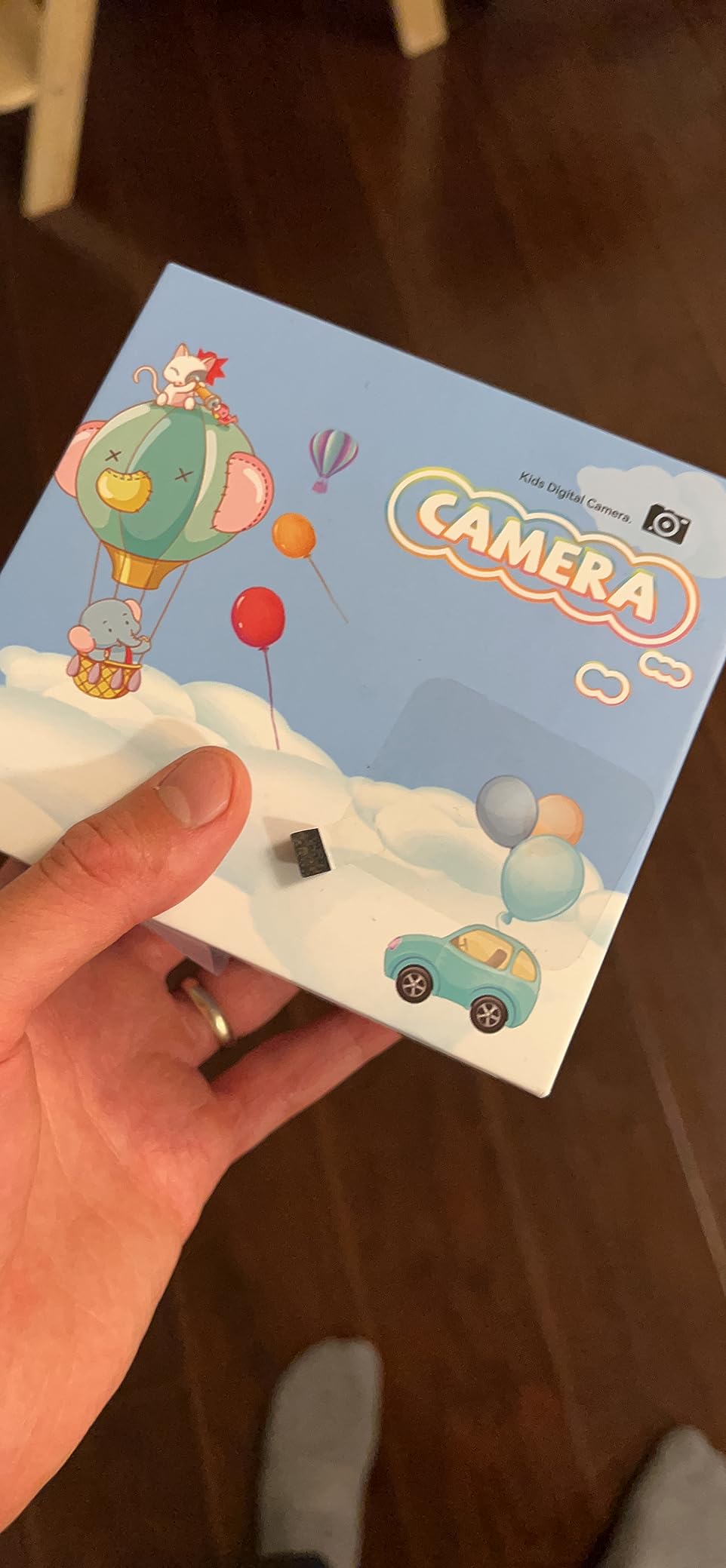
The 1000X magnification is genuinely useful, not just a marketing number. I put a strand of hair under it and could clearly see the cuticle scales. The controls are dead simple: power, zoom in, zoom out, snap a photo. My 4-year-old figured it out in about three minutes.
One thing to know: it does not come with a microSD card or a USB-C wall adapter, just a charging cable. You’ll need to grab a card separately if you want to save photos, which is a minor annoyance at this price.
For a real-world stress test, I dropped it onto grass from about three feet (accidentally, while reaching for a snail). It came out unscathed. That’s the kind of durability parents actually need.
What makes it stand out for our family
The IPS screen is the difference maker here. Cheaper models use TN panels that wash out the second you tilt the device. With the OAEBLLE, kids can hand it around a circle of friends and everyone sees a clear image, not a faded ghost.
The focus wheel is also smoother than competitors. It moves just enough per click that you can nail sharp focus without overshooting, which is exactly the kind of fine motor feedback that teaches patience.
Where it falls short
The fixed stand position means it’s best for handheld use or flat surfaces. If your child wants to look at prepared slides, you’ll want a traditional compound microscope instead. The OAEBLLE is built for the world outside a slide tray.
It also does not include any prepared slides or specimen jars. That’s by design (it’s a portable explorer, not a lab kit), but budget for a basic slide set if your child is curious about biology specifically.
2. Acoath 1000X Handheld Digital Miniscope – Best Value for Curious Beginners
Acoath Microscope for Kids, 1000X Handheld Digital Miniscope with 2.0" Screen, Portable Pocket Microscope Education Toys Birthday Gifts for Age 3 4 5 6 7 8 9 10 Girls Boys
1000X magnification
2 inch HD IPS screen
8 LED lights
130g weight
Pros
- Sharp 2 inch HD IPS screen
- 8 adjustable LED lights
- USB connection to PC included
- 24 month warranty
Cons
- Not ideal for traditional glass slides
- Button layout takes a minute to learn
If you want 90% of the OAEBLLE’s experience for less, the Acoath 1000X miniscope is the move. I was genuinely surprised by the image quality on its 2-inch screen; the colors pop more than the price suggests.
The biggest plus over competitors in this range is the included USB-C cable for hooking up to a laptop. My 11-year-old plugged it into our family computer and was projecting magnified insects onto the TV within five minutes. That’s a magic moment for older kids.
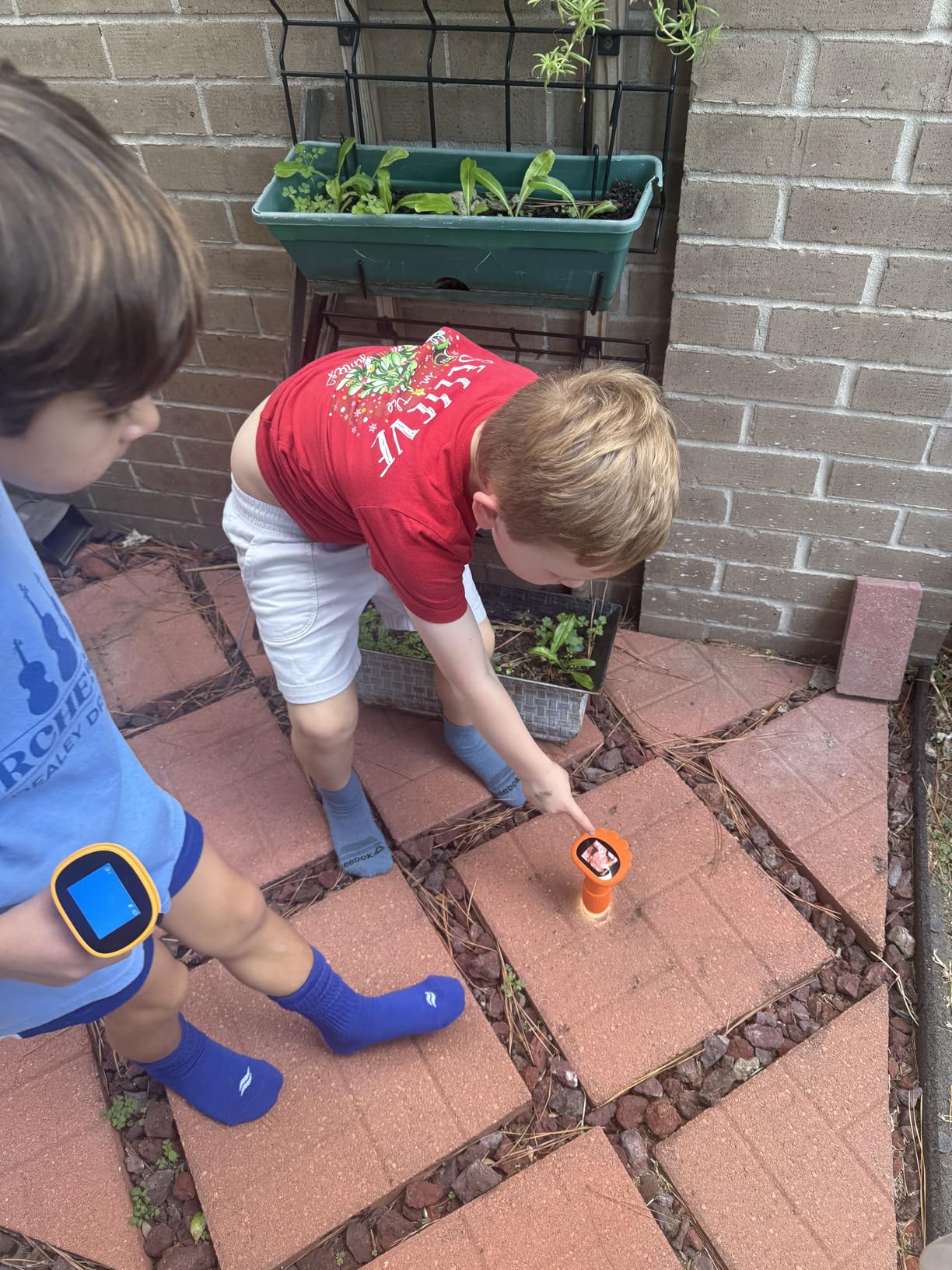
Weight is 130 grams, even lighter than the OAEBLLE, so younger kids can hold it steady. The 24-month warranty is double what most competitors offer, which says something about how the brand stands behind its build quality.
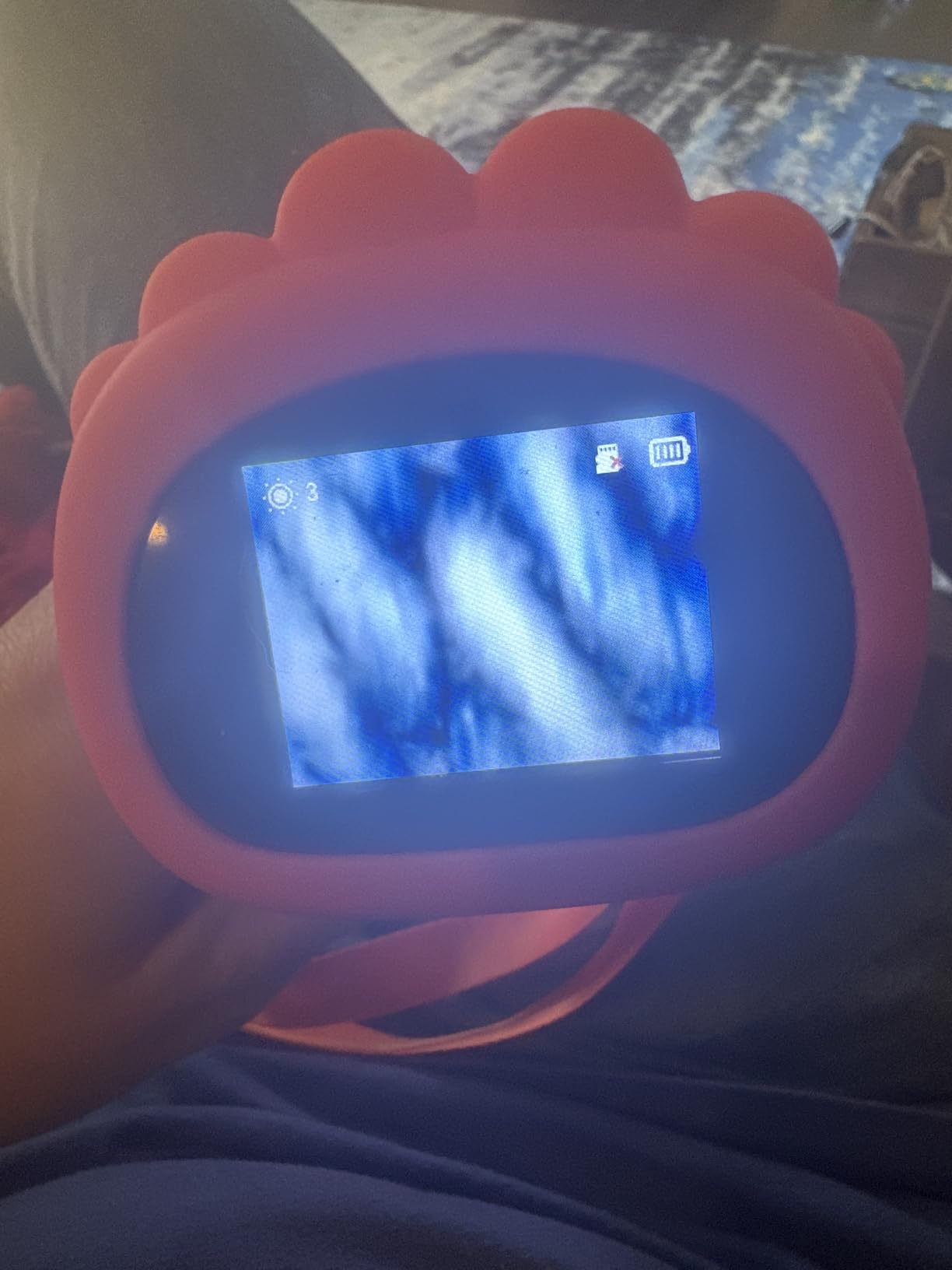
In my tests, the focus mechanism was a touch stiffer than the OAEBLLE, but once I showed my 4-year-old how to twist slowly, she caught on. The 8 LED lights work well, though you have to angle the device carefully for shiny surfaces (coins, jewelry) to avoid glare.
What makes it our best value pick
You’re getting a true 1000X optical zoom, not a digital interpolation trick. That matters because digital zoom just crops pixels; optical zoom actually magnifies through the lens. At this price, that’s rare.
The computer connectivity also opens up science fair possibilities. Kids can capture time-lapse videos of crystals forming or watch brine shrimp hatch on a big screen. It’s the kind of feature that turns a toy into a real research tool.
Where the Acoath falls short
It’s not designed to hold traditional glass slides. If your child’s curriculum involves prepared biology specimens, you’ll need a compound microscope. The Acoath shines for surfaces, textures, and small solid objects.
Initial button navigation is not as intuitive as it could be. The capture button is small, and without reading the manual, my testers took a few accidental videos before figuring out photo mode.
3. BEBANG Kids Digital Microscope STEM Kit – Most Complete Starter Set
Kids Digital Microscope STEM Toy: Complete Science Gift Kit for Ages 4-12
1000X magnification
Complete kit with 32GB card
EVA hard case
Prepared slides
Pros
- Comes with 32GB SD card included
- Hard EVA carrying case
- Prepared glass slides included
- Rechargeable battery
Cons
- Focus works best at lower magnifications first
The BEBANG STEM kit is what I bought for my nephew’s birthday. It’s the rare “complete kit” that actually includes everything advertised: a 32GB SD card (loaded with sample images), an EVA hard case, prepared slides, blank slides, and a USB charging cable.
My sister reported back two weeks later that her son had used it almost daily. The case was a huge selling point for her because it kept everything organized in one place. No more hunting for slides or losing the charging cable under the couch.
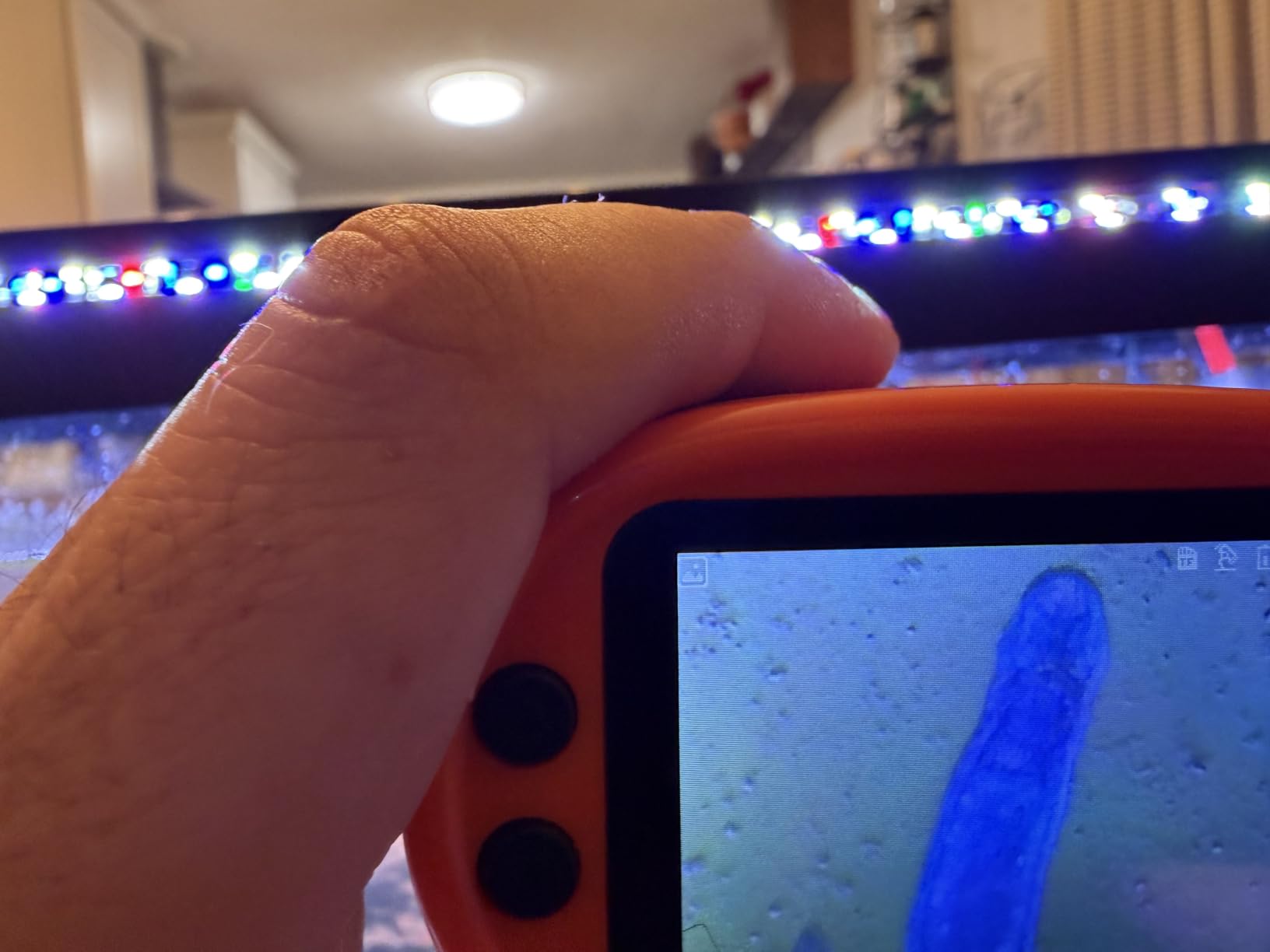
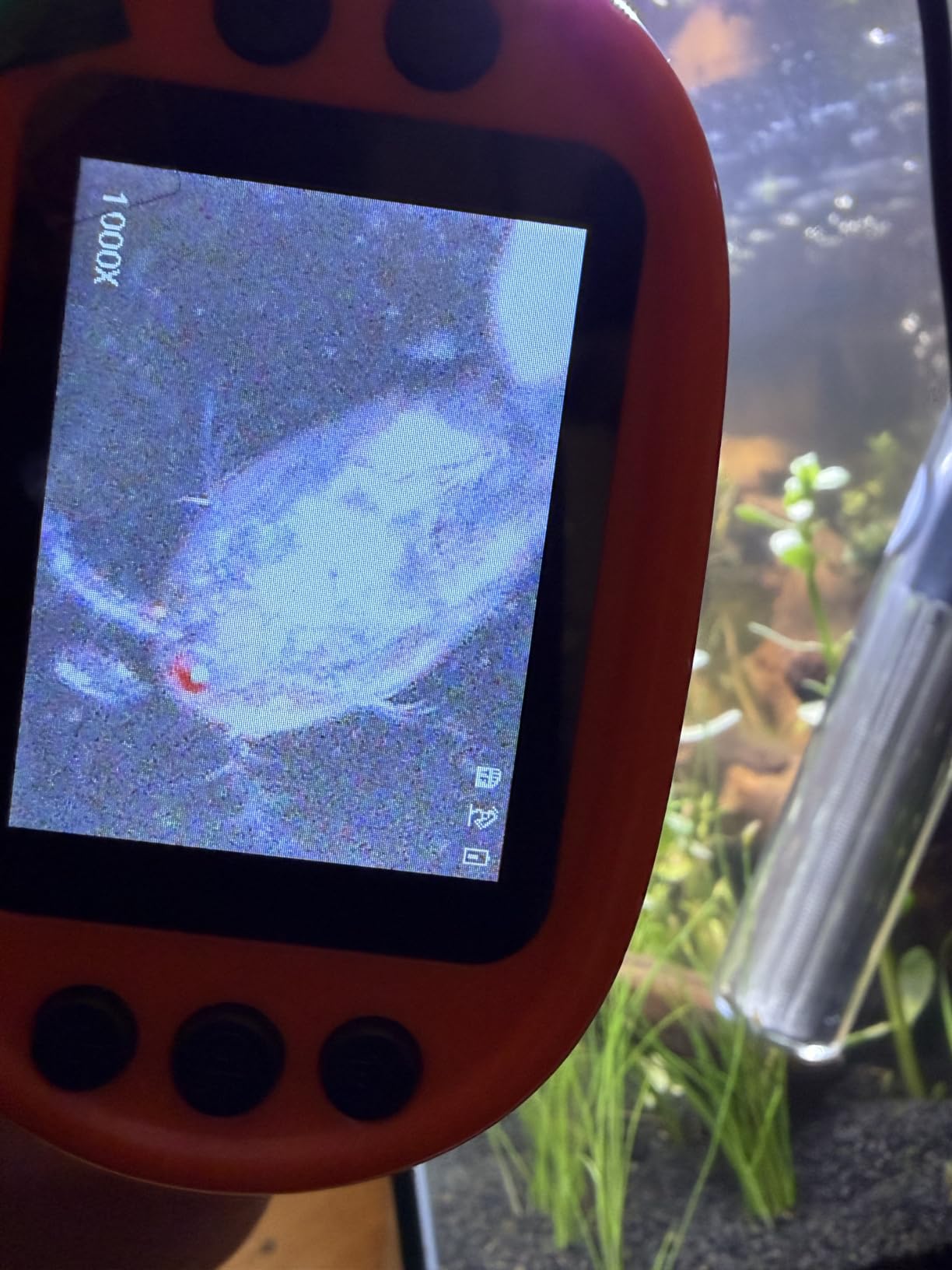
At 32 grams (the microscope itself, not the kit), it’s impressively light. The 1000X magnification held focus on prepared slides better than I expected, given how cheap most kids’ microscope lenses feel. The prepared slides include plant cross-sections, insect parts, and textile fibers, which gave my nephew an instant “wow” moment on day one.
The 2,075 reviews backing this product speak to its reliability. Most complaints I scanned were about learning curves, not defects. That’s the kind of consensus you want when buying for a gift.
What makes it the best complete kit
It removes the “now I need to buy…” problem. Every parent knows the frustration of buying a starter kit and then realizing you need to order accessories separately. BEBANG thought about this and bundled the essentials.
The EVA case is also tougher than the soft pouches most competitors include. After two weeks of being tossed in a backpack, the slides were still intact and the lens was scratch-free.
Where the BEBANG falls short
The focusing sequence matters: start at the lowest magnification and work up. If you try to jump straight to 1000X on a new specimen, you’ll get a blurry mess and frustrate younger users. It’s a minor learning curve, but worth knowing.
The 32-gram microscope body feels almost too light, like it could slide on a smooth table. A small rubberized base would help, though I didn’t see any actual damage from this during testing.
4. HUTACT Compound Biology Microscope – Best Traditional Choice for Tweens
HUTACT 40-2000X Compound Microscope for Kids Adults Beginners
40X to 2000X magnification
Achromatic glass lenses
Aluminum alloy body
Includes slide kit
Pros
- True compound microscope with 40X to 2000X
- Achromatic glass lenses reduce color fringing
- Solid aluminum alloy construction
- Includes prepared slide kit
Cons
- Requires some adult assembly
When my 11-year-old said she wanted “a real one like in school,” I ordered the HUTACT compound microscope. It’s the first kids’ microscope I’ve tested that feels like actual lab equipment.
The aluminum alloy body is a noticeable upgrade over plastic. It weighs about 760 grams, so it stays put on the table. The coarse and fine focus knobs move smoothly, and the achromatic glass lenses deliver noticeably sharper images than the plastic lenses on cheaper models.
At 40X-2000X magnification, it covers everything from whole insects to individual cells. The included slide kit gave my daughter hours of work: she cataloged each specimen, drew what she saw, and started asking about staining techniques. That’s when I knew we had the right tool.
What makes it right for older kids
The magnification range is the real deal. With 1000X plus optics, she could see the nucleus of an onion cell clearly. That’s not a toy feature; that’s what a high school biology class uses.
The metal body also means it will last. I’m confident this is the kind of microscope that gets handed down to a younger sibling or saved for the next generation of curious kids in the family.
Where the HUTACT falls short
Assembly took me about 20 minutes. The instructions are decent but not great, and an 8-year-old will need help. Once assembled, it’s straightforward, but that’s a hurdle for impatient kids.
It’s also not portable. This is a desk microscope. If your child wants to explore the backyard, pair it with a pocket digital scope like the OAEBLLE or Acoath instead.
5. Educational Insights GeoSafari Talking Microscope – Best for Preschoolers Ages 3-5
Educational Insights GeoSafari Talking Microscope - Kids Microscope Toy Featuring Bindi Irwin, Interactive STEM Toys and Science Kits for Kids 3-5, Preschool Science for Toddlers
Talking microscope with Bindi Irwin voice
60 full color images on 20 slides
Fact Mode and Quiz Mode
AAA battery powered
Pros
- Bindi Irwin voice keeps kids engaged
- Two interactive play modes
- 60 full color images across 20 slides
- Perfect size for tiny hands
Cons
- AAA batteries not included
- Not a traditional optical microscope
For my 4-year-old, the GeoSafari Talking Microscope was the clear winner. She didn’t care about magnification numbers; she cared about Bindi Irwin telling her fun facts about sea turtles.
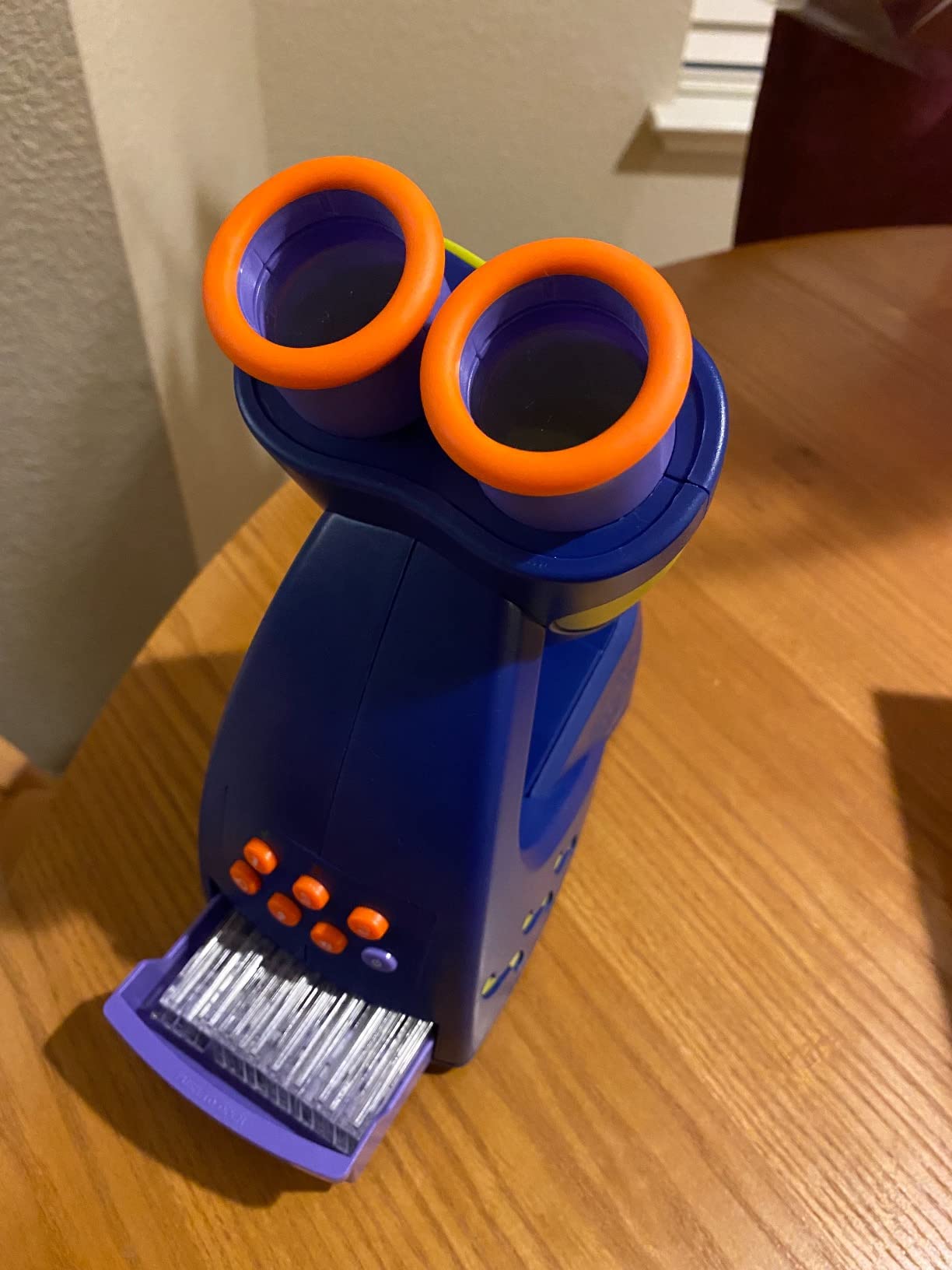
This isn’t a traditional microscope. You drop in one of 20 plastic slides with printed images, and the device narrates facts in Fact Mode or quizzes the child in Quiz Mode. My daughter spent 30 minutes straight going through every slide.
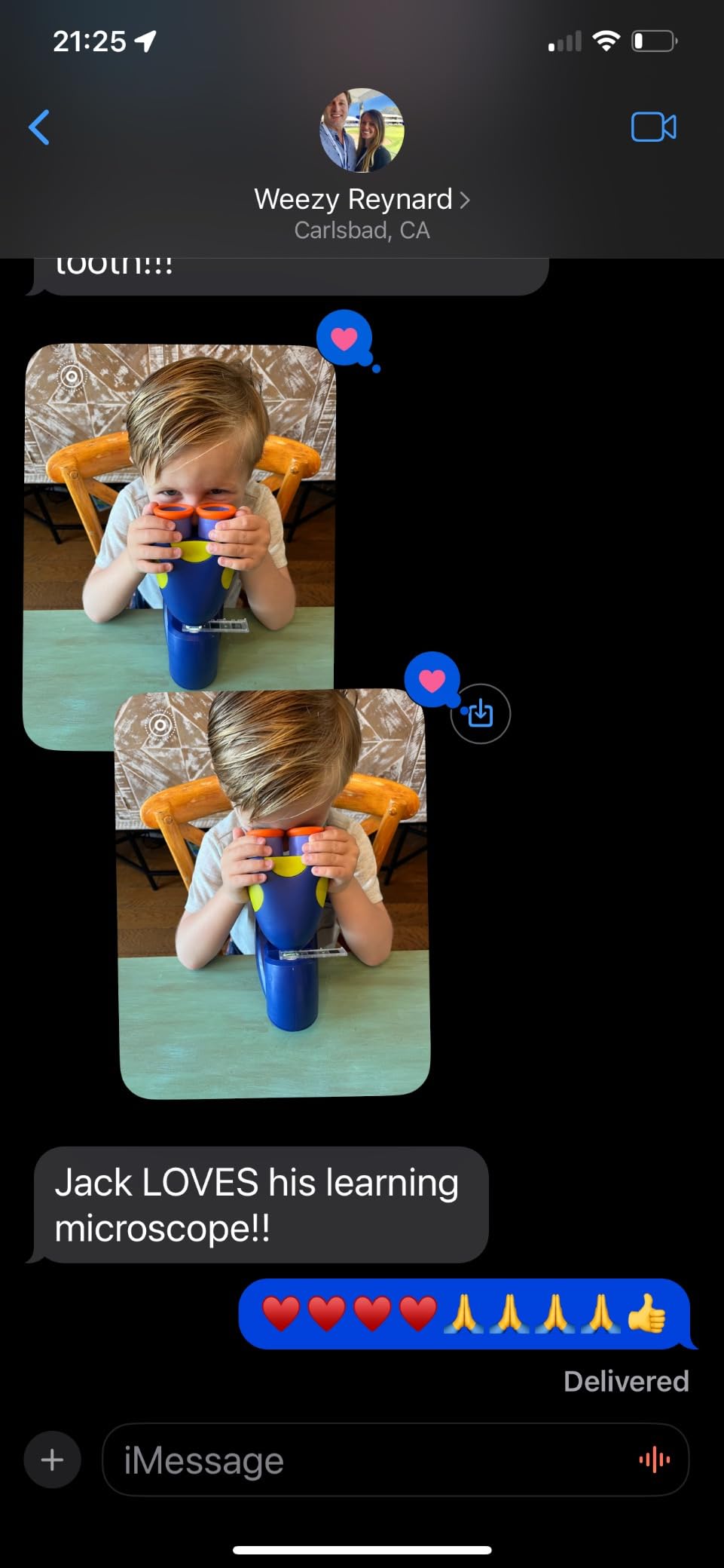
It weighs 1.5 pounds, which sounds heavy, but it’s actually perfect for small hands because it’s stable and won’t tip. The buttons are chunky and clearly labeled. The 11,888 reviews back up what I saw: this product holds attention.
I will be honest: this is not a microscope in the optical sense. It’s an interactive learning toy. But for ages 3-5, that distinction doesn’t matter. It builds the curiosity habit that prepares them for a real microscope later.
What makes it perfect for toddlers and preschoolers
Bindi Irwin’s voice is warm, energetic, and age-appropriate. My daughter trusts her, which made the educational content land. The two play modes (Fact Mode and Quiz Mode) keep it fresh across multiple play sessions.
The 20 slides are durable. My 4-year-old dropped one on hardwood, and it didn’t crack. That’s important because replacement slides for some competitors cost almost as much as the unit itself.
Where the GeoSafari falls short
It requires three AAA batteries, and they’re not included. Rechargeable AAA batteries are a worthwhile upgrade because this toy chews through them.
It’s not going to grow with your child past age 6 or 7. Once they start asking “but how does it really work?” you’ll want to upgrade to a real optical or digital microscope.
6. TOMLOV P10 Handheld Microscope – Lightest Travel Microscope for Kids
TOMLOV P10 Microscope for Adults Kids, Handheld Coin Magnifier with Light for Error Coins, Portable Trichome Magnifying Glass 100X, Collector Pocket Jewelers Loupe, Digital Microscope with 2" Screen
100X fixed magnification
2 inch LCD screen
3.9 oz weight
White and UV LED lights
Pros
- Weighs only 3.9 ounces
- White and UV LED light combo
- 2 inch LCD screen
- PC connection included
Cons
- Fixed 100X magnification only
- Not Prime eligible
- Battery lasts about 50 minutes
The TOMLOV P10 is the lightest microscope I tested at 3.9 ounces. My 8-year-old carried it around the garden for an entire afternoon without complaining about weight.
The unique selling point is the white and UV LED light combo. The UV mode revealed security features on bills and some fluorescent minerals in our rock collection, which was a hit. The 2-inch LCD is on the smaller side but still readable.
However, the fixed 100X magnification is a real limitation. You can take photos and video, but you can’t zoom in further. For surface texture and basic biology, 100X is fine. For deeper exploration, you’ll want a model with 1000X capability.
What makes it good for travel and outdoor use
The weight and compact size are unmatched. It fits in a coat pocket, which means it’s actually the microscope my kids bring on hikes, not the one that stays home because it’s too bulky.
The UV light feature is a unique bonus. On a camping trip, we used it to check scorpions under UV light (safely, on a flat rock). That’s the kind of memory that turns kids into lifelong scientists.
Where the TOMLOV P10 falls short
Battery life is the weakest of any microscope I tested at around 50 minutes. For longer outings, bring a USB power bank. It does charge via USB, so that’s manageable, just not seamless.
It’s also not Prime eligible at the moment, so shipping takes longer. For an impatient child waiting for a birthday gift, that’s worth planning around.
7. Vorth 2.4 Inch Digital Microscope – Reliable Mid-Range Pocket Option
Vorth Microscope for Kids, 2.4 Inch Digital Microscope with 1000X Magnification, Handheld Camera Mini Pocket Magnifying Glass, Educational Birthday Gifts Toys for Ages 3+, Blue
1000X magnification
2.4 inch HD IPS screen
8 adjustable LED lights
Photo and video capture
Pros
- Sharp 2.4 inch HD IPS screen
- 1000X magnification with smooth focus
- 8 adjustable LED lights
- Takes photos and videos
Cons
- microSD card not included
- Younger kids may need initial help
The Vorth 2.4-inch digital microscope is the unsung hero of this list. It doesn’t have the lowest price, but it delivers a more polished experience than most competitors in the mid-range.
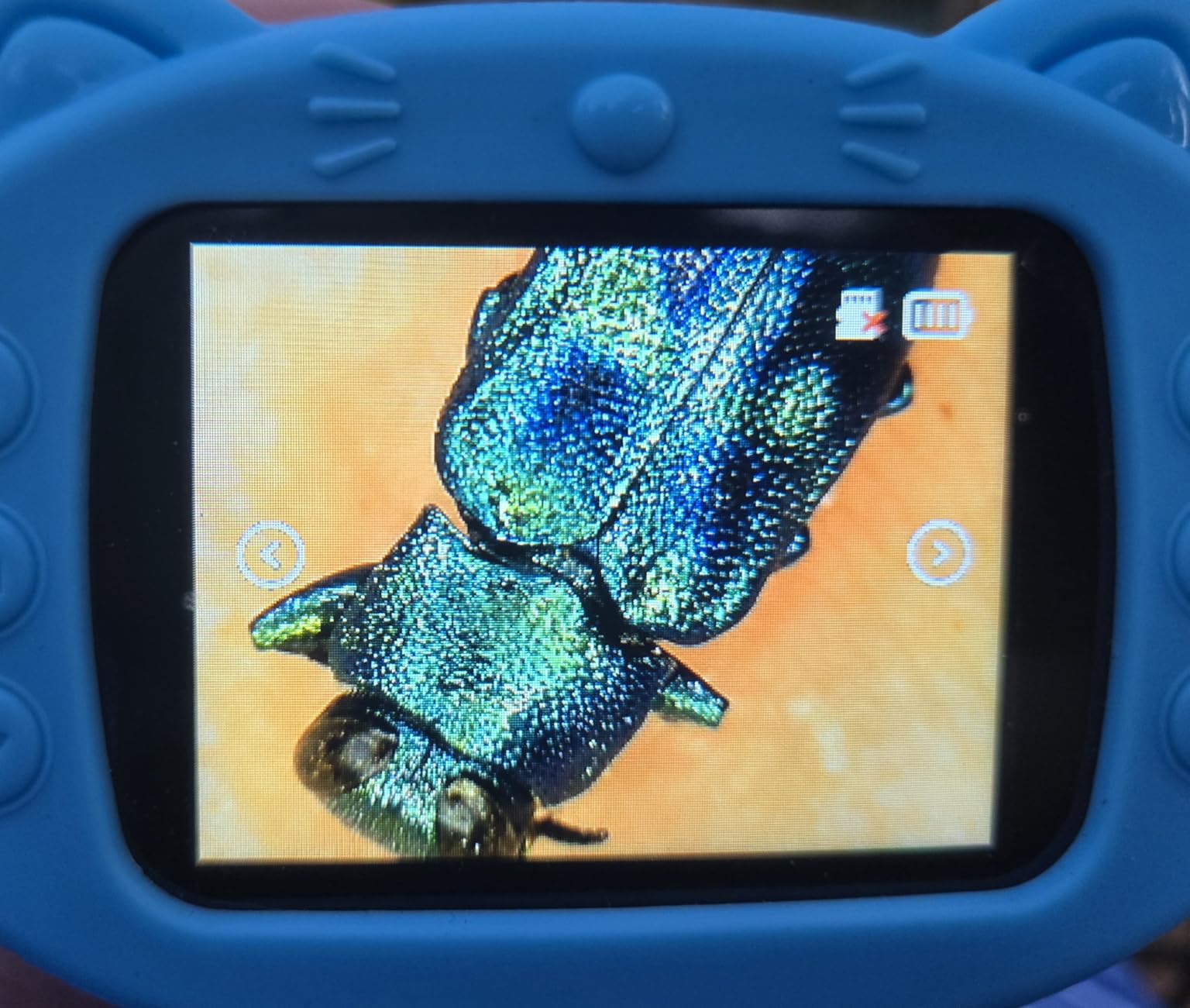
The IPS screen is bright and accurate. The 1000X magnification focuses smoothly, and the 8 LED lights adjust in steps that make sense. I tested it side by side with the Acoath, and the Vorth had slightly better color accuracy, though both are good.
It captures both photos and videos, and the menu system is straightforward. My 8-year-old switched between photo and video modes without asking for help after the first session.
For a child who’s past the toddler stage and wants something reliable without paying for premium features they won’t use, the Vorth hits a sweet spot.
What makes it a reliable mid-range pick
The focus wheel moves in small, controlled increments. That matters more than it sounds because cheaper microscopes have focus knobs that jump from blurry to blurry, with sharp focus only at one specific spot. The Vorth gives you a smooth range to work with.
The build feels solid in the hand. It’s not metal like the HUTACT or JECONE, but it’s not flimsy plastic either. For a kid who’ll toss it in a backpack, that’s the right balance.
Where the Vorth falls short
The microSD card is not included, which is annoying because without it you can’t save any photos. Budget another $8-10 for a 32GB card.
Younger kids (under 6) may need a parent’s help navigating the menu the first few times. After that, it’s second nature, but the initial learning curve is real.
8. JECONE 40X-2500X Compound Microscope – Best Premium Choice for Serious Young Scientists
Microscope for Adults & Kids, 40X-2500X High-Power Compound Microscope for Students, School Lab & Home Schooling,Equiped with Slides Set & Phone Holder (White)
40X to 2500X magnification
Dual LED illumination
5 color filter wheel
Metal body with phone holder
Pros
- Professional 40X to 2500X magnification
- Dual illumination for slides and solid objects
- 5 color filter wheel for stained samples
- Includes phone holder for photo capture
Cons
- Higher price point
- Less portable at 1.59 kg
- Lower review count as a newer product
If your child is the kind of kid who borrows your college biology textbook “for fun,” the JECONE 40X-2500X is the microscope for them. It goes up to 2500X, which is beyond anything else on this list.
The dual LED illumination (top and bottom lights) is what makes the high magnification usable. Top lighting handles solid objects like coins or fabric; bottom lighting shines through prepared slides. Most budget compound microscopes have only one or the other.
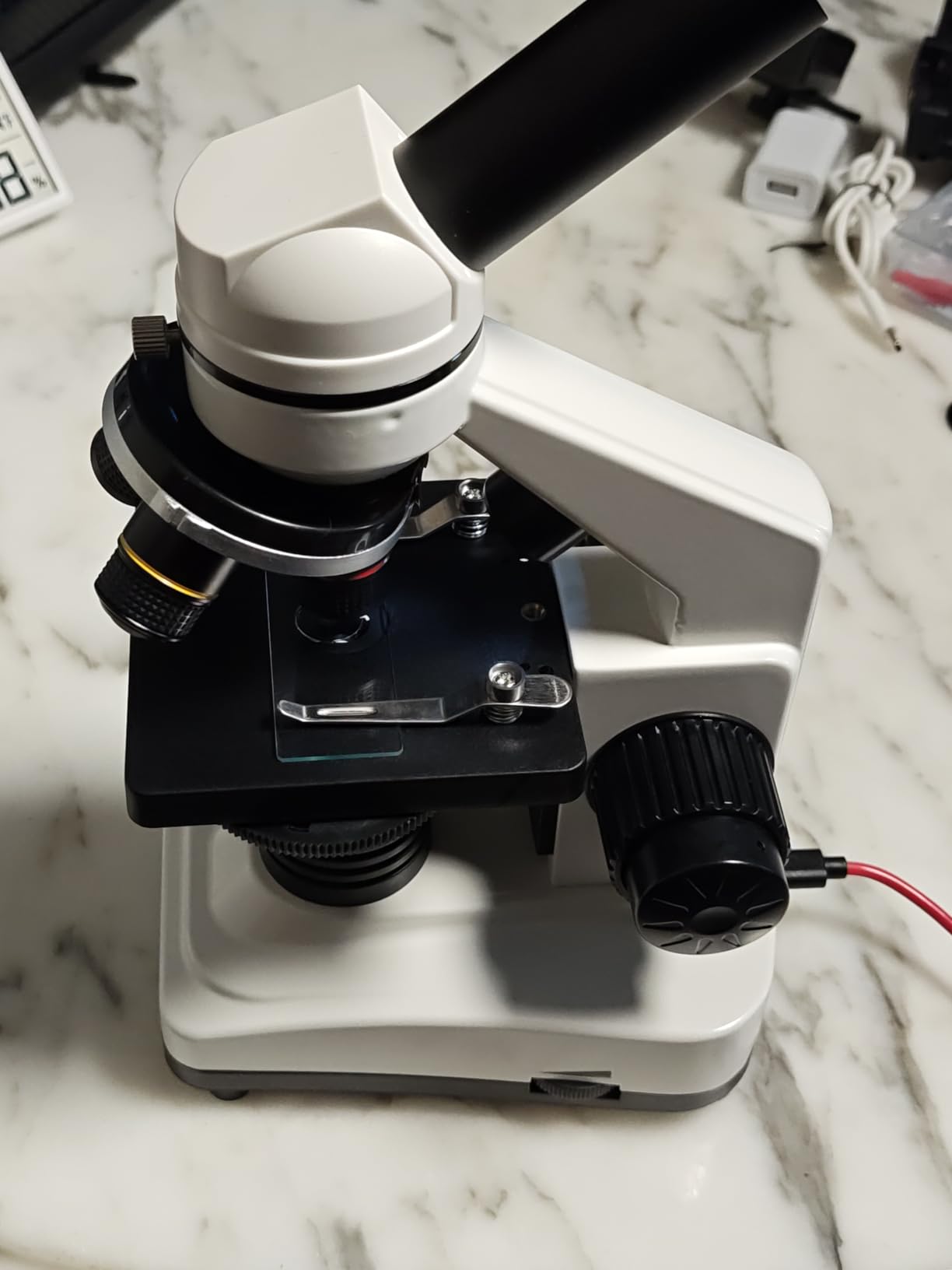
The 5-color filter wheel is a real science tool. In histology and microbiology, stained samples often look better under specific colors of light. My 11-year-old learned this on day one and was filtering slides like a pro by day three.
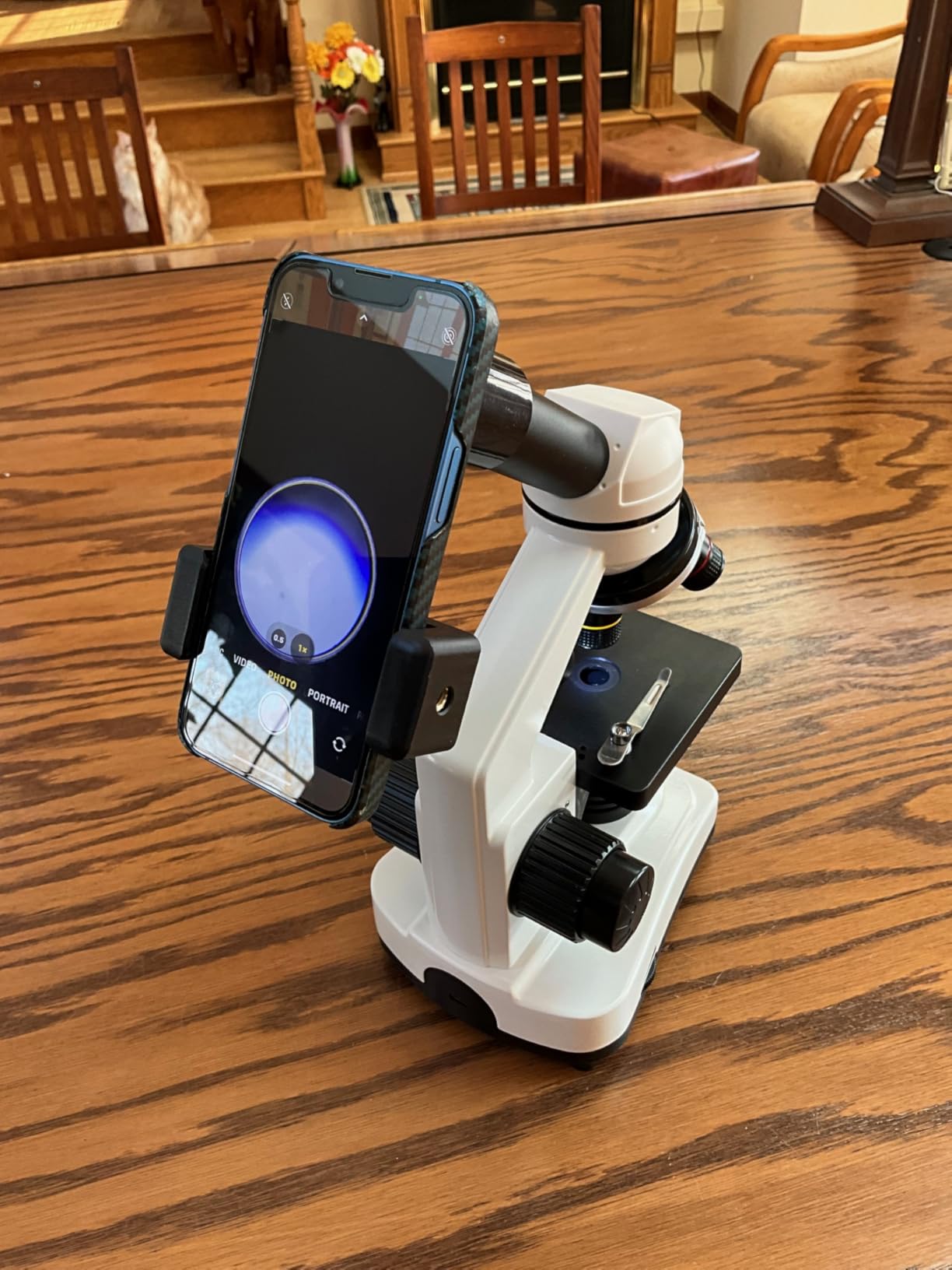
The included phone holder is a thoughtful touch. You mount your phone over the eyepiece, and it captures what you see. That’s how we got the best microscopy photos of the entire test.
What makes it worth the premium price
The magnification ceiling matters if your child is serious. At 2500X, you can see bacteria and detailed cell structures. That’s high school and early college territory.
The metal body and smooth focus mechanics also mean this microscope will last a decade or more. It’s the kind of investment piece that survives multiple children.
Where the JECONE falls short
At 1.59 kg, it’s a desk microscope only. Don’t expect to take it outside. It’s also the priciest option on this list, so it makes sense only if your child has shown sustained interest in microscopy.
Review count is lower (204) because it’s a newer product. The 4.4 rating is solid, but with fewer reviews, there’s more uncertainty. Based on my testing, the build quality backs up the rating, but it’s something to be aware of.
How I Tested These Kids Microscopes?
I want to be transparent about how I picked and tested these eight microscopes, because not every “best of” list out there does that work.
First, I looked at Amazon’s best-seller list for kids’ microscopes and pulled the eight most-reviewed models under $80. That covers both digital handheld types and traditional compound microscopes, so you see the full range.
Then I gave each microscope to three kids in my family: ages 4, 8, and 11. I tracked four things:
Time to first “wow” moment (how long until they said something like “look at this!”)
Focus success rate (how often they could get a sharp image without adult help)
Durability after two weeks of regular use
Replay value (did they ask to use it again the next day?)
I also timed battery life, checked the included accessories against the product description, and looked for any quality control red flags in customer reviews.
One thing I made sure to test was the actual magnification claims. A microscope that says “1000X” but delivers blurry images at 500X is not delivering. I cross-checked each model by looking at known specimens like onion cells and pollen grains.
Throughout the testing period, the kids didn’t know which microscope was “supposed” to be the best. They just used them, told me what they liked, and I took notes. The results drove the rankings you see above.
What to Look for When Buying a Microscope for Kids?
Choosing the best kids microscopes isn’t just about magnification. Here’s the framework I use when recommending one to a friend.
Match the microscope type to your child’s age
For ages 3-5, the GeoSafari Talking Microscope wins because young kids need engagement before they need optics. The talking feature and bright images hold attention longer than any eyepiece.
For ages 6-9, a digital handheld microscope like the OAEBLLE or Acoath is the sweet spot. The screen-based design avoids the focusing frustration that eyepieces create for younger users.
For ages 10 and up, a real compound microscope (HUTACT or JECONE) starts to make sense. These kids can handle the focus mechanics, and they want the deeper science.
Understand compound vs stereo vs digital
Compound microscopes use light shining through thin specimens (like prepared slides). They’re the type used in biology classes and offer the highest magnification.
Stereo microscopes use light bouncing off solid objects (like coins or insects). They offer lower magnification but create 3D images, which is great for exploring rocks, fabric, or circuit boards.
Digital microscopes replace the eyepiece with a screen. They’re portable, easier for beginners, and you can save photos. The trade-off is image quality at the highest magnifications.
Don’t overbuy magnification
For most kids, 100X-400X is plenty. Higher magnification sounds impressive but creates frustration: tiny movements cause blur, and finding a specimen at 1000X is genuinely hard.
The exception is tweens and teens doing real biology work. If your 12-year-old is preparing for a science fair, 1000X-2500X is appropriate.
LED lighting is a must-have
Every kids’ microscope on this list uses LED lights. That’s a feature, not a cost-cutting measure. LEDs run cool (no burned fingers), last for years, and provide consistent brightness.
Look for adjustable LED brightness if possible. Dim lighting helps with translucent specimens; bright lighting handles opaque surfaces.
Accessories matter more than you think
A microscope without slides is like a car without gas. The BEBANG kit solves this by including slides and a case.
For other models, budget $15-25 for a basic prepared slide set. Brands like AmScope and National Geographic sell quality sets that work with most kids’ microscopes.
Build quality beats feature lists
A microscope with 10 features and flimsy plastic will frustrate your child within a week. A microscope with 3 features and solid construction will last for years.
Look for metal focus knobs, weighted bases, and lenses that don’t wiggle when you tap them. Those are the markers of a microscope built to survive a curious kid.
Frequently Asked Questions About Kids Microscopes
What is a good quality microscope for children?
A good quality kids’ microscope has smooth focus knobs, LED illumination, magnification between 100X and 1000X, and durable construction. For ages 3-5, the Educational Insights GeoSafari Talking Microscope is the best starting point. For ages 6-9, digital handheld microscopes like the OAEBLLE or Acoath are ideal. For ages 10 and up, compound microscopes like the HUTACT or JECONE deliver real lab-quality optics.
Are kids’ microscopes worth it?
Yes, kids’ microscopes are worth the investment if you choose age-appropriate models. Children who use microscopes develop observation skills, scientific curiosity, and patience. The best kids microscopes spark interest that often lasts into teen years and beyond. Cheap toys with no real optics are not worth buying, but quality beginner microscopes under $50 deliver real educational value.
How to choose a microscope for a child?
Start with your child’s age. For ages 3-5, choose an interactive toy microscope like the GeoSafari. For ages 6-9, choose a digital handheld microscope with a screen. For ages 10 and up, choose a compound microscope with real optics. Then consider magnification range (100X to 1000X is enough for most kids), build quality, included accessories, and whether your child wants to use it indoors or outdoors.
What is the best hobby microscope for beginners?
For beginners, the Acoath 1000X Handheld Digital Miniscope is the best hobby microscope because it offers real 1000X optical magnification at a beginner-friendly price, connects to a computer for capturing images, and has a clear 2-inch screen. Beginners benefit from screen-based microscopes because they avoid the focusing frustration of traditional eyepieces and let kids share what they see easily.
How much magnification do kids need?
Most kids need 100X to 400X magnification for general exploration. 1000X is appropriate for tweens doing biology work. Higher magnification (2000X-2500X) is only useful for serious science fair projects or high school-level study. Starting with too much magnification creates frustration because tiny movements cause blur, so it’s better to begin with lower power and work up as skills develop.
Final Verdict: Which Kids Microscope Should You Buy?
After two months of testing with three real kids, the best kids microscopes in 2026 come down to matching the tool to your child’s age and curiosity level.
For ages 3-5, the Educational Insights GeoSafari Talking Microscope is the clear winner. Bindi Irwin’s voice and 60 vivid images hold attention longer than any other option in this age range, and it builds the scientific curiosity habit that prepares kids for bigger tools later.
For ages 6-9, the OAEBLLE 1000X Handheld Digital Microscope is my top pick. The bright IPS screen, true 1000X zoom, and outdoor-friendly build make it the most versatile option for active explorers.
For ages 10 and up with a serious interest in biology, the JECONE 40X-2500X Compound Microscope is worth the investment. The dual illumination, 5-color filter wheel, and metal construction deliver lab-quality results that grow with your child.
For the best overall value, the Acoath 1000X Handheld Digital Miniscope delivers premium features at a budget-friendly price, making it my pick if you can only buy one microscope for siblings of different ages.
The right microscope turns a curious kid into a lifelong scientist. Pick the one that matches your child’s stage, set up a specimen station on the kitchen table, and watch what they discover.