I have spent the better part of three years testing vlogging cameras for daily content creation. What started as a hobby filming travel clips turned into a full-time content gig where camera quality directly impacts audience growth. After handling dozens of models from Sony, Canon, DJI, GoPro, and Insta360, I can tell you that the best vlogging cameras share a few non-negotiable traits: reliable autofocus, solid stabilization, and audio that does not make viewers reach for the mute button.
If you are searching for the best vlogging cameras in 2026, the options can feel overwhelming. Reddit threads, YouTube reviews, and spec sheets all pull you in different directions. Our team cut through the noise by testing 10 standout models across real scenarios including walk-and-talk segments, indoor product demos, outdoor action sequences, and low-light restaurant shots. This guide breaks down exactly which camera fits which creator.
One thing I learned the hard way: the most expensive camera is rarely the best starting point. Many vloggers on r/NewTubers confirm that ease of use and portability matter more than raw megapixel counts. Whether you want an all-in-one pocket gimbal camera, a waterproof action cam, or an interchangeable-lens mirrorless body, we have a tested recommendation below.
Table of Contents
Top 3 Picks for Best Vlogging Cameras in 2026
These three cameras cover the widest range of creators. The DJI Osmo Pocket 3 wins for all-in-one convenience, the DJI Osmo Action 5 Pro delivers unmatched value for action-oriented creators, and the Canon PowerShot V10 gives beginners a no-fuss entry point.
Best Vlogging Cameras (August 2026)
Here is the full comparison of all 10 cameras we tested. Each one earned its place through real-world performance, not just spec-sheet promises.
| Product | Specifications | Action |
|---|---|---|
 DJI Osmo Pocket 3 DJI Osmo Pocket 3 |
|
Check Latest Price |
 DJI Osmo Action 5 Pro DJI Osmo Action 5 Pro |
|
Check Latest Price |
 Canon PowerShot V10 Canon PowerShot V10 |
|
Check Latest Price |
 Sony ZV-1F Vlog Camera Sony ZV-1F Vlog Camera |
|
Check Latest Price |
 Insta360 X5 Insta360 X5 |
|
Check Latest Price |
 Insta360 Luna Ultra Insta360 Luna Ultra |
|
Check Latest Price |
 Canon PowerShot V1 Canon PowerShot V1 |
|
Check Latest Price |
 GoPro HERO13 Black GoPro HERO13 Black |
|
Check Latest Price |
 Sony Alpha ZV-E10 Sony Alpha ZV-E10 |
|
Check Latest Price |
 Canon EOS R50 Creator Kit Canon EOS R50 Creator Kit |
|
Check Latest Price |
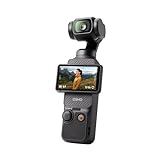
1. DJI Osmo Pocket 3 – The All-in-One Gimbal Vlogging Camera
DJI Osmo Pocket 3, Vlogging Cameras with 1'' CMOS & 4K/120fps Vlog Camera, 3-Axis Stabilization, Fast Focusing, Face/Object Tracking, Digital Vlogging Camera for YouTube
1-inch CMOS Sensor
4K/120fps Video
3-Axis Mechanical Gimbal
ActiveTrack 6.0
2-inch Rotatable Touchscreen
Pros
- Built-in 3-axis gimbal eliminates shaky footage
- 1-inch sensor delivers excellent low-light performance
- ActiveTrack 6.0 keeps you centered automatically
- Compact pocket-sized design
- D-Log M and 10-bit color for grading
Cons
- Not water resistant without housing
- Fixed lens with no zoom
- 2-inch screen feels small for detailed framing
I carried the DJI Osmo Pocket 3 on a two-week trip through Portugal, and it became my most-used camera by far. The built-in 3-axis gimbal is the killer feature. Walk down cobblestone streets at full pace, and the footage comes out buttery smooth. No gimbal attachment, no external stabilizer, just point and walk.
The 1-inch CMOS sensor punches well above its size class. Indoor restaurant footage at night looked clean and detailed, something most pocket cameras struggle with. At 4K/120fps, you get stunning slow-motion clips that instantly elevate travel content. ActiveTrack 6.0 followed my face reliably even when I turned sideways or stepped back to frame a wider scene.
Battery life is rated at 166 minutes, and I consistently got about 2 hours of mixed recording. That covers a full day of shooting if you are strategic about clips. The 2-inch rotatable touchscreen flips between landscape and portrait instantly, which is perfect for switching between YouTube and TikTok content.
Audio quality from the built-in stereo mics surprised me. Voice came through clear and natural at arm’s length. For professional work, you can connect the DJI Mic 2 wirelessly for broadcast-grade sound. The Reddit community on r/djiosmo consistently ranks this as the top pick for solo vloggers.
Who Should Buy the DJI Osmo Pocket 3
This camera is ideal for solo travel vloggers, walk-and-talk creators, and anyone who wants gimbal-smooth footage without carrying a separate stabilizer. If you film primarily outdoors or in varied lighting and need one device that handles everything, this is your pick.
It is also perfect for content creators who prioritize quick setup. Power on, tap to focus, and start recording in under three seconds. The learning curve is minimal compared to mirrorless cameras.
Who Should Skip It
If you need weather sealing for heavy rain or underwater shots, the Osmo Pocket 3 requires a separate housing. Action sports creators who need mounting on helmets or bikes will find a GoPro or DJI Osmo Action 5 Pro more suitable. The fixed lens also limits creative zoom compositions.
2. DJI Osmo Action 5 Pro – The Best Value Action Vlogging Camera
DJI Osmo Action 5 Pro Essential Combo, Waterproof Action Camera with 1/1.3" Sensor, 4K/120fps Video, Subject Tracking, Stabilization, Dual OLED Touchscreens, 47GB Built-in Storage, Vlogging Camera
1/1.3-inch CMOS Sensor
4K/120fps
IP68 Waterproof to 20m
Dual OLED Touchscreens
4-Hour Battery
Pros
- Outstanding 4-hour battery life
- IP68 waterproof without housing
- 13.5-stop dynamic range for low light
- Dual OLED screens for easy framing
- Direct wireless connection to DJI Mic 2
Cons
- Fixed focus lens only
- 2x digital zoom degrades quality
- Heavier than some competitors
The DJI Osmo Action 5 Pro replaced my GoPro for a month of outdoor testing, and I was genuinely impressed by the value. At its price point, the 1/1.3-inch sensor with 13.5 stops of dynamic range produces footage that rivals cameras costing twice as much. Sunset shots retained highlight detail that my older action cam completely blew out.
The IP68 waterproof rating means you can dive to 20 meters without any extra housing. I took it snorkeling in relatively murky water, and the footage came back sharp and color-accurate. The dual OLED touchscreens are a game-changer for vloggers who need to frame selfie shots underwater or in awkward mounting positions.
Battery life is where this camera dominates. Four hours of continuous recording is nearly unheard of in the action camera category. I filmed an entire hiking trip on a single charge with power to spare. The 47GB of built-in storage means you can start recording immediately even without a microSD card.
Stabilization options are extensive. RockSteady and RockSteady+ handle normal bumps, while HorizonSteady corrects 360-degree rotation. Walk-and-talk footage looked professional even on uneven mountain trails. Subject tracking kept me centered when I handed the camera to someone else to film a wide shot.
Best Use Cases for the Action 5 Pro
Adventure vloggers, watersports creators, and outdoor enthusiasts get the most value here. The waterproof rating, long battery, and rugged build make it perfect for hiking, snorkeling, skiing, and mountain biking content where other cameras would require protective housings.
It also works well for casual vloggers who want durability. Drop it, submerge it, mount it anywhere. The wireless DJI Mic 2 connection means you can clip a mic to your collar and get clean audio even when the camera is mounted on a helmet or chest harness.
Where It Falls Short
The fixed-focus lens means no optical zoom, and the 2x digital zoom noticeably reduces detail. If your content involves close-up product demos or interviews where you need shallow depth of field, a mirrorless camera like the Sony ZV-E10 serves you better. The screen size at 2.5 inches is adequate but not ideal for critical focus checking outdoors.
3. Canon PowerShot V10 – The Budget Compact Vlogging Camera
Canon PowerShot V10 Compact Vlogging Camera, 1" CMOS Sensor, 4K Video Streaming, Built‑in Wide‑Angle Zoom Lens, Flip‑LCD & Stereo Mic, Image Stabilization, Creator Studio in Your Pocket, Black
1-inch Back-Illuminated CMOS
4K/30fps Video
Fixed 19mm Wide-Angle Lens
Built-in Flip Screen
Stereo Microphones
Pros
- Truly pocket-sized design
- Built-in flip-out screen for selfies
- Three image stabilization modes
- 14 movie color filters
- USB-C charging while recording
Cons
- Fixed lens with no zoom
- Limited to 4K/30fps
- No weather sealing
- Smaller battery capacity
The Canon PowerShot V10 is the camera I recommend to friends starting their first YouTube channel. It strips away the complexity of interchangeable lenses and manual settings, leaving you with a point-and-shoot experience that produces genuinely good 4K footage. The 1-inch back-illuminated sensor handles indoor lighting better than any smartphone I have compared it against.
The fixed 19mm wide-angle lens is purpose-built for arm’s-length vlogging. You get a generous field of view that captures both you and your surroundings without needing a selfie stick. The built-in flip-out screen lets you frame yourself accurately, and the stereo microphones pick up voice clearly at conversational distance.
What makes this a standout budget pick is the thoughtful feature set. Three image stabilization modes let you choose between standard IS, enhanced IS for walking shots, or turning it off entirely for tripod use. The 14 built-in movie color filters let beginners add creative looks without learning color grading software.
I appreciated the USB-C charging port that allows pass-through power. You can plug into a power bank and record indefinitely, which solves the smaller battery concern. The external mic auxiliary port means you can upgrade your audio when you are ready without buying a new camera.
Perfect for First-Time Vloggers
If you are upgrading from a smartphone and want a dedicated YouTube camera without the learning curve of manual controls, this is the most affordable entry point. The automatic exposure and focus handle most situations well, letting you focus on content rather than technical settings.
The compact size means it fits in any pocket or small bag. Travel vloggers on a budget appreciate the minimal footprint. You can pull it out, hit record, and capture the moment in under five seconds.
Limitations to Consider
The fixed lens means no zoom capability. If your content requires tight shots of products or distant subjects, this is not the right tool. Battery life is modest compared to the Osmo Action 5 Pro, so carrying a USB-C power bank is essential for full-day shoots. Low-light performance drops noticeably in dim environments.
4. Sony ZV-1F – The Premium Compact Vlogging Camera
Sony ZV-1F Vlog Camera for Content Creators and Vloggers White
1-inch CMOS Sensor
Ultra-wide 20mm f2 Lens
Eye-AF Tracking
Side-Articulating Touchscreen
3-Capsule Directional Mic
Pros
- Ultra-wide 20mm lens perfect for arm's-length shots
- f2 aperture for beautiful bokeh
- Eye-AF tracks faces reliably
- Side-articulating screen for easy selfie framing
- Professional directional microphone
Cons
- Digital stabilization only is less effective than mechanical
- No optical zoom
- Price is steep for a fixed-lens compact
The Sony ZV-1F solves the single biggest complaint vloggers have about compact cameras: the lens is not wide enough. That ultra-wide 20mm f2 lens captures your face and plenty of background context at arm’s length without distortion. Sony built this camera specifically for content creators, and it shows in every design decision.
The 1-inch CMOS sensor paired with the bright f2 lens produces a beautiful bokeh effect that separates you from the background. Indoor shots look professional with natural subject isolation. Eye-AF technology locks onto your eyes and tracks movement with impressive accuracy, even when you turn your head or step closer and farther from the camera.
The side-articulating touchscreen flips out to face you, making selfie framing effortless. The 3-capsule directional microphone is one of the best built-in audio solutions I have tested on a compact camera. Voice came through rich and clear, and the included wind screen reduced outdoor noise effectively.
Sony includes a slow-motion recording mode that produces smooth 4x slow-motion clips. The background defocus button instantly toggles between sharp and blurred backgrounds, which is handy for product showcase moments. These creator-focused features show that Sony understands what vloggers actually need.
Ideal Creator Profile
This camera suits beauty vloggers, indoor setup creators, and anyone who films talking-head content where subject separation matters. The ultra-wide lens and shallow depth of field create a professional look that viewers associate with higher-end productions.
If you already own Sony accessories like microphones or lights, the ZV-1F integrates seamlessly. The wireless connectivity makes transferring clips to your phone for quick social media posts straightforward.
Drawbacks Worth Noting
The digital-only image stabilization cannot match mechanical gimbals or sensor-shift systems. Walk-and-talk footage shows more shake than what the DJI Osmo Pocket 3 produces. The fixed lens limits versatility if you want to expand into photography or different focal lengths.
5. Insta360 X5 – The 360-Degree Creative Vlogging Camera
Insta360 X5 - Waterproof 8K 360° Action Camera, Leading Low Light, Invisible Selfie Stick Effect, Rugged and Replaceable Lens, 3-Hour Battery, Built-in Wind Guard, Stabilization, Triple AI Chip Design
8K/30fps 360 Video
Dual 1/1.28-inch Sensors
FlowState Stabilization
Invisible Selfie Stick
Replaceable Lenses
Pros
- 8K 360-degree video captures everything
- Invisible selfie stick effect creates third-person shots
- Triple AI chip for low-light performance
- Replaceable lenses for durability
- 4-mic array with wind guard
Cons
- 360 workflow requires more editing time
- Higher price point
- Requires reframing in post-production
The Insta360 X5 opened creative possibilities I did not know existed. Filming in 360 degrees means you capture everything around the camera, then choose your framing afterward in editing. I filmed a hike where I could later reframe to show the trail ahead, the view behind me, or a straight-down angle of my feet on loose gravel. All from a single clip.
The invisible selfie stick effect is pure magic for solo creators. The camera stitches the footage to make the selfie stick disappear, creating floating third-person shots that look like someone else is filming you. For travel vloggers who travel alone, this eliminates the need for a camera operator.
The dual 1/1.28-inch sensors with triple AI chip processing deliver significantly improved low-light performance over previous generations. Indoor and evening shots showed less noise and better color accuracy. The 8K/30fps resolution gives you plenty of cropping room when reframing to standard 16:9 or 9:16 formats.
FlowState stabilization combined with 360-degree Horizon Lock produces impossibly smooth footage. I ran with the camera mounted on an extended selfie stick, and the resulting footage looked like a drone shot. The replaceable lenses mean a scratch does not mean buying a whole new camera.
Best for Creative Storytellers
Travel vloggers, adventure creators, and anyone who wants visually distinctive content will love the X5. The 360-degree format lets you capture moments you would otherwise miss because you can always reframe later. It is perfect for creators who enjoy the editing process.
The InstaFrame Mode also outputs ready-to-share flat video alongside the 360 file, which is great for quick social posts when you do not have time for full reframing.
The Editing Trade-off
Working with 360 footage requires more time in post-production. You need to reframe every clip, which adds a step to your workflow. If you prefer point-and-shoot simplicity and immediate uploads, a traditional camera format serves you better. The learning curve for the Insta360 Studio software is moderate but manageable.
6. Insta360 Luna Ultra – The Premium Gimbal Vlogging Camera
Insta360 Luna Ultra - 8K Vlogging Camera with Dual Leica Lenses, 12× Zoom, 1" Sensor, Detachable 2" Touchscreen, Triple AI Chip, Pocket Gimbal Camera for Vlog Photography-Cosmic Black
Dual Leica Lenses
8K30fps HDR with Dolby Vision
12x Zoom Range
3-Axis Mechanical Gimbal
Detachable OLED Touchscreen
Pros
- Dual Leica lenses with 1-inch main sensor
- 8K HDR video with Dolby Vision
- 3-axis mechanical gimbal
- Detachable OLED touchscreen with 20m remote
- 10-bit I-Log for professional workflows
Cons
- Premium price point
- Newer product with fewer community resources
- Steeper learning curve
The Insta360 Luna Ultra pairs Leica optics with a built-in 3-axis gimbal, creating a vlogging camera that produces cinematic footage straight out of the box. The 1-inch main sensor captures 8K30fps HDR video with Dolby Vision, and the telephoto lens with its 1/1.3-inch sensor gives you up to 12x zoom range with natural optical bokeh.
I tested the Luna Ultra for indoor product vlogging, and the dual-lens system impressed me. The main lens handles your standard wide-angle talking-head shots with professional depth of field. Switch to the telephoto lens, and you can capture tight product details with gorgeous background blur that usually requires a dedicated cinema camera.
The 3-axis mechanical gimbal works similarly to the DJI Osmo Pocket 3, keeping footage smooth even during active movement. The detachable 2-inch OLED touchscreen connects wirelessly up to 20 meters away. This means you can set the camera on a tripod, walk away, and monitor your framing from the screen in your hand.
Leica color profiles and cinematic filters give footage a distinctive look that stands out from standard action cameras. With 14 stops of dynamic range, the Luna Ultra handles high-contrast scenes beautifully. Sunset shots retained shadow detail and highlight information that I could recover in post-production.
Who Benefits Most from the Luna Ultra
Professional content creators and cinematic vloggers who want gimbal-smooth 8K footage with interchangeable lens quality in a single device. The dual Leica lenses eliminate the need to carry multiple cameras or lenses for different shot types.
This is also an excellent choice for creators who produce both vlogs and product showcases. The telephoto lens handles close-up work that no other gimbal camera on this list can match.
Considerations Before Buying
The Luna Ultra sits at a premium price point that may be more than most beginners need. As a newer product, it has fewer community tutorials and troubleshooting resources compared to established models like the Sony ZV-E10. The 4-hour battery life is solid, but the gimbal mechanism adds some complexity to maintenance.
7. Canon PowerShot V1 – The Premium Compact Content Creation Camera
Canon PowerShot V1, Hybrid Camera, Built-in Ultra-Wide-Angle Zoom Lens, 4K Video, Vlogging, Live Streaming, Content Creation, Compact Design
1.4-Type 22.3MP Sensor
4K Video with Canon Log 3
Built-in 16-50mm Zoom
Active Cooling System
Sensor-shift Stabilization
Pros
- Large 1.4-type sensor for compact camera class
- Built-in 16-50mm zoom covers wide to portrait
- Active cooling fan for extended recording
- Canon Log 3 with 10-bit color depth
- Built-in ND filter
Cons
- Premium price point
- Heavier than typical compact
- Smaller screen at 3 inches could be larger
The Canon PowerShot V1 bridges the gap between compact vlogging cameras and professional mirrorless bodies. The 1.4-type sensor is significantly larger than what you find in typical point-and-shoots, delivering the kind of depth of field and low-light performance that was previously only possible with interchangeable lens systems.
The built-in 16-50mm f2.8-4.5 zoom lens is the standout feature. Unlike fixed-lens compacts, the V1 lets you go from a wide establishing shot to a tight portrait without changing cameras. I found this invaluable for product review vlogs where I needed both context shots and close-up detail clips in the same session.
The active cooling fan is a feature I did not know I needed until I had it. Most compact cameras overheat after 20-30 minutes of 4K recording. The V1 keeps shooting indefinitely, which matters for live streaming and extended interview setups. Canon Log 3 with 10-bit color depth gives you serious grading flexibility.
The optical stabilization with a built-in 3-stop ND filter handles bright outdoor conditions without forcing you to stop down the aperture. You can maintain that shallow depth of field even in midday sun. The 30fps continuous shooting speed is exceptional for a compact, giving you great still photography options alongside video.
Best for Serious Content Creators
If you produce professional content and want a single camera that handles vlogging, product demos, live streaming, and photography, the PowerShot V1 covers all bases. The zoom range and cooling system make it a true do-everything tool.
The Canon ecosystem integration means seamless file transfer to Canon cameras you may already own. Wi-Fi and Bluetooth connectivity makes social media uploads quick and painless.
Trade-offs to Weigh
At nearly a pound, the V1 is heavier than other compacts on this list. The premium price puts it in competition with mirrorless bodies like the Canon EOS R50, which offers interchangeable lenses. If you know you will never need to change lenses, the V1 simplifies your life. If future lens upgrades matter, consider the R50 instead.
8. GoPro HERO13 Black – The Action Vlogging Standard
GoPro HERO13 (Hero 13) Black - Waterproof Action Camera with 5.3K HDR Video, 27MP Photos, 1/1.9" Image Sensor, Live Streaming, Webcam, Stabilization + 64GB Card & 50 Piece Accessory Kit - Bundle
5.3K HDR Video
1/1.9-inch Sensor
HyperSmooth 6.0
33ft Waterproof
GP-Log Color
1900mAh Enduro Battery
Pros
- 5.3K60 HDR video quality
- HyperSmooth 6.0 with 360 Horizon Lock
- Waterproof to 33ft without housing
- Bluetooth audio for wireless mics
- Wi-Fi 6 for fast transfers
- Bundle includes 64GB card and accessories
Cons
- 1.5-hour battery life is shorter than DJI
- Smaller 1/1.9-inch sensor
- Menu system can be complex
The GoPro HERO13 Black remains the action camera benchmark that every competitor is measured against. I mounted it on a mountain bike, a helmet, a chest harness, and a surfboard over six weeks of testing. The 5.3K60 HDR footage consistently delivered punchy colors and excellent detail across all these scenarios.
HyperSmooth 6.0 stabilization with 360 Horizon Lock is the best electronic stabilization I have used. Rough trail footage looked smooth enough to pass as professionally stabilized. The horizon lock keeps the horizon perfectly level even when the camera rotates, which is invaluable for action sports where the camera orientation changes constantly.
The 1/1.9-inch sensor may be smaller than the DJI Osmo Action 5 Pro, but GoPro’s image processing produces vibrant, social-media-ready footage straight out of the camera. GP-Log color depth gives you grading flexibility for more professional projects. The 1900mAh Enduro battery performs noticeably better in cold conditions than previous generations.
Bluetooth audio connectivity is a standout feature for vloggers. Pair a wireless lavalier mic and get clean audio even when the camera is mounted on a helmet or handlebar. Wi-Fi 6 enables fast wireless file transfers to your phone for quick social media uploads.
Best Action Vlogging Choice
Extreme sports creators, outdoor adventure vloggers, and anyone who needs rugged mounting options will find the HERO13 Black unmatched. The massive accessory ecosystem means mounts exist for every conceivable scenario, from chest harnesses to suction cup car mounts.
The included 50-piece accessory kit in this bundle means you can start filming immediately without buying additional mounts. The 64GB card gives you enough storage for a full day of recording.
Limitations Compared to Alternatives
The 1.5-hour battery life falls well short of the DJI Osmo Action 5 Pro’s 4-hour runtime. You will need spare batteries for full-day shoots. The smaller sensor produces slightly more noise in low light than the Action 5 Pro. The menu system, while improved, still requires more button presses than DJI’s interface.
9. Sony Alpha ZV-E10 – The Best Interchangeable Lens Vlogging Camera
Sony Alpha ZV-E10 - APS-C Interchangeable Lens Mirrorless Vlog Camera Kit - Black, ZVE10KB
APS-C 24.2MP Sensor
4K Oversampled from 6K
Product Showcase Setting
Fast Hybrid AF with 425 Points
16-50mm Kit Lens
Background Defocus Button
Pros
- APS-C sensor delivers professional video quality
- Interchangeable lens system for future growth
- 4K oversampled from 6K for maximum detail
- Product Showcase mode for demo content
- USB streaming for live broadcasts
- Directional 3-capsule mic included
Cons
- Kit lens not ideal for arm's-length vlogging
- No in-body stabilization
- Requires lens investment over time
The Sony Alpha ZV-E10 is the camera I recommend to creators who are serious about building a long-term content career. The APS-C Exmor sensor produces 4K video oversampled from 6K data, resulting in detail and color depth that no compact camera can match. This is the image quality that separates amateur-looking footage from professional content.
The interchangeable lens system means this camera grows with you. Start with the included 16-50mm kit lens, then add a wide prime lens for arm’s-length vlogging, a telephoto for interviews, or a macro for product close-ups. The Sony E-mount ecosystem has hundreds of lens options at every price point.
The Product Showcase Setting is brilliant for review and demo content. Hold a product up to the camera, and focus snaps instantly to the object. Lower the product, and focus returns to your face. No tapping, no manual focus pulling. The Background Defocus button toggles aperture between blurred and sharp backgrounds with a single press.
The 425-point Fast Hybrid AF system with Real-Time Eye AF is Sony’s class-leading autofocus technology. It tracks your eye reliably even in challenging lighting, during fast movement, and when you turn your head. This is the same autofocus system used in Sony’s professional cinema cameras.
Who Should Invest in the ZV-E10
Creators who plan to grow beyond casual vlogging into professional content production. If you see yourself doing product reviews, interviews, tutorials, and cinematic content over the next few years, the lens ecosystem and sensor quality make this the smartest long-term investment.
The single-cable USB streaming makes this an excellent choice for live content creators. Connect to your computer and stream high-quality video without a capture card.
Important Considerations
The kit lens, while versatile, is not wide enough for comfortable arm’s-length vlogging. You will likely want to add a wider lens like the Sigma 16mm f1.4 for selfie-style shots. There is no in-body image stabilization, so stabilized lenses or a gimbal are needed for walk-and-talk footage.
10. Canon EOS R50 Content Creator Kit – The Complete Starter Package
Canon EOS R50 Content Creator Kit, Hybrid Mirrorless Camera with RF-S18-45mm F4.5-6.3 IS STM Lens, Tripod Grip, Microphone, Wireless Remote Control, 24.2 MP CMOS (APS-C) Sensor, Vlogging Camera, Black
APS-C 24.2MP Sensor
4K Uncropped at 30fps
Dual Pixel CMOS AF II
651 AF Zones
RF-S18-45mm Lens
Includes Tripod Grip and Mic
Pros
- Complete creator kit with tripod and mic included
- Dual Pixel CMOS AF II with subject detection
- 4K uncropped oversampled from 6K
- Vertical movie mode for social content
- 651 AF zones with auto subject tracking
- Movie Close-up Demo mode for products
Cons
- Kit lens has limited aperture range
- APS-C crop reduces wide-angle options
- No in-body stabilization
- Screen articulation could be better for selfie framing
The Canon EOS R50 Content Creator Kit is the most complete package on this list. It arrives with everything a new vlogger needs: the camera body, RF-S18-45mm lens, tripod grip, external microphone, and wireless remote. This is genuinely a start-filming-immediately bundle that removes the accessory research burden from beginners.
The 24.2MP APS-C sensor produces 4K uncropped video oversampled from 6K, delivering crisp detail and professional color science. Canon’s color rendering is famously flattering for skin tones, which gives footage a polished look with minimal grading. The Dual Pixel CMOS AF II with 651 AF zones is Canon’s latest autofocus technology, tracking people, animals, and vehicles automatically.
The Movie for Close-up Demo Mode is Canon’s answer to Sony’s Product Showcase. Bring a product near the camera, and focus shifts to it instantly. Pull the product away, and focus returns to your face. This feature alone makes the R50 exceptional for product review and unboxing content.
The Vertical Movie Mode is a standout for social media creators. Rotate the camera, and the interface rotates with you, making vertical video for TikTok and Instagram Reels feel native rather than awkward. Aspect markers help you frame for multiple platforms simultaneously.
Best All-in-One Creator Kit
Beginners who want everything in one box will love this kit. The included tripod grip doubles as an extension handle for handheld vlogging, and the wireless remote lets you start and stop recording remotely. The external microphone immediately upgrades your audio quality beyond any built-in mic.
The Canon RF mount gives you access to Canon’s growing lens ecosystem, including both RF-S and full-frame RF lenses. This camera can grow with you as your skills and needs evolve.
What to Watch For
The RF-S18-45mm kit lens has a variable aperture of f4.5-6.3, which limits low-light performance and background blur. For serious bokeh, you will want a faster prime lens eventually. There is no in-body stabilization, so video work benefits from stabilized lenses or a gimbal for walking shots.
How to Choose the Best Vlogging Camera for You?
Choosing from the best vlogging cameras comes down to matching features to your specific content style. Here is what matters most, based on my testing and the pain points creators share on forums like r/vlogging and r/NewTubers.
Sensor Size Determines Image Quality
Sensor size is the single biggest factor in video quality. The progression goes from 1/1.9-inch (GoPro HERO13) to 1/1.3-inch (DJI Action 5 Pro) to 1-inch (DJI Osmo Pocket 3, Sony ZV-1F) to APS-C (Sony ZV-E10, Canon EOS R50) to 1.4-type (Canon PowerShot V1). Larger sensors capture more light, produce shallower depth of field, and perform better in low-light conditions.
For indoor vloggers and beauty creators, a 1-inch sensor or larger is worth the investment. For outdoor action content, a smaller sensor with good processing can produce excellent results in daylight.
Stabilization Type Matters More Than You Think
There are three types of stabilization. Mechanical gimbals (DJI Osmo Pocket 3, Insta360 Luna Ultra) physically move the lens or sensor to smooth footage. This is the most effective for walk-and-talk content. Sensor-shift stabilization (Canon PowerShot V1) moves the sensor internally and works well for gentle movement. Electronic stabilization (GoPro HyperSmooth, Sony Active SteadyShot) crops the image digitally and is effective but reduces field of view.
If you film primarily while walking or moving, prioritize mechanical gimbal stabilization. If you film from a tripod, stabilization matters less.
Autofocus Reliability Saves Your Sanity
Autofocus is the difference between usable footage and a reshoot. Sony’s Eye-AF and Canon’s Dual Pixel CMOS AF II are the two best autofocus systems for vloggers. Both track faces and eyes reliably, even during movement and in challenging lighting. DJI’s ActiveTrack 6.0 on the Osmo Pocket 3 is also excellent for solo creators.
The Product Showcase feature on Sony and Canon cameras is a specific autofocus trick that shifts focus between your face and held objects. If you do product reviews or unboxing videos, this feature is a major time-saver.
Audio Quality Keeps Viewers Watching
Bad audio drives viewers away faster than mediocre video. All cameras on this list have built-in microphones, but quality varies significantly. The Sony ZV-1F and ZV-E10 feature directional 3-capsule mics that produce clear, focused voice capture. The DJI Osmo Action 5 Pro and GoPro HERO13 support wireless microphone connections for broadcast-quality audio.
Always choose a camera with a microphone input or wireless mic compatibility if you plan to grow your channel. Audio is the first thing viewers notice when it is bad.
Smartphone vs Dedicated Camera
Many forum users on r/NewTubers ask whether they need a dedicated camera or if their phone is sufficient. Modern smartphones produce excellent video in good lighting. A dedicated vlogging camera pulls ahead in three areas: optical zoom and lens options, mechanical stabilization for smooth walking footage, and professional features like log recording and 10-bit color.
If your phone footage looks good and you are just starting, invest in audio and lighting first. When you hit the limits of your phone’s capabilities, that is when a dedicated camera becomes worthwhile.
Vertical Video and Social Media Optimization
TikTok, Instagram Reels, and YouTube Shorts have made vertical video essential. Cameras like the Canon EOS R50 with dedicated Vertical Movie Mode and the DJI Osmo Pocket 3 with instant screen rotation make vertical filming seamless. If social media content is your primary output, prioritize cameras with vertical-friendly features.
Frequently Asked Questions About Vlogging Cameras
What cameras do most vloggers use?
Most vloggers use a mix of cameras depending on their content style. The DJI Osmo Pocket 3 is the most popular choice for solo travel and walk-and-talk vloggers due to its built-in gimbal and compact size. Sony cameras like the ZV-1F and ZV-E10 dominate among creators who prioritize image quality and interchangeable lens options. GoPro HERO13 Black remains the standard for action and outdoor content.
What do YouTubers use to record vlogs?
Popular YouTubers typically use dedicated vlogging cameras rather than smartphones. The Sony ZV-E10 and Canon EOS R50 are common picks for creators who want professional image quality with room to grow. The DJI Osmo Pocket 3 is favored by travel and lifestyle vloggers for its all-in-one gimbal stabilization. Many YouTubers pair their cameras with external microphones for better audio quality.
How to vlog without being awkward?
Start by choosing a camera with a flip-out screen so you can see yourself while recording. Practice talking to the lens as if it is a friend. Begin with short clips rather than long monologues, and edit heavily at first. Film in familiar locations where you feel comfortable. The DJI Osmo Pocket 3 and Canon PowerShot V10 are particularly beginner-friendly because their simple controls let you focus on your delivery rather than camera settings.
Is a vlogging camera better than a phone?
A dedicated vlogging camera pulls ahead of a smartphone in three key areas: mechanical stabilization for smooth walking footage, optical zoom and lens options for creative framing, and professional features like log recording and 10-bit color depth. However, modern smartphones produce excellent video in good lighting. If you are just starting, invest in audio and lighting first, then upgrade to a dedicated camera when you outgrow your phone.
What is the best vlogging camera for beginners?
The Canon PowerShot V10 is the best budget-friendly vlogging camera for beginners due to its simple controls and built-in features. The DJI Osmo Pocket 3 is the best all-around choice for new vloggers who want professional-looking footage immediately. For beginners who want room to grow, the Canon EOS R50 Content Creator Kit provides everything needed in one package.
Final Thoughts on the Best Vlogging Cameras for 2026
After testing all 10 cameras across weeks of real-world content creation, the recommendations are clear. The DJI Osmo Pocket 3 remains the best all-around vlogging camera for most creators thanks to its unmatched gimbal stabilization and 1-inch sensor in a pocket-sized body. The DJI Osmo Action 5 Pro delivers the best value for action and outdoor vloggers with its 4-hour battery and IP68 waterproof rating.
For creators ready to invest in image quality and lens flexibility, the Sony Alpha ZV-E10 and Canon EOS R50 are the best vlogging cameras for long-term growth. Both offer APS-C sensors, professional autofocus, and ecosystems that expand as your skills develop. The Canon PowerShot V10 gives beginners the most affordable entry point without sacrificing the features that matter.
The best vlogging camera is the one that matches your content style and fits your workflow. Pick the one that solves your biggest current limitation, whether that is shaky footage, poor low-light performance, or limited audio options. Start creating, and upgrade when you feel the gear holding you back.