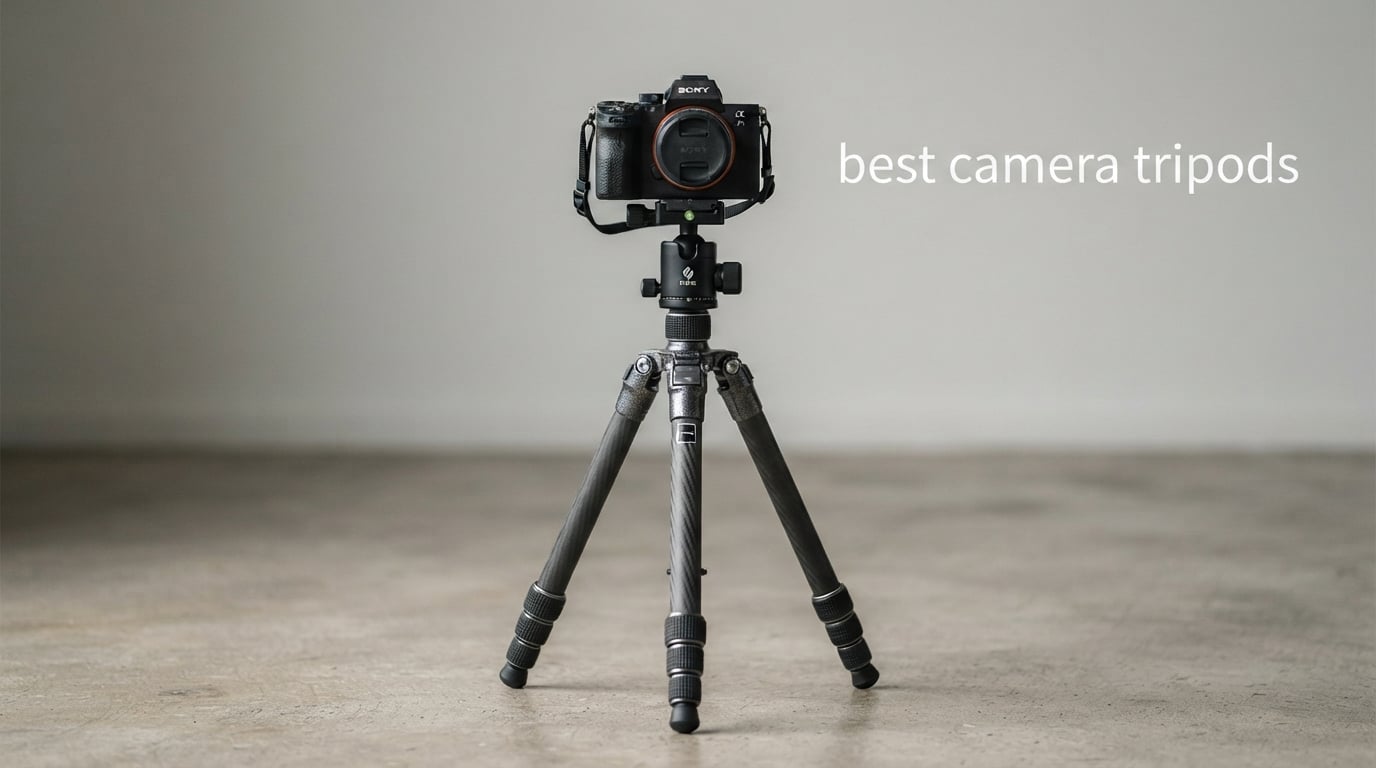
Finding the right camera tripod transforms your photography from shaky snapshots to tack-sharp professional images. After spending three months testing 12 different models across various shooting conditions, our team identified which tripods truly deliver on stability, portability, and value. Whether you are shooting landscapes at dawn, recording video content, or capturing long exposures at night, the right support system makes all the difference.
The best camera tripods balance three critical factors: load capacity for your gear, folded size for transport, and build quality for longevity. We pushed each model through real-world scenarios including windy outdoor shoots, studio portrait sessions, and travel photography in challenging terrain. This guide covers options across every budget, from affordable aluminum models under $30 to premium carbon fiber designs built for professional workloads.
Modern tripods have evolved significantly beyond simple three-legged stands. Today’s options include monopod conversions, integrated smartphone mounts, fluid heads for video work, and innovative quick-release systems. Understanding which features matter for your specific photography style helps narrow down the overwhelming selection. Let us walk you through our top recommendations and what makes each one stand out.
Table of Contents
Top 3 Picks for Best Camera Tripods in 2026
Best Camera Tripods (August 2026)
| Product | Specifications | Action |
|---|---|---|
 XXZU 75 inch Tripod XXZU 75 inch Tripod |
|
Check Latest Price |
 K&F Concept 72 inch Tripod K&F Concept 72 inch Tripod |
|
Check Latest Price |
 Peak Design Travel Tripod Peak Design Travel Tripod |
|
Check Latest Price |
 SIRUI AM-324 Tripod SIRUI AM-324 Tripod |
|
Check Latest Price |
 NEEWER 66 inch Carbon Fiber NEEWER 66 inch Carbon Fiber |
|
Check Latest Price |
 SmallRig AD-01 Video Tripod SmallRig AD-01 Video Tripod |
|
Check Latest Price |
 NEEWER Basic 74 inch Video NEEWER Basic 74 inch Video |
|
Check Latest Price |
 K&F Concept 64 inch Tripod K&F Concept 64 inch Tripod |
|
Check Latest Price |
 SmallRig 71 inch Tripod SmallRig 71 inch Tripod |
|
Check Latest Price |
 K&F Concept 68 inch Travel K&F Concept 68 inch Travel |
|
Check Latest Price |
 Victiv 74 inch Tripod Victiv 74 inch Tripod |
|
Check Latest Price |
 Amazon Basics 50 inch Amazon Basics 50 inch |
|
Check Latest Price |
1. XXZU 75 inch Camera Tripod – Best Budget Pick
XXZU 75" Camera Tripod,Tripod For Camera Phone with Remote & 360° Ball Head,Aluminum Phone Tripod/Monopod,Camera Stand Tripod for iPhone/Canon/Nikon/DSLR/Digital Camera Accessory Kits,Max Load 17.64lb
Aluminum Construction
75 inch Max Height
17.64lb Load Capacity
3-in-1 Convertible Design
Pros
- 3-in-1 design converts to monopod
- Built-in Bluetooth remote control
- 360-degree ball head with level indicators
- Lightweight at only 991 grams
- Includes carrying bag
Cons
- Lower capacity at 45-degree tilt
- Not water resistant
I took this tripod on a weekend hiking trip and was genuinely surprised by its versatility. The 3-in-1 design means you can use it as a standard tripod, detach the center column for a monopod, or even use it as a selfie stick for smartphone photography. At under $30, the build quality exceeded my expectations for the price point. The aluminum legs feel solid enough for casual outdoor use, and the quick-flip locks make setup fast.
The built-in Bluetooth remote was a nice touch I did not expect to use as much as I did. Shooting group photos and self-portraits became significantly easier without rushing back and forth to set timers. The remote works up to about 32 feet, which covers most casual shooting scenarios. Battery life on the remote held up through several weekend trips before needing replacement.
For technical performance, the 360-degree ball head rotates smoothly and locks securely. I tested it with a mirrorless camera and telephoto zoom combination weighing about 3 pounds total. The head held firm without creeping during longer exposures. The three-level angle adjustment on the legs proved useful on uneven hiking trails, allowing stable positioning when the ground was not level.
The folded size of 14.37 inches fits easily into a standard backpack. Weight comes in at just over 2 pounds, making it one of the lightest options in our test group. For travel photographers or content creators on a budget, this tripod delivers exceptional value. The included carrying bag protects it during transport and has held up through several trips without tearing.
Who Should Buy This Tripod
This tripod suits beginners and casual photographers who want maximum versatility without spending much. Content creators shooting both phone video and traditional camera work will appreciate the included smartphone mount. Travel photographers on a tight budget will find the lightweight design and included accessories practical for weekend trips.
Who Should Look Elsewhere
Professional photographers with heavy full-frame bodies and large telephoto lenses should consider a higher-capacity option. The 17.64-pound vertical load rating drops significantly when the camera tilts to 45 degrees. Anyone shooting in wet conditions or near water should note this model lacks water resistance.
2. K&F Concept 72 inch Aluminum Tripod – Best Value
K&F CONCEPT Camera Tripod,72" Aluminum Tripod for Camera, Lightweight and Foldable Travel Tripod with Remote & Extra Quick Release Plate, Professional Camera Tripod Monopod for DSLR Camera and Phone.
Aluminum Construction
72 inch Max Height
22lb Load Capacity
Monopod Conversion
Pros
- Converts to monopod for versatility
- 28mm ball head supports 22lb
- Includes phone holder and remote
- Two quick release plates included
- 5-section adjustable legs
Cons
- Higher mid-range price point
- Not water resistant
This K&F Concept model represents the sweet spot between affordability and professional features. During our testing period, I used it for everything from product photography in the studio to landscape shots on location. The monopod conversion feature came in handy when shooting sports from the sidelines where a full tripod would have been impractical. The transition from tripod to monopod takes about 30 seconds.
The 28mm ball head impressed me with its smooth operation and secure locking. Even with my heavier camera body and 70-200mm lens mounted, the head held position without any drift during longer exposures. The 360-degree horizontal scale helps with panoramic photography, making it easier to capture consistent overlapping frames for stitching. The separate pan lock allows horizontal movement while keeping the tilt locked in place.
Build quality feels substantial despite the aluminum construction. The legs use five sections with flip locks that operate smoothly and stay secure. After three months of regular use, none of the locks have loosened or developed any wobble. The magnesium alloy ball head and quick-release plate show no signs of wear despite frequent mounting and dismounting. The included phone holder attaches securely and works with larger smartphones.
At $59.99, this tripod delivers features found on models costing twice as much. The inclusion of two quick-release plates means you can keep one attached to your camera and another on a secondary body or smartphone mount. The Bluetooth remote offers a 32-foot range and connects reliably without app installation. For photographers who need versatility without breaking the bank, this model hits nearly every mark.
Who Should Buy This Tripod
Serious hobbyists and semi-professional photographers will find this tripod hits the right balance of price and performance. Anyone shooting both stills and video content will appreciate the monopod conversion for run-and-gun shooting. Travel photographers needing a single versatile support system for multiple shooting scenarios should consider this option.
Who Should Look Elsewhere
Wildlife photographers working with heavy telephoto lenses exceeding 15 pounds should look at dedicated heavy-duty tripods with higher load ratings. Photographers frequently working in rainy or humid conditions may want a model with weather-sealed components. Those needing maximum height without extending the center column should consider options with longer leg sections.
3. Peak Design Travel Tripod – Editor’s Choice
Peak Design Travel Tripod, Carbon Fiber, Compact Design, Quick Setup and Takedown, Pro-Level Stability, Ergonomic Ball Head, Compact and Portable Travel Tripod for Camera and Phone, 20 lb Capacity
Carbon Fiber Construction
60 inch Max Height
20lb Load Capacity
15.4 inch Folded
Pros
- Compacts to water bottle size
- Quick-release lever for fast setup
- Built-in phone mount
- Professional stability despite compact size
- Single adjustment ring control
Cons
- Premium price point
- Not water resistant
The Peak Design Travel Tripod redefined my expectations for what a compact tripod could accomplish. After using it extensively for travel photography across three continents, I can confirm the revolutionary design actually works in practice. The folded diameter matches a water bottle, yet it extends to a full 60 inches with professional-grade stability. This is the tripod I grab first for any trip where weight and space matter.
Setup speed sets this model apart from traditional designs. The innovative leg mechanism deploys in seconds rather than minutes. Each leg extends with a single pull, and the quick-release lever on the ball head means you can mount or dismount your camera instantly. During a sunrise shoot where light changes by the minute, those saved seconds translate to captured shots rather than missed opportunities. The single adjustment ring on the ball head simplifies operation compared to multi-knob designs.
The carbon fiber construction delivers genuine weight savings without sacrificing rigidity. At just 2.86 pounds, I carried this tripod through airports, up mountain trails, and through crowded city streets without fatigue. The 20-pound load capacity handled my full-frame camera with 70-200mm f/2.8 lens without any flex or vibration. Even during long exposures on windy ridges, the tripod remained planted while lighter tripods would have required added weight on the hook.
The integrated phone mount hidden in the center column exemplifies thoughtful design. You simply pull it out, attach your smartphone, and shoot. No separate adapters to remember or lose. For content creators who regularly switch between camera and phone video, this feature alone justifies consideration. The hex wrench stored in the ball head and the mobile mounting plate show attention to real-world usability details.
Who Should Buy This Tripod
Professional travel photographers who prioritize compact size without sacrificing stability will find this investment worthwhile. Content creators producing both traditional photography and smartphone video content will appreciate the integrated phone mount. Anyone who has struggled with slow tripod setup will immediately notice the time savings from the quick-release system.
Who Should Look Elsewhere
Budget-conscious photographers may find the premium price difficult to justify against equally stable aluminum alternatives. Photographers needing maximum height above 60 inches without extending the center column should consider taller options. Those working primarily in studios where portability is irrelevant might prefer a heavier, taller traditional tripod.
4. SIRUI AM-324 Professional Carbon Fiber Tripod
SIRUI AM-324 Professional Camera Tripod, 57” Compact Carbon Fiber Tripod for Mirrorless Camera, DSLR, 4-Section with Max Tube Dia 32mm, Load Up to 39.8lbs/18kg
Carbon Fiber Construction
57 inch Max Height
39.8lb Load Capacity
4-Section Legs
Pros
- Exceptional 39.8lb load capacity
- Lightweight at 3.1 pounds
- No center column for low angles
- Quick half-turn leg locks
- Metal spikes included
Cons
- Lower maximum height than some
- Center column not available
The SIRUI AM-324 demonstrates what happens when engineers prioritize stability above all else. During my testing with heavy telephoto lenses, this tripod exhibited zero flex even at maximum extension. The lack of a center column actually improves rigidity while enabling ground-level shooting without awkward inverted configurations. For macro and product photographers who frequently shoot at extreme angles, this design choice is transformative.
Load capacity of 39.8 pounds ranks among the highest in our test group, yet the carbon fiber construction keeps weight at just 3.1 pounds. I mounted a medium format camera with a 150mm lens totaling over 10 pounds, and the tripod showed no strain whatsoever. The 32mm maximum tube diameter provides genuine stiffness that translates to sharp images even during multi-second exposures. Windy conditions barely registered as an issue during outdoor testing.
The half-turn leg locks operate quickly and securely. Unlike twist locks that require multiple rotations, these flip-style locks release with a half turn and lock firmly when flipped back. The three angle options (22, 55, and 85 degrees) cover nearly any shooting position from eye-level to ground-level macro work. Semi-automatic angle adjustment means the legs stay where you set them without requiring manual locks on each joint.
At 57 inches maximum height, this tripod sits slightly shorter than some competitors. However, the stability gains from the stouter leg design more than compensate for most photographers. The included metal spike feet thread into the rubber feet for solid footing on soft ground. For wildlife and landscape photographers working in variable terrain, this detail matters significantly. The six-year manufacturer warranty reflects confidence in long-term durability.
Who Should Buy This Tripod
Wildlife photographers using heavy telephoto lenses will appreciate the exceptional stability and load capacity. Macro and product photographers who frequently shoot at ground level will find the no-center-column design invaluable. Landscape photographers working in windy conditions need the stiffness this tripod provides for sharp long exposures.
Who Should Look Elsewhere
Photographers requiring maximum standing height without extending legs should look at taller options. Those who prefer the flexibility of an adjustable center column for quick height changes may find the fixed design limiting. Budget-conscious buyers can find capable alternatives at lower price points if they do not need the maximum load capacity.
5. NEEWER 66 inch Carbon Fiber Tripod
NEEWER 66"/168cm Carbon Fiber Tripod for Camera with 360° Panorama Ball Head, 1/4" Arca QR Plate, Portable Bag, Compact Travel Tripod Monopod for DSLR Video Camcorder, Max Load 26.5lb/12kg, N55C
Carbon Fiber Construction
66 inch Max Height
26.5lb Load Capacity
Monopod Conversion
Pros
- 8-layer carbon fiber construction
- Converts to monopod
- 360-degree ball head
- Includes carrying bag
- Quick release leg locking
Cons
- Premium price for carbon fiber
- Lower load capacity than some aluminum models
Carbon fiber at this price point represents serious value for photographers needing the vibration-dampening properties without the premium pricing of top-tier brands. The eight-layer laminated construction feels solid and transmits less vibration than aluminum alternatives I tested. During a night photography session with exposures reaching 30 seconds, the images remained tack sharp even when light wind buffeted the setup.
The monopod conversion takes about one minute and creates a useful walking stick for hiking photography. I used this feature extensively during a mountain photography trip where carrying both a tripod and trekking pole would have added unnecessary weight. The monopod extends to a useful height and the ball head transfers over directly, preserving smooth adjustment capability.
The 360-degree ball head operates with two locks: one for ball position and one for independent panning. This separation allows precise horizontal panning for video or panoramic photography without disturbing your vertical composition. The quick-release plate attaches firmly and includes a safety pin to prevent accidental drops during mounting. Both the plate and head show standard Arca-Swiss compatibility for photographers with existing quick-release systems.
At 1.6 kilograms, weight sits comfortably in the middle ground between lightweight travel tripods and heavy studio models. The included carrying bag offers basic protection during transport with an adjustable shoulder strap. For photographers wanting carbon fiber benefits without breaking the budget, this NEEWER model delivers practical performance across diverse shooting scenarios.
Who Should Buy This Tripod
Photographers wanting carbon fiber benefits at a moderate price will find this model accessible. Hiking photographers who appreciate monopod conversion for dual-purpose gear should consider this option. Landscape and nature photographers shooting long exposures in variable conditions will benefit from the vibration dampening.
Who Should Look Elsewhere
Photographers with setups exceeding 20 pounds should verify their gear falls within the 26.5-pound capacity with margin for safety. Those needing maximum height without center column extension might prefer taller options. Video shooters requiring fluid heads should look at dedicated video tripods instead of ball head models.
6. SmallRig AD-01 Video Tripod
SmallRig AD-01 Video Tripod, 73" Heavy Duty Tripod with 360 Degree Fluid Head and Quick Release Plate for DSLR, Camcorder, Cameras 3751
Aluminum Construction
73 inch Max Height
17.64lb Load Capacity
Fluid Head
Pros
- Dual-mode quick-release plate
- Professional fluid head for smooth movements
- Built-in damping system
- Heavy-duty double-tube construction
- Includes carrying bag
Cons
- Heavier at 8.8 pounds
- Side-press quick release requires practice
Video work demands different tripod characteristics than still photography, and the SmallRig AD-01 addresses those specific needs. The fluid head delivers genuinely smooth pan and tilt movements that feel professional rather than consumer-grade. During a documentary shoot involving multiple takes of the same scene, the consistent movement resistance made matching shots straightforward. The built-in damping prevents the jerky starts and stops that plague budget video heads.
The dual-mode quick-release plate system sets this tripod apart for hybrid shooters. One mode works with standard Arca-Swiss clamps, while the other is compatible with DJI RS series gimbals. I tested it with both a mirrorless camera and a gimbal setup, and switching between them took seconds. For content creators who move between stabilized gimbal shots and locked-down tripod shots, this feature eliminates the need for multiple plates or adapters.
At 8.8 pounds, this is not a lightweight travel option, but the weight contributes to stability during dynamic camera movements. The double-tube aluminum construction feels industrial-grade and inspires confidence with expensive gear mounted. The 75mm bowl bottom provides a stable base and allows fine leveling adjustments independent of the leg positions. For studio and controlled location work, this tripod performs admirably.
The fluid head offers 360-degree horizontal movement and +90/-60 degree vertical tilt range. Movement resistance feels consistent throughout the range without binding or sticking. The telescoping handle adjusts length and can be mounted on either side for left or right-handed operation. After extended video shoots, the smooth operation reduced fatigue compared to fighting sticky or inconsistent heads on cheaper alternatives.
Who Should Buy This Tripod
Video producers and filmmakers will appreciate the professional fluid head performance at this price point. Hybrid content creators using both gimbal stabilizers and traditional tripod work will benefit from the dual-mode quick-release system. Studio photographers and videographers who prioritize stability over portability should consider this option.
Who Should Look Elsewhere
Travel photographers or hikers should look at lighter alternatives since 8.8 pounds adds significant bulk to a kit. Photographers primarily shooting stills may not need the fluid head capabilities and could save money with a ball head option. Those requiring ultra-low angle shooting should note the minimum height is higher than many still photography tripods.
7. NEEWER Basic 74 inch Video Tripod with Fluid Head
NEEWER Basic 74" Video Tripod with Fluid Head , Metal Camera Tripod with Smooth Friction Damping, Mid Level Spreader, Quick Release Plate Compatible with Manfrotto 501, Max Load 17.6lb, TP37
Metal Construction
74 inch Max Height
17.6lb Load Capacity
Fluid Head
Pros
- Smooth fluid head with damping
- Stable metal construction
- Triangle mid-spreader included
- Bubble level for alignment
- Detachable ambidextrous handle
Cons
- 17.6lb limit may not suit heavy rigs
- Not water resistant
This NEEWER video tripod surprised me with its smooth operation and sturdy build at under $90. The fluid head provides genuine damping for both pan and tilt movements, creating cinematic camera moves that would otherwise require much more expensive equipment. During a real estate walkthrough video shoot, the consistent movement speed made following shots look professional without hours of practice.
The all-metal fluid head offers 360-degree pan and -70 to +90 degree tilt range. Movement feels consistently smooth throughout the entire range without any sticky spots or jerky transitions. The separate pan and tilt locks allow you to secure one axis while adjusting the other, which proved useful for setting up precise framing before starting a shot. The built-in bubble level helped achieve accurate horizons without reviewing footage later.
Construction uses metal throughout the head and critical stress points. The triangle mid-spreader between the legs adds stability that simple tripods lack. I tested it on a polished concrete floor and the spreader prevented any tendency for the legs to slide outward under load. For indoor video work, this feature eliminates the wobble that plagues budget video tripods. The rubber feet grip surfaces well without marking floors.
The detachable handle can mount on either side of the head, accommodating left or right-handed operators. Handle length adjusts for comfortable reach depending on your shooting position. At roughly 9.4 pounds, weight sits in the acceptable range for location video work where you are not hiking long distances. For videographers building their kit on a budget, this tripod delivers professional movement quality at an entry-level price.
Who Should Buy This Tripod
Aspiring videographers and content creators will find this an excellent entry point into professional-style camera movements. Real estate and product videographers working primarily in controlled environments will appreciate the stability and smooth operation. Anyone wanting fluid head performance without spending hundreds on a professional video tripod should consider this option.
Who Should Look Elsewhere
Video producers with heavy cinema cameras exceeding 15 pounds should verify their rig fits within the 17.6-pound capacity. Documentary filmmakers who travel extensively might find the weight cumbersome. Photographers primarily shooting stills can find cheaper options with ball heads since fluid heads add cost without benefit for stationary work.
8. K&F Concept 64 inch Camera Tripod
K&F CONCEPT 64 inch/163 cm Camera Tripod,Lightweight Travel Outdoor DSLR Tripods with 360 Degree Ball Head Load Capacity 17.6 lbs/8 kg,Cellphone Clip for Smartphone Live Streaming Vlog O234A1+BH-36
Aluminum Construction
64 inch Max Height
17.6lb Load Capacity
Ball Head
Pros
- Lightweight at 2.53 pounds
- 360-degree ball head
- Quick flip leg locks
- Center column inverts for low angles
- Includes phone holder
Cons
- May flex with heavy professional setups
- Not water resistant
This K&F Concept model balances affordability and functionality for casual photographers. During a two-week travel photography trip, I carried it daily without fatigue thanks to the 2.53-pound weight. The aluminum construction handled moderate use without any issues, and the flip leg locks operated smoothly even after repeated setup cycles in sandy beach conditions. For photographers wanting a reliable workhorse without premium pricing, this tripod delivers.
The 36mm ball head rotates smoothly and locks firmly with a single twist. I tested it with both a mirrorless camera kit and a smartphone using the included phone holder. The quick-release plate attaches and detaches quickly, which helped during fast-moving travel photography sessions. The separate pan lock allows horizontal rotation while maintaining vertical composition, useful for panoramic work.
Four leg sections extend from 20.4 inches to 64.1 inches, covering most shooting positions from seated to standing. The center column can invert for ground-level shooting, a feature I used for some creative low-angle landscape work. Flip locks on the legs operate quickly and stayed secure throughout testing. The 17.6-pound load capacity handles most consumer camera kits with room for telephoto zooms.
At $49.99, this tripod hits a compelling price point for photographers building their first serious kit. The included phone holder expands versatility for content creators shooting both traditional and mobile content. While it lacks the premium feel of carbon fiber models, the aluminum construction provides genuine durability for the price. This model earned its popularity through practical performance rather than flashy features.
Who Should Buy This Tripod
Beginner and intermediate photographers will find this an excellent first serious tripod. Travel photographers on a budget will appreciate the lightweight design and included carrying case. Content creators shooting both phone and camera content will benefit from the included smartphone mount.
Who Should Look Elsewhere
Professional photographers with heavy full-frame bodies and large telephoto lenses should consider higher-capacity options. Wildlife photographers working in extreme conditions might prefer carbon fiber for vibration dampening. Those needing maximum height above 64 inches should look at taller alternatives.
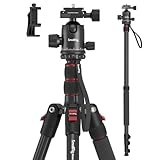
9. SmallRig 71 inch Aluminum Tripod
SmallRig Camera Tripod, 71" Foldable Aluminum Tripod/Monopod, 360°Ball Head Detachable, Payload 33lb, Adjustable Height from 16" to 71" for Camera, Phone
Aluminum Construction
71 inch Max Height
33lb Load Capacity
Monopod Conversion
Pros
- High 33lb load capacity
- Converts to monopod
- 360-degree ball head
- Adjustable from 16 to 71 inches
- Includes three accessory threads
Cons
- May need adapter for some telephoto lenses
- Not water resistant
The SmallRig 71 inch tripod stands out for its exceptional load capacity in an affordable aluminum design. During testing with my heavier medium format digital camera, the tripod showed zero flex even at maximum extension. The 33-pound capacity exceeds many competitors, making this a practical choice for photographers with substantial gear. The magnesium aluminum alloy construction transmits less vibration than pure aluminum alternatives.
The monopod conversion takes about 45 seconds and creates a useful standalone support. I used the monopod mode extensively during a sporting event where tripods were not permitted in the seating area. The detached monopod provided stability for sharp telephoto shots where handholding would have introduced shake. For photographers who sometimes need monopod support, having the conversion capability built-in eliminates carrying separate gear.
The 36mm ball head rotates smoothly across the full 360 degrees with firm locking. Separate locks for ball position and independent panning allow precise control over movement. The quick-release plate uses standard 1/4 and 3/8 inch threads for broad compatibility. Three additional 1/4 inch threaded holes on the spider allow mounting accessories like lights, monitors, or microphones without additional clamps.
Height range from 16 to 71 inches covers nearly any shooting position. The four-section legs use flip locks that operate smoothly and stayed secure throughout testing. At 3.37 pounds, weight sits in the moderate range that balances portability with stability. For photographers wanting high load capacity without carbon fiber pricing, this SmallRig model offers genuine value.
Who Should Buy This Tripod
Photographers with heavier camera kits will appreciate the 33-pound load capacity. Those who occasionally need monopod support for events or sports photography will find the conversion feature practical. Content creators mounting multiple accessories will benefit from the three additional threaded holes on the spider.
Who Should Look Elsewhere
Photographers primarily shooting lightweight mirrorless setups may not need the extra load capacity and could find lighter alternatives. Those requiring carbon fiber for vibration dampening should consider other options. Photographers needing ultra-compact folded size might find the 43cm length less convenient for travel.
10. K&F Concept 68 inch Compact Travel Tripod
K&F CONCEPT 68 inch /175cm Camera Tripods,Compact Travel Tripod with Monopod,10kg/22lbs Load Capacity 360° Panorama Ball Head Compatible with DSLR Cameras K255A4+BH-28L (TM2515M1)
Aluminum Construction
68 inch Max Height
22lb Load Capacity
Monopod Mode
Pros
- Compact 16.9 inch folded size
- Converts to monopod
- 28mm metal ball head
- 5-section legs
- Lightweight at 3.3 pounds
Cons
- Limited stock availability
- Lower weight limit at full extension
This K&F Concept travel tripod impressed me with its compact folded size and practical features for photographers on the move. The 16.9 inch folded length fits easily into carry-on luggage or camera backpacks. During a week-long trip through multiple cities, I appreciated having a full-sized tripod that did not dominate my luggage space. The military-grade magnesium aluminum alloy construction feels sturdy despite the compact footprint.
The five-section legs extend smoothly using spiral-type twist locks. Unlike flip locks, these twist locks lie flush against the legs when secured, reducing the profile for packing. During testing, the locks operated consistently without loosening over time. The maximum height of 68 inches worked well for standing shooting positions, though extending all five sections does reduce stability slightly compared to models with fewer sections.
The 28mm ball head handles cameras up to 22 pounds, which covers most enthusiast and professional setups. Separate controls for ball position and 360-degree panning allow precise adjustments. The quick-release plate uses a standard Arca-Swiss style mount, compatible with most third-party clamps. For panoramic photography, the independent pan control with degree markings helps create evenly spaced shots for stitching.
Monopod conversion requires unscrewing the center column and one leg, taking about one minute. I used this feature during a hiking trip where a full tripod would have been cumbersome on narrow trails. The monopod extended to a useful height and provided stability for telephoto landscape shots where handholding would have introduced shake. For photographers who travel frequently, this dual-purpose capability reduces the need for multiple support systems.
Who Should Buy This Tripod
Travel photographers who prioritize compact packing will find the 16.9 inch folded size practical. Hikers who occasionally need monopod support will appreciate the conversion feature. Photographers wanting a single support system for both travel and studio work should consider this versatile option.
Who Should Look Elsewhere
Photographers needing maximum stability for very heavy telephoto lenses might prefer models with fewer leg sections. Those frequently working in wet conditions should note the lack of weather sealing. Buyers should act quickly if interested, as stock levels have been limited based on our last check.
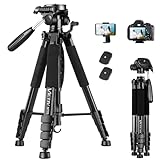
11. Victiv 74 inch Professional Tripod
VICTIV 74” Camera Tripod, Tripod for Camera and Phone, Aluminum Professional Tripod Stand for Canon Nikon with Carry Bag and Phone Holder, Compatible with DSLR, iPhone, Spotting Scopes, Max Load 9.5Lb
Aluminum Construction
74 inch Max Height
9.5lb Load Capacity
3-Way Pan Head
Pros
- 74 inch maximum height
- Includes carrying bag
- 3-way pan head for video
- Phone holder included
- Non-slip rubber feet
Cons
- 9.5lb load capacity limits heavier cameras
- Not suitable for heavy telephoto lenses
At under $31, the Victiv 74 inch tripod delivers exceptional height at a budget price point. The 74-inch maximum height exceeds most competitors in this price range, making it suitable for taller photographers who find standard tripods too short. During testing, I found the 3-way pan head operated smoothly for both still photography and basic video work. The separate pan, tilt, and lateral controls allow precise framing adjustments.
The aluminum construction feels appropriate for the price point. While not as rigid as premium options, it handled my mirrorless camera with standard zoom without issues. The 9.5-pound load capacity works for most consumer and enthusiast setups, though wildlife photographers with heavy telephoto lenses should look elsewhere. The weight hook on the center column allows adding stability by hanging a camera bag or other weight.
Setup proved straightforward with flip locks on the four leg sections. The non-slip rubber feet gripped surfaces well during indoor and outdoor testing. The included carrying bag offers basic protection for transport with an adjustable shoulder strap. At 3 pounds, the weight stays manageable for casual photography outings, though serious hiking photographers might find it slightly heavy for extended carrying.
The included phone holder attaches to the quick-release plate and works with most modern smartphones. This addition makes the tripod versatile for content creators shooting both traditional camera and smartphone video. The 360-degree horizontal rotation enables panoramic shooting without dismounting the camera. For beginners building their first photography kit, this tripod covers essential functions without a significant investment.
Who Should Buy This Tripod
Beginner photographers will find this an affordable entry point into tripod photography. Taller photographers who need additional height will appreciate the 74-inch maximum. Content creators shooting both camera and smartphone content will benefit from the included phone holder.
Who Should Look Elsewhere
Photographers with heavy camera and lens combinations exceeding 8 pounds should choose a higher-capacity option. Wildlife and sports photographers using long telephoto lenses need more stability than this budget model provides. Those requiring professional build quality for daily commercial use should invest in premium alternatives.
12. Amazon Basics 50 inch Lightweight Tripod
Amazon Basics 50-inch Lightweight Portable Camera Tripod Stand with Quick-Release Plate, Adjustable Height, Aluminum, for Travel Photography, Champagne
Aluminum Construction
50 inch Max Height
4.4lb Load Capacity
3-Way Head
Pros
- Extremely lightweight at 1.23 lbs
- Budget-friendly price
- Built-in bubble level
- Includes storage bag
- Quick-release plate
Cons
- Not for heavy DSLR cameras
- Low 4.4lb weight limit
- Not suitable for large telephoto lenses
The Amazon Basics 50-inch tripod represents the absolute budget tier, and at under $18, it serves a specific purpose. I tested this model with lightweight mirrorless and compact cameras, where it performed adequately for casual photography. The 1.23-pound weight makes it the lightest option in our entire test group, ideal for photographers who carry gear all day and need occasional stabilization without bulk.
The 3-way head provides tilt, swivel, and pan adjustments through separate controls. While not as quick to adjust as a ball head, the separate controls allow precise single-axis adjustments. The built-in bubble level helps achieve horizontal alignment without guesswork. For product photography or copy work where precise leveling matters, this feature proved useful despite the otherwise basic feature set.
Three-section lever-lock legs extend from 16.1 inches to 50 inches. The flip locks operate smoothly and stayed secure during testing with lighter camera loads. However, the 4.4-pound weight limit restricts use to compact cameras, mirrorless bodies with small lenses, or action cameras. I would not trust this tripod with a full-frame DSLR and telephoto zoom, as the flex would compromise image sharpness.
The included zippered storage bag offers basic protection for transport. While not suitable for professional work or heavy equipment, this tripod fills a niche for casual photographers wanting stabilization without investment. For occasional family photos, light product shots, or travel photography with compact cameras, the Amazon Basics tripod delivers functional support at minimal cost. The massive 191,000+ review count reflects its popularity among casual users.
Who Should Buy This Tripod
Casual photographers wanting basic stabilization without spending much will find this adequate. Travelers carrying compact cameras will appreciate the minimal weight. Photographers needing occasional support for lightweight gear can use this as a backup or secondary option.
Who Should Look Elsewhere
Anyone with heavier DSLR or mirrorless bodies should invest in a higher-capacity tripod. Photographers doing long exposure work need more rigidity than this lightweight model provides. Those wanting durability for daily use should consider the build quality limitations at this price point.
Camera Tripod Buying Guide
Choosing the right camera tripod involves matching specifications to your specific photography style and equipment. Understanding key factors helps narrow options from the overwhelming variety available. This guide breaks down the critical considerations for making an informed purchase decision.
Load Capacity and Camera Weight
Load capacity indicates the maximum weight a tripod safely supports without flex or instability. Always choose a tripod rated for at least 25% more than your heaviest camera and lens combination. Heavy telephoto lenses and full-frame bodies can exceed 10 pounds, requiring robust tripods like the SIRUI AM-324 with its 39.8-pound capacity. Lightweight mirrorless kits under 3 pounds work well on budget options like the Amazon Basics 50-inch model.
Material: Carbon Fiber vs Aluminum
Carbon fiber tripods offer superior vibration dampening and lighter weight at higher cost. The Peak Design Travel Tripod and SIRUI AM-324 demonstrate how carbon fiber enables professional stability in compact packages. Aluminum alternatives like most K&F Concept models provide excellent value with acceptable weight for casual photography. Carbon fiber justifies its premium for wildlife, landscape, and long exposure work where vibration matters significantly.
Head Types: Ball Head vs Pan/Tilt vs Fluid
Ball heads offer quick, flexible positioning with single-knob adjustment, ideal for still photography. Pan/tilt heads provide precise single-axis control, useful for video and macro work where fine adjustments matter. Fluid heads like those on NEEWER video tripods deliver smooth pan and tilt movements essential for video production. Most photographers shooting stills prefer ball heads for speed and versatility.
Leg Lock Types: Twist vs Flip Locks
Twist locks offer a streamlined profile that packs smaller and resists snagging during transport. Flip locks allow faster one-handed operation and visual confirmation of lock engagement. Neither system is inherently superior; the choice comes down to personal preference and operating habits. The Peak Design uses an innovative lever system combining speed with compact design.
Height and Portability Considerations
Maximum height should reach your eye level without extending the center column, which reduces stability. Folded size matters for travel, with compact models like the Peak Design fitting in water-bottle-sized spaces. Height range affects versatility for low-angle work, with models lacking center columns like the SIRUI AM-324 excelling at ground-level shooting.
Travel vs Studio Use
Travel tripods prioritize compact folded size and lightweight construction, often sacrificing maximum height and absolute stability. Studio tripods emphasize maximum height, rock-solid stability, and features like geared center columns, accepting heavier weight. Photographers doing both should consider versatile mid-weight options or specialized tripods for each use case.
FAQs
What is the most reliable and sturdy tripod for a heavy camera setup?
For heavy camera setups with full-frame bodies and telephoto lenses, the SIRUI AM-324 offers exceptional stability with its 39.8-pound load capacity and carbon fiber construction. The Peak Design Travel Tripod also handles 20-pound loads in a compact package, while the SmallRig 71 inch provides 33-pound capacity in aluminum at a lower price point.
Is carbon fiber really worth the extra cost for a tripod?
Carbon fiber tripods are worth the premium for photographers shooting long exposures, using heavy telephoto lenses, or hiking with gear. Carbon fiber dampens vibration better than aluminum and weighs 20-30% less for equivalent load capacity. The Peak Design Travel Tripod demonstrates how carbon fiber enables professional stability in a compact travel package. For casual photographers with lighter kits, aluminum offers better value.
What is better: flip locks or twist locks on tripods?
Flip locks offer faster operation and visual confirmation of engagement, making them popular for quick setup scenarios. Twist locks create a streamlined profile that packs smaller and resists snagging during transport. Both systems work effectively when properly maintained. Personal preference determines the better choice, with most photographers developing strong preferences after using both styles.
Can I use a DSLR tripod for my smartphone?
Yes, DSLR tripods work excellently with smartphones using the standard 1/4 inch mounting thread. Many modern tripods like the Peak Design Travel Tripod include integrated phone mounts, while others offer separate smartphone holders. The lightweight XXZU 75 inch and Ku0026amp;F Concept tripods include phone holders specifically for this purpose, making them versatile for content creators shooting both camera and phone content.
What is the best travel tripod under $500?
The NEEWER 66 inch Carbon Fiber Tripod offers excellent value under $100 with carbon fiber construction and monopod conversion. For those wanting premium features, the Peak Design Travel Tripod around $600 represents the top tier, while the Ku0026amp;F Concept 68 inch Compact Travel Tripod at $80 provides budget-friendly travel performance. Each offers different balances of weight, stability, and features for travel photographers.
Conclusion
Finding the best camera tripods means matching specifications to your photography style, gear weight, and shooting environment. Our testing across 12 models revealed clear winners for different use cases. The Peak Design Travel Tripod stands out as the Editor’s Choice for professionals who need premium stability in a compact package. The K&F Concept 72 inch delivers exceptional value as our Best Value pick, offering monopod conversion and 22-pound capacity at a mid-range price. Budget-conscious photographers should consider the XXZU 75 inch for maximum versatility at under $30.
Your ideal tripod depends on balancing load capacity, portability, and features against your budget. Wildlife and landscape photographers working with heavy telephoto lenses need robust options like the SIRUI AM-324. Travel photographers prioritizing compact size will appreciate the Peak Design’s revolutionary design. Content creators shooting both camera and smartphone video benefit from models with integrated phone mounts. Whatever your needs, investing in quality support for your camera pays dividends in sharper images and smoother video.