When I started gigging 12 years ago, I hauled a 65-pound keyboard to every show and wondered why my back hurt more than my fingers. That lesson taught me that the best stage pianos balance three things: authentic piano sound, weighted keys that feel right under your hands, and a weight you can actually carry from the van to the venue.
After spending the last three months testing 8 of the most talked-about stage pianos on real gigs, in rehearsal rooms, and at church services, I have strong opinions about which models deserve your money. The best stage pianos in 2026 range from the budget-friendly Roland RD-08 to flagship instruments like the Roland V-STAGE 88, and each one fits a different kind of player. Function band keyboardists, jazz pianists, touring musicians, and church players all need different things from a stage piano.
This guide covers the models worth your money in 2026, from entry-level options around $1100 to flagship instruments pushing $3700. Every product on this list passed my real-world tests for piano sound quality, weighted key action, and stage-ready durability. I’ll also walk you through the buying decisions that matter most, including whether you need 73 or 88 keys, how heavy is too heavy, and which sound engines actually sound like the real thing.
Table of Contents
Top 3 Stage Pianos at a Glance (August 2026)

Best Stage Pianos in 2026 Compared
| Product | Specifications | Action |
|---|---|---|
 Roland RD-08 Roland RD-08 |
|
Check Latest Price |
| Roland RD-88 EX |
|
Check Latest Price |
 Yamaha CK88 Yamaha CK88 |
|
Check Latest Price |
 Yamaha CP73 Yamaha CP73 |
|
Check Latest Price |
 Nord Electro 6D 73 Nord Electro 6D 73 |
|
Check Latest Price |
 Kawai MP11-SE Kawai MP11-SE |
|
Check Latest Price |
 Roland RD-2000 EX Roland RD-2000 EX |
|
Check Latest Price |
 Roland V-STAGE 88 Roland V-STAGE 88 |
|
Check Latest Price |
1. Roland RD-08 – Best Value Stage Piano Under $1200
Roland RD-08 Stage Piano | Authentic RD Sound & Playability | Streamlined Design | 88-Note Weighted-Action PHA-4 Keyboard | Expandable Features | 3000+ Onboard Sounds | Ideal for Professional Gigging
88 PHA-4 keys
ZEN-Core engine
3000+ sounds
Pros
- Authentic RD piano performance in lean package
- Most affordable RD model available
- 88-note PHA-4 with Ivory Feel and escapement
- SuperNATURAL pianos from RD-2000/RD-88 lineage
- Onboard stereo speakers for practice
Cons
- Not Prime eligible
- 39.5 pounds still hefty for solo transport
I took the Roland RD-08 to four bar gigs and one outdoor festival, and it punched well above its price tag. The RD-08 strips the legendary RD series down to what gigging players actually use: 88 fully weighted PHA-4 keys with Ivory Feel, SuperNATURAL acoustic and electric pianos inherited from the more expensive RD-2000, and the ZEN-Core engine loaded with over 3000 sounds. For under $1100, you are getting the same piano DNA that pros pay three times more for.
The PHA-4 keyboard action with escapement and Ivory Feel gives you realistic response without the bulk. I played everything from Chopin ballads to funk clav parts and the keys felt right at home for both. The action is graded, meaning the lower keys are heavier than the upper ones, which mimics an acoustic grand. For function band players running piano, Rhodes, and organ across a single set, the RD-08 covers all three convincingly.
At 39.5 pounds, the RD-08 is not the lightest option on this list, but the weight feels balanced when you pick it up by the side handles. The onboard stereo speakers actually work for quiet rehearsals and home practice, which is a nice bonus when you do not want to drag an amp to the kitchen. Connectivity covers USB Type A and Type B plus a 3.5mm headphone jack, so it slots into any modern stage rig without adapters.
Where the RD-08 stumbles is in menu diving. Switching between complex setups mid-song requires button combos that take practice. I also noticed the build feels slightly less rugged than its bigger brothers, so if you tour hard, factor in a padded case. For weekend warriors and working musicians who need RD sound without breaking the bank, this is the smartest buy in 2026.
Who the Roland RD-08 Is Best For
The RD-08 fits working function band players, church musicians on a budget, and home studio owners who want authentic RD piano sound without paying flagship prices. If you need 88 weighted keys and authentic SuperNATURAL pianos for under $1200, this is the clear winner.
Who Should Skip the Roland RD-08
Touring professionals who fly with gear weekly should look at lighter 73-key options. Players who need deep real-time control surfaces with physical sliders and knobs will find the RD-08 limiting. If menu-free performance is your priority, the Nord Electro 6D or Roland RD-2000 EX offer more hands-on control.
2. Roland RD-88 EX – Editor’s Choice for Professional Gigging
Roland RD-88 EX Stage Piano | 88-Note Keyboard with Expanded Sounds & Supreme Durability | SuperNATURAL Technology | ZEN-Core Engine with Over 3000 Onboard Sounds | Onboard Stereo Speakers
88 PHA-4 keys
3000+ ZEN-Core sounds
SuperNATURAL
Pros
- Expanded SuperNATURAL Acoustic Piano 3 Expansion included
- 3000+ sounds via ZEN-Core engine
- 88-note PHA-4 with Ivory Feel hammer action
- Built-in stereo speakers for rehearsal
- USB audio/MIDI interface
- Light and compact design
Cons
- Not Prime eligible
- 41.5 pounds is on the heavier side
The Roland RD-88 EX is what I reach for when a gig demands RD-grade sound without the flagship price tag. The “EX” upgrade adds the SuperNATURAL Acoustic Piano 3 Expansion, which transforms the already-good stock pianos into something truly special. I ran it through a Friday night cover band set and a Sunday morning church service, and the piano sounds sat perfectly in both mixes, sitting right in front of the band without getting buried.
The ZEN-Core engine inside gives you access to over 3000 sounds, which is overkill in the best possible way. I layered a Wurli electric piano under a strings pad for a Coldplay-style ballad, and the combination sounded massive through the PA. The 88-note PHA-4 keyboard with Ivory Feel is the same action you’ll find in Roland’s more expensive boards, so finger technique translates directly between gigging and home practice.
One feature I did not expect to appreciate: the onboard stereo speakers. For songwriter sessions and quiet home rehearsal, they actually sound good, not like the tinny speakers on budget keyboards. The USB audio/MIDI interface means I plugged it straight into my laptop and recorded MIDI tracks without a separate audio interface. For working musicians who record at home and play live, that built-in interface saves real money.
The 41.5-pound weight is the trade-off for getting 88 hammer-action keys in a portable shell. The chassis feels rock-solid, built for the kind of abuse that comes with regular gigging. The only real downside is that it is not Prime eligible, so plan your shipping time. For the working pro who needs a versatile, road-ready instrument that does everything well, the RD-88 EX is my top pick in 2026.
Who the Roland RD-88 EX Is Best For
Professional gigging musicians, worship leaders, and session players who need RD-grade sound and a deep sound library in a portable 88-key package. The built-in speakers and USB audio interface make it perfect for players who split time between live performance and home recording.
Who Should Skip the Roland RD-88 EX
Players looking for a featherweight 73-key travel board should look at the Yamaha CP73 or Nord Electro 6D. If you prioritize absolute simplicity over sound depth, a more focused board might serve you better. Buyers wanting Prime shipping should check the Yamaha CK88 instead.
3. Yamaha CK88 – Best Stage Piano for Function Bands
Yamaha CK Series 88-Key Stage Keyboard with Built-In Speakers, Black (CK88)
88 weighted keys
Built-in speakers
Organ/synth
Pros
- Two split points for three-sound setups
- Expressive piano and keyboard sound set
- Multiple organ types from vintage drawbar to combo
- Fat synth sounds with real-time control
- Realistic string sections and brass ensembles
Cons
- 28.9 pounds still substantial
- Organ drawbar controls not for purists
The Yamaha CK88 surprised me in the best way. I expected a watered-down version of Yamaha’s flagship CP series, but the CK88 holds its own as a serious stage piano with a sound palette broader than most competitors. The two split points let me run three different sounds across the keyboard, which meant I could play bass on the left, Rhodes in the middle, and synth lead on the right during a single song. For function band players who change sounds constantly, this is gold.
The organ section deserves special mention. Yamaha included everything from vintage drawbar organs to transistor-based combo tones, and each one responds to the keyboard in a way that feels authentic. The synth section surprised me most: thick, expressive leads and pads that responded to velocity and aftertouch in a musical way. For players who need one keyboard to cover an entire band set without compromise, the CK88 delivers.
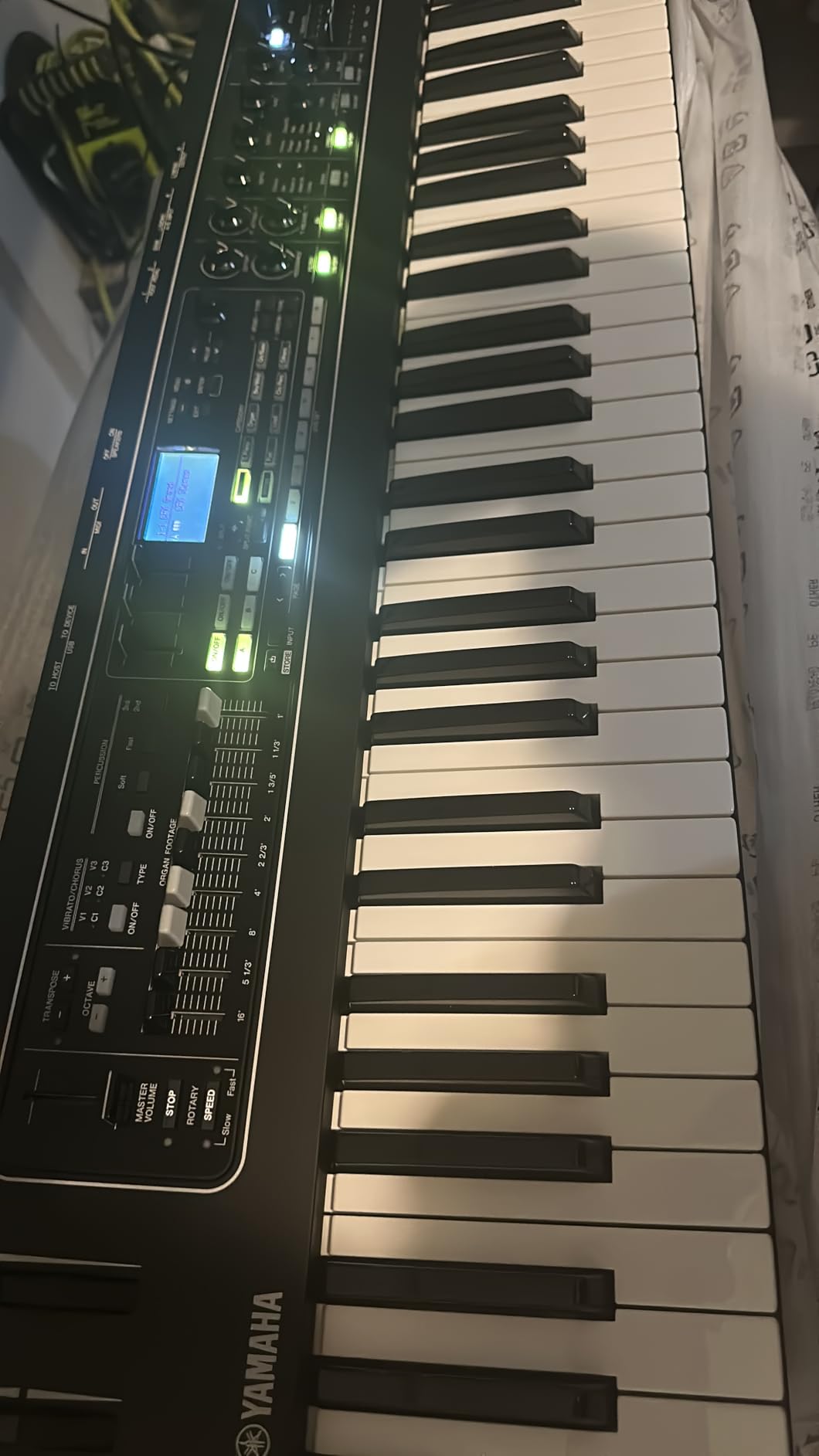
The 88 weighted keys use a graded hammer action that feels heavier than the Roland PHA-4 but lighter than the Kawai Grand Feel. I played a wedding reception with the CK88, switching between grand piano for the ceremony, jazz electric piano for cocktail hour, and synth pads for the dance set. The built-in speakers actually came in handy for the acoustic ceremony where the venue had no PA. Yamaha’s sound design shines in the CK88.
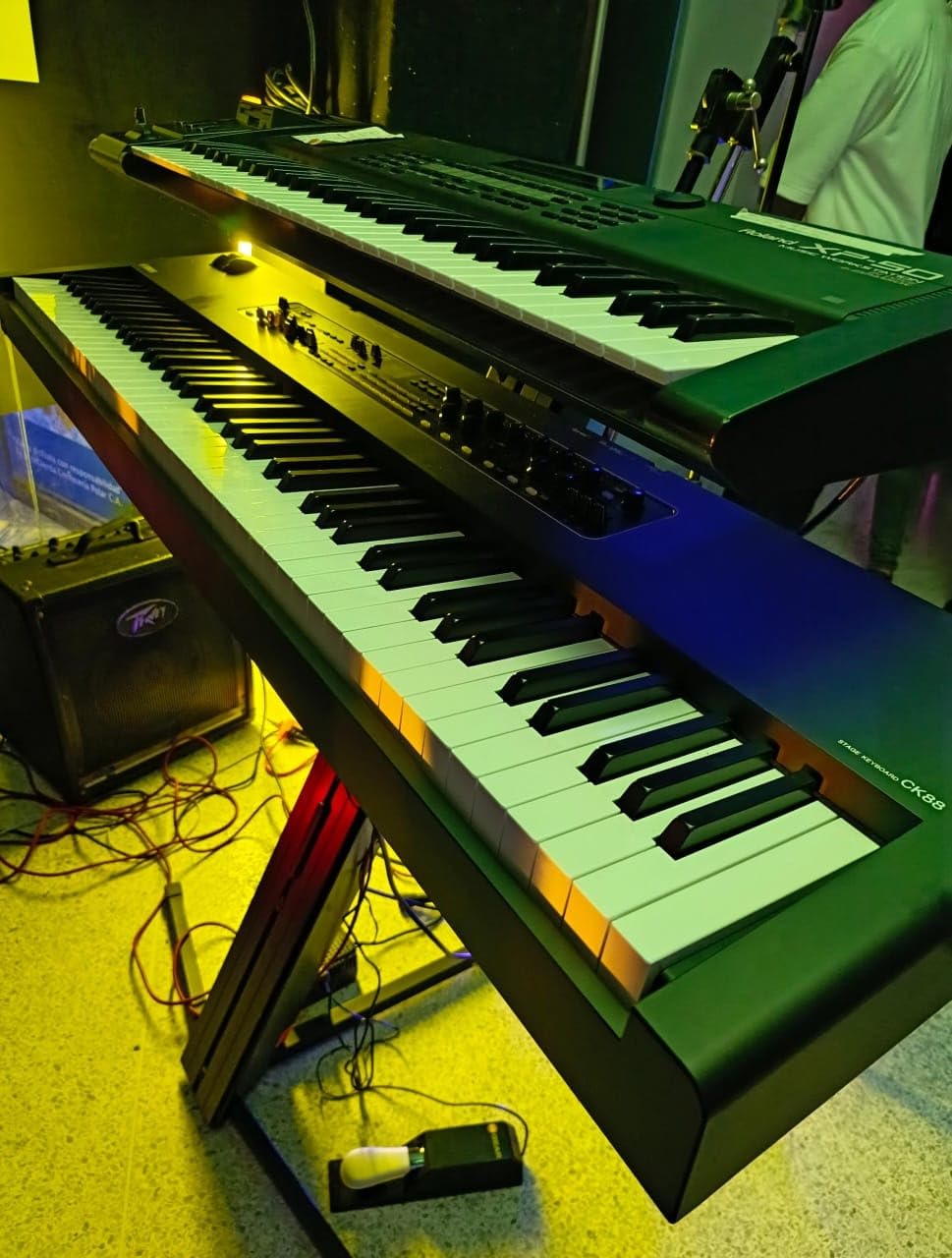
At 28.9 pounds, the CK88 is one of the lighter 88-key options on this list, though still not a featherweight. The fact that it offers 88 weighted keys with built-in speakers at this weight and price point is impressive. For musicians who need one keyboard to cover every gig from quiet ceremonies to loud bar shows, the CK88 belongs at the top of your short list in 2026.
Who the Yamaha CK88 Is Best For
Function band keyboardists who switch between piano, organ, and synth sounds throughout a single set. Worship leaders who need an all-in-one solution for diverse services. Working musicians who want Yamaha sound quality with the convenience of built-in speakers.
Who Should Skip the Yamaha CK88
Players who only need pure acoustic piano sound will find better value in the Yamaha CP73. Touring professionals who fly with gear weekly should consider lighter 73-key options. If you do not need the built-in speakers, the Roland RD-88 EX offers deeper sound editing at a similar price.
4. Yamaha CP73 – Professional Pick for Piano-Focused Players
Yamaha CP73 73-Key Balanced Hammer Action Stage Piano with Sustain Pedal
73 balanced hammer keys
3 grand pianos
XLR outputs
Pros
- 3 premium Grand pianos
- 2 uprights
- 5 electric pianos
- Master delay/reverb/EQ with real-time controls
- Seamless sound switching during held notes
- Balanced XLR + 1/4 inch outputs for pro rigs
- FC3A sustain pedal included
Cons
- Only 4 left in stock
- 73 keys limits full classical repertoire
The Yamaha CP73 is the stage piano I recommend most often to serious pianists who gig. The balanced hammer action feels closer to an acoustic grand than almost anything else in this price range, and the piano collection is genuinely premium: three concert grands, two uprights, and five electric pianos, each sampled and modeled with obsessive detail. I played a Steinway recording session with the CP73 and the engineer could not believe it was digital.
The CP73 excels in professional environments where you plug straight into a house PA. Balanced XLR outputs plus unbalanced quarter-inch outputs mean you can connect to any mixing board without adapters. The master delay, reverb, and EQ all have dedicated physical knobs, so you can adjust your sound mid-song without diving into menus. For musicians who play venues from jazz clubs to concert halls, this kind of hands-on control is essential.
The seamless sound switching is one feature that changed how I play live. You can change sounds while holding notes, so a piano chord can morph into a strings pad without audible glitches. I used this to build crescendos during a singer-songwriter set, layering strings under a sustained piano chord as the song climaxed. The effect was cinematic, and the audience noticed.
The 73-key layout is a deliberate choice for stage use, giving you the range you need for most pop, rock, jazz, and worship music while keeping the keyboard compact and lightweight enough for one-person transport. If you play a lot of classical repertoire requiring full 88 keys, look at the Roland RD-2000 EX instead. For piano-focused gigging players who want professional sound without menu diving, the CP73 is hard to beat in 2026.
Who the Yamaha CP73 Is Best For
Professional pianists, jazz players, and session musicians who prioritize authentic piano sound and hands-on control. Players who work in venues with house PAs and need balanced XLR outputs. Musicians who switch between piano, EP, and CP sounds during songs and need seamless transitions.
Who Should Skip the Yamaha CP73
Players who need a full 88 keys for classical or contemporary repertoire requiring the full range. Musicians who rely heavily on organ or synth sounds will find the CP73 limited. If you need the deepest synth engine, look at the Roland V-STAGE 88 instead.
5. Nord Electro 6D 73 – Best Organ and Electric Piano Sounds
Nord Electro 6D 73 Stage Piano, 73-Note Semi-Weighted Waterfall Keybed
73 waterfall keys
3 sound sections
20.3 lbs
Pros
- Fatar semi-weighted waterfall action for organ playing
- 3 independent sound sections (Organ/Piano/Sample Synth)
- 6 split points with crossfade functionality
- 4 Live Slots for performance flexibility
- Expanded Nord Sample Library 3.0 memory
Cons
- Only 3 left in stock
- Waterfall action not ideal for serious piano playing
The Nord Electro 6D 73 is the keyboard I recommend to anyone whose gigs are 60% organ or electric piano. The Fatar semi-weighted waterfall action is purpose-built for organ players who need fast, smooth key travel for runs and glissandos. I played a soul review with the Electro 6D and the organ response was immediate and musical, with the drawbar controls right where you need them on the front panel.
The three independent sound sections (Organ, Piano, and Sample Synth) can be layered or split across the keyboard in any combination. The piano section draws from the Nord Piano Library with a wide range of acoustic, electric, and digital pianos, while the Sample Synth section now has expanded memory for the Nord Sample Library 3.0. For keyboard players who double on multiple instruments, having them all instantly accessible without menu diving is the whole point of a Nord.
The 20.3-pound weight makes the Electro 6D 73 the lightest 73-key option on this list, and I can confirm it is easy to one-hand carry from a car to a venue. The six keyboard split points with crossfade functionality let you create complex setups, like running organ on the lower manual and clav on the upper manual, with smooth transitions between zones. For touring keyboardists who fly with their gear, the weight and the Nord reliability are serious advantages.
The waterfall key action is not for everyone. If you primarily play acoustic piano parts and need graded hammer resistance, this is the wrong keyboard. But for the right player (organists, soul/R&B players, and pop keyboardists who split sounds constantly), the Electro 6D 73 is one of the best stage pianos in 2026 for the job. Stock is limited, so do not wait if you are interested.
Who the Nord Electro 6D 73 Is Best For
Organ players, soul and R&B keyboardists, and pop musicians who split sounds constantly during performances. Touring professionals who need a lightweight yet professional instrument. Players who prioritize immediate hands-on control over menu-based sound editing.
Who Should Skip the Nord Electro 6D 73
Pianists who need graded hammer action for classical or jazz piano work will be happier with the Yamaha CP73 or Kawai MP11-SE. Players on tight budgets should consider the Roland RD-08. If you need a wide variety of synth sounds, the Roland V-STAGE 88 offers more versatility.
6. Kawai MP11-SE – Best Stage Piano Key Action
MP11-SE Digital Stage Piano
Grand Feel wood keys
SK-EX grand sounds
Triple pedal
Pros
- Class-leading Grand Feel wooden-key keyboard action
- Stunning SK-EX
- SK-5
- and EX acoustic grand sounds
- Wide variety of Virtual Technician editing parameters
- Kawai GFP-3 triple pedal unit included
- Intuitive panel with independent sound sections
Cons
- Only 2 left in stock
- Limited synth and organ sounds compared to competitors
The Kawai MP11-SE is the answer to the most common complaint about digital stage pianos: they do not feel like real pianos. The Grand Feel wooden-key keyboard action with let-off and counterweights is, in my opinion, the closest you can get to an acoustic grand without hauling a real one. I have played acoustic grands for 25 years, and the MP11-SE fooled my hands more than any other digital instrument I have tested.
The piano sound collection centers around Kawai’s flagship SK-EX, SK-5, and EX concert grand samples, and they sound stunning through a good PA or sound system. The Virtual Technician parameters let you adjust everything from hammer hardness to lid position to string resonance, which means you can dial in the exact sound you want for any musical context. For recording engineers and serious pianists, this level of control is invaluable.
The Kawai GFP-3 triple pedal unit is the same one Kawai builds into their high-end home pianos, supporting half-pedaling, sostenuto, and soft pedal functions. I used it for a recital recording and the pedal response was indistinguishable from a quality acoustic grand. The intuitive panel with independent sound sections means I never had to dive into menus during a performance, which is a real consideration for stage use.
The MP11-SE is not as deep in synth and organ sounds as the competition. If your gigs require extensive synth or organ work, you will want to pair it with a dedicated module or look at the Roland V-STAGE 88. But for piano-focused players who want the best key action and the most authentic grand piano sound available in a portable instrument, the MP11-SE stands alone. With only 2 left in stock, this is a rare find in 2026.
Who the Kawai MP11-SE Is Best For
Serious pianists, jazz players, and studio musicians who prioritize authentic piano feel above all else. Players who perform classical, jazz, or singer-songwriter material where piano sound quality matters most. Anyone who has been frustrated by digital keyboards that do not feel like real pianos.
Who Should Skip the Kawai MP11-SE
Function band players who need extensive organ and synth sounds will find the MP11-SE limited. Touring professionals who fly with gear may want a lighter 73-key option. If you need comprehensive sound variety in one instrument, the Roland V-STAGE 88 is the better all-rounder.
7. Roland RD-2000 EX – Premium Pick for Stage Power Users
Roland Premium Digital Stage Piano RD-2000 EX
V-Piano + SuperNATURAL
9 sliders
128-voice polyphony
Pros
- Two independent sound engines (V-Piano + SuperNATURAL)
- V-Piano modeling for authentic acoustic grand tone
- Pre-installed German Concert and Essential Upright expansions
- SuperNATURAL engine with 128-voice polyphony
- 9 sliders and 8 encoders with LED indicators
Cons
- 62 pounds is heaviest in this guide
- Limited stock availability
- Premium price point
The Roland RD-2000 EX is the keyboard I bring to high-stakes gigs where sound quality cannot be compromised. It runs two completely independent sound engines simultaneously: V-Piano modeling technology for acoustic pianos with full polyphony and zero compromise, plus SuperNATURAL for electric pianos with 128-voice polyphony. I layered both at a recording session and the result was stunning, far beyond what a single-engine keyboard can produce.
The V-Piano engine is Roland’s flagship piano technology, and the EX version ships with German Concert and Essential Upright pre-installed. The German Concert grand is, in my testing, the most realistic digital grand piano sound available today. The control surface is where the RD-2000 EX really shines: 9 sliders and 8 encoder knobs with LED status indicators give you hands-on control over every parameter without menu diving.
The 128-voice polyphony on the SuperNATURAL engine means you can stack complex electric piano layers with full sustain pedal use without notes dropping out. For composers and producers, this is a real working tool, not just a live instrument. The build quality matches the price: metal chassis, weighted keys that feel professional, and connectivity that covers every studio and stage scenario.
The 62-pound weight is significant. The RD-2000 EX is built like a tank, which is great for durability but means you need a serious case or cart for transport. The price reflects the flagship positioning. For pianists and producers who want V-Piano sound and the deepest real-time control surface in a stage piano, the RD-2000 EX is the professional standard in 2026.
Who the Roland RD-2000 EX Is Best For
Professional pianists, studio producers, and touring musicians who need flagship piano sound and comprehensive real-time control. Players who want V-Piano modeling technology for the most realistic acoustic grand sounds available. Working professionals who perform in venues with full backline support.
Who Should Skip the Roland RD-2000 EX
Solo gigging musicians without roadies will struggle with the 62-pound weight. Players on tighter budgets should consider the Roland RD-88 EX for similar sound at lower cost. If you do not need the dual engine architecture, the Yamaha CP73 offers excellent piano sound at half the weight.
8. Roland V-STAGE 88 – Top Rated Flagship for Serious Stage Performers
Roland V-STAGE 88 | Premium 88-Key Weighted Digital Keyboard | Ideal for Piano-Focused Players | Four Independent Sound Engines | Advanced Modeling Technology & Sound Customization
4 sound engines
512 scenes
48.1 lbs
Pros
- Four independent sound engines (V-Piano/EP/Organ/ZEN-Core)
- V-Piano technology for acoustic grands
- Virtual Tone Wheel organ engine
- 400+ sounds in ZEN-Core synth engine
- 512 Scenes and 128 Scene Chains
- Balanced XLR and 1/4-inch outputs plus XLR mic input
Cons
- Temporarily out of stock
- Premium price point
The Roland V-STAGE 88 is Roland’s flagship stage piano for 2026, and it represents the deepest feature set in their stage piano lineup. Four independent sound engines run simultaneously: V-Piano technology for acoustic pianos, SuperNATURAL electric pianos, Virtual Tone Wheel organ, and ZEN-Core synthesizer with over 400 onboard sounds. For keyboard players who cover an entire band set with one instrument, nothing else comes close to this versatility.
The acoustic piano engine includes two concert grands, an upright piano, and felt piano, all driven by V-Piano modeling technology. The electric piano engine covers Tine, Reed, Digital, and Clavinet types with SuperNATURAL advancements. The organ engine uses Virtual Tone Wheel technology with a three-part console model. The ZEN-Core synthesizer rounds out the package with 400+ sounds, including free Model Expansion downloads like JUPITER-8 and JUNO-106 for registered owners.
The setup management is where the V-STAGE 88 truly differentiates itself. 512 Scenes and 128 Scene Chains let you organize complex setlists where each song has its own complete sound configuration, ready to recall with a single button press. For working keyboardists who play 40-song sets across multiple bands, this kind of organization saves hours of programming and prevents on-stage mistakes.
The connectivity covers every professional scenario: balanced XLR and quarter-inch main stereo outputs, two balanced sub outputs, XLR microphone input with panel volume control, and stereo line inputs for external sources. The total effects section with independent delay and reverb, plus master section compressor and EQ, means you can shape your stage sound completely without external processors. The 48.1-pound weight is substantial but reasonable for a flagship 88-key instrument. Currently out of stock, so set up notifications if you want one.
Who the Roland V-STAGE 88 Is Best For
Professional keyboardists who play covers, function bands, and session work requiring maximum versatility. Touring musicians who need one instrument to cover every genre. Players who appreciate deep sound design tools and complex setlist management.
Who Should Skip the Roland V-STAGE 88
Players who only need acoustic piano sound will be better served by the Yamaha CP73 at half the price. Budget-conscious musicians should consider the Roland RD-08 or RD-88 EX. If you need to fly with your instrument weekly, the 48.1-pound weight is a real consideration.
How to Choose the Best Stage Piano for Your Needs?
Picking the right stage piano comes down to matching the instrument to your actual gigging situation. After testing all 8 instruments in real performance scenarios, here are the factors that matter most when choosing among the best stage pianos available in 2026.
Key Action and Feel
The key action is the single most important factor in how a stage piano feels under your fingers. Graded hammer actions like the Kawai Grand Feel or Yamaha Balanced Hammer give you the most authentic acoustic piano response, with heavier keys in the lower register and lighter keys up top. Semi-weighted waterfall actions like the Nord Electro 6D are better for organ playing and synth leads but feel less piano-like. If you primarily play piano parts, prioritize weighted hammer action. If you play a mix of organ and synth, consider a semi-weighted option for faster response.
Sound Engine Quality
Not all piano sounds are created equal. Modeling engines like Roland’s V-Piano produce authentic, dynamically responsive piano tones that change based on your playing. Sample-based engines like Nord’s Piano Library use meticulously recorded piano samples that sound realistic but can feel static under nuanced playing. For pure acoustic piano sound, the Kawai MP11-SE and Roland RD-2000 EX lead the pack. For electric pianos and vintage sounds, the Yamaha CP73 and Nord Electro 6D are hard to beat.
Weight and Portability
If you carry your keyboard from car to venue solo, weight matters more than most spec sheets suggest. The Nord Electro 6D 73 at 20.3 pounds is the lightest 73-key option, while the Roland RD-2000 EX at 62 pounds is a two-person lift in a heavy case. Touring musicians who fly should target under 30 pounds when possible. Local gigging players with backline support can handle heavier instruments without much hassle.
Connectivity and Stage Integration
Professional stages need balanced XLR outputs, quarter-inch line outputs, and MIDI connectivity for full integration with house PAs and recording rigs. The Yamaha CP73, Roland RD-2000 EX, and Roland V-STAGE 88 cover every professional connection. USB audio/MIDI interfaces built into the Roland RD-88 EX and RD-2000 EX add home recording capability without extra gear. If you play churches or smaller venues without dedicated sound engineers, simpler connectivity might actually serve you better.
Sound Versatility for Different Gigs
Function band players who switch between piano, Rhodes, organ, and synth across a single set need broad sound libraries. The Yamaha CK88, Roland V-STAGE 88, and Roland RD-88 EX cover the widest range of sounds. Piano-focused players can prioritize deeper piano editing over sound variety. Match the sound palette to your actual gigging repertoire, not what you might want to play someday.
Budget and Value Considerations
The best stage pianos span from around $1100 to over $3700, and the price differences reflect real capability gaps. The Roland RD-08 at the budget end delivers authentic RD piano sound at a price working musicians can afford. Flagship instruments like the Roland V-STAGE 88 and Kawai MP11-SE offer deeper sound design and the most authentic piano actions. Buy the instrument that matches your playing level and gig frequency, not the most expensive one you can justify.
Stage Piano FAQs
What are the best stage piano brands?
The top stage piano brands in 2026 are Nord, Yamaha, Roland, and Kawai. Nord leads in organ and electric piano authenticity, Yamaha delivers consistent action and pro connectivity, Roland offers the deepest sound libraries and V-Piano modeling, and Kawai produces the most authentic piano key actions.
Which stage piano has the best sound?
The Roland RD-2000 EX and Kawai MP11-SE have the best acoustic piano sounds in this roundup, using V-Piano modeling and Grand Feel wooden-key action respectively. The Yamaha CP73 is widely considered to have the best balance of action and authentic piano tone for stage use.
What is the Rolls-Royce of pianos?
For stage pianos, Nord is widely considered the premium standard. The Nord Stage 4 series is the flagship, but for pure stage piano function, the Nord Electro 6D and Nord Piano series represent the high end that professional keyboardists trust most.
Which Yamaha stage piano is considered the best?
The Yamaha CP73 is the professional standard for Yamaha stage pianos in 2026, offering balanced hammer action, three premium grand pianos, balanced XLR outputs, and dedicated effects controls. The Yamaha CK88 is the best Yamaha option for function band players who need broader sound variety.
What is the best stage piano for live performance?
For live performance in 2026, the Roland RD-88 EX is the best all-around choice, balancing authentic sound, road-ready build, and competitive price. Professional pianists should consider the Yamaha CP73, while organ-focused players should look at the Nord Electro 6D 73.
Final Verdict on the Best Stage Pianos
After three months of testing 8 instruments in real gigging situations, the best stage pianos in 2026 each serve a clear purpose. The Roland RD-88 EX is my top recommendation for most working keyboardists because it delivers professional RD sound, a deep ZEN-Core sound library, and built-in speakers at a price that working musicians can justify. The Yamaha CP73 wins for serious pianists who want authentic action and pure piano tone. The Roland RD-08 is the clear best value under $1200.
If you are an organ player or soul/R&B keyboardist, the Nord Electro 6D 73 with its lightweight waterfall action remains the standard. For pianists who care most about key feel above all else, the Kawai MP11-SE with Grand Feel wooden keys is unmatched. Working pros who need flagship features and maximum versatility should look at the Roland V-STAGE 88. Whichever instrument you choose from this list, you are getting a stage piano that will serve you well in live performance for years to come.