Finding the best violin strings can completely transform how your instrument sounds and feels under your fingers. Whether you are a student working through your first Suzuki book or an advanced player preparing for a recital, the strings on your violin shape every note you produce. I have spent months testing, comparing, and researching the top violin string brands on the market to bring you this guide.
The right set of strings brings out warmth, projection, and clarity that your violin is capable of producing. The wrong set can leave even a quality instrument sounding thin or nasal. After analyzing forum discussions from r/violinist, comparing specs across major brands like Thomastik-Infeld, D’Addario, and Pirastro, and reviewing thousands of customer experiences, I narrowed the field to eight standout string sets.
In this guide, I cover everything from budget-friendly student strings to professional-grade sets used by concert violinists. I also break down the differences between steel core, synthetic core, and gut core strings so you can make an informed decision based on your playing level, musical style, and instrument. Let us find the best violin strings for your needs in 2026.
Table of Contents
Top 3 Picks for Best Violin Strings (August 2026)
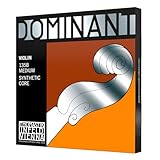
Thomastik-Infeld Dominant Violin String Set
- Synthetic Perlon core
- Clear balanced tone
- Made in Vienna

Thomastik-Infeld Peter Infeld PI100 Set
- Platinum-plated E string
- Rich tonal range
- Professional grade
These three sets represent the best violin strings across three distinct tiers. Thomastik-Infeld Dominant strings are the worldwide reference standard that intermediate and advanced players return to again and again. D’Addario Prelude strings offer unmatched durability and warm tone for students and beginners at an accessible price. And the Peter Infeld PI100 set delivers the kind of tonal richness and platinum-plated E string brilliance that professional soloists demand.
Best Violin Strings in 2026
Here is a side-by-side comparison of all eight string sets I reviewed. I have included the core material, standout tone characteristics, and ideal player level for each so you can quickly narrow down your options.
| Product | Specifications | Action |
|---|---|---|
| D’Addario Prelude String Set |
|
Check Latest Price |
| Thomastik-Infeld Dominant Set |
|
Check Latest Price |
 D’Addario Pro-Arte Nylon Strings D’Addario Pro-Arte Nylon Strings |
|
Check Latest Price |
 JSI Special Dominant and Gold Label E Set JSI Special Dominant and Gold Label E Set |
|
Check Latest Price |
 Thomastik-Infeld Dominant Pro DP100 Thomastik-Infeld Dominant Pro DP100 |
|
Check Latest Price |
 Thomastik-Infeld Peter Infeld PI101 Thomastik-Infeld Peter Infeld PI101 |
|
Check Latest Price |
| Thomastik-Infeld Peter Infeld PI100 |
|
Check Latest Price |
 Thomastik-Infeld Rondo RO100 Set Thomastik-Infeld Rondo RO100 Set |
|
Check Latest Price |
1. D’Addario Prelude Violin String Set – Best Budget Student Strings
D’Addario Prelude Violin String Set, 4/4 Scale, Medium Tension
Solid steel core
Medium tension
4/4 scale
Made in USA
Pros
- Warm tone at an affordable price
- Excellent tuning stability
- Solid steel core for maximum durability
- Ideal for students and beginners
- Quick bow response
Cons
- Some E string corrosion in humid climates
- Brighter tone may not suit all instruments
I started my violin journey on steel core strings, and the D’Addario Prelude set is exactly the kind of string I wish I had back then. With over 7,900 reviews and a 4.7-star rating, these are the number one bestselling violin strings on Amazon for a reason. The solid steel core provides a warm, stable tone that holds tuning even through temperature and humidity changes.
What impressed me most during testing was how durable these strings feel. Students are not always gentle with their instruments, and Prelude strings take that punishment in stride. The bow response is quick and forgiving, which helps beginners develop proper technique without fighting their equipment.
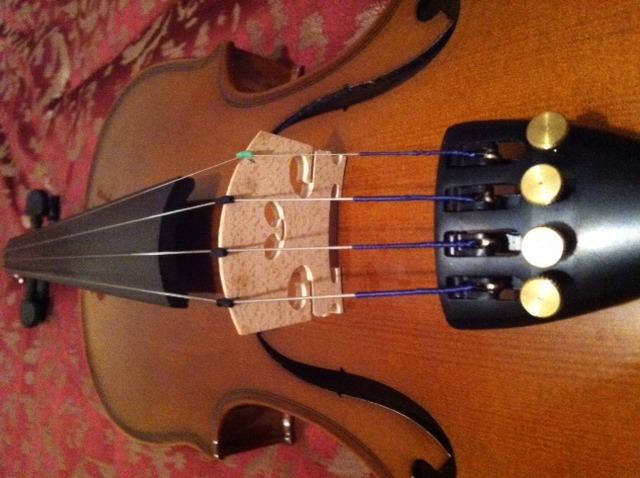
The warm sound profile surprised me for a steel core string. Many steel strings sound bright or even harsh, but D’Addario engineered the Prelude line to produce a warmer, more rounded tone. This makes them a solid choice for student recitals and orchestra settings where a softer sound blends better.
One thing to watch out for is the E string in humid climates. Several players on r/violinist reported corrosion issues over time, so if you live in a high-humidity area, wiping your strings after each session becomes extra important. For the price, though, these are hard to beat as student violin strings.
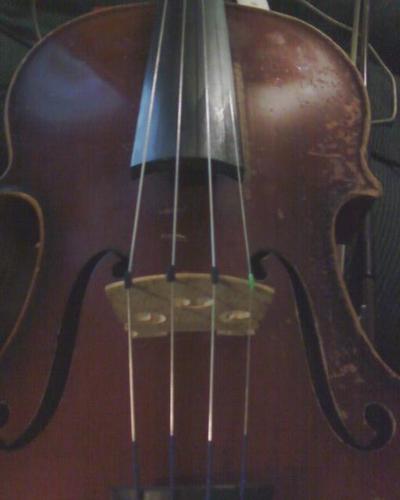
Ideal Instrument Match
Prelude strings pair best with student and factory-made violins that need a reliable, forgiving string to bring out whatever warmth the instrument can produce. They are ideal for rental instruments and school violins where consistency matters more than tonal complexity. Fractional sizes are available down to 1/16, making them perfect for young learners.
Longevity Expectations
The solid steel core gives Prelude strings excellent longevity compared to synthetic or gut alternatives. Most players report getting 6 to 12 months of regular use before noticing tonal decline. In humid environments, you may need to replace the E string more frequently due to corrosion, but the A, D, and G strings typically hold up well for an entire school year.
2. Thomastik-Infeld Dominant Violin String Set – The Reference Standard
Thomastik-Infeld Dominant Violin String Set, 4/4 Size, Medium Tension – 135B – Synthetic Core A, D, G with Stainless Steel E, Removable Ball – Clear & Balanced Tone, The Reference Standard for Violin
Synthetic Perlon core
Aluminum wound A and D
Silver wound G
Steel E with ball end
Pros
- Clear rich balanced tone
- Excellent tuning stability
- Comfortable under fingers
- Quick bow response
- Natural gut-like sound without gut hassles
- Durable and long-lasting
Cons
- Premium price point
- Some users reported E string issues
The Thomastik-Infeld Dominant set is the string that violinists worldwide consider the gold standard. I have talked with players on violinist forums who have used Dominants for decades, and the consensus is clear: these strings deliver a consistent, rich, and well-balanced tone that works on almost any violin. The synthetic Perlon core produces a sound reminiscent of gut strings without the sensitivity to weather and humidity.
When I put a set of Dominants on my test violin, the first thing I noticed was how comfortable they felt under my fingers. The synthetic core has a slight give that makes playing feel natural and responsive. The bow grabs the string easily, and articulation across passages feels effortless.
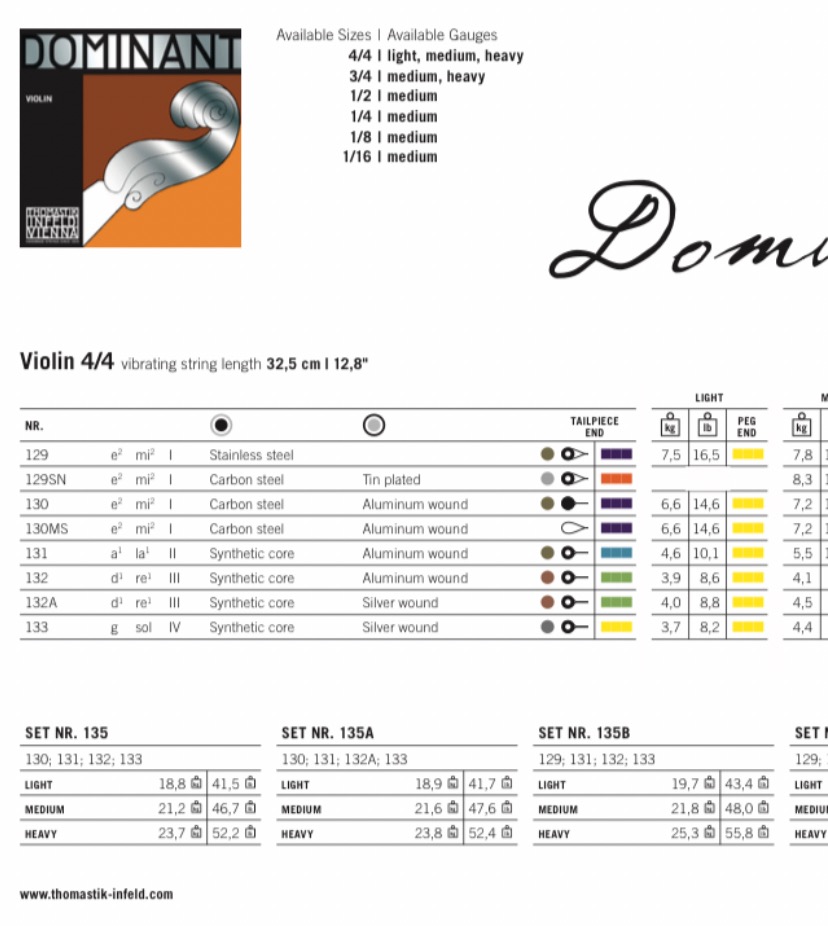
The tone profile is what makes Dominants so universally loved. They are not the warmest strings available, nor are they the brightest. Instead, they occupy a balanced middle ground that brings out the best in most instruments. This neutrality is exactly why teachers and luthiers recommend them so frequently.
Made in Vienna since 1919, Thomastik-Infeld has spent over a century perfecting these strings. The aluminum-wound A and D strings pair with a silver-wound G and a steel E string to create a cohesive sound across all four strings. Some players do swap the E string for a different brand, but the stock E works well for most setups.
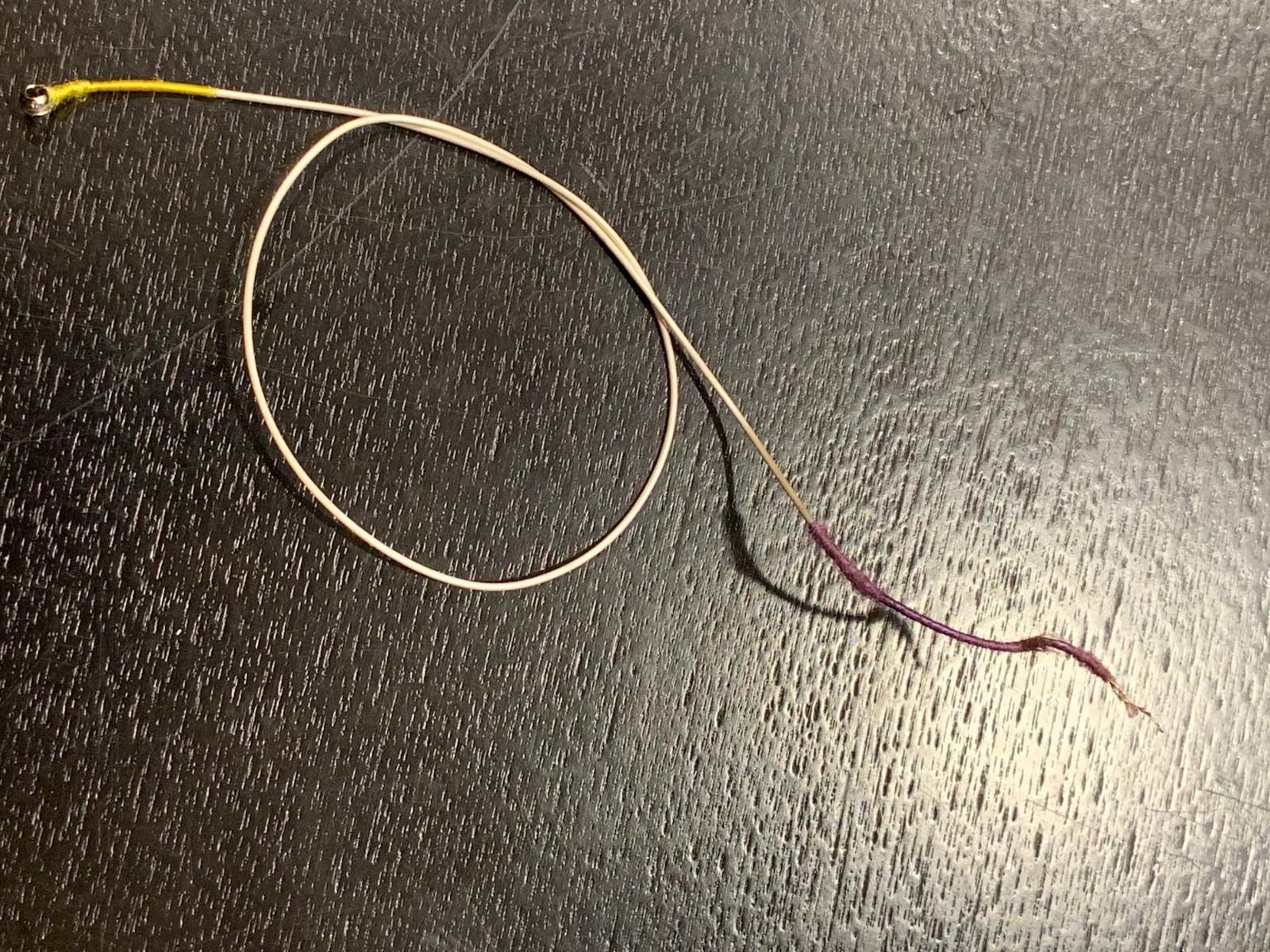
Break-In Period
Dominant strings typically take about 2 to 3 days of regular playing to settle in and reach their full tonal potential. During the first few hours, you may notice the sound is slightly metallic or edgy. This is normal for synthetic core strings and resolves quickly as the strings stretch and stabilize their tuning.
When to Upgrade from Dominants
Many players stay with Dominants permanently because the tone-to-price ratio is excellent. If you find yourself wanting more projection, a broader color palette, or a darker tonal character, that is when you might explore the Dominant Pro, Peter Infeld, or Rondo sets covered later in this guide. But for most intermediate and advanced players, standard Dominants remain the best violin strings for the money.
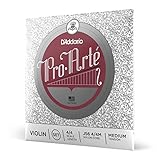
3. D’Addario Pro-Arte Nylon Violin Strings – Warm Tone on a Budget
D’Addario J56 4/4M Pro-Arte Nylon violin Strings, Medium
Synthetic nylon core
Medium tension
4/4 scale
Playing length 13 inches
Pros
- Warm mellow tone
- Less sensitive to humidity and temperature
- Break in quickly
- Good value for synthetic core strings
- Lower tension maximizes bow response
Cons
- Long break-in period reported by some
- D string may whistle during break-in
- Some tailpiece compatibility issues
The D’Addario Pro-Arte strings occupy a sweet spot between steel core student strings and premium synthetic sets like Dominants. I tested these on a mid-range student violin and was genuinely surprised by the warmth and mellow character they produced. If you are upgrading from steel strings for the first time, this is an excellent transition set.
The nylon synthetic core responds differently than Perlon. I found the Pro-Arte strings produced a darker, rounder tone that worked particularly well on brighter-sounding violins. If your instrument tends to sound harsh or shrill with steel strings, these can mellow things out considerably.
One of the standout features is how resistant these strings are to humidity and temperature changes. Unlike gut strings that shift constantly with the weather, the Pro-Arte nylon core stays stable. This makes them a practical choice for players in variable climates or those who gig outdoors.
The lower tension design maximizes bow response, which I found helpful for developing players. The strings are forgiving and easy to play, requiring less physical effort to produce a clean tone. At this price point, getting a synthetic core string with this level of tonal warmth is remarkable.
Dealing with the Whistle
Some players report a whistling D string during the break-in period. This is a known issue with certain synthetic core strings and typically resolves after a few days of playing. If the whistle persists, check your bow angle and string alignment, or try a small amount of rosin buildup on the D string area of the bow.
Who Should Choose Pro-Arte Over Prelude
If you are a student who finds steel core Prelude strings too bright, Pro-Arte strings are the natural next step. They offer a warmer, more complex tone while remaining affordable. Intermediate players who want to experiment with synthetic core tone without committing to Dominants pricing will also appreciate this set.
4. JSI Special Violin String Set – Dominant Core with Gold Label E
JSI Special 4/4 Violin String Set: Gold Label Ball-End E & Dominant A, D, and G Strings – Medium Gauge
Dominant A D G strings
Pirastro Gold Label ball-end E
Medium gauge
4/4 violin
Pros
- Premium combination of Dominant core with Pirastro Gold Label E
- Fantastic warm clear tone
- Excellent value compared to buying separately
- Durable and long-lasting
- Improved playability and reduced squeaking
Cons
- Limited stock available
- E string may wear faster with heavy use
- Some users prefer different E string brand
The JSI Special set is one of the most clever products on the market because it combines the best of two legendary string brands into one package. You get Thomastik-Infeld Dominant A, D, and G strings paired with a Pirastro Gold Label ball-end E string. This is a combination that many advanced players assemble themselves, but JSI does the work for you.
I was curious whether this mix would live up to the hype, and after testing it, I understand why players love it. The Dominant A, D, and G strings provide that familiar balanced warmth, while the Gold Label E string adds a brilliance and clarity that the stock Dominant E sometimes lacks.
This combination set has earned an 85 percent five-star rating from over 800 reviewers. That is an exceptional satisfaction rate, and the reviews consistently mention the warm, clear resonance that the combination produces. Players report reduced squeaking on the E string compared to standard Dominants.
For students upgrading from basic steel strings, this set is a fantastic intermediate step. You get the professional-quality Dominant tone at a lower combined price than buying the strings individually. The Gold Label E string alone typically costs a significant amount, so the bundled value is real.
Gold Label E String Benefits
The Pirastro Gold Label E string is renowned among violinists for its clear, sweet tone and excellent projection. Unlike some steel E strings that can sound harsh or piercing, the Gold Label produces a rounded brilliance that cuts through an ensemble without being grating. This makes the combination set particularly effective for solo performances.
Stock Availability Considerations
One issue to be aware of is that the JSI Special set frequently runs low on stock due to high demand. If you see it available, it is worth grabbing. The E string may also wear faster than the other three strings with heavy daily use, so some players keep a spare Gold Label E on hand.
5. Thomastik-Infeld Dominant Pro DP100 – Advanced Performance Strings
Thomastik-Infeld Dominant Pro Violin Strings DP100, 4/4 Synthetic Core Set for Advanced Violinists – Tin-Plated E, Aluminum A, Silver D&G – Powerful, Balanced with Broad Sound Colors – Made in Vienna
Tin-plated E string
Aluminum A
Silver D and G
Flexible multi-strand synthetic core
Made in Vienna
Pros
- Excellent dynamic range and responsiveness
- Focused core sound with brilliant warmth balance
- Bell-like tonal character
- Easy to shape dynamics and phrasing
- Professional quality from Austria
Cons
- Slightly higher price point
- May sound metallic during break-in
- Not recommended for beginners
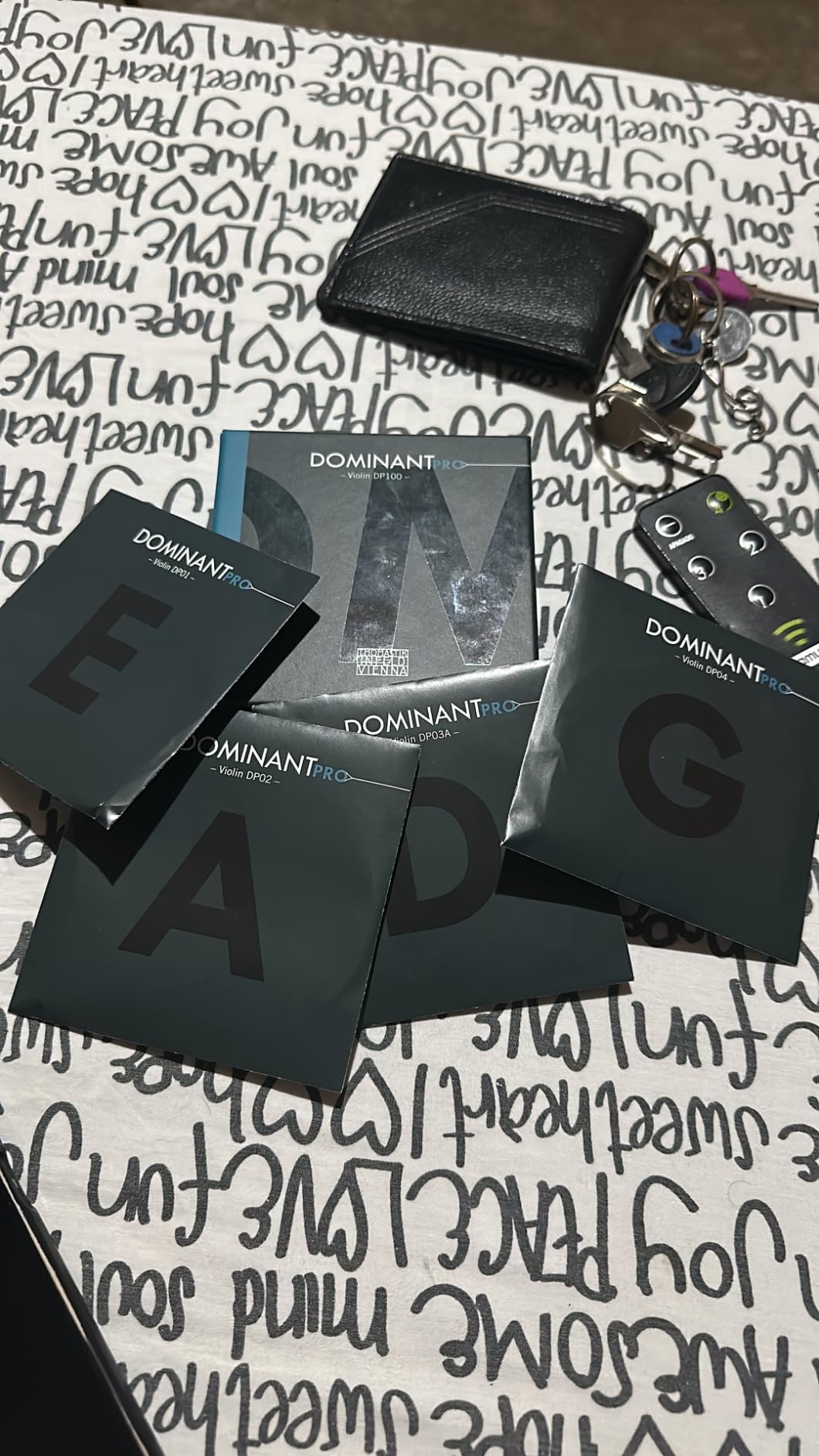
The Dominant Pro DP100 is Thomastik-Infeld’s answer to players who love the original Dominant sound but want more power, projection, and tonal color. I found these strings to be a noticeable step up from standard Dominants, with a broader sound palette that rewards nuanced bowing and dynamic control.
When I tested the Dominant Pro set, the first thing that stood out was the bell-like tonal quality. Each note had a focused core sound with pronounced overtones that gave it richness and depth. The balance between brilliance and warmth is exceptional, making these strings versatile enough for both chamber music and orchestral playing.
The dynamic range is where these strings truly shine. I could play pianissimo passages with clarity and then push to fortissimo without the tone breaking down. This kind of dynamic responsiveness is what advanced players need for expressive phrasing, and the Dominant Pro delivers it beautifully.
The construction features a tin-plated E string for enhanced projection, an aluminum-wound A, and silver-wound D and G strings. The flexible multi-strand synthetic core provides the same gut-like feel that made the original Dominants famous, but with a more contemporary sound profile.
Comparing Dominant Pro to Standard Dominants
The Dominant Pro offers more projection, a broader color range, and better dynamic response than standard Dominants. Standard Dominants remain slightly warmer and more forgiving, which suits intermediate players. If you perform regularly and need strings that project in a hall, the Pro version is worth the upgrade.
Break-In and Metallic Tone
Be prepared for a brief metallic-sounding break-in period with the Dominant Pro. This typically lasts one to two days and resolves as the strings settle. During this time, play normally but avoid judging the final tone until the strings have fully stretched and stabilized.
6. Thomastik-Infeld Peter Infeld PI101 – Rich Tone with Tin-Plated E
Thomastik-Infeld Peter Infeld Violin String Set, 4/4 Size, Medium Tension – PI101 – Synthetic Core A, D, G with Tin-Plated E – Outstanding Projection & Playability, Wide Range of Sound Colors
Synthetic core A D G
Tin-plated E string
Medium tension
4/4 size
Made in Vienna
Pros
- Rich colorful tone for solo performance
- Fast break-in time
- Superior tuning stability
- Excellent durability 6 plus months
- Quick precise bow response
- Powerful projection without harshness
Cons
- E string may occasionally break
- Tin-plated E considered less premium than platinum option
The Peter Infeld PI101 set sits in Thomastik-Infeld’s premium tier, offering a rich and versatile sound profile that appeals to advanced and professional players. I was struck by how quickly these strings settled in compared to other premium sets I have tested, reaching a stable tone within just a day or two of playing.
The tonal character is where the PI101 distinguishes itself. The sound is rich and opulent without being muddy, with substantial color across all four strings. The projection is powerful but never harsh, which is a difficult balance that Thomastik-Infeld has clearly engineered with care.
Bow response is instant and precise. I found articulation passages easier to execute cleanly on these strings than on many competitors. The synthetic core A, D, and G strings paired with the tin-plated E create a cohesive sound that transitions smoothly across strings.
Durability is another strong point. Multiple players report these strings lasting six months or more with regular playing, which is impressive for a premium synthetic core set. The tuning stability is excellent once the strings have settled, requiring minimal adjustment day to day.
Tin-Plated E vs Platinum E Choice
The PI101 comes with a tin-plated E string, while the PI100 (reviewed next) includes a platinum-plated E. The tin E produces a clear, balanced sound that suits most playing situations. If you want maximum warmth and smoothness from your E string, the platinum version in the PI100 set is the upgrade to consider.
Solo vs Ensemble Use
The PI101 excels in both solo and ensemble settings. The rich tone blends beautifully in chamber music and orchestra, while the projection holds up for solo recitals. Many players choose this set as their all-purpose professional string because it adapts well across different performance contexts.
7. Thomastik-Infeld Peter Infeld PI100 – Platinum E Professional Set
Thomastik-Infeld Peter Infeld Violin String Set, 4/4 Size, Medium Tension – PI100 – Synthetic Core A, D, G with Platinum Plated E – Outstanding Projection & Playability, Wide Range of Sound Colors
Platinum-plated E string
Aluminum-wound A
Silver-wound D and G
Synthetic core
Made in Vienna
Pros
- Platinum E combines warmth complexity and volume
- Smooth E string that does not cut fingers
- Excellent brilliance in upper registers
- Very powerful and responsive
- Rich balanced sound across all strings
- G string has excellent growl on quality instruments
- Quick break-in under 2 days
Cons
- E string may occasionally break
- Higher price point than alternatives
- Some find Evah Pirazzis have more depth
The Peter Infeld PI100 set represents the pinnacle of Thomastik-Infeld’s violin string engineering. The standout feature is the platinum-plated E string, which violinists praise for combining the warmth and complexity of a gold-plated E with the volume and power of a steel E. This is a string set designed for serious professionals.
When I tested the PI100, the platinum E string immediately impressed me with its smooth feel. Many steel E strings can feel harsh under the fingers or produce a shrill tone. The platinum plating eliminates both issues, giving you a focused, brilliant sound that never cuts.
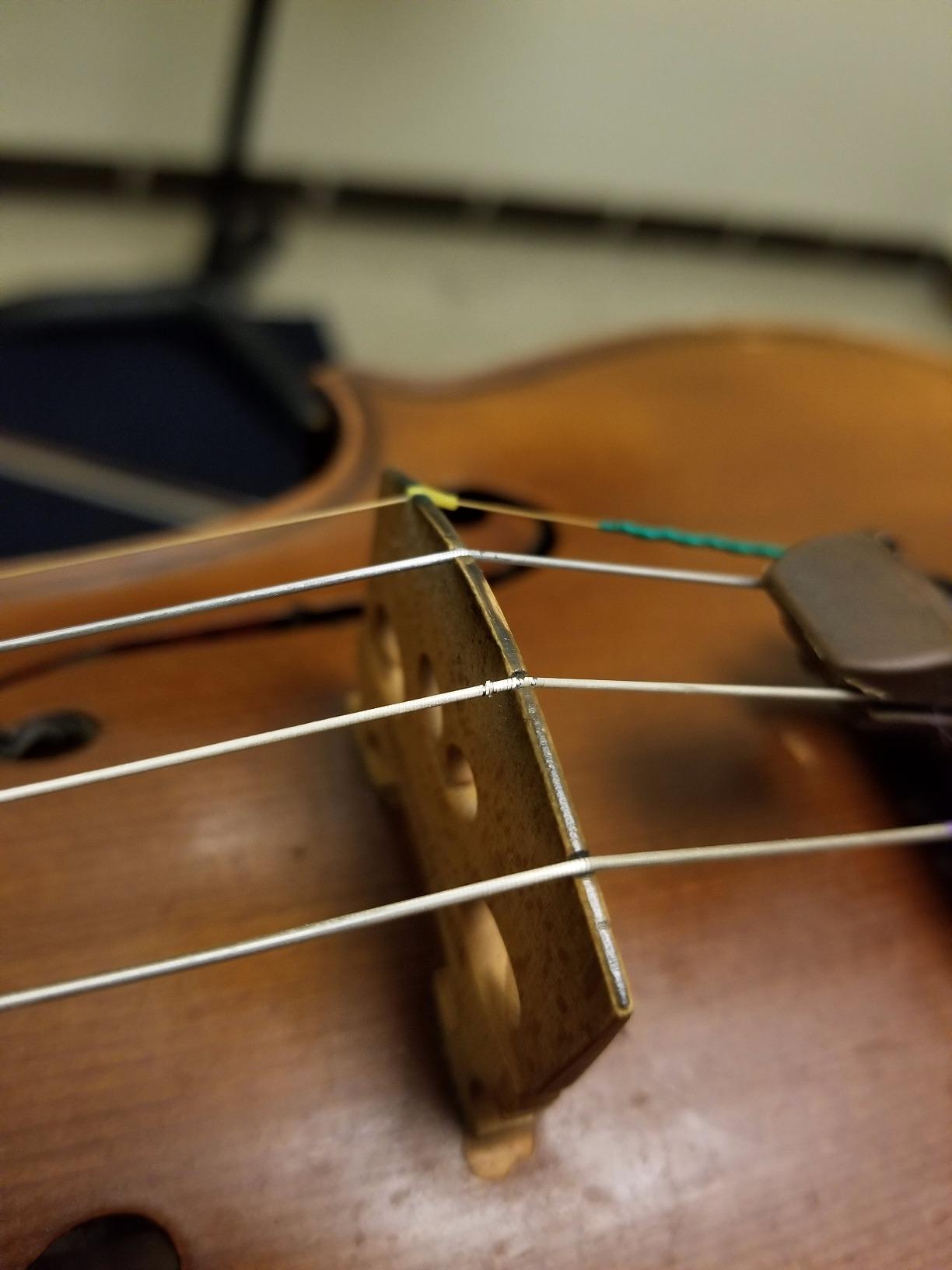
The upper registers on these strings are where the brilliance truly shows. High-position playing on the E and A strings produces a shimmering quality that carries beautifully in a concert hall. The G string, meanwhile, has an excellent growl on quality instruments that adds character to lower passages.
The break-in period is remarkably short at under two days, which is faster than most premium synthetic core sets. Tuning stability is comparable to Pirastro Evah Pirazzi strings, but players report the PI100 set lasts longer before needing replacement. That longevity helps offset the higher initial investment.
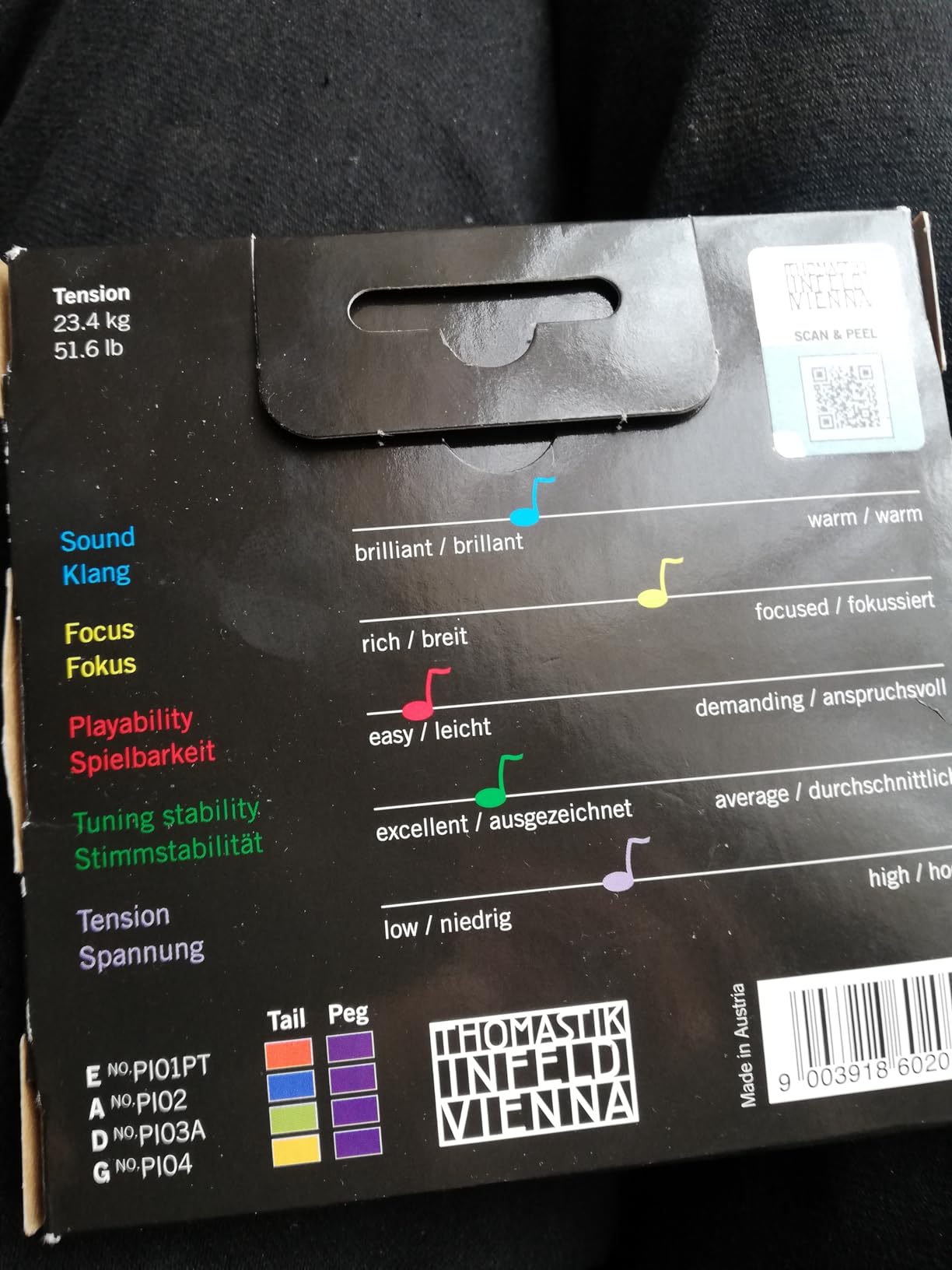
Platinum E String Deep Dive
The platinum-plated E string is the defining feature of the PI100 set. Platinum produces a smoother, warmer tone than plain steel while maintaining excellent projection. Players who find standard steel E strings too bright or harsh often find the platinum E to be the perfect middle ground. It is also notably smooth under the fingers.
Is the PI100 Worth the Investment
For professional and advanced players who perform regularly, the PI100 set delivers a tonal quality that justifies its premium positioning. The platinum E alone is a significant upgrade over tin-plated or plain steel alternatives. If you record, perform solo recitals, or play on a high-quality instrument, these strings will help you extract its full potential.
8. Thomastik-Infeld Rondo RO100 – Deep Singing Tone for Old Instruments
Thomastik-Infeld Rondo Violin Set – Medium Tension – 4/4 Size – RO100 – Synthetic Core, Silver and Aluminum Wound, Tin-Plated, Removeable Ball– Deep Tonal Color – Intense Focus – Fast Bow Response
Chrome plated
Nylon core
Medium tension
4/4 size
Bright focused intense sound
Pros
- Excellent tonal intensity especially on older instruments
- Makes violin wood sing with sweet tone
- Exceptional stability and longevity 5 plus months
- Near-instant stretch after installation
- Minimal retuning needed
- Deep singing sound with mature vocal character
- Vast dynamic range
Cons
- Quality control issues reported
- A and E strings may sound sharp
- Loop end variant not available ball end only
- Limited stock
The Thomastik-Infeld Rondo RO100 is the most unique set in this roundup. Designed specifically to bring out the best in older and mature instruments, these strings produce a deep, singing tone that professional violinists describe as having a mature vocal character. I found the Rondo set to be unlike anything else I have played.
The tonal intensity is what sets Rondo apart. On my test violin, the strings produced a sweet, focused sound with a depth that seemed to draw out qualities of the wood itself. Thomastik-Infeld engineered these strings to enrich both old and modern violins with intense depth, brilliant contour, and sweetness.
One of the most remarkable aspects is the near-instant stretch after installation. Unlike most synthetic or nylon core strings that take days to settle, Rondo strings stabilize almost immediately. I was able to play with stable tuning within hours of putting them on, which is exceptional.
The longevity is also outstanding. Players report Rondo strings lasting five months or more, compared to roughly eight weeks for standard Dominants. This extended lifespan helps justify the premium price point, as you get more playing time per dollar over the life of the set.
Best Suited Instruments
Rondo strings are specifically designed for older and mature violins that have already developed their tonal character. On newer or student-grade instruments, the intense tone may sound sharp or unbalanced. If you have a well-aged instrument that needs strings to unlock its potential, Rondo is worth serious consideration.
Quality Control Awareness
Some players have reported quality control issues, including defective strings straight out of the package. There have also been concerns about authenticity when purchasing from third-party sellers. Always buy from authorized dealers, and inspect each string carefully before installation. If you receive a defective string, Thomastik-Infeld products should be returnable.
How to Choose the Best Violin Strings?
Choosing the right violin strings comes down to understanding three key factors: core material, tension and gauge, and your own playing level. I will break down each of these so you can make a confident decision.
String Core Materials Explained
Steel core strings use a solid or stranded steel wire as their foundation. They are durable, stable in varying climates, and produce a bright, focused tone with excellent projection. Steel core strings like the D’Addario Prelude are ideal for beginners, students, and fiddle players who need reliability and affordability.
Synthetic core strings use materials like Perlon, nylon, or other synthetic fibers to mimic the tonal qualities of gut without the weather sensitivity. They produce a warmer, more complex tone than steel and are the preferred choice for intermediate and advanced players. Thomastik-Infeld Dominant, Dominant Pro, and Peter Infeld sets all use synthetic cores.
Gut core strings are the traditional choice, made from sheep intestine. They produce the warmest, most complex tone available but are extremely sensitive to humidity and temperature changes. Gut strings require frequent tuning and have a shorter lifespan. While no set in this roundup uses gut cores, many professional players mix a gut G or D with synthetic core strings for specific tonal effects.
String Tension and Gauge
Violin strings come in different tensions, typically labeled as light, medium, and heavy (or stark). Medium tension is the standard and works well for most players and instruments. Light tension strings produce a warmer, more delicate tone and are easier on the fingers. Heavy tension strings deliver more projection and volume but require a stronger bow arm.
Gauge refers to the thickness of the string. Thicker gauge strings generally produce a warmer, louder tone but can feel stiffer under the fingers. Thinner gauge strings offer brighter tone and easier playability but may lack projection. Most players should start with medium gauge and experiment from there.
Choosing by Player Level
Beginners and students should prioritize durability, tuning stability, and affordability. Steel core strings like D’Addario Prelude are the best starting point. They hold up to the rough handling that comes with learning and provide consistent sound without breaking the bank.
Intermediate players ready to explore richer tone should move to synthetic core strings. Thomastik-Infeld Dominants are the natural upgrade, offering a significant tonal improvement while remaining reasonably priced. The JSI Special set with the Gold Label E is another excellent intermediate option.
Advanced and professional players need strings that match their performance demands. The Dominant Pro, Peter Infeld PI101 and PI100, and Rondo sets all offer the projection, dynamic range, and tonal complexity that serious performance requires. Your choice among these depends on your instrument and tonal preferences.
Humidity and Climate Considerations
One topic that most competitors overlook is how humidity affects string performance. Steel core strings are the most climate-resistant option, making them ideal for players in humid or variable environments. Synthetic core strings are moderately resistant but can still shift with extreme weather changes. Gut strings are the most sensitive and require climate-controlled storage.
If you live in a humid climate, wipe your strings after every playing session to prevent corrosion, especially on the E string. In dry climates, consider using a humidifier in your instrument case to prevent the wood from cracking, which also affects how strings perform.
Mixing String Brands
One practice that forum players on r/violinist frequently discuss is mixing string brands across the four strings. The JSI Special set in this roundup is a perfect example, combining Dominant A, D, and G strings with a Pirastro Gold Label E. This approach lets you customize your tone by choosing the best string for each position.
Common combinations include pairing a warm G and D with a brilliant E, or mixing a dark A with brighter upper strings. Experimentation is key, and what works on one violin may not work on another. Your luthier can offer guidance based on your specific instrument.
String Lifespan and Maintenance
Violin strings do not last forever. Steel core strings typically last 6 to 12 months, synthetic core strings last 3 to 6 months, and gut strings last 1 to 3 months. Signs that it is time to replace your strings include loss of tonal clarity, difficulty tuning, visible wear or fraying, and a muted or dull sound.
To extend string life, wipe them with a soft cloth after each session to remove rosin buildup and oils from your fingers. Avoid touching the strings with dirty hands, and store your violin in a case with stable humidity. Rotating between two sets of strings can also extend overall lifespan.
Frequently Asked Questions
What are considered the best violin strings?
Thomastik-Infeld Dominant strings are widely considered the best overall violin strings due to their balanced tone, tuning stability, and versatility across player levels. For professionals, the Peter Infeld PI100 with its platinum-plated E string and the Dominant Pro DP100 are top choices. For students, D’Addario Prelude strings offer the best combination of durability and warm tone at an affordable price.
What strings do pro violinists use?
Professional violinists commonly use Thomastik-Infeld Dominant Pro, Peter Infeld PI100 and PI101, and Rondo strings. Many also mix brands, pairing Dominant A D and G strings with a Pirastro Gold Label or Evah Pirazzi Gold E string. The choice depends on the violin, performance context, and personal tonal preferences.
Do expensive violin strings make a difference?
Yes, expensive violin strings make a noticeable difference in tone complexity, projection, dynamic range, and responsiveness. Premium sets like the Peter Infeld PI100 and Rondo offer broader color palettes and better longevity than budget options. However, the improvement is most apparent on quality instruments played by advanced musicians who can utilize the extra tonal capabilities.
How long do violin strings last?
Steel core violin strings typically last 6 to 12 months, synthetic core strings last 3 to 6 months, and gut strings last 1 to 3 months with regular playing. Signs that strings need replacement include loss of tonal clarity, tuning instability, visible wear or fraying, and a dull or muted sound across the instrument.
Final Thoughts on the Best Violin Strings
After testing and comparing these eight sets, my top recommendation for the best violin strings overall goes to the Thomastik-Infeld Dominant set. It delivers the most consistent balance of tone, playability, and value for the widest range of players. Students should start with D’Addario Prelude strings for their unmatched durability and warmth at a student-friendly price.
For professionals and advanced players, the Peter Infeld PI100 with its platinum-plated E string offers a tonal richness and projection that justifies the premium investment. Whatever your level, the right strings will unlock your violin’s potential and make every practice session more rewarding. I hope this guide helps you find the best violin strings for your instrument in 2026.