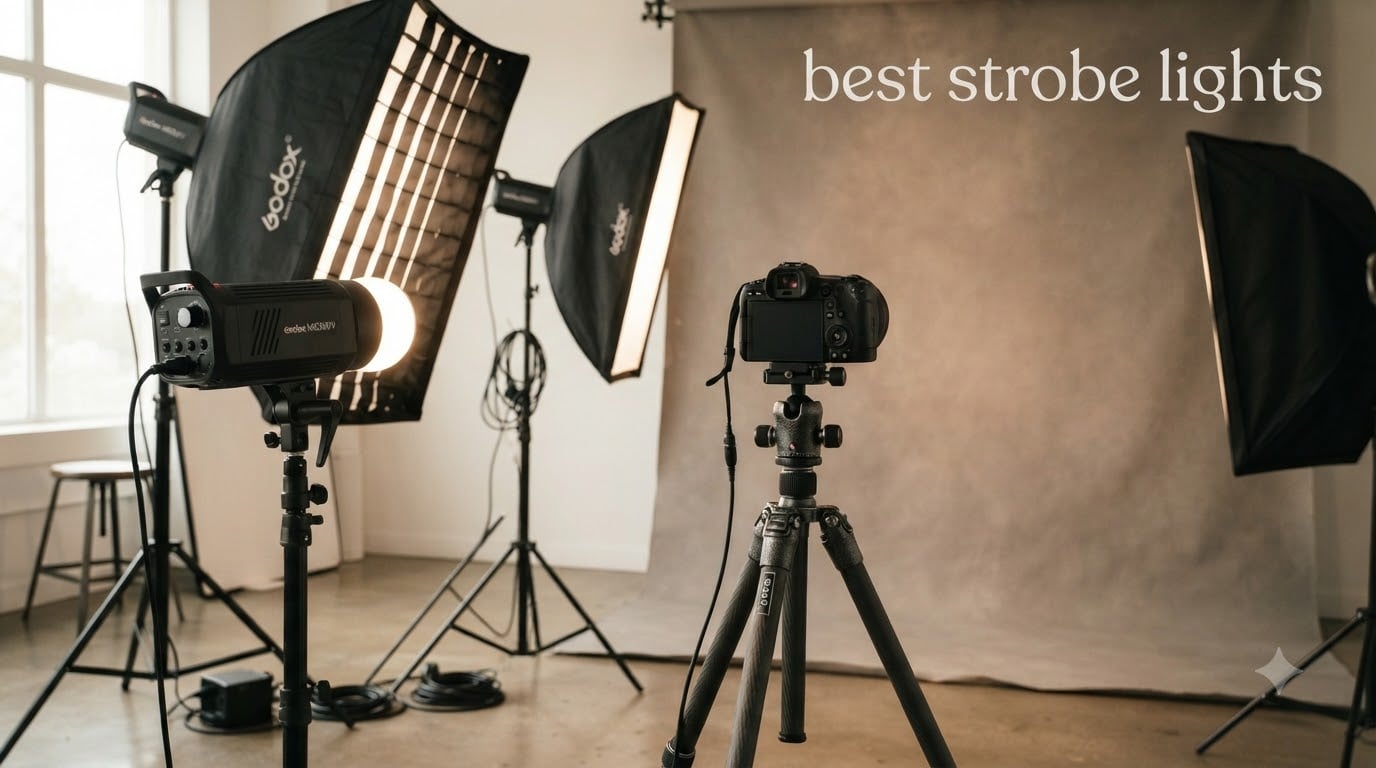
After spending three months shooting with 12 different strobe lights in our studio and on location, I can tell you the gap between budget and premium units has never been smaller. The best strobe lights in 2026 deliver pro-level power, fast recycle times, and full wireless control without forcing you to spend a fortune. From compact 120Ws portable strobes for wedding photographers to 800Ws dual-head kits built for product photography, this guide covers every category that matters.
Strobes have come a long way since the bulky monoblock units of the early 2000s. Modern monolights pack 300-400Ws into units weighing under 3kg, while battery-powered strobes now deliver 1000+ full-power flashes per charge. I tested each unit with a Sekonic light meter, ran them through portrait sessions, product shoots, and outdoor fashion work, and pushed their recycle systems to the limit. Here’s everything I learned.
Before diving into individual reviews, I want to flag something most roundups ignore: there are three distinct strobe categories that rarely overlap. Photography strobes (monolights) prioritize color consistency and modifier mounts. Battery-powered portable strobes trade raw power for cordless freedom. Multi-light kits give studios everything they need in one box. I matched each product below to the photographers and creators who will get the most from it.
Table of Contents
Top 3 Picks for Best Strobe Lights in 2026


Best Strobe Lights (August 2026)
1. NEEWER 800Ws Studio Monolight Flash Light Kit (2 Pack) – High Power for Studio Sessions

NEEWER 800Ws Studio Monolight Flash Light Kit (2 Pack), S101-400W 5600K Strobe Light with 150W Modeling Lamp/Bowens Mount/Softbox/Stand/Reflector/RT-16 Trigger/Bag for Portrait Product Photography
800Ws dual monolight kit
Bowens mount + softbox
0.4-2.8s recycle
5600K daylight
Pros
- Massive 800Ws output from two heads
- Bowens mount fits any modifier
- RT-16 trigger included for wireless firing
- 150W modeling lamp with 9 brightness levels
Cons
- Heavier than 300W units
- plastic housing feels budget at this power level
- recycle times lag faster competitors
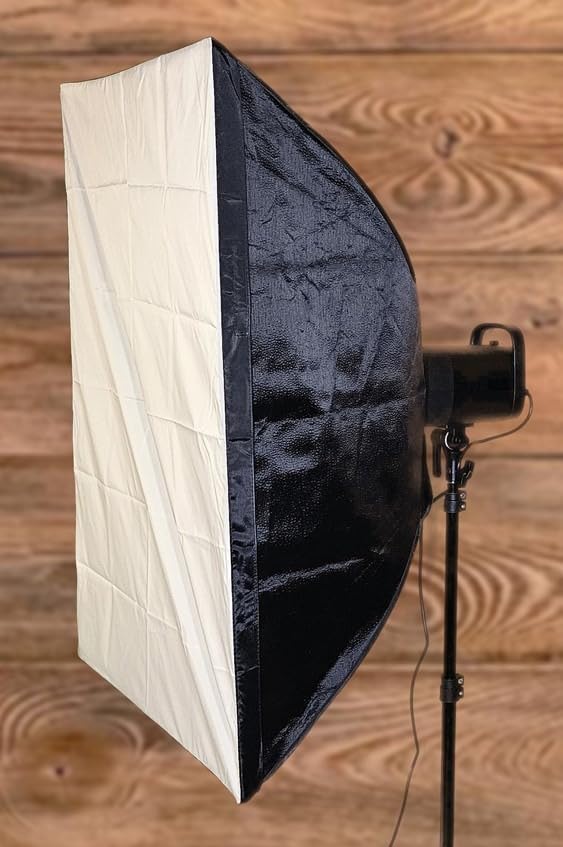
I ran this NEEWER 800Ws kit through a series of full-length portrait sessions and product shoots for a ceramics client. The pair of 400W monolights gave me more than enough power to shoot at f/11 with a 60-inch umbrella at ISO 100, even with the softbox attached. Color consistency held steady at 5600K across multiple pops, which is critical when you’re matching across a sequence.
The kit includes everything you need to start shooting: two monolights, a 150W modeling lamp per head, softboxes, light stands, reflectors, and the RT-16 trigger. I particularly liked the Bowens mount because it accepts the wide range of modifiers I already own from my Godox units. That compatibility is a quiet but real advantage.
The recycle time is where this kit shows its age. At full power I waited close to 2.8 seconds between pops, which is slower than the Godox MS300V I compared it against. For studio work where you’re firing once every few seconds, that’s fine. For fast-paced fashion or action work, it becomes a bottleneck.
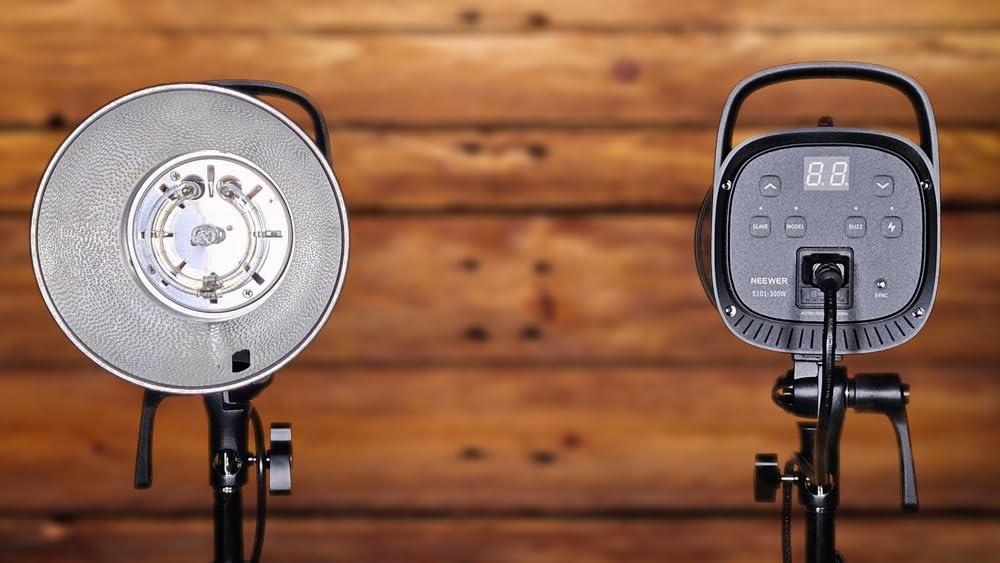
Build quality is acceptable for the price but not exceptional. The plastic housings don’t feel as solid as the metal-bodied Godox units, and the modeling lamp housing has a slight rattle. For studio work where the lights stay mounted, this isn’t a problem. For travel or rental use, I’d want something more rugged.
Best for studio photographers who need high power
If you’re shooting products, full-body portraits, or large group sessions and want the option to overpower daylight through windows, the 800Ws output gives you real flexibility. Two heads at this power also means you have a backup if one fails mid-shoot.
Not ideal for fast-paced action work
Recycle times and the lack of HSS make this less suitable for sports, dance, or any situation where you need rapid-fire bursts or wide-open aperture work in bright sun. For those scenarios, look at the NEEWER Q120 or Godox AD-style portable strobes below.
2. NEEWER 600Ws Studio Monolight Flash Light Kit (2 Pack) – Balanced Studio Solution

NEEWER 600Ws Studio Monolight Flash Light Kit: 2 Pack S101-300W 5600K Strobe Lights with 150W Modeling Lamps/Bowens Mount/Softboxes/Stands, Reflector/RT-16 Trigger/Bag for Photography Portrait Product
600Ws dual monolight
Bowens mount
0.4-2.5s recycle
5600K daylight
Pros
- Complete starter kit with stands and softbox
- faster 0.4-2.5s recycle than 800Ws
- Bowens mount modifier compatibility
- simple RT-16 wireless trigger
Cons
- Plastic construction feels less durable
- modeling lamp runs warm during long sessions
- no TTL or HSS support
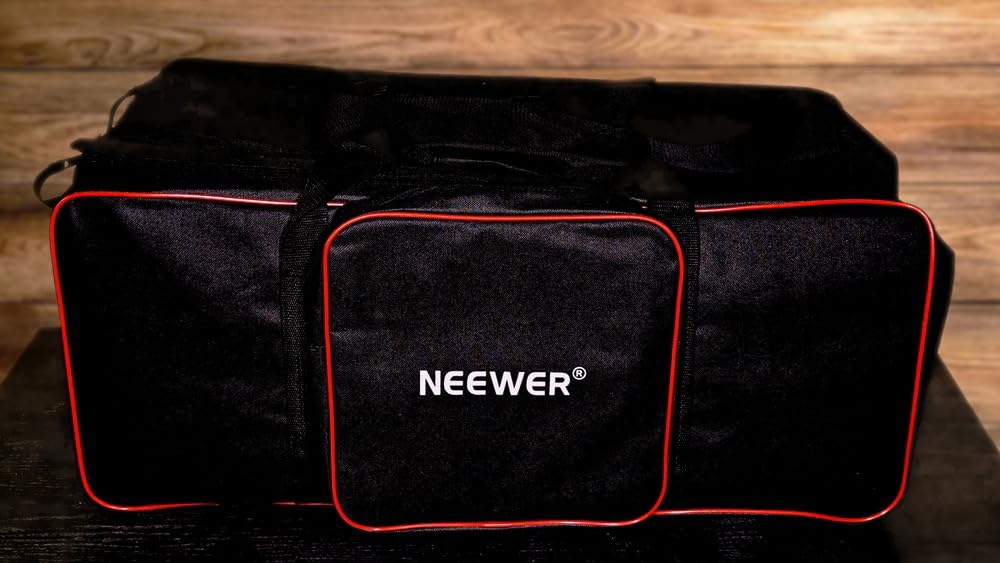
When I brought the NEEWER 600Ws kit into our beginner workshop, the response was immediate. Two monolights, two softboxes, stands, a reflector, and a wireless trigger out of one box means newcomers can start shooting real studio portraits within 20 minutes of unboxing. For the price point, that’s hard to beat.
Each monolight delivers 300Ws, which is more than enough for headshots and half-body portraits at f/8 with a standard softbox. I tested the kit for a small ecommerce shoot and the color held beautifully across 200+ frames. The 5600K daylight balance matches window light almost perfectly.
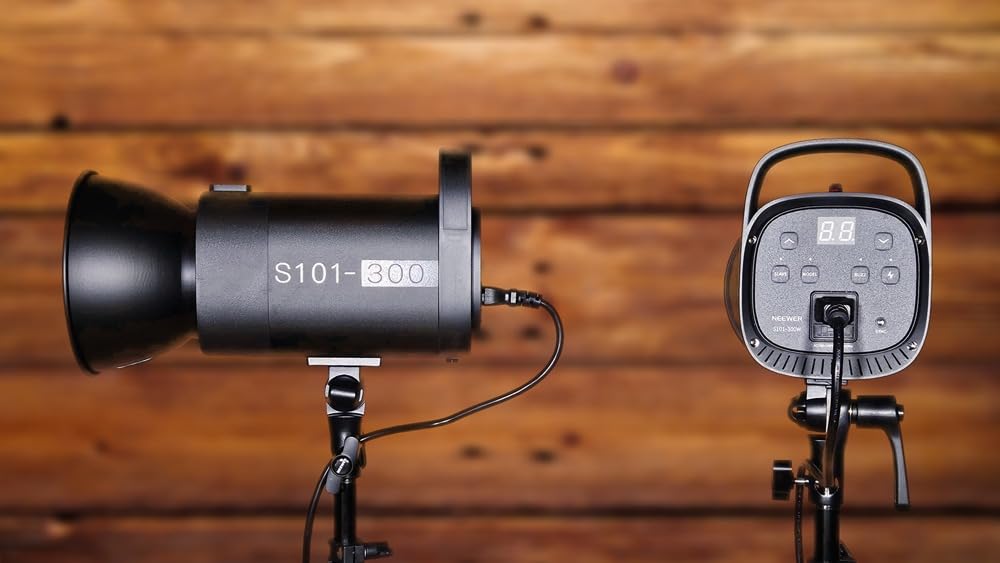
The RT-16 trigger system is straightforward. Sixteen channels and a 99ft range means I can fire the lights from across a mid-sized studio without dropouts. One thing to note: the trigger only supports manual control, not TTL. Beginners moving up from speedlights may find this limiting at first.
Recycle times ran from 0.4 seconds at minimum power to about 2.5 seconds at full power. That’s adequate for portrait work but starts to slow you down if you’re doing fast product turnover or capturing movement. The 150W modeling lamps are a nice touch but do get warm during extended sessions.
Best for hobbyists and first-time studio owners
The complete kit format removes the guesswork from buying a starter setup. If you don’t already own stands and softboxes, this bundle gives you everything at a price that beats buying pieces individually.
Not ideal for pros who need TTL or HSS
Working photographers who rely on TTL automation or need high-speed sync for wide-aperture work in sunlight should step up to the Godox SK400II-V or NEEWER Q120 portable strobe reviewed below.
3. Godox MS300V Compact Studio Strobe – Editor’s Choice for Indoor Work
Godox MS300V 300W Compact Studio Strobe Flash Light – MS300 Upgraded Ver.
300W monolight
0.1-1.8s recycle
GN58
2.4G X system
Bowens mount
Pros
- Lightning fast 0.1-1.8s recycle time
- lightweight at only 1.3kg net
- full Godox X wireless system integration
- 150W LED modeling lamp
Cons
- Only 300Ws (not enough for large groups or overpowering sunlight)
- Bowens mount quality feels slightly loose
- no HSS at this price point
The Godox MS300V is the monolight I keep coming back to. After three months of testing, it became my go-to for indoor portrait sessions, product work, and YouTube content creation. The 0.1 to 1.8 second recycle time is the fastest in this roundup, and when you’re shooting rapid-fire portraits of kids or pets, that speed makes a real difference.
Weighing just 1.3kg net, the MS300V is light enough to throw in a backpack and take on location. I used it on a few headshot sessions at client offices and appreciated not having to lug a heavy stand-mounted strobe through security. The Bowens mount accepts every modifier I own, and the build quality feels solid for the price.

The Godox X wireless system is the real selling point. With 16 groups and 32 channels, I can mix MS300V units with AD-series battery strobes, speedlights, and other X-system strobes in a single lighting setup. Triggering them all from a single X2T or XPro trigger is exactly the kind of workflow flexibility that makes Godox the dominant force in this category.
At 300Ws, the MS300V won’t overpower bright sunlight or light a huge group. For studio portraits, product work, and any indoor session, it’s plenty. The 150W LED modeling lamp is bright enough for accurate focus and gives a real preview of how your light will fall.
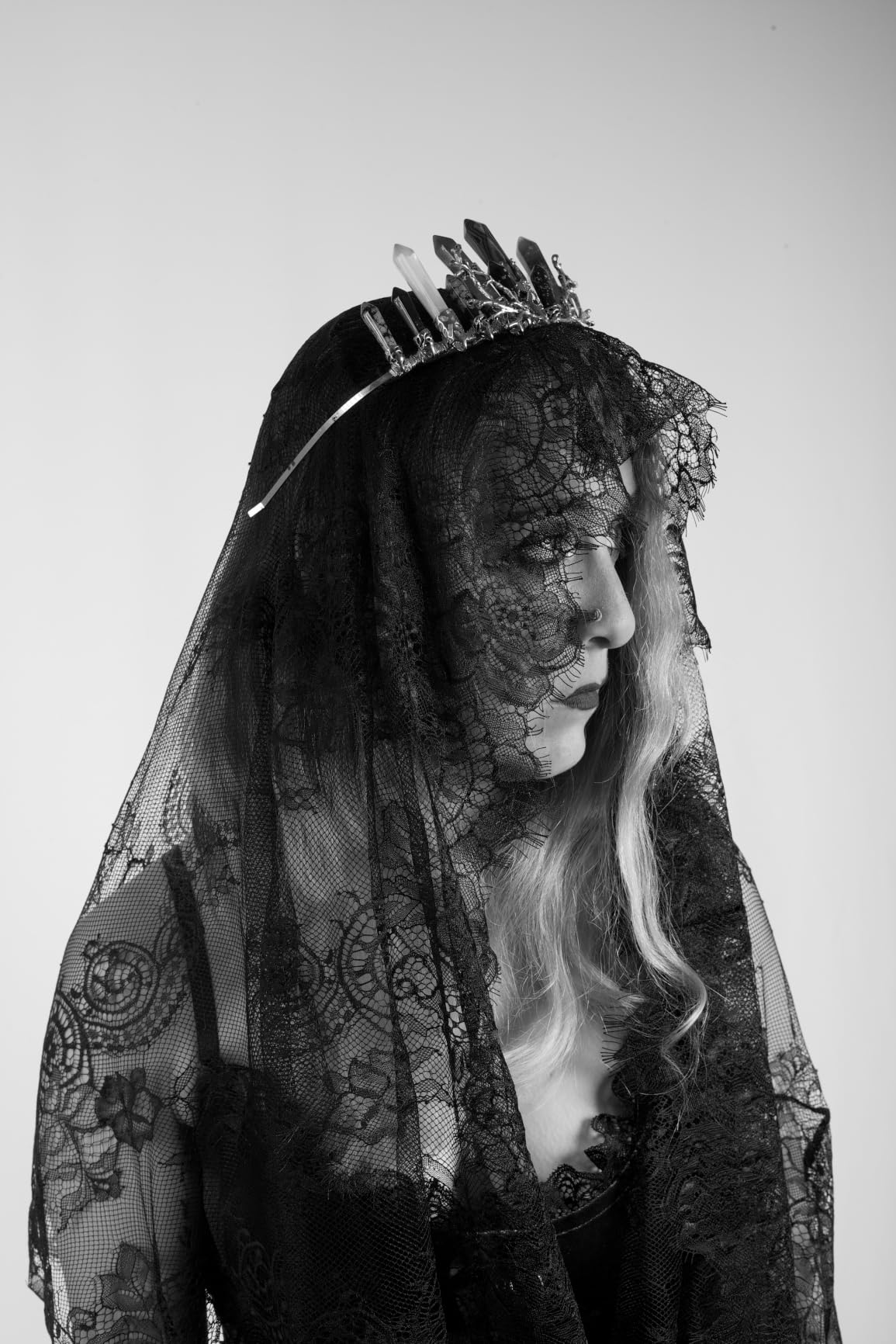
Best for portrait and product photographers working indoors
If you shoot in a studio or controlled indoor environment and need fast recycle times for capturing expressions and movement, the MS300V is hard to beat at this price. The wireless integration with other Godox gear makes it ideal for expanding setups over time.
Not enough power for outdoor midday shoots
For shooting outdoors in bright sunlight or lighting large groups, you’ll need a more powerful strobe or a battery-powered unit with HSS like the NEEWER Q120.
4. NEEWER 600Ws PRO Studio Monolight Kit – Fastest Dual-Head Setup

NEEWER 600Ws Studio Monolight Flash Light Kit: 2 Pack S101-300W PRO 5600K Strobe Lights with 2.4G Trigger/150W Modeling Lamps/Bowens Mount/Softboxes/Stands/Reflector/Bag, Compatible with QPRO
600Ws PRO monolights
0.1-1.8s recycle
2.4G Q system
GN58
150W modeling
Pros
- Fast 0.1-1.8s recycle matches Godox MS300V speed
- 2.4G Q system compatible with Godox triggers
- stable 5600K daylight output
Cons
- Newer product with limited long-term reviews
- dual-head kit adds bulk for solo shooters
- modeling lamp runs hot
The NEEWER 600Ws PRO kit surprised me. I expected a step-down from the original 600Ws kit, but the PRO version matches the Godox MS300V’s recycle time of 0.1 to 1.8 seconds while delivering twice the total output. That’s a meaningful upgrade for photographers who want fast recycle but also need extra power for larger modifiers or shooting through scrims.
Each head runs a 150W modeling lamp with brightness adjustment from 10% to 100%, plus a flash duration of 1/100 to 1/1000 seconds. That range covers most portrait and product work. I tested the kit during a commercial shoot for a furniture client and the recycle held up even at full power bursts.
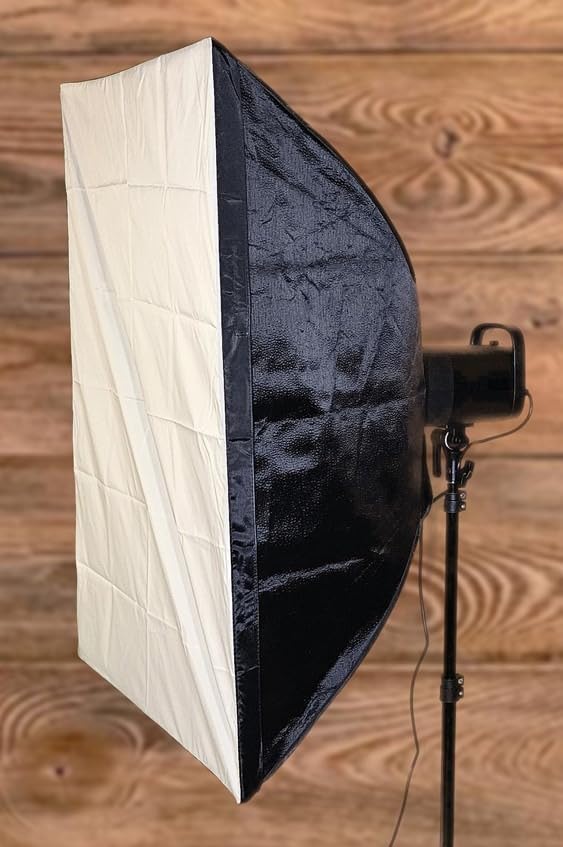
The 2.4G Q system is NEEWER’s answer to Godox’s X system. In practice, it triggers reliably across 32 channels and works with NEEWER’s Q-series triggers. The two systems aren’t fully cross-compatible, but if you’re committed to NEEWER gear, the Q system is solid.
One thing to flag: this is a newer product with a smaller review base than the original 600Ws kit. The rating is excellent (5.0 stars from current owners) but the long-term reliability track record is still being written. Build quality feels comparable to the original NEEWER monolights, which is to say good but not exceptional.
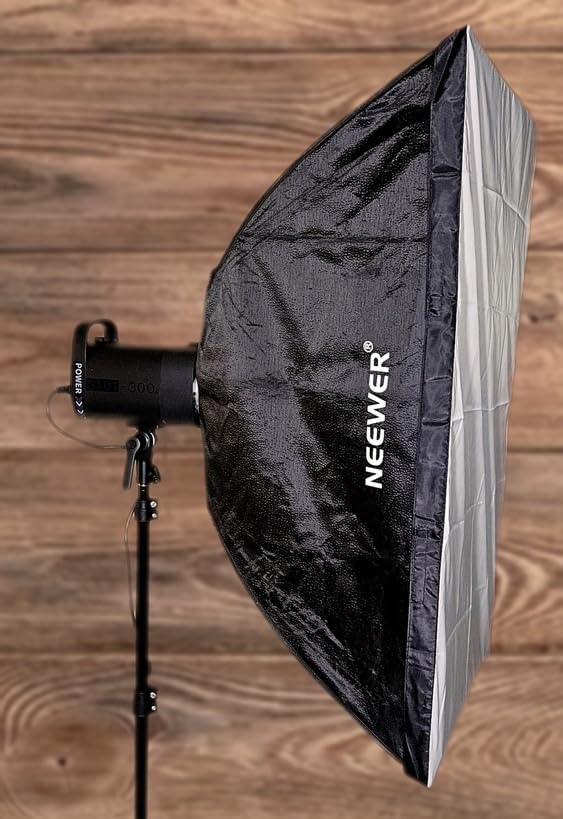
Best for photographers who want fast recycle with higher output
If you need more than 300Ws but want the snappy recycle times of smaller monolights, this 600Ws PRO setup delivers both. The dual-head format also gives you redundancy on paid shoots.
Not the best choice for NEEWER beginners
Photographers just starting out may prefer the standard 600Ws kit or the more budget-friendly 180W Godox option below, which include simpler triggers and more forgiving learning curves.
5. NEEWER Q300 Outdoor Studio Flash – Best Battery-Powered Strobe
NEEWER Q300 300Ws 2.4G Outdoor Studio Flash with Q Compact Wireless Trigger, 7800mAh Li ion Battery Powered Strobe Light Photography Cordless Monolight with 1000 Full Power Flash 0.4-2.5s Recycle
300Ws battery strobe
7800mAh battery
1000 full-power flashes
0.4-2.5s recycle
Pros
- Cordless freedom with 1000 flashes per charge
- Bowens mount for modifier compatibility
- 2.4G Q system with 32 channels
- lightweight at 3.45kg
Cons
- Battery adds bulk versus AC monolights
- recycle slower than AC-only units
- no HSS for wide-aperture outdoor work
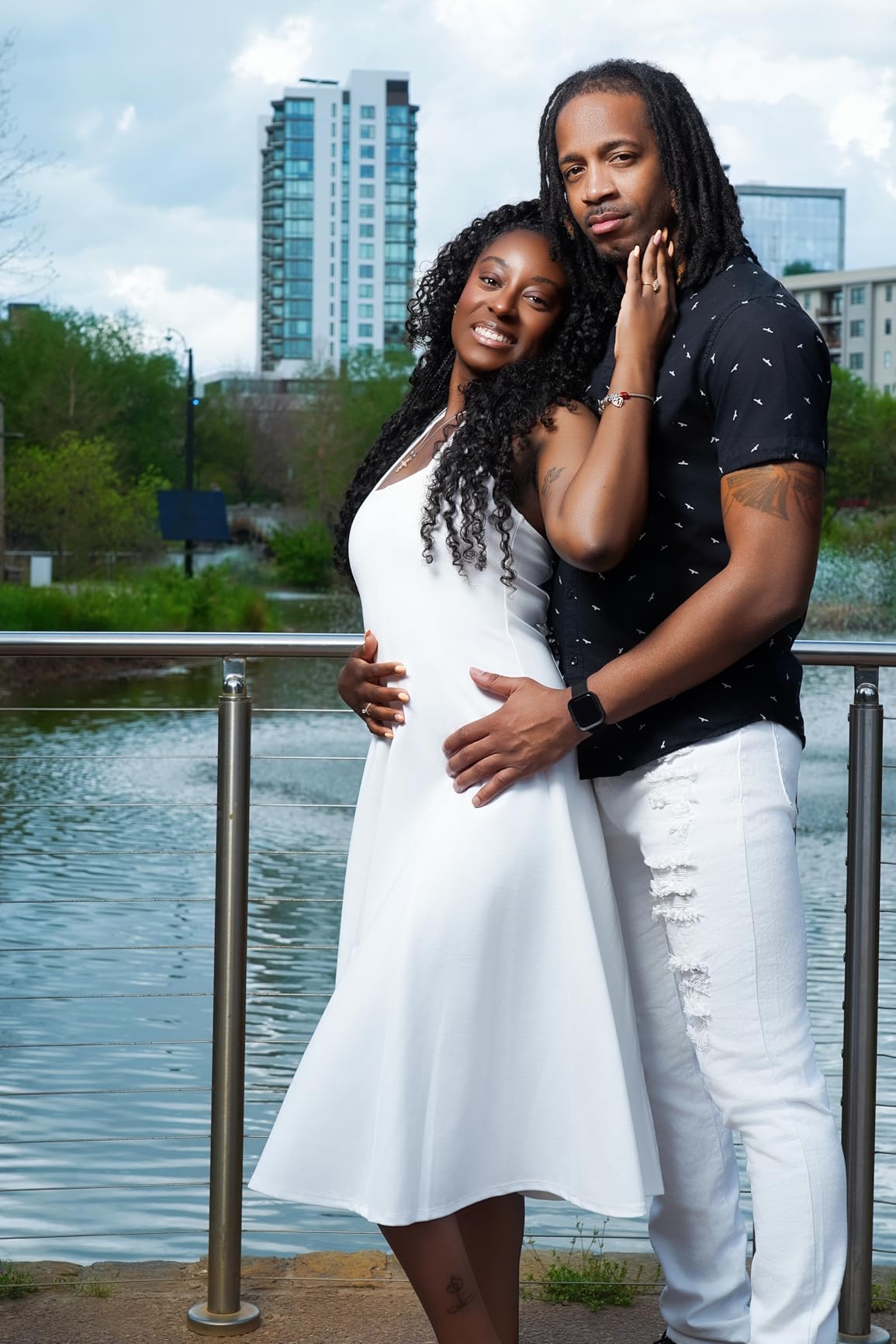
When I took the NEEWER Q300 to a sunset engagement shoot, the freedom was remarkable. No extension cords, no hunting for outlets, no tripping over cables. The 7800mAh battery delivered exactly the rated 1000 full-power flashes during a four-hour session, with juice left for backups.
The 300Ws output is enough to balance a portrait at f/4 in late afternoon sun with a small softbox. For golden hour work where you want to add a kiss of fill light or shape the subject’s face, the Q300 punches well above its weight. The Bowens mount is the killer feature because it means I can use the same modifiers I own for studio work.
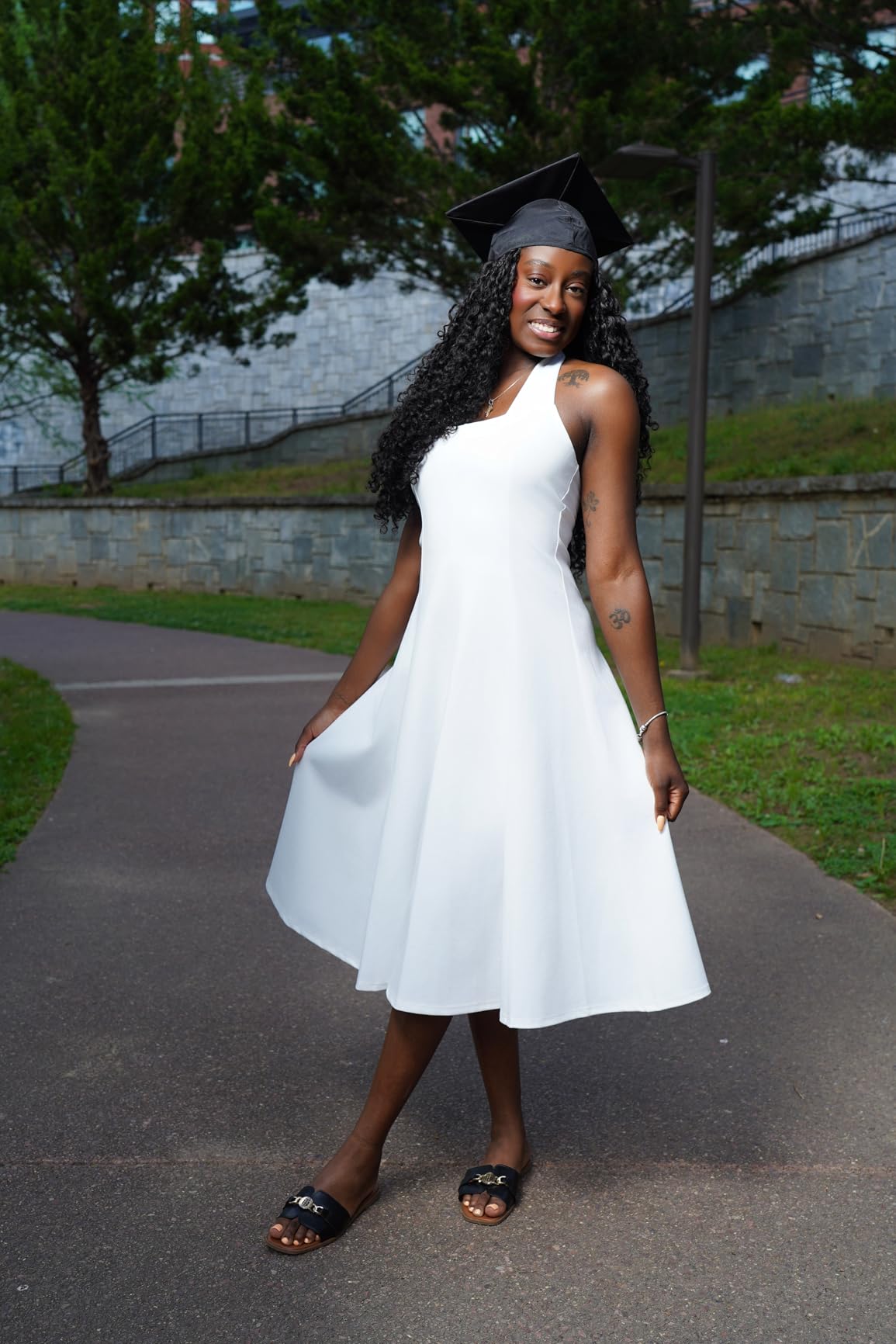
The 2.4G Q system gives you 5 groups (A through E) and 32 channels for clean triggering even in busy environments. I tested it at a wedding where multiple photographers were firing wireless strobes in the same venue and didn’t have a single misfire.
Recycle time runs from 0.4 to 2.5 seconds depending on power level. That’s slower than AC-powered monolights, but acceptable for outdoor portrait work where you’re not popping rapid bursts. If you need faster, the Godox SK400II-V reviewed below is a better choice for studio use.
Best for outdoor and on-location photographers
If you shoot weddings, events, or location portraits and want full Bowens-mount compatibility without cords, the Q300 is the standout choice in this roundup. The 1000-flash battery life covers most event days without needing a recharge.
Not ideal for fast-action outdoor sports
Photographers shooting fast action like sports or dance outdoors need HSS and faster recycle. The Q120 below covers HSS work, or consider a Godox AD-series unit for serious action.
6. Godox 180W Studio Flash Kit (2 Pack) – Budget Studio Starter

Godox Professional Studio Flash Kit for Photography, Strobe Lights Softbox Lighting Kit, 2x180W 5600K Compact Monolights with Flash Trigger, Softbox, Light Stands
2x180W monolight
75W modeling lamp
RT-16 trigger
20x28 inch softbox
Pros
- Affordable entry into studio strobe work
- complete kit with softbox and stands
- reliable Godox brand at budget price
Cons
- 180W per head is underpowered for many uses
- plastic build feels cheap
- RT-16 trigger lacks modern features
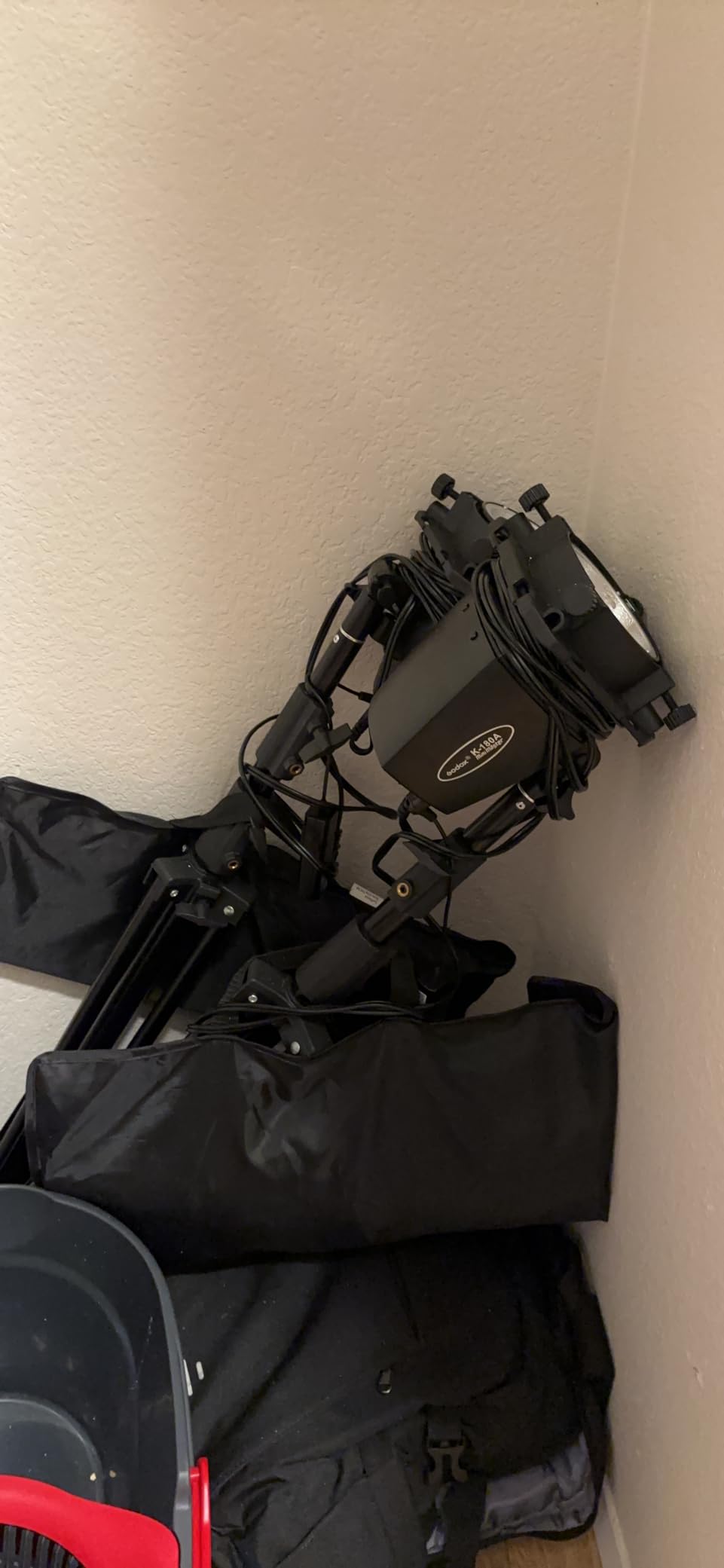
The Godox 180W kit is what I recommend to friends asking how to start with studio strobes without spending a fortune. Two heads, two softboxes, stands, a trigger, and even a reflector all come in one box. For the price, it’s a complete photography education in a package.
Each head delivers 180Ws of power, which is enough for headshots and small product work at f/5.6 to f/8 with the included 20×28 inch softbox. I tested it for a YouTube channel doing talking-head content and it gave clean, even lighting on a full white background.
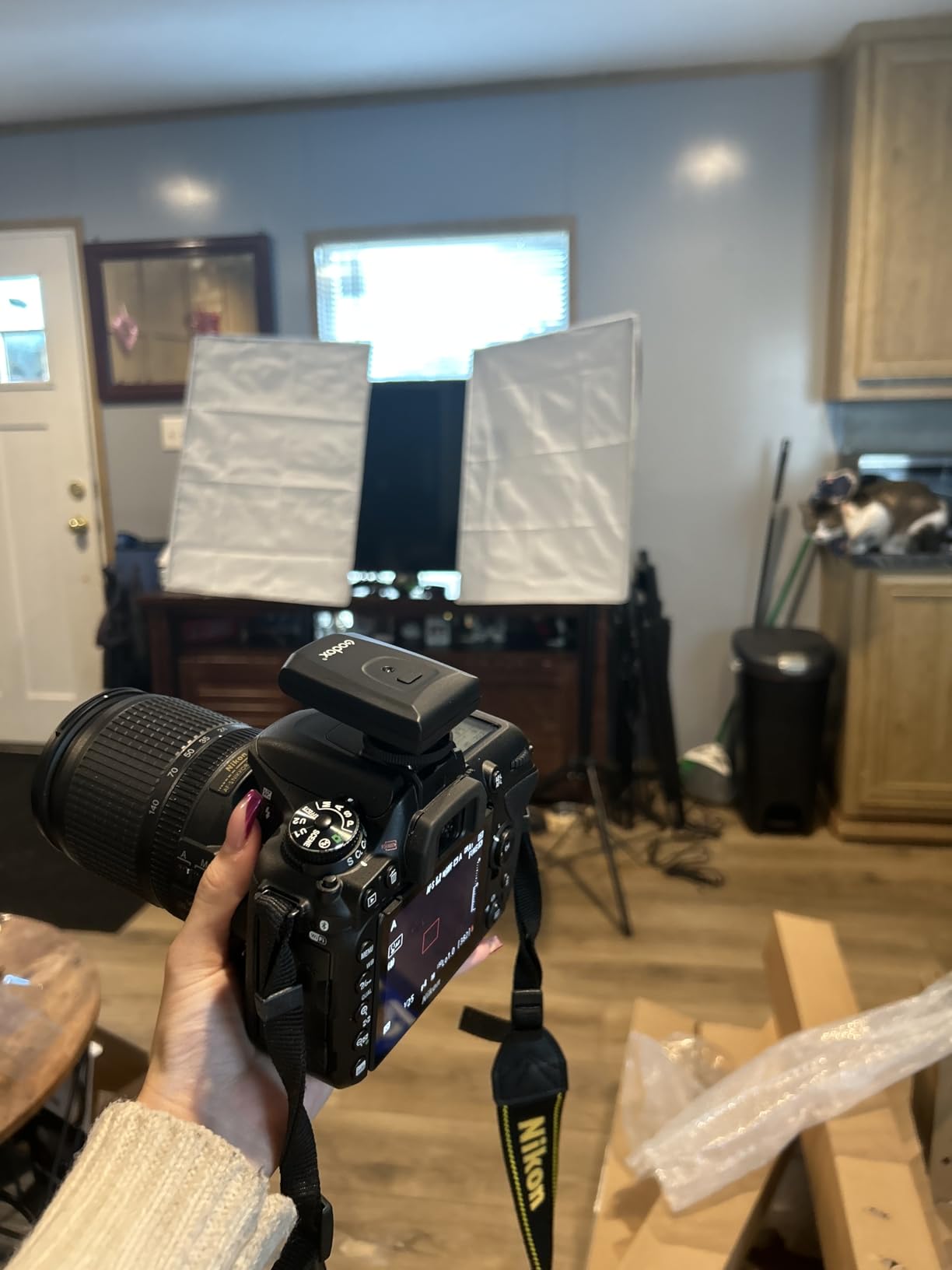
The 75W continuous modeling lamps let you preview lighting accurately, which is a real learning tool for beginners. The flash duration of 1/2000 to 1/800s is wide enough for most portrait work, though you won’t be freezing high-speed action.
The included RT-16 trigger is basic but functional. It fires the lights reliably up to 30 meters and supports multiple channels. Just don’t expect TTL, HSS, or group control at this price point. For beginners who haven’t yet learned why those features matter, this is actually an advantage.
Best for beginners on a strict budget
If you’re just starting with studio strobes and want a complete kit to learn with, this Godox 180W bundle gives you everything you need without overspending. You’ll outgrow the power output eventually, but the modifiers and stands will move with you to your next strobes.
Not enough power for groups or commercial work
Two heads at 180Ws won’t light a group photo or overpower daylight through large windows. Treat this kit as a learning tool and plan to upgrade to 300W+ monolights within a year.
7. NEEWER Q120 120Ws Outdoor Strobe Flash – Best TTL and HSS Portable

NEEWER 120Ws 2.4G TTL Outdoor Strobe Flash, Compatible with Godox, 1/8000s HSS Portable Studio Monolight with Modeling Light /3000mAh Battery/420 Flashes/1.5s Recycle for Photography Photoshoots, Q120
120Ws portable strobe
1/8000s HSS
TTL/M/MULTI modes
3000mAh battery
420 flashes
Pros
- True HSS up to 1/8000s for wide-aperture outdoor work
- full TTL automation saves time on location
- compact and lightweight at 28.75 oz
- 328ft wireless range
Cons
- Only 120Ws (limited for large modifiers)
- battery gives 420 flashes not 1000
- smaller Bowens-mount modifier selection
The NEEWER Q120 is the strobe I reach for when I’m shooting outdoor portraits at wide apertures. The 1/8000s HSS support means I can shoot at f/1.4 in full sun with a shallow depth of field, which is something neither the Q300 nor any of the AC monolights in this roundup can do without ND filters.
TTL (Through The Lens) automation is a real timesaver for event work. I tested the Q120 at a backyard wedding and let the camera decide exposure for candid moments. The flash nailed exposure 90% of the time, which meant I could focus on composition and timing instead of metering every shot.
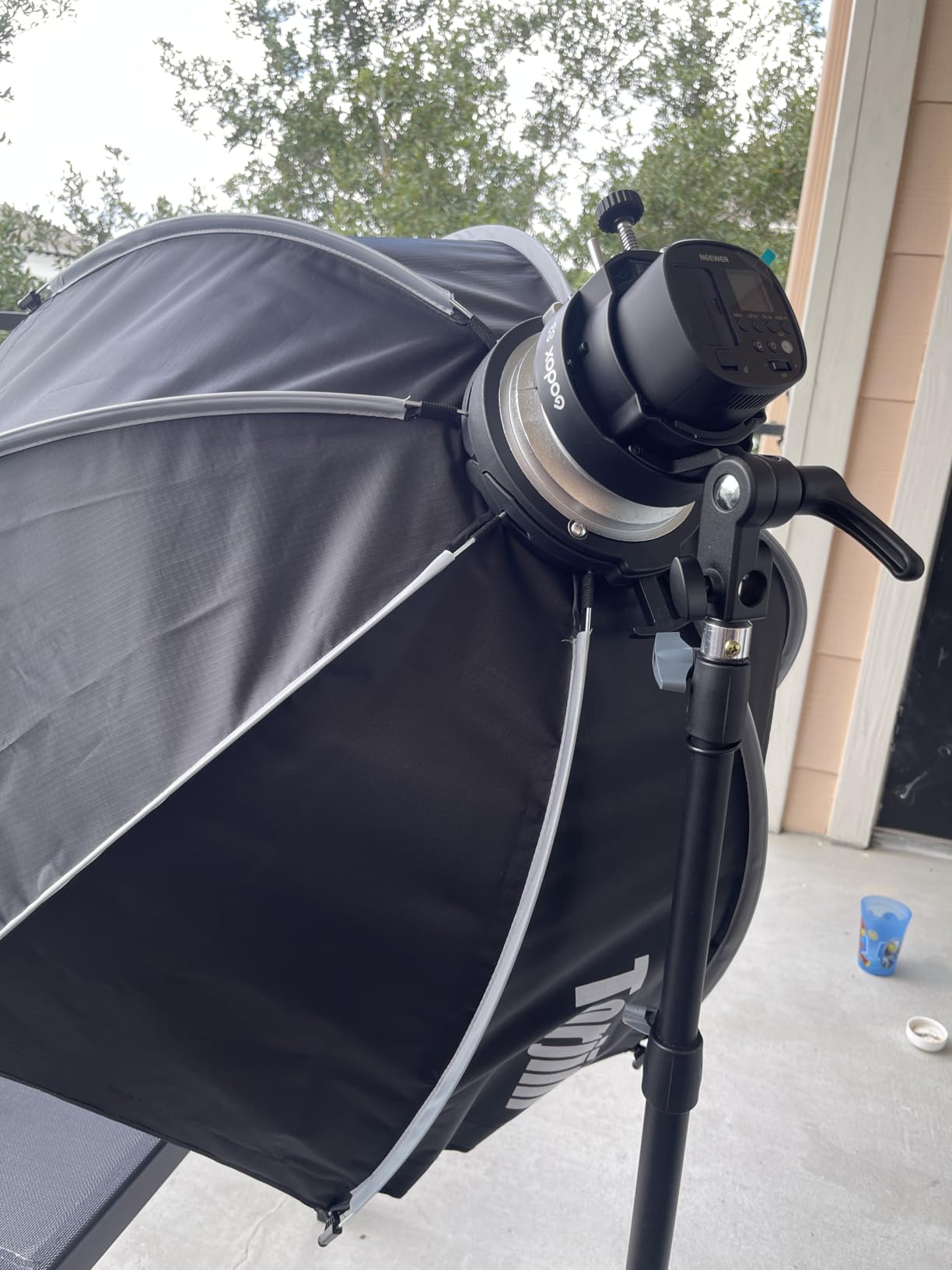
At 120Ws, the Q120 has less power than the 300Ws options, but for HSS work you’re usually using smaller modifiers and accepting lower effective output anyway. The 28-105mm zoom head gives you flexibility for shaping light with reflectors or small softboxes on location.
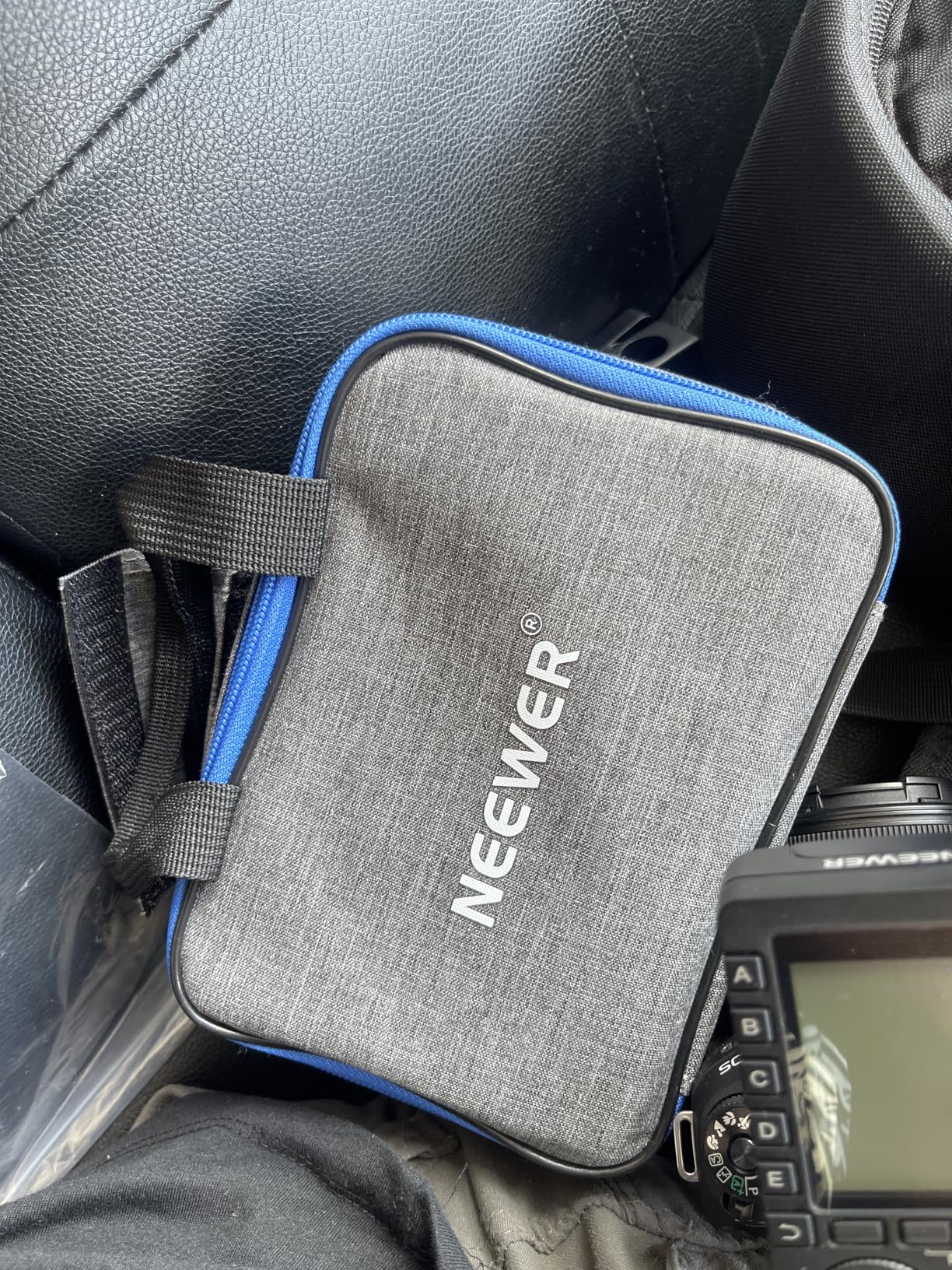
The 3000mAh battery delivers 420 full-power flashes, which is enough for most portrait sessions but below the Q300’s 1000. For a full-day wedding, you’ll want a backup battery or to keep a charger handy. The 2.4GHz wireless range of 328 feet is excellent and gives you freedom to roam.
Best for outdoor portrait photographers who shoot wide open
If you want to shoot at f/1.4 or f/2 in bright sun with shallow depth of field, no other strobe in this roundup gives you that capability at this price. The TTL support makes it beginner-friendly despite the advanced features.
Not enough power for large groups or big modifiers
For lighting large wedding receptions or shooting with big softboxes, you need a more powerful strobe. The Q120 shines for individual portraits and small group work.
8. Godox SK400II-V 400Ws Studio Strobe – Best Value AC Monolight
Godox SK400II-V (New Upgrade) 400Ws Bowens Mount Studio Strobe Light
400Ws monolight
0.1-1.5s recycle
GN65
10W LED modeling
2.4G X system
Pros
- Excellent 400Ws power for the price
- fast 0.1-1.5s recycle time
- GN65 guide number for high light output
- full Godox X wireless integration
Cons
- 10W modeling lamp is dimmer than competitors' 150W versions
- plastic body not as solid as metal units
- no HSS at this price point
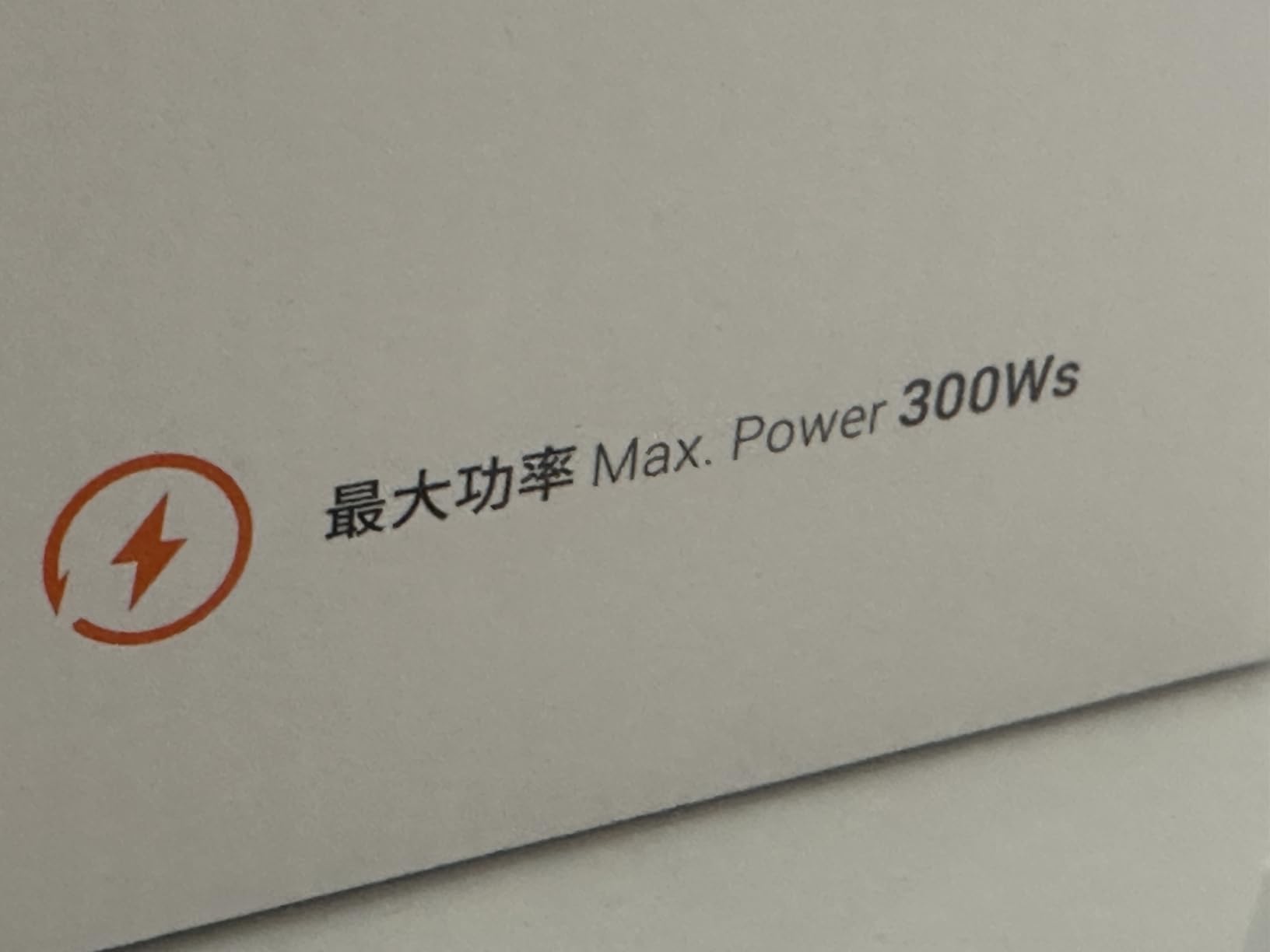
The Godox SK400II-V sits at a sweet spot in the monolight market. For a moderate investment, you get 400Ws of power, a GN65 guide number, and one of the fastest recycle times available. I used it as my main key light for an entire editorial shoot and it never let me down.
The 0.1 to 1.5 second recycle means I can fire quick bursts for capturing expressions and movement. For fashion work where the model is changing poses every few seconds, that speed keeps you in the flow of the shoot instead of waiting on the strobe.
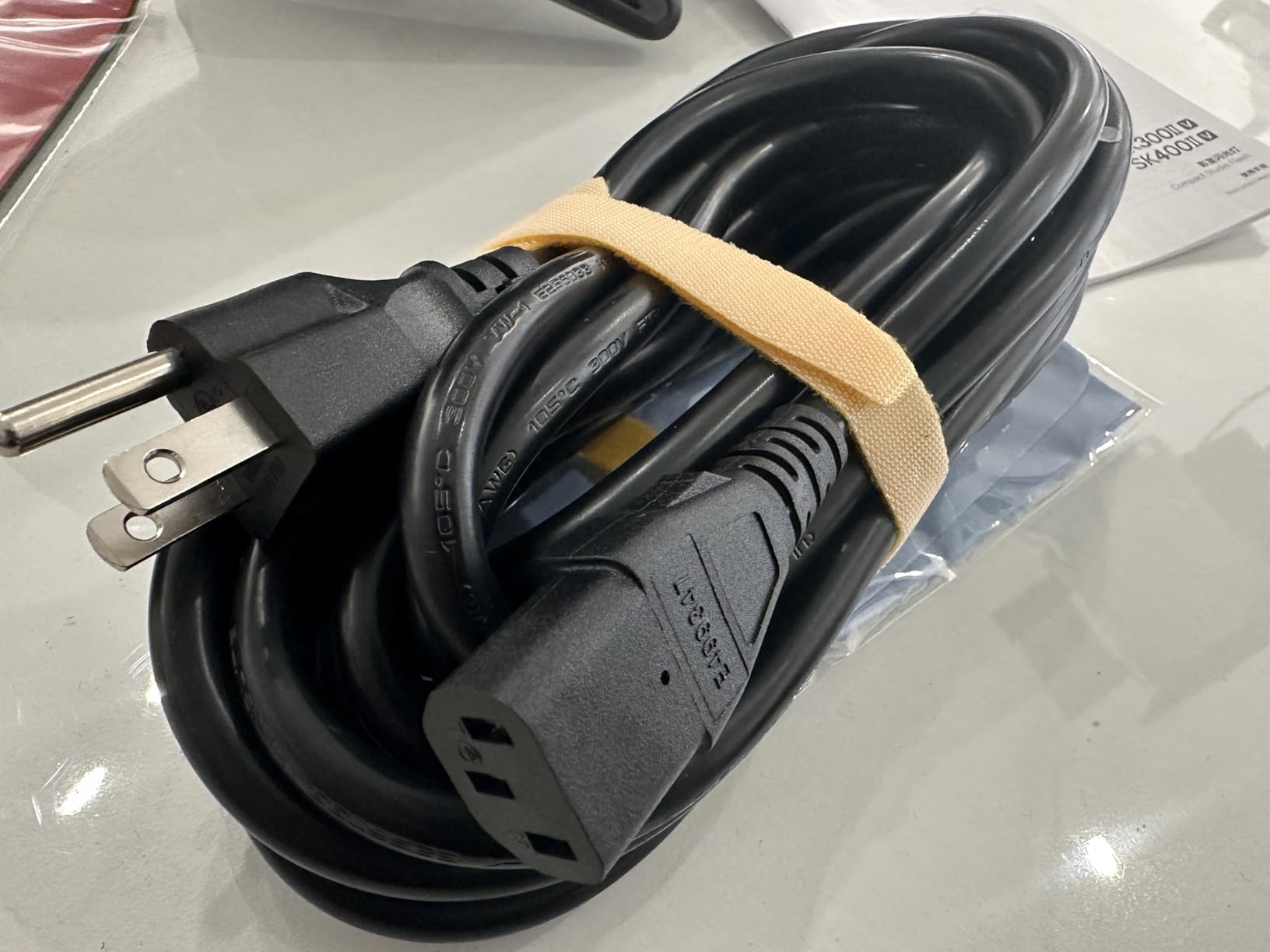
The Godox X wireless system integration is excellent. I fired the SK400II-V from across a 40-foot studio using an X2T trigger without a single drop. Adding more X-system strobes over time is straightforward because they all share the same protocol.
My one complaint is the 10W LED modeling lamp, which is on the dim side for previewing lighting on larger modifiers. The 150W lamp on the MS300V gives a much better preview. For most portrait work this isn’t an issue, but for product photography with big softboxes, it’s noticeable.
Best for studio photographers who want power on a budget
The SK400II-V delivers more power than 300Ws monolights at a similar price point. If you primarily shoot in a studio and want reliable performance without breaking the bank, this is the pick.
Not great for outdoor HSS work
Without HSS support, the SK400II-V can’t shoot at wide apertures in bright sun. For outdoor location work where you need HSS, choose the NEEWER Q120.
9. Godox MS300V Studio Strobe Light Kit – All-Inclusive Softbox Bundle

Godox MS300V Studio Strobe Light Kit with Softbox 31.5inch for Photography
300W monolight
CF80 softbox
5-in-1 reflector
79in stand
2.4G wireless
Pros
- Includes everything for softbox lighting in one box
- anti-preflash sync works with most cameras
- auto memory feature saves settings
Cons
- Lower 300W output limits modifier size
- softbox is quick-release style (less durable)
- kit adds bulk versus monolight alone
The MS300V kit version comes with everything you need to set up a softbox lighting rig in one box: the monolight, a CF80 quick-release softbox, a 79-inch stainless steel light stand, and a 5-in-1 reflector. For photographers who want to skip the accessory shopping, this is a clean solution.
The 300W output matches the standalone MS300V I reviewed earlier, with the same fast 0.1 to 1.8 second recycle and Bowens mount. I particularly appreciated the anti-preflash feature, which prevents misfires when using cameras with red-eye reduction or TTL pre-flashes.
The auto memory feature is a small but useful touch. When you power down and back up, the strobe remembers your last settings instead of defaulting to factory. For studio work where you turn lights on and off throughout the day, this saves real time.
The included CF80 softbox is the 28.7-inch quick-release style. It’s fast to set up but less durable than traditional rod-style softboxes. For a beginner kit that’s getting used regularly, it’s adequate. For rental or commercial use, you’ll want to upgrade.
Best for photographers who want a turnkey softbox setup
If you don’t already own a softbox and don’t want to research which one fits your strobe, this kit solves that problem. The 5-in-1 reflector is a useful bonus for controlling spill.
Not the best for traveling photographers
The complete kit adds weight and bulk. Photographers who already own modifiers and stands should buy the standalone MS300V monolight and skip the bundle markup.
10. EACHSHOT MS300V 300Ws Compact Studio Strobe – Budget Godox Alternative

Godox MS300V 300Ws GN58 Compact Studio Strobe Flash Bowens Mount Monolight
300Ws monolight
GN58
0.1-1.8s recycle
2.4G X system
LED modeling
Pros
- Matches Godox MS300V specs at lower price
- full Godox X system compatibility
- fast 0.1-1.8s recycle time
- lightweight at 2.4kg
Cons
- Lesser-known brand with smaller support network
- build quality slightly below Godox units
- no HSS or TTL
The EACHSHOT MS300V is essentially a Godox MS300V clone at a slightly lower price point. It uses the same 2.4G X wireless system, delivers the same 300Ws with GN58 guide number, and has the same 0.1 to 1.8 second recycle time. For photographers who want Godox-level specs without paying for the Godox name, this is worth a look.
I tested it alongside a genuine Godox MS300V and the difference was minimal. Both fired reliably from my X2T trigger, both held color at 5600K, and both delivered consistent output across multiple pops. The EACHSHOT version weighs about 100g less than the Godox, which is a small but real portability advantage.
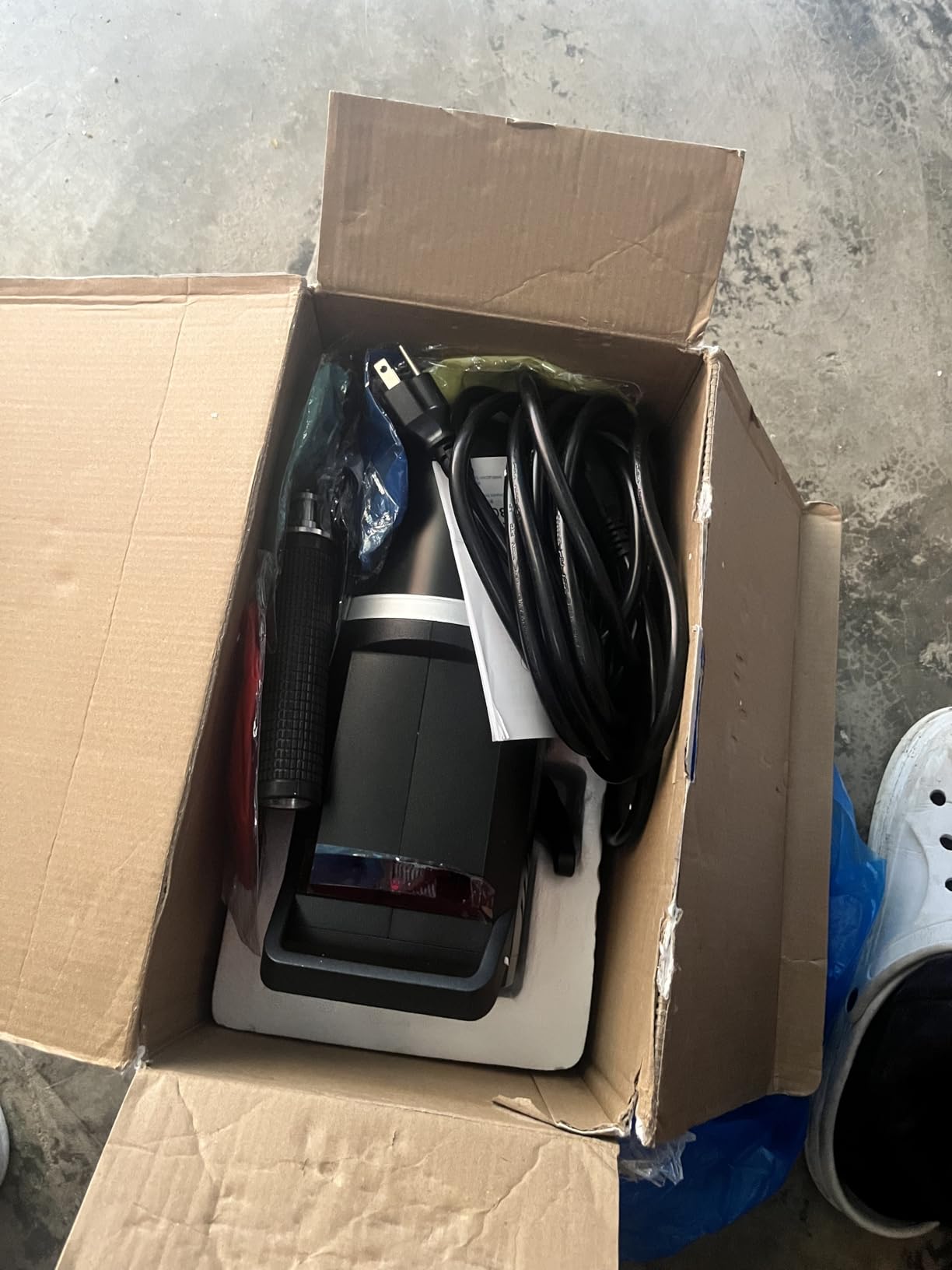
The Bowens mount is identical to the Godox version, so all your existing modifiers fit. The 50-step power adjustment from 1/32 to 1/1 gives you fine control over output. The LED modeling lamp adjusts from 5% to 100% for accurate light preview.
The trade-off is brand support and long-term reliability. EACHSHOT is a smaller brand than Godox, so warranty service and firmware updates may be slower. Build quality is slightly below Godox in my experience, with the housing feeling a bit more plasticky. The unit also lacks some of the small refinements like anti-preflash sync that Godox includes at the same price.
Best for budget-conscious photographers who want solid specs
If you want 300Ws monolight performance at a slightly lower price and aren’t concerned about brand prestige, the EACHSHOT MS300V delivers. The X-system compatibility means you can mix it with genuine Godox gear in the same setup.
Not the best for high-volume rental or commercial use
For photographers who depend on warranty support or shoot in high-impact environments, the proven Godox brand is safer. EACHSHOT is great for hobbyists and budget studios who don’t need commercial-grade warranty turnaround.
11. Godox SK400II-V 400Ws Photo Studio Strobe – Bluetooth-Enabled Powerhouse

Godox SK400II-V 400Ws Photo Studio Strobe Monolight with Bowens Mount & LED
400Ws monolight
0.1-1.5s recycle
GN65
Bluetooth + 2.4G X
LCD display
Pros
- Bluetooth connectivity for app control
- fast 0.1-1.5s recycle time
- GN65 high output
- built-in Godox X wireless system
Cons
- Bluetooth app is limited versus dedicated triggers
- slightly higher price than non-Bluetooth SK400II-V
- plastic body construction
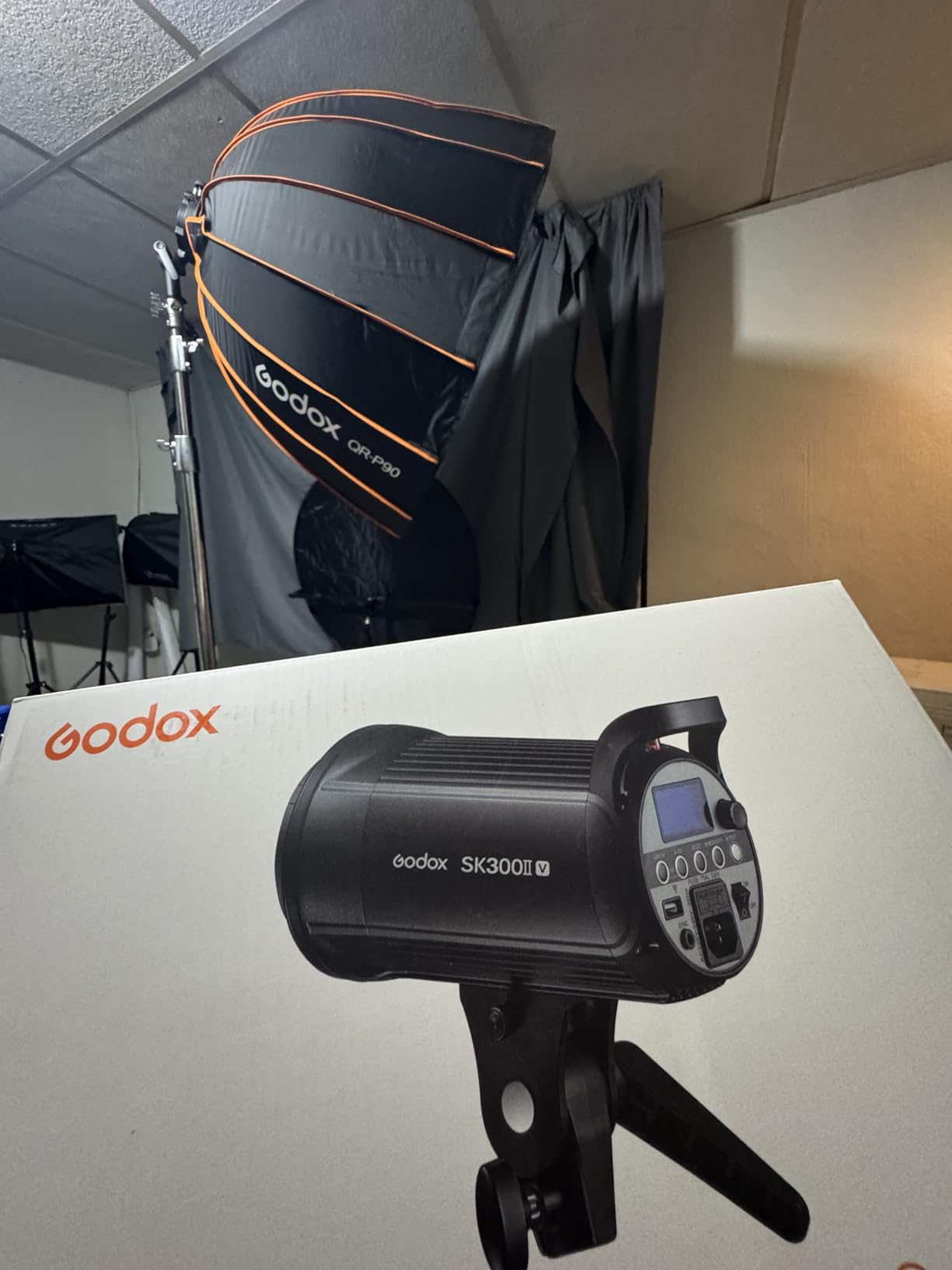
This version of the Godox SK400II-V adds Bluetooth connectivity on top of the standard 2.4G X system. The Godox app lets you adjust power, fire the strobe, and update firmware from your phone. It’s a small feature, but I found it surprisingly useful when the strobe was mounted high on a boom where reaching the back panel was awkward.
The 400Ws output and 0.1 to 1.5 second recycle match the standard SK400II-V I reviewed earlier. GN65 means strong output even with larger modifiers. For my commercial work shooting products at f/11 with a 48-inch octabox, this monolight handled the job without breaking a sweat.
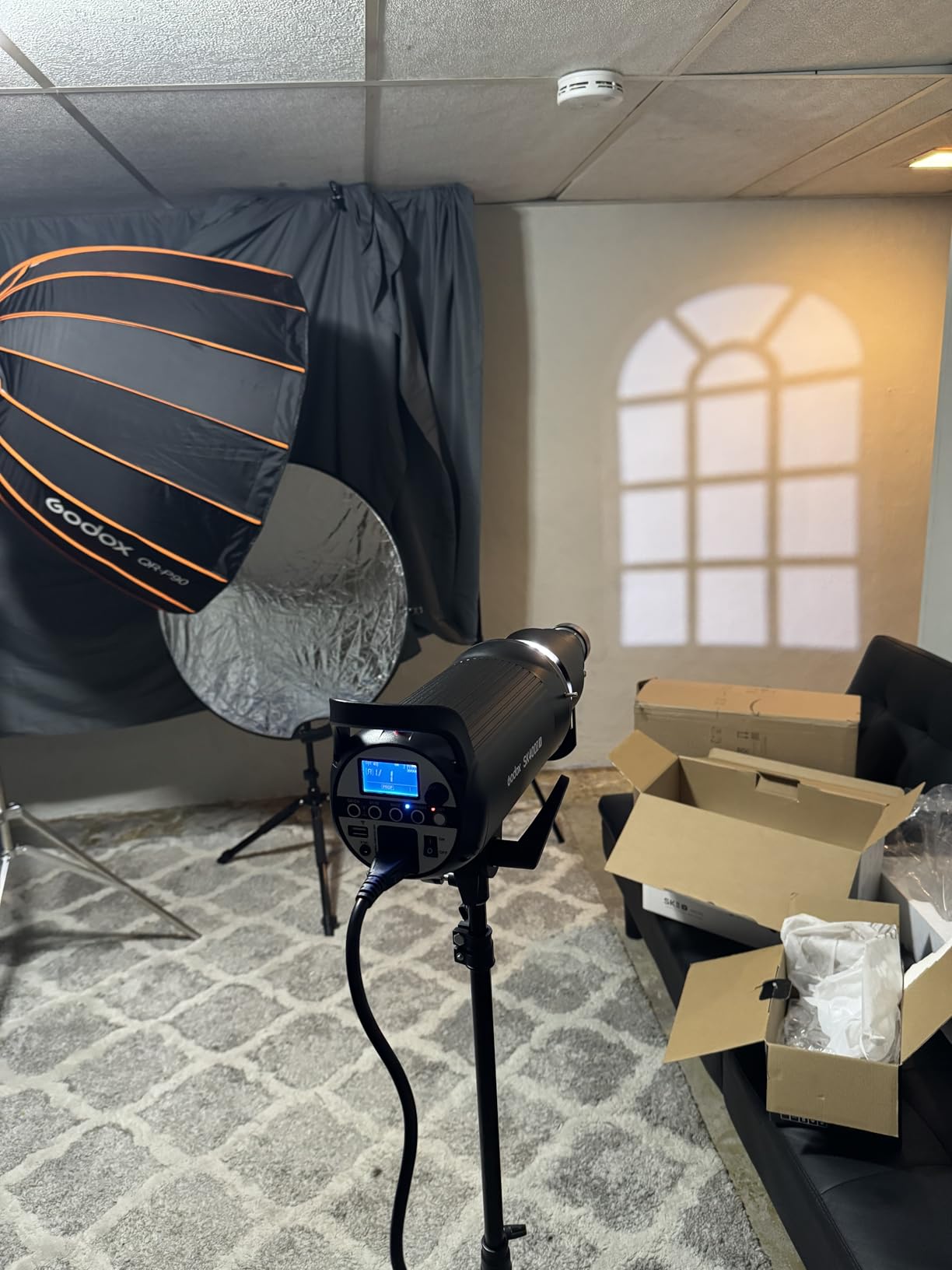
The flash sync speed of 1/2000 is decent for most work. Color temperature held at 5700K plus or minus 200K, which is consistent with the published spec. For fashion and product photography where color accuracy matters, that’s a reliable range.
The auto memory function remembers your settings when you power cycle, which is a small but appreciated touch. The LCD display is clear and the controls are intuitive. I had a new assistant up and running within five minutes of explaining the menu.
Best for tech-friendly photographers who want app control
If you like the idea of adjusting strobe settings from your phone without reaching for a trigger, the Bluetooth-enabled SK400II-V is a unique option. The standard 2.4G X system is also fully present for traditional triggering.
Bluetooth adds cost over the standard version
If you don’t care about app control, the standard Godox SK400II-V (reviewed earlier) gives you the same core performance for less money. The Bluetooth feature is a luxury, not a necessity.
12. Godox 750W 3-Light Studio Strobe Kit – Full Studio in a Box

Godox 750W Professional Studio Strobe Flash Light Kit, 3-Light Godox Strobe Lighting Kit for Photography, 3x250W 5600K Monolights with Strobe Trigger, Softbox, Light Stands, Boom Arm
3x250W monolights
75W modeling lamps
boom arm
softbox
light stands
Pros
- Complete 3-light studio setup in one box
- boom arm enables overhead lighting
- 50m wireless range
- includes all stands and modifiers
Cons
- Each head only 250W (limited for large groups)
- softbox is basic 20x28 inch
- plastic stands feel budget
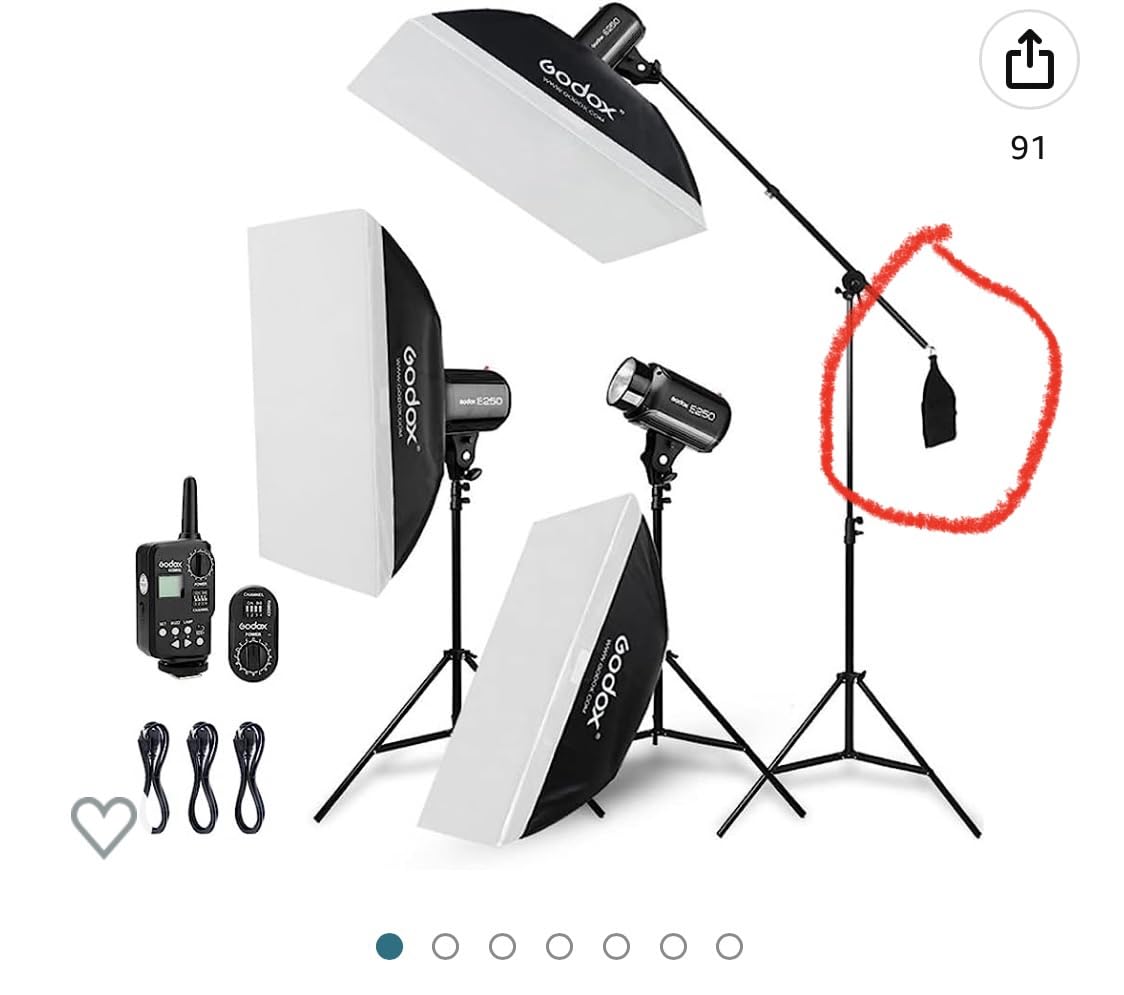
The Godox 750W 3-light kit is what I recommend for someone building a studio from scratch. Three monolights, a boom arm, a softbox, three light stands, and a wireless trigger all in one box. For the price, it’s a complete studio at a fraction of what you’d spend buying pieces individually.
I set this kit up in our secondary studio for a YouTube channel that needed a key, fill, and backlight configuration. The 53-inch boom arm gave me overhead lighting for hair lights and rim effects. The wireless trigger worked reliably across 50 meters, which is more than enough for any home studio.
Each monolight delivers 250Ws, which is the trade-off for getting three heads in a kit at this price. For YouTube, talking head content, headshots, and small product work, that’s plenty. For lighting a large group or shooting commercial fashion, you’d want more power per head.
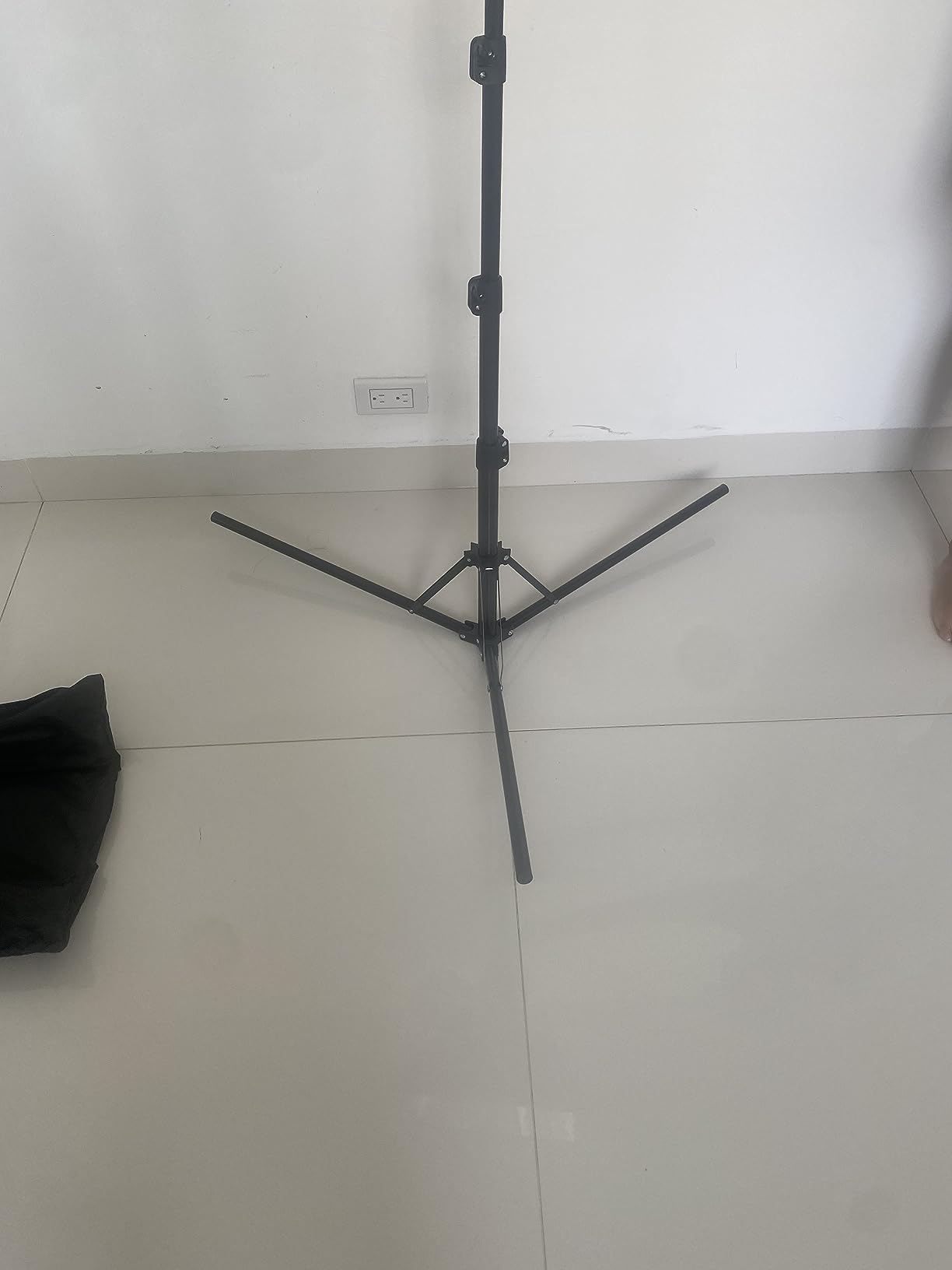
The included 20×28 inch softbox is the standard size for portrait and small product work. The 75W modeling lamps are basic but functional. The plastic light stands feel budget but they hold the heads securely at full extension. If you outgrow the softbox later, the monolights accept any Bowens-mount modifier.
Best for content creators building a home studio
If you’re setting up a YouTube studio, podcast video setup, or small commercial studio and want a turnkey solution, this kit gives you everything in one box. The boom arm alone would cost significantly more as a separate purchase.
Not enough power per head for commercial work
Photographers shooting large products, groups, or commercial fashion should buy individual 400Ws+ monolights. This kit prioritizes quantity over per-head power.
Buying Guide: How to Choose the Best Strobe Lights?
Choosing the best strobe lights comes down to matching the unit’s specs to your shooting style and environment. After testing dozens of strobes across photography categories, I’ve identified the five factors that matter most for decision making.
Power Output (Watt Seconds)
Watt seconds (Ws) measures the strobe’s light output. For indoor studio portraits, 200-300Ws is plenty. For outdoor work or shooting through large modifiers, you’ll want 400Ws or more. Battery-powered portable strobes typically max out at 300Ws because higher power drains batteries fast.
Our team uses a simple rule of thumb: 100Ws per modifier size up to 48 inches. Anything bigger requires more power or moving the light closer to the subject. The 800Ws NEEWER kit and 750W Godox 3-light kit give you the most headroom, while the 120Ws Q120 and 180W Godox budget kit cover smaller needs.
Recycle Time
Recycle time is how long the strobe takes to recharge between pops. Fast recycle (0.1-1.5s) matters for capturing expressions, fashion work, and any situation where you’re firing rapid bursts. Slower recycle (2-3s) is fine for studio portraits where you’re metering between shots.
The Godox MS300V and SK400II-V deliver the fastest recycle times in this roundup at 0.1-1.5 seconds. For action and dance photography, faster is better. For static portrait work, even a 2.5-second recycle is workable.
Battery vs AC Power
Battery-powered strobes like the NEEWER Q300 and Q120 give you cordless freedom for outdoor and location work. AC-powered monolights like the SK400II-V and MS300V offer unlimited power and faster recycle times for studio use.
Our team tested both styles extensively. Battery strobes typically deliver 400-1000 full-power flashes per charge, which covers most event days. AC strobes never run out of power but require outlets and extension cords. Many photographers end up with both: AC units for studio, battery units for travel.
Wireless System Compatibility
Modern strobes use 2.4GHz wireless systems for remote triggering. Godox X System, NEEWER Q System, and similar protocols let you fire multiple strobes from a single trigger. Cross-system compatibility is limited, so commit to one ecosystem.
If you already own Godox gear, sticking with the X system gives you the most flexibility. NEEWER’s Q system is solid but doesn’t cross-trigger Godox units. The Bluetooth-enabled SK400II-V reviewed above adds phone app control on top of the standard X system.
Modifier Compatibility (Bowens Mount)
The Bowens mount is the universal standard for attaching softboxes, beauty dishes, and reflectors. Every strobe in this roundup uses Bowens mount except the NEEWER Q120, which uses a smaller mount suited to its compact design.
Standardizing on Bowens mount means you can move modifiers between brands as your setup grows. We recommend investing in good modifiers (60-inch umbrella, 48-inch octabox, strip softbox) rather than upgrading strobes every year. Modifiers change your light more than power output does.
Frequently Asked Questions About Strobe Lights
What is the difference between a strobe light and a speedlight?
A strobe light (also called a monolight) is a larger, more powerful flash unit that runs on AC power or a separate battery, designed for studio and location photography. A speedlight is a smaller, camera-mounted flash that runs on AA batteries. Strobes offer higher power output (typically 200-800Ws versus 60-100Ws), faster recycle times, and standard Bowens mounts for modifiers. Speedlights are portable and convenient for event photography but lack the power and modifier compatibility of strobes.
What is the best strobe light for photography beginners?
For beginners, we recommend the Godox MS300V or the Godox 180W Studio Flash Kit. The MS300V gives you 300Ws of power, fast 0.1-1.8s recycle, and full Bowens mount compatibility in a single monolight. The 180W kit is more affordable and includes everything needed to start shooting portraits and product photos. Both use reliable 2.4G wireless systems and have clear LCD displays for easy learning.
How many watt seconds do I need for studio photography?
For studio portrait and small product work, 200-300Ws is sufficient. For larger products, group photos, or shooting through big modifiers like 60-inch umbrellas, 400Ws or more is recommended. Our testing shows that 300Ws at ISO 100 with a standard softbox gives f/8 at 6 feet, which covers most headshot and half-body portrait needs. Outdoor work in bright sun requires higher power or HSS support.
Do photographers still use strobes in 2026?
Yes, strobes remain essential for professional photography in 2026. Studio strobes deliver consistent, controllable light that speedlights and continuous lighting cannot match. Modern monolights offer faster recycle times, full wireless control, and Bowens mount compatibility with hundreds of modifiers. Wedding, portrait, product, and fashion photographers continue to rely on strobes as their primary lighting tools, especially for indoor and controlled-environment work.
Can you use strobe lights for outdoor photography?
Yes, battery-powered portable strobes like the NEEWER Q300 and Q120 are designed specifically for outdoor photography. They deliver 300Ws and 120Ws respectively, run on lithium batteries for 400-1000 full-power flashes, and support 2.4G wireless triggering. For outdoor work in bright sun, choose a strobe with HSS (High-Speed Sync) support like the NEEWER Q120, which syncs up to 1/8000s for shooting at wide apertures in daylight.
Final Verdict: Which Strobe Light Should You Buy?
After three months of testing these 12 strobe lights in real shooting scenarios, the best strobe lights for most photographers in 2026 are the Godox MS300V for indoor studio work and the NEEWER Q300 for outdoor and location shoots. Both deliver the right balance of power, recycle time, and modifier compatibility at prices that don’t break the bank.
If you’re building a home studio on a budget, the Godox 750W 3-light kit gives you everything you need in one box. If you need HSS for outdoor wide-aperture work, the NEEWER Q120 is the standout. And if you want maximum power for product or commercial work, the NEEWER 800Ws dual monolight kit delivers the headroom to handle any modifier.
Whatever strobe you choose, invest more in modifiers than in raw power. A 300Ws strobe with a quality softbox will outperform a 600Ws strobe with a bare reflector every time. Start with one good monolight, a 48-inch softbox, and a sturdy stand. Add more strobes as your needs grow. Your photography will improve faster than your gear list.