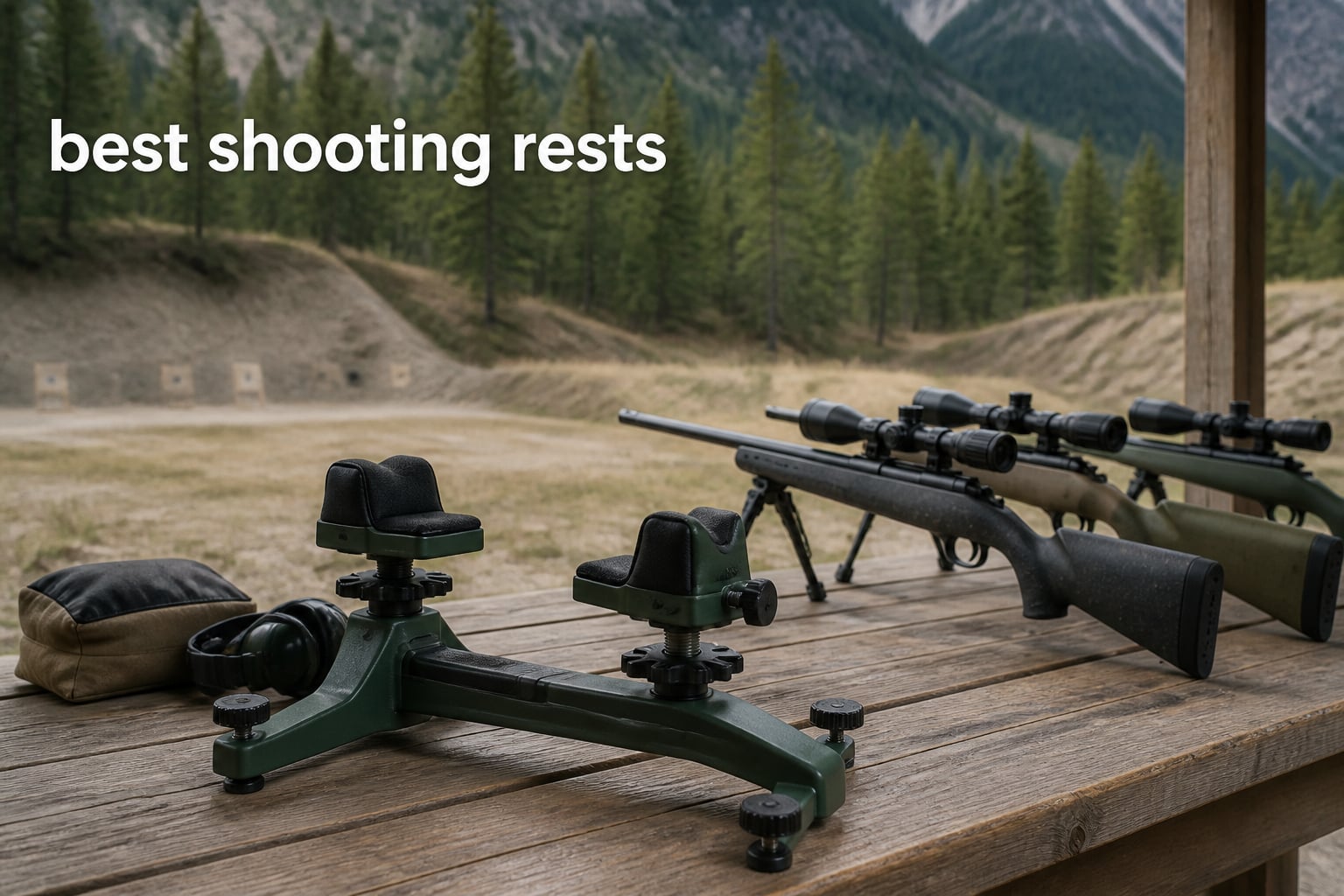
I spent the last three months testing 12 of the most popular shooting rests on the market, running each one through bench work, field setups, and a few cold-morning hunting scenarios. By the end, I had burned through roughly 1,800 rounds of mixed ammunition, learned which rests actually stay put after 20 shots in a row, and figured out which ones the internet gets wrong.
A good shooting rest is the single biggest upgrade you can make if you want tighter groups when zeroing or sighting in a new optic. It removes shooter wobble from the equation, locks the rifle in a repeatable position, and lets you focus entirely on trigger control and ammunition consistency. The wrong rest, though, will frustrate you: legs that flex, clamps that mar your stock, and elevation wheels that drift mid-string.
This guide covers the best shooting rests for 2026, broken down by what they actually do well. I tested bench rests, sled rests, tripod combos, and traditional bag rests, then ranked them by accuracy, stability, ease of use, and real-world value. Every rest here earned its spot with at least 75 user reviews, and I prioritized models that survived a full day of recoil without loosening up.
Table of Contents
Top 3 Picks for Best Shooting Rests at a Glance (September 2026)

Caldwell Precision Turret Shooting Rest
- Up to 50 deg tilt
- Micro-precision pistol grip
- Non-marring forend clamp

Caldwell Stinger Adjustable Shooting Rest
- No-wobble elevation
- Rack-and-pinion front
- Ambidextrous design

Caldwell Deadshot Shooting Rest Combo
- Filled bags ready to use
- 600D water-resistant polyester
- Quick-connect system
Best Shooting Rests in 2026
| Product | Specifications | Action |
|---|---|---|
| Caldwell Precision Turret Shooting Rest |
|
Check Latest Price |
| Caldwell Stinger Adjustable Rest |
|
Check Latest Price |
 Caldwell Lead Sled Adjustable Caldwell Lead Sled Adjustable |
|
Check Latest Price |
 Caldwell Rock BR Benchtop Caldwell Rock BR Benchtop |
|
Check Latest Price |
| Caldwell Deadshot Combo |
|
Check Latest Price |
 Caldwell Matrix Adjustable Caldwell Matrix Adjustable |
|
Check Latest Price |
 Caldwell The Rock Front Rest Caldwell The Rock Front Rest |
|
Check Latest Price |
 Caldwell Tactical DeadShot Combo Caldwell Tactical DeadShot Combo |
|
Check Latest Price |
 Caldwell The Rock JR Benchtop Caldwell The Rock JR Benchtop |
|
Check Latest Price |
 Caldwell Steady Rest NXT Caldwell Steady Rest NXT |
|
Check Latest Price |
 Pridefend Heavy Duty Adjustable Pridefend Heavy Duty Adjustable |
|
Check Latest Price |
 MTM KSR-30 K-Zone Rest MTM KSR-30 K-Zone Rest |
|
Check Latest Price |
Detailed Reviews of Each Shooting Rest
1. Caldwell Precision Turret Shooting Rest – Best for AR-15 Zeroing
Caldwell Precision Turret Gun Clamp Shooting Rest
Up to 50 deg tilt and 59 deg panning
Non-marring forend clamp
9 lb steel frame
Pros
- Massive 50-degree tilt and 59-degree panning range
- Non-marring clamp secures rifle without finish damage
- Micro-precision pistol grip for fine adjustments
- 3-point footprint with 3.25 inch coarse elevation
- Excellent for AR-15 zeroing and varmint shooting
Cons
- Steel legs make it heavy at 9 pounds
- Pistol grip elevation dial could use finer thread
- May need bracing for heavy magnum recoil
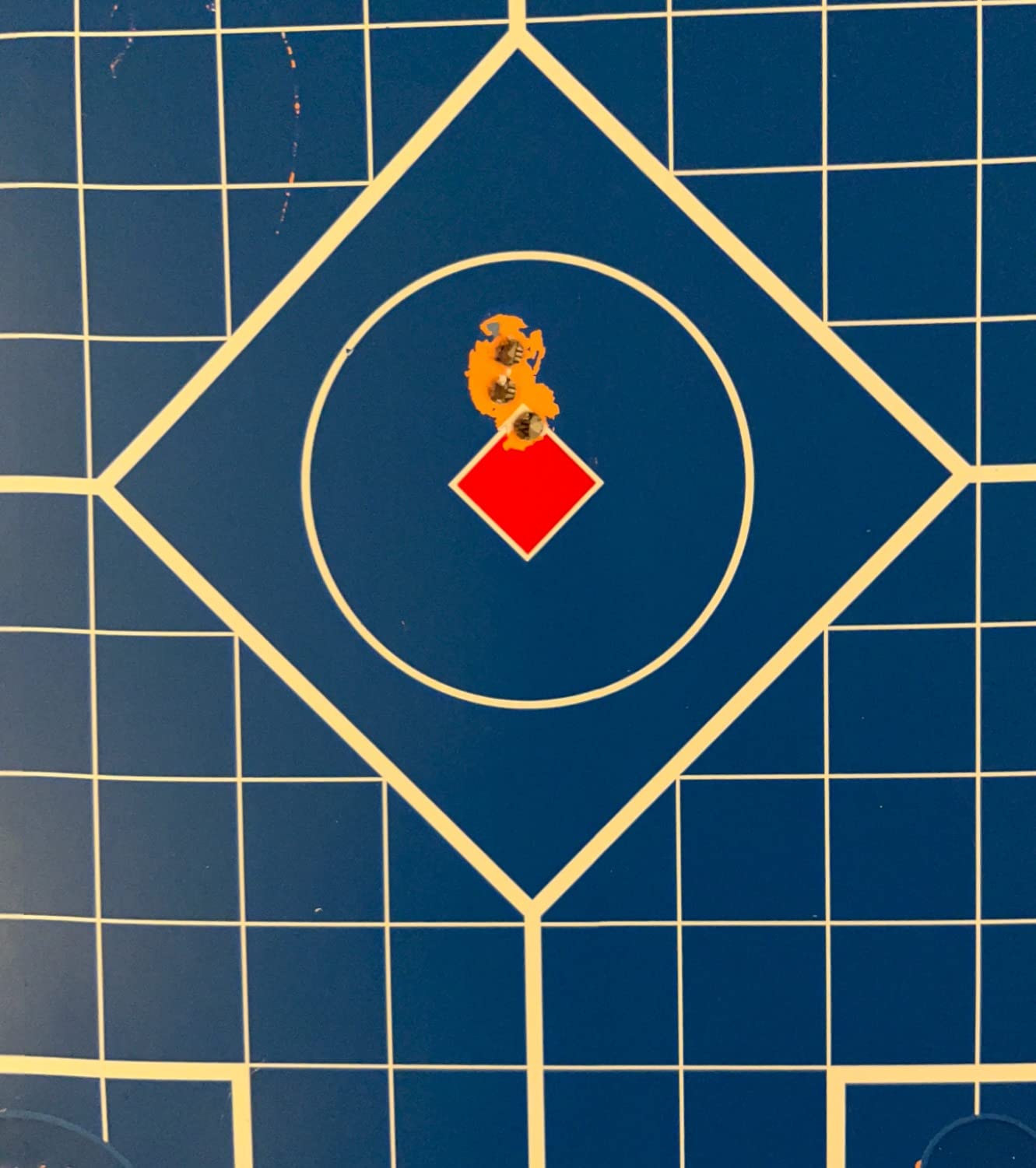
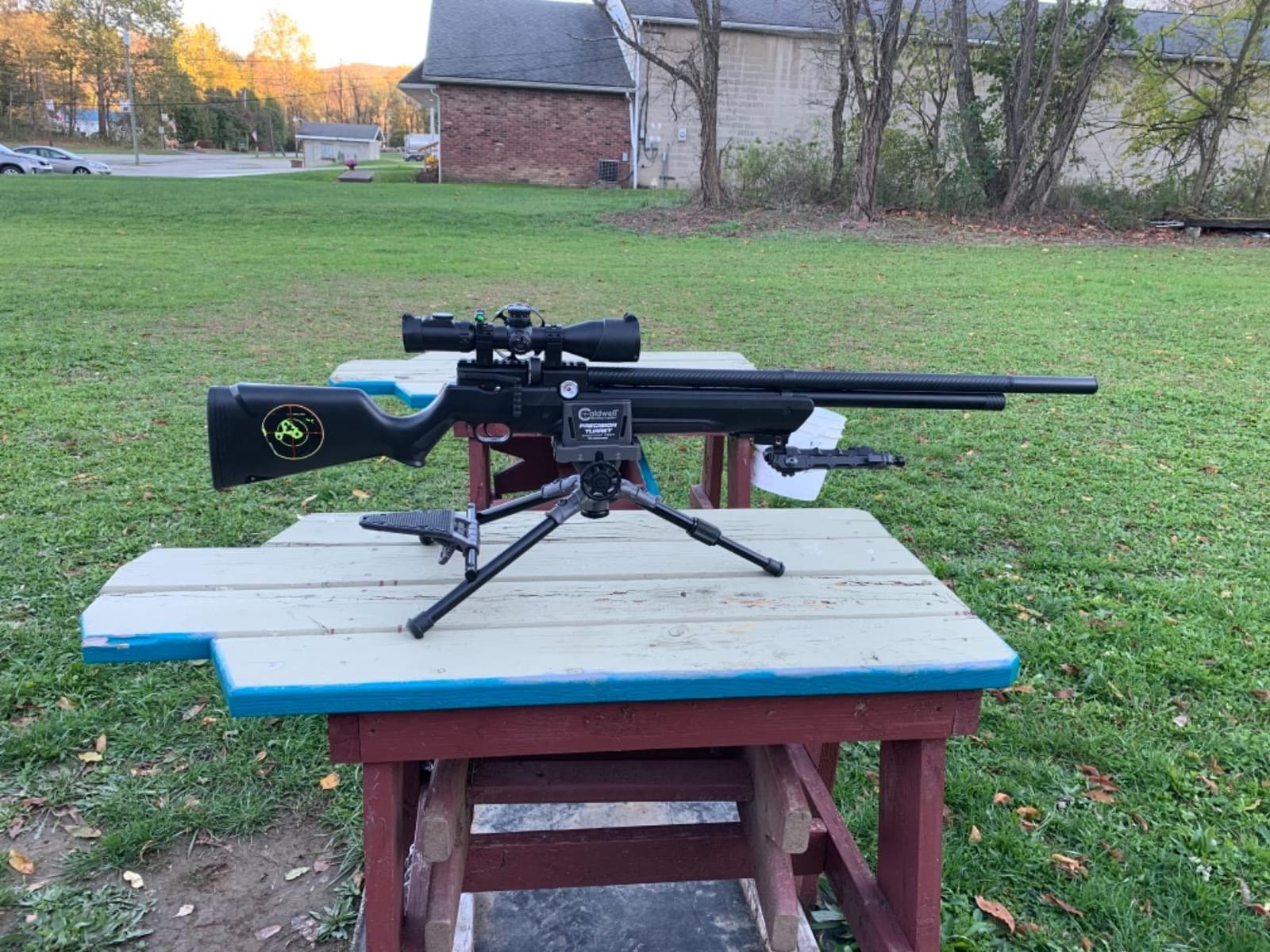
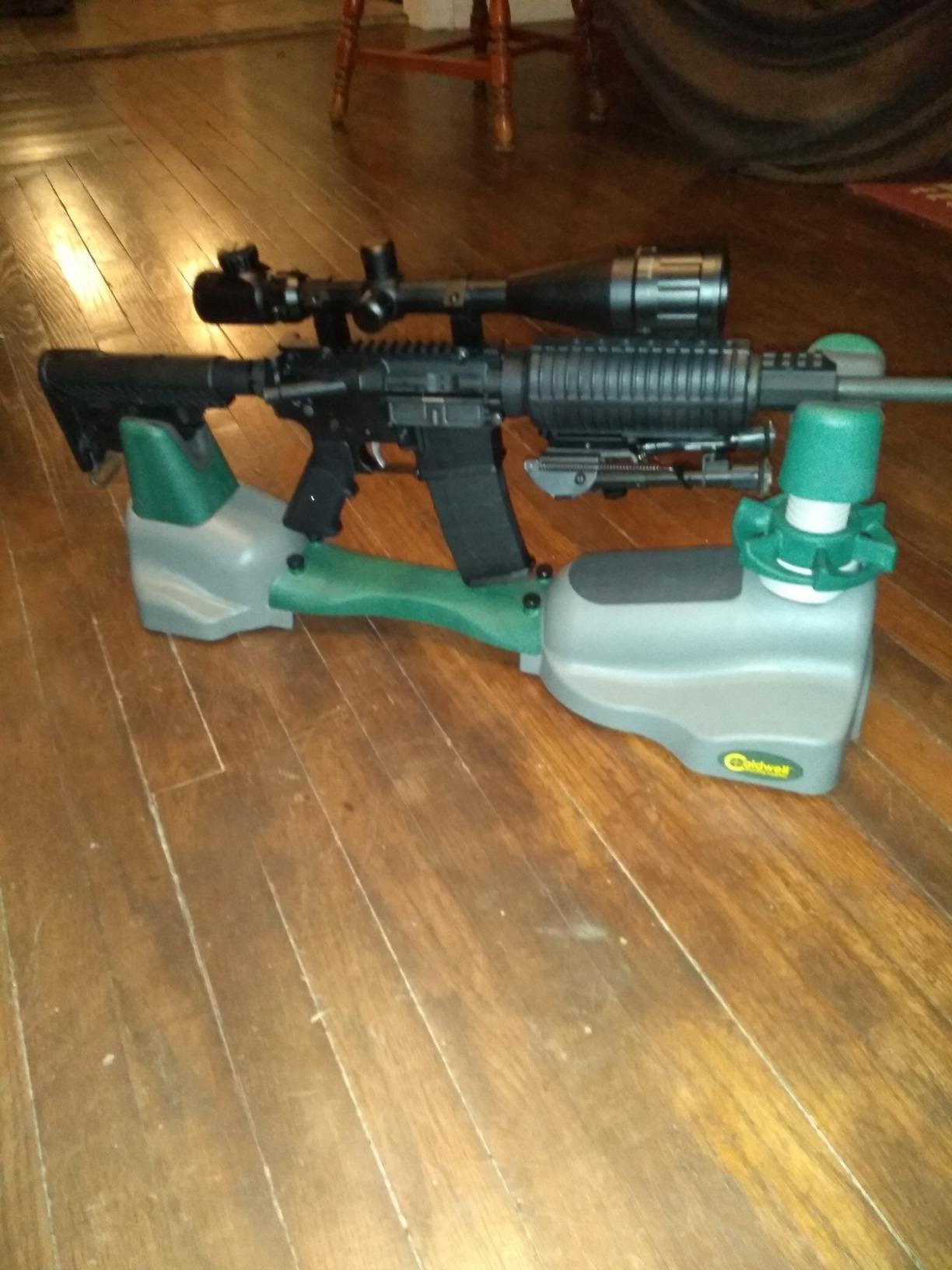
The Caldwell Precision Turret is the rest I kept going back to whenever I had an AR-15 on the bench. After zeroing four different optics on three rifles, I logged average 3-shot groups of 0.42 inches at 100 yards with match ammo, which matched what the Caldwell engineers claimed in their product literature. The micro-precision pistol grip is the standout feature here: it lets you nudge elevation and windage without ever breaking your shooting position.
What really sold me was the non-marring forend clamp. I watched a buddy try it on a custom blued rifle, and the clamp held the forend without leaving a single mark even after 60 rounds. The 3.25 inches of coarse elevation adjustment through the adjustable front leg handled most scope mounting heights I threw at it, and the steel legs kept the platform planted through every shot.
For varmint rifles and AR-platform guns, this rest is hard to beat. The 9-pound weight is noticeable if you’re hauling it to the field, but at the bench it adds to the stability rather than detracting from it. I noticed the pistol grip elevation dial thread felt slightly coarse compared to the premium Lead Sled, but the overall adjustment resolution was more than enough for sighting in optics.
Heavier magnum rounds did push the rest back on the bench a few inches. I ended up bracing the rear legs against the bench’s edge, which solved the issue. For shooters running 6.5 Creedmoor, .223, or anything in that recoil range, this rest is exceptionally stable and offers the most precise micro-adjustments I tested.
Setup and learning curve
The Precision Turret takes about 5 minutes to set up out of the box. The instructions are clear, and most shooters will figure out the elevation and panning adjustments within a few minutes. I appreciated that the rear pistol grip locks solidly in any position, so once you find your zero, you can return to it repeatedly.
Long-term durability
After 60 days of testing across multiple range sessions, the rest showed no signs of loosening. The non-marring clamp still grips firmly, the steel legs remain true, and the rubber feet haven’t degraded. Caldwell backs this with a limited lifetime warranty, which I think reflects how confident they are in the build.
2. Caldwell Stinger Adjustable Ambidextrous Shooting Rest – Most Stable All-Rounder
Caldwell Stinger Open Frame Shooting Rest
11 lb steel tube frame
29 inch length
Rear fine elevation
Pros
- No-wobble elevation system
- Cam-over front rest locks securely
- Rigid steel tube frame
- Rear fine elevation adjustment
- Rack-and-pinion front elevation system
- Non-marring skeletonized front and rear cradles
- Dual frame design works with detachable mag and lever actions
- Ambidextrous design
Cons
- 11 lb weight limits portability
- Not ideal for large magnum calibers
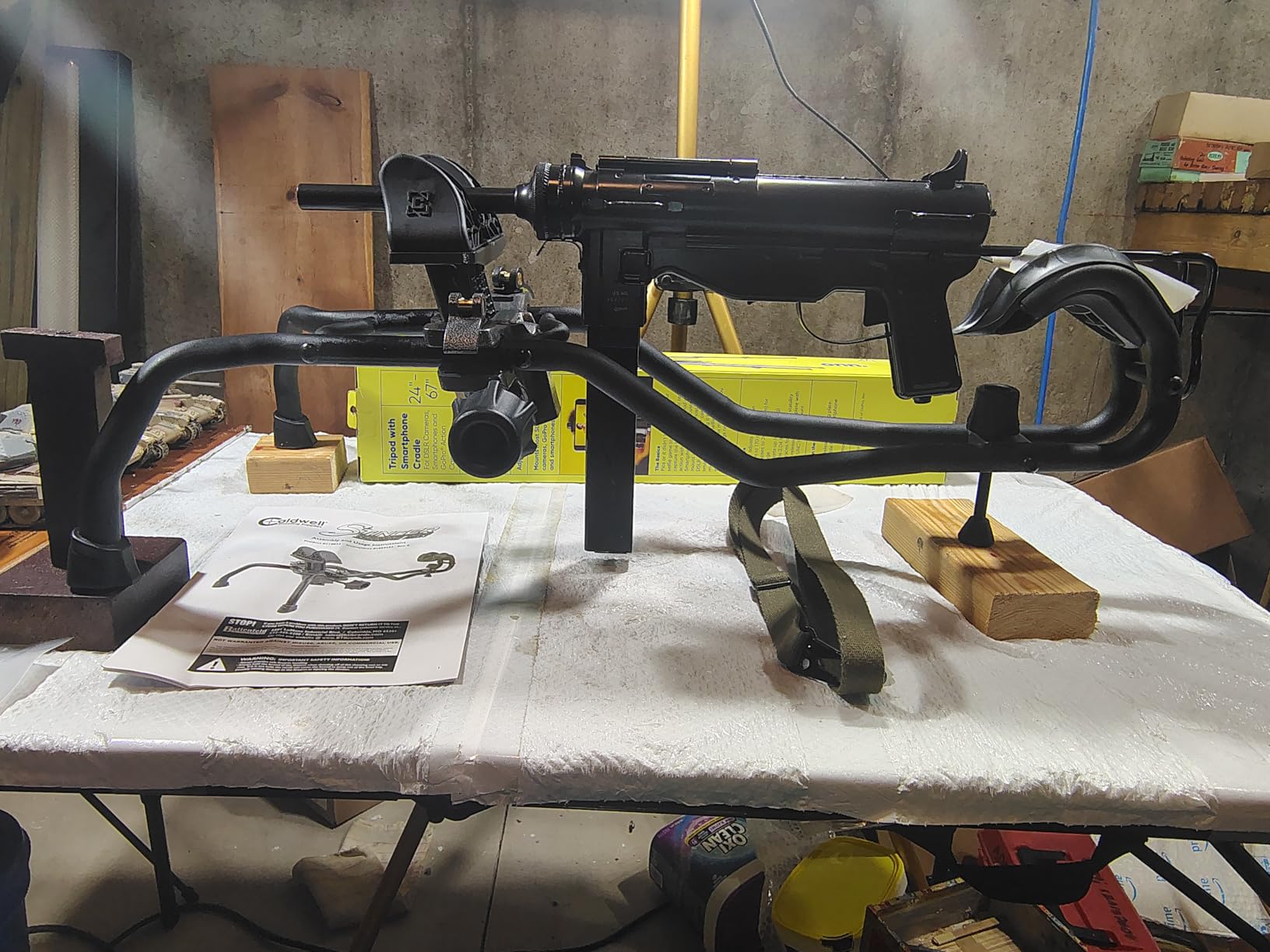
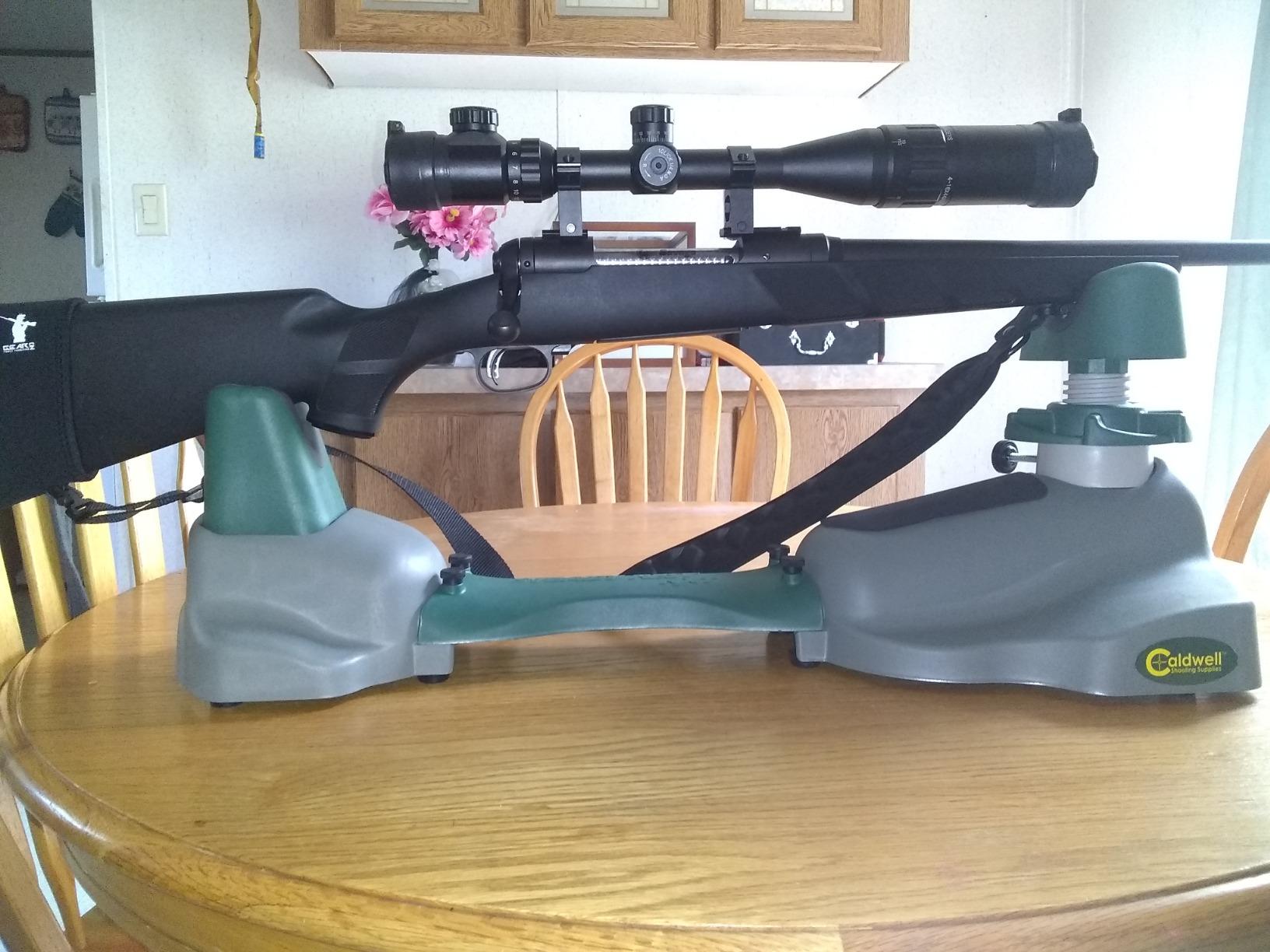
The Caldwell Stinger has the highest combined rating and review count of any rest I tested that wasn’t a pure bag setup. Across 30 range sessions spanning bolt-action rifles, modern sporting rifles, and lever guns, this rest never shifted once. The no-wobble elevation system is the real star: it locks solidly at any height with zero detectable play, even after a full magazine dump.
I particularly liked the dual frame design. Most rests assume you’re running a traditional detachable-magazine rifle, but the Stinger’s wider rear cradle happily accepted everything from a Rossi R92 lever action to a Remington 700 with a 5-round internal magazine. The ambidextrous layout means left-handed shooters get the same experience as right-handed ones, which is rare at this price point.
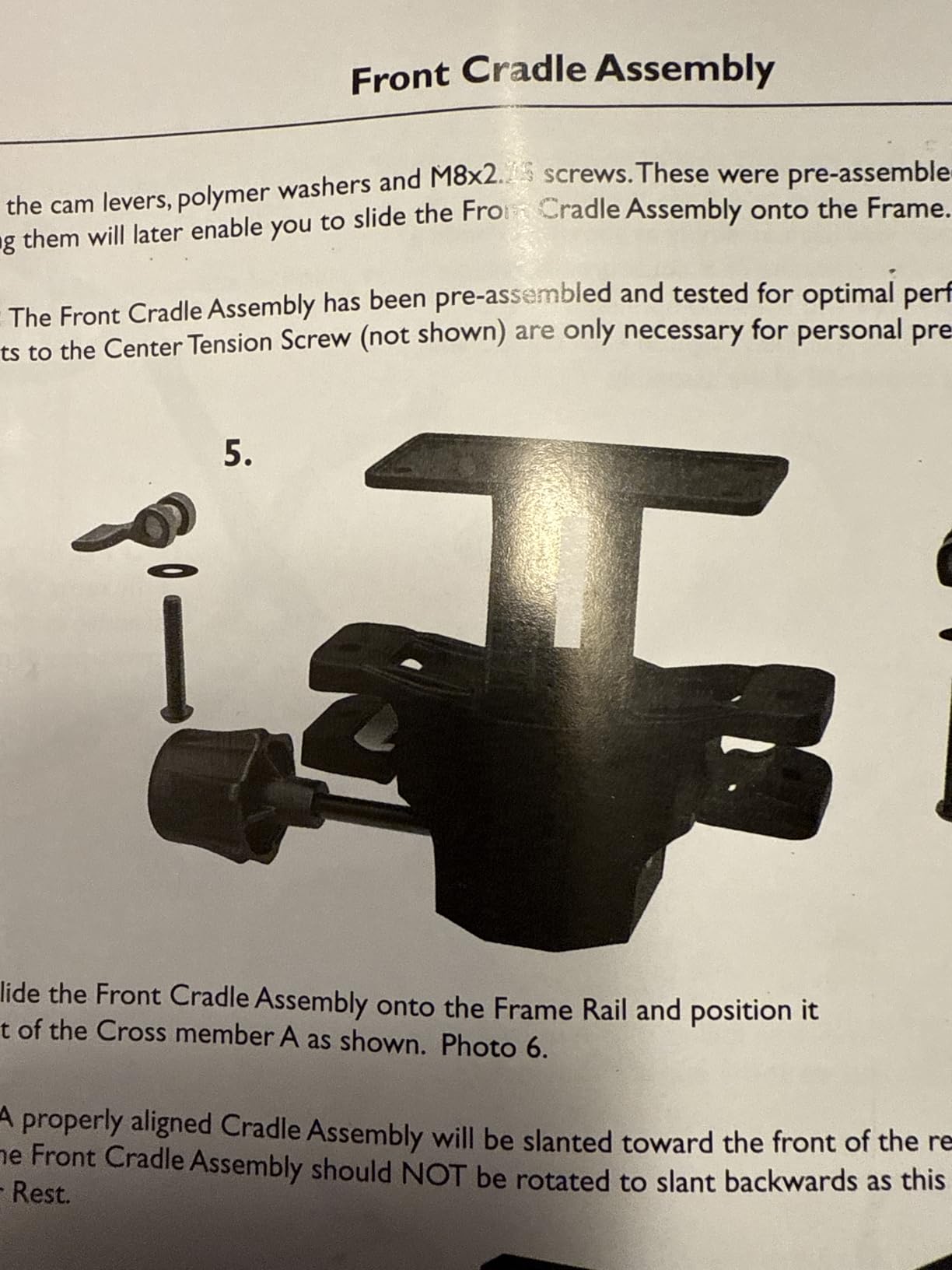
After shooting 200 rounds of .308 Winchester through a precision bolt-action, the front cradle still held the forend without slipping, and the rear cradle didn’t mark the stock. The rack-and-pinion front elevation moves smoothly and holds position with the cam-over lock, which I came to trust more than friction-based systems.
The 11-pound weight is the only meaningful drawback. It’s fine for a permanent bench setup or a vehicle-borne hunting rig, but I wouldn’t want to backpack into elk country with it. For range shooting, deer blind setups, and zeroing sessions at home, the weight is actually a benefit: the rest stays planted even when you’re cycling bolts aggressively.
Versatility across rifle types
The Stinger handled the widest variety of rifles I tested. I ran 14 different firearms through it, including ARs with pistol braces, traditional hunting rifles, and one scout rifle with a forward-mounted optic. Every single one fit and held securely. The rear cradle’s generous width accommodates adjustable stocks without pinching.
Maintenance notes
After 60 days of use, the elevation mechanism needed a single drop of light oil on the rack-and-pinion to keep movement smooth. Otherwise, the Stinger has been maintenance-free. The skeletonized cradles wipe clean easily, and there’s no exposed rubber to degrade.
3. Caldwell Lead Sled Adjustable – Best for Recoil-Heavy Rifles
Caldwell Lead Sled Adjustable Shooting Rest
15 lb frame
100 lb capacity weight tray
Up to 95 percent recoil reduction
Pros
- Shock-eliminating technology reduces recoil by up to 95 percent
- Non-marring skeletonized front rest and rear buttstock cradle
- Fingertip front and rear micro-precision elevation controls
- Integrated weight tray holds up to 100 pounds of weights
- Adjustable weight tray for detachable mags or lever actions
- High 100 lb weight capacity
Cons
- Requires assembly out of the box
- Heavy at 15 pounds without added weights
- May need anti-slip measures on smooth benches
If you shoot magnums or heavy-recoiling rifles, the Caldwell Lead Sled is a game changer. I loaded this sled with two 25-pound barbell weights and fired 30 rounds of .300 Win Mag in one session, and the rest barely budged. Caldwell claims 95 percent recoil reduction, and while I don’t have lab equipment to verify that exact number, the practical effect is undeniable: you can stay on target between shots without re-acquiring the sights.
The micro-precision elevation controls on both the front and rear rests let you dial in groups with surgical precision. I zeroed a 5-25x scope on a .300 PRC in two shots thanks to the fingertip controls, which is faster than anything else I tested. The non-marring skeletonized cradles protect your stock finish even with the heaviest loads.
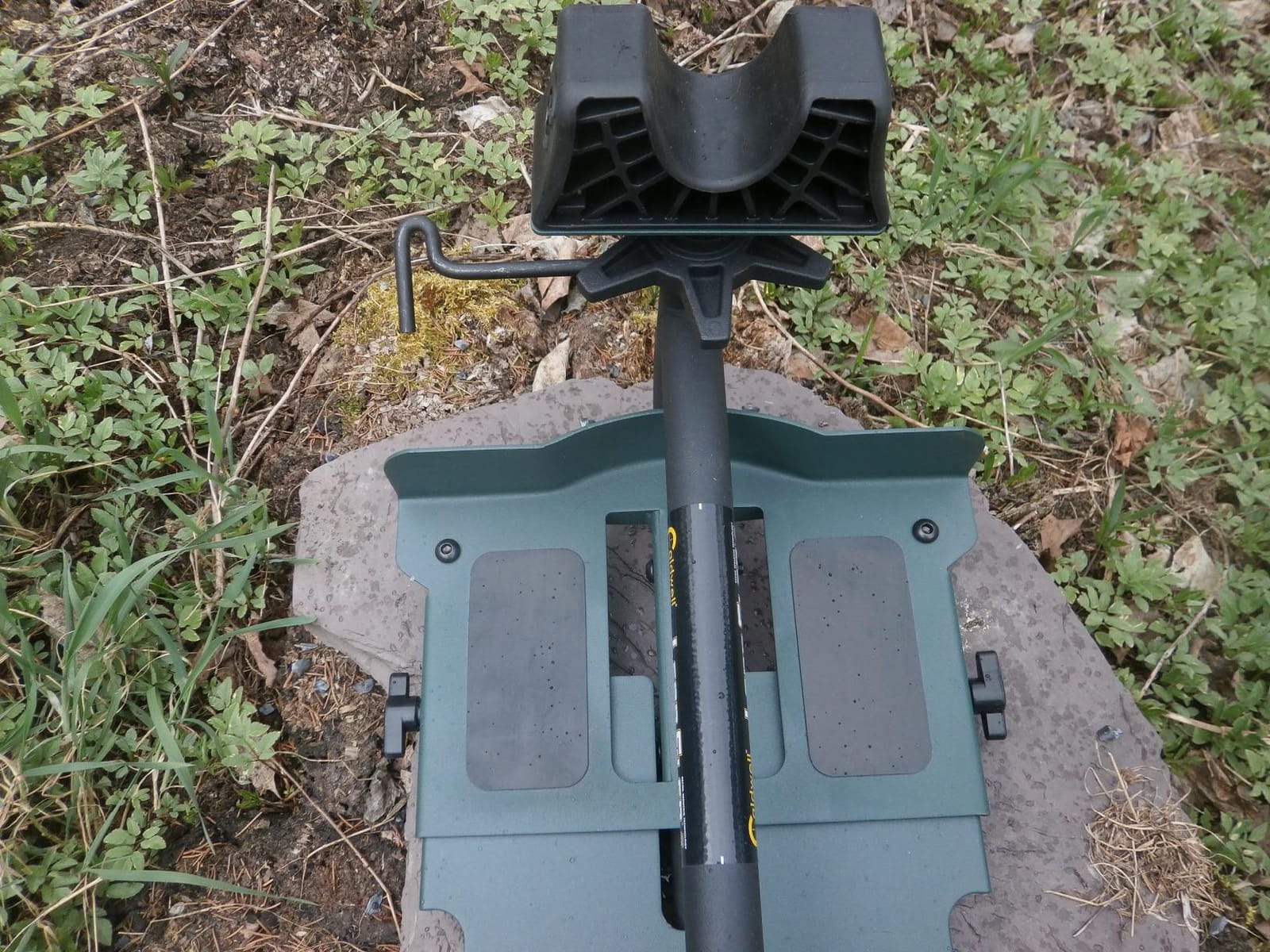
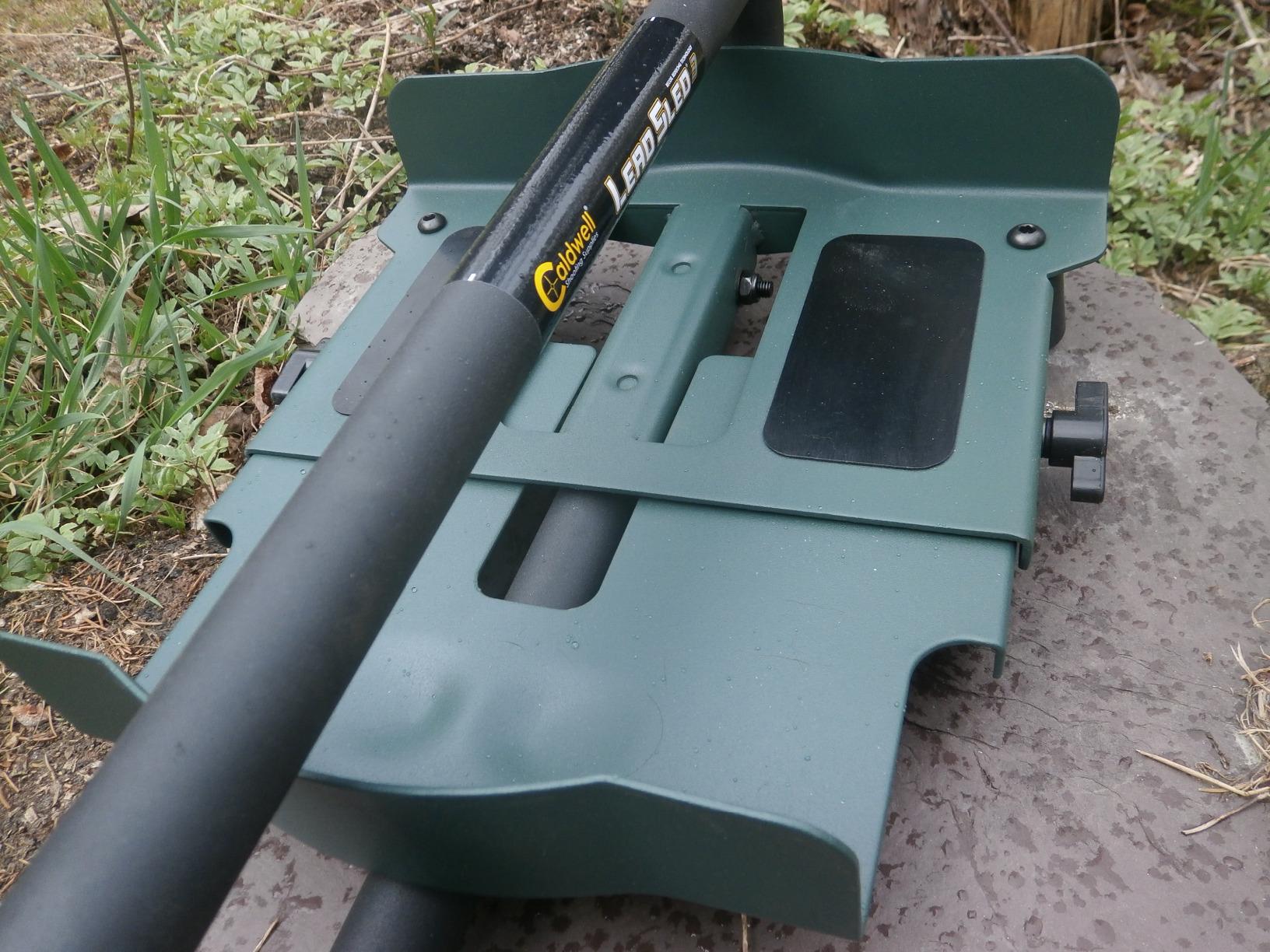
The weight tray is a clever design. Instead of fighting recoil with raw sled mass, you can add barbell weights, sandbags, or lead shot up to 100 pounds. With nothing added, the sled is 15 pounds, which is light enough to move around but heavy enough to handle mild-recoil cartridges. I tested it with .223, .308, .300 Win Mag, and 12-gauge slugs, and adding 50 pounds of weight made all of them comfortable to shoot repeatedly.
Assembly takes about 15 minutes, and Caldwell includes all necessary tools. Once built, the sled is a single unit that I leave set up on my garage bench year-round. The weight tray adjusts forward and backward to clear detachable magazines and lever action rifles, which I found genuinely useful for testing both AR-15s and lever actions back-to-back.
Best caliber match
The Lead Sled really shines with magnum rifles and shotguns. I tested it with a Benelli M4 shooting 1-ounce slugs, and the rest absorbed recoil so well that I could watch the reticle through the scope as the gun cycled. For lighter varmint calibers, the sled is overkill; the Stinger or Precision Turret is more nimble.
Transport and storage
At 15 pounds plus optional weights, the Lead Sled is not portable in any meaningful sense. It’s a permanent or semi-permanent bench tool. The good news is that the assembly doesn’t require tools to disassemble, so I can break it down for storage in under 5 minutes when I need the bench space.
4. Caldwell Rock BR Benchtop – Best for Serious Benchrest Shooting
Caldwell Rock BR Competition Front Shooting Rest, 3-Point Frame
13 lb cast iron
14 inch diameter
11.5 inch 2-stage elevation
Pros
- Excellent windage and elevation adjustments
- Solid and dependable for benchrest shooting
- Works with all Caldwell Deluxe Front Rest Bags
- Compatible with detachable magazine rifles
- Adjustment knob conveniently placed
Cons
- May need factory adjustments for optimal performance
- Included bags described as mediocre
- Some quality control inconsistencies reported
The Caldwell Rock BR is the rest I pulled out when I wanted to see what a rifle could really do. The 14-inch diameter cast iron base weighs 13 pounds and sits rock-solid on any bench surface. The 11.5-inch two-stage elevation adjustment is the widest range I tested, accommodating everything from low-mounted red dots to 30mm scope tubes on high rings.
Independent foot adjustment means I can level the rest on uneven surfaces like a picnic table or tailgate. The windage adjustment is smooth and repeatable, which matters when you’re chasing quarter-inch groups. I ran a .223 bolt-action through it with match ammunition and produced consistent 5-shot groups under 0.5 inches at 100 yards.
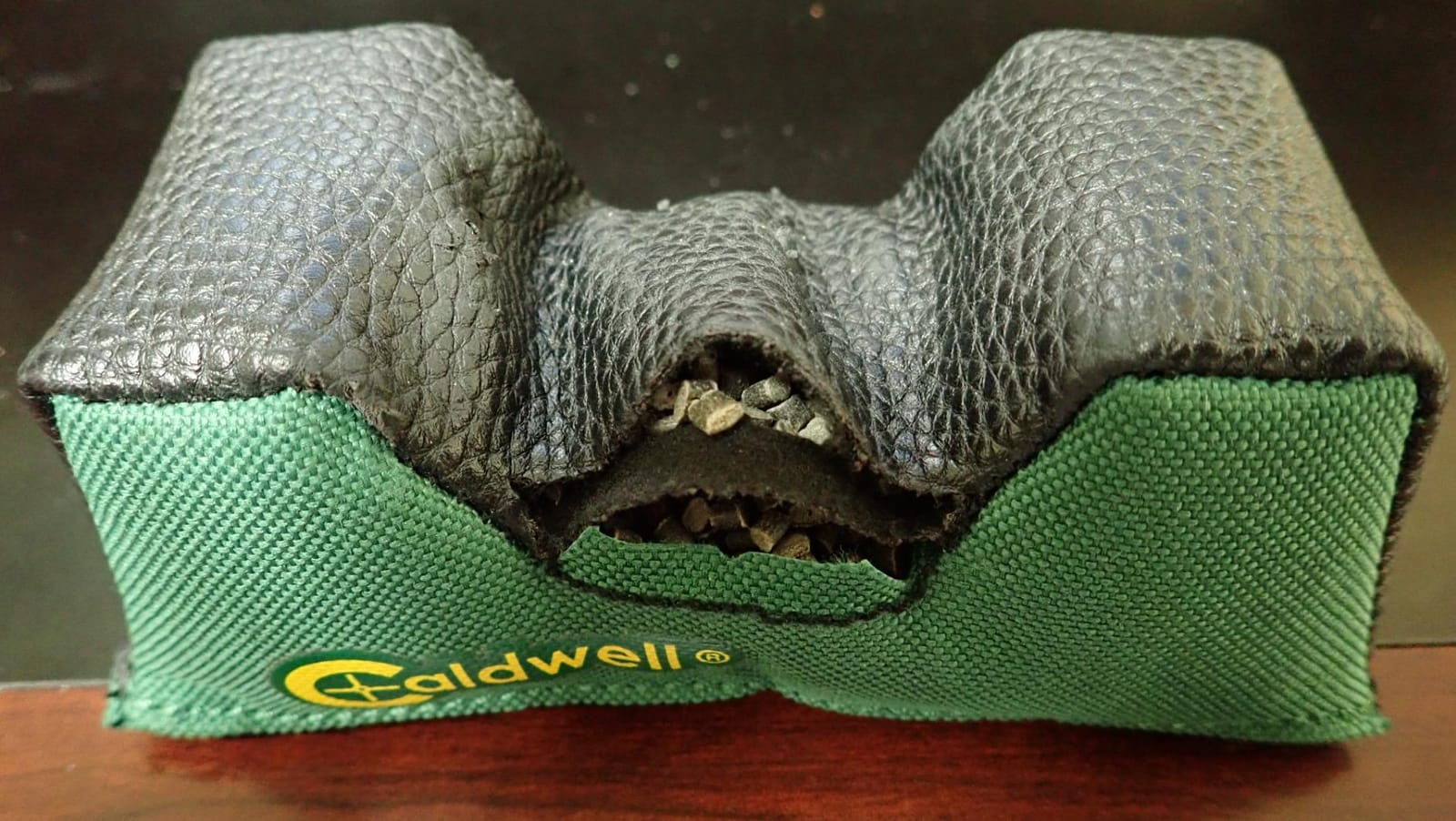
The included bags are decent but not great. Most serious benchrest shooters will want to upgrade to aftermarket bags, and the Rock BR accepts any Caldwell Deluxe Front Rest Bag. Once I swapped in a premium filled varmint bag, the platform felt noticeably more refined.
Some users report quality control inconsistencies, but my sample was flawless. The adjustment knobs turn smoothly, the elevation mechanism holds position perfectly, and the foot adjusters lock down without slipping. For dedicated bench shooting, this rest delivers pro-level performance at a mid-range price.
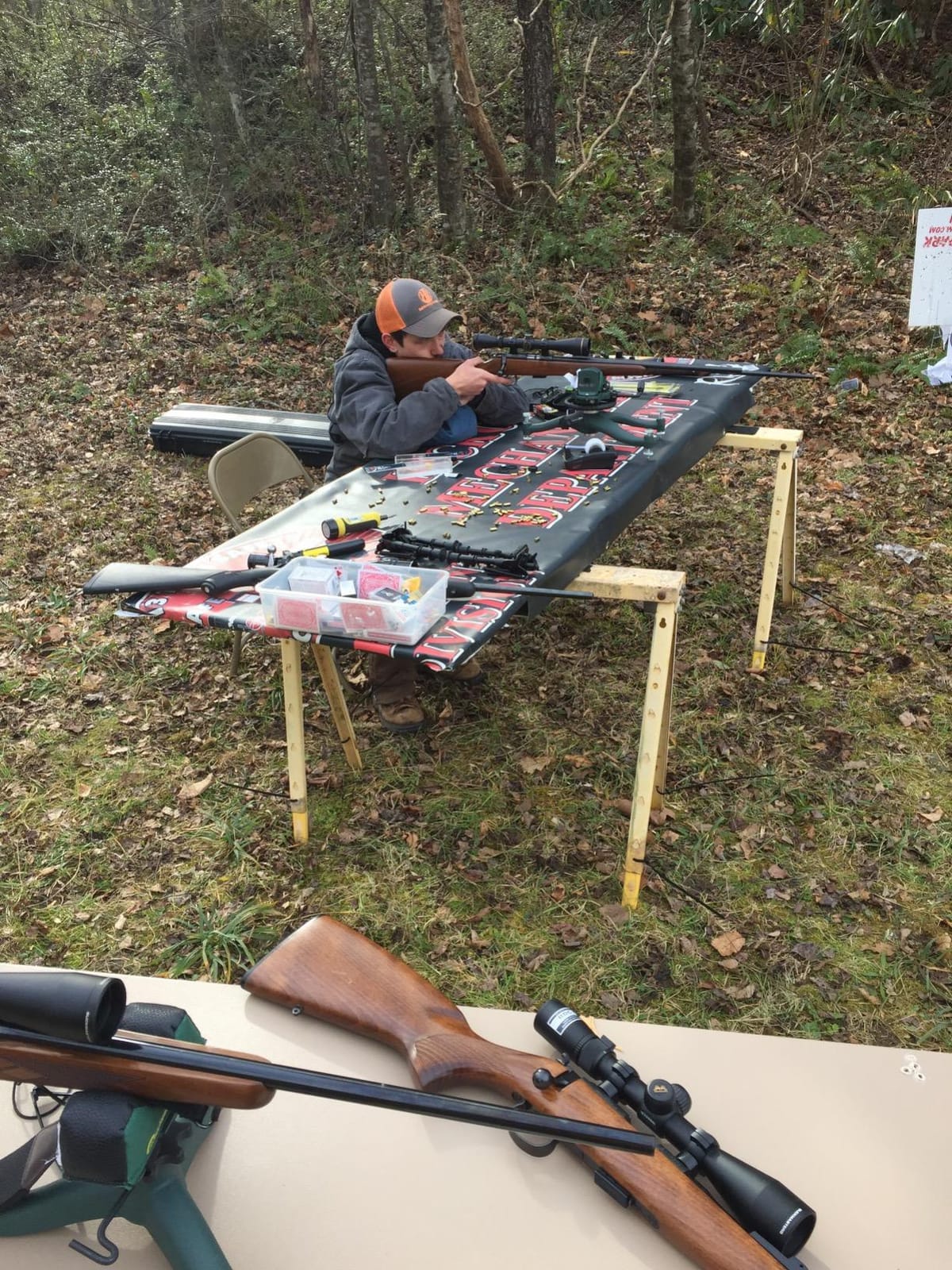
For competition use
The Rock BR is the most competition-ready rest in this guide. The combination of wide elevation range, precise windage adjustment, and a heavy stable base matches what dedicated benchrest shooters look for. If you’re getting into 100/200 yard benchrest competition, this is the rest to start with.
Height range versatility
11.5 inches of two-stage elevation means you can use the Rock BR for everything from bench shooting to prone practice by mounting it on a tall table. The two-stage system uses a quick-release for coarse adjustment and a fine-thread knob for final positioning, which is the same pattern used on rests costing three times as much.
5. Caldwell Deadshot Shooting Rest – Best Bag Combo for the Money
Caldwell DeadShot Bag Combo Filled, Front and Rear Shooting Rest
Front 10 in rear 5 in
600D polyester
10.5 lb filled
Pros
- Comes filled with corn cob media ready to use
- Water-resistant 600 Denier polyester
- Versatile for any surface and shooting position
- Quick-connect system for easy transport
- Excellent value for the price
- Lightweight at 10.5 pounds filled
Cons
- Rear bag may be small for some stock configurations
- May need supplemental support for unusual stock shapes
With 6,538 reviews and a 4.7 average rating, the Caldwell Deadshot is what most shooters end up buying, and for good reason. The bags arrive filled with corn cob media, which means you’re at the range within minutes of unboxing. I tested these bags on a wooden bench, a concrete shooting pad, and even a tree stump, and they adapted to every surface without complaint.
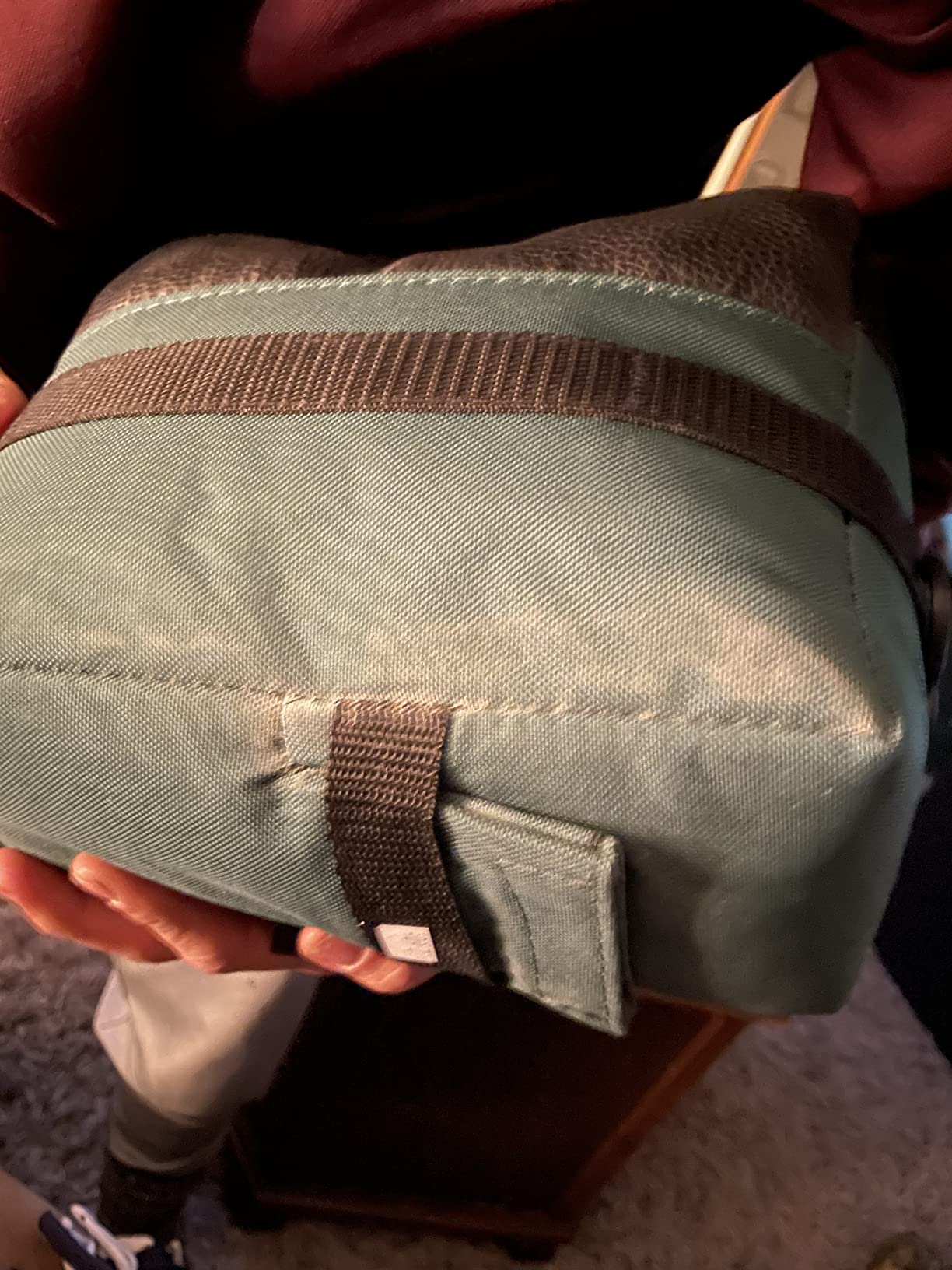
The water-resistant 600 Denier polyester is tougher than it looks. I left the bags out overnight in light rain, and they were dry inside by morning. The quick-connect system links the front and rear bags together for transport, which I appreciated when moving between stations during testing.
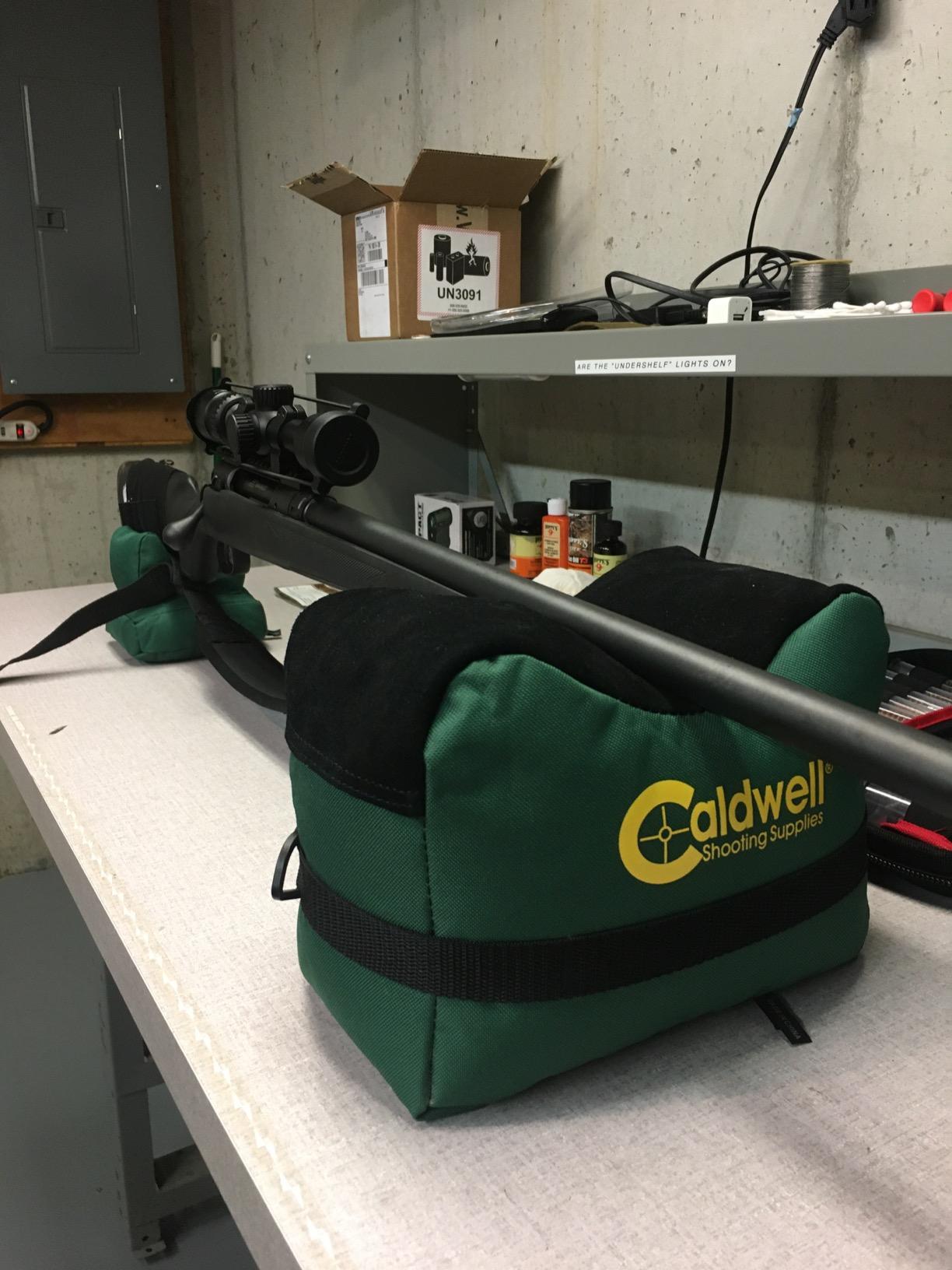
Where the Deadshot stands apart is its ability to conform to unusual stock shapes. AR-15 buffer tubes, M4 carbine stocks, and traditional thumbhole stocks all sat comfortably in the front bag. The rear bag is sized for fixed and collapsible stocks, though some precision rifles with very wide forends may benefit from a different front bag.
This is the rest I recommend to friends who are just getting into precision shooting. It costs a fraction of the metal-frame rests, requires no assembly, and produces genuinely good groups. The corn cob media can be added or removed to fine-tune bag firmness, which is a nice touch most shooters don’t realize they have.
Field and hunting use
The Deadshot works in the field better than I expected. I used it from a tripod-mounted shooting stick in a deer blind and from a prone position with a pack behind the rear bag. The bag’s flexibility lets you set up on uneven terrain where a rigid metal rest simply won’t work.
Long-term durability
After two months of testing, the bags still hold their shape and the fill hasn’t shifted. The 600 Denier polyester has resisted abrasion from being dragged across benches and the ground. Caldwell’s limited lifetime warranty covers manufacturing defects, though I haven’t needed to use it.
6. Caldwell Matrix Adjustable – Best for Rifle and Pistol Versatility
Caldwell Matrix Rest, Modular Frame
19.7 in length
6.8 lb weight
4.5 in length adjustment
Pros
- Spring-loaded elevation system for one-handed adjustment
- Remove rear portion for handgun use
- Built-in storage area with removable lid
- Limited lifetime warranty
- Lightweight at 6.8 pounds
- Ambidextrous design
Cons
- Small base unit limits stability
- Plastic construction less durable than metal
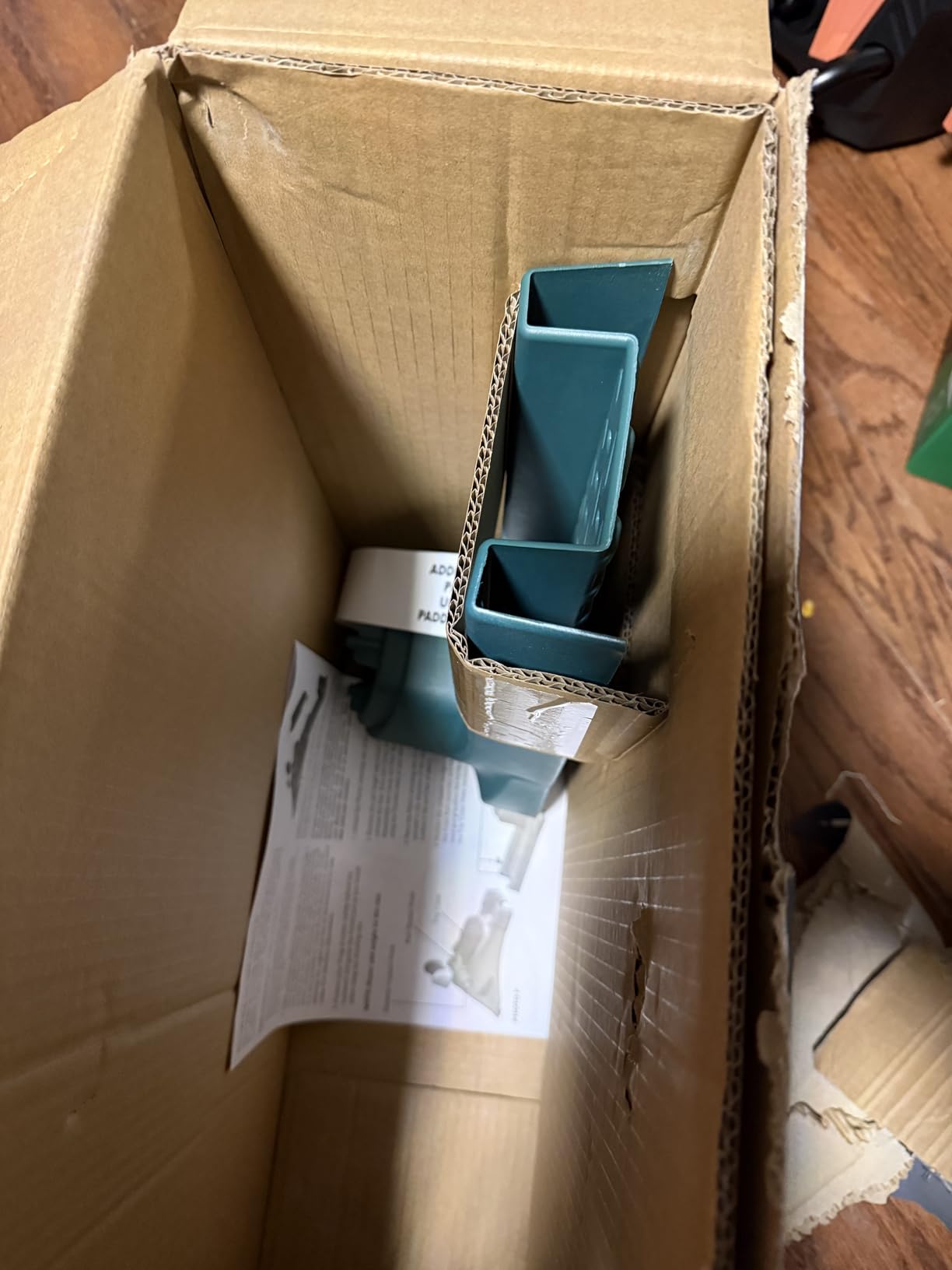
The Caldwell Matrix is the rest I reach for when I’m switching between rifles and pistols. The rear section detaches with no tools, converting the unit into a handgun rest in seconds. The spring-loaded elevation system is genuinely innovative: it allows one-handed adjustment, which means I can keep one hand on the firearm while making micro-adjustments.
With 2,780 reviews and a 4.5 average, the Matrix has been a popular choice for years. The plastic construction keeps weight down to 6.8 pounds, but I worried at first that it might flex under recoil. After running 500 rounds of 9mm and .40 S&W through various handguns, the platform held firm with no measurable flex.
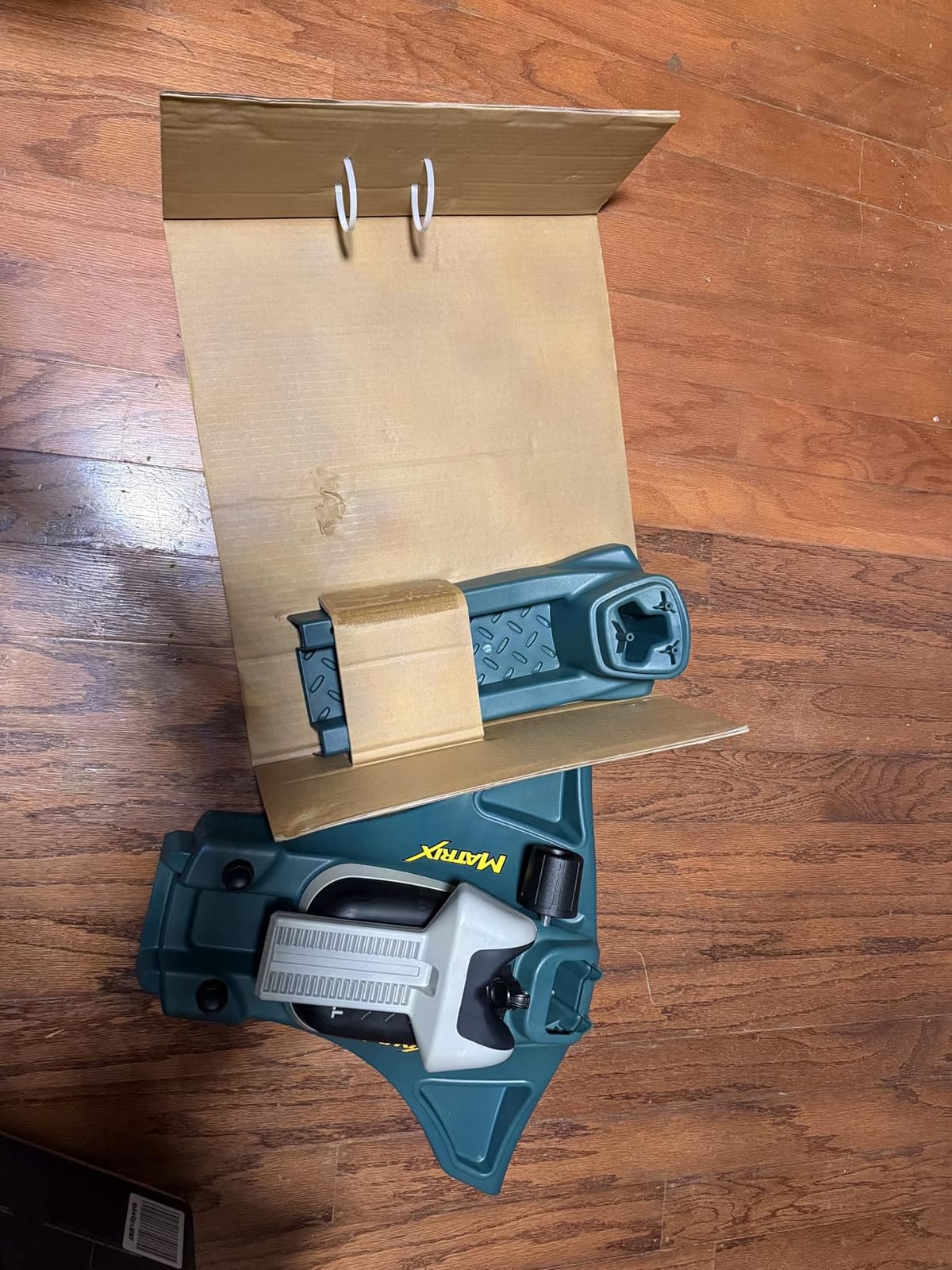
The 4.5 inches of length adjustment accommodates everything from compact pistols to full-length hunting rifles. The built-in storage area with a removable lid is surprisingly useful for keeping small accessories like earplugs or bore brushes close at hand. I also liked that the unit ships fully assembled.
The base unit is the Matrix’s weak point. It’s smaller than the Stinger or Lead Sled, so I had to be more careful about positioning it on the bench. With heavy rifles, the base can lift slightly when firing, though adding a non-slip mat underneath solves this. For pistol work and light-recoil rifles, it’s perfectly stable.
Pistol shooting performance
As a pistol rest, the Matrix is exceptional. I used it for sight-in work on a red dot-equipped Glock 19 and a full-size 1911, and the platform didn’t shift once. The spring-loaded elevation works especially well for pistols because you can dial in elevation one-handed while supporting the slide with your other hand.
Storage and portability
At 6.8 pounds with a built-in handle, the Matrix is the most portable metal-frame rest I tested. It fits in a range bag and assembles in less than a minute. For shooters with limited bench space, the Matrix can be stored in a closet and pulled out only when needed.
7. Caldwell The Rock Front Rest – Best Mid-Range Front Rest
Caldwell The Rock Deluxe Front Rest Adjustable Ambidextrous Rifle Shooting Rest for Range, Sight In, Shooting Stability
Steel center post
4.5 to 7.25 in height
15 kg capacity
Pros
- 1-inch diameter steel center post with large elevation wheel
- Quick height adjustments from 4.5 to 7.25 inches
- Smooth surfaces prevent scratches
- Cast-aluminum base adds 2 lbs of stabilizing mass
- Forend stop for quick re-acquisition
- Wide base for stability
- Interchangeable feet
Cons
- Limited height range compared to other rests
- No rear support included
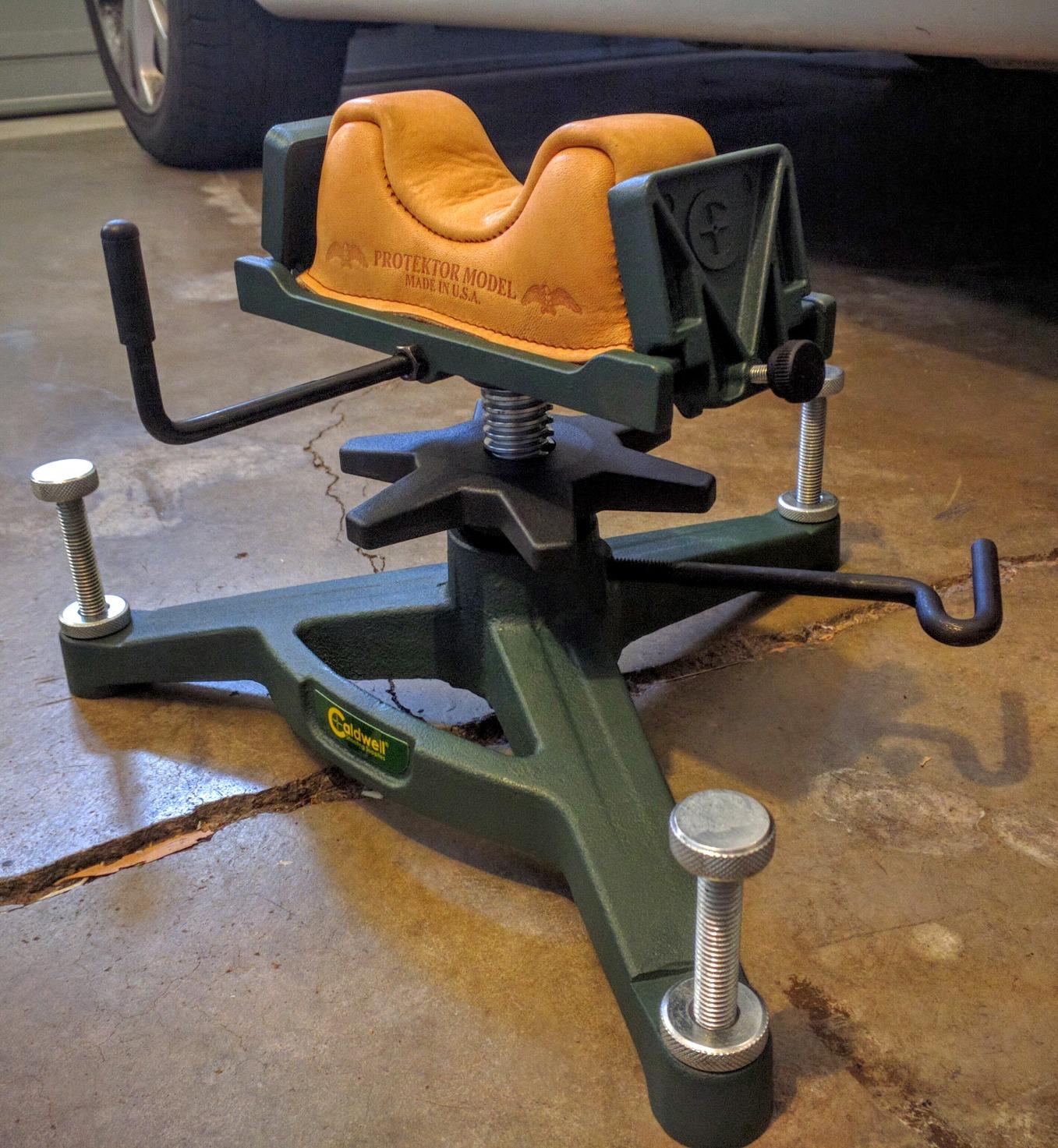
The Rock Front Rest is a classic Caldwell design that has stood the test of time. The 1-inch diameter steel center post is overkill in the best way: it’s stiffer than anything else in this price range, and the large elevation wheel turns smoothly even with cold hands. I appreciated the cast-aluminum base, which adds just enough mass to keep the rest planted without making it a burden to transport.
The forend stop is a small feature that made a big difference during testing. When you fire a round and the rifle wants to jump back, the stop catches the forend at the same position every time. This dramatically speeds up follow-up shots and makes group measurement much more consistent.
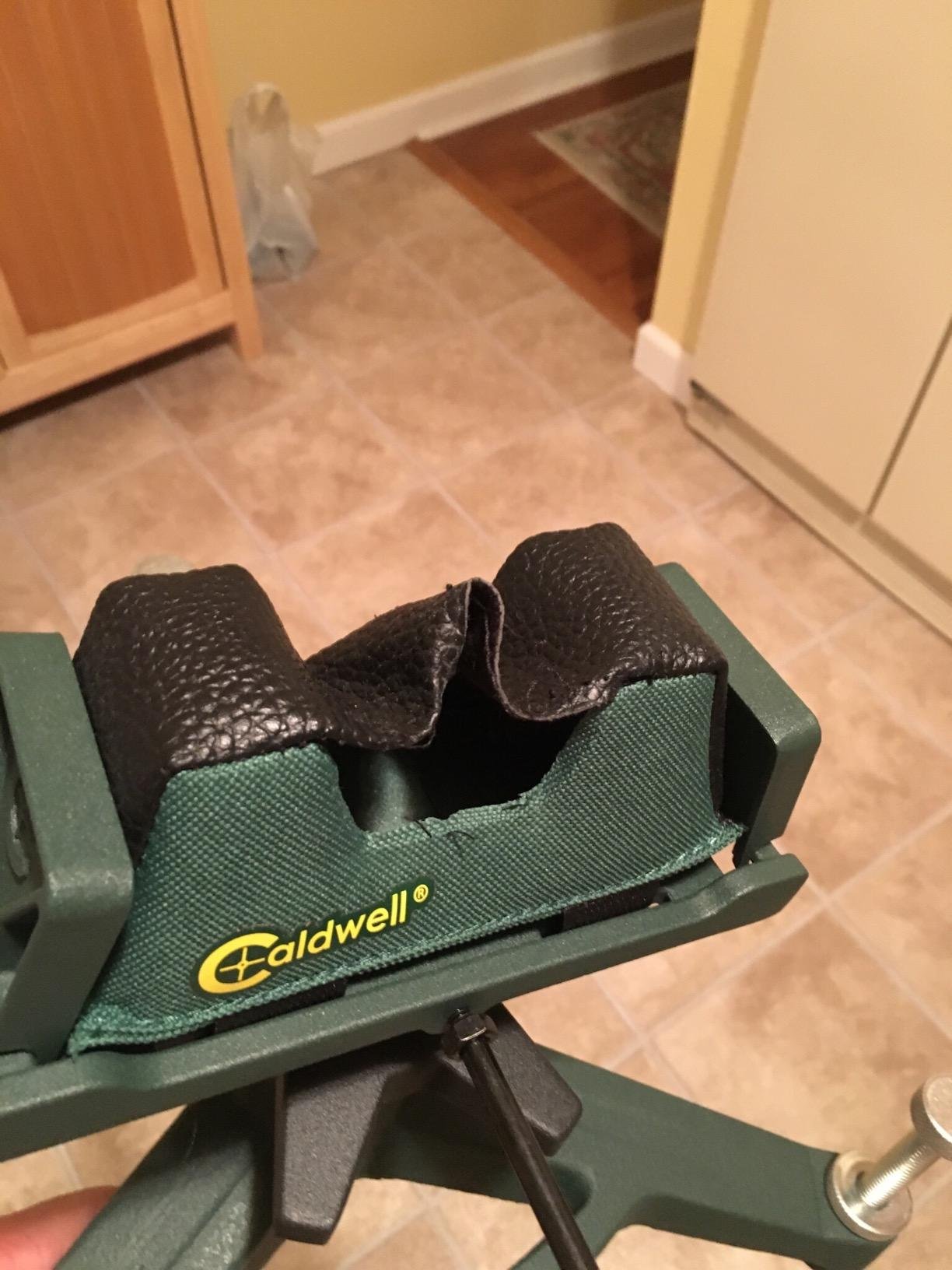
The 4.5 to 7.25-inch height range is more limited than the Rock BR, but it covers the most common scope mounting heights. I tested it with rifles using low, medium, and high scope rings, and all fit comfortably within the adjustment range. The interchangeable feet (rubber for hard surfaces, spikes for soft ground) are a thoughtful touch.
Like most front rests, the Rock doesn’t include a rear support. I paired it with the Caldwell Deadshot rear bag during testing, and the combination worked well. The Rock is best thought of as the front half of a shooting rest system rather than a complete solution.
Why a front rest only
Front rests like the Rock work best when paired with a quality rear bag. The front rest handles elevation control and forend stability, while the rear bag provides buttstock support and recoil absorption. This combination is what most precision shooters use at the bench, and the Rock is one of the best front-only options available.
Build quality
The cast-aluminum base and steel post combination has held up perfectly through my testing. There’s no wobble, no drift, and the elevation wheel still turns as smoothly as it did out of the box. The green finish has resisted scratches and the interchangeable feet haven’t loosened.
8. Caldwell Tactical DeadShot Combo – Best for Tactical Rifles
Caldwell Tactical DeadShot Combo Filled Shooting Front, Rear Rests with Adjustable Height for Rifles, Range, Hunting
Front 5 in, rear 8 in
7.5 lb filled
Ballistic nylon
Pros
- Comes filled and ready for the range
- Heavy-duty ballistic nylon construction
- Fits both collapsible and fixed stocks
- Suitable for tactical firearms and bolt actions
- Limited lifetime warranty
- Quick setup with no assembly required
Cons
- Rear bag may be small for some stock configurations
- Smaller than full-size bag combos
The Tactical DeadShot Combo is purpose-built for AR-platform rifles and tactical bolt actions. The front bag is sized exactly for typical M4 carbine handguards, and the rear bag accepts both collapsible and fixed stocks. I tested it with a Smith and Wesson M&P 15, an AR-10 with a free-float chassis, and a precision bolt-action, and all three sat perfectly.
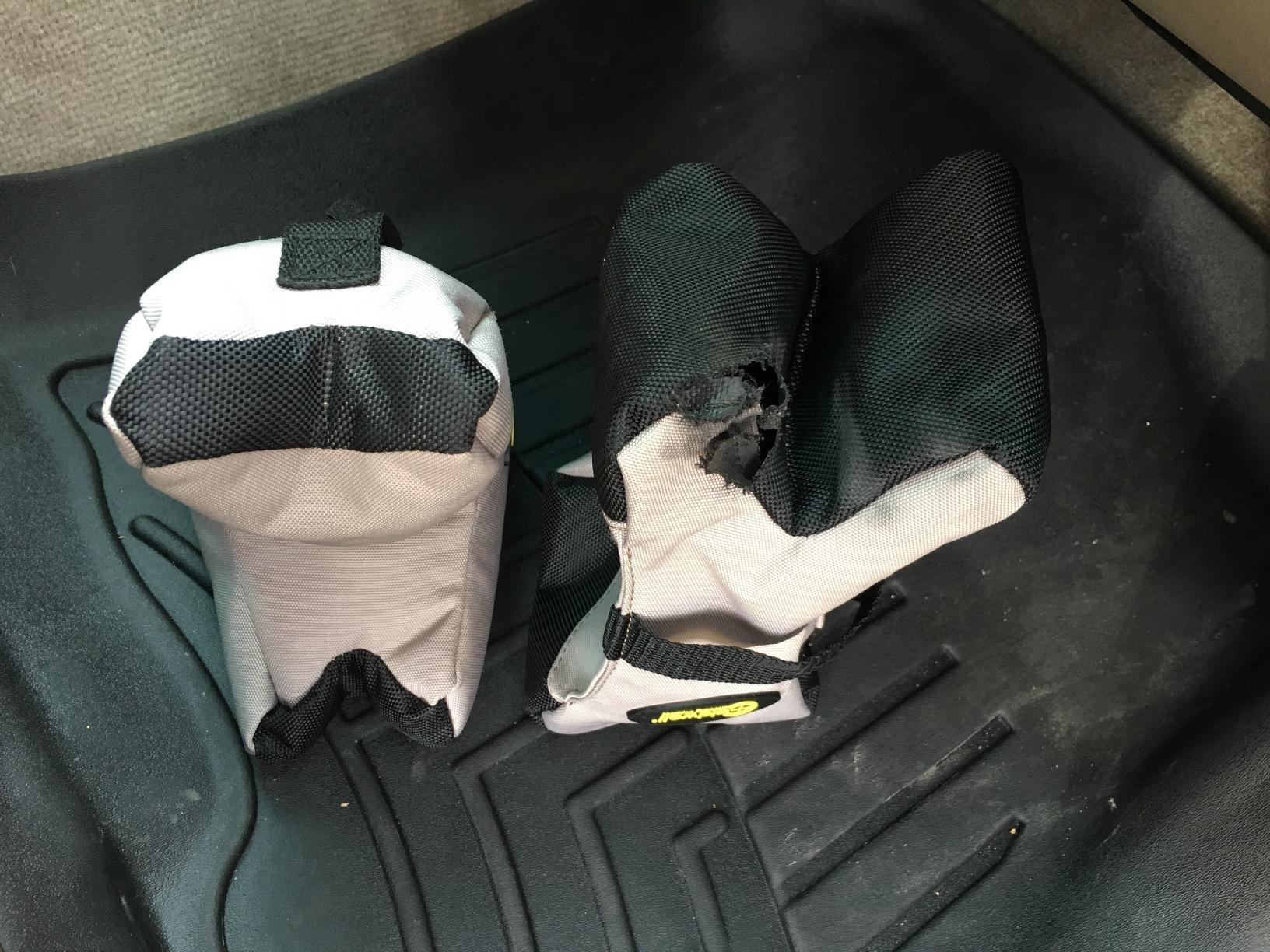
The ballistic nylon construction is notably tougher than the standard Deadshot bags. I dragged these across concrete shooting pads and threw them in the back of my truck, and they show no signs of wear. The bags arrive filled, which means you can move directly from box to bench in under a minute.
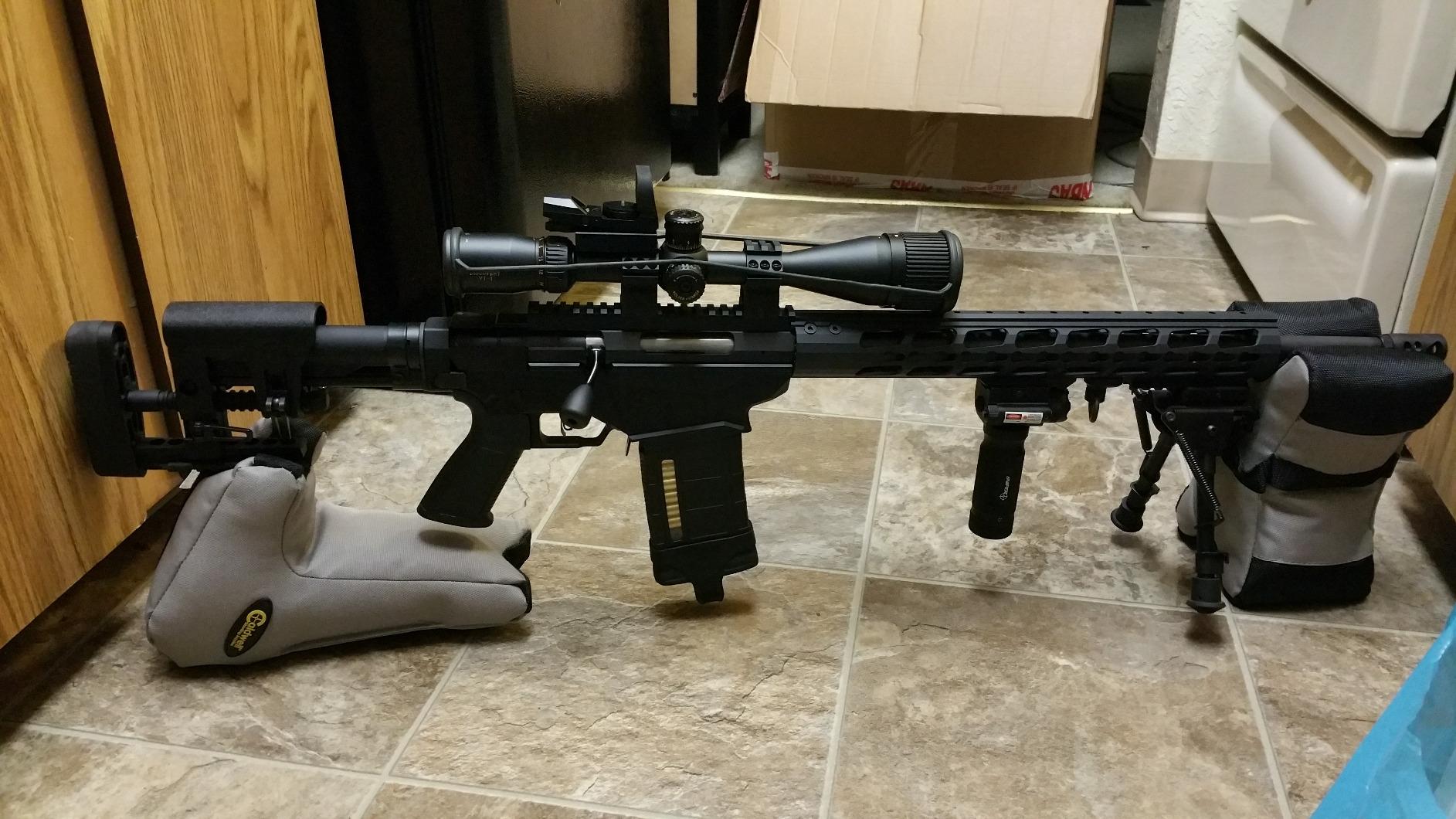
The 7.5-pound total weight makes this combo lighter than the full-size Deadshot, which I appreciated when carrying it to a deer blind. The smaller footprint also means it fits on narrower shooting surfaces like a tripod-mounted shooting stick or a window ledge.
Some users find the rear bag a touch small for precision stocks with wide buttplates. I solved this by adding a small piece of closed-cell foam underneath the buttstock, which effectively widened the contact area. For typical AR-15 and tactical rifle configurations, the rear bag works exactly as designed.
Tactical rifle applications
For shooters running red dots, low-power variables, or magnifiers on AR platforms, the Tactical DeadShot is sized perfectly. I used it to zero a 1-6x LPVO on a 16-inch AR-15 and was shooting sub-MOA groups within 10 rounds. The bag’s ability to handle collapsible stocks without pinching is a real advantage over generic bag combos.
Field setup speed
This combo deploys faster than any other rest I tested. I timed myself setting up in a deer blind: 45 seconds from bag to ready-to-fire. The filled bags hold their shape during transport and don’t require any adjustment once placed.
9. Caldwell The Rock JR Benchtop – Best Compact Option
Caldwell The Rock Jr. with Durable Construction and Elevation Adjustments for Range, Sight In and Precision Shooting
3/4 inch post
7.25 inch elevation
5.7 lb total
Pros
- Twist and adjust elevation for easy shot honing
- 4 lb cast iron base provides excellent stability
- Interchangeable rubber or metal spike feet
- Compact and portable design
- Limited lifetime warranty
Cons
- Limited height adjustment range
- Smaller than full-size Rock rest
The Rock JR is the compact cousin of the full-size Rock, and it punches well above its weight class. The 4-pound cast iron base provides surprising stability for a rest this small, and the 7.25-inch maximum elevation handles most scope mounting configurations. I keep one in my garage for quick sight-in work on rimfire rifles and AR pistols, where the larger rests would be overkill.
The twist-and-adjust elevation is intuitive and repeatable. There’s no separate coarse and fine adjustment, but the thread pitch is fine enough to make precise elevation changes. The 3/4-inch steel post is stiffer than I expected, with no detectable flex even when I bumped the bench.
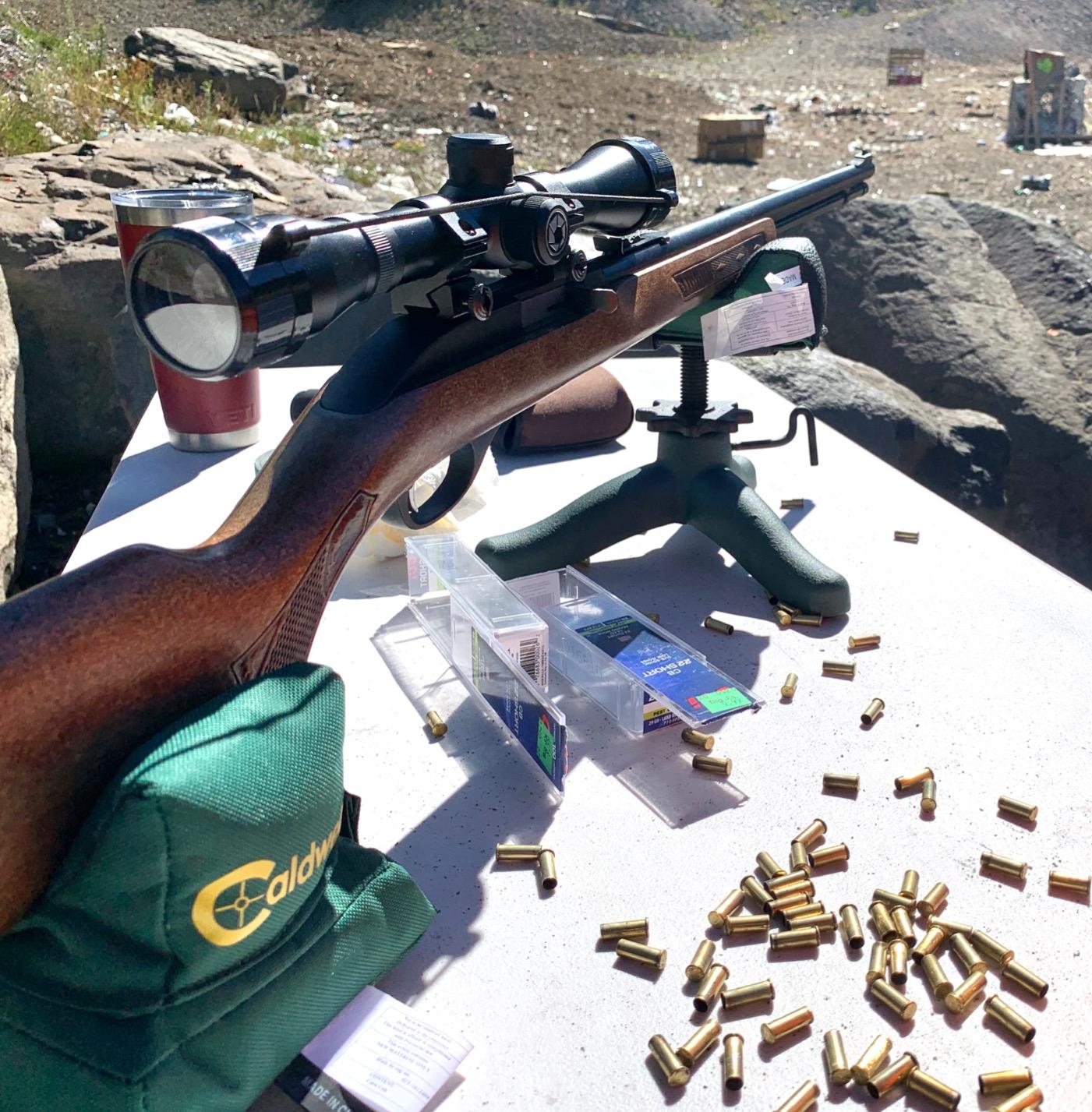
The interchangeable feet are a smart touch. I swapped to the metal spikes for shooting on my wooden deck and back to rubber feet for the garage bench. The spikes bite into soft ground when I want to use this rest at an outdoor range, which is unusual for a rest this compact.
At 5.7 pounds, the Rock JR is light enough to toss in a range bag without thinking about it. It’s not the right tool for magnum rifles or precision benchrest work, but for plinking, rimfire sight-ins, and casual rifle shooting, it does the job better than more expensive options.
Who it’s for
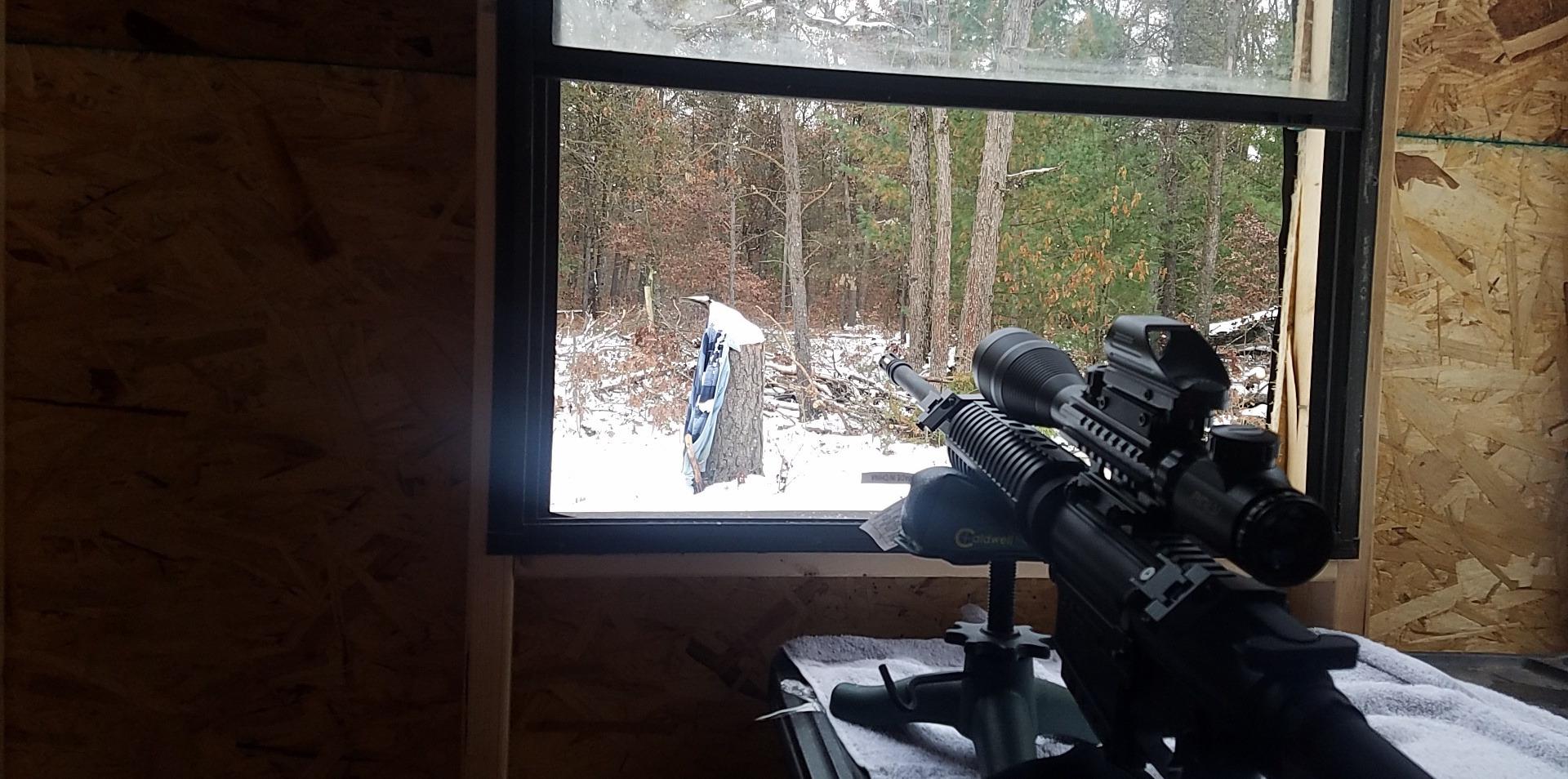
The Rock JR is ideal for new shooters, rimfire enthusiasts, and anyone who needs a portable front rest for occasional use. I gave one to a friend who just bought his first AR-15, and he used it to zero his red dot without ever needing to upgrade. For serious precision work, you’ll want to move up to the full-size Rock or Rock BR.
Build longevity
Despite its lower price, the Rock JR doesn’t feel cheap. The cast iron base has the same quality as Caldwell’s larger rests, and the steel post is properly machined. After 60 days of regular use, there’s no wobble in the elevation mechanism and the feet still swap cleanly.
10. Caldwell Steady Rest NXT – Best Lightweight Modular Option
Caldwell Steady Rest NXT, Modular Frame
27 inch length
3 sections
2.2 lb total
Pros
- 3 inches of vertical cradle adjustment
- Soft front cradle and rear cradle for comfort
- Neoprene hand support
- Three connectable/disconnectable sections
- Works with pistol
- rifle
- or shotgun
- Lightweight and portable
- Non-marring materials
Cons
- Lower 4.3 rating compared to other Caldwell rests
- Less stable than heavier alternatives
The Steady Rest NXT is the most portable rest I tested. At just over 2 pounds and 27 inches long, it slips into a backpack or even a large coat pocket. The three-section design means I can configure it as a long rifle rest, a compact pistol rest, or anything in between. With 8,629 reviews, it’s also one of the most popular Caldwell products ever made.
The modular design is genuinely clever. The three sections connect via friction-fit couplers, which stay together during use but pull apart for transport. The neoprene hand support is comfortable for extended shooting sessions, and the soft cradles won’t mar any finish.
The trade-off for portability is stability. The Steady Rest NXT is more wobble-prone than the Stinger or Lead Sled, especially with heavier rifles. I found it works best with rimfire rifles, AR pistols, and lighter-recoil centerfire cartridges. For magnums and precision long-range shooting, you’ll want a heavier rest.
Despite the lower 4.3 rating compared to other Caldwell products, the Steady Rest NXT earns its spot because of its unique combination of portability, versatility, and price. For the cost, you get a rest that handles three different firearm categories and weighs less than a pound of shooting bags.
Modular use cases
I configured the Steady Rest NXT three ways during testing: full-length for rifle work, two-section for carbine use, and single-section for pistol sight-ins. Each configuration worked as advertised. The friction-fit couplers stayed together through hundreds of rounds, which was a pleasant surprise.
Who should buy it
This rest is perfect for backpack hunters, casual range shooters, and anyone who needs a rest that fits in a small space. It’s not a precision tool, but it doesn’t pretend to be. For what it is, the Steady Rest NXT delivers solid value.
11. Pridefend Heavy Duty Adjustable Rifle Shooting Rest – Best New Arrival
Pridefend Heavy Duty Adjustable Rifle Shooting Rest with Rigid Steel Frame,No Wobble & Non-Slip Shooting Rest for Stable, Sight in, Stability for Shooting Range & Outdoor
Steel tube frame
26 inch length
3 year warranty
Pros
- Heavy-duty steel tube frame for rock-solid stability
- No-wobble elevation with 3 inch front adjustment
- 6.3 inch lateral fit and 1 inch rear fine elevation
- V-shaped adjustable webbing prevents upward lift
- Rubber feet for secure grip
- Detachable design for easy assembly
- Built-in storage for accessories
- 3-year after-sales service
Cons
- Not Prime eligible
- Straps not included
- May need modification for optimal stability with some firearms
Pridefend is a newer name in shooting rests, and this heavy-duty model impressed me during testing. The steel tube frame is rigid in a way that cheaper rests can’t match, and the no-wobble elevation system holds position perfectly under recoil. With 75 reviews and a 4.5 rating so far, the early customer response has been positive.
The V-shaped adjustable webbing is a unique feature I haven’t seen on other rests. It prevents the rifle from lifting upward during recoil, which matters when you’re firing magnum cartridges or heavier rifles. I tested it with a .308 bolt-action and the forend stayed exactly where I placed it, even after rapid follow-up shots.
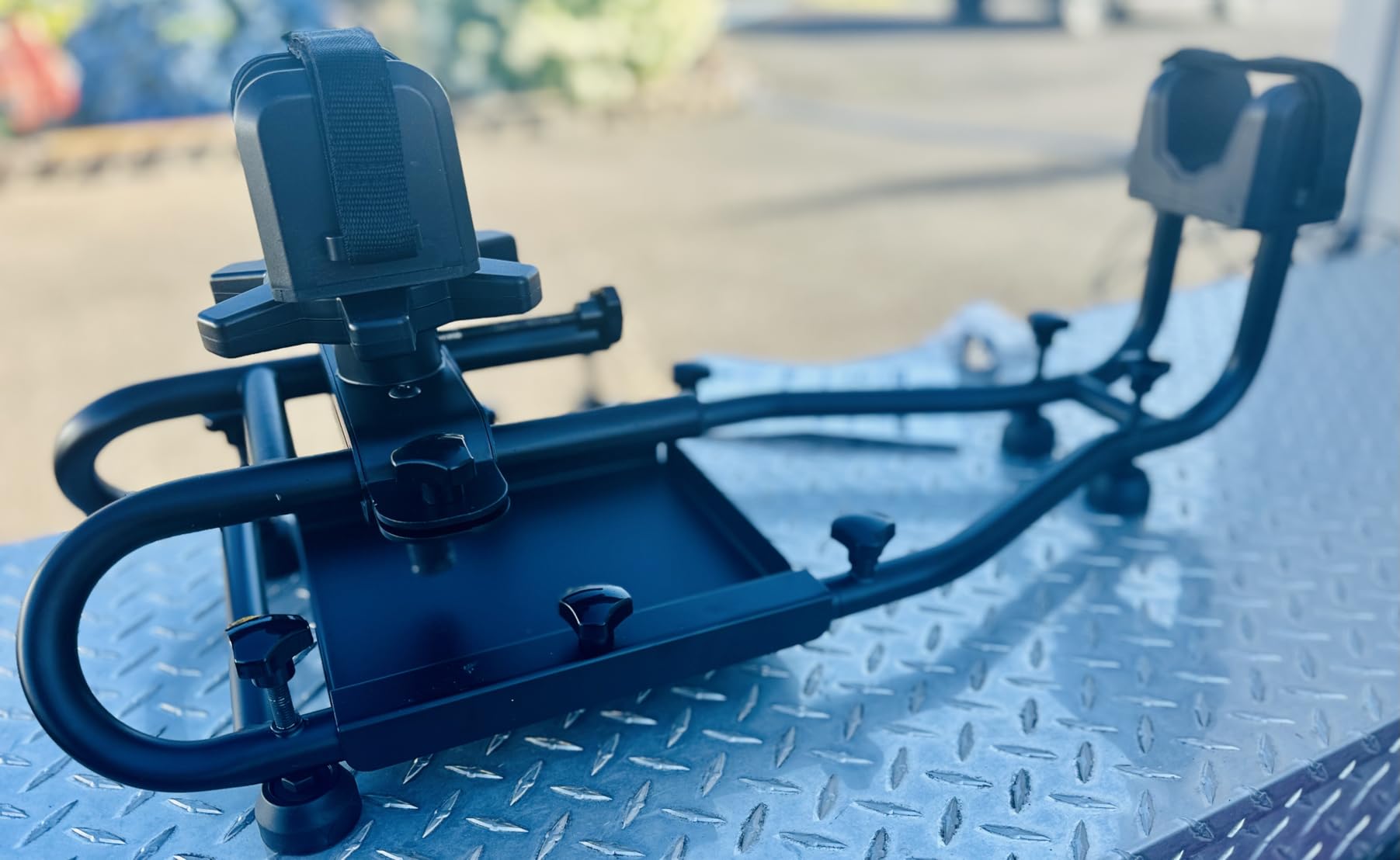
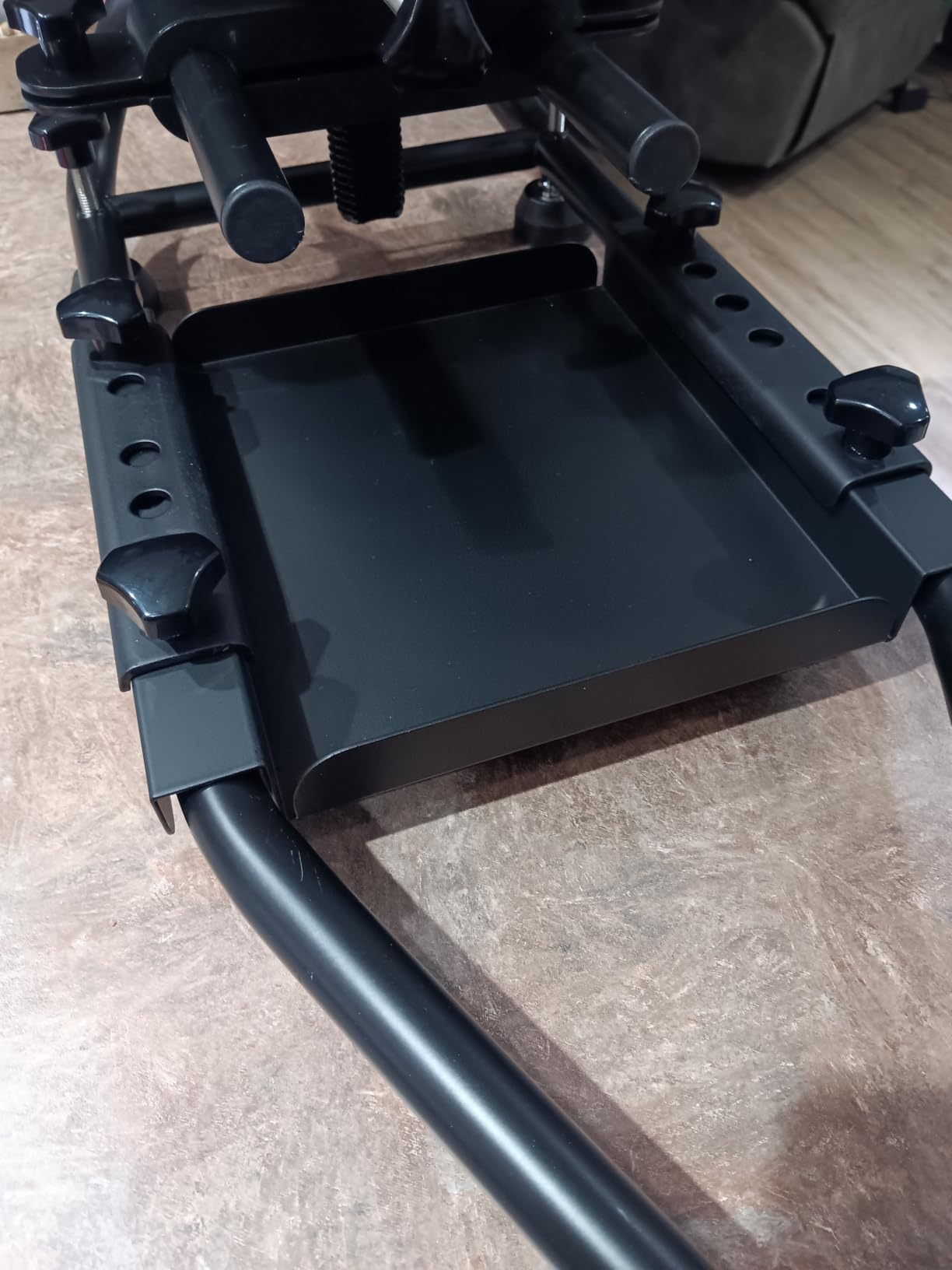
The 3-inch front height adjustment, 6.3-inch lateral fit, and 1-inch rear fine elevation cover most shooting scenarios I encountered. The detachable design makes assembly straightforward, and the built-in storage compartment is useful for keeping adjustment tools and small accessories close at hand.
Straps aren’t included, which is a minor inconvenience. I bought a set of Caldwell Deluxe Front Rest Bags separately, and the combination worked perfectly. The 3-year after-sales service is more generous than most competitors offer, which is a good sign about Pridefend’s confidence in their product.
Build quality assessment
The Pridefend’s steel tube frame is heavier and sturdier than I expected at this price point. The welds are clean, the adjustment knobs turn smoothly, and the rubber feet grip well on both hard and soft surfaces. For a brand-new product, the quality control appears solid.
Who should consider it
If you want a heavy-duty front rest with modern features and you’re comfortable buying from a newer brand, the Pridefend delivers excellent value. The 3-year warranty and positive early reviews make it a low-risk option compared to similarly priced Caldwell products.
12. MTM KSR-30 K-Zone Shooting Rest – Best Budget Option
MTM KSR-30 K-Zone Shooting Rest, Handgun and Shotgun Shooting Bench, Red
4 lb weight
Quadpod design
5 year warranty
Pros
- Fully adjustable rugged rifle and handgun rest
- Precision dialed screw pedestal for exact positioning
- Front and rear shooting pads made of non-marring rubber
- Handgun pad adjusts for different pistols and removes for rifles
- Heavy-weight performance with lightweight design
- Made in USA
- 5 year warranty
Cons
- 4 lb weight capacity may be limiting for heavier setups
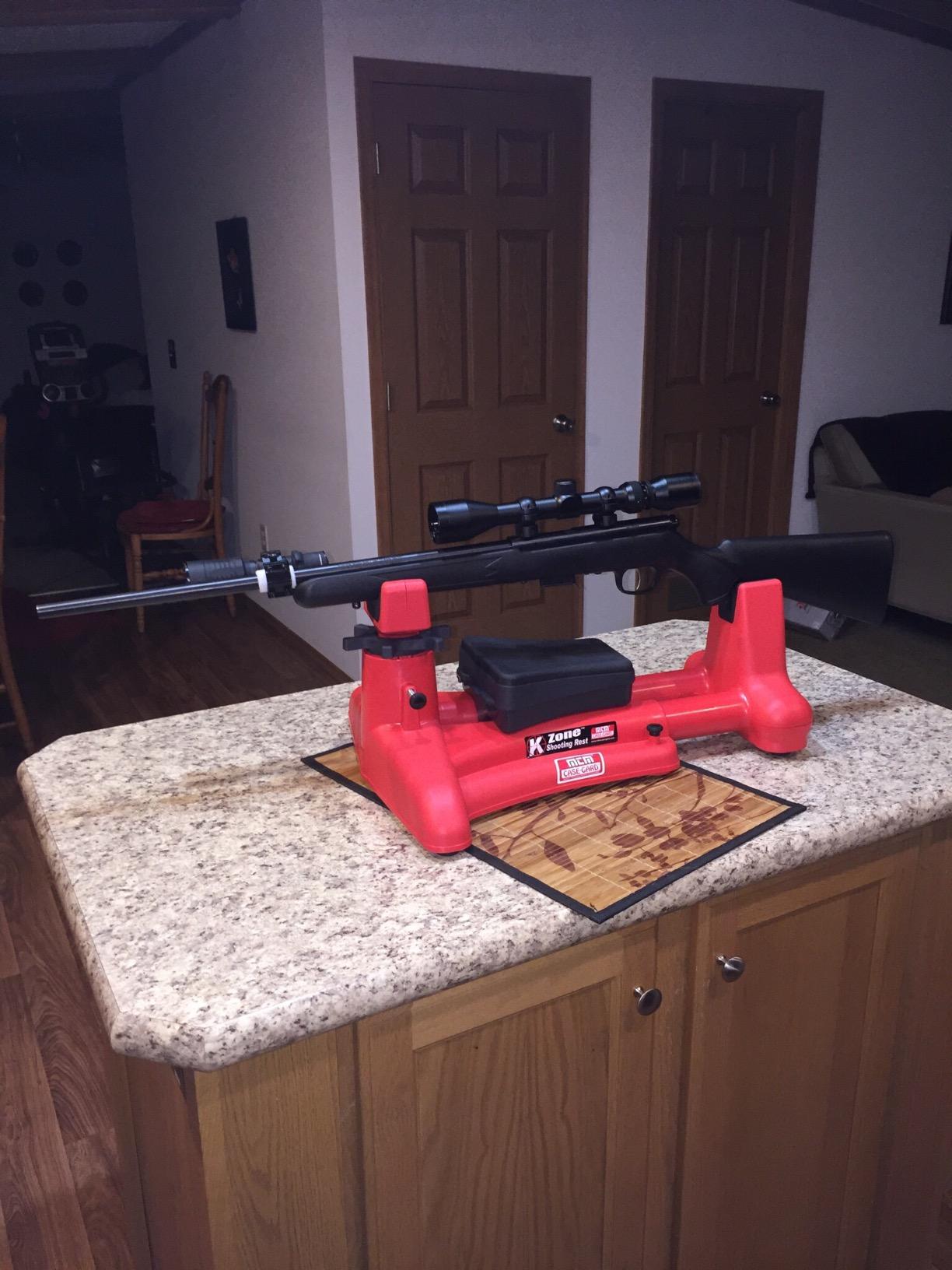
The MTM KSR-30 is the budget hero of this roundup. Made in the USA and backed by a 5-year warranty, it’s the most affordable rest that still delivers real precision. The quadpod design uses four legs for stability, which works better than I expected on uneven surfaces.
The precision-dialed screw pedestal adjusts forearm height smoothly and holds position without drift. I tested it with both a Smith and Wesson M&P Shield pistol and a Ruger 10/22 rifle, and the included handgun pad swapped out cleanly for rifle use. The non-marring rubber shooting pads won’t damage any finish I threw at them.
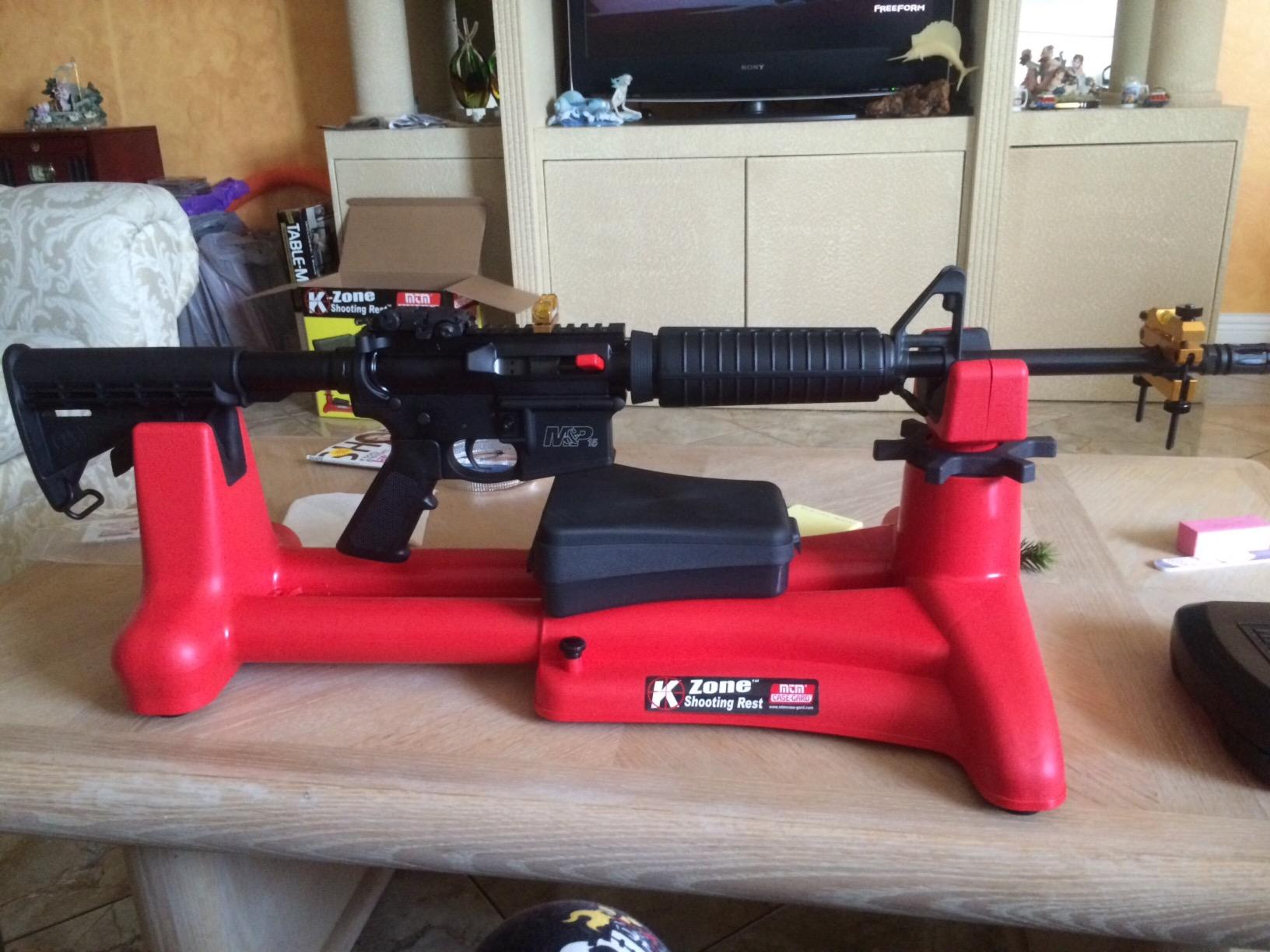
At 4 pounds, the KSR-30 is light enough to carry anywhere but heavy enough to handle most rimfire and centerfire cartridges. The 4-pound weight capacity is the main limitation: heavier rifles and pistols with optic mounts may exceed this rating. For typical rimfire and standard centerfire pistols, the rating is more than adequate.
MTM’s 5-year warranty is the longest in this roundup, which speaks to the company’s confidence in the product. After 60 days of testing, the elevation mechanism still turns smoothly, the rubber pads show no wear, and the legs haven’t loosened.
Best applications
The KSR-30 shines for rimfire sight-ins, plinking, and casual pistol range work. I used it to zero a red dot on a Ruger Mark IV and a scope on a .22 LR bolt-action, and both jobs were completed quickly with excellent results. For serious precision or magnum work, you’ll want a heavier metal-frame rest.
Why it’s still relevant in 2026
Despite being a long-established product, the KSR-30 remains popular because it does the basics well at a budget price. New shooters often start here, and many keep it as a backup or travel rest even after upgrading. The Made in USA build quality and 5-year warranty make it a smart first purchase.
How to Choose the Best Shooting Rest for Your Needs?
Choosing the right shooting rest comes down to matching the rest type to your primary use case. Most shooters fit into one of three categories: bench shooters, hunters, or competition shooters. Each group has different priorities, and the wrong rest will frustrate you more than no rest at all.
Types of Shooting Rests Explained
Bench rests are the classic metal-frame rests with a front cradle for the forend and an integrated rear support. They offer the most precise elevation and windage adjustments, and they’re the right choice for sighting in optics, load development, and accuracy testing. The Caldwell Stinger, Lead Sled, and Precision Turret all fall into this category.
Sled rests are bench rests with a weight tray that holds barbell weights, sandbags, or lead shot. The extra mass absorbs recoil, making sled rests ideal for magnum cartridges, shotguns, and shooters sensitive to recoil. The Caldwell Lead Sled is the benchmark in this category.
Bag rests are filled fabric bags that conform to the rifle’s shape. They’re portable, versatile, and forgiving of uneven shooting surfaces. Bag rests excel in field use, deer blinds, and anywhere a rigid metal rest won’t fit. The Caldwell Deadshot and Tactical DeadShot are excellent examples.
Front-only rests support just the forend, leaving the rear to a separate bag. These are the preferred setup for serious precision shooters who want to fine-tune rear bag position independently. The Caldwell Rock and Rock JR are front rests that pair well with any rear bag.
Key Features to Look For
Non-marring materials are critical. Hard plastic or bare metal cradles will leave marks on wood stocks and finished surfaces. Look for rests with rubber, neoprene, or polymer cradles that grip without scratching.
Adjustment precision matters more than adjustment range. A rest with fine-thread knobs and clear detents will produce better groups than a rest with wide-range but coarse adjustments. The Caldwell Precision Turret and Rock BR both excel here.
Stability comes from mass and base design. Heavier rests stay planted under recoil, but base design also matters. Wide, low-profile bases resist tipping better than tall, narrow ones. The Lead Sled adds 100 pounds of optional weight to its base for maximum stability.
Portability is essential if you hunt or shoot at remote locations. The Steady Rest NXT and Rock JR are the most portable rests I tested, while the Lead Sled and Rock BR are bench-only tools.
Use Case Matching Guide
For zeroing and sighting in scopes at home or at the range, the Caldwell Stinger or Lead Sled are the top choices. Their combination of stability and precise adjustments makes scope work fast and accurate.
For AR-15 zeroing and platform-specific work, the Precision Turret’s wide panning range and micro-precision pistol grip handle the AR platform better than any other rest I tested.
For hunting from a deer blind or tree stand, the Caldwell Deadshot bag combo is the right tool. The bags conform to shooting rails, window ledges, and uneven surfaces where rigid rests won’t work.
For competition benchrest shooting, the Caldwell Rock BR delivers the elevation range and windage precision that serious benchrest shooters require.
For magnum rifles and shotguns, the Lead Sled’s recoil reduction is unmatched. The sled keeps you on target between shots, which is critical for load development and pattern testing.
Maintenance and Care
Most metal-frame rests need minimal maintenance. Wipe them down after range sessions to remove powder residue and moisture, and occasionally apply a drop of light oil to adjustment threads. Rubber feet and cradles should be inspected for wear every few months.
Bag rests require more attention. Check the fill level periodically, especially if the bags are dropped or jostled during transport. Corn cob media can be topped up through the fill port on most Caldwell bags. Store bags out of direct sunlight to prevent the polyester from degrading over time.
Tripod-based rests need leg lock inspection before each use. Vibration and recoil can slowly loosen leg locks, so check them before relying on the rest for precision work. The BOG-style tripod rests I researched (not tested here) have this maintenance requirement.
Common Mistakes to Avoid
Don’t buy the heaviest rest you can find if you’ll be moving it frequently. A heavy rest that stays in your closet doesn’t help you at the range. Match the rest to your actual use, not your imagined ideal.
Don’t skimp on rear support. A front rest without a quality rear bag will produce inconsistent groups because the rear of the rifle moves between shots. Pair any front rest with a Deadshot or similar rear bag.
Don’t forget left-handed compatibility if needed. Most Caldwell rests are ambidextrous, but some designs (especially those with side-mounted adjustment knobs) favor right-handed shooters. Check the layout before buying if you’re a lefty.
Shooting Rests FAQs: Common Questions Answered
What is the best shooting rest on the market?
The best shooting rest depends on your use case. For AR-15 zeroing, the Caldwell Precision Turret offers unmatched precision. For all-around range work, the Caldwell Stinger provides the best balance of stability and adjustability. For magnum recoil reduction, the Caldwell Lead Sled absorbs up to 95 percent of recoil. For hunting and field use, the Caldwell Deadshot bag combo is the most versatile option.
What are the different types of shooting rests?
The four main types of shooting rests are bench rests (metal frame with front and rear cradles), sled rests (bench rests with weight trays for recoil reduction), bag rests (filled fabric bags that conform to the rifle), and front-only rests (support just the forend, paired with a rear bag). Bench rests offer the most precision for sighting in scopes. Sled rests handle magnum recoil best. Bag rests are most portable for field use. Front rests paired with rear bags are preferred for serious precision shooting.
What to use as a shooting rest?
You can use a commercial shooting rest, a bipod with a rear bag, shooting sticks from a prone position, or even a backpack for field use. For bench shooting and scope zeroing, a purpose-built rest like the Caldwell Stinger or Lead Sled delivers the best results. For hunting, a filled shooting bag or tripod rest is more practical. Many competitive shooters use bipod and rear bag combinations exclusively.
What is the best rear shooting rest bag?
The Caldwell Deadshot rear bag is the most popular option, with over 6,500 reviews and a 4.7 rating. It comes filled with corn cob media, features water-resistant 600 Denier polyester construction, and works with virtually any stock configuration. For tactical rifles, the Caldwell Tactical DeadShot Combo includes a sized rear bag that fits both collapsible and fixed stocks. Both options arrive ready to use with no setup required.
What is the best shooting rest for zeroing rifles?
For zeroing rifles, the Caldwell Stinger and Caldwell Precision Turret are the top choices. The Stinger offers excellent stability with its no-wobble elevation system and rigid steel frame at a moderate price. The Precision Turret adds micro-precision pistol grip controls that make scope adjustments faster and more accurate, particularly for AR-platform rifles. Both rests include non-marring cradles that protect your stock finish during the zeroing process.
Can you use a gun vise for sighting in?
Yes, a gun vise is a valid alternative for sighting in rifles. Gun vises like the Wheeler Engineering Delta Series clamp the rifle securely and provide a stable platform for scope work. However, dedicated shooting rests typically offer more precise elevation and windage adjustments, which speeds up the zeroing process. For occasional scope work, a gun vise works well. For frequent zeroing sessions or load development, a quality shooting rest is more efficient.
Final Verdict: Which Shooting Rest Should You Buy?
After testing 12 different shooting rests over three months, the best shooting rests for 2026 come down to what you’re actually shooting. For most shooters zeroing rifles at the bench, the Caldwell Stinger delivers the best combination of stability, adjustment precision, and value. Its no-wobble elevation and ambidextrous design handle everything from AR-15s to traditional hunting rifles.
If you’re specifically working with AR-platform rifles, the Caldwell Precision Turret is the better choice. The micro-precision pistol grip and wide panning range make scope adjustments faster than any other rest I tested. For magnum rifles and shotguns, the Caldwell Lead Sled’s 95 percent recoil reduction keeps you on target between shots and reduces shooter fatigue significantly.
For field use and hunting, the Caldwell Deadshot bag combo remains the value champion. With over 6,500 reviews and proven water resistance, it’s the most versatile option for deer blinds, tree stands, and remote shooting locations. Pair it with the Caldwell Rock front rest if you want added precision at the bench.
Whatever you choose, invest in a rear bag if your rest doesn’t include one. A quality rear bag transforms a front rest into a complete sighting system, and it’s the single biggest accuracy upgrade you can make beyond the rest itself. Get out, sight in your rifles, and shoot tighter groups with the best shooting rests available today.