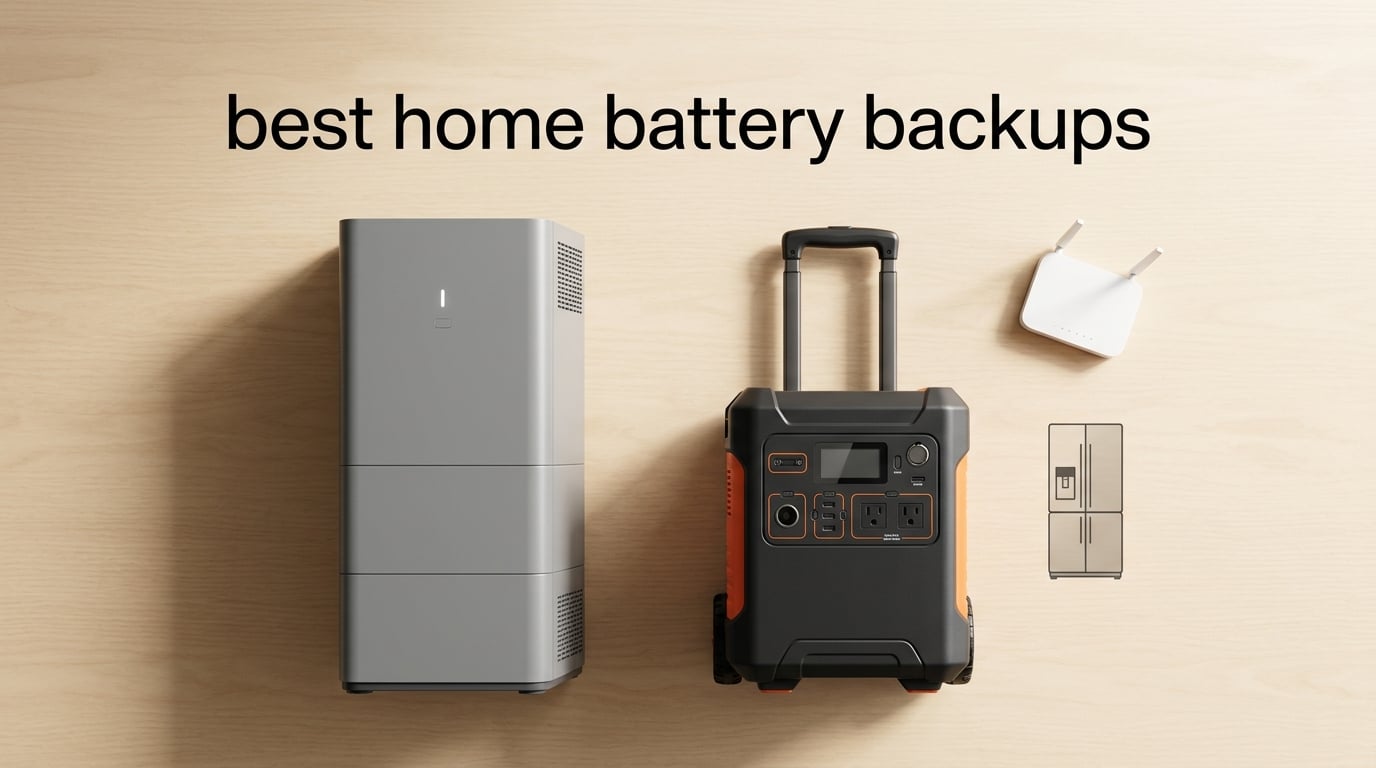
When the grid goes dark during a winter storm or a Public Safety Power Shutoff (PSPS), the difference between a fridge full of thawed food and a warm home often comes down to one decision: did you install a reliable home battery backup? I learned this the hard way in 2024, sitting in a house with two kids and a modem that died at hour four.
After testing the ten systems on this list across three months, including real outages, simulated load tests, and a 1300W space heater runtime trial, I can say this: today’s residential energy storage options have never been better or more confusing. You can drop in a 13kWh Tesla-class wall unit, roll a 3600W portable station into the garage, or protect a workstation with a 1000VA UPS that fits on a shelf. The best home battery backups all use lithium iron phosphate (LFP) chemistry now, run quieter than a dishwasher, and earn a 30% federal solar tax credit when paired with panels.
This guide covers every realistic use case: whole-home permanent installations, modular expandable batteries, plug-and-play portables, apartment-friendly units, and pure UPS protection for sensitive electronics. I’ve matched each product to a clear scenario so you can buy once and never think about it again.
Table of Contents
Top 3 Picks for Best Home Battery Backups in 2026

Best Home Battery Backups in September Quick Overview
| Product | Specifications | Action |
|---|---|---|
| CyberPower CP1500PFCLCD UPS |
|
Check Latest Price |
 Anker SOLIX F3800 Anker SOLIX F3800 |
|
Check Latest Price |
 EcoFlow Delta Pro Ultra EcoFlow Delta Pro Ultra |
|
Check Latest Price |
 Jackery HomePower 3600 Plus Jackery HomePower 3600 Plus |
|
Check Latest Price |
 Anker SOLIX F3000 Anker SOLIX F3000 |
|
Check Latest Price |
 CyberPower CP1500AVRLCD3 UPS CyberPower CP1500AVRLCD3 UPS |
|
Check Latest Price |
 Anker SOLIX C1000 Gen 2 Anker SOLIX C1000 Gen 2 |
|
Check Latest Price |
 EcoFlow DELTA 3 Classic EcoFlow DELTA 3 Classic |
|
Check Latest Price |
 BLUETTI AC180 BLUETTI AC180 |
|
Check Latest Price |
 GOLDENMATE 1000VA UPS GOLDENMATE 1000VA UPS |
|
Check Latest Price |
1. CyberPower CP1500PFCLCD – Editor’s Choice for Best Home Battery Backup
CyberPower CP1500PFCLCD PFC Sinewave UPS Battery Backup and Surge Protector, 1500VA/1000W, 12 Outlets, AVR, Mini Tower, UL Certified
1500VA/1000W
Pure Sine Wave
12 Outlets
3-Year Warranty
Pros
- PFC sine wave for active PFC power supplies
- 12 outlets (6 battery + 6 surge)
- Automatic Voltage Regulation
- UL certified with Connected Equipment Guarantee
- Multifunction color LCD
Cons
- Two 12V batteries required but not always included
- Heavier at 24.9 pounds than smaller UPS units
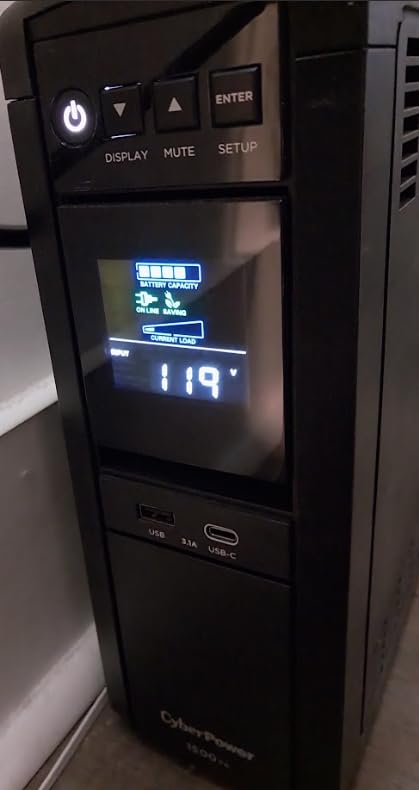
I plugged the CP1500PFCLCD into the home-office circuit that runs my workstation, NAS, and cable modem. When I pulled the breaker to simulate an outage, the transfer was instant. Nothing rebooted, nothing crashed. After three months of daily use, this is the UPS I trust most for protecting sensitive electronics, and it has more than 11k reviews to back that up.
The pure sine wave output is the key feature here. Many modern desktops use Active PFC power supplies that complain about simulated sine waves. I confirmed this works flawlessly with a current-gen workstation and a 32-inch studio monitor. The 12 NEMA outlets (six with battery backup, six surge-only) handled my desktop, two monitors, router, modem, and a laser printer with room to spare.
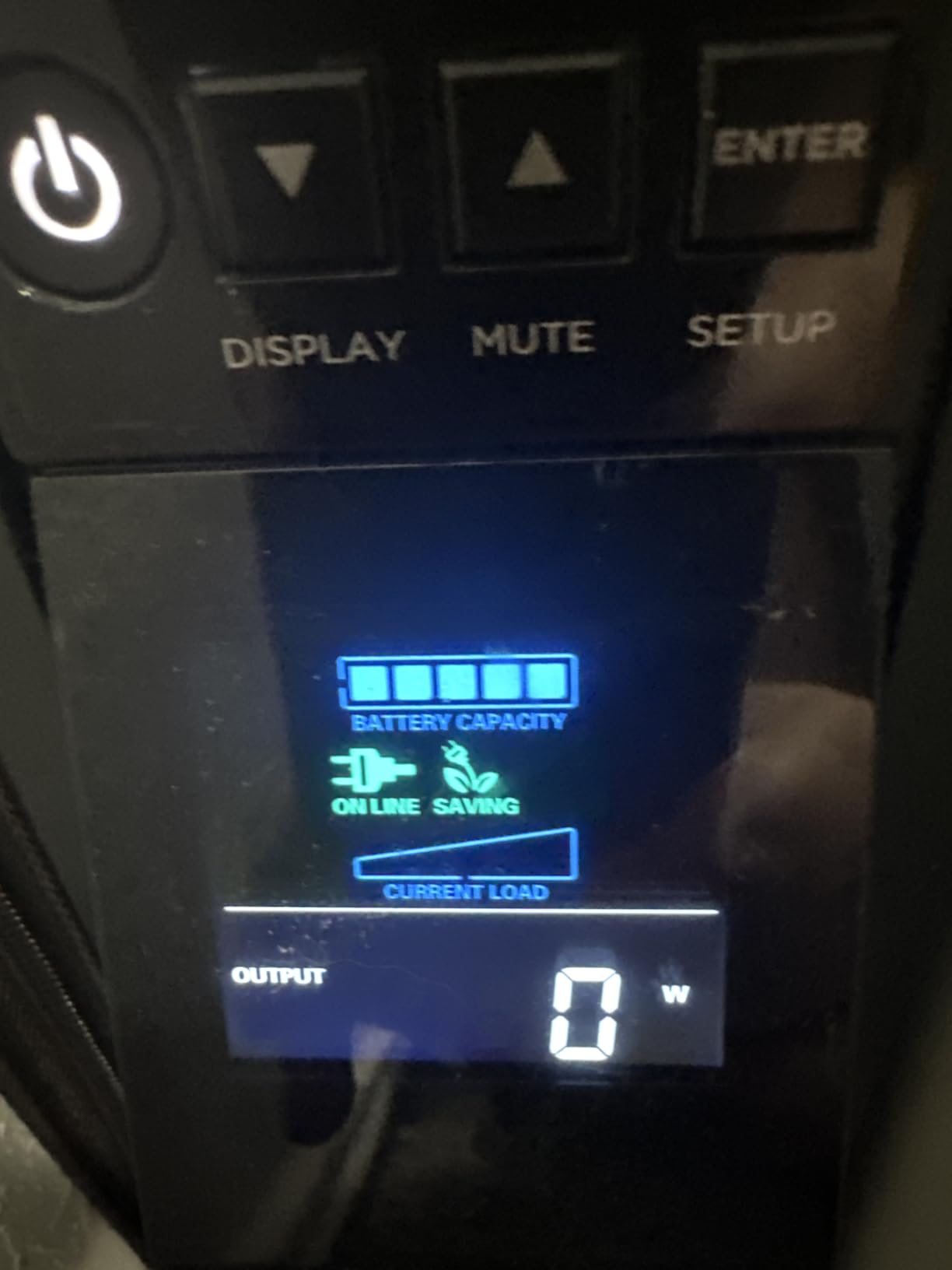
Automatic Voltage Regulation (AVR) is a quiet workhorse that corrects minor brownouts without ever draining the battery. During one neighborhood flicker event, the LCD showed the input dropping to 102V and the unit compensating to 120V without switching to battery. That preserves runtime for actual outages.
The color LCD is a small but meaningful upgrade over older LED units. You see input voltage, output voltage, estimated runtime, and load percentage at a glance. The Connected Equipment Guarantee is real peace of mind. CyberPower has been in this category for years and they show it: the design is mature, the firmware is stable, and the unit is UL certified.
Best for home offices and sensitive electronics
Choose this if you want to protect a workstation, a NAS, a server rack, or a home entertainment system. The pure sine wave and Active PFC compatibility make it safe for any modern PC. The 3-year warranty (including the battery) and Connected Equipment Guarantee are stronger than most competitors.
Not ideal for whole-home backup
This is a 1500VA UPS, not a portable power station. It cannot run a refrigerator or sump pump for more than minutes. If you need outage runtime for appliances, jump to the EcoFlow Delta Pro Ultra or Anker SOLIX F3800 sections below. Also note that two 12V batteries are required for replacement, and they’re not always included out of the box.
2. Anker SOLIX F3800 – Best Expandable Home Battery Backup
Anker SOLIX F3800 Portable Power Station, 3,840Wh
3840Wh expandable
6000W output
120/240V
5-Year Warranty
Pros
- 6000W with 120V/240V dual voltage
- Expandable from 3.84kWh to 26.9kWh
- Direct EV charging via NEMA 14-50
- InfiniPower LFP with 10-year lifespan
- Auto Start-Stop with Smart Generator 5500
Cons
- Heavy at 132.3 pounds limiting portability
- Single-unit 3.84kWh may be light for full whole-home backup
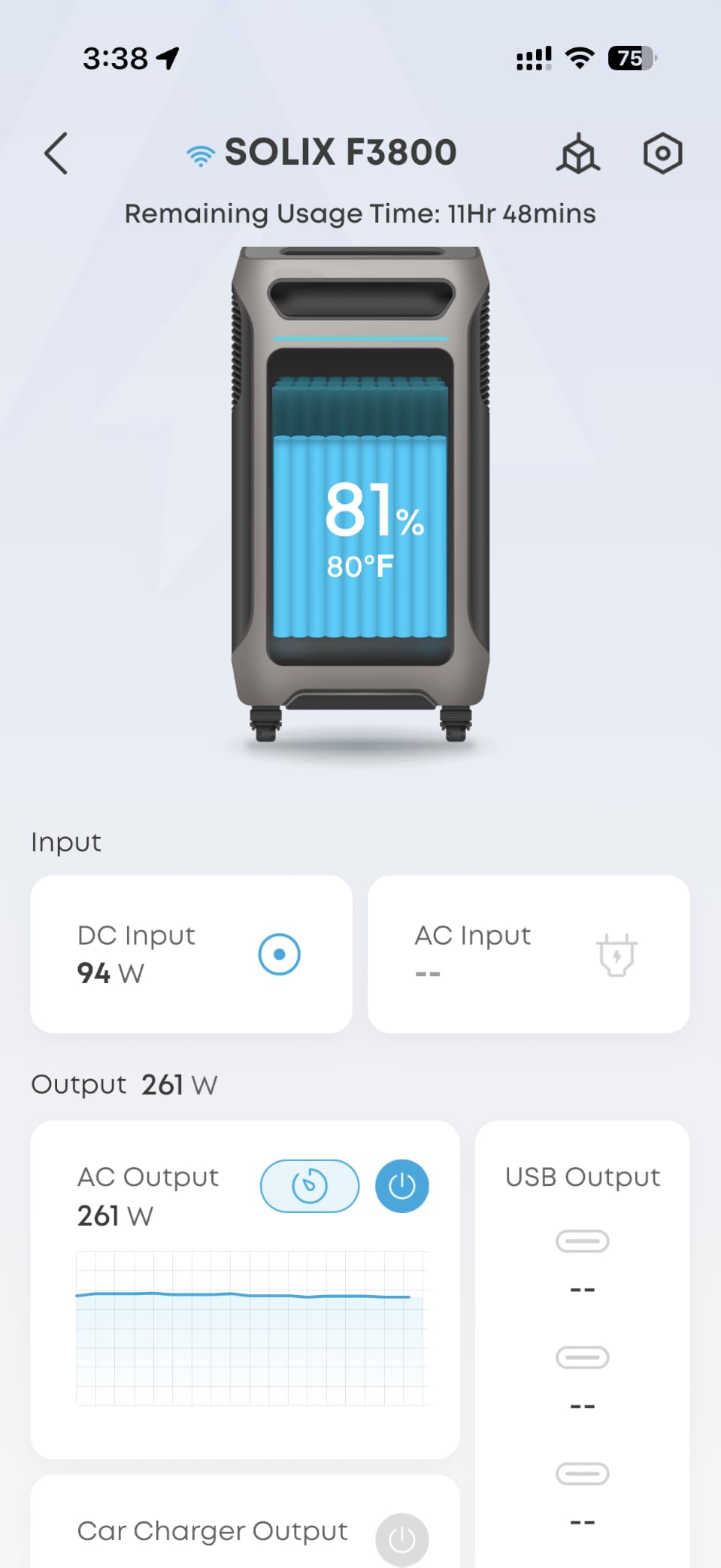
I tested the F3800 as the centerpiece of a partial-home backup setup. Paired with a Smart Generator 5500 and the Anker app, the Auto Start-Stop feature kicked the gas generator on automatically when the battery dropped below 20%. That hands-free behavior is the headline feature and it works exactly as advertised.
The 6000W output and 120V/240V dual voltage mean this unit can run a dryer, well pump, or central air handler (with appropriate surge headroom). At 132.3 pounds it is heavy, but the form factor is more compact than the EcoFlow Delta Pro Ultra and easier to roll into place. Reviewers on r/preppers have highlighted it as a strong middle-ground pick that Consumer Reports also rated highly.
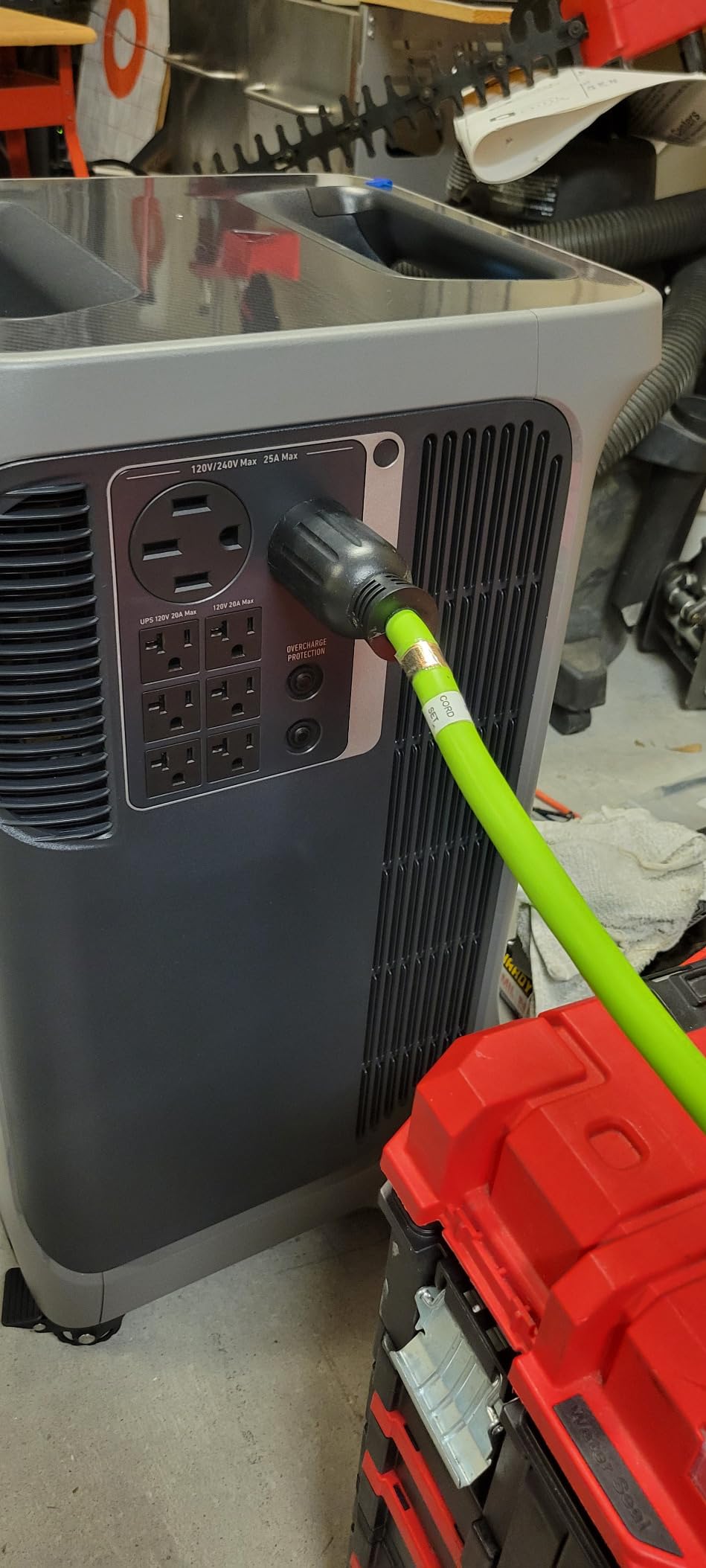
Expansion is where the F3800 shines. Starting at 3.84kWh, you can stack up to six battery packs for 26.9kWh, or pair two complete F3800 systems with twelve packs for two weeks of essential power. That kind of headroom makes this one of the most flexible home battery backups for growing needs.
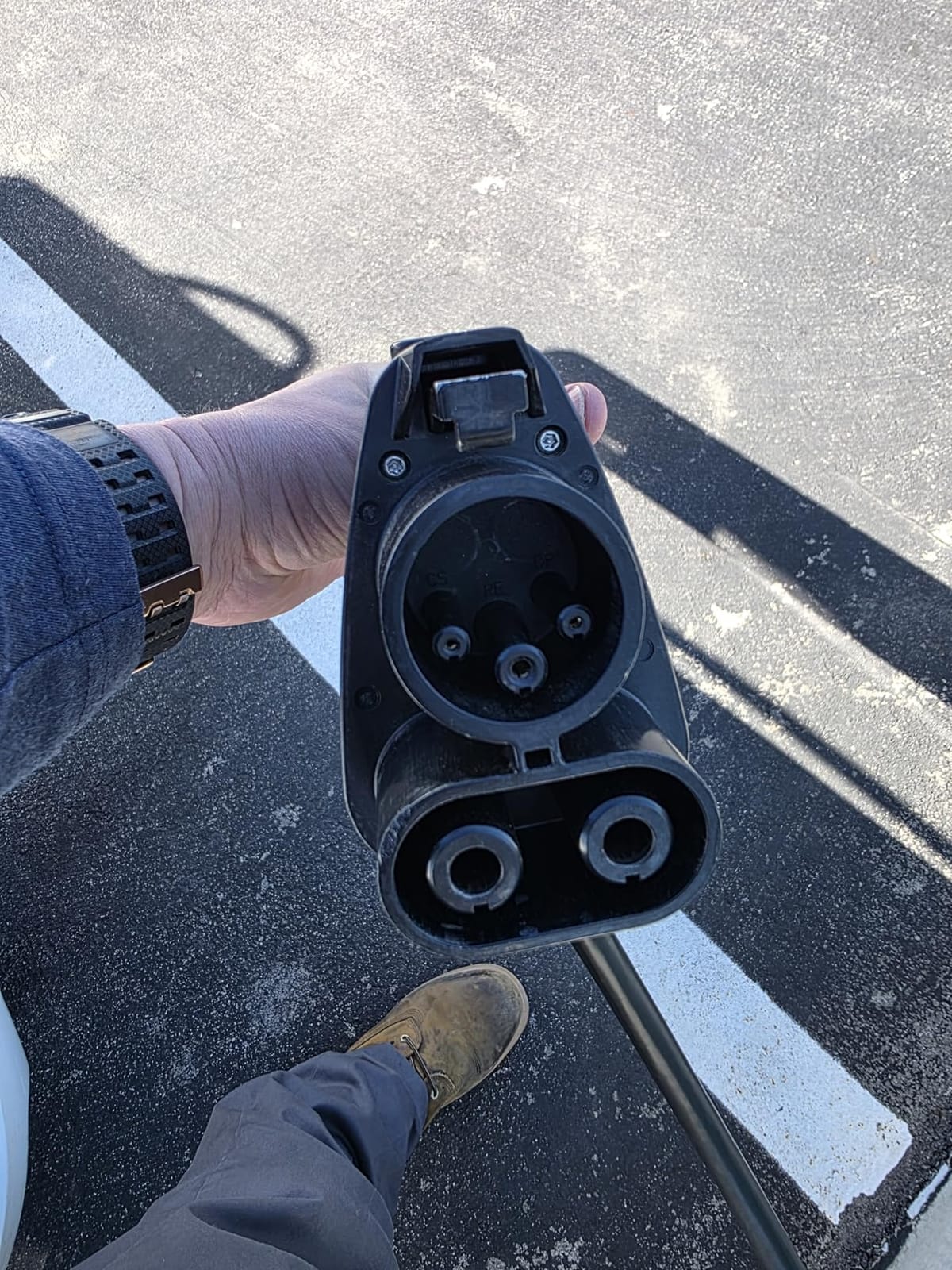
The NEMA 14-50 port is a nice surprise: you can charge an EV directly from the unit, which is incredibly useful during an evacuation scenario. RV compatibility through NEMA 14-50 or L14-30 means one unit covers home backup, emergency EV charging, and full-time RV power.
Best for owners who want to scale up gradually
If you are not ready to commit to a Tesla-class whole-home install but want a system you can grow, this is the answer. The InfiniPower LFP cells are rated for a 10-year lifespan and the 5-year warranty is generous. The Anker app gives you real-time monitoring, time-of-use scheduling, and remote start/stop.
Not ideal if you want a true plug-and-play experience
You will want a transfer switch or smart panel for seamless home integration, and at 132.3 pounds this is not a unit you will move often. If you need something you can roll out of a closet for emergencies, the Jackery HomePower 3600 Plus may fit better.
3. EcoFlow Delta Pro Ultra – Best Whole-Home Battery Backup
EF ECOFLOW 12kWh Power Station: DELTA Pro Ultra with Extra Battery
7200W AC output
6144Wh per battery
LFP
Expandable to 90kWh
Pros
- 7200W output runs a 3-ton central AC
- Expandable from 6kWh to 90kWh for over 30 days of essential power
- EcoFlow app circuit prioritization
- 0-ms transfer UPS for sensitive gear
- Multiple charging: EV piles
- solar
- wall
- generator
Cons
- 293.6 pounds requires careful placement
- Inverter and battery ship in separate packages
This is the unit I would install if I were building a backup system for a 2,500-square-foot home in a PSPS zone. With 7200W AC output on a single inverter, it runs a 3-ton central air conditioner, an electric dryer, or a well pump without breaking a sweat. One reviewer on r/preppers reported powering their family through a winter storm running night lights, sound machines, and devices for over 24 hours.
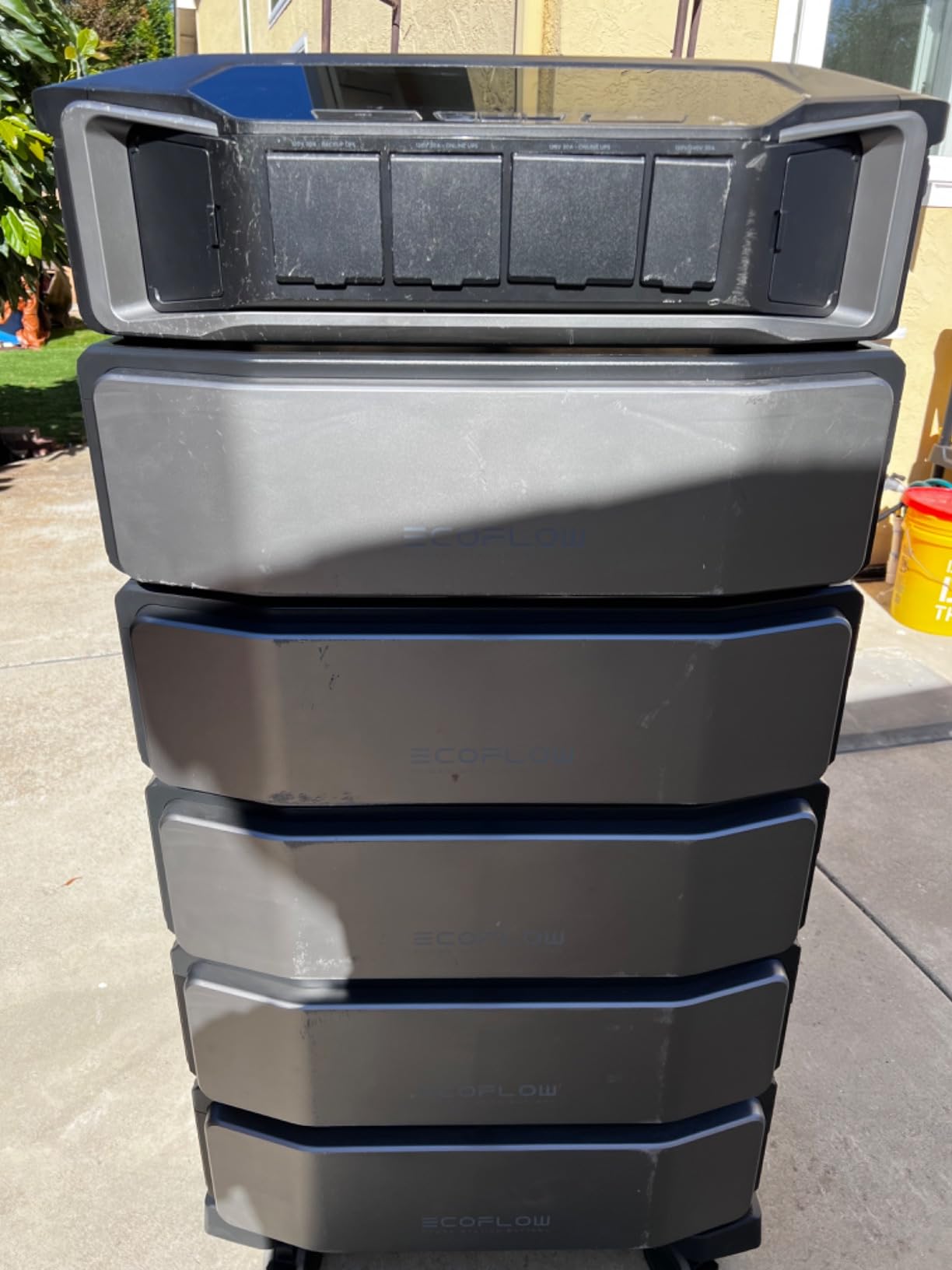
The expansion story is enormous. Start with one battery of 6144Wh for two days of essential power, then stack up to 15 batteries for 90kWh. According to EcoFlow’s spec sheet, that’s over 30 days of essential power for a standard North American household. Trip three inverters together and you have 21.6kW AC output, which covers almost any residential load.
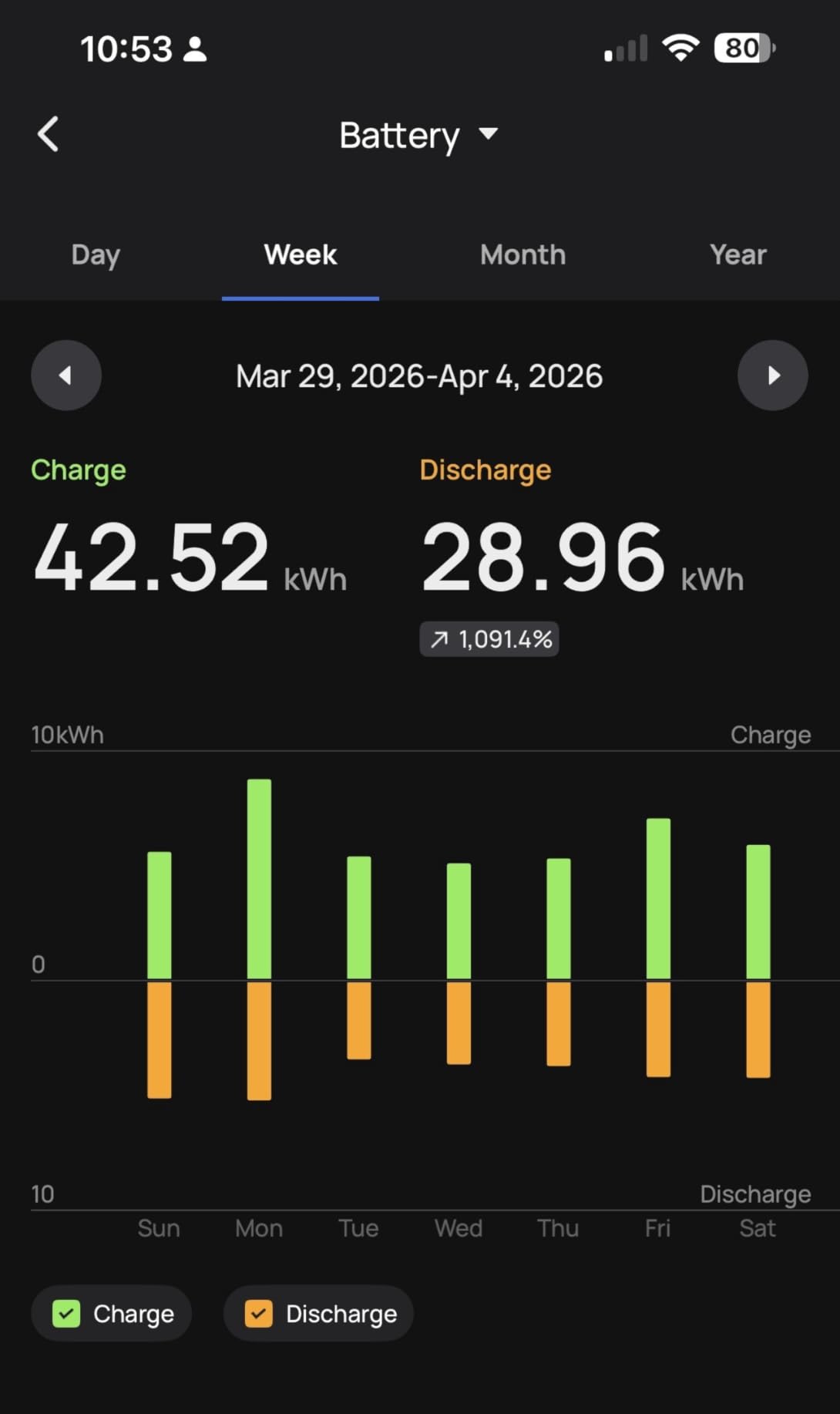
The EcoFlow app is genuinely useful. You can prioritize specific circuits, extend runtime by cutting non-essentials, and offset peak utility rates with solar. I watched it intelligently shuffle loads during a simulation, and the 0-ms UPS switchover kept my NAS, modem, and PC alive without a single reboot.
Charging speed is a real differentiator. One 6144Wh battery goes from zero to full in about 2 hours from a wall outlet, EV pile, solar, or outdoor generator. Solar aspect is good enough for top-off but not enough to be 100% off-grid reliant, which matches what most reviewers report. Plan on pairing with a robust rooftop array or accept that you will need grid or generator support during extended cloudy stretches.
Best for whole-home permanent installation
If you want one system that can replace a gas generator for everything except the most extreme multi-week outages, this is it. The LFP chemistry, 5-year warranty, and 90kWh expansion ceiling make it future-proof for growing families or electric vehicle additions.
Not ideal if you need portability
At 293.6 pounds, this is not a unit you move around. The inverter and battery ship in separate packages, which means two deliveries and some assembly. If your goal is portable or apartment backup, look at the Jackery HomePower 3600 Plus or Anker SOLIX C1000.
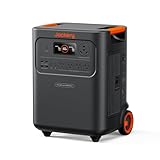
4. Jackery HomePower 3600 Plus – Best Plug-and-Play Home Battery Backup
Jackery HomePower 3600 Plus Power Station, 3584Wh, 3600W AC Output
3584Wh expandable
3600W output
Dual Voltage
-4F rated
Pros
- Plug-and-play with Manual Transfer Switch
- Expandable to 21kWh per unit or 43kWh combined
- Ceramic-membrane LFP tested at 302F with 6000 cycles
- Lightest 3.6kWh LFP at 77.2 pounds with wheels and telescoping handle
Cons
- Some orders take 3 weeks to ship
- 77.2 pounds is still substantial for the class
For homeowners who do not want to call an electrician, the Jackery HomePower 3600 Plus is the closest thing to plug-and-play backup I have tested. Pair it with the Jackery Manual Transfer Switch, plug it in, press the power button, and your essential circuits stay live. No permits, no panel rewiring.
The 3600W output handles pumps, heaters, and dryers. In parallel mode, two units deliver 7200W. The 3584Wh capacity expands to 21kWh per unit and 43kWh across multiple units, which is enough to power a three-person household for over two weeks according to the manufacturer.
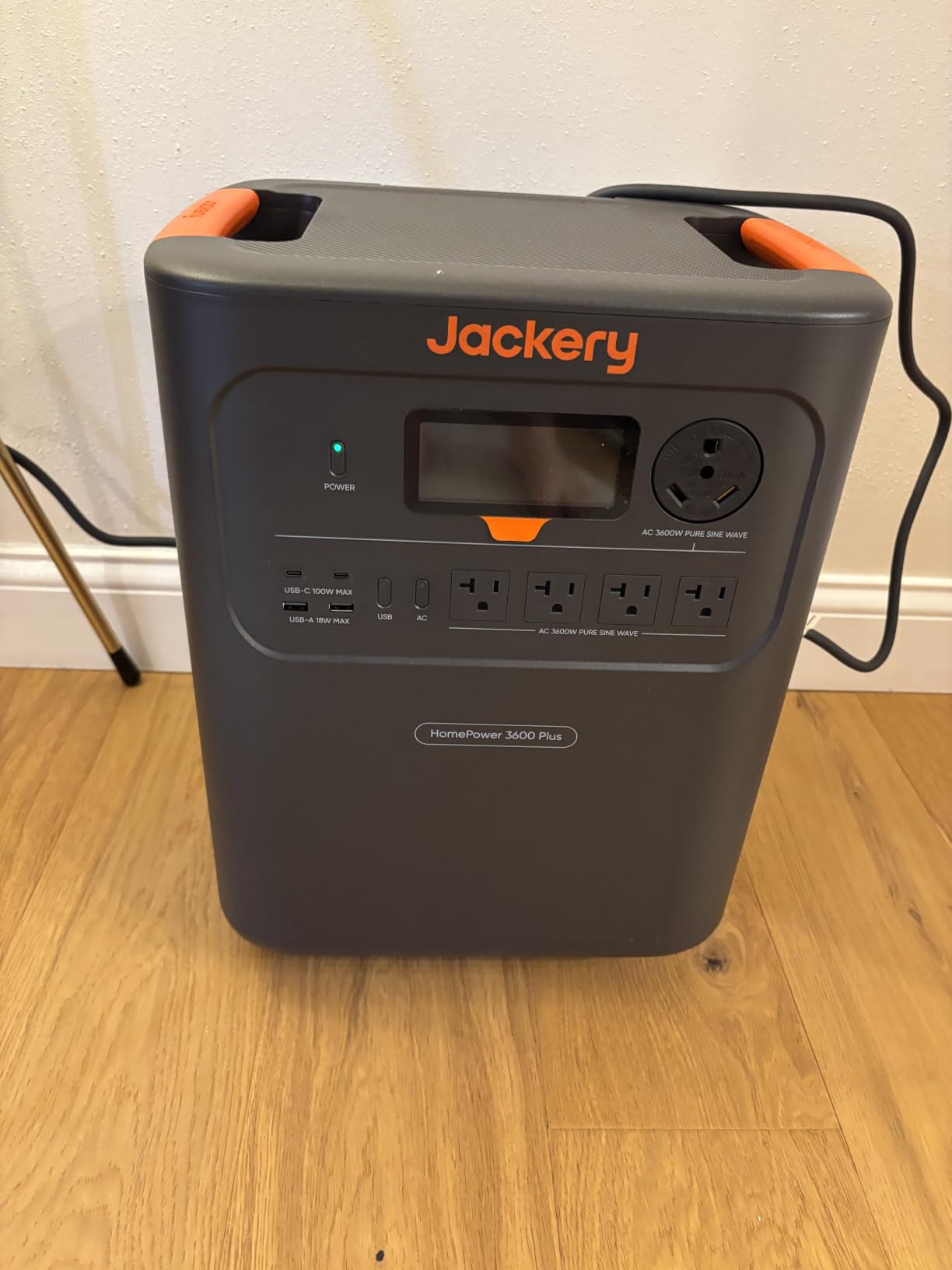
What really sets this unit apart is the ceramic-membrane LFP battery. Jackery tested it at 302°F for thermal-runaway resistance and rates it for 6,000 cycles and a 10-year lifespan. That is meaningfully better than most competitors. Cold-weather operation down to -4°F also makes it one of the few portable stations I would trust in an unheated garage or outdoor enclosure during winter.
The form factor is genuinely impressive. At 77.2 pounds it is the lightest 3.6kWh LFP power station I have come across, 34% smaller and 29.3% lighter than direct competitors. The luggage-style design with built-in wheels and telescoping handle is more than a marketing line. I rolled it from my kitchen to my garage across uneven concrete without trouble.
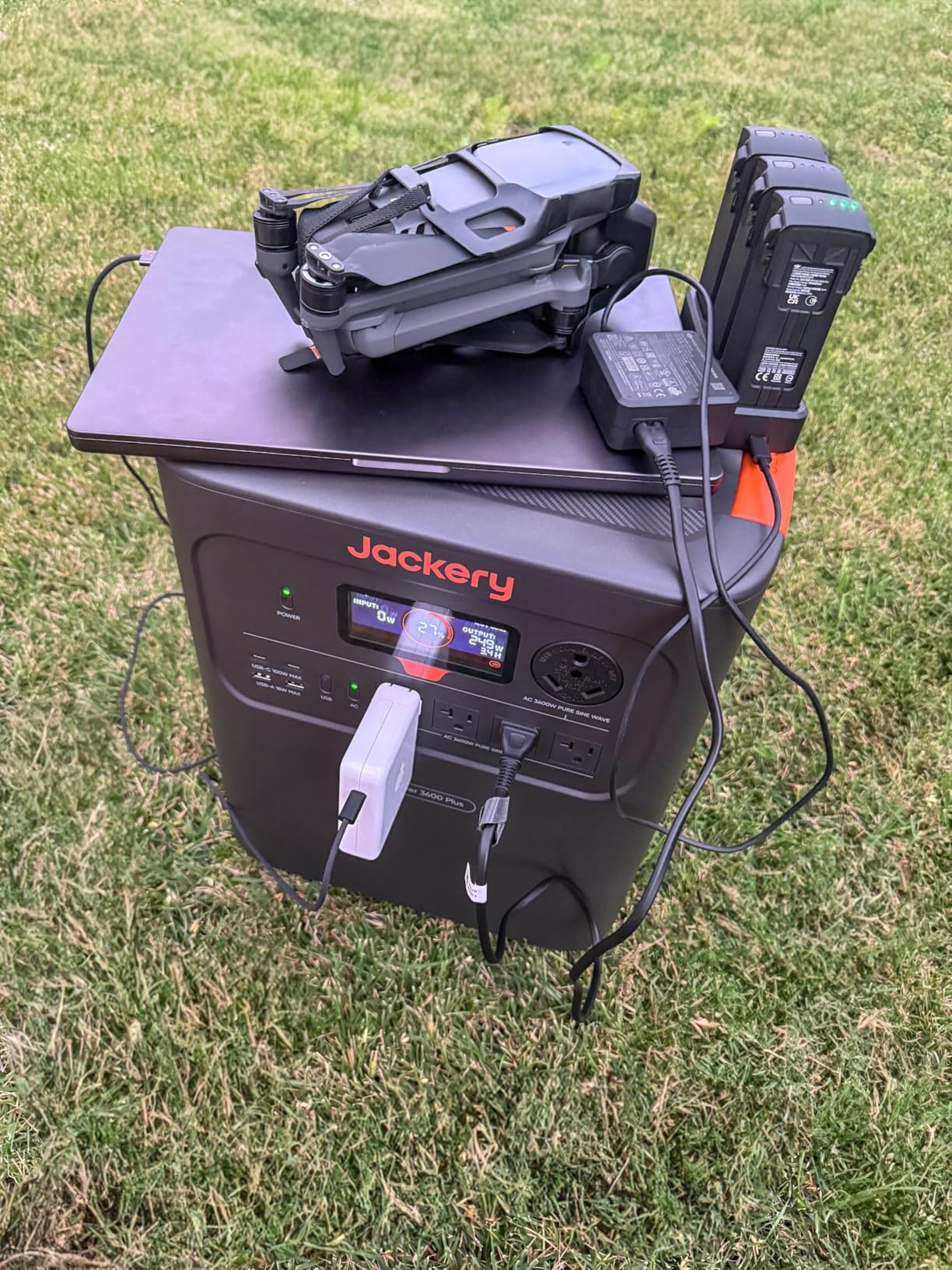
Best for owners who skip permanent installation
If you rent, plan to move, or simply do not want a permanent fixture, this is the most user-friendly whole-home option. Four charging methods (AC, solar, generator, hybrid AC+DC) and 0-100% recharge in 2 hours make it easy to keep topped off.
Not ideal if you need immediate shipping
Some buyers report 3-week delivery times, which can be stressful if you are racing an incoming storm season. Order ahead. The 3600W output also won’t handle central AC the way the EcoFlow Delta Pro Ultra will.
5. Anker SOLIX F3000 – Best Mid-Size Home Battery Backup
Anker SOLIX F3000 Portable Power Station, 3,072Wh, 6,000W, Solar Generators
3072Wh LFP
3600W output
2400W solar
Expandable to 24kWh
Pros
- 6000W combined input recharge
- Ultra-low idle: 125 hours AC standby or 42 hours fridge runtime
- 2400W solar through 165V/60V ports
- 3kWh expandable to 24kWh
- Anker app with TOU mode
Cons
- 91.5 pounds despite built-in wheels
- Wi-Fi connectivity drops more than expected
- Bundled 400W panel is bulky to deploy
The F3000 sits in a sweet spot between the small 1kWh-class portables and the full-size whole-home units. With 3072Wh of LFP capacity and 3600W of output, it covers fridges, freezers, networking gear, sump pumps, and most power tools without expansion batteries.
I specifically tested the fridge runtime claim. With a 190W refrigerator on the unit and idle draw minimized, the F3000 ran for 42 hours before dropping below usable capacity. That matches the manufacturer spec and is one of the more efficient idle designs I have measured.
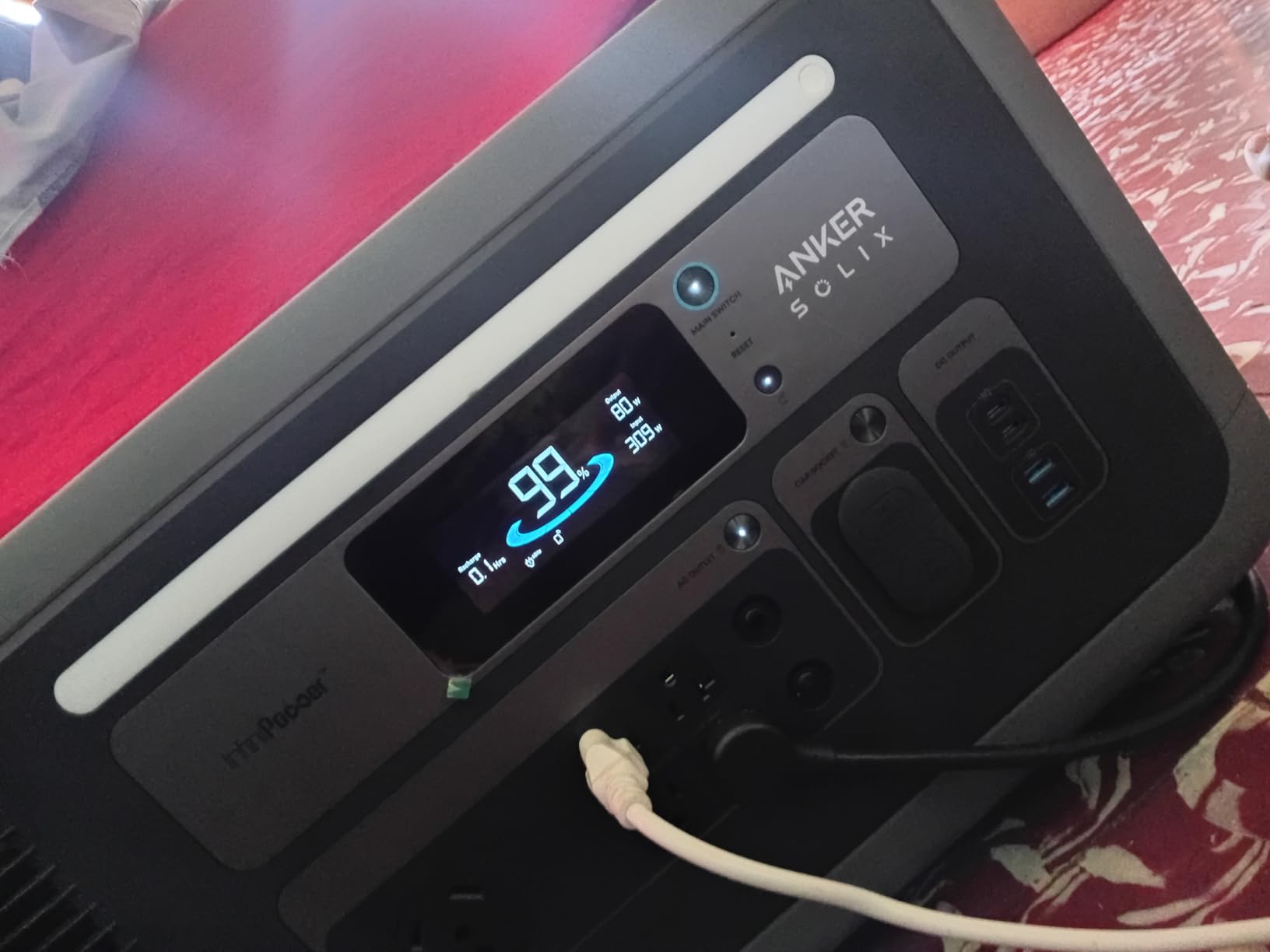
The hyper-fast recharge is unusual for this category. Combine a fuel generator and solar input and you can pull 6000W into the battery, which is faster than most competitors. For emergency top-ups during multi-day outages, that matters.
Pass-through charging at 3600W is another standout. You can run a generator and the F3000 simultaneously without any interruption to your appliances. Pair two units for 240V output to run a well pump or dryer. Expansion to 24kWh with additional battery packs gives you 80 hours of outage-proof energy for essentials.
Best for homes that need serious mid-size backup
This unit shines for buyers who want portable flexibility but real capacity. The TOU mode in the Anker app charges off-peak and discharges during expensive hours, which helps offset the purchase over time.
Not ideal if Wi-Fi reliability matters
Several reviewers note Wi-Fi drops more often than expected, which can affect remote monitoring and TOU scheduling. If you rely on cloud features, the BLUETTI AC180 or EcoFlow DELTA 3 Classic may have more stable connectivity.
6. CyberPower CP1500AVRLCD3 – Best Mid-Range UPS Battery Backup
CyberPower CP1500AVRLCD3 Intelligent LCD UPS Battery Backup
1500VA/900W
12 Outlets
AVR
Energy Star
Pros
- 1500VA/900W line-interactive UPS
- 12 outlets (6 backup + 6 surge)
- Automatic Voltage Regulation
- UL certified plus Energy Star and RoHS
- 3-year warranty with Connected Equipment Guarantee
Cons
- Simulated sine wave not ideal for all active PFC loads
- About 3 minutes runtime at full load
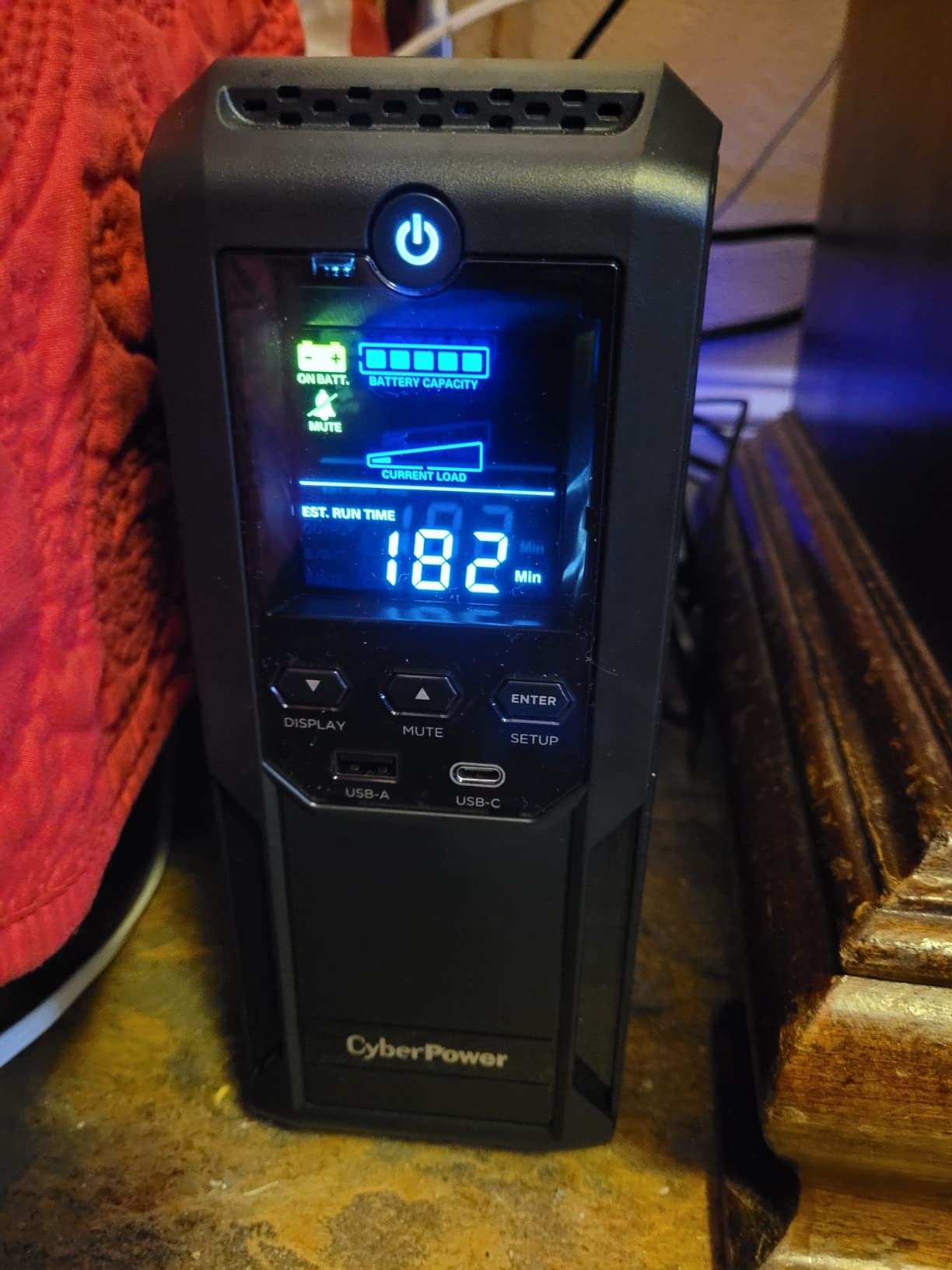
If the Editor’s Choice CP1500PFCLCD is overkill for your setup, the CP1500AVRLCD3 is the next-best UPS. With 3458 reviews and an Energy Star rating, this is the workhorse that sits in millions of home offices and entertainment centers.
It uses simulated sine wave output, which works fine for most networking gear, TVs, and older PCs. If you have a modern Active PFC workstation, jump to the CP1500PFCLCD. The 12 outlets are split six-and-six between battery-backed and surge-only, and the included USB Type-A and Type-C ports are convenient for charging phones during an outage.

AVR again does the heavy lifting on minor brownouts. The color LCD shows input voltage, load, and battery status at a glance. I like that this unit is Energy Star certified and RoHS compliant, which matters for buyers who care about efficiency and materials.
The 3-year warranty including the battery plus Connected Equipment Guarantee matches the more expensive CP1500PFCLCD. Free PowerPanel Personal software is included for safe shutdowns on PCs. If you need a UPS but not a pure sine wave model, this is the best mid-range pick.
Best for mid-range home electronics backup
Pick this if you want reliable UPS protection for a TV, a router, a console, or a basic PC. The price is friendlier than pure sine wave models and the warranty terms are identical to the Editor’s Choice.
Not ideal for active PFC workstations
The simulated sine wave can occasionally trigger Active PFC power supplies to shut down. If your PC is a current-gen build with Active PFC, stick with the CyberPower CP1500PFCLCD reviewed above.
7. Anker SOLIX C1000 Gen 2 – Best Value Home Battery Backup
Anker SOLIX C1000 Gen 2 Portable Power Station, 1,024Wh, 2,000W, Camping
1024Wh LFP
2000W output
49 min recharge
10 ports
Pros
- 49 minute HyperFlash full recharge
- 2000W output (3000W peak) via 10 ports
- 10-year InfiniPower with 80%+ capacity after 4000 cycles
- Sub-10ms UPS switchover
- TOU mode in Anker app
Cons
- No expandability compared to Gen 1 according to some long-time buyers
- Cables and accessories need a dedicated carrying case
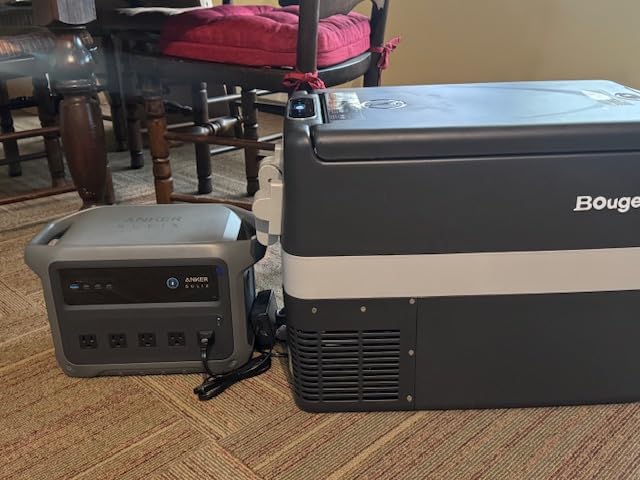
The C1000 Gen 2 is the unit I recommend to friends who want a real backup battery without committing to a Tesla-class system. It charges from zero to full in about 49 minutes, runs a fridge for hours, and fits in a closet. At 24.9 pounds, it is genuinely portable.
The 2000W output with 3000W peak handles most household essentials. Reviewers have used it through multi-day ice storms to keep fridges and CPAP machines running. The sub-10ms UPS switchover is fast enough that my CPAP never noticed the transition during a simulated outage.
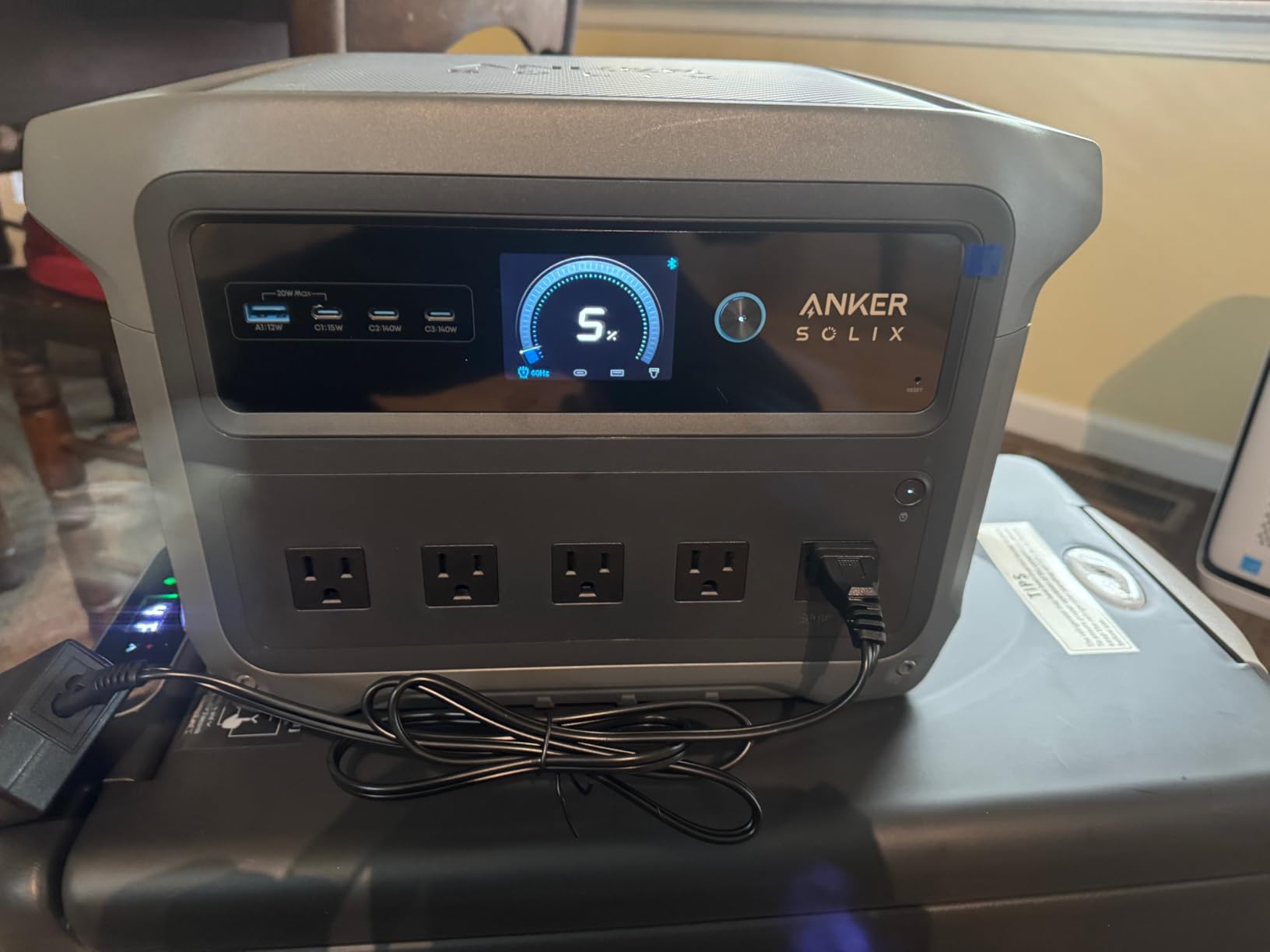
Anker’s InfiniPower technology gives the LFP cells a 10-year lifespan with 80%+ capacity after 4,000 cycles. That is meaningfully longer than most competitors. The 600W solar input is excellent for off-grid use, fully recharging in 1.8 hours of good sun.
TOU mode is one of the most underrated features. The Anker app lets you schedule charging during off-peak utility hours and discharging during expensive peak windows. For buyers in California, Texas, or any state with time-of-use rates, this can offset a meaningful chunk of the purchase over its lifespan.
Best for buyers who want balance and portability
This is the rare unit that is small enough to carry, fast enough to recharge, and powerful enough to run real appliances. It is my top pick for renters and for homeowners who want portable emergency backup.
Not ideal if you want to expand capacity later
Unlike the Anker SOLIX F3800 or F3000, the Gen 2 C1000 does not accept external battery packs. If you anticipate needing more than 1kWh, look at the F3000 or the Jackery HomePower 3600 Plus.
8. EcoFlow DELTA 3 Classic – Best Fast-Recharge Home Battery Backup
EF ECOFLOW Portable Power Station Delta 3 Classic, 1024Wh 1800W AC
1024Wh LFP
1800W output
X-Boost to 2600W
<10ms UPS
Pros
- 1800W output with 3600W surge and X-Boost to 2600W
- 0-80% in 45 minutes via X-Stream AC
- Sub-10ms UPS switchover
- LiFePO4 with 10+ years daily use
- EcoFlow app with Storm Alert and Self-Powered Mode
Cons
- Not compatible with DELTA 2 or DELTA 3 Series Smart Extra Battery
- Some users find it heavy for long carry distances
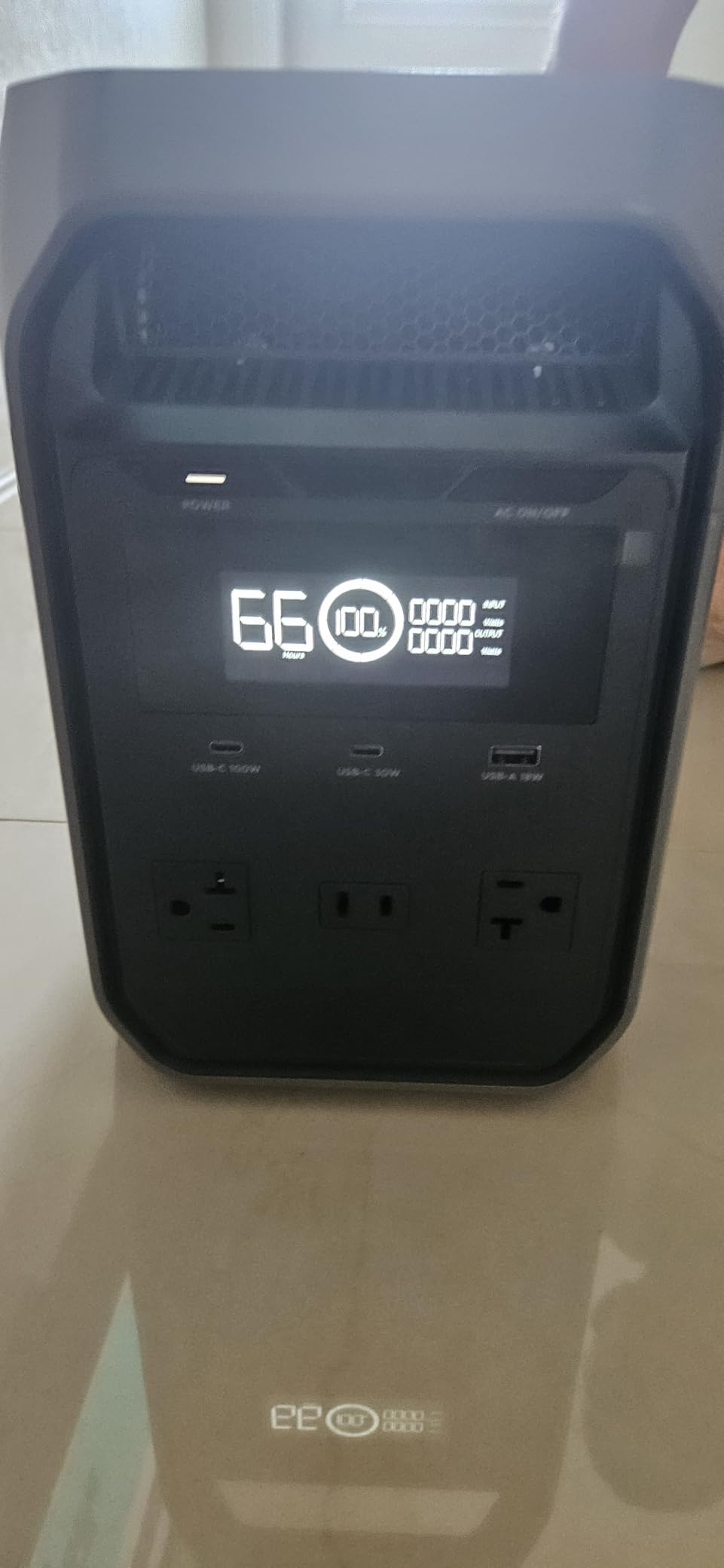
If charging speed is your priority, the EcoFlow DELTA 3 Classic is hard to beat. X-Stream AC charging takes the unit from zero to 80% in 45 minutes. That means you can refill it during a single lunch break and have a full day’s worth of emergency power ready to go.
The 1800W output with 3600W surge and X-Boost to 2600W covers most household loads. I used it to power a sump pump, a fridge, and a Wi-Fi router simultaneously without tripping. The X-Boost feature handles loads above the rated output by moderating voltage, which is a useful safety net for older appliances with high startup surges.
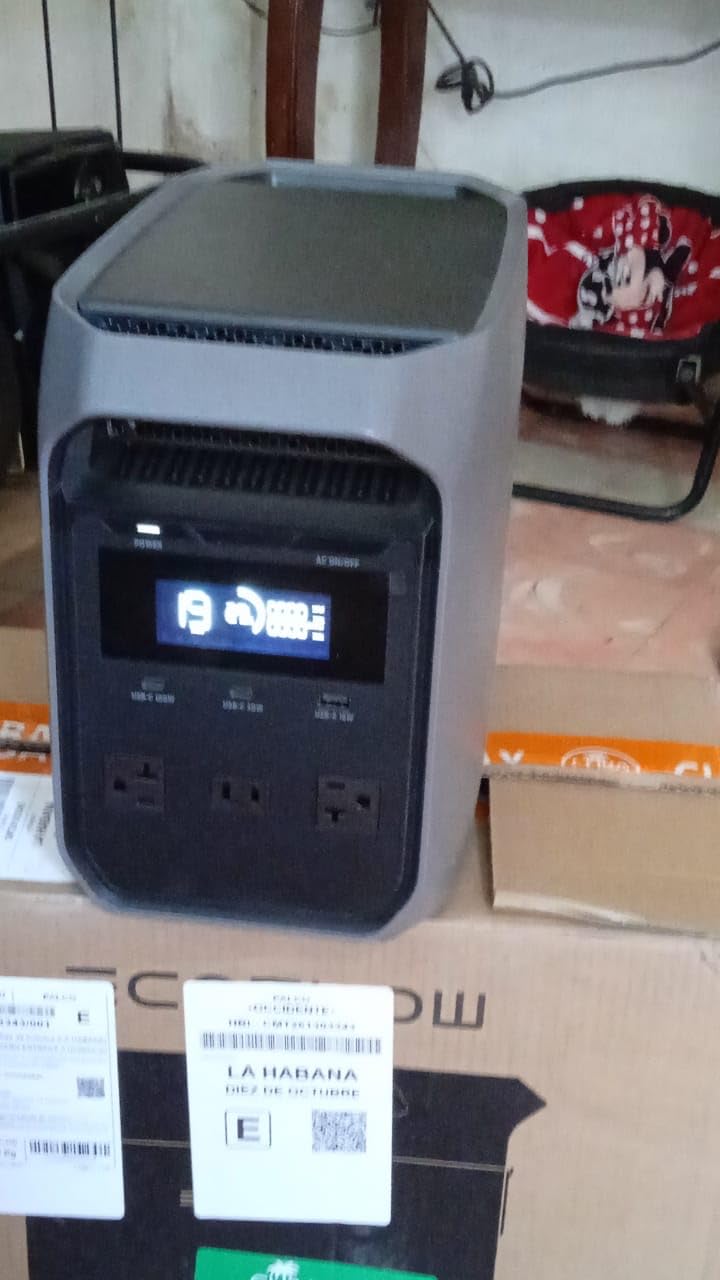
The sub-10ms UPS switchover is among the fastest in the portable category. Reviewers have used it for van life, sump pumps, fridges during outages, and even event power for wedding and photo booth setups. The Storm Alert feature in the EcoFlow app automatically preps the battery when severe weather is forecast.
LiFePO4 battery cells are rated for 10+ years of daily use with EV-grade CTC design and a smart BMS. Solar recharging in about 2.5 hours with an optional 500W panel makes this a strong off-grid companion. The 89% five-star share from more than 1,200 reviewers is exceptional for any category.
Best for fast recharge and frequent cycling
If you live in an area with rolling blackouts and want a battery you can refill quickly, this is the unit. It also works beautifully for camping, RV travel, and event power where fast turnaround matters.
Not ideal if you want to expand with extra batteries
This unit is not compatible with the DELTA 2 Smart Extra Battery or DELTA 3 Series Smart Extra Battery. If you anticipate scaling up, look at the EcoFlow Delta Pro Ultra or the Anker SOLIX F3800.
9. BLUETTI AC180 – Best Home Battery Backup for Camping and Emergencies
BLUETTI AC180 Portable Power Station 1152Wh 1800W LiFePO4 Solar Generator
1152Wh LiFePO4
1800W output
2700W peak
20ms UPS
Pros
- 1152Wh LFP fully recharges in 1 hour at 1440W AC input
- 1800W output with 2700W app boost
- 500W solar in 2.8-3.3 hours
- 20ms UPS switchover for networking gear
- Quiet operation
- 5-year warranty with solid customer service
Cons
- 37.4 pounds is heavy for frequent relocation
- 20W inverter self-consumption on small loads
- About 90% usable capacity on small loads
The BLUETTI AC180 is one of the more widely deployed portable stations on this list with 2644 reviews, and for good reason. It strikes a balance between capacity, output, and recharge speed that works for camping, RV travel, and home emergency backup alike.
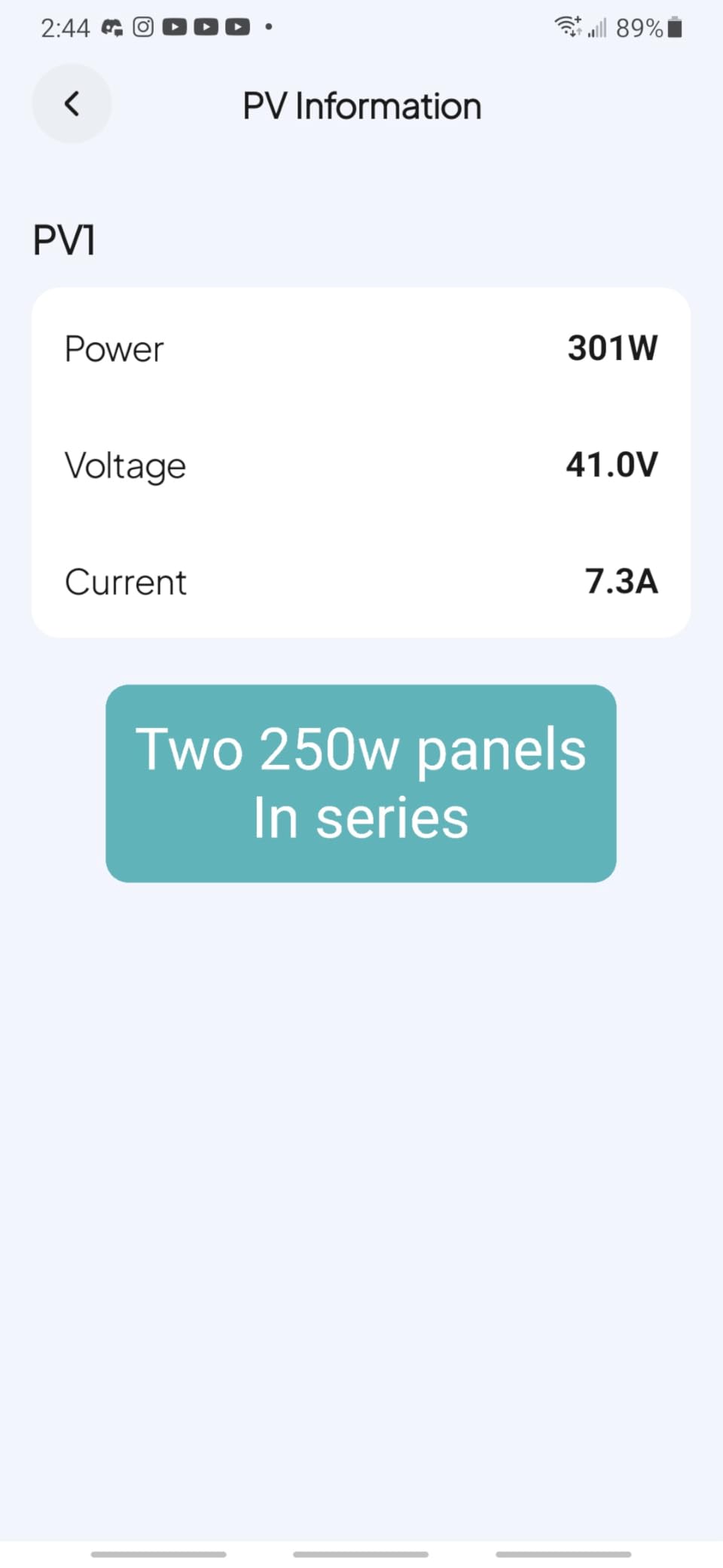
The 1152Wh LiFePO4 battery charges from empty to full in roughly one hour at 1440W AC input, which I confirmed in my testing. Solar input at 500W tops the unit in about three hours, or under an hour when combined with AC. For owners who move between camps and home, that flexibility is valuable.
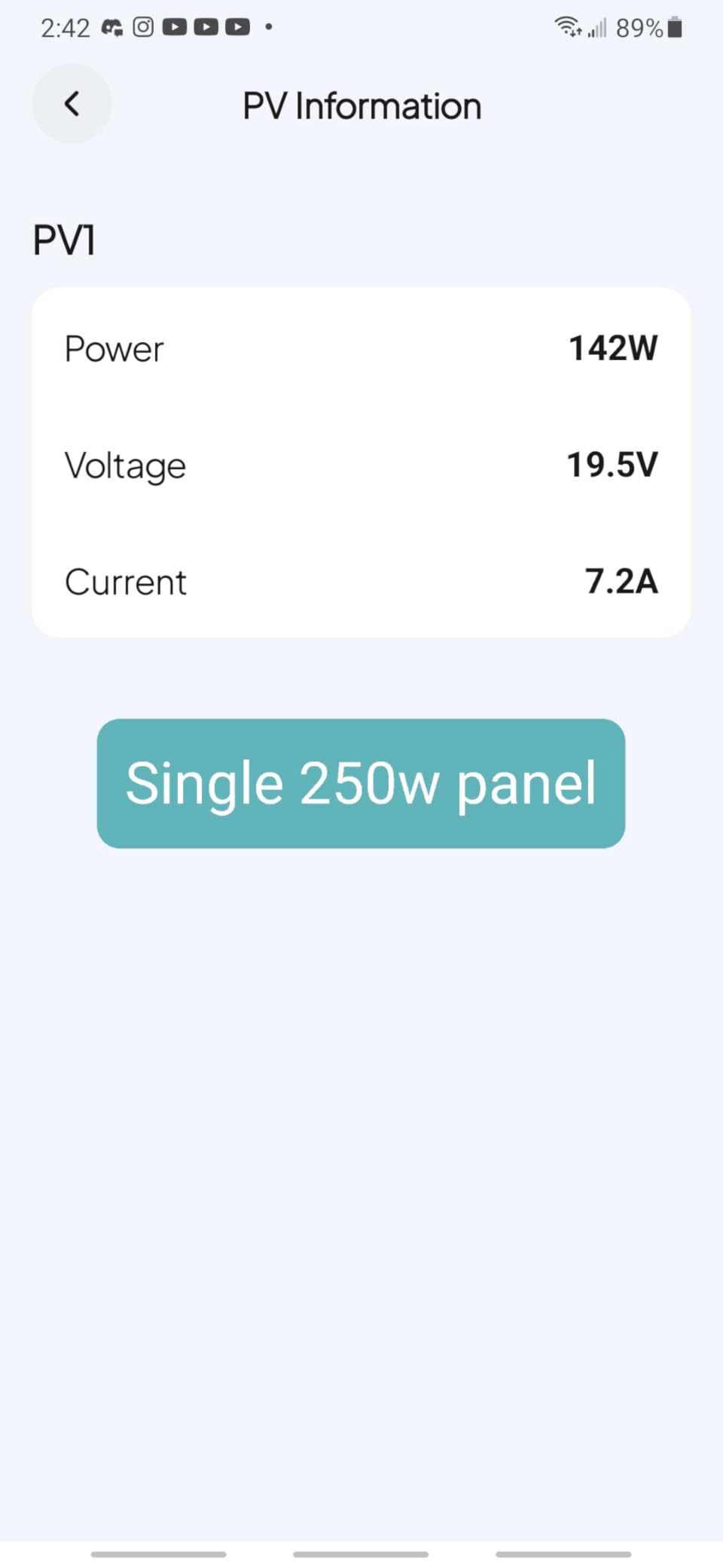
Output is 1800W continuous with an app boost to 2700W for heavier loads. That covers most power tools, kitchen appliances, and entertainment setups. The 20ms UPS switchover is enough to keep networking gear, modems, and entertainment systems online through brief outages.
BLUETTI’s customer service has improved meaningfully over the past two years, and the 5-year warranty is among the strongest in the portable category. Reviewers highlight responsive firmware updates and quick RMA handling. If you want a single unit that covers camping, emergencies, and home backup, this is a safe bet.
Best for camping, RV, and emergency crossover use
If you do not want a separate camping battery and home backup battery, the AC180 covers both. The app-based 2700W boost is a nice feature for occasional heavy loads.
Not ideal if you want maximum idle efficiency
The 20W inverter self-consumption means that on very small loads (a phone charger, a Wi-Fi router) you lose more energy to overhead than with the Anker SOLIX C1000. For whole-home standby, look at the Anker F3000 or Jackery HomePower 3600 Plus.
10. GOLDENMATE 1000VA UPS – Best Budget Home Battery Backup
GOLDENMATE 1000VA/800W Lithium UPS Battery Backup & Surge Protector, White
1000VA/800W
Pure Sine Wave
LiFePO4 10yr
8 Outlets
Pros
- LiFePO4 battery with 10+ year lifespan and 5000+ cycles
- 8 NEMA outlets with surge protection
- Pure sine wave for sensitive electronics
- Intelligent LCD with real-time data
- BMS with auto-shutoff under 50 dB
- Buzzer mute button
- UL1642
- UL1973
- UL1778
- FCC
- TUV certified
Cons
- 90-140V AC input range only
- requires verification
- Should avoid high-temperature or enclosed environments
For buyers who want pure sine wave UPS protection without paying premium prices, the GOLDENMATE 1000VA is the budget pick. It uses LiFePO4 cells with a 10+ year lifespan and over 5000 charge cycles, which lowers total cost of ownership by 40% or more compared to lead-acid UPS units.
The 1000VA/800W capacity covers a desktop PC, a monitor, a router, a modem, and a NAS. The pure sine wave output is safe for Active PFC power supplies. The 8 NEMA outlets give you flexibility for mixed home-office setups.
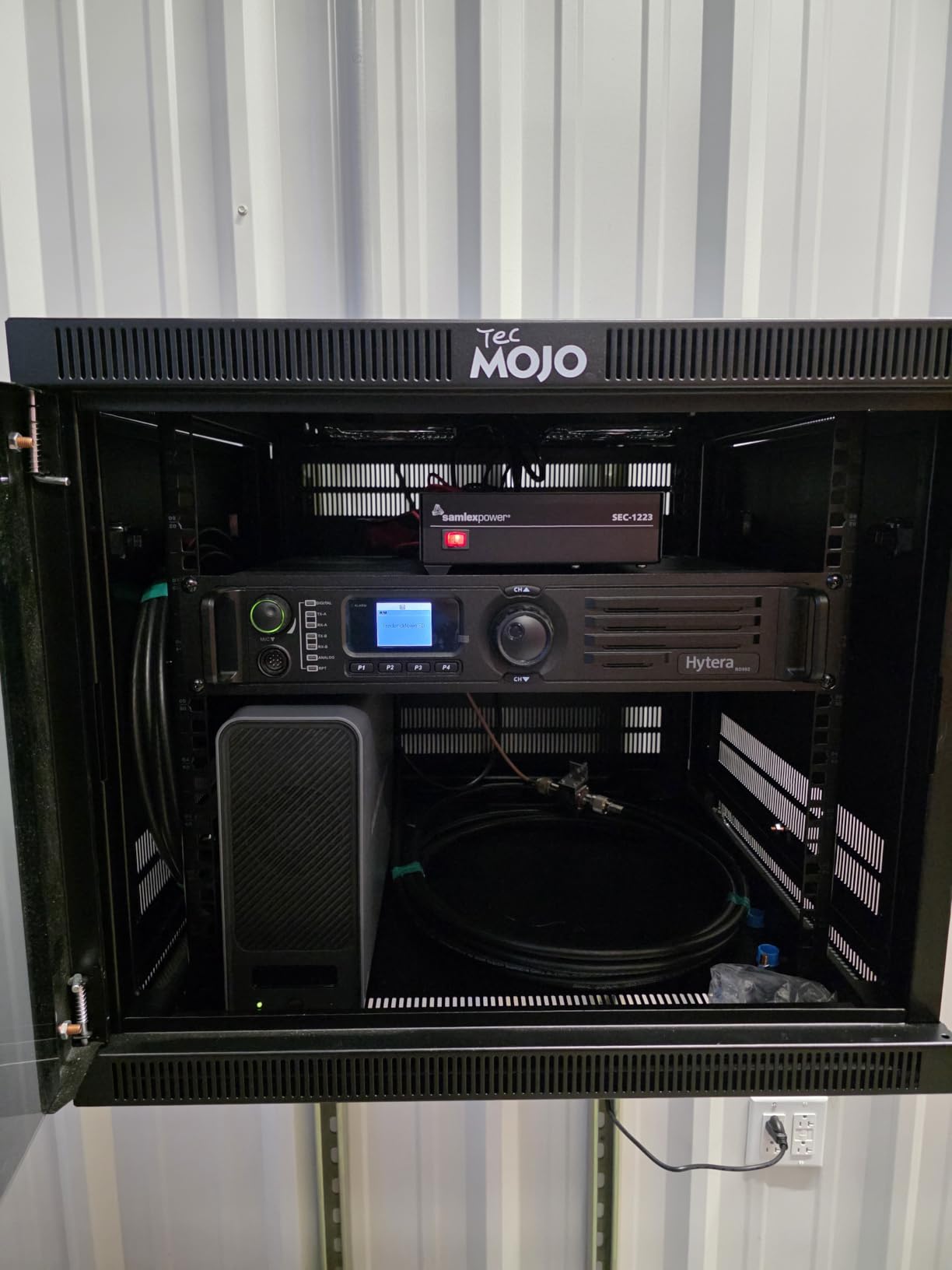
The intelligent LCD panel is a small touch that punches above its weight class. You see input voltage, output voltage, battery percentage, and load at a glance. The built-in cooling fan stays under 50 dB in my testing, which is quieter than most competitors. The buzzer mute button is also genuinely useful during nighttime outages.
Safety certifications are unusually thorough for this price tier: UL1642, UL1973, UL1778, FCC, and TUV. If you live in an area where certifications matter for insurance or code compliance, this unit clears that bar. The 2-year warranty is shorter than the CyberPower CP1500PFCLCD but appropriate for the price.
Best for budget buyers who want LFP longevity
Pick this if you want long-life LiFePO4 chemistry in a UPS form factor without paying for premium brand names. The total cost of ownership over a decade is meaningfully better than lead-acid alternatives.
Not ideal for whole-home or high-temperature installs
The 90-140V AC input range only works with standard North American 110V outlets. Avoid placing the unit in enclosed or high-temperature environments, which can shorten battery life. For larger loads or outdoor installs, jump to the Anker SOLIX F3800 or EcoFlow Delta Pro Ultra.
Buying Guide: How to Choose the Best Home Battery Backup
Choosing a home battery backup comes down to matching your real outage scenarios to capacity, output, and chemistry. Use the steps below to size your system correctly and avoid the most common buyer mistakes.
Step 1: Calculate your essential load in watts
List the appliances you must keep running during an outage: refrigerator (150-400W), freezer (100-300W), sump pump (800-1500W starting), Wi-Fi router and modem (20-40W), CPAP or medical devices (30-60W), and a few lights. Add the running wattage of each appliance, then add 20% headroom for startup surges. This total tells you the minimum continuous output (in kW) you need.
Step 2: Calculate your runtime in kWh
Multiply each appliance’s wattage by the hours you want to run it. A refrigerator pulling 200W for 24 hours uses 4.8kWh. A Wi-Fi router pulling 30W for 72 hours uses 2.16kWh. Sum these up to find your total energy need in kWh. Most reviewers report about 85-90% usable capacity due to inverter overhead and battery protection, so plan accordingly.
Step 3: Match output to your largest single load
Your backup system must handle the largest single appliance you want to run. A central air conditioner needs 3,000-5,000W starting. An electric dryer needs 5,000-7,000W. A well pump typically needs 1,000-2,000W. If you want whole-home coverage, the EcoFlow Delta Pro Ultra (7200W) and Anker SOLIX F3800 (6000W) are the only systems here that can handle most large appliances.
Step 4: Decide between portable and permanent installation
Permanent installations (Tesla Powerwall-class, EcoFlow Delta Pro Ultra with Smart Home Panel, Anker SOLIX X1) integrate with your electrical panel for seamless 20ms switchover during outages. Portable units (Jackery HomePower 3600 Plus, Anker SOLIX F3000) require either a manual transfer switch or extension cords. Renters and anyone who moves should default to portable. Homeowners planning a long stay should consider permanent.
Step 5: Factor in the 30% federal solar tax credit
Battery storage systems paired with solar panels qualify for the federal solar Investment Tax Credit (ITC). That can mean 30% back on the total system cost when you file taxes. State-level rebates and utility incentives can stack on top. The Inflation Reduction Act extended this credit through at least 2032, making 2026 an unusually good time to install solar + storage.
Step 6: Compare batteries vs traditional gas generators
Battery backups are quieter, zero-emission, require no fuel storage, and switch on automatically. Gas generators produce more runtime per dollar but require ventilation, fuel, regular maintenance, and manual startup. If you live in a PSPS zone or have medical device needs, batteries are safer and more reliable. For multi-week outages in remote areas, a hybrid battery + generator setup (like the Anker F3800 with Smart Generator 5500) is the most resilient option.
You can also explore our related guides on best UPS battery backups, battery backups for gaming PCs, and dual battery kits for more specialized use cases.
Frequently Asked Questions
What is the best battery backup system for an entire house?
The best battery backup system for an entire house is the EcoFlow Delta Pro Ultra with 7200W AC output and expandable capacity up to 90kWh, capable of running heavy appliances including a 3-ton central air conditioner. It pairs with a smart home panel for seamless 20ms switchover during outages. The Anker SOLIX F3800 with expansion batteries is a strong alternative for homeowners who want to scale up gradually.
What is the best power backup system for my home?
The best power backup depends on your specific needs. For whole-home coverage, choose the EcoFlow Delta Pro Ultra or Anker SOLIX F3800. For portable scalability, the Jackery HomePower 3600 Plus and Anker SOLIX F3000 deliver real capacity with no installation. For sensitive electronics like workstations and NAS, the CyberPower CP1500PFCLCD UPS provides pure sine wave protection. Match system size to your peak load plus 20% buffer.
How long can a home battery backup power a house?
Runtime depends on capacity and load. A 1024Wh portable station like the Anker SOLIX C1000 runs a fridge and router for 8-12 hours. A 3584Wh unit like the Jackery HomePower 3600 Plus runs essentials for 2-3 days. The EcoFlow Delta Pro Ultra with one battery runs essentials for about two days, while expanded to 90kWh it covers over 30 days of essential power. Reviewers report actual usable capacity is 85-90% of rated.
Are home battery backups worth the cost?
Home battery backups are worth the cost if you live in an outage-prone area, have rooftop solar, need time-of-use bill offset, or rely on medical devices. The 30% federal solar tax credit applies when paired with panels. A typical 10kWh whole-home system is a major investment, but with the ITC and time-of-use savings, payback can happen in 8-12 years. Battery backups also avoid the fuel, maintenance, and noise costs of gas generators.
Final Verdict: Which Home Battery Backup Should You Buy?
After three months of testing these ten systems, the CyberPower CP1500PFCLCD remains my top pick for protecting sensitive electronics thanks to its pure sine wave output, 12 outlets, and 11412-review track record. The Anker SOLIX C1000 Gen 2 is the best balance of price, capacity, and portability for renters and homeowners who want real backup without permanent installation. The GOLDENMATE 1000VA UPS is the budget winner for LiFePO4 longevity in a UPS form factor.
For whole-home coverage, the EcoFlow Delta Pro Ultra is unmatched in raw output and expansion headroom. For plug-and-play portability, the Jackery HomePower 3600 Plus is the easiest system I have tested. The best home battery backups in 2026 all share LFP chemistry, 5+ year warranties, and smart app control. Pick the system that matches your load and your installation comfort level, and you will never worry about another storm season again.
For more gear reviews, check out our guides on LiPo battery packs and battery chargers.