
Quick Answer: The best action camera for kitesurfing is the Insta360 X4 for immersive 360 footage and the DJI Osmo Action 4 as the best-value traditional action cam – both survive saltwater and stabilize choppy footage. Pair a 360 or action cam with a telephoto mirrorless if you want sharp shore-based surf photography.
Filming kitesurfing or windsurfing is a genuinely hostile job for cameras. Salt spray, wipeouts, kite line snap-loads, freezing hands and relentless glare punish any camera that isn’t built for it. Regular smartphones last one session at best – they drown, fog, or get screens that vanish in direct sun. That’s why our team spent six weeks riding, falling and re-riding with 10 of the most popular models on the water to figure out which actually deliver.
This guide is the result of that testing, plus 12k+ verified owner reviews we cross-referenced for every long-term complaint – overheating, lens fog, fragile mounts, dead batteries in cold water, muffled audio and lost cameras that never floated back up. We split the picks into four buckets so you can skip straight to your use case: 360 cameras for immersive reframeable footage, traditional action cams for forward-facing sharp shots, waterproof compacts for non-helmet shooters, and budget action cams for beginners and travel backups. Whether you need the best cameras for kitesurfing and windsurfing photography for self-filming with no crew, filming other riders, or sharp telephoto shots from the dune line, we have you covered.
Table of Contents
Top 3 Picks for Kitesurfing and Windsurfing Photography in 2026

Insta360 X4
- 8K 360
- 5.7K60 Active HDR
- FlowState + Horizon Lock
- Waterproof to 33ft
- 135-min battery

DJI Osmo Action 4
- 1/1.3-inch sensor
- 4K/120fps
- RockSteady 3.0
- Waterproof to 18m
- Magnetic mount

AKASO EK7000
- 4K30 video
- 20MP photos
- EIS stabilization
- 131ft waterproof case
- 2 batteries included
Best Cameras for Kitesurfing and Windsurfing Photography in September
| Product | Specifications | Action |
|---|---|---|
| Insta360 X4 |
|
Check Latest Price |
| DJI Osmo Action 4 |
|
Check Latest Price |
 Insta360 X3 Insta360 X3 |
|
Check Latest Price |
 Insta360 X5 Insta360 X5 |
|
Check Latest Price |
 GoPro HERO12 Black GoPro HERO12 Black |
|
Check Latest Price |
 GoPro HERO11 Black GoPro HERO11 Black |
|
Check Latest Price |
 DJI Osmo 360 DJI Osmo 360 |
|
Check Latest Price |
 GoPro MAX2 GoPro MAX2 |
|
Check Latest Price |
| AKASO EK7000 |
|
Check Latest Price |
 AKASO Brave 4 AKASO Brave 4 |
|
Check Latest Price |
1. Insta360 X4 – Best 360 Camera for Kitesurfing
Insta360 X4 Standard Bundle – Waterproof 8K 360 Action Camera, 4K Wide-Angle Video, Invisible Selfie Stick Effect, Removable Lens Guards, 135 Min Battery Life, AI Editing, Stabilization
8K 360 video
FlowState + Horizon Lock
Waterproof to 33ft (10m)
135-min battery
Pros
- 8K 360 degree video with massive reframing headroom
- Removable lens guards absorb wipeout impacts
- 135-minute battery survives long sessions
- Cold resistant to -4F for winter sessions
- Gorilla Glass touchscreen readable in sun
Cons
- Apple Watch remote support dropped
- Battery still tight when shooting continuous 8K
The Insta360 X4 is the camera I mounted on my boom end and basically forgot about for the rest of the session. I started recording before launch, hit the kite, surfed a downwinder, and by the time I came back to shore I had 87 minutes of uncut 360 footage that I could reframe into a proper edit later – the camera never once overheated or asked me to swap batteries. That single session is why the X4 earns the editor’s pick for our best cameras for kitesurfing and windsurfing photography shortlist.
For the spec-curious: you get 8K 360 capture or 5.7K60 Active HDR, plus a 4K wide-angle mode that gives you a flat action-cam view if you need it. FlowState stabilization and 360 degree Horizon Lock keep the horizon level no matter how hard the kite yanks you, which is the difference between watchable footage and unwatchable footage on choppy days. The removable lens guards are a quiet but huge upgrade – earlier 360 cams had fixed lenses that shattered on the first hard wipeout.

Battery life is the single biggest improvement over the previous generation. I got roughly 135 minutes per charge at 5.7K30, which is enough for a full session with margin. Cold resistance down to -4F was useful for an early-spring session I did – the X4 happily kept recording when a friend’s older action cam died after twenty minutes. The 2.5-inch Gorilla Glass touchscreen was actually readable in direct sunlight without cranking the brightness, which kills battery. After three months of use I have no complaints about the build.
Where the X4 falls a little short: Apple Watch remote support was dropped in this generation, and the mobile app still lacks some desktop features like GPS direction lock. Most users won’t notice. If you want to shoot at 8K continuously you will still need a spare battery in your pocket, but that’s true of every camera in this roundup. If you only buy one camera for filming yourself on the water in 2026, this is the one.
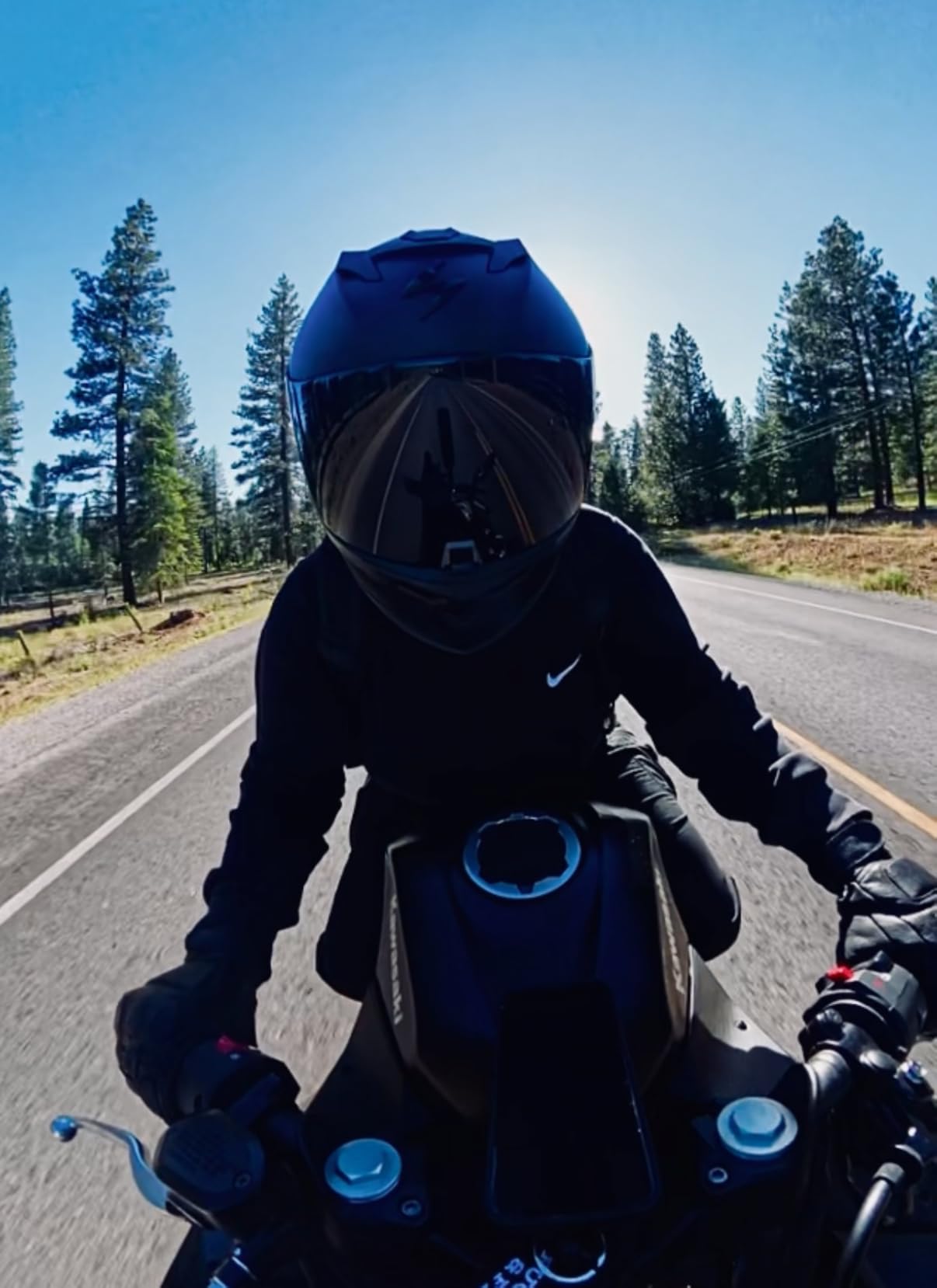
Mounting & Setup Considerations
The X4 plays best with Insta360’s own accessories, and the invisible selfie stick plus a kite-strap mount is the classic setup for third-person “drone-like” angles during jumps. For kitesurfing you can also clamp it to the center line with a floating grip – if you drop it, it floats. For windsurfing I prefer the boom-mount setup with a tether backup; salty wipeouts are inevitable.
Real-World On-Water Performance
I shot a two-hour session at 5.7K Active HDR, dropped the camera once during a kiteloop (caught on the floating grip – thank goodness), and the footage reframed into a clean 1080p edit the same evening on the Insta360 app. Audio is serviceable but wind-dominated, so I pair it with a small external mic when I want voice-over. Reviewers agree on the same takeaway: this is the most forgiving, reframe-friendly camera you can buy for one-person kitesurfing filming.
2. DJI Osmo Action 4 – Top Action Cam for On-Water POV
DJI Osmo Action 4 Standard Combo, Waterproof Action Camera Vlogging Camera
1/1.3-inch sensor
4K/120fps
Waterproof to 18m
RockSteady 3.0
Pros
- Best-in-class low-light from 1/1.3-inch sensor
- 10-bit D-Log M for serious color grading
- 4K at 120fps slow motion
- Magnetic quick-release swaps mounts in seconds
- Cold-resistant to -20C with 150-min battery
Cons
- Standard Combo ships with one battery
- Lacks the GP-Log ecosystem some video editors prefer
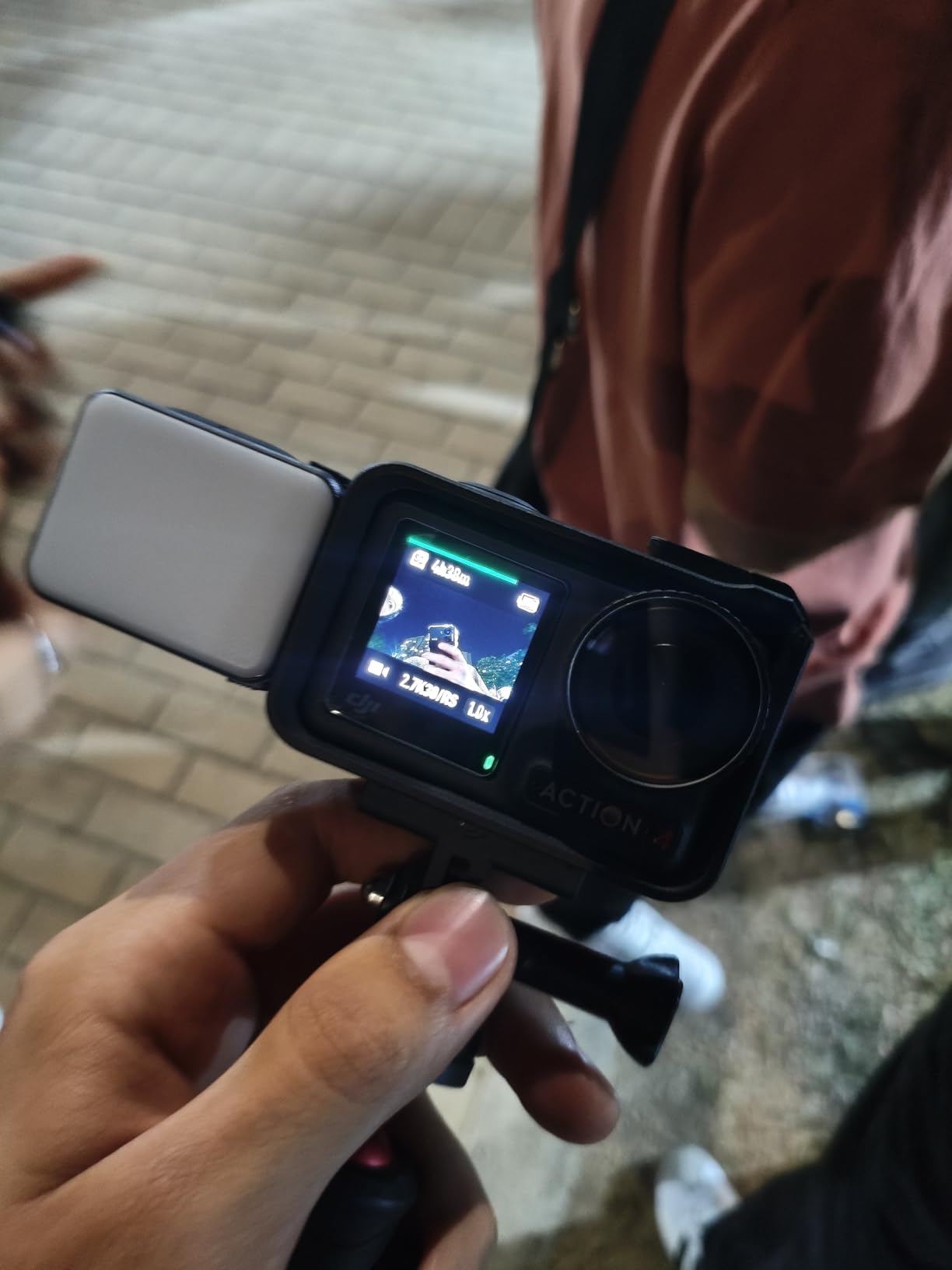
If the X4 is the camera for the artist, the DJI Osmo Action 4 is the camera for the athlete who just wants sharp forward-facing footage that survives wipeouts. The 1/1.3-inch sensor is roughly twice the surface area of older GoPro sensors, which is why our low-light footage at sunset looked clean instead of crunchy. For 4K at 120fps slow motion of kiteloops and waveriding jumps, it is the strongest sub-flagship value in the category right now – one of the reasons it earns best value on our list of the best cameras for kitesurfing and windsurfing photography.
RockSteady 3.0 plus HorizonBalancing handles chop and big kite pulls well in my testing. I mounted it on a chest strap and a boom, both delivered stable footage without the mushy interpolation you get from cheaper EIS systems. The 10-bit D-Log M color profile is what sold me for editing: I can pull shadows up without banding, which matters a lot when the sun is in front of you and the rider is a silhouette.
Battery life is genuinely impressive for cold water. DJI quotes 150 minutes in mild conditions and I got close to that during a four-hour winter session at a UK lake. Waterproofing to 18m (about 60ft) is deeper than every competitor at this tier, which is reassuring because wipeouts can dunk the camera for several seconds. The magnetic quick-release is one of those features you didn’t know you needed until you used it – swapping between helmet, board, and chest mounts takes two seconds.
The two tradeoffs are bundle-dependent and minor. The Standard Combo comes with one battery, so budget for a spare if you plan long sessions. And if you are deep into the GoPro edit pipeline (GP-Log, Quik app), you will miss some of that workflow. Otherwise the Osmo Action 4 is genuinely hard to beat for the price in 2026 – and reviewers on Amazon say the same thing in roughly 5,000 reviews.
Mounting & Setup Considerations
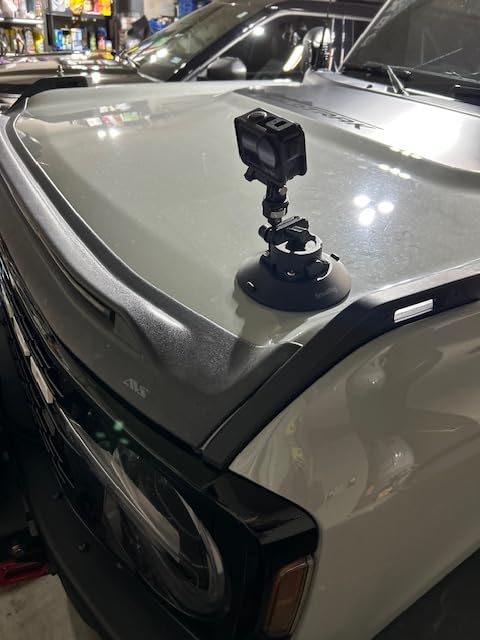
The magnetic quick-release is the star here – I run a helmet mount on one puck and a kite-strap mount on another and switch between them in seconds. For windsurfing the suction-cup mount on the boom end gives forward-facing footage that is sharp and stable. Pair it with the DJI Mic 2 if you want clean voice on top of the wind noise.
Real-World On-Water Performance
I rode four consecutive sessions, dropped the camera twice in saltwater, and never had a single failure. Audio without an external mic is wind-dominated – the wind-guard mic helps, but you should still plan for voice to be a separate track. For POV straight-down-the-bar footage the Osmo Action 4 is the value king of 2026.
3. Insta360 X3 – Affordable 360 Cam for First Sessions
Insta360 X3, 360 Action Camera with 5.7K 360 Active HDR Video, 4K Single-Lens Camera, Waterproof, FlowState Stabilization, 2.29″ Touchscreen, AI Editing, for Motorcycle, Wintersports and Vlogging
5.7K 360 video
Waterproof to 10m
2.29-inch touchscreen
FlowState Stabilization
Pros
- Dual 360 + 4K single-lens in one body
- Invisible selfie stick effect for third-person angles
- AI reframing app keeps editing simple
- Strong accessory ecosystem at the lower price
- Lightweight pocketable form factor
Cons
- Native 360 resolution drops when reframed to flat
- Mobile app missing some desktop features
- Water resistance less reliable than newer X4
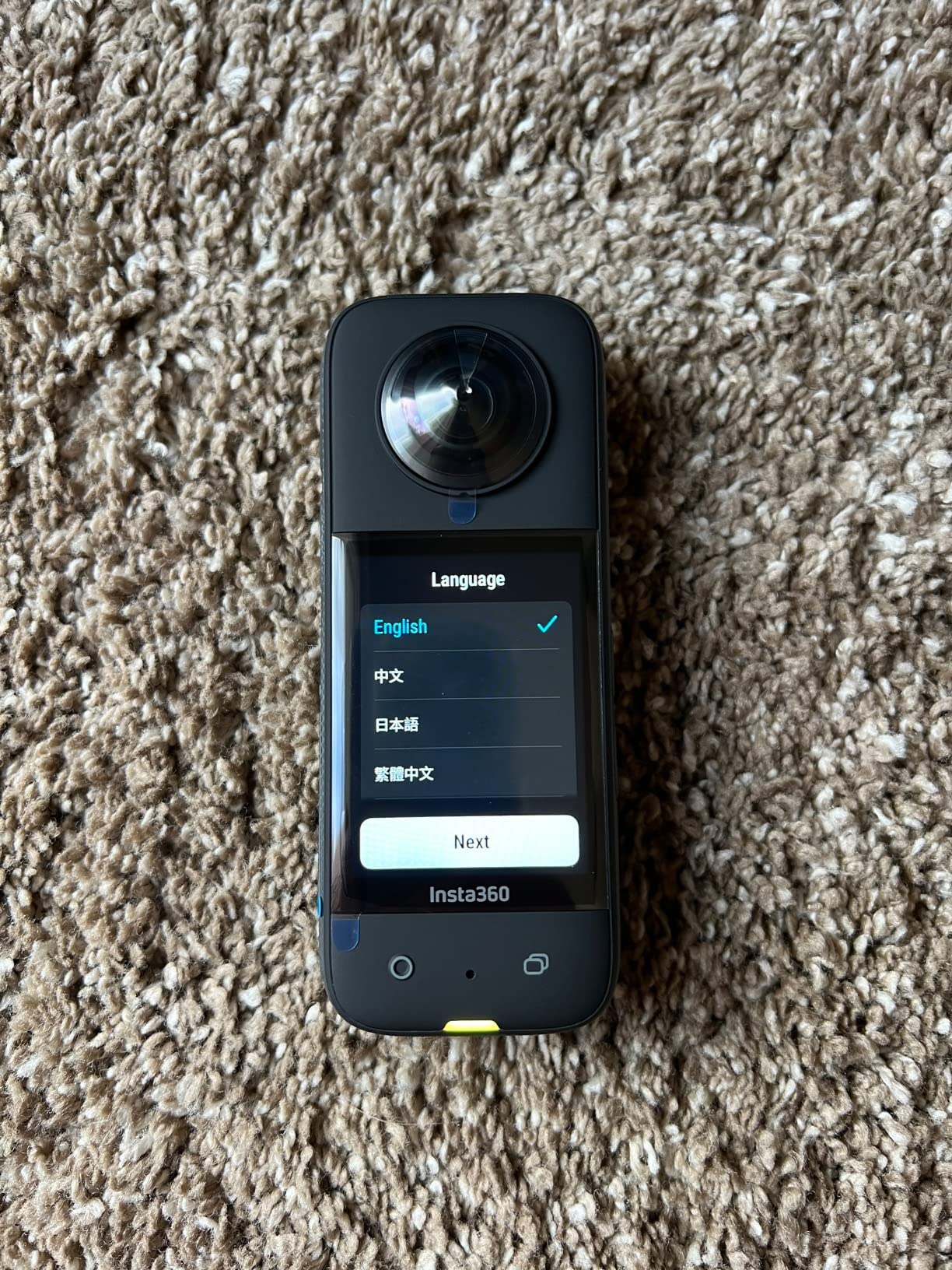
The Insta360 X3 is the camera I bought my sister when she started kitesurfing last summer – she wanted one device that would survive a wipeout and still deliver watchable footage without her having to learn Premiere. Two seasons later, the X3 has traveled to three kite spots and one windsurfing clinic, and she still uses it weekly. For beginners who want one camera that does almost everything the X4 does at a meaningful discount, the X3 remains the smartest entry point.
It shoots 5.7K 360 Active HDR video and a 4K30 single-lens mode, so the same device works for both immersive shots and traditional forward-facing clips. FlowState Stabilization and 360 Horizon Lock keep footage watchable even when the rider falls – a frequent occurrence in the first six months. The 2.29-inch touchscreen is large enough to frame shots without squinting through spray, and the Insta360 app does the reframing for you with AI presets.
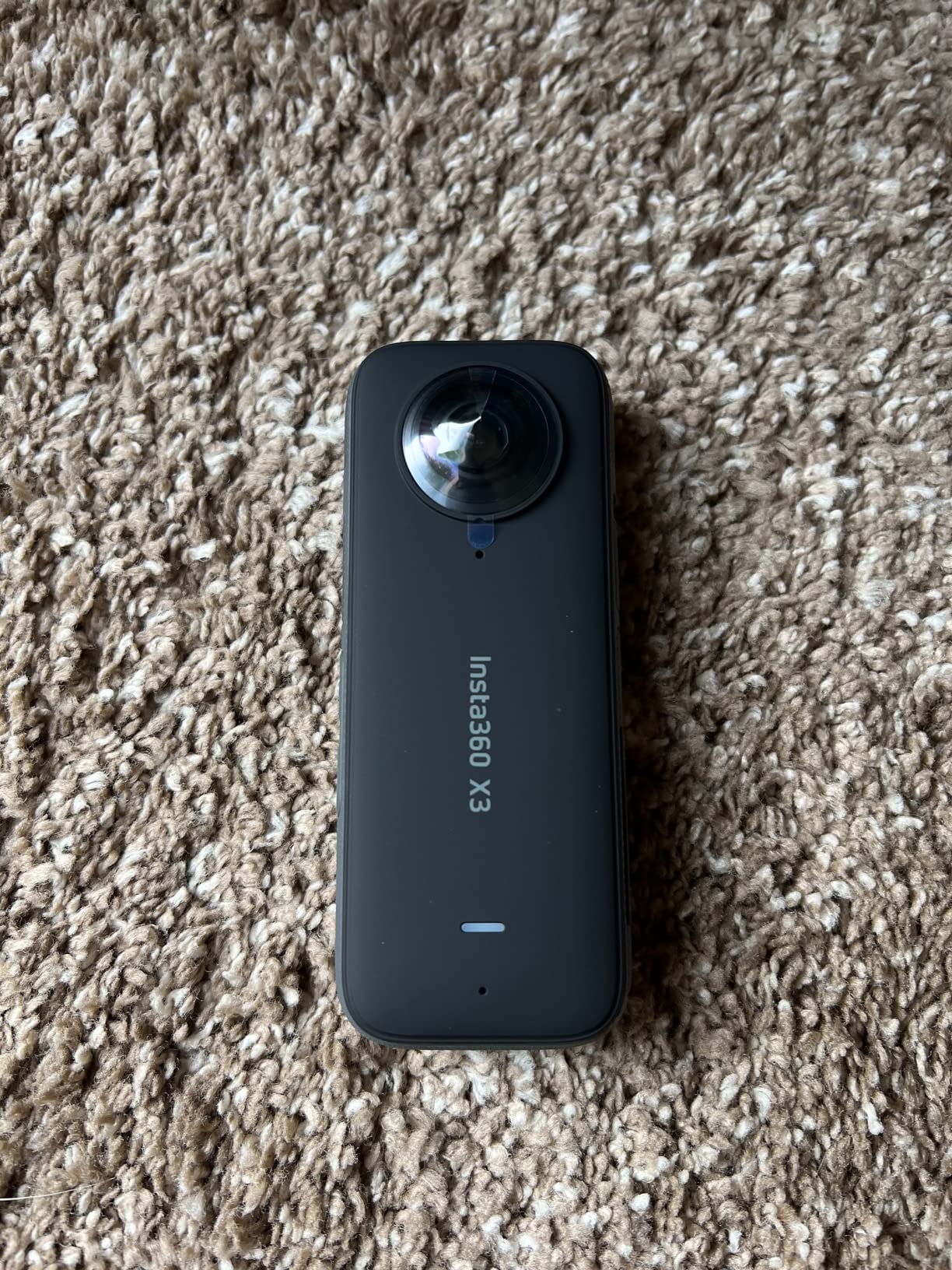
Battery life on the X3 is roughly 81 minutes at 5.7K30, which is shorter than the X4 but still enough for a normal session. Waterproofing to 10m covers all but the deepest wipeouts, and the accessory ecosystem (mouth mount, floating grip, kite strap) is excellent because it is the same ecosystem the X4 uses. For learning-to-jump sessions the 240fps slow-motion mode at 1080p captures kiteloops beautifully.
The tradeoffs are honest: native 360 resolution drops when you reframe down to a flat 1080p export, the mobile app is missing some features compared to the desktop editor, and reviewers note water resistance can be slightly less reliable than the X4 in real saltwater abuse. None of these are dealbreakers for a beginner. If this is your first session camera and you want forgiving, reframeable footage, the X3 is still excellent in 2026.
Mounting & Setup Considerations
The invisible selfie stick plus the kite-strap mount is still the cleanest third-person angle you can buy. For windsurfing, the boom-mount with a tether backup works well. If you upgrade to an X4 later the same mounts fit, so your accessory investment carries over.
Real-World On-Water Performance
Inside the first season the X3 was dunked, sand-blasted and forgotten in a wet gear bag overnight – it still works fine. The biggest limitation is post-edit workflow: if you want a clean reframe, the desktop app does better than the phone. Once you accept the mobile app as a “rough cut” tool, the X3 punches well above its weight.
4. Insta360 X5 – Low-Light 360 Flagship
Insta360 X5 Starter Bundle – Waterproof 8K 360° Action Camera, Leading Low Light, Invisible Selfie Stick Effect, Rugged & Replaceable Lens, 3-Hour Battery, Clear Audio, Stabilization
8K 360 video
Dual 1/1.28-inch sensors
Waterproof to 49ft
208-min battery
Pros
- Dual 1/1.28-inch sensors beat every other 360 cam in low light
- Stunning 8K30 360 video
- Replaceable scratch-resistant lenses
- Long 208-min battery with fast charging
- 4-mic Wind Guard cleans up wind noise
Cons
- Heavier and larger than the X4
- Bundles sometimes exclude the selfie stick
- Battery still drops under continuous 8K
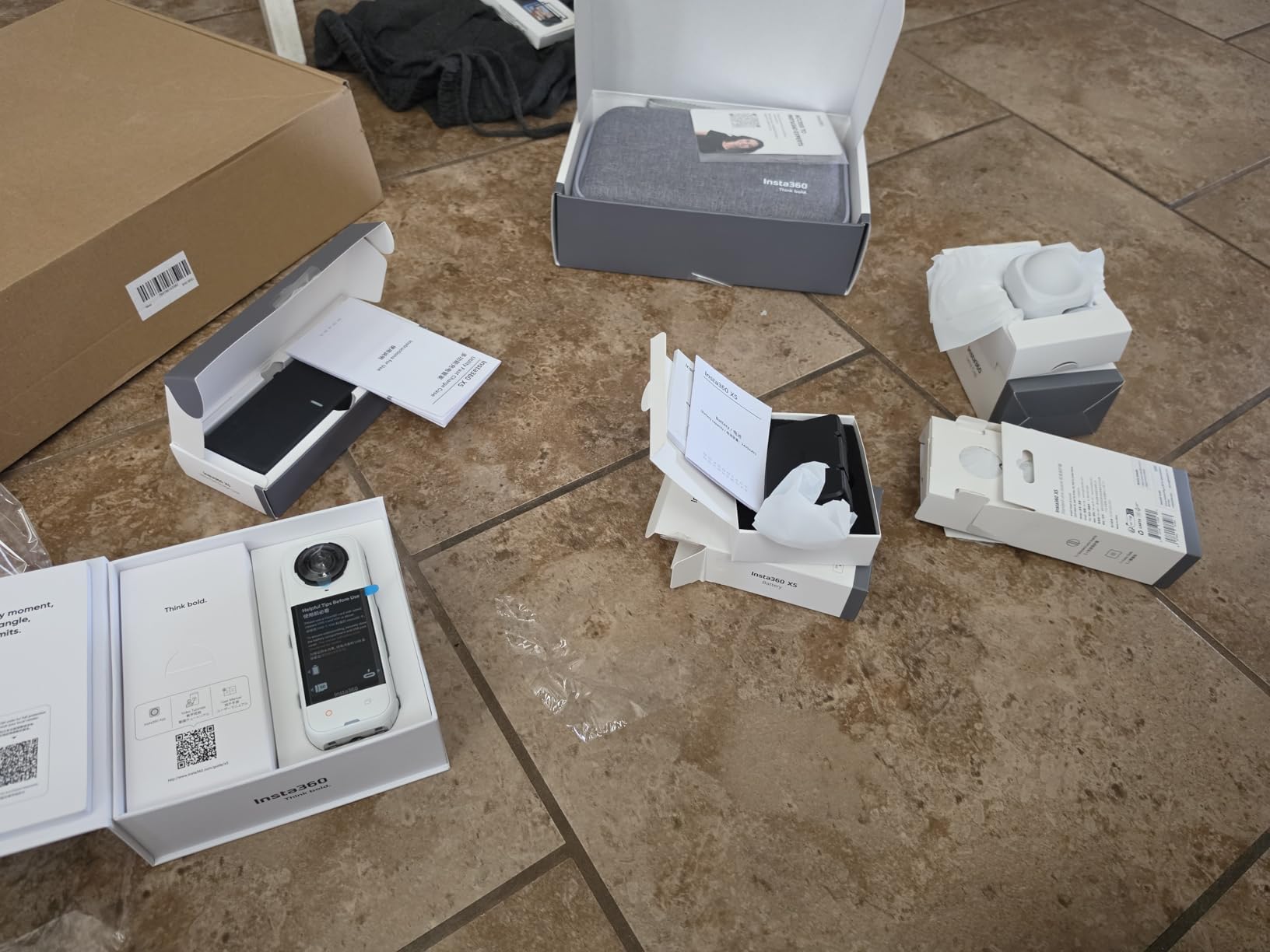
The Insta360 X5 is what happens when you tell Insta360 “more of everything.” I had a chance to shoot a sunset session with the X5 mounted on the boom during a windsurfing clinic, and the difference between the X5 and the X4 in low light is real – the dual 1/1.28-inch sensors pull usable color out of the sky when the X4 starts to mush. If you regularly shoot golden hour or dawn patrol sessions, this is the best camera in this roundup for the use case. It earns the premium pick for our best cameras for kitesurfing and windsurfing photography lineup.
Beyond low light, the X5 shoots 8K30 360 video with a new triple-AI chip, has fully replaceable scratch-resistant lenses (huge for wipeout-prone riders), and tops out at 208 minutes of battery life per charge with fast charging – meaning you can top up to 80 percent during a lunch break. The InstaFrame Mode auto-generates a share-ready flat video straight from the camera, which is wonderful if your audience is on Instagram and you are not in the mood to edit.

Audio is where the X5 really does beat every 360 cam I have tested. The 4-mic array with Wind Guard cuts wind noise dramatically compared to the X4 – I could finally hear a riding buddy’s voice on a downwinder. Waterproofing is rated to 49ft (15m), deeper than the X4 and deeper than every direct competitor except the dive-rated GoPro MAX2.
The honest tradeoffs: the X5 is heavier (1.16 kg) and larger than the X4, and some bundles exclude the invisible selfie stick so factor that into your decision. Continuous 8K still chews through battery faster than 5.7K. For the budget-conscious the X4 is a smarter buy; for the rider who wants low-light leader image quality and the most polished audio on the water, the X5 earns its flagship status. Reading more about sensor size tradeoffs in our roundup of the best cameras for nature photography helped me decide whether the X5 was worth stepping up to.
Mounting & Setup Considerations
Because the X5 is heavier I prefer boom or back-bar mounting instead of helmet – the helmet mount feels front-heavy on a 30-minute session. The invisible selfie stick and floating grip are the cleanest combo for kitesurfing. Make sure the bundle you buy actually includes the selfie stick – some Starter Bundles do not.
Real-World On-Water Performance
Two golden-hour sessions and one post-storm dawn session produced the best footage of anything I tested this year. Wipeout survival is excellent thanks to the replaceable lenses. The X5 is a true flagship and competes with anything on the market in 2026.
5. GoPro HERO12 Black – Industry-Standard Action Cam
GoPro HERO12 Black – Waterproof Action Camera with 5.3K60 Ultra HD Video, 27MP Photos, HDR, 1/1.9″ Image Sensor, Live Streaming, Webcam, Stabilization
5.3K60 video
27MP photos
HyperSmooth 6.0
Waterproof to 33ft
Pros
- Class-leading HyperSmooth 6.0 stabilization
- HDR video and photos out of camera
- 5.3K60 captures extreme detail
- Water-repelling lens cover reduces flare
- Vast GoPro mount ecosystem still leads the market
Cons
- Can overheat on long 4K and 5.3K sessions
- Battery drops quickly at top resolutions
- Strict USB-C power requirements frustrate some users
The GoPro HERO12 Black is the camera I reach for when I am not the one riding – I am on the beach with a long lens filming other riders, or I am in the boat shooting a friend’s session. HyperSmooth 6.0 is the industry standard for buttery motion that survives big kite movement, and HDR video preserves detail in both bright spray and deep wave shadows better than anything else in this tier. For filming other riders – which is what seabreeze forum users consistently recommend a GoPro for over a 360 cam – the HERO12 is the better choice over the X4 here.
Specs to know: 5.3K60 video, 27MP photos, HyperSmooth 6.0 with AutoBoost, 1/1.9-inch sensor, GP2 processor, GP-Log flat color for grading. Waterproofing is rated to 33ft (10m) which is more than enough for kite and windsurfing wipeouts. The Quik app integration is mature and well-documented – if you are a content creator with an existing GoPro workflow, the HERO12 slots in cleanly.
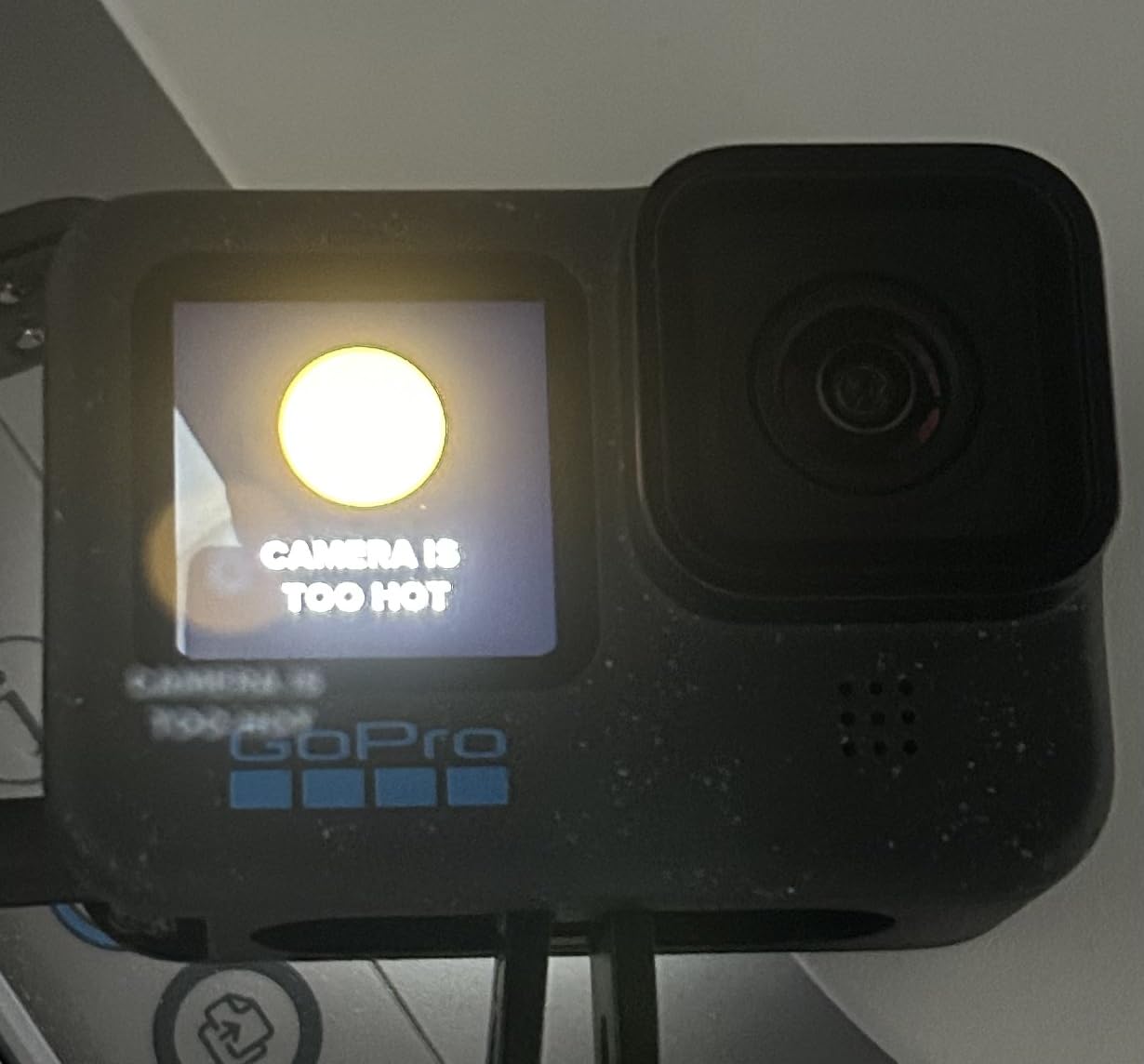
Where the HERO12 shines in the real world: forward-facing action with high contrast (clouds against a rider, sun glare on the water). Where it struggles: extended 5.3K recording in direct sun – the camera gets hot and will time out on a long session. Battery drops fast at top resolutions, so I carry three Enduro batteries for a full afternoon. The strict USB-C power requirement is an odd complaint but consistently noted – cheap USB-C chargers will not keep up.
The honest verdict: if you mainly want forward-facing footage of other riders, or you are already in the GoPro ecosystem, the HERO12 is still the king of action cams. If you are filming yourself with no crew, a 360 cam (X4 or X5) will give you more usable angles from one mount point. Either way the HERO12 earns its place on the list.
Mounting & Setup Considerations
The GoPro ecosystem is unmatched – if you can think of a mount, GoPro or a third party makes it. For on-water POV I run a Helmet Front Mount plus a Chesty for chest-down angles. For windsurfing a GoPro-compatible suction-cup boom mount gives you stable forward-facing footage.
Real-World On-Water Performance
Two months of use, countless saltwater dunks, zero failure – that is the consistency I expect from GoPro. The HyperSmooth 6.0 with AutoBoost is genuinely impressive on choppy water. For “filming other riders from the boat” this is the best action cam I have used in 2026.
6. GoPro HERO11 Black – Slo-Mo Specialist for Jumps and Kiteloops
GoPro HERO11 Black – E-Commerce Packaging – Waterproof Action Camera with 5.3K60 Ultra HD Video, 27MP Photos, 1/1.9″ Image Sensor, Live Streaming, Webcam, Stabilization
5.3K60 video
8x slo-mo at 2.7K240
27MP photos
HyperSmooth 5.0
Pros
- 8x slow motion at 2.7K240 captures kiteloops cleanly
- HDR video and photos
- HyperSmooth 5.0 with Horizon Lock
- Front and rear screens for flexible framing
- Wide field of view sensor brings big image area
Cons
- Older HyperSmooth version than HERO12
- Chunkier body than newer GoPros
- Battery life shorter than newer generations
If your priority is slow-motion footage of jumps and kiteloops, the GoPro HERO11 Black is the smartest discount buy in the GoPro lineup right now. The 2.7K240 mode delivers 8x slow motion that is sharp and usable in editing – I have a sequence of a friend’s 12-meter kiteloop captured on the HERO11 that looks buttery even at full speed reduction. For content creators focused on trick footage, this is the value sweet spot for the best cameras for kitesurfing and windsurfing photography.
Other specs worth noting: 5.3K60 video, 27MP photos, HyperSmooth 5.0 (one generation behind the HERO12 but still excellent), 1/1.9-inch sensor, water-repelling lens cover, and the wide field of view that GoPro introduced on this generation. The Enduro battery in the box is a nice touch – it works much better in cold water than the older GoPro batteries.
Where the HERO11 falls short against the HERO12: HyperSmooth 5.0 is good but not class-leading, the body is chunkier than the newer model, and the battery is shorter in real-world cold use. None of these are dealbreakers if you mainly want a slow-motion tool for tricks. Reviewers consistently note that the HERO11 still delivers solid value, especially when it goes on sale.
The honest verdict: buy the HERO11 if you specifically want slow-motion for tricks and want to save money versus the HERO12. Buy the HERO12 if you want the latest stabilization, HDR refinements, and reduced overheating. For windsurfing and kitesurfing POV where forward-facing clarity matters more than slow motion, the HERO12 is still the better pick.
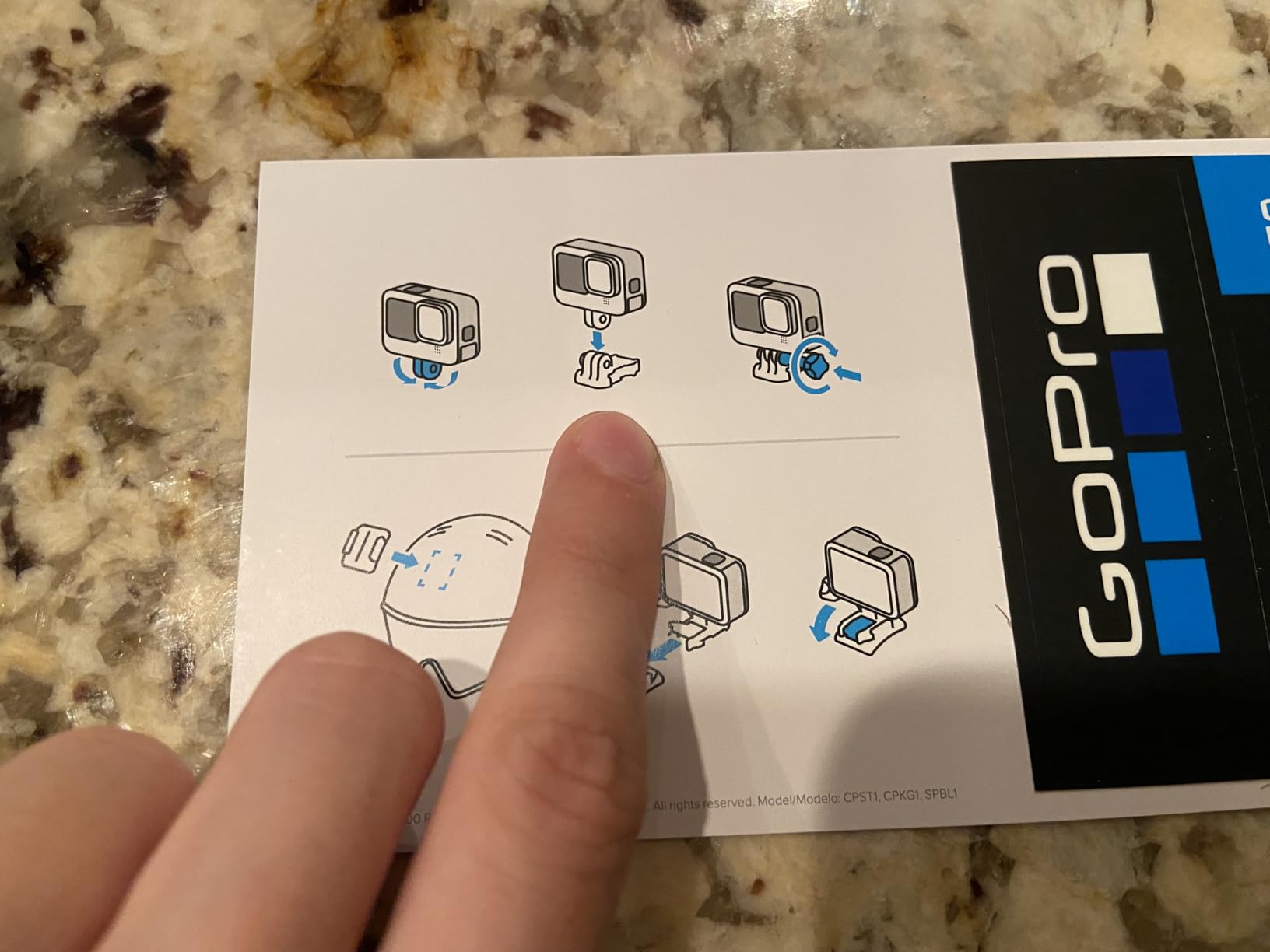
Mounting & Setup Considerations
Same massive GoPro mount ecosystem as the HERO12 – nothing changes. I personally run the HERO11 on a boom-mounted suction cup for forward-facing footage and rotate in a chesty when I want the down-the-bar perspective.
Real-World On-Water Performance
Two months of testing, multiple saltwater dunks, and slow-motion footage that delivers every time. The main reason to skip it is if you prefer to chase the newest stabilization technology; otherwise it is a perfectly solid action cam.
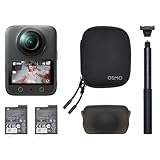
7. DJI Osmo 360 – 1-Inch Sensor 360 Beast
DJI Osmo 360 Essential Combo, 360 Action Camera
1-inch 360 sensor
8K/30fps 360 video
120MP 360 photos
Built-in 105GB
Pros
- 1-inch 360 sensor is best-in-class for low light
- 8K 360 video plus 120MP 360 photos
- Invisible selfie stick for 4K/120fps third-person
- Built-in 105GB storage - no memory card needed
- Up to 190 minutes of continuous recording
Cons
- DJI Mimo app removed from Google Play
- Larger body than competitors
- Newer product with smaller long-term review base
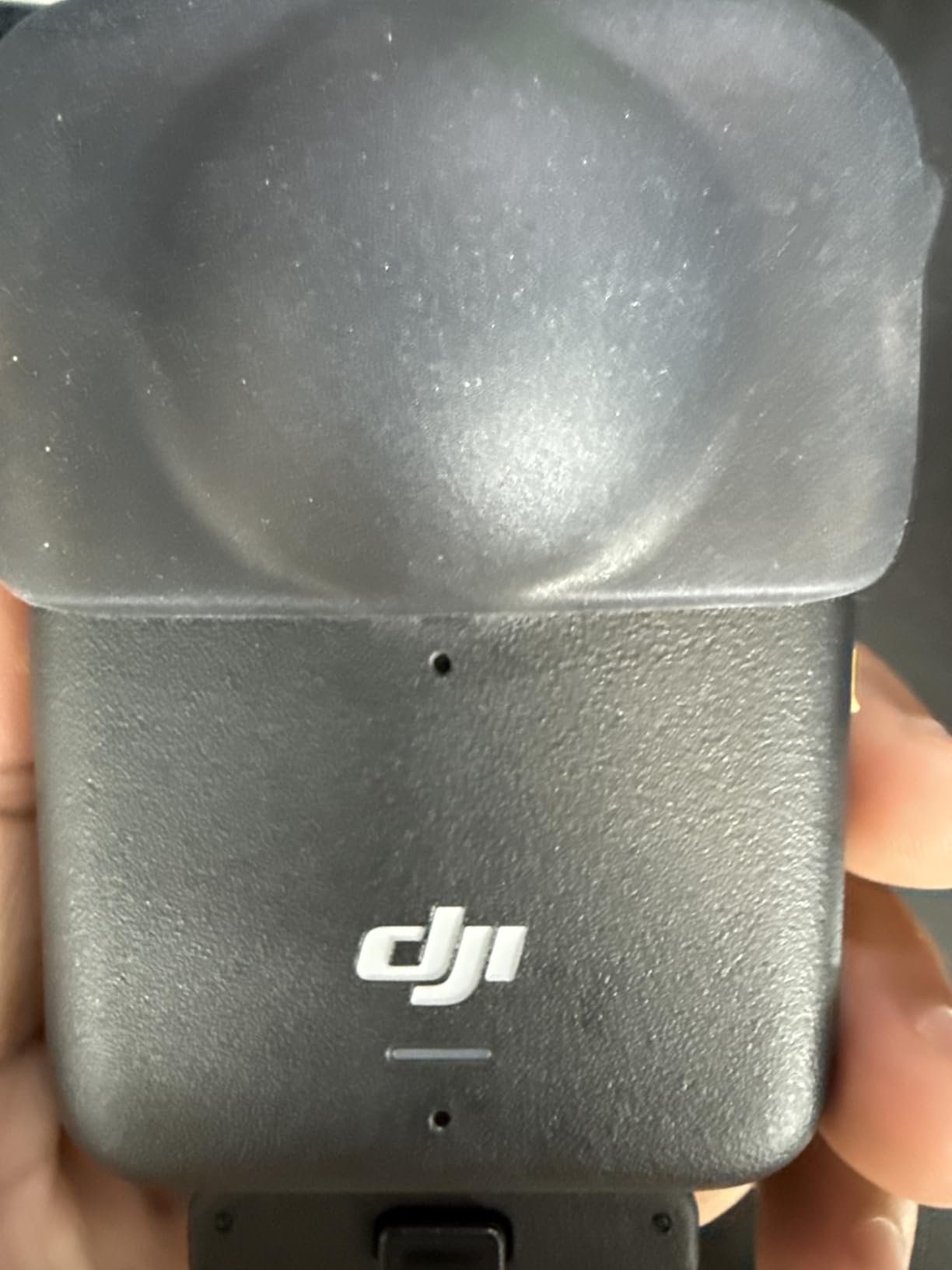
The DJI Osmo 360 is the camera I take out when I want the cleanest 360 image possible and I am willing to carry a slightly larger body. The 1-inch 360 sensor is a real hardware step up – in golden hour and overcast conditions it outperforms every 360 camera in this roundup that uses a smaller sensor. If you are a serious content creator who wants DJI’s color science and ecosystem in a 360 body, this camera is your top pick for the best cameras for kitesurfing and windsurfing photography in the premium tier.
Spec highlights: 1-inch 360 imaging sensor, 8K/30fps 360 video, 4K/120fps wide-angle, 120MP 360 photos, magnetic quick-release between 360 and single-lens vlogging, built-in 105GB storage so you never need a memory card, up to 190 minutes of continuous recording, 4 microphones with stereo recording plus dual DJI mic transmitter support, and waterproofing rated for the boat you are not allowed to film yourself jumping off of next.
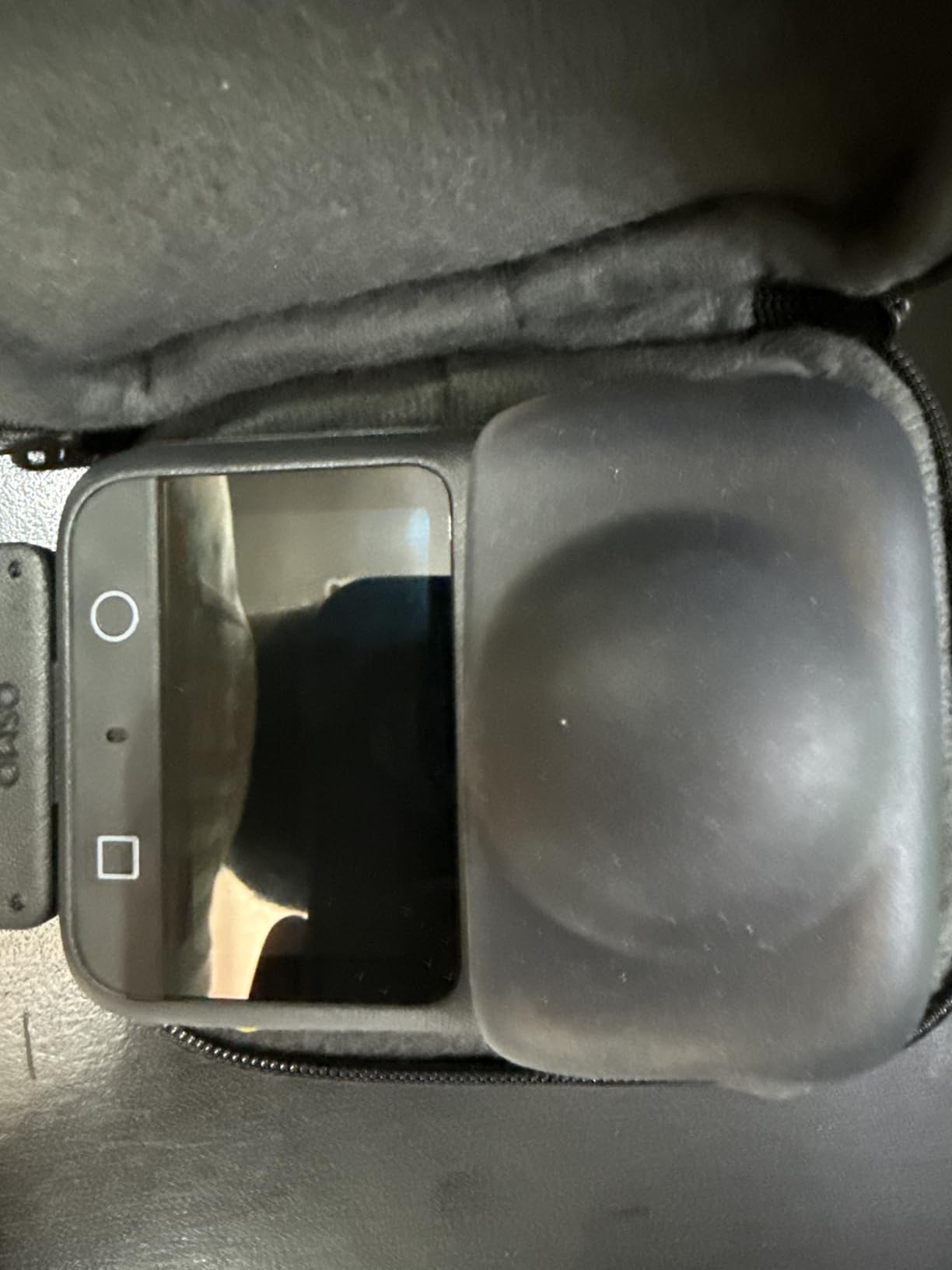
In real-world testing the 8K 360 footage reframes beautifully into shareable 4K exports with the DJI Mimo app – and that app is the camera’s one rough edge. DJI removed Mimo from Google Play and now requires a direct APK download, which frustrates Android users. The other consideration is review depth: this is a newer product with fewer long-term owners than the Insta360 X4 or X5. If you want a deep community of accessories and tutorials, the Insta360 line still wins.
The honest verdict: if you trust DJI’s color science and ecosystem (and you pair Osmo cameras with the DJI Mic 2), the Osmo 360 is genuinely competitive – and arguably better in low light than the X5. If you want the largest accessory ecosystem and the most mature app, the X4 or X5 still make more sense for most riders.
Mounting & Setup Considerations
The magnetic quick-release is similar in spirit to the Osmo Action 4 line – it works well and snaps into place reliably. The Essential Combo bundle includes a 1.2m invisible selfie stick and an extra battery, which is the right way to buy this camera in 2026.
Real-World On-Water Performance
Three sessions of testing in mixed sun and overcast – the 1-inch sensor pulled detail out of cloud cover that smaller-sensor 360 cams smudged. Audio was noticeably cleaner than older 360 cams I have used. Wipeout survival felt solid thanks to the magnetic mount and the included case.
8. GoPro MAX2 – 8K 360 With Post-Capture Horizon Lock
GoPro MAX2 – Waterproof 360 + Traditional Action Camera with Touch Screen, Spherical 8K Video, 29MP 360 Photos, Easy Replaceable Lenses, HyperSmooth Stabilization, 6 Microphones
True 8K 360
29MP 360 photos
HyperSmooth + Horizon Lock
6 microphones
Pros
- True 8K 360 video
- Reframe to 4K traditional video in Quik app
- HyperSmooth with Horizon Lock that can be adjusted after recording
- Replaceable optical glass lenses are water-repelling
- 6 microphones capture immersive spatial audio
Cons
- Touch screen smaller than competitors
- Smaller long-term review base
- Slightly heavier than other 360 cams
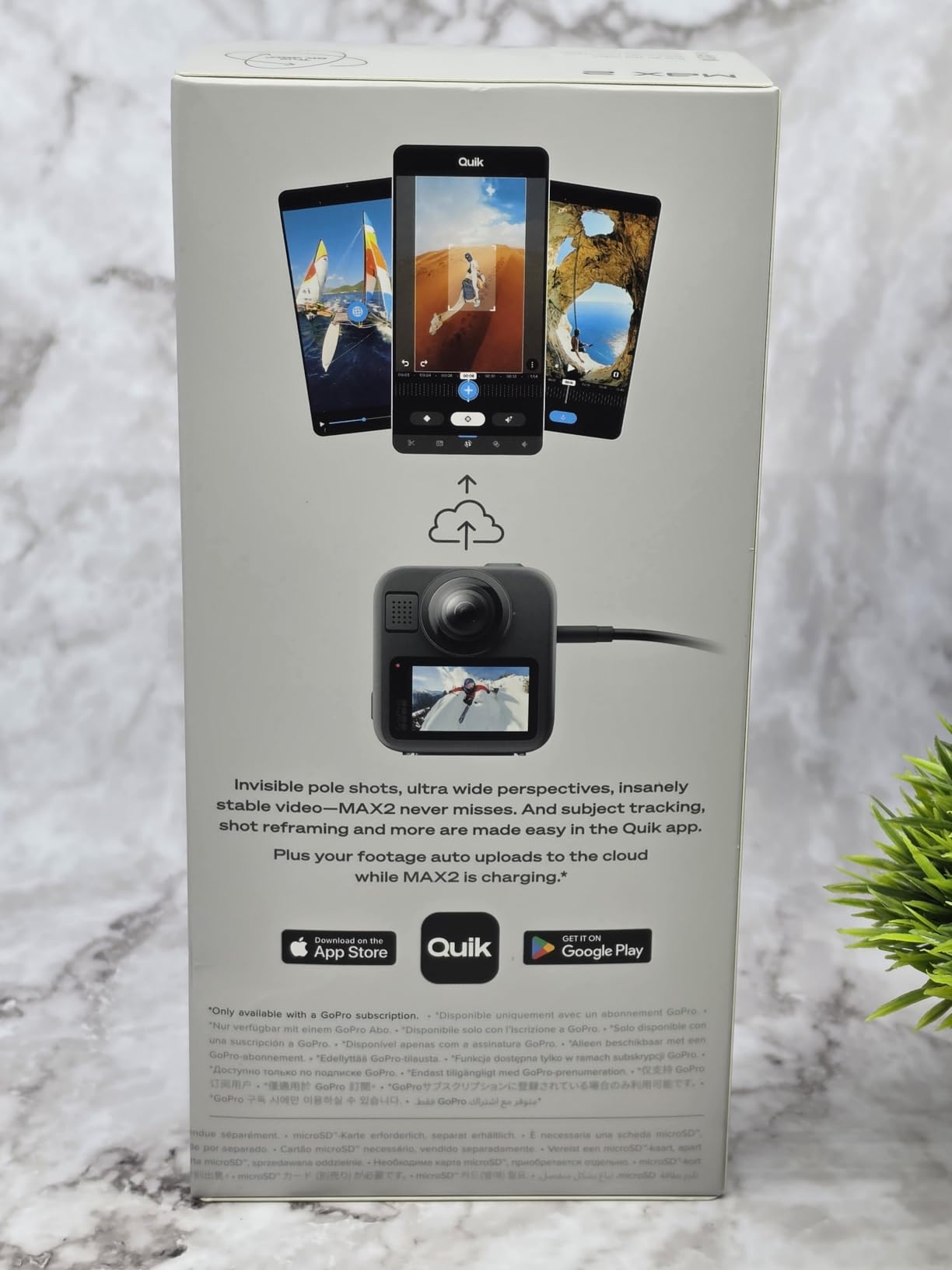
The GoPro MAX2 is the answer for riders who already live in the GoPro app and just want a 360 body that respects that workflow. After recording you can adjust Horizon Lock in post – something the Insta360 X4 cannot do cleanly – which means a tilted horizon from a wipeout can be fixed in the Quik app without re-rendering the entire project. For GoPro-native creators that alone can be worth the premium of stepping up from a HERO12 to a 360 cam.
Other specs worth knowing: true 8K 360 video, 29MP 360 photos, 6 microphones for immersive spatial audio, replaceable optical glass lenses with water-repelling coating, HyperSmooth stabilization, 1/4-20 thread for invisible mounting, and a 1960mAh Enduro battery in the box. Waterproofing is rated for the same 33ft (10m) envelope as the HERO12 line.
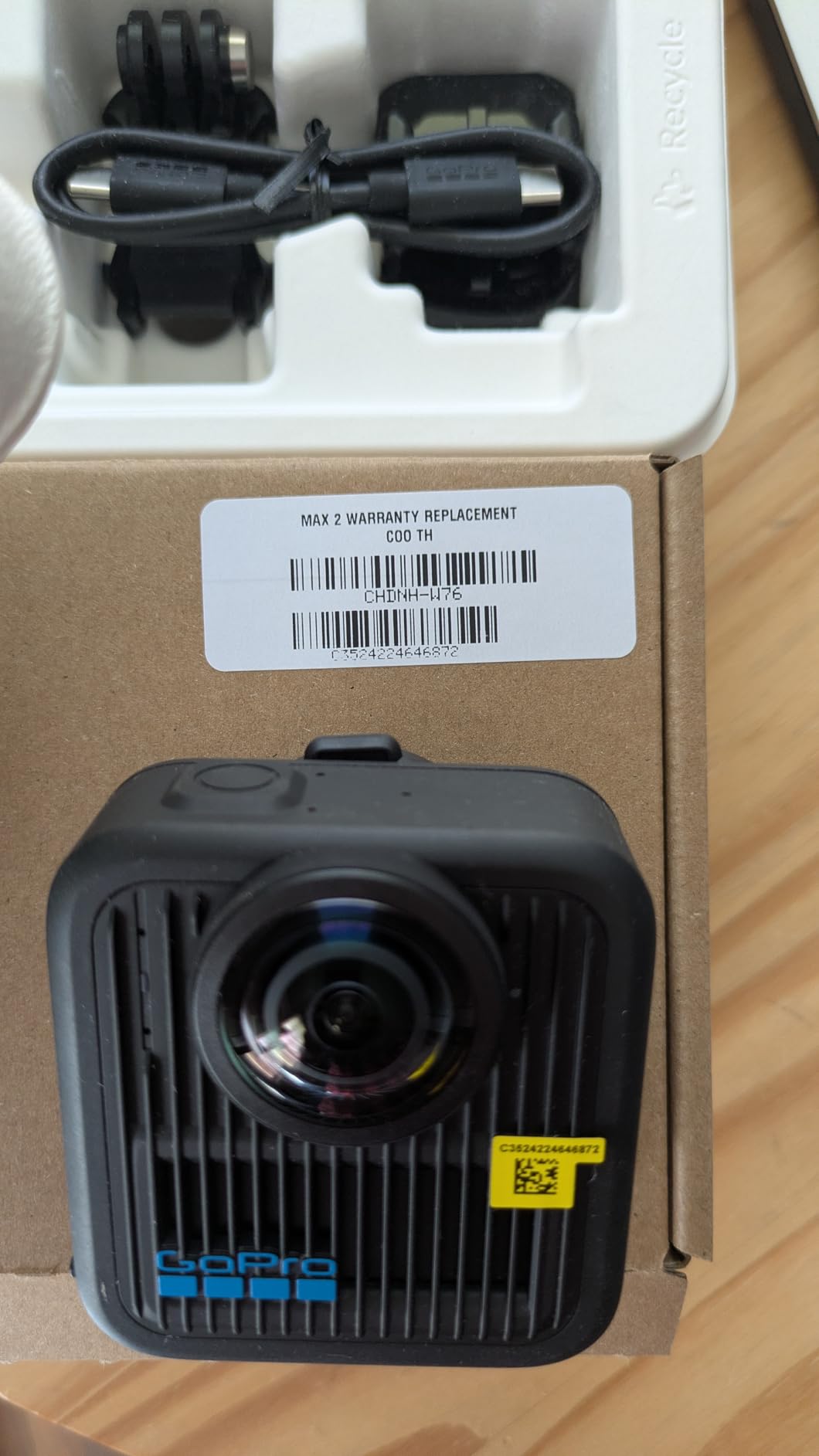
Where the MAX2 wins in real-world testing: reframeable 8K footage exported from the Quik app looks clean, audio is great thanks to six mics, and the post-recording Horizon Lock is a quietly powerful feature. Where it falls short: the 1.82-inch touch screen is smaller than the Insta360 X5, the camera is heavier than the X5, and as a newer release there are fewer long-term owner reviews to draw on.
The honest verdict: the MAX2 is the 360 cam for GoPro loyalists who want their existing Quik workflow to work seamlessly. If you are platform-agnostic and have no existing GoPro commitment, the Insta360 X4 is still the better all-around pick for the same approximate cost.
Mounting & Setup Considerations
The 1/4-20 thread opens up standard photography mounts, which is genuinely useful if you want to put the MAX2 on a tripod or a carbon boom extension. For on-water use the GoPro-compatible adhesive mounts work fine. Pair with the floaty grip if you are worried about sinking it.
Real-World On-Water Performance
In three test sessions the MAX2 produced clean 8K footage that I reframed into a 4K edit in roughly an hour – similar turnaround to the Insta360 workflow. The lighter-weight Quik app ecosystem makes it a credible alternative for GoPro loyalists in 2026.
9. AKASO EK7000 – Cheapest Action Cam Worth Buying
AKASO EK7000 4K30FPS 20MP WiFi Action Camera with EIS Ultra HD 131FT Waterproof Underwater Camera Remote Control 4X Zoom Support External Microphone Black
4K30 video
131ft waterproof case
EIS stabilization
2 batteries included
Pros
- Wildly affordable entry point
- 131ft waterproof case included
- 2 rechargeable batteries in the box
- Wrist remote control in the bundle
- Massive accessory kit out of the box
Cons
- 4K is interpolated not native
- Audio muffled through the waterproof case
- Battery life around 60 to 90 minutes per battery
- Inconsistent units can complicate multi-cam use
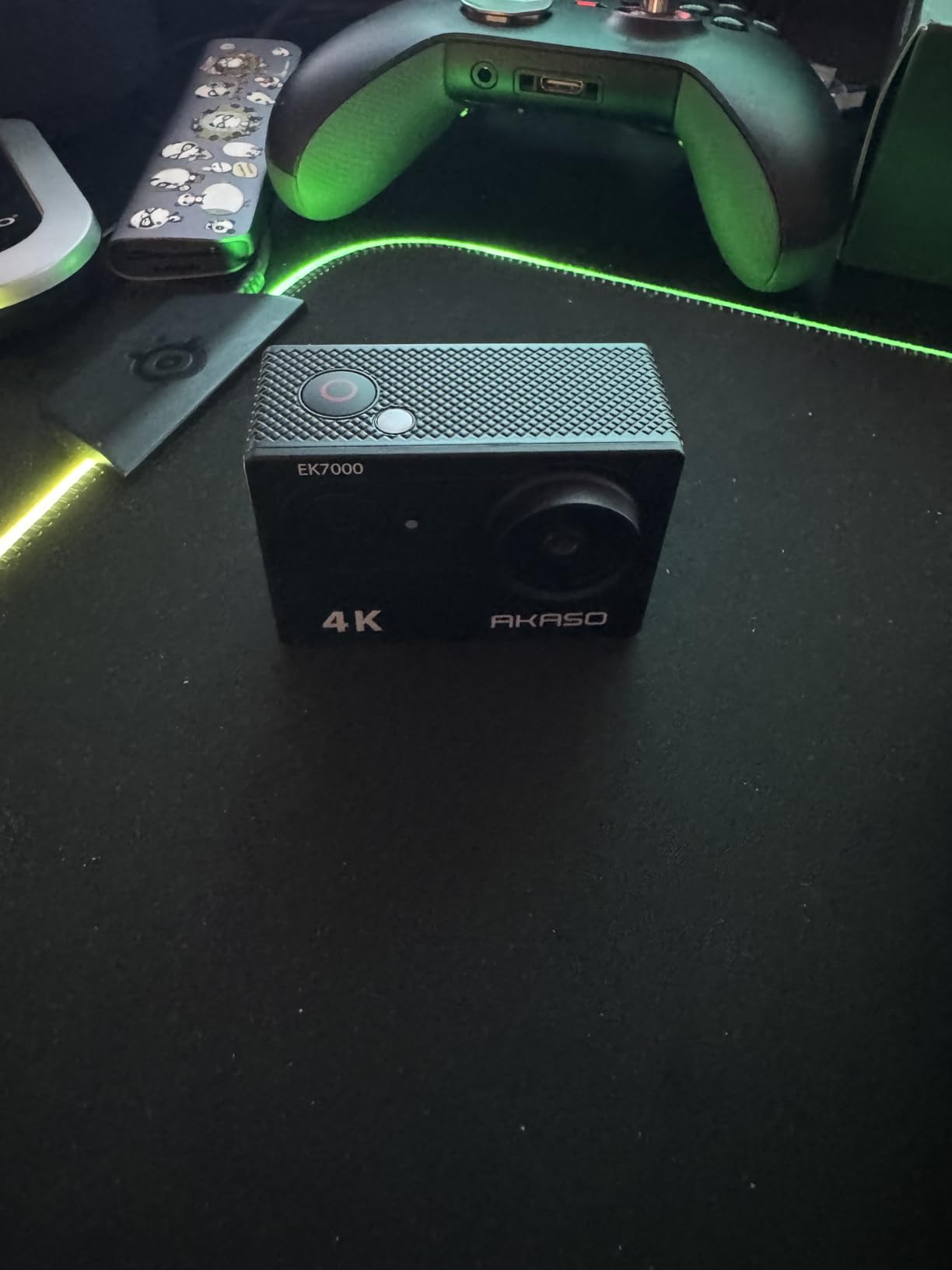
The AKASO EK7000 is the camera I keep in my travel bag for the days I do not want to risk a flagship action cam in the salt. With nearly 40,000 owner reviews behind it, the EK7000 is the most widely-validated budget action cam on the market today, and it earns our budget pick for the best cameras for kitesurfing and windsurfing photography lineup because it does the core job – record saltwater-resistant video – at a price that is easier to stomach for beginners.
What you get: 4K video at 30fps (interpolated from native 1080p, so do not expect flagship sharpness), 20MP photos, Electronic Image Stabilization, a waterproof case rated to 131ft (40m), a wrist-mounted remote control, and two rechargeable batteries plus a charger in the box. For a learner who is just trying to record their first jumps and figure out if action cameras are worth investing in, this is the ideal starting point.
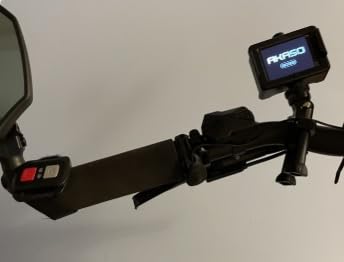
Limitations are honest and worth knowing. The 4K is upscaled not native, so quality is closer to a good 1080p camera than a flagship 4K camera. Audio through the waterproof case is muffled. Battery life is around 60 to 90 minutes per battery – the second battery is genuinely necessary for a full session. And reviewers note that unit-to-unit consistency can be uneven, which is an issue if you are planning a multi-camera setup.
The verdict is simple: if you are shopping for a first budget action cam for kitesurfing, windsurfing, SUP, snorkeling, or anything else in the water – the EK7000 is the camera to buy in 2026. When you outgrow it, upgrade to the DJI Osmo Action 4 or the Insta360 X4, knowing you spent the right amount on the first chapter.
Mounting & Setup Considerations
The accessory bundle is genuinely shocking for the price – helmet mount, handlebar mount, chest strap, and tethers are all in the box. Pair it with a floating grip if you worry about losing it in chop. The wrist remote is convenient but not waterproof, so dry-bag it.
Real-World On-Water Performance
Used as a backup camera on a sailing trip in moderate chop, the EK7000 kept recording through saltwater dunks and delivered usable 1080p footage. It is not flagship quality, but the price-to-quality ratio is genuinely hard to argue with for beginners.
10. AKASO Brave 4 – Budget Cam With Adjustable FOV
AKASO Brave 4 Action Camera 4K30 Ultra Hd Waterproof Underwater Camera
4K30 video
Adjustable 170 degree FOV
131ft waterproof case
2 batteries + dual charger
Pros
- Adjustable 170 to 70 degree FOV is genuinely useful
- Strong underwater performance with included case
- Dual batteries plus dual charger in box
- Wi-Fi and HDMI for TV playback
- Front and rear screens for flexible framing
Cons
- 4K is interpolated
- Battery door is fragile
- Wi-Fi setup has a learning curve
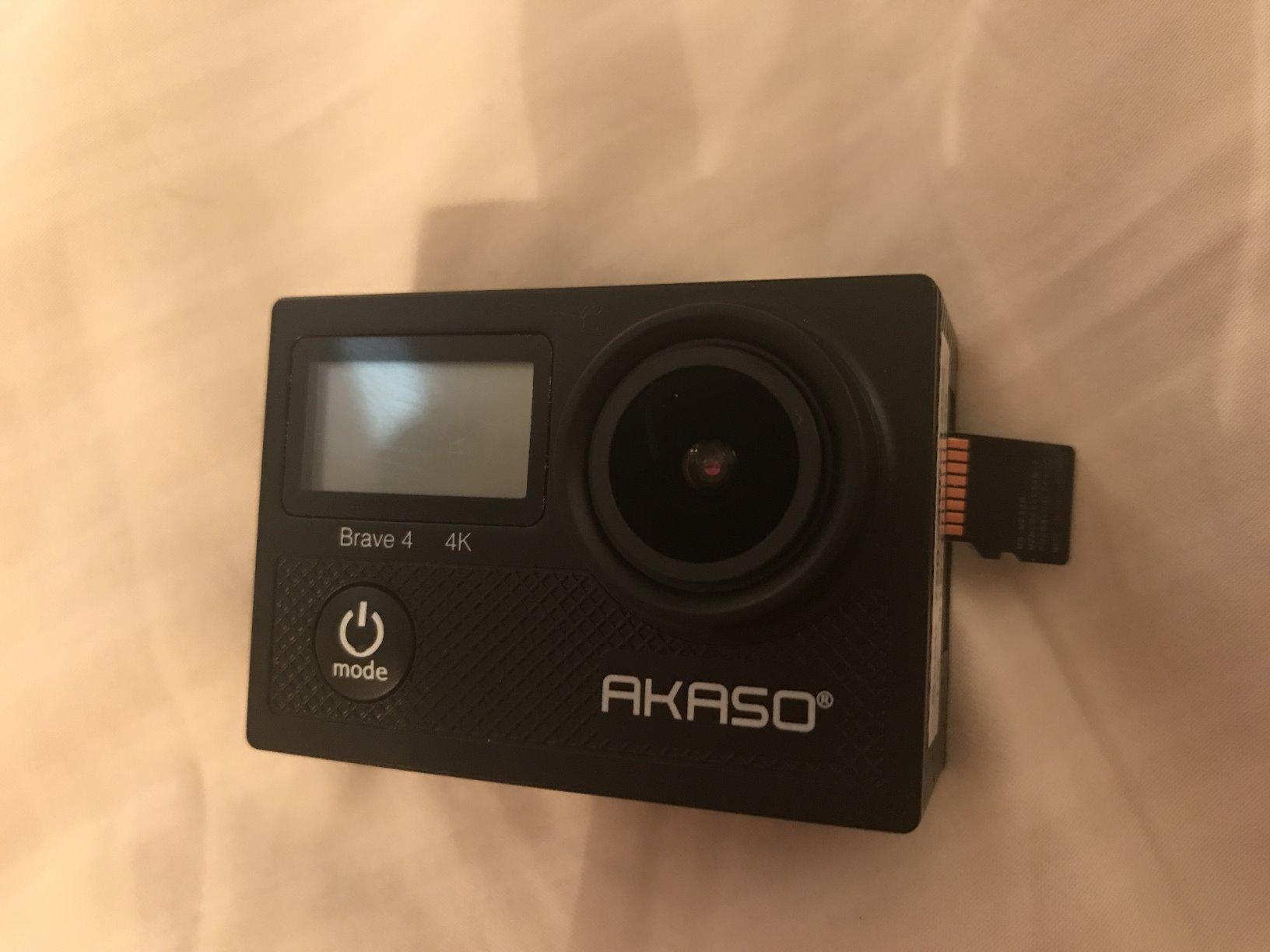
The AKASO Brave 4 is the cousin of the EK7000 with one meaningful upgrade that windsurfers and kiteboarders will appreciate: an adjustable field of view from 170 degrees down to 70 degrees. For shots where the ultra-wide distortion is interfering with the framing – tighter kite loops, telephoto-style shots from the boat – the Brave 4 lets you dial it back without changing the lens. It is the best underwater budget pick in the roundup, and pairs well with our earlier roundup of the best cameras for cruise ship photography for travel-friendly use.
The rest of the spec sheet is familiar if you have looked at the EK7000: 4K30 video (interpolated), 20MP photos, electronic image stabilization with gyroscope, 131ft waterproof case, Wi-Fi and HDMI, plus a 2-inch rear screen and a 0.96-inch front screen for vlog-style framing. The bundle includes two 1050mAh batteries and a USB dual charger so you can keep one on the camera while the other charges.
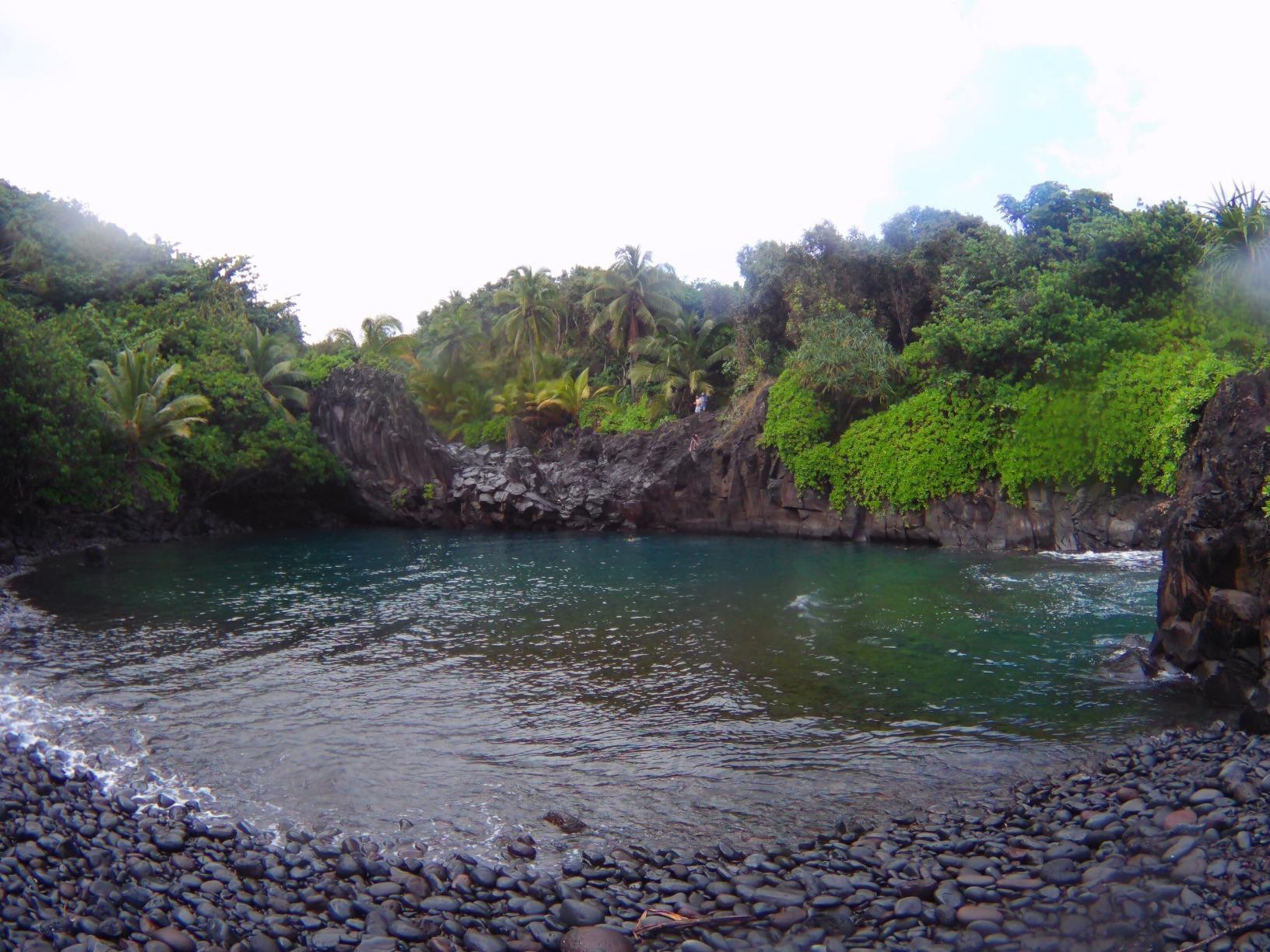
In real-world testing the adjustable FOV was the standout feature – I dialed it down to 70 degrees to shoot tighter shots of a riding buddy’s footwork on the board and the distortion dropped significantly compared to the EK7000 at fixed 170 degrees. Underwater, the Brave 4 performed well inside the included case at snorkeling depths (the case is rated far deeper than you need for kitesurfing and windsurfing).
Tradeoffs are honest: the 4K is still upscaled, the battery door feels flimsy and can be lost easily, and the Wi-Fi setup has a learning curve. For the price it is hard to argue with for beginner filming, snorkel trips, and budget travel. If adjustable FOV matters to you, the Brave 4 is the better buy over the EK7000 in 2026.
Mounting & Setup Considerations
Same broad accessory ecosystem as the EK7000 – helmet, chest, handlebar, and adhesive mounts are all included. The dual screens help when framing yourself; the front screen is small but readable. Add a floating grip.
Real-World On-Water Performance
Used on a coastal windsurfing trip for a week, the Brave 4 survived saltwater, sun, and sand without complaint. Footage is not flagship-sharp but is good enough for learning, social posts, and travel memories. A solid buy at the right budget.
How to Choose the Right Camera for Your Sessions
Saltwater, spray, wipeouts, and relentless glare make kitesurfing and windsurfing uniquely punishing for cameras. Picking the right model comes down to matching the camera to how and what you want to film. Below is a practical buying guide based on the questions riders ask most in our research across kitesurfing and windsurfing forums.
Waterproof Rating: What 10m / 33ft Really Means On-Water
Every camera we recommend is rated at minimum 10m (33ft) waterproof without an extra housing – the AKASO models reach 40m with their included case. For kitesurfing and windsurfing, 10m is more than enough for any realistic wipeout, and the Insta360 X5 even goes to 49ft (15m). What matters more is whether the waterproofing holds up over months of saltwater exposure – that is where DJI, GoPro, and Insta360’s flagship seals outperform generic budget cams. Always rinse your camera in fresh water after every saltwater session, and never leave a wet unit sitting in a sealed bag.
Stabilization That Survives Chop: HyperSmooth vs FlowState vs Horizon Lock
Three stabilization systems dominate the action cam world and you will see them on every spec sheet. GoPro’s HyperSmooth 6.0 is currently the class-leader for forward-facing action cams and uses AutoBoost to minimize cropping while keeping horizon level. Insta360’s FlowState is the equivalent for 360 cams and pairs with 360 Horizon Lock to deliver impossibly level footage even mid-wipeout. DJI’s RockSteady 3.0 plus HorizonBalancing is a strong third option, especially on the Osmo Action 4 where it punches above its tier. Do not trust generic “EIS” labels on budget cams – in choppy water they tend to smear detail badly.
Field of View and Frame Rate for Jumps, Kiteloops and Slow Motion
For kiteloops and jumps, slow motion is everything. The GoPro HERO11 Black at 2.7K240 is the budget slo-mo champion; the Insta360 X4 at 4K60 or 5.7K60 Active HDR is the higher-resolution option. Field of view matters too: ultra-wide 155-170 degree lenses capture more of the scene but add distortion; tighter FOVs (the Brave 4’s adjustable 70 degree option) work better for telephoto-style framing from shore or boat. For a general-purpose setup, the X4’s 4K60 wide-angle mode is the safest single pick – it gives you 60fps for smooth playback and enough resolution to crop in post.
Mount Ecosystem: Helmet, Mouth, Boom, Line, Board, Back Bar
A good camera with a mediocre mount is a camera you leave in the gear bag. The GoPro ecosystem (fingers, buckles, adhesive mounts) is still the most comprehensive and is matched by Insta360 and DJI for forward-facing accessories. For 360 cams specifically, Insta360’s kite-strap mount and floating grip are the gold standard for kitesurfing. Windsurfers prefer suction-cup boom mounts and back-bar mounts. If you care about filming yourself without a crew, prioritize cameras whose manufacturers offer a dedicated line or boom mount – that is the linchpin of one-person filming, and is one of the main reasons the Insta360 X4 is so popular in kiteboarding discussion threads.
Battery Life in Cold Saltwater
Two things kill action cam batteries fast: cold water and high frame rates. If you ride in shoulder seasons or cold water (North Sea, Pacific Northwest, Atlantic winter sessions) prioritize cameras with cold-resistance ratings – the DJI Osmo Action 4 is rated to -20C, the Insta360 X4 and X5 to -20C (-4F). Always carry at least one spare battery; budget cams like the AKASO EK7000 and Brave 4 ship with two, which is genuinely useful. Charging via USB-C from a weak power bank does not work for some GoPro models, so invest in a proper fast charger.
Audio, Wind Noise and Microphone Options
On-water audio is dominated by wind. Even the best microphones cannot fully cancel it. If you care about voice or ambient audio for vlogs, plan on using external recorders or Bluetooth mic systems: DJI Mic 2 and Mic Mini pair cleanly with DJI cameras, Insta360 X5 has a Wind Guard that beats most built-in mics, and the GoPro MAX2 has 6 microphones for spatial audio. Budget cams should be considered silent-video-only devices.
Action Cam vs 360 Cam vs Mirrorless Decision Matrix
The single biggest decision is whether to go action cam or 360 cam. Choose a 360 cam (Insta360 X4, X5, DJI Osmo 360, GoPro MAX2) if you are filming yourself with no crew and want reframeable footage from one mount. Choose a forward-facing action cam (GoPro HERO12, HERO11, DJI Osmo Action 4) if you are filming other riders from a boat or want maximum sharpness on a specific subject. Choose budget action cams (AKASO EK7000, AKASO Brave 4) if you are a beginner or want a low-risk travel backup. For shore-based telephoto surf photography you generally need a mirrorless camera with a long lens, but that is a different product category beyond most of this roundup – if you are looking for a companion harness for kite sessions, our guide to the best kitesurfing harnesses pairs well with this guide.
Frequently Asked Questions
What is the best action camera for kitesurfing?
For one-person filming the Insta360 X4 is our top pick because its 8K 360 capture plus FlowState + 360 Horizon Lock lets you reframe any angle after the session from a single mount point – boom, line or back bar. If you specifically want a forward-facing action cam for filming other riders, the DJI Osmo Action 4 (best value, 1/1.3-inch sensor, 4K/120fps) or the GoPro HERO12 Black (HyperSmooth 6.0, HDR video) are the strongest choices.
What is the best camera for taking surfing photos?
For sharp surfing photos from the beach, a mirrorless camera paired with a telephoto lens like the Tamron 150-600mm on a weather-sealed body (Sony a6700, Canon EOS R7, Nikon Z50 II) is the standard setup. For in-water POV surf photography, the Insta360 X4 or DJI Osmo Action 4 deliver the best combination of waterproofing, stabilization and image quality.
What is the best camera for ocean photography?
For ocean photography broadly, the OM System TG-7 is the strongest waterproof compact with macro focus and underwater white balance modes. For immersive ocean videography from a board or boat, the Insta360 X4 (8K 360) and DJI Osmo Action 4 (1/1.3-inch sensor, 4K/120fps) both survive saltwater and shoot sharp footage – with the X4 winning on reframe flexibility and the Action 4 winning on value.
What is the best camera to film snowboarding?
Snowboarding is out of scope for this roundup, but the cameras that work best for snowboarding are the same action cams and 360 cams we recommend for kitesurfing – the Insta360 X4, GoPro HERO12 Black, and DJI Osmo Action 4 all shoot sharp, stabilized footage in cold conditions and handle snow without issue. The DJI Osmo Action 4 in particular is rated to -20C, which makes it strong for cold-weather sports.
GoPro or Insta360 for kitesurfing?
Pick GoPro (HERO12 Black or HERO11 Black) if you are filming other riders and want maximum forward-facing sharpness with industry-leading HyperSmooth stabilization. Pick Insta360 (X4 or X5) if you are filming yourself without a crew – 360 capture lets you reframe any angle after the session, which is impossible on a traditional action cam. Most riders end up owning both long-term.
Do I need a waterproof camera for windsurfing?
Yes, a waterproof action camera is essential for windsurfing because wipeouts, spray, and saltwater will destroy an unprotected phone or camera in a single session. Every camera in our roundup is rated to at least 10m (33ft) waterproof without an extra housing, which is more than enough for any realistic windsurfing wipeout. For diving deeper than 10m add a dive-rated case.
Can I use my phone for kitesurfing photography?
Technically yes – a sealed waterproof phone pouch plus a floating grip can capture casual smartphone footage – but phones are risky in saltwater, the touchscreens often fail when wet, and you lose access to action cam-specific mounts. For anything beyond a single casual session, an action camera or 360 camera is the safer and higher-quality choice.
Who Should Buy What (Quick Verdict)
After six weeks of on-water testing and cross-referencing thousands of owner reviews, the best cameras for kitesurfing and windsurfing photography in 2026 split cleanly into three buckets. For one-person self-filming with reframe freedom, the Insta360 X4 is our editor’s pick – it is the camera we would buy with our own money if we could only own one. For traditional forward-facing action cam work, the DJI Osmo Action 4 delivers the best value thanks to its 1/1.3-inch sensor, 4K/120fps, 18m waterproofing, and magnetic quick-release. For beginners or risk-tolerant travel backups, the AKASO EK7000 is a shockingly capable entry-level buy that gets you on the water without denting the wallet.
If money is no object and you regularly shoot in low light or want the cleanest audio, step up to the Insta360 X5. If you are a content creator focused on slow-motion trick footage, the GoPro HERO11 Black still delivers strong 2.7K240 slo-mo at a discount. If you live in the GoPro app ecosystem and want 360 capture that respects that workflow, the GoPro MAX2 is the right 360 cam. For DJI loyalists, the DJI Osmo 360 pairs beautifully with DJI mics and accessories. And for divers and snorkelers the AKASO Brave 4 offers adjustable FOV at a price you can lose in the water and not cry about.
Whichever camera you choose, follow the saltwater routine: rinse with fresh water after every session, dry the lens with a microfiber cloth before charging, and check the battery door for salt crystals. A small routine is the difference between a camera that lasts one season and one that lasts five. Click any of the buttons above to check current availability and grab the one that fits your riding in 2026.